Jantavanta's Posts
Nairaland Forum › Jantavanta's Profile › Jantavanta's Posts
1 2 3 4 5 6 7 8 9 10 11 12 13 14 (of 34 pages)
 Politics › Re: 6 Critical Reasons Why Northern Nigeria Remains The Poorest - Sen. Shehu Sani by jantavanta(m): 5:54pm On Feb 26, 2017 Politics › Re: 6 Critical Reasons Why Northern Nigeria Remains The Poorest - Sen. Shehu Sani by jantavanta(m): 5:54pm On Feb 26, 2017 |
codemaniacs:Investigating The Unbelievable, is not new to me. My topics are in the realm of the Unbelievable. At least, we have a common ground that His-Story has been White washed to Blackout Africans. I only post books as the nearest available source of info, like a compass that points in a direction. But these books are not the final destination. |
| Politics › Re: 6 Critical Reasons Why Northern Nigeria Remains The Poorest - Sen. Shehu Sani by jantavanta(m): 2:29pm On Feb 26, 2017 |
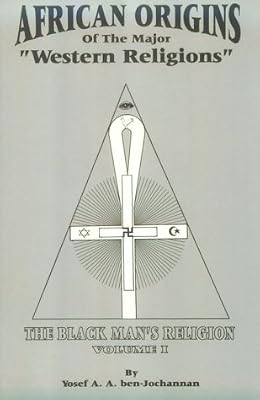
codemaniacs:@logica is not using religious books to understand History. If there was no place called Egypt or Israel or Middle-East before the invasion of Africa, tell us what those places were called, and it affects the point he is making that Africa is the origin of the Judeo-Christo-Islamic Western Triad that has been turned against Africans. https://images-na.ssl-images-amazon.com/images/I/41G5KP5WFEL._SY400_.jpg https://www.amazon.com/African-Origins-Major-Western-Religions/dp/0933121296 |
| Politics › Re: 6 Critical Reasons Why Northern Nigeria Remains The Poorest - Sen. Shehu Sani by jantavanta(m): 2:09pm On Feb 26, 2017 |
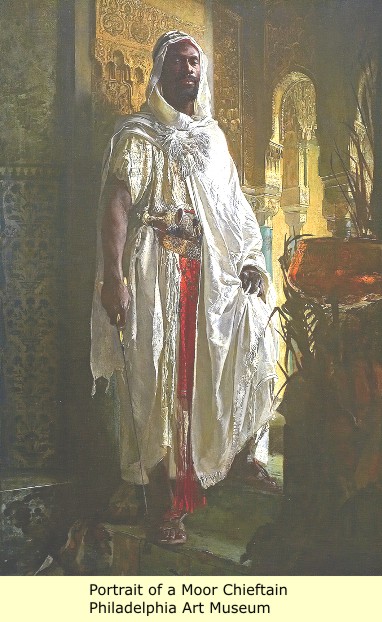
codemaniacs:Our social studies books need to be revised so that people go to school to know better than what missionaries teach. St Augustine was an African and even Jesuit The Christ was not painted as a White Man until a few hundred years ago. Black Madonna of Outremeuse in a procession [img]https://upload.wikimedia.org/wikipedia/commons/thumb/2/2f/Procession_2006_-_n°6.JPG/250px-Procession_2006_-_n°6.JPG[/img] https://en.m.wikipedia.org/wiki/Black_Madonna https://realhistoryww.com/world_history/ancient/Misc/True_Negros/Berber/Moor_Chief.jpg http://realhistoryww.com/world_history/ancient/Misc/True_Negros/The_True_Negro_2a.htm 1 Like
|
| Politics › Re: 6 Critical Reasons Why Northern Nigeria Remains The Poorest - Sen. Shehu Sani by jantavanta(m): 4:08am On Feb 26, 2017 |
oluamid:It was not Arab Scholars; that is an alternate poison created by european colonialists for African minds. It was African Scholars who had adopted Arab language and Islamic religion to transmit African Knowledge during the Moorish Occupation of Europe(Moor, Maure, Moore means Black).That is how Spain & Portugal, european countries closest to Africa (not close to Arabia), became powerful enough to share the World for themselves. [img]http://4.bp..com/-qI-MwAIndQI/UI2LncnFbKI/AAAAAAAABAU/BgQyki2zIwI/s1600/Moorish+Noble+of+Medevil+Europe2.jpg[/img] http://www.allempires.com/forum/forum_posts.asp?TID=36429 "These African Muslims literally civilized the wild tribes from the Caucus who had ran rampant throughout Western Europe after being pushed into this region by the invading Huns. These wild warring Caucasian tribes did not establish any civilization to pick up after they brought down the Western Roman Empire. As a result of there being little to no intellectual stimulation in Europe the continent fell into the Dark Ages until the 8th century C.E. when the Moors arrived into Europe from Africa. The European "Renaissance" was only possible through this African Muslim cultural domination for 700 years in which highly advanced and civilized cultures (based largely on the recollection of the advanced knowledge from ancient Kemet or "Egypt" that the Greeks stole/plagiarized and Westerners blatantly ignore the fact that they did just to attribute those contributions to a late Indo-European people) permeated throughout Western Europe via what was Muslim controlled Spain. " 1 Like |
| Christianity Etc › Re: Church Sacks Pastor For Obtaining By Trick Sex, Money From Female Members by jantavanta(m): 8:32am On Feb 21, 2017 |
There was no trickery. It has been going on for hundreds of years in Europe, before Oyinbo man introduced Africans to it. At least we should be happy he "tricked" full-grown adults and not little children, as many oyinbo missionaries have done worldwide to indigenous peoples 1 Like |
| Culture › Re: Africans Were The First People Of The Ancient Americas by jantavanta(op): 3:30pm On Feb 20, 2017 |
"Mary Richards-(Lidan) (Tonkawa)" Photo by Rinehart 1898. Until the 19th century the Tonkawa were hostile to the Lipan & other Apache tribes, & this fact kept them generally at peace with the Comanche, Wichita, & Hasínai, whom they often joined in Apache wars. Relations with the Comanche and Wichita were frequently strained. In the 19th century relations with these groups were reversed,with the Tonkawa then being unusually friendly with the Lipan & hostile toward the Comanche & Wichita. https://s-media-cache-ak0.pinimg.com/564x/03/c8/29/03c8297a059b68e4f0f33f7d1b09fe4b.jpg https://www./489485053234431863/ 3 Likes 1 Share |
| Culture › Re: Africans Were The First People Of The Ancient Americas by jantavanta(op): 3:13pm On Feb 20, 2017*. Modified: 3:36pm On Feb 20, 2017 |
Chief Warhorse. Queen of the Chata Native Americans, cousins to the Choctaws https://media.nola.com/st_tammany_community_news/photo/-244a7582236f4d13.jpg https://www./297026537910180464/ 3 Likes 1 Share |
| Culture › Re: Black African Nobility Of Ancient Europe by jantavanta(op): 8:48am On Feb 14, 2017 |
BASQUE AS NIGER-CONGO By GJK Campbell-Dunn M.A. (NZ), M.A. (Camb.) Ph.D. In this account we will systematically compare Basque morphology and sounds with Niger-Congo. The evidence will demonstrate that Basque, without doubt, is a Niger-Congo language. Basque is a member of the Togo Remnant (now Left Bank New Kwa), which was once a major Group. Basque is especially close to Akpafu. The Togo R. people travelled by ship to the Canary Islands and up the coast of Spain to the Bay of Biscay where they established fishing settlements. The genetic data (Bertranpetit & Cavalli-Sforza 1991 : 55, Fig. 1, first principal component) locates Basque genetic material in a semicircular area around the Bay of Biscay, which was settled at least from the Palaeolithic Period. The Niger-Congo cognates are taken mainly from Westermann (1927) and Mukarovsky (1977). For Basque our main sources are Trask (1997), The History of Basque, and Aulestia and White (1992), Basque-English English-Basque Dictionary. Other authorities are referred to in the text as relevant. Typographical Conventions On this web page schwa is represented by the character 3, and a palato-alveolar fricative by the combination zh. Numerals Numerals are resistant to change over time and are a good indicator of language relationship. The Basque numerals contain some fossilised Niger-Congo morphology. The word "one" bat in Basque, is related to Niger-Congo Nde i-bal, Mbofon e-ba, Guang ba "one", Gurma ba "one", Gola ba and so on. (Johnston quotes forms with initial m in this word.) The final -t is a singular marker (things), as in Kebu (Westermann 1927 : 106): gobi-di "bone", e-ko-bir "bones" (with Basque -t from final -d). Fortis and lenis plosives are used grammatically in Kebu, a Togo R. language. The word "two" bi, bi-ga, bi-da in Basque relates to Bantu bili "two" (Johnston 1919 - 22 : 32), and ultimately to Niger-Congo bi "breasts", which often has an l suffix. It is more closely connected semantically with Niger-Congo bali "two" (twenty-two reflexes in Westermann). The -ga, -da are "suffixes". Root da means "finger" in Niger-Congo. Basque "three" hi-ru, hi-ru-r is similar to Etruscan ci "three", with k > h again (+suffix). This sound change h > # is regular. Niger-Congo ki > hi is from kiti (Westermann 1927 : 288) "middle" (of the hand), which may be reduplicated to titi, kiki. Compare Avatime ku-ši "middle". The r- suffix is an old plural. Compare e-ko-bir "bones" cited above, with plural -r (< -t). For the change t > r in Togo R. see Westermann (1927 : 104). We take hirur from kitu-r. Compare Akpafu i-ru "five" with Avatime o-tu, Nyangbo i-ti, Kposso e-tu "five" for the change of t to r. A phonological parallel with Akpafu in particular. Basque "four" is lau, lau-r, Niger-Congo na "four". We have a sound change n > h > # (with loss of what was once intervocalic n? after a prefix). An l occurs in Nyangbo and Ahlo, both Togo remnant languages. Compare also Temne -aŋle (Wilson), Igala ele, Ishekiri meere (Armstrong 1967 : 63). The base form is na. The same plural suffix r may occur as in "three". Basque for "five" is ba-st, bo-r-tz. This is Niger-Congo bua (> bo) "hand", and identifies "five" with the hand, since the hand has five fingers. Niger-Congo extensions of this word occur Efik bok, bak, Mossi bonko, baγado, boγo, boγo-re (with old plural suffix) Gurma boγu, Kissi boka. Bantu has voko "arm". The final -t (singular) is due to the "hand" being singular, though having five fingers. The word for "six" is sei-r, sei in Basque (as in Italian). The form seir has the old plural in -r. "Bantu" (Johnston) has sambω, sasatu, sasaba. Niger-Congo ta "hand" should be considered as the source. This root goes to sa in Tschi, Agni and is assibilated in Baga to ke-tsa. Delo has n-sia. Basque zaz-pi is "seven", Johnston's "Bantu" sambω, sambω-bali. Similar considerations apply. The za- is for ta, sa "hand". The -pi is bi "two". See Westermann (1927 : 110, 9), bi (> pi). "Seven" is 5 (hand) + 2. Basque "ten" ha-ma-r is from Niger-Congo ka "hand" + ma "end", and refers to the end of both hands [-r plural ]. "Eleven" is ha-me-ka, "ten big", hamar + ga "big". "Twelve" is ha-ma-bi, "ten + two". "Zero" or "nothing" is Basque hu-ts, from Niger-Congo ku "thing", compare French rien "nothing", from Latin rem "thing". The same word is used for "one" in Etruscan. The Basque for 1000 e-hu-n is allegedly from Gothic. The prefix e- often precedes this word. Root ku means "big" in Niger-Congo, then "big number", i.e. "ten" or "one hundred". Bowili kuwa "ten", Ewe kpi "much", Igbo okpi "big", Bulom akpil "many". Niger-Congo i > Basque u. Bantu kumi "ten". A Niger-Congo solution is to be preferred. The attachment of suffixes to the numerals is a Niger-Congo feature: bat, batzu (pl), bi-ga "two" (ga "big"  , hiru-r "three", lau-r "four", bost, bort-z "five", sei-r "six". The attached -r of hirur, laur etc. is a Niger-Congo plural (from ri), as in Etruscan. This is clear from the fact that the r is added whenever the plural suffix -ak follows: hirurak, laurak. Compare the names Aquitani, Liguri. , hiru-r "three", lau-r "four", bost, bort-z "five", sei-r "six". The attached -r of hirur, laur etc. is a Niger-Congo plural (from ri), as in Etruscan. This is clear from the fact that the r is added whenever the plural suffix -ak follows: hirurak, laurak. Compare the names Aquitani, Liguri.Niger-Congo numerals were once prefixed also, which tends to create phonological problems of identification. This applies e.g. to lau "four", often nna in Niger-Congo with an assimilated prefix, which has changed n to l. (Westermann 1927 : 104, n > l in Togo R.) and to bost "five", where the Niger-Congo once had a preceding labiovelar as in Guang o-ma-po "end". The ordinals have a suffix -ren, len < Niger-Congo na "be", "progressive" (Etruscan ordinals have -na "to be", "progressive" , e.g. biga-ren "second". But "first" is len( en) go, with suffix -ko < -go (< Niger-Congo gwa "much". The re, le is an old Niger-Congo article, often le in Togo R.Entwhistle (1962 : 25) points out the vigesimal arrangement in Basque using hogei (< kua "foot" + gi "two" as base. Vigesimal numerals are a feature of Niger-Congo (Gur, Yoruba), due to counting on hands and feet (before shoes were in use). Celtic took its vigesimal numerals from the same source. Latin adopted vigesimal numerals from Etruscan (XX, XXIV etc.), which we have shown by comparative linguistics to be Niger-Congo.http://www.beforebc.de/all_europe/BasqueAsANiger-CongoLanguage.html http://www.beforebc.de/all_europe/05-09-000-12.html 1 Like
|
| Culture › Re: Black African Nobility Of Ancient Europe by jantavanta(op): 8:19am On Feb 14, 2017 |
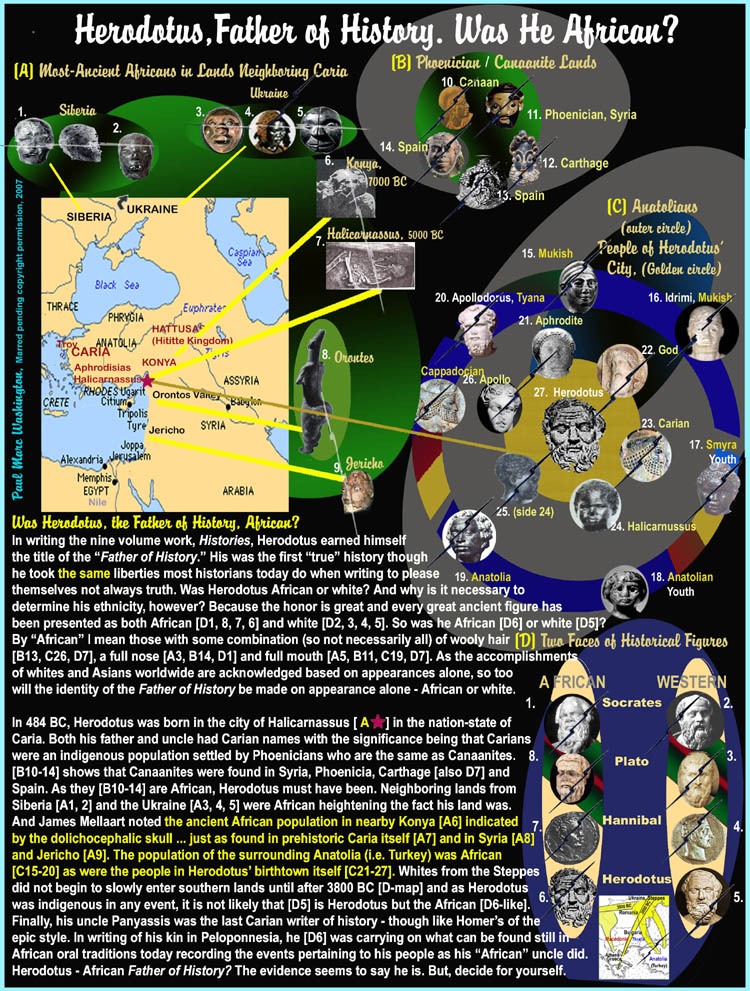
"Was Herodotus, the Father of History, African? [img]http://www.beforebc.de/all_europe/700_mediterranean/02-16-400-20.jpg[/img] In writing the nine volume work, Histories, Herodotus earned himself the title of the “Father of History.” His was the first “true” history though he took the same liberties most historians today do when writing to please themselves not always truth. Was Herodotus African or white? And why is it necessary to determine his ethnicity, however? Because the honor is great and every great ancient figure has been presented as both African [D1, 8, 7, 6] and white [D2, 3, 4, 5]. By “African” I mean those with some combination (so not necessarily all) of wooly hair [B13, C26, D7], a full nose [A3, B14, D1] and full mouth [A5, B11, C19, D7]. As the accomplishments of whites and Asians worldwide are acknowledged based on appearances alone, so too will the identity of the Father of History be made on appearance alone - African or white. In 484 BC, Herodotus was born in the city of Halicarnassus [ A ] in the nation-state of Caria. Both his father and uncle had Carian names with the significance being that Carians were an indigenous population settled by Phoenicians who are the same as Canaanites. [B10-14] shows that Canaanites were found in Syria, Phoenicia, Carthage [also D7] and Spain. As they [B10-14] are African, Herodotus must have been. Neighboring lands from Siberia [A1, 2] and the Ukraine [A3, 4, 5] were African heightening the fact his land was. And James Mellaart noted the ancient African population in nearby Konya [A6] indicated by the dolichocephalic skull ... just as found in prehistoric Caria itself [A7] and in Syria [A8] and Jericho [A9]. The population of the surrounding Anatolia (i.e. Turkey) was African [C15-20] as were the people in Herodotus’ birthtown itself [C21-27]. Whites from the Steppes did not begin to slowly enter southern lands until after 3800 BC [D-map] and as Herodotus was indigenous in any event, it is not likely that [D5] is Herodotus but the African [D6-like]. Finally, his uncle Panyassis was the last Carian writer of history - though like Homer’s of the epic style. In writing of his kin in Peloponnesia, he [D6] was carrying on what can be found still in African oral traditions today recording the events pertaining to his people as his “African” uncle did. Paul Marc Washington" http://www.beforebc.de/all_europe/700_mediterranean/02-16-400-20.html
|
| Culture › Re: Black African Nobility Of Ancient Europe by jantavanta(op): 4:03pm On Feb 13, 2017 |
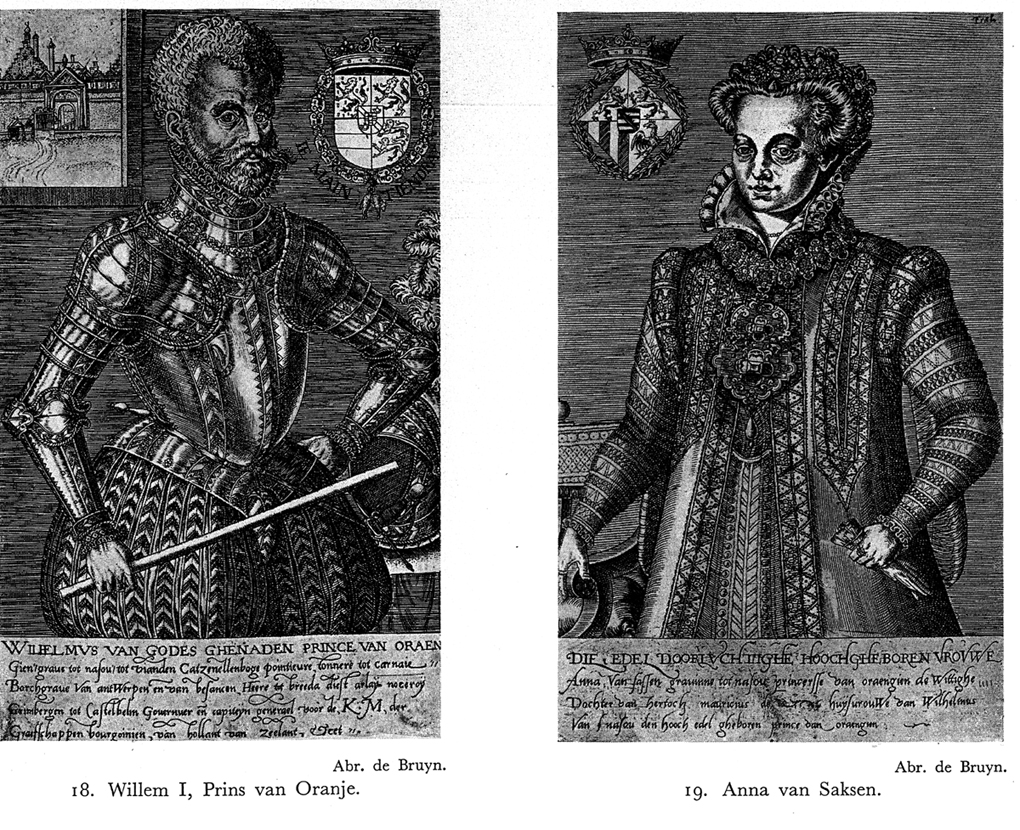
William I Prince of Orange (in Netherlands) The Netherlands were sending expeditions to the Americas, and New York was previously called New Netherlands. The Rulers of Netherlands were Black and the Inhabitants of New Netherlands were Black Indians or Black Native Americans https://www.nairaland.com/3522334/africans-first-people-ancient-americas [img]http://www.beforebc.de/all_europe/0a.William.I.Prince.of.Orange.1533.jpg[/img] http://www.beforebc.de/all_europe/02-16-800-00-51.html |
| Culture › Re: Africans Were The First People Of The Ancient Americas by jantavanta(op): 3:44pm On Feb 13, 2017 |
The 1609 Voyage of Henry Hudson The most well known early European observer of the land that would become New Netherland and the river that bears his name is Henry Hudson. Unfortunately, the journal of Henry Hudson was lost, but excerpts are found in other writings. The three quotes below reveal Hudson's assesment of the land's abundance and the ways of the natives. https://www.newnetherlandinstitute.org/files/9713/5820/3589/Indians_of_New_Netherland.jpg http://www.newnetherlandinstitute.org/history-and-heritage/additional-resources/dutch-treats/early-impressions-of-new-netherland/ "When I came on shore, the swarthy natives all stood and sang in their fashion." Narratives of New Netherland, 1609-1664**, a compilation of accounts of the newly discovered land. New York was a Dutch colony called New Netherlands. The Inhabitants were described as "swarthy", which is an old word for "Black". In addition the Native Americans were Black, some with natural long hair. "They look at themselves constantly, and think they are very fine. They make themselves stockings and also shoes of deer skin, or they take leaves of their corn, and plait them together and use them for shoes. The women, as well as the men, go with their heads bare. The women let their hair grow very long, and tie it together a little, and let it hang down their backs. The men have a long lock of hair hanging down, some on one side of the head, and some on both sides. On the top of their heads they have a streak of hair from the forehead to the neck, about the breadth of three fingers, and this they shorten until it is about two or three fingers long, and it stands right on end like a cock's comb or hog's bristles; on both sides of this cock's comb they cut all the hair short, except the aforesaid locks, and they also leave on the bare places here and there small locks, such as are in sweeping-brushes, and then they are in fine array." (173) from the writings of the Reverend Johannes Megapolensis in 1644. Kiliaen van Rensselaer http://www.newnetherlandinstitute.org/history-and-heritage/additional-resources/dutch-treats/early-impressions-of-new-netherland/ 3 Likes |
| Travel › Re: My Travail In Libya As I Sold My 4 Bedroom Flat For 450,000 by jantavanta(m): 10:46am On Feb 04, 2017 |
millhouse:Black People are too welcoming to do that. |
| Romance › Re: Woman Dies After Sex Romps In Guesthouse by jantavanta(m): 8:24am On Feb 02, 2017 |
Heart Failure. A woman above 30 who cannot run up the staircase should not engage in marathon sex, especially after drinking alcohol. Not everything has to be ascribed to supernatural forces. https://www.nairaland.com/2619213/woman-dies-after-sleeping-chinese |
| Culture › Re: Young Ladies Almost Got Unclad In The Name Of Culture In Rivers State by jantavanta(m): 8:32pm On Feb 01, 2017 |
Very good festival. Reminds of the times when there was no breast cancer. 1 Like |
| Culture › Re: Half-Unclad Women In Birnin Amina, Niger State, Can't Afford Clothes (Pics) by jantavanta(m): 8:20pm On Feb 01, 2017 |
Empiree:To Brazilian Hair ! Many Africans now have a warped sense of civilization. 1 Like |
| Politics › Re: Nigeria's Fatima Kyari Elected As African Union Peace & Security Commissioner(pi by jantavanta(m): 7:59pm On Jan 30, 2017 |
Congratulations! Nigeria playing an expected role in the African Union. 1 Like |
| Computers › Re: 4 Great Gmail Tricks You Should Know From Now On by jantavanta(m): 7:05pm On Jan 22, 2017 |
So, it is unnecessary to create an alias by inserting a dot: firstname.lastname@gmail.com is automatically an alias for firstnamelastname@gmail.com |
| Culture › Re: Why Do Nigerians Look At White People As Advanced Humans by jantavanta(m): 2:14pm On Jan 20, 2017 |
OrunSokele:You are talking a lot of truth. White People are a sub-race, that never exited in the beginning: They came about by accident. Space Travel existed among the First People, who were entirely Black. That is why Black People are needed in NASA. The ancient texts of India, Vimanas, written by the indigenous Black Indians, describe Space Flight, wars using atomic bombs that led to their destruction. The Yoruba Ifa verses describe Space flight and a Space vehicle in Orunmila and The Three Witches. The Stolen African Concept of Oluorogbo and Moremi was converted to a personified Sun God Man in invaded Ancient Egypt and finally whitened just a few hundred years ago by Michelangelo; Ancient Rome & Europe never used a White Jesus. |
| Romance › Re: Have You Ever Had The Opposite Sex As A Roommate Before? Share Your Story by jantavanta(m): 11:33am On Jan 20, 2017 |
Tomiwatosin:You see her as a member of a family, rather than just an individual person. 1 Like |
| Romance › Re: Have You Ever Had The Opposite Sex As A Roommate Before? Share Your Story by jantavanta(m): 11:29am On Jan 20, 2017 |
Donchano042:They are stingy with rooms when dealing with Naija people. |
| Romance › Re: Have You Ever Had The Opposite Sex As A Roommate Before? Share Your Story by jantavanta(m): 12:55am On Jan 20, 2017 |
Big Brother |
| Science/Technology › Re: After Electron Science, What Next? by jantavanta(op): 12:58am On Jan 18, 2017 |
Teempakguy:Then gardens can become processors! |
| Romance › Re: She Is Definately Sleeping With Her Brother!! Shame!! by jantavanta(m): 2:36pm On Jan 17, 2017 |
Sister/Brother incest is a common occurrence on foreign online confession websites. Now it is also happening in our society? With regards cousin/cousin, I know that the Queen of England is married to her cousin. Can someone clarify if cousin marriage is practised in any part of Nigeria? |
| Crime › Re: Nigerian U.S Army Veteran Killed After He Came Back Home To Complete His House by jantavanta(m): 9:19am On Jan 16, 2017 |
Pidgin2:I see........ |
| Crime › Re: Nigerian U.S Army Veteran Killed After He Came Back Home To Complete His House by jantavanta(m): 8:51am On Jan 16, 2017 |
We grieve the demise of this man and we condemn the evil misdeeds of the kidnappers. My observation is an increase in the number of Nigerians dying shortly after they return to live in a mansion, whether in their village or in the city. 3 Likes |
| Science/Technology › Re: After Electron Science, What Next? by jantavanta(op): 12:18am On Jan 15, 2017 |
ValentineMary:I think the electron spin is already used in magnetic resonance imaging. 1 Like |
| Crime › Re: How UNIOSUN Student Adebisi Rofiat Was Killed by jantavanta(m): 9:09am On Jan 13, 2017 |
So, this body contact hypnotism is real? So, going to Church or going to mosque does not protect one? Then where should we going to to be free from hypnotists, who are also religious people? |
| Business › Re: The Origin Of Mammy Market In Army Barracks by jantavanta(m): 6:38am On Jan 13, 2017 |
We should make a drama film on this. We have so much to learn about our military history. https://www.businessdayonline.com/wp-content/uploads/2016/12/76-m0vie-464x390.jpg |
| Science/Technology › After Electron Science, What Next? by jantavanta(op): 9:00am On Jan 11, 2017 |
The Science of the Electron is the basis for Electricity, Electronics and Telecommunication. Can there be a new science that will change the way we compute, communicate and utilise energy? After 100 years of technological development, I think it is time for a new Science that will bring forth new technologies. 1 Like |