 Politics › Re: Minister Of Defence Dan Ali In Russia by Kangol99(m): 7:16pm On Jan 28, 2016 Politics › Re: Minister Of Defence Dan Ali In Russia by Kangol99(m): 7:16pm On Jan 28, 2016 |
k |
| Celebrities › Re: Uche Jombo Replies Chioma Akpota: "Dont Let The Devil Use You" by Kangol99(m): 7:07pm On Jan 28, 2016 |
|
| Politics › Re: Buhari Still Fighting Insurgency With The Equipment I Bought, Says Jonathan. by Kangol99(m): 5:35pm On Jan 28, 2016 |
Lol  
|
| Politics › Re: Kogi Is The Only State In Nigeria Neighboring 10 States (photo Map) by Kangol99(m): 5:32pm On Jan 28, 2016 |
Wow 
|
| Education › Re: Lecturer Collects Undergraduate's Slippers In UNILORIN (image) by Kangol99(m): 5:31pm On Jan 28, 2016 |
|
| Nairaland General › Re: 5 Types Of Lagos Women You Should Never Mess With (PHOTOS) by Kangol99(m): 5:27pm On Jan 28, 2016 |
Ok 
|
| Family › Re: Would You Place This Bottled Water Sofa In Your Living Room? by Kangol99(m): 4:07pm On Jan 28, 2016 |
No! Bottled water company owners can put it in their house. |
| Romance › Re: 2 Nairalanders Airforce1 And Pinkjacket9 Love Up In New Photos by Kangol99(m): 4:02pm On Jan 28, 2016 |
wow |
| Computers › Re: Guides For Buying New Laptops For Beginners by Kangol99(m): 3:58pm On Jan 28, 2016 |
k 
|
| Politics › Re: 2016 Corruption Index: Nigeria Ranked 136 Out Of 168 by Kangol99(m): 3:47pm On Jan 28, 2016 |
|
| Business To Business › [BBC NEWS] Letter From Africa: Why Rat Poison Is Big Business In Nigeria by Kangol99(op): 2:56pm On Jan 28, 2016 |
In our series of letters from African journalists, novelist and writer Adaobi Tricia Nwaubani looks at Nigeria's current war on rats. A recent headline in a local newspaper captured the reaction of many Nigerians to the latest disease outbreak in our country: "From Bats To Rats As Lassa Fever Takes Off Where Ebola Stopped".
Rats are the newest terrorists in town. Since August 2015, the Lassa haemorrhagic fever outbreak, which is usually transmitted via infected rats, has spread to 17 states in Nigeria, resulting in about 76 fatalities, including at least one doctor who had treated infected patients.
However, Nigeria seems bent on ensuring that rats do not do as much damage as the bats, who were the primary carriers of Ebola, which left more than 11,000 dead after it began in Guinea in 2014 and spread to 10 other countries, including Nigeria.
We may not have a Pied Piper to lure the pests into the River Benue with his shrill notes, but the federal government has appointed a National Lassa Fever Action Committee to plan how to halt the outbreak.
Rat poison seller:
"The Boko Haram Rat Disposal was an instant hit, becoming very popular with customers" "With the resources available to us, we will collectively eliminate the disease in Nigeria soon," assured the Minister of Health, Isaac Adewole, at a meeting during which the committee was inaugurated.
Meanwhile, a ban has been placed on eating rats - a delicacy in certain parts of the country - which my friend's father tells me tastes like grasscutter or squirrel meat. "You remove the entrails and roast it without boiling it first," he said. "When you add some pepper and salt, it becomes quite tasty."
As a young man in the late 1960s, he had fought on the Biafran side during the civil war, when many ethnic Igbos were forced to eat rodents in order to ward off starvation.
In addition, public service announcements continue to warn against consuming foods that may have been exposed to rats, especially when not prepared with heat. Particular caution has been drawn to the drinking of garri, a powder produced from cassava that is sometimes left open in storerooms accessible to rats.
Garri soaked in water, with sugar or salt, is considered the most affordable meal in Nigeria, often described as "poor man's food".
Lassa fever
•Endemic in parts of West Africa
•The multimmate rat is the carrier Usually transmitted to humans via contact with food or household items contaminated by its urine or faeces
•Symptoms of the viral haemorrhagic illness: Fever, headache, sore throat, cough, nausea, diarrhoea, muscle pain
•Person-to-person infections can occur through contact with bodily fluids
•100,000 to 300,000 infections every year with about 5,000 deaths
Deafness occurs in 25% of patients who survive the disease
Source: World Health Organization/Centers for Disease Control and Prevention
Then, of course, there are the ubiquitous sellers of rat poison, young men who appear out of nowhere in traffic and push their wares against the window of your car, a string of mummified rats dangling in their other hand.
With the rise of the Boko Haram insurgency a few years ago, some of these pedlars no longer need a collection of dead rats to help us visualise the destruction their wares can accomplish.
They allow new brand names to do the job, such as "Automatic Bomb Rat Killer".
Evocative name
The owner of Divine Chemicals, which produces "Boko Haram Rat Disposal" was happy to tell me the motivation behind his choice of rat poison name, although he declined to have his name published.
"The way they kill people is the way the rats need to be destroyed," he said, referencing images from the aftermath of Islamist militant bombings.
Divine Chemicals was already in the business of rat poison before the insurgency began, but decided on the more evocative name after two of his relatives were killed in separate bomb attacks in northern Nigeria.
The "Boko Haram Rat Disposal" was an instant hit, he told me, becoming very popular with customers.
"The thing is moving market," he said. Not long after my initial conversation with Divine Chemicals, which took place over a year ago, he dumped the lucrative name.
His loved ones were worried that it might attract the attention of the wrong people, he explained - that the rightful owners of the Boko Haram brand might take offence.
Strangers also rang occasionally to caution him against his choice of name, good Samaritans worried about the possible dire consequences.
With the current Lassa fever outbreak, I imagine that Divine Chemicals will once again begin to see a boom in sales, despite having jettisoned its lucrative product name.
Hopefully, with this widespread war on rats, the minister of health's bold prediction will prove accurate - and, like Ebola in Nigeria, this Lassa fever too shall soon pass.
http://www.bbc.com/news/world-africa-35409684 Cc: lalasticlala 
|
| Politics › Re: Who Is The Best Performing State Governor So Far? by Kangol99(m): 1:55pm On Jan 28, 2016 |
Governor of Ogunstate. Governor IBIKUNLE AMOSUN |
| Health › Letter From Africa: Why Rat Poison Is Big Business In Nigeria-BBC NEWS by Kangol99(op): 1:26pm On Jan 28, 2016 |
In our series of letters from African journalists, novelist and writer Adaobi Tricia Nwaubani looks at Nigeria's current war on rats. A recent headline in a local newspaper captured the reaction of many Nigerians to the latest disease outbreak in our country: "From Bats To Rats As Lassa Fever Takes Off Where Ebola Stopped".
Rats are the newest terrorists in town. Since August 2015, the Lassa haemorrhagic fever outbreak, which is usually transmitted via infected rats, has spread to 17 states in Nigeria, resulting in about 76 fatalities, including at least one doctor who had treated infected patients.
However, Nigeria seems bent on ensuring that rats do not do as much damage as the bats, who were the primary carriers of Ebola, which left more than 11,000 dead after it began in Guinea in 2014 and spread to 10 other countries, including Nigeria.
We may not have a Pied Piper to lure the pests into the River Benue with his shrill notes, but the federal government has appointed a National Lassa Fever Action Committee to plan how to halt the outbreak.
Rat poison seller:
"The Boko Haram Rat Disposal was an instant hit, becoming very popular with customers" "With the resources available to us, we will collectively eliminate the disease in Nigeria soon," assured the Minister of Health, Isaac Adewole, at a meeting during which the committee was inaugurated.
Meanwhile, a ban has been placed on eating rats - a delicacy in certain parts of the country - which my friend's father tells me tastes like grasscutter or squirrel meat. "You remove the entrails and roast it without boiling it first," he said. "When you add some pepper and salt, it becomes quite tasty."
As a young man in the late 1960s, he had fought on the Biafran side during the civil war, when many ethnic Igbos were forced to eat rodents in order to ward off starvation.
In addition, public service announcements continue to warn against consuming foods that may have been exposed to rats, especially when not prepared with heat. Particular caution has been drawn to the drinking of garri, a powder produced from cassava that is sometimes left open in storerooms accessible to rats.
Garri soaked in water, with sugar or salt, is considered the most affordable meal in Nigeria, often described as "poor man's food".
Lassa fever
•Endemic in parts of West Africa
•The multimmate rat is the carrier Usually transmitted to humans via contact with food or household items contaminated by its urine or faeces
•Symptoms of the viral haemorrhagic illness: Fever, headache, sore throat, cough, nausea, diarrhoea, muscle pain
•Person-to-person infections can occur through contact with bodily fluids
•100,000 to 300,000 infections every year with about 5,000 deaths
Deafness occurs in 25% of patients who survive the disease
Source: World Health Organization/Centers for Disease Control and Prevention
Then, of course, there are the ubiquitous sellers of rat poison, young men who appear out of nowhere in traffic and push their wares against the window of your car, a string of mummified rats dangling in their other hand.
With the rise of the Boko Haram insurgency a few years ago, some of these pedlars no longer need a collection of dead rats to help us visualise the destruction their wares can accomplish.
They allow new brand names to do the job, such as "Automatic Bomb Rat Killer".
Evocative name
The owner of Divine Chemicals, which produces "Boko Haram Rat Disposal" was happy to tell me the motivation behind his choice of rat poison name, although he declined to have his name published.
"The way they kill people is the way the rats need to be destroyed," he said, referencing images from the aftermath of Islamist militant bombings.
Divine Chemicals was already in the business of rat poison before the insurgency began, but decided on the more evocative name after two of his relatives were killed in separate bomb attacks in northern Nigeria.
The "Boko Haram Rat Disposal" was an instant hit, he told me, becoming very popular with customers.
"The thing is moving market," he said. Not long after my initial conversation with Divine Chemicals, which took place over a year ago, he dumped the lucrative name.
His loved ones were worried that it might attract the attention of the wrong people, he explained - that the rightful owners of the Boko Haram brand might take offence.
Strangers also rang occasionally to caution him against his choice of name, good Samaritans worried about the possible dire consequences.
With the current Lassa fever outbreak, I imagine that Divine Chemicals will once again begin to see a boom in sales, despite having jettisoned its lucrative product name.
Hopefully, with this widespread war on rats, the minister of health's bold prediction will prove accurate - and, like Ebola in Nigeria, this Lassa fever too shall soon pass.
http://www.bbc.com/news/world-africa-35409684 Cc: lalasticlala 
|
| Business › Letter From Africa: Why Rat Poison Is Big Business In Nigeria-BBC NEWS by Kangol99(op): 12:19pm On Jan 28, 2016 |
In our series of letters from African journalists, novelist and writer Adaobi Tricia Nwaubani looks at Nigeria's current war on rats. A recent headline in a local newspaper captured the reaction of many Nigerians to the latest disease outbreak in our country: "From Bats To Rats As Lassa Fever Takes Off Where Ebola Stopped".
Rats are the newest terrorists in town. Since August 2015, the Lassa haemorrhagic fever outbreak, which is usually transmitted via infected rats, has spread to 17 states in Nigeria, resulting in about 76 fatalities, including at least one doctor who had treated infected patients.
However, Nigeria seems bent on ensuring that rats do not do as much damage as the bats, who were the primary carriers of Ebola, which left more than 11,000 dead after it began in Guinea in 2014 and spread to 10 other countries, including Nigeria.
We may not have a Pied Piper to lure the pests into the River Benue with his shrill notes, but the federal government has appointed a National Lassa Fever Action Committee to plan how to halt the outbreak.
Rat poison seller:
"The Boko Haram Rat Disposal was an instant hit, becoming very popular with customers" "With the resources available to us, we will collectively eliminate the disease in Nigeria soon," assured the Minister of Health, Isaac Adewole, at a meeting during which the committee was inaugurated.
Meanwhile, a ban has been placed on eating rats - a delicacy in certain parts of the country - which my friend's father tells me tastes like grasscutter or squirrel meat. "You remove the entrails and roast it without boiling it first," he said. "When you add some pepper and salt, it becomes quite tasty."
As a young man in the late 1960s, he had fought on the Biafran side during the civil war, when many ethnic Igbos were forced to eat rodents in order to ward off starvation.
In addition, public service announcements continue to warn against consuming foods that may have been exposed to rats, especially when not prepared with heat. Particular caution has been drawn to the drinking of garri, a powder produced from cassava that is sometimes left open in storerooms accessible to rats.
Garri soaked in water, with sugar or salt, is considered the most affordable meal in Nigeria, often described as "poor man's food".
Lassa fever
•Endemic in parts of West Africa
•The multimmate rat is the carrier Usually transmitted to humans via contact with food or household items contaminated by its urine or faeces
•Symptoms of the viral haemorrhagic illness: Fever, headache, sore throat, cough, nausea, diarrhoea, muscle pain
•Person-to-person infections can occur through contact with bodily fluids
•100,000 to 300,000 infections every year with about 5,000 deaths
Deafness occurs in 25% of patients who survive the disease
Source: World Health Organization/Centers for Disease Control and Prevention
Then, of course, there are the ubiquitous sellers of rat poison, young men who appear out of nowhere in traffic and push their wares against the window of your car, a string of mummified rats dangling in their other hand.
With the rise of the Boko Haram insurgency a few years ago, some of these pedlars no longer need a collection of dead rats to help us visualise the destruction their wares can accomplish.
They allow new brand names to do the job, such as "Automatic Bomb Rat Killer".
Evocative name
The owner of Divine Chemicals, which produces "Boko Haram Rat Disposal" was happy to tell me the motivation behind his choice of rat poison name, although he declined to have his name published.
"The way they kill people is the way the rats need to be destroyed," he said, referencing images from the aftermath of Islamist militant bombings.
Divine Chemicals was already in the business of rat poison before the insurgency began, but decided on the more evocative name after two of his relatives were killed in separate bomb attacks in northern Nigeria.
The "Boko Haram Rat Disposal" was an instant hit, he told me, becoming very popular with customers.
"The thing is moving market," he said. Not long after my initial conversation with Divine Chemicals, which took place over a year ago, he dumped the lucrative name.
His loved ones were worried that it might attract the attention of the wrong people, he explained - that the rightful owners of the Boko Haram brand might take offence.
Strangers also rang occasionally to caution him against his choice of name, good Samaritans worried about the possible dire consequences.
With the current Lassa fever outbreak, I imagine that Divine Chemicals will once again begin to see a boom in sales, despite having jettisoned its lucrative product name.
Hopefully, with this widespread war on rats, the minister of health's bold prediction will prove accurate - and, like Ebola in Nigeria, this Lassa fever too shall soon pass.
http://www.bbc.com/news/world-africa-35409684 Cc: lalasticlala 
|
| Crime › Re: Girl Rescued After Boyfriend In Search Of Riches Held Her In Pit For 8months by Kangol99(m): 12:00pm On Jan 28, 2016 |
|
| Politics › Re: Kogi APC Leaders Celebrate Late Abubakar Audu - PICS by Kangol99(m): 7:46pm On Jan 27, 2016 |
Congratulations |
| Politics › Re: Bomb Blast Hits Chibok In Borno State by Kangol99(m): 4:28pm On Jan 27, 2016 |
Hope is not those girls they are sending back as missile  ? May God put an end to this war. Amen! |
|
| Business › Re: Help On Business Suggestion by Kangol99(m): 3:59pm On Jan 27, 2016 |
Ooooops! but you're not interested in an online biz. I know you can start an online business with no or little initial capital.
May God help you and give you a good business. |
| Politics › Re: Idris Wada Absent At Yahaya Bello's Inauguration Ceremony by Kangol99(m): 3:30pm On Jan 27, 2016 |
|
| Politics › Re: Bello Weeps At Inauguration, Vows To Fight Corruption In Kogi by Kangol99(m): 3:21pm On Jan 27, 2016 |
hmmmmmmmmm......Na so politics be. |
| Sports › NFF, Oliseh Apologise To Nigerians by Kangol99(op): 3:05pm On Jan 27, 2016 |
COACH Sunday Oliseh said that losing 1-0 to Guinea in yesterday’s last group C match of the Africa Nations Championship, was something he and his team did not envisage.
He regretted the loss coming after the Super Eagles have chalked up four points from their two previous matches and only needed a draw against Guinea to advance to the quarter-final.
“We apologise to Nigerians for this loss, we never planned to exit the tournament this early. The boys gave their best,” said a sober Oliseh after the game.
Meanwhile, the Nigeria Football Federation also expressed regrets over the Super Eagles shock exit. Pinnick and Oliseh NFF president, Amaju Pinnick reiterated that the African Nations Championship is “both developmental and preparatory for bigger challenges,” and said without mincing words that the Federation would now shift focus to the qualification race for the 2017 Africa Cup of Nations.
“We apologise to Nigerians for the poor outing of the Super Eagles in Rwanda, but we toe the line of CAF which states that CHAN is a developmental and preparatory competition. Of course, as Nigerians, we love to win always, and we feel bad when we don’t.
“I want us to take the positives from this tournament. A player like Chisom Chikatara broke onto the global platform and players like Usman Mohammed, Chima Akas, Ikechukwu Ezenwa, Austin Oboroakpo and Ifeanyi Mathew confirmed their class.
“For me, it is disappointing that we did not progress. But the NFF will now focus on the 2017 AFCON qualifiers, and start preparations early for the remaining rounds,” Pinnick said.
http://www.vanguardngr.com/2016/01/nff-oliseh-apologise-to-nigerians/ Cc:lalasticlala 
|
| Car Talk › Re: #KogiInauguration: Fatal Tipper Accident At Kogi Highway (Graphic Pics) by Kangol99(m): 1:43pm On Jan 27, 2016 |
God have mercy... |
| Business › Re: Nigeria, One Of Top 10 Global Economies – US Govt by Kangol99(m): 1:40pm On Jan 27, 2016 |
Nigeria is a land flowing with Milk and Honey. Investors are welcome! |
| Celebrities › Re: Emeka Ike Spotted At Swearing In Of Yahaya Bello At Lokoja - Photos by Kangol99(m): 1:39pm On Jan 27, 2016 |
Congratulations!!! |
| Celebrities › Re: RMD Celebrates His Wife, Jumobi's Birthday (photo) by Kangol99(m): 12:49pm On Jan 27, 2016 |
Happy Birthday!!! |
| Romance › Re: Japanese Porn Industry In Shortage Of Men (photos) by Kangol99(m): 12:32pm On Jan 27, 2016 |
|
| Politics › Re: Gallant Nigerian Female Soldiers On Display (photo) by Kangol99(m): 12:28pm On Jan 27, 2016 |
|
| Crime › The World Of Nigeria's Sex-Trafficking 'Air Lords'-BBC by Kangol99(op): 9:45am On Jan 27, 2016 |
Last year, the BBC's Sam Piranty was given access by the Catalan police, Mossos D'Esquadra, to an investigation into a Nigerian sex-trafficking gang. He spoke to traffickers and women rescued from sexual slavery before filming an early morning raid in November, which led to 23 arrests. He also discovered that the gang is now using London as a gateway into Europe.
It's 08:00 in the Catalan Police Headquarters on the outskirts of Barcelona and Xavi Cortes, head of the anti-trafficking unit, waits patiently for his 22 teams to confirm they are in position. Finally, he gives the order.
Two-hundred-and-fifty officers quietly climb out of their police vans. Single file, each team approaches a residential building watched by a few surprised neighbours. On reaching the door, one of the masked police officers uses his fingers to count down. Three, two, one. The door is knocked down, the silence shattered, the officers rush inside.
The raid results in the arrest of the leaders of a Nigerian-based group running an international sex- trafficking ring in Barcelona. It's known as the Supreme Eiye Confraternity (SEC), or the Air Lords, and 23 people are now behind bars, with European Arrest Warrants issued for those who have left the country.
This operation was 18 months in the planning and involved monitoring more than a million phone calls, tapping dozens of mobile phones and months of surveillance.
Cortes and his team first came across the group in 2011 during a forgery investigation, but quickly discovered it was a huge network trafficking women and drugs. He asks me to look at his screen.
On it is a map detailing all the locations they have identified where members of the SEC operate. Cities are marked in Europe, North, West and East Africa, North and South America, the Middle East and Asia.
Eiye in Yoruba, the main language of south-western Nigeria means "bird". The group's insignia is an eagle and each city containing members is called a "nest", with the "mother nest" in Ibadan, about 100km (60 miles) north-east of Lagos.
The group was started at the University of Ibadan in the 1970s, and the original intention was to make a positive contribution to society. Over time, however, many members went astray, committing violence in Nigeria and delving into crime abroad.
The group now traffics human beings and narcotics (cocaine and marijuana) and forges passports. It has also facilitated the transport of stolen crude oil into Europe. "They are able to earn money in many ways, but we are focused on human-trafficking and the victims," says Cortes. His second-in-command, Alex Escola, then tells me something remarkable.
"You know, one of the tappings showed us that last year, on 7 July, around 400 members of SEC met in Geneva. They had a big meeting, all together." It was an audacious display of arrogance. In a city where many of the world's global institutions are headquartered, including numerous UN agencies, a global criminal institution held its own parallel international gathering and no-one tried to stop it. Benin City, Nigeria, is a human-trafficking hub, and a good place to observe how the criminal operation works.
After long negotiations, our team manages to speak to a recruiter, whose job it is to find girls. The recruiter explains that they either approach girls directly or through their families offering fake jobs abroad in a supermarket, or as a cleaner.
However, not everyone is tricked. Many women approach the recruiters themselves, often in full knowledge that they will be working as a prostitute in Europe. Some parents, also aware of this, approach recruiters on behalf of their children.
Destiny, who was 19 when she was trafficked to Spain three years ago, told me she knew sex would be involved but had never imagined she would be turned into a sex slave.
"If you live in Benin, there are many girls who came back from [Spain] with lots of money. They told us they had to have sex sometimes," she says. "We are not stupid but I did not know I would be beaten and raped and have to have sex every night of the week." NGOs in Benin City say many of the recruiters now look outside the major cities in order to find girls who have not heard their warnings about the reality of life for trafficked women, or the stories of those like Destiny who have returned and are now alerting others to the dangers.
Once recruited, the girls are then taken to Lagos or to northern Nigeria where they are picked up by men known as "coyotes" or "trolleys". The journey to Europe is perilous. Wire taps reveal how coyotes transporting women were stopped by armed groups in the deserts of Niger or southern Libya demanding thousands of euros for them to pass.
"One phone call from a coyote to SEC showed how a coyote was saying, 'I have a gun on my head and they want money,'" says Cortes. A woman who was herself trafficked tells me about other horrors. "The journey took weeks," says Sarah, who arrived in Spain in 2013 at the age of 21. "One of the girls kept asking for water. The men did not like it so they threw her out in the desert in Libya. They left her and we continued the journey. They told the boss on the phone that she was killed by terrorists. We were not human beings. We were animals."
Once girls are trafficked across the desert, they are then taken to "keepers", who often rape them before they cross to Europe. "When we got to Libya they put us in a house," says Sarah.
"This is when I knew we would not be working in a supermarket. One man was taking care of us. He would have sex with us, rape us. Then I became pregnant." Women who insist they will not work as prostitutes are tied up in a position called "the crocodile". Their hands tied to their feet, they are left for days with no food or water. Some are left to die as an example to others.
Keepers often get the women pregnant prior to making the crossing to Spain. With a child or pregnant, they stand a better chance of not being deported, and the men can use access to the child as a form of blackmail to keep the women under control.
Two years ago, at a time when the coyotes reported Libya had become too dangerous, recorded phone calls show that the girls were taken instead to Greece, via Yemen, Iran and Turkey. And today, as the Mediterranean becomes more difficult to cross - and the authorities try harder to detect traffickers - the SEC has begun to use airports in the UK more frequently. "This is a more expensive option for the group," Cortes tells me. "They use forged documents and passports from Nigeria to fly into places like Gatwick. The language is also easier for them. These documents are expensive though and need co- operation of people working in the government to get."
One evening in Barcelona, I head out with the undercover surveillance team. At around 10pm, plain-clothes officers in an unmarked car drive me to Badalona on the edge of the city. We are taken to a top-floor flat where police have spent hundreds of hours watching the house opposite.
A light is on in the window and shadows move between the curtains, before someone appears on the balcony - a madame. Most of the women that make it to Europe live in flats with a few other women and their madame - almost always a trafficked woman, who has managed to pay off her debt.
Girls arrive knowing they must earn a sum, which may be from 30,000 to 60,000 euros (£22,000 to £44,000), before they will be free. There are two ranks of madame. Lower-ranking madames prowl the streets - many on la Rambla, the main tourist strip in the centre of Barcelona - constantly texting and calling their girls to check on their whereabouts.
Girls are told to earn about 500 euros (£370) a night to stay in the madame's good books. But clients, mostly tourists, may pay as little as 20 euros (£15) for sex, so this is often impossible. After a night's work, girls return home and divide their earnings into three. One part goes to pay for the flat, the second to pay for food and the third goes to the SEC.
If they are not earning enough or refuse to work, the madames may beat them.
Higher-ranking madames collect money from their subordinates to pass on to local SEC leaders known as ibakkas. Always men, the ibakkas run the whole operation. They facilitate payment through the hawala system - a form of money transfer based on trust and one that is difficult to trace.
Ibakkas make sure that if any of their girls step out of line, their families back home are threatened. Family members have been known to be abducted and "disappeared" when girls refuse to pay their madames.
One woman, Jessica, who was trafficked to Spain in 2009, says two of her daughters, now in their early 20s, left home in Benin to escape the gang. One is in Dubai, the other in Morocco waiting to cross to Spain.
But in escaping one group of traffickers, they have put themselves in the hands of another. "In order to pay the debt, they will be prostitutes too," says Jessica.
Tragically, this is not an isolated case. It's a few days after the raid and Cortes seems content. Back in the office, dressed in full uniform, he details the large quantities of phones, computers, fake passports and documents seized at the time of the arrests. Despite that, there is a hint of frustration in his smile. "The size of the network means those arrested will be replaced," he says.
According to recent wire taps, one of the major European co-ordinators of the group is looking to restructure the gang.
The ibakka, based in London, was trying to get his 95 other European counterparts together for a meeting.
This kind of organised crime cannot simply be tackled locally. Arresting madames and taking women off the streets merely increases the demand for more women from Nigeria.
This is an organised crime group, run by men, operating across the world. This is a network which requires a global police response. http://www.bbc.com/news/magazine-35244148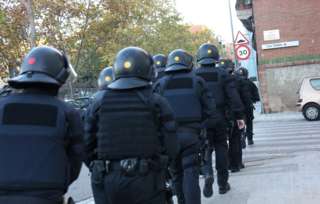
|
| Business › The World Of Nigeria's Sex-Trafficking 'Air Lords'-BBC by Kangol99(op): 9:25am On Jan 27, 2016 |
Last year, the BBC's Sam Piranty was given access by the Catalan police, Mossos D'Esquadra, to an investigation into a Nigerian sex-trafficking gang. He spoke to traffickers and women rescued from sexual slavery before filming an early morning raid in November, which led to 23 arrests. He also discovered that the gang is now using London as a gateway into Europe.
It's 08:00 in the Catalan Police Headquarters on the outskirts of Barcelona and Xavi Cortes, head of the anti-trafficking unit, waits patiently for his 22 teams to confirm they are in position. Finally, he gives the order.
Two-hundred-and-fifty officers quietly climb out of their police vans. Single file, each team approaches a residential building watched by a few surprised neighbours. On reaching the door, one of the masked police officers uses his fingers to count down. Three, two, one. The door is knocked down, the silence shattered, the officers rush inside.
The raid results in the arrest of the leaders of a Nigerian-based group running an international sex- trafficking ring in Barcelona. It's known as the Supreme Eiye Confraternity (SEC), or the Air Lords, and 23 people are now behind bars, with European Arrest Warrants issued for those who have left the country.
This operation was 18 months in the planning and involved monitoring more than a million phone calls, tapping dozens of mobile phones and months of surveillance.
Cortes and his team first came across the group in 2011 during a forgery investigation, but quickly discovered it was a huge network trafficking women and drugs. He asks me to look at his screen.
On it is a map detailing all the locations they have identified where members of the SEC operate. Cities are marked in Europe, North, West and East Africa, North and South America, the Middle East and Asia.
Eiye in Yoruba, the main language of south-western Nigeria means "bird". The group's insignia is an eagle and each city containing members is called a "nest", with the "mother nest" in Ibadan, about 100km (60 miles) north-east of Lagos.
The group was started at the University of Ibadan in the 1970s, and the original intention was to make a positive contribution to society. Over time, however, many members went astray, committing violence in Nigeria and delving into crime abroad.
The group now traffics human beings and narcotics (cocaine and marijuana) and forges passports. It has also facilitated the transport of stolen crude oil into Europe. "They are able to earn money in many ways, but we are focused on human-trafficking and the victims," says Cortes. His second-in-command, Alex Escola, then tells me something remarkable.
"You know, one of the tappings showed us that last year, on 7 July, around 400 members of SEC met in Geneva. They had a big meeting, all together." It was an audacious display of arrogance. In a city where many of the world's global institutions are headquartered, including numerous UN agencies, a global criminal institution held its own parallel international gathering and no-one tried to stop it. Benin City, Nigeria, is a human-trafficking hub, and a good place to observe how the criminal operation works.
After long negotiations, our team manages to speak to a recruiter, whose job it is to find girls. The recruiter explains that they either approach girls directly or through their families offering fake jobs abroad in a supermarket, or as a cleaner.
However, not everyone is tricked. Many women approach the recruiters themselves, often in full knowledge that they will be working as a prostitute in Europe. Some parents, also aware of this, approach recruiters on behalf of their children.
Destiny, who was 19 when she was trafficked to Spain three years ago, told me she knew sex would be involved but had never imagined she would be turned into a sex slave.
"If you live in Benin, there are many girls who came back from [Spain] with lots of money. They told us they had to have sex sometimes," she says. "We are not stupid but I did not know I would be beaten and raped and have to have sex every night of the week." NGOs in Benin City say many of the recruiters now look outside the major cities in order to find girls who have not heard their warnings about the reality of life for trafficked women, or the stories of those like Destiny who have returned and are now alerting others to the dangers.
Once recruited, the girls are then taken to Lagos or to northern Nigeria where they are picked up by men known as "coyotes" or "trolleys". The journey to Europe is perilous. Wire taps reveal how coyotes transporting women were stopped by armed groups in the deserts of Niger or southern Libya demanding thousands of euros for them to pass.
"One phone call from a coyote to SEC showed how a coyote was saying, 'I have a gun on my head and they want money,'" says Cortes. A woman who was herself trafficked tells me about other horrors. "The journey took weeks," says Sarah, who arrived in Spain in 2013 at the age of 21. "One of the girls kept asking for water. The men did not like it so they threw her out in the desert in Libya. They left her and we continued the journey. They told the boss on the phone that she was killed by terrorists. We were not human beings. We were animals."
Once girls are trafficked across the desert, they are then taken to "keepers", who often rape them before they cross to Europe. "When we got to Libya they put us in a house," says Sarah.
"This is when I knew we would not be working in a supermarket. One man was taking care of us. He would have sex with us, rape us. Then I became pregnant." Women who insist they will not work as prostitutes are tied up in a position called "the crocodile". Their hands tied to their feet, they are left for days with no food or water. Some are left to die as an example to others.
Keepers often get the women pregnant prior to making the crossing to Spain. With a child or pregnant, they stand a better chance of not being deported, and the men can use access to the child as a form of blackmail to keep the women under control.
Two years ago, at a time when the coyotes reported Libya had become too dangerous, recorded phone calls show that the girls were taken instead to Greece, via Yemen, Iran and Turkey. And today, as the Mediterranean becomes more difficult to cross - and the authorities try harder to detect traffickers - the SEC has begun to use airports in the UK more frequently. "This is a more expensive option for the group," Cortes tells me. "They use forged documents and passports from Nigeria to fly into places like Gatwick. The language is also easier for them. These documents are expensive though and need co- operation of people working in the government to get."
One evening in Barcelona, I head out with the undercover surveillance team. At around 10pm, plain-clothes officers in an unmarked car drive me to Badalona on the edge of the city. We are taken to a top-floor flat where police have spent hundreds of hours watching the house opposite.
A light is on in the window and shadows move between the curtains, before someone appears on the balcony - a madame. Most of the women that make it to Europe live in flats with a few other women and their madame - almost always a trafficked woman, who has managed to pay off her debt.
Girls arrive knowing they must earn a sum, which may be from 30,000 to 60,000 euros (£22,000 to £44,000), before they will be free. There are two ranks of madame. Lower-ranking madames prowl the streets - many on la Rambla, the main tourist strip in the centre of Barcelona - constantly texting and calling their girls to check on their whereabouts.
Girls are told to earn about 500 euros (£370) a night to stay in the madame's good books. But clients, mostly tourists, may pay as little as 20 euros (£15) for sex, so this is often impossible. After a night's work, girls return home and divide their earnings into three. One part goes to pay for the flat, the second to pay for food and the third goes to the SEC.
If they are not earning enough or refuse to work, the madames may beat them.
Higher-ranking madames collect money from their subordinates to pass on to local SEC leaders known as ibakkas. Always men, the ibakkas run the whole operation. They facilitate payment through the hawala system - a form of money transfer based on trust and one that is difficult to trace.
Ibakkas make sure that if any of their girls step out of line, their families back home are threatened. Family members have been known to be abducted and "disappeared" when girls refuse to pay their madames.
One woman, Jessica, who was trafficked to Spain in 2009, says two of her daughters, now in their early 20s, left home in Benin to escape the gang. One is in Dubai, the other in Morocco waiting to cross to Spain.
But in escaping one group of traffickers, they have put themselves in the hands of another. "In order to pay the debt, they will be prostitutes too," says Jessica.
Tragically, this is not an isolated case. It's a few days after the raid and Cortes seems content. Back in the office, dressed in full uniform, he details the large quantities of phones, computers, fake passports and documents seized at the time of the arrests. Despite that, there is a hint of frustration in his smile. "The size of the network means those arrested will be replaced," he says.
According to recent wire taps, one of the major European co-ordinators of the group is looking to restructure the gang.
The ibakka, based in London, was trying to get his 95 other European counterparts together for a meeting.
This kind of organised crime cannot simply be tackled locally. Arresting madames and taking women off the streets merely increases the demand for more women from Nigeria.
This is an organised crime group, run by men, operating across the world. This is a network which requires a global police response.
http://www.bbc.com/news/magazine-35244148 Cc:lalasticlala 
|
| Politics › Re: Nduka Obaigbena Surrenders To EFCC For Questioning by Kangol99(m): 9:01am On Jan 27, 2016 |
Go Defend yourself |
| Celebrities › Re: Binta Diamond-Diallo Wizkid's 2nd Babymama Slams Him In Interview by Kangol99(m): 8:19am On Jan 27, 2016 |
May God forgive you@Whizkid |


