Khalhokage's Posts
Nairaland Forum › Khalhokage's Profile › Khalhokage's Posts
1 2 3 4 5 6 7 8 ... 75 76 77 78 79 80 81 82 83 (of 98 pages)
 Politics › Re: Goodluck Jonathan Carrying His Grandchild (Photo) by khalhokage(m): 10:10am On Nov 24, 2015 Politics › Re: Goodluck Jonathan Carrying His Grandchild (Photo) by khalhokage(m): 10:10am On Nov 24, 2015 |
menix:1. Na Super wife material 2. You don use your own mouth answer am, but you forget the chain. |
| Politics › Re: Goodluck Jonathan Carrying His Grandchild (Photo) by khalhokage(m): 9:50am On Nov 24, 2015 |
menix:Guy pack well ọ, biko ị nọ wan talk story. What God has joined together, let no small boy try to put asunder. 6 Likes |
| Gaming › Re: Photo: Playstation 5 Release Running 4K Resolution by khalhokage(m): 9:32pm On Nov 23, 2015 |
lol, funny guy. |
| Celebrities › Re: Ebube Nwagbo Stuns In All White Playsuit - Hit Or Miss? by khalhokage(m): 6:00pm On Nov 23, 2015 |
Lucialovely:My booboo knows what she's talking about  1 Like |
| Health › What's The Most Dangerous Drug In The World? by khalhokage(op): 5:47pm On Nov 23, 2015 |
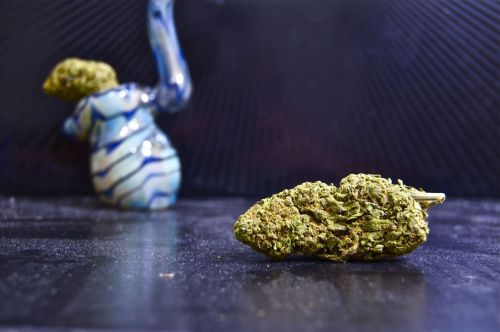
https://i.imgur.com/1fnaV7h.jpg What is the most dangerous drug in the world? This sounds like a relatively simple question: Surely it’s the one most likely to kill you, right? As it turns out, it depends on a multitude of things, from the individual owner's risk to the wider risk to society – and perception plays a large part. How Do You Define “Dangerous?" David Nutt is the Edmond J. Safra professor of neuropsychopharmacology at Imperial College London. He’s one of the world’s foremost experts on drugs, in terms of their use, their effects on the human brain, and international drug policy. Drug Science – formally the Independent Scientific Committee on Drugs – is a science-led drugs charity and research organization headed by Professor Nutt. In 2010, a now-infamous paper was published by the group detailing their scientific analysis on the harms of drugs available in the U.K., both legal and illegal. Sixteen parameters of harm were chosen, and were divided in terms of the specific drug’s direct and individual effects on the user. A direct effect of a drug on a person could be death through an overdose, for example; an indirect effect could be damage caused by becoming infected with HIV while using contaminated syringes. Each drug’s effect on others and the wider society were also taken into account. The list included mortality likelihood, dependence, impairment of mental functioning, loss of tangible socioeconomic things (such as a house or a job), physical injury, and criminal activities. The economic cost to the country, as well as the international damage (in terms of political and societal destabilization, for example) were also considered. “Ranking twenty different drugs on sixteen different harms – that’s the best method we’ve had,” Professor Nutt told IFLScience. In a more general sense, the detrimental effects of drugs could be divided into two broad categories: harm to others and harm to users. https://i.imgur.com/C6LSex2.jpg Economic vs Personal Harm This group also had to weight the different criteria – some harms were considered, albeit subjectively, more important than others. “There are two elements to it,” Nutt continued. “Deciding on the various harms – the 16 parameters – most experts agree on that. The more interesting question is how much you care about each of these different rankings; this is where the weightings come in. This could vary greatly depending on the group’s opinions.” A European group also attempted the same process a few years after the publication of this Lancet study, in collaboration with Drug Science. In terms of the two groups, the British prioritized economic harm more, whereas the Europeans ranked personal harm as considerably more important. One Every Ten Seconds With all this taken into consideration, which drugs were considered the most harmful? Mostly due to its harm to others – including the wider economy – alcohol was considered to be by far the most dangerous. Heroin and crack cocaine were next on the list, mostly due to the harm to individual users, although they still had a significant “harm to others” component. Cannabis was ranked 8th for overall harm, whereas ecstasy and LSD were considered among the least harmful. Tobacco was ranked 6th, just behind cocaine. Despite the European study using different harm weightings, the results were pretty much identical, with an extremely high level of agreement, or correlation, between the two studies. Only a few drugs – methamphetamine and ecstasy – changed positions slightly. https://www.iflscience.com/sites/www.iflscience.com/files/blog/%5Bnid%5D/harm%20score.png Image credit: The 2010 Lancet study’s official rankings. Alcohol is by far the most dangerous drug. Nutt et al./Lancet “We repeated the study at a European level, expanding it from a smaller British scale – and our experts really agree with each other,” lead author Dr. Jan van Amsterdam, of the Academic Medical Center at the University of Amsterdam, told IFLScience. “We ranked it by personal harm, society harm, and economic harm – but the study was funded by the Ministry of Health, so there was [inevitably] a health focus.” Regardless, the conclusion seems to be that alcohol is the most dangerous drug around. It directly causes a plethora of diseases, from cardiovascular and neurological disorders to liver degeneration; it indirectly causes transportation accidents, increases promiscuous activities and thus the likelihood of becoming infected by a range of pathogens, and makes an enormous dent in a nation’s economy as it pays for treatment for those suffering from alcohol-related problems. The World Health Organization (WHO) estimates that 3.3 million deaths every year are caused by the harmful use of alcohol – that’s 5.9 percent of all annual deaths. Shockingly, this is roughly one person every 10 seconds . A Matter of Perspective Asking the question “what is the world’s most dangerous drug” is fraught with complex political and social history – and many people believe all illegal drugs to be far more dangerous than legal ones. The legal status of various drugs is somewhat arbitrary, defined long ago in many Western nations by quirks of history. Heroin, for example, was regularly used in the U.K., prescribed by the National Health Service (NHS) to treat heroin addicts – small doses were used to wean people off it. “There were 1,000 addicts in 1971,” Nutt pointed out. “Then the government decided to get “hard on drugs”; by 1990, there were 200,000 addicts. “Drugs policy is deliberately used as a political tool. The illegalizing of cannabis, for example, was driven by pressure from Egypt which insisted the UN add cannabis to the anti-drug conventions in order for its members to get access to military bases there.” Cannabis is criminalized in most states in the U.S., but despite the scientific evidence suggesting it’s nowhere near as dangerous as alcohol, it’s costing up to $20 billion (£13 billion) per year to enforce its illegality. Legalizing it in the U.S., however, would earn the government billions in tax dollars, while taking the drug out of the hands of the criminal organizations that profit from it. By helping to fund the black market and associated crime, cannabis is far more dangerous as an illegal substance than it would be as a legal one. Not All Drugs Were Created Equal https://40.media.tumblr.com/tumblr_lyh0uuvuta1qchnreo1_500.jpg Marijuana is nowhere near as dangerous as alcohol. Governments often take a hard line on drugs in order to seem tough and, ultimately, more electable. It’s this attitude, exacerbated by the media , that encourages people to take an absolutist view: All drugs are extremely dangerous, and they must be stamped out at whatever cost . The scientific research, however, shows that not all drugs are created equal, and it’s the most widely available, easy to access drug of all that’s by far the most dangerous, by any measure. If the danger of drugs is seen as a personal danger most of all – as the European study decided – then drug addiction problems should be treated more as a health issue, not as a policing issue . Alcoholism is treated as a health issue, and heroin addiction often isn’t – illegal substance abuse tends to be a criminal issue first and foremost. All drugs are dangerous to some degree. Clearly, the idea that a drug is more dangerous just because it’s illegal is completely unfounded. Source: Iflscience |
| Crime › Re: Youths Threaten To Kill ‘prophet’ For Failing To ‘resurrect’ Audu by khalhokage(m): 4:33pm On Nov 23, 2015 |
The burial was well attended as scores of the who-is-who in Nigerian politics as well as members of the business community were in Ogbonicha to give their last respect to the departed hero.All this for a known criminal that stole from his state's treasury then physically and emotionally abused his wife and allegedly raped someone? Nigeria! A country of hypocrites and delusional slaves. |
| Celebrities › Re: "Late Abubakar Audu Was A Monster", Girl Laments On Twitter by khalhokage(m): 10:11am On Nov 23, 2015 |
I actually believe what she's saying, and if what she's said is really the truth then there will be no peace for all involved neither living nor dead. Never ever ever trust a politician especially Nigerian politicians they're almost all Savage beasts, it is known that you don’t gain political power by being a good person. 133 Likes 9 Shares |
| Celebrities › Re: Alibaba Comes For Amberose For Mocking Mr.ibu by khalhokage(m): 12:49am On Nov 23, 2015 |
pman001:She's not really white actually. 1 Like |
| Celebrities › Re: Freaky Naija Girls, See How The Exp0se Thereselves On Whatsapp And Share Online by khalhokage(m): 6:28pm On Nov 22, 2015 |
Lucialovely:Lol |
| Jokes Etc › Hilariously Awkward Text Exchange Between A 9yo And His New Girlfriend by khalhokage(op): 5:38am On Nov 22, 2015 |
Things have really changed. When i was 9 i didn't know what a girlfriend was and i thought women got pregnant by hugging. https://img-9gag-fun.9cache.com/photo/a6LYVER_460s_v1.jpg What do you think of this conversation? |
| Phones › Re: Is It Possible To Buy Phone In Nigeria From Gearbest? by khalhokage(m): 9:06pm On Nov 21, 2015 |
Simple answer is yes. Shipping fee is dependent on different factors you should check it out to know for yourself. |
| Phone/Internet Market › Re: Pls Who Has Any Phone Or 7" Tablet For Sale by khalhokage(m): 3:31pm On Nov 21, 2015 |
There's a Lenovo A3300-HV available in Awka at 23k |
| Christianity Etc › Re: How Do I Reconcile With My Parents? by khalhokage(m): 3:09pm On Nov 21, 2015 |
There's no need giving advice here, I know op's type they don't want advice what they're interested in is justification. 3 Likes |
| Computers › Re: HP PC Freeze's When Charger Is Not Plugged by khalhokage(m): 7:58am On Nov 21, 2015 |
jaybossYBNL:No Wahala. |
| Computers › Re: HP PC Freeze's When Charger Is Not Plugged by khalhokage(m): 4:01pm On Nov 20, 2015 |
jaybossYBNL:Does it work well now? |
| Computers › Re: HP PC Freeze's When Charger Is Not Plugged by khalhokage(m): 8:54am On Nov 20, 2015 |
Switch to High performance mode, it won't freeze anymore. |
| Forum Games › Re: (RIDDLES) Can You Solve These 11 Famous Murder Riddles? by khalhokage(op): 4:06pm On Nov 17, 2015 |
1 Like |
| Phones › Re: Where To Buy Infinix Hot Note Pro Charger In Uyo? by khalhokage(m): 7:08am On Nov 17, 2015 |
In Uyo? That dry town, better go to Aba or Calabar. |
| Science/Technology › Re: If You HATE It When People Chew Loudly, There's Good News For You. by khalhokage(op): 5:28am On Nov 17, 2015 |
Teempakguy: I'm not offended Bro, remember there's a disclaimer at the end of the article, and also this would be an indication of who is most likely to be a genius but not who isn't. |
| Gaming › Re: Would You Buy This? by khalhokage(m): 5:24am On Nov 17, 2015 |
I would definitely buy that gauntlet, it looks like what I wanted my entire childhood. |
| Gaming › Re: My Journey To Battlefield.. (pics) by khalhokage(m): 5:20am On Nov 17, 2015 |
I had no idea battlefield was on Android. |
| Phones › Re: Samsung Tab 2 by khalhokage(m): 6:54pm On Nov 16, 2015 |
LOL, nawa |
| Science/Technology › If You HATE It When People Chew Loudly, There's Good News For You. by khalhokage(op): 6:23pm On Nov 16, 2015 |
Next time you’re getting vexed that someone next to you is loudly munching and crunching on their food, don't fret – it could just be your creative brain. You’re not alone either: Many people given the label “genius” are often reported to be troubled and distracted by noise, such as Charles Darwin, Marcel Proust, and Anton Chekhov. Franz Kafka even once said: “I need solitude for my writing; not ‘like a hermit’ – that wouldn’t be enough – but like a dead man.” Research by Northwestern University found that there is a link between creativity and an inability to filter out irrelevant noises. The study, published in Neuropsychologia in March, looked at the link between creative thinkers and different levels of "sensory gating," the involuntary neurological process that filters out unnecessary or irrelevant stimuli. The researchers asked 97 participants to fill out a questionnaire called Creative Achievement Questionnaire, which assessed their real-world achievements in creative domains. They were also asked to perform a divergent thinking test, a technique commonly used in laboratories to assess creative cognition. In a separate test, the participants were played a series of short beeps while scientists measured their brain activity, recording the involuntary neurophysiological response that occurs 50 milliseconds after an auditory stimulus. Analyzing all this information showed that creative people were more sensitive to sound distraction. The study suggested that people with “leaky” sensory gating tended to be more creative as they have an ability to deploy attention over a larger range of stimuli. This increased input can lead to a richer and more nuanced experience, which can also help hone their ability to create associations with distant concepts or ideas. Since “leaky” sensory gating happens early in brain processing and may help people integrate ideas that are outside their main focus of attention, a reduced ability to filter out the irrelevant things may lead to creativity in the real world, said Darya Zabelina, lead author of the study, in a statement. She added, “If funneled in the right direction, these sensitivities can make life more rich and meaningful, giving experiences more subtlety.” Of course, with less than 100 participants, this is a pretty small study to draw wide conclusions from. Furthermore, creativity is a very subjective thing to measure and not necessarily something a questionnaire can capture. So, if you’re getting stressed at the guy sitting next to you with blaring headphones, we don’t suggest you start professing your genius to him. Source : Iflscience 1 Like |
| Forum Games › Re: (RIDDLES) Can You Solve These 11 Famous Murder Riddles? by khalhokage(op): 6:13pm On Nov 16, 2015 |
I'll post Answers tomorrow, I was expecting more people to answer. |
| Phones › Re: INFINIX NOTE 2, Official Pictures And Specification by khalhokage(m): 6:12pm On Nov 16, 2015 |
Esotericbaby:Bros we never see resolution yet, just size. |
| Phones › Re: INFINIX NOTE 2, Official Pictures And Specification by khalhokage(m): 5:26pm On Nov 16, 2015 |
It actually looks really good, waiting on the price. |
| Science/Technology › Re: NASA, How Far? by khalhokage(m): 7:08am On Nov 16, 2015 |
It was a joke by a satire site that went out of hand. 2 Likes |
| Forum Games › (RIDDLES) Can You Solve These 11 Famous Murder Riddles? by khalhokage(op): 6:21pm On Nov 15, 2015 |
https://img-9gag-fun.9cache.com/photo/a7bXEdr_460s_v3.jpg See if you can solve them. ANSWERS COMING SOON. 2 Likes |
| Jokes Etc › Re: Who Is Funniest? by khalhokage(op): 2:44pm On Nov 15, 2015 |
Unionised: Thank you. |
| Jokes Etc › Who Is Funniest? by khalhokage(op): 2:05pm On Nov 15, 2015 |
1. The HAUSA man who removed his shoes to enter a taxi. 2. The IGBO man who went to the bank with a spanner to open a bank account. 3. The YORUBA man who went to bed with a ruler just to know how long he slept. 4. The TIV man who watched the news and waved at the news news caster. 5. The EFIK nurse who woke up a sleeping patient simply because she forgot to give him sleeping pills. 6. The IGALA man who lowered his TV volume because he wanted to read a text message.. 9. The IKWERE man who polished his shoes to take a passport photo. 10. The ISOKO man who climbed a mango tree to check if the mango was ripe enough then came down and started stoning it. 11. The FULANI man who chose to drink Fanta because he thought sprite was unripe. 12. The GWARI man who saw something that looked like shit, touched and tasted and said "Hmmm" na shît ooo!!! Thank God I no match am. 13. The IDOMA man who put his radio inside the refrigerator because he wanted to listen to Cool FM. happy Sunday pals |





1 2 3 4 5 6 7 8 ... 75 76 77 78 79 80 81 82 83 (of 98 pages)