Foreign Affairs › Re: Name At Least Two African Kingdoms That Are Missing On This Map by letu(m): 8:33am On May 19, 2020 Foreign Affairs › Re: Name At Least Two African Kingdoms That Are Missing On This Map by letu(m): 8:33am On May 19, 2020 |
Daverytimes:
I don't see Kingdom of Bornu nor Kongo. However I am not exactly an expert on the issue and I don't know exactly what time frame the map is set in.
Edit: am blind, Kongo is there. kingdom of Bornu is there in the map as the Empire of Kanem which is also know in history as Kanem Bornu Empire while Kongo is also there in the map somehow close to Lunda State in the map . |
| Politics › Re: Who developed Lagos Ports: Myth Busted. by letu(m): 8:20am On May 19, 2020 |
Adefatima:
Yoruba are in Nigeria Togo & Benin. Do you know what it's means to call someone Fatima in Igbo or what Fatima means in Igbo? |
| Politics › Re: Nigerian National Symbols by letu(m): 7:56am On May 19, 2020 |
rottencorpse:
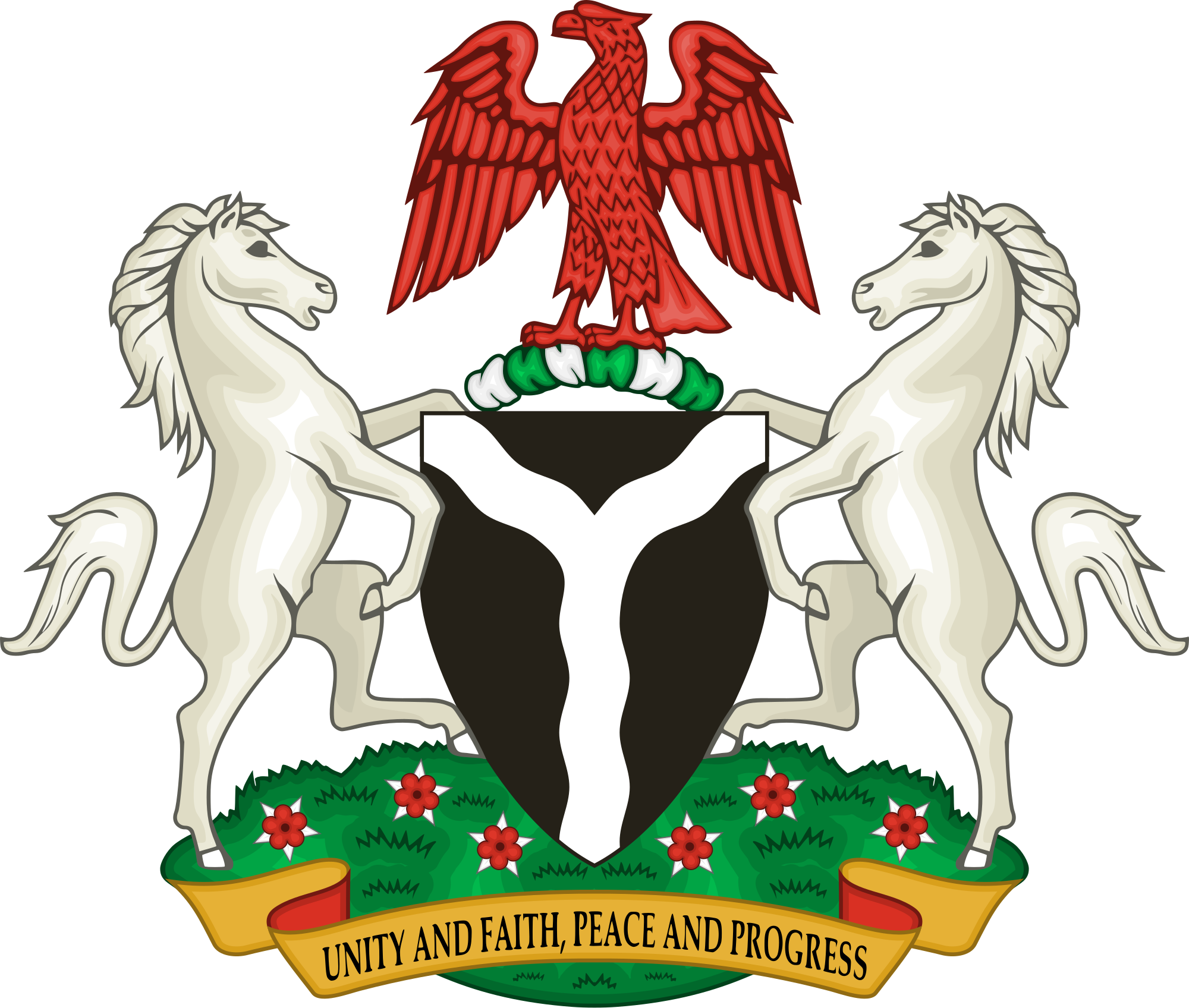
1. Nigerian Coat of Arms
https://upload.wikimedia.org/wikipedia/commons/thumb/b/bc/Coat_of_arms_of_Nigeria.svg/2000px-Coat_of_arms_of_Nigeria.svg.png
To give its own meaning, there are various things found on the Nigerian Coat of Arms which include .2 white horses, a shield, 2 bands, an eagle and a green plant (cactus) at the down part of the shield.
The white horses symbolize dignity, the black shield represents fertile soil, the eagle means strength, the bands which look like the letter Y represent River Niger and Benue, and finally the green plant symbolizes rich soil and beauty of the land. The Nigerian Motto which is written boldly on the coat of arm is ‘’Unity and Faith’’.
2. Nigerian National Flag
https://connectnigeria.com/articles/wp-content/uploads/2018/03/538144876.jpg
The Nigerian National flag was for the first time raised on 1st October 1960 after it had being designed in the year 1959 by Michael Taiwo Akinkunmi who was from Ibadan the capital of Oyo State in the western part of the country. He was a student in London. There are two colours on the Nigerian Flag which are Green and White whereby it’s vertically divided into three equal parts. The Green represents agriculture while on the other hand, the white represents peace and wealth and prosperity of a country.
Rules that guide the Nigerian Flag
There are some rules governing the hoisting of the Nigerian Flag and its maintenance which are listed below:
First of all, on no account should any other flag be raised higher than the Nigerian flag. On the other hand, it must be raised at sunrise and lowered at sunset.
Another rule is that the Nigerian flag must be hung on important days or any important event and should be hoisted at half-length to respect the fallen heroes.
Finally, if for any reason, the Nigerian flag gets torn, it must be destroyed and replaced immediately.
3. Nigerian National Anthem
The Nigerian National anthem was adopted in 1978 and composed by the then Nigerian Police Band which includes Eme Etim Akpan, John A Ilechukwu Sota Omoigui, P. O. Aderibigbe and B A Ogunnaike led by Benedict E. Odiase. The Anthem has two stanzas where by different words were put in place to make sure that something must be sung in the country to show respect and honour.
The anthem raises the faith of Every Nigerian and also reminds us of our unity as well as common goals which must be achieved. It also talks about the aims and aspirations for the coming generation.
Here is the Nigerian National Anthem:
Ist Stanza
Arise, O compatriots
Nigeria's call obey
to serve our fatherland
with love and strength and faith.
The labour of our heroes past
shall never be in vain,
to serve with heart and might
one nation bound in freedom
Peace and unity.
2nd Stanza
Oh God of creation,
direct our noble cause
Guide thou our leaders right
Help our youths the truth to know
In love and honesty to grow
And living just and truth
Great lofty heights attain
To build a nation where peace
And justice shall reign
4. National Pledge
In September 1976, the National pledge was written by a Nigerian Professor, by name Prof (Mrs) Felicia Adebola. The Nigerian National pledge is known to be an oath of compliance of support of the country. Most times, the National anthem is sung followed by the National Pledge.
It has therefore being decreed that in all schools, students should recite the National Pledge every day. It is always recited on attention, moreover, it is one thing to say it and it is another thing to abide by what it says.
This is the National Pledge below:
I pledge to Nigeria my country
To be faithful loyal an honest
To serve Nigeria with all my strength
To defend her unity
And uphold her honour and glory
So help me God
Nigerian Naira
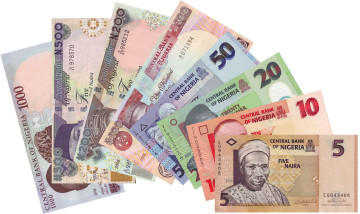
https://d1cztgz77skyl3.cloudfront.net/wp-content/uploads/2014/10/all-notes-360x214.jpg
The Central Bank of Nigeria is the only authorized issuer of the Naira. On different denominations of the Nigerian Naira, the pictures of heroes of the Nigerian country are inscribed. The 50 naira note most especially denotes unity in diversity where different major tribes are seen in it.
Furthermore, we all know that every country in the world also have their own legal tender which symbolizes their currency. For instance, USA uses Dollar, Benin republic uses Franc, Ghana uses Cedis and Nigeria uses Naira. The naira is Nigeria’s official symbol of legal tender since 1973 so where ever you see the Naira, one should know that it’s for Nigeria. Well the latest Agu nechemba Ala Biafra in action.  
|
| Health › Re: "COVID-19 Is A Scam" - Discharged Delta Patient Says by letu(m): 6:37pm On May 18, 2020 |
Enoch07:
no be scam o this shiit is very real How much did the government agency for disease control pay you because I don't understand why this is your response after reading this. |
| Christianity Etc › Re: If You Are Still Under The Law/Old Covenant, You Have ZERO Hope In Christ by letu(m): 3:50pm On May 18, 2020 |
sonmvayina:
We are all God's creation, you worshipping a man as God is not different from a man worshipping a snake or a cow.. The commandment is "Do not make the imake or LIKENESS Of anything in heaven, on earth or under the water below the earth, do not bow down to them or serve them".. God created us like this, with the ability and capacity to make choices, he has already factored in all the possible choices we can make. He gave us the Torah for the jews and omenani or omenala for the igbos to guide us to make better choices.. So that we can have a good human experience.. End of the day we are all spiritual beings having a human experience or walking a human path.. Ecclesiastes 12:7 About image/likeness, try and read Exodus 25 : 17 -- 22 all the directives concerning the image was also given by God Almighty the Lord of Spirit's. |
| Christianity Etc › Re: If You Are Still Under The Law/Old Covenant, You Have ZERO Hope In Christ by letu(m): 3:09pm On May 18, 2020 |
davidinchrist:
Friend, the question is, do we want to argue or learn?
I've got no time for argumentative people, I just ignore...
Please, read patiently: it's free. I quoted several verses to help people understand easily.
Summary:
Jesus has fulfil/ended (fulfil here means TO END) the LAW of Moses (flesh).
We are now to live according to the Law of the Spirit (Christ), which is LOVE:
1. Love God with your entire life.
2. Love your neighbour as yourself.
Jesus said, whoever does that fulfils the Whole Law.
Matthew 22:37-40 KJV
Jesus said unto him, Thou shalt love the Lord thy God with all thy heart, and with all thy soul, and with all thy mind.
[38] This is the first and great commandment.
[39] And the second is like unto it, Thou shalt love thy neighbour as thyself.
[40] On THESE TWO commandments hang ALL the LAW and the prophets.
Please see the original post again, IF you don't mind.
May Jesus Bless You. who inspired Moses to write/ give those Law?. |
| Culture › Re: Kamalu And Amadioha: Two Different Deities That Converged? by letu(m): 11:36am On May 16, 2020 |
AjaanaOka:
Recently, while going through a paper by Simon Ottenberg, the famous anthropologist of the Afikpo people, I came across a passage on the deity Kamalu (Nkamalu) that at first made no sense to me:
Ottenberg describes Nkamalu among the Afikpo as an all-purpose personal tutelary deity for males, instead of the community-wide god of thunder and lightning that students of Igbo religion are familiar with. Nkamalu is associated with success in farming, and is propitiated at least twice during the farming season: the first time is after the pre-farming bush burning to ask for good crops; the second time after the harvest as a thank-offering.
Ottenberg mentions a number of other minor rites that shows a clear connection between Nkamalu and a farmer's hopes for a successful harvest.
It wasn't just success in farming that Nkamalu is linked with. He is linked with success in wrestling, in headhunting, in fights... In short, Nkamalu is a personal deity of individual male success, much like Ikenga among the Igbo west of the Cross River area. Ottenberg himself sees and remarks on the close parallel between Nkamalu and Ikenga. Ottenberg also says that his Afikpo informants were emphatic that Nkamalu has nothing to do with thunder and lightning. He writes: "Elsewhere in Igbo country, Nkamalo is a high deity of considerable importance associated with lightning and thunder. The Afikpo, however, are emphatic that their Nkamalo is associated neither with these elements nor with a high god."
Elsewhere among the Cross River Igbo, I've come across references to "Nkamalu Ji", "Kamalu Oba" (Kamalu of the Barns), "Kamalu Agbata Uzo Oba" (Kamalu of the Pathway to the Barn), etc, who are all connected to the farming cycle and to the male well-being in general, but not to the sky.
It would appear that Kamalu was in the beginning a Cross River Igbo deity very distinct in character from the Amadioha of the Southern Igbo. The Aro are the most likely agency of the Kamalu-Amadioha association and eventual convergence, perhaps dating back to the beginning of their relations with the Etche of Ozuzu in the 18th century or so.
One wonders what purpose identifying Amadioha of Ozuzu with Kamalu might have [been intended to] serve(d). To increase Amadioha's marketability among the Cross River Igbo? Perhaps. Identifying an originally non-Igbo deity with a strange name (Ibini Ukpabi) with the Chi concept certainly made it more marketable among the Igbo. 
One also wonders if the question of marketability informed the Amadioha Oracle established to the north among the Isu people going by a different name. The sky (even if in a vague form) was somewhat deified in the north. Thunder and lighting, not so much. Those precolonial hustlers were quite clever. From what I know as an Igbo man and what I understand in relation to your write-up, within our Igbo tradition/culture that has to do with the spiritual beings in as much as there difference I will divided them into different category/spiritual area's. 1) Agbara Ala(I mean the spiritual realms/ Land and not entirely about the Earth goddess) : here we have the spiritual beings associated with *) Mountain *) Cave *) Spiritual beings associated with the boundaries *) Spiritual beings associated with different mystic trees or sacred grove *) And Ala the Earth goddess. 2) Agbara nmiri(realms) : Here, we have different river in the villages in Igbo land and each of them have different spirit force/beings(Male and Female) that goes by different names whom are attached to each of the different rivers but they all fall within the Agbara nmiri. 3) Agbara Elu(Sky or upwards realms) : Here, we have spiritual beings associated with the sky which is where Kamalu,Amadioha and Ayenwu etc belongs. 4) Winde/Breeze and Fire/Light : the Winde is associated to the sky realms while Fire is associated with the Land and also with the Sky. IN GENERALE Kamalu and Amadioha both are spiritual force from the sky realms, in your write-up Kamalu is associated with good farming and for there to be a good farming there has to be a raining day with something that comes with the rain eg thunder and lightning, now comes Amadioha that is know as God of thunder and lightning also associated with love peace and justice, people in the past also reverence Amadioha so that they will have good farming and for their family to be able to have children (multiple), for thunder and lightning also comes with the rain. |
| Culture › Re: Ise! Does Every Group In The Igboid Language Group Use It. by letu(m): 7:03am On May 12, 2020 |
IDENNAA:
It is none of my problems what nonsense anybody somewhere decides to write about but it must be backed by proof.
And , no , Anambra groups don't go around claiming what doesn't belong to them...the issue with Anambra has to do with some inventions claimed to be Nri which we later found out may have been in existence amongst the original settlers ,before Eri. But , as we speak today we can't completely define Anambra culture and decide who owns what , without encroaching into different clans claims of being the sole inventor of one thing or another. Therefore, I use a general name to classify people of Nri Oka cultured people, OMANBALA CULTURE. That way, the whole group that practice this like-culture has a common name.
You wouldn't see anybody from this region claiming Nri founded some communities not backed by evidence, rather Aro are the ones claiming things they never even know existed Another Junk. |
| Culture › Re: The Eze Nris Of Nri Town by letu(m): 10:26pm On May 09, 2020*. Modified: 11:30pm On May 09, 2020 |
TerraCotta:
Ajaala/Radoillo, thanks for the fantastic post as always. I’m guessing that you’re finding yourself with more free time during this extended quarantine period as well.
Could you provide some citations for the ‘little ice age’ research you referenced for the lake in Ghana? Also, your dating of Nri matches fairly well with Chambers, from what I remember. It’s a little earlier than his 15th-century proposal but I don’t remember if he’d used these ecological factors in his methodology. These changes in water resources and environmental conditions had monumental significance in our region and there’s a lot to learn from closely examining myths and oral history.
Could you explain a little more about what Ajaala means? How does it differ semantically from just ‘ala’ or ‘agbala’? Ajaala is the same as sand or ordinary ground but that's what it is to ordinary person, for someone who understands the mysticism within the Ajaala such person will be seeing the Ajaala as more than ordinary sand/ground. Ajaala is an integral part of our Igbo culture, it plays a very important role in spiritual things when it comes to tradition, it is where spiritual things are done, it's also related to Eke kere uwa/Ala the Igbo traditional Mother Earth inwhich in some areas in Igbo land they plant a sacred grove to Ala the Earth goddess which indicates the connection with Ajaala while in other place in Igbo land they use the Ajaala eg(the ordinary sand as symbolic to the mysticism within the Ajaala and Also the Earth goddess) to build a temple to Ala the Earth goddess . Ajaala is where the drink offering are pour during prayer(when you're praying to your chi eg Agbara and also Chineke kere eluigwe la uwa la ojujuya) that's if you know how to do the Igbo traditional prayer, it can be used for ritual's eg Igba Afa, and don't be surprised for you will see some Bible verse that speak's about it eg the Bible Gen 35: 14,Num 28:7--8,Ex 29:41, lev23:13 and Ex 20: 24, Gen 21:33 etc . |
| Culture › Re: The Eze Nris Of Nri Town by letu(m): 5:37pm On May 09, 2020 |
IDENNAA:
You can call Eze Nri Eze Ana but we had many Eze Ana existing parallel to Eze Nri. And , no , they do not command the same reverence. Therefore, your Ezeala doesn't command the same prestige as Eze Nri. You southern Igbos are quite funny. Understand we cant all have the same institution. I smell that classic southern Igbo inferiority complex. You are the same goon that claimed Aro were setting up colonies at Nri/Awka.. Okay I've heard, besides I think that Ajaanaoka open this topic so that every Igbo people on Nairaland will be able to understand and know more about Umu Eri//Nri Oka area, so I also think this topic isn't for inter clannish supremacy purpose so enough of your chest beating because it's only ---------- that do chest beating eg picture below. Enough of your 


|
| Culture › Re: Ise! Does Every Group In The Igboid Language Group Use It. by letu(m): 5:11pm On May 09, 2020 |
IDENNAA:
And what do you behave like ? You go around looking for information to spite Nri and Anambra groups just because of your own personal issues.
I ask you again , which Aro Idenmili were you talking about Well for your information, I'm not the one that wrote any of those articles which has to do with Aro supremacy because I'm not from Arochukwu. Just as Anambara people have the freedom to talk and write about their speculated Nri supremacy the same goes to Ndi Aro so you should direct your anger towards them, last time I checked almost all Aro supremacy articles has it that they conquered/ subdue Oha Ndi Anambara which includes your Idennmili or are you saying that your Idennmili is no longer part of Anambara, alright I've heard from you that Ndi Aro did reach Idennmili okay let's leave this and move on with the topic which has to do with Isee. |
| Culture › Re: The Eze Nris Of Nri Town by letu(m): 1:59pm On May 08, 2020 |
AjaanaOka:
I have my reservations as to whether Eze Nri should be viewed as an Eze Ana or even as any kind of priest for that matter. Though, I'm aware of the existence of literature that calls him just that. He's been called a priest-king, but I'm not sure that description fits.
There are definitely parallels that can be seen between the taboos observed by the Eze Anas in the Nri-Awka axis and those observed by the Eze Nri. But, as I have said in previous posts, the Eze Nri himself doesn't even perform basic priestly duties like officiating at/carrying out sacrifices. That is delegated to an 'official' in his employ, because Eze Nris are gods and gods don't offer sacrifices. So the Eze Nri ranks above priests. I've (personally) been using the term 'divinity-king' for a while now. Interesting, in pre colonial Ngwa land there were other Priest's they recognize the Eze Ala as Divine Priest of Ala and they also reverence the Iwuala inwhich in Ngwa history the Eze Ala Is the custodian of Iwuala alongside all the Okpara Ezi of the community/ confederation inwhich Eze Ala Is the head of the community/confederation followed by the Okpara Ezi . According to tradition, for some one to be Eze Ala in olden days Ngwa land the person has to be the first son and the oldest in the community/confederation, he will be the custodian of Ofo Ala inwhich this conferred legislative and judicial power's on him. Eze Ala in the past preside over the meetings of the Amala eg Ama ---- Ala council where disputes are settled and laws are made, the council also include others like Okpara Ezi(The first son of each family that made-up the community/ confederation), Ezeji titled men,Dibia also know as medicine men/diviners and adult members of the community/confederation. In pre colonial Ngwa land the affairs of Eze Ala was characterize with check's and balances which was provided by Ezeji and other title holders eg Dibia etc. Eze Ala works closely with the Dibias but distanced himself from some of their ritual activities but Eze Ala lived exclusively with his first wife close to the temple of Ala which is to ensure that they do their own ritual function effectively, some of the Eze Ala tradition: 1) Eze Ala is not expected to cross river/ocean 2) Eze Ala Is forbidden to eat animals considered unholy eg canivoros animals etc 3) Eze Ala don't eat in public 4) Eze Ala don't shake eg handshake 5) Eze Ala don't live His house only on special occasions. I'm just curious, what's your view on this Ngwa Eze Ala culture I've written based on my research, is it similar to Eze Nri or Umu Eri/oka axis . |
| Culture › Re: The Eze Nris Of Nri Town by letu(m): 10:25am On May 08, 2020 |
AjaanaOka:
So, the internet is filled with sites/pages that list the Eze-Nris of Agukwu-na-Diodo-Akamkpisi, but not one single page online has much to say about each individual Eze-Nri apart from their names. I've wanted to put together brief profiles of the Eze-Nris for a long time now, but...little time. Now that everyone has a lot of time on their hands though, why not.
This write-up is based on information I have derived over the years from the works of Northcote Thomas, MDW Jeffreys, Michael A Onwuejeogwu, Douglas Chambers, Tony Nwankwo Nwaezeigwe and Nri local historians, like B.I.O Odinanwa. I have used Nri in this piece as the name of a town, one of the two centres that have an Eze-Nri (the other one being Oraeri); but it should be clear that no town went by that name until the 1940s. What we now call Nri Town was two loosely connected settlements, Agukwu and Diodo-Akamkpisi. But because Agukwu-na-Diodo-Akamkpisi is rather a mouthful, I'll stick to the modern designation, which is Nri Town.
The first seven Eze-Nris used the regnal title ‘Nri Namoke’ and came from the section of Nri Town known as Diodo. Most traditions have however telescoped them into one Eze Nri.)
1. Ogbuodudu Akakomme (Nri Namoke I) – Ogbuodudu Akakomme, the first Nri Namoke, was also known as Okporo Odudu. He was a son of Eri and migrated from Aguleri to Amanuke. Either this Eze Nri or his successor left Amanuke and migrated to the present site of Nri Town (after a brief stay at Achalla-Isuana) where he founded the Diodo section of that town. It was from the Diodo section of Nri Town that the Eze Nris originally came until the kingship passed to Nribuife from the Agukwu section some generations later.
2. Edu Anyim (Nri Namoke II) – Son of Ogbuodudu/Okporo Odudu. He appears to have been an Eze Nri of far-reaching prestige, because his name is still recalled in the traditions and the rituals of the people of far-away Aku, near Nsukka. For instance, the Aku people claim that the Odo cult was introduced to their town by ritual agents from Nri; and on the day that the Odo spirits are to depart to the spirit world after the Odo festival period, this proclamation is made in Aku: “Nshi Namoke Nwa Okporo Odudu, Ezitere Odo na onoghalu n'Igbo.” (Translation: Nri Namoke, son of Okporo Odudu [the first king of Nri], Has sent a message that Odo has overstayed outside.)
3. Nri Egbobe (Nri Namoke III) – According to traditions, Nri Egbobe was not qualified by blood to ascend the throne, i.e., he was a usurper. But because no eligible successor to Edu Anyim could be found from the line of Okporo Odudu, he was crowned. His reign was brief and characterised by disorder, for he was a tyrant. The Diodo people hated him, and finally decided to be rid of him. It was an abomination to shed kingly blood, so the people settled on carrying him away to the Evil Forest, tying him to a tree, and leaving him there to die. For seven days the deposed king rained curses on the people from the tree in the forest. He declared that they would be struck by misfortunes and disasters, depopulated and would remain a small community (Ana Nta). Then he died. The curse seemed to have worked. Many young men from Diodo were killed in a tree-felling accident. This was perceived as a bad omen and led to a mass exodus of people from the Diodo section. Diodo was left under-populated. The underpopulation may have affected the balance of power in Nri Town and may have been a remote contributing factor to the eventual shifting of power from Diodo to Agukwu.
Nothing is remembered about the careers of the next three Eze Nris:
4. Anwu Obele (Nri Namoke IV)
5. Odunukwe (Nri Namoke V)
6. Agufugo Egbeli (Nri Namoke VI)
7. Ezeagu Akubilo (Nri Namoke VII) – By the time of Nri Namoke VII, the Agukwu section of Nri Town had been established by Nri Ifikuanim who appears to have instituted a parallel kingship at Agukwu. Nri Ifikuanim and his people had migrated directly from the town of Ugbene, but were also ultimately of Umueri descent. A daughter of Nri Namoke VII was given in marriage to Nri Ifikuanim (or a descendant of his). This daughter had a son who became Nribuife.
In his old age, Nri Namoke VII was utterly neglected by his people, the Diodo section. It was during this time that one of his sons named Avo emigrated and established the 'rival' Nri centre at Oraeri. Nribuife, his (Nri Namoke VII's) daughter’s son, was the one who took care of him and brought him food. When he was nearing the end of his life, Nri Namoke VII cursed his family and declared that the eze-ship would depart from Diodo and never return to it, and that if any Diodo man attempted to take up the title of Eze Nri he would perish. He then handed the paraphernalia of royal office to his grandson, Nribuife from the Nrifikwuanim line. Nrifikwuanim kings from Agukwu have being reigning in Nri Town since then. (Although recently the Diodo people have tried to resurrect their claim to the kingship by having one of their sons Chikadibia Ogunmor crowned as Nri Namoke VIII, as a counterpoise to the more recognised king of the Nrifikwuanim line, Nri Enweleana II.)
8. Nribuife –Nribuife unified the two moieties of Agukwu and Diodo-Akamkpisi into one kingship and ruled as the first Eze Nri of both communities. He established the “Council of State” known as Nzemabua made up of twelve high-ranking ozo titleholders.
9. Nri Omalo – Nothing is remembered about him, except his name.
10. Nrijimofor I – Remembered as a great king during whose time Nri itinerant ritual agents spread the cult of ikenga all over the northern and western Igbo areas. According to Onwuejeogwu, Nri influence, during this time, reached Nsukka in the north, the vicinity of Orlu in the south, and as far west as the vicinity of Agbor. But, as we have seen, Aku traditions suggest that Nri influence had reached the Nsukka area earlier in the time of the Nri Namoke kings. What happened in the time of Nrijimofor I was probably consolidation of an already far-flung area of influence, and expansion into some new areas, especially to the west.
11. Nri Omalonyeso – Nothing is remembered about him, except his name.
12. Nri Anyamata –(mid 17th century.) The only notable event associated with this king was a long drought (probably in the 1640s), which was followed by severe famine all over the area within Nri’s sphere of influence. Onwuejeogwu puts his reign to between c. 1465 and 1511, and Douglas Chambers to between c. 1500 and 1530. The chronology of the Little Ice Age droughts in West Africa suggests his reign could have been in the middle of the 17th century.
13. Nri Fenenu – (later part of the 17th century.) Fenenu was renowned for his mystical powers. It was said that he lived to be over one hundred years. Because he lived to be so old, people began to believe he was immortal. His reign is associated with one of the earliest remembered appearances of a large host of locusts (igwulube) in the area. Eze-Nris are believed to have the ability to control the appearance and disappearance of locusts; it can then be understood how the Coming of Locusts during the reign of Fenenu added to his renown as a powerful mystic.
In the last years of his reign (according to traditions), Nri Fenenu mastered the art of levitation, from which he got his ‘reign name’ – Fenenu. One evening, so goes the story, the old king came out into his courtyard to ‘bask in the evening sun’. There he floated away into the sky, and came to rest atop a tall iroko tree. This display of supernatural powers deeply troubled the townspeople. He remained there atop the tree until the elders of Agukwu with their ofo sticks assembled and petitioned him to come down and die like an ordinary eze. Everyone was relieved when the king descended from his lofty perch some hours later. The head of the Adama people went and touched him on the forehead with the ofo and he died at once and was buried. Jeffreys suggests that this ‘touching on the forehead with the ofo’ is probably a euphemism for ‘ritual killing the king’. In African history, divine kings who had reigned for too long or who were perceived to be dangerously too powerful were asked to die or were killed by their officials; and this might have been the fate of Nri Fenenu. His descendants and the people of his lineage (the Umunnechi lineage) were thereafter debarred from ever producing an Eze Nri again. This debarment still holds true today.
14. Nri Agu – The beginning of Nri Agu’s reign portended great promise. There was an increase in trade, resulting in an increasing accumulation of wealth by a section of the people. Dr TN Nwaezeigwe suggests that a number of Nri settlements sprang up in western Igboland during his reign, pre-eminently in the Aniocha-Oshimili axis, including Ogwashi-Uku and Ogboli Ibusa. Ogboli Ibusa is still called Ogboli Nshi-Agu and Ogwashi-Uku called Adaigbo Nshi-Agu, apparently after him; and a secondary school in Ogwashi-Uku still bears his name. However, it must be stated that the 'rival' centre of Oraeri also had an Eze-Nri who was known as Nri Agu, and it might have been this Eze-Nri, rather than the one who reigned in Agukwu, who was connected with the founding of Ogwashi-Uku and Ogboli Ibusa. The traditions closely link Nri Agu of Oraeri with the River Niger.
Nri Agu of Agukwu soon found his life as an Eze Nri with all its restrictions and rigid observances unbearable. He therefore abdicated and, with a few faithful followers, secretly left the town and went to settle in Oraukwu. It is said that a chiefly lineage in the latter town (Oraukwu) still traces its origin to Nri Agu.
15. Nri Alike and Nri Apia – After Nri Agu, two very wealthy men vied for the Nri throne – Alike and Apia. Being men of means and power, no one could stop them and they both succeeded in getting themselves crowned as Eze Nri – the first time the town had seen two crowned kings since the unification under Nribuife . Apparently, the trade boom that began in the reign of Nri Agu had affected the politics of Nri: a class of noveau riche had risen who could force or manoeuvre their way into power. They both died ominously. According to some traditions, they both died on the same day; according to other traditions, they died within one market week (four days) of each other.
The reign of Alike and Apia witnessed a massive expansion of the trans-Atlantic trade in slaves. This trade appears to have only penetrated the Nri-influenced areas significantly from the middle of the 18th century, when we got the first reference to an Igbo slave in the New World with ichi marks, in 1752. Thus, it is likely the reign of Alike and Apia embraced the mid-18th century. And while these two Eze Nris authorised the inhumane trade in slaves (perhaps because they were traders themselves who might have also dealt in slaves), they declared it an abomination to kill or bleed a slave. This is the origin of the claim by the Nri people that they did not practise human sacrifice. (There are, however, indications that human sacrifice persisted in Nri.)
16. Nri Ezimilo – Before his selection as the next Eze Nri, Nri Ezimilo had been a ritual agent based in Asaba. He was recalled to Nri Town and consecrated. One night, however, shortly after he became Eze Nri, he was murdered by thieves from Enugu Ukwu. The thieves were raiders who had come to the king’s compound to steal the cattle paid to the Eze Nri as tribute. Nri Ezimilo had gone out into his yard to see what was going on when the men, not knowing his identity, murdered him. The death of Nri Ezimilo was followed by a severe drought which was said to have affected all of Igboland. This was probably in the late 18th century (sometime between the 1770s and the 1790s) when, according to records, several parts of the West African forest regions were affected by drought.
17. Nri Enwenetem – Because of Nri Ezimilo’s untimely death and because of the drought, which was attributed to the wrath of the murdered king, his son was allowed to step into his father’s position immediately (without the necessary interregnum), and he became Eze Nri Enwenetem. This was the first and only time a son was succeeding his father as Eze Nri, at least since the time of the Nri Namokes. It was also the first and only time an interregnum was not observed after the passing of the preceding king. The drought that followed his father’s death is said to have only ended when Enugu Ukwu made amends for the murder by giving up an Enugu Ukwu son and an Enugu Ukwu daughter to die in Nri in compensation.
18. Nri Añua – Around the turn of the 19th century, Añua was consecrated as Eze Nri. He was an aged man, and soon agreed to abdicate in favour of a younger candidate. He has officially been forgotten, and his name does not appear in the official kinglist. His descendants, however, (the Añua minimal lineage within UmuNri major lineage of Obeagu) have kept his memory alive by maintaining an Eze-Nri Añua Royal Band.
19. Nri Enweleana I – Nri Añua was to be succeeded by a man whose name is remembered as Nwankpo, but the position was forcibly wrestled from Nwankpo in what was essentially a coup by a young firebrand who assumed the position of Eze Nri as Nri Enweleana I. The reign of Nri Enweleana I coincided with the career of the notorious Aro slave dealer Okoli Ijoma of Ndikelionwu, who was raiding the Nri-Awka axis in the mid-19th century. Enweleana I sent his ritual agents to dissuade Ijoma from slave-raiding and from instigating towns to fight one another with arms and the Ada [Edda] warriors which he (Ijoma) supplied. But when Ijoma rebuffed the Eze Nri’s diplomatic overtures, Enweleana I placed an anathema on him and formed a military alliance called Amakom to resist the activities of the Aro slavers. The member-towns of the alliance were Awka, Nibo, Nise, Amawbia, Ugwuoba, Enugu-Agidi, Ebenebe, Ukpo, and Amansi. The military alliance is said to have achieved some success in checking the Edda raids in the Nri-Awka axis, notably defeating the hired warriors at Nawfia and Enugu-Ukwu. Nri Enweleana I died around 1869 and was succeeded after a long interregnum of about 20 years by Nri Obalike.
20. Nri Obalike – Nri Obalike became Eze Nri around 1889, and was the Eze Nri when British colonialism arrived in the heart of Igboland. Against the tradition that an Eze Nri must not leave his town, the British forced him to attend the Native Court at Awka. It was a reflection of the awe and terror in which the people of the Nri-Awka axis held the Eze Nri that when Nri Obalike entered the Native Court for the first time while a sitting was going on, the whole assembly rose and prepared to flee.There, in Awka, he was forced (at gunpoint, my sources say) to renounce the powers of his sacred office. In August 1911, the British colonial administrators struck the biggest blow on the power of Eze Nri Obalike when they compelled the Eze Nri to publicly abolish nso and alu (the very props of the Eze Nri’s authority) in a gathering of Ezeanas (chief priests of the Ani deity) at Nkwo Marketplace in Enugu-Ukwu. By this act, the Eze Nri was repudiating his ritual control of Igbo communities: the Nri hegemony had come to an end, in theory at least. Eze Nri Obalike passed on in 1926.
The attached picture was taken in 1911, probably during the abrogation of nso and alu in Enugu-Ukwu. Eze Nri Obalike is seated at the far left in the tall crown, surrounded by his attendants.
21. Nrijimofor II – The first Eze Nri of a ‘modern’ Nri Town. He was enthroned in 1936 after an interregnum of 10 years.
22. Nri Enweleana II – Eze Nri Enweleana II Obidiegwu Onyeso became Eze Nri in 1988. He died around 2018 (the death and burial of Eze Nris are not usually publicised, as they were supposed to be immortal), and his son Prince Ikenna Onyeso was confirmed as Regent of Nri in 2019.
~ Picture: Nri Obalike and his attendants, and some Chiefs, during the abrogation of nso and alu, 1911 (Courtesy: Northcote Thomas) Please, the Ajaana(Ajaanaoka) in your name is it the same as Ajaala eg Ajaalangwa,Ajaalaowerri, Ajaalaubakala, Ajaalambisee etc. |
| Culture › Re: The Eze Nris Of Nri Town by letu(m): 10:10am On May 08, 2020 |
@ Chinenye & Ajaanaoka
In pre colonial Ngwa land there was a priestly class system that was highly respected, they were respected similarly the way Umu Eri respect their own Priest/Eze, this class of Priest I'm talking about where know in Ngwa history as Eze Ala (Priest of the Earth goddess) inwhich through my research I've come to notice that other Igbo group's have similar classes of Priest by the name Eze Ala inwhich i also get to know that the title/name Eze Ala is one of the title of Eze Nri so my question is could there be a some kind of connection between Eze Nri and the Eze Ala(Priest of the Earth goddess). |
| Culture › Re: The Eze Nris Of Nri Town by letu(m): 7:06am On May 08, 2020 |
AjaanaOka:
So, the internet is filled with sites/pages that list the Eze-Nris of Agukwu-na-Diodo-Akamkpisi, but not one single page online has much to say about each individual Eze-Nri apart from their names. I've wanted to put together brief profiles of the Eze-Nris for a long time now, but...little time. Now that everyone has a lot of time on their hands though, why not.
This write-up is based on information I have derived over the years from the works of Northcote Thomas, MDW Jeffreys, Michael A Onwuejeogwu, Douglas Chambers, Tony Nwankwo Nwaezeigwe and Nri local historians, like B.I.O Odinanwa. I have used Nri in this piece as the name of a town, one of the two centres that have an Eze-Nri (the other one being Oraeri); but it should be clear that no town went by that name until the 1940s. What we now call Nri Town was two loosely connected settlements, Agukwu and Diodo-Akamkpisi. But because Agukwu-na-Diodo-Akamkpisi is rather a mouthful, I'll stick to the modern designation, which is Nri Town.
The first seven Eze-Nris used the regnal title ‘Nri Namoke’ and came from the section of Nri Town known as Diodo. Most traditions have however telescoped them into one Eze Nri.)
1. Ogbuodudu Akakomme (Nri Namoke I) – Ogbuodudu Akakomme, the first Nri Namoke, was also known as Okporo Odudu. He was a son of Eri and migrated from Aguleri to Amanuke. Either this Eze Nri or his successor left Amanuke and migrated to the present site of Nri Town (after a brief stay at Achalla-Isuana) where he founded the Diodo section of that town. It was from the Diodo section of Nri Town that the Eze Nris originally came until the kingship passed to Nribuife from the Agukwu section some generations later.
2. Edu Anyim (Nri Namoke II) – Son of Ogbuodudu/Okporo Odudu. He appears to have been an Eze Nri of far-reaching prestige, because his name is still recalled in the traditions and the rituals of the people of far-away Aku, near Nsukka. For instance, the Aku people claim that the Odo cult was introduced to their town by ritual agents from Nri; and on the day that the Odo spirits are to depart to the spirit world after the Odo festival period, this proclamation is made in Aku: “Nshi Namoke Nwa Okporo Odudu, Ezitere Odo na onoghalu n'Igbo.” (Translation: Nri Namoke, son of Okporo Odudu [the first king of Nri], Has sent a message that Odo has overstayed outside.)
3. Nri Egbobe (Nri Namoke III) – According to traditions, Nri Egbobe was not qualified by blood to ascend the throne, i.e., he was a usurper. But because no eligible successor to Edu Anyim could be found from the line of Okporo Odudu, he was crowned. His reign was brief and characterised by disorder, for he was a tyrant. The Diodo people hated him, and finally decided to be rid of him. It was an abomination to shed kingly blood, so the people settled on carrying him away to the Evil Forest, tying him to a tree, and leaving him there to die. For seven days the deposed king rained curses on the people from the tree in the forest. He declared that they would be struck by misfortunes and disasters, depopulated and would remain a small community (Ana Nta). Then he died. The curse seemed to have worked. Many young men from Diodo were killed in a tree-felling accident. This was perceived as a bad omen and led to a mass exodus of people from the Diodo section. Diodo was left under-populated. The underpopulation may have affected the balance of power in Nri Town and may have been a remote contributing factor to the eventual shifting of power from Diodo to Agukwu.
Nothing is remembered about the careers of the next three Eze Nris:
4. Anwu Obele (Nri Namoke IV)
5. Odunukwe (Nri Namoke V)
6. Agufugo Egbeli (Nri Namoke VI)
7. Ezeagu Akubilo (Nri Namoke VII) – By the time of Nri Namoke VII, the Agukwu section of Nri Town had been established by Nri Ifikuanim who appears to have instituted a parallel kingship at Agukwu. Nri Ifikuanim and his people had migrated directly from the town of Ugbene, but were also ultimately of Umueri descent. A daughter of Nri Namoke VII was given in marriage to Nri Ifikuanim (or a descendant of his). This daughter had a son who became Nribuife.
In his old age, Nri Namoke VII was utterly neglected by his people, the Diodo section. It was during this time that one of his sons named Avo emigrated and established the 'rival' Nri centre at Oraeri. Nribuife, his (Nri Namoke VII's) daughter’s son, was the one who took care of him and brought him food. When he was nearing the end of his life, Nri Namoke VII cursed his family and declared that the eze-ship would depart from Diodo and never return to it, and that if any Diodo man attempted to take up the title of Eze Nri he would perish. He then handed the paraphernalia of royal office to his grandson, Nribuife from the Nrifikwuanim line. Nrifikwuanim kings from Agukwu have being reigning in Nri Town since then. (Although recently the Diodo people have tried to resurrect their claim to the kingship by having one of their sons Chikadibia Ogunmor crowned as Nri Namoke VIII, as a counterpoise to the more recognised king of the Nrifikwuanim line, Nri Enweleana II.)
8. Nribuife –Nribuife unified the two moieties of Agukwu and Diodo-Akamkpisi into one kingship and ruled as the first Eze Nri of both communities. He established the “Council of State” known as Nzemabua made up of twelve high-ranking ozo titleholders.
9. Nri Omalo – Nothing is remembered about him, except his name.
10. Nrijimofor I – Remembered as a great king during whose time Nri itinerant ritual agents spread the cult of ikenga all over the northern and western Igbo areas. According to Onwuejeogwu, Nri influence, during this time, reached Nsukka in the north, the vicinity of Orlu in the south, and as far west as the vicinity of Agbor. But, as we have seen, Aku traditions suggest that Nri influence had reached the Nsukka area earlier in the time of the Nri Namoke kings. What happened in the time of Nrijimofor I was probably consolidation of an already far-flung area of influence, and expansion into some new areas, especially to the west.
11. Nri Omalonyeso – Nothing is remembered about him, except his name.
12. Nri Anyamata –(mid 17th century.) The only notable event associated with this king was a long drought (probably in the 1640s), which was followed by severe famine all over the area within Nri’s sphere of influence. Onwuejeogwu puts his reign to between c. 1465 and 1511, and Douglas Chambers to between c. 1500 and 1530. The chronology of the Little Ice Age droughts in West Africa suggests his reign could have been in the middle of the 17th century.
13. Nri Fenenu – (later part of the 17th century.) Fenenu was renowned for his mystical powers. It was said that he lived to be over one hundred years. Because he lived to be so old, people began to believe he was immortal. His reign is associated with one of the earliest remembered appearances of a large host of locusts (igwulube) in the area. Eze-Nris are believed to have the ability to control the appearance and disappearance of locusts; it can then be understood how the Coming of Locusts during the reign of Fenenu added to his renown as a powerful mystic.
In the last years of his reign (according to traditions), Nri Fenenu mastered the art of levitation, from which he got his ‘reign name’ – Fenenu. One evening, so goes the story, the old king came out into his courtyard to ‘bask in the evening sun’. There he floated away into the sky, and came to rest atop a tall iroko tree. This display of supernatural powers deeply troubled the townspeople. He remained there atop the tree until the elders of Agukwu with their ofo sticks assembled and petitioned him to come down and die like an ordinary eze. Everyone was relieved when the king descended from his lofty perch some hours later. The head of the Adama people went and touched him on the forehead with the ofo and he died at once and was buried. Jeffreys suggests that this ‘touching on the forehead with the ofo’ is probably a euphemism for ‘ritual killing the king’. In African history, divine kings who had reigned for too long or who were perceived to be dangerously too powerful were asked to die or were killed by their officials; and this might have been the fate of Nri Fenenu. His descendants and the people of his lineage (the Umunnechi lineage) were thereafter debarred from ever producing an Eze Nri again. This debarment still holds true today.
14. Nri Agu – The beginning of Nri Agu’s reign portended great promise. There was an increase in trade, resulting in an increasing accumulation of wealth by a section of the people. Dr TN Nwaezeigwe suggests that a number of Nri settlements sprang up in western Igboland during his reign, pre-eminently in the Aniocha-Oshimili axis, including Ogwashi-Uku and Ogboli Ibusa. Ogboli Ibusa is still called Ogboli Nshi-Agu and Ogwashi-Uku called Adaigbo Nshi-Agu, apparently after him; and a secondary school in Ogwashi-Uku still bears his name. However, it must be stated that the 'rival' centre of Oraeri also had an Eze-Nri who was known as Nri Agu, and it might have been this Eze-Nri, rather than the one who reigned in Agukwu, who was connected with the founding of Ogwashi-Uku and Ogboli Ibusa. The traditions closely link Nri Agu of Oraeri with the River Niger.
Nri Agu of Agukwu soon found his life as an Eze Nri with all its restrictions and rigid observances unbearable. He therefore abdicated and, with a few faithful followers, secretly left the town and went to settle in Oraukwu. It is said that a chiefly lineage in the latter town (Oraukwu) still traces its origin to Nri Agu.
15. Nri Alike and Nri Apia – After Nri Agu, two very wealthy men vied for the Nri throne – Alike and Apia. Being men of means and power, no one could stop them and they both succeeded in getting themselves crowned as Eze Nri – the first time the town had seen two crowned kings since the unification under Nribuife . Apparently, the trade boom that began in the reign of Nri Agu had affected the politics of Nri: a class of noveau riche had risen who could force or manoeuvre their way into power. They both died ominously. According to some traditions, they both died on the same day; according to other traditions, they died within one market week (four days) of each other.
The reign of Alike and Apia witnessed a massive expansion of the trans-Atlantic trade in slaves. This trade appears to have only penetrated the Nri-influenced areas significantly from the middle of the 18th century, when we got the first reference to an Igbo slave in the New World with ichi marks, in 1752. Thus, it is likely the reign of Alike and Apia embraced the mid-18th century. And while these two Eze Nris authorised the inhumane trade in slaves (perhaps because they were traders themselves who might have also dealt in slaves), they declared it an abomination to kill or bleed a slave. This is the origin of the claim by the Nri people that they did not practise human sacrifice. (There are, however, indications that human sacrifice persisted in Nri.)
16. Nri Ezimilo – Before his selection as the next Eze Nri, Nri Ezimilo had been a ritual agent based in Asaba. He was recalled to Nri Town and consecrated. One night, however, shortly after he became Eze Nri, he was murdered by thieves from Enugu Ukwu. The thieves were raiders who had come to the king’s compound to steal the cattle paid to the Eze Nri as tribute. Nri Ezimilo had gone out into his yard to see what was going on when the men, not knowing his identity, murdered him. The death of Nri Ezimilo was followed by a severe drought which was said to have affected all of Igboland. This was probably in the late 18th century (sometime between the 1770s and the 1790s) when, according to records, several parts of the West African forest regions were affected by drought.
17. Nri Enwenetem – Because of Nri Ezimilo’s untimely death and because of the drought, which was attributed to the wrath of the murdered king, his son was allowed to step into his father’s position immediately (without the necessary interregnum), and he became Eze Nri Enwenetem. This was the first and only time a son was succeeding his father as Eze Nri, at least since the time of the Nri Namokes. It was also the first and only time an interregnum was not observed after the passing of the preceding king. The drought that followed his father’s death is said to have only ended when Enugu Ukwu made amends for the murder by giving up an Enugu Ukwu son and an Enugu Ukwu daughter to die in Nri in compensation.
18. Nri Añua – Around the turn of the 19th century, Añua was consecrated as Eze Nri. He was an aged man, and soon agreed to abdicate in favour of a younger candidate. He has officially been forgotten, and his name does not appear in the official kinglist. His descendants, however, (the Añua minimal lineage within UmuNri major lineage of Obeagu) have kept his memory alive by maintaining an Eze-Nri Añua Royal Band.
19. Nri Enweleana I – Nri Añua was to be succeeded by a man whose name is remembered as Nwankpo, but the position was forcibly wrestled from Nwankpo in what was essentially a coup by a young firebrand who assumed the position of Eze Nri as Nri Enweleana I. The reign of Nri Enweleana I coincided with the career of the notorious Aro slave dealer Okoli Ijoma of Ndikelionwu, who was raiding the Nri-Awka axis in the mid-19th century. Enweleana I sent his ritual agents to dissuade Ijoma from slave-raiding and from instigating towns to fight one another with arms and the Ada [Edda] warriors which he (Ijoma) supplied. But when Ijoma rebuffed the Eze Nri’s diplomatic overtures, Enweleana I placed an anathema on him and formed a military alliance called Amakom to resist the activities of the Aro slavers. The member-towns of the alliance were Awka, Nibo, Nise, Amawbia, Ugwuoba, Enugu-Agidi, Ebenebe, Ukpo, and Amansi. The military alliance is said to have achieved some success in checking the Edda raids in the Nri-Awka axis, notably defeating the hired warriors at Nawfia and Enugu-Ukwu. Nri Enweleana I died around 1869 and was succeeded after a long interregnum of about 20 years by Nri Obalike.
20. Nri Obalike – Nri Obalike became Eze Nri around 1889, and was the Eze Nri when British colonialism arrived in the heart of Igboland. Against the tradition that an Eze Nri must not leave his town, the British forced him to attend the Native Court at Awka. It was a reflection of the awe and terror in which the people of the Nri-Awka axis held the Eze Nri that when Nri Obalike entered the Native Court for the first time while a sitting was going on, the whole assembly rose and prepared to flee.There, in Awka, he was forced (at gunpoint, my sources say) to renounce the powers of his sacred office. In August 1911, the British colonial administrators struck the biggest blow on the power of Eze Nri Obalike when they compelled the Eze Nri to publicly abolish nso and alu (the very props of the Eze Nri’s authority) in a gathering of Ezeanas (chief priests of the Ani deity) at Nkwo Marketplace in Enugu-Ukwu. By this act, the Eze Nri was repudiating his ritual control of Igbo communities: the Nri hegemony had come to an end, in theory at least. Eze Nri Obalike passed on in 1926.
The attached picture was taken in 1911, probably during the abrogation of nso and alu in Enugu-Ukwu. Eze Nri Obalike is seated at the far left in the tall crown, surrounded by his attendants.
21. Nrijimofor II – The first Eze Nri of a ‘modern’ Nri Town. He was enthroned in 1936 after an interregnum of 10 years.
22. Nri Enweleana II – Eze Nri Enweleana II Obidiegwu Onyeso became Eze Nri in 1988. He died around 2018 (the death and burial of Eze Nris are not usually publicised, as they were supposed to be immortal), and his son Prince Ikenna Onyeso was confirmed as Regent of Nri in 2019.
~ Picture: Nri Obalike and his attendants, and some Chiefs, during the abrogation of nso and alu, 1911 (Courtesy: Northcote Thomas) Thanks for this write-up, nice one indeed because this is my first time to see the story of Eze Nri being presented like this here on Nairaland unlike the other ones, with this I now know what they meant by saying that Nri Igbo have a very rich culture/history and I also understand why other Igbo's when it comes to personal cultural identity they choose to display an all out defensive on Nri Igbo people, well all i can say is nice write-up and nice history keep it up. |
| Culture › Re: Ise! Does Every Group In The Igboid Language Group Use It. by letu(m): 11:17pm On May 07, 2020 |
AjaanaOka:
You've used this term "centrism" so much on this post, often as a smokescreen, that I'm beginning to wonder if you're actually interested in a serious conversation. That's what they behave like. |
| Culture › Re: Ise! Does Every Group In The Igboid Language Group Use It. by letu(m): 11:13pm On May 07, 2020 |
AjaanaOka:
Ukpabi was from Ogbeoza village in Onitsha. If you know anything about Ogbeoza, you'll know they trace their ancestry from Eze Aroli, one of the early Onitsha kings. That is why Ogbeoza together with Ogbendida are called Umuezearoli.
Post your evidence, please.
Also, I am from Awka. The Aro never ran Awka riot. We had two violent encounters with their hired warriors. The first time, it was a joint action with other towns in that axis to save Nawfia from Aro oppression. We beat off the mercenaries. The second time, they attacked Awka itself, and were again severely beaten. They never came again. Awka even provided refuge for people fleeing from Aro raids. We provided land for them to settle and planted men on the border to protect them. The town of Amawbia (stranger's settlement) grew out of an Awka-protected refugee camp during that time. The Awka part I know and what you said about Awka is true. |
| Culture › Re: Ise! Does Every Group In The Igboid Language Group Use It. by letu(m): 11:11pm On May 07, 2020 |
UdechiHD:
I have actually read about Aro atrocities in Igbo/Ibibio land. It isn’t something to be proud of. Those guys were one hell of a troublesome tribe with the aid of their Edda/Abam headhunters.
No wonder the fall of Abam/Aro was heralded by other Igbo communities in the past. Chinua Achebe took note of this in his novel. yes indeed |
| Culture › Re: Ise! Does Every Group In The Igboid Language Group Use It. by letu(m): 11:07pm On May 07, 2020 |
AjaanaOka:
There is no Aro village in Onitsha. And I hope you are not basing your claim that Ukpabi Asika was of Aro descent solely on his first name.
And about using their military might to police Awka, I'll just point out that the two times Ndikelionwu tried their hand with Awka they had a terrible time of it. According to the gospel of Aro centrism, they called Onitsha like this Aro Onitsha Colonie I hope you're not getting your information from the gospel of Eri centrism. |
| Culture › Re: Ise! Does Every Group In The Igboid Language Group Use It. by letu(m): 10:54pm On May 07, 2020 |
UdechiHD:
You don’t know your history. Aro that has a village in the heart of Onitsha. The former administrator of eastern Nigeria Ukpabi Asika an Onitsha man is of Aro blood. There are many of them.
Aro that raided Aguleri to as far as Anam with the help of her Abam, Edda mercenaries.
Aro that even used her military might to police Awka and Nri with her Ajali and Ndikelonwu satellite towns. You think Aros are mates with Nri in terms of influence? Lol!
I can post links here if you want to be educated. This makes me to remember Okoliijeoma of Aro Confederacy on how Okoliijeoma and Aro soldiers under his commands where Ransacking the Igbo area withing Anambara up to Omanbala area which is the domain of umu Eri, the situation was so ugly that many or some umu Eri have to abandoned their Omanbala settlement and were running back and forth looking for where to hide withing other Igbo area so that they can be able to hide from Aro soldiers that ransacked their way up to Igbo area of Enugwu and to the Aro soldiers nothing was sacred even the Eze of umu Eri had no choice but to go into hiding. ; |
| Culture › Re: Ise! Does Every Group In The Igboid Language Group Use It. by letu(m): 6:57am On May 07, 2020 |
omonnakoda:
Aro defeated Ibibio?
When did this happen
Where was the theatre
Why are you folk such shameless liars.
You better don't start what will only end in ignominy
Ibos never defeated anyone. Never.
Your highest evolved level of political administration ever was the Umunna. Well how come the entire Arochukwu is in South East (Abia State) instead of Cross River State/Akwaibom State since the Igbo's never defeated anyone. |
| Culture › Re: Ise! Does Every Group In The Igboid Language Group Use It. by letu(m): 6:42am On May 07, 2020*. Modified: 8:39am On May 07, 2020 |
IDENNAA:
Which Aro Idenmili ,nwokem ? Aro didnt pass the southern fringe of Anambra and there is a good explanation to that. I understand your point but the article I posted was written by a hardcore Aro centric person, Anambara was the main/Central fucus in the article inwhich I use it to illustrate the Idennmili factor, according to the gospel of Aro centrism the entire Anambara was under the domination/ influence of Aro Confederacy inwhich they control the entire Anambara market, before you go all out I'm not the one that wrote the article I'm only using it to show that just as Eri centric school of thought exist also there goes another that exist which is Aro centric school of thought. The Anambara here means all which your Idennmili is part of or belongs. |
| Politics › Re: For Yorubas: What Is Our Long Term Goal by letu(m): 10:41pm On May 06, 2020 |
|
| Politics › Re: The Strange Satanism Of Bill Gates - By Reno Omokri by letu(m): 3:40pm On May 05, 2020 |
Obi1kenobi:
Oh, I'm sure Bill Gates wants Africans to stop breeding like rats, as should any sane human beings. But posting doctored images on the internet is dangerous and can mislead ignoramuses like yourself into actually believing the doctored images are real. I'm not against Bill Gates and his vaccine we all need to understand that both sides (pro Bill Gates and anti Bill Gates) are not telling us the whole truth, being against him makes no sense to me because no matter what the anti Bill Gates do here in Nigeria our government will still accept and pass the vaccine thing into law. All of this has to do with the fact that I didn't explain what I meant by posting that picture very well, I use the picture to show that despite all the good things about Bill Gates which makes him look like an Angel as in that's all there is about him, there are still those making reference to him as the Villain/Evil which is where the picture comes in, which is saying what the anti Bill Gates has been saying by referring to the building as Center for Global Human Population Reduction, despite the picture being Fake. |
| Politics › Re: The Strange Satanism Of Bill Gates - By Reno Omokri by letu(m): 2:24pm On May 05, 2020 |
Obi1kenobi:
Stop posting this drivel over and over again. Gullible ignoramuses like you are so easy to manipulate with fake news and doctored images. So you're actually stewpid enough to think that that sign would be inscribed on any building. Use your god-given senses, na.  Mr conspiracy theorist, the picture is only referring the building/ owner as the Center for Global Human Population Reduction. |
| Politics › Re: The Strange Satanism Of Bill Gates - By Reno Omokri by letu(m): 2:08pm On May 05, 2020 |
blowjohn:
The Bill and Melinda Gates Foundation has purchased shares in nine big pharmaceutical companies valued at nearly $205 million -- an investment likely to attract attention more for its symbolism than its size.
The foundation, the nation's largest with an endowment of $24.2 billion from Microsoft Corp. Chairman Bill Gates and his wife, already is a major force in international health issues, contributing $555 million in 2000 alone to global health programs. The organization has emerged as a prominent voice in the debate over how to supply cheaper drugs for AIDS and other diseases to poor countries. At times, it has assumed the role of a broker between poor nations and drug companies.
Now, as an investor in Merck & Co., Pfizer Inc., Johnson & Johnson and others, the Gates foundation has a financial interest in common with makers of AIDS drugs, diagnostic tools, vaccines and other drugs. The stock purchases are a new type of investment for the foundation: In the past it held primarily bonds and other nonequity investments.
Source:https://www.wsj.com/articles/SB1021577629748680000
Then this:
Nigeria's largest state has sued US drug firm Pfizer for allegedly using 200 children as "guinea pigs" for a drug test in 1996 that led to multiple deaths and deformities, officials said Sunday...The state accuses Pfizer of "secretly using children as guinea pigs to test a drug under the guise of humanitarian gesture"...Pfizer was alleged to have administered an untested drug called Trovan Floxacin without authorisation on almost 200 children infected with meningitis in the state. Eleven of the children reportedly died, while the remaining 181 were said to have suffered from deafness, paralysis, brain damage and blindness.
Source:https://www.business-humanrights.org/en/nigerian-state-sues-pfizer-over-deformity-drug Please continue to tell them, vaccine and it's pathogens is all about the immune system and when did we tell whites imperialist that we have poor immune system, last time I checked our immune system are as strong as ever and many Nigerians commenting here now all did science/Biology in school just look at them going off and on, please continue to educate them what else can we do. 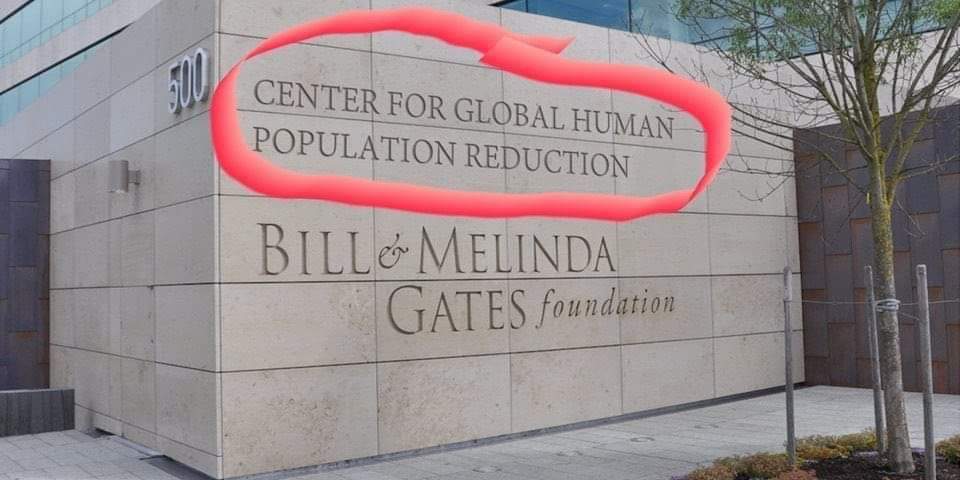
|
| Politics › Re: The Strange Satanism Of Bill Gates - By Reno Omokri by letu(m): 1:53pm On May 05, 2020 |
Gerrard59:
With your depopulation claims, Africa has the fastest growing population rate in the world. The initiatives by Bill Gates has reduced mortality rates which invariably ensures the population keeps growing. Ironically to what conspiracy theorists say, what Bill Gates is doing is helping the population increase not reduce. But the Bill Gates in this picture is saying another thing why? 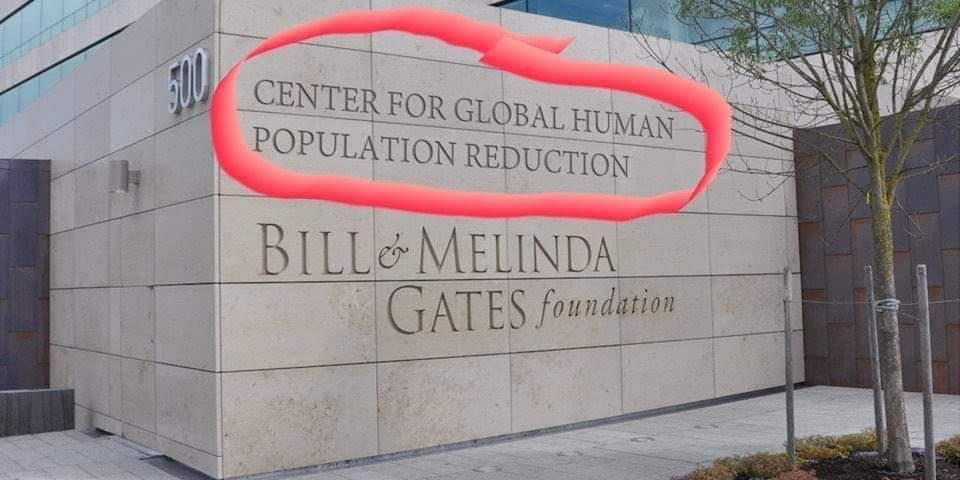
|
| Politics › Re: The Strange Satanism Of Bill Gates - By Reno Omokri by letu(m): 1:47pm On May 05, 2020 |
GistFullGround:
Bill & Melinda are good people.
People should STOP listening to Right-Wing propagandist, who have nothing to offer; even to themselves but spewing rubbish
Well, since you know so much about angel Bill Gates can you kindly explain this 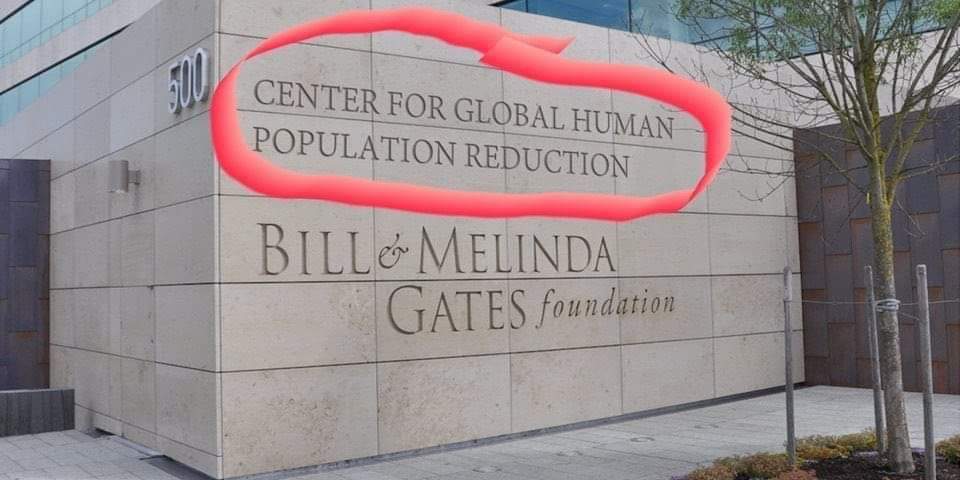
|
| Politics › Re: The Strange Satanism Of Bill Gates - By Reno Omokri by letu(m): 1:41pm On May 05, 2020 |
WaffenSS:
First of all you omitted, deliberately, the following paragraph:
"Joe Cerrell, a spokesman for the Seattle-based Gates foundation, says the stock investments, reported this week in a Securities and Exchange Commission filing, are independent of the foundation's programs. "
Second, the Pfizer trials were in 1996; the Gates Foundation made its investments in 2002. There's absolutely no link between the vaccine trials and the Gates Foundation.
Third, re-read the second paragraph that you copied and pasted:
Chairman Bill Gates and his wife, already is a major force in international health issues, contributing $555 million in 2000 alone to global health programs. The organization has emerged as a prominent voice in the debate over how to supply cheaper drugs for AIDS and other diseases to poor countries. At times, it has assumed the role of a broker between poor nations and drug companies.
The above shows the roles they play in making healthcare MORE AFFORDABLE to the poor. Not MORE EXPENSIVE but MORE AFFORDABLE.
You think anyone in Africa can afford the early HIV drug cocktails without these people's help?
He gave out free antimosquito nets, he helped eradicate polio, he made Malaria drugs affordable. How's that anything but goodwill? Let's take for example the same malaria that has always been part of Africa, eg West Africa since the beginning of time and our ancestors has been taken care of it (malaria) and there has never been any moment in our history where malaria wipeout an entire community in Africa, it is a normal thing with the white imperialist to blow things out of proportion eg Malaria and others. |
| Politics › Re: The Strange Satanism Of Bill Gates - By Reno Omokri by letu(m): 1:13pm On May 05, 2020 |
nijabazaar:
Nigerians are an ungrateful lot
Without Bill Gates most of us will be walking with polio infested body systems.
Ask the TB patients whose lifeline depends on Bill's funds.
I repeat, Nigerians are phucking and measly ungrateful.
Bill please hurry up with the Covid vaccine, my immune system needs it.
Nonsense I wonder why you're defending Bill Gates and co, like they say a picture speak's a thousand words 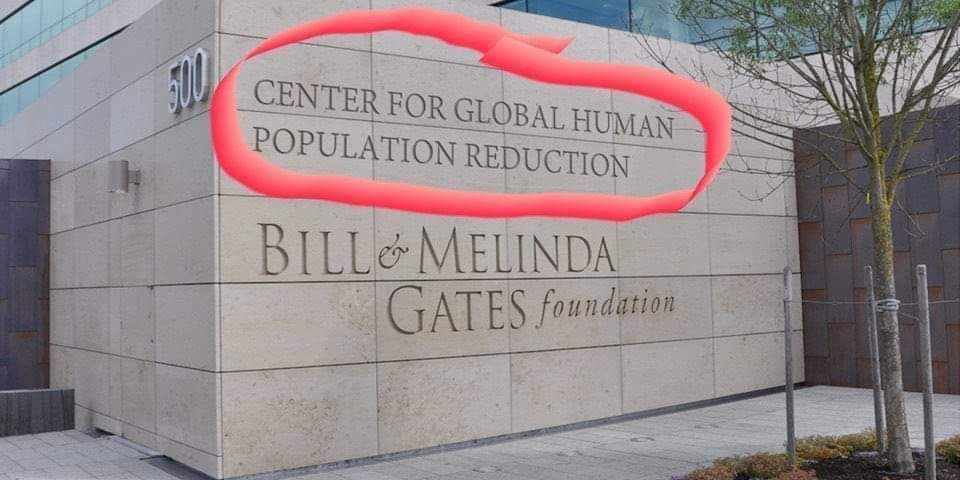
|
| Politics › Re: The Strange Satanism Of Bill Gates - By Reno Omokri by letu(m): 1:07pm On May 05, 2020 |
ochejoseph:
In John 10:10 Christ said satan’s mission is to steal, kill and destroy. Since the year 2000, Bill and Melinda Gates have spent $5 billion feeding Africans and saving African lives. It thus betrays ingratitude for Africans to call them satanic agents. Can we not give them the benefit of the doubt? We have produced no evidence to substantiate these rumours, yet we are so prepared to forget all their good deeds and just label them anti Christ.
How can you say Bill and Melinda Gates are satanic agents when Christ said satan came to steal, kill and destroy? For years, they have been doing the opposite of that. It is particularly disappointing for politicians to make that claim. Can you do for your people what Bill Gates has done for them?
Sadly, misguided Africans insulted Bill and Melinda Gates when they expressed concern about deaths on the streets of Africa. But look at Kano. If we had taken their warnings seriously, Kano won’t be a #COVID19 hotspot today, despite having tens of thousands of mosques and hundreds of churches.
How can you have individuals who have not lifted a finger to help their people. Who have not shared palliatives out of their pocket. You have not done a giveaway.
Their only contribution to the #CoronaVirus fight is to insult Bill and Melinda Gates, who have spent more money on African’s health than their own governments Bill and Melinda Gates were not satanic agents when they provided anti malarial medicines to Nigeria, or when they provided food aid to the insurgency ravaged Northeast. Now they are satanic. Africa and ingratitude. What a shame!
Right now, there will be racist haters of Black Africans, approaching @BillGates and laughing at him, while saying ‘did we not tell you that no matter what you do, they will never be grateful?’. Africans. Without evidence, we have crucified a friend of Africa!
#AppreciatingBillGates :
https://m.facebook.com/story.php?story_fbid=10221430993661574&id=1152008079 Food for thought 
|
| Culture › Re: Ise! Does Every Group In The Igboid Language Group Use It. by letu(m): 1:39am On May 05, 2020*. Modified: 12:41pm On May 05, 2020 |
IDENNAA:
Aro Idenmili ?? Please , elaborate . continue 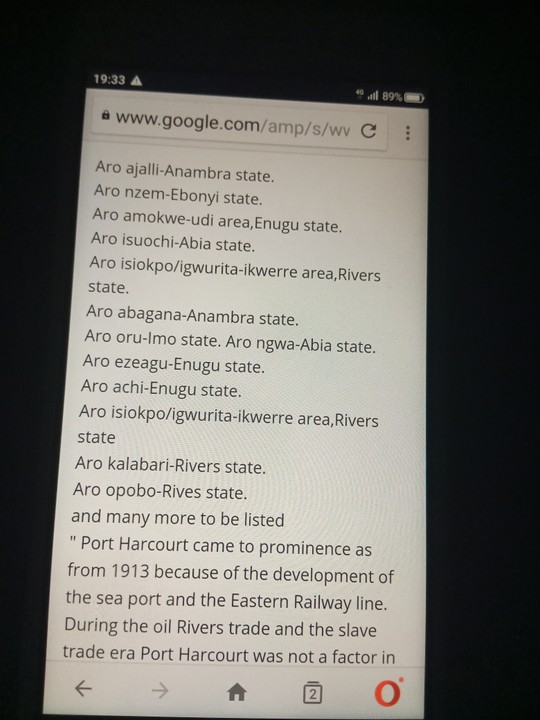
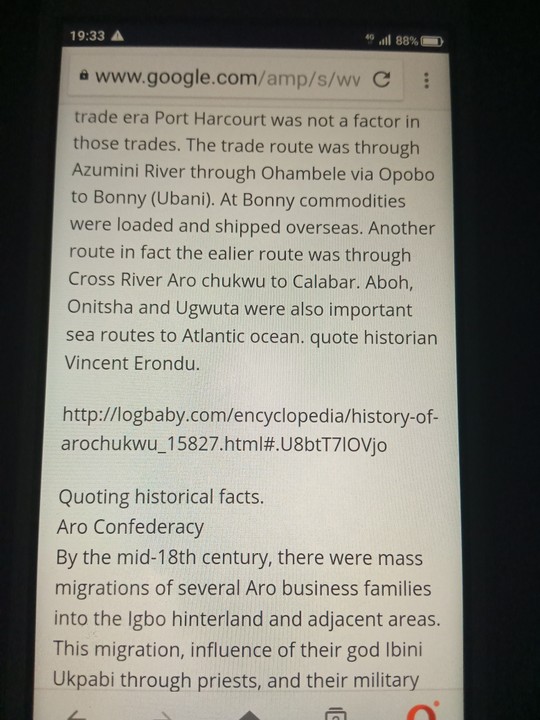
|