 Politics › Re: UK Asylum To Biafrans, Why Pro Nigerians Should Worry by letu(m): 9:02am On Apr 21, 2021 Politics › Re: UK Asylum To Biafrans, Why Pro Nigerians Should Worry by letu(m): 9:02am On Apr 21, 2021 |
NigeriaIsZOO:
Not a few people often argue that Nigeria will not break up. They are so optimistic to the extent they always give reasons why it will not break up. However, contrary to such hardline stance, unfolding events have proven that Nigeria is apparently living in its last years as one nation. If anyone still had doubts before, the recent move by UK to recognize the separatists is enough to convince you where the pendulum is swinging.
In Africa, South Africa, Nigeria and Egypt are no doubt UK's most important former colonies. They will do everything diplomatically possible to maintain good relations with these countries.
UK is a very cunning country, they have seen that Nigeria is on the verge of breaking up and they decided to be proactive by recognizing the separatists. If you think UK didn't weigh things critically before embarking on this diplomatic attack on Nigeria, then you're not using your head.
UK has become completely fed up with Nigeria and having weighed their options to see that Nigeria is headed for the rocks, they decided to hit Nigerian government this deadly blow without minding how bad the government will feel.
What the UK did is tantamount to China going all out to encourage South Korea, without minding how North Korea will feel or Russia recognizing Taiwan and opening diplomatic relations with them without minding how their Chinese friends will feel.
This move alone should convince anyone who thinks critically that Nigeria is about to unravel. If the UK can make such bold move against the Nigerian government, then it is not farfetched that they may wake up tomorrow and rally the international community to call for a referendum on Nigeria. British stand to gain more in a United Nigeria rather than a divide Nigeria, I'm not against the independence of the so called divided Nigeria I'm only stating the facts. |
| Politics › Re: Asylum To IPOB Members: UK Disrespectful, Sabotaging Terrorism Fight - FG by letu(m): 5:48pm On Apr 20, 2021 |
|
| Foreign Affairs › Re: Prince Philip To Join Late Kings And Queens In A 200-Year-Old Iron Vault by letu(m): 9:06pm On Apr 17, 2021 |
|
| Politics › Re: Bonny Island/ Ndoki by letu(m): 8:49pm On Apr 17, 2021 |
|
| Christianity Etc › Re: The Egypt Hollywood Never Shows You by letu(m): 6:23pm On Apr 13, 2021 |
|
| Foreign Affairs › Re: Prince Philip Worshipped As A God In Younanen, Vanuatu (Photos) by letu(m): 11:18am On Apr 13, 2021 |
mansakhalifa:
Wow... I'm actually surprised that it took this long for this to get to NL.
First time I bumped into it was some years ago on Listverse.com. I think it was titled "10 Extremely Weird Religions" or something like that.
You can laugh at them all you want but you must not forget that this was exactly the same way that the Rastafarian movement started. As the saying goes: If you know, you know.
So, they are not doing anything different from what the Jamaicans did when they started ascribing messiah status to a certain Haile Selassie who was at the time Emperor of Ethiopia(or Abyssinia as it was then known).
Meanwhile, here is the link to the listverse article that I mention earlier. Finally found it.
https://www.google.com/url?q=https://listverse.com/2009/09/10/10-extremely-weird-religions/&sa=U&ved=2ahUKEwib9Oj78PjvAhUPKuwKHQQ9CgcQFjAAegQIChAB&usg=AOvVaw0W8njLoY-dwVAaRnpObM1X Just like IPOB / present day Biafrian organizations are ascribing the Messiah status to Nnamdi Kalu so it means there's nothing which has happened today that has never happened in the past. |
| Christianity Etc › Re: TRUE SCRIPTURAL LOCATIONS Of Jerusalem, Nazareth, Assyria, Sodom Etc. IN AFRICA by letu(m): 5:34am On Apr 11, 2021 |
donnie:
Maleki (angels in Bantu/Hebrew) are messengers of YAH sent to work for us as we do the will of YAH. So this is all you know about angels, your response/answer is incredibly vague based on everything about angels I was expecting more from you. |
| Education › Re: The Right English Word For “K Leg” And Other Facts You Need To Know by letu(m): 6:38pm On Apr 10, 2021 |
Another name for it in Igbo is UKWU K |
| Politics › Re: Prince Philip, Queen Elizabeth, Azikiwe & Obi Of Onitsha In Onitsha In 1956 by letu(m): 11:01pm On Apr 09, 2021 |
Omoluabi1stborn:
At Least he did not bow down like Oba of Benin Another initiates greeting his White goddess the Lord and Highness. |
| Politics › Re: Prince Philip, Queen Elizabeth, Azikiwe & Obi Of Onitsha In Onitsha In 1956 by letu(m): 10:58pm On Apr 09, 2021 |
AmericanQuarter:
1956: Queen Elizabeth II and Prince Philip Met His Majesty Obi Of Onitsha at Ime Obi Palace in Onitsha
The Queen of England and the Prince Philip met the Obi of Onitsha, His Majesty Obi Okosi in Onitsha during the British royal tour of Nigeria in 1956. With them was the great Zik of Africa, Nnamdi Azikiwe Just another picture of Freemasons Masonic Illuminati meeting between the White overlords and their black faithful, Obi of Onitsha And Nnamdi Azikiwe on how they should continue to rule Igbo land for their White Lord and Highness . |
| Politics › Re: Wike Bans Meeting Of Igbo Group In Oyigbo, Rivers State by letu(m): 10:44pm On Apr 09, 2021 |
PHPdeveloper502:
Banning the meeting is one thing, enforcing it is another thing. Can wike enforce this considering that ipob has gone to arms? You are not helping at all. |
| Celebrities › Re: Yetunde Savage Celebrates Her Birthday With Stunning Royal Themed Outfit by letu(m): 2:00am On Apr 09, 2021 |
Interesting 
|
| Christianity Etc › Re: TRUE SCRIPTURAL LOCATIONS Of Jerusalem, Nazareth, Assyria, Sodom Etc. IN AFRICA by letu(m): 12:23am On Apr 09, 2021 |
|
| Politics › Re: Panic As Bombs Hit Gunmen’s Hideouts, FG Goes After IPOB by letu(m): 10:59am On Apr 07, 2021 |


|
| Politics › Re: Breaking:nigeria Army And ESN On Gunbattle by letu(m): 9:59am On Apr 02, 2021 |
castrogee:
As e dey hot.
I heard ESN was able to repel the military incursion.
Please, Ndigbo it's time to support ESN. However, ndi IPOB, talk to Nnamdi Kanu so he'd learn how to manage properly and stop all these unnecessary insulting rants.
But in the meantime, Nnamdi Kanu should publish ESN bank account so that the goodly spirited people like us can contribute. I've no doubt that we Ndigbo can fund ESN better than Nigerian military, and if we DO ESN will beat Nigerian military so easily. Be careful of what you wish for (you and Fulani people), because war is not a child's play. |
| Politics › Re: Aba North/South By-Election: Gunmen Kidnap Party Agent In Aba by letu(m): 9:11pm On Mar 27, 2021 |
garfield1:
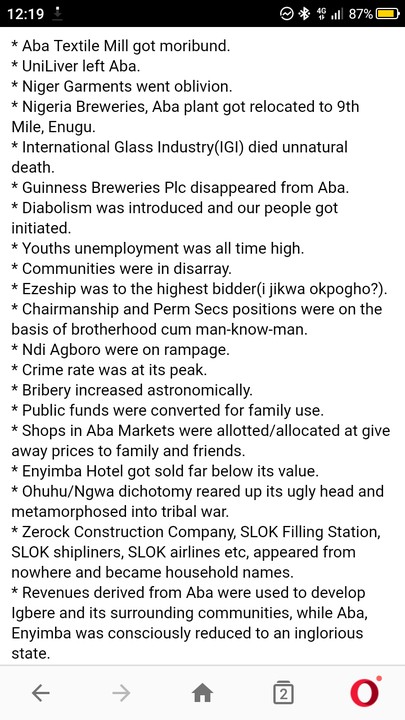
The ngwas will lose Ngwas will lose like you said, then it will mean that Abia State people go back like it was during Orji Uzor Kalu era as governor of Abia State When he controls every thing including all the Senators and representatives were all under his control in Abia State. 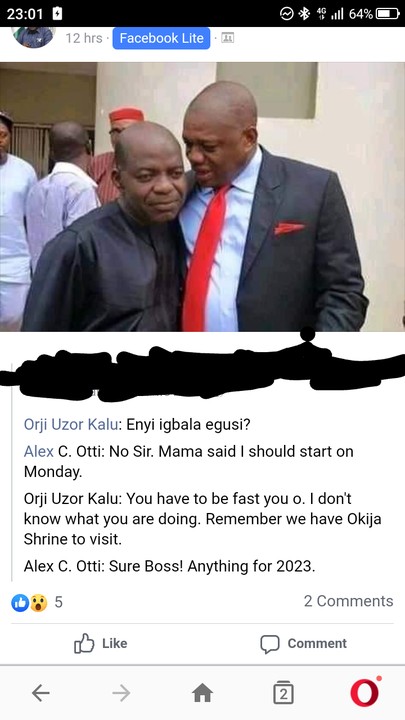
|
| Politics › Re: Aba North/South By-Election: Gunmen Kidnap Party Agent In Aba by letu(m): 8:53pm On Mar 27, 2021 |
LadySarah:
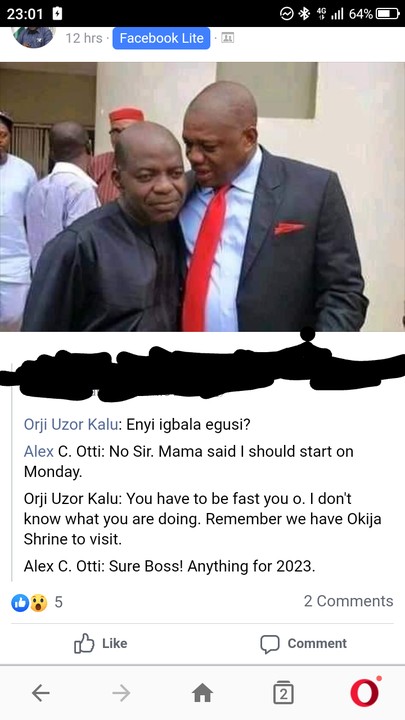
OUK is trying to bring back his dirty divisive terrorist mamacracy style of governance back to Abia.
Ngwa ppl should show him who they are.
Demonic looter!Devil Incarnate, who spearheaded the cesspit Abia have become. Yes indeed. 
|
| Christianity Etc › Re: Rome, Bantus And The Demon- White Jesus by letu(m): 10:10pm On Mar 26, 2021 |
donnie:
Is it only YAH. What about MESSIAH? Today they have made an image of a white man, does it mean our black MESSIAH never existed?
In Egypt they made images depicting the various gods they worshipped many of whom were fallen angels/ annunaki. One of such they call EL. Does that mean that the ELEIM (Elohim) of ISOLELE/ ISRAEL who said you shall not make any graven image to represent me does not exist.
I did not go and dig up images to know the Most High or His name. In Idoma language for example YAH means to create or creator. Also many Bantus and negroes bear the name YAH in our names just like our Bantu Prophets of the bible like YirmeYAH (Jeremiah), YisaYAH (Isaiah), EliYAH (Elijah), MatteYAH (Mathew) etc.
Kindly continue with your idol worship and leave us alone mbok. The only one that I worship is CHINEKE UKWU KERE ELUIGWE NA UWA,so it's only Chineke that I worship. |
| Christianity Etc › Re: Rome, Bantus And The Demon- White Jesus by letu(m): 10:07pm On Mar 26, 2021 |
donnie:
Is it only YAH. What about MESSIAH? Today they have made an image of a white man, does it mean our black MESSIAH never existed?
In Egypt they made images depicting the various gods they worshipped many of whom were fallen angels/ annunaki. One of such they call EL. Does that mean that the ELEIM (Elohim) of ISOLELE/ ISRAEL who said you shall not make any graven image to represent me does not exist.
I did not go and dig up images to know the Most High or His name. In Idoma language for example YAH means to create or creator. Also many Bantus and negroes bear the name YAH in our names just like our Bantu Prophets of the bible like YirmeYAH (Jeremiah), YisaYAH (Isaiah), EliYAH (Elijah), MatteYAH (Mathew) etc.
Kindly continue with your idol worship and leave us alone mbok. I've you ever think about your self, there is strong chance that you are the one worshipping idols. I'm talking about your book of To Rah or To Ra, a section of Hosea inwhich YAH present himself as God of Egyptian origin so Donnie open your eyes to see this because this section of the scripture was as a commandment, so Donnie know it that the 10th commandments are not the only commandments in the To Rah and there are other commandments in the To Ra or the book of Yah. 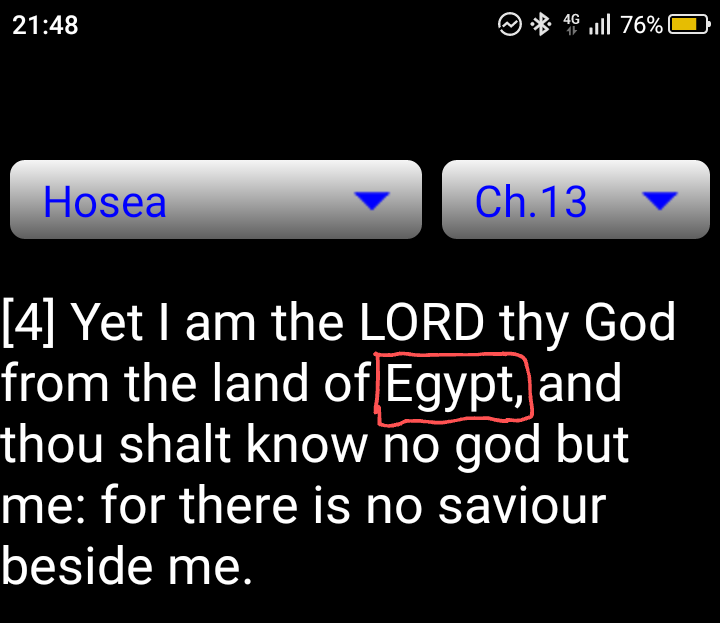
|
| Christianity Etc › Re: Rome, Bantus And The Demon- White Jesus by letu(m): 12:50am On Mar 26, 2021 |
donnie:
They profit from Israel's blindness. They lead them in breaking YAH's laws and in despising His holy days. But they teach the people to follow pagan laws and holidays. The way you go about shouting Yah Yah left and right, let me ask you what do you think it's there any element of truth concerning this. 

|
| Christianity Etc › Re: Rome, Bantus And The Demon- White Jesus by letu(m): 12:45am On Mar 26, 2021 |
Image123:
You've not said anything than make wild accusations. Have you heard of satan since you knew all these Binta stories?
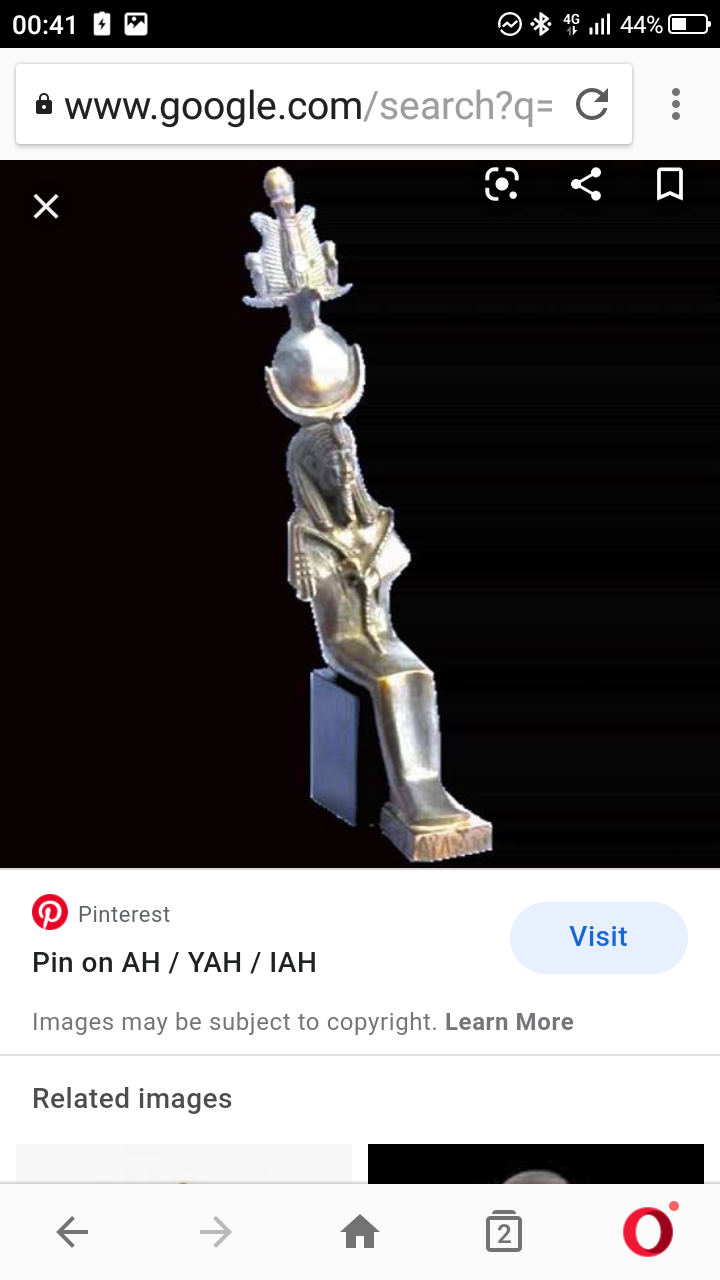
What makes this living EL not a pagan and what is my gain in this turn? What do you think it's there an element of truth here. 
|
|
| Politics › Re: BREAKING!! Heavy Shooting At Ariaria Junction Aba (happening Now) by letu(m): 5:14am On Mar 24, 2021 |
Anthonyoz:
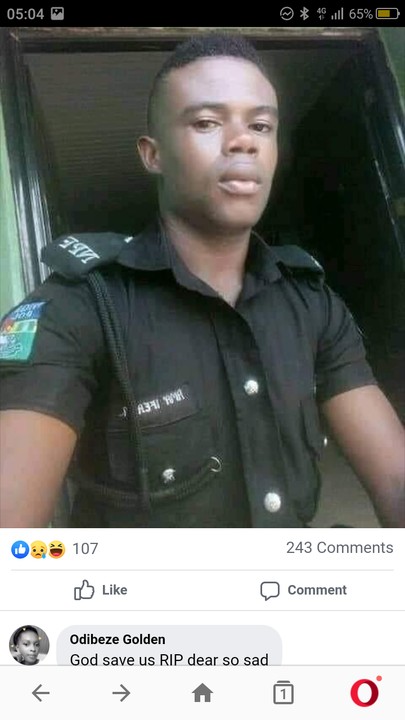
more price will be paid ,we have cried enough back then ,you people should cry now ,angels on duty We are still the victim in what ever aspect of the situation, like this Facebook message but I really don't know the guy whose picture is attached to the news, well as it is the news actually saying that we are still the victim in what ever aspect of the situation inwhich I will say whoever that have ear let him or her hear. 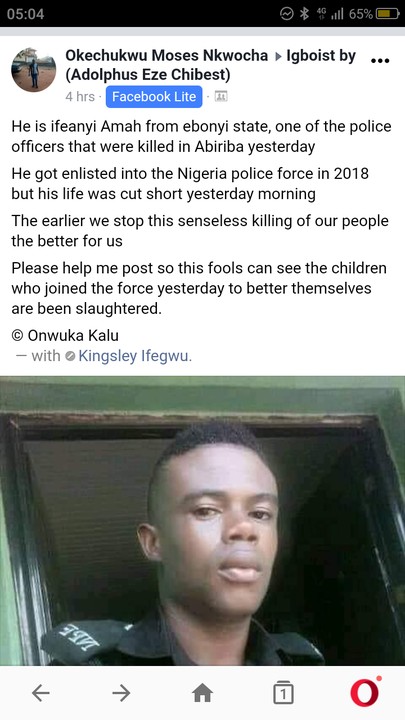
|
| Culture › Re: What If Proto-igboid Speakers Entered Igboland From The South? by letu(m): 9:40pm On Mar 20, 2021 |
ChinenyeN:
AjaanaOka
My working chronology for Ngwa expansion
Nfulala; Pre-WADP (West African Dry Period); Pre-1000s
The stretch of communities from Ahiara (north-central Mbaise) to Nsulu (north-eastern Ngwa) constituted a large block of autochthonous communities. They do not acknowledge a single common ancestor, and save for a few short distance migrations in this contiguous space, the communities claim to have originated in their current location; what is locally called "Nfulala". Based off my working chronology, I presume that many of these communities had developed into clans of their own by this period (before the Little Ice Age). They may share claims of kinship with one or two other clans and share common tutelary and ritual aspects (though often times without the memory of a common ancestor). However, the idea of a unifying name for these communities did not exist.
For instance, Oboama and Umunama in south-central Mbaise acknowledge kinship but don't recall the name of their common ancestor. The set of ten loosely integrated villages (or village-groups?) in north-western Mbaise (Ahiara) mention a common ancestor, but no idea where he came from. Aside from the "Imo" legend, the Ukwu clan in northern Ngwa does not have traditions that acknowledge any "brothers" among the surrounding communities, and just as with Ahiara, the Ukwu group acknowledges a single common ancestor among themselves but with no statement of where he may have come from. Nsulu and Ntigha (northern and north-eastern Ngwa are two large groups that do not have any memory of a common ancestor, but acknowledge that they are brothers. There is also the claim that they are from the Ukwu group, but the Ukwu group claims to be unaware of a migration. I could go on, but I'll assume the context is relatively clear.
I gave this a dating of pre-1000s for two reasons:
1. I have no idea how long this period lasted. I am aware of an incident where archeological artifacts that were discovered in the area dating to 9th century B.C. Memory of anything beyond the current modern composition of village-groups is lost. So it’s difficult to speculate on the dynamics pre-1000s outside of general things like “being an Iron Age society”.
2. It gives enough of a distance in time that I believe is reasonable to account for the adoption of "Ngwa" as an ethnonym. It is well-established that the "Ngwa" ethnonym is tied to the development of the Imo, but the communities claim to have been living in the area while the river was still a shallow stream, and the original course of the Imo (according to Oboama Umunama, Ubahi, etc.) ran elsewhere. These communities acknowledge the existence of the other groups at this time, affirming the existence of this autochthonous stretch and affirming the lack of an “Ngwa people”.
Expansion During the WADP; 1000 - 1400
Initially, I had assumed the area shared a related set of traditions that encoded the event of the Imo, but after our conversation some time ago about the Little Ice Age, I shifted the the point of my focus and started doing more digging, research and interviewing. It turns out there are traditions that encode the memory of early long-distance movements during periods of dryness. This has led me to consider these early expansions as potentially distinct from the massive and more well-known "waves" that are associated with the academia's current understanding of Ngwa migrations. From what I gathered, there are communities in the southernmost parts of Ngwa, like Ihie, Obokwe, and even Ohuru (in Asa) and Umuagbai (in Ndoki) that are part of this early population dynamic. For the working chronology, placing this event within the early phases of the WADP made the most sense for a few reasons.
1. Some of the Ngwa communities in this axis have traditions that assert their movement while the Imo was still shallow. This suggest the the river beheading event had not yet occurred.
2a. There are two kinds of ofo I want to contrast. The lineage ofo and the Ngwa clan ofo (known as Ofo Asoto). When someone migrates and establishes a new compound or community, they can also (or in effect, they also) establish a new lineage ofo. You can consider this as a system of deriving ancestral authority between communities.
2b. Now that I've established that context, I'll continue. Southern Ngwa communities do not possess any of the Ofo Asoto that are claimed to have been created and distributed when the Ngwa clan consciousness was birthed. There also exist no derivatives for the Ofo Asoto, unlike the lineage ofo. This suggests to me that there were some early southern expansion prior to the development of Ngwa clan consciousness.
3. It is generally thought that Ngwa expansion occurred in large, condensed waves. The expansions that birthed southern Ngwa communities like Ihie, Obokwe and Ohuru (among others) are also grouped into this. However, when I considered these groups' traditions, the sort of single-track idea that Ngwa chronology can be characterized by a fluid series of large population expansions (within a short span of time) did not make sense. It did not make sense that a period associated with the Ngwa's greatest population boom would also be associated with a dry period that would have limited population growth. But something else does; the wet interlude. With this in mind, I decided to associate early southern movements with the first phase of the WADP and effectively separate them for the more well-known large population expansions.
4. As part of the working chronology, I concluded that the expansion from Umuagbai into Igolo Oma might have likely occurred prior to the wet interlude. So I included the expansion of Bonny here. However, there is also a secondary larger expansion during the middle/late part of the Portuguese era that brought additional Ngwa into Bonny and established Igwe Nga, present day Ikot Abasi (not Opobo).
By my chronological estimates, early Ngwa contact with Asa occurred in this time, and it is likely the case that the Asa did not get too far in before making contact with some early Ngwa. To illustrate, the Ipu and Oza claim a west-to-east migration up to the point where their trajectory turns acutely south to north. As we’ve demonstrated earlier already, spacial distributions can tend to change flow when faced with an obstruction in their path or when crossing streams. Save for Ohambele and the Ibeme, Asa communities spacial distribution from Obigbo is almost 100% in a northerly direction. This breaks their west to east flow which they should have been free to continue, if we believe the claim that they inhabited the area up to the 17th century without Ngwa contact. So I suspect early contact occurred at this time, which gave birth to the Asa ethnonym. Then a later, larger wave of contact occurred after an Ngwa identity had become firmly established and this is what is remembered.
The Wet Interlude & the beginning of an Ngwa identity; 1400 - 1500
As part of my working chronology, the first of my considerations is that the first half the WADP saw the decimation of previous bodies of water that cut deeper into the western part of Mbaise. The wet interlude seemed to me like a good candidate for explaining both the sudden the development of the Imo river and the development of an Ngwa identity.
I placed the time frame between 1400 and 1500 for three reasons, mainly:
1. It is my suspicion that this period is responsible for birthing the infamous Imo legends. No other time period makes sense when I consider the environmental aspects of the development of the Imo. The impact on oral traditions further supports this. Miri Ojii (the stream that used to be there before the Imo) is said to have so quick and so exponentially overflowed its bank. Prior to having knowledge of the Little Ice Age, I always assumed that this event spanned the course of at least a few generations (perhaps a century or more), because oral traditions have the habit of condensing time. However, knowledge of the Little Ice Age makes it more believable now that the event happened within a much shorter timespan than I initially imagined, and it would explain why it had such a profound impact in the area that it became heavily encoded into oral tradition. A river beheading that takes 100+ years would likely not have had the same impact. The previous dryness coupled with the sudden surge of a new river though makes sense, and I can see how this can happen within a generation or two (unlike the four generations I conceived of years ago).
2. The impact on the way of way of life or the local communities. I put this within the 1400 - 1500 to overlap the event with the end of the first half of the WADP and the early part of the wet interlude. I wanted to see if I could use it to reconcile some details about the way of life of the communities. For the local communities, the ethnonyms that came surfaced with the Imo legend were "Ngwa Ohnuhnu" (for the fact that villages on the western bank engaged in roasting their yam) and "Ngwa Nzem" (for the fact that village on the eastern bank were considered lucky by their counterparts on the western side of Imo). I alway used to ask myself what was the basis for this dichotomy. Why would Mbaise need to adopt the practice of roasting? And why would Ngwa be considered lucky? With the WADP in mind, I considered that the impact of the drought could have been severe enough that water scarcity prevented the practice of boiling yam. In contrast, oral traditions encodes the idea that villages on the eastern bank boiled their yams, potentially indicating that the region of their settlement saw better relief from the dryness than their western counterparts. It's difficult to really say why this is the case other than the established worldview that "Ngwaland" is considered highly arable, compared to Mbaise which has far less arable land. Whichever the real case, the dichotomy between "Ngwa Nzem" and "Ngwa Ohnuhnu" was born.
3. The final reason for why I placed this time frame between 1400 and 1500 is to account for the Iwhnerneohna wave of migration. According to Ngwa oral traditions, Igwuocha is settled by them in a migration led by an Ngwa hunter. According to the Etche, Ngwa presence (both "Ngwa Ohnuhnu" and "Ngwa Nzem" ) is already noted in the region before the establishment of Umunneoha. According to the Okrika, the movement of the Obio (in Ikwerre) can be placed at around late 1600s/early 1700s. Finally, the Obio acknowledge the tradition of "Ngwa Gbaka" and "Ngwa Owhnuhnu". Okrika’s placing of the Obio in PH by the late 1600s/early 1700s presented some dating complications. I initially had a later date for the development of Ngwa clan consciousness, but I decided to shift it to 1400 - 1500 as an overlap between the WADP and the interlude. It allowed (what I believed would be) a reasonable amount of time for the internal dynamics between Ukwu and Umuoha group to play out and establish the defining events in Ngwa clan history that would then allow me to reconcile Obio’s use of “Ngwa Gbaka” which is different from the original “Ngwa Nzem”.
The Formation of the Ngwa Clan Identity; 1500
We are finally at the point where my working chronology meets up with the academia. The academia has struggled in defining when exactly Ngwa clan consciousness developed. Based on my chronology, I estimate it developed in the 16th century. I used to always wonder about this era in Ngwa history because it seemed so very condensed. In oral tradition, this period is told as though it occurred before the expansions. I guess in a way it did, but it’s also recounted as the “founding period” in which northern Ngwa is settled and everyone else expands from there, but that isn’t quite the case.
I’ll reiterate briefly as a refresher. The stretch of communities from Ahiara to Nsulu represent nfulala. Sharing no memory of a common ancestor, but having traditions that may link them with one or more others communities within this stretch. The events that finally culminated in the development of the Imo reshaped the identities a bit. Communities like Ukwu (who as mentioned before had no traditions of acknowledging any “brothers”) became "brothers" with Umuoha and Avosi. Umuoha "lost" its brotherhood with Obizi (in Mbaise) on the West side of Imo (though Umuoha and Obizi do not acknowledge a common ancestor, they do acknowledge kinship). Onye Ukwu assumed the position of seniority, Nwoha became his “junior brother” and Avosi their “younger brother”. The story then became that these three brothers first settled at the Okpuala village in Ukwu group before dispersing to their current village groups.
One other variant of this story is that there were actually eight brothers; Ukwu, Nwoha and Avosi from one mother, Nsulu and Nte (Ntigha) from another. Ngwu (Ovungwu) and Okwu (Ovokwu) from yet another mother, and Ntu (Mbutu) as a son of Nwoha.
Yet another variant of the story has it that Ukwu, Nwoha and Avosi were the three brothers. They settled at Okpuala in Ukwu and Nwoha and Avosi moved out to establish their own village-groups. Nwoha has seven sons, three of which were Ntu, Ngwu and Okwu, who founded Mbutu, Ovungwu and Ovokwu respectively. Nsulu and Nte were apparently from Okpuala in Ukwu as well and moved out to establish their own village-groups.
In reality these changes in the story don’t actually reflect kinship, but rather the internal civil conflict that occurred shortly after the development of the Imo. In short, the Ukwu group (which had assumed seniority and authority) got into conflict with the Umuoha group. The various stories I shared above reflect the sides that were drawn during that conflict. The Nsulu and Ntigha groups sided with Ukwu group. The Mbutu, Ovungwu and Ovokwu groups sided with the Umuoha group. The Umuoha group were essentially branded as separatists, undermining the self-ascribed seniority and authority of the Ukwu group. The conflict is stated to have gotten so serious that a truce of sorts was needed. A meeting was called for the village heads of these eight groups, and this became the defining moment in Ngwa clan history. The Ofo Asoto were christened and given to the eight village heads. The Nkpe constitution and ritual was instituted along with the Ala Ngwa deity. Okpuala-Ngwa in Ukwu group officially became the clan cultural capital, and from this point forward the Ukwu group adopted “Ngwa” into their ethnonym to become “Ngwa Ukwu”. The tradition shifted from “Ngwa Nzem” and “Ngwa Ohnuhnu” to “Ngwa Ukwu” and “Ngwa Ohnuhnu”.
The idea of Ngwa as we know it today starts here.
The Large almost Fluid Population Expansions; 1600 - 1800
This is the point where I may finally give some credit to the Asa 17th century claim, and as I said earlier, it’s interesting that I arrived independently on a similar conclusion. The difference is that I believe the 17th century dating only sufficiently accounts for those communities that disbursed after the resolution of the Ukwu and Umuoha conflict in northern Ngwa. For instance, it is well-acknowledged in Ngwa oral traditions that Igwe Nga, Igolo Oma and several other communities within the Asa/Ndoki axis are Ngwa, but these communities (including some in southern and eastern Ngwa) do not reference the “Ngwa Ukwu” and “Ngwa Ohnuhnu” traditions, suggesting dispersal prior to this defining moment. On the other hand, Iwhnerneohna (Obio) acknowledges the tradition of “Ngwa Gbaka” and “Ngwa Owhnuhnu”. In fact, the use of “Gbaka” (i.e. Imo/Ukwu) is telling. It shows that the Iwhnerneohna movement likely occurred after the shift in traditions from “Ngwa Nzem” to “Ngwa Ukwu”.
Anyhow, this is also the point where we can see alignment between my working chronology and some of the known works in the academia. The large waves that gave birth to the large Ngwaukwu-Ugwunagbo village-group occurred at this time. The Aba la Ohazu settled around this time as well. Eastern Ngwa also saw an influx of post-conflict Ngwa people. Expansion northwards and northwestward also occurred helping to people communities like Obowu and Umuahia. In a way, they somewhat overrun the communities that were part of earlier expansions.
Modern Ngwa; 1880 - Present
The British arrived and made ethnic borders more rigid and the Ngwa body currently consists of the seven LGAs in Abia. 1) Nice stuff, well I've always noticed a strong commonality among the villages within Nsulu areas of Ngwa land and the mbaise people in imo State which makes me to start thinking that it is either they migrated before the situation that has to do with the crossing of Imo River/ roasting of Yam or they never migrated rather a situation inwhich an unexpected natural occurrence happened, something like over flowing water divided them from their relatives in Imo state . What I meant by commonality is the names of the villages around Nsulu and other places related to them, the commonality that I'm speaking about is not really about the Ngwa language they speak . 2) I've noticed that many various Igbo groups in Imo State traditionally divide themselves into two namely Ihite and Ikenga inwhich I'm wondering could Ezi na Ihite Mbaise be a product of this old/ancient Igbo grouping of Ihite and Ikenga, what about various places in Ngwa with the name Ihie and places with name like Ezi could there be any connection to this same old/ancient Igbo grouping that I'm talking about?. |
| Christianity Etc › Re: The Ethiopian Bible- World's Oldest Bible [pictures] by letu(m): 7:58am On Mar 18, 2021 |
|
| Christianity Etc › Re: The Ethiopian Bible- World's Oldest Bible [pictures] by letu(m): 7:56am On Mar 18, 2021 |
|
| Politics › Re: Igbo Nation Is The Only True Democratic Nation In The World by letu(m): 8:43pm On Mar 17, 2021 |
Omoluabi1stborn:
Rubbish
Before you guys started wearing clothes.
Yoruba have been wearing clothes, Aso Oke, kijipa, Ofi,
Very useless statement So much for that, with some fact to show that you are not saying the whole truth, here below are some pictures which is before FULANI introduce their Islamic dansiki dress pattern to the Yoruba's which the Yoruba's will latter call it agbada. 


|
| Christianity Etc › Re: The Ethiopian Bible- World's Oldest Bible [pictures] by letu(m): 8:27pm On Mar 17, 2021 |


|
| Christianity Etc › Re: The Ethiopian Bible- World's Oldest Bible [pictures] by letu(m): 8:21pm On Mar 17, 2021 |
OkCornel:
Bantu is older than the seeds of Jacob as well, bearing in mind Esau and Jacob were twins. 100% correct ����. |
| Christianity Etc › Re: The Ethiopian Bible- World's Oldest Bible [pictures] by letu(m): 8:15pm On Mar 17, 2021 |
donnie:
They are Europeans from Russia, Ukraine, Germany, Poland etc. Mind you there's a difference between nation and countries. They are from one nation: EDOM.
Those of other nations taken there eg. Kush (the Ethiopians) is all for political reasons and to deceive the world and because they couldn't totally deny the fact that the whole bible is black history.
They fear the real Isrealites, the people of the book. When we awake, repent as ISOLELE/ISRAEL and open our mouths to proclaim judgement, it happens.
The lemba who have 100% Bantu blood and DNA were accepted by these fakes because they couldn't deny the cultural herritage and of course they have diamonds in their land.
The Igbos who foolishly saught recognition from these devils were rejected.
They are afraid of the Igbos and also the Igbos don't have diamonds like the lemba of Zimbabwe. It seems that you have forgotten their Central Asian Origin. |
| Christianity Etc › Re: The Ethiopian Bible- World's Oldest Bible [pictures] by letu(m): 11:10pm On Mar 16, 2021 |
donnie:
The TORAH refers to the first 5 books of Moses. Most Bibles include the writings of the prophets and the new testament. Others include the Apocrypha.
I read all that I deem accurate and/or inspired. From the old testament to the so-called new testament. TO RAH OR TO RA that was crafted, edited and manufactured by the same Jews that you've been fighting against and also accusing them along with everything associated with them of being a Babylonian product, seriously when will you wake up from this because this is an honest truth that your ISOLELE will not tell you. |
| Christianity Etc › Re: The Ethiopian Bible- World's Oldest Bible [pictures] by letu(m): 10:51pm On Mar 16, 2021 |
donnie:
They kept the laws commandments and statutes of YAH. Yes they did, that's why in different scriptures points to different location or places where YAHWEH comes from like Hosea 13:4 and others. 


|


