 Christianity Etc › Re: The Ethiopian Bible- World's Oldest Bible [pictures] by letu(m): 10:33pm On Mar 16, 2021 Christianity Etc › Re: The Ethiopian Bible- World's Oldest Bible [pictures] by letu(m): 10:33pm On Mar 16, 2021 |


|
| Christianity Etc › Re: The Ethiopian Bible- World's Oldest Bible [pictures] by letu(m): 10:13pm On Mar 16, 2021 |
donnie:
You've been programmed by Babylon so you don't seem to see beyond religion.
What the Most High gave His people the Bantus/negroes were commandments and laws.
What the wicked did was to steal these and our culture and turn them into religions. Judaism, Christianity, Islam all stole from Bantu Culture and spirituality.
All those religions make up what is called Mystery Babylon and Bantus must come out of them and be seperate unto YAH.
Revelation 18:4-5
And I heard another voice from heaven, saying, Come out of her, my people, that ye be not partakers of her sins, and that ye receive not of her plagues.
For her sins have reached unto heaven, and YAH hath remembered her iniquities. WOW I'm surprised that you no longer add Egypt alongside your Babylonian when ever you go all out ridiculously on those who disagree with you on one thing or other. |
| Christianity Etc › Re: The Ethiopian Bible- World's Oldest Bible [pictures] by letu(m): 10:01pm On Mar 16, 2021 |
OkCornel:
Mr Donnie, see red indians below. Stop fooling around with your mongoloid mulatto Indian know as natives in U S A and Donnie's Aboriginals American Indian pictures are the real thing, more pictures. 


|
| Christianity Etc › Re: The Ethiopian Bible- World's Oldest Bible [pictures] by letu(m): 9:40pm On Mar 16, 2021 |
budaatum:
Christ is a greco/roman understanding of an idea that came out of Egypt.
You just do not understand the constant battle for ownership going on in the book itself, and you are not knowledgeable enough to even know the questions you ought to ask. (And do not you dare ignore that I have insulted you and fail to intellectually challenge me, Sonm!)
Go read Genesis 3 to see how that which is good is made to seem like the bad and you just might get it, and that's if you have not got it by the two creation myths that precede that. Not only Genesis 3 also Hosea13:4 something about Africa (Egypt). |
| Christianity Etc › Re: The Ethiopian Bible- World's Oldest Bible [pictures] by letu(m): 9:22pm On Mar 16, 2021 |
OkCornel:
I see your point.
Do you by chance know the name of what the Apostles and Believers at that point in time were practicing if it wasn’t Christianity? The apostles were know as teachers of righteousnes/holiness, for Christ is Holy and Christ is Righteousnes so they were called teachers of righteousnes/holiness because that's what they were practicing which is (Christ like which also is the same as to practice righteousnes/holiness). |
| Politics › Re: Why Alagoa And Ijaws Tried To Ijawanize Ndoki Origin by letu(m): 5:44pm On Mar 16, 2021 |
Igboid:
You don't still get it. Wike never betrayed Ndiigbo.
He is a typical Ikwerre man and they are Igbophobic by default.
Wike remained true to his Ikwerre self. Its not his fault that some of you refused to analyze him and his people better.
You keep trusting blindly then you come back shouting betrayal. How long will this continue? Well I will tell this, that there is this minority song inwhich Mazi Nnamdi Kalu and his Ipob fraternity members including other Igbo's whom are non members the moment this minority song starts playing it automatically please their hearts before you know what's happening they will start dancing Azonto fast fast, the beginning of the song you can see it from the picture below. 

|
| Politics › Re: Why Alagoa And Ijaws Tried To Ijawanize Ndoki Origin by letu(m): 4:46pm On Mar 16, 2021 |
nsiba:
.
Which AkwaIbom borders are you mentioning?
So you don't know that Aba down to the entire old Bende we considered as Ibibios territories too?
If you don't know where to draw the lines of your imaginary Igbo history better know how you drag AkwaIbom and her present territorial ground to you nonsense.
It seems the Nonsense KANU have been lecturing you lots it is AkwaIbom you want to come test such rubbish with Just say that Abia State belongs to Annang and Ibibio full stop no need for long talk. |
| Politics › Re: Why Alagoa And Ijaws Tried To Ijawanize Ndoki Origin by letu(m): 2:36pm On Mar 16, 2021 |
Idiko1:
I am very flabbergasted by the manner the minorities treat Ndigbo who happen to minority in Benue, Kogi, Rivers and Akwa Ibom States. It is very disheartening to read the Akwa Ibom government was bent on changing Igbo community name from Igbo to Annang. The case of Ohaobu is a typical example. Had Ndigbo behaved in the manner these minorities acting in the pre-colonial and colonial periods, they would ceased to exist. tell it to Mazi Nnamdi Kalu maybe he will listen to you. |
| Culture › Re: What If Proto-igboid Speakers Entered Igboland From The South? by letu(m): 10:55pm On Feb 17, 2021 |
Hellraiser77:
1. Such stories are present in few western Igbo communities including the igbanke people in modern Edo state.
The current Obi of Onitsha proclaimed recently that the aboriginals of Ife were a stock of Igbos saperate from their South east kin, which may finally put to rest the question of Igbos that claim they came from bini but don't know how they got there. https://newsexpressngr.com/news/38932-Igbos-were-the-first-to-settle-in-Ile-Ife-Obi-of-Onitsha
The current ooni of Ife corroborated it recently with stories of Igbo settlements that Oduduwa superimposed his dynasty on, thereby assimilating a vast majority while some groups simply scattered on various directions. https://www.google.com/amp/s/www.vanguardngr.com/2019/08/ooni-of-ife-and-the-igbo-yoruba-relationship/amp/
The problem with Yoruba history is the sheer amount of folk tales and fabricated bullshlt packaged inside First by Ajayi crowther who first used the name "Yoruba" and later Awolowo to unite all the warring groups that today call themself Yoruba Some stuff in relation to the discussion. 


|
| Culture › Re: Eze Bernard Enweremadu, Traditional Head Of Ngwa Land In Abia State Is Dead by letu(m): 5:21pm On Feb 13, 2021 |
ChinenyeN:
Letu, let me set some context before responding to your question about my statement in #2. The Isuama migration was not just in one instance. It was different sets of migrations in growing intensity. Also, Isuama was a combination of Isu and non-Isu groups, though Isu dominated as far as population was concerned. I suspect that by the time the later migrations started happening, the Isu complex (the large region of Isu and non-Isu people) had finally become exposed to the highly developed ritual authority system by way of Eze, Nze, Ọzọ, and Duru. In Owerri specifically (if I remember correctly), the Duru was synonymous with Eze Muo and credit for the Duru/Eze Muo institution is given to outsiders migrating down from more northern Igbo areas.
In contrast, Ngwa did not (still does not) have a highly developed ritual authority system. Rather a single individual tended to serve as both the customary head and ritual authority of the local community's totem (or deity), because they were the possessor of the "Lineage Ọfọ". Of course, you already know these were the "Onye Nnwe Ala".
In many ways, the role of Onye Nnwe Ala is very similar to that of Eze, Duru, Eze Muo, etc. of the Owerri, Isuama and Northern Igbo region. As migrants gradually poured into Ngwaland, I suspect they brought with them some additional aspects of ritual authority and the corresponding terminology. We eventually adopted the use of "Eze Muo" (most likely from Owerri) and adapted the use of "Eze Ọfọ", since our focus has always been on the "Lineage Ọfọ" that is held by the Onye Nnwe Ala.
Notice that our use of Eze Muo, Eze Ọfọ and Eze Ala in Ngwa are rather limited to village heads who possessed the Lineage Ọfọ, unlike in the Owerri, Isuama and Northern Igbo regions where the institutions did not always coincide with the maximal lineage practice. This suggests cultural diffusion of this use of "Eze" from groups with more highly developed ritual authority systems.
Yes, we do have the Eze Nwoko and Eze Nwaanyị, but I might suggest that this terminology is also an example of our adopting the similar Eze-based terminology as our ritual authority system changed somewhat due to the incoming Isuama.
Granted, it is very possible that I may be mistaken in my interpretation, but simply looking at the differences concerning the extent of ritual authority in customary Ngwa culture vs other groups (and knowing that "eze" also used to have a different, non-ritualistic meaning in Ngwa), it seems the Isuama (coming from a more highly-developed, eze-centric ritual authority system) introduced a new meaning with "Eze" as they migrated into the region.
So that is the crux of my statement in #2. Our use of "Eze" (as we use it today in modern Ngwa lect) is the result of cultural diffusion and colonial administration. Well okay, l will like to know what you of this Facebook page/Link that has to do with Ngwa history, especially where the writer made reference to NRI because I've never heard of such before. https://m./proudlyngwa/permalink/4069205443092051/?comment_id=4074548972557698¬if_t=group_comment_follow¬if_id=1613155355014220&ref=opera_for_android_speed_dial |
| Culture › Re: What If Proto-igboid Speakers Entered Igboland From The South? by letu(m): 5:31pm On Feb 12, 2021 |
AjaanaOka:
This "Omoku" part is entirely news to me. Are you suggesting there was an aboriginal group at present-day Ife who knew the area as Omoku, before the town became Yoruba? Is there a paper or an article written on this that I can access? I came across some interesting stuff in a book know as the return of the black lord written by Nenad Michael Djurdjevic. 
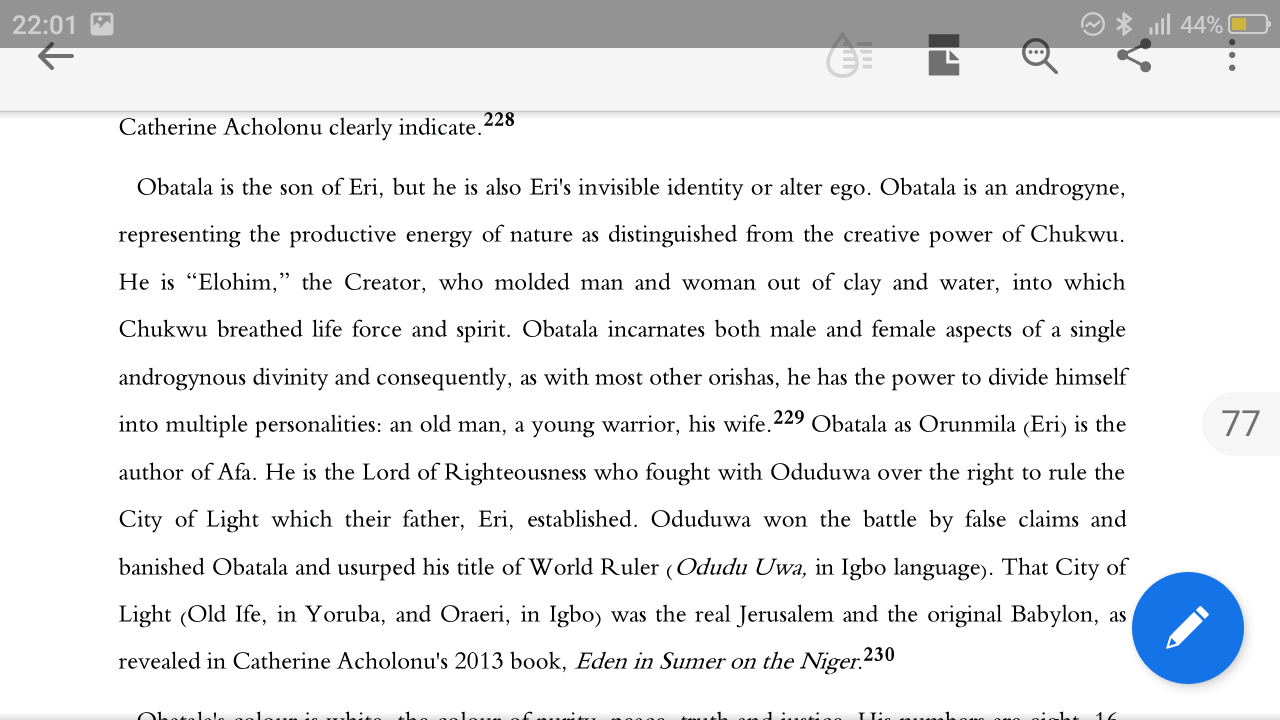
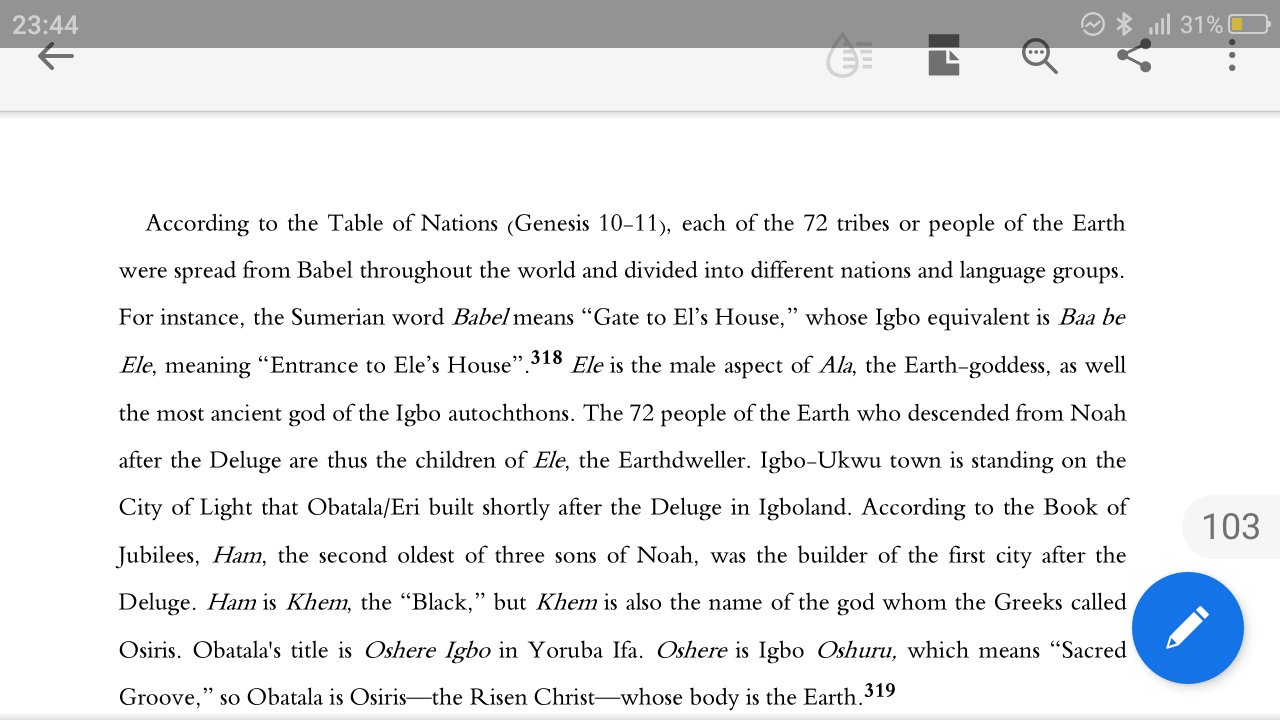
|
| Culture › Re: What If Proto-igboid Speakers Entered Igboland From The South? by letu(m): 2:31pm On Feb 10, 2021 |
AjaanaOka:
So this is an opinion I have been meaning to share for months now with people here interested in this kind of stuff (which usually is just ChinenyeN, lol). But I realized it would probably take a very lengthy post to argue my points; and I was just too lazy and also a little too pre-occupied with other stuff to get into it.
Anyway, here I'll just lay out the skeleton, and fleshen it up with time if need be.
The Current Theories of Igbo Dispersion
The current opinion in mainstream academia is that the ancestors of the Igbo (after separating from their linguistic brethren in the Niger-Benue Confluence area) first occupied the Northern Igbo Plateau which runs from Nsukka southeastwards to Okigwe: the so-called Nsukka-Okigwe cuesta. It was later (goes the theory) that Igbo-speaking colonists from this plateau poured into the surrounding lowlands.
I see this theory as just a small modification of an earlier theory which fingered the Awka-Orlu upland area as the homeland/urheimat of the Igbo-speaking peoples. Both theories (Awka-Orlu and Nsukka-Okigwe) appear to base their argument on (i) high population density (which suggests to the scholars that humans have been in those areas for a very long time), and (ii) the fact that many groups on the plateau have no traditions of migrating from anywhere more than a few kilometres from where they are now found (which, again, suggests that they've been there for a long time).
The Nsukka-Okigwe theory was undoubtedly influenced (as can be seen in the works of Afigbo) by the fact that the Niger-Benue confluence zone is believed to be the point of dispersion for the ancestors of the Igboid, the Edoid, the Idomoid, the Yoruboid, the Akokoid, the Nupoid and other related groups. Striking south from there, the proto-Igboid would reach Nsukka before they got to Owerri or Mbaise. It all makes sense. It's all logical.
But I don't think it's likely.
First. Dense populations and groups with no stories of migration from more than a few kilometres of where they are now found (or no stories of migration, period) are also found outside the Northern Igbo Plateau.
Second. While the Niger-Benue confluence area may be the ultimate urheimat for the languages belonging to the West Benue-Congo family (a family to which Igbo belongs), it looks very likely to me that the urheimat of the YEAI subfamily (the subfamily that the Igbo share with the Yoruba, the Edo and the Akoko) lies outside the confluence area, to the southwest, on the northern borderlands of Ondo and Edo States.
If my theory is right, and the journey of our proto-Igbo ancestors started directly from the Ondo-Edo borderlands, then one can no longer assume a simple southward drift that brought them to the Nsukka-Okigwe cuesta.
The Possibility of the Edo/Ondo Northern Borderlands as the Urheimat of the YEAI Languages
In historical linguistics, the area with the highest linguistic diversity within a language group is often seen as the best candidate for the area where the language group first developed. Take Afro-Asiatic for example. The Afro-Asiatic language group has about 5 or 6 linguistic branches: Chadic, Berber, Ancient Egyptian (extinct), Cushitic, Semitic. All but one of the branches are spoken exclusively in Africa, and only one (Semitic) is spoken in Asia. Thus Afro-Asiatic has its greatest linguistic diversity in Africa, suggesting it developed there first and was carried into Western Asia by immigrants from the African continent.
Also, imagine that no one knew anything about the history of Western Europe or how North America got settled. Non-linguists would probably think English developed in America, with its large number of native English speakers and America's influence around the world. But the linguists would have discerned that all the close relatives of English (i.e., the West Germanic languages) including dialects of English itself are spoken in a small area embracing the British islands and neighbouring areas on the European continent, i.e., the greatest linguistic diversity by far for the language family to which English belongs is observed only in a small part of Western Europe. So that without the benefit of written history, linguistics would still have correctly guessed that English was imported into America from a specific part of Western Europe.
This can be applied to the YEAI languages...
And when one tries to locate the most linguistically diverse area within the YEAI-speaking space, there is only one candidate: the Edo-Ondo border area, in the Kukuruku-Akoko hills area. Mutually unintelligible branches of Akokoid are spoken side by side there in a very small area. Plus two Benue-Congo languages with unclear classification. Yoruba dialects and Edoid languages are also spoken there. All in a small area covering just (I believe) two local government areas. Even if one factors in latter-day 'linguistic imperialism' of Yoruba in the area, the diversity in the area is still remarkable and quite unmatched anywhere else in the YEAI-speaking space.
It's logical (to me) to look for the originators of the proto-Igboid language in that general area.
From this homeland, Proto-Igboid either struck directly eastward or initally drifted south and then entered the east at the head of the Niger Delta, gaining southern Igboland first. [I will quickly point out that two other YEAI languages belonging to the Edoid branch, who are neighbours of the southern Igbo (Engenni and Degema) entered the region in more recent times through this "south, and then east" route.
Entry into Igboland
My first encounter with a theory that Igbo-speakers first settled the south of Igboland before their dispersal was in a master's dissertation on the Abam people by one Mr Okoko sunmitted to UNN's history department in 1996. The researcher, using the same 'linguistic diversity angle, wrote: "Following the principle of homeland location which states that the area which maintains the most distinctly related languages is likely to be the homeland. [...] after comparison, I inferred that the probable homeland of the Igbo speakers would be around Ekpeye in Ahoada LGA of Rivers State."
About Ekpeye's immediate neighbours to the east, the linguist Professor Williamson writes: " I also found that the agreed dialects of Ikwere also scored much lower [i.e., has fewer cognates, or were more diverse] with each other than did the dialects of Igbo with each other, suggesting that Ikwere was a less closely knit language [i.e., a more diverse language] than Igbo."
Get this: According to Williamson, Ikwere alone shows more diversity than the rest of the Igbo family put together.
If Okoko and Williamson are right, then on linguistic diversity grounds alone, academia should at least give serious consideration to the suggestion that the proto-Igboid could have entered Igboland from the south.
But there's another reason why I suspect an entry from the south; and that is that proto-Igboid appears to have had a considerable number of loanwords borrowed from the Lower Cross family. Given the spatial distribution of the languages in the Lower Cross family, the interactions that led to these borrowings are more likely to have occurred in the south than in the north. And given that these loanwords are found in virtually all dialects of Igbo including those with no historical interactions with Lower Cross speakers, we cannot ascribe them to latter-day interactions.
One example: the word for canoe/boat in all dialects of Igbo known to me is 'ụgbọ'. It is not cognate with the word for canoe in the other YEAI languages (where it is ọkọ or cognates of ọkọ), but it is cognate with the proto-Lower Cross for canoe, which is ubom. (It is interesting that the verb for paddling in Igbo is still kwọ or related words which are related to ọkọ.)
Another example: the word for vulture in virtually all the dialects of Igbo known to me is udene/udele/odele. It is not cognate with the words for vulture in the other YEAI languages (where the words for vulture has a 'gu' root), but it is cognate with the proto-Lower Cross, which is utere. [Interestingly, again, some dialects of Igbo have preserved a name for vulture which appears to have a 'gu' root: ọbịa ngwu.]
There are indeed a whole group of words for which the Igbo forms are closer to Lower Cross forms than to forms used in the other YEAI languages; and while they may not all be Lower Cross loans, they at least point to a very early interaction between the originators of Proto-Igboid and the speakers of early versions of the modern Lower Cross languages. An interaction that more probably happened in the south than in the north.
To put my thought simply, the direct ancestor of all the Igboid languages/dialects probably arose from the interaction between dialects first developed around Akoko-Kukuruku hills on the Ondo-Edo borderlands and dialects of the Lower Cross family spoken near the present location of Southern Igboland.
[PS: if this is a bit messy, it's probably because I wrote it in something of a hurry, being already late for work.  ] ] Nice, it is understandable from the fact that you presented well it is quite possible that the origin of proto Igbo's is as a result of migration from north and another migration from south inwhich they will end up meeting each other and then intermixed together. Again this proto Igbo's appears to have names that speaks of who they are, 1) Ndi Ushi/Eshi or Ehi. https://m.facebook.com/permalink.php?id=111858363840588&story_fbid=1121610938103152) Ndi Oru : Here it seems like all or almost the rivers in Igbo land has a thing with Oru, I might be right or wrong here because inasmuch as the Oru people are know as people of river, it also appears that not only Igbo cultures within Imo State knows about Oru + waters thing but also Igbo cultures within Anambara State and it's likely to be the same in other States like Abia, Enugwu and Ebonyi State. I'm thinking that this Oru + water thing in Igbo culture have to do with *) Spirituality And *) Philosophical concepts. http://afaraka..com/2018/08/the-mother-of-universe-isi-mmiri.html?m=13) Umu Ele or El : well here l think this article/site have some interesting explanation concerning Umu Ele or El. https://www.google.com/amp/s/newafrikan77./2016/12/16/ugwuele-the-ancient-shrine-of-isi-ume-the-origin-of-humankind-igbo-and-the-worship-of-the-great-mother-nnem-chukwu/amp/.4) Umudiana : https://www.google.com/amp/s/www.pmnewsnigeria.com/2013/08/11/essay-the-politics-of-igbo-origin-and-culture/amp/.Well another thing is that you have to watch out for them because the reason they are yet to unleash their disagreement on you is that they're busy sharping their weapons just watch out for them, very soon they will come for your head for making such suggestions/claimed instead of the proto Igbo origin that they prefer to be the one and only for all Igbo people like I said they're coming but I did not mention any names well AjaanaOka I believe that you already know the people that I'm talking about, infact they just pass my compound with their white hilux bus . |
| Politics › Re: Civil Societies’ Coalition Commends President Muhammadu Buhari For Nominating Su by letu(m): 12:10pm On Feb 10, 2021 |
aguele:
CIVIL SOCIETIES’ COALITION COMMENDS PRESIDENT MUHAMMADU BUHARI FOR NOMINATING SUBSTANTIVE FRC CHAIR, CALLS ON SENATE TO CONFIRM THE APPOINTMENT AND STRENGTHEN COMMISSION.
The League of Civil Society Groups, a conglomeration of over 200 CSOs in Nigeria, has commended President Muhammadu Buhari for nominating a substantive Chairman for the Fiscal Responsibility Commission (FRC).
Noting that this nomination by the President is a step in the right direction and marks the movement of President Buhari’s anti-corruption war to the next level, with a substantive chair for a Commission that plays a key role on the preventive side of anticorruption.
In a statement made available by the groups President; Amb Akoshile Mukhtar, the group stated that President Buhari had made a solid choice for this position in the person of Barr. Victor Muruako, who has spent the last couple of years working to stabilize the FRC following the withdrawal of funding for the commission based on the recommendation of the Oronsaye panel.
Indeed we strongly believe that with this nomination President Buhari will give the commission greater backing and heir reports will be incorporated into the budget formulation and implementation process as stipulated in the letter of the Fiscal Responsibility Act.
We urge the Senate to give attention to the speedy consideration of this nomination on its merit as it deserves and to do the needful in the interest of protecting public interest in the budgeting process. We equally urge states to enact Fiscal responsibility laws in their states, working with the FRC at the federal level for technical support. We call on all agencies to improve their levels of compliance with the Fiscal Responsibility Act by ensuring stringent implementation of budgets and remitting their operations surpluses to the federal treasury.
Amb. Akoshilen also commend the likes of the Nigeria Deposit Insurance Corporation that have been meeting up with their remittance obligations and urge them to continue in the track of uprightness in line with President Buhari’s vision. I don't understand what you mean by su please explain, could it be Su Ching Han Chung Wu is what you wrote as SU. |
| Christianity Etc › Re: Mike Bamiloye: "Don't Join The Feminist Movement" - Evangelist Warns Ladies by letu(m): 10:36pm On Feb 09, 2021 |
Splitmind:
I tell you man, fourth wave is the twitter idiots we are seeing everywhere saying rubbish.
Some are even advocating for the abolition of gender entirely, like... Abolition of gender entirely well this one na homo sexual in disguise. |
| Christianity Etc › Re: Mike Bamiloye: "Don't Join The Feminist Movement" - Evangelist Warns Ladies by letu(m): 10:27pm On Feb 09, 2021 |
|
| Christianity Etc › Re: Mike Bamiloye: "Don't Join The Feminist Movement" - Evangelist Warns Ladies by letu(m): 10:19pm On Feb 09, 2021 |
Chii59:
E don hit FP o.
I stopped identifying as feminist when I decided to read about the movement and what it stands for.
Though, I still believe in gender equality, though not from the standpoint of modern feminism. Interesting, there is an esoteric fraternity aspect of feminism. |
| Foreign Affairs › Re: Yoruba Becomes Second Official Language In Benin Republic by letu(m): 6:45am On Feb 08, 2021 |


|
| Foreign Affairs › Re: Yoruba Becomes Second Official Language In Benin Republic by letu(m): 6:42am On Feb 08, 2021 |


|
| Culture › Re: Beautiful Black Women From Ancient Egypt by letu(m): 3:18am On Feb 08, 2021 |
AlfaB:
I don't know why you guys are obsessed with ancient egypt.
There were blacks all over the world. Not only in Egypt. Why is it that OCULOCUTANEOUS people know as White, why are they obsessed with ancient Greco Roman history?, Why is it that present day OCULOCUTANEOUS people that are also know as Chinese, why are they obsessed with the ancient Han history come on there where and also there are a lot of people that looks like them all over the world?, Why is it that this set of present day OCULOCUTANEOUS HUMAN beings THE ARAB'S PEOPLE, why are they obsessed with the ancient Gorkturks history ?. Well with all this, I don't see why it should be wrong for any of the so called black person from this planet earth to be interested in ANCIENT BLACK CIVILIZATION OF ANCIENT EGYPT. |
| Christianity Etc › Re: Faith Oyedepo Celebrates Her 63rd Birthday (Photos) by letu(m): 3:08pm On Feb 05, 2021 |
envoymedia:
Pastor Faith Oyedepo, wife of the founder and General Overseer of the Living Faith Church, Bishop David Oyedepo is celebrating her 63rd birthday today February 5, IgbereTV reports.
Taking to her Instagram handle, she shared a photo of herself with the caption;
https://www.instagram.com/p/CK5Xppqs-aX/?utm_source=ig_web_copy_link
Also, David Oyedepo Ministies International took to Instagram to celebrate her birthday. Her picture was shared with the caption;
https://www.instagram.com/p/CK5XWnZKx7s/?utm_source=ig_web_copy_link
Bishop David Oyedepo and Pastor Faith Oyedepo got married to in 1982. They have four children together (David Jr, Isaac, Love and Joyce). David Oyedepo Jr and Isaac Oyedepo were ordained as Pastors in May 2007 by Kenneth Copeland. Happy birthday, let me ask this question could it be that the sign she's making with her left hand (the second picture) was a mistake or that she knows exactly what she's doing ?. 


|
| Politics › Re: Abia Pays N100K To Herdsmen For Every Cow Killed In Clash With Farmers - Ikpeazu by letu(m): 8:08pm On Feb 03, 2021 |
chatinent:
Now, I see why Alex Otti used his name to campaign: Ikpeazu, meaning backyard verdict.
This is an epitome of such baseless backyard verdict. Alex Otti and his brother Oji uzor Kalu are not saint and they can't do anything about Fulani nomadic militant because they are loyal servant of HAUSA FULANI POLITICAL PARTY KNOW AS A P C. 


|
| Christianity Etc › Re: The Little-known Legend Of Jesus In Japan by letu(m): 7:42pm On Feb 03, 2021 |
Australopithecu:
By Luwigo
A mountain hamlet in northern Japan claims Jesus Christ was buried there
Japan Jesus
The burial ground to what some claim is Jesus' final resting place. (Jensen Walker / Getty Images)
By Franz Lidz
SMITHSONIAN MAGAZINE | SUBSCRIBE
JANUARY 2013
On the flat top of a steep hill in a distant corner of northern Japan lies the tomb of an itinerant shepherd who, two millennia ago, settled down there to grow garlic. He fell in love with a farmer’s daughter named Miyuko, fathered three kids and died at the ripe old age of 106. In the mountain hamlet of Shingo, he’s remembered by the name Daitenku Taro Jurai. The rest of the world knows him as Jesus Christ.
It turns out that Jesus of Nazareth—the Messiah, worker of miracles and spiritual figurehead for one of the world’s foremost religions—did not die on the cross at Calvary, as widely reported. According to amusing local folklore, that was his kid brother, Isukiri, whose severed ear was interred in an adjacent burial mound in Japan.
A bucolic backwater with only one Christian resident (Toshiko Sato, who was 77 when I visited last spring) and no church within 30 miles, Shingo nevertheless bills itself as Kirisuto no Sato (Christ’s Hometown). Every year 20,000 or so pilgrims and pagans visit the site, which is maintained by a nearby yogurt factory. Some visitors shell out the 100-yen entrance fee at the Legend of Christ Museum, a trove of religious relics that sells everything from Jesus coasters to coffee mugs. Some participate in the springtime Christ Festival, a mashup of multidenominational rites in which kimono-clad women dance around the twin graves and chant a three-line litany in an unknown language. The ceremony, designed to console the spirit of Jesus, has been staged by the local tourism bureau since 1964.
The Japanese are mostly Buddhist or Shintoist, and, in a nation of 127.8 million, about 1 percent identify themselves as Christian. The country harbors a large floating population of folk religionists enchanted by the mysterious, the uncanny and the counterintuitive. “They find spiritual fulfillment in being eclectic,” says Richard Fox Young, a professor of religious history at the Princeton Theological Seminary. “That is, you can have it all: A feeling of closeness—to Jesus and Buddha and many, many other divine figures—without any of the obligations that come from a more singular religious orientation.”
In Shingo, the Greatest Story Ever Told is retold like this: Jesus first came to Japan at the age of 21 to study theology. This was during his so-called “lost years,” a 12-year gap unaccounted for in the New Testament. He landed at the west coast port of Amanohashidate, a spit of land that juts across Miyazu Bay, and became a disciple of a great master near Mount Fuji, learning the Japanese language and Eastern culture. At 33, he returned to Judea—by way of Morocco!—to talk up what a museum brochure calls the “sacred land” he had just visited.
Having run afoul of the Roman authorities, Jesus was arrested and condemned to crucifixion for heresy. But he cheated the executioners by trading places with the unsung, if not unremembered, Isukiri. To escape persecution, Jesus fled back to the promised land of Japan with two keepsakes: one of his sibling’s ears and a lock of the Virgin Mary’s hair. He trekked across the frozen wilderness of Siberia to Alaska, a journey of four years, 6,000 miles and innumerable privations. This alternative Second Coming ended after he sailed to Hachinohe, an ox-cart ride from Shingo.
Upon reaching the village, Jesus retired to a life in exile, adopted a new identity and raised a family. He is said to have lived out his natural life ministering to the needy. He sported a balding gray pate, a coat of many folds and a distinctive nose, which, the museum brochure observes, earned him a reputation as a “long-nosed goblin.”
When Jesus died, his body was left exposed on a hilltop for four years. In keeping with the customs of the time, his bones were then bundled and buried in a grave—the same mound of earth that is now topped by a timber cross and surrounded by a picket fence. Though the Japanese Jesus performed no miracles, one could be forgiven for wondering whether he ever turned water into sake.
***
This all sounds more Life of Brian than Life of Jesus. Still, the case for the Shingo Savior is argued vigorously in the museum and enlivened by folklore. In ancient times, it’s believed, villagers maintained traditions alien to the rest of Japan. Men wore clothes that resembled the toga-like robes of biblical Palestine, women wore veils, and babies were toted around in woven baskets like those in the Holy Land. Not only were newborns swaddled in clothes embroidered with a design that resembled a Star of David, but, as a talisman, their foreheads were marked with charcoal crosses. more pictures. 


|
| Christianity Etc › Re: The Little-known Legend Of Jesus In Japan by letu(m): 7:36pm On Feb 03, 2021 |
Australopithecu:
By Luwigo
A mountain hamlet in northern Japan claims Jesus Christ was buried there
Japan Jesus
The burial ground to what some claim is Jesus' final resting place. (Jensen Walker / Getty Images)
By Franz Lidz
SMITHSONIAN MAGAZINE | SUBSCRIBE
JANUARY 2013
On the flat top of a steep hill in a distant corner of northern Japan lies the tomb of an itinerant shepherd who, two millennia ago, settled down there to grow garlic. He fell in love with a farmer’s daughter named Miyuko, fathered three kids and died at the ripe old age of 106. In the mountain hamlet of Shingo, he’s remembered by the name Daitenku Taro Jurai. The rest of the world knows him as Jesus Christ.
It turns out that Jesus of Nazareth—the Messiah, worker of miracles and spiritual figurehead for one of the world’s foremost religions—did not die on the cross at Calvary, as widely reported. According to amusing local folklore, that was his kid brother, Isukiri, whose severed ear was interred in an adjacent burial mound in Japan.
A bucolic backwater with only one Christian resident (Toshiko Sato, who was 77 when I visited last spring) and no church within 30 miles, Shingo nevertheless bills itself as Kirisuto no Sato (Christ’s Hometown). Every year 20,000 or so pilgrims and pagans visit the site, which is maintained by a nearby yogurt factory. Some visitors shell out the 100-yen entrance fee at the Legend of Christ Museum, a trove of religious relics that sells everything from Jesus coasters to coffee mugs. Some participate in the springtime Christ Festival, a mashup of multidenominational rites in which kimono-clad women dance around the twin graves and chant a three-line litany in an unknown language. The ceremony, designed to console the spirit of Jesus, has been staged by the local tourism bureau since 1964.
The Japanese are mostly Buddhist or Shintoist, and, in a nation of 127.8 million, about 1 percent identify themselves as Christian. The country harbors a large floating population of folk religionists enchanted by the mysterious, the uncanny and the counterintuitive. “They find spiritual fulfillment in being eclectic,” says Richard Fox Young, a professor of religious history at the Princeton Theological Seminary. “That is, you can have it all: A feeling of closeness—to Jesus and Buddha and many, many other divine figures—without any of the obligations that come from a more singular religious orientation.”
In Shingo, the Greatest Story Ever Told is retold like this: Jesus first came to Japan at the age of 21 to study theology. This was during his so-called “lost years,” a 12-year gap unaccounted for in the New Testament. He landed at the west coast port of Amanohashidate, a spit of land that juts across Miyazu Bay, and became a disciple of a great master near Mount Fuji, learning the Japanese language and Eastern culture. At 33, he returned to Judea—by way of Morocco!—to talk up what a museum brochure calls the “sacred land” he had just visited.
Having run afoul of the Roman authorities, Jesus was arrested and condemned to crucifixion for heresy. But he cheated the executioners by trading places with the unsung, if not unremembered, Isukiri. To escape persecution, Jesus fled back to the promised land of Japan with two keepsakes: one of his sibling’s ears and a lock of the Virgin Mary’s hair. He trekked across the frozen wilderness of Siberia to Alaska, a journey of four years, 6,000 miles and innumerable privations. This alternative Second Coming ended after he sailed to Hachinohe, an ox-cart ride from Shingo.
Upon reaching the village, Jesus retired to a life in exile, adopted a new identity and raised a family. He is said to have lived out his natural life ministering to the needy. He sported a balding gray pate, a coat of many folds and a distinctive nose, which, the museum brochure observes, earned him a reputation as a “long-nosed goblin.”
When Jesus died, his body was left exposed on a hilltop for four years. In keeping with the customs of the time, his bones were then bundled and buried in a grave—the same mound of earth that is now topped by a timber cross and surrounded by a picket fence. Though the Japanese Jesus performed no miracles, one could be forgiven for wondering whether he ever turned water into sake.
***
This all sounds more Life of Brian than Life of Jesus. Still, the case for the Shingo Savior is argued vigorously in the museum and enlivened by folklore. In ancient times, it’s believed, villagers maintained traditions alien to the rest of Japan. Men wore clothes that resembled the toga-like robes of biblical Palestine, women wore veils, and babies were toted around in woven baskets like those in the Holy Land. Not only were newborns swaddled in clothes embroidered with a design that resembled a Star of David, but, as a talisman, their foreheads were marked with charcoal crosses. More pictures  . 


|
| Christianity Etc › Re: The Little-known Legend Of Jesus In Japan by letu(m): 7:10pm On Feb 03, 2021 |
Australopithecu:
By Luwigo
A mountain hamlet in northern Japan claims Jesus Christ was buried there
Japan Jesus
The burial ground to what some claim is Jesus' final resting place. (Jensen Walker / Getty Images)
By Franz Lidz
SMITHSONIAN MAGAZINE | SUBSCRIBE
JANUARY 2013
On the flat top of a steep hill in a distant corner of northern Japan lies the tomb of an itinerant shepherd who, two millennia ago, settled down there to grow garlic. He fell in love with a farmer’s daughter named Miyuko, fathered three kids and died at the ripe old age of 106. In the mountain hamlet of Shingo, he’s remembered by the name Daitenku Taro Jurai. The rest of the world knows him as Jesus Christ.
It turns out that Jesus of Nazareth—the Messiah, worker of miracles and spiritual figurehead for one of the world’s foremost religions—did not die on the cross at Calvary, as widely reported. According to amusing local folklore, that was his kid brother, Isukiri, whose severed ear was interred in an adjacent burial mound in Japan.
A bucolic backwater with only one Christian resident (Toshiko Sato, who was 77 when I visited last spring) and no church within 30 miles, Shingo nevertheless bills itself as Kirisuto no Sato (Christ’s Hometown). Every year 20,000 or so pilgrims and pagans visit the site, which is maintained by a nearby yogurt factory. Some visitors shell out the 100-yen entrance fee at the Legend of Christ Museum, a trove of religious relics that sells everything from Jesus coasters to coffee mugs. Some participate in the springtime Christ Festival, a mashup of multidenominational rites in which kimono-clad women dance around the twin graves and chant a three-line litany in an unknown language. The ceremony, designed to console the spirit of Jesus, has been staged by the local tourism bureau since 1964.
The Japanese are mostly Buddhist or Shintoist, and, in a nation of 127.8 million, about 1 percent identify themselves as Christian. The country harbors a large floating population of folk religionists enchanted by the mysterious, the uncanny and the counterintuitive. “They find spiritual fulfillment in being eclectic,” says Richard Fox Young, a professor of religious history at the Princeton Theological Seminary. “That is, you can have it all: A feeling of closeness—to Jesus and Buddha and many, many other divine figures—without any of the obligations that come from a more singular religious orientation.”
In Shingo, the Greatest Story Ever Told is retold like this: Jesus first came to Japan at the age of 21 to study theology. This was during his so-called “lost years,” a 12-year gap unaccounted for in the New Testament. He landed at the west coast port of Amanohashidate, a spit of land that juts across Miyazu Bay, and became a disciple of a great master near Mount Fuji, learning the Japanese language and Eastern culture. At 33, he returned to Judea—by way of Morocco!—to talk up what a museum brochure calls the “sacred land” he had just visited.
Having run afoul of the Roman authorities, Jesus was arrested and condemned to crucifixion for heresy. But he cheated the executioners by trading places with the unsung, if not unremembered, Isukiri. To escape persecution, Jesus fled back to the promised land of Japan with two keepsakes: one of his sibling’s ears and a lock of the Virgin Mary’s hair. He trekked across the frozen wilderness of Siberia to Alaska, a journey of four years, 6,000 miles and innumerable privations. This alternative Second Coming ended after he sailed to Hachinohe, an ox-cart ride from Shingo.
Upon reaching the village, Jesus retired to a life in exile, adopted a new identity and raised a family. He is said to have lived out his natural life ministering to the needy. He sported a balding gray pate, a coat of many folds and a distinctive nose, which, the museum brochure observes, earned him a reputation as a “long-nosed goblin.”
When Jesus died, his body was left exposed on a hilltop for four years. In keeping with the customs of the time, his bones were then bundled and buried in a grave—the same mound of earth that is now topped by a timber cross and surrounded by a picket fence. Though the Japanese Jesus performed no miracles, one could be forgiven for wondering whether he ever turned water into sake.
***
This all sounds more Life of Brian than Life of Jesus. Still, the case for the Shingo Savior is argued vigorously in the museum and enlivened by folklore. In ancient times, it’s believed, villagers maintained traditions alien to the rest of Japan. Men wore clothes that resembled the toga-like robes of biblical Palestine, women wore veils, and babies were toted around in woven baskets like those in the Holy Land. Not only were newborns swaddled in clothes embroidered with a design that resembled a Star of David, but, as a talisman, their foreheads were marked with charcoal crosses. Very very interesting, I'm already aware of the other Jesus Christ stories for a very long long years. 


|
| Culture › Re: Ezza: Indigenous Igbos Of Benue State Celebrate Cultural Festival by letu(m): 2:43pm On Feb 02, 2021 |
|
| Culture › Re: Ezza: Indigenous Igbos Of Benue State Celebrate Cultural Festival by letu(m): 2:27pm On Feb 02, 2021 |
Nigercity:
Some people eh!
Pls tell me which part of enugu,and anambra is not Igbo?
Also Tell me which cross river tribe is found in Ebonyi?
Cos the Last time I checked, Ezza is an igbo village with greater part of it in Ebonyi an the remaining part in benue and cross river (odinary Google search can cure your ignorance)
Taking of Abia, the ibibio people in Abia are minority not even up to 2% and most of them always claim Igbos (visit obingwa, they are few Akwa ibom tribes there) but all of them now speaks Aba Igbo (not even ngwa Igbo)
Say always say what you know Please can you explain more on your Akwa ibom people of Obingwa that speak the so called illusion language that you are referring to as Aba Igbos(not even Ngwa Igbo). |
| Christianity Etc › Re: Why Was Jesus Painted White And Satan Black? by letu(m): 2:10am On Jan 31, 2021*. Modified: 2:34am On Jan 31, 2021 |
Ihatemumu:
share your opinion!!!
In Chess White moves before Black pieces, even though randomizing the starting piece would have any significance?
Why did our racist slave masters sold Africa a White Jesus and Black Satan?
Whitelist vs BlackList
White vs Black
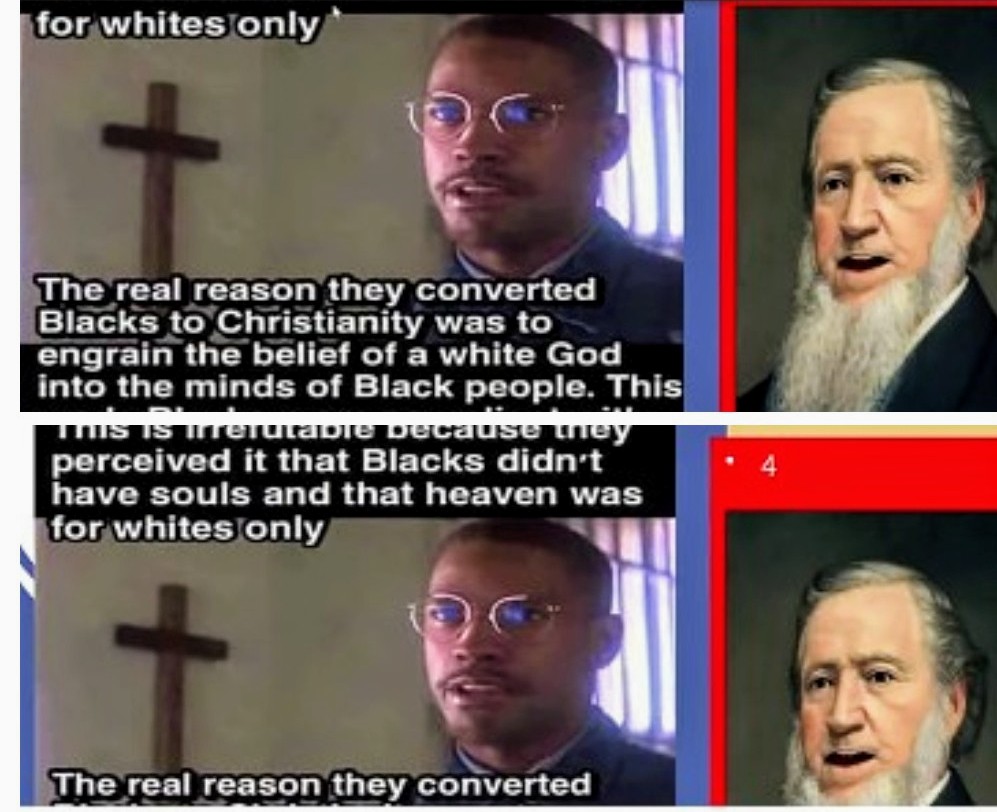
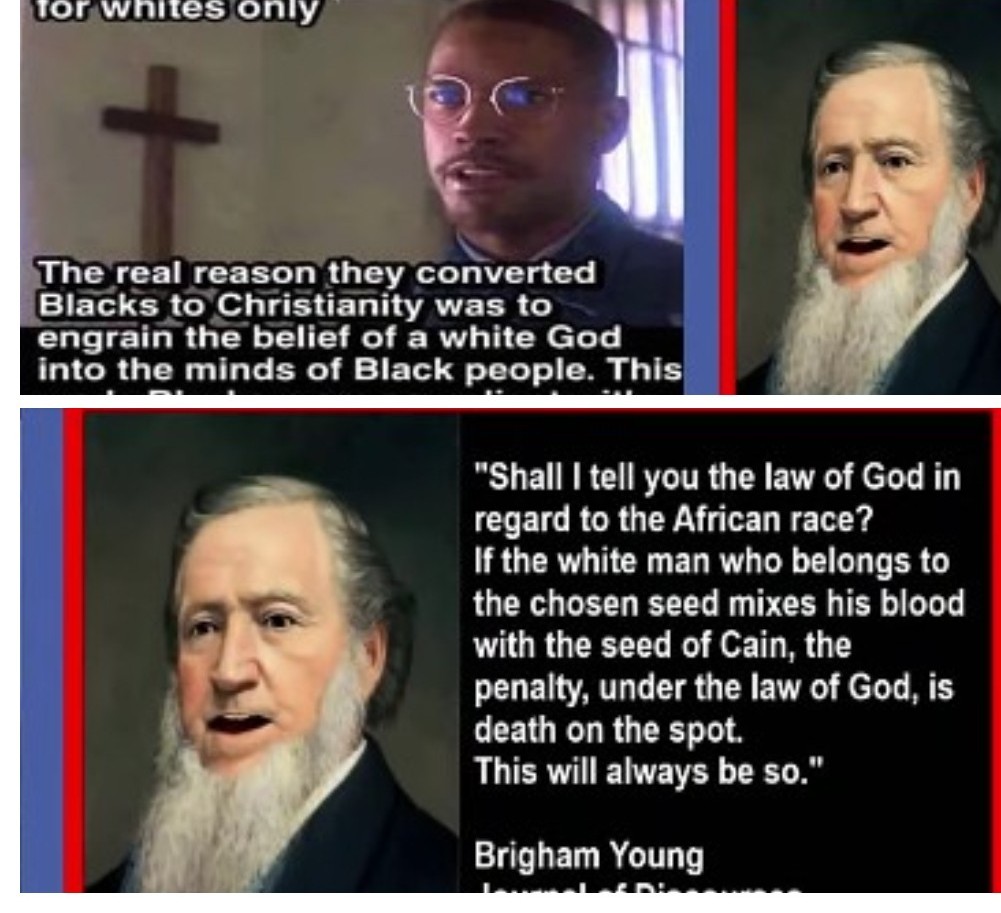
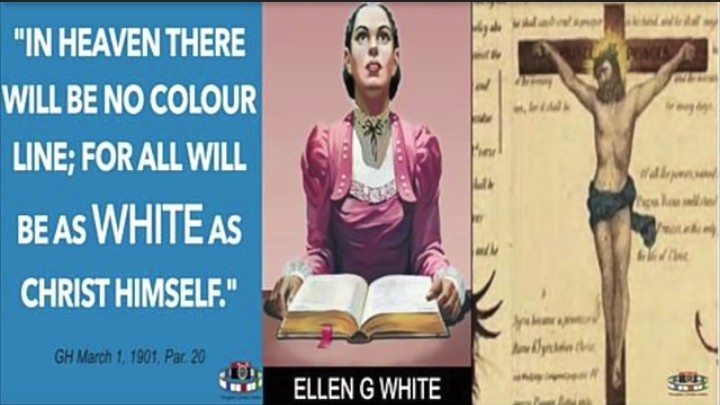
Could it be History was really modified to bury the real Truth about Africa? FOOD FOR THOUGHT, THE PICTURES BELOW. 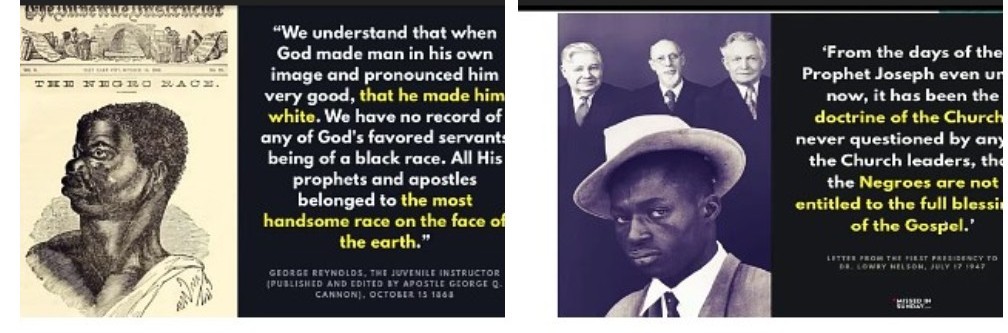
|
| Christianity Etc › Re: Why Was Jesus Painted White And Satan Black? by letu(m): 2:03am On Jan 31, 2021 |


|
| Christianity Etc › Re: Why Was Jesus Painted White And Satan Black? by letu(m): 1:57am On Jan 31, 2021 |
bobestman:
I feel like insulting you for calling a black man unclean but will not do that
The scripture said man was made from the ground (soil). What color is the soil used for moulding making things? It can never be white but black or brown. That's the color of the first man created before the spirit of the creator was put in him. You blacks are the original and owners of the earth. All you read in your Bible are your histories stolen and interpreted by the Pinks for you(the reason you are all brainwashed). How does the name of the first man sound to you... ADAM? What continent or ppl answer that name I tell you , all of you Christians are decieved. If you don't wake up, you will cry. You will soon see your Jesus on the sky via project Bluebeam. Go and check it on the net. You all will follow him and later it will be dawned on you all that you are decieved. You will then see the true Messiah and cry like you have never did before when you see him leave the Earth I tell you , all of you Christians are decieved. If you don't wake up, you will cry. You will soon see your Jesus on the sky via project Bluebeam. Go and check it on the net. You all will follow him and later it will be dawned on you all that you are decieved. You will then see the true Messiah and cry like you have never did before when you see him leave the Earth
Wake up Churchians the colour of the soil BROWN NOT BLACK. |
| Christianity Etc › Re: Why Was Jesus Painted White And Satan Black? by letu(m): 1:53am On Jan 31, 2021 |
StubbornGENIUS:
All good and clean things are pure and white which is what Jesus represents.Satan is evil,and all unclean things are soiled and black. All unclean things are soiled and black but not BROWN WHICH IS THAT SATAN IS NOT BROWN BUT BLACK. THIS IS ALSO FOR THOSE WHO UNDERSTAND. |
| Christianity Etc › Re: ROSARY; How Often Do You Say Your Rosary by letu(m): 1:28am On Jan 31, 2021 |
SisterFire:
Nwere nne Mary ...mere nne
Nwere nne Mary ...mere nne
Nwere nne Mary ...mere nne
Oga eji gi mere nwa!
...This section has been fighting Catholics for ages tanks u are here If you are truly from Igbo I will tell you this that you already have Nne no need to infuse a Greco Roman Germanic concept know as Mary on your Nne who is this your Nne that I'm talking about, she is know by many names that represents her which are Nne Chiukwu, her other name's are Ăla Omumu, Nnemiri, Oma or huoma, Eke kere Uwa. That's what you should be aware of. |
| Culture › Re: All Proud Ngwá Sons And Daughters, Gather Here by letu(m): 1:02am On Jan 31, 2021 |
|


