LRNZH's Posts
Nairaland Forum › LRNZH's Profile › LRNZH's Posts
1 2 3 4 5 6 7 8 ... 35 36 37 38 39 40 41 42 43 (of 113 pages)
 Politics › Re: VIDEO: Why Ndi Igbo Should Not Vote GEJ. An Exposé by LRNZH(op): 5:58pm On Mar 17, 2015 Politics › Re: VIDEO: Why Ndi Igbo Should Not Vote GEJ. An Exposé by LRNZH(op): 5:58pm On Mar 17, 2015 |
kestolove95:That's just the truth. Only through APC will an Igbo presidency will happen in the next 8 years. cc: Lalasticlala, Ishilove, Maclatunji, Obinoscopy, OAM4J 4 Likes |
| Politics › Re: PIPELINE CONTRACTS: Not Your Birthright, Militants Tell Boyloaf by LRNZH(op): 5:37pm On Mar 17, 2015*. Modified: 6:02pm On Mar 17, 2015 |
viczing:Obviously you live in a bubble. All the OPC, Boyloaf, Tompolo, Asari, Mangrove Boys, MASSOB etc etc that GEJ has been give ng juicy contracts and arming in the past 2 months nko? You can make a vendor your friend if you can't afford to buy newspaper or data to browse news sites 5 Likes |
| Politics › VIDEO: Why Ndi Igbo Should Not Vote GEJ. An Exposé by LRNZH(op): 5:29pm On Mar 17, 2015 |
1 Like |
| Politics › Re: PIPELINE CONTRACTS: Not Your Birthright, Militants Tell Boyloaf by LRNZH(op): 5:27pm On Mar 17, 2015 |
phlemzy:Exactly... cc: Lalasticlala, Ishilove, Maclatunji, Obinoscopy, OAM4J 2 Likes |
| Politics › Re: PIPELINE CONTRACTS: Not Your Birthright, Militants Tell Boyloaf by LRNZH(op): 5:11pm On Mar 17, 2015 |
kastonkastrol:GEJ has formalised corruption and impunity in Nigeria now. The next govt will struggle with dismantling all the groups GEJ has empowered with guns and dollars. Said Baba 8 Likes |
| Politics › Re: Goats Turn Transformers To Relaxation Centers (pics) by LRNZH(m): 5:04pm On Mar 17, 2015 |
The same goats that ate GEJ's yams in the parable? Lalasticlala, Ishilove, Maclatunji, Obinoscopy, OAM4J |
| Politics › PIPELINE CONTRACTS: Not Your Birthright, Militants Tell Boyloaf by LRNZH(op): 5:00pm On Mar 17, 2015 |
Militants from Bayelsa State, under the aegis of Mangrove Boys of Bayelsa, have flayed some ex-militant leaders for attempting to “corner the state’s share” of the multi-billion Naira pipeline surveillance contracts. The MBB particularly warned Victor Ebikabowei (Boyloaf), Eris Paul (Ogunboss) and Pastor Reuben against causing violence in the state. The pipeline surveillance contract awarded by the Federal Government to Bayelsa has been causing furore between some ex-militants and the state government. Last week, some ex-militants staged a protest against Governor Seriake Dickson for allegedly trying to hijack the surveillance job. During the protest, the ex-militants clashed with the police leading to nine persons being injured and many vehicles, including a police truck, destroyed. MBB said on Monday that it would no longer fold its hands and watch a few individuals from Southern Ijaw Local Government Area continue to hijack and selfishly enrich themselves with the commonwealth of the youths. The group said, “The pipeline surveillance job is not their birthright. All the militant leaders disturbing the peace of Bayelsa and trying to hijack the contract through their company, Bajero, are just from one local government area which is Southern Ijaw. “They do not represent the interests of all of us in the entire state. As formidable freedom fighters, we will not allow these leaders to cheat us again because the contract is meant for our rural communities.” MBB in a statement signed by its Secretary, Mr. Victor Adere, said it would resist further violent demonstrations in the state by ex-militants and their leaders. Adere flayed the ex-militants for the last Friday protest which led to the destruction of public property and shooting of guns on the streets of Yenagoa describing their actions as criminal and unlawful. He alleged that the ex-militants held series of meetings with some officials of the Nigerian National Petroleum Corporation where they vowed to create confusion and anarchy in the state in an exchange for dollars. Adere also accused the ex-militants of collecting cash and contracts from the Niger Delta Development Commission, an agency he said had yet to inaugurate a project in Bayelsa, to fight the leadership of the state. “These so-called militant leaders in Bayelsa State were paid huge sums of money from the Amnesty Office, Abuja monthly to be paid to their followers but they failed in that process which obviously make their followers to go on the rampage blocking the East-West Road on many occasions,” he said. Adere added that the MBB was fully in support of the state Governor, Mr. Seriake Dickson, for his efforts in ensuring that the state-owned Izon Ibe Security Company execute the contract for the benefit of everybody in the state. http://www.punchng.com/news/pipeline-contracts-not-your-birthright-militants-tell-boyloaf/ 1 Like |
| Politics › Re: I APOLOGISE, I Did Not Speak With The King - Babajide Alabi by LRNZH(op): 12:46pm On Mar 15, 2015 |
SeverusSnape:But but Snape...... Why does GEJ get embarrassed by smaller nations (Chad, Morocco, Kenya, South Africa etc etc) on regular? Mind you, I have not mentioned the bigger countries like Saudi Arabia, USA etc etc 2 Likes |
| Politics › Re: I APOLOGISE, I Did Not Speak With The King - Babajide Alabi by LRNZH(op): 12:00pm On Mar 15, 2015 |
CaptainAmerica1:Do you mean the theory of Capra Hircus and Discorea rotundata? This is zoologists and botanists things  Aso Rock mumu lingua for you. Only Retardeen can run a comprehensive summary in this case 5 Likes |
| Politics › I APOLOGISE, I Did Not Speak With The King - Babajide Alabi by LRNZH(op): 11:46am On Mar 15, 2015*. Modified: 12:03pm On Mar 15, 2015 |
The story that the King Mohammed IV of Morrocco declined a phone request from Nigeria President Goodluck Jonathan is no longer news. This broke early last week and has been widely publicised both in print and broadcast media, in and outside Nigeria. At first “contact” with the news, I had reservations about the authenticity. This probably was because I saw it first on the social media. [img]http://cdn2.vanguardngr.com/wp-content/uploads/2015/03/412x250xJonathan-2.jpg.pagespeed.ic.m-8aOc6roo.webp[/img] The initial thought on sighting the headline was that “GEJ enemies” probably have cooked up another interesting story to embarrass the Nigerian government. You can question me on this, but with the rate false stories are peddled right, left and centre in all the political camps no one can really blame me for this thought. I have read some stories recently that are nothing but what we call “fable” in my neck of the woods. My doubt on the veracity of the story was put to rest when the Federal Ministry of Foreign Affairs put out a statement that contrary to the news making the rounds, Mr President actually spoke with the Moroccan king. This was when I concluded that this was not a “figment of imagination” of the opposition group or the works of “fifth columnists” in the government. The telephone conversation refusal was initially made public by the Moroccan Foreign Affairs Ministry in a statement that the request by Nigeria authorities was refused because an election is coming up in Nigeria and the King does not want to be “a pawn” in the game. It stated that the refusal was necessary because a telephone conversation between the two might suggest a rapprochement where there is none. The King was particularly piqued by “the repetitive unfriendly and hostile positions of the Nigerian Government, regarding the issue of the Moroccan Sahara and the sacred Arab – Muslim causes, particularly that of the brotherly Palestinian people,” the statement said. The country accused President Jonathan of not interested in normal diplomatic relationship, but a means of getting “back the muslim electorate…” The story was number one on the Nigerian social media circles last week as there were so many shares on Facebook, blog, Twitter, etc. The run up to the 2015 elections has brought out the online “sharing” ability of Nigerians as we strive to keep up with breaking news stories. The only down side to this is we love to share negative news about our country but complain when international media focus mainly on our poverty, rather than developments. Do you blame them? There have been comments and opinions on the telephone conversation refusal. The opposition groups and supporters seized the opportunity to condemn the government of Jonathan as lacking “respect” in the international community. In less than 24 hours it became a campaign “issue” on social media, and also crept into the mainstream media. A few patriotic Nigerians however, cautioned that the subject of the story should not be a source of celebration for the opposition, rather it should call for sober reflections for all Nigerians. It was argued that although the timing of the request for a telephone conversation with the Moroccan King by the President may be suspect as “tool” for electioneering purposes, the underlying reason for refusal is the perceived Nigeria’s opposition to the Palestinian cause. Have we paused for a moment to reflect on this aspect of the statement? The authorities in Morocco raised glasses and saluted themselves for the courage to refuse a telephone conversation request from the President of the most populated black country, completely unaware of what the Nigerian government would come out with next. And it was a shocker. In reaction to the snub claim of the Moroccan, the Foreign Affairs ministry issued a statement claiming that President Goodluck Jonathan actually had a telephone conversation with the king and both spoke “extensively” “on matters of mutual interests” to the countries. The Moroccans dropped their drinking glasses, mouth agape and shocked out of their “shells”, at Nigeria’s claim of a telephone conversation between the two leaders. The Morroccan foreign affairs ministry in a swift reaction denied the King ever spoke with Mr President, talk less of “extensively” on any issue. They condemned, in not palatable words, how the Nigerian government has twisted a phone conversation that never took place. Understandably, “in anger”, the Moroccan monarch ordered the immediate recall of the country’s ambassador to Nigeria. Nigerians and the world generally were very confused as to what part of the story they should believe. The Moroccan officials were however very empathic that there was never a telephone conversation, while the Nigerian officials repeated “their song”. The question of who was lying did not go away. However, events took a strange twist late Friday when a statement was released from the Presidency that Jonathan was “shocked, surprised and highly embarrassed by the controversy that has erupted”. There was a huge sigh of relief from everybody that finally we know who was telling the truth. Undoubtedly embarrassed by the turn of events, the Presidency promised an investigation to unravel the mystery. [/b]The foreign minister was charged with the responsibility of “playing the detective” in this “episode”. This latest turn has brought to fore the handling of state affairs in Nigeria and has got every right thinking Nigerian worried about governance in Nigeria. [b]There are many questions that beg for answers from the Presidency, the Foreign Affairs Minister and his staff. What prompted the official that released the initial statement confirming a telephone conversation between these two leaders? Did he or she act alone or in a team? Did he or she make any attempt to clarify with the Presidency if Mr Jonathan actually spoke with the Moroccan king? What was the role of the foreign minister in this embarrassing situation? Is he a fifth columnist in the Jonathan government? Was he aware of the first press statement before it was made public? And for the Presidency, why did it take this long before a clarification was issued? The “diplomatic tension” could have been easily diffused if the Presidency had come clean immediately, “hands raised” as sign of humility and deny the Foreign Affairs Ministry statement. Was the Presidency playing along in the “game” until it turned “unfriendly” and had to look for a “scapegoat” to lay the blame on? Not that Nigerians care much about their government’s response. Going by comments and reactions on social media, Nigerians, from the “word go,” believed the Moroccan side of the story. They know the Moroccan king is not shy to take a stand when there is need to. King Mohammed IV, by history seem to be a man of “short temper” and an implacable individual who picks his fights with whoever he sees as enemy of his country or fellow Arab brothers. Unfortunately, the Nigerian government seemed to have picked a wrong leader to rumble with. The former Israeli President Shimon Peres had a “taste” of the King when he had to cancel a state visit to Morocco after it emerged the king would not see him. From both sides, the last had not been heard of this “telephone conversation” debacle. I can assure you it will rear its head once again in the nearest future. http://www.vanguardngr.com/2015/03/i-apologise-i-did-not-speak-with-the-king/ |
| Politics › Re: BUHARI WILL NOW WIN 28 March Election With A Wide Margin – Eurasia Group by LRNZH(op): 12:08am On Mar 15, 2015 |
RoyalPriesthuud:This is a balanced analysis. I don't know why the mods have not noticed this yet. cc: Lalasticlala, Ishilove, Maclatunji, Obinoscopy, OAM4J 1 Like |
| Politics › Re: BUHARI WILL NOW WIN 28 March Election With A Wide Margin – Eurasia Group by LRNZH(op): 9:55pm On Mar 14, 2015 |
atlwireles:There is a name, a phone number and an email address on that article. You can google the agency too..lemme help you http://www.eurasiagroup.net/ 4 Likes |
| Politics › Re: BUHARI WILL NOW WIN 28 March Election With A Wide Margin – Eurasia Group by LRNZH(op): 9:50pm On Mar 14, 2015 |
atlwireles:What are you on about? |
| Politics › Re: BUHARI WILL NOW WIN 28 March Election With A Wide Margin – Eurasia Group by LRNZH(op): 9:32pm On Mar 14, 2015 |
jamace:While PDP relies on metaphysical predictions from the like of oracles, witches and palm readers, APC is doing its groundwork logically and independent pollstars are picking up the signs of a GMB/APC victory. cc: Lalasticlala, Ishilove, Maclatunji, Obinoscopy, OAM4J 5 Likes |
| Politics › BUHARI WILL NOW WIN 28 March Election With A Wide Margin – Eurasia Group by LRNZH(op): 9:26pm On Mar 14, 2015 |
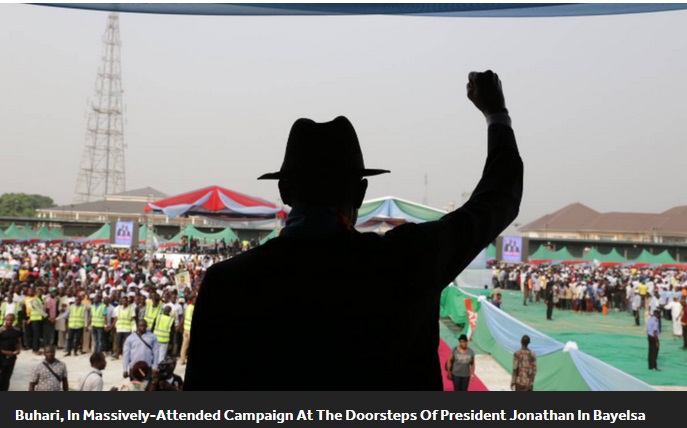
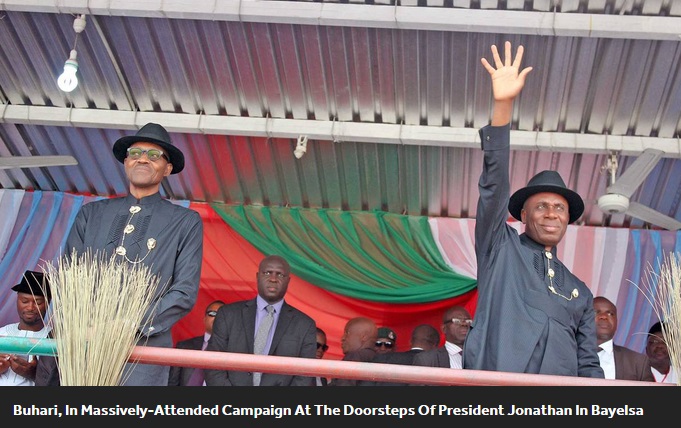
https://newsrescue.com/wp-content/uploads/2015/01/bayelsa-buhari2.jpg We change our election forecast from a narrow win for incumbent Goodluck Jonathan to a victory for opposition leader Muhamadu Buhari (60% probability). The electoral map is tilting towards Buhari in the swing regions of the southwest and middle belt, while high turnout in his core northern base will offset Jonathan’s advantage in the Niger Delta. While a Buhari administration’s reliance on technocratic, business-oriented senior officials will lead to constructive policy initiatives, we keep our long-term trajectory at neutral given the downside risks to oil production and policy implementation challenges. BUHARI EDGES AHEAD We had long viewed Goodluck Jonathan as a favorite to win reelection, but a number of factors now lead us to believe the edge has swung in Buhari’s favor. The election will still be difficult to call, but our expectation of a narrow Jonathan win was predicated on several factors that are losing some saliency late in the campaign. Chief among them is the incumbency and financial advantages of the ruling Peoples Democratic Party (PDP). While this still helps Jonathan, its impact is blunted by the intensity of support for Buhari, lackluster grassroots campaigning by the PDP, and new anti-rigging measures by the electoral commission. New permanent voting cards and card readers will sharply reduce the level of rigging seen in 2011, when Jonathan beat Buhari in a landslide. Equally important are the enthusiasm gap between the candidates and widespread desire for change. Tepid support for Jonathan, even within his own party, means there is no guarantee that patronage will translate into votes. This is especially the case in the north where influential PDP governors and other leaders are taking the money but barely campaigning for Jonathan because of Buhari’s overwhelming popularity in the region. https://newsrescue.com/wp-content/uploads/2015/01/bayelsa-buhari3.jpg While we expected the electoral map to favor Jonathan, current trends suggest that the swing regions may side with Buhari, including the Christian-majority and heavily populated southwest around Lagos. That could be the decisive demographic factor in the election. Jonathan won the southwest and middle belt handily in 2011, but faces an uphill task now. Buhari has reached out to the southwestern Yoruba community and brought them into the upper ranks of his campaign and potential administration, in a political alliance of the country’s two largest ethnic groups (the Hausa and Yoruba). In contrast, Jonathan has struggled to make inroads with either group. The spotty polling data which is available is also trending in favor of Buhari. A recent poll by a credible local think tank, the Center for Public Policy Alternatives, showed a heavy 58-32% lead for Buhari in Lagos state—a state in which Jonathan handily defeated Buhari last election. While a national poll by Afrobarometer in January showed a statistical dead heat at 42% for each candidate, economic conditions with the weakening naira continue to deteriorate, along with the security environment. According to an IPSOS/Eurasia Group model for predicting elections, incumbents have a hard time winning reelection when their approval ratings are below 40%. We don’t have polling data to confirm where Jonathan is now, but given he was at around 50% at the end of last year, our best guess is that he is below 40% now. In addition, the All Progressives Congress (APC) has suffered few defections during the campaign despite plenty of PDP inducements, suggesting a relatively united coalition whose members have confidence in the prospects of victory. In contrast, the PDP has been weakened by internal power struggles, including the dramatic departure from the party by former President Olusegun Obasanjo. Another obstacle for the PDP is the downturn in the economy, especially the naira devaluations that have hit pocketbooks hard in the import-dependent country. That has played into the APC’s rallying call for change at an inopportune time for the ruling party. Despite some important military gains against Boko Haram in the northeast and a partial exoneration of its oil revenue management in a recent PWC audit, the PDP is starting to look desperate. Examples include: forcing the election delay, seeking (unofficially) the resignation of respected Independent Nigerian Electoral Commission (INEC) head Attahiru Jega, questioning Buhari’s health, playing sectarian politics, and casting doubts about the new permanent voter cards. This raises the possibility of another election delay, but we think that is relatively unlikely, in part because it would probably backfire politically and would certainly do so internationally. While some of his aides and military leaders may feel otherwise, Jonathan himself is unlikely to support such a maneuver. EXPECT A CONTESTED ELECTION OUTCOME The above does suggest, however, that the administration will contest the election if it loses, especially if it is close. Whether that contestation is violent and protracted, or limited to a court challenge (which would likely uphold INEC’s election verdict) remains to be seen; it will likely be somewhere in between the two. Worst-case scenarios like a military seizure of Abuja or a self-declaration of victory by the PDP and de facto partition (like Cote d’Ivoire in 2011) cannot be discounted entirely but are unlikely. That’s in part due to the enthusiasm gap for Jonathan and also because of his own temperament. The concern, though, is if his administration is hijacked by hardliners in the PDP who will do whatever it takes to stay in power and forestall a dreaded Buhari presidency that they fear will prosecute them for corruption. A LOOK AHEAD AT A POSSIBLE BUHARI PRESIDENCY Buhari is a radically different politician and leader than Jonathan, and his approach to security and corruption will be a sharp departure from the status quo, most likely for the better. When it comes to policies, however, there may be less divergence than meets the eye, especially in the economic realm. Many of Jonathan’s priorities—power and agriculture reform, local content regulations, and selective liberalization of the economy—will also be priorities under a Buhari administration, with differences of emphasis. Buhari may additionally look to liberalize the rail, refinery, and gas pipeline industries, none of which will be easy. Even though a Buhari win may be the better outcome for investors over time, we are keeping our short-term trajectory (six months) at negative and long-term political outlook (two years) at neutral. In the near term, the post-election climate will be tense and likely contested regardless of who wins. But in contrast to Jonathan, a Buhari administration has a different mix of assets and liabilities. On the plus side, a Buhari administration would be stronger in tackling corruption, more reformist in the oil sector, and less likely to allow politics to swamp the business climate. The reason we aren’t upgrading Nigeria’s outlook to positive, however, rests in the potential for an oil disruption and the likely pushback to Buhari’s policy agenda in a highly polarized political climate. His victory is likely to unleash a resurgence of militancy in the Niger Delta (Jonathan’s home region) that targets the oil sector. Former Delta militants have threatened to blow up oil pipelines, platforms, and personnel as in the past when they routinely took up to 500,000 barrels per day offline. There is likely some bluster in their threats. The former MEND movement barely exists, but it could be reconstituted. It is likely in the aftermath of a Buhari win that pro-Jonathan ex-militants disrupt oil production, potentially on a market-moving scale. The risk may not be sustained for long, as most of the former militants are more interested in collecting their amnesty payments, enriching themselves from oil bunkering, and tending to business interests in oil and security. Opportunists may see a chance, though, to gain leverage for future amnesty deals, especially as the current amnesty program rewards militants roughly in proportion to their rank and ruthlessness. Second, even though fiscal management is likely to be constructive, there are still some uncertainties about the broad direction of his economic team. The austere 2015 budget proposal that now includes a low $52 oil benchmark (in the Senate version in consultation with the ministry of finance) is likely to be broadly compatible with Buhari’s own vision for fiscal policy in the near term. Despite some expansive welfare and public works pledges in his campaign manifesto, the oil price climate, together with Buhari’s top economic advisors, will dictate austerity at least in 2015. That’s also consistent with his track record when he was in office in the 1980s. It is not clear, though, that Buhari has a strong economic policy orientation. This uncertainty is a chief risk for investors. Two different camps from inside his campaign will likely vie for control of economic (and other) policy. In short-hand, one camp is dominated by southwestern (Lagos and surrounding states) technocrats and businesspeople while the other is an old guard of northern aides and politicians with longstanding ties to Buhari. The policy gap between the two is vast, with the first group pro-business and pro-liberalization and the latter group more statist and nationalist in orientation. The signal from the campaign is that the southwestern group is ascendant when it comes to the economy while the northern group will get important posts outside of the economic realm, including national security. Such a division of labor would be positive for the investment climate, particularly since Buhari is known as a delegator outside of his core issues of national security and to a lesser extent, petroleum. BUHARI’S LIKELY APPROACH TO TAX POLICY AND TAX At the outset, will not be on raising or lowering taxes but rather enforcing the current tax regime, which is widely ignored by companies and individuals alike. Using successful tax enforcement models from Lagos and elsewhere in the southwest, the administration would look to combine a zero tolerance approach (stiff penalties) with greater transparency in the collection effort to ”plug leakages.” Plugging leakages is a recurring mantra among Buhari’s economic advisors, who are convinced that tax/customs enforcement, revenue transparency, and tough anti-corruption measures will bring billions of dollars into the treasury without raising taxes or even including oil revenues in the equation. That may be a hopeful assessment in the current oil price climate, but there is conviction behind it from the economic team. Having been the petroleum minister previously, Buhari is likely to take a more hands-on approach to the sector. He will push for reforms on multiple tracks—reform of the Nigerian National Petroleum Corporation (NNPC), reform of oil revenue transmission to the state (plugging leakages), and reform of the fiscal/regulatory climate for oil companies, perhaps in that order. Buhari’s platform calls for restructuring NNPC so that it is leaner and has less regulatory authority (and conflicts of interest) in the sector. This could allow for the commercialization of its upstream operations, allowing it to borrow on international markets to make its joint venture cash calls. The process is likely to be slow, with some pushback from vested interests. That will be countered by the president’s discretion to appoint the petroleum minister, the head and board of NNPC, and many others in decision-making positions. While corruption will not magically disappear, there will be fewer sweat-heart deals for favored local companies or opaque oil swaps, and high profile prosecutions will set a tone of accountability that has been absent under the Jonathan administration. A Buhari administration would funnel oil revenues to the Central Bank through the Single Treasury Account rather than through dozens of banks as is currently the norm. The Petroleum Investment Bill (PIB) will again be reformulated and probably streamlined into a far less expansive reform package; fiscal terms will improve of necessity for IOCs. This will open up a window of opportunity for passage of a far narrower PIB, especially if the opposition APC gains a parliamentary majority. Failing that, a Buhari government would focus on unblocking the many oil and gas disputes with IOCs (blocked by vested interests) that are forestalling additional exploration and development. I am currently in Nigeria on research and can be reached this week and next at (+1) 202.615.9482. Philippe de Pontet Practice Head, Africa (202) 903-0006 depontet@eurasiagroup.net http://newsrescue.com/buhari-will-now-win-28-march-presidential-election-with-a-wide-margin-eurasia-group/#ixzz3UOR7I3Vw 4 Likes 1 Share |
| Politics › Re: CORRUPTION, RIGGING: Letter From Military Indicts Chief Minimah, Others by LRNZH(op): 9:11pm On Mar 14, 2015 |
kaboninc:I decipher gibberish. Sorry. |
| Politics › Re: Civilian Control Over The Military: A Comparison Between Nigeria And The U.S. by LRNZH(m): 6:17pm On Mar 14, 2015 |
PDP has been ruling Nigeria lawless since 1999. Under them, even lawmakers have become redundant. Only CHANGE will cure Nigeria of this malaise. 44 Likes |
| Politics › Re: CORRUPTION, RIGGING: Letter From Military Indicts Chief Minimah, Others by LRNZH(op): 6:12pm On Mar 14, 2015 |
dumodust:But you have not stated anything really. Another GEJite... Can't even express himself properly.  2 Likes |
| Politics › Re: PDP’s FUNERAL Will Hold March 28 — Oyegun by LRNZH(op): 6:10pm On Mar 14, 2015 |
PVC= Please Vote Change cc: Lalasticlala, Ishilove, Maclatunji, Obinoscopy, OAM4J 1 Like |
| Politics › Re: CORRUPTION, RIGGING: Letter From Military Indicts Chief Minimah, Others by LRNZH(op): 5:55pm On Mar 14, 2015 |
dumodust:Provide proof that it is fake or forever hold your peace.You should add to the discourse not subtract from it. 1 Like |
| Politics › PDP’s FUNERAL Will Hold March 28 — Oyegun by LRNZH(op): 5:50pm On Mar 14, 2015 |
[img]http://media.premiumtimesng.com/wp-content/files/2015/01/504x336xChief-John-Odigie-Oyegun-the-Newly-elected-APC-National-Chairman-1-504x336.jpg.pagespeed.ic.cHTAloJQ5-.webp[/img] John Oyegun, National Chairman of the All Progressives Congress, APC has stated that the “burial ceremony” of the Peoples Democratic Party, PDP which was postponed by President Goodluck Jonathan will hold on March 28. Mr. Oyegun said this in Port Harcourt at the zonal rally of the APC. The APC Chairman who was in the state with the APC presidential candidate, Muhammadu Buhari, his running mate, Yemi Osinbajo, and national officers of the party, said that despite the needless postponement of the elections, Nigerians will still give a befitting “funeral rite” for PDP. The chairman who told a surging crowd of party supporters of APC’s political exploits in the North-West where they were until a few days ago, described South-South as critical. “We were in the North-west yesterday. You know the North-West is the home base of the in-coming president. South-South is also important to us because it is the home of the out-going president. These zones are crucial. “I thank you for your support, courage and resilience. You have survived your oppressors despite all odds. Goodluck Jonathan is our son and brother but he has failed us as a region and Nigeria. So we want to send him on an honourable retirement. I know you will all support the APC in this venture because we must send him home. “PDP is confused and disoriented. They have no sense of direction. PDP is down but not out yet. So a lot of work still needs to be done, that is why we are here. Let me also assure you that PDP’s funeral still holds despite the rescheduling of the elections. “We will have a good funeral ceremony for PDP come March 28. I want you to promise me that you will all come out and deliver these votes. And that you will be there, ready and prepared to make sure that every vote counts. We are going to deliver the entire South- South to our president in-waiting, General Muhammadu Buhari”. Mr. Oyegun who described the APC governorship candidate in Rivers State, Dakuku Peterside, as a scholar and gentleman whose tenure as governor will bring honour and development to the people, called on voters to disregard the lies of PDP. http://www.premiumtimesng.com/news/more-news/178484-pdps-funeral-will-hold-march-28-oyegun.html 1 Like |
| Politics › Re: CORRUPTION, RIGGING: Letter From Military Indicts Chief Minimah, Others by LRNZH(op): 5:18pm On Mar 14, 2015 |
OrlandoOwoh:Definitely. The handwriting is on the wall. 1 Like |
| Politics › Re: CORRUPTION, RIGGING: Letter From Military Indicts Chief Minimah, Others by LRNZH(op): 3:04pm On Mar 14, 2015 |
tittop4:Your intelligence is simply sub par. When we mention the achievements of Buhari in 1984 and 1985, you TANoids quickly claim that Tunde Idiagbon was the man in really charge. But you're quick to ascribe what you deem as failings of that govt to Buhari and not Idiagbon. Abeg go get brain. 4 Likes 1 Share |
| Politics › Re: CORRUPTION, RIGGING: Letter From Military Indicts Chief Minimah, Others by LRNZH(op): 2:52pm On Mar 14, 2015 |
CyberWolf:CRIES of a MOLESTED ANIMAL 3 Likes 1 Share |
| Politics › Re: CORRUPTION, RIGGING: Letter From Military Indicts Chief Minimah, Others by LRNZH(op): 2:25pm On Mar 14, 2015*. Modified: 2:41pm On Mar 14, 2015 |
Eneze1:You should put on your strategist hat on this one. GMB is the solution but you fear some of the APC chieftains...mainly Tinubu. 1. Did OBJ, Yar'adua or GEJ dance to the tune of their godfathers once they got into power? No! Each became his own man. Once GMB becomes President his prerogative (and not Tinubu's) is supreme. 2. Without these 'agents of Change' there is no chance in heaven or hell that an upright man like GMB will defeat such a corrupt and powerful incumbent like PDP and get into power. It is the expedient thing to to do by aligning with these agents until power is got. What GMB does with or against them is a totally different unpredictable discussion . 3. Above all, voting out PDP is setting a precedence that Nigeria voters value performance. That is what we lack in our politics today. By 2019, GMB and APC will also be scrutinised and voted out if they underperform. Please let us be expedient. 7 Likes 2 Shares |
| Politics › Re: CORRUPTION, RIGGING: Letter From Military Indicts Chief Minimah, Others by LRNZH(op): 2:19pm On Mar 14, 2015 |
ManMountain:And once the Military gets corrupted to this level the solution is a very tough one. It means all the senior officers above a certain rank will have to be retired to purge it of corruption And allow a fresh crop of officers to take over. GEJ and PDP are setting a very bad precedence here. 1 Like |
| Politics › Re: CORRUPTION, RIGGING: Letter From Military Indicts Chief Minimah, Others by LRNZH(op): 2:09pm On Mar 14, 2015 |
Eneze1:But this letter mentions names and gives specific details of culprits involved. It is definitely from very informed sources in the Military. GMB is the solution to all these unprofessionalism destroying our country's sociopolitical and economic fabric. cc: Lalasticlala, Ishilove, Maclatunji, Obinoscopy, OAM4J 4 Likes |
| Politics › CORRUPTION, RIGGING: Letter From Military Indicts Chief Minimah, Others by LRNZH(op): 2:03pm On Mar 14, 2015 |
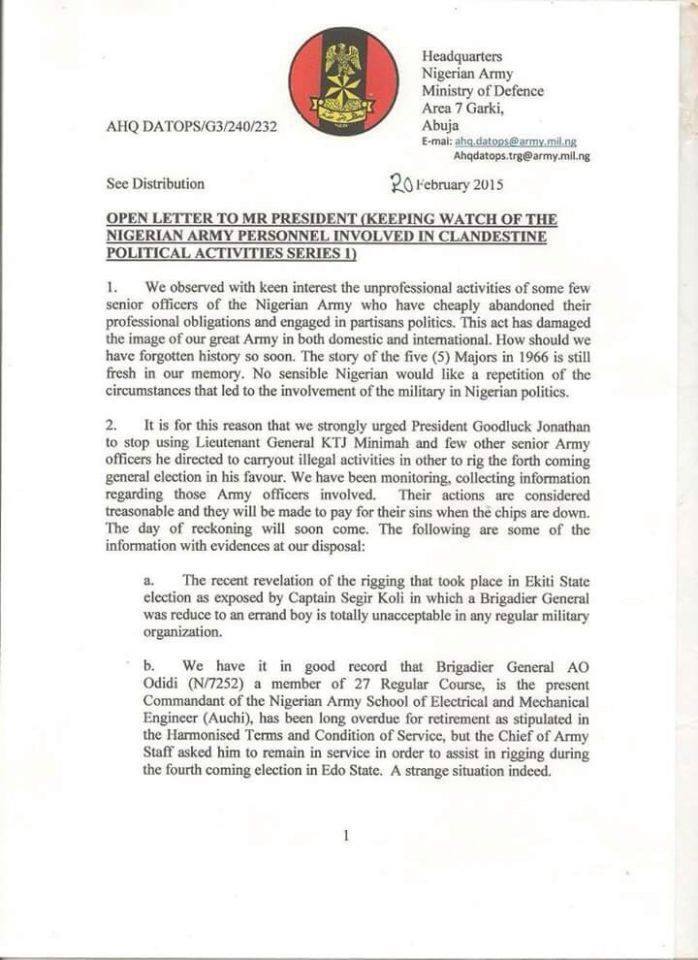
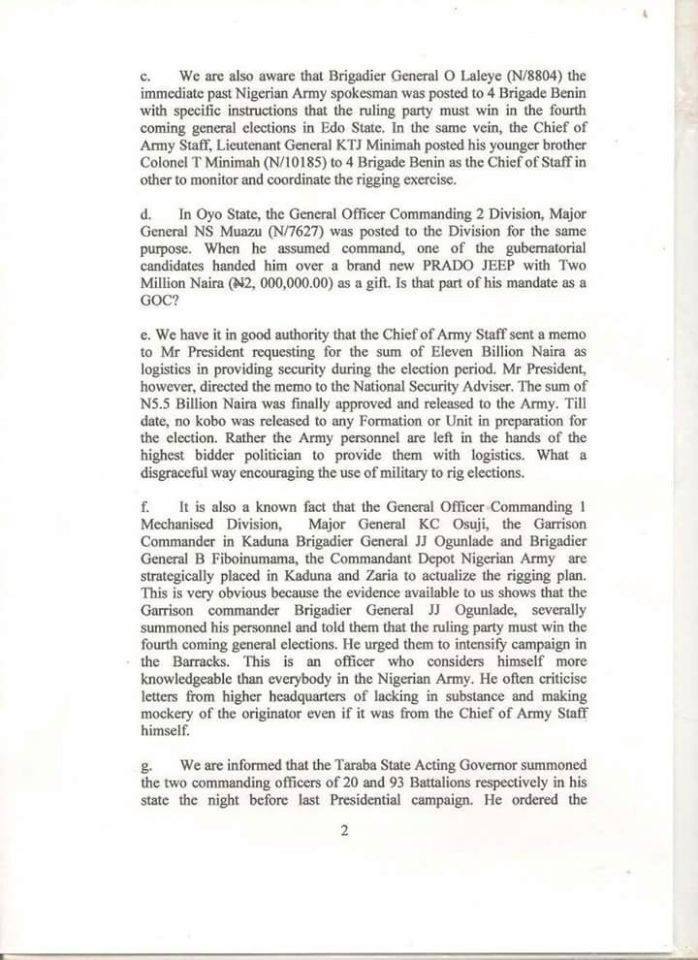
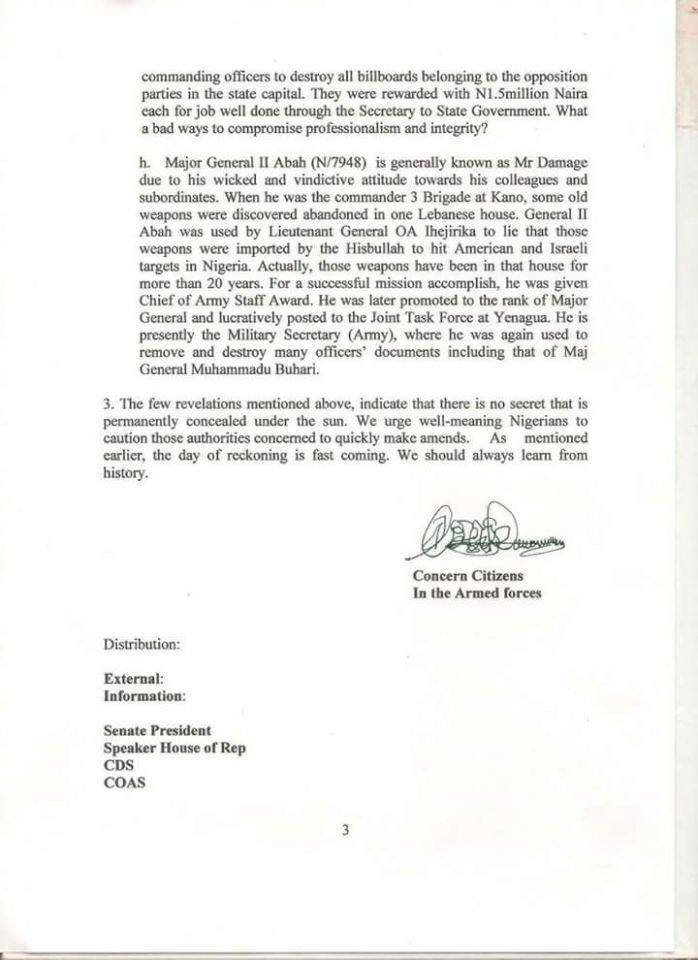
A yet to be verified letter purported to be from personnel in the Nigerian army has fingered top military chiefs in plots to rig the upcoming elections. The three page letter points accusing fingers at Nigeria’s army chief, Kenneth Minimah as having embezzled 5 billion naira and initiated the process of rigging the election. Several other army officers are accused in the letter of having been positioned to rig the March 28th general elections. The letter dated 20th of February and written on Nigerian army letter head is signed, ‘concerned citizens of Armed forces”. We have yet been unable to get a reaction from the Nigerian army. Read the content: https://newsrescue.com/wp-content/uploads/2015/03/army1.jpg https://newsrescue.com/wp-content/uploads/2015/03/army2.jpg https://newsrescue.com/wp-content/uploads/2015/03/army3.jpg http://newsrescue.com/corruption-rigging-purported-letter-from-military-indicts-chief-minimah-others/#axzz3UMeHKo9e |
| Politics › Re: 2015 POLLS: Ex-militant BOYLOAF And Thug GANI ADAMS Hold Secret Meeting In Lagos by LRNZH(op): 10:14pm On Mar 12, 2015 |
MightyD:No wonder he is the Jisos Kristi of Otueke. |
| Politics › Re: UNDER GEJ, Even EFCC Boss Is Accused Of Corruption — Buhari by LRNZH(op): 10:13pm On Mar 12, 2015 |
nzeadachie:That is Nigeria's major problem besides INSECURITY and LACK OF POWER. Which one has GEJ performed in? Even the EFCC GEJ has starved it of funds big time. Please if you have nothing meaningful to contribute just shove it up your rectum. 38 Likes 1 Share |
| Politics › Re: 2015 POLLS: Ex-militant BOYLOAF And Thug GANI ADAMS Hold Secret Meeting In Lagos by LRNZH(op): 10:08pm On Mar 12, 2015 |
MistadeRegal:What else is the meeting for? When did militants and thugs become the national security apparatus in Nigeria if not under GEJ? Mark my words....this is the beginning of a future insurgency in Nigeria if not stopped. The Lekki fatal violence of today may not be unrelated. |


 You troll around promoting hate and division and trying to trigger anarchy in Nigeria because of your party... when karma comes for you, don't come here lamenting... if you want discourse, allow people to air their views about this trash letter with no verifiable source or link and keep shut... keep thinking Nigerians are dumb, they will shock you soon!
 ...Hopeless nitwit

1 2 3 4 5 6 7 8 ... 35 36 37 38 39 40 41 42 43 (of 113 pages)