AfroBlue's Posts
Nairaland Forum › AfroBlue's Profile › AfroBlue's Posts
1 2 3 4 5 6 7 8 ... 30 31 32 33 34 35 36 37 38 (of 75 pages)
 Celebrities › Re: Osi Umenyiora & Leila Lopes Are Engaged! by AfroBlue(m): 5:44pm On Feb 15, 2013 Celebrities › Re: Osi Umenyiora & Leila Lopes Are Engaged! by AfroBlue(m): 5:44pm On Feb 15, 2013 |
Congrats, the balla and the beauty have been traveling https://img.ibtimes.com/www/data/images/full/2011/09/15/159473-miss-universe-2011-leila-lopes.jpg https://upload.wikimedia.org/wikipedia/commons/thumb/7/71/Osi_Umenyiora.jpg/220px-Osi_Umenyiora.jpg Ain’t nothing like black love… Osi Umenyiora Engaged To Leila Lopes Big congratulations are in order for NY Giants baller Osi Umenyiora and former Miss Universe Leila Lopes. The newly engaged couple spent this week in Europe with friends and family (his brother Okwi and his wife) visiting such sights as Rome, Paris, Monte Carlo and posted photos from Twitter and instagram. The couple are both African. He’s Nigerian and she’s Angolan! [img]http://bossip.files./2013/02/11.jpeg?w=600&h=800[/img] [img]http://bossip.files./2013/02/screen-shot-2013-02-15-at-8-50-25-am.png?w=467&h=162[/img] [img]http://bossip.files./2013/02/bc5-nzfciaaezpl1.jpeg?w=635&h=476[/img] [img]http://bossip.files./2013/02/screen-shot-2013-02-15-at-8-50-59-am.png?w=484&h=175[/img] Awwww cute, you can see Osi and Leila kissing in the shadows! [img]http://bossip.files./2013/02/igfec.jpeg?w=401&h=381[/img] [img]http://bossip.files./2013/02/screen-shot-2013-02-15-at-8-53-48-am.png?w=477&h=197[/img] [img]http://bossip.files./2013/02/screen-shot-2013-02-15-at-8-54-41-am.png?w=459&h=606[/img] [img]http://bossip.files./2013/02/screen-shot-2013-02-15-at-8-55-04-am.png?w=482&h=267[/img] [img]http://bossip.files./2013/02/bc6ooyycuaeodlz.jpeg?w=480&h=640[/img] [img]http://bossip.files./2013/02/screen-shot-2013-02-15-at-8-52-05-am.png?w=467&h=161[/img] http://bossip.com/728185/some-strong-black-lovin-osi-umenyiora-engaged-to-former-miss-universe-leila-lopes/ |
| Politics › Re: Dangote Sponsored Documentary - The Journey To Amalgamation by AfroBlue(m): 2:03pm On Feb 15, 2013 |
thanks for posting We Are Nigerians - Journey to Amalgamation Documentary https://www.youtube.com/watch?v=oheHQ1mpOAU&feature=youtu.be |
| Politics › Re: A Letter To Nigerians In Diaspora by AfroBlue(m): 4:14am On Feb 14, 2013 |
Mr Moronfolu is sipping on some strong hatorade. Pride for 9ja is strong in Yankeeland circa 2012 PICTURES: Nigerian Independence Parade In New York 2012 http://africanspotlight.com/2012/10/pictures-nigerian-independence-parade-in-new-york-2012/ https://africanspotlight.com/wp-content/uploads/2012/10/Slide2.png https://africanspotlight.com/wp-content/uploads/2012/10/Slide110.png https://africanspotlight.com/wp-content/uploads/2012/10/Slide19.png circa 2006 Pictures Of Nigerian Independence Day Parade In New York by lionheart(m): 11:53pm On Oct 02, 2006 https://www.nairaland.com/25574/pictures-nigerian-independence-day-parade www.nairaland.com/attachments/22178_file16_jpgb7f5d766b3543ba075fddb18e9be39fc |
| Romance › Re: A Better Way To Celebrate Valentine's Day by AfroBlue(m): 7:03pm On Feb 13, 2013 |
Today is SidePiece, Ms. 2nd Fiddle Day  The day before the main event. Some people celebrate it on the 15th of February. https://cdn.room187.com/wp-content/uploads/2012/02/x2_49de787.jpeg?9d7bd4 |
| Celebrities › Re: Kris Humphries Threatens To Destroy Kim Kardashian's Reality TV by AfroBlue(m): 6:55pm On Feb 13, 2013 |
alhaji bayero: western women are using divorce as a weapon to milk their husband, if he has the opporturnity, why not. afterall everybody is equaul. theres nothing like behaving like a manAmazing ... Kim K. Humphries makes NL front page twice this week. fyi ..... Y White women are better than black women https://www.youtube.com/watch?v=LNVaSmAwjKE |
| Celebrities › Re: Kris Humphries Threatens To Destroy Kim Kardashian's Reality TV by AfroBlue(m): 6:00pm On Feb 13, 2013 |
Slick lawyers are running up the tab. |
| Politics › Re: 776,000 Jobs Lost In Textile Industry –FG by AfroBlue(m): 5:49pm On Feb 13, 2013 |
Countries can't complete with global free trade rules and products produced by slave wage and prison labor workers. Go against the grain and raise tariffs to protect home grown incubating industries. |
| Politics › Re: Nigeria's African Cup Of Nations Victory Over Burkina Faso Has A Deeper Politica by AfroBlue(m): 5:43pm On Feb 13, 2013 |
Good piece of reading literature. A skillful merging a bit of sports and political history, in conjunction with respect and honor for the late great Ken Saro-Wiwa (may he rest in perfect peace). Does omnipotent Royal Dutch Shell still rule the giant of Africa (and support the behavior of the looting kleptomaniacs), from behind the scenes? |
| Sports › Re: Overconfidence Will Kill Nigeria - Burkina Faso Fans by AfroBlue(m): 6:20pm On Feb 10, 2013 |
Litmus: Some of the boasts on behalf of Nigerians are Ghanian posters,it's their nature to substitute slyness for intelligence.They come on here and pretend they are Nigerians and rant about how we're going to win and decimate the opposition just so that they can return later if we loose and point out how we boasted about winning but lost. That we're baseless boasters yardy yardy yar... its the way of Ghanians but the gods of justice and fair-play watches all...I thought the hate for 9ja coming from the black stars nation was a fluke. https://getmziki.com/wp-content/uploads/2011/08/600x636xfokn-2.jpg.pagespeed.ic.ZLdFTjjgl2.jpg |
| Politics › Re: High Powered Guests Grace Launch Of The Olusegun Obasanjo Foundation In London by AfroBlue(op): 5:47pm On Feb 10, 2013 |
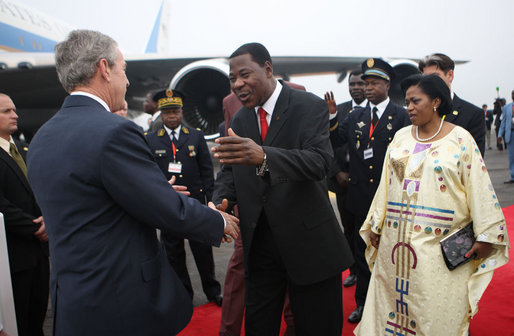
kulikuli26: I'm disappointed at the focus of this foundation.how many things does it want to focus on.It could have serve them good if they focus on just youth empowerment or anyone and not the four they are doin now....on a lighter note, dis boni yayi no get wifedon't know why Madame Chantal de Souza Yayi is not at the event. most foundations are preservation of wealth schemes [img]http://georgewbush-whitehouse.archives.gov/news/releases/2008/02/images/20080216-5_d-0020-1-515h.jpg[/img]
|
| Celebrities › Re: Kim K And Kanye In Rio De Janeiro, Brazi by AfroBlue(m): 5:27pm On Feb 10, 2013 |
[quote author=Nuzo']What do mean by screwing around? Listen, Kim has never been known to screw around or be unfaithful to her partners. She has always be known to have one partner at any point in time....and very dedicated to her relationships. This is not what most Nigerian girls are known for. Secondly, money doesn't make people innocent or less dubious otherwise loads of other American celebrities will be seen as innocent. Eg Talor Lautner. Kim is simply a soft spoken, kind and innocent girl. Exactly the reason men, women, old, kids love her with passion. Until she proves that her innocence is fake, Kim is gonna be on top for a long time.[/quote]don't forget she's still legally married to Kris Humphries https://www.usmagazine.com/uploads/assets/photo_galleries/regular_galleries/212-see-stars-personal-wedding-pics/photos/1333127543_kim-kardashian-kris-humphries-zoom.jpg Kanye West, Kim Kardashian and Kris Jenner Exposed! Tales of an Illuminati Closet Case Rapper Gone Mad. http://hollywoodilluminati.com/2012/04/20/kanye-west-kim-kardashian-and-kris-jenner-exposed-tales-of-an-illuminati-closet-case-rapper-gone-mad/ |
| Politics › Re: Gov Peter Obi Appoints Nollywood Actor, Bob Manuel As SSA by AfroBlue(m): 6:54am On Feb 10, 2013 |
Read a article recently about Mr. Kanayo wanting a similar position in politics to augment his retirement years. |
| Politics › High Powered Guests Grace Launch Of The Olusegun Obasanjo Foundation In London by AfroBlue(op): 6:46am On Feb 10, 2013 |
fyi .... High Powered Guests grace launch of the Olusegun Obasanjo Foundation in London | Goodluck & Patience Jonathan, John Mahama, Ellen Johnson Sirleaf & Yayi Boni Posted on Saturday, February 9th, 2013 at 8:15 AM By BellaNaija.com https://cdn.bellanaija.com/wp-content/uploads/2013/02/PIC-6-LAUNCH-OF-OBASANJO-FOUNDATION-600x423.jpg Last night in London, a high powered delegation of African leaders were in London for the launch of the Olusegun Obasanjo Foundation. President of the Federal Republic of Nigeria, Goodluck Jonathan was there with his wife Patience, President of Liberia -Ellen Johnson Sirleaf, President of Ghana – John Mahama and President of Benin Republic -Yayi Boni also graced the occasion. The Foundation’s founder former Nigerian President Olusegun Obasanjo was at the event with his wife, Bola. https://cdn.bellanaija.com/wp-content/uploads/2013/02/Olusegun-Obasanjo-Foundation-600x103.jpg The Olusegun Obasanjo Foundation partners with change agents, policy makers, global partners and visionary individuals worldwide to tackle critical problems in four critical areas of human security: Food and Nutrition Security - Feed Africa Initiative Economic Security - Youth Empowerment Initiative Gender Equality - Education For Girls Initiative Health Security- Health Improvement Initiative The event took place on Friday 8th February 2013 at the Grosvenor House Hotel, Park Lane, London. https://cdn.bellanaija.com/wp-content/uploads/2013/02/PIC-1-LAUNCH-OF-OBASANJO-FOUNDATION-600x336.jpg https://cdn.bellanaija.com/wp-content/uploads/2013/02/PIC-3-LAUNCH-OF-OBASANJO-FOUNDATION-600x369.jpg https://cdn.bellanaija.com/wp-content/uploads/2013/02/PIC-4-LAUNCH-OF-OBASANJO-FOUNDATION-600x379.jpg https://cdn.bellanaija.com/wp-content/uploads/2013/02/PIC-5-LOF-600x266.jpg https://redcarpetmagazine.co.uk/wp-content/uploads/2012/11/Grosvenor-House-Park-Lane.jpg https://cdni.condenast.co.uk/646x430/g_j/GrosvenorApts_cnt_9feb12_pr_cp.jpg [img]http://i1.bookcdn.com/data/Photos/LargePhoto2/56/5630/5630242/Grosvenor-House-A-Jw-Marriott-Hotel-photos-Room.JPEG[/img] Photo Credit: 247UReports Ellen Johnson Sirleaf, Goodluck Jonathan, John Mahama, Olusegun Obasanjo Foundation, Yayi Boni |
| Romance › Re: Valentine Auction [2013 Edition] - Pick A Nairalander To Be Your Valentine by AfroBlue(m): 5:24pm On Feb 09, 2013 |
2legit2qwt: What's with the obsession with valentine's day by NLersNinjas be trying to get plenty of free milk these dayz why buy the cow? The Promise https://www.youtube.com/watch?v=IJUZDTlr5T8 |
| Politics › Re: Nigeria Failing Woefully In Its Pledge To Mali by AfroBlue(m): 12:38pm On Feb 07, 2013 |
[b]supplement .... Meeting and Greeting the Crusaders in Africa https://blackagendareport.com/sites/www.blackagendareport.com/files/imagecache/feature400/MaliTroops.JPG lack Agenda Radio commentary by BAR executive editor Glen Ford Europeans are pouring into northwest Africa in such volume, the huge U.S. airlift capacity may soon be necessary to keep the “Crusaders” supplied. African militaries are being assembled to do the white man’s bidding. The U.S. hopes to establish a Somalia-like operation on the near side of Africa – with Americans in overall charge. Meeting and Greeting the Crusaders in Africa A Black Agenda Radio commentary by BAR executive editor Glen Ford “African officials were handing out orders and directives to other Africans, as if they were actually in charge of something.” These days the so-called scramble for Africa runs through Mali, and in two directions. As the British, the Italians, the Germans, the Spanish, the Dutch, the Belgians and the Danish follow the French into northwest Africa, the Africans rush up to meet them, as if these white people were old friends coming to visit, again. Cargo planes ferry French fighters and equipment into the Mali desert, where they search for jihadists – Muslim fighters that are politically indistinguishable from the ones the Europeans and the Americans backed in Libya, and are now arming, in Syria. If the Mali operation takes much longer – which it certainly will – the United States will assume much of the airlift duties, since no other nation in the world has the capacity to resupply a long war on the African continent. Cracking northern Africa wide open is a job for a superpower – which is fine with the Americans. Don Yamamoto, the deputy assistant secretary of state for African affairs, was hanging around the African Union meeting in Ethiopia, where African officials were handing out orders and directives to other Africans, as if they were actually in charge of something. Yamamoto predicted that “it could take several years” for the Mali mission to completed. “This is only the first phase,” he said. So, what is that mission? Will it take the combined forces of the United States, France, much of the rest of NATO, and of soldiers from all over Africa to defeat, at most, a few thousand jihadists in a treeless desert? Do the Europeans and the Americans really have to stay so long? Oh yes, said deputy secretary Yamamoto. He claims, “A lot of the rebel groups that are now fighting in the region were under Gaddafi’s troops.” Ah, so that’s how the U.S. will tell the story. “The U.S. has much bigger plans for Africa.” It’s true that many Tuareg nationalists seeking independence for their homeland in northern Mali worked with Gaddafi’s security forces, and emerged from Libya heavily armed. But, no sooner had the secular Tuareg rebellion begun than it was overwhelmed by Muslim fundamentalists – jihadists who were Gaddafi’s sworn enemies. The jihadists, many of them foreigners, could be run out of the cities of Mali and militarily contained with little effort. But, the Tuaregs live there, and always have. It is, therefore, necessary for the United States to claim that the entire Tuareg people – several million of them – are infested with jihadism, and that this will require a long-term Euro-American presence in Mali and the region. The French are leading the charge into the desert in Mali, but the U.S. has much bigger plans for Africa. Deputy secretary Yamamoto told reporters that the U.S. would like to see the Mali operation evolve into an African-led affair, like the African Union mission in Somalia. However, although 17,000 Africans do the fighting in Somali, the operation is actually run by the U.S. military and the CIA, and paid for largely by the Americans. AFRICOM is now assisting six of Mali’s regional neighbors – Niger, Chad, Nigeria, Senegal, Burkina Faso and Togo – with their transport and equipment needs for the fighting ahead. Those countries militaries will always want American guns and financing – which means AFRICOM will never leave. At least, that’s the plan. For Black Agenda Radio, I’m Glen Ford. On the web, go to BlackAgendaReport.com. BAR executive editor Glen Ford can be contacted at Glen.Ford@BlackAgendaReport.com.[/b] |
| Celebrities › Re: Tiwa Savage & Tee Billz Are Engaged by AfroBlue(m): 6:09pm On Feb 06, 2013 |
obowunmi: my sources tell me the whole thing was STAGED. They are already married.that's what i thought the way he took ownership of and grabbed that phatty https://distilleryimage11.instagram.com/096e5bc06fe111e2b7d622000a1f968a_7.jpg |
| Foreign Affairs › Re: US To Set Up Military Base In Niger, Drones / Aircrafts Within Range Of Nigeria by AfroBlue(m): 6:05pm On Feb 03, 2013 |
supplement ..... Mali and AFRICOM’s Africa Agenda: Target China February 1, 2013 http://www.blacklistednews.com/Mali_and_AFRICOM%E2%80%99s_Africa_Agenda%3A_Target_China/23979/0/0/0/Y/M.html John Pilger: "Islamic terrorism" is the invented excuse for theft of Africa's riches 31 January 2013 John Pilger http://stopwar.org.uk/index.php/middle-east-and-north-africa/2212--john-pilger-how-the-west-is-consigning-africas-history-of-liberation-to-oblivion |
| Sports › Re: Ivory Coast Vs Nigeria - AFCON 2013 - (1 - 2) - On 3rd February 2013 by AfroBlue(m): 5:56pm On Feb 03, 2013 |
CIV= [img]http://4.bp..com/-uWpgAxFbw_U/TgkrNwJ12wI/AAAAAAAADSM/7z-OxeGD0Rk/s1600/southern-fried-chicken.jpg[/img] 4 Likes |
| Foreign Affairs › The Vulnerability Of Elites: Geopolitical Risk In 2013 by AfroBlue(op): 8:01pm On Feb 02, 2013*. Modified: 8:17pm On Feb 02, 2013 |
Too much to copy and paste. Quick mention of 9ja on page 7. Its a good read if you're interested into global politics and economics. The Vulnerability of Elites: Geopolitical Risk in 2013 Categorizing the major themes, risks, opportunities, and wild cards—based on discussions of the Global Agenda Council on Geopolitical Risk in Dubai, November 2012. Discussion will break down into categories as follows: A.Overview:The Vulnerability of Elites B.Key Risks C. Wildcards D.Opportunities http://www.scribd.com/doc/123241528/Vulnerability-Of-The-Elites * |
| Politics › Re: A Documentary On The Real Story Of Nigeria? by AfroBlue(m): 3:18am On Feb 01, 2013 |
otokx: @chreld_b or any otherits a miracle, the vid is still up on utube https://www.youtube.com/watch?v=16vubBIx-T0 |
| Nairaland General › Re: Video: Real Story Of Nigeria by AfroBlue(m): 6:05am On Jan 30, 2013 |
Thanks for posting Op NL members around the globe were begging to view this doc. A Documentary On The Real Story Of Nigeria? by Βουκέφαλος(m) https://www.nairaland.com/1121751/documentary-real-story-nigeria |
| Health › Re: How Often Do You Exercise Your Body? by AfroBlue(m): 7:20pm On Jan 24, 2013 |
Cardiovascular workout 5 days a week and lifting 3 to 4 days. topic related The Strongest Man You've Never Heard Of: CT Fletcher https://www.youtube.com/watch?v=x5xXsdWRaFw |
| Foreign Affairs › Re: Imperialist Powers Escalate War In Mali by AfroBlue(m): 5:23pm On Jan 24, 2013 |
[b]Imperialists started the latest African invasion without being on the $ame page. Mali Exposes Flaws in West's Security Plans By ADAM ENTOUS and JULIAN E. BARNES in Washington and DREW HINSHAW in Bamako, Mali After France rushed in to Mali to confront al Qaeda affiliates, it had trouble lining up help from allies. French fighters take up positions Wednesday. France's attack on Islamic extremists in Mali this month is exposing major strains in the Western world's security strategy. As the French assault gained steam in West Africa, France sought help from its allies—only to find that the U.S. and other North Atlantic Treaty Organization states either weren't ready or couldn't offer much. Canada and the U.K. quickly ponied up three cargo planes, two of which broke down en route. By far the biggest breakdown, however, played out between the U.S. and France, as Washington sent what Paris saw as mixed messages about U.S. levels of commitment to taking on an al Qaeda affiliate in Mali before and after the French attack began. French officials involved in planning the Mali campaign say they had expected quick, robust U.S. military support based on comments by Pentagon officials in a series of private meetings, including one last October in Paris about how to tame violence in North and West Africa. According to French officials in attendance, the message that day from Michael Sheehan, the Pentagon's point man for special operations, seemed clear: Stop the group known as AQIM—al Qaeda in the Islamic Maghreb—and its allies from creating a desert safe haven. NATO officials at the meetings also say U.S. Defense Secretary Leon Panetta's message to France and other allies on the sidelines of a NATO summit last fall was that the Pentagon would do "whatever it takes" to help with an intervention in Mali against AQIM. Senior U.S. defense officials dispute those accounts, saying Washington's messages to France may have been "lost in translation." During the meetings, the U.S. officials said, neither Mr. Panetta nor Mr. Sheehan directly urged France to use force and didn't promise specific support. Speaking Wednesday before a congressional hearing, Secretary of State Hillary Clinton said, "We are in for a struggle, but it is a necessary struggle. We cannot permit northern Mali to become a safe haven," though she offered few specifics. "We've got to have a better strategy," she said. National Security Council spokesman Tommy Vietor said the White House wants to speed the transition from the current French campaign to one led by African forces, "so that it's sustainable over the long term." In talks with the French and others, Mr. Sheehan and others have specifically pushed for an African-led response against AQIM, U.S. officials said. Aides to Mr. Panetta said his comments were meant to convey general U.S. support for the aims of the French in Mali. Another senior U.S. official defended Washington's level of support for the French, calling it a "tough love" approach. The message to France and other European allies, this official said, was that Washington won't foot the bill as global policeman at a time when European powers are cutting defense investments. Moreover, U.S. defense officials said France shouldn't be surprised by the American response given the unilateral nature of the operation they launched. "We weren't consulted. We were informed when they went in. This isn't a combined operation," the senior U.S. defense official said. French officials say they consulted their American counterparts. One senior French official sized up the feeling in Paris after the White House balked at Paris's request for air tankers to refuel French fighters over Mali. "We are doing the job without you," the official said. The White House did agree, however, to provide several cargo planes for a few weeks. It initially asked France to reimburse the costs, though the U.S. later backed down on that. The White House is still considering providing air tankers for refueling, officials say, as well as more advanced surveillance aircraft that could aid French targeting. For months, the world's major powers have been hammering out plans for action against terrorist threats from Africa—concerns amplified in recent days by a terror attack in Algeria that left at least 37 hostages dead. But the West's global security apparatus is showing strains. The war-weary U.S. is reluctant to intervene, while other countries, particularly in debt-ridden Europe, are less able to do so. The tension is a dramatic example of a growing trans-Atlantic disconnect. On the one hand, the U.S. complains about European allies' unwillingness to spend on defense, citing Libya in 2011 when, lacking adequate ammunition supplies, drones and tankers, they turned to Washington. Meanwhile, some allies complain that U.S. policy in Afghanistan, Pakistan and elsewhere is driven by American interests and priorities. France launched its Mali offensive on Jan. 11. Within a week, Paris flew about 2,000 soldiers to its former colony with a mission: reclaim two tiny farming towns that al Qaeda and its allies in Mali had swarmed days earlier. By the 10th day, Paris had expanded that mission to include land assaults on towns nestled in the prickly desert occupied by Islamist gunmen. Logistical problems arose quickly. France made urgent requests for cargo planes, air refueling tankers and a surge of sophisticated American surveillance aircraft to monitor rebel communications and movements. As the U.S. deliberated over how to respond, Britain offered the temporary use of two C-17 cargo planes. One of the planes experienced mechanical problems and was grounded in France, British officials said. The Canadian Royal Air Force contributed one of its C-17s, for an initial period of one week, but it suffered a "generator issue" and was also grounded, according to a spokesman for Canada's Minister of National Defence. Officials say the U.K. and Canada quickly found other planes to replace the ones that broke down. Denmark and Belgium are also providing help with transport, French officials say. On Jan. 14, the mission's fourth day, a French detachment arrived in Bamako, Mali's capital, without mosquito nets and spent four nights battling the swarming pests. Cargo space is limited, French officials said, and some things were overlooked initially because of the rushed nature of the operation. The French also shipped bottled water to Mali before soldiers finally found a vendor in Bamako. Skeptical of the need for a big U.S. role, the White House so far has authorized the Air Force to ferry a mechanized infantry battalion of about 800 French troops to Bamako. The U.S. hasn't responded to the request for air refueling tankers needed by the French air force to keep up the pace of attack sorties in support of ground troops. The U.S. and France have long shared intelligence with each other, and both sides say that cooperation has increased in recent weeks, although the French are pushing for more. U.S. military surveillance planes have been flying over Mali collecting intelligence for months and at least some of that information is being shared with the French. Within the U.S. there are divisions among policy makers at the Pentagon, White House and State Department over the extent of the threat posed by AQIM and how the U.S. should respond. At the Pentagon, anti-AQIM hawks including Mr. Panetta, the outgoing defense secretary, want to go after the terror group's leaders, defense officials say. At the White House, top policy makers are more cautious. They see AQIM as a lesser threat to the U.S. than other groups, including al Qaeda in the Arabian Peninsula, or AQAP, in Yemen. They tend to favor a strategy that relies heavily on building up the capabilities of African armies to take on the threat themselves, aided by U.S. intelligence and training. The prospect of a new terror war in Africa would clash with a key message of President Barack Obama's inaugural address. In his Monday speech, he said a decade of military conflict was ending and that "enduring security and lasting peace do not require perpetual war." Mr. Obama has expanded U.S. drone campaigns against al Qaeda in Pakistan and Yemen. But many aides favor limits on U.S. lethal action that would allow the targeting of only AQIM leaders who intelligence agencies conclude are plotting attacks directly against the U.S., rather than a broader campaign like France's, administration officials said. They acknowledge this could change if there were new attacks like the siege this month at an Algerian natural-gas complex that left three Americans dead. U.S. defense officials note that, unlike other global al Qaeda affiliates, AQIM can't mount attacks directly on the U.S. But a senior defense official said that may only be a matter of time. "They are direct threat to France, Spain, Western Europe, the U.K. It doesn't take long for them to be a threat beyond that," the official said. "There is going to be a fight that goes on. We have to win." A senior U.S. official also said the French should have known that "when you start using military force, those are presidential decisions, not DOD decisions," referring to the Department of Defense. Obama administration officials who question the need for more U.S. involvement in Mali say France has unique advantages operating there. Mali is a former French colony, and France has extensive intelligence networks there as well as long-standing military-to-military relations. The French perception of mixed U.S. messages was compounded by what they view as other perceived slights. For instance, the White House nixed plans for a day trip by Mr. Panetta to Paris this past Sunday, NATO officials said, as part of a tour of other European capitals. Officials worried the visit might raise expectations about Washington's level of military support in Mali at a time the White House is trying to extricate the U.S. from the war in Afghanistan, NATO officials said. French options for help from European allies or NATO are limited because of budget woes across the continent. "The allies will do their best, but they are keeping support minimal at the moment because of the many questions of how long the mission will be and how deep it goes. It is a very complex crisis," said Heather Conley, the Europe Program Director for the Center for Strategic and International Studies. NATO is giving only limited help because of the "political, psychological trauma of Afghanistan," she added. "There is reluctance to go into a conflict without a clear exit strategy." Since the financial crisis hit in 2009, European governments have cut military spending by roughly 10% annually overall. French military spending has held up better than other countries in the bloc, declining less than 7% in total from 2009 to 2011, according to the Stockholm International Peace Research Institute. French military capabilities, however, are uneven. The country has developed advanced fighter planes. But its air refueling tankers are old and, in some cases, in disrepair, hence the request for U.S. help. Washington's reluctance has prompted the French to appeal to other allies, including the Canadians, this time for air tankers, NATO officials said. France's airlift capacity is also severely limited. To supplement France's limited supply of transport aircraft, Paris is renting cargo planes from companies in Russia and Ukraine. French officials attributed the allies' lagging response to the sudden nature of the French operation, acknowledging it takes time to get government authorization for deployments. In the 2011 NATO air campaign against Libya that ousted Moammar Gadhafi from power, the mission relied heavily on the U.S. for refueling planes and armed drones. That effort was supported by European countries including France. But Libya was a relatively easy lift, compared with Mali. The front line was basically Europe's backyard—a short flight across the Mediterranean from bases in Italy, Germany and Spain. Getting to Mali is trickier. The vast nation is landlocked, its capital days of travel time from the nearest port. Reaching Timbuktu is famously difficult: the desert heart of al Qaeda's insurgency is protected by hundreds of miles of rocks and dunes in every direction. It took a recent convoy of French forces three days to get to Bamako from the closest major port in the Ivory Coast. Alternatives under review include Mali's railroad, which France already built once—in 1924—and today would need to rebuild. There is also the twisted, muddy Niger River, which the French floated down to conquer Mali in the first place, fighting on foot and on horseback, 130 years ago. The logistical bottlenecks are mounting as African armies prepare to deploy up to 5,000 troops under a United Nations mandate to reinforce the French. Last week, the tiny country of Togo dispatched 145 troops. It took two days and four separate flights for the troops to arrive, because they needed to borrow the president's jet, which seats only 45. "They're 145 here, but they don't have a vehicle," said a French major in Mali, who identified himself only by his first name, Eric, per French army protocol. On the back lot of Bamako's airport, France is struggling to build a war machine capable of liberating a country twice its area. "It's not worth the trouble to bring in planes full of troops if they don't have food, water, mosquito nets, all that," said another French major, who identified himself by his first name, Renaud. One recent Thursday in Bamako, 400 French soldiers walked off a plane, but a French major who identified himself as Didier said there were only 100 open beds. So the French dispatched a delegation to Bamako with cash to buy 300 mattresses. —Daniel Michaels in Brussels, Alistair MacDonald in Toronto and Cassell Bryan-Low in London contributed to this article. A version of this article appeared January 24, 2013, on page A1 in the U.S. edition of The Wall Street Journal, with the headline: Mali Exposes Flaws in West's Security Plans. ___________________________________________________ Mali Invasion Shows That “Adieu” Does Not Always Mean Tue, 01/22/2013 - 15:54 — Mark P. Fanche https://blackagendareport.com/sites/www.blackagendareport.com/files/imagecache/feature400/FrenchSoldiersMali.jpg by Mark P. Fancher Whether rightists or “socialists,” all French governments believe in their inalienable right to dominate Africa. French troops are on the move in Mali and the Central African Republic, and not long ago overthrew the regime in Ivory Coast. If the colonial era has passed, somebody ought to tell Paris – and French-speaking Africans – the news. Mali Invasion Shows That “Adieu” Does Not Always Mean “We’re Gone” by Mark P. Fancher “Decades of indoctrination and French cultural domination left an indelible imprint on the colonies.” Recent military raids into Mali may seem like they came from nowhere, but France has never really been able to let go of its former colonial possessions. Like a bad case of athlete’s foot the “mother country” just keeps coming back, and Mali is now hosting a visit. The French military presence in Mali may now raise a few eyebrows, but there was a time when the French domination of vast territories in Africa was taken for granted. Other European countries had African colonial possessions as well, but they often managed them in a clumsy, violent manner that portended the inevitability of resistance, and ultimately independence. Not so the French. For them, colonialism was handled with style and finesse. Historian Walter Rodney wrote: “In 1935, a team of British educationalists visited French Africa, and they admitted with a mixture of jealousy and admiration that France had succeeded in creating an elite of Africans in the image of Frenchmen – an elite that was helping to perpetuate French colonial rule.” So confident were the French in the undying loyalty of their African subjects that in 1958 as independence fever was sweeping the continent, French leader Charles De Gaulle offered France’s African colonies a referendum. They had the option of voting in favor of a “French community” made up of France and its African colonies; or they could vote for complete independence. Guinea voted to go it alone. France was shocked, and it withdrew from Guinea in a huff, destroying the country’s infrastructure in the process. “France had succeeded in creating an elite of Africans in the image of Frenchmen.” Mali and other French colonies were to join Guinea in independence in 1960, but decades of indoctrination and French cultural domination left an indelible imprint on the colonies, and these territories often proved to be fertile grounds for the growth of neo-colonialism. Even though the African countries had “flag independence” and France appeared to maintain an arms-length relationship, it was an arrangement that preserved France’s advantage. Hugh Schofield of BBC News characterized it as: “…a devil’s bargain: you stay tame and send us your minerals, and when we need it, under-the-counter cash. In return, from time-to-time, we will send French troops to save your presidential mightiness from the mob.” It is ironic that although it is France that has intervened in Mali, it is also France that has nevertheless come to be regarded in some quarters as a moderating influence in the world as compared to the U.S., which has gained a reputation for reckless cowboy militarism. This is due in part to the fact that it was France that declined to become a member of the “coalition of the willing” during the invasion of Iraq, earning threats by angry U.S. politicians to re-name French fries “freedom fries.” But not much later France’s willingness to act ruthlessly was betrayed by its enthusiastic partnership with the U.S. in the kidnapping of President Jean Bertrand Aristide from Haiti because of his refusal to function as a neo-colonial stooge. “The continuing success of the insurrection in northern Mali was apparently too much for the supposedly progressive French president.” Notwithstanding France’s colonial and neo-colonial record, Schofield suggests that there has been a change in perspective. “And now we have [French President] Francois Hollande, who as a good socialist has drunk deeply of the anti-colonialist potion and genuinely feels embarrassed about much of France’s past involvement on the [African] continent.” Schofield goes on to say of Hollande: “…now we have a socialist leader, a man who has promised to keep downsizing the military commitment in Africa…” However, the continuing success of the insurrection in northern Mali by what are claimed to be a mix of Tuareg secessionists and purported Islamic extremists was apparently too much for the supposedly progressive French president and he responded with air strikes and more than 1,400 troops on the ground. The debate over whether a military intervention was necessary to address the Mali crisis will continue. An even more significant question however is why France and other western countries believe that it is their duty to make these decisions for Africa. The obvious answer is that Africa’s oil and minerals are vital to western economies and the western countries will do whatever is necessary to preserve access to these resources. But in the process they are increasingly engaged in ridiculous efforts at public deception and self-delusion. France talks the talk of progressive non-intervention, but walks the walk of the paternalistic colonizer. U.S. Africa Command (AFRICOM) deploys thousands of troops to Africa, but in its efforts to claim that it is not engaged in military occupation, it locates its headquarters in Germany and bases its African “rapid reaction force” in Colorado. For Africa’s sake, it might be best for France, the U.S. and others to abandon the charade and simply admit that they will continue their efforts to call the shots in Africa. That might at least awaken those gullible Africans who never understood that when the colonizers said goodbye more than fifty years ago, it didn’t mean they were gone. Mark P. Fancher is an attorney who writes frequently about armed conflicts in Africa. He can be contacted at mfancher@comcast.net. [/b] |
| Foreign Affairs › Re: Imperialist Powers Escalate War In Mali by AfroBlue(m): 7:55pm On Jan 23, 2013 |
okosodo: @thoth, upon everything you said, who is at the fore front of world wide terror?do you have a minute or two to read and digest this article? ALL WARS ARE BANKERS' WARS! http://whatreallyhappened.com/WRHARTICLES/allwarsarebankerwars.php The so-called "clash of civilizations" we read about on the corporate media is really a war between banking systems, with the private central bankers forcing themselves onto the rest of the world, no matter how many millions must die for it. Indeed the constant hatemongering against Muslims lies in a simple fact. Like the ancient Christians (prior to the Knights Templars private banking system) , Muslims forbid usury, or the lending of money at interest. And that is the reason our government and media insist they must be killed or converted. They refuse to submit to currencies issued at interest. They refuse to be debt slaves. |
| Politics › Re: Nigerian Troops Ill-equipped For War In Mali! by AfroBlue(m): 6:00pm On Jan 23, 2013 |
I didn't spot any 9ja generals @ SOFEX The Business of War: SOFEX SOFEX is where the world's leading generals come to buy everything from handguns to laser-guided missile systems. It stands for "Special Operations Forces Exhibition Conference" and it's essentially a trade-show where just about anyone with enough money can buy the most powerful weapons in the world Hosted by Shane Smith | Originally released in 2012 at http://vice.com https://www.youtube.com/watch?v=QL_3Qg-SADY |
| Foreign Affairs › The Untouchables - Documentary On Wall Street Financial Crooks by AfroBlue(op): 5:53am On Jan 23, 2013 |
The Wall Street housing and banking fraud had, and still does have global implications. Program: FRONTLINE Episode: The Untouchables https://d1w3qdx2l9dyrg.cloudfront.net/curatedwebobjects/webobjects2Funtnew.640x360.jpeg FRONTLINE investigates why Wall Street's leaders have escaped prosecution for any fraud related to the sale of bad mortgages. The Untouchables FRONTLINE examines why no Wall St. execs have faced fraud charges for the financial crisis http://www.pbs.org/wgbh/pages/frontline/untouchables/ |
| Foreign Affairs › Re: Imperialist Powers Escalate War In Mali by AfroBlue(m): 5:34am On Jan 23, 2013 |
war is big business! Development or Exploitation Ahead for Africa January 22, 2013 Print Version By James Corbett To say the French intervention in Mali is hypocritical is the second biggest understatement of the 21st century. The official line is that France is raining holy terror down on Mali now to smoke out the Islamic extremists who are threatening (according to the French) to overrun Africa...and perhaps Europe as well...African leaders increasingly face a stark choice: open the doors for Western business or face the gun barrel diplomacy that has wreaked such havoc in uncooperative nations like Libya and Mali. As of press time, the seizure of 40 foreign hostages at an Algerian gas field by Islamic terrorists is making international headlines. Admitting it may be “spillover” from the ongoing French military operation in Mali, the US government is confirming the use of surveillance drones to monitor the crisis and the entire scenario has raised the specter of (yet another) excuse for AFRICOM and NATO to put boots on the ground and bombs in the air in North Africa. And so dawns another day in the New World Order empire. To say the French intervention in Mali is hypocritical is the second biggest understatement of the 21st century. The official line is that France is raining holy terror down on Mali now to smoke out the Islamic extremists who are threatening (according to the French) to overrun Africa...and perhaps Europe as well. The narrative is that at least one of the three partners in the Malian Islamist alliance—Al-Qaeda in the Islamic Maghreb (AQIM)—has designated France as “a prime target for attack.” As Pepe Escobar of the Asia Times point out, however, this is the same AQIM that in 2007 merged with the Libyan Islamic Fighting Group (LIFG) that France was funding, equipping, supplying, training and providing air cover for in the 2011 invasion of Libya. To say the prospect of American intervention in Algeria to clean up the Islamist “spillover” from Mali is hypocritical is the biggest understatement of the 21st century. Keep in mind it is precisely because of the NATO-led Libyan love bombing of 2011 that AQIM is using Mali and Algeria as a base of operations. This isn't my opinion, this was the express fear that Algeria was warning about during the Libyan invasion. And, as Tony Cartalucci of the Land Destroyer Report notes, this is precisely what the Brookings Institution noted through its mouthpiece Bruce Riedel in The National Interest in August, 2011. The title of that report? “Algeria Will Be Next to Fall.” Yes, this is the same Bruce Riedel who co-authored the infamous Brookings report “Which Path to Persia?” that advocated supporting the State Department-listed terrorist organization the Mujahedin-e-Khalq (MEK) to terrorize Tehran. Oh, and the other piece to this whole puzzle: the LFIG/AQIM that the French (and now possibly the US) are combating in Mali (and Algeria) are the self-same group that is now openly terrorizing Syria with the full aid, support and complicity of the NATO powers. You know that feeling you get where you don't know whether to laugh at the outrageous absurdity of the hypocrisy that you're being asked to swallow or scream in outrage at it? We need a word for that. I propose we call it NATOsis. Regardless, none of this will surprise observers of geopolitics in the age of the Global War of Terror. Nor will it surprise them to learn that Mali is Africa's third largest gold producer, is thought to have a potential 5000 tons of uranium deposits, a wealth of mineral resources, and, of course, unexplored oil and gas fields. Nor will it be difficult for anyone to surmise why the hostages in Algeria were captured on an Algerian BP natural gas field. All of this is perfectly predictable because it corresponds in every degree to the mode of neocolonial resource exploitation in Africa, a paradigm that has been in full operation for decades and is gaining steam as the scramble for African resources heats up. As with every conflict, this resource war in Africa has two sides. On one side there are the neocolonialists of France, Britain, America and the NATO powers, with their pattern of propping up dictators and bombing countries to smithereens in order to insure their access to Africa's vast mineral wealth. On the other side is China, the world's second-largest economy and a country of 1.3 billion people that is in desperate need of an ever-expanding supply of resources to feed the gaping maw of its industrial production. In contrast to the NATO cronies, Beijing is hoping to secure long-term resource access not through the barrel of a gun, but by another time-test method: the greased handshake. Increasing Chinese investment in Africa has not escaped the attention of Western governments over the past decade, nor has it gone unnoticed by the establishment mouthpiece press, which has dutifully portrayed such investment as a worrying development in international politics. The Chinese strategy is to seek cooperation with African leaders by exchanging infrastructure investment for access to resources. In complete contrast to the Western model—which relies on NATOsis-inducing hypocrisy about “human rights” while the atrocious actions of Western allies like Museveni and Kagame are tolerated or even encouraged—the Chinese do not concern themselves with the domestic politics of these countries at all. Whatever one thinks of these strategies from a moral point of view, it's clear that China is at a considerable strategic advantage in such a struggle. Just ask Gaddafi: he made a speech to the Oxford Students' Union in 2009 stating that China would win the competition for access to Africa's resources over the US precisely because they didn't take sides in internal political struggles. Then again, look what happened to Libya. There are numerous examples of the Chinese model at work: the $20 billion Beijing will be loaning African governments for infrastucture and agriculture development over the next three years; China's commitment to sending medical personnel to Africa, launching training programs for African workers, and offering 18,000 scholarships to African citizens; the Chinese-funded $200 million headquarters for the African Union in Addis Ababa. The strategy is evident across much of Africa, and is already paying off: China-Africa trade has expanded to $150 billion a year and is overseen by the Forum on China-Africa Cooperation (FOCAC), which is forging closer ties each year. A perfect case in point of where these two strategies collide is in the Democratic Republic of Congo, a much-neglected and war torn nation in Africa's geographical centre that happens to house trillions of dollars in untapped mineral wealth, including 30 percent of the world's diamond reserves and 80 percent of the world's coltan. Coltan is columbo-tantalite ore, essential for the production of certain electrical components used in cellphone manufacture. The ore is found in the country's eastern regions, which should surprise no one to learn is the epicenter of the Congo's war zones. As journalist Nile Bowie points out in a detailed article on the situation, China had been steadily gaining access to Congo's mineral wealth in the first decade of the 21st century. In 2008, a deal had been struck between a consortium of Chinese companies and the DRC government, offering mining concessions in Katanga in return for a $6 billion investment in the country's infrastructure. Not surprisingly, the Washington consensus gang was having none of it: the IMF blocked the deal in 2009, claiming it broke the rules for foreign debt relief that the IMF uses to keep such governments in line. Meanwhile the US has been actively supporting, arming, training and equipping the Rwandan and Ugandan governments who have been so instrumental in fueling the conflict in the DRC in recent years. African leaders increasingly face a stark choice: open the doors for Western business or face the gun barrel diplomacy that has wreaked such havoc in uncooperative nations like Libya and Mali. It is no wonder that so many African nations are increasingly turning to the Chinese model of infrastructure and development loans in exchange for access to markets, which is precisely why we are seeing an increasing effort in recent years to establish some sort of permanent Western military presence on the continent. From the CIA's covert operations in Somalia to NATO's love-bombing of Libya to the manipulations of the so-called Arab Spring in Egypt to France's boots on the ground in Algeria and America's increasing drone presence across the continent, it looks like 2013 will see Africa increasingly bearing the brunt of the West's military attentions. The intimidation is obvious, but there are signs that Africa might be tiring of neocolonial business as usual, and now that there is a new player in town they are increasingly ready to test the waters with Beijing. If last year's African Union summit and FOCAC breakthroughs are anything to go by, Chinese-African cooperation will be one of the stories to watch this year. In the meantime, the world watches the war unfolding in Mali, holds its breath, and tries to stave off the NATOsis. The Business of War: SOFEX SOFEX is where the world's leading generals come to buy everything from handguns to laser-guided missile systems. It stands for "Special Operations Forces Exhibition Conference" and it's essentially a trade-show where just about anyone with enough money can buy the most powerful weapons in the world. Hosted by Shane Smith | Originally released in 2012 at http://vice.com https://www.youtube.com/watch?v=QL_3Qg-SADY 2 Likes |
| Celebrities › Re: Rukky Sanda Is Getting BIG! Photos by AfroBlue(m): 4:36pm On Jan 21, 2013 |
supremebeing09: I would sh*g her and still make her call a cab (even though I have 8 cars in my garage) just for the hell of it!no need for all dat if u got lucky anoda big boy bought her a new jeep last year |
| Politics › Re: Nigerian Troops Ill-equipped For War In Mali! by AfroBlue(m): 4:16pm On Jan 21, 2013*. Modified: 4:59pm On Jan 21, 2013 |
"Money talk, you ain't got none, end of discussion.." Juicy J ft. Lil Wayne & 2 Chainz France is broke, and the U.S. has to borrow it's daily bread from China. January 20, 2013 4:24 pm Africans seek aid to tackle Mali rebels By Xan Rice in Lagos West African leaders and France have called for urgent international financial and logistical help to ensure that a large African force can tackle Islamist rebels in Mali. Regional heads of state met in Ivory Coast at the weekend to discuss the African military operation, which was first mooted last April, when al-Qaeda-linked militants took control of northern Mali. France’s decision to answer Mali’s plea for military help on January 10 with air strikes has injected new urgency into the delayed African mission, since Malian government forces are too weak to carry out a ground offensive on their own. France now has 2,000 soldiers in the country as part of its Operation Serval. Some are assisting the local army around front lines in central Mali. But the action is intended only as a stopgap until a regional force is ready to be deployed. Speaking on Saturday at the Ivory Coast summit, Laurent Fabius, the French foreign minister, said: “Our African friends need to take the lead [in the effort to end the Islamist insurgency].” It may still be weeks before this is possible, however. After a difficult first week following France’s initial intervention, the Malian army has made some gains. The central towns of Konna and Diabaly are reportedly back in government hands. A few hundred soldiers from Togo, Benin and Nigeria have arrived in Mali in recent days. Nigeria, which will lead the regional mission, is to send 1,200 soldiers. Chad has promised 2,000, but it is not known when they will arrive. Mr Fabius said that when fully deployed, the African force would be 5,500-strong. Funding is a challenge, and a donor conference is to be held in Ethiopia on January 29. “I am calling all partners of African development to come to Addis Ababa and to make generous contributions to this work of solidarity, peace and security both for the region and the continent,’’ said Mr Fabius. Germany pledged financial help on Sunday, saying it would “assume its responsibilities” at the conference. Logistics is another issue, with some countries in the region lacking the right equipment to take on the rebels, or transport aircraft to get soldiers to Mali. Mr Fabius said Canada had offered to help fly African troops to Mali. The terror attack on an Algerian gas plant by an Islamist group that criticised the intervention in Mali has raised the stakes in the region, and some of Mali’s other neighbours are worried about further spillover effects. At Saturday’s summit in Abidjan, President Alassane Ouattara of Ivory Coast said west African countries needed to work together to defeat terrorism in the region. “No other nation in the world, no other region in the world, will be spared if large swaths of the Sahel are allowed to become a no man’s land,” he said. |
| Culture › Re: Soyinka Takes Osun Groove Water For Brazilian Worshippers by AfroBlue(m): 3:35am On Jan 20, 2013 |
real good documentary on water i've been hearing for years about afro-brazilians keeping the customs Water: The Great Mystery https://cdn.tdfimg.com/wp-content/uploads/2010/04/water-great-mystery.jpg http://topdocumentaryfilms.com/water-great-mystery/ |
| Politics › Scandal Revealed In Akwa Ibom State? by AfroBlue(op): 3:07am On Jan 20, 2013 |
This story is quickly making the rounds on the net .... Shocking Monumental Sex Scandal That May Tear Gov. Akpabio’s Govt. Apart Exposed ***How Girls Are Used For Sex Rituals http://aproko247.com/2013/01/19/shocking-monumental-sex-scandal-that-may-tear-gov-akpabios-govt-apart-exposedhow-girl-are-used-for-sex-rituals/ [img]http://aproko247.files./2013/01/gov-godswill-akpabio.jpg?w=547[/img] Godswill Akpabio, Akwa Ibom Governor [img]http://1.bp..com/-EdjEs4-9cPo/UPmSBz8unUI/AAAAAAAABDA/_boaWcP9Wu0/s400/globabalconcord.jpg[/img] [img]http://4.bp..com/-PCxyo72IHqk/UPsHKgk7CoI/AAAAAAAADkc/sp4lBVSW7LU/s1600/pros.jpg[/img] |










1 2 3 4 5 6 7 8 ... 30 31 32 33 34 35 36 37 38 (of 75 pages)