Alday's Posts
Nairaland Forum › Alday's Profile › Alday's Posts
1 2 3 4 5 6 7 8 9 (of 9 pages)
 TV/Movies › Re: Drop A Famous Line From A Popular Movie & Someone Will Guess The Movie Name! by Alday: 3:38pm On May 13, 2022 TV/Movies › Re: Drop A Famous Line From A Popular Movie & Someone Will Guess The Movie Name! by Alday: 3:38pm On May 13, 2022 |
Gandalf The Hobbit/LOTR tziz: 1 Like |
| TV/Movies › Re: Drop A Famous Line From A Popular Movie & Someone Will Guess The Movie Name! by Alday: 3:13pm On May 13, 2022 |
Archers, nock! Everyone else, hold! [the archers nock arrows to their bows. G and E lose their grip on a frozen barrel, and it tumbles off the edge of the Wall. T grimaces at the waste of ammunition] A : I said "nock and hold," you cunts! Does "nock" mean "draw"? Men : No, ser! A : Does fuc*king "hold" mean fuc*king "drop"? Men: No, ser! A: You all plan to die here tonight? Men: No, ser! A : That's very good to hear! Draw! ...... |
| TV/Movies › Re: Drop A Famous Line From A Popular Movie & Someone Will Guess The Movie Name! by Alday: 3:05pm On May 13, 2022 |
"Do you know what leadership means, LS? It means that the person in charge gets second-guessed by every clever little t*wat with a mouth. But if he starts second-guessing himself, that's the end. For him... for the clever little twats... for everyone. This is not the end, not for us. Not if you lot do your duty for however long it takes to beat them back. And then you get to go on hating me, and I get to go on wishing your wildling LovePeddler had finished the job." |
| TV/Movies › Re: Drop A Famous Line From A Popular Movie & Someone Will Guess The Movie Name! by Alday: 2:53pm On May 13, 2022 |
V:'Power is a curious thing, my lord. Are you fond of riddles?' T: Why? Am I about to hear one? V: Three great men sit in a room: a king, a priest, and a rich man. Between them stands a common sellsword. Each great man bids the sellsword kill the other two. Who lives, who dies? T: Depends on the sellsword. V : Does it? He has neither crown, nor gold, nor favor with the gods. T : He has a sword, the power of life and death. V: But if it's swordsmen who rule, why do we pretend kings hold all the power? When NS lost his head, who was truly responsible? The King? The executioner? Or something else? T : I've decided I don't like riddles. [pause] V : Power resides where men believe it resides. It's a trick. A shadow on the wall. And a very small man can cast a very large shadow. |
| Travel › Re: GENERAL Irish (student)visa & Work Permit-New THREAD*** by Alday: 5:56am On Feb 23, 2022 |
Go through some of the previous posts, ask your specific question here or contact iCaSNg directly if you need further help. bolasunkanmi: 1 Like |
| Travel › Re: GENERAL Irish (student)visa & Work Permit-New THREAD*** by Alday: 9:52am On Feb 13, 2022 |
For the embassy, I'm not sure it will be an issue. Your unofficial copy would be ok. For your destination school, you have to make sure they did not explicitly request for an official copy. If they do/did, then pay your Nigerian school to send one directly to them. Unclenene: |
| Romance › Re: Lady's Wig Flies Off Her Head As She Jumps In Excitement At Boyfriend's Proposal by Alday: 10:40am On Nov 27, 2021 |
I feel attacked. Please stop serving the truth like this. I know it's the truth but prefer to kick the can down the road until the orbits align Bunmhi: |
| Travel › Re: GENERAL Irish (student)visa & Work Permit-New THREAD*** by Alday: 12:38pm On Nov 22, 2021 |
Why not send an enquiry mail to the visa office processing your application and cite your application number alongside your complaint. I wish you a positive outcome as the wait can be depressing. purplish: |
| Travel › Re: GENERAL Irish (student)visa & Work Permit-New THREAD*** by Alday: 2:34pm On Oct 24, 2021 |
I don't think it is. If at all it happens, the embassy will directly request you to do so chingynt: 1 Like |
| Travel › Re: GENERAL Irish (student)visa & Work Permit-New THREAD*** by Alday: 7:26am On Oct 03, 2021 |
Why not contact Studyandprotect directly? I'm not aware of the current student standard cover rate. michealekene: |
| Politics › Re: Killings In Igboland: Disband ESN Killers Now— Ohanaeze To IPOB by Alday: 6:34am On Oct 02, 2021 |
Onwuasanya FCC Jones is a junior media aide to Hope Uzodinma. A simple search on Google and his Facebook page makes it glaring DOTian: 1 Like |
| Travel › Re: Living In Canada/Life As A Canadian Immigrant Part 2 by Alday: 10:17am On Sep 21, 2021 |
Followed your story last year and the previous. You have a spectacular way of communicating and helping out. One of the reasons I love this platform. Greetings from Dublin. NwanyiOkpa: |
| Travel › Re: Adventure In Ireland by Alday: 3:58pm On Aug 28, 2021 |
Best done in a whatsapp group Gracely7th: 1 Like |
| Career › Re: As A Fresh Graduate Is Relocating To Canada For Msc Better Than Getting A Job by Alday: 2:11pm On Aug 04, 2021 |
Unless you have serious health issues with cold weather, this question is a no-brainer. Get that visa already 1 Like |
| Foreign Affairs › First African-irish Woman To Be Appointed Mayor In Ireland by Alday(op): 6:49pm On Jun 25, 2021 |
Fianna Fáil councillor, Uruemu Adejinmi has been elected Cathaoirleach of the Longford Municipal District becoming the first African-Irish woman to be appointed mayor in Ireland Fianna Fáil councillor becomes first African-Irish woman to be appointed mayor in Ireland Uruemu Adejinmi has been elected Cathaoirleach of the Longford Municipal District. URUEMU ADEJINMI HAS become the first African-Irish woman to be appointed as a mayor in Ireland. The Fianna Fáil councillor has been elected Cathaoirleach of the Longford Municipal District, where she currently sits as Leas Cathaoirleach. Adejinmi joined Fianna Fáil in 2016 and became a councillor last year. She previously was an executive officer at the Department of Health and has a Masters of Business Administration from Athlone Institute of Technology. Speaking on RTÉ Radio One’s Drivetime, Adejinmi said that she discovered that there was “very little involvement of people of migrant background in political parties”. “I started actively engaging with my friends, encouraging them and sharing the advantages of getting more politically active, because we talk about issues in terms of getting access to work, getting equal opportunity, and government is where policy is decided upon, where legislation is drawn up,” Adejinmi said. This is where we can really try to start influencing things to make sure that when policies are being rolled out, when regulations are being made, every aspect of society is being catered for,” she said. “My attitude is if there’s an issue, get in there and fix it.” Adejinmi came to Longford from Nigeria in 2003. “I identity as Irish, I identify as African, I wear both hats with confidence and with comfort.” Longford has three municipal districts – Longford, Granard and Ballymahon – each of which meets monthly in addition to meetings of the full county council. Outgoing Cathaoirleach of the Longford Municipal District, Fine Gael’s Peggy Nolan, has been on the county council since 2014. Source: https://www.thejournal.ie/uruemu-adejinmi-longford-mayor-5477081-Jun2021/
|
| Travel › Re: Adventure In Ireland by Alday: 11:37am On Jun 24, 2021 |
Gradually getting days of mixed sunshine and rain seunny4lif: 1 Like |
| Travel › Re: GENERAL Irish (student)visa & Work Permit-New THREAD*** by Alday: 12:31pm On Apr 12, 2021 |
It can be a frustrating situation but I beleive you'd be better off by stating the reasons given for the refusal if you have one yourself. Attaj: |
| Career › Re: A 100k Monthly Salary In Nigeria Is Better Than A 400k Monthly Salary In USA by Alday: 10:06am On Mar 10, 2021*. Modified: 5:16am On Mar 12, 2021 |
Iatrogen:The bills captured in the rent include all utilities from electricity, gas for heating, bin disposal to unlimited home wifi. Every appliance you need from washing machines, dryer, electric Cookers and oven, freezers and fridge, and virtually anything, furnishing and appliance you need in a kitchen are available. Only thing the landlord avoids is paying up the TV license for the living room TV but he'd do if we insist. However I can count the number of times I watch TV in the sitting room since there's unlimited wifi for streaming in the room. 1 Like |
| Career › Re: A 100k Monthly Salary In Nigeria Is Better Than A 400k Monthly Salary In USA by Alday: 9:54am On Mar 10, 2021 |
I'm just smiling reading these. My rent as a student for my single room when converted from Euro should come to around $650 per month bills inclusive. Some of my fellow Nigerian students who lost their jobs get almost twice this amount as covid-support from the government per month and have similar, costlier or a bit cheaper accommodation. OP simply threw figures into the air and forgot the PPP and HDI Index reality. Some countries are truly relatively expensive by cost of living but you simply don't throw standard of living and benefits derived in living dignified (even as a student, now imagine someone that works fulltime) through the window. seunny4lif I wonder how much you grinned reading the post. Iatrogen: |
| Travel › Re: Adventure In Ireland by Alday: 7:26am On Feb 02, 2021 |
Someone already replied you on the visa thread. Check the embassy's website to know if Duolingo is still accepted. If not, consider the next alternatives depending on your aptitude. I did extremely well with PTE when it was still written before Covid. Someone else might prefer IELTS web or written Chibzee2: 2 Likes |
| Travel › Re: GENERAL Irish (student)visa & Work Permit-New THREAD*** by Alday: 7:04am On Jan 20, 2021 |
Apply to a school first and then upon admission, you'd need a letter of confirmed offer alongside other required documents to apply for a study visa. Emmy458: |
| Travel › Re: Adventure In Ireland by Alday: 8:14pm On Dec 20, 2020 |
A house that is a natural fridge even with the heater on. I picked my slippers and his bike and ran back to my cubicle after shivering for an hour. wowdiva: 2 Likes |
| Travel › Re: GENERAL Irish (student)visa & Work Permit-New THREAD*** by Alday: 7:56pm On Dec 20, 2020 |
I'd advise you contact banks like AIB on social media to give you specific answers on bank Giro. I didn't use a bank Giro during my appointment Generalbong1: |
| Travel › Re: GENERAL Irish (student)visa & Work Permit-New THREAD*** by Alday: 7:53pm On Dec 20, 2020 |
I guess the visa officer that assessed your application wanted to read a letter of application in which these reasons and explanation you gave would have been detailed. GoodieAk: |
| Travel › Re: GENERAL Irish (student)visa & Work Permit-New THREAD*** by Alday: 6:46am On Dec 11, 2020 |
I am really not sure if Dublin Quay still issue Bank Giro forms or if banks can collect cash from you to process a bank Giro transaction. If the bank Giro option is still active, the officer at Dublin Quay will issue you a Giro form which you'd take to the bank. I am also not sure of other GNIB offices if you aren't going to register in Dublin. Generalbong1: |
| Travel › Re: GENERAL Irish (student)visa & Work Permit-New THREAD*** by Alday: 7:30am On Dec 10, 2020 |
Use the bank Giro option then Generalbong1: |
| Travel › Re: GENERAL Irish (student)visa & Work Permit-New THREAD*** by Alday: 4:16pm On Dec 09, 2020*. Modified: 4:32pm On Dec 09, 2020 |
I think you mean the Bank Giro option (INIS explained the process here) http://www.inis.gov.ie/en/INIS/Pages/registration-office-visit Alternatively, apart from your own card or bank Giro, if the payee has a card owner in Dublin who agrees to help, you have to go along with the card owner for your appointment as they'd ask you to identify the owner of the card if it's not in your name Taej123: |
| Politics › Re: Jeff Koinange Sacked From CNN Over His Story On The Niger-delta Based Mend Group by Alday: 7:39pm On Nov 20, 2020 |
This story have miraculously been dug up again by someone likely in Aso Rock as an excuse for the recent bashing of CNN. The truth still suffers in the hands of Nigeria's deceitful government and we only saw a change of personnel over the years efeski: 2 Likes |
| Politics › Re: How Abacha, Abiola Died, By Susan Rice :ThisDay by Alday(op): 12:33pm On Nov 12, 2020 |
Still yet be published or just about classified. BBC Witness: The Death of MKO Abiola https://www.bbc.co.uk/programmes/p02w68yg Earthstorms: 1 Like 1 Share |
| Politics › How Abacha, Abiola Died, By Susan Rice :ThisDay by Alday(op): 12:03pm On Nov 12, 2020 |
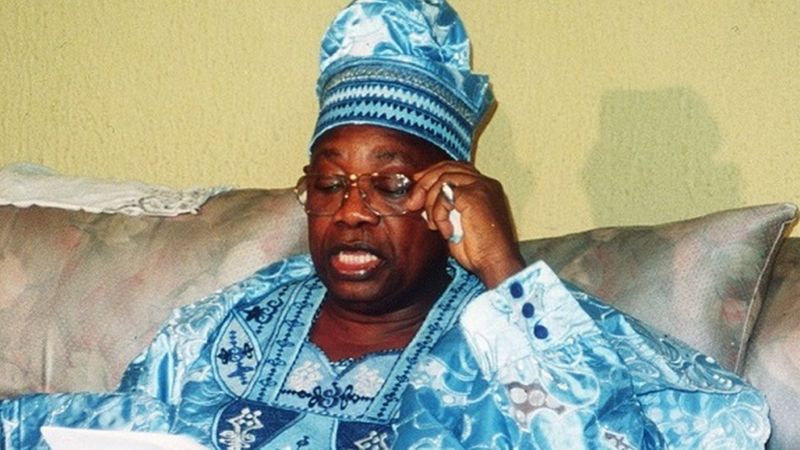
'To this day, many people in Nigeria think I killed him.’ - Susan Rice Column by Olusegun Adeniyi That was the opening line in the riveting account of the last hour of the late Bashorun Moshood Kashimawo Olawale Abiola as told by Ambassador Susan Rice. She was one of the visiting American diplomats in whose presence the presumed winner of the 1993 presidential election died on 7th July 1998. https://ichef.bbci.co.uk/news/695/cpsprodpb/917E/production/_95464273_gettyimages-614601888.jpg More significantly, Rice was the one who served Abiola the famous last tea. For the past 22 years, the former National Security Adviser to President Barack Obama has refrained from speaking on what exactly happened that day. But in her memoir, “TOUGH LOVE: My story of the things worth fighting for”, Rice recounts not only how Abiola died but also confirmed the street gossip about the last hour of the late General Sani Abacha. In the memoir, Rice also recounts how she was conceived in Lagos during the two years her parents spent in Nigeria at a time her father was helping in the establishment of the Central Bank of Nigeria (CBN) after independence. As the American diplomat with Africa as her brief, Rice also recalls many of the crises on the continent, especially the one that eventually led to the death of Col Muammar Ghadafi in Libya and the encounters she had at different times with African leaders, including former President Olusegun Obasanjo who on one occasion was “nonchalantly hurling well-picked chicken bones—much to our amusement—backward over his shoulders across the presidential suite.” Now, let’s begin with the story of one of the most momentous periods in Nigeria’s political history from Rice, a former US Ambassador to the United Nations: The death of Abacha and Abiola. https://ichef.bbci.co.uk/news/800/cpsprodpb/16DDA/production/_101985639_abiola.jpg In early July 1998, I traveled to Nigeria with Undersecretary of State for Political Affairs Tom Pickering, who was then among the most senior career Foreign Service Officers. As assistant secretary of state for African Affairs, I had gotten to know Pickering, my immediate boss, as a wise, fast-talking, and deeply knowledgeable diplomat. Having served as ambassador to six major countries and the United Nations, Pickering had seen and heard almost everything. The purpose of our trip to Nigeria was to encourage a responsible political transition. The nasty former dictator, Sani Abacha, had died a month earlier in the company of prostitutes. Viagra was reportedly involved. His interim successor was a moderate leader, Abdulsalami Abubakar, who hoped to shepherd Nigeria through a democratic election to select its new leader. A primary objective of our visit was to meet the wrongfully imprisoned opposition leader, Moshood Abiola. He was the presumed winner of Nigeria’s 1993 election, but the results were annulled, and he was later arrested. We hoped to negotiate his freedom so that he could participate in the upcoming election. Along with Pickering and U.S ambassador to Nigeria Bill Twadell, I met Mr. Abiola in an austere government guesthouse on the vast presidential complex in the capital, Abuja. A large and imposing man, Abiola came with his minder shortly after we arrived. Pickering, a former ambassador to Nigeria, knew Abiola from years past and greeted him warmly. Abiola, robust and happy to see us, sat on the couch and began to tell us how poorly he had been treated during his four years in prison. He was wearing sandals and multilayered traditional Nigerian dress. I noted that his ankles were swollen. About five minutes into the conversation, Abiola started to cough, at first mildly and intermittently, and then wrackingly with consistency. He said he was hot, so I asked his dutiful minder, “Please turn up the air-conditioning.” Noticing a tea service on the table between us, I offered Abiola, “Would you like some tea to help calm your cough?” “Yes,” he said, with appreciation, and I poured him a cup. He sipped it, but continued coughing. Increasingly uncomfortable, Abiola removed his outer layer, leaving one layer on top. I shot Pickering a worried glance. The coughing became dramatic. I told the assembled men, “I think we better call for a doctor.” No one argued. The minder immediately placed the call. Abiola asked to be excused and went into the bathroom of our meeting room. When he emerged, he was bare-chested and sweating profusely, barely able to talk. He lay down on the couch writhing and then rolled facedown onto the floor. The doctor arrived promptly, took a quick look at him, and declared that Abiola was having a heart attack and must be transported to the hospital immediately. The men labored to lift the heavy Abiola into a small car, and we rushed to the nearby, rudimentary presidential hospital. I grabbed his eye-glasses off of a side table where he left them, his only belonging, thinking of his daughter Hafsat in the U.S whom I’d met before we left. The doctors worked on him, furiously, but within an hour they pronounced him dead. We braced for violence. Abiola’s sudden and mysterious death would hit like a bombshell in Nigeria’s political tinderbox. Conspiracy theories would spread like metastatic cancer. Serious unrest throughout Nigeria was possible. Washington would hyperventilate, since it’s not every day a major figure drops dead with senior U.S officials. His family would need to be told. And, urgently, Nigeria’s acting president would have to hear directly from us, even though his minister was present at the hospital and knew how it went down. Ambassador Twadell panicked and urged me and Pickering to rush to the airport and leave the country immediately. “Hell no,” we said. This delicate situation required deft management, not a hurried exit in a cloud of suspicion. Right away, I called National Security Advisor Sandy Berger, my former boss, briefed him, and dictated a White House press release. Then we went to the Nigerian presidential palace to relay the entire drama to the acting president. We urged him to issue a careful statement to announce the establishment of an autopsy by international experts, in order to quell rife speculation and limit the potential violence. The acting president did both. Next, Pickering, Twadell, and I went with former Nigerian Foreign Minister Baba Kingibe to see Abiola’s wives and daughters. All of us walked in together, but soon I realized that I was effectively alone in the room with these distraught women. The men had hung far back and left the job to me—just like the pouring of the tea. I proceeded to explain that their husband/father was dead. He had died of an apparent heart attack that began in our meeting. The doctors did all they could to save him but could not. The ladies’ wailing was so intense, it haunts me to this day. We briefed the press, and I returned to the U.S embassy to write the official cable to report what had happened. As a senior official, I almost never wrote up cables summarizing meetings but in this case there was no more efficient way to ensure we got this very important history straight. As I was typing, I heard in the distance on the CNN a familiar voice of indignation. It was none other than the Reverend Jesse Jackson, then serving as President Clinton’s special envoy for the promotion of democracy in Africa. Reverend Jackson served capably in this role, and with good intentions, but on this occasion, I could have throttled him. He was riffling about how Abiola died under suspicious circumstances in a meeting with U.S. officials. I could not believe my ears—our own guy implying we were killers! Immediately, I placed a call to his longtime aide Yuri and asked them to shut the Reverend down. “Please, just get him off the set.” That happened, even as I was still watching the segment. We stayed overnight in Nigeria to try to calm things, offer any needed assistance to the government, and make an orderly departure. Fortunately, despite deep public upset, no significant violence occurred. The autopsy eventually confirmed the cause of death as a heart attack. Nonetheless, it was Nigeria where conspiracy theories abound. The most popular, which still has currency over twenty years later, is that I killed Abiola by pouring him poisoned tea. From that experience, I found that being a woman policymaker comes with unique hazards. The men would not have offered, much less thought, to pour the tea. They may have swiftly called for a doctor. They may not have been able to break the bad news to the wives. Not for the first time, it was I, not they, who took the public fall for a crime nobody committed. More from Source: Thisday https://www.thisdaylive.com/index.php/2020/11/12/how-abacha-abiola-died-by-susan-rice/ |
| Politics › Re: Fashola Discovers Mystery Camera At Lekki Toll Gate During Inspection by Alday: 11:46am On Oct 26, 2020 |
If the IQ of a SAN, former governor and current minister can be bleeped up this way while associating with Buhari, imagine what has happened to Osinbajo and then imagine how Buhari himself thinks njola34: 1 Like |


 By the time all these Red Pillers reach 100 you go know. Find a good lady and settle down, no all ladies are useless nah e you dey shout. Learn from PA Olu Jacob situation rn, old age is coming.