Romance › Re: 10 Statements Ladies Normally Use To Lure Guys To Bed by Codedrock(m): 8:45pm On Apr 01, 2016 Romance › Re: 10 Statements Ladies Normally Use To Lure Guys To Bed by Codedrock(m): 8:45pm On Apr 01, 2016 |
|
| Phone/Internet Market › Re: How I Was Scammed 5k For Data Plan Yesterday By happy08 by Codedrock(op): 7:55pm On Mar 26, 2016 |
space |
| Phone/Internet Market › Re: How I Was Scammed 5k For Data Plan Yesterday By happy08 by Codedrock(op): 7:53pm On Mar 26, 2016*. Modified: 10:13am On Dec 10, 2016 |
|
| Phone/Internet Market › Re: How I Was Scammed 5k For Data Plan Yesterday By happy08 by Codedrock(op): 7:47pm On Mar 26, 2016 |
timbros:
@Codedrock
Sorry to say this, but I got absolutely no pity for you. You got exactly what you deserved.
You say you used to buy 12gb for 5k from glo as in GLO a network provider. And your brain never for a second told you that an individual can NEVER sell data CHEAPER than the network providers themselves. Wasn't he in business for making gains? How can he make gain when he sells cheaper than where he purchased the goods?
You say no one have complain of being scammed through this particular ad...wtf!! Are you this dull? So in all you years of being a Nairalaner, you haven't read of data scammers? Gosh!
I will always repeat it, anyone who is scammed here because of data is GREEDY. Period. Bro.. Maybe u need to calm your nerves down.. It looks like u really don't verify thing before u talk.. So you don't know All this 3rd party data sellers always have cheaper plans than the network providers? I don't know how they do it but I don buy data from some of them who has shops that they are really cheap U buy 350mb for 1k on Mtn while legal data sellers sell 1gb for u at 1k. So what are u saying?? And I don't need ur pity. what I need is this message passed to others |
| Phone/Internet Market › Re: How I Was Scammed 5k For Data Plan Yesterday By happy08 by Codedrock(op): 5:43pm On Mar 26, 2016 |
dominique:
Sorry about that. You've been an active member of this forum for almost five years, you should have known how these fraudster soperate. An account opened just the previous day with no reasonable contribution other than selling data at ridiculously cheap prices. They keep opening new accounts everyday and we keep banning them. Please when next you come accross such post, hit the report button and the mods will handle it. Dominique i heard you are a supermod kindly front-page the topic pls... If had seen a message like this on FP before I wouldn't fall. PS: it never came to mind to check his profile, if I had check his profile earlier I would have known. |
| Phone/Internet Market › Re: How I Was Scammed 5k For Data Plan Yesterday By happy08 by Codedrock(op): 5:18pm On Mar 26, 2016 |
. |
| Phone/Internet Market › How I Was Scammed 5k For Data Plan Yesterday By happy08 by Codedrock(op): 5:15pm On Mar 26, 2016*. Modified: 11:01am On Aug 20, 2017 |
|
| Celebrities › Re: Nigerian Celebrities That Should Be Dating Each Other. (pics) by Codedrock(op): 2:39pm On Mar 22, 2016 |
space |
| Celebrities › Nigerian Celebrities That Should Be Dating Each Other. (pics) by Codedrock(op): 2:33pm On Mar 22, 2016 |
Well, today we are gonna be having fun listing out Nigerian celebrities that should be dating each other most especially our artists. Well, below you'll see they were matched together considering the chemistry between them physically,musically behaviorally. Article by your favourite T.I.N Magazine writer Apata Bayode, lets know in the comment section if you disagree or agree with him on this one. 1] WIZKID AND CHIDINMA www.nairaland.com/attachments/1324723_e5fe30fc22f511e399ca22000ab5bc2f_7_jpg696a8b873878bc1a059fca0b2c4c7113Wiz and Chee These two are actually the best for each other.. They've both got small stature and baby faces.. They are actually gonna be great together. Even musically they are gonna help each other write beta songs... 2] FALZ AND SIMI https://i0.wp.com/thenet.ng/wp-content/uploads/2015/11/Falz-and-Simi1.jpgOmg! Well, we all know there is no argument on this one. Simi and Falz are definitely "Couple of the year". physically,musically the chemistry is just so on point. Boda Kunle I'm a great fan of yours and you and Simi are good together but Falz and Simi is gonna be a better good. 3] DAVIDO AND CYNTHIA MORGAN [img] http://www.goldmyne.tv/wp-content/uploads/2016/01/46552981-015d-4fe1-a679-1025befd2ebe.jpeg[/img] Dav&Morg Well, these two have got some beef going on.. But i listened to Cynthia the other day on Radio and she cleared the air on their beef. But let’s look at the both of them, they are just too perfect for each other when it comes to behavior, physic, and even music I'm sure they will work something out. 4] ADEKUNLE GOLD AND DI'JA [img] http://1.bp..com/-mBPoRxOmPRs/Vu0e6zma4VI/AAAAAAAACHY/yyLNWzT72BE3AgMNzj90c-q2Pe6xg2cug/s320/Adekunle-Gold-3.jpg[/img] Kunle&dija Well, you may not know this but I'm telling you there's a lot of chemistry between boda kunle and D'ija. I mean the music first, and the physic they are so O.K together, and as far as i can tell, one of them is crushing on the other. 5] OLAMIDE AND YEMI ALADE www.nairaland.com/attachments/3501891_128190394888967579806461636929227n_jpeg0dfffc9750cf2581977e4658841b2e49Yemi&Baddo Well, these two were pictured together recently, and i was like wow! Just what i was expecting... They are just too cute together, and i recently learnt they are birth month mates, the two are totally compatible physically and musically.. No offense to SISI SNEH though.. 6] D'BANJ AND LINDA IKEJI [img] http://3.bp..com/-pJsvVXjEM-E/UktNfSSYG-I/AAAAAAACE3M/IAe30E2Zhis/s400/Linda+Ikeji_D%27Banj_London_01Oct2013_Sync+PHOTOS-3lindaikejiblog.jpg[/img] Well, according to my research, it looks like aunty Linda has a crush on D'banj but she sure wouldn't want to date a guy like D'banj because of his women reputation, but no one would deny they are just a perfect match.. You know, it looks like D'banj likes rich and independent women and Aunty Linda is all. Aunty Linda wouldn't date a guy she's older than, well, D'banj is your age mate! I think Aunty Linda should give it a try i am so sure you are gonna change D'banj! 7] IYANYA AND SEYI SHAY [img] http://4.bp..com/-OdVPJZLCezk/Vu0fEHYEaaI/AAAAAAAACHg/-C-aIw3xcwklUKD7BU84-iwKeRjf6Ec5g/s400/IMG_1989.jpg[/img] Well, I think these two needs to work something out, you know, i see that cool chemistry between them even though they don't, most especially in the musical aspect they are just perf! 8] BANKY W AND NIYOLA https://www.trendsflash.com/wp-content/uploads/2015/06/banky-w-and-niyola.jpgWow! Well, i think they should stop forming for us because i know there's something up between the two and if i am wrong, i think Banky should take the bold move and go on a date with the girl... Musically and physically we've all seen they are just perfect! 9] BURNA BOY AND EMMA NYRA [img] http://1.bp..com/-cGAhoaEg0AY/Vu0fJtb7ASI/AAAAAAAACHo/Y7gNgnwMQqYLNUvhvD78_o0NspGDhM03w/s400/Burna-Boy-2015-Look-BellaNaija07.jpg[/img] Burna&Emma Well, i have not seen them together on any occasion but i think they are gonna match each other.. They both should trust me on this one, it is gonna be a happy and fun relationship... 10] MUNOSINGS AND LUCY [img] http://1.bp..com/-wIkxv1iH-9U/Vu0hEPh1vKI/AAAAAAAACH0/GP3wUM8jf10xuv2zpIyrC6DSEDzaVk_5w/s640/Lucy-for-Rudeboy-Records.jpg[/img] Lucy&Muno These two new comers are definitely going to be big considering they are being handled by the legendary Paul Okoye. They are both signed to same record label and i think they are gonna sell better and faster if they are dating. Not to mention the chemistry between them physically is crazy, and wait! Have you seen the "Never Regret" video by Munosings? well, you should check it out! SOURCE: http://www.takemetonaija.com/2016/03/ff.html#more |
| Celebrities › Re: Fan Wins A Date With DJ Cuppy by Codedrock(m): 7:38pm On Mar 21, 2016 |
Seun:
What does DJ Cuppy actually do apart from posing for pictures? Does she sing or act?  Oga seun she's too young for u oo.. cos e be like say u wan lift eye from tonto to her now... |
| Celebrities › Re: Ten Most Famous People In Nigeria 2016 by Codedrock(op): 11:02am On Mar 15, 2016 |
|
| Celebrities › Re: Yemi Alade And Her Mother In A Cute Photo On Instagram by Codedrock(m): 10:48am On Mar 15, 2016 |
No hating.. but it does not look cute at all..
A beta posture wont be bad and ha mom wit a beta top..
#Justsaying..
By the way... i can see where she inherited the big oranges from.. |
| Celebrities › Ten Most Famous People In Nigeria 2016 by Codedrock(op): 9:47am On Mar 15, 2016 |
After weeks of research T.I.N Magazine finally comes up with the 2016 list of the ten most famous people in Nigeria.
Our research was done in different parts of Nigeria by asking people different questions about the nominees. All thanks to the T.I.N Magazine readers who volunteered themselves to help carry out this research in their states.
Criteria We Used:
=> The recognition of each nominees "Name"
=> The recognition of their "Face"
=> Their reputation
You will find notable mentions after the top ten, so relax and gently take a look at the:
TEN MOST FAMOUS PEOPLE IN NIGERIA 201610] FUNKE AKINDELE Funke Akindele is definitely one of the most famous people in Nigeria at the moment; she was ranked 10th in last year's ranking. OUR RESEARCH SHOWS: Funke Akindele is still a well known entertainer in the country, her continuous appearances on billboards and TV adverts revealed she is one of the most popular faces in Nigeria. In our 2016 research we noted at least 80% Yoruba people know who Funke is. We discovered many Nigerians of other tribe know Funke Akindele either by name or facial recognition. Funke is quite known by many Nigerian kids, youths and adults. She has managed to keep her no.10th position in this year's ranking. 9] MERCY JOHNSON Mercy Johnson according to our research is the most famous actor in Nigeria. She was ranked no.8 in Nigeria in our 2015 ranking, but now she dropped. OUR RESEARCH SHOWS: Mercy is a very popular Nollywood actress who feature in a lot of movies which millions of Nigerians watch, Mercy is quite controversial both online and offline. Mercy's face is quite a very popular one as she also features in many TV&Billboard ads too. Her name sounds familiar to many Nigerians and so is her face. Our research revealed Mercy is quite known both in the South and Northern part of Nigeria. 8] PASTOR E.A ADEBOYE Known to be the G.O of the largest Christian ministry in Nigeria, pastor Adeboye was ranked no.5 in our last year's ranking, well; he dropped to no.8 this year. OUR RESEARCH SHOWS Half of Nigeria's population’s religion is Christianity and him heading the largest ministry in the country shows he is known by many Christians even ones that are not part of his ministry. We figured many Muslims know who Adeboye is too. The respected man of God is one of the most famous spiritual leaders in the country. Well, not known by many kids but known by many youths, adults and old ones. 7] T.B JOSHUA The very popular Nigerian prophet well known beyond the shores of Africa has been featured on this list to be the 7th most famous person in Nigeria as of 2016. He is the spiritual leader of the Synagogue church of all nations which is located in Lagos Nigeria. OUR RESEARCH SHOWS: The minister, televangelist and prophet is well known by Nigerians in every part of the country. He is known by both Christians and Muslims in the country because of his prophesies and miracles. Prophet Joshua is one of the most influential and controversial people in Nigeria. He is well known by people that are not even religious. He is not well known by kids but known by many youths,adults, and old ones. 6] DAVIDO David Adeleke popularly known as Davido has been ranked to be the 6th person on this list, he is a well known musician even beyond the shores of Nigeria . Was ranked no.7 in last year's ranking. OUR RESEARCH SHOWS: The singer is one of the most famous music stars in the country at the moment. Mostly known by kids,youths and a few adults, the singer came into the music industry 5 years ago and he has managed to become one of the most famous people in Nigeria today. We discovered his music is being heard in every part of the country but majority in the southern part though. As of 2016 the singer is the most followed Nigerian person on social media. Davido's face is quite a popular one too due to his popular music videos, TV and Billboard ads also. 5] WIZKID The pop star Wizkid Ayo Balogun was the 6th on the list last year and he's moved up to be at the no.5 position in this year's ranking. Well, according to our research Wizkid is the most famous entertainer in Nigeria at the moment. OUR RESEARCH SHOWS: Wizkid keeps getting famous across the country, came into the spotlight in year 2010 and now he has managed to be one of the most famous people in the country through his music. Just like Davido Wizkid is mostly known by kids, youths and many adults too. We discovered his name is quite a popular one, when we asked Nigerian that are not hip hop fans to mention hiphop singers they know his name comes first or second, in one other words we can say his name represents pop music in Nigeria. As of 2016, Wizkid is the most followed Nigerian person on Twitter. 4] OBASANJO Olusegun Obasanjo is a very influential politician in Nigeria. He was ranked no.4 last year and this year he's remained at the same position. OUR RESEARCH SHOWS: Obasanjo also known as OBJ is well known by many Nigerians, we figured Obasanjo is well known by Nigerians starting from age 13 and up, the famous politician is the only Nigerian who has lead the country for almost 12years, this made him very well known to many generations, we discovered Obasanjo is well known by many old ones, adults, and youths. 3] PRESIDENT BUHARI Well, he is very well expected to be on this list. Muhammadu Buhari is the incumbent president of the federal republic of Nigeria and he's been ranked no.3 on this list. OUR RESEARCH SHOWS: As the president of Nigeria, Buhari is well known by many kids as they are being thought in their various schools. The president is well known by every Nigerian youth and adults but not well known by many old ones. We figured the president's name is well known by many but his face not that much. 2] DANGOTE Aliko Dangote Nigeria's richest person for a very longtime is the second most famous person in Nigeria. Ranked no.3 last year moved up to no.2 this year. OUR RESEARCH SHOWS: The name; "Dangote" as a brand and personality is well known by almost every living Nigerian due to the reputation of being the richest Nigerian living or dead. He is mostly known by kids as a brand due to his name written on every product belonging to the brand; "Dangote". We figured his face is not quite known to many but the name is. Dangote is well known by almost every Nigerian youth, adult and old ones. 1] GOODLUCK JONATHAN Ranked to be the no.1 last year, Goodluck Ebele Jonathan is still the most famous Nigerian person as of 2016, the former president of Nigeria is still well known by every living Nigerian person on the planet. OUR RESEARCH SHOWS: The president's name and face remains very well known by many Nigerians. President Goodluck led the country for over 5years and in 5years he became one of the most famous Nigerian leaders ever. We figured Jonathan’s name, face and reputation is very well known by many Nigerians kids, youths, adults and old ones. The ex-president has remained relevant and controversial even after leaving office in 2015. NOTABLE MENTIONS: DON JAZZY, OMOTOLA JALADE, JAY JAY OKOCHA, D'BANJ, P-SQUARE, TONTO DIKEH, WOLE SOYINKA, TIWA SAVAGE, GENEVIEVE NNAJI.SOURCE: http://www.takemetonaija.com/2016/03/ten-most-famous-people-in-nigeria-2016.html 
|
| Celebrities › Re: Top Ten Richest Musicians In Nigeria 2016 by Codedrock(op): 9:34am On Mar 12, 2016 |
I comment my reserve |
| Celebrities › Top Ten Richest Musicians In Nigeria 2016 by Codedrock(op): 4:32pm On Mar 11, 2016 |
Culled from: T.I.N Magazine First of all, T.I.N Magazine says sorry for not publishing Nigeria's highest paid artists in year 2015 as we promised. The issue we had was inability to confirm all the 20 artists we were to feature on the list. We promise to update you guys Nigeria's highest paid artists of 2016 come December this year, trust us, we are not going to fail you.
So, it is 2016 already and we've decided to put out the list of the richest musicians in Nigeria as of 2016 following the financial reports we've gotten on each of these artists since last year till this present moment.
Do not fall for any non-sensible list that some bloggers will put out later this year, showing Nigerian artists net worth, they are all lies and senseless assumptions. The list that was released last year showing 20 Nigerian musicians and their net worth was later confirmed a list of lies and assumption when singer Davido said to be worth 14million dollars on the list personally debunked the claim and said he is not worth that much in an interview he had with MTV base talk in 2015.
So like we said in our previous post, Nigerian artists net worth cannot be stated because they don't declare their net worth or annual financial income, even Forbes cannot tell the worth of Nigerian artists.
Well, we at T.I.N Magazine will be presenting you our own ten richest musicians in Nigeria as of year 2016 following reports we've gathered on artists whose worth are quite high in the music industry.
So checkout the criteria we used and reports we tracked before we put out this list:
=> How long each of these artists have been earning from music
=> Digital downloads sales: iTunes and MTNmusicplus
=> Label owner or signed artist?
=> How much these artists charge per show
=> How often these artists get invited to perform at shows
=> Endorsement deals each artist has got
=>Other businesses these artists have got.
NOTE: The list you are about to see does not have Net worth included, and some endorsements included are not confirmed by the artists, they are just media reports.
TOP 10 RICHEST NIGERIAN ARTISTS 2016
10] IYANYA
https://dindindara.com/wp-content/uploads/2013/08/Iyanya-Suit.jpg
Well, Iyanya dropped in our 2016 ranking, in 2015 we ranked him no.8 now he is number 10, well, it looks like the singer still has endorsement deals to his name and we have reports that his contracts with some of his endorsers have not been renewed. Well, the singer's label TrippleMG did quite a good job last year and we believe the label raked in quite some income with album release and various shows and tours. His active endorsements include: MTN, and maybe ZINOX
He's managed to be on the top ten.
9] OLAMIDE
[img]http://4.bp..com/-VFLx59YiObI/VSi6w_zW9PI/AAAAAAAAAlg/BWPOuQq31Lo/s320/olamide21.jpg[/img]
Olamide moved from no.10 to no.9 this year. The YBNL boss got more endorsements last year and
Signed a deal with Surebet in 2015, he has performed in many huge events since last year. Olamide is said to be charging at least 4million per show as of 2016.
Olamide dropped another album in November 2015 which have been reported to selling quite fast on iTunes.
His active endorsements; ETISALAT, SUREBET,
8] TIWA SAVAGE
https://www.notjustok.com/wp-content/uploads/2012/07/tiwa-savage.jpg
The songstress is as of 2016 the entertainer with the most endorsements. She moved fro no.9 to no.8 in this year's ranking.
Signed a multimillion naira endorsement deal with pampers diapers in 2015, her R.E.D album is at the moment the best selling album on MTNMusicplus.
Her active endorsements include: MTN DEAL, Forte Oil Deal, Pampers,Maggi, And Pepsi
7] DAVIDO
https://globalvillageextra.com/wp-content/uploads/2014/09/Davido-1.jpg
Davido was in 7th position in 2015's ranking, and he's remained in the same position this year. The singer is said to be charging as much as 5million naira per show. The singer also quite some huge endorsement deals to his name. According to him he signed a million dollars global deal with Sony Music in 2015.
Active endorsements: MTN deal, Closeup Deal.
6] WIZKID
https://www.360nobs.com/wp-content/uploads/2015/02/Wizkid-2.jpg
Wizkid was ranked no.6 last year and he's remained in the same position this year too. The singer has quite some big deals to his name and he's known to be called for many shows. Report says he charges as much as 5million naira to perform. His active endorsements include: GLO deal, PEPSI deal.
5] BANKY W
https://static.pulse.ng/img/incoming/origs3561760/7340487885-w980-h640/banky-W.jpg
Banky W is clearly among the oldest artists in music industry, which also means he's been making money from music for a longtime. The singer has been a brand ambassador for Samsung for a very longtime. He was in the n.5 position in last year's ranking, he's also remained in the same position this year. Report has it; Banky charges as much 3million naira per show. He is also the CEO of the popular label; EME..
His active endorsements as of 2016; CIROC deal, Samsung deal and Etisalat deal.
4] 2BABA
https://cdn1.jaguda.com/wp-content/uploads/2014/09/2Face.jpeg
Everybody knows he is one of the legends in the Nigerian hiphop world, he's been doing music for a long time and has remained consistent ever since. 2baba makes a lot of sales on iTunes according to iTunes Nigeria. The singer was in no.4 position last year and this year he is still in the same position. 2baba is known to be an artist with not many endorsements like he should be but he still makes a lot from music. Active endorsements: Airtel deal, Guinness deal.
3] DON JAZZY
https://www.bellanaija.com/wp-content/uploads/2015/02/Mavin_Obi_Somto_Photography-61.jpg
Don jazzy was in this same position last year. Everybody knows he is a co-founder of the popular defunct label; Mo'Hits which him and his partner D'banj made quite some money through the label. The singer,song-writer and producer makes money off his new mega label; MAVINS. He's also got quite some huge endorsements to his name.
His active endorsements include; MTN deal, Loya Milk deal.
2] D'BANJ
[img]http://2.bp..com/-rC5vUYkEiIk/VYGhoXcZVUI/AAAAAAAAAs4/IlmEU9z-YjY/s400/dbanjturns34june9th2014.jpg[/img]
"Nigeria's richest solo artist"
The popular singer can be said to be a man of endorsement deals. The guy has got a lot of brand endorsements in the past and as of the moment he is 2nd entertainer with most endorsement deal after Tiwa Savage. He charges between 6-7million naira per show.
His active endorsements includes; Ciroc deal, Glo Deal, Bank of industry deal, Beats By Dre deal.
D,banj signed another multimillion naira deal with SLOT Nigeria late 2015.
He is the richest solo artist in Nigeria.
For the past 6years he's been ranked as the no.2 richest artist in Nigeria consistently, he probably might take over as the richest musician in Nigeria very soon.
1] P-SQUARE
[img]http://3.bp..com/-JQwr1nVk67M/Vs1ikUsi5eI/AAAAAAAAB9E/RAOHeQD960o/s400/vllkyt275tcqg972q.171fa966.jpg[/img]
The duo have been ranked richest in Nigeria for a very long time. These two have been making money from music for a very longtime. They've made money from album sales both online and offline, the duo charge as much as 7-8million naira per show and they've got massive endorsement deals.. They've been an ambassador of the popular telecom GLO for a longtime. And as of 2016 these two have got endorsement deals individually. Peter has 2 active endorsement deals which includes; Olympic milk and Addidas.
Report has it these two are making from other businesses and investments.
T.I.N MAGAZINE WILL DEFINITELY BE PUBLISHING THE TOP 20 HIGHEST PAID ARTISTS IN NIGERIA OF 2016 IN DECEMBER. (It will reveal to you the top 20 Nigerian artists that made the hugest money this year.) SOURCE: http://www.takemetonaija.com/2016/03/top-ten-richest-musicians-in-nigeria_5.html |
| Celebrities › Re: Dele Momodu’s Reaction To Davido's Osinachi Remix by Codedrock(m): 8:52am On Mar 07, 2016 |
Some mumu here dey shout say Davido spoil Humblesmith song with the remix and actually he just made the song blow.. Now everybody is playing the first version even than the remix.. Go and check iTunes Osinachi is is the most bought at the moment...
Some ode people even dey talk say Davido pay Hummblesmith to feature on the song... Seriously?? How can any sensible person think like that?? |
| Gaming › Re: Anybody With Need For Speed Rivals On His PC? Pls Help Me.. by Codedrock(op): 3:19pm On Mar 05, 2016 |
Anybody?? |
| Celebrities › Re: Mosun Filani Is Smoking Hot In New Portraits (photos) by Codedrock(m): 1:44pm On Mar 05, 2016 |
What the?? This is totally not Mosun Filani!! |
| Gaming › Anybody With Need For Speed Rivals On His PC? Pls Help Me.. by Codedrock(op): 5:42pm On Mar 03, 2016 |
Hello guys.. i just bought this Need for speed rivals CD in computer village. After extracting the files on the disc. I couldn't find the black box setup.exe in the folder. it was missing looks like the other files are there. please is there anyone here who has the game on his pc? |
|
| TV/Movies › Re: The Vampire Diaries and The Originals Fan Page by Codedrock(m): 6:56pm On Feb 29, 2016 |
amicableSavage:
well I download mine in HD o. minirlss.in or 4do.se 'll suffice. Use a PC. Please did u download the 2hrs crossover there too? |
| Foreign Affairs › Re: Zimbabwe's Godmother Of Prostitutes Retires After Bedding Over 4000 Men (Photos) by Codedrock(m): 3:33pm On Feb 29, 2016 |
nanauju:
Lol. I don't act though Oh... maybe u should start... |
| Foreign Affairs › Re: Zimbabwe's Godmother Of Prostitutes Retires After Bedding Over 4000 Men (Photos) by Codedrock(m): 3:33pm On Feb 29, 2016 |
ColtPython:
You meant she looks like a porn actress abi  lolz.. maybe |
| Foreign Affairs › Re: Zimbabwe's Godmother Of Prostitutes Retires After Bedding Over 4000 Men (Photos) by Codedrock(m): 2:46pm On Feb 29, 2016 |
nanauju:
The breasts really need retirement jare
Seriously  . Over 4k men?? Meanwhile some women live with just one all their lives . Over 4k men?? Meanwhile some women live with just one all their lives Hello.. u look like an actress... abi shey na you act for Ayomi movie? |
| Celebrities › OOOOOO by Codedrock(op): 9:51am On Feb 29, 2016 |
....... |
| Crime › Re: If You Are Driving At Night And Eggs Are Thrown At Your Windscreen... by Codedrock(m): 7:56pm On Feb 28, 2016 |
I think the super mod needs to put a much more sensible title to the front-page post. anyone who sees it on FP will definitely think it is one of those unfunny posts our supermods put on FP not knowing it is an informative post. |
| Celebrities › Re: Top Ten Most Consistent Nigerian Artists Of The Decade by Codedrock(op): 6:24pm On Feb 26, 2016*. Modified: 6:43pm On Feb 26, 2016 |
OOOOO |
| Culture › Re: "Ooni Of Ife, Ogunwusi, Ascended Our Father Oduduwa's Throne" - Olu Of Warri by Codedrock(m): 7:25pm On Feb 24, 2016*. Modified: 10:17am On Nov 26, 2017 |
.. |
| Celebrities › Re: 'Emergency':P-Loops Calls Out D'banj For Not Paying Producer by Codedrock(m): 11:25am On Feb 24, 2016 |
|
| Celebrities › Re: HISTORY: The Cinema Of Nigeria And "Nollywood" (all You Need To Know) by Codedrock(op): 9:26am On Feb 24, 2016 |
CONT'D Several grants have been launched by the Nigerian Government, in order to support quality content in Nigerian films. In 2006, "Project Nollywood" was launched by the Nigerian Government, in conjunction with Ecobank. The project provided ₦100 million (US$781,000) to Nigerian filmmakers to produce high quality films and to fund a multimillion Naira distribution network across the country during this period. In 2010, the administration of President Goodluck Jonathan launched a ₦30 billion (US$200 million) "Creative and Entertainment Industry" Intervention Fund, financed by Bank of Industry (BOI), in conjunction with Nigerian Export and Import (NEXIM) Bank. This grant, although dubbed as a spin-off of "Project Nollywood", was for the entire Nigerian Creative Arts and Entertainment sector. The vision of the grant for the film industry however is to help more Nigerian filmmakers in training, funding, and also help in creating necessary infrastructure for the industry.[
In 2013, a smaller new grant of ₦3 billion (US$20 million) was awarded once again solely for Nollywood, and specifically for the production of high quality films, and to sponsor filmmakers for formal training in film schools. Also in 2015, Bank of Industry launched another "NollyFund" program for the purpose of giving financial support in form of loans to film producers.
The popular 2009 thriller film The Figurine is generally considered the game changer, which heightened the media attention towards "New Nigerian Cinema" revolution. The film was a critical and commercial success in Nigeria, and it was also screened in international film festivals.11 The 2010 film Ijé by Chineze Anyaene, overtook The Figurine to become the highest grossing Nigerian film; a record it held for four years, until it was overtaken in 2014 by Half of a Yellow Sun (2013).
By the end of 2013, the film industry reportedly hit a record breaking revenue of ₦1.72 trillion (US$11 billion). As of 2014, the industry was worth ₦853.9 billion (US$5.1 billion) making it the third most valuable film industry in the world, behind the United States and India. It contributed about 1.4% to Nigeria's economy; this was attributed to the increase in the number of quality films produced and more formal distribution methods.
Unlike the home video era, films in the new wave are generally of much improved quality, with considerably bigger budgets; averaging between ₦40 million (US$250,000) and ₦120 million ($750,000). These films' production periods take months and even span into years, a far cry from the films in video format which are usually shot in a matter of days or weeks. Other notable improvements in the New Nollywood include: more subtle performances from actors; different from the overt melodrama which constituted the video era, more practical, more logical and generally better stories. Themes explored in these films are often characterized by consciously cosmopolitan themes, as most of the filmmakers are relatively young. A proper copyright and distribution system still remains one of the major challenges in the New Nigerian Cinema.
Influx of Ghanaian Actors
Around year 2006 through 2007, Nigerian filmmaker Frank Rajah Arase signed a contract with a Ghanaian production company, Venus Films, which involved helping to introduce Ghanaian actors into mainstream Nollywood. This collaboration eventually led to extreme popularity of certain Ghanaian actors, such as Van Vicker, Jackie Appiah, Majid Michel, Yvonne Nelson, John Dumelo, Nadia Buari and Yvonne Okoro, arguably as much as their Nigerian counterparts. Furthermore over the years; due to the high cost of film production in Nigeria, Nigerian filmmakers have been forced make films outside Lagos in order to cut costs, mirroring the exodus of filmmaking in Hollywood from Los Angeles to cities like Toronto and Albuquerque, a process known as “Runaway production”. Several other producers as a result started shooting in cities like Accra, Ghana, channeling the savings into investing in better equipment, many of them trying to get their films onto the big screen.
In 2013, Nigerian Entertainment Today revealed that Ghanaian actors had 60 percent of the total market share in the year. A survey carried out by the Newspaper showed that out of 184 films featured on Nollytuned.com, a Nigerian streaming website, between April and August 2013, Ghanaian actors played lead roles in at least 93 of them. It was also reported that there are high demands for Ghanaian acts in video stores. At the first edition of Africa Magic Viewers’ Choice Awards (AMVCA) in 2013, Ghana’s Jackie Appiah was awarded Best Actress in a Lead Role. Same year, Appiah again was awarded ‘Best Actress’ at the Nollywood and African Film Critics Awards (NAFCA). Ghanaian actors like Majid Michel have also been awarded at several Nollywood award ceremonies.
Sam Onanuga, a Nigerian script writer blames the trend on the reluctance of the established Nigerian acts to partake in more films on Video. With the emergence of New Nigerian Cinema, more Nigerian acts wanted roles on the big screen in order to boost their resume, refusing to star in video films; Ghanaian actors as a result took advantage of this, as they become more prominent on Nigerian video films which were already taking a down turn at this time, but still very popular.
This development sparked media attention; mostly concerns that Ghanaians were taking over jobs meant for Nigerians. While some industry stakeholders such as Bob Manuel were unwelcoming towards the development, others like Mercy Aigbe, Belinda Effah, and Yvonne Jegede saw it as a welcome development; noting that the industry is big enough for everyone, and that other major film hubs across the world also have presence of other Nationalities. Theresa Edem commented: “A united Africa sells any day, anytime. It’s been a great partnership so far. They’ve added colour to Nollywood and they’ve brought about healthy competition. Emem Isong, a Nigerian producer comments: “It fosters unity and integration and that’s not a bad thing”.
Some Ghanaian media on the other hand described the trend as “Brain drain” from Ghana. However, Ghanaian director Frank Fiifi Gharbin, expressed satisfaction with the development, saying: “there shouldn’t be much fuss about Ghanaian actors in Nollywood. For us it is a good development. It shows that our actors are beginning to gain prominence and are being accepted worldwide”.
Influence
The increased collaboration between Nigeria and Ghana from the mid 2000s led to the resurgence of Ghana's film industry. However, many Ghanaian productions are copyrighted to Nollywood and distributed by Nigerian marketers due to Nigeria's bigger market. Nigerian filmmakers usually feature Ghanaian actors in Nigerian movies as well and that has led to the popularity of Ghanaian actors almost like their Nigerian counterparts. Nigerian actors have also starred in some Ghanaian productions, in order for the film to capture wider audience. Van Vicker, a popular Ghanaian actor, has starred in many Nigerian movies. As a result of these collaborations, Western viewers often confuse Ghanaian movies with Nigerian films and count their sales as one; however, they are two independent industries that sometimes share the colloquial "Nollywood".
NOLLYWOOD
http://blogs-images.forbes.com/mfonobongnsehe/files/2011/08/Nollywood-Love.png
The origin of the term "Nollywood" remains unclear; Jonathan Haynes traced the earliest usage of the word to a 2002 article by Matt Steinglass in The New York Times, where it was used to describe Nigerian cinema. The term continue to be used in the media to refer to the Nigerian film industry, with its definition later believed to be a portmanteau of the words "Nigeria" and "Hollywood", the American major film hub.
Definition of which films are considered Nollywood has always been a subject of debate. Alex Eyengho defined Nollywood as "the totality of activities taking place in the Nigerian film industry, be it in English, Yoruba, Hausa, Igbo, Itsekiri, Edo, Efik, Ijaw, Urhobo or any other of the over 300 Nigerian languages". He further stated that "the historical trajectory of Nollywood started since the pre and post independent Nigeria, with the theatrical (stage) and cinematic (celluloid)) efforts of the likes of Chief Hubert Ogunde, Chief Amata, Baba Sala, Ade Love, Eddie Ugboma and a few others".
Over the years the term Nollywood has also been used to refer to other affiliate film industries, such as the Ghanaian English-language cinema, whose films are usually co-produced with Nigeria and/or distributed by Nigerian companies. The term has also been used for Nigerian/African diaspora films considered to be affiliated with Nigeria or made specifically to capture the Nigerian audience. There is no clear definition on how "Nigerian" a film has to be in order to be referred to as Nollywood.
Some stakeholders have constantly expressed their disagreement over the term; giving reasons such as the fact that term was coined by a foreigner, as such another form of Imperialism. It has also been argued that the term is an imitation of what was already in existence (Hollywood and Bollywood) rather than an identity in itself, that is original and uniquely African.
In 2012, it was announced that Nollywood would be celebrating its 20 years anniversary. This year marked the 20th year after the release of direct-to-video movie Living in Bondage (1992), which marked the boom in the video film era. The anniversary was eventually celebrated in June 2013.
The event was later revealed to be a decision of a segment of the industry and not a unanimously agreed event; the event was organized by Association of Movie Producers (AMP), an association consisting of producers of video films. Since announcement of the "Nollywood @ 20" event in 2012 till its celebration in 2013, the event had sparked controversies from many stakeholders; most of whom believed the industry was much older than 20 years. Since Nollywood has been a term for the entire Nigerian film industry, it was argued that Living in Bondage cannot be used to celebrate the Nigerian film industry, stating that the film wasn't in fact the first Nigerian video film, neither was it the first "successful" video film,[10] much less the first Nigerian film.
This controversial celebration also gave rise to reports that another segment of the industry, the "Assosiation of Nigeria theatre Arts practitional (ANTP)" are planning to rename the industry into another term which would encompass the entire history of Nigerian film industry, since the term Nollywood has allegedly become tribally dichotomized. While it was argued by supporters of the event that it was the "Nollywood brand" that was being celebrated and not the industry, counter arguments were made that the term "Nollywood" came into existence only in the 2000s, so explanations were needed on how the "Nollywood Brand" could be extendeded to the year 1992 which isn't specifically significant in anyway, and why not just to the very first Nigerian film that was made.
Alex Eyengho had noted in a 2012 article that the term "Nollywood" was absent during the formative years of both the video film era and the Golden Age. Seun Apara, in his article on 360Nobs.com stated: "It's either the promoters of the event didn't do their research well or intentionally do not want to reckon with history". Adegboyega Oyeniya comments: "I dont know what they are talking about by celebrating 'Nollywood @ 20'; are they celebrating Ramsey Tokunbo Nouah or Genevieve Nnaji? Probably, they are celebrating fortune. These people should stop deceiving Nigerians. Some media outlets also reported that the event was a result of greed and selfish interests, as the organizers visited political figures to solicit funds in the name of the Industry, but allegedly shared the funds raised amongst themselves. Another issue raised to fault the event is that the real "achievers" in Nollywood were not honoured, but rather the practitioners at almost the same level with the organizers of the supposed flawed event were honoured.
Several filmmakers and stakeholders expressed their displeasure with the supposed false celebration; Kunle Afolayan commented: "The whole idea of Nollywood at 20 does not make sense to me because the Nollywood that I know is more than 20 years. I remember my father shot a film about 37 years ago and I also grew up in the industry. As far as am concerned, it's absolute crap". In another interview, he stated: "If Nollywood is the name that people decide to call the movie industry in Nigeria, then I am part of it. If Nollywood is what they say is 20 years, then I am not part of that Nollywood because I have been doing film business for more than 30 years now". Jide Kosoko also commented: "The Nigerian movie industry as far as I'm concerned is not 20 years. If we all truly belong to the same industry, then the industry I belong to is not 20 years. There is a need to tell the world the sincere story of our industry and don't rubbish the pioneers. As far as I am concerned, what they are celebrating is Living in Bondage and not Nollywood". Tunde Kelani stated: "how will Nollywood be celebrating 20 years and I am over 40 years in the industry?".
President of "Actors Guild of Nigeria" at the time, Ibinabo Fiberesima, admitted that Nollywood is more than 20, but gave what was considered an unconvincing statement on the reason behind the event, stating: "It's about celebrating our own even though Nollywood is more than 20 years. It's been long that people have been celebrating us but right now, we are celebrating ourselves and giving lots back to the society. It's a good step we have taken especially now that the qualities of our movies have improved". See more at: http://www.takemetonaija.com/2016/02/history-cinema-of-nigeria-and-nollywood.html#sthash.qBKQLFty.dpuf |
| Celebrities › HISTORY: The Cinema Of Nigeria And "Nollywood" (all You Need To Know) by Codedrock(op): 9:22am On Feb 24, 2016 |
CULLED FROM: T.I.N MagazineIts Monday, and you know what T.I.N Magazine do on Mondays.. We share you histories. Well, this time it is about the entertainment industry, you are going to find all you want to know about the Nigerian movie industry, see how it was started, the key people who raised our darling "Nollywood" and more..
The cinema of Nigeria, often referred to as Nollywood, consists of films produced in Nigeria; its history dates back to as early as the late 19th century and into the colonial era in early 1900s. The history and development of the Nigerian motion picture industry is sometimes generally classified in four main eras: the Colonial era, Golden Age, Video film era and the emerging New Nigerian cinema.
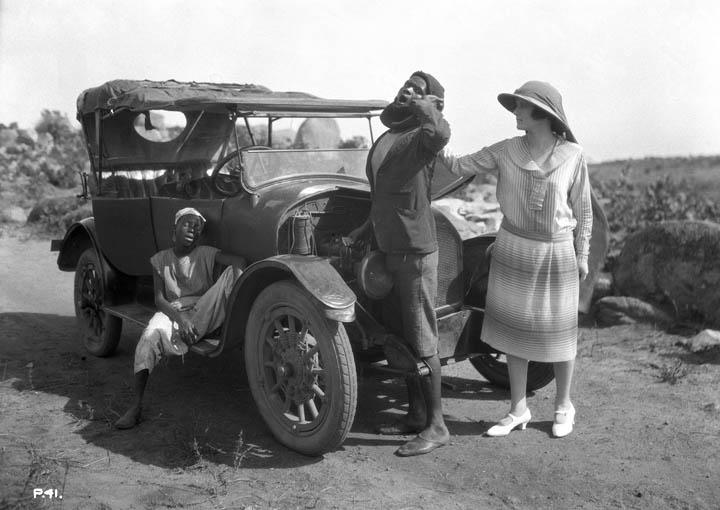
Film as a medium first arrived Nigeria in the late 19th century, in the form of peephole viewing of motion picture devices. These were soon replaced in early 20th century with improved motion picture exhibition devices, with the first set of films screened at the Glover Memorial Hall in Lagos from 12 to 22 August 1903. The earliest feature film made in Nigeria is the 1926's Palaver produced by Geoffrey Barkas; the film was also the first film ever to feature Nigerian actors in a speaking role. As at 1954, mobile cinema vans played to atleast 3.5 million people in Nigeria, and films being produced by the Nigerian Film Unit were screened for free at the 44 available cinemas. The first film entirely copyrighted to the Nigerian Film unit is Fincho (1957) by Sam Zebba; which is also the first Nigerian film to be shot in colour.
https://i.ytimg.com/vi/eWFHLmxEDDY/hqdefault.jpg
After Nigeria's independence in 1960, the cinema business rapidly expanded, with new cinema houses being established. As a result, Nigerian content in theatres increased in the late 1960s into the 1970s, especially productions from Western Nigeria, owing to former theatre practitioners such as Hubert Ogunde and Moses Olaiya transitioning into the big screen. In 1972, the Indigenization Decree was issued by Yakubu Gowon, which demands the transfer of ownership of about a total of 300 film theatres from their foreign owners to Nigerians, which resulted in more Nigerians playing active roles in the cinema and film. The oil boom of 1973 through 1978 also contributed immensely to the spontaneous boost of the cinema culture in Nigeria, as the increased purchasing power in Nigeria made a wide range of citizens to have disposable income to spend on cinema going and on home television sets.. After several moderate performing films, Papa Ajasco (1984) by Wale Adenuga became the first blockbuster, grossing approximately ₦61,000 (approx. 2015 ₦21,552,673) in three days. A year later, Mosebolatan (1985) by Moses Olaiya also went ahead to gross ₦107,000 (approx. 2015 ₦44,180,499) in five days.
After the decline of the Golden era, Nigerian film industry experienced a second major boom in the 1990s, supposedly marked by the release of the direct-to-video film Living in Bondage (1992); the industry peaked in the mid 2000s to become the second largest film industry in the world in terms of the number of annual film productions, placing it ahead of the United States and behind only India. The started dominating screens across the African continent and by extension, the Caribbeans and the diaspora, with the movies significantly influencing cultures, and the film actors becoming household names across the continent. The boom also led to backlash against Nigerian films in several countries, bordering on theories such as the "Nigerialization of Africa". Since mid-2000s, the Nigerian cinema have undergone some restructuring to promote quality and professionalism, with The Figurine (2009) widely regarded as marking the major turn around of contemporary Nigerian cinema. There have since been a resurgence cinema establishments, and a steady return of the cinema culture in Nigeria. As of 2013, Nigerian cinema is rated as the third most valuable film industry in the world based on its worth and revenues generated.
HISTORY
The history of cinema in Nigeria dates back to as early as the history of film itself; notably in the late 19th century, with the use of peephole viewing of motion picture devices. These were soon replaced in early 20th century with improved motion picture exhibition devices; the first set of films shown in Nigerian theatres were Western films, with the first film screened at Glover Memorial Hall in Lagos from 12 to 22 August 1903. In that year, Herbert Macaulay had invited to Nigeria, the Balboa and Company, Spain to organize an exhibition tour of silent films in Nigeria.
Although Mr Balboa later closed his exhibition in Lagos, while he continued showing films in other West African countries, the success of his exhibition led to a European merchant, Stanley Jones, to begin showing films in the same Glover Memorial Hall, starting from November 1903. This brought about the influx of more European film exhibitors to Nigeria. The first film hit in this early period came on 3 August 1904, when the documentary on the visit of Alake of Abeokuta to England was screened.
Colonial era (late 19th century - early 1960s)
https://pbs.twimg.com/media/CP-KA44XAAEF1_e.jpg
Colonial filmmakers started producing films for local audiences within Nigeria since the 1920s, mostly employing the mobile cinema as a means of exhibition; the earliest feature film made in Nigeria is the 1926's Palaver produced by Geoffrey Barkas. The film was also the first film ever to feature Nigerian actors in a speaking role As of 1921, there were four other halls showing films twice a week in Lagos Mainland and one hall each in Ebute Metta and Oshodi. By this time, cinema had become popular in Lagos with crowds of young and old people usually waiting at the doors of theatre halls. Religion also aided in the expansion of cinema culture as the Christian missionaries used cinemas for religious propaganda.
The earliest feature film made in Nigeria is the 1926's Palaver produced by Geoffrey Barkas. It was also the first film to feature Nigerian actors in a speaking role; Nigerian film actors features in Palaver include Dawiya and Yilkuba. The film was shot amongst the Sura and Angas people of the present day Bauchi and Plateau States in Northern Nigeria, and narrates the rivalry between a British District Officer and a tin miner which leads to a war. Also in this era there were several films set in Nigeria, one of the most notable being the 1935's Sanders of the River by Zoltán Korda, featuring Nigerian actor Orlando Martins. Martins also featured in other notable films including The Man from Morocco (1945), Men of Two Worlds (1946) and so on, and this established Martins as one of the recognized Nigerian actors of his time.
As cinemas became a common feature of the social life in the then emerging city of Lagos, the late 1930s through 1940s marked the beginning of the establishment of big commercial cinema houses with branches in strategic parts of the country. One of the earliest cinema operators in Lagos was the "West African Pictures Company" owned by Mr. S. Khalil, a member of the Syrian community in Lagos. He established the Rex Cinema in Ebute Metta, Regal Cinema and Royal Cinema. Other popular cinema chains include: Capitol Cinema, Casino Cinema, Kings Cinema, Central Cinema, Rialto Cinema, Corona Cinema, Odeon Cinema, Road House Cinema, Ikeja Arms Cinema and Glover Hall. In 1937, the colonial government set up a Board of Censorship to handle matters relating to the establishment and operations of cinema houses in the colony. Nigerian content in films made and shown in Nigerian cinemas during this period were however virtually non-existent as the production and distribution were controlled by foreigners. Motion picture entertainment was as a result complemented by the Yoruba travel theatre groups, which emerged in the 1930s through 1940s; One of the most were the Agbegijo and Alarinjo theatre groups, which featured theatre actors such as Duro Ladipo, Ishola Ogunmola, Lere Paimo, Oyin Adejobi, amongst others.
In 1949 through 1950, the state of affairs changed a bit, with more Nigerian contents being exhibited in cinemas; with a purported drive to "Africanize" film production, the Nigerian Film Unit was established in order to decentralize colonial film production. The Colonial Film Unit, throughout the decade, exhibited health and educational films to local audiences through its mobile cinema vans. It also produced newsreels and short documentaries, depicting celebrations and colonial achievements to domestic and overseas audiences.
Golden Age (late 1950s - late 1980s)
[img]http://3.bp..com/_M_tsOK41m0I/S9srg2MmVcI/AAAAAAAABSs/KV5sdvF9F_o/s1600/nigeria2.jpg
[/img]
After Nigeria's independence in 1960, the cinema business rapidly expanded, with new cinema houses being established. However, there came a significant influx of American, Indian, Chinese and Japanese films; posters of films from these countries were all over theatre halls and actors from these industries became very popular in Nigeria. Towards the late 1960s and into the 1970s Nigerian productions in movie houses increased gradually, especially productions from Western Nigeria, owing to former theatre practitioners such as Hubert Ogunde, Ola Balogun, Moses Olaiya, Jab Adu, Isola Ogunsola, Ladi Ladebo, Sanya Dosumu and Sadiq Balewa amongst others, transitioning into the big screen. The first fully commercial Nigerian films, shot on celluloid, were also made by these filmmakers in the 1960s.
In 1972, concerned about the influx of foreign culture into Nigeria, the Indigenization Decree was issued by the then head of state Yakubu Gowon; which demands the transfer of ownership of about a total of 300 film theatres in the country from their foreign owners to Nigerians. Also, more Nigerians started playing active roles in cinema establishment as a result of this policy. This transfer also resulted in the emergence of Nigerian playwrights, screenwriters and film producers; popular literature and theatre works were adapted into motion picture. The oil boom of 1973 through 1978 contributed immensely to the spontaneous boost of the cinema culture in Nigeria. The presence of foreign investments led to the erection of several cinema complexes. In 1976, The 5000-capacity National Arts Theatre, Iganmu was constructed in Lagos. The theatre was incorporated with two cinemas, each having a capacity of over 700 people. At this time cinema business had become a notable employer of many people and also served as an important social function, as Nigerians visited cinemas for relaxation and entertainment purposes. The increased purchasing power in Nigeria also made a wide range of citizens to have disposable income to spend on cinema going and on home television sets.
Television broadcasting in Nigeria began in the 1960s and received much government support in its early years. By the mid-1980s every state had its own broadcasting station. Law limited foreign content on television, so producers in Lagos began televising local popular theater productions. Many of these were circulated on video as well, and a small-scale informal video movie trade developed. As of late 1980s, the cinema culture was beginning to face a major decline, and most Nigerian film producers had transitioned to television productions. The gradual decline of the Golden era of Nigerian cinema has been attributed to several factors, including the reduction in the value of Naira, lack of finance and marketing support, lack of standard film studios and production equipment, frequent Government structural adjustment programmes due to military dictatorships, as well as inexperience on the part of practitioners. The drastic decline in cinema culture resulted in some of the existing cinema houses being acquired by religious bodies and turned to churches; others were simply just closed down. In the early 1990s, only a few of the once vibrant cinema houses were still in operation, and all had collapsed before 1999.
Home Video Boom (late 1980s - mid 2010s)
https://www.nigeriamovienetwork.com/uploads/articles/db2fff17.jpg
The emergence of the video film market in Nigeria is traced back to the 1980s when television productions thrived. Jimi Odumosu's Evil Encounter, a 1980 horror film released directly on television, was the first production to be a pointer to how lucrative making film directly on video can be. The film was extensively promoted before being aired on the television, and as a result, had streets flooded in the following morning with video copies of the recorded broadcast. It was reported that the film became an instant hit at Alaba market , a commercial district which later became the hub of video distribution in this period and also eventually became the hub of piracy in Nigeria. Since Evil Encounter, it became common, especially in Southern Nigerian cities to see video copies of recorded television programmes traded on the streets.
This method was adopted and built on by producers and distributors at Alaba Market to reinvent the film industry, since the Nigerian cinema culture was facing a major decline. The first film produced on video in Nigeria was 1988's Soso Meji, produced by Ade Ajiboye. The film was also screened at the few available theatres at the time. Subsequently, Alade Aromire produced Ekun (1989) on video, which was screened at the National Theatre, Iganmu. However, the boom experienced in this era is generally believed to have been kick started by Kenneth Nnebue's Living in Bondage (1992). Nnebue had an excess number of imported video cassettes which he then used to shoot his first film on a Video camera. Although Living in Bondage is often touted in the media as the "first commercial video film", several historians have argued that the video film industry was already booming before Living in Bondage.
As at 2004, at least four to five films were produced every day in Nigeria. Nigeria movies now already dominate television screens across the African continent and by extension, the diaspora. The film actors also became household names across the continent, and the movies have significantly influenced cultures in many African nations; from way of dressing to speech and usage of Nigerian slangs. This was attributed to the fact that Nigerian films told "relatable" stories, which made foreign films to "gather dusts" on the shelves of video stores, even though they cost much less.
According to the Filmmakers Cooperative of Nigeria, every film in Nigeria had a potential audience of 15 million people in Nigeria and about 5 million outside Nigeria. In no time, the industry became the third largest producer of films in the world. However, this didn't translate to an overtly commercial film industry when compared to other major film hubs across the world; the worth of the industry was approximated at just about US$250 million, since most of the films produced were cheaply made. The film industry regardless became a major employer in Nigeria. As at 2007, with a total number of 6,841 registered video parlours and an estimated of about 500,000 unregistered ones, the estimated revenue generated by sales and rentals of movies in Lagos State alone was estimated to be ₦804 million (US$5 million) per week, which adds up to an estimated ₦33.5 billion (US$209 million) revenue for Lagos State per annum. Approximately 700,000 discs were sold in Alaba market per day, with the total sales revenue generated by the film industry in Nigeria estimated at ₦522 billion (US$3 billion) per annum, with broadcast content valued at ₦250 billion (US$1.6 billion).
At the peak of the video era at around 2008, the industry had become the second largest producer of films, releasing approximately 200 video films monthly. However at this point, the Nigerian film industry had practically degenerated into a "visionless" industry, with the invasion of several people who do not know a thing about filmmaking, and piracy was at its peak. Dealing with the menace of piracy, amongst other problems, became a hard nut to crack; as a result of this, most investors of the "Alaba cartel", who control almost 90 percent stakes in the video industry, began to channel their money into other business ventures instead. The decline of the Home video era has been attributed to several factors, such as the refusal of the Government to provide support and funding, the lack of a formal and effective indigenous film distribution infrastructure and the increase in the cost of production in Nigeria.
New Nigerian Cinema (mid 2000s - present)
This is an emerging phase in Nigerian cinema, in which there became a major shift in the method of film production, from the video format, back to the cinema method, which constituted the films produced in the Golden era. Few years into the 21st century, Nigeria began to experience the growth of cinemas, which was initially structured for the middle and upper class. The Silverbird Group is the first company to launch a series of modern Cinema houses across major cities in Nigeria, mostly situated in affluent areas and districts. It launched its cinema chains in 2004, starting with the Silverbird Galleria in Victoria Island, Lagos. The Silverbird Galleria is a large shopping mall, with an upscale cinema facility and various outlets where mercantile activities take place. This provides more reasons to visit the place beyond just watching films, but more of a social activity and a modified sort of entertainment beyond film watching. This trend has given another probable explanation as to the demise of the Nigerian cinema culture in the 1980s, which might have been as a result of the unfashionable appearance of most cinemas of the Golden era.
Silverbird cinemas upon establishment started screening Nigerian films with high production quality, as a result discouraging poor film production. The first New wave film to be shown at a cinema was the Yoruba-language film Irapada (2006) by Kunle Afolayan, which was screened at the Silverbird Galleria in Lagos. The Silverbird experiment became very successful, and as a result, the group launched few more cinema branches in Lagos and other cities in the country. Not long after the establishment of Silverbird cinemas, Genesis Deluxe Cinemas and Ozone Cinemas were also launched creating a competition in the cinema business. Much later, in the 2010s, FilmHouse cinemas also came into the picture, leading to the availability of more cinemas in the country, especially outside the affluent neighbourhoods. READ MORE BELOW: SOURCE: http://www.takemetonaija.com/2016/02/history-cinema-of-nigeria-and-nollywood.html |
| Celebrities › Re: Top Ten Most Consistent Nigerian Artists Of The Decade by Codedrock(op): 4:40pm On Feb 22, 2016 |
aaronson:
With the crap message they put out there.
Misogyny and degrading of women, how to sexually harass a woman, how to party, Encouraging fraud/scam, being so hood/street and everything you wouldn't want your children to be, is what they convey in their songs.
Of a truth they all have been consistent but only people worthy of this list for positive songs are Tuface, Tiwa Savage and Psquare of old. Seriously?? |