EzeUche's Posts
Nairaland Forum › EzeUche's Profile › EzeUche's Posts
1 2 3 4 5 6 7 8 ... 53 54 55 56 57 58 59 60 61 (of 213 pages)
 Culture › Re: Benin Art And Architecture by EzeUche(m): 2:55pm On Jul 28, 2011 |
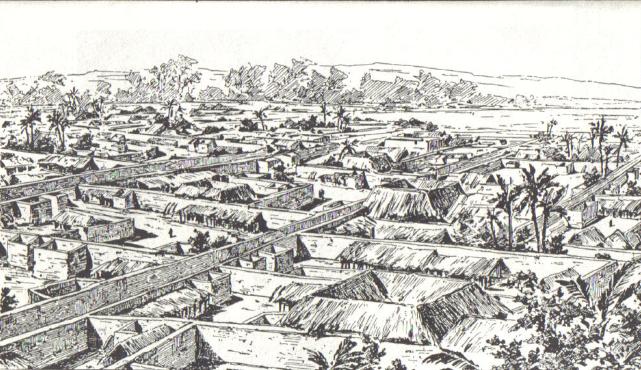
https://upload.wikimedia.org/wikipedia/commons/0/08/Drawing_of_Benin_City_made_by_an_English_officer_1897.jpg Drawing of Benin City made by an English officer, 1897 |
| Culture › Re: Benin Art And Architecture by EzeUche(m): 2:51pm On Jul 28, 2011 |
The Benin Empire was truly great. I enjoyed going through each page of this thread.  |
| Politics › Single Six-year Term Is Another Joke by EzeUche(op): 2:49pm On Jul 28, 2011 |
Single Six-year Term Is Another Joke Written By Dr. SKC Ogbonnia The plan to introduce a single six-year term for the offices of the President and Governors is another joke being conceived to further confuse the masses. Such plan is anti-democratic, regressive, defeatist, and will worsen corruption. The current hoopla on term of office revolves around a claim by a new wave of influential pundits that the concept of re-election is the bane of our problems. To these pundits, the quest for re-election usually overheats the polity and, in most cases, marries the politicians to the reigning culture of embezzling public funds or making wild promises, so as to get re-elected. Thus, it is believed that a single term would free the governors or the president from the temptations commonly associated with re-elections, thereby allowing these executives to focus on the jobs they swore to do. This argument sounds very good in theory but guarantees to disappoint big time in practice. In the first place, a single six-year term is archaic and polar opposite to modern democratic principles. Its lame duck nature is similar to autocratic monarchies, where kings assume power and sit idly by, since only act of death can dethrone them. Unlike in the monarchies, the concept of re-election promotes competition and opposition activities, which are central to democracy. It also breeds checks and balances by serving as a referendum on the activities of the office holders. The proponents of the single term will definitely argue otherwise, suggesting that the legislatures can facilitate the essential checks and balances. But they need a serious rethink. Today, with possible exceptions of Anambra, Delta, Oyo, and Zamfara states; the National Assembly and all the other State Assemblies are dominated by one party. This situation has resulted to weak opposition across the entire country, therefore making it virtually impossible to impeach the President or Governors, who may indulge in corrupt practices while in office. The hope for re-election is a powerful incentive for efficient and responsive governance. It enhances performances and further promotes pursuit for excellence and, by extension, greater purpose and possibilities. Recall how, during his re-election campaign, President Goodluck Jonathan breezed into Enugu one December afternoon to proclaim Akanu Ibiam Airport to an international status. Recall how many of such promises were showered on all the other political zones. Or, do we forget the sensational power roadmap? Perhaps these are worthy projects, well studied, supported with superb personnel, and remain very attainable today. Instead of embarking on yet another phantom legislation, our honorable legislators should be breaking into committees and holding the president and governors accountable to their promises; and, where necessary, identifying omissions and concrete plans for immediate implementation. Another compelling reason is that, if the single term is to be adopted, the politicians will simply deploy their infamous strategies from re-election to sustaining themselves in power for the entire duration of the term. And given that politicians typically prefer to enthrone others who can shield their evil deeds upon leaving office, the vogue will then shift from re-election to dynasty, imperialism, or god-fatherism. According to the single term model, governors and presidents would quietly do their jobs and retire away. But if history is any foreteller of the future, Nigerians should know better. After all, Olusegun Obasanjo and many governors just completed two terms in office not long ago and were supposed go away quietly. It was quite the opposite. Not only did Obasanjo commandeer our resources in installing his successor but also strangled his home state of Ogun to ordain the daughter as a senator. And, as if that was not enough, any intended or unintended opposition to Obasanjo’s preferred candidates in the transitional 2007 elections——whether from the ruling party or outside it——was met with untold hardship. That was the same pattern for many state governors, who ruled and abused the states from 1999 to 2007. Most of those governors, for example, Chimaroke Nnamani or James Ibori of Enugu and Delta States, respectively, conveniently bulldozed public resources to elevate their cronies as successors. There is always the tendency for corruption or mismanagement of resources anytime two or more people are gathered together for common goal, whether it is small organization, government, election or re-election, first-term, second-term, or any term, for that matter. But what really matters is how to ensure that there are policies in place to curb human excesses and, importantly, being able to implement such policies. Stated differently, the problem is not how to control terms of service but how best to implement existing policies that are designed to compel the Nigerian servants towards sound moral purpose. Besides religion, a popular way to promote and sustain a moral society is through law and order as may be advanced by the government. People are more likely to behave properly, if they fear what will happen incase they break the law. There are numerous laws in place to combat corruption and electoral malpractices. Instead of punishing the law breakers, Nigerian governments are known to aid individuals and groups to indulge in more corrupt practices. As a result, laws are commonly and flagrantly violated with little or no remorse, since there are no consequences for bad behavior. To make matters worse, the political leaders of the 4th Republic have capitalized on an imprudent clause in 1999 Constitution that provides immunity for governors and the president while they are in office. This standing order——suggestive of no consequences for bad behavior——for the Executive branch; thence encourages members of the Legislature as well as the Judiciary to abuse their offices too. The immunity clause notwithstanding, there is scant interest in probing the activities of the politicians even when they are out of office. While politicians can perpetrate evils deeds in course of re-election or while they are in power, the worst and most inexplicable culprits are the successive governments that never probe their predecessors. Today, ex-government officials who were either indicted or convicted for embezzling public funds or involved in electoral malpractices are not only being allowed to feast on their loot but are steadily extolled and appointed to the highest levels within the different ruling parties. Even if and when they eventually face the wrath of the law, their crimes are never meted with fitting penalties——all in name of American styled plea bargain. Perhaps Nigeria’s adoption of the American styled presidential system of government is widely acclaimed but Nigeria must realize fast that America’s system has its good——and its bad. And plea bargain is simply bad for Nigeria. More disheartening aspect of the problem is that the very few crooks who end up being convicted are treated like royals in prison, with some of them spending the time in palatable hospital suites——and with direct access to every luxury and pleasure, including their lovers. This brazen impunity, of course, does nothing but once again concretize the despicable act of corruption as appealing political order. It adds lethal salt to the open injury in the face of helpless majority and lends credence to the long-standing suspicion that the rhetoric about punishing corrupt leaders (particularly with prison terms) is fallacy, in fact. Any attempt to relate President Obasanjo’s era to effective leadership is like viewing history from a rear-view mirror. But I am tempted to do so here, in comparison to the regimes after him; at least, in terms of the war against corruption. For instance, institutionalized corruption which was illuminated under the Obasanjo administration is being rashly shaded by successive governments. To that end, despite unabated looting in all levels of government, besides the lone case of Olabode George or the James Ibori drama; there is no single conviction of any major corrupt politicians during the 4-year reign of Yar’Adua/Jonathan regimes from 2007 to 2011——whether from the central government, the states controlled by PDP, or the few states under the opposition parties. The only time the presence of anti-corruption agency has been felt lately is when the central government uses it to intimidate political opponents. And there are no concrete plans to prosecute clear cases of electoral offenses. If Nigeria has historically failed to implement extant anti-corruption and election laws, what are the chances that new laws which can compliment the single six-year term policy towards effective leadership will be implemented then? Or, how will the situation be any different from the current pattern where politicians can abuse offices, empty the treasury, and walk away scot-free? Will the long six years in office not be more conducive for these political merchants, as compared to the current shorter four-year term? The proposal for a single six-year term is very annoying. It is a weird admission that Nigeria is a failed state. That is to say that the country can no longer control its citizens and therefore not interested in prosecuting politicians who mismanage public resources in course of elections or those who employ other underhand practices to attain or sustain power. If truth be told, adopting the single term——instead of holding office holders accountable——is a tired agenda, defeatist, counter productive, and should be resisted. The National Assembly should not muddle current efforts towards constitutional amendment with another unwarranted issue bordering on terms of office. The body should concentrate on other aspects of the amendment, such as state creation, revenue formula, and other laws that can strengthen the EFCC and other organs of government so as to engender equity and accountability from the local to the federal governments. Again, Nigeria’s problem is not the nature of terms of office but how to implement existing policies that can enable successful terms. *Dr. Ogbonnia is the chairman of First Texas Energy Corporation and adjunct professor of leadership at Davenport University http://www.nigeriavillagesquare.com/guest-articles/single-six-year-term-is-another-joke.html |
| Politics › Imo Trains Doctors, Others On Emergency Rescue Mission by EzeUche(op): 1:41pm On Jul 28, 2011 |
Imo trains doctors, others on emergency rescue mission Written by Joe Nwachukwu, Owerri Thursday, 28 July 2011 Determined to rescue the health sector and save lives of its citizens, Imo State government, on Wednesday, concluded the training of doctors, paramedics and security personnel in emergency response mission with respect to accidents and other disasters. No fewer than 1,000 participants, drawn from the public and private sectors, benefited from the exercise. About 15 specialists delivered lectures on how to save lives during health-related emergencies. The special adviser to the state governor on health, Dr Sylvanus Amaechi, whose office coordinated the two-day seminar in collaboration with INFAX Nigeria Limited, described the exercise as “a huge scientific and academic programme geared towards taking health care to the door steps of Imo citizens.” Dr Amaechi, a renowned orthopedic surgeon and a former president of Nigerian Orthopedic Association, told newsmen that Governor Rochas Okorocha approved the seminar, to keep medical practitioners and security agencies involved in health matters abreast of developments in the management of trauma and accidents. He said the seminar was conducted free of charge. He said professionals in the areas of surgery, orthopedic, gynecology, radiography, neo-natal medicine and other specialised areas lectured the participants on quick response measures to emergencies. “Our governor is not only the commander of free education, he knows that we have to be alive and healthy to benefit from free education, hence his emphasis on this seminar,” Dr Amaechi quipped. He said the rescue agenda of the Okorocha’s administration was all embracing and that health formed the integral part of his mission. Dr Amaechi said it was expected that the seminar participants would avail their colleagues of the knowledge they acquired in furtherance of the health policy of the state government. The special adviser announced that the General Hospital, Umugum,a where the seminar was held, would soon become a specialist hospital. http://tribune.com.ng/index.php/news/25789-imo-trains-doctors-others-on-emergency-rescue-mission |
| Business › Re: Anambra To Build 260mw Power Station by EzeUche(op): 7:31pm On Jul 27, 2011 |
seanet02:Jealousy |
| Politics › Re: Lagos Land Is For The Super Rich Only! (video) by EzeUche(m): 7:01pm On Jul 27, 2011 |
Overpriced city.  |
| Business › Re: 9 Nigerian Banks Make Top 1000 World Banks Ranking by EzeUche(m): 6:53pm On Jul 27, 2011 |
[quote author=ekt_bear link=topic=721642.msg8798311#msg8798311 date=1311754568]Nigeria is like 2 friends with their legs tied together running a 3 legged race. Yet despite this disadvantage, we are growing at 7%+/year. One wonders how quickly the country could grow if it were properly managed.[/quote]Great analogy. Nigeria has a lot of potential. That includes all regions. Even the North. It is our ruling class that continues to prevent Nigeria from reaching its true potential. |
| Culture › Re: Are The Igbos Different From The Ibos- Igbodefender.com by EzeUche(m): 5:06pm On Jul 27, 2011 |
Why did you create this thread in this section?  |
| Politics › Re: Oil Discovered In Far Northern Cameroun (near Lake Chad) by EzeUche(m): 4:12pm On Jul 27, 2011 |
obowunmi:Truth |
| Politics › Re: No One Has Monopoly Of Violence, Oritsejafor Tells Shariah Council by EzeUche(m): 4:09pm On Jul 27, 2011 |
Blessed be the LORD, my rock, who trains my hands for war, and my fingers for battle. - Psalm 144:1 |
| Politics › Sharia Legal System Brought Boko Haram To Nigeria by EzeUche(op): 2:51pm On Jul 27, 2011 |
Sharia legal system brought Boko Haram to Nigeria By Adebayo Adeolu NIGERIA returned to civilian and democratic rule in 1999, when former President Olusegun Obasanjo and his Deputy, Atiku Abubarkar, emerged as the new leaders after almost two decades of military rule. The Northern leaders were, however, at the time not comfortable with a Southerner as President and wanted assurances from President Obasanjo that he would protect their interest. However the skepticism of the Northern leaders triggered religious crisis in the North with over 400 churches burnt down and Christians and non-indigenes from the Eastern and Western parts of the country targets of the religious mayhem. The North had again showed its dissatisfaction with the government of the day. Obasanjo was shocked and speechless at the extent of the damage done at the time. The situation at the time had just settled down with Kaduna and other parts counting their losses and getting back to full normalcy when the then Governor of Zamfara State, Ahmed Sani Yerima, triggered off another crisis when he declared that Zamfara State had introduced the Sharia legal code in the state, thus nullifying the Nigerian constitution indirectly. He banned the sale of alcohol, night clubs and restrained women from entering the same vehicle with men, and that they could not ride a motorcycle unless the rider was the husband of the woman, and other ridiculous laws and policies. He also cut off a man’s hand for stealing a goat to prove his seriousness and had threatened to stone a woman to death for adultery at the time, which led to an international uproar. The crisis was so deep that it rocked the North and Nigeria for three years. The irony of it all was that he rehabilitated the man whose hands he cut off. The irony again was that this same Ahmed Sanni Yerima was a man clean-shaven like a cadet when the elections were being conducted, but immediately he became governor at the time and with the introduction of Sharia, he grew his beard bushy and wild in a Taliban style. Yerima got into another controversy with his Egyptian child bride, but said Islam allowed child marriage. That was what emboldened others who set up the Boko Haram in Nigeria and funded the organisation for their political agenda, and also for an Islamic Nigeria. They continued to heat up the polity, saying they would bring Sharia to all parts of Nigeria, including the South-East and South-West. It was obvious the governors at the time were getting funding from overseas. To prove the money given to them were utilised for the purpose, they had to cause an uproar that would be heard everywhere. To further prove they were not joking Yerima, then governor, cut off the hand of Jengadi, the man accused of goat theft. It was an easy way of making money from international allies on proclaiming to Islamise Nigeria. What they did not realise was they were nurturing a monster which they would not be able to control, and would eventually turn around to upstage them. If care is not taken, Boko Haram will come after the Northern elite and the ruling class, and will destroy them. It is a time bomb, waiting to explode. Empowering the poor to wreck violence in the North will eventually lead to the upstaging of the ruling class and elite. It has happened around other parts of North Africa and the Middle East. It is a mistake to use them as tool to pursue a political agenda. After Sharia was introduced and the polity started heating up, the then vice president should have taken the bull by the horn and backed Obasanjo that he would support the declaration for a state of emergency and get the governor removed, but he was too silent. If he had taken such a bold step at the time, he would have been the president today. I sometimes wonder if Mr. President and his Vice do know how powerful they are. They can even dissolve the National Assembly. Democracies around the world are not an exact copy of the United States of America. The PDP, including Obasanjo, would have been behind him solidly and the late president Umar Yar’Adua would never have been the president. It probably would have been President Atiku Abubarkar and Vice President Goodluck Jonathan, and the country might have run fine. He might have done just a single term and now we would have President Jonathan, because if he did eight years as vice president, a single term would have been okay and satisfying for him, but unfortunately, it did not go that way. The introduction of Sharia in the North at that time had triggered off what you have now, Boko Haram – a radical group, which does not embrace many of the tenets of Islam. Islam is a peaceful religion, but some people are interpreting the Koran differently and embarrassing peace loving Muslims around Nigeria and the world. Why do people from outside Nigeria teach you how to lace your shoe, saying western education is bad. We should stop all this nonsense and violence. Nigeria had been the envy of the world in the last decade. A mixed nation, despite our import dependent economy, we are regarded as the most advanced in Africa. |
| Business › Anambra To Build 260mw Power Station by EzeUche(op): 2:49pm On Jul 27, 2011 |
Anambra to build 260mw power station ANAMBRA State Government has signed a Memorandum of Understanding (MoU) with a consortium of local and foreign investors for the construction of a barge-bearing 260 megawatts power plant estimated at the cost $350 million. The power plant will be located at the bank of the River Niger, Onitsha. Those who penned their signatures in the deal included Governor Peter Obi and Chief Dennis Okafor, who represented Anambra State; Russel Schwartz represented Denca Services Ltd, while Daniel Oshiogwemde, an official of Stanbic IBTC Bank, signed on behalf of the bank. Obi, in a remark at the brief ceremony, observed that energy supply remains very critical to the nation’s economic growth. He was optimistic that the country’s economy could compete favorably with every other economy in the world with adequate power supply and other auxiliary infrastructure. to the governor, the project on completion will serve industries and businesses in Onitsha, Nnewi and other parts of the state. He said his administration will give the consortium and other potential investors hoping to come to the state all necessary support to complete the project on schedule in accordance to specifications. Anambra Commissioner for Public Utilities, Water Resources and Rural Development, Emeka Nwankwu, said the project was in line with the drive to make the state one of the strongest economies in the country to further attract investors and business. Nwankwu said one of state administration’s priorities was to boost the economy through the improvement of necessary infrastructure. Schawartz, who led the team of investors, said construction would soon commence in full swing, adding that arrangements had been concluded for installation of plant turbine. http://www.momentng.com/en/news/3307/anambra-to-build-260mw-power-s.html |
| Politics › Re: Anambra Plans Export-free Trade Zone by EzeUche(op): 6:03am On Jul 27, 2011 |
Yinkay:Do you have any pictures of the airport at Asaba? |
| Politics › Re: At Last, Gej Agrees To Sovereign National Conference. by EzeUche(m): 5:04am On Jul 27, 2011 |
| |
| Politics › Re: Lagos May Acquire Land Outside State For Rice Cultivation by EzeUche(m): 2:51am On Jul 27, 2011 |
jason123:The public sector is always ineffective when it comes to running a parastatal. Rice cultivation should be left for the private sector which is more efficient. Government parastatals are a waste of money which can be used to improve infrastructure and education. |
| Politics › Re: Lagos May Acquire Land Outside State For Rice Cultivation by EzeUche(m): 2:41am On Jul 27, 2011 |
I do not like this idea. Lagos should focus on improving infrastructure instead of buying land for rice cultivation. The private sector should be the one who invest rice cultivation. |
| Politics › Re: Ancestral DNA Results of Nigerians. by EzeUche(m): 2:38am On Jul 27, 2011 |
Obiagu1:I seen your thread and I do not believe those stories. |
| Politics › Re: Ancestral DNA Results of Nigerians. by EzeUche(m): 2:38am On Jul 27, 2011 |
Obiagu1:How do you know they were never land based? Many Ijaws see themselves as the earliest inhabitants of Nigeria. Just because of their small population does not mean that they are not the earliest inhabitants. When your people are migratory, that means you cannot reproduce as rapidly as the groups that are settled. |
| Politics › Re: Ancestral DNA Results of Nigerians. by EzeUche(m): 2:36am On Jul 27, 2011 |
I still believe the Igbo, Yoruba, Edo, Yoruba, Igala and Idoma come from a common ancestor/group if you look at our languages linguistically. |
| Politics › Re: Ancestral DNA Results of Nigerians. by EzeUche(m): 2:33am On Jul 27, 2011 |
Obiagu1: ezeagu:Being pushed towards the coast can make any group water based. Look at some Yoruba clans like the Ilaje are water based. |
| Politics › Re: Ancestral DNA Results of Nigerians. by EzeUche(m): 2:29am On Jul 27, 2011 |
Obiagu1:I still believe the Ijaw are the earliest inhabitants of Nigeria. They were just pushed to the coast by the much larger and aggressive groups. |
| Politics › Re: Ancestral DNA Results of Nigerians. by EzeUche(m): 2:13am On Jul 27, 2011 |
vicenzo: |
| Politics › Re: Nigerians In The Diaspora Have No Responsibility To The Development Of Nigeria. by EzeUche(m): 2:10am On Jul 27, 2011 |
It is not the responsibility of the Diaspora to develop Nigeria. What has Nigeria done for us besides give us a bad name abroad? Did Nigeria give me a scholarship to college? No. . . Did Nigeria give me a good quality education while I was growing up in Nigeria? No. . . 1 Like |


1 2 3 4 5 6 7 8 ... 53 54 55 56 57 58 59 60 61 (of 213 pages)