Marenx's Posts
Nairaland Forum › Marenx's Profile › Marenx's Posts
1 2 3 4 5 6 7 8 9 10 (of 22 pages)
 Business › Aside Paypal Can I Know Other Safer Ways Of Buying And Selling Online? by marenx(op): 8:48pm On Jul 23, 2022*. Modified: 9:22pm On Aug 14, 2022 Business › Aside Paypal Can I Know Other Safer Ways Of Buying And Selling Online? by marenx(op): 8:48pm On Jul 23, 2022*. Modified: 9:22pm On Aug 14, 2022 |
Aside paypal, can I know other secured and safer ways of buying and selling things online? How can I pay and receive money for online service?good bad funny kind fair |
| Literature › Re: Read This Interesting Comprehension Passage by marenx(op): 6:51am On Jul 07, 2022*. Modified: 8:53pm On Feb 06, 2023 |
1. My business collapsed and I know why: I didn't have a team. My mission is to assist adults to develop literacy and intellectual skills, and I couldn't do it alone. Instead of creating a team, since then I've been thinking to start something else. What will I say? To all my customers who wanted me to continue the business but were disappointed, I sincerely apologise even though the business will soon resume. I thank my dad alot for giving me one of his multipurpose rooms for an office. I also thank all the entrepreneurs whose free advice on Facebook and linkedin reaches me. I'll never forget one of those entrepreneurs, Mr. Robert Kiyosaki, whose book Rich Dad Poor Dad has been my inspiration and motivation. I say a big thank you to all of you. Let's keep winning. 2. If you ever read someone's story and felt inspired, read it again, focus on words usage. You'll figure out the following features: 1. Unfamiliar words used in a familiar way. 2. Familiar words used in an unfamiliar way, and 3. Effective use of adjectives The writer apparently looked for the right words to tell his own story. And that's exactly what you should do. Using common words alone never trills--it should be 70% common words and 30% uncommon words. If you aren't a prolific reader it's difficult to know which words are common and which words are not. You may be grilling readers with common words and cliches thinking you're impressing them. But don't worry. Check the examples of common and uncommon words below: common word/uncommon word 1. show/feature Common: He showed his father on the front cover. Uncommon: He featured his father on the front cover. 2. Disrespectful/impudent Common: He was rather disrespectful when he spoke to the ministers. Uncommon: He was rather impudent when he spoke to the ministers. 3. assign/delegate Common: He assigned five members of staff to carryout the task. Uncommon: He delegated five members of staff to carryout the task. 4. always/often and nonsense/gibberish Common: He always speaks nonsense. Uncommon: He often speaks gibberish. Remember it should be 70% common words and 30% uncommon words. Sprinkle words that paint images. It's good to sound simple but oversimplicity bulbously offends curiosity. The solution? Include few words that paint images to exhilarate and thrill your readers. These words can be nouns, adjectives, verbs, adverbs or phrases. Examples 1. perch and victory "He perched on the mountain and saw that victory is ours." 2. drown "On the morning after my birthday party, during which I and my wife almost drowned in vodka cocktails...." (From 'Long, Last, Happy' by Barry Hannah) 3. might "His might can hold all the oceans." If you apply all this counsel you can find the right words to tell your own story with frills. I got this knowledge through a deliberate attempt to perfect my writing skills. I thank God I had the fortitude to share it with you. I thank all those, especially https://smartblogger.com and https://www.enchantingmarketing.com whose writing tips contribute immensely to my success. To The New York Times, I say a big thank you for a quote From 'Long, Last, Happy' by Barry Hannah. Thank you all for reading. Lets keep winning. 3. It's easier to say 'This speaker can't express himself clearly.' There is time when you too must stand and address a certain group of people. And someone too will look at you that grievous way. Speaking one on one or teaching students may be easier but speaking to a group of independent people has never been easier. Even those you think are perfect have that obvious fear in their stomach. But everyone can do it. The first thing you should know is: The secret doesn't lie in avoiding the fear but in persisting to deliver your message. And the more you persist to deliver your message, the more the fear faints. I use the following techniques to find persisting easier: 1. Appreciation This is effective during a ceremony or award giving day. Or when I'm given an opportunity to dutifully speak during a workshop or any event. Example: "I appreciate all of you present here for your support. I appreciate the organizers of this wonderful events. This is all we need to reunite and make the world a better place. I appreciate all parents who teach their children discipline and respect which are the best qualities in life..." 2. Story telling Most people believe they don't have a great story to tell but every story is great. To find it easier to tell and create your own story, follow these three elements: cause=action=result. Cause can be brokeness, hunger, happiness, anger, etc, action can be starting a job, looking for a job, helping someone, persuading |
| Nairaland General › Re: Olufemi O. Taiwo’s Theory Of Everything by marenx(op): 6:48am On Jul 07, 2022*. Modified: 9:59pm On Oct 29, 2022 |
Review: The Use of As in Bihind the Cloud by Ifeoma Okoye First published in 1982, Behind the Cloud is a novel written by Ifeoma Okoye. The author shows the consequences of becoming a baren wife, particularly in Eastern Nigeria. In this novel of 119 pages, Ije is presented as Dozie's wife who suffers humiliation and agony just because she can't become pregnant let alone give birth to a baby. At the end of the novel, however, the cause of her bareness is medically discovered--her husband can't impregnate a woman. Behind the Cloud is a story written economically and in a simple English. Every conscious reader would like to appreciate what makes it thick. The author begins the story when Ije has already gone far in her struggle to become pregnant. She therefore needs to rely on a word that causes tension in order to keep her readers. That's where the use of a transition word 'as' comes in to play. As tiny as it is, the transition word can make a reader desperate to continue reading. Let's see how it works in the following sentence: 'As he entered the room, the wall cracked.' If you haven't observed the sentence, two things simultaneously occur: 1. He entered the room, and 2. The wall cracked. Why? Because of the use of 'as'. If you don't know, if you don't use 'as' in the beginning of the sentence, the sentence will lack tension as in the following: The wall cracked as he entered the room. Assuming this sentence appears in the first page of your novel, your readers may feel reluctant to continue reading. Because you've said it all at once. You should have hooked your readers first before giving them any new piece of information--a technique journalists have been using for ages. For instance, I hook a reader by saying, "As I entered the room..." because the reader would like to know what happened next. Now let's see how Ifeoma effectively uses the technique in her novel. The Effective Use of 'As' As a Transition Word in Ifeoma Okoye's Behind the Cloud The word "as" is one of the most commonest used words in English. It serves as both a foundation and a pillar in the novel. A transition word and a sentence variation factor, it's often employed in the first half of the book. The writer wants to smoothly move a reader to understand Ije's struggle to reproduce. The first use of "as" in the fashion mentioned above appears in page one when Ije is in the hospital's waiting-room. The word assists the author to use one of the most important literary devices--flashback: "As Ije sat there, her mind plunged deep into the past: a past full of failures that still rankled. She remembered vividly all the doctors who had treated her--the tests, the minor operations, and the major one that almost killed her."1 "As Ije sat there" can be replaced by "while Ije sat there" but the author goes with the simply pronounced syllable "as" to introduce the flashback. As a result, we unconsciously find ourselves plunged deep into Ije's world of meeting with the herbalists. After the newspaper vendor interrupted the flashback, however, the author has no any option than to resume the use of "as" in page 3 for Ije to read the newspaper and for a fat woman to be introduced in the novel. She wrote: "As the vendor walked away, Ije began to scan the newspaper while she waited for her turn to see the doctor. Presently, she was interrupted by a fat woman who came and sat down in the armchair next to hers."2 Notice that after the use of "as" in the first sentence, the next sentence reveals a progress. First in page 1, the next sentence reveals a flashback of Ije's meetings with herbalists, then in page 3 it reveals her meeting with a fat woman who is later known as Beatrice the sprinter who was in class 3 while Ije was in class 4 back at ACM in Port Harcourt. As if that isn't enough, the author similarly uses "as" in the last sentence of page 10 to round up the clinic scenes and reveal chapter 2 of the novel where Ije continues her struggle to reproduce. Here's an example of the bridge sentence: "As Ije drove out of the clinic, her hope rose and she prayed silently to God to grand her her wish."3 A reader leaves chapter 1 with the expectation of seeing the outcome of Ije's prayer but, like most novelists, Ifeoma delays the outcome with the use of suspense. Thus, chapter 2 begins with: "There was not much traffic as Ije drove through Kenyatta Street into Edozie Street." The author uses "as" in the middle of the above sentence but it doesn't work as much as when used in the beginning. The transition word is further used in the beginning of the sentence on page 13 as it's used in page 1 introducing the use of flashback: "As Ije sat down again she was overcome by a sudden depression. Her mind went back to the hospital. Dr Melie's words rang in her ears."5 Afterward, after the foundation of the novel stands firm, the author however relies less on the use of the transition word as a reader is already fully aware of Ije's agony. But a few pages later proves that absolute avoidance of the use of the transition word may bore a reader. This may explain why the author resumes the usage which appears on pages 58, 62, 66, 71, 73 and finally 76 respectively. The final use of the transition word on page 76 is similar to the use on page 10. Example: "As she drove home she hoped to discover on arrival that the visitor had gone."6 I can say the author stops using the transition word on page 76 either because of fear of overusing it or because the story has fully reached its climax where a reader must press on to see what happens next after Ije is aware that her husband has impregnated Virginia. Conclusion The use of "as" isn't the only way to hook your readers before offering them a new piece of information. There are many other ways in many great novels and short stories out there. For example, you can read "The Falls", an interesting short story by George Saunders to see how the use of "although" plays a significant role. © Maren John Mafuyai |
| Literature › Read This Interesting Comprehension Passage by marenx(op): 10:09pm On Jul 06, 2022 |
Breaking the news and asking for his mother’s consent were more difficult than Badu had imagined. He had run out of excuses for keeping his mother in the dark. “Today,” he mused, “I must let the cat out of the bag. He gingerly knocked on his mother’s door. There was no response and so he concluded that she was asleep. As he did not wish to disturb her, Badu decided to wait till morning. But as soon as he turned to go back to his room he heard, “My son, come in. what’s the problem?” Badu entered his mother’s room. Strangely, all the well-rehearsed speeches, responses and apologies vanished. He could not utter a word. When Maame Pomaa realized that her son was not ill she relaxed and waited patiently for him to talk. Badu started by repeating the conversation they had the previous evening about the Agricultural Extension Officer’s visit. He then described Sister Afua’s engagement ceremony which both of them attended two months earlier. Maame Pomaa listened patiently. She dozed off and was woken up by Badu’s chuckle. Badu got up suddenly and told his mother that he was going back to bed. At the door, he turned, smiled and winked at his mother; she winked back. That was their usual way of saying good-bye. Back in his room, Badu could not sleep. His mind was in turmoil. This restlessness was mutual. Maame Pomaa, after tossing in her bed for a while, decided to return her son’s visit. She tapped gently on the door. Badu jumped out of bed, dashed to the door and clutched his mother’s heads. Maame Pomaa looked at her son closely and asked him to sit down. She sat by him and said calmly, “Badu, I know you have something very important to tell me. Relax and bare your soul to me. Whatever it is, I’ m sure God will give us the strength to hear it. “Despite his mother’s encouraging words, Badu was still tongue-tied. His main worry was how his mother would react to the news. Being the only surviving child, he had been her only companion since his father’s death. Moreover, Maame Pomaa was not particularly sociable. How would she spend her evenings? Who would help her with her chores? These were some of the unanswered questions going through Badu’s mind. He gazed intently at his mother and burst into tears. “Maame, “he sobbed, “I’ve won a scholarship to study abroad." Source: https://www.cegastacadmy.com/2020/04/01/top-6-comprehension-past-questions-and-answers-pdf/ |
| Literature › Re: A Different But More Effective Way To Use THANK YOU by marenx(op): 5:20pm On Jul 04, 2022*. Modified: 6:18pm On Jun 07, 2023 |
PASSAGE 3 Mike and Morris lived in the same village. While Morris owned the largest jewellery shop in the village, Mike was a poor farmer. Both had large families with many sons, daughters-in-law and grandchildren. One fine day, Mike, tired of not being able to feed his family, decided to leave the village and move to the city where he was certain to earn enough to feed everyone. Along with his family, he left the village for the city. At night, they stopped under a large tree. There was a stream running nearby where they could freshen up themselves. He told his sons to clear the area below the tree, he told his wife to fetch water and he instructed his daughters-in-law to make up the fire and started cutting wood from the tree himself. They didn’t know that in the branches of the tree, there was a thief hiding. He watched as Mike’s family worked together and also noticed that they had nothing to cook. Mike’s wife also thought the same and asked her husband ” Everything is ready but what shall we eat?”. Mike raised his hands to heaven and said ” Don’t worry. He is watching all of this from above. He will help us.” The thief got worried as he had seen that the family was large and worked well together. Taking advantage of the fact that they did not know he was hiding in the branches, he decided to make a quick escape. He climbed down safely when they were not looking and ran for his life. But, he left behind the bundle of stolen jewels and money which dropped into Mike’s lap. Mike opened it and jumped with joy when he saw the contents. The family gathered all their belongings and returned to the village. There was great excitement when they told everyone how they got rich. Morris thought that the tree was miraculous and this was a nice and quick way to earn some money. He ordered his family to pack some clothes and they set off as if on a journey. They also stopped under the same tree and Morris started commanding everyone as Mike had done. But no one in his family was willing to obey his orders. Being a rich family, they were used to having servants all around. So, the one who went to the river to fetch water enjoyed a nice bath. The one who went to get wood for fire went off to sleep. Morris’s wife said ” Everything is ready but what shall we eat ?” Morris raised his hands and said, ” Don’t worry. He is watching all of this from above. He will help us.” As soon as he finished saying, the thief jumped down from the tree with a knife in hand. Seeing him, everyone started running around to save their lives. The thief stole everything they had and Morris and his family had to return to the village empty handed, having lost all their valuables that they had taken with them. PASSAGE 4 Just a few years ago when humans were generous, a cameleon and a lizard lived together in the city. They ate the same kind of food and shared similar culture and tradition. They felt the morning sun together while humans passed by unaggressively. Everything was normal. Then one day, one boy noticed a Cameleon changing its colour. At first, he saw the cameleon became white, the colour of the fence, then suddenly becoming blue the colour of his trousers. The boy ran into an apartment and called his mum to see wonders. On his mum's and dad's arrival, the cameleon had turned white the colour of the fence, then gradually turning green the colour of the rapper the boy's mum wore. The news reached far that cameleons can change, and humans became surprised before they became nervous that one day a cameleon can become a big animal to rule the world. Having had the biggest conference in history, humans planned to exterminate cameleons. Knowing this, a cameleon saw that humans are mean and jealous; they don't want to share their good qualities with any creature and don't want any animal to surpass them. He got worried as he had seen that there was no any good future for any cameleon in the city. So along with his wife and children, he packed all his belongings, walked out and left the city. A lizard remained because he didn't try to look like anything. Lesson: Don't do anything that shows you're smarter than your superiors. |
| Literature › Re: A Different But More Effective Way To Use THANK YOU by marenx(op): 12:57am On Jul 01, 2022*. Modified: 7:34am On Jul 02, 2022 |
PASSAGE 1 Read the following passage There was once a terrible famine in the land of the animals. Food and money were scarce. Hunger made all the creatures very weak. The mother of Dinso, the tortoise, fell ill and was at the point of death. Dinso became very worried because he had no money for her funeral ceremonies. He thought and thought but did not know what to do. At last, he discovered a trick. He assembled all the animals and said to them, ‘I am going to a distant land in search of food for all of us who are hungry, do not send for me unless something unusual happens.’ The animals agreed. Three days later, Dinso’s mother died. Death is not unusual and Dinso could not be sent for. Discovering the trick, the elephant advised, ‘Let’s tell Dinso that the plam tree bears fruits at the end of its leaves. This is unusual and should make him return quickly.’ The other animals welcomed the idea, thanked the elephant for the good advice and sent for Dinso. On hearing of palm trees bearing fruits at the end of the leaves, he hastened back. When he arrived, the animals said to him, ‘Your mother is dead; now arrange for her funeral according to our custom. You can’t deceive all the people all the time.’ PASSAGE 2 Read the following passage: The most memorable experience of my life was an incident that occurred some thirty years ago when I was in the fourth form in the secondary school. In those days, the speech-making and prize-giving days were always a great event. It was always a day when the results of the promotion examinations were announced to the students after week of suspense. The afternoon commenced with all the students taking their seats in the large hall, and the members of staff, led by the principal, filing in. There were also three guests, each of them an important figure in the town. The principal and the dignitaries made speeches admonishing the students to work hard in order to attain their goals. Then the prize-giving commenced. Soon, it was the turn of my class. For the overall best student, my name was called. This was not unexpected, the position having become almost identified with me. Amidst the clapping, I stood up and moved towards the principal whose outstretched hand held at fat book. I was already before him when he peered through his heave spectacles, surveyed my figure and held back the book. There was a sudden silence. Students were amazed at this turn of events. Then he explained “you will have your prize when you pay your outstanding fees”. I stood there, almost petrified. Had I been warned of this disgrace I would simply not have stood up, let alone bothering to go forward. Suddenly, spontaneously, the students started clapping and hailing me. Thus, my return journey was more loudly cheered than the outward journey. For the prize in English Studies and Mathematics, my name was also called. Of course, I sat still, but the students hailed on. Somehow their students’ behaviour saved the day for me. Poorly clothed, in torn tennis shoes and being a debtor, I was the talk of the school. The little fee I had paid that year was earned through menial jobs at weekend, supplemented with donations from some school mates. Father’s financial difficulties had been aggravated by a protracted court case. He had no alternative but to ask me to withdraw from school and look for a job. This I had refused to do. I had borne the cross gallantly until that day when the principal’s action threatened to kill whatever courage remained in me, I ordered the tears to gush out to flood my sad face, but the ovations forced the spring to remain dry. I had the loudest ovation that day, the students’ response to my plight was my own prize. |
| Nairaland General › Olufemi O. Taiwo’s Theory Of Everything by marenx(op): 7:44pm On Jun 27, 2022 |
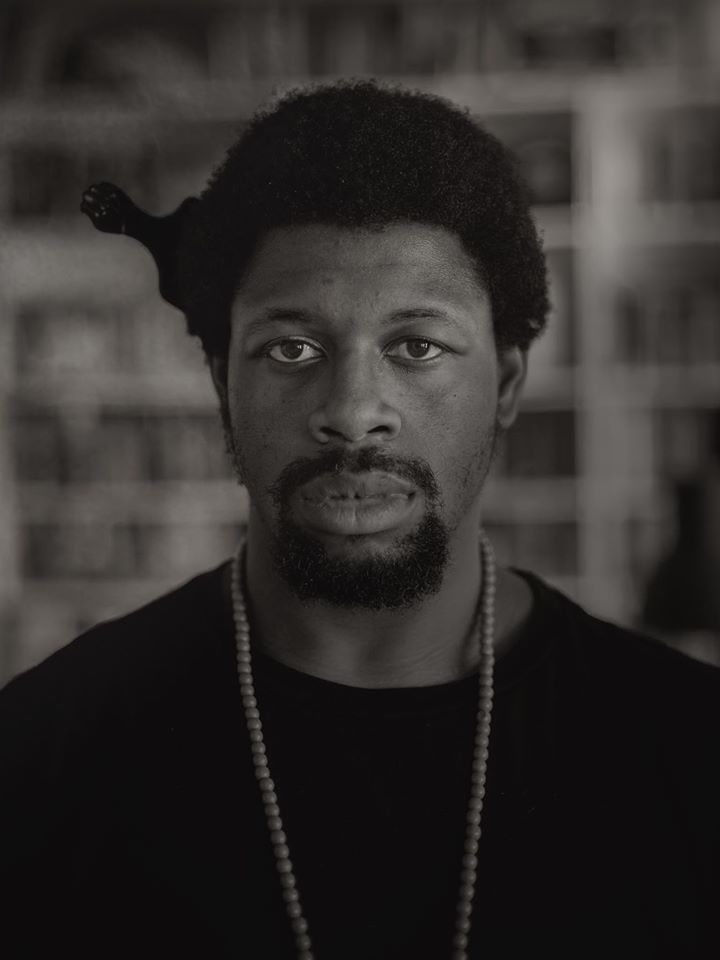
Olufemi O.Taiwo’s theory of everything marenx The Writer https://grist.org/wp-content/uploads/2022/06/olufemi-taiwo-headshot-by-jared-rodriguez.jpg Headshot of Olufemi Taiwo by Jared Rodriguez Age 32, Olufemi O. Taiwo is one of the youngest Philosophers of the United states of America. He's an assistant professor in the University of Washington. He's described as one of America’s most prominent philosophers and certainly the most vocal philosopher working on issues related to climate change. A writer, he publishes regularly not only in professional philosophical journals, but also in publications like The New Yorker, The Guardian, Foreign Policy, and too many others to list. https://grist.org/wp-content/uploads/2022/06/olufemi_taiwo2.png Táíwò’s parents left Nigeria in the early 1980s to pursue graduate school in the San Francisco Bay Area, where Táíwò was born. His childhood memories start in the suburban Midwest. His mother’s career as a pharmacologist took the family from the affluent suburbs of Cincinnati to the affluent suburbs of Indianapolis and then to nearby Muncie — “Parks and Rec Indiana,” as Táíwò calls it. As a kid, he was absorbed by Ender’s Game, the mythology of the Star Wars expanded universe, and Super Smash Brothers Melee. https://www.bellhopblog.com/blog/wp-content/uploads/2019/02/Cincinnati2.jpeg The affluent suburb of Cincinnati, photo from www.bellhopblog.com/blog https://www.bellhopblog.com/blog/wp-content/uploads/2019/02/Cincinnati3.jpeg The affluent suburb of Cincinnati, photo from www.bellhopblog.com/blog At UCLA, Taiwo studied under philosophers who encouraged him to pursue the broad, big-picture questions that animated him—questions about how contemporary society is structured, and how it could be restructured in a just way — rather than reorienting himself toward the arcana associated with academic philosophy. The wide scope of Táíwò’s inquiry led him to take much of his coursework outside his home department, in classes on history and cultural studies. Táíwò’s dissertation advisor, the philosopher AJ Julius, described their time together as the “uncommon experience of watching someone in permanent revolution.” Continue reading: https://grist.org/culture/olufemi-taiwo-climate-change-reparations-justice/?utm_source=pocket_discover |
| Literature › Re: How To Use This Exclamation To Instantly Improve Your Relationship With Someone by marenx(op): 7:49pm On Jun 17, 2022 |
Don't stop learning. Don't misuse your time. Don't confuse learning with reading. They aren't the same. Learn and apply. |
| Literature › Re: Nigerian Columnists With Their Love Of Big Words by marenx(op): 7:42pm On Jun 17, 2022 |
Sweep out all the dirts in your writing. |
| Literature › Re: Nigerian Columnists With Their Love Of Big Words by marenx(op): 6:44pm On Jun 16, 2022 |
Don't write without minding your readers. Don't write to be a writer, write to educate, inform and entertain. |
| Politics › Re: Opinion: Tinubu Vs Atiku: The Biggest Elephants Are At It Again. by marenx: 6:29pm On Jun 14, 2022 |
Both of them including Peter Obi are good. But Atiku should be out of the list because Fulanis are not the only good ones to be ruling Nigeria. Now it's Tinubu VS Peter Obi. 2 Likes |
| Jokes Etc › Re: My Cover Letter To Mosquitoes In My Nigerian Apartment by marenx(op): 6:18pm On Jun 14, 2022 |
Cypress042:Funny lol. |
| Literature › Re: STORIES TO GET YOU WANTING MORE: J.K DURU by marenx: 6:05pm On Jun 14, 2022 |
Bam17:Being part of a syndicate gave me the confidence I thought I'd never have. My blood boiled every time. Nice wan.  |
| Politics › Re: Osinbajo And The Bile Of A Grasscutter by marenx: 5:38pm On Jun 14, 2022 |
Laggafin:Since I knew Osinbanjo would allow Tinubu to take the lead. Tinubu is the right candidate to lead Nigeria this time, especially because of his voice. A godfather of Lagos and Yoruba nation deserves to be tasted. |
| Gaming › Re: To Ba A CEO, You Must Start As A Worker (true Or False?) by marenx: 5:30pm On Jun 14, 2022 |
you should be a worker and a learner. It is easier to be a CEO but difficult to remain longer as a CEO. |
| Jobs/Vacancies › Re: Nairaland Is Monetized (photos) by marenx: 2:09pm On Jun 13, 2022 |
BoldConcepts:Hi! I'm from Jos. Concerning the decoder for free channels, from the beginning the most important news channels appear, the disappear gradually. What's the major cause? |
| Sports › Re: World Naked Bike Ride 2022 (Pics) by marenx: 9:46pm On Jun 12, 2022 |
tell me this isnt true. |
| Health › Re: How To Look Much Younger With Spotless And Flawless Faces by marenx: 9:21pm On Jun 12, 2022 |
it doesnt bleach? 1 Like |
| Christianity Etc › Re: A Christian Should Not Vote A Muslim by marenx: 9:00pm On Jun 12, 2022 |
Remember Jesus said: "Love your enemy." |
| Literature › Re: STORIES TO GET YOU WANTING MORE: J.K DURU by marenx: 1:44pm On Jun 12, 2022 |
Bam17:This line is the highlight: "She had screamed her guts out and slammed the door in our faces." ....it packs a lot of meanings and pictures. The use of power words can never be underestimated. |
| Literature › Re: A Different But More Effective Way To Use THANK YOU by marenx(op): 7:06am On Jun 10, 2022*. Modified: 8:07pm On Jun 17, 2022 |
(D). USE WOW. Use wow to show a talker you're impressed by what he says or do or how he appears. It's simple. Just becareful with how you say it. Don't say it while smiling. Make sure you're calm. Great talkers use it before expressing love. They say: "Wow! I love the way you speak." or "Wow! I need you." or "Wow! You look gorgeous." You can use it without adding anything after. Example: Talker: Time has just flown. We're in 2030. You: Wow! Or.... Talker: Rain has wetted Lagos. You: Wow! You see? You don't have to say too much to be regarded as highly intelligent. What makes you intelligent isn't only saying it but also (more importantly) saying nothing after saying it. You say okay and you say nothing after. You say "Wow!" and you say nothing after. (E). USE THIS IS INTERESTING. Using this phrase is the money you pay when a talker gives you fact. A fact is a statement like this: "Most United States presidents are originally Europeans." "Most United States presidents are originally Europeans." You can begin the trick by saying "Wow" then "This is interesting." But sorry, it makes it a cliché. What you need to avoid to originally sound intelligent is a cliché--a worn-out word or expression or a system of saying something. If you don't know, if you use a cliché your listener thinks you're pompous. He won't listen to you. That's why I'm careful when it comes to word choice in order not to sound pompous. Here's a good example of how to use "This is interesting": Talker: My friend speaks simple English but sometimes use big words. You: This is interesting. I love speech talk. (F). USE DO YOU UNDERSTAND? THEN SUMMARIZE. Use the method to tell or teach a listener something. Example: You: My boyfriend called me to help him cook egusi soup. I didn't know how to start. Do you understand? Listener: Yes. You: I cooked what I didn't know how to cook. Done correctly, this method doesn't only make you an authority: it makes you the most sought companion in this digital era too. Wherever you talk, people listening to you will like to continue listening to you. I heard some people say, "You understand?" No. Don't say that. Remember you want to look intelligent. Intelligent talkers speak politely and correctly. Saying "Do you understand?" sounds friendlier than saying "You understand?" You hear it. In addition to that, unless you ask your listener if he understands and then summarize it, it seems you fool him. He won't like to listen to you again. (G). YOU CAN SAY THAT AGAIN. But not much. Guess why? Nollywood has popularized the phrase to the point of making it a cliché. Don't be the one to complete their project of making it a cliché. If you want to use it, start by observing this dialogue between you and a talker: Talker: I've finally made it. I single-handedly transformed what was a hobby to a successful company. You: You can say that again. You see? If there's anything to say to show a talker you're together is the phrase "You can say that again." Open your body, smile, calm yourself and say it. At that time you won't know what you do. I guarantee you you've established high intelligence of you. If you've ever watched a Nollywood movie that features characters who use the phrase, how do you feel after the phrase is used? Remember using body language, word, phrase or expression makes you an attentive listener as you wait for a talker to say what will warrant you to say something. You must depend on this technique to make only the sky your limit. (R) USE "YOU HAVE TO PUT ON A PARACHUTE BEFORE JUMPING OUT OF A PLANE." When it comes to conversion rate, I rate this connective 5 stars. Know why? It makes you sound diplomatic and scientific. Who won't like to be with you? Not only does it give a talker food for thought: it also paints a picture of a civilized situation. Everyone loves to be praised. And it's a common knowledge that everyone loves to hear a proverb or a wise saying especially when used at the right time and at the right place. This is it. Example: Talker: My friend's transport company crashes in a year of it's establishment. Why? Because he doesn't have insurance. You: You have to put on a parachute before jumping out of a plane. It means you need to prepare before embarking on any risky activity. If you put on a parachute before jumping out of a plane, while in the air, yours is to release the balloon. Otherwise you may struggle in vain. Assuming the talker's friend has registered with insurance company, his transport company wouldn't have crashed. Guess why? The insurance company would take the burden of replacing the crashed buses. You see? All these calculations because you use that connective. Two more examples: Talker: He didn't know anything about management. He never became an employee. Then he became a general manager.... |
| Literature › Re: A Different But More Effective Way To Use THANK YOU by marenx(op): 7:44pm On Jun 09, 2022 |
I use every inch of opportunity to make peace with others. |
| Jokes Etc › My Cover Letter To Mosquitoes In My Nigerian Apartment by marenx(op): 7:41pm On Jun 08, 2022*. Modified: 7:59pm On Jun 08, 2022 |
My Cover Letter to Mosquitoes in My Nigerian Apartment marenx The Writer https://www.publicdomainpictures.net/pictures/30000/nahled/coconut-trees.jpg Hi dear! I'm writing this from Kumasi while watching coconut trees through a scientific window. Though I'm still a shameless carrier of plasmodium parasites, I maintain a sitting position as King James under the influence of alco (if you say hol, na you sabi). Beside me is a mosquito-netted hospital bed of the 21st century. I'm a pathological liar if I say I don't know you're dying of hunger in my medieval apartment in Nigeria. Am I not educated enough to know you can't get nectar, plant sap, honeydew and blood in that sealed shelter? I remember, passing a night you usually sucked my blood till morning once I focused on Netflix. I usually lost my proud self to The Game of Thrones till sleep did us part. I'm fully aware that your aha moment was while I was snoring. Now you've dropped plasmodium parasites in the form of sporozoites into my blood stream. The sporozoites passed quickly like Boko Haram sect into my liver and asexually multiplied in my liver cells. To cut-short the story, the sporozoites became merozoites, journeyed through my heart to the lungs and settled in the lung capillaries before ending up in the blood phase of their development. They never give up since they have assurance if they die they'll go to Heaven. You can't imagine how frustrating malaria is for me. Once I focused on Netflix, you counted it a privilege to perch on my unclad arm, quadriceps femoris, gastrocnemius or tibialis anterior. You're more selfish than an antiquated anti-hero of Star Trek, more dangerous than an instantaneous killer, motherf-ucker. I can't help but leave the country for medical tourism. Best regards, Olododo |
| Literature › Re: How To Use This Exclamation To Instantly Improve Your Relationship With Someone by marenx(op): 7:34pm On Jun 04, 2022 |
Make yourself interesting. Become inevitable. Speak better. Start learning today. |
| Literature › Re: Nigerian Columnists With Their Love Of Big Words by marenx(op): 7:16pm On Jun 04, 2022 |
Write to entertain. Good readers read to appreciate. |
| Romance › Re: Men, Tell Us The Truth, What Do You Think When You See A Fine Girl? (photo) by marenx(op): 6:40am On Jun 03, 2022 |
Toktee:Yes Toktee. Sometimes you need to remove your eyes off that place and focus on making money. If you make a lot of money you can have more beautiful girls than those ones crying following you. |
| Romance › Re: Men, Tell Us The Truth, What Do You Think When You See A Fine Girl? (photo) by marenx(op): 8:40pm On Jun 02, 2022 |
Most times it's biological. You can't resist that. The science of attraction is there unless she's your relative. Just say the truth. 2 Likes |
| Romance › Men, Tell Us The Truth, What Do You Think When You See A Fine Girl? (photo) by marenx(op): 8:32pm On Jun 02, 2022*. Modified: 8:59pm On Jun 03, 2022 |
Men, Tell us the truth, what do you think when you see a fine girl? You think of penetration or what? What men think when they say This is a fine girl See these pictures. You know what you think. Tell us. 1. https://www.bellanaija.com/wp-content/uploads/2014/06/Natural-Hair-Bellanaija-June2014.jpg 2. https://www.bellanaija.com/wp-content/uploads/2014/01/Harriet-Edide-The-Most-Beautiful-Girl-in-Niger-Delta-January-2014-BellaNaija-021.jpg 3. Oluchi Madubuike https://www.bellanaija.com/wp-content/uploads/2021/09/Oluchi-Madubuike.jpg Pictures source: Bellanaija |
| Literature › Re: Nigerian Columnists With Their Love Of Big Words by marenx(op): 8:01pm On Jun 02, 2022 |
Keep it simple! |
| Literature › Re: We were in the same condition like children of career people by marenx(op): 5:36pm On May 27, 2022*. Modified: 11:03pm On Jun 29, 2022 |
My worse experience in Life https://7esl.com/wp-content/uploads/2019/11/Familiarity-Breeds-Contempt-1.jpg I write to define diverse kinds of less privilege Nigerians. 1 I never slept well since I came to Jos. I was the last to sleep and the first to wake up. Everyday, from 5pm to 9pm or beyond, I must have something doing. If I wasn't doing dishes, I was washing cloths. If not washing cloths, ironing them. I might be in the kitchen slicing vegetables, or outside slaughtering chicken. I might be sent to grind grains, buy grains, buy things. I ever lost N100 and my uncle's wife almost killed me with a heavy wooden rod but left me with a tattoo-like scar on my left shoulder. I never ate well except on Christmas day. Although my uncle with whom I lived was rich, I looked malnourished and ever heard some people complain about my unusual look, leading to someone, who knew the cause of my trouble, cursing my uncle with his wife and going as far as giving me money. I enjoyed the money but that was only for a very short time. When one woman saw me eating in a restaurant one day, she reported me to my uncle's wife and my uncle's wife tortured and starved me that I collected money from a stranger. When I mentioned the man who gave me the money, she tortured and starved me the more after which I could feel a sign of kwashiorkor in my body. Going to school, I fell and fainted. When I woke up I saw a brown ceiling fan, a stained white ceiling and the man who gave me the money standing over me. A syringe attached to a transparent rubber pipe was attached to one of my wrist veins. A fair-looking young nurse entered the room. Nevertheless it took me an hour to believe I was in the hospital. The man exited with the nurse, returned alone and told me if a policeman asked to know how I was treated in my uncle's residence, I should narrate exactly what happened. "Do you understand?" he asked. I said yes. After a few minutes, two men entered the ward, their faces shining of sweat, one receiving a phone call. I told him exactly how I was treated. My uncle with his wife visited the hospital in the evening after searching for me and were told I was here. They entered my ward after speaking in the reception, with the impression all over their body that they owned me. Followed by a dark-looking male doctor, the man who gave me the money, whom I could now called my savior, entered too. The doctor examined me and said I could be discharged to continue the treatment at home. But looking at the ceiling fan, I began to sob like a toddler. When the doctor asked me what was wrong, I said I had no any place to go. The police man and the human right activist entered the ward and the police man said to my uncle and his wife: "Both of you are under arrest for maltreating a minor." The police push them to the police station while my savior and I remained in the ward. I began to think of where I would go from here. But there was a tendency I must return to the village where I came from. I began to think of how I fared in the village before even dreaming of coming to Jos. I remembered although I lost my mother, I had freedom like every child under full parentage. I remembered I was being honored as one of the fewest male children in our clan, and I was about to be given a farm when my wicked uncle detached me. That was bygone. From the hospital I passed a night with my savior in his bungalow lying in a new mattress with a new betsheet uncomparable to my urine-smelling mattress with a torn bedsheet in my wicked uncle's house. I lied like a prince for the first time in my life though I knew my being here was temporary. I let pride slip into my head. In the morning, I had thick tea with bread and butter followed by beans porridge. After that, I did the dishes and watched TV. A house help, probably in her 60s, said I looked stronger than yesterday. And when my saviour phoned from his office to know how I was, she gave me the phone to hear from the horse's mouth. I said I was better than ever. |