Maximunimpact's Posts
Nairaland Forum › Maximunimpact's Profile › Maximunimpact's Posts
1 2 3 4 5 6 7 8 ... 50 51 52 53 54 55 56 57 58 (of 76 pages)
 Christianity Etc › Re: The Trichotomy Of Man: Spirit Soul And Body by maximunimpact(m): 8:10pm On May 01, 2016 Christianity Etc › Re: The Trichotomy Of Man: Spirit Soul And Body by maximunimpact(m): 8:10pm On May 01, 2016 |
MrPresident1:Romans 2:21 - you then who teach others, do you not teach yourself?........ exactly what am i going to read? is it the falsehood promoting satan's religion? You will be better of taking Romans 2:21 to heart, please what is death? i think your apostasy has alot to do with your understanding of death, maybe you can start from there. |
| Christianity Etc › Re: The Trichotomy Of Man: Spirit Soul And Body by maximunimpact(m): 7:42pm On May 01, 2016 |
MrPresident1:You can twist scriptures all you want to satisfy your imaginations, but that doesn't diminish the truth. God formed man out of the dust and breathed into man the breath of life, and man became a living soul, just like other animals previously created by God. The difference between man and other animals is that God made man in his image, He gave man freewill to make his own choices,and also gave man dominion over all other animals, but eventually man and animals will die and face the same fate of non-existence. Man is not a spirit, man is mortal and that is what man is. The day a man dies he dies in his entirety living no part existing in some kind of mysterious spiritual life, the idea that man survives the death of the body was introduced by the Devil when he told Eve that she will not die, but will go on and be a god. So stop all these heretics and accept that you are a mere mortal, the only hope that man has after death is "resurrection", it is a real physical calling back to life one who was dead, something Jesus practically gave us insight when He performed a couple of Resurrection miracle. When you tell yourself the truth about the mortality of man, then the resurrection hope will have a real meaning to you. |
| Christianity Etc › Let's Talk About Being Born Again by maximunimpact(op): 11:06pm On Apr 30, 2016*. Modified: 5:40am On May 01, 2016 |
Are you born again? This is mostly one question MOGs and professed Christians ask a fellow in order to ascertain his or her faith. To many, being a christian means that you are born again, and without it, no one can be saved. This teaching came from Jesus's conversation with Nichodemus in John 3:1-21. In his reply to Nichodemus's question of what he must do to be saved, Jesus replied, “I tell you the solemn truth, unless a person is born again, he cannot see the kingdom of God.” As simple it may seem, but what did these words really mean? Well let's see what Jesus said further: 6 What is born of the flesh is flesh, and what is born of the Spirit is spirit. By these words, Jesus dismissed a possible understanding that the first birth is our maternal birth, because spiritual birth has nothing to do with a physical birth. But for someone to be born again, that person must have been born at least once in the past, and it is definitely not our physical birth! This means that to be born again, one must have gone through a previous spiritual birth. The Jews as a nation were God's people who are born to God as a special people when God made a covenant with them at mout Sinai in Deuteronomy 5:2 Then Moses summoned all Israel and said to them: "Hear, O Israel, the statutes and the ordinances which I am speaking today in your hearing, that you may learn them and observe them carefully. 2"The LORD our God made a covenant with us at Horeb. 3"The LORD did not make this covenant with our fathers, but with us, with all those of us alive here today.… This covenant that God made with the Jews is about to be replaced with a new and a better covenant, as prophesied by prophet Jeremiah. "Behold, the days are coming, says the LORD, when I will make a new covenant with the house of Israel and the house of Judah, not like the covenant which I made with their fathers when I took them by the hand to bring them out of the land of Egypt, my covenant which they broke, though I was their husband, says the LORD. But this is the covenant which I will make with the house of Israel after those days, says the LORD: I will put my law within them, and I will write it upon their hearts; and I will be their God, and they shall be my people. And no longer shall each man teach his neighbor and each his brother, saying, ‘Know the LORD,' for they shall all know me, from the least of them to the greatest, says the LORD; for I will forgive their iniquity, and I will remember their sin no more." (Jeremiah chapter 31 verses 31-34). So in order for the Jews to come into the new covenant, they have to be "born again" into the new covenant! This is not suppose to be a mystery, as many look at the teaching today, Nichodemus being a ruler of the Jews was suppose to know these prophesies and God's promise of a new covenant. That is why Jesus chided him when he said: 10 Jesus answered, “Are you the teacher of Israel and yet you don’t understand these things? 11 I tell you the solemn truth, we speak about what we know and testify about what we have seen, but you people do not accept our testimony. So what Jesus mean when he told Nichodemus to be born again in order to see the kingdom of God is infact that he (Nichodemus) and the rest of the Jews must be born again into the new covenant of which Jesus died for in order to continue enjoying a special favor with God. But what about the rest of the world? the non-Jews who were never part of the old covenant, these other gentile nations were never born to God before, so in order to become part of the new covenant, they do not need to be born again, since they were never born before. However, for the gentiles, they have to go through a "new birth" as 1Peter 1:23 said: 23 For you have been given a new birth, not by corruptible, but by incorruptible seed, through the word of the living and enduring God. Apostle Peter made mention of the new birth because his letter was addressed to a general audience, comprising both the jews and non-Jews, while some bible translation renders Peters words as "born again", other translations reads "new birth". What is important here is that for the Jews, they must be born again, but for the non-Jews, what they need is a "new birth" in order to be saved. It is new to them because they were never born to God, they are aliens to the true God. Peter will go on in chapter 2:10 to share more light: 1 Peter 2:10 "Once you were not a people, but now you are the people of God; once you had not received mercy, but now you have received mercy". What does this mean now? it means today as we know it, no one can be born again! This is because all those previously born to God in mout Sinai are no more, the Jews that we have now in the state of Israel are not the same Jews whom God made a covenant with, infact they were scattered all over the earth after the fall of Jerusalem in 70AD. What we have as state of Israel today is a republic gathered by Britain in 1945. However, as i earlier mentioned, today we can only have a "new birth" in order to be saved. But what does these two things mean? Jesus said:John3;5; Jesus answered, “I tell you the solemn truth, unless a person is born of water and spirit, he cannot enter the kingdom of God. 6 What is born of the flesh is flesh, and what is born of the Spirit is spirit. 7 Do not be amazed that I said to you, ‘You must be born again. Just like we cannot make our birth possible by our own will, so also is the new birth, no one can administer "born again" or "new birth", because it is God that makes that possible through grace. John3: 8 The wind blows wherever it wishes, and you hear the sound of it, but do not know where it comes from and where it is going. So it is with everyone who is born of the Spirit.” Since it is not something we can control, as there is no way a baby in the womb can tell when to be born, it is therefore unreasonable for anyone to administer a new birth to anyone in the way of repeat after me, as we always see among many professed Christians. All you need to do is seek God in truth and spirit, when God hears your heart, He can then chose to born you into his covenant. 1 Like |
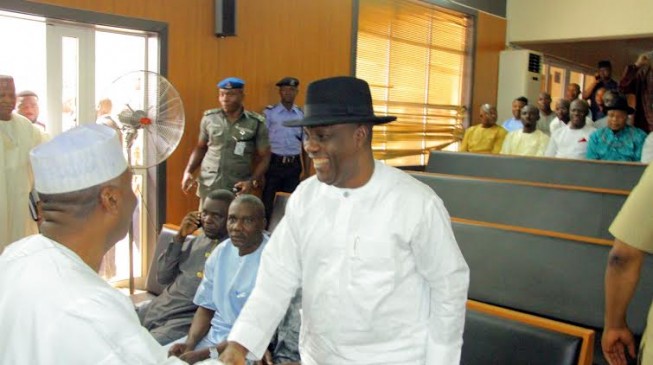
| Politics › Re: Saraki, Orubebe ‘meet’ At CCT (PHOTO) by maximunimpact(m): 11:58am On Apr 20, 2016 |
midolian:The one act that wrote his name in history books, albeit on the wrong page. Lesson: Be careful and reason before you act, just one act can ruin all you have ever toiled for 4 Likes 1 Share |
| Jobs/Vacancies › Re: 2016 EFCC Recruitment ( Graduates And Non-graduates) How True? by maximunimpact(m): 9:04am On Apr 16, 2016 |
this will clear your doubts http://www.financialwatchngr.com/2016/04/14/ignore-disclaimer-reports-efcc-currently-recruiting/ |
| Jobs/Vacancies › Re: 2016 EFCC Recruitment ( Graduates And Non-graduates) How True? by maximunimpact(m): 9:03am On Apr 16, 2016 |
this will clear your doubt |
| Business › Naira Crashes Out Of Transferwise Money Transfer Services by maximunimpact(op): 5:50pm On Apr 15, 2016 |
Naira free fall had it’s negative impact on Nigerians today as TransferWise decided it can no longer offer Naira transfers. From today, April 15, users will not be able to make or accept payments using the Naira. They sent emails out to their customers announcing the move and I think it’s a bit tragic because it’s not been a year since they started accepting Naira transfers in the first place. TransferWise is an international online money transfer service that provide alternative fund transfer as they charge cheaper than banks, Banks and other providers charge up to 5% in hidden costs when sending money abroad. TransferWise charges 8x cheaper. The Nigerian Naira and South African Rand were the only African currencies TransferWise supported, but now that we’ve been booted off the list of supported countries, we’re down to just the Rand. You don’t need a prophet to tell you that TransferWise stopped support for the Naira because of the sheer uncertainty of it all. As a result of fallen Oil prices, the Naira is worth a lot less than the CBN is pretending it is, and this dichotomy has created a wide gulf between “official” and “black market” rates. To curb the demand for scarce Forex, the CBN tried to restrict the use of Naira cards abroad but it appears that’s not as much of a band-aid as they hoped. It’s going to be a long way to redemption. TransferWise is not a unique case though. Remember Uber? Way to go, guys. We need to put the Nigerian economy in rice. http://www.financialwatchngr.com/2016/04/15/naira-crashes-out-of-transferwise-money-transfer-services/
|
| Technology Market › Airtel Waxes Stronger, Unveils Innovative Smartspeedoo by maximunimpact(op): 12:50am On Apr 12, 2016 |
The Potential domination of the telecom market in Nigeria by emerging new network, Ntel may have been halted by Airtel’s new innovation, SmartSpeedoo, a service that allows customers experience real data while browsing at affordable tariff and enjoy free megabytes. The solution, which can be activated by using *141#, was unveiled during a press briefing in Ikeja, Lagos. Speaking on the occasion, its Chief Commercial Officer, Ahmad Mokhles, said the company is passionate about creating innovative mobile internet platforms, value offerings and opportunities that will help telecoms consumers in Nigeria stay connected and be fully empowered to fulfill their dreams. He said: “Airtel Nigeria is intensely interested in democratising data tariff and we have taken a huge step forward in this journey in line with our major objective of becoming the provider of first choice for mobile Internet services.” Speaking on how it works, its Vice President, Data & Digital Services, Nitin Anand said customers using Smart Speedoo enjoy low rate in addition to free data the more they browse. “When a customer uses up to 10mb (megabyte) at 1kobo/kb (kilobyte), Airtel gives 10mb free; when the usage gets to 50mb, the browsing rate drops to 0.5kobo/kb, then the user gets 50mb free. When the customer’s usage reaches 100mb, the rate drops further to 0.2kobo/kb and the user gets 100mb free,” Anand explained, noting that the cycle continues every month, thereby giving Airtel customers the Free Surf experience. While commenting on the superfast 3G internet, which Smart Speedoo rides on, Anand noted that Airtel has the largest deployment of 3G Internet Provider (IP) sites in the country to enable the telco offer internet speed of up to 42mbps, which is very close to the long term evolution (LTE) speed. “Almost 80 to 85 per cent of all Airtel 3G sites in Nigeria are IP enabled so they can give you the speed of 42mbps, this speed is similar to the speed you get on LTE network. So, we can proudly announce that customers can get real data experience on the Airtel 3G network, which is equal to 4G speed,” he said. Its Head, Data & Portals, David Umoh explained that Airtel customers using the service do not need to remember USSD code to buy data or worry about airtime being used up when out of data while browsing, as SmartSpeedoo gives pop-up notifications to show usage. He said Smart Speedoo gives ‘free internet in everyone’s hand’ as it enables customers to be in control of their data usage while surfing at a very low rate, noting that the telco will continue to roll out more innovative services designed to further empower Nigerians and offer them Free Surf experience. http://www.financialwatchngr.com/2016/04/12/airtel-waxes-stronger-unveils-innovative-smartspeedoo/ |
| Politics › Between The Zombies And Wailers: A Battle Of Only Casualties by maximunimpact(op): 3:41pm On Apr 11, 2016 |
When America predicted that 2015 will be the end of a united Nigeria, many only taught it to mean the disintegration of our sovereignty and secession of various nationalities from the Nigerian state. However what most Nigerians did not decipher is that in all intent and purpose, a united Nigeria ended in 2015, albeit not through secession, but a metamorphosis of two giant independent states of differing public opinion christened as “Wailers” and “Zombie” republic. Sincere observers of the Nigerian polity will agree that never in the history of Nigeria has there been such a fierce sharp contrast in opinion and political leanings with such bitterness of this magnitude between these two shades of public opinion. It transcends from internet wars down to the street corners, markets, workshops, in the taxi cab, garage, mechanic workshop and even in the church the differences are obvious. Make no mistake about this, the diarchy appears to be more than just dissenting opinions, a scarier element of this war is the fact that these shades of opinion is divided along tribal lines. It will be objective for any observer of this trend to agree that the republic of wailers are mainly from the southern part of the country, especially the south-eastern and south-south geopolitical zones. They are obviously disgruntled that one of their own and former president, Goodluck Jonathan failed in his attempt to clinch the top job for a second term. The change of power to a brand new government is totally unacceptable to them. They fume with anger, ill will and a total desire for failure to any thing called “APC”, “Buhari” or “change”. To them these characters represent everything that is wrong with Nigerian. They have tried to respond in many barbaric ways, such as criticize a noble cause like the war against corruption, stand proudly behind well-known corrupt public servants, and can even protest openly for the weirdest reason of all time. To the wailers Nigeria must not succeed under this government, or else it ultimately means a double loss for them. In the opposite side of the divide are the zombies, those whose shade of opinion will do anything humanly possible to justify every action of the present government. Just like the name suggests, they are like robots programmed to sing praises for the present regime in total absence of fairness, truth and objectivity. You probably will not be in doubt which part of the country dominate this group, the process still follows the voting pattern of the 2015 general elections. What they forget to understand though is the fact that elections are over, the one who lost has conceded defeat, while the winner has since be cruising round the world. The wailers gladly accepted their designation as proudly “wailers”, while the zombies are yet to come to terms with the fact that they are actually “zombies”. When Femi Adesina took to social media and twitted his infamous season’s greetings to the wailers, little did he know that he has given approval and legitimacy to the wailer’s republic. With this scenario presenting itself, one can only expect one thing: there will be no winners in this war, only casualties. The first casualty however is total reckless abandon of constructive criticism at a time Nigeria as a country needs it more than ever in order to overcome it’s present challenges. Every successful democracy has always rode on the back of constructive criticism based on real issues, but with the present trend in public opinion, a man from the wailers republic will see white and call it black while the men from the zombie land will see black and call it white. The idea is usually “if it isn’t our man in charge, let everything scatter” who benefits from this arrangement and who loses? I tell you nobody benefits, but they all have lost. Another damaging casualty of this dangerous arrangement is our common wealth, since our leaders no longer have access to “truth”, constructive criticism, and issue based argument against them, there is bound to be gross mismanagement of public funds and a betrayal of public trust. Rather than form a common front and make the government accountable, we have evenly divided against one another, in the process hand them our common wealth on a platter of gold. The biggest casualty of this war of words is the common man, specifically from those who make up the wailers and zombies. For the past couple of weeks there has been fuel scarcity in the country, where have you seen Buhari queue for fuel? Or Lai Muhammed buying fuel from the black market? To worsen the whole matter, after spending the whole day in filling stations we come here to attack one another, instead of uniting in order to make the government accountable. Whether you are from Zombie republic or wailer’s republic, we all suffer power failure, lack of good roads, harsh forex, unemployment, low standard of living, insecurity, hunger and even death. Yet we attack one another and kill ourselves and the most painful part is that both sides will spend their last kobo just to come to the internet to attack, not the government but among themselves, the wailers and the zombies. The harsh truth is that whether you defend or attack your countryman because of any politician, these men probably have no idea if we exist, no matter the state of our economy, they will always be governors, presidents and senators with luxury, exotic cars, private jets and have access to every good thing life can offer. This is a war with only casualties, the winners are our leaders as long as we continue accepting peanuts and they take the juicy positions like CBN jobs, NNPC, and top jobs for their children and wards while we are only being “promised” one million jobs in six months’ time. http://www.financialwatchngr.com/2016/04/11/zombies-wailers-battle-casualties/ |
| Politics › Fuel Scarcity: FG Intervention Temporal, Queues Will Resurface – Stakeholders by maximunimpact(op): 1:56am On Apr 11, 2016 |
Stakeholders has described as temporal and unsustainable measures put in place by FG in ameliorating the scourge of fuel scarcity in the country which has almost paralyzed economic activities for the past two weeks. Stakeholders in the downstream sector of the oil and gas industry insist that the Nigerians would sooner or later return to the filling stations, queuing for fuel. The stakeholders say failing to privatize, upgrade and rehabilitate the refineries and the ancillary infrastructure in the downstream sector, whatever succor that is being enjoyed now in terms of adequate supply to the filling stations would be temporary. Already, the scarcity is taking a toll on schools, as proprietors are shifting resumption dates scheduled for today in some schools. Some parents have started receiving text messages over the weekend advising that their wards should still remain until the fuel situation improves. “We are constrained by the prevailing fuel scarcity in the country to postpone resumption from Monday, 11th April, 2016 to Wednesday 13th April 2016, hoping the fuel situation would have improved. Kindly bear with us. Thank you.” Says a message from a school on Oba Akran Avenue, Ikeja, Lagos. Some parents whose children attend public schools in Lagos State have appealed to the state government to re-schedule the resumption date for the third term of the 2015/2016 academic session due to the lingering fuel scarcity. They made the appeal in different interviews with the News Agency of Nigeria. A parent who does not want his name mentioned said, “it is becoming unbearable, transport fares have doubled, few motorcycles and buses are available to transport people. If this persists, how are we going to take our children to their schools?” They also said no matter how the government tries, except it allows reason to prevail on these critical issues that have bogged down the downstream sector of the oil industy, Nigeria would be back to square one. Alex Ogedengbe, a former managing directors of Port Harcourt and Kaduna Refineries wondered why government is afraid of privatising and deregulating the downstream sector of the petroleum industry. Ogedengbe said if we get these queues away as predicted in the next three weeks, they will certainly come back, as far as the government continues with its present way of maintaining refineries. Ogedengbe who spoke on Channels TV programme, said investors would not be ready to come to the sector because government regulates price. “It is unrealistic to have the same price through the country because it costs money to move those products from one place to another”. He said no one would ever know the market price of the product until the owners of the refineries are made to be market oriented. He said government can give incentives to owners of refineries if she fears that the price of the product would be higher after privatisation. Such incentive, he observed, could be in the form of tax free holidays for a few years or crude t a descanted rate. “These are the kind of incentives that would bring investors that can run refineries, the private organised people that know how to run refineries.It would also allow for a sustainable investment that runs from year to year. Also talking to BusinessDay, Babajide Soyede, a former general manger of Warri Refinery and Petrochemical concurred with the views of Alex Ogedengbe when he said that the current approach would only give temporary relief as the queues would only disappear for a while and then come back except if the government hands off the downstream of the industry and limit its function to regulation. According to him keeping the refineries the way they are is a waste of money and resources as they only producing fuel oil which brings less value than the crude that was supplied. The refineries must be upgraded, rehabilitated and privatised or at least a joint venture arrangement whereby the government would have minority share should be put in place. But Justin Ezeala, executive director supply and distribution of the Nigeria Products Marketing Company (NPMC) maintained his position that with the arrangement on ground there is cause for alarm. Ezeala said after saturating the major cities with the product, they would begin to push into the hinterland and that the government is also finalising arrangements to ensure a sustainable supply of petrol in every part of the country. He insisted that the supply of 30,000 metric tons (40 million litres) of petrol everyday in order to ease off the fuel scarcity cannot be compromised. Meanwhile the fuel situation at the weekend continues to improve, as motorist enters the filling stations with ease. http://www.financialwatchngr.com/2016/04/11/fuel-scarcity-fg-intervention-temporal-queues-will-resurface-stakeholders/ 2 Likes 1 Share
|
| Business › CBN To Relax FX Policy As Act Of 2004 Opens Windows Of Opportunity by maximunimpact(op): 1:42am On Apr 11, 2016 |
There may be relief soon for Nigerian businesses and manufacturers as the Central Bank of Nigeria (CBN) moves to reform and restore liquidity and two-way quotes to the autonomous foreign exchange (FX) markets which have been gummed up for more than a year. Investigations reveals that the need to activate provisions of Foreign Exchange (Monitoring and Miscellaneous Provisions) Act 2004 or FEA Act is playing a big role in the CBN’s move to reform the FX market, which even the apex regulator realises is not functioning optimally. In a post on the facebook account of Vice President Yemi Osinbajo, the attainment of “an appropriate foreign exchange regime” was listed as one of key short to medium term policy objectives of President Muhammadu Buhari’s administration. CBN Governor, Godwin Emefiele, said in a statement at the end of the most recent policy committee meeting held last month, “the MPC took note of the level of activity in the autonomous foreign exchange market, as well as the rising demand in the interbank market…the committee charged the bank to speed up reforms of the foreign exchange market to improve certainty and eliminate noise and opportunities for arbitrage.” Nigeria has pegged the official rate of the naira at N197- N199 per dollar, since March 2015 to stem the currency’s slide, amid a rout in oil prices. The policy is widely seen to have worsened the shortage of foreign-exchange and lack of dollar inflows and has been criticised by investors and businesses. The FEA 2004 Act by virtue of the provision of its section 9 specifically states that: “the rate at which each transaction in the market is to be executed shall be at the rate MUTUALLY AGREED between the APPLICANT PURCHASER and the AUTHORISED DEALER or AUTHORISED BUYER concerned.” Sources however, say although the apex bank has never issued any circular abolishing the willing seller, willing buyer principle enshrined in the FEA of 2004, the foreign exchange quoted by banks today to Authorised buyers such as International Oil Companies (IOCs), importers, and hotels, has remained consistent at the N199/$ regardless of the transaction amount because dealers fear they could be sanctioned heavily by the regulator. This is seen to have discouraged liquidity and trading in the autonomous FX market. As a result, only about $10 million is currently sold daily in the official FX markets in Nigeria, according to data from Standard Chartered Bank. This is too low to meet legitimate business demand for FX in Africa’s largest economy and compares to South Africa’s daily spot FX market trading of between $2bn and $4bn. “It is not the traditional role of the CBN to determine exchange rates in the market. Its role is simply to guide and control monetary policies. This is the traditional role of the CBN anywhere in the world,” Olisa Agbakoba, a Senior Advocate of Nigeria (SAN) said. “It is not its place to interfere with the market. But let us even assume that it is (as we are not known as a country that thrives on the Rule of law), and the CBN is aware that it has no legal powers to do what it is doing. Commercially, should it even be doing this? No, because it makes no sense. The foreign exchange market is now determined narrowly by the CBN to mean the Foreign exchange reserves that Nigeria has. “This is totally wrong. The foreign exchange market includes everybody: you, me and everyone else.” Nigeria’s FX reserves dropped 33 percent to $27.6 billion between January 2014 and April 2016 The apex regulator’s monthly dollar inflows from oil, taxes and royalties, fell to less than $1 billion dollars in January, falling from a peak of about $3.2 billion in data from the CBN show. The naira has hit a record low of N320 to the dollar on the parallel market, as importers desperate to meet their obligations scramble for dollars. “Exporters and investors are holding on to foreign currency, as no one would sell at the rate the government is setting, while the government does not have the reserves to keep the exchange rate at its official level in the market”, Lamido Sanusi CBN governor from 2009 to 2014, said in a recent interview. Sources say one direction the CBN could take to return liquidity and improve the functioning of the FX market, would be to authorise a second-tier FX market to ease the current dollar crunch. A second-tier FX market has been tried in Nigeria in the past in the 1980’s. The second-tier foreign exchange market (SFEM) had three key components: CBN organised tender sessions, interbank dealings and OTC dealings between banks and their customers. The SFEM system was relatively managed and required import documentation, but it ensured more market-determined exchange rate adjustment and a USD-NGN divergence from the Tier I exchange rate. “A second-tier FX market may smooth the depletion of FX reserves, but it will most likely not prevent naira depreciation if oil prices remain so low,” Samir Gadio Head of Africa Strategy and FICC Research at Standard Chartered Bank, told reporters. “From an offshore investor standpoint, the key question is whether the non deliverable forwards (NDF) fixing will change.” Though the FEA 2004 act empowers the CBN to issue from time to time guidelines to regulate the procedures for transactions, monitor and supervise the market, the FEA 2004 clearly stipulated that the willing buyer and willing seller principle will rule the market. The FEA 2004 Act, vests in the APPLICANT PURCHASER (the person seeking to buy foreign currency at the Autonomous Market) and the AUTHORISED DEALER OR BUYER the power to agree on a mutual rate at which their transaction is to be executed. Authorised Dealer is defined as any bank licensed under the Banks and Other Financial Institutions Act and such other specialised banks issued with license to deal in foreign exchange while Authorised Buyer is defined as a Bureau de Change, hotel or other corporate body appointed as such by the CBN under the provisions of the FEA Act. The FEA 2004 Act also overrides the CBN’s Act 2007 as section 37 (2) of the Act specifically states that if provisions of any other law including the provisions of the enactments specified in Section 37 (1) of the FEA 2004 (the CBN Act is one of the enactments specified in subsection 1) are inconsistent with the provisions of the FEA 2004, the provisions of the FEA 2004 shall prevail and the provisions of that other law shall, to the extent of its inconsistency be void. “There’s no doubt about the legal issues and implications, but we have to approach it commercially,” said Agbakoba, the Senior Advocate of Nigeria (SAN). “The only way to go is for the CBN to make the buying and selling of FOREX flexible. Bottom-line, the CBN has defined the market too narrowly.” http://www.financialwatchngr.com/2016/04/11/cbn-relax-fx-policy-act-2004-opens-windows-opportunity/ 2 Likes 1 Share
|
| Foreign Affairs › Earthquake In Afghanistan As India Count Temple Blaze Victims by maximunimpact(op): 2:36pm On Apr 10, 2016 |
Barely hours after a temple blaze left hundreds dead in India, a magnitude 6.6 earthquake has been felt across a number of major cities across south-west Asia. The earthquake struck in Afghanistan, close to its border with Tajikistan, at 10:28 GMT, according to the US Geological Survey (USGS). There are reports the tremor was felt in Kabul, Islamabad, Lahore and Delhi, forcing residents to leave their homes. In October 2015, a magnitude-7.5 quake in the same border area killed close to 300 people. The latest quake, in the sparsely-populated Hindu Kush Mountains, struck at a depth of 210km, the USGS reported. It was the same depth as the 2015 quake. There were no immediate reports of damage or casualties. In Delhi, some 620km (1,000 miles) from the epicentre, the metro train system was temporarily halted. The BBC’s Sanjoy Majumder said a number of aftershocks were felt in the Indian capital. Post-quake landslides were a potential threat, said Ahmad Kamal, a spokesman at India’s National Disaster Management Authority. The USGS says the earthquake took place in “one of the most seismically hazardous regions on earth”. The Hindu Kush mountains sit on the corner of the Indian plate, rather than being at the front line of the continental collision, where the Himalayas are thrust upwards as India disappears beneath Eurasia at a rate of 40-50mm (2ins) per year. It is in this rugged region that the sideways slip between India and Afghanistan meets the head-on impact of the Himalayan fault line. There are many small, interacting faults and forces pushing in different directions. Pakistan’s Dawn newspaper reported on Saturday that the region had been shaken by a series of strong quakes centred on Hindu Kush in recent days. Hamza Nadeem, 19, felt the earthquake in his home in Sialkot, eastern Pakistan. “I felt the ceiling fan rattle, then the whole house felt like it was shaking,” he told the BBC. “We all ran outside. “It lasted for about one and a half minutes – nothing broke, there was no damage but it was a frightening experience. We all just stood there and prayed.” http://www.financialwatchngr.com/2016/04/10/earthquake-afghanistan-indian-count-temple-blaze-victims/ |
| Politics › We Are Not Flamboyant, Our Officials Not Using Private Or Chartered Jets – CBN by maximunimpact(op): 11:08am On Apr 10, 2016 |
It appears there is a clear departure from what obtained in the past, officials of the Central Bank of Nigeria (CBN) no longer use private or chartered jets in their official trips, the apex bank has said. Making the disclosure at the weekend, the bank’s Ag. Director, Corporate Communications, Isaac Okorafor, said CBN Governor Godwin Emefiele put a stop to the practice last year in response to the economic downturn and the cost-cutting stance of government. The disclosure is coming on the heels of a newspaper reports alleging that the CBN governor and the bank’s top officials chartered private jets to his mother’s burial in Delta State penultimate Saturday. But contrary to the newspaper report that he took a chartered flight to his mother’s burial, investigations revealed that the CBN governor flew the Arik 8am flight from Lagos to Benin on April 1. When contacted, Arik officials confirmed that Emefiele was on the 8am flight but refused to give full manifest to reporters. Okorafor in a statement yesterday said since the CBN governor announced the ban, “neither Mr. Emefiele nor any of the deputy governors has used the services of private chartered flights and the CBN has not paid a kobo for private jet services.” He said “All accounts still point to the fact that the Emefiele’s mother’s burial was a model in cost-cutting and an uncommon demonstration of his modest, ‘made in Nigeria’ philosophy.” He recalled that for several years in the past, the bank had used private and official chartered flights in making urgent travels to meet needs in remote, not-easily- accessible locations or in cases where timing might be critical to matters of urgent national importance. The practice, he noted, was in place long before the assumption of office of Emefiele, and that it is on record that the past two CBN governors actively used chartered private jet services to meet urgent national assignments. Okorafor said: “Indeed, in recognition of this critical need in its smooth operations, the CBN had in the 1990s acquired a dedicated jet for this purpose and for urgent currency movement. This was however taken over by the military administration when there was a more urgent need for it at the State House. “Thereafter, the CBN occasionally used the chartered services of private operators and those of the Presidential Fleet when available, both of which were paid for.” The statement added, “Emefiele and indeed other principal officers of the CBN have religiously maintained the modest disposition of using regular flights, including doing several trips by road to and from different parts of the country.” http://www.financialwatchngr.com/2016/04/10/we-are-not-flamboyant-our-officials-not-using-private-or-chartered-jets-cbn/ 1 Like |
| Jobs/Vacancies › Graduate, OND And SSCE Recruitment In A Federal Establishment by maximunimpact(op): 9:41am On Apr 10, 2016 |
An equal opportunity employer is seeking to recruit young Nigerian men and women into her organization as follows: Graduate Cadre Job Type: Full Time Qualification: BA/BSc/HND Job Field: Graduate Jobs / Internships Requirements Not more than 27years B.Sc / HND holder Must have completed NYSC Diploma Cadre Job Type: Full Time Qualification: NCE , OND Job Field: Graduate Jobs / Internships Requirements Not more than 25years NCE / OND holder S.S.C.E Cadre Job Type: Full Time Qualification: Secondary School (SSCE) Job Field: Graduate Jobs / Internships Requirements Not more than 21 years SSCE holder with minimum of 5 credits including English and Maths. How to Apply Please note that all applicants must be: 1. Must be single 2. Must have their relevant educational certificates and not statement of result 3. Must be physically fit. 4. Must attach their certificate of Indigene/Local Government Area and birth certificate to their applications. All applications should be addressed to: Head, Human Resources, P.M.B. 166,Garki, Abuja.and must be received on or before 20th May, 2016. Only shortlisted candidates will be contacted. http://www.financialwatchngr.com/job/graduate-ond-ssce-recruitment-federal-establishment/ |
| Politics › No Govt Funding Yet As Farmers Await Policy Implementations by maximunimpact(op): 3:37am On Apr 09, 2016 |
Following the crusade on agriculture funding by the present government, one year on from the election of President Muhammadu Buhari, Nigeria is still awaiting the promised policies to boost the cocoa sector, whose growth is seen as vital to offset a slump in oil revenue that has plunged the economy into crisis. Buhari routinely states the need to expand the agricultural sector to end the reliance of Africa’s biggest oil producer on crude exports and cut its $20 billion annual food import bill. A priority is to develop cocoa farming, the only sizeable agriculture sector in the continent’s biggest economy to have survived government neglect since the 1950s oil discovery. But Buhari’s policies have not yet made it beyond the talking stage. “The government has not come out clearly to say what they are pursuing for cocoa, so we are still in the dark,” said an official at the Cocoa Research Institute of Nigeria (CRIN), a body which advises the government. Reuters was unable to get a comment from the government on its agricultural policies. Cocoa farmers in Nigeria, the world’s fourth-largest grower, have recently enjoyed bumper profits, but this is due to high global prices for raw beans rather than government intervention. At the same time, for cocoa processors, Buhari’s foreign exchange policies have added to a crisis, as grinders struggle to get dollars to import spare parts, since the central bank has imposed hefty curbs to support the naira. This, combined with high bean prices, Nigeria’s high transport costs and sporadic power supply, have driven up production costs, causing several plants to shut in recent months. “There are about eight processing factories in Nigeria and I think only three or four of us are in operation,” said Cocoa Products (Ile-Oluji) managing director Akin Olusuyi based in southwestern Ondo, the country’s largest cocoa producing state. Olusuyi struggles to afford raw beans as traders, lured by a surge in global prices, offer farmers dollars and snap up part of the harvest usually going to grinders. As a result, his plant’s output fell to 4,000 tonnes last year, a fraction of its 30,000 tonnes capacity. So far the clearest message from Buhari’s administration is that it will retain many of its predecessor’s policies. The roadmap inherited by this government seeks to increase output to 1 million tonnes by 2018 in a bid to catch up with the 1.8 million tonnes of top producer Ivory Coast. The agriculture ministry also wants to plant 2 million cocoa trees within three years, but no details have been given to show how this would be achieved. “We’re looking forward to quick intervention, quick action on the part of government … But we haven’t seen that yet,” said cocoa consultant Robo Adhuse, who works with farmers and non-governmental organisations. Buhari has unveiled a record $30 billion budget for 2016 to invest in infrastructure to diversify the economy, but the bill setting this out has been delayed by parliamentary wrangling. Adding further woes, a policy retained from the previous administration in which farmers could receive central bank loans at a rate of 9 percent, instead of borrowing from commercial banks at about 18 percent, has proved difficult to implement. Buhari has urged banks to increase lending to the agriculture sector and in March said the central bank should bear part of the risk of such loans. But the central bank governor has complained that banks have largely failed to follow this guidance. Buhari’s refusal to devalue the naira currency has exacerbated processors’ problems, said Edward George, head of group research at Ecobank. “This is squeezing grinders, who must source dollars on the black market (for imports), but who are paid the official interbank market rate for their cocoa exports, which is overvalued,” said George. Nonetheless, Nigeria’s cocoa output is set to rise to 350,000 tonnes in the 2015/16 season, as farmers are reinvesting last season’s larger profits in fertilizer and pesticides, said the CRIN official who wanted to remain anonymous. [nL5N17A50O] Aside from a brief drop in January, global cocoa prices have risen for two years, buoyed by growing demand for cocoa products and chocolate, particularly in China and India, plus fears that the El Nino weather pattern could affect beans. Ebeneezer Akimade, 56, whose five farms located just a 20 minute drive from the Cocoa Products plant span 12 hectares, typifies gains made by farmers in the last few months. “Last year the price of cocoa was 270,000 to 300,00 naira, but this year it’s 800,000 per tonne, which is of great benefit to me,” he said. High poverty levels among the 180 million Nigerians have prompted authorities to see the labour-intensive cocoa industry as a way to create jobs, but Olysuyi at Cocoa Products has been firing workers to stay afloat. “A lot of things have been said,” he noted. “But to me, all of those things are still talking.” http://www.financialwatchngr.com/2016/04/09/no-govt-funding-yet-as-farmers-await-policy-implementations/ |
| Jobs/Vacancies › More Pressure On Economy As Online Job Application Declines Over 46% by maximunimpact(op): 3:07am On Apr 09, 2016 |
The fourth quarter online recruitment report released on Thursday by the National Bureau of Statistics (NBS) showed that the number of applications fell sharply over the period, from 318,233 in October to 170,453 in December, representing a decline of 46.44 percent. The number of vacancies also fell sharply in December to 2,563, a decline of 44.52 percent this is despite the appreciable increase experienced between October and November, 4,620 and 4,696 respectively. The report, a collaborative effort between NBS and Jobberman Recruitment, is a periodically published information on online recruitment activities in Nigeria. According to a statement from NBS, “The main object of this collaboration is to provide policy makers, researchers and the general public with as much relevant and timely information, which is needed to proffer solutions to the current employment challenges in the country.” The largest number of applications was made and posted each month to the industry of trade and services. The industry accounted for 36.02 percent of applications over the three month period. “In October, the industry received 119,900 or 37.68 percent of applications, more than three times as many as Consulting which received the second largest share. However by December this figure has fallen to 33.08%, due to a fall of 63,513 in the number of applications. This represents a fall of 52.97 percent, and accounts for 42.98 percent of the total fall,” said NBS. There was a modest drop of 37.11 percent in the Consulting industry that accounts for 12.13 percent. The fall represents an 8.50 percent of the total decline. The ICT and telecommunications industry which received 5.91 percent of applications over the period is in the third position. However applications to the industry fell by 51.13 percent between October and November, slightly more than average. The number of active applicants slightly increased from 142,369 in the current period to 150,599 at the time of the previous Online Recruitment Report. Lagos State accounted for 79,399 or 52.72 percent of the location of the active applicants making it the largest. Abuja was the location of 14,648 applicants or 9.73 percent, accounting for the second largest share. 4.96 percent of the applicants were based outside Nigeria. Yobe and Jigawa accounted for the least number of applicants with 82 and 87 respectively. Together they represented 0.05 percent and 0.06 percent respectively. Out of 101,227 applicants, 59.86 percent were between the ages of 20 and 29 “making this by far the most common age group for applicants to fall under. Very few applicants were below the age of 20, possibly a sign of the relatively high education level of applicants,” NBS noted. 65.07 percent out of 150,498 active applicants had a degree, and a further 11.52 percent had higher degrees ranging from MBBS, MBA/MSc or MPHIL/Phd. Those with Higher National Diplomas represented 15.34 percent. Essentially, 90 percent of applicants were educated above secondary school levels. Only 1.17 percent applied listed S.S.C.E as their highest educational achievement. “Examining the level of education within each age group reveals that older applicants are more likely to be educated to degree level or higher. Only 2.4 percent of applicants under 20 years of age were educated to above degree level, perhaps unsurprising given the length of time it takes to obtain this level of education. For applicants above 50 years old this figure rises to 45.2 percent; nearly half of applicants within this age bracket have a higher qualification than a degree,” said NBS. The number of vacancies posted on the Jobberman website saw a slight increase in both October and November, by 4.41 percent and 1.55 percent respectively to reach a peak of 4,696, before dropping by 45.42 percent in December when there were 2,563 vacancies. 55.15 percent of the vacancies advertised require less than three years experience. Additionally, the proportion of jobs listed as ‘Entry Level’ was also significantly lower with only19.92 percent in the period under review. The change was largely a result of a shift in the level of experience asked for within Trade and Services industry. http://www.financialwatchngr.com/2016/04/09/pressure-economy-online-job-application-declines-46/ 1 Like 1 Share |
| Politics › Re: Vanguard Newspaper Name Goodluck Jonathan “personality Of The Year” by maximunimpact(m): 11:00am On Apr 08, 2016 |
we all know vanguard is championing the wailers club as was seen in their unprofessional, unethical and biased reports during election campaign. an award to GEJ is a minus to fight against corruption. |
| Politics › Re: Presidency To Pay Poor, Unemployed Nigerians $25/Month by maximunimpact(m): 10:50am On Apr 08, 2016 |
back and forth movement, soon FG will come and deny ever saying this. what's the difference anyway? 5000 naira and 25$? they are still saying the same thing. |
| Business › Re: Ope Banwo Writes On Alleged Forex Violation By CBN & Dangote by maximunimpact(m): 10:43am On Apr 08, 2016 |
CBN with their inconsistencies in policy making has been the major cause of excess bank charges and forex crises. they should make sustainable and attainable regulatory policies that will cut a midway for the impending gross inflation and further naira crash. |
| Business › Nigeria’s Inflation Projected To Cross 12% Threshold by maximunimpact(op): 12:58am On Apr 08, 2016 |
Nigeria’s economic turmoil is poised to worsen as a new report by the Financial Derivatives Company (FDC) has shown inflation is likely to cross the 12% threshold, a trend which may lead to a recession, causing unavoidable damage to the economy. The ongoing energy and forex shortages are compounding the woes of businesses, forcing them to cut production levels, and in some cases reduce staff strength. “We are projecting a significant increase of 0.7% in the March inflation number to 12.1%. This will be the third consecutive monthly increase this year. The month of March was unique as the fuel scarcity intensified and higher transport costs filtered through to commodity prices such as beans, tomatoes and pepper. “While our initial time series analysis projected an increase of 0.4%, the severity and longevity of the prevailing fuel scarcity has distorted price levels,” the FDC report stated. Gregory Kronsten, Head of research at FBN Quest, tells BusinessDay that “in general, inflation is bad for the population and most people say it is worse for the low income segment of the population. But the important thing is what the authorities [MPC and CBN] can do about it. Because the increase in inflation is due to a lot of things both bodies cannot control. “The first is foreign exchange, followed by food production trends, and lastly security, which are all out of the control of the MPC or CBN. The recent inflation figures have been higher than the target range. If there is a shortage in foreign currency, it will lead to a shortage of goods which also fuels inflation.” A retail study by FDC also showed that “prices of many consumer goods have remained stubbornly high and in some cases, increased inspite of consumer resistance. The factors that are contributing to the spike in inflation include seasonality, cost push factors, money supply and forex shortage. These factors, while transient in nature, are becoming more permanent. As these factors grow increasingly embedded, they are making consumers panic. Anticipated inflation is more important because of the pass through effect of increased demand and expectations of higher prices on current prices.” Nigeria’s inflation rose by 11.4 percent in February, which is the highest reading since December 2012, as a falling naira keeps pushing import prices up, mainly food. Unemployment rate has also been pushed into double digits at 10.4 percent in the fourth quarter of 2015. While negative indices continue to rise, economic growth dropped to 2.8 percent in 2015, the slowest since 1999 and has been projected by the International Monetary Fund (IMF) to experience further decline to 2.3 percent in 2016. Continuous jumps in the inflation rate, according to Tope Oshikoya, CEO of Nextnomics, will make it more difficult for the Central Bank of Nigeria (CBN) to focus on the challenging exchange rate situation the country finds itself in. “It puts the Central Bank in a difficult position in the sense that if we look within the monetary policy dilemma, you will expect that if inflation does not scale up erratically, then the monetary policy can decide to hold on, on the interest rates and therefore they will concentrate more on exchange and capital rates. “But if inflation continues to go up, it becomes difficult for them to do what the market is expecting, which is to devalue the naira,” says Oshikoya. However, Oshikoya thinks the projected jump is not as severe as what was recorded in February, when inflation jumped from 9.6 percent to 11.4 percent, indicating an 18.75 percent increment. The dichotomy between urban and rural prices may persist, given the impact of rising transport costs and exchange rate pressures on urban prices. The price of diesel, a major determinant of food transportation costs, has increased to N130 per litre. FDC’s report also noted that “inflation is likely to remain high in April; as exchange rate uncertainty continues, consumer prices are expected to remain high. In addition, with fuel scarcity expected to persist till next month, in spite of the NNPC’s April 7 deadline, transportation costs will continue to be elevated. Therefore, we expect inflation to remain in the region above 11%. “The FDC Lagos urban inflation index increased by 0.32%, from 10.68% to 11.00%. This was driven by the significant increase of 0.32% in the food basket and a 0.31% jump in the non-food basket. The year-on-year (YoY) food index increased to 12.56% from 12.23%, while the YoY non-food index increased to 10.21%, from 9.90% in February. We expect the ongoing planting season to affect food supply in coming months.” http://www.financialwatchngr.com/2016/04/08/nigerias-inflation-projected-cross-12-threshold/ 2 Likes 1 Share |
| Business › Security: Access Bank Orders Removal of Customer luggage Lockers From Branches by maximunimpact(op): 12:56pm On Apr 07, 2016 |
Top new generation bank Access bank Plc has ordered removal of customer luggage lockers from branches effective from 15th April, 2016 due to security concerns in the country. This was made known in a mail sent to it’s customers regarding the new development. Security among other issues has become one of the most daring challenge Nigeria is facing today, according to a source, the management of the bank after considering and analyzing the security challenges in Nigeria opted for the move in order to reduce security risk arising from suspicious objects some extremist might hide in their bags to harm or orchestrate a robbery operation. “Even-though the contents of customers luggage are checked by security at the entrance, it has not not reduced the risk attendant from keeping luggage in lockers as long as it is in the banking premises” the source said. In recent times, reports of robbery operations has been witnessed in some banks including Access Bank, in December 2014, a successful robbery operations was staged in Agbor branch of the bank after armed robbers lodged explosive devices in the luggage lockers which they subsequently used to blow up the entrance door. Nigerian banks over the years has made some restrictions in the banking premises including answering of calls, charging of phones, going into the banking hall with metal objects, and laptops, but customers hardly abide by these rules which are made to protect both the banks and its customers. http://www.financialwatchngr.com/2016/04/07/security-access-bank-removes-customer-lockers-branches/ |
| Business › First Bank’s Atms Account For 45% Of Bill Payments In Nigeria by maximunimpact(op): 4:51am On Apr 07, 2016 |
First Bank of Nigeria Limited, a subsidiary of FBN Holdings Plc, has said it presently accounts for 45 percent of bills payment services on Automated Teller Machines in the nation’s banking industry as at December 2015. As at December 2015, about 275,000 bill payments were made through the bank’s Automated Teller Machines (ATMs) while the value of airtime purchase on all its ATMs was about N3 billion. The bills payment option is one of the features of FirstBank’s ATMs, which also have other unique functional features which include cash transfer, air-time top-up, cash deposit among others. The bills payment option is the non-cash transaction feature on the ATM that makes it easier for customers to pay for bills such as Cable TV subscription, post-paid phone bills, and pre- booked airline tickets. These transactions can be executed through the Quickteller option on any of the bank’s ATMs. The Transfer feature enables customers to transfer money from their accounts to both intra (within FirstBank) and interbank (other banks) accounts, thereby reducing the queues in the banking hall, save time as well as provide a more convenient option for customers’ money transfer needs. The bank is also currently responsible for over 40 percent of interbank transactions and 27 percent of airtime vending. As active mobile network users in Nigeria are over 151 million and the need to recharge is on the increase, the bank’s ATMs also provide the platform for easy top-up. To further enhance convenience, FirstBank’s ATMs also operate the Cash Deposit function which allows customers to deposit funds without customarily having to enter a banking hall for this transaction. http://www.financialwatchngr.com/2016/04/07/first-banks-atms-account-45-bill-payments-nigeria/ |
| Politics › Re: David Mark Named In Panama Papers With UK Properties - The Nation by maximunimpact(m): 6:45am On Apr 06, 2016 |
this is becoming more like #Dasukigate, everyday adds one more accomplice. 3 Likes |
| Politics › Re: Senators Loyal to Saraki advised him to Resign- Vanguard by maximunimpact(m): 5:57am On Apr 06, 2016 |
that would have been the ideal thing in a sane country, but we in Africa where leaders hardly resign. 1 Like |
| Politics › Re: Henry Ikem-Obih Tours Filling Stations In Abuja, Nigerians Mock Him (pics by maximunimpact(m): 4:34am On Apr 05, 2016 |
Junior Petroleum minister Ibe Kachikwu was himself a few days ago when he said he is not a magician, Nigerians rained abuses on him and bullied him to submission. Now the NNPC chieftain learned from that saga and decided to play the humble guy, but what did he get? same thing his boss got! the lesson here is that nobody can ever please the masses no matter how hard he tries, i honestly prefer a Kachikwu kind of guy who is blunt. Earlier Nigerians accept the previous position of the junior minister that fuel scarcity will last longer, than taking April 7 date that is unrealistic, the better for all of us. What i know in this scarcity saga is that the product is surplus, but there is a breach in its distribution which can be attributed to policy makers being headstrong, this will all go away whenever they soften a bit on a stand that is hurting all Nigerians now. 5 Likes 1 Share |
| Politics › Re: If You Are Made The President For 48 Hours,how Will You Remedy The Situation? by maximunimpact(m): 4:18am On Apr 05, 2016 |
If such a man exist in this country then 2019 will be too long a wait to vote for him. Nigeria's problems economically is not a challenge that can be solved within 48hours, however if am given the chance, the first thing i will do is put the economy out of its misery by devaluing the naira, then reduce the money in circulation by 50%, ban importation of all fashion, staple foods and luxury commodities as well as declaring a state of emergency in agriculture and De-emphacise oil money. |
| Politics › Re: Buhari Blames Economic Woes On Past Leaders by maximunimpact(op): 2:50am On Apr 05, 2016 |
In as much as i voted and also a supporter of PMB's administration, i think there is a million blames to go around and everybody knows that, that's exactly why we voted for change. Excuses and continuous blame of past misdeeds will not solve anything, but since the President himself has'nt gotten past blame games, i am beginning to doubt if this government is ready to deliver. 60 Likes 2 Shares |
| Politics › Buhari Blames Economic Woes On Past Leaders by maximunimpact(op): 11:08pm On Apr 04, 2016 |
President Muhammadu Buhari on Monday in Abuja blamed past Nigerian leaders for the country’s economic troubles as he said they led without discipline. He recounted that for the greater part of the last 16 years, oil sold above $100 per barrel but expressed regret that the nation did not have much to show for it. “In the First Republic, more enduring infrastructure was built with meagre resources. But in the past 16 years, we made a lot of money without planning for the rainy day. “We showed a lot of indiscipline in managing our economy, and that is why we are where we are today. But this time round, we’ll do our best” the President said while receiving the President of the International Civil Aviation Organisation (ICAO), Bernard O. Aliyu at the State House. The President, has at different fora blamed the past administrations ruled by the People’s Democratic Party (PDP) for ruining the country’s economy. President Buhari stressed that there was an urgent need to ensure that the potentials of Nigeria are harnessed and used for the good of the country. “Nigeria needs to work on her potentials, so that we don’t remain permanently at the level of potentials. “If Ethiopia is sustained largely by her airline industry, we have greater potentials here. But we must move out, engage with the rest of the world, as we need to re-establish the integrity of this country. We need to rebuild this country again.” Aliyu, the Nigerian-born ICAO president commended President Buhari for strides on anti- corruption, and urged Nigeria to pay more attention to development of civil aviation. “Civil aviation is a catalyst for economic development. The level of aviation development in any country mirrors the economic development of that country,” Aliyu said. The ICAO president pledged to support the development of the aviation industry in Nigeria, urging the country to improve on training and capacity development, aviation security, aerodromes and air navigation, runways, control towers, terminal buildings, among others. http://www.financialwatchngr.com/2016/04/04/buhari-blames-economic-woes-past-leaders/ 1 Like
|
| Politics › FG To Launch N59.7bn Youth-in-agriculture Scheme In September by maximunimpact(op): 1:52am On Apr 04, 2016 |
Dr Nteranya Sanginga, Director-General, International Institute of Tropical Agriculture (IITA), on Sunday said the Federal Government would launch N59.7 billion Youth-In-Agriculture Scheme in September. Sanginga, who disclosed this in an interview with the News Agency of Nigeria (NAN) in Ibadan, said the scheme would be sponsored by the federal government and African Development Bank (AFDB). The director-general said IITA would train those enrolled in the scheme, adding that beneficiaries would be trained on how to make agriculture a business with good networking. “The programme tagged “Enable Youth Empowerment Agribusiness programme, will engage youths in agribusiness for 18 months to enable them learn how to make agric business plan. “Each will be given between 25,000 US Dollars and 300,000 US Dollars as loan to start a business. “The programme started by IITA in 2012, was taken over by the federal government and AFDB to create employment in agric sector. “To support this objective, the programme will be extended to 36 states and Abuja in September. “After the programme, we expect the youths to become chief executive officers of factories, companies and creators of jobs rather than job seekers,” he said. Sanginga urged the youths to develop positive mindset in agriculture and take good advantage of the programme. “They should be serious with the training because at the end of it only those who did well will be rewarded,” he said. http://www.financialwatchngr.com/2016/04/04/fg-launch-n59-7bn-youth-agriculture-scheme-september/ 7 Likes 2 Shares |
| Business › 1000 Start-ups To Get N500m Yesgrant Seed Capital by maximunimpact(op): 12:24am On Apr 04, 2016 |
Over 1000 Nigerians will this year get N500 million seed capital set aside for young Nigerian entrepreneurs and students. This was disclosed during the launch of the YESGrant Scheme by the Nigerian Young Professionals Forum in Lagos. The launch was done in partnership with Heritage Bank. The event, which was very well attended by dignitaries, including representatives from the Nigerian University Commission (NUC), the National Youth Service Corps (NYSC), as well as captains of industries and top government functionaries, as part of efforts to grow more indigenous entrepreneurs among young Nigerians and deliberately create over 50,000 jobs in the next five years of the program circle. Speaking during the launch, Moses Siloko Siasia, chairman, NYPF, said he was inspired by the big impact small businesses could have on the economy, stressing that this was why the grant was created to provide incubator support that would enable young entrepreneurs with creative ideas in agriculture, ICT and creative industry start or expand their business concepts. “I have built businesses from scratch and I understand the challenges people face. That is why I am optimistic that if given the necessary support, young Nigerians will not only grow the Nigerian economy, they will completely revolutionise it,” Siasia said. Speaking also, the managing director of Heritage Bank, who was represented by Obioma Emenike, head of marketing strategy, said he was optimistic that the initiative would boost start-ups and economic growth, adding that entrepreneurs across the country should use their network to encourage their friends and colleagues apply for the grant. The YESGrant will provide business training for up to 600 aspiring young entrepreneurs spread across all the geo-political zones in Nigeria and will encourage expansion, specialisation and spin-offs of existing businesses. The essence of this is to enable young entrepreneurs access a wide business professional network and improve their visibility. In this scheme, young entrepreneurs will receive up to two million naira annually as grant. A statement by the directorate of communication of NYPF said the YESGrant was also meant to enable Nigerian students with extreme financial need pursue their academic dreams and aspiration in the areas of research and technological/scientific innovation. The statement added that the grant was expected to help low-income and disadvantaged students pay their tuition. More than 500 students will benefit from this year’s grant. Students studying in Nigeria will receive up to 500,000, while those studying in the United Kingdom will receive up to £3,000 pounds, just as those studying in the United States will receive up to $5,000 annually as grant. YESGrant is available at www.yesgrant.com. Applicants must be between the ages of 18 and 40, be registered members of the Nigerian Young Professionals Forum (NYPF) and have an account with Heritage Bank prior to the disbursement of the funds in August 2016. Student award recipients must in addition provide their matriculation number and academic progression report. The website for NYPF is www.nypforum.com. http://www.financialwatchngr.com/2016/04/04/1000-start-ups-get-n500m-yesgrant-seed-capital/ |
| Politics › Re: Zuriel Oduwole Who Interviewed Buhari Has To Say This After The Encounter by maximunimpact(m): 9:48pm On Apr 03, 2016 |
Celebrity kid journalist, good showing. She is talking from experience having interviewed 18 other presidents, this means she knows what she meant when she said being a president is not an easy task. Nigerians should learn from this and reduce name calling our leaders, i believe more will be achieved if we wail less and support more. 10 Likes 4 Shares |
| Politics › Governors Show Less Concern As Fuel Scarcity Bites Harder by maximunimpact(op): 9:21pm On Apr 03, 2016 |
Governors, especially four of the Southwest States’ governors who assumed governorship seats in Oyo, Ogun, Osun and Lagos States on the platform of All Progressives Congress (APC) and the other two in Ondo and Ekiti States led by People’s Democratic Party (PDP) are indifferent to president’s effort aimed at making fuel available to common men. According to a report by BusinessDay across six Southwest States revealed governors and government officials are reluctant to support Federal Government policy of N86.50 per litre for pump price of petroleum at the service stations across the country since several owners of fuel depots and PMS marketers are their cronies, leaving consumers who voted for them to suffer. From major cities such as Ikeja, Lagos Island, Ajah, Epe, Otta, Agbara, Ibadan, Abeokuta, Akure, Owo, Oyo, Osogbo, Ilesa, Ado-Ekiti to remote towns and villages in all the six Southwest states, fuel is sold between N300 and N200 per litre at the weekend, giving unwanranted impetus and confidence to fuel black marketers to display the product along major roads at very exhorbitant prices, which in return, has skyrocketed transport fares and prices of goods and services. A cross section of motorists and consumers who spoke with BusinessDay in Osogbo, Abeokuta, Otta, Ibadan, Owo, Akure and Ado-Ekiti argued that the State governments in the region are indifferent to their plights as they allow greedy fuel marketers to fleece them of their hard-earned money in order to get the product, adding that even though President Buhari is aware of the sufferings Nigerians undergo in the hands of greedy marketers of prmium motor spirit (PMS). Investigations also revealed that major marketers such as MRS, Forte Oil, Total, Mobil, Conoil, Oando and others that sell fuel at the official pump price of N86.50 didn’t have PMS in their tanks, some service stations belonging to some major marketers that had the product either compromised with the black marketers and opened fuel nozzles at midnight or had touts collecting bribes from motorists before PMS was sold during the day. Bolaji Gbadeyanka, a commercial driver who spoke with BusinessDay at Olaiya area of Osogbo in Osun State on Sunday said that “fuel black marketing is the order of the day in Osogbo and its environs, just as he declared that fuel price per litre whether from service stations’ pumps or black marketers went for N200 and N250 in Osogbo, the Osun State Capital and some remote rural areas. Gbadeyanka, who attributed the bad situation to failure of Governor Rauf Aregbesola-led Osun State Government to monitor activities of oil marketers across the State and allowed poor people of Osun to be fleeced by greedy oil marketers, added that if nothing was done to cushion effect of bad economic situation and dubious action of geedy oil marketers as quick as possible, people might be pushed to the wall and things might go out of control. In Akure, Ondo State Capital and other cities, prices of fuel was between N200 and N300 and fuel black marketing activities were noticeable every where, giving an indication that no government officials monitored and enforced the official pump price of petroleum, just as commercial driver, Adewale Ojo, who shuttles between Akure and Owo, told our Correspondent that Governor Segun Mimiko had been busy with issues of PDP and coming elections in the State. In Ekiti and Oyo States, cases of black marketing and inflated prices of petroleum product were the same as many people were seen carrying varied sizes of gallons in search of petroleum for domestic usage, generators and vehicles fuelling since two major electricity distributors in the zone – Ibadan Electricity Distribution Company (IBEDC) and Benin Electricity Distribution Company (BEDC) worsened the situation with a very poor supply of electricity, prompting endless search for PMS in the zone. In Ogun State, Ministry of Commerce and Industry was used to be proactive in the enforcement of the official pump price, but seemed to be helpless and irresponsive to the plights of suffering masses as oil marketers sold the product at different exorbitant prices which prompted many residents to doubt seriousness of Governor Ibikunle Amosun-led State government on its fight and passion for the masses that it seems to be saying every time. But, Bimbo Ashiru, Commissioner for Commerce and Industry, who spoke on phone in Abeokuta with our Correspondent, declared that government had noticed dubious activities of these oil marketers who sell above the official pump price of N86.50, adding that government officials from the Ministry of Commerce and Industry would start enforcing sales of the product at official pump price from Monday (today). He said, “we have noticed that, and I have directed my people to start monitoring and enforcing the sales of the product across the State on Monday (today). They (marketers) must sell fuel at official pump price. Anybody that flouts the order will have himself to blame. ” http://www.financialwatchngr.com/2016/04/03/some-state-governors-irresponsive-as-fuel-scarcity-bites-harder/ 1 Like
|


1 2 3 4 5 6 7 8 ... 50 51 52 53 54 55 56 57 58 (of 76 pages)