Napata77's Posts
Nairaland Forum › Napata77's Profile › Napata77's Posts
1 2 3 4 5 6 7 8 ... 50 51 52 53 54 55 56 57 58 (of 67 pages)
 Crime › Re: Nigerian Pastor Arrested In Zimbabwe For Allegedly Smuggling 2.33 Kg Of Cocaine by Napata77: 12:11am On Dec 22, 2022 |
And they are the first and foremost to insult Nigeria online. Go on YouTube, and 9 out of 10 critically harsh comments against Nigeria are by Igbos. An ethnic group filled with traitorous, spiteful, drug-pushing bastards. 11 Likes 5 Shares |
| Politics › Re: Germany Returns 1,000 Benin Bronzes To Nigeria Amid Frustrstion At Britain by Napata77(op): 9:28am On Dec 21, 2022 |
boogie2:This was how Benin looked in the 1500s according to the descriptions by visitors. Note the streetlights. There also had underground drainage, and theft was unknown. A crime - free society. https://i.pinimg.com/564x/75/82/cf/7582cf33dcb5845234f37091f6670808.jpg Here's an artist's rendition of the great palace of the Oba of Benin that was built in the 11th century and burnt down by the British in 1897. https://i.pinimg.com/564x/27/9e/14/279e14bf0319884c68486a0bdd7697ff.jpg |
| Politics › Re: Germany Returns 1,000 Benin Bronzes To Nigeria Amid Frustrstion At Britain by Napata77(op): 9:12am On Dec 21, 2022 |
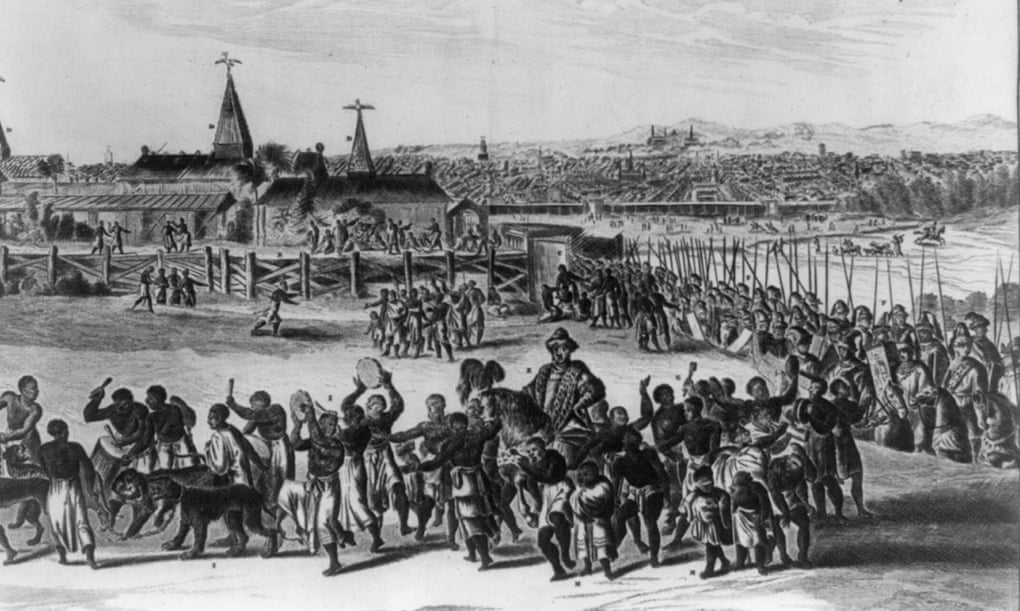
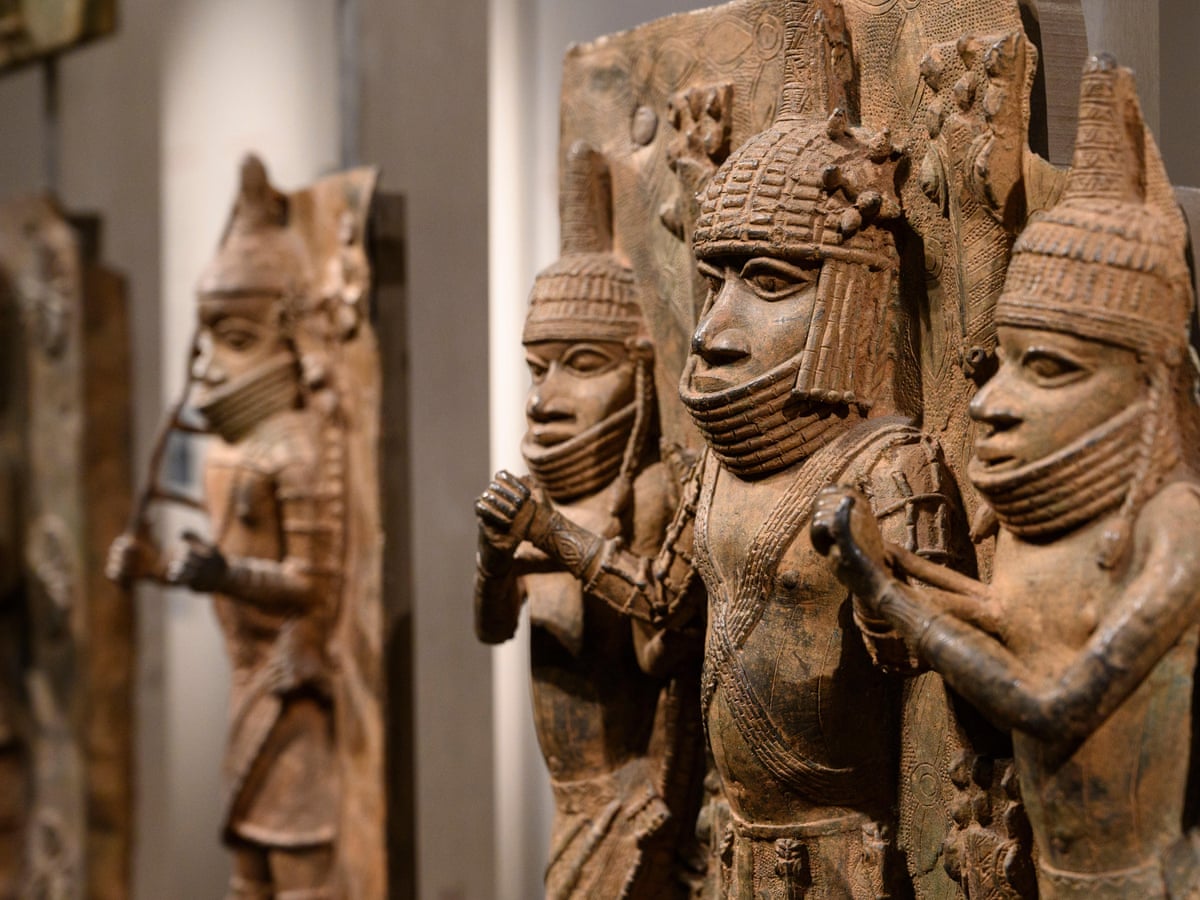
ozijay:Says a demented, colonised slave. Here's what the UK Guardian wrote about ''our forefathers'' whom you just insulted. Benin City, The Mighty Medieval Capital Now Lost Without Trace https://i.guim.co.uk/img/media/e0fd6147a67600c3bfa00ad8b0761b8b5c9a57d1/43_198_1101_660/master/1101.jpg?width=1020&quality=85&auto=format&fit=max&s=8b57e78ea071e6c059b7c9a3b1e0a4d1 Benin City was described as ‘wealthy and industrious, well-governed and richly decorated’. Illustration: Decompiling Dapper: A Preliminary Search for Evidence Guardian Newspaper, UK https://www.theguardian.com/cities/2016/mar/18/story-of-cities-5-benin-city-edo-nigeria-mighty-medieval-capital-lost-without-trace With its mathematical layout and earthworks longer than the Great Wall of China, Benin City was one of the best planned cities in the world when London was a place of ‘thievery and murder’. So why is nothing left? This is the story of a lost medieval city you’ve probably never heard about. Benin City, originally known as Edo, was once the capital of a pre-colonial African empire located in what is now southern Nigeria. The Benin empire was one of the oldest and most highly developed states in west Africa, dating back to the 11th century. The Guinness Book of Records (1974 edition) described the walls of Benin City and its surrounding kingdom as the world’s largest earthworks carried out prior to the mechanical era. According to estimates by the New Scientist’s Fred Pearce, Benin City’s walls were at one point “four times longer than the Great Wall of China, and consumed a hundred times more material than the Great Pyramid of Cheops [in Egypt]”. Situated on a plain, Benin City was enclosed by massive walls in the south and deep ditches in the north. Beyond the city walls, numerous further walls were erected that separated the surroundings of the capital into around 500 distinct villages. Pearce writes that these walls “extended for some 16,000 km in all, in a mosaic of more than 500 interconnected settlement boundaries. They covered 6,500 sq km and were all dug by the Edo people … They took an estimated 150 million hours of digging to construct, and are perhaps the largest single archaeological phenomenon on the planet”. Barely any trace of these walls exist today. Benin City was also one of the first cities to have a semblance of street lighting. Huge metal lamps, many feet high, were built and placed around the city, especially near the king’s palace. Fuelled by palm oil, their burning wicks were lit at night to provide illumination for traffic to and from the palace. When the Portuguese first “discovered” the city in 1485, they were stunned to find this vast kingdom made of hundreds of interlocked cities and villages in the middle of the African jungle. They called it the “Great City of Benin”, at a time when there were hardly any other places in Africa the Europeans acknowledged as a city. Indeed, they classified Benin City as one of the most beautiful and best planned cities in the world. In 1691, the Portuguese ship captain Lourenco Pinto observed: “Great Benin, where the king resides, is larger than Lisbon; all the streets run straight and as far as the eye can see. The houses are large, especially that of the king, which is richly decorated and has fine columns. The city is wealthy and industrious. It is so well governed that theft is unknown and the people live in such security that they have no doors to their houses.” In contrast, London at the same time is described by Bruce Holsinger, professor of English at the University of Virginia, as being a city of “thievery, prostitution, murder, bribery and a thriving black market made the medieval city ripe for exploitation by those with a skill for the quick blade or picking a pocket”. African fractals Benin City’s planning and design was done according to careful rules of symmetry, proportionality and repetition now known as fractal design. The mathematician Ron Eglash, author of African Fractals – which examines the patterns underpinning architecture, art and design in many parts of Africa – notes that the city and its surrounding villages were purposely laid out to form perfect fractals, with similar shapes repeated in the rooms of each house, and the house itself, and the clusters of houses in the village in mathematically predictable patterns. As he puts it: “When Europeans first came to Africa, they considered the architecture very disorganised and thus primitive. It never occurred to them that the Africans might have been using a form of mathematics that they hadn’t even discovered yet.” At the centre of the city stood the king’s court, from which extended 30 very straight, broad streets, each about 120-ft wide. These main streets, which ran at right angles to each other, had underground drainage made of a sunken impluvium with an outlet to carry away storm water. Many narrower side and intersecting streets extended off them. In the middle of the streets were turf on which animals fed. “Houses are built alongside the streets in good order, the one close to the other,” writes the 17th-century Dutch visitor Olfert Dapper. “Adorned with gables and steps … they are usually broad with long galleries inside, especially so in the case of the houses of the nobility, and divided into many rooms which are separated by walls made of red clay, very well erected.” Dapper adds that wealthy residents kept these walls “as shiny and smooth by washing and rubbing as any wall in Holland can be made with chalk, and they are like mirrors. The upper storeys are made of the same sort of clay. Moreover, every house is provided with a well for the supply of fresh water”. Family houses were divided into three sections: the central part was the husband’s quarters, looking towards the road; to the left the wives’ quarters (oderie), and to the right the young men’s quarters (yekogbe). Daily street life in Benin City might have consisted of large crowds going though even larger streets, with people colourfully dressed – some in white, others in yellow, blue or green – and the city captains acting as judges to resolve lawsuits, moderating debates in the numerous galleries, and arbitrating petty conflicts in the markets. The early foreign explorers’ descriptions of Benin City portrayed it as a place free of crime and hunger, with large streets and houses kept clean; a city filled with courteous, honest people, and run by a centralised and highly sophisticated bureaucracy. The city was split into 11 divisions, each a smaller replication of the king’s court, comprising a sprawling series of compounds containing accommodation, workshops and public buildings – interconnected by innumerable doors and passageways, all richly decorated with the art that made Benin famous. The city was literally covered in it. The exterior walls of the courts and compounds were decorated with horizontal ridge designs (agben) and clay carvings portraying animals, warriors and other symbols of power – the carvings would create contrasting patterns in the strong sunlight. Natural objects (pebbles or pieces of mica) were also pressed into the wet clay, while in the palaces, pillars were covered with bronze plaques illustrating the victories and deeds of former kings and nobles. At the height of its greatness in the 12th century – well before the start of the European Renaissance – the kings and nobles of Benin City patronised craftsmen and lavished them with gifts and wealth, in return for their depiction of the kings’ and dignitaries’ great exploits in intricate bronze sculptures. “These works from Benin are equal to the very finest examples of European casting technique,” wrote Professor Felix von Luschan, formerly of the Berlin Ethnological Museum. “Benvenuto Celini could not have cast them better, nor could anyone else before or after him. Technically, these bronzes represent the very highest possible achievement.” https://s3media.freemalaysiatoday.com/wp-content/uploads/2018/06/benin-bronzes.jpg What impressed the first visiting Europeans most was the wealth, artistic beauty and magnificence of the city. Immediately European nations saw the opportunity to develop trade with the wealthy kingdom, importing ivory, palm oil and pepper – and exporting guns. At the beginning of the 16th century, word quickly spread around Europe about the beautiful African city, and new visitors flocked in from all parts of Europe, with ever glowing testimonies, recorded in numerous voyage notes and illustrations. Lost world Now, however, the great Benin City is lost to history. Its decline began in the 15th century, sparked by internal conflicts linked to the increasing European intrusion and slavery trade at the borders of the Benin empire. Then in 1897, the city was destroyed by British soldiers – looted, blown up and burnt to the ground.... https://www.theguardian.com/cities/2016/mar/18/story-of-cities-5-benin-city-edo-nigeria-mighty-medieval-capital-lost-without-trace 1 Like 1 Share |
| Politics › Re: Germany Returns 1,000 Benin Bronzes To Nigeria Amid Frustrstion At Britain by Napata77(op): 9:03am On Dec 21, 2022 |
goshen26:They will be well examined by experts on arrival. |
| Politics › Re: Germany Returns 1,000 Benin Bronzes To Nigeria Amid Frustrstion At Britain by Napata77(op): 4:58am On Dec 21, 2022*. Modified: 6:18am On Dec 21, 2022 |
femicyrus:Wrong thinking. Even highly industrialised countries do not neglect their history because they've embraced technology. Japan, UK, China, all invest billions of dollars in maintaining and promoting their historical sites and treasures, and receive billions of dollars in tourism earnings per annum in consequence. |
| Politics › Re: Germany Returns 1,000 Benin Bronzes To Nigeria Amid Frustrstion At Britain by Napata77(op): 3:46am On Dec 21, 2022 |
generalwo:The N word is a racist, disgusting and filthy word. |
| Politics › Re: Germany Returns 1,000 Benin Bronzes To Nigeria Amid Frustrstion At Britain by Napata77(op): 2:25am On Dec 21, 2022 |
Swiperite:Thank heavens we didn't ask you. 2 Likes |
| Politics › Re: Germany Returns 1,000 Benin Bronzes To Nigeria Amid Frustrstion At Britain by Napata77(op): 12:32am On Dec 21, 2022*. Modified: 1:43am On Dec 21, 2022 |
BRATISLAVA:Because you are an ignoramus, you don't know that there are thousands of artefacts in our museums and palaces that are dated to over a thousand years old. How come they ''exist''?! The same way you sold people as slaves, they would've ended up in their hands anyway. For all we know, they were sold.Err..no, the Benin treasures were not ''sold''. Benin City was raided, bombed, burned down and looted by the British in 1897, and her treasures carted away in ships. https://www.spectator.co.uk/wp-content/uploads/2021/08/benin.jpeg As for the slave trade, it began by European ships armed with cannon berthing at isolated coastal West African villages and DEMANDING x number of captives or risk bombardment, which forced the people to raid neighbouring villages and clans for captives. That was what began the 'trade', so don't go blaming AFRICANS for it. 1 Like 1 Share |
| Politics › Re: Germany Returns 1,000 Benin Bronzes To Nigeria Amid Frustrstion At Britain by Napata77(op): 12:18am On Dec 21, 2022*. Modified: 2:23am On Dec 21, 2022 |
BRATISLAVA: Olodo, the artefacts are right here in Nigeria in our various museums and palaces, NONE OF WHICH YOU HAVE EVER VISITED IN YOUR LIFE, or know the first thing about. On the internet, every riffraff mummy's boy with nothing upstairs and zero knowledge can come out and shout about ''Africans''. Nor be your fault. |
| Politics › Re: Germany Returns 1,000 Benin Bronzes To Nigeria Amid Frustrstion At Britain by Napata77(op): 11:39pm On Dec 20, 2022 |
BigBashiru:Well said. The Timbuktu Manuscripts comprise millions of volumes of written texts in West Africa dated to as far back as the 9th century, and covering every discipline from law to science, astronomy, alchemy, biology, religion, philosophy, and medicine. 3 Likes 1 Share |
| Politics › Re: Germany Returns 1,000 Benin Bronzes To Nigeria Amid Frustrstion At Britain by Napata77(op): 11:31pm On Dec 20, 2022 |
Ifakiland:Read the full article, you lazy bum. |
| Politics › Re: Germany Returns 1,000 Benin Bronzes To Nigeria Amid Frustrstion At Britain by Napata77(op): 11:26pm On Dec 20, 2022 |
BRATISLAVA:Such a display of historical illiteracy and stark ignorance. The Benin Bronzes were looted from the PALACE OF THE OBA OF BENIN IN 1897. AMONG THE TREASURES ARE ARTEFACTS DATED TO THE 11TH CENTURY, IE 800 YEARS EARLIER. So, the Palace of the Oba of Benin is not a place that throws its ancient treasures ''into fires to roast snakes'' or whatever ignorant garbage you typed. 2 Likes |
| Politics › Re: Germany Returns 1,000 Benin Bronzes To Nigeria Amid Frustrstion At Britain by Napata77(op): 9:06pm On Dec 20, 2022*. Modified: 9:46pm On Dec 20, 2022 |
Slawomirr:Kindly do not use your disgusting racist term on this thread, you tool of racists. 3 Likes |
| Politics › Re: Germany Returns 1,000 Benin Bronzes To Nigeria Amid Frustrstion At Britain by Napata77(op): 9:04pm On Dec 20, 2022*. Modified: 11:07pm On Dec 20, 2022 |
Britain, Britain, Britain! How many times did I call you? You said our ancestors were uncivllized, primitive savages. We agree. Oya, return our uncivilized, primitive, and savage historical artefacts, UNA NO GREE. You have THOUSANDS of Benin Bronzes in your possession. Only a few are displayed in your museums, the rest are hidden in underground vaults. Are you sure it's not you, Britain, that are the real uncivilized, barbaric savages? I mean, even shamelessly holding on to something everyone knows you stole, and proudly displaying them in your museums... is that not the very height of savagery? Putting the 'spoils of war' on public display is a very ancient, barbaric practice that Africans had long abandoned even before you invaded. Why? Because Africa is the Cradle of Civilization. The HOME of civilization. Where men live by proverbs, the palm oil with which words are eaten. SO we understand why you can't let go of our treasures. According to your people... “These works from Benin are equal to the very finest examples of European casting technique,” wrote Professor Felix von Luschan, formerly of the Berlin Ethnological Museum. “Benvenuto Celini could not have cast them better, nor could anyone else before or after him. Technically, these bronzes represent the very highest possible achievement.” Source, UK Guardian Newspaper. https://www.theguardian.com/cities/2016/mar/18/story-of-cities-5-benin-city-edo-nigeria-mighty-medieval-capital-lost-without-trace Benin Bronzes, 12th Century https://www.telegraph.co.uk/content/dam/news/2018/06/20/TELEMMGLPICT000164862843_trans_NvBQzQNjv4BqLZ1bJd-I99VgiaPxe-UMcC6-Lp4metz6QMdj34ESPoA.jpeg https://i.ytimg.com/vi/YJIkhMi_6PU/maxresdefault.jpg https://i.guim.co.uk/img/media/e2a186352da4258621c0268a02cbb4479dc345a7/0_299_6048_3628/master/6048.jpg?width=1200&height=900&quality=85&auto=format&fit=crop&s=c413bec1d0b30dfdd462e1d03300ae48 121 Likes 10 Shares |
| Politics › Germany Returns 1,000 Benin Bronzes To Nigeria Amid Frustrstion At Britain by Napata77(op): 8:51pm On Dec 20, 2022 |
Germany returns 21 Benin bronzes to Nigeria – amid frustration at Britain Artefacts looted in 19th century by UK soldiers and sold on, with many more still held by the British Museum UK Guardian Newspaper https://i.guim.co.uk/img/media/3aaecfb3f6a31560c31888233263e1fb5596c0f1/0_173_5184_3110/master/5184.jpg?width=620&quality=85&dpr=1&s=none 13 Likes 7 Shares
|
| Travel › Re: LASG Announces Completion Of First Phase Of Lagos Light Rail (Marina To Mile 2) by Napata77: 6:38am On Dec 20, 2022 |
Kentuforchrist:OH SHUT UP, INGRATE. See a good thing and applaud. It won't kill you! After all govts in decades past would chop that money, and you won't know jack. 42 Likes 1 Share |
| Travel › Re: LASG Announces Completion Of First Phase Of Lagos Light Rail (Marina To Mile 2) by Napata77: 6:35am On Dec 20, 2022 |
Nice one. Nigeria is moving forward. 12 Likes |
| Food › Re: The Nigerian Food From Another Tribe You Enjoy. (Pic) by Napata77: 5:37am On Dec 20, 2022*. Modified: 6:32am On Dec 20, 2022 |
I'm surprised no one has mentioned Tuwo Shinkafa here. Very few dishes can beat a well made Tuwo Shinkafa with groundnut soup, Maiduguri style. 1 Like |
| Food › Re: The Nigerian Food From Another Tribe You Enjoy. (Pic) by Napata77: 5:32am On Dec 20, 2022 |
Dreadlock69:...lucky you. |
| Politics › Re: Emefiele: We Will Not Succumb To Intimidation, Desperation Of Hirelings - DSS by Napata77: 2:45am On Dec 20, 2022 |
Mrfksb1:Animal. So what are you doing on this forum? Why are you not on a Los Angeles forum? Isn't it because you are a nobody there, and nobody cares what you think? Stupid, useless dunce feeling important. You're not wanted or needed here either, so get lost, you filthy maggot. 4 Likes |
| Foreign Affairs › Re: Putin Readies Massive Yars Nuclear Missile Capable Of Hitting US And UK ( Pics) by Napata77: 1:19am On Dec 20, 2022 |
Yankiss:....or so you were told. |
| Foreign Affairs › Re: Dutch PM Apologises For Netherlands’ Role In Slave Trade by Napata77: 1:02am On Dec 20, 2022 |
Ckonnet:More like trickish. |
| Foreign Affairs › Re: How Should Africa's Borders Be Redrawn? Let's Discuss. by Napata77(op): 12:51am On Dec 20, 2022 |
Blue3k:I disagree with your secession clause. WHEN DO WE STOP RUNNING AWAY FROM OUR PROBLEMS, FOR GOODNESS' SAKE? Other countries have problems. They go through hell and high water to resolve their issues. Africans have problem. The first thing is secession. Everybody go his way. Stand up and solve your problems like men! Who will invest in a country where any region can just wake up in the morning and declare secession? You people should stop this nonsense, please. |
| Foreign Affairs › Re: How Should Africa's Borders Be Redrawn? Let's Discuss. by Napata77(op): 10:55pm On Dec 19, 2022*. Modified: 11:22pm On Dec 19, 2022 |
richeeyo:But you may need a redrawn map to create or generate the leadership consciousness that would care to go about changing the mindset of the people, through national re-orientation programs, etc. Such govt activism is often insincere in artificial nations. |
| Foreign Affairs › How Should Africa's Borders Be Redrawn? Let's Discuss. by Napata77(op): 10:50pm On Dec 19, 2022*. Modified: 11:12pm On Dec 19, 2022 |
How Should Africa's Borders Be Redrawn? There are 4 options that come to mind. Those with other configurations are welcome to contribute their intellect to the discourse. 1) Complete dismantling of all nations and reforming new nations along ethno-religious alignments agreed on by relevant stakeholders. The dismantling will take place after these agreements have taken place over a preceding one year window. So that there is a seamless transition between the old and the new nations. This process could result in any number of nations, from 20 to 200, depending on who wants to stay with whom. Or maybe, to guarantee the viability of the nations, there could by a rule limiting the number of nations to say, 30. 2) Create 4 or 5 super nations out of the current 54, giving each of them more resource and economic clout. 3) Create a SINGLE African nation, a United States of Africa, with a single constitution, military, currency, and central government. In terms of sheer control of natural resources, this would effectively be the richest country on Earth, able to dictate the price of its commodities, unlike today where it is a price taker as a result of the multiplicity of African nations competing for buyers, hence driving prices down. 4) Remain as presently constituted, and try to gradually overcome the ethno-religious, political, and economic challenges posed by our artificial alignments. |
| Foreign Affairs › Re: Dutch PM Apologises For Netherlands’ Role In Slave Trade by Napata77: 10:32pm On Dec 19, 2022 |
Wiseandtrue:Don't hold your breath. 1 Like |
| Foreign Affairs › Re: Dutch PM Apologises For Netherlands’ Role In Slave Trade by Napata77: 10:31pm On Dec 19, 2022 |
ItsTutsi:Abi o? So we can go there and enjoy OUR money. 1 Like |
| Foreign Affairs › Re: Dutch PM Apologises For Netherlands’ Role In Slave Trade by Napata77: 9:53pm On Dec 19, 2022 |
thebosstrevor1:Exactly. When you listen to what Al-Mustapha has been saying, you will know that these oyinbo apologies are just for show. 1 Like |
| Culture › Re: Yoruba Names Whose Meanings Are Now Lost by Napata77: 7:00am On Dec 19, 2022 |
Ọrẹ̀ (re|do)names like Oresanya. They do not derive from Ọ̀rẹ́, (dò|mí), friend, but from Ọrẹ̀, (re|do), a deity. A phrase like “A kìí ọmọ Ọrẹ̀ bọ Ọrẹ̀” (you don’t use the child of Ọrẹ̀ to propitiate Ọrẹ̀) comes to mind.Re is RA, the Egyptian God of Creation, who was also known as Re. Orisha is also linked to Horus-at, the full name of the Egyptian Son of God, Horus. The Yoruba have clear links to ancient Egypt, and their ancestors were among those that built the pyramids. Ra (/rɑː/; romanized: rʿ) or Re (/reɪ/; Coptic: romanized: Rē) was the ancient Egyptian deity of the sun. By the Fifth Dynasty, in the 25th and 24th centuries BC, he had become one of the most important gods in ancient Egyptian religion, identified primarily with the noon-day sun. Ra ruled in all parts of the created world: the sky, the earth, and the underworld. He was the god of the sun, order, kings and the sky. Ra was portrayed as a falcon and shared characteristics with the sky-god Horus. At times the two deities were merged as Ra-Horakhty, "Ra, who is Horus of the Two Horizons". In the New Kingdom, when the god Amun rose to prominence he was fused with Ra as Amun-Ra. https://en.wikipedia.org/wiki/Ra 3 Likes 2 Shares |
| Politics › Re: Ugwuanyi Inaugurates New Enugu State Multi-Door Courthouse Building by Napata77: 3:59am On Dec 19, 2022 |
GardenOfGod:It's only a damn courthouse. No need for expensive ''mind blowing architecture''. If some of you on this forum were actually our leaders, Nigeria would be far worse off than it is. |
| Culture › Re: Yorubas And Igbos Once Spoke The SAME Language - Evidence by Napata77(op): 3:22am On Dec 19, 2022 |
AjaanaOka:But the high volume of cognates on the list cannot be obviated by one or two words with a disputable connection. 1 Like |






1 2 3 4 5 6 7 8 ... 50 51 52 53 54 55 56 57 58 (of 67 pages)