PhysicsMHD's Posts
Nairaland Forum › PhysicsMHD's Profile › PhysicsMHD's Posts
1 2 3 4 5 6 7 8 ... 58 59 60 61 62 63 64 65 66 (of 67 pages)
 Culture › Re: Benin Art And Architecture by PhysicsMHD(m): 9:37am On Jan 09, 2011 Culture › Re: Benin Art And Architecture by PhysicsMHD(m): 9:37am On Jan 09, 2011 |
| Culture › Re: Benin Art And Architecture by PhysicsMHD(m): 9:36am On Jan 09, 2011 |
| Culture › Re: Benin Art And Architecture by PhysicsMHD(m): 9:33am On Jan 09, 2011 |
| Culture › Re: Benin Art And Architecture by PhysicsMHD(m): 9:31am On Jan 09, 2011 |
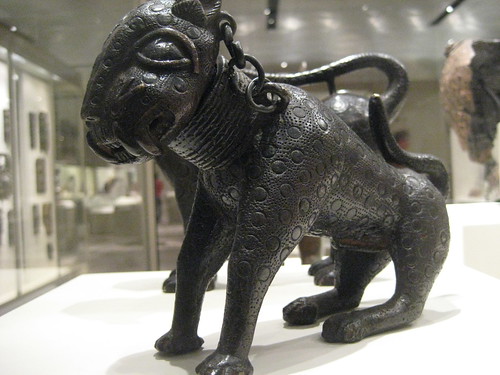
https://farm4.static.flickr.com/3619/3484901812_7c8c00f69b.jpg Leopard Aquamanile Nigeria, Kingdom of Benin, Edo peoples 16th - 19th century Brass |
| Culture › Re: Benin Art And Architecture by PhysicsMHD(m): 9:30am On Jan 09, 2011 |
https://www.corbisimages.com/images/67/00C4C929-DA03-425C-A04C-7C54F066150C/WF001607.jpg Benin Plaque Depicting a Feline Face A repousse plaque from the Benin depicting a feline face. |
| Culture › Re: Benin Art And Architecture by PhysicsMHD(m): 9:29am On Jan 09, 2011 |
https://wwwdelivery.superstock.com/WI/223/475/PreviewComp/SuperStock_475-1635.jpg' Plaque of Chiefs in Pangolin Skin Benin Culture/West African Artist Unknown Bronze British Museum, London |
| Culture › Re: Benin Art And Architecture by PhysicsMHD(m): 9:27am On Jan 09, 2011 |
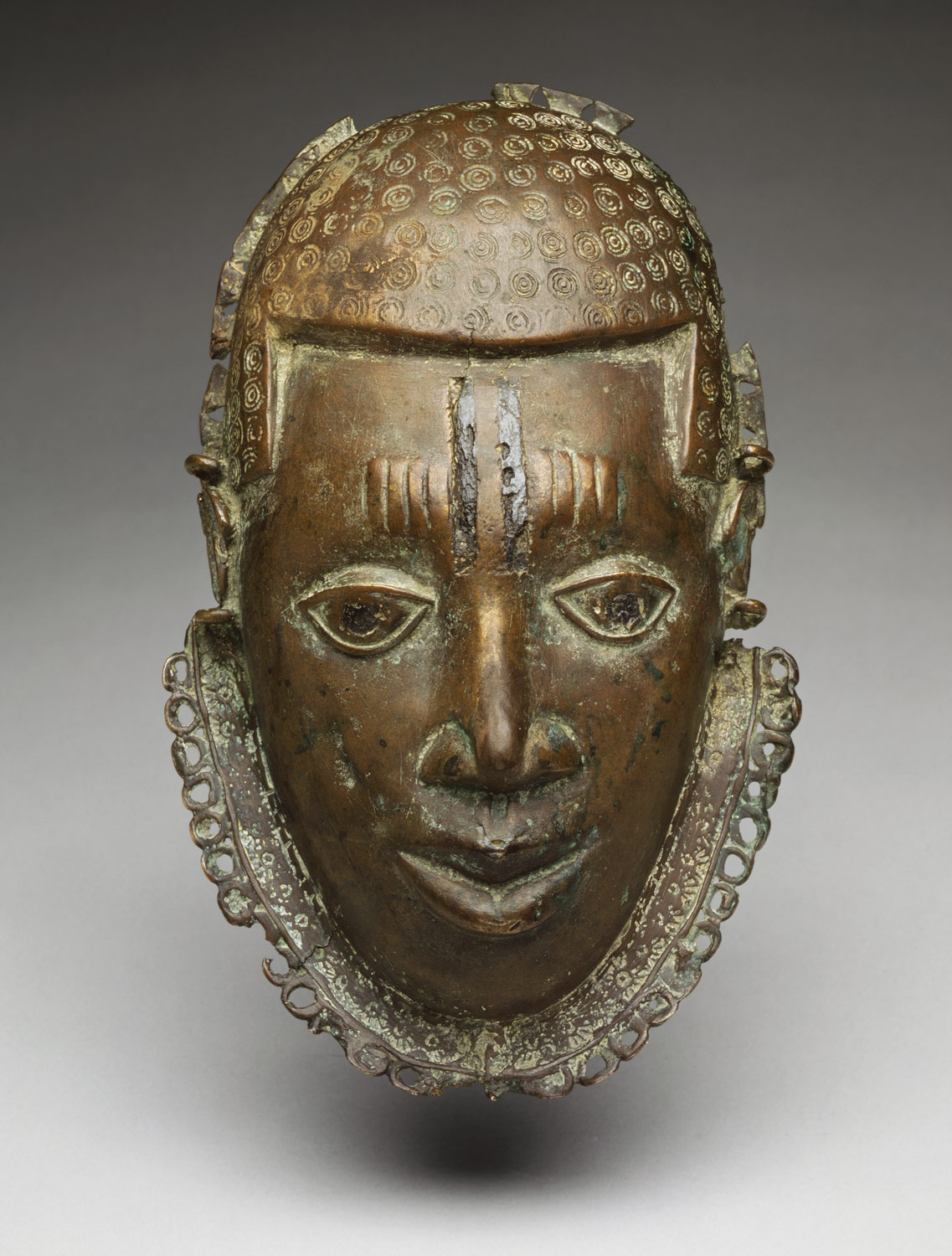
https://www.metmuseum.org/toah/images/hb/hb_1991.17.50.jpg Pectoral Ornament: Face, 15th–17th century Nigeria; Edo peoples, court of Benin Brass, iron H. 7 1/2 in. (18.93 cm) Gift of Mr. and Mrs. Klaus G. Perls, 1991 (1991.17.50) Cast brass masks such as this one were owned by paramount chiefs and titleholders of the Benin kingdom. Representing the face of the oba himself, these masks were worn suspended from the neck to indicate rank and demonstrate fealty to the king. As Benin expanded its political influence and military control over many of its neighbors, those foreign rulers who were absorbed into its political system also received these masks. Created at the court by royal brass casters, such works were distributed by the oba to newly incorporated chiefs. This work is believed to have belonged to either the Amapetu of Mahin or the Olugbo of Ugbo, two Yoruba rulers approximately eighty miles to the west of Benin City. Like most pectoral masks, this work depicts a human face framed at the bottom by an ornamental flange with loops for small metal rattles. The hair, bordered by a sharply angular hairline, consists of rows of small concentric circles. Two inlaid iron vertical marks on the forehead lend balance and dignity to the face, and invest the pupils of the eyes with an intensity and power befitting a ruler. The four vertical marks to either side of these are found on Benin sculptures depicting Edo women or non-Edo men, suggesting that this work may have been created expressly for the use of a foreign ruler. The subtle molding of the nose and cheeks as well as the sensitive, delicate mouth imbue the representation with a naturalism that is stylistically associated with the earliest period of Benin sculpture, suggesting that it was created between the fifteenth and seventeenth centuries. Source: Pectoral Ornament: Face [Nigeria; Edo peoples, court of Benin] (1991.17.50) | Heilbrunn Timeline of Art History | The Metropolitan Museum of Art |
| Culture › Re: Benin Art And Architecture by PhysicsMHD(m): 9:26am On Jan 09, 2011 |
1 Like |
| Culture › Re: Benin Art And Architecture by PhysicsMHD(m): 9:22am On Jan 09, 2011 |
https://www.corbisimages.com/images/67/4B66BEDB-3320-4BB9-B0CD-5A83D20CA76E/WF002009.jpg Benin bronze plaque depicting a drummer |
| Culture › Re: Benin Art And Architecture by PhysicsMHD(m): 9:19am On Jan 09, 2011 |
| Culture › Re: Benin Art And Architecture by PhysicsMHD(m): 9:04am On Jan 09, 2011 |
https://ancientafricanmasks.com/for%20web/5013.jpg African Art / Benin Ornamental Mask of a Leopard Head - PF.5013 Origin: Southcentral Nigeria Circa: 1500 AD to 1897 AD 1 Like |
| Culture › Re: Traditional Edo Attire In Pictures by PhysicsMHD(m): 8:52am On Jan 09, 2011 |
| Culture › Re: Traditional Edo Attire In Pictures by PhysicsMHD(m): 8:49am On Jan 09, 2011 |
| Culture › Re: Traditional Edo Attire In Pictures by PhysicsMHD(m): 8:46am On Jan 09, 2011 |
| Culture › Re: Traditional Edo Attire In Pictures by PhysicsMHD(m): 8:43am On Jan 09, 2011 |
| Culture › Re: Benin Art And Architecture by PhysicsMHD(m): 8:40am On Jan 09, 2011 |
[img]http://www.artic.edu/aic/collections/citi/images/standard/Exhib/EX_000001/93708_520175.jpg[/img] Edo Benin Kingdom, Nigeria Box in the Shape of a Palace Building, 17th/18th century Brass 32 x 61 cm (12 5/8 x 24 in.) Staatliche Museen zu Berlin, Ethnologisches Museum, III C 8488 This hinged box, which most likely represents the oba’s meetinghouse, is a rare representation of a palace building. A slithering snake runs down the length of the tall central turret, and a large bird stands at its apex. These represent the massive sculptures, cast in sections, which stood as impressive markers of the powerful oba. Two figures carrying rifles stand on the rooftop facing two additional birds (one now missing). These may evoke Oba Esigie, who ordered his soldiers to shoot the Bird of Prophecy, thereby establishing his own destiny. |
| Culture › Re: Benin Art And Architecture by PhysicsMHD(m): 8:39am On Jan 09, 2011 |
[img]http://www.artic.edu/aic/collections/citi/images/standard/Exhib/EX_000001/93742_520182.jpg[/img] Edo Benin Kingdom, Nigeria Box in the Shape of an Antelope Head (Orievbee), 18th century Ivory and brass 16.5 x 29 x 11.5 cm (6 1/2 x 11 3/8 x 4 1/2 in.) Staatliche Museen zu Berlin, Ethnologisches Museum, III C 7633 a, b Boxes shaped like antelope heads are usually made of wood embellished with brass sheeting. This ivory example, inlaid with brass, is unique and undoubtedly belonged to the oba. Antelope-head boxes are used as containers for kola nuts, a symbol of peace, order, and civilization that is offered to welcome honored guests. The kola nuts are broken into segments and shared among the guests by rank followed by a prayer of blessing. The antelope is appreciated for its beauty and gentleness. The hands that grasp its horns symbolize the privilege taken by humans to sacrifice the animal in sacred rituals. |
| Culture › Re: Benin Art And Architecture by PhysicsMHD(m): 8:37am On Jan 09, 2011 |
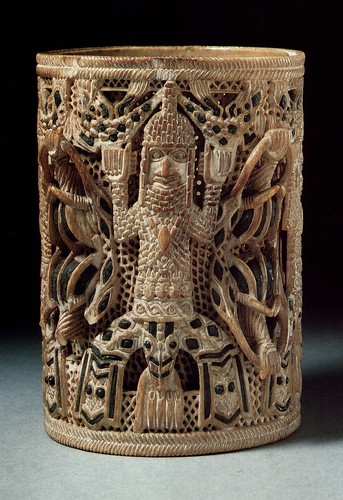
[img]http://www.artic.edu/aic/collections/citi/images/standard/Exhib/EX_000001/96448_520247.jpg[/img] Edo Benin Kingdom, Nigeria Double-Gong and Striker, 16th century Ivory H. 36.5 cm (14 3/4 in.) The Trustees of the British Museum, London, Af1963,04.1 and Af1964,07.1 This extremely finely carved ivory double gong—double because of the second, smaller resonating cup at its front—is an artistic tour de force. Its central image is the oba in coral regalia supported by the high priests osa and osuan, officials who tend the altars of the kingdom’s two patron gods. Today a similar ivory gong is carried by the oba during Emobo, the last of the empowering rites of the Igue festival. The oba gently taps the ivory instrument, creating a rhythmic sound to calm and dismiss unruly spirits from the kingdom. |
| Culture › Re: Benin Art And Architecture by PhysicsMHD(m): 8:35am On Jan 09, 2011 |
[img]http://www.artic.edu/aic/collections/citi/images/standard/Exhib/EX_000001/101556_529049.jpg[/img] Edo Benin Kingdom, Nigeria Waist Pendant of a Leopard's Head, 17th/18th century Brass 14.5 x 10 x 5 cm (5 11/16 x 3 15/16 x 2 in.) The National Commission for Museums and Monuments, Nigeria, 47.21.4 A formidable predator with a copper-colored pelt, the leopard is a fitting counterpart to the oba and is particularly associated with his military might. Brass leopard-head waist pendants were worn as insignia by Benin’s militia. They are no longer worn in the kingdom, because it does not have a standing army. Ivory pendants were far more limited in use, belonging only to the oba or top-ranking officers such as the iyase or ezomo. The holes simulating the leopard’s spots on this example were once inlaid with brass, and bells dangled from the loops rimming its jawline. |
| Culture › Re: Benin Art And Architecture by PhysicsMHD(m): 8:32am On Jan 09, 2011 |
[img]http://www.artic.edu/aic/collections/citi/images/standard/Exhib/EX_000001/93587_520163.jpg[/img] Edo Benin Kingdom, Nigeria Pair of Arm Cuffs, 18th century Ivory .5: 13 x 9 cm (5 1/8 x 3 1/2 in.); .6: 13.1 x 9.1 cm (5 3/16 x 3 9/16 in.) The Trustees of the British Museum, London, Af1922,0313.5-6 An extraordinary 18th-century ivory carver made these finely detailed arm cuffs. On two sides of each cuff, the oba—accompanied by helmeted warriors—raises an eben sword, stressing his control of Benin’s military might. This imagery alternates with another group of figures that centers on a high-ranking individual, possibly the ezomo, Benin’s top war chief. He is richly dressed and also raises an eben sword. Portuguese soldiers flank him, a reference to their role as Benin’s military allies in the 16th century. |
| Culture › Re: Benin Art And Architecture by PhysicsMHD(m): 8:30am On Jan 09, 2011 |
[img]http://www.artic.edu/aic/collections/citi/images/standard/Exhib/EX_000001/100221_519954.jpg[/img] Edo Benin Kingdom, Nigeria Ewua Official, 18th century (?) Brass 62 x 20 x 17 cm (24 3/8 x 7 7/8 x 6 11/16 in.) © The Trustees of the National Museums of Scotland, A1985.631 This figure wears a beautifully patterned tunic and wrapper and a cross-shaped pendant low on his chest. In his right hand, he carries a brass-caster’s hammer, a tool used to manipulate red-hot metal. The man may be an ewua official, whose tasks include awakening the oba at dawn with rituals honoring his dynasty and its origins, a practice initiated by Oba Esigie in the 16th century. Ewua officials are often portrayed wearing a cross, a symbol that predates the Portuguese arrival in Benin, though its meaning was enhanced by its similarity to the cross of the Portuguese Order of Christ. |
| Culture › Re: Benin Art And Architecture by PhysicsMHD(m): 8:27am On Jan 09, 2011 |
[img]http://www.artic.edu/aic/collections/citi/images/standard/Exhib/EX_000001/93762_520233.jpg[/img] Edo Benin Kingdom, Nigeria Oba Eresoyen's Stool, 18th century Brass 40 x 40.5 cm (15 3/4 x 16 in.) Staatliche Museen zu Berlin, Ethnologisches Museum, III C 20295 Through time Benin’s rulers have used the arts to interpret history in an effort to support their initiatives and define their images for posterity. In the 18th century, Oba Eresoyen purposefully associated his reign with that of Oba Esigie, the great 16th-century monarch. Both ruled during periods of relative peace and were important patrons of brass casting. This richly embellished stool is modeled on one that was sent to Esigie by the Portuguese. The stool’s complex iconography includes images of the cosmos, the forest, and terrifying supernatural forces. The tools and products of metal workers—including a hammer, knife, and anvil—represent human civilization. |
| Culture › Re: Benin Art And Architecture by PhysicsMHD(m): 8:26am On Jan 09, 2011 |
[img]http://www.artic.edu/aic/collections/citi/images/standard/Exhib/EX_000001/93585_529085.jpg[/img] Edo Benin Kingdom, Nigeria Pair of Leopards, 16th/18th century Brass left: 50 x 15 x 79 cm (19 5/8 x 31 1/8 x 5 7/8 in.); right: 49 x 14 x 77 cm (19 1/4 x 30 1/4 x 5 1/2 in.) The National Commission for Museums and Monuments, Nigeria, 52.13.1-2 Leopards are among the most emblematic symbols of the oba. Respected for their beauty, intelligence, and predatory skills, they are considered the oba’s kingly counterpart in the wilderness. Emphasizing this connection, when an oba dies it is said “the leopard has returned to his lair.” Prior to the 20th century, the oba kept semi-domesticated leopards in the palace to demonstrate his mastery over an opposing realm. This exquisite pair may have stood on the altar of a deceased oba or may have been placed on either side of the oba’s throne. In Benin, such ritual pairing evokes the importance of spiritual balance. |
| Culture › Re: Benin Art And Architecture by PhysicsMHD(m): 8:24am On Jan 09, 2011 |
[img]http://www.artic.edu/aic/collections/citi/images/standard/Exhib/EX_000001/103184_539150.jpg[/img] Edo Benin Kingdom, Nigeria Altar Head of an Iyoba (Uhunmwun Elao), 16th century Brass H. 51 cm (20 1/8 in.) Staatliche Museen zu Berlin, Ethnologisches Museum, III C 12507 In the early 16th century, Oba Esigie initiated the title of iyoba, or queenmother, to honor his mother, Idia. This exquisitely rendered head is believed to commemorate an early iyoba. It is the work of a highly accomplished brass caster, who was a master of the idealized naturalism that marked the époque. The iyoba wears a netted coral cap over her “chicken’s beak” hairstyle. Iron inserts (now missing) at the brow express her strong will. Four fish embellish the base, suggesting the role of the sea god, Olokun, in bringing wealth and power to the kingdom. |
| Culture › Re: Benin Art And Architecture by PhysicsMHD(m): 8:23am On Jan 09, 2011 |
[img]http://www.artic.edu/aic/collections/citi/images/standard/Exhib/EX_000001/103483_540591.jpg[/img] Edo Benin Kingdom, Nigeria Plaque of an Oba or Warrior with Attendants, Mid-16th/17th century Copper alloy 45.6 x 35 x 8.9 cm (17 15/16 x 13 3/4 x 3 1/2 in.) National Museum of African Art, Smithsonian Institution, purchased with funds provided by the Smithsonian Collections Acquisition Program Photograph by Franko Khoury, 82-5-3 An elite entourage—including an eben sword carrier, a side-blown horn player, and a sword bearer (the sword now missing)—accompany the oba or high-ranking war chief that is the central figure on this plaque. The man is dressed in grand ceremonial attire with a coralcrown, high collar, arm cuffs, and anklets; a tasseled leopard-face tunic; and a warrior’s leopard-tooth necklace and bell. It is likely that the plaque depicts the Isiokuo festival, which featured a parade showcasing Benin’s military strength. |
| Culture › Re: Benin Art And Architecture by PhysicsMHD(m): 8:22am On Jan 09, 2011*. Modified: 7:30pm On Jul 13, 2012 |
[img]http://www.artic.edu/aic/collections/citi/images/standard/Exhib/EX_000001/93744_520203.jpg[/img] Edo Benin Kingdom, Nigeria Plaque of Oba Ozolua with Warriors and Attendants, 16th/17th century Brass 38.5 x 39 x 2 cm (15 1/8 x 15 3/8 x 4/5 in.) Museum für Völkerkunde Wien, 64.717 Oba Ozolua, at center, is depicted wearing a garment of overlapping leaf- or feather-shaped plates, possibly an alternative interpretation of his protective coat of iron. Snakes—which Olokun, the god of the waters, sent to guard the divine leader—run down the garment’s torso and arms. In his right hand, Ozolua holds an eben sword, a symbol of leadership. In his left hand, he grasps a spear that is also held by his trusted friend Laisolobi, who ultimately betrayed him in order to free his exhausted soldiers. This story teaches that the abuse of power can be the downfall of even the strongest and most influential leaders. [Edit: As a caveat, I should point out that since the Benin bronzes, ivories, and terracotta were taken from external, above-ground places, rather than dug up archaeologically, none of them are actually accurately radiocarbon dated. Thermoluminescence dating of the Benin artwork has given dates for some pieces that are earlier or later than the estimates ascribed to them by art historians, but thermoluminescence dating results are not usually preferred as authoritative. The rationale for dating most of the Benin artwork to the dates usually ascribed to them is given on most books on the art.] |
| Culture › Re: Benin Art And Architecture by PhysicsMHD(m): 8:21am On Jan 09, 2011 |
[img]http://www.artic.edu/aic/collections/citi/images/standard/Exhib/EX_000001/96458_520261.jpg[/img] Battle Master (active 16th/17th century) Edo Benin Kingdom, Nigeria Plaque of a Battle Scene, Possibly the Idah War, 16th/17th century Brass 55 x 39 cm (21 5/8 x 15 3/8 in.) Museum für Kunst und Gewerbe Hamburg, 1899.75 In the corpus of known works from the Benin Kingdom, the six plaques that depict battle scenes are among the most complex and accomplished. In this example, a high-ranking Edo warrior—the largest figure in the composition—has slashed and mortally wounded a soldier on horseback, probably the leader of the opposing army. At upper left, a second Edo warrior has injured and captured another combatant, and, at the far right, an Edo soldier holds the severed head of a rival. The taking of trophy heads in battle was a feature of Edo warfare. |
| Culture › Re: Benin Art And Architecture by PhysicsMHD(m): 8:17am On Jan 09, 2011 |
[img]http://www.artic.edu/aic/collections/citi/images/standard/Exhib/EX_000001/103668_541468.jpg[/img] Edo Benin Kingdom, Nigeria Plaque of Oba Esigie on Horseback with Attendants, 16th/17th century Brass 48 x 39 cm (18 7/8 x 15 3/8 in.) Staatliche Museen zu Berlin, Ethnologisches Museum, III C 8056 Capitalizing on the influx of brass that came with coastal trade, Oba Esigie increased his patronage of the royal guild of brass casters (igun eronmwon) and commissioned plaques to decorate his palace, many of which commemorate specific people and events. During the 16th and 17th centuries, the oba and the highest-ranking members of his court rode horses in warfare and during ritual processions. Here, an oba is portrayed riding sidesaddle in a stately procession. Young servants support his arms and higher-ranking officials shield his head. The oba is almost certainly Esigie, who is called “the ruler on horseback.” |
| Culture › Re: Benin Art And Architecture by PhysicsMHD(m): 8:16am On Jan 09, 2011 |
[img]http://www.artic.edu/aic/collections/citi/images/standard/Exhib/EX_000001/96460_520265.jpg[/img] Edo Benin Kingdom, Nigeria Plaque of a Palace Interior, 16th/17th century This plaque beautifully illustrates details of the oba’s palace, including its wood roof shingles attached with nails; a brass snake, cast in sections, running down its turret; and the pillars lined with pairs of brass plaques, each portrayed here as depicting a Portuguese face. The scene may represent a gate of entry or a passage between inner courtyards. Turrets are known to have marked such transitional points within the large palace complex. However, the leopards (now damaged) that stand on either side of the doorway may indicate that it is the entrance to a royal altar. |
| Culture › Re: Benin Art And Architecture by PhysicsMHD(m): 8:14am On Jan 09, 2011 |
https://wysinger.homestead.com/benin20_op_225x600.jpg Bronze Benin warrior wears trousers under a sort of pleated kilt and a basketry cap, is armed with a flintlock musket and short sword or dagger, and a trophy head at his feet. Source: Bryna Freyer, Royal Benin Art in the Collection, 1987, p. 55. |
| Culture › Re: Benin Art And Architecture by PhysicsMHD(m): 8:13am On Jan 09, 2011 |
https://wysinger.homestead.com/benin44.jpg A Benin warrior wearing a protective helmet, with a long spear and shield, battle ready for military operations. Source: Kate Ezra, Royal Art of Benin: The Pearls Collection in The Museum of Art. New York: Harry N. Abrams Inc., 1992, p. 137. |
| Culture › Re: Benin Art And Architecture by PhysicsMHD(m): 8:12am On Jan 09, 2011 |








1 2 3 4 5 6 7 8 ... 58 59 60 61 62 63 64 65 66 (of 67 pages)