PhysicsMHD's Posts
Nairaland Forum › PhysicsMHD's Profile › PhysicsMHD's Posts
1 2 3 4 5 6 7 8 9 10 (of 67 pages)
 Culture › Re: Abstract Or Stylized African Art In Pictures by PhysicsMHD(m): 2:34am On Jun 11, 2012 Culture › Re: Abstract Or Stylized African Art In Pictures by PhysicsMHD(m): 2:34am On Jun 11, 2012 |
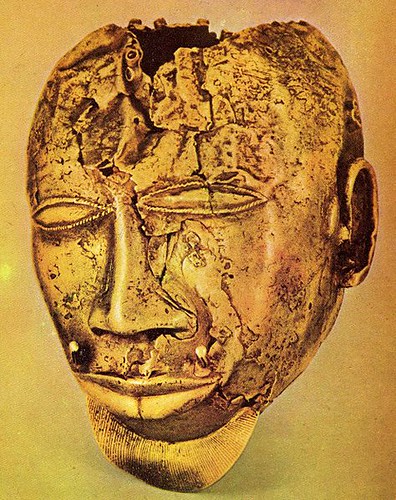
https://farm3.staticflickr.com/2509/4153278669_8ecd3d3a86.jpg Asante cast gold head https://www.museumnetworkuk.org/materials/images/mainimages/wallace/trophyhead.jpg https://www.museumnetworkuk.org/materials/images/detailimages/wallace/trophyhead1.jpg https://www.museumnetworkuk.org/materials/images/detailimages/wallace/trophyhead2.jpg Trophy Head Maker Unknown Date: 19th century or earlier Place Made: Ghana, West Africa Materials & Techniques: Gold Dimensions: Weight 0.17 kg Accession Number: The Wallace Collection, OA1683 This amazing gold head is from West Africa. Nobody knows exactly how old it is but it was brought to Britain over 100 years ago. It was part of the treasure of King Kofi Kakari of Asante in Ghana. The head is made of pure gold. Gold is a soft metal and this piece was made by heating the gold so that it turned into a liquid, and then pouring the liquid into a mould. This process is called casting. Once the main shape of the head was formed, smaller amounts of gold were heated and shaped into the eyes, nose, ears and lips which were then added to the head. The gold of this trophy head has been damaged and you can see that the top has been crushed, the ears are missing, and there are marks across the surface. |
| Culture › Re: Abstract Or Stylized African Art In Pictures by PhysicsMHD(m): 2:28am On Jun 11, 2012 |
[img]http://users.telenet.be/african-shop/images/gold_mask.jpg[/img] A cast gold Asante mask pendant, dating from the early 1900s. The Akan people formed the powerful Asante state in sub-Saharan West Africa in the late 1600s, in what is today the nation of Ghana. |
| Culture › Re: Abstract Or Stylized African Art In Pictures by PhysicsMHD(m): 2:24am On Jun 11, 2012 |
https://artworld.uea.ac.uk/files/images/10511ff_0_0.inline.jpg Akan pendant mask Description: This small gold pendant in the form of a mask weighs 52.3 grammes. The gold is twenty-two carats. Object details Type of object: Pendant Type category: Costume and jewellery Material: Gold Width: 62 mm Height: 70 mm Depth: 25 mm Origin Style/Period: Akan Date range: 1800-1899 CE |
| Culture › Re: Abstract Or Stylized African Art In Pictures by PhysicsMHD(m): 2:20am On Jun 11, 2012 |
| Culture › Re: Abstract Or Stylized African Art In Pictures by PhysicsMHD(m): 2:16am On Jun 11, 2012 |
https://www.barakatgalleryuae.com/item%20pages/images/AsanteBrassKuduo.jpg https://www.barakatgalleryuae.com/item%20pages/images/AsanteBrassKuduo1.jpg Asante Brass Kuduo - PF.5928 Origin: Ghana Circa: 19 th Century AD to 20 th Century AD Dimensions: 9.75" (24.8cm) high x 7.5" (19.1cm) wide Collection: African Style: Asante Medium: Brass Kuduo were used in many ways by the Asante and Akan peoples. They held gold dust, cowrie shells, and other valuables; but could also be found in important political and ritual contexts. Some kuduo were buried with their owners, while others were kept in the palace shrine rooms that housed the ancestral stools of deceased state leaders. Life and the afterlife, the present and the past, were enhanced and made more meaningful by the presence of these elegant prestige vessels. This stunning kuduo is a masterpiece of Akan metalwork. The vessel combines the finest features of Akan artistry including the charming depiction of humans and animals derived from their gold weight tradition. The lid is crowned by a bird, wing spread open ready to fly. The spherical body of the vessel has been divides into four segments divided by grid-patterned bands that emerge from the top of the lid. These segments are decorated by representations of turtles (with alternating shell patterns) and humans (either sitting on the lid or standing on the body). The base is embellished by fish-like or reptilian creatures with tightly spiraled tails. Two serpents wind their way from the base to the upper lip of the body and serve as handles. Overall, these adornments probably relate to the rich Akan proverbial folklore. This stunning vessel was created to hold precious objects. However, the kuduo today is no doubt more of a treasure than anything it ever might have once contained. |
| Culture › Re: Abstract Or Stylized African Art In Pictures by PhysicsMHD(m): 2:12am On Jun 11, 2012 |
https://www.vam.ac.uk/users/sites/default/files/album_images/454-1936.jpg Ornament Ornament Africa Before 1874 Cast gold Height 2.62in x width 2.5in M.454-1936 Early European visitors to Ghana, West Africa, described dazzling displays of court regalia at the court of the 'Asantehene', the ruler of Asante state. The region’s natural gold resources had made the Asante wealthy and court regalia, which included textiles ('kente'), ivory and gold, reflected high levels of skill and technology. This gold ornament in the form of a bird was made using the ‘lost wax’ method of casting. It has a perforated tang so that it can be attached, possibly to a necklace, sword or item of headwear. Asante ornaments often feature representations of birds, animals, humans or manmade items. Many refer to popular Asante proverbs. |
| Culture › Re: Abstract Or Stylized African Art In Pictures by PhysicsMHD(m): 2:12am On Jun 11, 2012 |
https://www.vam.ac.uk/users/sites/default/files/album_images/369-1874.jpg Badge Badge Ghana Before 1874 Cast gold Height 5.12 in x Width 4.75 in |
| Culture › Re: Abstract Or Stylized African Art In Pictures by PhysicsMHD(m): 2:09am On Jun 11, 2012 |
https://www.vam.ac.uk/users/sites/default/files/album_images/370-1874_01.jpg Badge Badge Africa Before 1874 Cast gold Diameter 3.75in 370-1874 Early European visitors to Ghana, West Africa, described dazzling displays of court regalia at the court of the 'Asantehene', the ruler of Asante state. The region’s natural gold resources had made the Asante wealthy and court regalia, which included textiles ('kente'), ivory and gold, reflected high levels of skill and technology. This cast gold pectoral disc was worn around the neck by those responsible for the ritual purification of the Asantehene’s soul. The Asante call the discs 'Aakrafokonmu', usually translated as ‘soul discs’ or ‘soul washers’ badges’. Following Asante efforts to protect a coastal trading outlet, British forces invaded the state capital Kumasi on 4 February 1874. The Asantehene, Kofi Karikari, fled leaving behind much precious regalia which was captured and later sold at auction at Garrard’s, the London crown jewellers. The Museum’s accession registers record the purchase of this and twelve other items of Asante gold and silverware from Garrard’s on 5 June 1874. |
| Culture › Re: Abstract Or Stylized African Art In Pictures by PhysicsMHD(m): 2:05am On Jun 11, 2012 |
https://www.vam.ac.uk/users/sites/default/files/album_images/49123-large.jpg Ornament, Asante people Ornament Asante people, Ghana Before 1874 Gold Museum no. 373-1874 Purchased by the Museum from an auction held at Garrard's, the London crown jewellers, in 1874 The natural gold available in Ghana made the Asante people wealthy and powerful. This ornament was part of their court regalia, which included textiles, ivory and gold. These regalia reflected high levels of skill and technology. Much Asante gold, including most of the pieces shown in this display, was taken as war indemnity by British forces following an invasion in 1874. |
| Culture › Re: Abstract Or Stylized African Art In Pictures by PhysicsMHD(m): 2:04am On Jun 11, 2012 |
[img]http://www.siue.edu/artsandsciences/art/galleries/ehrlich/img/martha023.jpg[/img] Asante, Ghana c. 1700 Cast brass ring-top shrine spoon |
| Culture › Re: Abstract Or Stylized African Art In Pictures by PhysicsMHD(m): 2:03am On Jun 11, 2012 |
[img]http://www.siue.edu/artsandsciences/art/galleries/ehrlich/img/martha019.jpg[/img] Asante, Ghana 20th C. State sword, openwork iron blade with hornbill, wood handle with traces of gold leaf |
| Culture › Re: Abstract Or Stylized African Art In Pictures by PhysicsMHD(m): 2:01am On Jun 11, 2012 |
[img]http://4.bp..com/_NJj1gS1wEqs/S7opdRcS9II/AAAAAAAAE1g/HJbXLPtPuAw/s1600/Akan+Gold+Ring+Depicting+a+Flower.jpg[/img] Akan gold ring depicting a flower |
| Culture › Re: Abstract Or Stylized African Art In Pictures by PhysicsMHD(m): 1:58am On Jun 11, 2012 |
[img]http://www.siue.edu/artsandsciences/art/galleries/ehrlich/img/martha010.jpg[/img] Asante, Ghana 20th C. State swordbearer's hat; rawhide covered with sheet gold with attached wood objects covered in sheet gold |
| Culture › Re: Abstract Or Stylized African Art In Pictures by PhysicsMHD(m): 1:54am On Jun 11, 2012 |
https://www.barakatgallery.com/Auction/ItemImgs/ACF13B5.jpg Akan Gold Ring of a Mudfish - CK.0256 Origin: Ghana/Ivory Coast Circa: 19 th Century AD to 20 th Century AD Dimensions: 1.125" (2.9cm) high x 1.5" (3.8cm) wide x 1.25" (3.2cm) depth Collection: African Art Style: Akan Medium: Gold $6,000.00 Location: United States Description In many cultures throughout the world, gold has been associated with status, power, prestige and wealth. As early as the 15th century, European merchants wrote about the richness of African gold objects used for adornment and intended for public display. Gold deposits were discovered in all regions of Africa, and became the most important commodity during pre- colonial times. The region of the Akan, spreading from the forest zone and costal areas of Ghana to the southern shores of the Ivory Coast, is the richest auriferous zone in West Africa. Several individual tribes make up the Akan people, the Asante and Baule being among the most famous, all united by their common ancestry and language. The royal courts of the Akan people were reportedly the most splendid in Africa. Oral tradition and iconography in Akan works of art are very closely connected. Verbal and visual symbolism tells stories or proverbs. Imagery of royal power on court ornaments carry out messages that helps keep the balance and continuity within the society. Among some West African tribes, the mudfish is a symbol of the king, for just as the mudfish is able to move between the aquatic and terrestrial realms, the king is able to move between the world of the living and the world of the spirits. - (CK.0256) |
| Culture › Re: Abstract Or Stylized African Art In Pictures by PhysicsMHD(m): 1:49am On Jun 11, 2012 |
The spambot banned QED so I'll post under MHD for a while. https://www.africatoyou.com/photos/KT86.jpg (the coin is there to give an indication of the size of the object) https://www.africatoyou.com/photos/KTA86.jpg Akan Sword ornament, Abosode, mudfish or catfish Abosode (Sword ornament) representing a mudfish (adwene) or catfish (pitire). Akan Ghana Copper Alloy (Bronze) Length: 4.50” Copper alloy casting of a symbolic motif used to embellish the sheath of a state sword called abosode reflects commonly held wisdom and affirms power relationships between rulers and ruled and their common duty to the kingdom. This large gold casting of a mudfish illustrates the artistry and craft of the Asante copper-alloy workers and goldsmiths. The hollow cast ‘bronze’ body of the abosode in the form of a mudfish would have had a wash of gold over it to appear as though it was cast in the more valuable metal. Often a casting would have red cloth stuffed into it to create a striking appearance, as the red color was visible through the various openings of the body. Mudfish are one of the most often seen symbols appearing on swords, on speaker’s staffs, or as umbrella finials and on rings. There are a number of proverbs relating to the motif of the mudfish with the most probable being that “If the mudfish in the stream grows fat, it does so to the advantage of the crocodile”. Stating that the mudfish prospers to serve the crocodile. One reading of the metaphor speaks of service, that of the people to the king and in response the king to the people and all serving the state. Object References: Kyerematen, A.A.Y., Panoply of Ghana, 1964. Cole, H.M. and D. Ross, The Arts of Ghana, 1977 Mato, D. “Aspects; Akan Culture in Ghana”. 2002. |
| Culture › Re: Complaints And Notice Thread. Be Serious! by PhysicsMHD(m): 1:31am On Jun 11, 2012 |
https://www.nairaland.com/914166/abstract-stylized-african-art-pictures/3 My last post in that thread under the username "PhysicsQED" was hidden and I was banned. Can someone restore the post and unban me please? Thanks. |
| Politics › Re: Nigerian Named Applied Research Chemist Of The Year by PhysicsMHD(m): 12:23am On May 01, 2012 |
Sagamite: Really?LMU Munich is actually one of the better/best universities in Germany, though. Gottingen and Heidelberg are probably considered more prestigious, but I'm pretty sure it's inaccurate to call LMU Munich a "backwater university". |
| Education › Re: Yabatech As An Example Of The Penchant For False Claims by Certain Nigerians by PhysicsMHD(m): 12:12am On May 01, 2012 |
shymmex: Nah, the university in Timbuktu was older than them.I don't think so. |
| Education › Re: Yabatech As An Example Of The Penchant For False Claims by Certain Nigerians by PhysicsMHD(m): 12:10am On May 01, 2012 |
Adejoro74: Can you condemn the blatantly false claim and stop sitting on the fence?I don't take it serious enough. They probably don't even believe it themselves.  |
| Politics › Re: Let's Have Your Complaints Here by PhysicsMHD(m): 12:08am On May 01, 2012 |
Can you unban PhysicsQED? I got banned for a post in this thread: https://www.nairaland.com/926593/ola-akinboboye-named-president-association The post was also banned for whatever reason. |
| Politics › Re: Let's Have Your Complaints Here by PhysicsMHD(m): 11:06am On Apr 19, 2012 |
Hey, OAMJ, I was banned in this thread: https://www.nairaland.com/918038/swedish-minister-first-degree-racism after posting a link while posting under the username PhysicsQED. Could you please unban PhysicsQED and make the post reappear? Thanks in advance. |
| Politics › Re: Let's Have Your Complaints Here by PhysicsMHD(m): 2:48pm On Mar 17, 2012 |
Wow. I tried to modify the post I got banned for after the post was redisplayed, and the spam bot banned me again and re-hid the post! @ OAMJ, sorry to bother you again, but could you re-unban PhysicsQED and redisplay the post again? Sorry you bother you about this twice. Thanks in advance. |
| Politics › Re: Let's Have Your Complaints Here by PhysicsMHD(m): 10:17am On Mar 17, 2012 |
Can somebody unban "PhysicsQED". I posted excerpts of an interview in a thread (Afro-asiatic Languages And Nigerian Peoples) and the spam bot sent PhysicsQED to the grave. Resurrect me and restore the post please. |
| Health › Re: One Good Achievement As A Nigerian Don Discovers Cure For Diabetes by PhysicsMHD(m): 4:28pm On Dec 16, 2011 |
aribisala0:No you didn't. But I should point out that there was nothing really wrong with his stating that it could be "very potent" as a tool in managing diabetes, like you suggested, when he had good reason, evidence, etc. to believe so. Was he supposed to give an overview of all of the relevant research on that plant (Vernonia amygdalina) in a brief interview? www.jsrd.org/Vol">https://docs.google.com/viewer?a=v&q=cache:ONbbkew6MgwJ:www.jsrd.org/Vol%252011/Vol%252011%2520Art162.pdf+Vernonia+amygdalina+diabetes&hl=en&gl=us&pid=bl&srcid=ADGEEShB59SnJd8bqvLw4qGkX8pedx2jre2uyPUzYVnCe2iwp4K-61Jt349T24ftdg-Sm3HPiRZ4Fk4gmZ6JfXHJ6jJzv1-PdjwtXNNb6bbP_50yUXoA1IXTmZTbPvAtiH_ZX7Qc_jjK&sig=AHIEtbSzv3kFgIik1MdyQsAHTUNQit7q2w www.medicaljournal-ias.org/Belgelerim/Belge/OsinubiDVRBGPUEYE22737.pdf+Aqueous+leaf+extract+of+VA+produced+significant+">https://docs.google.com/viewer?a=v&q=cache:d8hecMS86EMJ:www.medicaljournal-ias.org/Belgelerim/Belge/OsinubiDVRBGPUEYE22737.pdf+Aqueous+leaf+extract+of+VA+produced+significant+%28p+%3C+0.05-0.001%29,+reductions&hl=en&gl=us&pid=bl&srcid=ADGEESjL8kFnN-mj5nQAl1DCXw6ZD4gAz6JKMdkkBOBRvITQJEtYvjbw1O7ynTeddaoIC-uYcGXMQ6vUSSdRM9-mjuG9OnwC9uHCrwn8pddpQVhezQEsOtolCItiWZceTIwriblHnsUn&sig=AHIEtbR1uYM4D3ygbadixOxK-u_o0swd6w http://medicalangle.com/2011/03/effects-of-bitter-leafvernonia-amygdalina-and-chlorpropamide-on-blood-glucose3/ (note that Dr. Izevbigie's article is one of the articles cited) Looking at the conclusions of actual biologists, I see nothing wrong with his statement about the potency of the drug (the drug is based on the plant, of course) with respect to diabetes. If the plant has a positive effect on diabetes as all the scientific literature suggests, and the drug is based on the plant, it follows that his statement was basically correct (and furthermore, it was appropriate for a brief interview with an ordinary (not scientific) Nigerian newspaper or magazine). What he needs is more direct evidence with regard to humans before he can make stronger statements, but his statement about potency was not really wrong. |
| Health › Re: One Good Achievement As A Nigerian Don Discovers Cure For Diabetes by PhysicsMHD(m): 4:06pm On Dec 16, 2011 |
@ aribasala0, I really don't believe that he claimed that he had a "cure". But the plant which his drug is based on seems to be acknowledged (by others) to have positive anti-diabetic and anticancer effects, following his research. https://www.nairaland.com/nigeria?action=profile;u=558597;sa=showPosts Inhibiting br east cancer cell growth using that plant (Vernonia amygdalina) or certain extracts from it (http://informahealthcare.com/doi/abs/10.3109/13880209.2010.523429) seems like a real possibility, but I don't think anything on the level of an outright cure for diabetes or br east cancer has been found and I doubt that he made that claim. |
| Health › Re: One Good Achievement As A Nigerian Don Discovers Cure For Diabetes by PhysicsMHD(m): 3:38pm On Dec 16, 2011 |
I see that the post from Wallie that was here before I refreshed the page was also spam banned out. This spam bot is a real nuisance. |
| Health › Re: One Good Achievement As A Nigerian Don Discovers Cure For Diabetes by PhysicsMHD(m): 3:31pm On Dec 16, 2011 |
@ aribisala0, I seriously doubt that the prof in question actually claimed specifically that he had a "cure" for these conditions. In fact, I'm pretty sure that he knows that he doesn't, because any biologist who thought they had such a thing would immediately try and get recognition for that so that they could go on to cure people and also go on to get the prestigious prizes that would undoubtedly follow. He knows that he has something which - theoretically - should have some positive effect, and he's trying to get recognition for it, but I think it was only the journalist that went as far as claiming that it was a "cure". |
| Health › Re: One Good Achievement As A Nigerian Don Discovers Cure For Diabetes by PhysicsMHD(m): 3:25pm On Dec 16, 2011 |
I hate that spam bot I had a longer response on here under PhysicsQED but it was whisked away to the spam bin |
| Culture › Re: Pictures Of OBI Of Onitsha Doing Ofala Ceremony by PhysicsMHD(m): 4:42am On Nov 08, 2011 |
NRI PRIEST:The tradition is very well known (although maybe not to you, despite being a priest). Look around a bit and you'll see that it's a well acknowledged Igbo tradition. My first encounter with the story was from a speech I read from the current Eze Nri where he related the tradition, now I can't find the link to his speech, but I definitely remember reading that. There are many other mentions of it besides that, however. Did you know that in Benin people have to close their businesses and schedule prayer meetings just because the Benin Ogboni society is planning a parade!!!And when does this parade take place and why? Why do these prayer meetings take place and what do they hope to achieve? What do the Ogboni members do that is so awful that the Christians are praying because of them? Thats why I call it DEMONI!! These is usually a bad time for the residents. . . You dont wanna encounter these Occultic men and women in the way. . . The sight of them alone will scare the holy s. .h. .i. .t out of you!!I'm really not convinced by anything you're saying. What exactly are these people doing that's so scary? Shouting incantations? Wearing charms? They are violent,barbaric,fetish,full of voodoo and charms,just scary!!Yeah, okay. That said, what is "barbaric" is subjective also. Same with their yoruba counterpart in yoruba land. . . And physics its really interesting to know that Ogboni Occultic society was established for the purpose of putting the kings power in check!!! I have always said that the only people that claim Benin root are only those who has heard about the past story but dont really understand their cultures and tradition which I termed as "Barbaric"!!Amazingly, you somehow connect Ogboni to Benin tradition or culture when I already told you that Ogboni has nothing to do with Benin tradition. I'll say it again. It is Yoruba, and it was not practiced in Benin prior to colonial Nigeria. The Reformed Ogboni Fraternity gained in popularity in Benin during the colonial period. Other than that Ogboni has nothing to do with Benin tradition or the king of Benin's power. In everything they do there is always a need for them to brandish voodoo everywhere and thats why most Igbos in Benin doesnt attend their festivals!!Lol, what particular festivals are you referring to and who says Igbos in Benin (who are probably Catholics) would even understand what's going on in these festivals or be interested in them (being Christians and non-Binis) to make them attend? Bini festivals are attended by Binis. Even the same Yorubas who you insist are involved in "DEMONIC" practices are generally going to be absent at these festivals, so this comment doesn't make any sense. Personally I think Benin has a great history but a very uninviting traditions!!Yeah, because you know soooooo much about Benin traditions right?  |
| Culture › Re: BBC's Documentary On The 'Bronze Cast Head Of The Ife King' by PhysicsMHD(m): 4:10am On Nov 08, 2011 |
@ tpia As for Benin, I did not claim that they invented their bronze casting a propos of nothing or that it was autochtonous, but I don't need to make up origins for them, or modify tradition to link them to places which I hold in esteem, whether it be Egypt, Ife, or wherever when simple logic would make the modifications not make sense. I'll comment on the Benin heterogeneity a little later. |