PhysicsMHD's Posts
Nairaland Forum › PhysicsMHD's Profile › PhysicsMHD's Posts
1 2 3 4 5 6 7 8 ... 55 56 57 58 59 60 61 62 63 (of 67 pages)
 Culture › Re: Benin Art And Architecture by PhysicsMHD(m): 4:37am On Jan 16, 2011 Culture › Re: Benin Art And Architecture by PhysicsMHD(m): 4:37am On Jan 16, 2011 |
| Culture › Re: Benin Art And Architecture by PhysicsMHD(m): 4:37am On Jan 16, 2011 |
| Culture › Re: Benin Art And Architecture by PhysicsMHD(m): 4:30am On Jan 16, 2011 |
[img]http://wapedia.mobi/thumb/9ac5499/en/max/470/720/Beninweapons.jpg?format=jpg%2Cpng%2Cgif[/img] 270×304 Smithsonian Institution: National Museum of African Art Tour Highlights: Ancient African Kingdoms Plaque, Edo Peoples, Copper Alloy 82-5-3 |
| Culture › Re: Benin Art And Architecture by PhysicsMHD(m): 4:10am On Jan 16, 2011 |
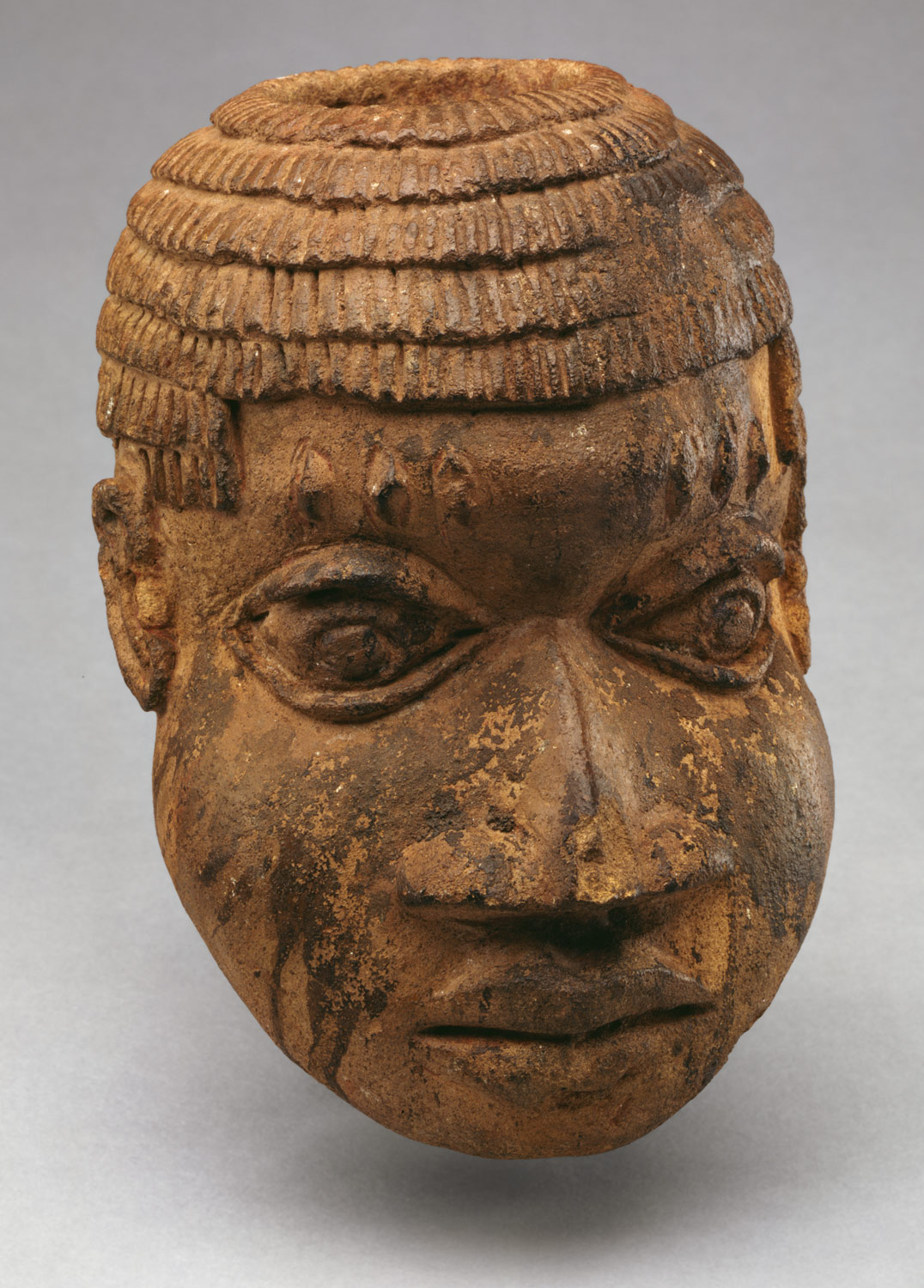
https://www.metmuseum.org/toah/images/hb/hb_1991.17.7.jpg Head, 16th–17th century Nigeria; Edo peoples, court of Benin Terracotta, sacrificial materials H. 6 1/2 in. (16.5 cm) Gift of Mr. and Mrs. Klaus G. Perls, 1991 (1991.17.7) This Benin terracotta head, with its full rounded cheeks and eyes, neatly arranged rows of hair, and series of three parallel scarification marks above each eye, is a commemorative depiction. Oral histories recount that the earliest such works were primarily associated with the ancestral altars of the first kings of Benin. However, over time, royal altars came to feature works in the more prestigious material of brass. In contemporary Edo society, terracotta heads are located on the ancestral altars of the brass casters' guild and are believed to memorialize Benin brass casters. Historically, the extent of the use of terracotta may have been more widespread. Edo terracotta heads differ from comparable works cast in brass in their greater simplicity, both stylistically and in the incorporation of less regalia. Generally, they are less delicate or refined, with thicker, fuller facial features, and reflect the relative speed with which they were made. It has also been suggested that the king's coral regalia might have been stored on terracotta heads, or that they were used as molds from which to cast brass heads. Source: Head [Nigeria; Edo peoples, court of Benin] (1991.17.7) | Heilbrunn Timeline of Art History | The Metropolitan Museum of Art |
| Culture › Re: Benin Art And Architecture by PhysicsMHD(m): 4:09am On Jan 16, 2011 |
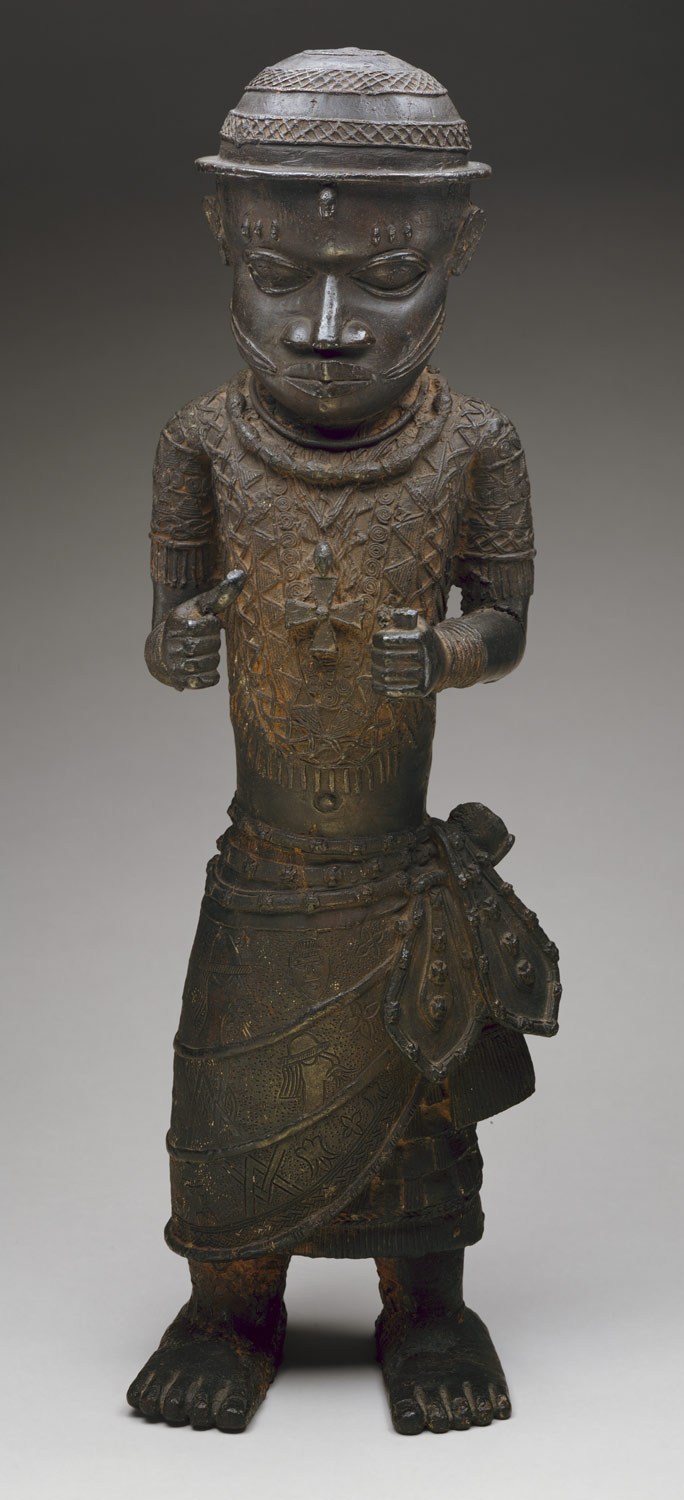
https://www.metmuseum.org/toah/images/hb/hb_1991.17.32.jpg Standing Male Official: Court Official, 16th–17th century Nigeria; Edo peoples, court of Benin Brass H. 25 3/4 in. (65.4 cm) Gift of Mr. and Mrs. Klaus G. Perls, 1991 (1991.17.32) The Punitive Expedition of 1897 led to the loss of contextual information about Benin works of art. Therefore, scholars attempt to reconstruct Benin art-historical chronologies and lineages utilizing a combination of written documents, oral histories, and analysis of physical attributes in the sculptures themselves. Scholars have suggested that this figure was placed upon a commemorative altar dedicated to a king of Benin. The figure is depicted wearing a distinctive cross pendant. His wrap skirt is adorned with profile heads of Portuguese traders, a frontal African head, and other common Benin motifs such as river leaves, mudfish, and interlace patterns. Three different identities have been suggested for this figure. The official may be a messenger from a ruler referred to as the Ogane, who today is identified as the leader, or Oni, of Ife. The present Benin dynasty claims descent from the Yoruba kingdom of Ife. According to a sixteenth-century Portuguese text, each new oba, or king, of Benin had to be confirmed by the Ogane, whose messenger presented the oba with a brass hat, staff, and cross necklace. Another interpretation suggests that he may represent a priest of Osanobua, the Benin creator god, who also wears a cross. Finally, the figure may depict a member of Ewua, a group of palace officials who wake the oba each morning and perform a ceremony recalling the origin of the Benin dynasty. Source: Standing Male Official: Court Official [Nigeria; Edo peoples, court of Benin] (1991.17.32) | Heilbrunn Timeline of Art History | The Metropolitan Museum of Art |
| Culture › Re: Benin Art And Architecture by PhysicsMHD(m): 4:08am On Jan 16, 2011 |
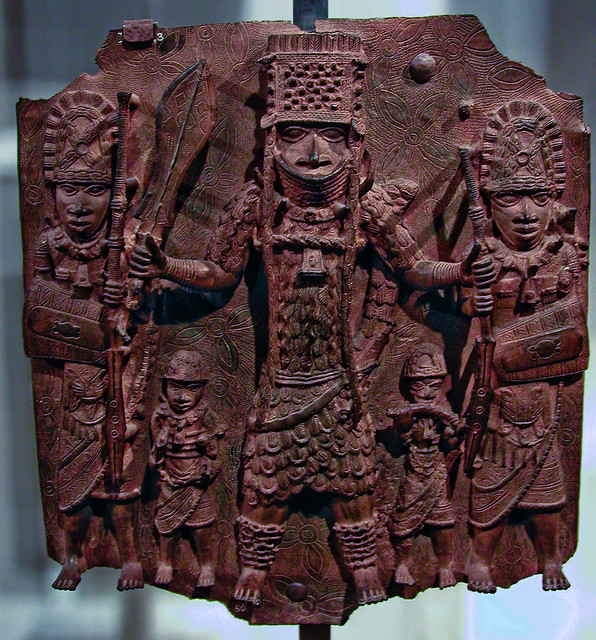
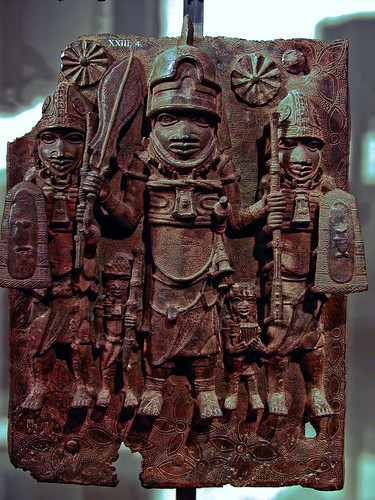
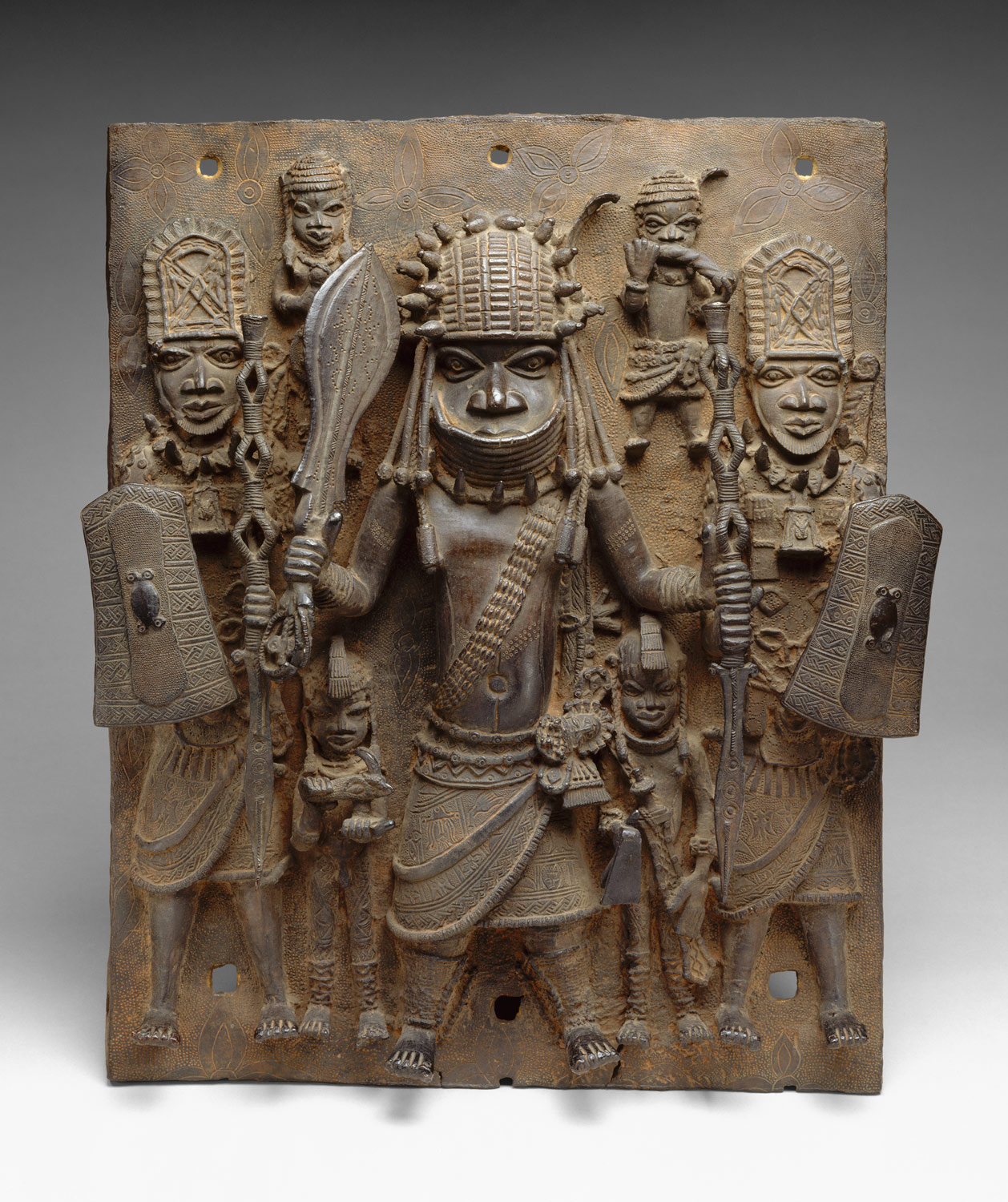
https://www.metmuseum.org/toah/images/hb/hb_1990.332.jpg Plaque: Warrior and Attendants, 16th–17th century Nigeria; Edo peoples, Court of Benin Brass H. 18 3/4 in. (47.6 cm) Gift of Mr. and Mrs. Klaus G. Perls, 1990 (1990.332) During the sixteenth and seventeenth centuries, a remarkable series of works were created to adorn the exterior of the royal palace in Benin City. A seventeenth-century Dutch visitor to the court of Benin, Olfert Dapper, described the sprawling palace complex—with its many large courtyards and galleries—as containing wooden pillars covered from top to bottom with rectangular cast brass plaques. These plaques are understood to have autonomous meaning and to tell complex narratives in relationship to one another. At some point the plaques were removed from the palace facade, as they were no longer there when the British arrived in the region. One scholar has surmised that they "were kept like a card index up to the time of the Punitive Expedition, and referred to when there was a dispute about courtly etiquette." The authors of such works were far more concerned with the communication of hierarchies and status than in capturing individual physical features. These plaques conform to a convention of "hierarchical proportions" wherein the largest figure is the one with the greatest authority and rank. In this example, it is a warrior chief. He is in the center, flanked on either side by soldiers of lesser rank. Regalia and symbols of status are emphasized above all other aspects of the subject depicted. For example, the warrior is shown with leopard-spot scarification marks and a leopard-tooth necklace, which associate him with the stealth, speed, and ferocity of the leopard. As "king of the bush," the leopard is one of the principle symbols of Benin kingship. Additionally, the warrior chief wears a coral-studded helmet and collar, a lavish wrap, and a brass ornament on his hip. In his left hand he carries a ceremonial sword, a gesture of honor and loyalty, and holds a spear in his other hand. The servile status of the figures flanking the warrior chief is indicated by the objects they carry. One attendant has a fan used to cool the warrior chief, the other a trumpet to announce his presence. A third attendant brings a box containing an offering of kola nuts for the oba (king). Source: Plaque: Warrior and Attendants [Nigeria; Edo peoples, court of Benin] (1990.332) | Heilbrunn Timeline of Art History | The Metropolitan Museum of Art |
| Culture › Re: Benin Art And Architecture by PhysicsMHD(m): 4:07am On Jan 16, 2011 |
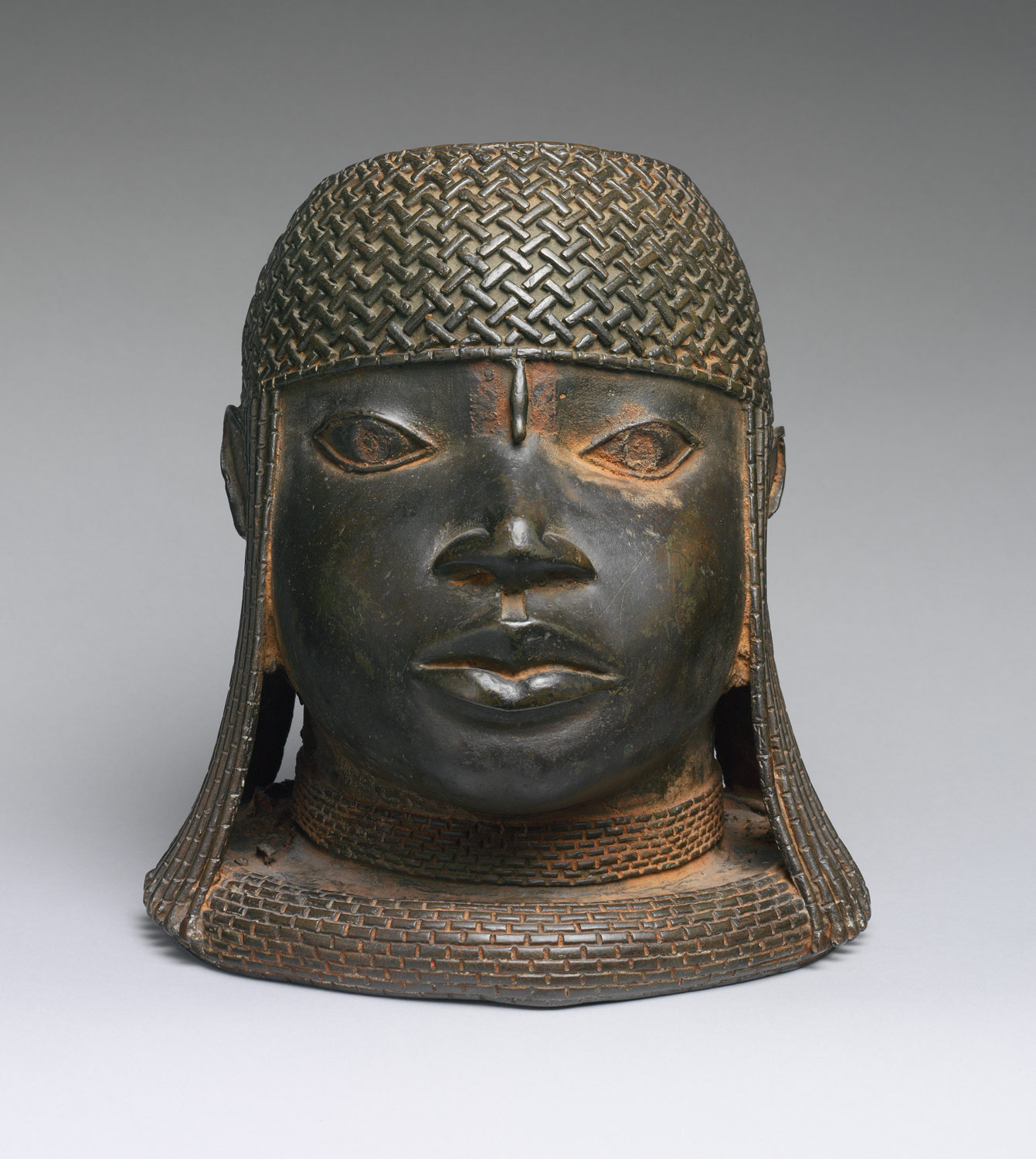
https://www.metmuseum.org/toah/images/hb/hb_1979.206.86.jpg Head of an Oba, 16th century (ca. 1550) Nigeria; Edo peoples, court of Benin Brass H. 9 1/4 in. (23.5 cm) The Michael C. Rockefeller Memorial Collection, Bequest of Nelson A. Rockefeller, 1979 (1979.206.86) The leaders of the kingdom of Benin in present-day Nigeria trace their origins to a ruling dynasty that began in the fourteenth century. The title of "oba," or king, is passed on to the firstborn son of each successive king of Benin at the time of his death. The first obligation of each new king during this transition of rule is to commemorate his father with a portrait cast in bronze and placed on an altar at the palace. The altar constitutes an important site of palace ritual and is understood to be a means of incorporating the ongoing influence of past kings in the affairs of their descendents. Though associated with individuals, this highly stylized genre of commemorative portraiture emphasized the trappings and regalia of kingship rather than specific facial features. In the Edo world view, the head is considered the locus of a man's knowledge, authority, success, and family leadership. The burden of providing for his family and seeing them through times of trouble is often described as being "on his head." The oba is often called by his praise name "Great Head," accentuating the head of the living leader as the locus of responsibility over and for the Benin kingdom. The idealized naturalism of this work reflects conventions of depicting the king at the prime of his life. The straightforward gazing eyes, which would have included iron inlays, possess the ability to see into the other world, communicating the divine power of the oba to survey his kingdom. The beaded headdress and collar are depictions of the king's coral regalia. Coral is of particular importance to the Edo because of its associations with the ancestral realms of the sea and to the immense wealth of the oba gained through ocean-going trade with Europe. The relatively minimal amount of brass used to make this light cast and the proportionately small amount of regalia depicted indicate that the head was created during the earlier half of the sixteenth century. Art historians have suggested that over the centuries, as greater quantities of brass became available, casters had less incentive to be economical with the material, and the trappings of office worn by the kings of Benin became more ostentatious. Source: Head of an Oba [Nigeria; Edo peoples, court of Benin] (1979.206.86) | Heilbrunn Timeline of Art History | The Metropolitan Museum of Art ^^^^^^^^ Although this piece erroneously claims the present dynasty started in the 14th century, the rest is accurate. |
| Politics › Re: Jos: Stay Back And Fight, Apga Tells Igbos by PhysicsMHD(m): 4:05am On Jan 16, 2011 |
I understand the motivation behind telling them to stay and fight back, however, a shadow (secret) wing of the APGA should provide the guns and machetes or the OPC-like (Igbo version) thugs, if they really insist on such. Ordinary people can't be expected to take down jihadist mobs with judo. |
| Culture › Re: Benin Art And Architecture by PhysicsMHD(m): 3:59am On Jan 16, 2011 |
[img]http://www.metmuseum.org/toah/images/hb/hb_1991.17.113,1996.11.jpg[/img] [img]http://www.metmuseum.org/toah/images/hb/hb_1991.17.113,1996.11_av1.jpg[/img] [img]http://www.metmuseum.org/toah/images/hb/hb_1991.17.113,1996.11_av2.jpg[/img] [img]http://www.metmuseum.org/toah/images/hb/hb_1991.17.113,1996.11_av3.jpg[/img] Oba with Animals, 18th–19th century Nigeria; Edo peoples, court of Benin Brass H. 4 7/8 in. (12.38 cm) Gift of Mr. and Mrs. Klaus G. Perls, 1991 (1991.17.113) Altar to the Hand (Ikegobo) of Ezomo Ehenua, 18th–19th century Nigeria; Edo peoples; court of Benin Brass H. 13 in. (33.02 cm) Rogers Fund, 1996 (1996.11) In the kingdom of Benin, ikegobo, or "altars to the hand," celebrate the accomplishments of exceptional individuals. The hand is associated with action and productivity, and is considered the source of wealth, status, and success for all those who depend on manual skill and physical strength. Altars of this kind are commissioned in terracotta, wood, or brass, depending on the status of the patron. This ikegobo is an important historical document associated with the reign of Akenzua I. In the early eighteenth century, rebellious chiefs challenged Akenzua's leadership and threatened the unity and stability of the kingdom. Ehenua, Akenzua's ezomo or military commander, played a central role in defeating these forces and restoring order to the kingdom. In recognition of his heroism and service, Akenzua presented Ehenua with an ikegobo illustrating his military triumph. The artist who created this work, composed of a series of units, used costume, scale, and composition to denote the relative status of the figures depicted on the frieze. A monumental image of Ehenua, dressed in full military regalia and clutching trophies of war, appears at the center of a group of diminutive soldiers, attendants, and priests. Two rows of musketeers above the frieze include Portuguese soldiers, an indication of the degree to which European powers were engaged in the support of Benin's leadership at this time. A separately cast sculptural group sitting in front of these soldiers portrays Oba Akenzua in the act of performing sacrifices to his ancestors so that Ehenua will prevail and triumph over his adversaries. Finally, a carved ivory tusk, now missing, was fitted onto the brass peg between the soldiers. While most Benin art left the kingdom as a result of the British Punitive Expedition of 1897, Ehenua's ikegobo remained in Benin in the possession of his descendants, who inherited the ezomo title. Its regular use across generations is a testament to its continued relevance and vitality. Source: Oba with Animals, Altar to the Hand (Ikegobo) of Ezomo Ehenua [Nigeria; Edo peoples, court of Benin] (1991.17.113,1996.11) | Heilbrunn Timeline of Art History | The Metropolitan Museum of Art |
| Culture › Re: Benin Art And Architecture by PhysicsMHD(m): 3:55am On Jan 16, 2011 |
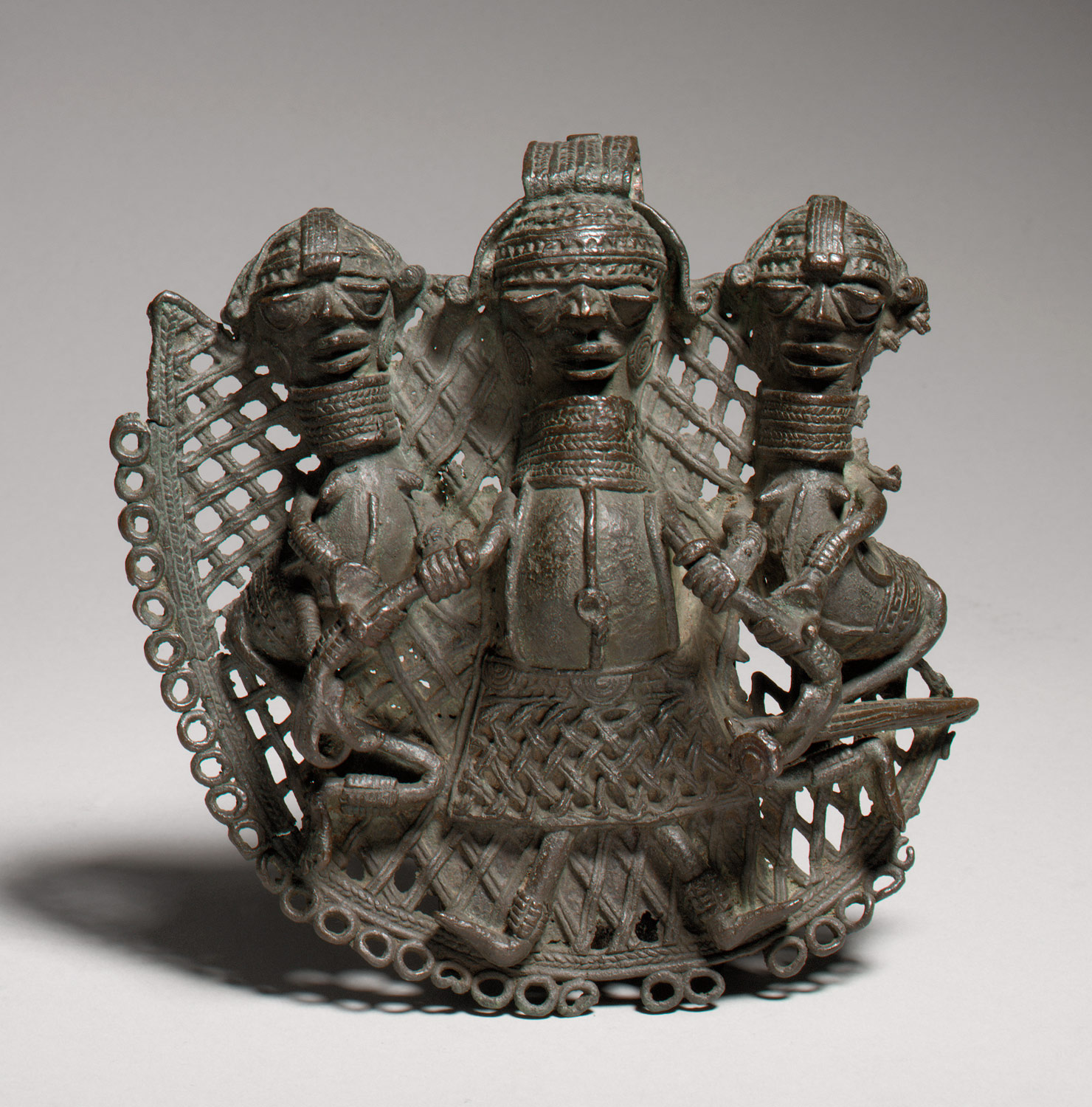
https://www.metmuseum.org/toah/images/hb/hb_1979.206.301.jpg Aegis Pendant, 15th–19th century Nigeria; Benin, Udo (?) Brass H. 6 1/10 in. (15.49 cm) The Michael C. Rockefeller Memorial Collection, Bequest of Nelson A. Rockefeller, 1979 (1979.206.301) This semicircular ornament was likely the property of a provincial chief allied to the Benin kingdom, in what is today southern Nigeria. As the Benin kingdom expanded its territory, it disseminated its courtly traditions among the ethnically diverse peoples who were incorporated into its political structure. Regional rulers frequently appropriated and reconfigured Benin's symbols of power for their own use at the local level. In this example, a standard motif from Benin royal art, a central chief flanked by two attendants who support his arms, has been represented in a distinctive style. This depiction of a leader as he appears in public emphasizes the idea of a ruler's reliance on the support of his subjects. Appearing at a chiefly court far removed from the kingdom of Benin's center, however, the motif may have been adopted as a straightforward symbol of chiefly power demonstrating connections to royal authority. The style of dress is evidently based on costumes from the Benin court, as the chief is depicted wearing an elaborate wrapper, high collar, and headdress reminiscent of those depicted in royal sculpture from the capital. With their willowy arms and legs, bulbous heads, and coffee-bean eyes, however, these figures represent a significant stylistic departure from comparable works created in Benin City, the capital of the kingdom of Benin. Source: Aegis Pendant [Nigeria; Benin, Udo (?)] (1979.206.301) | Heilbrunn Timeline of Art History | The Metropolitan Museum of Art |
| Culture › Re: Benin Art And Architecture by PhysicsMHD(m): 3:51am On Jan 16, 2011 |
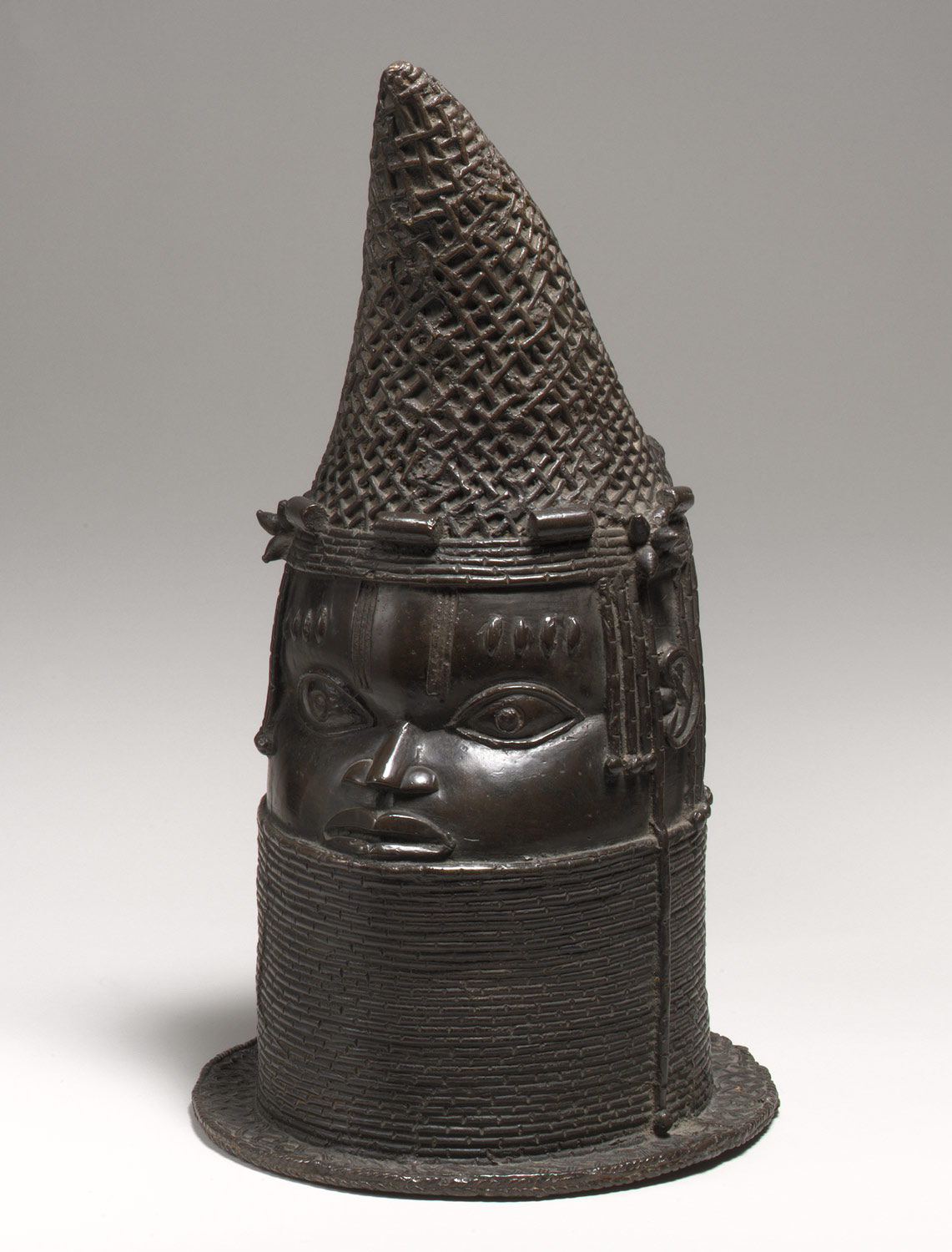
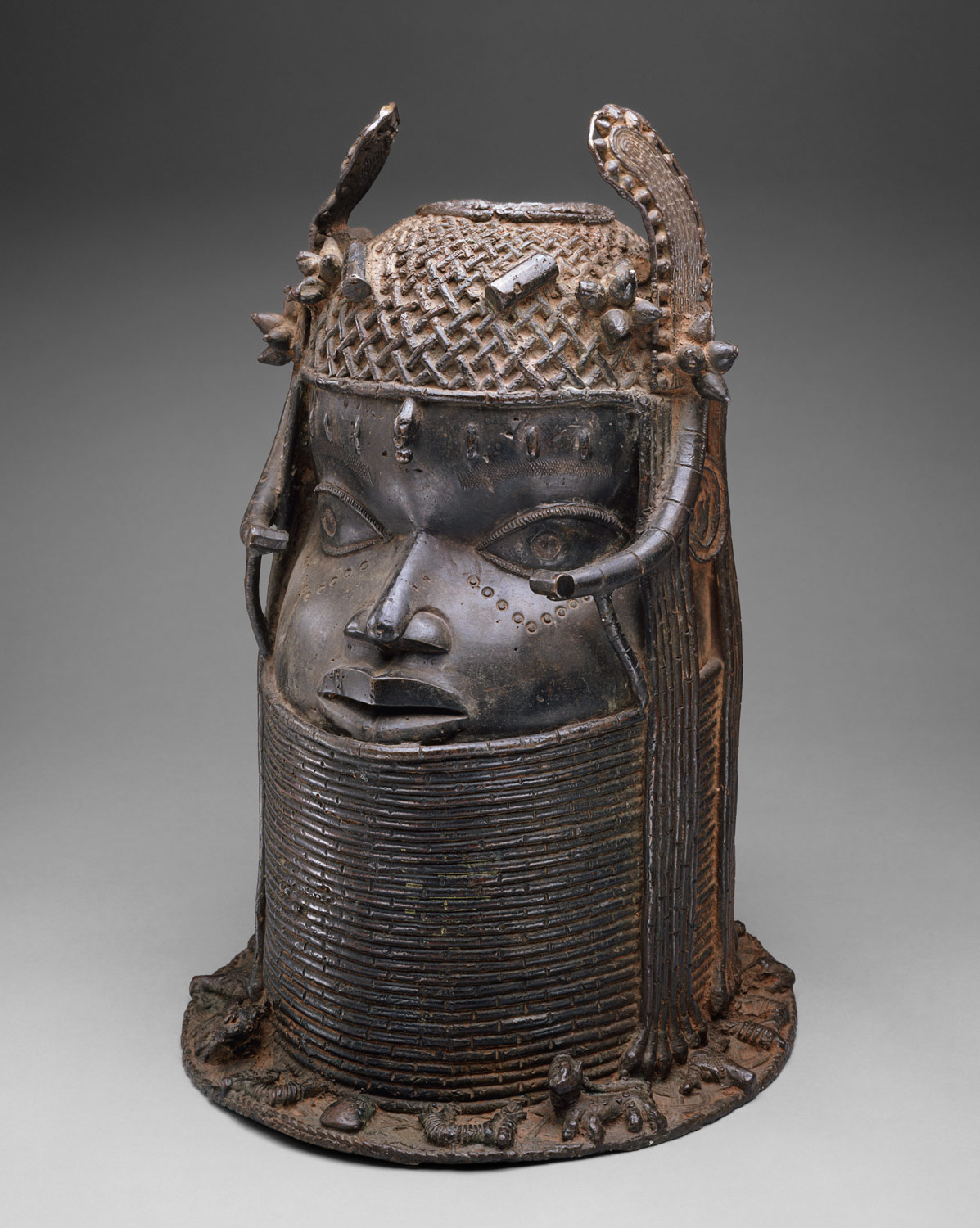
https://www.metmuseum.org/toah/images/hb/hb_1977.187.36.jpg Head of a Queen Mother (Iyoba), 1750–1800 Nigeria; Edo peoples, court of Benin Brass H. 16 3/4 in. (42.54 cm) Bequest of Alice K. Bache, 1977 (1977.187.36) In the Benin kingdom, the iyoba, or mother of the oba (king), occupies an important and historically significant place within Benin's political hierarchy. The title was first conferred upon Idia, the mother of king Esigie, who used her political skill and supernatural abilities to save her son's kingdom from dissolution in the late fifteenth century. Ever since that time, queen mothers have been considered powerful protectors of their sons and, by extension, the kingdom itself. Because of the enormous esteem in which they are held, iyobas enjoy privileges second only to the oba himself, such as a separate palace, a retinue of female attendants, and the right to commission cast brass sculptures for religious or personal use. Ancestral altars dedicated to past iyobas, like those of past kings, are furnished with cast brass commemorative heads. The heads of queen mothers are distinguished from those of kings by the forward-pointing peaks of their coral-beaded crowns. Commemorative heads of iyobas hold to the same stylistic chronology as those of obas. Earlier heads were cast with thinner walls and display tight beaded collars that fit snugly beneath the chin. Later versions have thicker walls, exhibit enlarged cylindrical collars that cover the face up to the lower lip, and are designed with a circular opening behind the peak of the crown to hold a carved ivory tusk. This head of an iyoba dates from the eighteenth century. While its high collar and pierced crown place it with later examples, the sensitive, naturalistic modeling of the face is reminiscent of the earliest commemorative heads. Source: Head of a Queen Mother (Iyoba) [Nigeria; Edo peoples, court of Benin] (1977.187.36) | Heilbrunn Timeline of Art History | The Metropolitan Museum of Art |
| Culture › Re: Benin Art And Architecture by PhysicsMHD(m): 3:49am On Jan 16, 2011 |
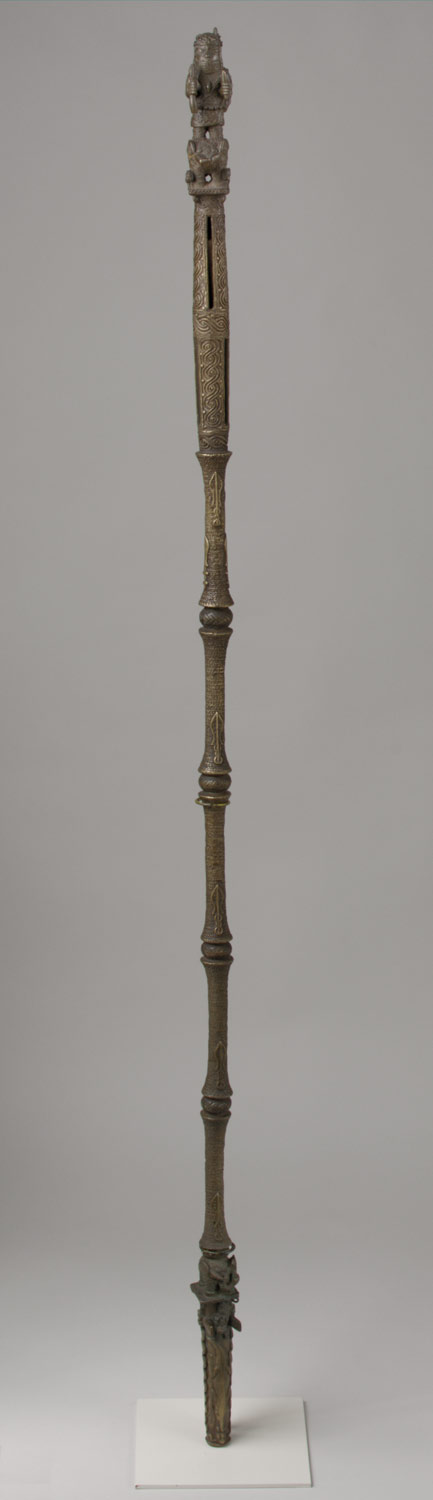
https://www.metmuseum.org/toah/images/hb/hb_1974.5.jpg Rattle Staff (Ukhurhe) of Oba Akenzua I, 1725–50 Nigeria; Edo peoples, court of Benin Bronze, copper, iron H. 63 1/2 in. (161.3 cm) Ann and George Blumenthal Fund, 1974 (1974.5) In the Benin kingdom of southern Nigeria, rattle staffs, or ukhurhe, are an essential feature of Benin ancestral altars, whether for kings, chiefs, or commoners. These staffs have a hollow rattle chamber near the summit, and they are shaken while uttering prayers at the altars to attract the attention of the ancestors. Ukhurhe may be made of wood or brass, although the brass examples are found only on royal altars. This staff was created to memorialize Akenzua I, an oba (king) who ruled the Benin kingdom in the early eighteenth century. A rebel chief called Iyase n'Ode challenged Akenzua's reign and civil war ensued. With the help of his military commander, or ezomo, Akenzua ultimately emerged victorious, and the iconography displayed on this ukhurhe refers to this military triumph. In Benin, elephants are a traditional symbol of chiefdom and, according to Benin oral literature, Iyase n'Ode had the ability to change himself into an elephant to vanquish his enemies. Here, Oba Akenzua stands triumphantly on an elephant holding a miniature ukhurhe and a stone axe head, an object associated with warfare and death. Leopards, the preeminent symbol of royalty in Benin art, flank the elephant on either side to suggest the oba's ability to regulate the power of his chiefs. Swords of authority called eben appear in relief along the shaft of the ukhurhe, and toward the bottom a crocodile, representative of the water deity Olokun, indicates the importance of overseas trade to the prosperity of Akenzua's kingdom. At the base of the staff, a second elephant most likely represents the ezomo; his trunk ends in a human hand holding medicinal leaves, a motif in Benin art representing victory and power. Source: Rattle Staff (Ukhurhe) of Oba Akenzua I [Nigeria; Edo peoples, court of Benin] (1974.5) | Heilbrunn Timeline of Art History | The Metropolitan Museum of Art |
| Politics › Re: Nnamdi Azikwe (zik) As Short-sighted As Buhari by PhysicsMHD(m): 3:47am On Jan 16, 2011 |
I too think Zik should have seen the "dream team" angle that everybody feels is so obvious with hindsight, but I am just saying regardless of whatever capital he had, he might have been taking other completely real factors into account. He did have enough capital that regardless of however much he lost for aligning with Awo, with Awo behind him, he would have won for sure, but, like I said there are other factors to take into account. Perhaps, like others are saying in this thread, he did overestimate his own political capital, but I think it more likely that he either took factors 1-4 that I outlined above into account or suspected Awo's letter was just a rehash of his attempt to ask both Zik and Bello for an alliance prior to the first republic. Ultimately , I feel it should have happened. The future of Nigeria (our present) would have been immensely different. However there is a completely different angle to this that some people may not have thought about. https://www.nairaland.com/nigeria/topic-445815.0.html ^^^ Zik might actually have been trying to use the North, and repeat the first republic alliance, except with roles switched. |
| Culture › Re: What Is The History Behind The Gorgeous [edo] Bini's Hair Beads? by PhysicsMHD(m): 3:30am On Jan 16, 2011 |
| Culture › Re: What Is The History Behind The Gorgeous [edo] Bini's Hair Beads? by PhysicsMHD(m): 3:26am On Jan 16, 2011 |
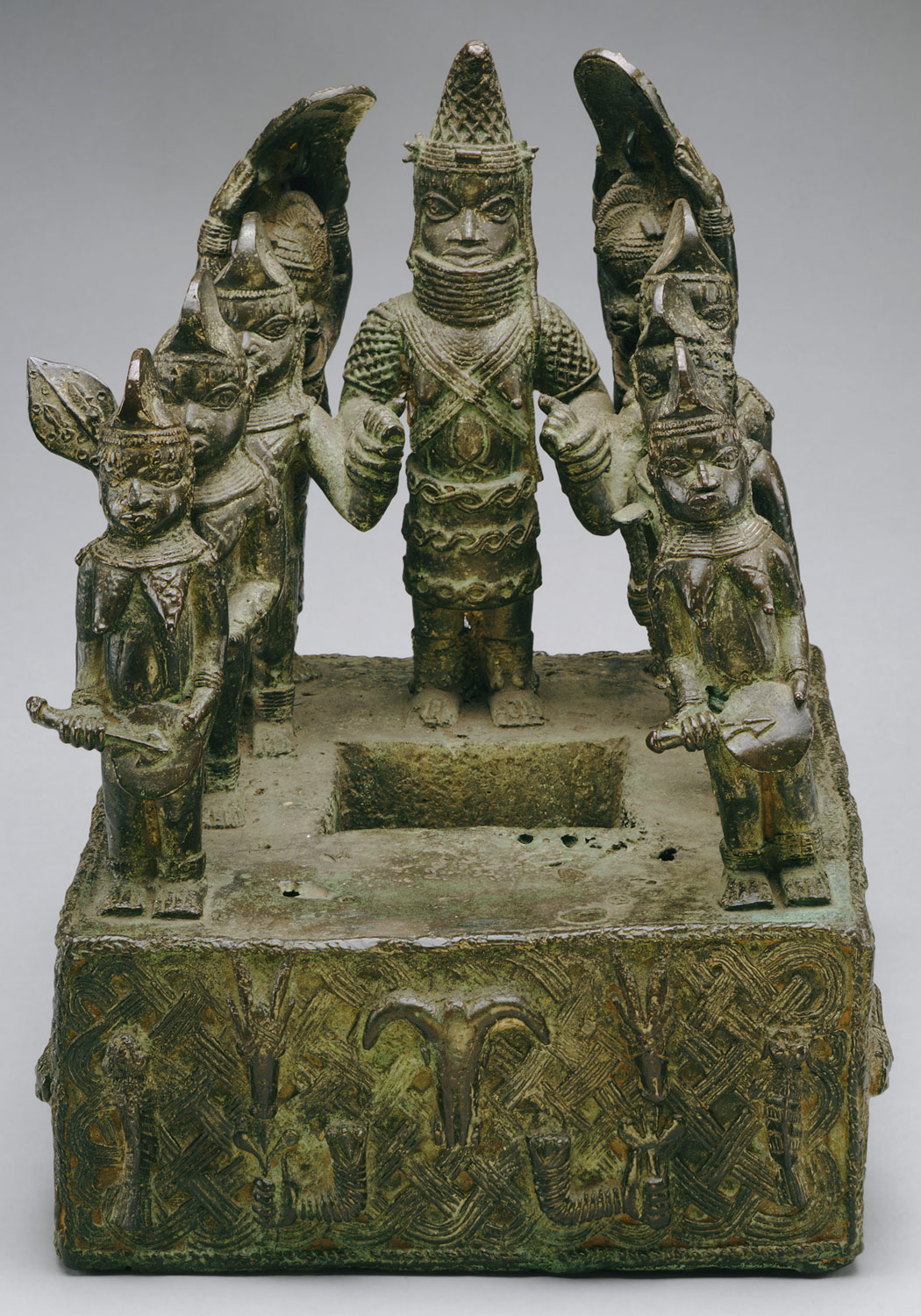
I might have an answer to Ileke Idi's original question. The only thing is that in this image, only one of the women seems too possibly have coral beads on their head. https://www.metmuseum.org/toah/images/hb/hb_1991.17.111.jpg https://www.metmuseum.org/toah/images/hb/hb_1991.17.111_av1.jpg ^^^^^ The woman on the right of the Iyoba, holding up one of the two fans, seems to have beads in her hair. "Altar Tableau: Queen Mother and Attendants, 18th century Nigeria; Edo peoples, court of Benin Brass H. 13 1/2 in. (34.29 cm) Gift of Mr. and Mrs. Klaus G. Perls, 1991 (1991.17.111) This cast brass tableau, or urhoto, was originally displayed on an ancestral altar dedicated to the mother of a ruler of the Benin kingdom. The queen mother, or iyoba, occupies an important place within the political hierarchy of the Benin court. By protecting the health and well-being of her son, she helps to safeguard the security and prosperity of the entire kingdom. In light of her position, she is entitled to certain prerogatives enjoyed by high-ranking male titleholders, such as a luxurious palace, a coterie of attendants, and the right to commission sculpture in ivory and brass. After her death, a large altar dedicated to her memory is constructed within the palace and decorated with an assemblage of sculptures that celebrate her achievements and facilitate communication with her spirit in the afterlife. This urhoto is composed of nine figures upon a rectangular base with a square opening at the center. Motifs referring to her strength and achievements such as mudfish and elephant trunks with hands holding leaves, and those of sacrificial offerings in the form of goat and ram heads, appear on the sides of the base superimposed over an interlace pattern. Above, the iyoba is shown surrounded by a group of eight female servants. Similar to other examples of royal art from Benin, the iyoba's superior rank is communicated through her greater scale and the detailed depiction of coral bead regalia. She wears the peaked crown traditionally associated with her position, as well as a cylindrical collar, netted shirt, and crossed bandoliers worn by high-ranking chiefs. The female attendants who surround the iyoba carry insignia of the iyoba's importance, including circular fans and a sword and staff of authority. Two young women stand on either side of the queen mother to support her arms, an arrangement also assumed by the king when appearing in state. Behind her, a pair of attendants hold shields above her head to protect her from the sun. The unique crested hairstyle and abundant coral ornaments found on the attendants mark them as women destined for marriage to the king or other major political figures. Raised in the palace by the iyoba herself, their sophistication and education make them valuable partners for powerful courtiers. Source: Altar Tableau: Queen Mother and Attendants [Nigeria; Edo peoples, court of Benin] (1991.17.111) | Heilbrunn Timeline of Art History | The Metropolitan Museum of Art" 1 Like |
| Culture › Re: Benin Art And Architecture by PhysicsMHD(m): 3:22am On Jan 16, 2011 |
https://www.metmuseum.org/toah/images/hb/hb_1991.17.111.jpg https://www.metmuseum.org/toah/images/hb/hb_1991.17.111_av1.jpg https://www.metmuseum.org/toah/images/hb/hb_1991.17.111_av2.jpg Altar Tableau: Queen Mother and Attendants, 18th century Nigeria; Edo peoples, court of Benin Brass H. 13 1/2 in. (34.29 cm) Gift of Mr. and Mrs. Klaus G. Perls, 1991 (1991.17.111) This cast brass tableau, or urhoto, was originally displayed on an ancestral altar dedicated to the mother of a ruler of the Benin kingdom. The queen mother, or iyoba, occupies an important place within the political hierarchy of the Benin court. By protecting the health and well-being of her son, she helps to safeguard the security and prosperity of the entire kingdom. In light of her position, she is entitled to certain prerogatives enjoyed by high-ranking male titleholders, such as a luxurious palace, a coterie of attendants, and the right to commission sculpture in ivory and brass. After her death, a large altar dedicated to her memory is constructed within the palace and decorated with an assemblage of sculptures that celebrate her achievements and facilitate communication with her spirit in the afterlife. This urhoto is composed of nine figures upon a rectangular base with a square opening at the center. Motifs referring to her strength and achievements such as mudfish and elephant trunks with hands holding leaves, and those of sacrificial offerings in the form of goat and ram heads, appear on the sides of the base superimposed over an interlace pattern. Above, the iyoba is shown surrounded by a group of eight female servants. Similar to other examples of royal art from Benin, the iyoba's superior rank is communicated through her greater scale and the detailed depiction of coral bead regalia. She wears the peaked crown traditionally associated with her position, as well as a cylindrical collar, netted shirt, and crossed bandoliers worn by high-ranking chiefs. The female attendants who surround the iyoba carry insignia of the iyoba's importance, including circular fans and a sword and staff of authority. Two young women stand on either side of the queen mother to support her arms, an arrangement also assumed by the king when appearing in state. Behind her, a pair of attendants hold shields above her head to protect her from the sun. The unique crested hairstyle and abundant coral ornaments found on the attendants mark them as women destined for marriage to the king or other major political figures. Raised in the palace by the iyoba herself, their sophistication and education make them valuable partners for powerful courtiers. Source: Altar Tableau: Queen Mother and Attendants [Nigeria; Edo peoples, court of Benin] (1991.17.111) | Heilbrunn Timeline of Art History | The Metropolitan Museum of Art |
| Culture › Re: Benin Art And Architecture by PhysicsMHD(m): 3:20am On Jan 16, 2011 |
[img]http://www.metmuseum.org/toah/images/h2/h2_1991.17.80,81.jpg[/img] Bracelets: Crocodile Heads, 17th–19th century Nigeria; Edo peoples, court of Benin Brass, gilt L. 5 1/4 in. (13.34 cm) Gift of Mr. and Mrs. Klaus G. Perls, 1991 (1991.17.80, 81) The oba and chiefs of Benin wear pairs of ornate bracelets at palace festivals. Long and cylindrical, these cufflike ornaments may be made of either ivory or brass and display imagery reflecting the exalted status of their bearers. The spiral bands of incised, crosshatched half-ovals and dotted lines, set within raised, striated borders, terminate at either end in elongated crocodile heads. The artist has taken great care to evoke the appearance and character of these animals. Perpendicular lines along the snouts, as well as rows of bumps on the forehead, suggest the distinctive texture of crocodile skin, while the close-set eyes with contrasting pupils evoke the watchful gaze of this dangerous animal. The depictions of crocodiles, as with other forms of aquatic imagery, associates the ruler with Olokun, god of the sea. The ocean was conceived of as a major source of wealth and prosperity for the Benin kingdom, which benefited from overseas trade with Portugal and other European powers. A realm of unfathomable depths, it also served as a metaphor for the vast, hidden powers of the ruler. The surfaces of these bracelets are covered with a thin layer of gold, an unusual feature within a courtly tradition that rarely employed this precious metal. It is unclear when, or even if, the technique of gilding was introduced to Benin's brasscasters. Some scholars have suggested that a resident European craftsman may have been responsible for gilding these and other items at the court. Source: Bracelets: Crocodile Heads [Nigeria; Edo peoples, court of Benin] (1991.17.80,81) | Heilbrunn Timeline of Art History | The Metropolitan Museum of Art |
| Culture › Re: Benin Art And Architecture by PhysicsMHD(m): 3:19am On Jan 16, 2011 |
https://www.metmuseum.org/toah/images/hb/hb_1991.17.3.jpg Head of an Oba (King), 19th century Nigeria; Edo peoples, court of Benin Brass, iron H. 18 in. (45.7 cm) Gift of Mr. and Mrs. Klaus G. Perls, 1991 (1991.17.3) This example of a brass casting of a Benin head may date to the mid-nineteenth century. The extreme degree of stylization, swollen cheeks and enlarged eyes, the size of the flange at the base, the weight of the casting, and the winglike projections attached to the crowns are characteristic of brass casting during this later period of Benin royal court. Source: Head of an Oba (King) [Nigeria; Edo peoples, court of Benin] (1991.17.3) | Heilbrunn Timeline of Art History | The Metropolitan Museum of Art |
| Culture › Re: Benin Art And Architecture by PhysicsMHD(m): 3:09am On Jan 16, 2011 |
[img]http://www.artic.edu/aic/collections/citi/images/standard/WebLarge/WebImg_000058/4500_534675.jpg[/img] Edo, Court of Benin Nigeria Oba's Altar Tusk, 1850/1888 Ivory 150.5 x 195.6 x 12.7 cm (59 1/4 x 77 x 5 in.) Gift of Mr. and Mrs. Edwin Hokin, 1976.523 Ivory's white color evokes spiritual harmony for the Edo; thus, its presence enhances an altar's sanctity. Ivory’s important role as a commodity controlled by the oba also made it attractive for use on royal altars. Since the 18th century, oba’s altars have been embellished with matched pairs of carved elephant tusks, reflecting the increase in ivory’s value at that time. The tusks were anchored on brass commemorative heads. Oba Adolo commissioned this tusk in the mid-19th century for the altar of his father, Oba Osemwende. The iconography, which prominently features the fish-legged oba motif, honors the 15th-century ruler Oba Ewuare. |
| Politics › Re: Nnamdi Azikwe (zik) As Short-sighted As Buhari by PhysicsMHD(m): 3:03am On Jan 16, 2011 |
[quote author=eku_bear link=topic=586376.msg7540600#msg7540600 date=1295131363]So nobody disagrees with what @ndu_chucks laid out? If those are the facts, then how is Zik not an absolute jackass? Not trying to be disrespectful, but what he did seems absolutely selfish, shortsighted, and spiteful.[/quote]While it may seem "obvious" at first glance that Zik made the wrong move, one has to consider whether he actually had the political capital left among his own people (Igbos) and with other Nigerians to take Awolowo as VP and actually expect to win. 1. Nnamdi Azikiwe had switched sides from Biafra to Nigeria after a disagreement with Ojukwu's uncompromising stance, losing not a little bit of respect in some areas in the process. 2. Nnamdi Azikiwe, although not in any way involved in the Jan. 1966 coup, had diminished stature amongst other Nigerians after he hid out vacationing in the Carribean after the tip of a possible coup (the same tip Balewa got, but did nothing about) and played no major part (to the best of my knowledge) in attempting to resolve the 1966 crisis. Not to mention being virtually absent from the national political scene (apart from urging Biafra to surrender to Nigeria when defeat was imminent) for nearly a decade and playing no major part in steering Nigeria back to normalcy, 3. The enormous revulsion people in certain areas felt towards Awolowo, who they saw as some sort of backstabber or double-talker. Note that Dr. Okpara, who was friends with Awolowo (were he and Awolowo on good terms after the war? Don't know. Somebody in the know could answer this though.) at some point, rebuffed Awolowo's offer of the VP slot to him, though Okpara was not not interested in the presidency himself. Zik could have been taking the sensibilities of his own people in account here. He might not have wanted to seem like a "turncoat" who allied with another "turncoat". 4. The impossibility of two giants with different political and social views working together without serious conflict. Also, the VP position is basically powerless and ignorable unless the President decides to empower the VP in some way. Taking Awolowo as VP would be dependent on assuming Awolowo could be quiet and let Zik take the lead and only occasionally offer his views, like most VP's do. I think he made a reasonable decision. The fact that Awolowo wrote a letter virtually begging him to serve under him does rubbish the unfounded myth that Awolowo was so desperate to "rule" Nigeria at all costs and the often repeated assertion that he "betrayed" certain people specifically so he could have them out of the way and become president unopposed. However it might not necessarily have convinced Zik for the fact that he may have had reason to suspect that Awolowo had secretly sent another letter at the same time to someone else, possibly from the North, asking them to be his VP while he runs for president or asking someone else from the North if he could be the VP while they take the presidency. |
| Culture › Re: Benin Art And Architecture by PhysicsMHD(m): 2:30am On Jan 16, 2011 |
[img]http://www.artic.edu/aic/collections/citi/images/standard/Exhib/EX_000001/96457_520259.jpg[/img] Edo Benin Kingdom, Nigeria Oba's Crown (Erhu Ede), 18th/19th century Coral, agate, and copper H. 15 cm (5 7/8 in.) The Trustees of the British Museum, London, Af1898,0630.5 Mediterranean coral was among the earliest commodities brought to Benin by Portuguese merchants in the late 15th century. Coral’s hard surface and deep red color appealed to the already established Edo appreciation for red stones such as agate and jasper, which had long been imported from North Africa and made into beads. When worn in abundance, coral regalia make a spectacular impression. Netted garments such as shirts, aprons, skirts, and even full-length robes are worn over white cloth. Crowns may be simple in design, like this cap, or more highly elaborate. The oba's beaded regalia also include collars, bracelets, sashes, belts, anklets, and shoes. |
| Culture › Re: Benin Art And Architecture by PhysicsMHD(m): 2:29am On Jan 16, 2011 |
[img]http://www.artic.edu/aic/collections/citi/images/standard/Exhib/EX_000001/100199_519833.jpg[/img] Edo Benin Kingdom, Nigeria Altar Group (Aseberia) with an Iyoba and Attendants, 17th/18th century Brass 33 x 30.5 x 23.5 cm (13 x 12 x 9 1/4 in.) © The Trustees of the National Museums of Scotland, A1898.380 In Benin the practice of creating figural groupings for royal altars dates to the 17th century. This altar group was made for an iyoba's altar and shows her at the center back, wearing a coral-beaded cap over her distinguishing “chicken’s beak” hairstyle. Flanking her are female attendants who hold aloft mirrored charms, which act as gateways into the otherworld. Warriors and ewua officials, each important members of the iyoba’s court, are also in the procession. Two leopards, symbols of the oba’s power, stand at the front. |
| Culture › Re: What Is The History Behind The Gorgeous [edo] Bini's Hair Beads? by PhysicsMHD(m): 2:00am On Jan 16, 2011 |
uplawal:It is absolutely true that similar traditions do not mean that one group necessarily influenced the other. It could actually just imply inherently similar cultures. However, in this case, Benin influence on Owo and multiple other parts of Ondo state is pretty well established. http://books.google.com/books?id=ric6OhxbCS0C&pg=PA52&lpg=PA52&dq=ondo+tribute+to+benin&source=bl&ots=t9df9wj5Or&sig=CtPNNFaKuzodumduwU0Fb04tq1Y&hl=en&ei=pUEyTfvkNcKtgQe3iYGSCw&sa=X&oi=book_result&ct=result&resnum=1&ved=0CBMQ6AEwAA#v=onepage&q=ondo%20tribute%20to%20benin&f=false http://thenationonlineng.net/web2/articles/28141/1/Peace-returns-to-Ondo-community/Page1.html http://www.artic.edu/aic/collections/exhibitions/benin/artwork/189823 1 Like |
| Culture › Re: Benin Art And Architecture by PhysicsMHD(m): 1:41am On Jan 16, 2011 |
[img]http://www.artic.edu/aic/collections/citi/images/standard/Exhib/EX_000001/96450_520251.jpg[/img] Edo Benin Kingdom, Nigeria Oba Ovonramwen's Stool (Agba), Late 19th century Wood, mirror, and brass nails 39.5 x 62.5 x 33 cm (15 1/2 x 24 5/8 x 13 in.) The Trustees of the British Museum, London, Af1898,0630.2 According to the notes of Ernst Roupell, the member of the British military force who took possession of this stool in Benin, Oba Ovonramwen was sitting on it when he was sentenced to exile by a military tribunal in September 1898. The stool is heavily embellished with bas-relief images that evoke the oba's wealth through trade. At center, the oba is portrayed in coral regalia and he raises an eben sword. In a boat to the side, a European man holds a saber. Barrels for transporting palm oil, Benin’s major commodity at the time, are portrayed around the figures. |
| Politics › Re: Don't The Igbos Deserve A Round Of Applause? by PhysicsMHD(m): 1:40am On Jan 16, 2011 |
lmao@ Onlytruth's signature (edit: reread thread) |
| Politics › Re: Nigeria Or South Africa , Which Is More Violent ? I Need To Know Urgently by PhysicsMHD(m): 1:15am On Jan 16, 2011 |
| Politics › Re: Describe Atiku In A Sentence by PhysicsMHD(m): 7:47pm On Jan 14, 2011 |
Done. |
| Politics › Re: Prophecy Of Witches And Wizards Fulfilled by PhysicsMHD(m): 7:47pm On Jan 14, 2011 |
Witches don hammer o! Up witches and wizards. |
| Culture › Re: Scammers Nigerian Culture by PhysicsMHD(m): 11:26am On Jan 14, 2011 |
naijafrend:I see exactly what you're saying, but it was only my intention to point out the error in his whole approach. I don't hold a grudge against him for being livid about this, and originally meant to only mock his reasoning. And it's not my intention to defend or pray for the good health of any dirty scammer. |
| Culture › Re: Scammers Nigerian Culture by PhysicsMHD(m): 2:21am On Jan 14, 2011 |
Stocker123:Yeah, I have relatives in the UK. They have multiple doctors in each family and they are rather well-off, so I doubt they would know of the kind of hustler Nigerians who you say live off welfare. However I was taking your post in reference to American welfare, which some groups in the U.S. are seen as being dependent on and I thought that was the reference intended by that jab. I don't know of Nigerians actually being dependent on welfare, but if you say so, I'll absolutely take your word for it, since you seem to know several "go to people" type of Nigerians. I also have to ask, do you know how many Europeans in Europe are on welfare? Being on welfare in a welfare state is quite another thing from being on welfare in the U.S. Remember there are nations like France or Greece or Sweden where welfare is seen positively. Countries where they hand out government help like it's water or air shouldn't be the basis of determining whether Nigerians abroad in general are welfare dependent and "living off" welfare. In France, middle class young white French men will go and protest and fight cops just to not have their welfare reduced. In this same France, the government decided to pay for the lifestyle (middle class living) of a couple with Asperger's syndrome, merely because of the inability of those people to function in or integrate into normal society. I would like to see one of the many thousands of AS individuals or individuals with similar conditions in the U.S. try to get something like that from the U.S. government. No chance. It's just a different thing entirely over there in Europe. Also, does it just so happen that virtually every U.S. Nigerian, even the ones who live in less wealthy African American communities (like Oak Cliff, TX or African American communities in Houston,TX, or New York) are all not on welfare, but the ones who go to the more expensive (to live in) Europe just so happen to mostly all be milking the system or completely dependent on government handouts? I'm skeptical. Also, the statistics for Nigerians in the UK are like those in the U.S.- some scammers, yes, but certainly not "living off" or dependent on welfare in any conceivably noticeable percentage. And the U.K. is still considered part of Europe last time I checked. |
| Culture › Re: Scammers Nigerian Culture by PhysicsMHD(m): 1:52am On Jan 14, 2011 |
Stocker123:No doubt Nigeria is extremely corrupt. Not denying that. Three decades of unchecked continuous decay can bring about such. I still assert that they (419ers, drug dealers) are a small percentage of Nigerians. I said not even up to a tenth of one percent of Nigeria's population of about 150 million are criminals in my earlier post. Do you know how many people that 0.1 % of 150 million people would be? 150,000. Yet there are nowhere near 150 thousand Nigerian scammers + drug dealers. Not that that's anything to be proud of because most other countries could say the exact same thing about their countries, but the large population of Nigeria leads to it being a larger source of these awful crimes. If there were 25,000 scammers, and drug dealers from Nigeria, that would make an enormous scene and impact thousands of people internationally and lead to the reputation we now have as Nigerians and yet that would only be .016 % of Nigerians. If you took .016% of the population of a country like Ghana or Cameroon, and made them international criminals, you would hardly make a scene or earn a negative reputation for the country. Not to suggest that it's only about population size or to suggest that Nigeria doesn't have a higher proportion of criminals than Ghana or Cameroon, because I know that's not the case. Both of those countries are better off socially in many aspects, and are also less urbanized (less cause for crime) than Nigeria. Still, I don't see anything in the blood. I see completely different societies. Some of them better or worse in different areas. Nigeria is definitely worse in crime, but is better than both in some other areas. For example, Cameroon has been ruled by the same corrupt non-military dictator, Paul Biya, for over 20 years and is making no attempts to even fight electoral fraud. The particular crimes Nigerian criminals choose to inflict on their victims are particularly foul. That combined with the higher proportion of criminals from Nigeria (probably larger than say, Russia, or some other large nation with a notorious criminal element) due to the emergence of a culture of corruption and worship of materialism and money, leads to criminals like your former friends who robbed you. That still does not suggest to me anything in the blood. Afterall, Burma, Bangladesh, and Pakistan have very corrupt societies but don't share blood with Nigeria. Incidentally, Nigeria does not have one culture. You know that very well. Yet I cannot think of even a single one of the cultures within Nigeria that has some particular cultural tolerance for fraud and theft. The country regressed massively and in doing so was not able to curtail a growing desperate and materialistic and wayward fraction of the youth, and for that Nigerians can be blamed, but any attempt to portray Nigeria as some genetically criminal people is just a kind of distortion to me. Most of the groups who make up the nation called Nigeria could actually have found themselves as Beninese, or Cameroonians, or Nigeriens, or Chadians, had colonialists chosen to draw the map differently or had the French conquered certain places before the English and vice versa. And some of the groups found in Nigeria are also found in large numbers in the neighboring African countries. The grouping in Nigeria is basically arbitrary, but there is nothing about the particular groups or people inside Nigeria that is particularly or genetically criminal. Rather, it is the state itself which failed to live up to the task of nipping corruption and fraud and money obsession in the bud. And I'm from Nigeria, not born in the U.S. |







1 2 3 4 5 6 7 8 ... 55 56 57 58 59 60 61 62 63 (of 67 pages)