RandomAfricanAm's Posts
Nairaland Forum › RandomAfricanAm's Profile › RandomAfricanAm's Posts
1 2 3 4 5 6 7 8 ... 14 15 16 17 18 (of 18 pages)
 Culture › Re: The Kongo Kingdom...A underrated Kingdom by RandomAfricanAm: 7:33am On Mar 26, 2013 |
Section I.-Of the Family. The organisation of the family or Xifumba is certainly one that the Bavili need not be ashamed of, and when compared to that of many civilised peoples can only be looked upon as a model of logical compactness. The Xifumba is composed of the four grandparents Nkaka, the father Tata, the mother Mama, their children Bana, grandchildren Batekulu, great-grandchildren Ndandu, and great-great-grandchildren Ndalula. The uncle on the mother's side is called Ngulinkaci, the aunt Mama. The aunt by marriage is called Mama. The uncles and aunts on the father's side Tata. Brother or sister-in-law Zali. Father or mother-in-law Nkwekici. Son or daughter-in-law Nkwekici. Uncle of mother Xikweci. Uncle of father Xikweci. When you ask a native to what family he belongs he will answer you by giving you the name of his mother's family. On the death of the father his brother takes care of the children; but the wife remains with her children sorrowing for her husband for at least twenty-four months, when she may marry again. These children are called bana bana ba bika nkulu. (The little children left by the spirit.) A man may not marry any of his mother's family or relations whom he terms Mama. If the Xina of the girl the man wishes to marry is that of his mother he cannot marry her. He may not marry the children of his father's brothers, but those of his father's sisters are not forbidden to him. The family forms a part of the higher organisation of the tribe. Each individual belongs to a family; each family is under a chief called Kongo Zovo, and this chief is under the prince of the province containing these families, who is called by the name of his province preceded by the prefix Ma, short for Manifamu. Seven of these provinces hold the people of Luango, called the Bavili. The Bavili, under their king Maluango, form a third part of the kingdom of Kongo, or the Fjort people, who are a section of the Bantu race. My head man Tati for example is of the family of Yanga of the royal province Buali of the Bavili of the KONGO kingdom of the Bantu race. An individual may not leave his town without the permission of his father or of the Kongo Zovo, and upon his return he must present himself before him, to give an account of himself and show the proceeds of his fishing, hunting, or trading. He must obey and respect his chief, who may tie him up, chastise him, deprive him of food, but has no power of life and death over him-this right belonging in law only to the King Maluango. The Kongo Zovo can also requisition the services of all his family. |
| Culture › Re: The Kongo Kingdom...A underrated Kingdom by RandomAfricanAm: 7:33am On Mar 26, 2013 |
CHAPTER V LAW The Family. - Marriage.-Contracts. -Property. -Crimes and Punishments.-Judicial Procedure. NATIVE LAW THE subject of African Law is a fascinating one and I am tempted to enlarge on it, the more so as it is but little understood in England, although a knowledge of it is clearly essential to the right governance of our black fellow subjects. Miss Kingsley has treated of African religion and law in her West African Studies (abridged edition), among other writers may be mentioned the late Sir. A. B. Ellis, Sir J. Smallman Smith, and Mr. J. W. Sarbah in addition. Much material has of course been pigeon-holed by various officials. But, able though the English works above mentioned are, they do not go deep below the surface, and are far from being text-books of native customary law, to which the administration can turn for guidance. Our French neighbours, wise in their generation, have recently issued a monumental work, Les Coutumes indigènes de la Côte d'Ivoire by Clozel; and a similar work on the native law of Nigeria compiled by a trained anthropologist who can give his whole time to his work would undoubtedly be of extreme value, not only to the student of comparative jurisprudence, but to the official who comes in daily contact with men who know only the native law, whose life is regulated by its fundamental principles, and who can be governed only if the English ruler recognises those principles and deals out even handed justice in accordance with them. In some primitive communities there is only one sort of offence which can be regarded as law-breaking Dr. Codrington shows that in Melanesia tabu takes the place of law; the infraction of a tabu may bring down on the head of the offender an automatic penalty; but he may be too strong spiritually; and then the penalty falls upon the innocent. To provide against this, the society itself of which the offender forms a part inflicts the penalty for wrong doing and thus satisfies the power whose wrath is incurred by the infraction of the tabu. Just in the same way in Africa a violation of the moral law, if I may so term it, is an affair for the whole of the community. If Nzambi, on the Kongo, is provoked by immorality especially of a sexual kind, the result, as we shall see in a later chapter, is drought, and the penalty falls on the community. A violation of the moral law is in native phraseology a "God palaver"; any outrage on a spirit may be of this nature but in practice a man is left to settle his own account with a minor spirit, which is hardly powerful enough to inflict damage on a family or tribe. On the Congo, justice is so far organised, where "god palavers" are concerned, that punishments are inflicted by the Badungu acting on the orders of the king. "Man palavers," on the other hand, or in our phraseology, Civil and Criminal Cases (for they are identical in Africa, the fundamental idea being that a debt of some sort has been incurred) are decided by a court of justice, which bases its decisions on precedents, but the judgment must be enforced by the winner of the case, aided it may be, by his family. It is not the business of the king or of any official to see that justice is done; when once judgment has been given and recognised by the people, generally the matter passes out of the hands of the state and becomes a private affair. If the loser is strong enough to resist payment the palaver becomes a trial of strength between the two families and may become a "war palaver"; in any case the palaver and its consequences, in the shape of liabilities to pay and right to receive, are handed down in the respective families, like any ordinary debt, until such time as the winner of the case is in a position to enforce payment. If the loser cannot resist, he must pay the debt or in default become a serf or pawn in the hands of the creditor; failing him, a member of his family, or an inhabitant of his town or district, loses his freedom. This service is not a setoff against the debt; the pawn is held until the debt is paid in legal currency; though a debtor may become a slave if his family has died out or dies out before the debt is paid; slavery, however, being regarded as a disgrace, the family would as long as it subsisted, endeavour to release one of its members. The intimate connection between the spheres of law and religion or magic cannot be better illustrated than by the fact that the weaker party to a suit calls in the help of nail fetishes. The form of the following notes is dictated by the form of the questionnaire-issued by the French authorities-to which it was originally an answer, and it must be read in the light of the foregoing note. |
| Culture › Re: The Kongo Kingdom...A underrated Kingdom by RandomAfricanAm: 8:20pm On Mar 25, 2013 |
Fantastic write up! You also have some pieces I haven't seen or at least haven't seen in color. I need to do some more reading on the kongo. Princibly looking at it's earlier foundations and relations with surrounding people. I'm more interested in African societies independent of substantial forign influence . I have some info you may like as well. |
| Culture › Re: Why Are Nigerian Men Intimidated By The Strong Independent Black Woman? by RandomAfricanAm: 7:59pm On Mar 25, 2013 |
The more importent question is to what extent did foreign missionaries change the gender dynamic in various societies throughout Arica? When I read history books and primary sources testamonials from first contact accounts women seemed very integrated(more so then other places around the world anyway). They also played pivital roles throughout history. There are also lots of societies that are(were) matrilineal. Most of this "women stay at home" talk sound plainly biblical (I.E recent) and reminds me of a village were missionaries told the people it wasn't "proper" to take the names of thier wives as was custom This question actually deserves it's own topic. I'll leave on this message for the ladies... https://www.youtube.com/watch?v=TU1isJvsTCw?rel=0 |
| Education › Re: The Cost Of University In Nigeria/Ghana (USD) by RandomAfricanAm(op): 7:30pm On Mar 25, 2013 |
^^^ bumpety bump bump |
| Programming › Re: It's Nice To See A Healthy Group Of Programmers In Nigeria! by RandomAfricanAm(op): 7:14pm On Mar 25, 2013 |
lordZOUGA: @RandomAfricanAm, I saw the video. that kind of navigation requires high−end gpu to be able to render that fast and smooth. an average user's PC might not be able to handle it. it is a nice concept.Valid concern. But if you look back at 2:05 - 2:45 you'll see the tech running on a PSP and thats some OLD tech right there. I'd assume any modern Android based phone would be able to pull that off let alone a modern PC with a decent integrated AMD video setup. To the extent that it's still questionable just look at it component wise. Even without high resolution images all it's doing is overlaying one image with a window/link to another. It's not as it seems(one big image that you can constantly zoom in on). It just loads a new window into a designated place when you zoom in on the area. Afterwards the user simply zooms in on a given window. There's probably only 2-3 layers of windows active/rendered at any given time. on the PSP it looked like only one was ative and a new window only opens up when you get close enough(probably a ram issue more then any thing) |
| Programming › Re: It's Nice To See A Healthy Group Of Programmers In Nigeria! by RandomAfricanAm(op): 2:24am On Mar 25, 2013*. Modified: 3:52am On Mar 25, 2013 |
csharpjava: You can still achieve your goal in developing your own applications and at the same time be working for a good company where you will get better training, exposure to new technologies which will help you to solidify your knowledge.I completely agree. It's just not the move I want to make at this time ...and while I have no issues working with others I certainly don't want to get too comfortable working on someone elses ideas. A side issue is that my focus is game design & development which means I'd have to leave my community to find work. I want to use my education to contribute to where I grew up. I'm thinking of opening a training center in my old neighborhood to teach basic programming skills along with game design & development principles. I break software up into three basic disiplines(In a nut shell) Computer science - Interface with hardware in the most efficient manor possible creating a basic reliable tool kit(library) for software engineers and programmers to accomplish allotted tasks. Software Engineer - Assess the overarching needs of a project versus whats available to the team. Afterwared design the abstract structure/model that the programming team will follow. Programmer - Follow out the design laid down by the software engineers via the tool set(libray) provided by the computer scientist While Computer Science and Software Engineering is one thing; I can teach an 8th grader to be a programmer(use libraries & follow a design). I want to use a YMCA model. People pay a monthly membership fee to use your equipment. At certain times of the day an instructer gives lessons on various topics. Afterwards your free to practice on your own useing the equipment on hand. Basicly when I'm not instructing I can work on my own projects and hopefully employ some of my students to help on those projects or if they have ideas of their own we could work on theirs. I could at the least support them. I also see the ability to suppliment this with a basic 2D/3D Modeling & Animation set up using wicon pads along with a sound studio to teach music production. Of course they could also use the facility to make & showcase their own music, software, art, etc. Great example! https://www.youtube.com/watch?v=eEHu6GSY0YA |
| Programming › Re: It's Nice To See A Healthy Group Of Programmers In Nigeria! by RandomAfricanAm(op): 2:05am On Mar 25, 2013 |
lordZOUGA: I had a similar thought but I was leaning towards news about current events, a tree like representation of current events:Sounds good! I looked at it as being all encomposing especially considering it has the second sankofa "action component" relatd to changing the future. To put it simply I view news as "history in the making" or current/present history. So thats included as well. Though the two approaches complement each other in that this service does not report all news stories but the synthesis of them. To expand your example: There might be 30 articles that - "Chinua Achebe is dead" 25 articles of "child−news" of tributes to Achebe and... 33 articles of news about reactions from Nigerians concerning his death. Those aggregate articles your service pulls together might paint a picture that one CNN article alone can't. Which is where the synthesis comes into play. Hopefully an accurate user based synthesis and most importantly it's impact on society is what my service would provide. As for the visual tree structure you might like this. Don't miss:0:30-0:55 https://www.youtube.com/watch?v=5LIdPOZGoDE |
| Culture › How Prominent Is African History/cultures In Primary(and Up) Schools by RandomAfricanAm(op): 1:14am On Mar 25, 2013 |
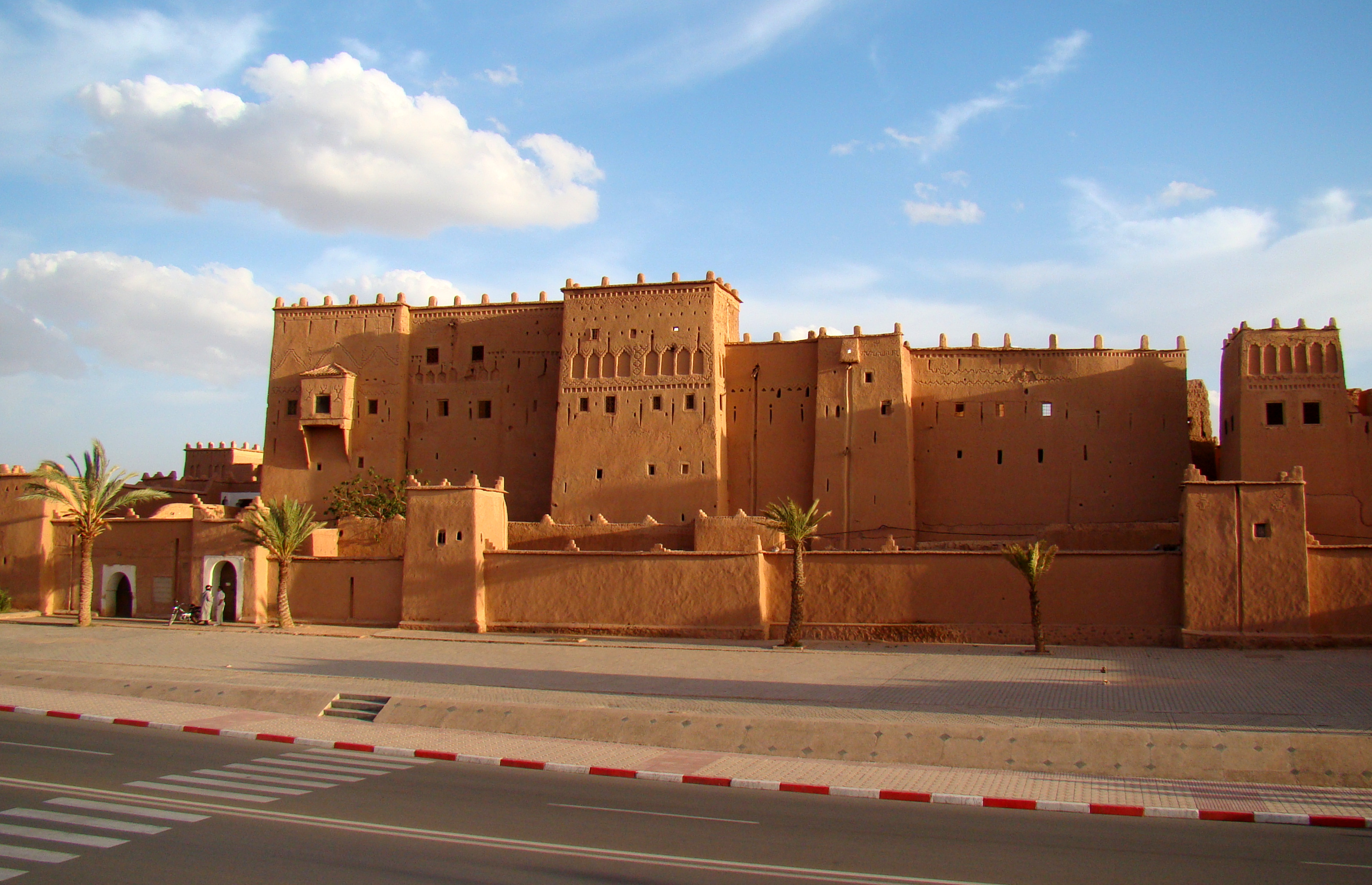
Hello, About 3 years ago(+/-) I was watching fox news and the analyst made a ridiculous comment about arabs being upset for getting kicked out of spain. While my first thought was thats the dummest thing I've heard in a bit, my second thought was thats the longest rout on GODS' green earth. To go into africa cross the sahara then cross the water into spain before stopping. That caused me to first look at east Africa(princably Ethiopia/Sudan) then west Africa, which showed that rout was simply the "path of least resistence" (basic physics). The side effect was that I ended up diving into the history of African peoples & cultures on the continent and in the diaspora. After A year or two of study I found I had developed a deep resentment(?). Not about anything that happened in history but about the fact that I had to learn this stuff on my own. The fact that I was deep into University didn't help the issue much either. It also caused me to question the goal of education, the criteria behind what is deemed worthy of beieng taught, and who deems it so. Fast forward and a friend of mine from kenya had recently recieved his U.S citezenship and joked "looks like I'm an African American now". I thought about his new born child and asked what did they teach you about kenya specificly and africa in general. From what he told me it seems like they basicaly start history at independence and skim over everything before that short of a sampling of the "highlights" (timbuktu, great zimbabwe, etc). Which has a distinct feel of whats propogatetd in the Diaspora (Europeans oppressed you then you got "free", now make something of yourself) Whats missed is those Histories and cultures are building material for a person to "...now make something of yourself". As a matter of fact before really diving into history I fell in love with traditional Archetecture systems such as... Mali https://thumbs.dreamstime.com/thumblarge_433/1252004882EA56o8.jpg https://www.rickmann-uk.com/wp-content/uploads/Dogon-House-with-fetishes.jpg [img]http://dilemmaxdotnet.files./2012/07/timbuktu-architecture.jpg[/img] Lybia https://upload.wikimedia.org/wikipedia/commons/0/06/Libya_4432_Ghadames_Luca_Galuzzi_2007.jpg https://farm1.staticflickr.com/122/289730660_f83c972f61.jpg https://g2.img-dpreview.com/44846A9116FB4C03AA46536670D34F6B.jpg Camaroon https://24.media.tumblr.com/tumblr_mekhlcWcpX1qbvfdgo1_500.jpg https://mw2.google.com/mw-panoramio/photos/medium/9110733.jpg Togo(I love these little castles!) https://luxoticworld.com/wp-content/uploads/2011/07/togo-taberma-house.jpg https://cdn4.vtourist.com/4/3367399-Taberma_Valley_Togo.jpg burkina faso https://www.cultureetpartage.com/images/upload/gourounsi2.jpg https://www.visualphotos.com/photo/1x8612745/burkina_faso_sahel_town_of_bani_sudanese_style_mosque_traditional_adobe_architecture_minarets_A40-741882.jpg Morrocco https://www.morocco-holidays-guide.co.uk/ouarzazate/img/kasbah-taourirt-ouarzazate.jpg https://upload.wikimedia.org/wikipedia/commons/0/0f/Kasbah_Taourirt_in_Ouarzazate_2011.jpg Now with an engineering background I have the point of view there is no such thing as useless or antiquated. Something may be inefficiant or broken but thats when you engineer out the problem or take whats useful from it and store it in your mental tool box to possibly apply to something else. You could easily put a polymer coat on the clay to make it resistent to weathering, add a plumming system & electrical wireing, or change the roofing material to make it fire resistent. The idea thats pushed is that your cultural/historical inheritence is antiquated therefore you should completly supplant it with ours. Which is far different from what went through my mind when I started exposing myself to it. The point isn't to convert into acting like my forbeares. The point is to identify & make use of the great foundation laid down, build on it, and engineer the kinks out with new knowledge. But what do you do when the educational system doesn't properly expose you to it? I've been very sad by people I've seen on here say nonsense like "our parents didn't have cloathing untill europeans came", "African didn't have architecture untill europeans brought it", "I was surprised when I saw Africans had beds and two story houses" etc. The sad thing is I see Africans from the contenent complain about the backward ideas that some Diaspoians(who aren't taught anything in school mind you) have about present day Africa reflected in various contnental Africans, except they think it was like that in the past instead of the present. Some from both sides thinking the same things the only difference being temporal. I know why people in the Diaspora think such things(The information is omitted from the educational system). So I'd like to know what is the state of African history and cultures at you schools? Thank you |
| Education › The Cost Of University In Nigeria/Ghana (USD) by RandomAfricanAm(op): 8:17pm On Mar 24, 2013*. Modified: 7:28pm On Mar 25, 2013 |
Hello, I'm from the U.S blackbelt region(Alabama). Currently I'm finishing up my Software Engineering degree. Question: How much in USD does an undergrad degree cost where you are? How much did your undergrad education cost? Context( If you want to answer the question without the context go for it ) To often African Americans graduate from university and leave thier communities to look for work. Now I could mention other components that cause this but the one I'm interested in is simply the reality that people graduate $30K-$60K in debt. Your only given a small window to get a job(god forbid you want to start a company). As a result they move out serving as a tax base for educating someone elses kids and is also a brain drain on the communities they grew up in. I see the need for African Americans to open businesses where they grew up as a foundation for future graduates(through out the diaspora & continent) to have a home base to develop there ideas. A good example is Tylor Perry studios in Atlanta that hires people from the community and serves as a homebase for actors to develop and show case their skills along with a taxbase to further educate the children. I also applaud Nigerias' movie industry for developing thier own thing instead of comming to hollywood and begging Europeans for a role like so many here in the states. Sidenote: I think African Americans investing in Nigerias movie industry would be a great move. A great talent exchange and a home base for African Americans to film in locations not native to the US. Summery I'm curious if an education in Nigeria/Ghana or some other African country would be more cost effective and allow graduates to come out ready to develop thier skills and community as oppose to focusing on paying down massive debt. Oddly enough grad school in the U.S is not as bad given the paid positions they offer grad students. Thank you ! |
| Computers › Re: Youtube Video On Nairaland by RandomAfricanAm: 5:36pm On Mar 24, 2013 |
| Culture › Re: Had There Been No English Would There Be A Nigeria? by RandomAfricanAm: 5:10am On Mar 24, 2013 |
I'm sure it's been quoted before but...hey, why not "Nigeria is not a nation. It is a mere geographical expression. There are no ‘Nigerians’ in the same sense as there are ‘English,’ ‘Welsh,’ or ‘French.’ The word ‘Nigerian’ is merely a distinctive appellation to distinguish those who live within the boundaries of Nigeria and those who do not.” - Obafemi Awolowo, Path to Nigerian Freedom Sidenote: This quote can be modified for so many things. I freguently use it in reguards to other made up terms("western" zones of interest) such as "Middle east", "Latin Ameriaca", "The West", "Third World", or my favorate non-sense term "Black(Sub Saharan) Africa"(as though there are no black people in north africa or whites in South Africa, liberia, kenya,etc) 1 Like |
| Romance › Re: ----- by RandomAfricanAm: 3:30am On Mar 24, 2013*. Modified: 5:49pm On Mar 24, 2013 |
1 Like |
| Programming › It's Nice To See A Healthy Group Of Programmers In Nigeria! by RandomAfricanAm(op): 2:41am On Mar 24, 2013 |
Hey people! I have to say that I'm impressed and glad to see such an avid group of software heads in Nigeria. I'm a Software Engineering student(senior year) from the U.S. BlackBelt region with primary focus on gamedesign/development. That said I work in my Univeristies Engineering IT department so I've done a whole lot of other software things as well. It's nice to see such a talent pool here in nigeria. I've recently come to the realisation that I have no desire to work for other people when I graduate and that few things outstanding that African Americans have done here in the states came from working at someone elses company. It always grows out of the comunity first then makes an impact on the rest of society. Hopefully I'll be able to work with some of yall or use your products in the future. I've recently come across the work of a kenyan programmer named John paul chacha who made a topnotch alternative tool to Photoshop called Chasys Draw IES. If you haven't seen it check it out, or at least check him out. Things I'm currently working on or thinking about: 1. A basic gameplay mechanic I want to use on a board game(browser based & physical). 8X8 boa(oware) setup where 4 men(seeds) can occupy a pit at a time. If a pit is occupied by opposing seeds a defense phase is started that has an underline rock-paper-scissors element to it. I'm just designing the details now. I want something simple enough to remember so that it can be played anywhere and with fundamentls strong enough to expand upon later. The simple version is for board game while the expanded version is for the browser game(no need for player to remember the rules or keep track of complex changes in state) 2. African history mapping website where a simple SVG map frontend is imployed for users to scale in and out to a place/area or move forward and backward in time while reading and overlaying it with data points that signify importent points in history. Each data point would have a backend that consist of a forum atmosphere where people laydown and interpret sources that pertains to the data point. The datapoint itself would be the current consensus on that historic event. Basically graphically maping out various aspects of history. Migration paterns, military conquest/failures, economic patterns(trade routs, mining zone, etc). The central theme would be the tracking and proccessing of... ___ a. Mayudukwa(Kongo term: Generational collectivly accumulated wealth) ___ b. Sankofa(Akan/Asanti term: Build with todays knowledge, aware of knowledge from the past) These two would work under the basic physics toolbox of Dynamics - "Total force = Sum of all forces" I.E (Problem)Total force can be changed with (Sankofa)altering the problematic individual forces by way of (Mayudukwa)first identifying all individual forces. So I'd like to first work on a web based knowledge center aspect(Mayudukwa) and later a web based action aspect(Sankofa) for African people world wide and subseqently all people period. 3. A "watch this" website were people can send each other custom simple webpages with content tailored to a particular person you know. This is as opposed to a blog environment where you have one central webpage where you post content for a generic blog audience. Basically When you logon to "watch this" your home page would be a "custom made website" that consist of an aggregation of all the custom pages your friends sent you to watch. 4. Other boring things such as working on my development pipline, along with a couple of other game related things I don't want to talk about just yet. |
| Programming › Re: Software Developers, Most of Your Jobs are Going To India! by RandomAfricanAm: 11:06pm On Mar 23, 2013 |
While you guys are talking about india I'm shaking my head. The ironic thing to me is that I'm over here in the U.S thinking "WOW there is a HUGE number of hungry programers in nigeria! How do I tap into this talent pool I never knew of". You guys are in a position to be just as price competitive as people in india. This is assuming the cost of living is compariable in both places. All it really falls down to is talent pool and infrastructure(internet speeds, reliable power grid, access to hardware, and the cost of it all) Stop beating yourselves up so much |