Reflect7's Posts
Nairaland Forum › Reflect7's Profile › Reflect7's Posts
1 2 3 4 5 6 7 8 ... 28 29 30 31 32 33 34 35 36 (of 100 pages)
 Politics › Re: A Storm Of Investments Is Heading To Nigeria - Ajuri Ngelale by Reflect7(op): 11:42pm On Sep 07, 2023 Politics › Re: A Storm Of Investments Is Heading To Nigeria - Ajuri Ngelale by Reflect7(op): 11:42pm On Sep 07, 2023 |
My confidence is growing that this man can take the Nigerian economy to the next level. 55 Likes 4 Shares |
| Politics › A Storm Of Investments Is Heading To Nigeria - Ajuri Ngelale by Reflect7(op): 11:22pm On Sep 07, 2023 |
A STORM OF INVESTMENT worth tens of billions of dollars is heading to Nigeria, states Ngelale from India, after Tinubu closes 14 billion dollar worth of investment deals on his FIRST DAY in India, with Tinubu yet to speak to OTHER nations present. The deals were sealed in areas of manufacturing and defence industries, including indigenous fighter jet manufacturing and maintenance. The international business community are showing a keen interest in Tinubu at the G20 summit, based on his antecedents as the Lagos state governor who DELIVERED in multiple investment and infrastructure projects. EPIC VIDEO featuring President Tinubu's special advisor on media and publicity, Ajuri Ngelale https://www.youtube.com/watch?v=BRnzWtCFUU0&ab_channel=TVCNewsNigeria 15 Likes 6 Shares
|
| Politics › Re: Is An Igbo Presidency Still Possible In Nigeria? by Reflect7(op): 10:01pm On Sep 07, 2023 |
RushManni:Oh sure. I'm the only Nigerian who hates being called a ''zoo animal from a failed country''. The other 220 million Nigerians just LOVE being called that. Olodo. Make una dey there dey fck up. Brainless people. 2 Likes |
| Politics › Re: Is Peter Obi Mentally Stable? by Reflect7: 9:47pm On Sep 07, 2023 |
Resees:Let's hope he spends more of that money, and gives Naija lawyers early christmas.  3 Likes |
| Politics › Re: Is An Igbo Presidency Still Possible In Nigeria? by Reflect7(op): 8:06pm On Sep 07, 2023 |
gammarays:If Nigeria is a failed entity, why did 11 million Igbos flee Igboland to reside in northern Nigeria? Why did 10 million Igbos flee Igboland to reside in southwest Nigeria? You’re clearly dependent on Nigeria for your survival. You are like nymphomaniac prostitutes going around claiming to be virgins. 2 Likes |
| Politics › Re: Is An Igbo Presidency Still Possible In Nigeria? by Reflect7(op): 8:00pm On Sep 07, 2023 |
Basic123:They are a disgrace. Traitors. Other Nigerians see all those abusive posts Igbos make against Nigeria and just think “I’m never voting for these traitors who hate our country.” 1 Like 1 Share |
| Politics › Re: Is An Igbo Presidency Still Possible In Nigeria? by Reflect7(op): 7:42pm On Sep 07, 2023 |
Sharpsharp00123:Igbos are culturally lost because they have turned narcissistic as a group. Pre colonial Igboland was highly democratic in nature, and multiplicity of opinion on any subject was the very culture of the place. Have we not all read Achebe? Today it’s the complete opposite. They’ve totally lost their minds to the point that some wretch sits in a bedroom In Finland and orders the entire Igbo people to sit at home and not leave their houses, failing which they could be killed. Igbos who disagree with IPOB dare not raise their voices out of fear they could be killed. Igboland is a severely dysfunctional, anti-democratic society today, and it was exposed with the manner of their support for Obi. If they can’t sort that out, they will not smell Aso Rock. 1 Like |
| Politics › Re: Is An Igbo Presidency Still Possible In Nigeria? by Reflect7(op): 7:19pm On Sep 07, 2023 |
oyatz:I disagree. This started long before Obi. I am on YouTube a lot, and 9.5 times out of 10, wherever you see a person rubbishing Nigeria, it’s an Igbo person. I just don’t see them leading Nigeria anytime soon. Even if one of them somehow manages to win an election, the powers behind the throne will stop it somehow, because they will not trust them to lead the country and not destroy it. 1 Like |
| Politics › Re: Nigeria Rising - Welcome To Lagos Rail (Video) by Reflect7(op): 7:07pm On Sep 07, 2023 |
EmirofAfonjaz:This thread is for Nigerians, not…..outcasts. 4 Likes 2 Shares |
| Politics › Re: Nigeria Rising - Welcome To Lagos Rail (Video) by Reflect7(op): 7:05pm On Sep 07, 2023 |
x |
| Politics › Nigeria Rising - Welcome To Lagos Rail (Video) by Reflect7(op): 6:52pm On Sep 07, 2023 |
4 Likes |
| Politics › Re: Is An Igbo Presidency Still Possible In Nigeria? by Reflect7(op): 3:53pm On Sep 07, 2023 |
Iagos:I don’t see how. The thing is you have to first accept that you are fallible, and capable of making mistakes, then restructure the way you do things, to achieve better outcomes. But if you believe you are perfect and infallible, as they do (being collective narcissists), you will never make that mental transitioning to a more civilised, tolerant approach to politics. It will be more of the same. Those who don’t support their candidate next time around will be met by abuse and insults, pissing off everyone in the country, and they will lose again, and claim the election was rigged. 12 Likes 1 Share |
| Politics › Is An Igbo Presidency Still Possible In Nigeria? by Reflect7(op): 3:43pm On Sep 07, 2023 |
I am starting to doubt that an Igbo can be elected president of Nigeria in the next 20 years at least. I mean, these guys have virtually turned outcasts of the country with the way they constantly abuse and attack Nigeria and Nigerians online and in world social media sites visited by people from all over the world. I just don’t see how they get back from this in the next 20 years, to the point Nigerians would troop out in their millions to vote for one of them. It’s pretty sad. 14 Likes 2 Shares |
| Politics › Re: Opposition Threatens To Print Faces Of Tribunal Judges On 1 Million Shirts by Reflect7: 3:24pm On Sep 07, 2023 |
Biodun556: 6 Likes 1 Share |
| Politics › Re: Obidients Mock Reno Badly by Reflect7: 3:19pm On Sep 07, 2023 |
I JUST LIKE THAT OMOKRI OF A GUY. HE KNOWS EXACTLY HOW TO HANDLE IGBOS. VERY BRILLIANT, AND HE EASILY PUTS THEM IN THEIR PLACE, WITH HIS KNOWLEDGE AND INTELLIGENCE WHICH THEY CANNOT HANDLE, SINCE MAJORITY OF THEM DON’T READ OR RESEARCH ANYTHING. |
| Politics › Re: Ten Reasons Why Nigeria Will Never Ever Work by Reflect7: 3:13pm On Sep 07, 2023 |
A BIG FAT YAWWWNNNN TO THIS THREAD. BORING GARBAGE FROM NARCISSISTIC IGBO SORE LOSERS. OH SURE, NIGERIA CAN NEVER WORK BECAUSE PETER OBI LOST ELECTION. RUBBISH. ABEG MAKE PERSON TALK BETTER THING HERE JARE! |
| Politics › Re: President Tinubu Has Secured $14 Billion In FDI Via G20 Summit - Temitope Ajayi by Reflect7: 3:05pm On Sep 07, 2023 |
Chinjo2:Shut up. How many countries on Earth have “adequate power supply”? Do you know it’s less than 25%? India and Pakistan experience daily power cuts. So what is your point? Loud mouthed negative idiots. |
| Politics › Re: Why Was There No Mayhem After The Judgement, As Promised By The Obedients?? by Reflect7: 9:49am On Sep 07, 2023 |
CilicMarin:It’s because the judgement was broadcast live, and we could all see Obi had no case. 3 Likes |
| Travel › Re: Oshodi Bus Terminal Decaying, Motorists, Passengers Lament by Reflect7: 9:02am On Sep 07, 2023 |
Edusouls:Shut your stupid lips there. How many black countries out of over 60 on Earth have you visited, to know what they are like? You think you can pass judgment on places you don’t even know exist, simply because blacks live there? Ignorant, brainwashed, self hating dunce. |
| Travel › Re: Oshodi Bus Terminal Decaying, Motorists, Passengers Lament by Reflect7: 8:47am On Sep 07, 2023 |
Benrosaria:Stop stereotyping Nigerians. Are you not a Nigerian? Are you dirty? Do you defecate in public or don’t flush a toilet after use? No? Well neither do millions of other Nigerians, No be only you sabi something. |
| Travel › Re: Why Do Most Nigeria Streets Look Like This? by Reflect7: 5:21am On Sep 07, 2023*. Modified: 5:46am On Sep 07, 2023 |
1Sharon:Really? You pea brain. So if I break into your house and shoot you and steal your property, it means I am smarter and more advanced than you? Can you see how you reason like a BEAST? Are you human? YOU DOG. How would you fancy someone bursting into your house right now and gunning down you and your entire family, just to take over your house? OK so, since in your PRIMITIVE BEAST HEAD, MILITARY MIGHT GIVES ONE THE RIGHT TO INVADE AND MASS MURDER OTHER NATIONS, AND LOOT THEIR WEALTH, what stops that from being acceptable today? Every nation with a powerful army should just get up and attack their neighbour, enslave them and loot their wealth! Can't you see you are a sick, demented person? If Africans had the capacity, why haven't they replaced those buildings and monuments since 1960?WHO THE HELL TOLD YOU THEY HAVEN'T? Are you even AFRICAN? YOU SOUND LIKE ONE OF THESE NASTY AMERICAN racists who come in here pretending to be Nigerian to push their racist anti-black views. Lemme guess: You think we all live in mud huts like in National GeographIc and Tarzan. Frigging American AIR HEAD. Singapore was able to build up their country in the same time period.So why could Singapore's neighbours like Cambodia, Myanmar, Laos, and Nepal not replicate Singaporean ''magic''? Instead they're worse off than most African countries. Of course, being an absolute dunce, you haven't the slightest clue. Singapore is a city-state. Did you know that? It's not actually a country. It's just an island CITY. It was made rich because the British made it a hub for trading ships crossing the Pacific from centuries ago. They simply made money from taxing the trade, with which they used to build a city starting over a century ago. BIG DEAL. All the African cities apart from South Africa only began to develop after the 1960s, since the colonialists built nothing, and just looted African resources for a century. So don't expect them to look like Singapore just yet, but many of them look like they are getting pretty close. The black race is the oldest race on the planet and has had a 200,000 year head start. But somehow, you're the babies of this world.The actual babies of this world are the white race, an intensely stupid, shortsighted, greedy, unprincipled race drowned in hypocrisy, for whom the BEASTLY, SAVAGE PRINCIPLE of 'might is right' this very minute, has the world on the precipice of NUCLEAR EXTINCTION. ONLY THE ALMIGHTY GOD is keeping us alive today. This very minute these WHITE CRETINS have nuclear missiles capable of destroying all life on Earth many times over POINTING AT EACH OTHER. They are too stupid to sit down and reach a settlement that ends their CRAZED, DEMENTED nuclear arms race. Any slight miscalculation and we're all gone! Poof! Just like that! SO WHO THE fck IS THE BABY OF THE WORLD, YOU BLASTED, INSOLENT TWERP? |
| Travel › Re: Why Do Most Nigeria Streets Look Like This? by Reflect7: 4:50am On Sep 07, 2023 |
TheNobleProphet:You're the epitome of thougtlessness. Do you know how many countries are on this Earth? I know you haven't a clue, because you only know ''the USA''. Plus the rest of the 25% of nations that are 'advanced', in a world of majority DEVELOPING nations and populations who look NOTHING like the USA. The USA has acquired its wealth, which gives it a 7.6 trillion dollar annual budget (compared to Nigeria's 50 billion dollars), by invading directly or indirectly 198 of the 202 countries on Earth today, killing MILLIONS of people in the process. All geared at accessing resources on the cheap, and economic allegiance. THAT IS WHY THEY ARE SO RICH AND DEVELOPED TODAY. THROUGH BRIGANDAGE. So when you are there, and you see all those bright shining lights and facilities that are shacking your head, KNOW WHERE IT CAME FROM before demanding that Nigeria ''be like them'', or before ''praying for Nigeria''. Instead, pray for yourself that the wrath of God does not fall on America (Babylon the Great of Revelations) while you are sitting their praying for Nigeria. Or that an intercontinental ballistic nuclear missile from the Kremlin doesn't drop on your rooftop. |
| Travel › Re: Oshodi Bus Terminal Decaying, Motorists, Passengers Lament by Reflect7: 3:55am On Sep 07, 2023*. Modified: 8:21am On Sep 07, 2023 |
tsdarkside:Let's not pretend or be delusional on this GADEMN FORUM. This terminal was built in the centre of OSHODI. Has any of you here been to OSHODI? Especially before they built that terminal? Look, I GREW UP PASSING THROUGH OSHODI DAILY ON THE WAY TO SCHOOL. Oshodi was a hellhole of fast commerce, market women selling everywhere. Oshodi is the first place I've seen where market women would place their stalls in the middle of the road, with cars passing. When the Molue reaches the point they are, the driver would jump out screaming at the women to remove their stalls from the road. You would think the women would be remorseful and be saying sorry for blocking the road. For where? They will be abusing the driver back as he's driving off. Raining curses on him! That's Oshodi for you! Plus chronic overcrowding, rushing for Molue, desperation, illiteracy, semi-literacy, touts, thugs, Alayes, pickpockets, drug dealers, poverty, and open defecation. Oshodi was where ARMED ROBBERS used to go and hide after committing atrocities in more civilized parts of Lagos. A sprinkling of BROTHELS in the area gladly served as hideouts. I personally frequented some of those brothels in my secondary school days in the 80s. I often used my pocket money to go and nyash ashewo. Short time, 10 Naira. Oshodi was the quintessential Lagos hellhole. All those people were not moved out of OSHODI after they commissioned the terminal. They are still there. So how the hell do you expect the terminal to look?  The minute I heard they were building that terminal at OSHODI, I knew it would get to this. I'm even surprised they haven't smashed in all those ajebota glass walls and trimmings in the terminal. The place even still looks clean somehow, considering the fact that it is in Oshodi. Truth is it will be a hell of a task keeping that terminal looking like somewhere in Paris or Brussels or London, with the kind of characters that populate OSHODI. If that facility was located somewhere in Ikeja or Surulere or Island or Lekki, the place will be looking very clean and sharp even with minimal maintenance. Simply because of the calibre of people in those areas. The long-term solution for this sort of thing is just to improve the living standards of the masses, plus education. 94 Likes 10 Shares |
| Travel › Re: Oshodi Bus Terminal Decaying, Motorists, Passengers Lament by Reflect7: 1:39am On Sep 07, 2023 |
This should be publicised to pressure the state govt to get a proper contractor to maintain that facility. THIS IS NOT HARD. 40 Likes 4 Shares |
| Travel › Re: Why Do Most Nigeria Streets Look Like This? by Reflect7: 1:13am On Sep 07, 2023*. Modified: 1:30am On Sep 07, 2023 |
1Sharon:ILLITERATE OF AFRICAN HISTORY. NAME ME ONE AFRICAN HISTORY BOOK YOU HAVE READ IN YOUR ENTIRE LIFE. JUST ONE! Stupid school dropouts coming here to type about an African history they know ABSOLUTELY NOTHING about. just ZIP your lips about AFRICAN HISTORY, because you know NOTHING. You haven't the slightest clue how many black African cities filled with MULTI-STOREYED BUILDINGS AND MONUMENTS, including our own Benin city, were bombed and burnt down by the colonialists across Africa, to erase evidence of African civilization. YOU HAVE ZERO CLUE ABOUT ANY OF THIS. So how the hell do you know ''how Africa was'' when the Europeans came here? You have NO CLUE how Africa was, so SHUT UP! 1 Like |
| Travel › Re: Why Do Most Nigeria Streets Look Like This? by Reflect7: 1:05am On Sep 07, 2023 |
This is a rendition of the palace of the Oba of Benin as it was before its destruction by British forces in 1897, based on historical evidence that it had 209 Ikuns (courtyards) of which the image below shows only 20 or so, showing how MASSIVE the palace actually was. The palace was built in the 13th century. It shows the traditional Benin Ikun courtyard architecture. There were a total of 209 Ikuns at the palace. The picture shows about 24, which shows you how huge the palace was. I actually checked Google Earth to investigate this, and you can see on Google Earth that the new, modern palace is there which everyone can see from the road. But on Google Earth, looking from above, you can see the interior of the palace compound, and you will STILL SEE remnants of this building, several Ikuns - around 10 or so behind the current palace. Benin city of course was described by visiting Europeans as one of the most beautiful and best planned cities on Earth, with street lighting (from palm oil fuelled steel lamps) and underground drainage, houses with paved courtyards, and even some paved streets (paved with raised, broken potsherds). Royal Palace of the Oba of Benin, dated 13th century) https://pbs.twimg.com/media/Fta7Yk7WYAA6XNG.jpg |
| Travel › Re: Why Do Most Nigeria Streets Look Like This? by Reflect7: 1:00am On Sep 07, 2023 |
The city was split into 11 divisions, each a smaller replication of the king’s court, comprising a sprawling series of compounds containing accommodation, workshops and public buildings – interconnected by innumerable doors and passageways, all richly decorated with the art that made Benin famous. The city was literally covered in it. The exterior walls of the courts and compounds were decorated with horizontal ridge designs (agben) and clay carvings portraying animals, warriors and other symbols of power – the carvings would create contrasting patterns in the strong sunlight. Natural objects (pebbles or pieces of mica) were also pressed into the wet clay, while in the palaces, pillars were covered with bronze plaques illustrating the victories and deeds of former kings and nobles. At the height of its greatness in the 12th century – well before the start of the European Renaissance – the kings and nobles of Benin City patronised craftsmen and lavished them with gifts and wealth, in return for their depiction of the kings’ and dignitaries’ great exploits in intricate bronze sculptures. “These works from Benin are equal to the very finest examples of European casting technique,” wrote Professor Felix von Luschan, formerly of the Berlin Ethnological Museum. “Benvenuto Celini could not have cast them better, nor could anyone else before or after him. Technically, these bronzes represent the very highest possible achievement.” https://s3media.freemalaysiatoday.com/wp-content/uploads/2018/06/benin-bronzes.jpg https://www.telegraph.co.uk/content/dam/news/2018/06/20/TELEMMGLPICT000164862843_trans_NvBQzQNjv4BqLZ1bJd-I99VgiaPxe-UMcC6-Lp4metz6QMdj34ESPoA.jpeg What impressed the first visiting Europeans most was the wealth, artistic beauty and magnificence of the city. Immediately European nations saw the opportunity to develop trade with the wealthy kingdom, importing ivory, palm oil and pepper – and exporting guns. At the beginning of the 16th century, word quickly spread around Europe about the beautiful African city, and new visitors flocked in from all parts of Europe, with ever glowing testimonies, recorded in numerous voyage notes and illustrations. Lost world Now, however, the great Benin City is lost to history. Its decline began in the 15th century, sparked by internal conflicts linked to the increasing European intrusion and slavery trade at the borders of the Benin empire. Then in 1897, the city was destroyed by British soldiers – looted, blown up and burnt to the ground. My great grandparents were among the many who fled following the sacking of the city; they were members of the elite corps of the king’s doctors. Nowadays, while a modern Benin City has risen on the same plain, the ruins of its former, grander namesake are not mentioned in any tourist guidebook to the area. They have not been preserved, nor has a miniature city or touristic replica been made to keep alive the memory of this great ancient city. A house composed of a courtyard in Obasagbon, known as Chief Enogie Aikoriogie’s house – probably built in the second half of the 19th century – is considered the only vestige that survives from Benin City. The house possesses features that match the horizontally fluted walls, pillars, central impluvium and carved decorations observed in the architecture of ancient Benin. Curious tourists visiting Edo state in Nigeria are often shown places that might once have been part of the ancient city – but its walls and moats are nowhere to be seen. Perhaps a section of the great city wall, one of the world’s largest man-made monuments, now lies bruised and battered, neglected and forgotten in the Nigerian bush. A discontented Nigerian puts it this way: “Imagine if this monument was in England, USA, Germany, Canada or India? It would be the most visited place on earth, and a tourist mecca for millions of the world’s people. A money-spinner worth countless billions in annual tourist revenue.” Instead, if you wish to get a glimpse into the glorious past of the ancient Benin kingdom – and a better understanding of this groundbreaking city – you are better off visiting the Benin Bronze Sculptures section of the British Museum in central London. https://www.theguardian.com/cities/2016/mar/18/story-of-cities-5-benin-city-edo-nigeria-mighty-medieval-capital-lost-without-trace |
| Travel › Re: Why Do Most Nigeria Streets Look Like This? by Reflect7: 12:59am On Sep 07, 2023 |
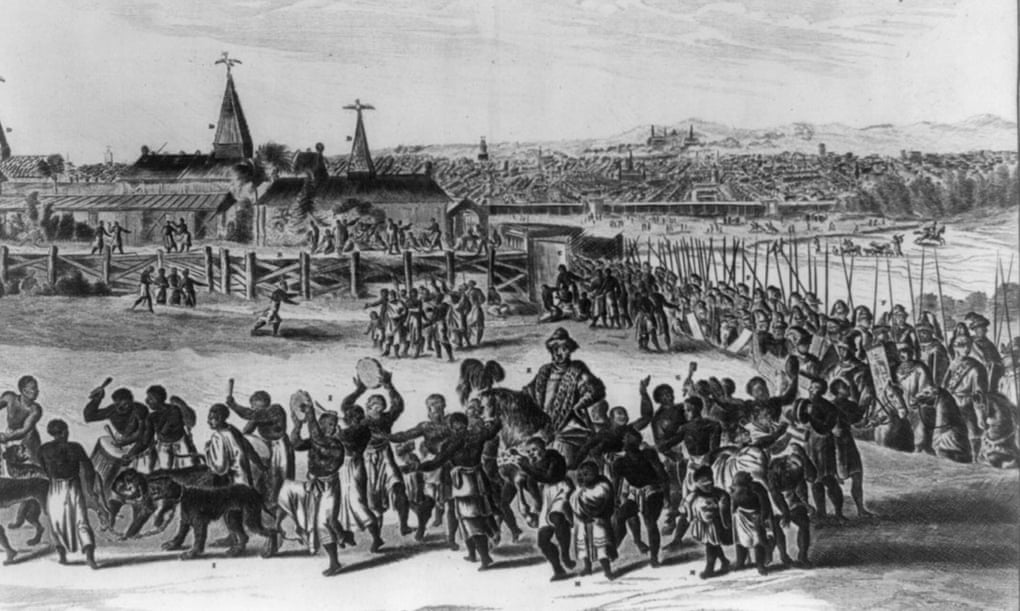
Benin City, The Mighty Medieval Capital Now Lost Without Trace https://i.guim.co.uk/img/media/e0fd6147a67600c3bfa00ad8b0761b8b5c9a57d1/43_198_1101_660/master/1101.jpg?width=1020&quality=85&auto=format&fit=max&s=8b57e78ea071e6c059b7c9a3b1e0a4d1 Benin City was described as ‘wealthy and industrious, well-governed and richly decorated’. Illustration: Decompiling Dapper: A Preliminary Search for Evidence Guardian Newspaper, UK https://www.theguardian.com/cities/2016/mar/18/story-of-cities-5-benin-city-edo-nigeria-mighty-medieval-capital-lost-without-trace With its mathematical layout and earthworks longer than the Great Wall of China, Benin City was one of the best planned cities in the world when London was a place of ‘thievery and murder’. So why is nothing left? This is the story of a lost medieval city you’ve probably never heard about. Benin City, originally known as Edo, was once the capital of a pre-colonial African empire located in what is now southern Nigeria. The Benin empire was one of the oldest and most highly developed states in west Africa, dating back to the 11th century. The Guinness Book of Records (1974 edition) described the walls of Benin City and its surrounding kingdom as the world’s largest earthworks carried out prior to the mechanical era. According to estimates by the New Scientist’s Fred Pearce, Benin City’s walls were at one point “four times longer than the Great Wall of China, and consumed a hundred times more material than the Great Pyramid of Cheops [in Egypt]”. Situated on a plain, Benin City was enclosed by massive walls in the south and deep ditches in the north. Beyond the city walls, numerous further walls were erected that separated the surroundings of the capital into around 500 distinct villages. Pearce writes that these walls “extended for some 16,000 km in all, in a mosaic of more than 500 interconnected settlement boundaries. They covered 6,500 sq km and were all dug by the Edo people … They took an estimated 150 million hours of digging to construct, and are perhaps the largest single archaeological phenomenon on the planet”. Barely any trace of these walls exist today. Benin City was also one of the first cities to have a semblance of street lighting. Huge metal lamps, many feet high, were built and placed around the city, especially near the king’s palace. Fuelled by palm oil, their burning wicks were lit at night to provide illumination for traffic to and from the palace. When the Portuguese first “discovered” the city in 1485, they were stunned to find this vast kingdom made of hundreds of interlocked cities and villages in the middle of the African jungle. They called it the “Great City of Benin”, at a time when there were hardly any other places in Africa the Europeans acknowledged as a city. Indeed, they classified Benin City as one of the most beautiful and best planned cities in the world. In 1691, the Portuguese ship captain Lourenco Pinto observed: “Great Benin, where the king resides, is larger than Lisbon; all the streets run straight and as far as the eye can see. The houses are large, especially that of the king, which is richly decorated and has fine columns. The city is wealthy and industrious. It is so well governed that theft is unknown and the people live in such security that they have no doors to their houses.” In contrast, London at the same time is described by Bruce Holsinger, professor of English at the University of Virginia, as being a city of “thievery, prostitution, murder, bribery and a thriving black market made the medieval city ripe for exploitation by those with a skill for the quick blade or picking a pocket”. African fractals Benin City’s planning and design was done according to careful rules of symmetry, proportionality and repetition now known as fractal design. The mathematician Ron Eglash, author of African Fractals – which examines the patterns underpinning architecture, art and design in many parts of Africa – notes that the city and its surrounding villages were purposely laid out to form perfect fractals, with similar shapes repeated in the rooms of each house, and the house itself, and the clusters of houses in the village in mathematically predictable patterns. As he puts it: “When Europeans first came to Africa, they considered the architecture very disorganised and thus primitive. It never occurred to them that the Africans might have been using a form of mathematics that they hadn’t even discovered yet.” At the centre of the city stood the king’s court, from which extended 30 very straight, broad streets, each about 120-ft wide. These main streets, which ran at right angles to each other, had underground drainage made of a sunken impluvium with an outlet to carry away storm water. Many narrower side and intersecting streets extended off them. In the middle of the streets were turf on which animals fed. “Houses are built alongside the streets in good order, the one close to the other,” writes the 17th-century Dutch visitor Olfert Dapper. “Adorned with gables and steps … they are usually broad with long galleries inside, especially so in the case of the houses of the nobility, and divided into many rooms which are separated by walls made of red clay, very well erected.” Dapper adds that wealthy residents kept these walls “as shiny and smooth by washing and rubbing as any wall in Holland can be made with chalk, and they are like mirrors. The upper storeys are made of the same sort of clay. Moreover, every house is provided with a well for the supply of fresh water”. Family houses were divided into three sections: the central part was the husband’s quarters, looking towards the road; to the left the wives’ quarters (oderie), and to the right the young men’s quarters (yekogbe). Daily street life in Benin City might have consisted of large crowds going though even larger streets, with people colourfully dressed – some in white, others in yellow, blue or green – and the city captains acting as judges to resolve lawsuits, moderating debates in the numerous galleries, and arbitrating petty conflicts in the markets. The early foreign explorers’ descriptions of Benin City portrayed it as a place free of crime and hunger, with large streets and houses kept clean; a city filled with courteous, honest people, and run by a centralised and highly sophisticated bureaucracy. 1 Like |
| Travel › Re: Why Do Most Nigeria Streets Look Like This? by Reflect7: 12:58am On Sep 07, 2023 |
igwebuike01:LISTEN, YOU SCHOOL DROPOUT. I WILL NOT BE HERE AND YOU CALL OUR GLORIOUS AFRICAN HISTORY ''FABRICATED''. I WILL SCHOOL YOU ALL NIGHT TO EDUCATE YOUR DENSE, THICK SKULL ON YOUR HISTORY. BRITISH REPORT ON THE ANCIENT BENIN CITY - HOW IT WAS BEFORE THEY DESTROYED IT IN 1897: https://www.theguardian.com/cities/2016/mar/18/story-of-cities-5-benin-city-edo-nigeria-mighty-medieval-capital-lost-without-trace 1 Like |
| Travel › Re: Why Do Most Nigeria Streets Look Like This? by Reflect7: 12:49am On Sep 07, 2023 |
igwebuike01:NOBODY CARES WHAT YOU WOULD DO. Other sensible people around the world glorify their history and ancestors except you brainwashed-to-self-loathe, mentally colonised, self-hating buffoons in Nigeria, who believe yourselves to be inferior beings. You're disgusting and an utter disgrace to the black race in the way you reason. Proudly proclaiming your inferiority. I mean, who did this to you? You are a total wreck. This is a UK report on the ancient city of Benin as it was before it was blown up by the British in1897. I GUESS THEY ARE ALSO ''MAKING IT UP'' AND ''IMAGNING THINGS'' IN YOUR DUMB HEAD ABI? https://www.theguardian.com/cities/2016/mar/18/story-of-cities-5-benin-city-edo-nigeria-mighty-medieval-capital-lost-without-trace 3 Likes 1 Share |
| Travel › Re: Why Do Most Nigeria Streets Look Like This? by Reflect7: 12:42am On Sep 07, 2023 |
igwebuike01:IF YOU CANNOT SEE THE TWO IMAGES OF ACTUAL PAVED ROADS I POSTED, THEN GO AND USE A PROPER COMPUTER IF YOU HAVE ONE, RATHER THAN THAT CHEAP ASS PHONE. And if you were not a historical DUNCE, you would know that artist renditions are made off of HISTORICAL ACCOUNTS AND ARCHAEOLOGICAL EVIDENCE. SO THEY LOOK AT THE EVIDENCE ON GROUND OF THE PAVED STREETS AND COURTYARD, AND THEN CREATE AN ARTISTIC RENDITION OF HOW IT WOULD HAVE LOOKED WHEN IT WAS FIRST CONSTRUCTED. SO IT IS NOT ''IMAGINATION'' YOU BUSH VILLAGE MUMU. 4 Likes |


1 2 3 4 5 6 7 8 ... 28 29 30 31 32 33 34 35 36 (of 100 pages)