Rgp92's Posts
Nairaland Forum › Rgp92's Profile › Rgp92's Posts
1 2 3 4 5 6 7 8 ... 11 12 13 14 15 16 17 18 19 (of 39 pages)
 Culture › Re: Igboukwu Art In Comparison To Ife Art - Taught By Exotic by Rgp92: 11:40pm On Nov 07, 2011 Culture › Re: Igboukwu Art In Comparison To Ife Art - Taught By Exotic by Rgp92: 11:40pm On Nov 07, 2011 |
| Culture › Re: Igboukwu Art In Comparison To Ife Art - Taught By Exotic by Rgp92: 11:39pm On Nov 07, 2011 |
[img]http://64.182.81.172/images/igbo-ukwu.jpg[/img] |
| Culture › Re: Igboukwu Art In Comparison To Ife Art - Taught By Exotic by Rgp92: 11:38pm On Nov 07, 2011 |
1 Like |
| Culture › Re: Igboukwu Art In Comparison To Ife Art - Taught By Exotic by Rgp92: 11:37pm On Nov 07, 2011 |
Igbo Ukwu is an archaeological site near the modern town of Onitsha, southeastern Nigeria. The site was part of the Nri Kingdom, and it was used in the 10th century AD. The site has several parts, including a main burial, and associated caches and shrines. Igbo Ukwu was a burial place for elite personages, and the burials identified there were interred with a large quantity of costly grave goods. The principal burial is of a person buried sitting on a stool, in fine clothing and rich grave effects such as over 150,000 glass beads, and accompanied by the remains of at least five attendants. Elaborate cast bronze vases, bowls and ornaments were discovered at Igbo Ukwe, made with the lost wax technique. The bronzes are among the earliest cast bronzes in sub-Saharan Africa. The bronzes were manufactured locally; but the glass beads are an indication that the Nri Kingdom was also involved in considerable long-distance trade. Igbo Ukwu was excavated by Thurstan Shaw in the 1960s. |
| Culture › Re: Igboukwu Art In Comparison To Ife Art - Taught By Exotic by Rgp92: 11:34pm On Nov 07, 2011 |
Creation The talent of these ancient casters was truly astonishing and based on the lost wax technique. Many of the castings were made in stages. For instance, in one bronze bowl set on a flat stand found at Igbo-Ukwu, small decorative items including insects and spirals were cast first and placed in the wax model before the main parts of the bowl were made. The vessel itself was then cast in two parts and fitted together by casting a middle band. In addition to a variety of ritual vessels (whose designs appear to reproduce the form of gourd vessels to which metal handles have been attached), many other bronze items have been found at Igbo-Ukwu, including pendants, crowns and breastplates, staff ornaments, swords, and fly-whisk handles. These works were also found with tens of thousands of glass beads, attained through trade.[1] The bronzes reveal not only a high artistic tradition and artworks that lacked known prototypes but also a well-structured society with wide-ranging economic relationships. Of particular interest is the source of the copper and lead used to make the bronzes, and of the coloured glass beads, which are apparently of Egyptian manufacture. It is believed that the bronzes were part of the furniture in the burial chamber of a high personage, possibly a forerunner of the eze nri, a priest-king, who held religious but not political power over large parts of the Igbo-inhabited region well into the 20th century.[1] |
| Culture › Re: Igboukwu Art In Comparison To Ife Art - Taught By Exotic by Rgp92: 11:33pm On Nov 07, 2011 |
Reaction The high level of technical proficiency of artwork found at Igbo-Ukwu raised questions about its origins with some historians theorizing foreign influence or phantom voyagers. However from all indications the metal were mined from nearby areas and the use of scarification show local origin and cultural continuity with modern day Igbo culture. |
| Culture › Re: Igboukwu Art In Comparison To Ife Art - Taught By Exotic by Rgp92: 11:33pm On Nov 07, 2011 |
Archaeology of Igbo-Ukwu started when bronzes dating from the 9th century were discovered in this Igbo town. The bronzes were found along with clay pots and glass beads. These objects had been made by Igbo Ukwu's citizens. The objects are culturally connected with those of the Igbo, and related to those of the Nri-Igbo. |
| Culture › Re: Igboukwu Art In Comparison To Ife Art - Taught By Exotic by Rgp92: 11:32pm On Nov 07, 2011 |
| Culture › Re: Igboukwu Art In Comparison To Ife Art - Taught By Exotic by Rgp92: 11:31pm On Nov 07, 2011 |
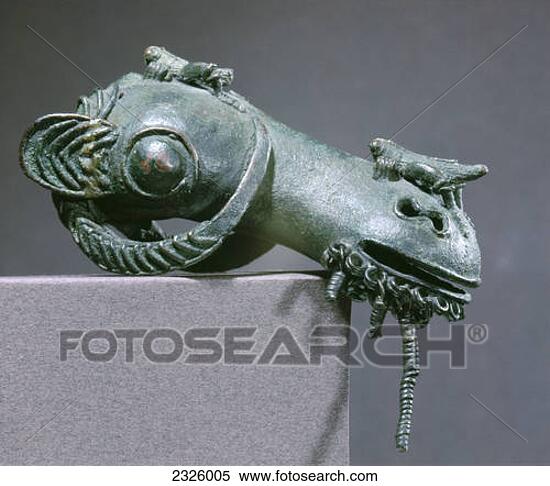
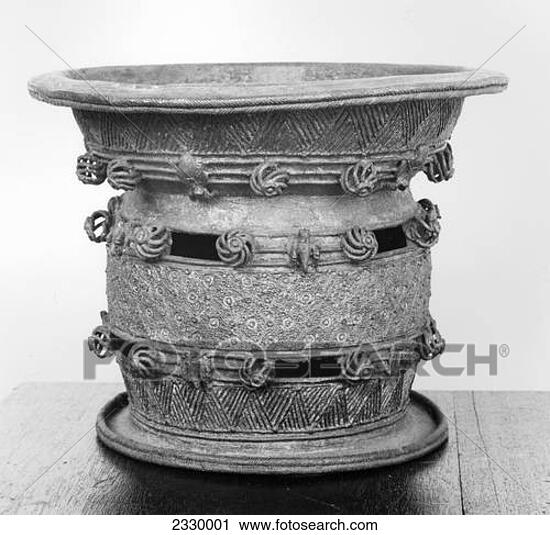
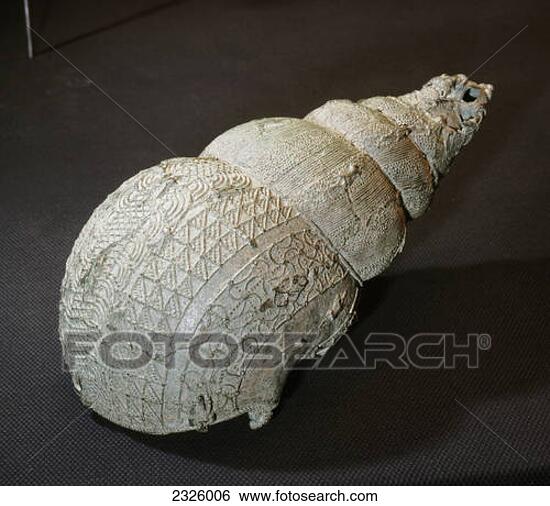
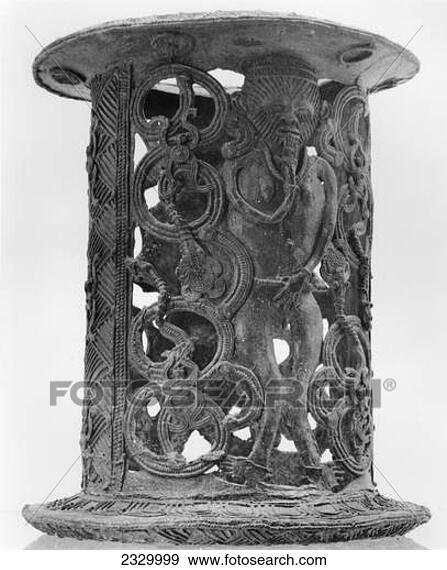
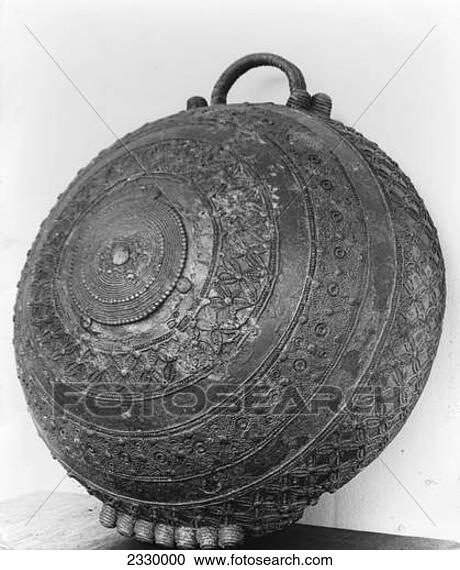
A lost wax cast of a ram's head from Igbo-Ukwu, eastern Nigeria, 9th century https://comps.fotosearch.com/bigcomps/IST/IST527/2326005.jpg Beautiful art https://comps.fotosearch.com/bigcomps/IST/IST527/2330001.jpg A bronze ceremonial wine bowl, Igbo Ukwu, Nigeria, 9th century https://comps.fotosearch.com/bigcomps/IST/IST527/2326006.jpg A lost wax cast vessel, Igbo-Ukwu, eastern Nigeria, 9th century https://comps.fotosearch.com/bigcomps/IST/IST527/2329999.jpg Bronze stand incorporating images of a warrior, Igbo Ukwu, Nigeria, 9th-10th century https://comps.fotosearch.com/bigcomps/IST/IST527/2330000.jpg Bronze bowl cast by the 'lost wax' method, Igbo Ukwu, Nigeria, 9th century 1 Like |
| Culture › Re: Igboukwu Art In Comparison To Ife Art - Taught By Exotic by Rgp92: 11:28pm On Nov 07, 2011 |
Igbo-Ukwu (Igbo: Great Igbo) is a town in the Nigerian state of Anambra which was the site of three famous archaeological sites that revealed a highly sophisticated metal-working culture. The first, Igbo Isaiah, was uncovered in 1938 by Isaiah Anozie a local villager who stumbled upon the bronze works while digging beside his home. Subsequent excavations by Thurston Shaw in 1959 resulted in the discovery of two other sites, Igbo Richard and Igbo Jonah containing the remains of an ancient culture, including jewelry, ceramics, a corpse adorned in what appears to be regalia, and many assorted bronze, copper, and iron objects. Radiocarbon dating placed the sites around the 10th century or earlier, which would make the Igbo-Ukwu culture the earliest known examples of bronze casting in the region centuries before the more famous Ife bronzes. Archaeological site actually three sites in southeastern Nigeria, associated with the Nri-Igbo. The three sites include Igbo Isaiah (a shrine), Igbo Richard (a burial chamber), and Igbo Jonah (a cache). History Bronzes Main article: Archaeology of Igbo-Ukwu Alice Apley says:" The inhabitants of Igbo-Ukwu had a metalworking art that flourished as early as the ninth century. Three sites have been excavated, revealing hundreds of ritual vessels and regalia castings of bronze or leaded bronze that are among the most inventive and technically accomplished bronzes ever made. The people of Igbo-Ukwu, ancestors of present-day Igbo, were the earliest smithers of copper and its alloys in West Africa, working the metal through hammering, bending, twisting, and incising. They are likely among the earliest groups of West Africans to employ the lost-wax casting techniques in the production of bronze sculptures. Oddly, evidence suggests that their metalworking repertory was limited and Igbo smiths were not familiar with techniques such as raising, soldering, riveting, and wire making, though these techniques were used elsewhere on the continent.[1] |
| Culture › Re: BBC's Documentary On The 'Bronze Cast Head Of The Ife King' by Rgp92: 9:08pm On Nov 07, 2011 |
PhysicsQED:If you watch the video, it says that Ife taught Benin. |
| Politics › Re: Jonathan Proves To Be The Worst Leader! by Rgp92: 6:10pm On Nov 07, 2011 |
Most of the sane Yoruba voted for GEJ! only retards and Low IQ yoruba like Desola voted for Buhari the cry baby. https://media.twenty-somethingtravel.com/wp-content/uploads/2010/08/haters_gonna_hate.gif |
| Culture › Re: BBC's Documentary On The 'Bronze Cast Head Of The Ife King' by Rgp92: 1:02pm On Nov 07, 2011 |
meonbooty:I live in Norway too, i got enough money  Bor du i Norge? probably not Bor du i Norge? probably not |
| Health › Re: Nigerian Nurse's Licence Withdrawn In Uk For Calling On Jesus For Help! by Rgp92: 1:09am On Nov 07, 2011 |
| Culture › Re: BBC's Documentary On The 'Bronze Cast Head Of The Ife King' by Rgp92: 12:28am On Nov 07, 2011 |
meonbooty:Dude, do you live in Norway? :O |
| Politics › Re: Only Prayers Can Sustain A Nation - GEJ by Rgp92: 11:52pm On Nov 06, 2011 |
I hope GEJ will wake up and realize that his "god" is not there. And he should realize. And: https://unfollowingjesus.com/wp-content/uploads/2010/04/prayer.png |
| Culture › Re: Bantu Languages by Rgp92: 11:49pm On Nov 06, 2011 |
amor4ce:No |
| Politics › Re: How Prepare Is Southwest ? by Rgp92: 11:46pm On Nov 06, 2011 |
Desola:Low IQ!! |
| Politics › Re: How Prepare Is Southwest ? by Rgp92: 11:34pm On Nov 06, 2011 |
His Zno Anyway, ignore this Desola girl, shes very . . . |
| Nairaland General › Re: Man Bite Snake To Escape Being Swallowed by Rgp92: 4:49pm On Nov 06, 2011 |
Blackteeth:Your point? |
| Politics › Re: Boko Haram: The North And West Were st-upid For Championing The Civil War by Rgp92: 1:59pm On Nov 06, 2011 |
Bamaguje:what the hell? i was asking the Op if he fought during the war. This is not the first time op start a thread like this. Im just asking him a simple question. Im tired of thread like this everyday. |
| Politics › Re: How Prepare Is Southwest ? by Rgp92: 10:32am On Nov 06, 2011 |
We're always ready We usually dont fight unless we're force to. |
| Politics › Re: Boko Haram: The North And West Were st-upid For Championing The Civil War by Rgp92: 10:23am On Nov 06, 2011 |
Where you born during the war? If not, shut up stvpid negro. |
| Culture › Re: Yoruba Mythology by Rgp92(op): 1:19am On Nov 06, 2011 |
[size=20pt] IFA [/size] Ifa, god of divination, who is usually termed the God of Palm Nuts, because sixteen palm-nuts are used in the process of divination, comes after Shango in order of eminence. The name Ifa apparently means something scraped or wiped off: he has the title of Gbangba (explanation, demonstration, proof). Ifa's secondary attribute is to cause fecundity: he presides at births, and women pray to him to be made fruitful; while on this account offerings are always made to him before marriage, it being considered a disgrace not to bear children. To the native mind there is no conflict of function between Ifa and Obatala, for the former causes the woman to become pregnant, while the latter forms the child in the womb, which is supposed to be a different thing altogether. [1. Near Porto Novo.] Ifa first appeared on the earth at Ife, but he did not come from the body of Yemaja, and his parentage and origin are unexplained. He tried to teach the inhabitants of Ife how to foretell future events, but they would not listen to him, so he left the town and wandered about the world teaching mankind. After roaming about for a long time, and indulging in a variety of amours, Ifa fixed his residence at Ado, where he planted on a rock a palm-nut, from which sixteen palm-trees grew up at once. Ifa has an attendant or companion named Odu (? One who emulates), and a messenger called Opele (ope, puzzle, or ope, palm-tree). The bandicoot (okete) is sacred to him, because it lives chiefly upon palm-nuts. The first day of the Yoruba week is Ifa's holy day, and is called ajo awo, "day of the secret." On this day sacrifices of pigeons, fowls, and goats are made to him, and nobody can perform any business before accomplishing this duty. On very important occasions a human victim is immolated. A priest of Ifa is termed a babalawo (baba-ni-awo), "Father who has the secret," and the profession is very lucrative, as the natives never undertake anything of.importance without consulting the god, and always act in accordance with the answer returned. Hence a proverb says, "The priest who is more shrewd than another adopts the worship of Ifa." As Ifa knows all futurity, and reveals coming events to his faithful followers, he is considered the god of wisdom, and the benefactor of mankind. He also instructs man how to secure the goodwill of the other gods, and conveys to him their wishes, His priests pluck all the hair from their bodies and shave their heads, and always appear attired in white cloths. The general belief is that Ifa possessed the faculty of divination from the beginning, but there is a myth which makes him acquire the art from the phallic god Elegba. In the early days of the world, says the myth, there were but few people on the earth, and the gods found themselves stinted in the matter of sacrifices to such an extent that, not obtaining enough to eat from the offerings made by their followers,[1] they were obliged to have recourse to various pursuits in order to obtain food. Ifa, who was in the same straits as the other gods, took to fishing, with, however, but small success; and one day, when he had failed to catch any fish at all, and was very hungry, he consulted the crafty Elegba, who was also in want, as to what they could do to improve their condition. Elegba replied that if he could only obtain the sixteen palm-nuts from the two palms -that Orungan[2] the chief man, had in his plantation, he would show Ifa how to forecast the future; and that he could then use his knowledge in the service of mankind, and so receive an abundance of offerings. He stipulated that in return for instructing Ifa in the art of divination, he should always be allowed the first choice of all offerings made. Ifa agreed to the bargain, and going to Orungan, asked for the sixteen palm-nuts, explaining [1. Compare this with Lucian, "Zeus in Tragedy," where Zeus complains that the sea captain Mnesitheus had, only sacrificed one cock to entertain sixteen gods. 2. The son and ravisher of Yemaja is also so named] to him what he proposed to do with them. Orungan, very eager to know what the future had in store for him, at once promised the nuts, and ran with his wife Orisha-bi, "Orisha-born," to get them. The trees, however, were too lofty for them to be able to reach the palm-nuts, and the stems too smooth to be climbed; so they retired to a little distance and drove some monkeys that were in the vicinity into the palms. No sooner were the monkeys in the trees than they seized the nuts, and, after eating the red pulp that covered them, threw the bard kernels down on the ground, where Orungan and his wife picked them up. Having collected the whole sixteen, Orisha-bi tied them up in a piece of cloth, and put the bundle under her waist-cloth, on her back, as if she were carryino, a child. Then they carried the palm-nuts to Ifa. Elegba kept his promise and taught Ifa the art of divination, and Ifa in his turn taught Oruno-an, who thus became the first babalawo, It is in memory of these events that when a man wishes to consult Ifa, he takes his wife with him, if he be married, and his mother if he be single, who carries the sixteen palm-nuts, tied up in a bundle, on her back, like a child; and that the babalawo, before consulting the god, always says, "Orugan, ajuba oh. Orisha-bi ajuba oh." ("Orungan, I hold you in grateful remembrance. Orisha-bi, I hold you in grateful remembrance." For the consultation of Ifa a whitened board is employed, exactly similar to those used by children in Moslem schools in lieu of slates, about two feet long and eight or nine inches broad, on which are marked sixteen figures. These figures are called "mothers." The sixteen palm-nuts are held loosely in the right hand, and thrown through the half-closed fingers into the left hand. If one nut remain in the right hand, two marks are made, thus | |; and if two remain. one mark, |.[1] In this way are formed the sixteen "mothers," one of which is declared by the babalawo to represent the inquirer; and from the order in which the others are produced he deduces certain results. The interpretation appears to be in accordance with established rule, but what that rule is is only known to the initiated. The following are the "mothers": [1. This process is repeated eight times, and the marks are made in succession in two columns of four each.] No. 6 is No. 5 inverted; 8 is 7 inverted; 10, 9 inverted; 13, 12 inverted; and 14, 11 inverted. Meji means "two," or "a pair," and the following appears to be the meaning of the names:--(1) The close pair (buru, closely). (2) The removed pair (Yekuro, to remove). (3) The street pair (Ode, a street). (4) The closed-up pair (Di, to close up, make dense). (5) The squatting-dog pair (losho, to squat like a dog). (6) The cross-bow pair (oron, cross-bow). (7) The striped pair (abila, striped). (  ?Vulture-pair (akala, vulture). (9) The pointing pair (sha, to point). (10) The pair ending downward (Ku, to end, da, to upset on the ground). (11) ?The top-heavy pair (Dura, to make an effort to recover from a stumble; opin, end, point). (12) The tattoo-mark pair (ture, name of certain tattoo-marks). (13) The edge pair (leti, on the edge of). (14) The folded-up pair (Ka, to fold or coil). (15) The opened pair (shi, to open). (16) The alternate pair (fo, to pass over, pass by, jump over, skip). ?Vulture-pair (akala, vulture). (9) The pointing pair (sha, to point). (10) The pair ending downward (Ku, to end, da, to upset on the ground). (11) ?The top-heavy pair (Dura, to make an effort to recover from a stumble; opin, end, point). (12) The tattoo-mark pair (ture, name of certain tattoo-marks). (13) The edge pair (leti, on the edge of). (14) The folded-up pair (Ka, to fold or coil). (15) The opened pair (shi, to open). (16) The alternate pair (fo, to pass over, pass by, jump over, skip).From these sixteen "mothers" a great many combinations can be made by taking a column from two different "mothers," and figures thus formed are called "children." Thus (13) and (2) and (11) and (10) make respectively- As the figures are read from right to left, the system is probably derived from the Mobammedans. James Hamilton, indeed, describes[1] a very similar mode of divination which he saw in the oasis of Siwah, where it was called Derb el ful, or Derb el raml, according to whether beans or sand were used. He says: "Seven beans are held in the palm of the left hand, which is struck with a smart blow with the right half-closed fist, so that some of the beans jump into the right hand - if an odd number, one is marked; if even, two. The beans are replaced in the left hand, which is again struck with the right, and the result marked below the first. This being repeated four times gives the first figure, and the operation is performed until there are obtained four figures, which are placed side by side in a square; these are then read vertically and perpendicularly (sic), and also from corner to corner, thus giving in all ten figures. As each may contain four odd or four even numbers, they are capable of sixteen permutations, each of which has a separate signification, and a proper house, or part of the square in which it should appear." The initiation fee paid to a priest for teaching the art of divination is, it is said, very heavy, and moreover does not cover the whole of the expense; for the Oracle is, like Oracles generally, ambiguous and obscure, and the neophyte finds that he constantly has to refer to the priests for explanations of its meaning, and on each such occasion he is required to pay a consultation fee. When a man is initiated the priest usually informs him that he must [1. "Wanderings in North Africa," pp. 264-65.] henceforward abstain from some particular article of food, which varies with the individual. Ifa figures in connection with a legendary deluge, the story of which, now adapted to the Yoruba theology, was probably derived from the Mohammedans. Some time after settling at Ado, Ifa became tired of living in the world, and accordingly went to dwell in the firmament, with Obatala. After his departure, mankind, deprived of his assistance, was unable to properly interpret the desires of the gods, most of whom became in consequence annoyed. Olokun was the most angry, and in a fit of rage he destroyed nearly all the inhabitants of the world in a great flood, only a few being saved by Obatala, who drew them up into the sky by means of a long iron chain. After this ebullition of anger, Olokun retired once more to his own domains, but the world was nothing but mud, and quite unfit to live in, till Ifa came down from the sky, and, in conjunction with Odudua, once more made it habitable. |
| Culture › Re: BBC's Documentary On The 'Bronze Cast Head Of The Ife King' by Rgp92: 12:56am On Nov 06, 2011 |
alj_harem:Im 99% sure yoruba had some kind of writing form. Dont forget about babalawo school, and all the spell they must memorised. They probably had some writing form and forgotten today. |
| Culture › Re: BBC's Documentary On The 'Bronze Cast Head Of The Ife King' by Rgp92: 12:47am On Nov 06, 2011 |
Before latin Alphabet, yoruba used Arabic alphabet. Anyone know what they used before it? |
| Culture › Re: BBC's Documentary On The 'Bronze Cast Head Of The Ife King' by Rgp92: 12:39am On Nov 06, 2011 |
meonbooty:what?? can you provide link please? I mean prelatin Alphabet |
| Politics › Re: 150 Killed By Attacks In Nigeria by Rgp92: 12:22am On Nov 06, 2011 |
Peace indeed
|
| Culture › Re: BBC's Documentary On The 'Bronze Cast Head Of The Ife King' by Rgp92: 12:20am On Nov 06, 2011 |
did you hear that? they were discovered by chance. I bet alot more is hidden, waiting to be found. Cant wait for that day they find yoruba writing system  |
| Culture › Re: Yoruba Mythology by Rgp92(op): 12:01am On Nov 06, 2011 |
A sheep or any other brute creature chosen as a victim for a propitiatory sacrifice for one who desires to come to a great and important public office, and in respect of whom Ifa had predicted a short enjoyment of the position and an early removal from it to make room for another person who would enjoy it longer, would be similarly paraded through the town that it might be loaded with the ill-will which his enemies are believed to entertain against and wish the offerer and with the death pronounced against him, and when after this it is being led back into his house it would be clubbed to death at once at the entrance by some specially appointed persons. Human sacrifices are generally offered in Yoruba and in many other parts of Africa by Sovereigns, especially when an expiation that is to be made is of a general character, and in the interests of their respective governments and peoples; and this is always, in Yoruba, according to the specific prescription and after the instigation of priests who, to reconcile them to the fearful and revolting deed and prevent to them qualms of conscience over it, usually seek by their language to magnify before them their great power and the importance of their office, and impress them with the idea that no one would or could call them into account for this use which they would make of a fellow man's life. Sacrifices are offered for and by private individuals, individual families, a particular quarter of a town or city, or the whole of it in the king's name. When a sacrifice is a family one it is commonly spoken of as Ebo Agbole-a household sacrifice. When it is for a particular quarter of a town or city it is spoken of as Ebo igboro-or a district sacrifice; and when it is for a whole town or city it is generally spoken, of as Ebo Agbalu-a sacrifice for sweeping away evil from the town, or Ebo Oba, or the King's sacrifice. These sacrifices which are offered by heathens to their Orishas, who occupy the place both of subordinate deities and mediators, are believed to be taken to the Great One by a spirit whom they denominate "Agberu," the carrier, whose special business it is to take them to him and wait upon him with them. He goes by the title, "Agberu ti igbe ebo re orun" " Agberu who carries people's sacrifices to heaven." The basket in which he is supposed to carry the sacrifices to heaven is lined with leaves sacred to Ifa, as for instance "Ewe toto," the toto leaf, " which is symbolical of the wish and prayer of the offerer that he may be equal to those who are before and above him;" the "Ewe Ewuruju" the Ewuruju leaf, which is symbolical of his wish that he may surpass others; "Ewe Igberesi" the Igberesi leaf, which is generally spoken of and described as the Igberesi leaf which accompanies a sacrifice to heaven. " Ewe Igberesi ti I sin ebolo si orun" and the Yeye leaf, which is often described as "Ewe Yeye ti ije ki ire ya si ile eni," "the Yeye leaf that brings blessing into our houses." The Yoruban names of priests are the following:-The Babalawo, the Oluwo, the Ajigbona, the Aworo, the Odofin, the Aro, the Asarepawo, the Asawo, the Apetebi, who is sometimes called Ayawo. The Babalawo is the president of the mysteries and the rites and ceremonies of religion and worship, and he is also the Sacrificing Priest, the teacher of the religion, and the Diviner by consulting the Sacred Oracles. He is always specially and in a formal manner consecrated to his office when he is to serve a king as his Consulting Priest. An Oluwo in this class is a senior and chief of the class of Babalawos, whose directions the rest are all expected to obey; but often may a man be heard speaking of a Babalawo from whom he has received his Ifa as his Oluwo. An Ajigbona is a chief assistant both to the Oluwo and any of the other Babalawos, and on an occasion of a great sacrifice, e.g., that of offering a human being, he is the only one, with an Aworo, appointed to accompany the Babalawo who would perform the sacrifice to what may be described as the most sacred place in the Igbodii, and which is the place both of slaughter and of offering. An Odofin is a titled Babalawo next in rank to the Oluwo, and he is privileged to act for him in his absence. An Aro is the third Babalawo in rank, and he is entitled to act for both the Oluwo and the Odofin in their absence. An Asare pawo is a messenger whose office it is to call upon the Babalawos at their respective residences and invite them to a meeting whenever an appointment has been made, and he and all who bear the title with him are those who are also expected to prepare and extemporise an Igbodu whenever the Babalawos ask for one. An Asawo is another attendant upon a Babalawo, and a special assistant to an Asare pawo. An Apetebi or Esu or Ayawo is a woman who is regarded as the wife of Orunmila himself, and who may in reality be either a Babalawo's wife or the wife of any one for whom a sacrifice is to be offered and who is always expected to give assistance at it. An Aworo is a chief minister devoted to a particular Orisha, and to him is assigned the difficult and revolting task of putting to death a fellow human being devoted to sacrifice. A candidate for the office and dignity of a Babalawo is expected to be a pupil to a Babalawo well known for his wide knowledge of the mysteries of the religion and his skill in the exercise of it, and especially in the art of divination, for at least three years and learn the profession from him. But pupils who are ambitious of being much superior to their fellows of the same profession sometimes elect to continue their pupilage and apprenticeship to four, five, six, and even seven years. As the doctrines and practice of the profession are not committed to writing, the teacher only employs oral teaching, reproducing from his memory from time to time such things as the pupil should learn and commit also to memory himself; and his witnessing of his teacher's performances frequently and assisting him at them are also expected to promote his education. The course is divided into three parts covering the three years of ordinary pupilage. In the first year the candidate learns the names of all the Olodus and Odus,-the signs representing each of them and testifies by practice his mastery of them. In the second year he learns the one thousand and one traditions connected with the Olodus and Odus and-which are said to be so many that there has scarcely been a Babalawo found who has learnt and can recite the whole of them; but there are those who have learnt and committed to memory a much greater number of them than others have done, and who then can make a wider use of the consulting bowl. In the third year the candidate learns the method and use of lot casting and in connection with it assists at the consulting bowl. A Babalawo, elected and appointed to wait upon a king always as his Babalawo who is to consult Ifa for him is always one who has distinguished himself above others by his superior knowledge of the traditions and his skill in using them and in the art of consulting the oracle Ifa. His term of pupilage must have exceeded three years, and he is generally formally set apart for this his very important and responsible office and the dignity connected with it by other Babalawos at a special meeting held for the purpose when they would amongst other ceremonies unitedly place on his head some leaves sacred to Ifa, to signify to him and to others his elevation to the office. His specially appointed assistants are the Olwo Otun Awo, the right hand Babalawo, otherwise named Orisa; the Olowo Osi Awo, the left hand Babalawo, otherwise named the Osopo; and the Olopon ekeji awo, or the second consulting bowl Babalawo, each of whom has his own Ajigbona, who is sometimes called Lewere. His ensign of office consists of a string of beads of various colours worn always round his left wrist; a cow's or bullock's tail which he always carries about with him; and a staff which is sometimes an Opa Osu, i.e., a staff sacred to Ofu; at other times an Opa Orerere, the Orerere staff, and at other times an Opa Osororo, or the Osororo staff. The office is supported from regularly prescribed consulting and divining fees which are sometimes and indeed often exceeded on account of what is thought to be the superior financial position of an applicant for consultation of Ifa; the sacrifices and offerings made to the gods; and gifts from those whom they serve which these account it a duty and a privilege to make to them, especially at stated festivals. |
| Culture › Re: Yoruba Mythology by Rgp92(op): 11:58pm On Nov 05, 2011 |
Human sacrifices have been practised by all the different sections of the Yoruba nation and other West African tribes, especially at periodical festivals and on other great occasions; but till the recent conquest of the kingdom of Dahomey (on the East of the Yoruba kingdom) by France, and the unresisted and bloodless conquest and annexation of the great and powerful kingdom of Ashantee (on the South-east) by Great Britain, they were very common and abundant in them in connection with their respective ancestral worship. The king of Dahomey is reported, as far back as 1664, to have built a royal dead-house, the mortar of which had been mixed with human blood. In Yoruba the human victim chosen for sacrifice, and who may be either a free-born or a slave, a person of noble or wealthy parentage, or one of humble birth, is, after he has been chosen and marked out for the purpose, called an Oluwo. He is always well fed and nourished and supplied with whatever he should desire during the period of his confinement. When the occasion arrives for him to be sacrificed and offered up, he is commonly led about and paraded through the streets of the town or city of the Sovereign who would sacrifice him for the well-being of his government and of every family and individual under it, in order that he might carry off the sin, guilt, misfortune and death of all without exception. Ashes and chalk would be employed to hide his identity by the one being freely thrown over his head, and his face painted with the latter, whilst individuals would often rush out of their houses to lay their hands upon him that they might thus transfer to him their sin, guilt trouble, and death. This parading done, he is taken through a temporary sacred shed of palm and other tree branches, and especially of the former, the Igbodu and to its first division, where many persons might follow him, and through a second where only the chiefs and other very important persons might escort and accompany him to, and to a third where only the Babalawo and his official assistant, the Ajigbona, are permitted to enter with him. Here, after he himself has given out or started his last song, which is to be taken up by the large assembly of people who will have been waiting to hear his last word or his last groan, his head is taken off and his blood offered to the gods. The announcement of his last word or his last groan heard and taken up by the people, would be a signal for joy, gladness and thanksgiving, and for drum beating and dancing, as an expression of their gratification because their sacrifice has been accepted, the divine wrath is appeased, and the prospect of prosperity or increased prosperity assured. Shi.t  |


 and "Iguegha", if interpreted in a straightforward manner in relation to Ife, seem to imply something that may be better left unsaid so as not to derail this thread.




1 2 3 4 5 6 7 8 ... 11 12 13 14 15 16 17 18 19 (of 39 pages)