AloyEmeka8's Posts
Nairaland Forum › AloyEmeka8's Profile › AloyEmeka8's Posts
1 2 3 4 5 6 7 8 ... 26 27 28 29 30 31 32 33 34 (of 40 pages)
 Politics › Minorities Will Never Get Political Power W/out Zoning-yakasai by AloyEmeka8(op): 7:26pm On Jul 19, 2010 Politics › Minorities Will Never Get Political Power W/out Zoning-yakasai by AloyEmeka8(op): 7:26pm On Jul 19, 2010 |
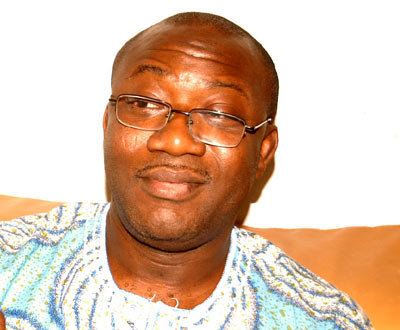
Without zoning, minorities will ''never'' attain political power —Yakasai By Hugo Odiogor, Deputy Politics Editor & Abdulsalam Muhammad Monday, July 19, 2010 The debate on President Goodluck Jonathan’s political future has put the country on the tenterhooks as the debate for and against the principle of zoning put in place by the ruling People’s Democratic Party has polarized the country along North-South divide. In this interview with Vanguard, Alhaji Tanko Yakassai gives a deep insight into the genesis of the controversy. Excerpts : [img]http://odili.net/news/source/2010/jul/19/vanguard/images/Tanko_yakasai[1].jpg[/img] Alhaji Tanko Yakassai http://odili.net/news/source/2010/jul/19/305.html Why is this debate on where the presidency should go rather than the competence and ability to render services from the presidency? The debate is brought about by the dishonesty, and insincerity of some people in the political class. The rotation and zoning was first introduced in the Nigerian politics officially in 1978/79 when National Movement transforms into the defunct National Party of Nigeria. NPN adopted Zoning and rotation between the North and the South and agreed that each side would hold power for two consecutive terms. It was on the basis of that the former President Shehu Aliyu Usman Shagari was elected and it was on the basis too that the late Chief Meredith Adisa Akinloye from the South, became Chairman of the party. Dr. Alex Ekweme became the Vice President of Shagari from the South -East, Chief Joseph Wayas from South-South became the Senate President. The agreement was that after the second term of the Shagari administration, power will move to the South and they will decide who will be the flag bearer of the party. In respect of the presidential candidate, the North was asked to produce three candidates, I was a delegate to that meeting. We conducted the primary to selected three candidates, unfortunately the three front runners were all Muslims, but we felt that since there were people like Chief J. S. Tarka among those who contested it will be unfair to take the list of the three Muslims all together to the South, so it was agreed that the six candidates should be forwarded to the convention. This was how Alhaji Shehu Shagari, Maitama Sule, Olusola Saraki, Joseph S Tarka, Adamu Ciroma and Iya Abubakar came to vie for the position. The convention eventually voted for Shagari, and that was the beginning of the official adaptation of zoning, and rotation in the history of Nigerian politics. The issues of zoning and rotation were suspended until General Sani Abacha organized Constitutional Conference in 1994/95. During the conference, Southern delegates led by Dr Alex Ifeanyi Ekweme, and Dim Odimegwu Ojukwu insisted that the conference should adopt zoning and rotation, and entrench it in the constitution. The Northern delegates declared that they had no objection to the question of zoning in principle but they felt that in the interest of the future it should not be entrenched in the constitution because it be will difficult to amend it when the country decides that it is no longer interested in zoning and rotation. The Chairman of the conference, Justice Karibi Whyte decided to set up a special committee of 37 made up of equal numbers of delegates from North and South ,and I happened to be a member of that committee, Late General Yar Adua, Adamu Chiroma, Lawal Kaita, Ismaila Isa Funtua , Emir of Ningi, one traditional ruler from Rivers, Osile of Abeokuta, were all members of that committee. We went in to slug it out and eventually the Emir of Ningi declared that it will be a shame that the committee refused to agree and decided that the royal fathers put their heads together and come up with resolution that zoning and rotation should be entrenched in the constitution and it should be done between North and South and eventually everybody agreed out of respect to the royal fathers. The Southern Delegates insisted that there should be 6 zones, that is 3 zones from the North and 3 zones from the South so that when power is going to rotate it will not only between North and South; it will be among the six geo-political zones. It was part of the recommendation submitted to General Sani Abacha and he adopted it, but went ahead to modify it against our recommendation for one vice president which he change to accommodate two Vice Presidents, that is, one from the zone where the President comes from and the other zone out side the incumbent president. So that in event of death of the president the Vice President from his zone will automatically takes over and we all agreed to that. When General Sani Abacha came to promulgate the constitution in 1995 he inserted in addition the office of Prime Minister, and Deputy Prime Minister so that if you add up the principal officers you end up having key positions shared among the six zones, and that was adopted. Unfortunately for us when the General died, General Abdulsalam who succeeded him appointed Justice Niki Tobi to review the constitution for its own reasons, and recommended that all the stabilization recommendation be dropped and it was dropped. When the G34 transform into PDP, they revisited the idea, adopted it but at the time I was a founding father of APP. We were faced with 12 candidates at that time, 10 of them were from the South; they included Dr Joseph Wayas, Chief Emmanuel Iwuanyaywu, Rufus Ada George. We then felt that if we don’t adopt zoning we will loose the support of heavy weight from the South and so we were forced to agree that northerner should not vie for the presidency of APP, because the PDP had already chosen their standard bearer from the South; that was how APP settled for Chief Ogbonanya Onu as our presidential candidate. For the purpose of defeating PDP at the poll we decided to from an electoral alliance and ceded the presidency to South-West and the dominant party in that region adopted Olu Falae for the joint ticket with Shinkafi as a running mate. |
| Politics › Local Hunters Now Do Police Job In Nigeria by AloyEmeka8(op): 7:24pm On Jul 19, 2010 |
[size=14pt]Oke Ogun: Where local hunters patrol highways *Paid N15,000 monthly[/size] Written by Moses Alao Sunday, July 18, 2010 A journey into the hinterland of Oke Ogun in the Northern part of Oyo State will reveal a common feature along the roads. From the semi-urban towns of Iseyin and Saki to the rural areas of Ago Are, Tede, Sepeteri, Igboho, Igbeti, among others, men are seen in uniforms of green, ash and lemon colours, clutching their local guns and appearing ready to do battle. [img]http://odili.net/news/source/2010/jul/18/tribune/images/alao201[1].jpg[/img] The hunters For a traveller entering Oke Ogun area from any of Kwara, Oyo or Ogun States axis, the presence of these local volunteers, who for the love of their communities and safety of the people have taken a calling where many dread to tread, is a reason to relax and enjoy the journey. With locations in-between police checkpoints, situated at corners and bends along the roads from Ibadan to Iseyin, Iseyin to Saki, Tede to Sepeteri, Igboho to Igbeti and in fact most of the roads leading from one local government in the area to another, these men practically live on the roads, with different groups rotating duties in 24 hours everyday, just for one reason: securing the highways in the area from the thieving bandits that have become popular, not only in the area but also in the country. For a first-timer on the roads in the area, the scenic view of these men would bring to mind tales of ancient Yoruba warriors or at least the ones used by the dreaded Oodua Peoples Congress (OPC). Gun-totting, fierce-looking. In actuality, they are defenders of the people, vanguards against the men and women who have turned themselves into instruments for the torment of road-users in the area. These men, Sunday Tribune gathered, are volunteer hunters who are in the service of the community. They literally have become the community police and their presence on the roads has been a huge blessing to the area. It is a group replete with people of courage and commitment, people who have chosen to work for the interest, wellbeing and progress of the community through selfless dedication to use their abilities and enablement to ensure security on the roads. According to Mr. Ojetunde Akanji, who spoke with Sunday Tribune in Saki, the calling of these vigilantes is not a trivial one and it is only a person that is courageous and puts the good of the community first that can volunteer to be a part of the group which has been a communal police of a sort. "These people are real men; they are men that you can refer to as men if you know what that means. They enter where even the police fear to enter, when they hear of armed robbery incidents, rather than run in opposite direction, they face the assailants. I don't think educated people like you (referring to the writer) can understand what they do on the highways. All you see is the end product which is the security of your fine cars and money," he averred. http://odili.net/news/source/2010/jul/18/612.html However, some of the local hunters whom Sunday Tribune spoke to in Saki East, Atisbo and Iseyin Local governments played down the commendation being given to them, saying that they are happy to offer their services to the people and their communities. According to Mr. Tiwalade Adesope, "It is God that has given us the privilege to serve the people. It is God and the prayers of the people that have been keeping us going, although we face a lot of problems. We do not have adequate facilities for transportation, so sometimes when these evil men are on the road somewhere; we look for how to get there. Also, our salaries cannot be said to be the best, we collect N15, 000 naira and we are being owed certain allowances. We are just doing this for the peace of our people and the need to safeguard the name of our town. |
| Crime › Re: Kidnapee's Wife Names Baby Abia by AloyEmeka8(op): 7:18pm On Jul 19, 2010 |
I guess Abia is now the bastion of kidnappings. |
| Crime › Kidnapee's Wife Names Baby Abia by AloyEmeka8(op): 7:18pm On Jul 19, 2010 |
I’ll have new baby to be named Abia – Oba’s wife By CHRISTOPHER OJI and SEYE OJO Monday, July 19, 2010 There was wild jubilation at the Ladi Lawal Lagos Secretariat of the Nigerian Union of Journalists (NUJ) where the freed journalists were received by their family members and colleagues on arrival. L-R: NUJ National President, Mallam Mohammed Garba, Assistant Secretary, Sylva Okereke, Chairman, Lagos State Council, Alhaji Wahab Alabi Oba, National Secretary, Adolphus Okonkwo and others during their arrival at the Murtala Muhammed Airport, Ikeja after their release by the kidnappers in Abia. http://odili.net/news/source/2010/jul/19/504.html Speaking on behalf of three others, the Lagos Council Chairman, Wahab, who was flanked by the union’s president, Mohammed Garba and former Lagos Council Chairman, Mr Lanre Arogundade, said they were chained like animals by their abductors, whom he described as youths in their early twenties. I was chained in my legs and the neck because they knew I was the chairman.” “Every 2 hours we were moved farther inside the bush” Oba disclosed. He also described their freedom as an act of God. Oba who disclosed, they were released around 2 a.m on Sunday, also appealed to the Federal Government to equip the police with sophisticated weapons like the ones handled by the kidnappers. It was a celebration galore in the homes of the four journalists. Shouts of Halleluyah and Allahu Akbar rent the atmosphere in the respective homes as friends relatives and other well wishers joined the families to thank God. When Daily Sun visited journalist Estate Arepo Ogun State yesterday the mournful mood which pervaded the homes for about a week had disappeared, with the family members in celebration mood. Wives of freed journalists wore cheerful faces and they attended to all visitors with uncommon hospitality. Food and drinks were served to visitors with enthusiasm. At the home of Mr Wahab Alabi Oba the Chairman NUJ Lagos State Council his wife, Barakat told Daily Sun: “I `m very, very happy. He called at about 6 a.m today that he has been released. He has called `me for about three times today, he called at 6 a.m, 6.15 a.m and 12.54 p.m. He said `he was at Umuahia. ]”I thank everybody who supported us in prayers and every other way. You can see that my children are happy. They are jubilating. I thank all Nigerians for their support.” Barakat jokingly said she would like to have a child to be name Abia or Umuahia, so that the family will not forget the experience. “Though I have stopped having babies but let me say it jokingly that I will like to have a baby that we will name Abia or Umuahia. If Alhaji comes back and says we should have the baby fine if they Are twins, one will be Abia, the other will be Umuahia,” she stated. Oba’s son, Abdulwahab, said: “I am very happy that the kidnappers have released my daddy, until I heard the news that my father has been released, I was sad. “I will go to school tomorrow (today) we have finished our examination before the incident happened next Thursday is our party in my school, I have been praying that daddy is there with `me God is Good.” |
| Politics › Re: Akala Is Planning To Assassinate Me - Adesina by AloyEmeka8(op): 7:16pm On Jul 19, 2010 |
The Alleged Plot to Kill Alaafin of Oyo 07.17.2010 Sunday, July 18, 2010 As curiosity grows in both political and traditional circles following the alarm recently raised by the Alaafin of Oyo, Oba Lamidi Adeyemi, about an assassination plot against him allegedly masterminded by Governor Adebayo Alao-Akala, Tunde Sanni, in Ibadan, examines at the relationship between the monarch and the governor http://odili.net/news/source/2010/jul/18/218.html The aborted plot to kill the Emir of Kano, Alhaji Ado Bayero, became the lead story in most national papers last Monday. But there was also a rider on the alarm raised by the Alaafin of Oyo, Oba Lamidi Adeyemi, about an alleged plot overseen by the Oyo State governor, Adebayo Alao-Akala, to exterminate him. Adeyemi named a businessman based in Oyo town and a former head of the Special Anti-Robbery Squad (SARS) as accomplices in the alleged plot. Expectedly, the allegation attracted anxiety in the Pacesetter State. The monarch has sent a petition to President Goodluck Jonathan and the Inspector-General of Police, Mr. Ogbonnaya Onovo, requesting inquiry into the suspected plot. The once chummy relationship between the paramount ruler and the governor has given way to mutual distrust. Many feel the cold war between the duo might not be unconnected with the alleged plan by Alao-Akala to alter the method of headship of the state traditional council by removing the permanent chairmanship position hitherto exclusively occupied by the Alaafin. But the monarch, too, was said to be unfavourably disposed to the second term ambition of the governor. The frosty relationship between Adeyemi and Alao-Akala – once very close associates – has taken everybody by surprise. At the height of their friendship, the Alaafin was a common sight at both the Government House and the Governor’s Office – either personally or through emissaries. He had explained the visits as occasions to discuss “pressing state matters.” During the inauguration of the state Council of Obas and Chiefs, the Alaafin’s loyal voice had overwhelmed the defiant voices of the Olubadan, Oba Samuel Odulana, and that of the Soun of Ogbomoso, Alao-Akala’s native land, Oba Jimoh Ajagunbade, on the permanent chairmanship position of the council. Till date, both the Olubadan and Soun are still in court contesting the government’s decision to make Alaafin permanent chairman of the council. The rapport between the governor and the Alaafin predated Alao-Akala’s emergence as governor of the State. The bond had existed since the days of the impeachment of former Governor Rasidi Ladoja was being hatched. It was learnt that the Alaafin and Ladoja had enjoyed a similar chummy relationship until the former governor dared to alter the leadership mode at the Council of Obas by removing the consenting authority from the Alaafin and breaking the traditional institution into zones, with each of the leading monarchs in the zones presiding over the traditional council. Though, the Oyo monarch had headed to the court to contest the action of Ladoja, he, however, made a political realignment when Ladoja fell out with his former godfather, Lamidi Adedibu. With Ladoja effectively out, and Alao-Akala in, the Alaafin was said to have contracted a marriage of convenience with the new governor, which led to the overruling of Ladoja’s decision to remove the Alaafin’s consenting authority. The marriage did not last long as Alao-Akala, owing to some undisclosed reasons, promoted the Baale of Ago-Oja, in Isale Oyo, against the wish of the paramount ruler, the Alaafin. Again, Adeyemi headed to the court and the case subsisted when the Supreme Court ordered the reinstatement of Ladoja. Interestingly, the same Alaafin who aligned with the pro-impeachment forces against Ladoja was among eminent indigenes of the state on hand to receive Ladoja back into office. But Ladoja chose to keep the monarch at arm’s length. The relationship between Ladoja and Adeyemi remained cold until the conclusion of the 2007 polls, which returned Alao-Akala as governor. In order to guarantee a harmonious relationship with the monarch, Alao-Akala had to bend backward by ensuring that one of the Oyo crown princes, Hakeem Adeyemi, became the elected chairman of Atiba local government, aside other government patronages extended to the monarch. Alao-Akala was also generously disposed to the recommendations of the traditional council under the leadership of the Alaafin. Such advice included the fragmentation of Ibadan traditional institution through elevation of some village chiefs to beaded crown, in addition to renovation of their palaces and purchase of new cars for them. This was clearly to erode the influence of the Ibadan chieftaincy institution and wear down Olubadan’s opposition to the Alaafin and the Alao-Akala government. Leading Ibadan pressure groups joined the fray, accusing the Oyo monarch and the government of gradual attempt to whittle down the authority of the Olubadan. However, while the attempts to grind down the Ibadan traditional institution lasted, the Olubadan remained defiant. While the Soun and the Olubadan, on the one hand, and the governor, on the other, feuded, the Alaafin and his traditional council seemed to coast to victory, as traditional rulers fell over themselves to splash chieftaincy titles on the governor. But none came from the Alaafin’s Oyo kingdom. Sources claimed this did not go down well with Alao-Akala and when the offer of Bobagunwa and Yeye Bobagunwa of Ogbomosoland on him and his wife, Kemi, came from the Soun, it was time for rapprochement with his monarch and a time to cut down on his relationship with the Oyo monarch. |
| Politics › Gladiators Storm Abuja For Jonathan by AloyEmeka8(op): 7:15pm On Jul 19, 2010 |
[size=14pt]South South, Middle Belt, North East gladiators’ storm Abuja for Jonathan [/size] By Chris Ochayi, Abuja Sunday, July 18, 2010 Nigeria as a country has seen very little development since independence as a result of political marginalization, which exists amongst tribes and ethnicities in the country. And because of this obstacle, relative progress is difficult to attain. http://odili.net/news/source/2010/jul/18/306.html For the wide divide between the very rich and the very poor to be bridged, political power should not just revolve around a certain group of people or tribes, who by any means, will seek power for the pleasure of it, as has been the case in Nigeria where smaller tribes like the Ijaws, the Ibibios, the Efiks, the Anangs, the Idomas, the Igalas, the Beroms and every other smaller tribe have beenv sidelined, politically and economically by the majority tribes. In the history of Nigeria’s democracy,the seat of the presidency of the Federal Republic of Nigeria has been a position occupied by a select few-the major ethnic groups. To achieve true democracy, measures should be put in place and such measures as political structure, policy or legislation would ensure that power is equally distributed amongst capable and deserving hands. Only the Hausa-Fulani’s (Northerners) and the Yoruba’s (Westerners) have ruled Nigeria since its independence from the British in 1960. When a new chapter of equal distribution of power in the country’s history book opened in 1999, with the gentlemen agreement of power zoning, it was a Yoruba man, in the person of Chief Olusegun Obasanjo that benefited from the formula. This conception was a political solution to compensate the Yoruba nation over the annulment of the June 12, 1993 Presidential election, which their illustrious son, late Chief MKO Abiola, was believed to have won . With these majority warlords, political power in Nigeria, particularly, at the centre seemed to belong to particular tribes to the detriment of the minority ethnic groups. People must understand that to be a strong and progressive unit, they must see past ethnicity, tribes and geographical boundaries. As a country with 36 states, 250 ethnic groups and over 140 million people, many minorities in the Middle Belt, in Niger Delta states, and elsewhere in the country have felt marginalized for long. That feeling persists till date. Above all, there must be a political will amongst the powers that be to find a way to bring the marginalization of minority tribes to an end in the country. To this end, an attempt was made when the minority ethnic groups from the North Central, South South and North East geo-political zones converged in Abuja, the nation’s capital, where they demanded that President Goodluck Jonathan should be allowed to contest the 2011 presidential election. In fact, the convener of the Abuja meeting, and former Senate President, Senator Ameh Ebute did not leave anyone in doubt when he declared that, now is the time to correct the decades of the political marginalisation of the minority groups in the country. Operating under the aegis of Congress for Equality and Change, CEC, the pressure group, had particularly requested that a special consideration be given to the South South by zoning the 2011 presidency to the zone in order to address the suffering of the region. National Chairman of CEC, Senator Ebute pointed out further that, since zoning was introduced as a political solution to the issues bothering on inequality and unfairness, the South South geo-political zone should produce the next president in 2011. “If there is going to be zoning, President Jonathan should benefit because of the peculiar nature of the region he comes from, and given the fact that the South South has not produced the president before”, he insisted. Those who attended the meeting include, Air Commodore Dan Suleiman, (Rtd), General Haladu Hannaniya, Senator U.J Yuhanna, Dr. Pogo Bitrus, Senator Jonathan Zwingina, Lawrence Ugbale, Senator Alex Kadiri, Dr. Bala Takaya, Senator Janfa, General Ibrahim Sabo, Engr. Benson Abounu and Ambassador Wiberforce Jatu. Others were, Chibudun Nwuche, Esther Uduehi, Chief P.Y Diokpara, General Sam Oviawe, Chief Jackson Udoh, Chief Ita-Hensaw, Chief Bolere Ketebu, Senator Francis Okpozu, Chief Anyakeme Whiskey, Hon. Peter Igbodo and Mathias Ofoboche amongst others. According to Ebute, “our support is justifiably premised on the special circumstances of the South South geo-political zone, where President Jonathan comes from, which ecology has been gravely devastated as a result of oil and gas exploration activities for over 50 years; a zone which has never produced a president for Nigeria but contributes over 80% of the total federal revenue”. |
| Politics › Akala Is Planning To Assassinate Me - Adesina by AloyEmeka8(op): 7:12pm On Jul 19, 2010 |
Sunday, July 18, 2010 Akala is planning to assassinate me - Adesina OLALEKAN ADETAYO Former Oyo State Governor, Alhaji Lam Adesina, on Saturday raised the alarm that the incumbent Governor, Chief Adebayo Alao-Akala, was planning to assassinate him and some prominent leaders of the Action Congress. [img]http://odili.net/news/source/2010/jul/18/punch/images/pix201007184253489[1].jpg[/img] Former Oyo State Governor, Alhaji Lam Adesina The AC chieftain's allegation came barely one week after the Alaafin of Oyo, Oba Lamidi Adeyemi III, levelled a similar allegation against the governor. But the governor's Special Adviser on Public Communications, Mr. Dotun Oyelade, has discarded Adesina's allegation, saying taking such "alarmist course" has become the former governor's stock in trade. A statement made available to journalists in Ibadan, the state capital by the AC's Director of Publicity and Strategy, Mr. Wasiu Olatubosun, quoted Adesina as making the allegation against the governor at his Felele residence. The former governor was also quoted as warning the state Commissioner of Police, Mr. Adisa Bolanta, and Director, State Security Service not to sweep the matter under the carpet, as they would be held responsible if anything untoward happened to anybody in the state. "With the intelligent report at my disposal, I reliably gathered that Governor Adebayo Alao-Akala had concluded plans to kill me and some AC leaders in the state for him to realise his second term ambition," the former governor reportedly alleged. The party's spokesman however described the alleged plan as a frustrated move that stands condemned by well-meaning Nigerians. The statement read, "It would be recalled that the AC had raised this alleged plan by Akala's government to assassinate some prominent people in the state for him to actualise his second term ambition. "Our fear became heightened when the Chairman, Oyo State Traditional Council, Alaafin of Oyo, Oba Lamidi Abiodun Adeyemi III, raised the alarm over alleged plan to assassinate him by Akala. "Prior to this, some people had raised similar alarms including the Senate Leader, Senator Teslim Folarin; Osi Balogun of Ibadanland, Senator Lekan Balogun, Chief Olufemi Lanlehin and Senator Abiola Ajimobi, who are all prominent Ibadan indigenes. "This development is not alien to the politics of the state in recent times as it has been the practice of the government of the day to perpetrate different obnoxious acts before, during and after any election to satisfy his do-or -die philosophy of politicking. "AC's fear is necessary, but for the inability of security operatives to nip in the bud the past politically-motivated assassinations in the country. It is still fresh in our memory the brutal assassination of the then Attorney- General and Minister of Justice, Chief Bola Ige, prior to 2003 elections." The party stressed the need for President Goodluck Jonathan, the Inspector-General of Police, Mr. Ogbona Onovo, and other security agencies to beam their searchlights on the spate of insecurity which is plaguing the state as a result of the ambition of the governor and his co-travellers. But Oyelade, in a text message sent to our correspondent, described the former governor's allegation as a wild statement. Oyelade said Adesina was only replicating two similar allegations which he made in the wake of the 2003 governorship election. He said, "That time, within two weeks he alleged that Alhaji Adedibu of blessed memory and ex-President Obasanjo wanted him dead and that the plans were hatched at the Ondo Street residence of Senator Ladoja. "Alhaji Adesina made the allegation public without recourse to police authority even in his capacity as a sitting governor! "Coming at this period and soon after a similar incongruous statement was made has therefore become an unfortunate stock in trade. But this is an old strategy to simulate crisis. "Whoever advised Adesina to take that alarmist course has not done his reputation a world of good. "Now, the law enforcement agents must reign in these people and force them to divulge all evidences at their disposal instead of throwing bombshell and running for cover." http://odili.net/news/source/2010/jul/18/844.html |
| Politics › Re: Religion And Tribe Are Tools Used By Politicians To Destroy Us-achebe by AloyEmeka8(op): 11:13am On Jul 19, 2010 |
ChinenyeN:Religion is even a stronger political tool in Nigeria than ethnicity. |
| Politics › Re: The Father And Founder Of Nollywood In Nigeria: Tribute To Hubert Ogunde. by AloyEmeka8: 8:10pm On Jul 18, 2010 |
Do you have his satellite image position in heaven? |
| Politics › Re: The Poor State Of Lagos Roads by AloyEmeka8(op): 8:08pm On Jul 18, 2010 |
ikeyman00:Ask her what stops her from posting the "good things" that abounds in the South West area of Nigeria if she feels marginalized?. Is posting limited to Aloy.Emeka?. Why should I blame her since political discussion seems to be broader than the broad?. |
| Politics › Re: Nigerian Scientists Develop ‘fuelless’ Generator by AloyEmeka8(op): 8:00pm On Jul 18, 2010 |
‘‘We don’t sell the product now, we only train people to do it themselves but we may manufacture it for commercial purposes if the capital is there,’’ he said.That is the problem with Nigeria. Always looking for govt to help them develop their invention. Before you know it now, the Chinese and Europeans will steal their invention and put it in commercial form without TELLING their govt. What happened to sourcing for fund to foster your invention and protect your intellectual properties? |
| Politics › Re: The Poor State Of Lagos Roads by AloyEmeka8(op): 7:46pm On Jul 18, 2010 |
[size=14pt]Bad Roads In Lagos: Fashola Goofed[/size] Author: Date: Jul 13th, 2010. Apparently reacting to reports about the bad state of roads in Lagos State and government’s seeming insensitivity to the plight of motorists and commuters alike, Governor Babatunde Fashola, at a retreat held for members of his cabinet, permanent secretaries and other top government officials at the weekend blamed the rains for the deplorable state of the roads. According to the governor, the situation is not peculiar to Lagos alone as states located within the coastal belt usually suffer flooding during rainy season which often damages the roads. Even in Europe, the governor asserted, roads go bad during the winter and are repaired thereafter. While pleading with Lagosians and the media to show understanding at this period, the governor assured that his administration would move quickly to repair the roads once the rains stopped. He also seized the opportunity to inform Lagosians of the effort of his administration in road construction and rehabilitation, boasting that his administration had built more roads in the last three years than a country like Ghana did within the same period. As much as we sympathise with the governor over the criticisms he received on the poor state of roads in the state, we regard his explanations as a feeble attempt to shield fraudulent contractors who perform shoddy jobs in the construction and rehabilitation of these roads. When you appoint a contractor on the basis of political considerations to execute road contracts, you will always have bad roads because they will cut corners to maximise their profit. Besides, political contractors have godfathers they have to give certain returns out of the total contract sum, thereby leaving them with insufficient fund to execute the project. An investigation of most of the failed roads in the state carried out by P.M.NEWSrecently revealed that they were poorly executed by the contractors. Most of them were constructed or rehabilitated, with substandard materials and thin layers of asphalt. Whenever a little rain falls, the surface is washed away and this exposes the red clay underneath. As vehicles ply the road, potholes appear on it and they widen and become a source of nightmare for road users. During our investigation, we also discovered that there are some well built roads in the state which are unaffected by the rains because of the thick layer of asphalt used in covering the surface and the good drainage system. Examples of these roads are the Alhaja Kudirat Abiola Road, Onikan Road, Commercial Avenue, Yaba, Awolowo Road, Ikoyi and a few others on Lagos Island and Lagos Mainland. Infact, most of the roads in the Lagos suburbs are in a terrible state with large potholes that usually burst tyres of vehicles that mistakenly run into them. The governor should drive round roads in Ogba, College Road, Ago Palace Way, Okota, some roads in Lekki Phase 1 and 2, especially Victoria Arobieke Road end of Admiralty Road, Akowonjo, Shomolu and Bariga roads, etc. to asssess things by himself. Perhaps his aides are deceiving him that these roads are not as bad as Lagosians are complaining about. He will be shocked at the state of these roads. The excuse by Governor Fashola that the the rains brought about the poor state of the roads rings hollow. It is the shoddy job done by contractors that has been exposed by the rains. These contractors and their corrupt, inept, incompetent collaborators in the state Ministry of Works should be brought to book. It is a well known fact that engineers charged with inspecting these roads and advising the government appropriately on their quality have also compromised their professional integrity by approving poorly constructed roads that cannot stand the test of time. They do this after receiving gratification from the contractors. Government should give road contracts only to reputable professionals who would build durable roads according to specifications. Engineers should also be made to do their work conscientiously and ascertain the quality of the materials used in the construction of roads. Bad jobs should not be approved and the contractor concerned should be sanctioned. Another area we want the governor to look into is the drainages. It is true that the administration has been constructing drainages along roads in the state, but this has not had a significant effect in reducing flooding in the state because the drains drain water to nowhere. In some instances, you find most of these drainages blocked by wastes and other impediments. As a result of blocked drainages, water stays longer than necessary on the roads and this leads to erosion of the roads and the potholes are created. Measures should also be taken against indiscriminate digging of roads in the metropolis because this also contributes to the poor state of the roads. Most important, we urge Governor Fashola to embark on filling the potholes as a palliative measure pending the total rehabilitation of the roads immediately after the rainy season. http://pmnewsnigeria.com/2010/07/13/bad-roads-in-lagos-fashola-goofed/ |
| Politics › Re: Religion And Tribe Are Tools Used By Politicians To Destroy Us-achebe by AloyEmeka8(op): 7:43pm On Jul 18, 2010 |
He is right on the money as usual. |
| Politics › Minister Gives Away $1.5 Billion, National Assembly To Investigate by AloyEmeka8(op): 6:41pm On Jul 18, 2010 |
Minister Gives Away $1.5 billion, National Assembly To Investigate SUNDAY, 18 JULY 2010 00:00 FROM ALIFA DANIEL, ASST POLITICAL EDITOR, ABUJA NEWS - NATIONAL IN whispers, tongues are wagging in Nigeria and beyond on why a former Minister of Petroleum Resources traded off a whopping $1.5 billion (about N225 billion) of the country’s commonwealth to an American multi-national, over its hold on some oil blocks. Curiously, a Chinese company was waiting in the wings to take over the oil blocks at more than double the $2.25 billion a government panel recommended for leasing them out. Also, questions are being raised over the manner other sets of oil blocks, known for money spinning, changed hands between a Swiss oil company and a Chinese company without proper consultations with the Federal Government, the custodian of the oil blocks for the people of Nigeria. The Minister who waived $1.5 billion is not Dr. Rilwan Lukman, as many initially thought. But the affected Minister, who did not even physically append his signature to the agreement, is claiming that late President Umaru Musa Yar’Adua gave him the go-ahead to do so. But many doubt this position, and are looking up to the relevant investigating government agency to get to the root of the matter, since it has been difficult to find documentary evidence of the late President’s involvement. “If that happened, there must have been an exchange of memoranda for such waivers. You do not waive one dollar and not have the paperwork to cover you up,” one source in the oil industry said at the weekend. While the whispers continue, The Guardian can indeed confirm that sheaves of papers of petition have reached the National Assembly on the matter, and it may commence investigations soon. One Federal lawmaker confirmed the petition and showed The Guardian a handful of them, including the report of a panel, which recommended that the oil blocks be renewed to the oil company for another quarter of century for over $2.2 billion, but which was indeed done for $600 million. “We will do this particular investigation and that Minister has to explain what happened and prove that he got the President’s consent to do this,” the lawmaker added. Other sources doubt the sincerity of the National Assembly in going far with the venture. One senior civil servant in the system asked rhetorically: “What report have you seen on the oil industry that has emanated from here and was taken seriously, even though they shout every year? Tell me one, because you have been here for eight years. It will be hot air and nothing after. Let another agency do it, not these politicians,” he added. It was not clear whether the Senate or House of Representatives Committee on Petroleum Sector (Upstream) will start the investigation first, but one of the two Chairmen, Senator Lee Maeba, told The Guardian: “We have it and we will summon that Minister to explain his role.” He declined to say more. It would be recalled that all the efforts of Maeba and his colleagues in the Senate Committee to investigate the NNPC records in the last three years has come to nothing, though the Committee has the highest number of Principal Officers after the Selection Committee. At every turn, the Committee noised over the manner in which the Nigerian National Petroleum Corporation (NNPC) was being run, but no concrete investigations took place. Just last week, the Senate again mandated that same Committee, and another to investigate the discordant tunes over the solvency or otherwise of the NNPC. “If we had done the investigation, this embarrassment would not have occurred. We had the opportunity and we bungled it, and now, here we are again,” a source said at the weekend. Though some Principal Officers were being mentioned at the weekend as being responsible for the stalled investigation, another source retorted: “There was no true will to deal with the problem in the first place, by all concerned. He that is innocent in this matter should throw the first spear.” Those who sponsored the motion, last April, to probe the NNPC included the Chairman of the Senate Committee on Petroleum (Upstream), Lee Maeba; Majority Leader, Teslim Folarin; Minority Leader, Ma’aji Lawan; Deputy Majority Leader, Victor Ndoma-Egba (SAN); and Deputy Minority Leader, Adeleke Mamora. Interestingly, two members had earlier disagreed, as one openly accused the other of stalling the probe for pecuniary interests. http://www.guardiannewsngr.com/index.php?option=com_content&view=article&id=17201:minister-gives-away-15-billion-national-assembly-to-investigate-&catid=1:national&Itemid=559 |
| Celebrities › Re: RMD Impregnates 2 Ladies At Once by AloyEmeka8(op): 6:33pm On Jul 18, 2010 |
Pappij:Only in your head. |
| Politics › Re: Aloy: Yorubas Never Betray Abiola. Yorubas Voted 95% For Abiola by AloyEmeka8: 6:26pm On Jul 18, 2010 |
I am throwing a challenge to Northerner community in Toronto or the Igbo community in toronto to disprove all of the satellite picture. My phone number is 647 258 2755. we have a problem.Dem no fit na.  |
| Politics › Religion And Tribe Are Tools Used By Politicians To Destroy Us-achebe by AloyEmeka8(op): 6:16pm On Jul 18, 2010 |
[size=14pt]A Man of the People[/size] by Jerry GuoJuly 05, 2010 Although best known for his 1958 masterpiece, Things Fall Apart, about a simple yam farmer in tribal Nigeria, novelist Chinua Achebe is still writing about Africa a full half century later. The 79-year-old author and social critic spoke with NEWSWEEK’s Jerry Guo about recent developments in his home country and politics on the continent. https://www.saharareporters.com/images/stories/chinua_achebe_abuja.jpg Achebe Excerpts: Why do you think Nigeria has such a bad reputation? It’s possible to go to Nigeria and feel that the people are very dynamic and hardworking and want to do well. Yet you could [also] have an impression that this is a very corrupt country. Nigerians had very serious problems in their history since the times of the colonial masters. Now Nigeria is trying to become a modern state on one hand; on the other, it’s still a very corrupt and violent country. So how did notoriously corrupt African states like Nigeria become that way while others such as Botswana and Ghana went down a different path? Nigeria is very wealthy because of the amount of oil. This richness becomes a drag if there is no order and no honesty. I write about Nigeria, yet I cannot understand why we refuse to grow up. It’s a mystery to Nigerians and a mystery to me. Come to any election in Nigeria and it’s full of bad news. Nigerians know what they want. So why don’t you get your house in order, I ask? In your political commentary, you talk about the importance of personalities in african politics. is this a sustainable way of governance? I don’t think so. You need to have leaders who feel the need or are compelled by their people to be good and reliable. The failure of leadership is the explanation in my famous piece, if I may so say, “The Trouble With Nigeria.” This is the failure of Nigerian leaders, not their followers. You don’t place any blame on the enabling conditions from which these kleptocrats emerge? We do have the need for followers to put pressure on their leaders, but the problem is that their leaders are corrupt. When you talk about the few African countries where things are working, you will find generally the quality of leadership is better than in other countries. We need to hand power over to those people who have special training through good education or people who have some qualities that can pull together the resources of a nation. Of course, the colonial system prejudiced our development, but we have also now had enough time and opportunity to straighten it out. But we haven’t done that. You’ve said president Jonathan Goodluck wasn’t bringing in the good luck. So what was your reaction to the news of the death of president Umaru Yar’Adua? I wouldn’t pursue that line. It’s not a question of changing my mind, but that we must give [Goodluck] the opportunity to show his leadership. We must not assume anything at this stage, because as acting president, he did not have this position before. There’s been an uptick in ethnic violence between the Christians and Muslims in nigeria. are you afraid of radical islam taking root there and spreading? That’s a very serious problem. A politician will use whatever is handy, and the things that are handy are ethnicity and religion. It’s very worrying and it could damage the nation permanently. I think it’s a sign of a lack of development. Speaking of development, do you think there’s still a role, if any, for the west in all of this? I don’t think the West must themselves decide whether they should have a role. If they do feel like helping, that’s fine. But it should be something that we do freely, as members of the human race. Don’t misunderstand me, there is still room for the West in Africa, but I’m very anxious not to give the impression that we’re waiting for someone to come develop the African continent. http://www.newsweek.com/2010/07/05/a-man-of-the-people.print.html 1 Like |
| Politics › Ogbulafor, Maduekwe, Others Reject Kalu’s Return To Pdp by AloyEmeka8(op): 6:07pm On Jul 18, 2010 |
Ogbulafor, Maduekwe, Others Reject Kalu’s Return To PDP •I Know Why They Are Jittery, Says Ex-Gov By Maxwell Oditta (Lagos)Obiorah Ifoh (Abuja), and Ben Duru (Umuahia) Crème de la crème of the Abia Peoples Democratic Party (PDP) at the weekend made clear that Orji Uzor Kalu is not wanted in their midst, a position reinforced by a threat to quit the ruling party should the Wadata Plaza readmits the former Abia Governor. Sources close to the state wing of the party have insisted that allowing the former governor into the party would cause frictions and disrupt efforts to keep Abia PDP as one. They said Kalu’s entrance would affect the formula on which they have agreed to pick candidates for the next governorship and National and State Assemblies’ elections because the former governor will also want to steal the show. That is the newest in the rounds of political backlashes Kalu now faces since he quit the depleted Progressives Peoples Alliance (PPA) alongside a handful of his loyalists, including Abia Deputy Governor, Chris Akomas. Those against Kalu’s return include former PDP National Chairman, Vincent Ogbulafor; Labour and Productivity Minister, Emeka Wogu; PDP Reconciliation Committee Chairman, Ike Nwachukwu; former Foreign Affairs Minister, Ojo Maduekwe; Abia PDP Governorship Candidate in 2007, Onyema Ugochukwu. Others are Senator Enyinnaya Abaribe; Senator Nkechi Nwaogu; Honourabe Nkeiruka Onyejeocha; Honourable Eziuche Ubani; Honourbale Chineye Ike; Honourable Mao Ohuabunwa; and Honourable Chinwe Nwanganga. They took the decision in Abuja shortly after meeting with PDP National Chairman, Okwesilieze Nwodo. All of them signed a resolution rejecting Kalu’s return to the party along with his lieutenants. The resolution, titled “Resolution by the State Executive Committee and Stakeholders on the state of PDP Abia State and the Attempted Return of Kalu and other decampees to the PDP,” was jointly signed by the state chairman, Ndidi Okereke and the Secretary, Solomon Ogunji. Reagan Ofomba, Henry Ikoh, and Ikechi Emenike – all Abia governorship aspirants under the party declined to sign the resolution. Kalu’s antagonists insisted in a resolution issued after the meeting that his past political activities showed a repudiation of the core values of the PDP and that his readmission will negate party discipline and cohesion as contained in Article 6 of the party’s Constitution. In a tacit rebuke of the Wadata House granting audience to Kalu, members of the SEC insisted that issues affecting the party in the state ought not to have been initiated and/or concluded without consultation with it. Akomas, who also was received at the PDP National Secretariat last week, was barred from the meeting because, according to the hawks, he is not a member of the party. Some other PPA members, including Sam Nkire and Kelvin Ugbaoaja who were already in the venue, were equally asked out. The SEC resolution reads: “That the party is not opposed to the return of decampees but that such return must be in accordance with the Article 10b sub (iii) which leaves the chapter with the discretion to accept the returnee or not, considering the character and political antecedents of the returnee. “That it is on this basis of the aforesaid provision of our constitution that the Abia State chapter rejects the return of chief Orji Uzor Kalu and declines to recommend his admission to the National Working Committee on the following grounds: That his past political activities had shown a repudiation of the core values of our great party and his readmission would be a negation of the party discipline and cohesion as contained in Article 6 of our great party. That the repulsion of Abia indigenes and residents over the news of his readmission into our party in which they have invested hope considering that he is the personification of mis-governance, rapacity, impunity, and ruin of the economy and security of the state. A source at the meeting told Sunday Independent that Nwodo received the resolution and assured them he would present it to a meeting of the PDP NWC on Wednesday for deliberation. “(Nwodo) said he will henceforth transmit the Abia message which is that there must be sanctions for impunity and wrong doing by the party,” the source said. Bende Local Government Chapter of the party, where Kalu hails from, had in the wake of his return published an advertorial in which it claimed ignorance of Kalu’s return to the PDP. But Kalu immediately dismissed all these positions as unwarranted shivering of political neophytes. http://www.independentngonline.com/DailyIndependent/Article.aspx?id=17246 |
| Culture › We Will Turn Lagos To Las Vegas –nudist Club Owners by AloyEmeka8(op): 5:59pm On Jul 18, 2010 |
Return of Sodom and Gomorrah We’ll turn Lagos to Las Vegas –Nudist club owners By JOSSY IDAM (jidam14@yahoo.com) Sunday, July 18, 2010 Recently reopened nude clubs in Lagos State have widened their doors for a bigger clientele. The clubs now witness a large patronage of ‘gentlemen’, as the patrons who troop into the joints call themselves. Mellow mood Located close to Tastee Fried Chicken on Opebi Road, Ikeja, Ocean Blue (now christened Solid Gold) begins to ‘happen’ as early as midday. Lit only by the flickering light of two flat screen TV sets, the girls of the club - Solid Babes - as they prefer to be called - begin to dance and prance around in bikini. To help put the men in mellow mood, hard core pornographic films play on. The club’s teeming patrons lounge around and savour its wine, spirits and beer. Between sipping of drinks and puffing of cigarettes, the men cast furtive glances on the girls cat-walking and trying very hard to be noticed. House rule The club, which claims to parade the most beautiful girls in Lagos, has house rules. Rule one: Patrons are not allowed into the club with weapon or piece of metal (car keys and handsets exempted) and camera. Rule two: No handling of the club’s girls and no open sex. Rule three: Payment of gate fee, drinks, and small chops are mandatory. Rule four: No rowdy, drunken, disruptive behaviour allowed. Rule five: Be generous. Tip the girls if ‘you are pleased with what you see and feel’. To ensure compliance with the rules, beefy bouncers monitor the goings-on unobtrusively. After hours The club pulsates until around 5am the next day. The bevy of cute-looking girls dancing in turns sustain the interest of the ‘gentlemen in the house.’ Sunday Sun observed that if a patron is carried away by any of the girls, he would buy her a drink, spray her a bit with naira notes when she is dancing, obtain her phone number and ‘book’ to see her after club hours. To do this, a desirous patron doles out N20,000 before pairing off with his beau. Clubs in the same league with Solid Gold include Wall Street, Magic City, Cazzbah and Club Unique. But these ones begin business from 7pm and operate until twilight. Lap dance Located at Ogundana Street off Allen Avenue, Ikeja, Club Unique distinguishes itself with a V.I.P section for its well-heeled, rich patrons. When the VIPs in suits trundle in, the girls fall on each other to get them and give them a ‘lap dance.’ When a VIP (big shot) consents or requests for lap dance - which is routine - the chosen girl proceeds gently. Wearing only a bikini or micro mini, she would seat astride the patron and lasciviously dance on the lap of the man. Most times, the dancers don’t wear pants. The intention is, of course, to arouse the man and make him fantasize what lies ahead the body tingling with pleasure. Like in most nude clubs, the rules are unwritten. But as events unfold, older patrons and club managers advise new comers accordingly. At Club Unique, VIPs and other patrons tip lap dancers with naira notes. Acceptable minimum amount is N 2,000. When a lap dancer is ‘working’ on a man, he is expected to reach deep into his purse and stuff money in the girl’s bra and pant. The club has also undergone a metamorphosis. In the early 90s, it was simply known as Club 10. Then it was a popular viewing centre for football matches. On weekends, the club used to switch to a dance nightclub with a generous parade of girls ‘shipped’ from university campuses around the city. But a lot has not really changed. Patrons still pay gate fee to enter the place. The fee on week days is N1,500. On weekend, it goes for N2,000. The drinks still don’t come cheap. For instance, a bottle of small stout and other beers go for N800. The cost of wine and spirits range between N10,000 and N30,000. Some of the patrons who spoke to Sunday Sun said they were attracted to the nude club by erotic dance, the girls and leisure. A businessman, who gave his name as Tunde, said he comes there to unwind. “See, my brother, Lagos is too stressful. After running up and down the place and enduring the flood and traffic jam, it is good to relax a bit,” he said. A contractor, Igwe (full name withheld), said he enjoys good life and spending his money on whatever catches his fancy. http://www.sunnewsonline.com/webpages/news/national/2010/july/18/national-18-07-2010-002.htm |
| Politics › Re: Why Nigeria Is A Forged Product, By Kayode Fayemi by AloyEmeka8(op): 5:54pm On Jul 18, 2010 |
Why was it not a bad idea? You have to understand that there is never really a perfect time to join a system that was already rotten and that we were trying to clean up and compromises had to be made. Take Apartheid, in its dying days. The likes of Nelson Mandela and Thabo Mbeki and the leadership of the African National Congress, ANC, had to do deals in order to get the country moving on. Those deals were objected to by certain elements in the party but ultimately, it has succeeded in putting South Africa on a sound footing and things are getting better for them. Talking about compromises, Nigeria appears jinxed. Compromises are made with a view to moving forward and removing bottlenecks in some instances. First, what compromises were made in 1998/1999? Even the idea of having an Olusegun Obasanjo as the candidate of an election was the product of a compromise because the feeling was that the south west had been short-changed by virtue of the fact that somebody won an election and he was denied the opportunity to become president that is Chief M K O Abiola. Though some of us did not even agree with that because Abiola was not a Yoruba president – he was voted for by Nigerians so I didn’t even agree with that type of arrangement. Then the idea of even registering the Alliance for Democracy, AD, which did not quite meet the threshold set by INEC at the time, was a compromise to appease a very vibrant section of the pro-democracy movement and a vibrant section of the country by the powers that be. That was done. An Obasanjo and AD as compromises have even become major albatrosses Nigeria is carrying. Obasanjo is seen by many as a failure and that he wasted Nigeria’s eight years; AD, which came with so much promise, is as good as dead. So, whereas South Africa’s compromises succeeded in moving that country forward, Nigeria’s own have become unmitigated failure? Negative outcomes! That is what happens when you are left with false choices. One, we did not get the kind of democracy that we wanted. We are talking about a peoples’ democracy. We were even prepared to have an interim government that would produce a people’s constitution that would lead to genuine democracy but the Nigerian state has always been a forged product – but that is also not unique to Nigeria. In history, nations are firstly, imagined communities. There is no nation that is automatically there for the taking; they are products of compromises, of wars, of banditry – that is how nation states have emerged in history. So there is nothing so fundamentally different here. But when you say countries have emerged through certain processes and that there is nothing new in Nigeria’s instance, why, after 50 years have we been moving backwards? Good! The problem with Nigeria is that we as a people have always resorted to shortcuts. That is the problem of the 1999 transition: It was just a reconfiguration and not a transformation. It was the same old elements those who dominated the terrain in 1999 were the elements in Grassroots Democratic Movement, GDM; United Nigeria Congress Party, UNCP; National Centre Party of Nigeria, NCPN, and so on. These were the people who all moved in to form the Peoples Democratic Party, PDP. That thing they call PDP is not a political party. It’s been a business concern, an agglomeration, an election machine. That is what that thing is for. And once elections are over, they turn against themselves, against one another within the same party and they become the strongest opposition to themselves because for them it is about power that is what unites them and it is not power to do good or for the benefit of the people but power just for its sake. We really need to crack PDP in order to have a Nigeria of our dreams. When you say WE, who are those who would constitute this WE? Those of us who genuinely believe that another Nigeria is possible, we are the WE I am referring to. A Nigeria that would be interested in the progress of its people; a Nigeria that would be able to hold its head high in the comity of nations, a Nigeria that would live up to the promises. Everybody talks about the potentials of Nigeria but potentials are just potentials if they are not realized. |
| Politics › Why Nigeria Is A Forged Product, By Kayode Fayemi by AloyEmeka8(op): 5:52pm On Jul 18, 2010 |
[size=14pt]Why Nigeria Is A Forged Product, by Kayode Fayemi[/size] Jul 18, 2010 https://www.vanguardngr.com/wp-content/uploads/2010/07/Kayodefayemi1.jpg Kayode Fayemi *’We must crack PDP for Nigeria to survive’ * ‘Nigeria made false choices’ The first salvo was caustic: “Nigeria is becoming a progressively worse country and we have gotten to a stage where the administration we just complained about yesterday or just got rid of is considered better than the new one. “Just look at Goodluck Jonathan. The court gave a judgment on the Bauchi State Deputy Governor who was wrongly impeached and yet, the state governor, a member of the Peoples Democratic Party, PDP, refuses to obey the court judgment. Even as bad as late President Umaru Musa Yar’Adua was, he would not just sit and watch the show of shame in Bauchi where you have two deputy governors. That is the sad story of my country”. Kayode Fayemi is of the Action Congress, AC, and was its governorship candidate in the Ekiti State governorship contest of 2007. His pedigree as an intellectual of global reckoning compelled us to seek his views. You will not be disappointed. Excerpts: By Jide Ajani, Deputy Editor & Anthonia Onwuka Are things getting better in Nigeria? Nigeria is becoming a progressively worse country and we have gotten to a stage where the administration we just complained about yesterday or just got rid of is considered better than the new one. Just look at Goodluck Jonathan. The court gave a judgment on the Bauchi State Deputy Governor who was wrongly impeached and yet, the state governor, a member of the Peoples Democratic Party, PDP, refuses to obey the court judgment. Even as bad as late President Umaru Musa Yar’Adua was, he would not just sit and watch the show of shame in Bauchi where you have two deputy governors. That is the sad story of my country. When you returned to the country after the pro-democracy struggle, you were full of ideas on how to make Nigeria a greater country. How far with those wonderful ideas? Well, for some of us, the Nigeria project is a life-long struggle and everyone who is a product of this country should have a significant commitment to this nation. However, I also recognize the limitations of nationhood in Nigeria. I understand that Nigeria is not where we want it to be. I came into the country 10 odd years ago, not oblivious of the challenges we face as a nation. My mantra at the time was that this was a transition without transformation and that what we had was not political reconfiguration but neo-militarism because it was an extension of military rule of sorts. The man whom they brought in was an ex-military general, many of the people who surfaced in the National Assembly at that time were those we called Abacha politicians (or the parties late Chief Bola Ige referred to as the five fingers of a leprous hand) – an extension of military rule; and those of us who were in the fore-front of anti-military rule and pro-democracy movement were really, either on our own part, or by the system, sidelined. Some of us never believed that that was the way to go because we genuinely believed that we needed a peoples’ constitution, that would be wholly driven by the concerns of the people but what we got was different: We got a military constitution; we got an election that was by and large structured, organized. We got directed democracy of sorts which was in itself never really a bad thing. http://www.vanguardngr.com/2010/07/18/why-nigeria-is-a-forged-product-by-kayode-fayemi/ |
| Celebrities › Re: RMD Impregnates 2 Ladies At Once by AloyEmeka8(op): 1:37am On Jul 18, 2010 |
bawomolo:Shape, skin texture , complexion and height. |
| Politics › Re: New Outbreak Of Violence In Jos Claims Eight Lives, Many Injured Army On Guard by AloyEmeka8: 8:30pm On Jul 17, 2010 |


1 2 3 4 5 6 7 8 ... 26 27 28 29 30 31 32 33 34 (of 40 pages)