Horus's Posts
Nairaland Forum › Horus's Profile › Horus's Posts
1 2 3 4 5 6 7 8 ... 553 554 555 556 557 558 559 560 561 (of 626 pages)
 Health › Re: Honey : Multipurpose Healing Power Of Honey by Horus(m): 1:34pm On Nov 05, 2009 |
Therapeutic uses of Honey: As it contains sugars which are quickly absorbed by our digestive system and converted into energy, this can be used as instant energizer. As it is hygroscopic it speeds up healing, growth of healing tissue and dries it up. Honey acts as a sedative and is very useful in bed wetting disorders. Honey is very good antioxident which restores the damaged skin and gives soft, young looks. Honey has antibacterial properties due to its acidic nature and enzymically produced hydrogen peroxide. Constant use of honey strengthens the white blood corpuscles to fight bacteria and viral diseases. Honey is very good for eyes and eye sight. It quenches thirst. Reduces effects of poison. Stops hiccups. It is very useful in urinary tract disorders, worm infestations, bronchial asthma, cough, diarrhea and nausea, vomiting. Cleanse the wounds. It heals wounds. Helps in quick healing of deep wounds. Initiates growth of healthy granulation tissue. Precautions to be taken before using honey: Honey should not be mixed with hot foods. Honey should not be heated. Honey should never be mixed with fermented beverages like whisky, rum, brandy etc, ghee and mustard. |
| Health › Re: Swine Flu In Nigeria: Girl Tests Positive In Lagos by Horus(m): 12:59pm On Nov 05, 2009 |
[size=15pt]Twenty reasons why vitamin D is better than a swine flu vaccine [/size] The news is out: Vitamin D is better than the swine flu vaccine at halting H1N1 infections. In fact, without vitamin D, chances are that a vaccine won't generate much of an immune response in the first place. That's because vitamin D is essential for healthy, active immune function. That's just one of the reasons smart people are choosing vitamin D instead of the swine flu vaccine. Here are nineteen more reasons: #1 Vitamin D activates your immune system to respond to any viral exposure (not just one virus). #2 Vitamin D naturally belongs in your body. #3 Vitamin D has been functioning as medicine in the human body since the beginning of the human species. #4 Vitamin D is available right now and there's no shortage of it. #5 Vitamin D won't cause your brain to swell and put you into a coma. #6 Vitamin D doesn't require an injection with a scary needle. #7 Vitamin D is found naturally in many foods such as sardines or salmon. #8 Vitamin D has a perfect safety record. No one ever died from consuming it. #9 Vitamin D is affordable. You can even get it for free (from sunlight). #10 Vitamin D doesn't contain viral fragments from diseased animals (like vaccines often do). #11 Vitamin D doesn't contain thimerosal or other chemical preservatives. #12 Vitamin D doesn't need a warning sheet describing possible side effects. #13 Vitamin D doesn't hurt your arm when you take it. #14 Vitamin D also improves sugar metabolism, bone density and healthy moods. #15 Vitamin D is safe for the environment. #16 Vitamin D doesn't contain squalene or other inflammatory adjuvant chemicals. #17 Vitamin D works on everyone and is safe for everyone, including infants and children. #18 Vitamin D is made in nature, not a laboratory. #19 Vitamin D is found naturally in breast milk. #20 You can walk, and chew gum, and generate vitamin D from sunshine all at the same time! Skip the vaccine. Get more Vitamin D Source: http://www.naturalnews.com/027385_Vitamin_D_swine_flu_vaccine.html |
| Christianity Etc › Re: Religion Makes You Stoopid. I Realise That Now. by Horus(m): 2:26pm On Nov 03, 2009 |
Anyone still clinging on to the religious mental slavery ways will get their slave reward. |
| Christianity Etc › Re: What Is Halloween? by Horus(m): 7:39pm On Nov 02, 2009 |
Halloween is a European custom, which was brought to America in the nineteenth century by the Irish and the Scotish. Halloween is nothing more than a day of honor and tribute to Satan, the malevolent one. |
| Christianity Etc › Re: Honestly, Does D Bible Make Sense 2 U? by Horus(m): 5:12pm On Nov 01, 2009 |
The teachings of the bible were changed to serve the money and power interests of the Catholic church. |
| Sports › Re: Updates On 2010 Development In Pics by Horus(m): 10:22pm On Oct 31, 2009 |
https://www.football-pictures.net/data/media/547/king-senzangakhona-stadium-durban-south-africa.jpg King Senzangakhona stadium (Durban South-Africa) |
| Foreign Affairs › Re: Space Program Of Congo by Horus(op): 8:54pm On Oct 31, 2009 |
bawomolo:It is clearly mentionned in french in this video by one of the congolese minister that it is the begining of a space program in Gongo. French is my first language so I know what they say. Now if you are still not convinced show this video to a friend who speak french and he will confirm it to you. What I like with Congo is that they project in the future to launch a satellite in space from Congo, and not from china like Nigeria did. Why give your money to china when you can do it yourself?. At least they believe in themselves. |
| Christianity Etc › Re: Must Every Pastor Gel Their Hair In Chris Embassy? by Horus(m): 6:20pm On Oct 31, 2009 |
If they curl their hair this mean they want to live in the image of the caucasian race, they believe the caucasian is superior. Here again an inferiority complex given to you by the religion of the caucasian. What's next,? bleaching your skin like a white man? |
| Christianity Etc › Re: Ancient Black Buddha by Horus(op): 4:32pm On Oct 31, 2009 |
[img]http://sathyasaibaba.files./2008/05/purna-sathya-sai-baba.jpg[/img] Sathya Sai Baba (India) Sathya Sai Baba is unmistakably "Negroid" in appearance, he is whorshiped in india and worldwide as a great spiritual masters of this world. |
| Business › Re: Is The Usa Economy Slidding Into Recession? by Horus(m): 11:47pm On Oct 30, 2009 |
In Africa we are in the process of creating our own economy. The U.S. economy is not ours, thus neither is the recession it is in, and has nothing to do with us Africans in Africa and in the diaspora. Africans were used to build the U.S. economy, but it is not ours. It is the property of the caucasians. Give it back to them and move on, let us create our own strong African economy by way of our homeland Africa. |
| Sports › Re: Updates On 2010 Development In Pics by Horus(m): 11:11pm On Oct 30, 2009 |
| Christianity Etc › Re: Were Some People Existing Before Adam And Eve? by Horus(m): 9:43pm On Oct 30, 2009 |
Genesis 4:14:: King James Version (KJV) - “Behold, thou hast driven me out this day from the face of the earth; and from thy face shall I be hid; and I shall be a fugitive and a vagabond in the earth; and it shall come to pass, that every one that findeth me shall slay me.” At this time there was only supposed to be living on the planet Earth 1. Adam, 2. Eve, 3. Cain who killed Abel, the only other person on the planet Earth right? Right! So then who was the “EVERYONE that findeth me (Cain) shall slay me?” Think now. Just stop and think. Then look at Genesis 3:1: Genesis 3:1:: King James Version (KJV) - “Now the serpent was more subtil than any beast of the field which the LORD God had made. And he said unto the woman, Yea, hath God said, Ye shall not eat of every tree of the garden?” “. . . And he (the serpent) said unto the woman . . .” There are no species of snake that can speak, and no species of reptile have a larynx. In order to hold a conversation, and don’t say the heavenly father gave him or it that power, just to beguile (trick) Nekaybaw (Eve) against his own commandments, no, not really. Think! And one more point, (Genesis 4:16) “the land of Nod,” if this is the first and only family on the whole planet Earth, no one else was created yet, just (and I repeat) 1. Adam, 2. Eve, 3. Cain, tell me who set up the land of Nod? Who were the people that lived there, where did they come from, and how long before Adam and Eve did they exist? 1 Like |
| Foreign Affairs › Space Program Of Congo by Horus(op): 9:27pm On Oct 30, 2009 |
| Politics › Re: Nigeria's Economy May Out Grow South Africa's Economy By 2012 - Sanusi by Horus(m): 1:32pm On Oct 29, 2009 |
[size=15pt]In 2009, 15 of the 20 Fastest Growing Economies will be in Africa[/size] Published: 20-Apr-2009 Emerging from the Storm By Stefanie Eschenbacher Who would have thought that the fastest-growing economies would one day be African? Yet the Economist Intelligence Unit forecasts that 15 out of the 20 fastest growing countries in 2009 will be in that region. Indeed, while most of the developed world has slipped into recession and growth has slowed in developing countries, Africa has bucked the global trend. Ayo Salami, the manager of Duet’s newly launched African Opportunities fund, sees enormous potential on the continent, despite pressure on Africa’s small stockmarkets, falling commodity and oil prices, and diminishing foreign investment. Duet, an alternative asset manager, has just bought up the assets in New Star’s high-profile Heart of Africa fund, intended to invest in the boom of the region’s frontier markets. Troubled New Star said it had to wind up the fund because of reduced liquidity in the sub-Saharan markets. Salami, who is also the chief investment officer on the Duet Victoire Africa index fund, says that as African countries grow, income per head grows and a new middle class emerges. He says the political environment has improved and there have also been in-depth institutional reforms. For example, more African countries now have an independent monetary policy committee that sets interest rates and sound money policies. Michael Power, a South Africa-based global strategist at Investec Asset Management, says: “In 2008, the capital tide flowed out of Africa’s financial markets and given the events of last year, this is hardly surprising.” He adds that the declines reflect a rise in risk aversion globally and “echo the idea that stockmarkets are forward-looking, discounting mechanisms that pay particular attention to growth prospects as they materialise in the profit outlook for companies”. He says Africa’s share prices have fallen more than subsequent operational performance would tend to warrant. But there is also a correlation between GDP growth and stockmarket performance, although not an absolute one.The stockmarket capitalisation of sub-Saharan Africa may still be less than that of a single giant such as Shell, Power admits. But he says one should also ask if Shell is going to grow faster than Africa. Those African countries that depend on their commodities have been particularly hit by the crisis as the global demand for their goods declined, says Christopher Hartland-Peel, an African equity researcher at Exotix. But he stresses that “the bottom has been seen”. While prices for commodities and oil have plummeted, he adds, soft commodity prices have been more resistant in the first place. “Demand for tea, cocoa and agriculture produce has been stable; prices for metals and oil will recover as the world economy recovers.” Hartland-Peel also observes that many African economies, which used to rely on their commodities exports, are switching to a more domestically-orientated economic model. “These countries are growing from a very low level – there are considerable opportunities.” “The continent’s demographics are the key implications,” Salami argues. “Half of the African population is under 35 years old. Europe and Japan, for example, have ageing populations.” “We don’t like export companies and we don’t like mining companies because the demand for their products depends on Western economies. We’ve also got a negative view on banks and financials because we expect rising loan loss levels,” Salami says. “But this [approach] changes as the economy changes. I can see a time when the demand for mining and natural resources will rise again.” When China’s economy takes off, he will “restructure the portfolio and take advantage of these conditions”. “Investing in larger markets like Egypt is relatively simple, but we invest in esoteric markets like Botswana, Namibia and Uganda that others consider as too small. However, this is where we see the opportunity to add value for our investors.” He says Duet’s philosophy is to “enable investors access to products and regions of the world where efficient models are not yet in place”. For now, the newly appointed fund manager is looking for companies that are investing in infrastructure projects and those that meet domestic consumer demand: breweries, food companies, telecoms and cement. Despite the financial crisis, domestically oriented sectors have tended to continue “business as usual.” Power says Africa’s middle class “is on the move, although not as impressive as in China.” The global strategist likes what he calls “the BBC”: brewing, banking and cement. “These three sectors, and perhaps the telecoms sector, tend to grow more than the economy itself because of demographic changes.” Nick Price, the manager of the Fidelity Emerging Europe, Middle East and Africa Fund, says that the African consumer is “under-served”. In terms of geographical asset allocation, he favours South Africa. But he also points to Nigeria and Zimbabwe as possible investment opportunities. Yes, Zimbabwe. “Things look like they are improving. Zimbabwe is getting rid of its [hyper-inflationary] currency and everything is paid in US dollar and South African rand. “Nigeria has grown by 7% over the past couple of years. One would think that this was driven by oil but it was actually telecommunications and the financial sector – domestic-related segments.” He says that the largest manufacturer of soap, PZ Cussons, has grown by 20% per year. Nigeria, like other African countries, is coming from a very low level. “The Nigerian demand for foam mattresses is up by 20% to 30%.” As per head income rises, people are replacing their straw mattresses. Beer consumption is growing at 10%. For example, Heineken has a large stake in Nigerian breweries, a stock that trades at 10 times earnings and pays an 11% dividend. He says such businesses grow at exorbitant rates because “African consumers have not been serviced properly”. Mark Mobius, the manager of the Templeton Frontier Markets fund, says he is still interested in raw material and mining. “However,” he adds, “ the African consumer is becoming more interesting to us. For example, we are interested in anything with retail sales or telephone services.” Like most investors, Mobius’s biggest investments are also allocated in South Africa. “This is mainly because the choice of well-run companies is greater than in other countries. Liquidity is greater and valuation is better." He also has holdings in Kenya, Nigeria, Egypt and Tunisia but says that “South Africa has the greatest potential”.Mobius says South Africa has a stable society, good infrastructure and a developed legal system, factors he considers when making decisions. Emad Mostaque, who co-manages Pictet’s Middle East and North Africa fund, warns that “the sub-Saharan African equity markets are very illiquid”. Last year it seemed there was too much liquidity in too few stocks, he says. “Now a lot of money has been taken out.” “Middle Eastern markets have only been accessible to investors for two to three years,” he says. Governments in the region have “liberalised the market and encouraged foreign direct investment”. In an effort to attract foreign investors they have created tax benefits and other incentives. “Some companies receive free land and resources are available at a reduced rate so that local companies can grow and create jobs.” He continues that the region took advantage of high oil prices and paid off all debts when oil prices were high. “They can now invest in infrastructure.” Sanjeev Gupta, the CEO of South Africa-based Sanlam Investments, is responsible for business in Africa and other emerging markets. “We do have a pan-Africa strategy, excluding South Africa. But investment opportunities vary from country to country.” Gupta says there is now more optimism towards Africa from large corporations. Domestic flows are increasing, discretionary savings are increasing and governments are beginning to form pension schemes. “Funding is no longer a challenge but creating opportunities is,” he says. “There are not enough companies listed on the stockmarket. [However,] there are very early signs of companies coming into equity markets as opposed to just raising debts.”He says there is a shortage of readily available local investments in listed funds because to a large extent the main commercial activities – power, water, electricity, housing and telecoms – are controlled by governments. “The public sector or government-owned companies are not listed [on the stockmarket]. Other companies, such as those operating in the financial or mining sector, don’t necessarily come into the local stock exchange markets to raise equity debt. Or they are owned by foreign multinationals.” Mobius says: “There are well-run companies [in the region] that are just as good as companies in other countries, or even better.” He continues that “now we can find a lot of bargains, not only in Africa but also in lots of other emerging markets”. Andrew Brown, a manager of the Aberdeen Emerging Markets fund, holds two companies listed in South Africa. The fund gains indirect exposure to other African countries through these companies, which have operations in sub-Saharan Africa. "For example, Massmart not only operates in South Africa where it is listed, but also in other countries like Nigeria, a country of 140m people – which makes it the largest consumer market in sub-Saharan Africa. The second company, Truworths, has operations in Botswana.” Brown says both companies have adopted a conservative expansion strategy. “Their cautious approach gives us confidence of longer-term source of growth.” “I would like to get higher exposure to the sub-Saharan Africa but the problem is liquidity,” Brown says. “We found decent companies but haven’t found any that are good enough to include in the GEM fund.” Searching for investment opportunities, he has travelled repeatedly to Ghana, Kenya and Nigeria. “We meet companies several times before making a decision.” Dirk Kubisch, a product specialist at Julius Baer Asset Management, says the Northern Africa fund invests in Egypt, Morocco, Tunisia and sub-Saharan Africa. It has smaller asset allocations in Kenya, Nigeria and Zambia “We don’t use a defined sector approach but a combination of bottom- up stock selection and top-down macro analysis. Companies have to be strong as a stand-alone position.” He focuses on market leadership, earnings growth and strong balance sheets. “On a stock level, we identify stocks that are placed with different themes.” He is now keen on the financial and telecommunication sectors. “Most people first think about commodities when they hear Africa, but there are a lot of other opportunities.” Kubisch says some of the risks include currency risks and inflation. “I don’t hedge currencies because the cost is very high. Financial markets are not so developed, and one needs to have instruments. Interest rates are also generally high in developing countries. “When investing in frontier markets, it is always a challenge to get stocks that are liquid enough. And there are not a lot of large caps in the region.” “Investors traditionally regard high liquidity as a good thing,” says Power. “But Africa has shown this need not be so; its relatively illiquid frontier markets, although still mostly recording negative returns, significantly outperformed both developed and emerging markets in 2008.” He says those investors who have employed this approach alone have, when faced with the need for liquidity, often been forced to liquidate their deep-value yet illiquid stocks at “fire-sale prices”. Power says that high liquidity often encourages investors with short-term horizons to trade the market. And taking short term positions makes the market more volatile.“In less liquid markets, investors patiently buy positions for long-term investment,” he says. “Long-term investors don’t need to trade today.” The global strategist says investors face issues such as availability of information and stocks and tradability of stocks. “Long-term investors are not afraid of investment heights and that profits that are not necessarily materialised tomorrow. “One has to have a private equity mindset when investing in Africa, although this is not so much true for South Africa, Nigeria and Egypt.” Power says: “The real art of investing in Africa’s emerging and frontier markets – an art only available to institutional investors with a longer-term time horizon – is to balance the more cyclical, shorter-term advantages that accrue to liquid emerging markets against the more structural, longer- term advantages that accrue to deep- value frontier markets.” Source: http://www.sacca.biz/?m=14&idkey=738 |
| Politics › Re: 20 Things About Africa That CNN will Not Tell You by Horus(m): 12:55pm On Oct 29, 2009 |
[size=15pt]In 2009, 15 of the 20 Fastest Growing Economies will be in Africa[/size] Published: 20-Apr-2009 Emerging from the Storm By Stefanie Eschenbacher Who would have thought that the fastest-growing economies would one day be African? Yet the Economist Intelligence Unit forecasts that 15 out of the 20 fastest growing countries in 2009 will be in that region. Indeed, while most of the developed world has slipped into recession and growth has slowed in developing countries, Africa has bucked the global trend. Ayo Salami, the manager of Duet’s newly launched African Opportunities fund, sees enormous potential on the continent, despite pressure on Africa’s small stockmarkets, falling commodity and oil prices, and diminishing foreign investment. Duet, an alternative asset manager, has just bought up the assets in New Star’s high-profile Heart of Africa fund, intended to invest in the boom of the region’s frontier markets. Troubled New Star said it had to wind up the fund because of reduced liquidity in the sub-Saharan markets. Salami, who is also the chief investment officer on the Duet Victoire Africa index fund, says that as African countries grow, income per head grows and a new middle class emerges. He says the political environment has improved and there have also been in-depth institutional reforms. For example, more African countries now have an independent monetary policy committee that sets interest rates and sound money policies. Michael Power, a South Africa-based global strategist at Investec Asset Management, says: “In 2008, the capital tide flowed out of Africa’s financial markets and given the events of last year, this is hardly surprising.” He adds that the declines reflect a rise in risk aversion globally and “echo the idea that stockmarkets are forward-looking, discounting mechanisms that pay particular attention to growth prospects as they materialise in the profit outlook for companies”. He says Africa’s share prices have fallen more than subsequent operational performance would tend to warrant. But there is also a correlation between GDP growth and stockmarket performance, although not an absolute one.The stockmarket capitalisation of sub-Saharan Africa may still be less than that of a single giant such as Shell, Power admits. But he says one should also ask if Shell is going to grow faster than Africa. Those African countries that depend on their commodities have been particularly hit by the crisis as the global demand for their goods declined, says Christopher Hartland-Peel, an African equity researcher at Exotix. But he stresses that “the bottom has been seen”. While prices for commodities and oil have plummeted, he adds, soft commodity prices have been more resistant in the first place. “Demand for tea, cocoa and agriculture produce has been stable; prices for metals and oil will recover as the world economy recovers.” Hartland-Peel also observes that many African economies, which used to rely on their commodities exports, are switching to a more domestically-orientated economic model. “These countries are growing from a very low level – there are considerable opportunities.” “The continent’s demographics are the key implications,” Salami argues. “Half of the African population is under 35 years old. Europe and Japan, for example, have ageing populations.” “We don’t like export companies and we don’t like mining companies because the demand for their products depends on Western economies. We’ve also got a negative view on banks and financials because we expect rising loan loss levels,” Salami says. “But this [approach] changes as the economy changes. I can see a time when the demand for mining and natural resources will rise again.” When China’s economy takes off, he will “restructure the portfolio and take advantage of these conditions”. “Investing in larger markets like Egypt is relatively simple, but we invest in esoteric markets like Botswana, Namibia and Uganda that others consider as too small. However, this is where we see the opportunity to add value for our investors.” He says Duet’s philosophy is to “enable investors access to products and regions of the world where efficient models are not yet in place”. For now, the newly appointed fund manager is looking for companies that are investing in infrastructure projects and those that meet domestic consumer demand: breweries, food companies, telecoms and cement. Despite the financial crisis, domestically oriented sectors have tended to continue “business as usual.” Power says Africa’s middle class “is on the move, although not as impressive as in China.” The global strategist likes what he calls “the BBC”: brewing, banking and cement. “These three sectors, and perhaps the telecoms sector, tend to grow more than the economy itself because of demographic changes.” Nick Price, the manager of the Fidelity Emerging Europe, Middle East and Africa Fund, says that the African consumer is “under-served”. In terms of geographical asset allocation, he favours South Africa. But he also points to Nigeria and Zimbabwe as possible investment opportunities. Yes, Zimbabwe. “Things look like they are improving. Zimbabwe is getting rid of its [hyper-inflationary] currency and everything is paid in US dollar and South African rand. “Nigeria has grown by 7% over the past couple of years. One would think that this was driven by oil but it was actually telecommunications and the financial sector – domestic-related segments.” He says that the largest manufacturer of soap, PZ Cussons, has grown by 20% per year. Nigeria, like other African countries, is coming from a very low level. “The Nigerian demand for foam mattresses is up by 20% to 30%.” As per head income rises, people are replacing their straw mattresses. Beer consumption is growing at 10%. For example, Heineken has a large stake in Nigerian breweries, a stock that trades at 10 times earnings and pays an 11% dividend. He says such businesses grow at exorbitant rates because “African consumers have not been serviced properly”. Mark Mobius, the manager of the Templeton Frontier Markets fund, says he is still interested in raw material and mining. “However,” he adds, “ the African consumer is becoming more interesting to us. For example, we are interested in anything with retail sales or telephone services.” Like most investors, Mobius’s biggest investments are also allocated in South Africa. “This is mainly because the choice of well-run companies is greater than in other countries. Liquidity is greater and valuation is better." He also has holdings in Kenya, Nigeria, Egypt and Tunisia but says that “South Africa has the greatest potential”.Mobius says South Africa has a stable society, good infrastructure and a developed legal system, factors he considers when making decisions. Emad Mostaque, who co-manages Pictet’s Middle East and North Africa fund, warns that “the sub-Saharan African equity markets are very illiquid”. Last year it seemed there was too much liquidity in too few stocks, he says. “Now a lot of money has been taken out.” “Middle Eastern markets have only been accessible to investors for two to three years,” he says. Governments in the region have “liberalised the market and encouraged foreign direct investment”. In an effort to attract foreign investors they have created tax benefits and other incentives. “Some companies receive free land and resources are available at a reduced rate so that local companies can grow and create jobs.” He continues that the region took advantage of high oil prices and paid off all debts when oil prices were high. “They can now invest in infrastructure.” Sanjeev Gupta, the CEO of South Africa-based Sanlam Investments, is responsible for business in Africa and other emerging markets. “We do have a pan-Africa strategy, excluding South Africa. But investment opportunities vary from country to country.” Gupta says there is now more optimism towards Africa from large corporations. Domestic flows are increasing, discretionary savings are increasing and governments are beginning to form pension schemes. “Funding is no longer a challenge but creating opportunities is,” he says. “There are not enough companies listed on the stockmarket. [However,] there are very early signs of companies coming into equity markets as opposed to just raising debts.”He says there is a shortage of readily available local investments in listed funds because to a large extent the main commercial activities – power, water, electricity, housing and telecoms – are controlled by governments. “The public sector or government-owned companies are not listed [on the stockmarket]. Other companies, such as those operating in the financial or mining sector, don’t necessarily come into the local stock exchange markets to raise equity debt. Or they are owned by foreign multinationals.” Mobius says: “There are well-run companies [in the region] that are just as good as companies in other countries, or even better.” He continues that “now we can find a lot of bargains, not only in Africa but also in lots of other emerging markets”. Andrew Brown, a manager of the Aberdeen Emerging Markets fund, holds two companies listed in South Africa. The fund gains indirect exposure to other African countries through these companies, which have operations in sub-Saharan Africa. "For example, Massmart not only operates in South Africa where it is listed, but also in other countries like Nigeria, a country of 140m people – which makes it the largest consumer market in sub-Saharan Africa. The second company, Truworths, has operations in Botswana.” Brown says both companies have adopted a conservative expansion strategy. “Their cautious approach gives us confidence of longer-term source of growth.” “I would like to get higher exposure to the sub-Saharan Africa but the problem is liquidity,” Brown says. “We found decent companies but haven’t found any that are good enough to include in the GEM fund.” Searching for investment opportunities, he has travelled repeatedly to Ghana, Kenya and Nigeria. “We meet companies several times before making a decision.” Dirk Kubisch, a product specialist at Julius Baer Asset Management, says the Northern Africa fund invests in Egypt, Morocco, Tunisia and sub-Saharan Africa. It has smaller asset allocations in Kenya, Nigeria and Zambia “We don’t use a defined sector approach but a combination of bottom- up stock selection and top-down macro analysis. Companies have to be strong as a stand-alone position.” He focuses on market leadership, earnings growth and strong balance sheets. “On a stock level, we identify stocks that are placed with different themes.” He is now keen on the financial and telecommunication sectors. “Most people first think about commodities when they hear Africa, but there are a lot of other opportunities.” Kubisch says some of the risks include currency risks and inflation. “I don’t hedge currencies because the cost is very high. Financial markets are not so developed, and one needs to have instruments. Interest rates are also generally high in developing countries. “When investing in frontier markets, it is always a challenge to get stocks that are liquid enough. And there are not a lot of large caps in the region.” “Investors traditionally regard high liquidity as a good thing,” says Power. “But Africa has shown this need not be so; its relatively illiquid frontier markets, although still mostly recording negative returns, significantly outperformed both developed and emerging markets in 2008.” He says those investors who have employed this approach alone have, when faced with the need for liquidity, often been forced to liquidate their deep-value yet illiquid stocks at “fire-sale prices”. Power says that high liquidity often encourages investors with short-term horizons to trade the market. And taking short term positions makes the market more volatile.“In less liquid markets, investors patiently buy positions for long-term investment,” he says. “Long-term investors don’t need to trade today.” The global strategist says investors face issues such as availability of information and stocks and tradability of stocks. “Long-term investors are not afraid of investment heights and that profits that are not necessarily materialised tomorrow. “One has to have a private equity mindset when investing in Africa, although this is not so much true for South Africa, Nigeria and Egypt.” Power says: “The real art of investing in Africa’s emerging and frontier markets – an art only available to institutional investors with a longer-term time horizon – is to balance the more cyclical, shorter-term advantages that accrue to liquid emerging markets against the more structural, longer- term advantages that accrue to deep- value frontier markets.” Source: http://www.sacca.biz/?m=14&idkey=738 |
| Christianity Etc › Re: Catholic Archbishop Of Benin City In Serious Sex Scandal by Horus(m): 12:25pm On Oct 29, 2009 |
The Christian doctrine is nothing less than a license to commit crimes. It tells them they can commit every kind of despicable act and sin, even as Christian priests continue to sexually molest young boys and girls, as long as they repent just before they die and believe that Jesus already took all their sins away when he died 2,000 years ago. So blatant is their attitude about child molestation that these priests have named their place of living and molestation as a 'seminary' and 'rectory', alluding unashamedly to the rectum and the depositing of their semen. |
| Christianity Etc › Re: Jesus Is Black: Not White by Horus(m): 12:16pm On Oct 29, 2009 |
https://www.sacred-destinations.com/switzerland/images/einsiedeln/resized/black-madonna-officsite.jpg Black Madonna: Still Black and Still Venerated List Of Country where the BLACK MADONNA is worshiped Belgium Croatia Ecuador England France Germany Hungary Ireland Italy Sicily (Italy) Lithuania Luxemburg Malta Mexico Poland Portugal Romania Spain Switzerland USA Why Africans worship only a white Madonna? |
| Politics › Re: Is Climate Change For Real Or A Fraud? by Horus(m): 11:56am On Oct 29, 2009 |
| Christianity Etc › Re: Man Insists On Preaching The Gospel On British Airways Flight by Horus(m): 11:01pm On Oct 28, 2009 |
Preacher Boy Insists On Preaching The Gospel On BA Flight From London To AbujaThey should have throw him out of the plane during flight. |
| Politics › Re: Race And Intelligence by Horus(m): 8:53pm On Oct 28, 2009 |
Kobojunkie:This is the link for the documentary "Race and Intelligence Video: http://www.channel4.com/programmes/race-and-intelligence-sciences-last-taboo/4od |
| Christianity Etc › Re: Who Created The Creator by Horus(m): 8:35pm On Oct 28, 2009 |
The life of the Black man and woman has no beginning. It is self-generated and self-created at the beginning of creation that has no beginning. Therefore the human bodies, the bodies of the Black man and woman, have always existed. They are the primary form of life, without beginning or end, without source or sink. These two bodies are the source of all life in the universe, as well as the sink of all life in that at the end of the universe they take all life back into themselves. Together they are the unification of every form of life that has ever existed in the past, all the way back to eternity, and also life that exists now as well as life that will ever exist in the endless future. All the past, present, and future life-forms are contained and unified in the body of the Black person, the man with male life and the woman having all forms of female life, but only when the two are united as one in mind and heart. The original totems or prototypes are the source of all other types of life-forms. The later forms evolve from these by means of a law of evolution called the law of integrity. According to modern scientists, all life-forms evolve from lower life forms by a law of evolution called survival of the fittest. That is false. The true law of evolution is called the law of integrity of character. This law means that all plants and animals evolve according to the integrity of the character of the dominant culture on earth. The evolution or the physical development of plants and animals follows precisely in the footsteps of the morality or immorality of those who comprise the dominant civilization. In the case of the ancient culture of our blacks ancestors before the advent of the light races, the animals and plants were far different that they are today. The largest animals were much larger than they are today, and the tallest trees were much taller also. They reflected the stature of the black people who lived then. They were tall people, averaging about 7½ feet tall. The sizes of the largest animals and the tallest trees were a symbol of the dignified stature of these people. Furthermore, there were no animals like apes,hyenas, crows, bats, rats, mosquitoes and other foul animals. All these vile animals as well as poisonous plants started developing 6,000 years ago. Their development is a direct reflection of the nature of the rulers of the world. To be specific, bloodsucking animals and other parasites are a direct reflection of the parasitic nature of the light races, especially as it is most obvious among Jews,Arabs and other Near East Asians. Foul animals like snakes reflect their deceptive nature, especially those of caucasians and Far East Asians like the Chinese and Japanese. Other disgusting animals represent other foul natures of these people. Before the light races came into existence, these animals did not exist as they are today. After the races were born and started showing their evil nature, the foul animals then began to develop accordingly. But not all animals were affected to the same extent. Some animals still retain a large part of their purity. For example, most cats, especially lions, tigers, etc retain most of their pure nature. Dogs on the other hand were mostly affected, as can be seen in the dog family like coyotes, hyenas, and all the dogs that have been bred from them. There is only one dog that remained unaffected by the appearance of the evil nature of the light races, and that is the African dog known as pharaoh's hound, which is black in color and still exists today in some parts of Africa. This clean, non-smelling, nonbarking, majestic dog is represented in ancient black Egyptian art as the God Anubis. |
| Christianity Etc › Re: Was Paul Actually An Apostle by Horus(m): 7:41pm On Oct 28, 2009 |
let me briefly address another false teaching of Paul that the Christians like very much. It's the false doctrine of salvation by faith alone. This false doctrine claims that you'll live eternal life in 'heaven' with Jesus if you only accept that he died for all your sins. You don't have to do anything else. Just believe that, and you're free and clear to fly all the way to 'heaven'. It doesn't matter if you were a murderer or rapist, a child molester, a slaver or a genocidal maniac. All you have to do just before you die, is to say, "Jesus, I accept you as the son of God who died for all my sins", and off to heaven you go. This doctrine is the chief cause of all the evil that Christian white men and women have committed against black people, especially the twin evils of slavery and colonialism. They committed unspeakable crimes against our people, knowing fully well that they were sinning, and at the same time planning to accept Jesus as their 'savior' just before they died as a way to buy their ticket into heaven. This doctrine is nothing less than a license to commit crimes. It tells them they can commit every kind of despicable act and sin, even as Christian priests continue to sexually molest young boys, as long as they repent just before they die and believe that Jesus already took all their sins away when he died 2,000 years ago. So blatant is their attitude about child molestation that these priests have named their place of living and molestation as a 'seminary' and 'rectory', alluding unashamedly to the rectum and the depositing of their semen. |
| Christianity Etc › Re: Pray For Israel! by Horus(m): 1:36pm On Oct 28, 2009 |
The so-called Jews never refer to themselves as Hebrews; it's Israeli or Jewish. These words, Jewish or Israeli are not in the scriptures. These terms are used because they know that they are not the original Israelites. That's why they never say that they live in the land Israel. They use the term, the state of Israel. The word "Jew" itself was a nickname for one of the tribes of Judah (Genesis 29:31-35); and other people (Go-Ee, Gentiles), who were not Hebrews, but managed to adopt the way of life of the tribe of Judah. |
| Foreign Affairs › Re: Anger At US Mixed Marriage 'ban' by Horus(m): 12:08pm On Oct 28, 2009 |
Mixed marriages should be ban. There is punishment for black people who try to "lighten" the Black Nation. Mother Nature has been reducing the sperm count of white men now for the last 100 years. See the statistics and realise that the rate of reduction has increased over the past few years, and will continue to increase until they can no longer procreate. That's why those who know are studying cloning. On the female side the fertility of white women is decreasing at a rapid rate. They have to use more and more drugs to conceive. This is true also for light-skinned Black men and women. Any Black person who, after being exposed to the facts, continues to try and "lighten" our people is against the Black Nation. Mother Nature has zero tolerance for stupidity. The consequence of such foolishness is extinction. |
| Politics › Re: Come And See African Madness by Horus(m): 11:09am On Oct 28, 2009 |
There is nothing wrong with the Dinka. In the western world just look at the incredible number of White Women having Sex With Animals, why you dont call it Madness? |
| Politics › Re: Come And See African Madness by Horus(m): 5:36pm On Oct 27, 2009 |
Where is the madness in the video?. There is nothing wrong with the Dinka, but there is definitivly something wrong with some of your comments about the Dinka on this forum.!!. The Dinka are beautifull people. |
| Politics › Re: Race And Intelligence by Horus(m): 5:05pm On Oct 27, 2009 |
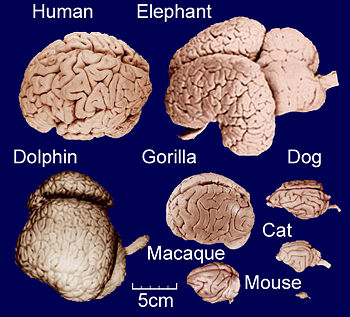
https://en.citizendium.org/images/thumb/6/66/ComparitiveBrainSize.jpg/350px-ComparitiveBrainSize.jpg As you can see, intelligence have nothing to do with brain size. Elephants have more brain size than humans and dolphins. |


1 2 3 4 5 6 7 8 ... 553 554 555 556 557 558 559 560 561 (of 626 pages)