Good evening Ladies and Gentlemen. I don come again o o o with my curious question. From series of research I conducted, I found out that for one to get a job after his or her studies, he or she needs to
1. Know Deutsh to atleast B2 level 2. Get a good grade 3. Study the right needed course 4. Possess relevant skills and understanding in the course of study 5. Has relevant work experience which can be acquired via Hiwi and Internship during the course of study.
Now my questions
1. Does Msc program in normal universities allow one to do internship in the industries even when he is not in University of Applied sciences (which focuses more in practical work?) 2. When is the appropriate time to register for German language course in other not to affect your studies and your part-time earnings 3. Is having a good grade in German universities as tough as having a good grade in Nigerian Universities? (I really studied hard in my BSc in Geology and managed to get the little stuff I got in Nigerian scale)
Please I am expecting answers because I wanna plan ahead
1. internship varies from university to university, some make it compulsory and place you there, others require you search on your own. some universities publish list of companies who have accepted their students for internship and leave the decision to you.
2. a university I checked said A2 level is required for lab work, I guess something higher will be required to work in the cities
3. I'm not there yet, gurus kindly attend to this. IMHO it depends on your determination and drive to succeed.
Do you have a minimum weight or value of items to be shipped? Cos some guys will advertise and then tell you later their moq is 10 items or 10kg weight. What is minimum for you? Thanks
nonoski: It's actually an Outback Flexmax 80A. I go it from US. I was made to understand that Fangpusun is a Chinese clone (don't know how true it is) duh I couldn't find and reviews of Fangpusun online
sirs, here is some info I found on the Fangpusun controllers. it may be of use to someone:
yes, Mr Pranil. a Mega Tester will be surest way of ensuring earth connections are good. learnt that when testing for groung/earthing connections on TRANSFORMERS.
my reply was based on the equipment Mr Niyi had on ground.
NiyiOmoIyunade: I guess the second picture with inverter and batteries in it is your current setup.
Two challenges I see - your current RC 150 meter has an internal shunt (by design this will probably carry no more than 20amps of current safely - at a stretch perhaps 50amps) - you dedicated this RC meter to measuring just your solar power generation but not battery consumption per the diagram.
The new meter has an external shunt hopefully rated for higher amps and hopefully capable of bidirectional readings if you want to measure both amps into the battery and amps out of the battery - I have learnt from hard experience that a meter such as this new one you have rated for 100A should be derated to 50A max when placed in service.
How To Proceed in General... .
Switch off PV input breakers then inverter input breaker
1) Identify the battery and load side of the shunt - in your picture the battery side is the leftmost side with the small black wire connected to the large terminal that has a bolt and nut on it - the load side is the one with the small red wire attached.
2) The way the meter works is to measure the voltage drop across the battery and the load side of the shunt - there is a calibrated piece of metal with known resistance between the two big nuts/screws that have a tiny black and red wire attached to their bases. Those tiny black and red wires are measuring voltage drop between battery and load and given a known resistance (in the shunt) you can calculate the AMPs and or watts flowing from battery to load or from power source (load) into battery.
3) You will need to make a small jumper cable to connect from battery negative terminal to the battery side of the shunt else you bolt the battery side of the shunt directly to the battery negative terminal post if you can. This jumper cable should be as thick as possible and properly crimped
Key to note, the shunt is always connected to the negative cable/side of CC, batteries, inverter
4) Any thing you want to measure through the meter e.g CC amps into battery or inverter amps into battery you place of the load side of the shunt (right side of shunt with small red wire in your picture) - you first switch off the PV and inverter and then trip of DC breakers - disconnect negative terminal of inverter and CC from the battery and attach it to the load side of the shunt (side with small red wire) simply unscrew the nut from the shunt (load side) , connect the lug side of your inverter and CC negative cable through the bolt on the shunt (load side) and replace the nut and tighten.
It will be really long to type all the steps so if you can excuse my abysmal writing and drawing skills, I have attached a diagram that may help you - follow the big red +s for positive cable connections and the big black --s for negative cable connections. Please reach out freely in case of any questions
sir, you are a born tutor! awesome. I love this oasis of knowledge all can benefit from.
NiyiOmoIyunade: Lolz. Do I detect a hint of low key 'dissing' in there?
I would say a lot of these tweaks and mods are need driven and of course there is always that passion and desire to push things to the next level.
I think I am just getting started though - now that I have managed to bypass the AVS30 so that it carries zero house loads but rather just sends a signal to the contactor to connect the loads when AC line voltage is within my preferred limits (208v to 235vAC), I am thinking of adding on a timer switch after the AVS30, the timer will allow the voltage signal to pass through only between 10PM and 4AM should it happen that mains supply from PHCN is available.
As you know I really don't need PHCN power for anything but my battery supplier showed me analysis that convinced me to use our cheap priced mains supply when available after sundown - if my expected battery life at 30% DoD was 5 years, I could ostensibly get an additional 2 or 3 years by not running off battery whenever battery can be substituted by mains supply. So, instead of being entirely offgrid as I was, now, during the day I will run off solar power and from evening I run off mains if available vs batteries hence shallower battery cycles and better longevity - we have mains supply 60% of the time where I live.
Another option I am thinking about is to use the 'solar priority mode' on my 6kw inverter vs 'utility priority' - in this mode, mains if available would run the house loads but not charge my batteries unless they are really low. In my usage scenario, the lowest voltage I have ever recorded is 49.0vDC and I was actually capacity testing my 48v 800Ah battery bank to get to that voltage. Really though, I am not yet ready to pull the plug on that 'solar priority' option except perhaps I divert the relay functions on my battery monitor to trigger mains charging to start once battery voltage drops below 49.9vDC
These are just some of the many tweaks I have been contemplating apart from trying to invent a battery low voltage disconnect device similar to Oga Sinistrian's except that this would be entirely independent of any battery monitor relay to work and thus save the end user some cash. If I can build a reliable battery LVD that can detect SoC and trigger a disconnect independently of any battery monitor, a lot of people would no longer need to buy a Fangpusun or Victron or other expensive battery monitor.
Here is how to resolve the excessive mustpower series temperature issue by changing the position of the temperature sensor so the fan comes on at 40 degrees vs 65degrees. step 1: Locate the temperature sensor on the heat sink(first picture) step 2:Increase the length of the temperature sensor wire by adding additional wires so it can reach the transformer step 3:Loose one nut of the transformer lamination holder and use a big washer to fix the temperature sensor to the transformer as shown(third picture)
whatsapp me for further clarification(see my signature)
[quote author=pranil post=56671263]I prefer to USE the Single Pole MCB and contractor built in instead of one single contactor. This allows you to force individual loads or circuits to stay on NEPA or inverter if you choose or switch by timer based on your usage .e.g. weekdays keep fridge on Inverter as teh afternoon load is small when kids at school. Weekends Frdidge off but TV on inverter . Added advantage is you just replace the existing MCB no Seprate DB requited or create a DB with Rows of MCB saving space and money
Sir, you mean you just replace existing MCB with the MCB contactor? Any specialized wiring to achieve this? The control coil of the contactor will be fed from PHCN right? Your experience would be welcome. Many thanks
Here is how to resolve the excessive mustpower series temperature issue by changing the position of the temperature sensor so the fan comes on at 40 degrees vs 65degrees. step 1: Locate the temperature sensor on the heat sink(first picture) step 2:Increase the length of the temperature sensor wire by adding additional wires so it can reach the transformer step 3:Loose one nut of the transformer lamination holder and use a big washer to fix the temperature sensor to the transformer as shown(third picture)
whatsapp me for further clarification(see my signature)
makavele: For space & energy sakes . . a normal house standing fan would be an overkill . . he could use a simple USB/DC fan mounted close to the controller . . kapish
I happen to use the 3rd one (first row) and it has been superb so far.
edit: you can cut off the USB end and extend the wires to your heart's desire.
Sir, can you give steps how to locate the temperature sensor and relocate it? thanks
hi house. I have a question there are 6 no's 300w panels.(imp :8.24amp, Vmp : 36.7v, VOC: 44.06v) and two MPPT controllers available. system is to run on 48v. according to gleanings from the forum:
fangpusun prefers 2s*3p : total string current : 8.24*3= 24.72a
TriStar/epever prefer 3s*2p: total string current:16.48a
which will offer more MPPT Current under the same light conditions?
Mr Niyi George D. kiekie, makavele Oga Chris JUO anyone who has tried it the comparison, kindly advise Thanks!!
I read that the axpert and its clones can be stacked. I want to know, will this require them being connected to the same battery bank? Will their outputs still be synchronized and load shared if they were connected to same-voltage but different banks.
Kiekie, Zeestone, makavele and the house...help with info too.
mank1234: In the tradition of the house, I'm sharing my very first installation.
This is my first dealing (3 weeks ago) with kiekie1 and he didn't disappoint. Paid for items on Saturday and by Monday it was delivered to Akwa Ibom. Was initially skeptical about the brand but with his assurance, I must say the brand - Foresolar is beyond expectation.
325W foresolar * 2 for a total of 650W wired in series. 60A tristar MPPT controller with no meter 60A and 32A circuit breaker - wired such that if the battery is disconnected the solar is disconnected as well through the 60A breaker. The 32A breaker is solely for solar. Chinese meter is for monitoring power into or out of the battery. The monitoring for the controller will be by Ethernet. The router is yet to arrived.
The attached images were taken at 4:20pm today. The total current drawn by inverter as fridge, tv and fan are on is 11.2A. So in essence the current from controller is 14.9A. The setup still manage to pump 1A to 7A during the period it is shaded due to the panel location.
Hi, please can you give info on where you got the chinese battery meter? Many thanks
Hi, saydfact. I have a sketch for a generator house, can you kindly look at it and give the required quantities of blocks, cement and all required to complete it? You can reach me on WhatsApp at 07036383449 and by email at lexezra@gmail.com. I've sent you mail to your advertised in mail and also a p.m here on the forum.
I hope to speak with you soon on certain other projects that will require your expertise. Its for a 2bedroom bungalow.
dtruseeker: Finally I was able to setup my own small inverter with less than 50k. Here is the summary 1. LifePo4 black battery N10,000 2. 500w car inverter N7000 3. Pmw 20A solar controller N4000 4. 80w poly solar panel N17500 5. Cable for connection N1000 Total= N39500 I use this setup to power 20inch HP monitor, gotv, small USB fan and charge my phone. The main challenge I am facing now is the solar doesn't charge the battery fast. I have to wait till 11am when the battery current reaches 11v before I can ON the setup to watch the gotv. Gurus in the house pls how can I make it charge fast? Pato405 Ceejay80s
can you buzz me at this email? lexezra@gmail.com. I hope to set this portable system up too. thanks
dtruseeker: Finally I was able to setup my own small inverter with less than 50k. Here is the summary 1. LifePo4 black battery N10,000 2. 500w car inverter N7000 3. Pmw 20A solar controller N4000 4. 80w poly solar panel N17500 5. Cable for connection N1000 Total= N39500 I use this setup to power 20inch HP monitor, gotv, small USB fan and charge my phone. The main challenge I am facing now is the solar doesn't charge the battery fast. I have to wait till 11am when the battery current reaches 11v before I can ON the setup to watch the gotv. Gurus in the house pls how can I make it charge fast? Pato405 Ceejay80s
hi, please I am interested in getting the LFP battery pack you mentioned above? anyway you could direct as to where you bough it? I basically have spares of the remaining requirements to make something portable. how can I reach you? thanks.
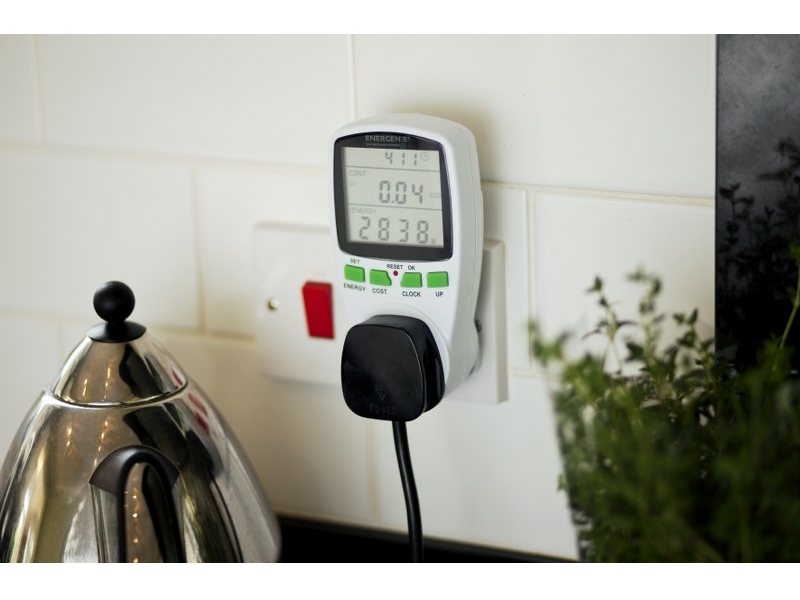
NoMoreTrolling: Another cool device (don't know if it's been mentioned already in one of the many pages), is a power meter to tell what power individual devices in your household draw.
I hooked my 80 watts fridge into this and was shocked at the current surge of the small fridge to over 500 watts. Obviously I knew there'd be surge current with the fridge, but I was thinking more like 300 or so
With accurate measurements of loads, proper planning and load shedding can be done to maximize battery life among other things.
hi, please can you give a link where you got it? been looking for this for ages!!!
the compressors are usually 60w to 72w for dc fridges, this one may be higher in wattage. the panels required IMHO wiil be calculated as follows:
1. if a/c run at daytime only: current comsumed by a/c must be fully supplied by panels per hour
2. if intention is to use it when sun is not up, then panels must produce running current of a/c PLUS EXTRA TO BE STORED IN A BATTERY BANK FOR USE AT NIGHT.
other slight modifications may be necessary to allow for voltage drop e.t.c hope this helps.
BLUEGATE 3.5kva 24v pure sinewave power inverter (Last stock)....... @150k
USA TROJAN T105-RE Premium Line Flooded Lead Acid Battery 6V (225AH)20hr Rate ..... @ 34k
USA TROJAN J185P-AC Signature Line Flooded Lead-Acid Battery 12V (205AH) 20hr Rate .... 65k
The EP Solar "I TRACER" 60a mppt controller is just #95k compared to Morningstar price and has excellent features like: -inbuilt LCD display, -high efficiency energy harvest with advanced mppt algorithm -dual core (ARM CPU+DSP) control architecture -run data and event recording -multi phase synchronous rectification tech realizing peak conversion efficiency 98% -high reliabilty including reverse connection, over current and load short protection etc -diversified load control mode -monitor software supplement and firmware update -extensive communication capabilities (RS232, RS485 with modbus protocol, CAN bus extendable)
POWERSTAR LIGHT 2kw 12v, 3kw 24v, 4kw 48v, 5kw 48v, 6kw 24v, 6kw 48v pure sinewave LCD power inverter " Inbuilt 35/70a Peak Charging Current" .... (In Stock)
All our products come with 1 year Warranty.
For best affordable prices,contact Smartcell Ventures,Lagos Nigeria. Simply call Sir Frankie "08135031951" for purchase,fast delivery and waybills .. Thanks !
hi, do you sell dc combiners and breakers? thanks in advance,
ilenaira: Isolator, breakers and Charge Controller. The two green lights means good news from solar array and battery state.
hi, i was searching on the entire thread tow can i get to locate this pix you posted, how can i get the disconnect switches and mini combiner? how much do they cost? thanks.
TotalGreen: hi, i am new in this forum, read some of your post and would like to contribute to this topic, i have been in renewable business for some time, i would say i have a little experience about this topic. i would like to answer some questions that might be of help.
@pdozie : please you cannot equalize sealed deep batteries, only Flooded batteries can bee equalized, flooded meaning maintenance batteries(where you can open to caps and fill in distilled water).
@bodejohn : (6 panels....2pcs of 120watts and 4 pieces of 100watts., I will be buying 4 more 120watts by the weekend. I plan to change the whole array to 120watts and rest all the 100watts panels till I get another charge, controller.)
like to ask, those that us MPPT controllers how do you connect your panels, example i guess the for you to have sukam 3.5kva you would be running 48volt dc, how did you combine "2pcs of 120watts and 4 pieces of 100watts" on your MPPT controller.
just asking to know, cause i do not think you might be maximissing your MPPT controller on the HOT days.
Hi totalgreen: can you kindly send me contact details, need install accessories. thanks. 08036812998
They are quite easy to set up and apparently have double their stated peak power as the surge rating. They can also be used individually if you want to dismantle your set-up or sell on in going to single inverter. I am just waiting for the specs first before I commit. The only downside I can see is that there is no display panel on them from which I can get feedback on power output /dignostics/ etc. I just cannot ignore them as the price for the 2-3 pieces I need will not even buy me one Xantrex or Outback equivalent, let alone 2.
If the specs don't convince, I'll stick to one inverter.
hi, how do i get them from you: pls sms your number to me: 08036812998 thanks,
GeorgeD1: hotwire, when you connect batteries in series, you increase their voltage but current remains the same and when you connect them in parallel, voltage remains the same but current increases. lets say i have four 12v 200a/h batteries, in series they will be 12*4=48v with same 200ah. but in parallel those same 4 batteries will be 200ah*4=800ah but same 12v. remember however that this does not affect the power output from the batteries as the four of them will still give you 200*12=2400w for the rated period.
having said that, whether batteries are connected in series or parallel really depends on what the installer wants to achieve. it does not affect the inverter in anyway, neither does it affect the charge controller.
but there is a problem with parallel connected batteries which has to do with the way they are connected. if paralleled wrongly, some batteries in the loop will be charging better than others and over time, those batteries not receiving enough charge will drag down the rest of the good batteries. that is why from the practical point of view, series connection is always preferred over parallel connected systems.
how many strings have you connected in parallel before that proved practically feasible? thanks.
tivta: . Ok, here in lagos the temperature is very hot.
if it is not too humid, you may wish to construct a solar evaporator, with a dc fan, with a small ac/dc adaptor. it will run quietly and cool you, works better with ice packs though. just saying. check on youtube for several installation videos.
richmon74: This low cost device -MNSPD300 lightning arrestor- Saved the $2500 magnum inverter below from 415V supplied by PHCN on comissioning of a new transformer.
The system below has witnessed two major hits by over voltage. This time around the Lightning Arrestor did a very good job by shutting off the inverter from the excess power supply and in the process gave up the ghost just like Jesus Christ in order to save the Inverter after struggling to cut off the excess voltage for about 45 mins. The client was so happy with the protection and called for immediate replacement of the MNSPD300.
The remains of the MNSPD300 was given a very honourable burial as it has left behind a golden legacy for it's family. May It's Soul rest in Peace.
The story continues...
nice: how do i contact you for these stuff? just joined, thanks.
richmon74: You are welcome and thanks for your business. waitting for the pictures
Hi, good day. i just joined the forum, read the entire 89 pages of the thread and saw the sunlock video and installation pictures. can you kindly send the costs for such accessories and payment terms?
 Travel › Re: General German Student Visa Enquiries Part 6 by lexi28(m): 4:47am On Apr 14, 2019