LRNZH's Posts
Nairaland Forum › LRNZH's Profile › LRNZH's Posts
1 2 3 4 5 6 7 8 ... 82 83 84 85 86 87 88 89 90 (of 113 pages)
 Politics › Re: PTF: Shining In The Gloom (The Buhari Success Story) by LRNZH(op): 12:28am On Jan 02, 2015 Politics › Re: PTF: Shining In The Gloom (The Buhari Success Story) by LRNZH(op): 12:28am On Jan 02, 2015 |
calebo101:My friend, I am more analytical with this. . Daily Trust's version is that the revival occurred under Abacha but because the article is dated, it doesn't cover Jonathan's time frame. Punch's view is all have failed- Abacha, Obasanjo and Jonathan. My personal experience is that Abacha did have some revival. I had a relative who worked with the Railways then. I'd even wager that Jonathan is yet to get to the levels achieved under Abacha. My grouse with Jonathan is that Railways is not on the top three priorities of Nigeria. He's not focusing on the right priorities. We need stable Power, functional Refineries and Security to seriously jump-start Nigeria's economy. With those three in place, Educations, Railways, Road, Health Care, Manufacturing will need less Gov't intervention. I suspect he had a MAULAG moment and went for Railways because Yaradua was sceptical to award those contracts. 6 Likes |
| Politics › Re: Most PDP Big-wigs Plan To Leave The Country Latest By The 1st Wk Of Feb 2015 by LRNZH(m): 12:05am On Jan 02, 2015 |
Hahaha Wise Choice. They better do. GMB will not afford to sponsor caskets and coffins with Gov't money from May 29, 2015. Gov't money, serious business Sai Buhari. 8 Likes 2 Shares |
| Politics › Re: Igbo Coalition Threatens To Dump Jonathan Over Poor Infrastructure In S/East by LRNZH(op): 11:55pm On Jan 01, 2015 |
eye4eye:Exactly my retort as well. We go soon sing song in Enugu. Jona Jona where are the trains. Gini mere ya? GMB 2015 is Real 38 Likes 1 Share |
| Politics › Re: PTF: Shining In The Gloom (The Buhari Success Story) by LRNZH(op): 11:52pm On Jan 01, 2015*. Modified: 12:17am On Jan 02, 2015 |
calebo101:I have somethings for you. See excerpts below: Daily Trust: http://dailytrust.com.ng/weekly/index.php/opinion/16626-how-pettiness-slowed-down-rail-projects And to his credit, General Abacha demonstrated incredible zeal in the implementation of the railway rehabilitation and modernization policy. In no time, the projects took off and were making remarkable progress across the country. The relevance of any projects is determined by how far they can positively impact on the lives of the people. And there is no doubt that the rehabilitation of Nigeria’s railway system was one of the most indelible legacies of the late General Abacha administration. These projects would have by now been completed, but they were frustrated by former President Obasanjo’s petty politics. As soon as he was sworn into office in May 1999, Obasanjo stopped the railway rehabilitation projects because he didn’t want anything that would give credit to the memory of the late Abacha. Shamelessly, towards the end of his tenure in 2007, former President Obasanjo re-awarded the same railway projects he had suspended at a more staggering cost to Nigeria. When the late President Umaru Musa Yar’adua succeeded Obasanjo, he found himself overburdened with the heavy costs of the projects Punch Newspapers carry a less glowing narrative. : http://www.punchng.com/editorial/false-dawn-in-railway-sector-2/ In its bid to revive the sub-sector, the Sani Abacha military dictatorship in 1995 awarded a $500 million contract to modernise the Lagos-Kano rail line to the Chinese construction giant, CCECC. Despite the loss Nigeria incurred after CCECC failed to execute the contract, the Olusegun Obasanjo Administration reawarded the same Lagos-Kano rail modernisation contract to the same company at the sum of $8.5 billion. In 2008, Robert Ejenavi, a former Auditor-General of the Federation, told a public hearing that “the nation spent over $826.6 million” on the railways without results. Conservatively, the Goodluck Jonathan Administration has awarded railway contracts worth more than $3 billion. This is in addition to budgetary allocations of N104 billion since 2009 to the NRC. Yet, all the avalanche of financial provisions has gone to waste, with the railways still highly inefficient. I hope this helps. 1 Like |
| Politics › Re: PTF: Shining In The Gloom (The Buhari Success Story) by LRNZH(op): 11:32pm On Jan 01, 2015 |
Caseless:Infact the achievements of PTF alone was enough to give Abacha a glowing pass mark. Not to talk of ECOMOG in Liberia and Sierra Leone, Stabilising the Nigeria Banking System by arresting the Failed Banks Syndicate, Reducing Nigeria Debt. 1 Like |
| Politics › Re: PTF: Shining In The Gloom (The Buhari Success Story) by LRNZH(op): 11:15pm On Jan 01, 2015*. Modified: 12:09am On Jan 02, 2015 |
Caseless:Abacha's major weakness was his intolerance for dissent and his plan to metamorphose into a civilian President thereby stockpiling moneys for the transition. Otherwise, he was truly Pan-Nigeria. The rail project GEJ is claiming but cannot complete after 6 years was Abacha's brainchild. 1 Like |
| Politics › Re: 2014: Nigeria’s Year Of Missing Girls And Irresponsible Leadership by LRNZH(op): 11:09pm On Jan 01, 2015 |
studio14:Someone will soon pray for similar tragedy to befall your family... This is Nairaland. |
| Politics › Re: PTF: Shining In The Gloom (The Buhari Success Story) by LRNZH(op): 10:59pm On Jan 01, 2015 |
pheliciti:Well said. I'm sure Seun hiring Ngwakwe was charity work. He is too dense to even fall through the cracks of Seun's vetting process. 2 Likes |
| Politics › Re: Kaduna, Warri Refineries Are Idle – NNPC, Cameroun & Cote D'Ivoire Gain by LRNZH(op): 10:56pm On Jan 01, 2015 |
tit:Like Tompolo (Government) who are bunkering with GEJ's license in NIMASA abi? But they're not buying private jets and warships in Kaduna. 1 Like |
| Politics › Re: Igbo Coalition Threatens To Dump Jonathan Over Poor Infrastructure In S/East by LRNZH(op): 10:53pm On Jan 01, 2015 |
Jona the bomber... 7 Likes |
| Politics › Kaduna, Warri Refineries Are Idle – NNPC, Cameroun & Cote D'Ivoire Gain by LRNZH(op): 10:41pm On Jan 01, 2015*. Modified: 11:05pm On Jan 01, 2015 |
https://punch.cdn.ng/wp-content/uploads/2013/10/Warri-Refinery-360x264.jpg The Kaduna Refining and Petrochemical Company and Warri Refining and Petrochemical Company, with combined capacity of 235,000 barrels per day, produced nothing in September, the Nigerian National Petroleum Resources has said. With an opening stock of 253.26 thousand metric tonnes, total crude oil available for processing was 253.26 thousand mt, out of which 74.64 thousand metric tonnes was processed by the Port Harcourt Refining Company, the corporation said in its latest monthly report. “This month (September), zero (0.00) mt of dry crude oil, condensate and slop was received by the three refineries, KRPC, PHRC and WRPC. The respective average capacity utilisation during the month was 0.00 per cent, 8.77 per cent and 0.00 per cent for KRPC, PHRC and WRPC respectively,” according to the report. The Deputy Executive Director, Africa Network for Environmental and Economic Justice, Mr. Leo Atakpu, in a telephone interview with our correspondent, said, “Refineries are in comatose state such that we have to be importing fuel. It is a shame that we are importing petrol and others. “The political leadership has not done anything pointedly to address this issue over the years. Though it did not start with this administration, but we all expected it to take drastic steps to bring about positive change such that the people will begin to feel the impact,” he said. In August, output from the country’s refineries dropped to 294,000 mt as they operated at an average of 16 per cent of their combined nameplate capacity of 445,000 barrels per day. The respective average capacity utilisation for KRPC, PHRC and WRPC during the month was 21.68 per cent, 15.79 per cent and 10.94 per cent respectively. In July, when the refineries operated at 22 per cent of their installed capacity, output was 334,000 mt. The average capacity utilisation for KRPC, PHRC and WRPC in the month was 19.40 per cent, 0.00 per cent and 46.71 per cent, respectively. In June, the refineries operated at 10 per cent of their installed capacity, with average capacity utilisation of 0.00 per cent, 17.96 per cent and 13.44 per cent respectively. The country’s refineries have long been operating well below installed capacity as they are in different states of disrepair. They operated at an average of 31.1 per cent capacity in 2012, according to data from the Central Bank of Nigeria. Nigeria, Africa’s largest crude oil producer, is arguably the biggest importer of refined petroleum products on the continent, creating a lucrative market for refiners in the United States, Europe and other African countries such as Cameroun and Cote d’Ivoire http://www.punchng.com/business/energy/kaduna-warri-refineries-idle-in-september-nnpc/ |
| Politics › Re: Igbo Coalition Threatens To Dump Jonathan Over Poor Infrastructure In S/East by LRNZH(op): 10:32pm On Jan 01, 2015 |
doctokwus:Tribalism is such a big problem in Nigeria. Otherwsie it's supposed to be a coalition of the masses against the GEJ government. Nothing concrete was mentioned in the New Year speech today about future plans in key areas. 51 Likes 3 Shares |
| Politics › Re: Igbo Coalition Threatens To Dump Jonathan Over Poor Infrastructure In S/East by LRNZH(op): 10:24pm On Jan 01, 2015 |
WhiteTechnology:GMB of course. Are you a learner? There are other presidential aspirants besides GMB and GEJ. So Ndi-Igbos are spoilt for choice as they awake from their slumber 82 Likes 2 Shares |
| Politics › Re: “jonathan Bombed Abuja Oct 1st; Begged Me To Blame North,” Henry Okah Claims by LRNZH(m): 10:20pm On Jan 01, 2015*. Modified: 10:52pm On Jan 01, 2015 |
Remember the funny text message by Raymond Dokpesi? “Have you collected the balance from Dokpesi”... “Let’s meet at IBB Headquarters”... Na we Do am”...“We will destabilise Jonathan since he does not want to put money on the table” ... Meanwhile na Jonaboy. Chei. 9 Likes 1 Share |
| Politics › Re: Igbo Coalition Threatens To Dump Jonathan Over Poor Infrastructure In S/East by LRNZH(op): 10:17pm On Jan 01, 2015 |
How come they're posting train fares from Port Harcourt to Enugu if the refurbished trains didn't get to the South East?  31 Likes |
| Politics › Re: 2014: Nigeria’s Year Of Missing Girls And Irresponsible Leadership by LRNZH(op): 10:00pm On Jan 01, 2015 |
studio14:Still waiting. Abi you miss road? |
| Politics › Igbo Coalition Threatens To Dump Jonathan Over Poor Infrastructure In S/East by LRNZH(op): 9:58pm On Jan 01, 2015 |
https://cdn.akamai.thisdaylive.com/0bef99d6-acf5-4e2c-9779-8fa02ba3fcd4/assets/010412F3.Goodluck-Jonathan.jpg?maxwidth=400&maxheight=540 12 Likes 2 Shares |
| Politics › Re: Femi Fani Kayode Appointed Media Director Of Jonathan's Campaign Team by LRNZH(m): 9:36pm On Jan 01, 2015 |
FFK. LOL Replacing Maku I guess. 5 Likes 1 Share
|
| Politics › Re: 2014: Nigeria’s Year Of Missing Girls And Irresponsible Leadership by LRNZH(op): 9:28pm On Jan 01, 2015 |
studio14:Expatiate further. How do you know? |
| Politics › 2014: Nigeria’s Year Of Missing Girls And Irresponsible Leadership by LRNZH(op): 9:10pm On Jan 01, 2015*. Modified: 9:30pm On Jan 01, 2015 |
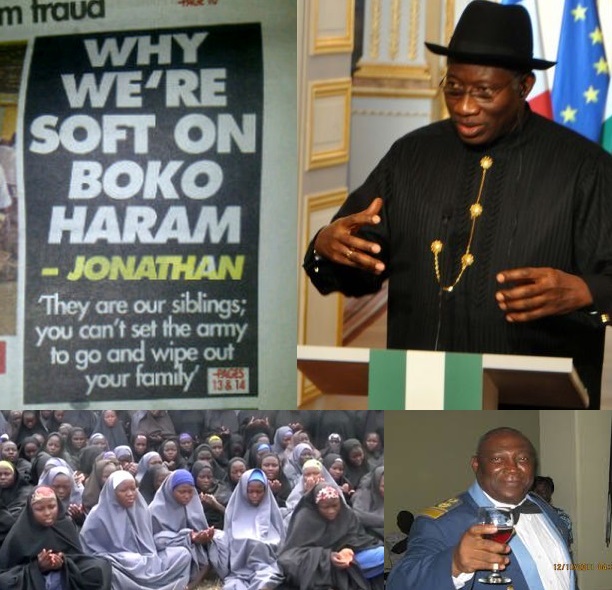
https://newsrescue.com/wp-content/uploads/2014/08/SIBLINGS-PRAYERS.jpg Nigeria Village Square Editorial Today, January 1, 2014 marks the 261st day since a group of Boko Haram militants on the night of 14–15 April 2014, broke into the Government Girls Secondary School in Chibok and took away approximately 276 female students, of whom 53 escaped. Houses in Chibok were also burned down in the incident. The reaction of the Federal Government of Nigeria has been a mixture of denials, indifference, annoyance and even brutalization of those calling for Government to take decisive action to bring the girls home. The initial reaction of the government was to deny the account of the kidnapping. Over the 19–20 April weekend, the military released a statement claiming that more than 100 of the kidnapped girls had been freed. The statement was retracted when evidence surfaced to discredit it. In September 2014, the Nigerian government backtracked after saying the girls had been released and were being held in military barracks. The government had, once again, raised and dashed the hopes of the girls’ return. On 17 October 2014, the FG raised hopes that the remaining girls might soon be released after the Nigerian army announced a truce between Boko Haram and government forces following a month of negotiations with representatives of the group in Chad. But on November 1, a video appeared of the group’s leader, Abubakar Shekau saying no ceasefire had been reached and that the girls had converted to Islam and had been married off. Meanwhile, duped into a false ceasefire, the government had ordered its forces, which had been on the offensive against the terrorists, to stand down. This lull enabled Boko Haram to regroup and seize more territory in bloody raids. The government has been busy pointing fingers everywhere. When the Nigerian government is not complaining about insufficient foreign aid, intelligence and guns, it’s busy intimidating the #BringBackOurGirls movement for continuing to bring daily attention to the unresolved issue of the kidnapped schoolgirls. The kidnappings also brought to light how utterly compromised Nigeria’s military forces have become. Soldiers without decent weapons and armor, shortchanged financially by superiors, and deprived of able generalship, have been fleeing battles. Several battles have been lost to the questionable calls of ill-prepared and distracted commanders. Soldiers now carry out open mutiny against their generals, and write open letters to media houses. The Nigeria Military are now seizing newspapers on the streets and denouncing media houses in press conferences. By now, the Nigerian government ought to have been persuaded that it needs to overhaul an institution that is short on motivation and the equipment of modern anti-terror warfare, an institution that is clearly struggling in its battle against Boko Haram. As the year drew to a close, the happy ending that the whole world is praying for the Chibok girls has not materialized, and it has become clear that the girls will not return as a group since the opportunity for a mass rescue has been lost. Not even the added motivation of an upcoming election has raised any realistic hopes of retrieving the girls. Beyond the predicament of the Chibok girls and their families, the abduction has highlighted Nigeria’s miserable leadership failure, the crass irresponsibility and uncaring attitude of Nigerian leaders, and the government’s inability to protect its own people. The lingering travail of the Chibok girls and their families is also an indication of our military’s loss of face and trust, despite unprecedented offers of assistance from the world’s most powerful governments. The fate of the kidnapped schoolgirls haunts Nigeria and all its affairs. For this reason and many more, the Chibok Girls are Nigeria Village Square’s People of the Year! http://newsrescue.com/2014-nigerias-year-missing-girls-irresponsible-leadership-nvs-editorial/#ixzz3NbMsClib |
| Politics › Re: Kill The Lies Against GMB And PYO - Share Your Findings And Thoughts by LRNZH(m): 8:55pm On Jan 01, 2015 |
tit:Don't be selective in your response. Answer this as well: LRNZH: |
| Politics › Re: PTF: Shining In The Gloom (The Buhari Success Story) by LRNZH(op): 8:33pm On Jan 01, 2015 |
[b]The Economic Theory of Buharism - Sanusi Lamido Sanusi July, 2002 excerpt One of the greatest myths spun around Buharism was that it lacked a sound basis in economic theory. As evidence of this, the regime that succeeded Buhari employed the services of economic “gurus” of “international standard” as the architects of fiscal and monetary policy. These were IMF and World Bank economists like Dr. Chu Okongwu and Dr Kalu Idika Kalu, as well as Mr SAP himself, Chief Olu Falae (an economist trained at Yale). At the time Buhari’s Finance Minister, Dr Onaolapo Soleye (who was not a trained economist) was debating with the pro-IMF lobby and explaining why the naira would not be devalued I was teaching economics at the Ahmadu Bello University. I had no doubt in my mind that the position of Buharism was based on a sound understanding of neo-classical economics and that those who were pushing for devaluation either did not understand their subject or were acting deliberately as agents of international capital in its rampage against all barriers set up by sovereign states to protect the integrity of the domestic economy. I still believe some of the key economic policy experts of the IBB administration were economic saboteurs who should be tried for treason. When the IMF recently owned up to “mistakes” in its policy prescriptions all patriotic economists saw it for what it was: A hypocritical statement of remorse after attaining set objectives Read more: http://www.gamji.com/sanusi/sanusi26.htm[/b] 1 Like 1 Share |
| Politics › Re: Kill The Lies Against GMB And PYO - Share Your Findings And Thoughts by LRNZH(m): 7:49pm On Jan 01, 2015 |
Read about PTF's amazing successes here: https://www.nairaland.com/2071401/ptf-shining-gloom-buhari-success |
| Politics › Re: Kill The Lies Against GMB And PYO - Share Your Findings And Thoughts by LRNZH(m): 7:47pm On Jan 01, 2015 |
GMB Pocket Facts Remember Buhari's regime only lasted from December 31, 1983 – August 27, 1985. Barely two years. Even at that, he stabilized the inflation rate and stamped out misappropriation of funds from the Shagari era. Apart from being a military president, He was 1. Governor of the then Northeastern State (August 1975 – March 1976), under Gen. Murtala Mohammed; 2.Federal Commisioner (Minister) of Petroleum (March 1976 – July 1978) when the Warri and Kaduna Refineries were built; and 3. PTF Chairman (1993 - 1998). A 1998 report in New African praised the PTF under Buhari for its transparency, calling it a rare "success story". No portfolio that GEJ had held in history has had a success history close to GMB's performance. GEJ promised Stable Power in 2011 and Refineries in 2012. Where are they? |
| Politics › Re: PTF: Shining In The Gloom (The Buhari Success Story) by LRNZH(op): 7:29pm On Jan 01, 2015 |
Reiterating your truism. pheliciti: |
| Politics › Re: PTF: Shining In The Gloom (The Buhari Success Story) by LRNZH(op): 7:26pm On Jan 01, 2015 |
LRNZH: |
| Politics › Re: PTF: Shining In The Gloom (The Buhari Success Story) by LRNZH(op): 7:16pm On Jan 01, 2015 |
LRNZH: |
| Politics › Re: PTF: Shining In The Gloom (The Buhari Success Story) by LRNZH(op): 7:05pm On Jan 01, 2015 |
docadams: I didn't know how golden silence is until now. 24 Carat Gold silence is my mantra if I detect dementia. I'm with you on this one.  2 Likes 1 Share |
| Politics › Re: PTF: Shining In The Gloom (The Buhari Success Story) by LRNZH(op): 6:54pm On Jan 01, 2015*. Modified: 7:21pm On Jan 01, 2015 |
rozayx5: LRNZH: rozayx5: LRNZH: rozayx5:HAHAHAHAHA Look up and read our exchanges. Who is proving who wrong? You can't even stay on topic. By the way, If I stop discussing with you it's less pain for me as I won't have to struggle thinking through your your grammatical howlers anymore. HAHAHAHAHA 4 Likes 1 Share |
| Politics › Re: PHOTOS: 10 Billion US Dollars- A Case For The Hidden PwC Audit Report. by LRNZH(op): 6:44pm On Jan 01, 2015 |
Our people lack vision and they perish. Proverbs 29:18 |
| Politics › Re: PTF: Shining In The Gloom (The Buhari Success Story) by LRNZH(op): 6:41pm On Jan 01, 2015*. Modified: 7:12pm On Jan 01, 2015 |
Caseless:Thanks for your assertion. I laugh so much at all the long epistles being posted by TANoids. Here's the source they didn't want to provide: POINTLANK NEWS http://pointblanknews.com/pbn/exclusive/ptf-fraud-how-n25-billion-was-stolen-under-buharis-watch/ The article is undated and no other media house or national daily carried this fabrication. There's no case as far as objectivity is concerned. Watch! When they want to lie they don't provide links. 10 Likes 1 Share |
| Politics › Re: PTF: Shining In The Gloom (The Buhari Success Story) by LRNZH(op): 6:30pm On Jan 01, 2015*. Modified: 7:57pm On Jan 01, 2015 |
rozayx5:Why do you think Abba Moro or Diezani Alison Maduekwe are deemed to have failed? They're Ministers under GEJ but the immigration scams and the unimaginable oil bunkering going on respectively under them are a failure on their part, and then on GEJ’s part. I don't think you understand organisational structure and management from your statements 4 Likes |


1 2 3 4 5 6 7 8 ... 82 83 84 85 86 87 88 89 90 (of 113 pages)