 Politics › Naira Depreciate To 1565/$ In Parallel Market by ogododo(op): 6:56am On Feb 15, 2024 Politics › Naira Depreciate To 1565/$ In Parallel Market by ogododo(op): 6:56am On Feb 15, 2024 |
The naira yesterday depreciated to N1,565 per dollar in the parallel market from N1,510 per dollar on Tuesday. Similarly, the naira yesterday depreciated to N1,503.38 per dollar in the Nigerian Foreign Exchange Market (NAFEM). Data from FMDQ showed that the indicative exchange rate for NAFEM fell to N1,503.38 per dollar from N1,499.07 per dollar on Tuesday, indicating N4.31 depreciation for the naira. As a result, the gap between the official and parallel market exchange rates widened to N61.65 per dollar yesterday from N10.93 per dollar on Tuesday. https://www.vanguardngr.com/2024/02/naira-depreciate-to-1565-in-parallel-market/ |
| Politics › Re: IMF Confirms Return Of Petrol Subsidy Under Tinubu - Daily Trust by ogododo(op): 9:16am On Feb 14, 2024 |
Nlfpmod, why our presido shouted subsidy is gone, when dem dey pay subsidy |
| Politics › IMF Confirms Return Of Petrol Subsidy Under Tinubu - Daily Trust by ogododo(op): 8:21am On Feb 14, 2024 |
The International Monetary Fund (IMF) has said the Nigerian government has, through the backdoor, resumed the payment of subsidies on the premium motor spirit (PMS), otherwise known as petrol.
Recall that on May 29, 2023, during his swearing-in speech, President Bola Tinubu announced an end to petrol subsidy, triggering a hike in the prices of goods and services in the country.
A few weeks later, the Central Bank of Nigeria (CBN) collapsed the different exchange rate regimes into one, with the value of the naira to the dollar weakening.
As of yesterday, it was N1,499/$1 at the official window and N1,515/$1 at the parallel market.
Over the weekend, the IMF issued a statement on the conclusion of its Executive Board’s Post Financing Assessment with Nigeria, and it expressed concerns that the government had capped the prices of fuel at retail stations.
The global lender advised the administration of President Tinubu to completely stop the payment of subsidies on petrol to free funds to run the government.
However, prominent Nigerians and regional groups had at different times scolded the IMF for what they described as “anti-masses policies”, and called on Nigerian government to explore home grown options that would fix the economy and better the life of the people.
In the past few days, there have been reports of queues returning to petrol stations in major cities in the country, but the Nigerian National Petroleum Company (NNPC) Limited allayed the fears of consumers, assuring that it has enough to go around.
How petrol prices feared since subsidy removal
After the removal of the petrol subsidy in May 2023, the pump price changed from N185 per litre to N400 per litre, and then to N568 per litre at NNPC fueling stations, while others currently sell above N600.
The government had said the prices would fluctuate after subsidy removal from time to time but the pump price has maintained a steady rise despite the fact that the price of crude oil in the global market keeps going up and down.
The IMF, in its latest statement at the weekend, said the Tinubu administration has “capped retail fuel and electricity prices” ostensibly to “ease the impact of rapidly rising inflation on living conditions, thus partially reversing the fuel subsidy removal.”
Daily Trust investigation in September revealed that despite the numerous assurances by President Tinubu that the subsidy was gone, the federal government paid N169.4 billion as subsidy in August to keep the pump price at N620 per litre.
A document from the Federal Account Allocation Committee (FAAC), sighted by one of our reporters, showed that in August 2023, the Nigerian Liquefied Natural Gas (NLNG) paid $275m as dividends to Nigeria via NNPC Limited. NNPC Limited used $220 million (N169.4 billion at N770/$) out of the $275 million to pay for the PMS subsidy. Then NNPC held back $55 million, illegally.
Petrol may sell for over N1000/l due to devaluation
The recent devaluation of the naira at the official forex window which has seen it exchange for N1, 499/$ will likely push pump price of petrol to cross the N1, 000 per litre mark.
A breakdown of the landing cost of petrol before the latest devaluation showed that product cost was N627.82 per litre, finance cost was N11.61, and operations/administrative cost N12.32, bringing the total landing cost to N651.75 per litre with local currency pegged at N900/dollar ceiling.
The amount has seen independent marketers adjust pump price three times between August and December 2023, forcing them to sell between N660 per litre to N670 per litre.
NNPC retail outlets have however continued to sale at N617 per litre.
With the old situation, it is fully suggestive that petrol ought to sell at over N720, and someone, most probably, is paying the price differential.
Therefore, the new exchange rate indicates that prices should to be above N1,000 per litre
Oil Marketers react
Leaders of the Major Oil Marketers Association of Nigeria of Nigeria, Independent Petroleum Marketers Association of Nigeria, and Petroleum Products Retail Outlets Owners Association of Nigeria said there was a need for the federal government to intervene to address the impending crisis.
Speaking recently, the National Public Relations Officer, Independent Petroleum Marketers Association of Nigeria, Chief Chinedu Ukadike, explained that the price of petrol was now driven by the fluctuations in forex, hence Nigerians should expect a hike soon.
Asked whether oil marketers were considering an increase in petrol price, he replied, “Once there is a slack in the naira against the dollar, there is going to be an effect. The demand and supply of forex is a key factor. We should also understand that it is not only petroleum products that use forex.
“It is simple mathematics, once the dollar is going up, have it in mind that the prices of petroleum products would definitely increase because the products are dollar-driven.”
Also speaking to Daily Trust, the Secretary General of NUPENG, Afolabi Olawale Olufemi said: “Our people are losing confidence in the naira and it is unfortunate. People should stop exploiting the situation because it is not good for anybody.
“We are fortunate that there are positive signs that Dangote refinery is going to start very soon. We should be hopeful and that would help moderate the fluctuations that are expected.”
Speaking on the development, Abiola Rasaq, former Economist and Head, Investor Relation at UBA plc said: “The sharp rise in petroleum price is a reflection of both the full deregulation of the downstream oil & gas sector as well as Naira weakness. Notably, crude oil is a dollarised commodity, hence the notable devaluation of the local currency has direct impact on the Naira-cost of petroleum prices, especially as the subsidy removal meant the retail price has to reflect the true market price of the product. So, it’s a double whammy effect.”
NNPC says no increase in petrol pump price
When Daily Trust reached out to the Chief Corporate Communications Officer, NNPC Ltd, Olufemi Soneye on the likelihood of pump price shifting beyond the current N617 per litre, he said: “We are pleased to confirm that there are no supply issues, and our products remain readily available. The recent tightness experienced in certain areas was due to a brief distribution issue in Lagos, which has since been resolved.”
He said there is no imminent increase in the cost of petrol.
No need for panic buying – Tanker drivers
The Petroleum Tanker Drivers (PTD) union has advised Nigerians against panic buying, assuring that there is no shortfall in the distribution of petroleum products.
It gave the advice in a statement yesterday by its National Chairman and Secretary, Lucky Osesua and Humble Power Obinna, respectively.
It asked its members to ignore any threat from the Nigeria Union of Petroleum and Natural Gas Workers (NUPENG) not to lift petroleum products from certain depots in the country.
PTD said the alleged plot to remove Osesua, Obinna and Deputy Chairman, Yusuf Garga, had failed.
“There is no shortfall in the distribution of petroleum products across the six geo political zones of the country and PTD, under the legitimate leadership of Comrade Lucky Osesua and his deputy, Comrade Dayyabu Garga, has redoubled its commitment to ensure and guarantee lifting and distribution of petroleum products without encumbrance in observance of its statutory responsibility.
“We equally urge Nigerians and motorists to avoid storing of petrol at home because of the dangers associated with it,” the statement read in part. https://dailytrust.com/imf-confirms-return-of-petrol-subsidy-under-tinubu/#:~:text=The%20IMF%2C%20in%20its%20latest,reversing%20the%20fuel%20subsidy%20removal.%E2%80%9D 
|
| Business › Re: Dollar Hits All-time Low, Crosses N1,500 At Official Market by ogododo(op): 10:01pm On Feb 13, 2024 |
Iamblessed85:
I just checked your post history. No single positive news.
It’s either you’re a kid who does not understand the implications of negative reporting, or you’re a not soo bright adult who is bitter with the present govt or you’re an opposition agent. Remember, pdp also ruled for 16 years and they weren’t any better. Stop posting negative news all the time. Everytime naira hits record low. What does it benefit you? Na crime to post truth. Una head don hit ground. With all suffering wey heavy go obodo Naija. |
| Business › Dollar Hits All-time Low, Crosses N1,500 At Official Market by ogododo(op): 10:33am On Feb 13, 2024 |
There is no end in sight to the lingering foreign exchange crisis as dollar crossed over N1,500 at the official market.
The dollar closed at 1,534.39 at the official market on Monday, according to the FMDQ data.
This is the first time the dollar would be exchanging at over N1,500 since the crisis putting more pressure on businesses and importers.
This is despite the several measures and interventions by the Central Bank of Nigeria (CBN) aimed at stabilising the market.
However, local currency has defied all the interventions and continues to depreciate against the foreign currency.
Already the impact of this could be felt in several sectors with Nigerians experiencing alarming inflation and increased food prices.
Despite the dollar exchanging at N1,534 at the official market, it has stabilized at the unofficial parallel market exchanging between N1,450 and N1500. https://dailytrust.com/dollar-hits-all-time-low-crosses-n1500-at-official-market/

|
| Politics › Re: Tell Your Husband To Address Hunger, Insecurity - Emir Of Kano To Remi Tinubu by ogododo(op): 6:25pm On Feb 12, 2024 |
Ebi nkpka wa oo. |
| Politics › Re: Tell Your Husband To Address Hunger, Insecurity - Emir Of Kano To Remi Tinubu by ogododo(op): 5:21pm On Feb 12, 2024 |
Nlfpmod, dem dey afraid of mob. |
| Politics › Tell Your Husband To Address Hunger, Insecurity - Emir Of Kano To Remi Tinubu by ogododo(op): 2:14pm On Feb 12, 2024 |
The Emir of Kano, Alhaji Aminu Ado Bayero, has urged the First Lady, Oluremi Tinubu, to tell President Bola Tinubu about the high level of hunger and starvation in the country.
“Although we have several means of communicating to the government on our needs and requests, but your way and means is the surest way to tell the President the actual happenings in the country,” the emir told Tinubu’s wife, who was in Kano to open the faculty of law at a private university.
The emir, who spoke through an interpreter, added, “The hunger and starvation didn’t start with this government but the situation has become more alarming and needs urgent attention.”
He also urged her to tell Tinubu to address insecurity, saying, “The issue of insecurity is another serious problem we are facing. I know your government inherited it, but something more serious should be done to take care of the threats.”
Bayero also spoke on the relocation of the Federal Airports Authority of Nigeria, FAAN, and some departments of the Central Bank of Nigeria, CBN, to Lagos.
“We are receiving series of messages from our people. One of such messages is the much talked about relocation of CBN and FAAN to Lagos. I think the government should come out clean on this matter and talk to Nigerians in the language they would understand.
“Do more enlightenment on this matter. I for one cannot tell the actual intentions of the government. We should be made to actually understand the reasons behind the relocation of the CBN and FAAN offices to Lagos.”
In the same vein, he urged the President’s wife to actualize her Renewed Hope Initiative Pet Program, noting that the scheme, if fully actualized, will free the less privileged from their shackles. https://dailypost.ng/2024/02/12/tell-your-husband-to-address-hunger-insecurity-in-nigeria-emir-of-kano-to-first-lady-oluremi-tinubu/
|
| Politics › Nigeria Facing Worsening Economic Crisis, Says IMF by ogododo(op): 7:59am On Feb 12, 2024 |
The International Monetary Fund has said stalled per-capita growth, poverty and high food insecurity have exacerbated the ongoing cost-of-living crisis in Nigeria.
The report came amid rising inflation, exchange crisis, weak economic growth and business shutdowns.
The global lender said this in a new report titled ‘IMF Executive Board Concludes Post Financing Assessment with Nigeria.’
According to the report, low revenue collection has hampered the provision of services and public investment.
It noted that headline inflation reached 27 percent year-on-year in October (food inflation 32 per cent), reflecting the effects of fuel subsidy removal, exchange rate depreciation, and poor agricultural production in the country.
The report read in part, “Nigeria faces a difficult external environment and wide-ranging domestic challenges. External financing (market and official) is scarce, and global food prices have surged, reflecting the repercussions of conflict and geo-economic fragmentation.
“Per-capita growth in Nigeria has stalled, poverty and food insecurity are high, exacerbating the cost-of-living crisis. Low reserves and very limited fiscal space constrain the authorities’ option space. Against this backdrop, the authorities’ focus on restoring macroeconomic stability and creating conditions for sustained, high and inclusive growth is appropriate.”
Amid Nigeria’s current economic difficulties, the report noted that on January 12, 2024, the Executive Board of the International Monetary Fund concluded the Post Financing Assessment and endorsed the Staff Appraisal on a lapse-of-time basis. It added that Nigeria’s capacity to repay the IMF is adequate.
IMF downgrades Nigeria’s economic growth to 3%
The IMF also expressed optimism that the new administration had made a strong start, tackling deep-rooted structural issues in challenging circumstances.
Immediately, it adopted two policy reforms that its predecessors had shied away-namely fuel subsidy removal and the unification of the official exchange rates.
It added, “The new CBN team has made price stability its core mandate and demonstrated this resolve by dropping its previous role in development finance. On the fiscal side, the authorities are developing an ambitious domestic revenue mobilisation agenda.”
According to data from the Debt Management Office, Nigeria currently owes the IMF the sum of $2.8bn. The Federal Government, in its 2024 budget plans to spend about N8.2tn on debt servicing.
Professional services firm, PricewaterhouseCoopers in a new report, warned that Nigeria’s rising debt service cost might affect the country’s debt servicing ability, credit rating outlook and borrowing cost.
PwC said debt service could rise from N8.25tn in 2024 to N9.3tn in 2025 and further to N11.1tn in 2026.
“With a high debt servicing to revenue ratio, the government aims to increase domestic debt in 2024 to meet its deficit funding requirements,” the report read in part. https://punchng.com/nigeria-facing-worsening-economic-crisis-says-imf/?amp
|
| Health › Re: Nigerians Turn To Traditional Healers As Prices Of Drugs Go Out Of Reach by ogododo(op): 5:03pm On Feb 11, 2024 |
Nlfpmod pipu de drink agbo cause liver, heart problem. |
| Health › Re: Nigerians Turn To Traditional Healers As Prices Of Drugs Go Out Of Reach by ogododo(op): 8:59am On Feb 11, 2024 |
One of the objectives, according to the ministry is “to see the practice of traditional, complementary, and alternative medicines in Nigeria become respected modes of treatment, preserving our cultural heritage with respectable practitioners and providers, delivering quality healthcare to all Nigerians, and benefiting from their economic potential”.
Findings by Saturday PUNCH showed that in China, India, the United States, Australia, and countries in Europe, integrative medicine that incorporates traditional with conventional medicine is fairly popular.
Unlike herbs that are prepared to heal physical ailments, the herbs utilised in holistic medicine are aimed to impart both the body and the soul.
The Eastern model of the human body, according to a report on complementary medicine published online by Utar Hospital, is based on the concept that ailments occur when there is an imbalance between the internal body organs and the external elements of earth, fire, water, wood, and metal which holistic medicine is prepared to correct.
“Treatment to regain balance may involve acupuncture, moxibustion (the burning of herbal leaves on or near the body), cupping (the use of warmed glass jars to create suction on certain points of the body), massage, herbal remedies and movement, and concentration exercises (such as tai chi),” the report added.
Herbal medicine should be explored, standardised – Pharmacists
Speaking with Sunday PUNCH in an interview, a pharmacist and researcher in the pharmaceutical sciences, Fahd Khalid-Salako, explained that chemicals that were produced as byproducts of plants’ metabolism (phytochemicals) played major roles in the efficacy of herbs that ought to be studied and explored further.
“But it’s important to note that plants are potions of phytochemicals and these chemicals are produced as byproducts of the plants’ metabolism. Regardless of what the policy directions or what the research interests in plants are in Nigeria, one thing is sure, people use herbal medicines for different reasons.
“So, whether we study them or not, for many different socio-economic and ethnocultural reasons, people would use these plants. So, it’s now left for us scientists, policymakers, and other stakeholders to ensure that our people safely use these things and that our people fully understand how they work. So, in that vein, herbal medicines are chests of knowledge waiting to be explored.
“For example, people in the past have used lemon grass leaf extract to treat flu and other upper respiratory tract infections. So as a scientist, I can say that when I extract lemon grass, I want to see what activity it has that has made it useful over the years for treating upper respiratory tract infections and then see if this activity is significant enough for us to standardise that practice of using lemon grass extract,” he said.
“I could look at the anti-viral activity of the plant extract against the influenza virus, nasal congestion, and cough suppression. When I do that and I find that this plant does these things, it would provide a reason for why it has been efficacious over the years.
“We will conduct more research to identify that particular phytochemical that has this activity, we can purify the extract to exclude other phytochemicals that might have side effects. This demonstrates how herbal medicine can be of clinical and scientific use.
“When we extrapolate that to the country’s healthcare system, we will see that there is a lot of knowledge to be uncovered and lots of insight to be obtained. Herbal medicine represents this treasure chest of knowledge just waiting to be explored and with the right resources, funding, attention, and political attitude, we can unlock its potential.
“We can ship clinical practice and provide a framework for integrating herbal medicine with orthodox medical practices in a way that will provide easily affordable alternatives,” he added.
Corroborating Khalid-Salako, a clinical pharmacist, James Ucheaga, called on the governments to contribute to the scientific investigation of herbal medicine. He noted that since herbal medications were easily accessible and cheaper, it would be wise for the governments to contribute to the scientific investigation of some of the plants and standardise them.
Ucheaga said, “By standardisation, I’m referring to identifying these plants’ consistency when it’s being used. For instance, if a plant has been found to cure fever, the specific part of the plant, the dosage that effects the cure, and its method of preparation are important.
“If these parameters are standardised and their safety profile is checked, then we would not be having cases of people developing liver or kidney failure after taking these medicines two or three years down the line.”
Highlighting some of the challenges that come with the use of herbs, the clinical pharmacist said, “The shortfalls of herbal medicines are that they are not properly standardised and that brings me to what we call chemotypes or ‘chemical races.’ For instance, if you pick a plant species in Aba and the same plant in Lagos, they might be totally different.
“The Lagos plant might be eliciting a particular effect and might be potent, while the one from Aba might not be exactly useful.
“This is due to the difference in the temperature, humidity, rainfall, soil type, etc, of the two cities. The plants might be the same, having the same phenotypic appearances, but their secondary metabolites might be different.
“This is why there is a need to standardise these plants and document their time of collection because some of them are useful when immature but not useful, and even toxic when mature.”
But with more scientific research, the safety profile of herbs would be improved and this would be of benefit to citizens, said Ucheaga. According to him, more scientific research needs to go into herbal medicine at least to get the basic safety profile of the medicines because some of them are potent.
“But while a plant may have useful secondary metabolites, it might also contain some toxic materials. The government can integrate herbal or alternative medicine into orthodox medicine so that they can work hand-in-hand.
“Integrating orthodox and herbal medicine would be a good idea because it would benefit many Nigerians,” Ucheaga added. |
| Health › Nigerians Turn To Traditional Healers As Prices Of Drugs Go Out Of Reach by ogododo(op): 8:59am On Feb 11, 2024 |
VICTOR AYENI writes about how traditional medicine is enjoying growing patronage in light of the skyrocketing prices of orthodox drugs in the country and the immense potential of research that lies in alternative medicine
In the busy Sango Ota market, in the Ado-Odo/Ota Local Government Area of Ogun State, Mrs Ayoni Oladipo graciously showcased her array of herbal products. Across the wooden table in front of her shop were plastic bottles of different shapes labelled according to the ailments they were prepared to cure.
Weekly, clients from the area and other towns and cities visited the shop of the Osogbo indigene whose knowledge of herbal concoctions she admitted was learnt from her mother.
The 41-year-old woman was in a cheery mood when Saturday PUNCH visited her shop on Tuesday morning and asked for herbal mixtures to treat diarrhoea and malaria.
“I get much patronage and I have clients even outside Ogun State. People come to me from Lagos, Ibadan, and even Abuja. They contact me for a variety of reasons and request herbs to cure diarrhoea, back pains, and general body weakness,” Oladipo said with a genuine grin that evinced happiness and sincerity.
When our correspondent expressed some scepticism about the efficacy of herbal products, Oladipo gave some instances to accentuate the potency of her herbal preparations.
She explained, “Just recently, they called me to help a white man around here whom we call ‘Baba Mighty.’ He works in a company not too far from here but he came down with a stroke.
“His condition was made worse when he fell to the ground while at work and his colleagues were watching him like a pack of fowls. I took care of this man with my herbs and he is better now.
“Unfortunately, his people didn’t deliver all of my money to me, they kept part of it because they had thought herbal medicine would be as expensive as orthodox medicine.”
Not sure our correspondent was convinced, she continued, “There was a lady whose menses stopped and her husband came and confided in me when he saw some people buying some herbs from me. The couple had gone to Lagos University Teaching Hospital, Federal Medical Centre, and another medical facility but nothing changed.
“So, I gave him a half bottle of herbs from the shop for his wife. When his wife started seeing her menses again, he returned here to thank me. The lady later conceived and gave birth to twins. I also sell herbal preparations that cure weak erections or impotence.
“I often mix atori odo (Tiliaceae) with alligator pepper and instruct the man to take the mixture. It will awaken his erection, except if it is a spiritual attack, and that is beyond what I cure.”
Sunday PUNCH gathered that the prices of the herbs sold by Oladipo ranged between N3,000 to N5,000, a development she blamed on economic inflation.
“For now, things are generally expensive so the prices of my herbs range from N3,000 to N5,000. Those herbs in bigger plastic bottles are N5,000,” she said, pointing at some bottles in a corner of her shop.
“They are so efficacious that you can’t even finish their content before the condition goes away. I now enjoy better patronage because people have realised that herbal medicine is cheaper than Western medicine.
“Another advantage is that herbs don’t expire. One of the reasons it doesn’t work for some people is when roots are used in place of tree bark during preparation. When people are advised to use local eggs, they use eggs from layers instead; there’s no way such a herb will work,” she added.
Like Oladipo, another herb seller in Ofada, in the Obafemi Owode Local Government Area of Ogun State, Mrs Kemisola Banwo, said that despite the negativity that traditional medicine used to evoke among the populace, it had gained a more positive image in recent times.
“Gone are those days when people spoke ill of our trade as it used to be. Now, we have educated people who patronise us.
“This is not a joke, you can ask anyone who sells herbs, people from all walks of life to troop to us when they need a cure.
“Our industry is now acceptable and even the government recognises our effort. We aim to heal people, we are not sorcerers or fetish people. We make use of the plants and roots that God has given us to treat illnesses just as the whites have done. People now see this,” Banwo averred.
Solace from inflation
Sunday PUNCH gathered that an increasing number of Nigerians are turning to herbal medicines and alternative therapies with the rise in prices of modern drugs, some of which are imported.
Popularly known among the Yoruba as ‘elewe omo,’ traditional healers are known to sell plant-based herbs to clients to cure a wide range of illnesses that affect infants, children, and adults.
According to data from the International Drug Centre, drug prices are set to remain high in 2024 as import prices of pharmaceutical products may hit over N900bn due to the depreciation of the naira.
This has been said to further mount pressure on Nigerians who grappled with high drug prices in 2023 since the country imports most of its pharmaceutical products from India, China, Malaysia, Netherlands, and Belgium.
In August 2023, a pharmaceutical company, GlaxoSmithKline Consumer Nigeria Plc, disclosed intentions to cease its operations within the country and shift towards employing a third-party direct distribution model for its pharmaceutical products.
Three months after GSK made the announcement, a French pharmaceutical multinational, Sanofi, also announced its plans to exit and adopt a third-party distribution model in the country. It stated that its third-party distributor would begin to handle its commercial portfolio of medicines in February 2024.
Since then, according to SBM Intelligence, the cost of drugs has surged above 100 per cent in sync with Nigeria’s biting inflation and foreign exchange crisis which have put a strain on businesses and consumers, including the pharmaceutical industry.
Consequently, more citizens have found themselves seeking solace in the curative powers of traditional herbs which they consider to be more accessible and cheaper than orthodox medicine.
An Ibadan-based chef, Taiwo Divine, in a chat with our correspondent, admitted that he now relies fully on herbal concoctions which he said meet his family’s health needs.
“Whenever people tell me that herbs don’t work, I always point out to them that orthodox medicines also do not always work. I once had malaria and took an anti-malaria tablet, yet I felt no relief until I took a herb prepared for me by a family friend to treat fever and it worked.
“Now, if you want to treat malaria, you will spend about N3,000 whereas it used to be N1,400 a few years ago. This is not sustainable at any level, so I would prefer to take traditional medicine than waste money on Western medicine that might not even work for me,” Divine stated.
Expressing the same sentiment, a marketer at a Lagos-based firm, Treasure Etteh, said the hike in the cost of modern medicine had made him embrace herbs.
He noted, “I now take herbs whenever I feel symptoms of illness. I don’t like taking injections and with the price of drugs now, it’s not affordable. How much is my salary that I’d be spending so much on medications?
“I have a trusted herb seller around here that I patronise because I am not used to taking it initially; I’m adjusting to it. The seller often mixes some of the herbs with soft drinks to make them more palatable for me.”
An unexplored market
Although Nigeria is known to have a diverse array of natural herbs and plants, experts have stated that the country has yet to properly harness the potential of its traditional and complementary medicine, which has been estimated to be a lucrative market worth billions of dollars.
A report by Future Market Insight, disclosed that the traditional medicine market is dominated by China, India, the United States, Germany, and Thailand, among others.
The market has been projected to reach $199.07bn in 2023 and $417.99bn by 2033, and is growing at a compound annual growth rate of 7.7 per cent, according to the FMI report.
It added that South Asia could become the third most profitable market for traditional medicine by 2031, with India accounting for more than 74 per cent of the market.
According to the World Health Organisation, herbal medicine is used by about 60 per cent of the world’s population for primary health care, and about 80 per cent of Africans seek solace in traditional medicines for their fundamental health needs.
The international agency, however, noted that the research, local manufacturing, and commercialisation potential of traditional medicine, remain untapped, especially in developing countries like Nigeria.
A study conducted in Lagos in 2019 and published in the Journal of Family Medicine and Primary Care showed that until recently, many Nigerians often co-utilised herbal medicines with orthodox medicine, with a majority indicating a preference for the latter.
A trader, Emmanuel Ibekwe, who sells Chinese herbal mixtures from his shop in the Lagos Island axis of Lagos State, told our correspondent that his customer base had increased over months due to the economic condition of the country.
“More people are asking for these products even though they are more expensive than the local herbs, but then I think our government can also invest in local herbal medicine the same way the Chinese have done.
“They are exporting their products and selling them here (in Nigeria). There is a woman who sells herbs around me, she is also enjoys patronage, but what differs is the packaging.
“The Chinese ones are more tailored towards educated people and they have a kind of appeal the local ones don’t have. I think our leaders should also be looking at how they can tap into this thriving venture,” Ibekwe added.
A blogger, Editi Peter, who described her mother as an herbalist, also pointed out the economic and health potential inherent in herbal medicine.
She said, “The ingredients my mother uses are 100 per cent herbal which I can’t disclose entirely. My mum uses seeds to prepare her herbs and they are water-based. She uses her herbs to cure different kinds of diseases and infections.
“There are many diseases that Western medicines can’t cure such as a stroke, hepatitis, diabetes, Herpes Simplex Virus, Human Papillomavirus, and gonorrhoea. My mother has been using herbs to save lives since the 1990s.
“This is an area that the country needs to patronise well to attain wellness and complement Western medicine.”
A medical doctor and Chief Executive Officer of Lifebox Labs, Dr Olusina Ajidahun, in an interview with Sunday PUNCH, explained that with the skyrocketing prices of drugs and poverty in the country, many patients are unable to afford orthodox medicines.
He stated, “Some medicines that used to cost N5,000 or N8,000 have even gone up to N40,000. Essential medical supplies like asthmatic inhalers, and antibiotics, among many, have also gone up.
“It’s so bad that when patients come to the hospital, a lot of them can’t afford these drugs because there is huge poverty in the land, so many people turn to unorthodox medicine.
“Unorthodox medicines are very cheap, affordable, and everywhere, but, unfortunately, patients don’t follow up their treatment by coming to the hospital. We cannot deny that more people are beginning to embrace herbs; it’s something we can’t stop.
“The big question is: are herbs in their entirety dangerous? The answer to that is no. A lot of drugs are plant-based even if some are synthesised in laboratories, so herbs have a potential benefit for therapy and treating diseases.”
He, however, called for standardisation.
“We should look at what other countries like China, India, and Japan have done. We need to have protocols that will stipulate the active ingredients, dose, and side effects of these herbs. People should know when they should use these herbs and let them know the interactions of these drugs with other drugs which can make them deadly or of no effect.
“We also need to have standardisation. We shouldn’t just have someone saying, ‘My grandfather was a popular herbalist and he has passed this down to me and I just concoct root, leaves, and barks and make it into a drink and it will work.’
“No, because what we are going to be having in the case of herbs is that you are taking an elixir or poison, and either way, it can kill you since you don’t know if you are overdosing or underdosing,” he added.
FG, stakeholders laud complementary medicine
During the commemoration of the 2023 African Traditional Medicine Day in Abuja, the Minister of State for Health and Social Welfare, Dr Tunji Alausa, disclosed that 80 per cent of Nigerians used traditional medicine as a primary form of health care.
Alausa, who was represented by the Director of Human Resources Management at the Federal Ministry of Health and Social Welfare, Hassan Salau, said traditional medicine was accessible, culturally acceptable, and trusted by a large number of people.
“With about 80 per cent of the rural population using traditional medicine as a primary form of health care, traditional medicine has made an invaluable contribution to the health and well-being of all.
“Studies have shown that traditional medicine use in Nigeria is as high as 81.6 per cent, and this is not expected to be on the decline shortly, especially in the face of the predicted increase in the global burden of diseases,” he said.
However, the WHO Regional Director for Africa, Dr Matshidiso Moeti, said member states needed to scale up efforts to implement evidence-based traditional medicine approaches to achieve health-related Sustainable Development Goals and promote health and well-being for all at all ages.
“Establish a high-level consultative mechanism with indigenous knowledge holders to guarantee their full participation and consultation in adopting and implementing relevant policies and actions associated with biodiversity management and traditional knowledge.
“Facilitate effective integration of traditional medicine into national health systems contributing to achieving universal health coverage and all health-related sustainable development goals,” she added.
The Federal Ministry of Health and Social Welfare, in one of its stated objectives on its website sighted by our correspondent, disclosed that it would preserve cultural heritages with respectable traditional practitioners through the integration of tradition and alternative medicine with orthodox medicine. https://punchng.com/nigerians-turn-to-traditional-healers-as-prices-of-drugs-go-out-of-reach/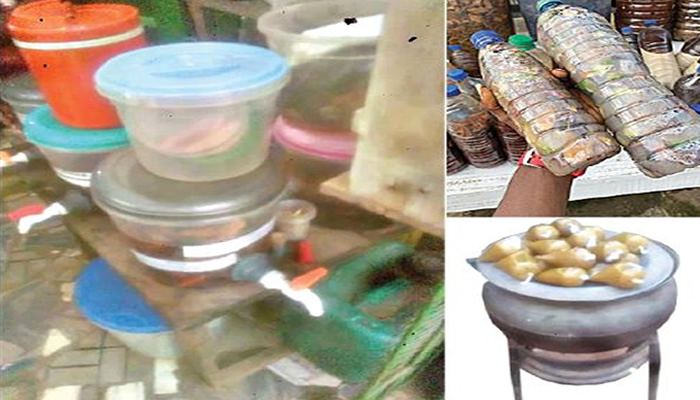
|
| Politics › Re: Defend Yourselves – Gov Radda Tells Katsina Residents by ogododo(op): 1:08pm On Feb 10, 2024 |
|
| Politics › Re: Defend Yourselves – Gov Radda Tells Katsina Residents by ogododo(op): 11:00am On Feb 10, 2024 |
Nlfpmod, na dem say make we defend ourselves. |
| Politics › Re: Defend Yourselves – Gov Radda Tells Katsina Residents by ogododo(op): 9:40am On Feb 10, 2024 |
Luggar we need truly. Like days of cowboys. |
| Politics › Defend Yourselves – Gov Radda Tells Katsina Residents by ogododo(op): 9:25am On Feb 10, 2024 |
Governor Dikko Radda of Katsina State has told residents of the state to take proactive measures in defending themselves against attacks by bandits. He said rather than always relying on government intervention, they should form groups and protect themselves. The governor made the call on Friday at the Government House in Katsina during an extensive emergency security meeting. The meeting was attended by the emirs of Katsina and Daura, Dr Abdulmumini Kabir Usman and Dr Umar Farouq Umar, members of the business community, as well as security chiefs in the state. “We must review the security situation in the state, take action to find a solution, and address these challenges. Apart from insecurity, there are other challenges like the rising cost of food and hunger amongst the population. “Government is fully prepared to assist any community that organises themselves in their respective areas through training and the provision of logistics.” “We are all aware of the current skyrocketing of the prices of foodstuff, which led to protests in Niger State, Kano and other places. It has not gotten to our state yet, but it is necessary for us to meet and see how we can mitigate the situation before it gets out of hand,” he said. He said the hike in prices of commodities was as a result of the fall in the value of naira; hence some neighbouring countries are coming with their little money to purchase huge grains. “There are also people who use their naira to purchase foodstuff for hoarding in order to save their money from possible loss due to the fall in the value of our currency,” the governor added. https://dailytrust.com/defend-yourselves-gov-radda-tells-katsina-residents/ |
| Politics › Re: Yobe Business Community Goes Spiritual, Seeks Divine Intervention Over Hardship by ogododo: 9:17am On Feb 10, 2024 |
iwaeda:
The United Marketers Association (UMAPO), Yobe state chapter, on Friday, organised prayers to seek divine intervention over the present economic hardship.
Speaking at the prayer ground, Chairman of UMAPO Potiskum chapter, Alhaji Nasiru Mato, said the prayer was to seek God’s forgiveness due to the economic hardship in the country and ask Him the way forward.
“The challenges of high cost materials such as food items and other things happened as a result of the fuel subsidy removal. Marketers are facing seriously challenges at this trying moment,” he said.
He called on federal, state and local government to set up committees that will come up with ways to cushion the hardship being faced by Nigerians.
Below are pictures:
https://dailytrust.com/photos-yobe-business-community-goes-spiritual-seeks-divine-intervention-over-hardship/ Dem no stop boko haram, bandits, dem dey cry now. May dere prayer be answered. |
| Politics › Re: Leaked SGF ₦1bn Memo: Tinubu Presidency Is A Cesspit Of Corruption - PDP by ogododo: 9:17pm On Feb 09, 2024 |
treesun:
February 9, 2024
Press Statement
Leaked SGF N1bn Memo: @officialABAT Presidency is a Cesspit of Corruption-@OfficialPDPNig
…Demands @nassnigeria Investigation.
The Peoples Democratic Party (PDP) condemns the reported approval of a whooping N500 million as first installment of a N1billion allegedly approval by President Bola Ahmed Tinubu for the inauguration of the a 37-man Tripartite Committee on New National Minimum Wage as reportedly contained in a leaked memo by the Secretary to the Government of the Federation (SGF), Senator George Akume.
The PDP describes the said approval of the huge amount for a routine government activity like committee inauguration as the height of profligacy, imprudence and financial recklessness which further validates PDP’s position that the Tinubu-led government is a cesspit of corruption where officials engage in brazen and reckless treasury-looting.
It is highly provocative and unpardonable that at the time the nation is suffering acute food shortage; when millions of Nigerians are starving due largely to inadequate investment in food production, insecurity and harsh economic policies of the government; a time when workers are still being owed their January 2024 salary and other legitimate entitlements, President Tinubu is allegedly spending NI billion to inaugurate a committee.
It is even more revealing that the Secretary to the Government of the Federation, allegedly requested for an audacious sum of N1.8 billion for the event which was later scaled down to N1 billion, out of which President Tinubu reportedly directed the SGF to “start with N500 million first”.
This further shows that the APC administration is insensitive and has no regard for the plight of Nigerians, whom President Tinubu, during his 2024 budget presentation at the National Assembly described as “ordinary people out there”.
Nigerians can now also see how our national treasury and funds meant for their wellbeing are being looted with reckless abandon by officials of the Tinubu-led APC administration.
This is apparently a tip of the iceberg of how looters in the APC administration are cashing out with public funds under the cover of the Presidency as witnessed in the reported plundering of over N44 billion in the Ministry of Humanitarian Affairs and Poverty Alleviation.
The PDP calls out the Tinubu Presidency to speak out, come clean and address the nation on this very weighty allegation especially at this time when Nigerians are undergoing excruciating economic hardship.
Our Party demands that the National Assembly, pursuant to its powers under Section 88 of the Constitution of the Federal Republic of Nigeria, 1999 (as amended) immediately commence investigation into this matter which is already agitating the minds of Nigerians across the country.
Signed:
Hon. Debo Ologunagba
National Publicity Secretary Nawa oo. Kountry wey hard, pipu no chop belleful, Tinubu dey waste dis much. APC na curse. |
| Politics › Re: Bandits Threatening To Attack Me – Gov Radda Cries Out by ogododo(op): 5:25pm On Feb 09, 2024 |
Gasikiya. |
| Politics › Bandits Threatening To Attack Me – Gov Radda Cries Out by ogododo(op): 5:17pm On Feb 09, 2024 |
The Katsina State Governor, Dikko Umaru Radda, disclosed on Friday that rampaging bandits terrorising some parts of the state are threatening to attack him.
The governor made this known during an expanded emergency security council meeting at the Government House.
He stated that the bandits’ threat was based on security reports.
Speaking in Hausa, Radda said: “Based on security reports that we are receiving, I am among those that the bandits are thinking of attacking, but that doesn’t muddle me because God is with us, and he will protect us.”
However, the governor explained that the threat by the hoodlums would not stop his government from adopting revolving security strategies to tackle banditry and other security challenges in the state.
The security meeting had in attendance the heads of security agencies in the state, traditional and religious leaders, top government officials and members of the business community and was still going at time of filing this report. https://dailypost.ng/2024/02/09/bandits-threatening-to-attack-me-gov-radda-cries-out/
|
| Business › Notify Customers Before Debt Recovery Moves, CBN Tells Banks by ogododo(op): 11:08am On Feb 09, 2024 |
The Central Bank of Nigeria has instructed regulated entities to provide customers with notices of outstanding obligations before beginning debt collection.
This is to ensure that the debt recovery process is transparent, courteous, and fair.
CBN stated this in a document released on Thursday on its website titled “Revised Consumer Protection Regulations.”
It noted that the essence of the document is to ensure financial institutions follow consumer protection principles.
The regulations outline consumer rights and aim for better outcomes and access to financial services.
The document states that foreclosures should only be initiated as a last resort after other recovery options have failed.
Foreclosure is the legal process in which the ownership shifts to the bank or lender if the debtor fails to pay the loan.
“Customers should be given the option of a private sale before foreclosure, which must be exercised within 30 days unless the customer has waived this right,” the document stated.
The apex bank further mandated that financial service providers must apply the net proceeds from foreclosures to the loan account and inform customers of the remaining balance.
The CBN added that banks must give customers a report on the collateral sale, stating process, expenses, and net proceeds noting that banks are responsible for the actions of debt collection agents.
The document outlines restrictions for loan providers in terms of contacting individuals related to a customer.
It stated, “Providers are not allowed to contact friends, employers, relatives, or neighbors for any information other than employment status, telephone numbers, or address. The only exception is if the person has guaranteed the loan or has given consent to be contacted.”
Additionally, banks must safeguard customers’ assets and are responsible for losses due to control breaches; test products with consumers and modify to reduce fraud/errors and implement measures and authentication for transactions.
FSPs are also mandated to install automated transaction monitoring, alert functions, and behavioural monitoring to detect and prevent fraud; customers must also be educated on fraud threats or scams.
The document added that the providers must communicate procedures for reporting suspicious, unauthorised, fraudulent, lost, or stolen payment instruments and/or authentication information to consumers periodically.
The apex bank requires financial institutions to offer secure and user-friendly interfaces for digital financial services to prevent errors and double transactions.
The CBN added that banks must protect consumer data privacy and confidentiality from unauthorised access and be responsible for any acts or omissions in this regard.
The providers are required to incorporate personal data protection into their product or system designs; they must obtain written consent from consumers to collect and process their personal data for specific purposes, and allow them to withdraw their consent at any time and are prohibited from sharing consumers’ personal data with third parties without their express consent, and must provide clear and simple “Opt-in” and “Opt-Out” options for data sharing.
“Safeguarding the interests and ensuring greater protection of consumers in the evolving financial services landscape necessitated the review of the 2019 Consumer Protection Regulations,” it added. https://punchng.com/notify-customers-before-debt-recovery-moves-cbn-tells-banks/
|
| Education › Re: Education With Tears: Hardship Creating More Indigent Students by ogododo(op): 7:46am On Feb 09, 2024 |
Nlfpmod out of schools, no be here at. Now millions go join. |
| Education › Education With Tears: Hardship Creating More Indigent Students by ogododo(op): 6:33am On Feb 09, 2024 |
LAGOS — The economic crunch in the country that has hit all sectors is not sparing the education sector, as it has created more indigent students who are finding it difficult to cope with the situation. An investigation by Vanguard showed that many students are dropping out of school; attending classes hungry; unable to meet obligations such as paying fees and living decently among others. An example of the dire situation on campuses in Nigeria is shown at the University of Lagos, UNILAG, where some students who have no means of regular feeding are being fed by the management of the school. The Vice-Chancellor, Prof. Folasade Ogunsola, while briefing newsmen recently, said: “When we had to increase our obligatory fees, we made the promise that no student will drop out because of their inability to pay. “Looking at the number of undergraduate students that have been registered for the new academic session, which is about 32,721 and the number of students who declared their inability to pay that was 765, one could see that those unable to pay are small in number. “Of the figure, the Office of the Vice Chancellor paid the bills of 400, we have put 170 in our Work Study programme; we have increased the earnings from that programme from N200 to between N500 and N1,000 per hour, and a participant works at least two hours a day. “We also have some students who managed to pay the obligatory fees but have difficulties regarding feeding and maintaining themselves. They are about 40 in number and we give them free meals daily.” Before the increase in fees and the economic recession in Nigeria, the university did not record such number of indigent students. Real-life situations on campuses At the Federal University of Technology, Akure, FUTA, Ondo State, where students recently battled to get over 300 per cent increase in fees reduced by half, the situation is not different. Related News Rape: l took 4 bottles of beer, 6 sticks of cigarettes —Suspect Naira depreciates to N1,500/$ in parallel market Blackout: Power, Petroleum resources ministries set up c'ttee to resolve gas shortage Oreoluwa Grace, a final year student, related her experience with fellow students. ”As a class governor, it is almost daily that I have to handle cases of students unable to pay one fee or the other or buy things that they need. “When we were to go on our field trips, it was difficult for some to pay the N25,500 required. And the trip is compulsory. I had to accept paying in instalments from some. When we were about going, our head of department had to call some parents personally on the need to pay the money and for their children to go. “Some parents begged that they should allow their children go and pay later. Any student who misses the field trip will have an automatic carry-over. There are other expenses to meet too. The HOD was magnanimous to allow everybody to go. ‘’When we came back, we had to do independent mapping and a student spends an average of N3,000 daily on that. Up until we went for our industrial attachment, some students were yet to complete payment for their field trips and their log books for the IT were withheld till they paid. “Any student who misses the IT too will repeat. Some students have reduced the number of times they attend classes and some are doing odd jobs to survive,” she said. How we are coping — Students For Damilola Akerele, ND1 Mass Communication student of Kwara State Polytechnic, Ilorin, it has not been rosy. She recounts her daily ordeals: “Feeding this time has been very difficult for the generality of students. The money is also not there, so, it makes the situation very tough for us. Before the present administration, with N600 or N700, I could eat rice, meat and fried plantain and be satisfied but now with the same amount you hardly buy half of that food. ‘’Now, one can’t eat satisfactorily if you don’t have at least N1,500 and we don’t have that kind of money. We strive to eat from home. Many times we cook in the evening and eat the leftover in the morning to meet up with lectures. “Now, more students, including the males, do all sorts of jobs to survive and add up to whatever their parents give them at home. I learnt weaving and hair plaiting before I came to school and I make some money from it with which I am surviving because I always have more than enough customers to cope with.” I really thank God for that, because everyone is not that lucky “My parents just pay my school fees and that’s all. But everyone is not lucky, what other students, particularly the ladies now do to survive and pay their school fees, especially those with no parental support is horrible and unimaginable. “For many of them, it is really not their fault. Unlike before, many students from town now trek about five kilometres from our gate to the lecture rooms because they can no longer afford the transport fare. It used to be N100, it’s now N200 from gate. “Also not everyone buys hand-outs these days and thank God for some of our lecturers who have been showing understanding. Some of them now make photocopies of hand-outs they couldn’t buy for lack of funds.” Joseph B.Adeoti, a Part III English Language/Literary Studies, Kwara State University, Malete, had this to say: “Students are currently experiencing in tertiary institutions in Nigeria is least expected from the administration of President Bola Ahmed Tinubu. “It is such a big disappointment. The era of former President Muhammadu Buhari was bad, this is worse. We never prayed for this but here we are, and we have to cope with it. “Things have been really hard in terms of feeding and personal maintenance in school.I discovered that I can’t depend on what my parents used to give me after paying my tuition fees. It was obvious I couldn’t put pressure on them because I knew their capacity. So, I have to look inward at what I can do to make extra money. ‘’I remembered I used to teach some secondary students way back home before I was offered admission. So,when we resumed last semester, I put my contact number and the subjects on a few signboards in strategic areas of Malete town and before I knew it, parents have started calling me. “That was how I started coaching students to make ends meet, I mean secondary school students who have a deficiency in a particular subject. Their parents pay me every month. The impressive performances of their wards in school have increased the number of students that I teach, particularly on weekends. “With the amount of money I make, I have been able to take care of my needs and also buy handouts and other textbooks that I need without putting any pressure on my parents. “I also have a friend who is now into dry cleaning business to earn extra money. He said that was what he used to do when he was at home. “When we read about the flamboyant lives of our leaders who have put us in this economic crisis, it makes us feel very bad because they’re not feeling our pains, there’s a serious disconnect and it shouldn’t be so. The Federal Government in particular should make life worth living for residents of this country.” We don’t take healthy diet anymore —TASUED student Craving to eat healthy diet is no longer the desire of Miss Oyindamola Taiwo, a 400 Level student of Department of Health Promotion and Environmental Health Education, Tai Solarin University of Education, TASUED, in Ogun State. “To be honest, I’m finding it hard to cope with the present economic hardship in the country. As a student, food is one important thing a student needs for a successful academic performance. Increase in cost of food items, however, has made me as a person to cut short my meals in ratio of 1:0:1 daily. And that’s not all to it. “Due to high cost of food, major nutritional requirements which are needed for a healthy living cannot be met. Currently, my notion about food is no longer a healthy diet, but anything edible that can satisfy my hunger, which is wrong but it can’t be helped. “Many have to skip lectures, work multiple part-time jobs. I engage myself in baking business. And for the increase in tuition fee, first of all, I’m very grateful to God and my parents. It wasn’t easy, but we survived. “But what can I say about my other coursemates, appreciation to my lecturers, my L.A and colleagues who had to step in to fund the students who were unable to afford the fees, the hike in the tuition fee is, indeed, crazy. Many lost hope. But all thanks to God and other stakeholders (in my department), they survived. So, none in my department dropped out from school because of it.” Education now survival of the fittest in IMT, Enugu A final year student of Public Administration, Institute of Management and Technology, IMT, Enugu, Igbokwe Kosisochukwu, opined that going to school is now the survival of the fittest and not for the poor any more. He said education now requires enough money to acquire because the hike in school fees, departmental fees, textbooks, transportation and feeding are not what average parents and guardians can afford. Kosisochukwu, who said his father was dead and his mother a civil servant, said many people will soon go and learn one trade or the other instead of going to school because going to school is too costly. “School is now for the rich people and not for the poor anymore. That I am in school today is by the grace of God. People are suffering, things are difficult and government keeps increasing school fees and prices of goods and services without an increase in the salaries of workers. ‘’What we are passing through now is too painful. We can’t learn and internalize because hunger is biting everyone except the rich people. “There is no place for the poor in education of our country. We suffer to save money and buy textbooks. Other students and I trek to school and deny ourselves food to help us save money, though, we do it with joy according to Fela Kuti’s music, “suffering and smiling”. Speaking in the same manner, a 400-level student of Medical Laboratory Science at the University of Nigeria, Enugu Campus, UNEC, Jacinta Onah, said schooling was now meant for the rich people. “Going to school is costly now and I can say it’s meant for the rich people. We are finding it difficult to pay school fees, feed, pay rent, and pay for other things. It’s not easy for us. We survive by God’s grace. “Three years ago, the little money my parents gave me was enough to take me for two to three months but could you imagine that barely two weeks after I came back, I had used up all the money my husband gave me. I am left with no money after paying for departmental fees,” she said. She shared the experience of a course mate, Emmanuel Nnamani, who dropped out in the first semester of fourth year due to money, adding that they agreed to contribute money for his school fees to continue with them but the man refused because of other logistics that require money. “The cost of schooling has made one married man, a four-hundred-level student in our department, to defer his admission last year during our first semester session. We are planning to make contribution to support him and make him join us, even if it’s only the first semester but he said no due to other logistics that require money. “Today, the man is not in the school but somewhere hustling to make money and come back to school.” My colleagues want to join the army, says KASU student Ahmadu Muhammadu Alhassan, a student of Kaduna State University, KASU, narrates his experience: “I am a 300-level computer science student. My father is a retired civil servant, I find it hard to live as a student in the current situation of the country. “Sometimes, I miss classes because I cannot afford the transport fare. Staying on campus is now for students from affluent families. For me, I am yet to even complete my payment for 200 level school fees, I only made part payment. ‘’I cannot afford to buy a laptop, even though I am studying computer science. I use laptops belonging to my friends whenever I have assignments to do. The situation is affecting my academic performance and if this continues, I am most likely going to be withdrawn from the Department of Computer Sciences. ‘’My coursemate who is an orphan, is going through the same experience, he is sponsoring his education, he is planning to defer his studies to the next academic year to work and save money to complete his academics. “Scholarship from government is hard to get.The processes are not easy. Our parents were to submit tax clearance certificates or so, when some had already died and guardians were not on a payroll, let alone pay tax. ‘’The process of doing the tax clearance also involves paying some money. Some of our friends from other departments, we were told, have since jettisoned higher education and have gone to Falgore with the hope of joining the Army. “Government should look at this https://www.vanguardngr.com/2024/02/education-with-tears-hardship-creating-more-indigent-students/ |
| Politics › Re: Kwara Varsity Deputy Bursar Dies Watching Super Eagles AFCON Semi-finals by ogododo(op): 2:01pm On Feb 08, 2024 |
How many people kpai for our victory? |
| Politics › Kwara Varsity Deputy Bursar Dies Watching Super Eagles AFCON Semi-finals by ogododo(op): 1:56pm On Feb 08, 2024 |
The Deputy Bursar of Kwara State University Malete, Alhaji Ayuba Abdullahi, on Wednesday night, died while watching the semi-finals between Nigeria and South Africa in the ongoing AFCON. Nigeria won the match against South Africa by 4-2 goals on penalties after regulation and extra time ended 1-1. Sources close to the deceased but who spoke on condition of anonymity said Abdullahi went to a sports centre in the Sango area before he started feeling uneasy. One of the sources said, “The Deputy Bursar watched the Nigeria/South Africa match from the beginning till the end of the extra time, till it was time for a penalty kick. “He complained that he was feeling dizzy, so he said he needed to go back home and rest not knowing that his BP had gone up. “On getting home, he collapsed and was rushed to a private hospital in Sango and he was referred to the University of Ilorin Teaching Hospital and before he could be attended to, he died. “He was buried on Thursday morning according to Islamic rites.” The university’s Director of Information, Dr Saedat Aliyu, confirmed Abdullahi’s death. Aliyu, however, stated that the cause of death was yet to be ascertained by the management of the university. “Yes, he died last night. He was hale and hearty and was full of life on Wednesday at his office. May Almighty Allah grant him Aljanah Firdaus” she said A statement by the university said, “This is to announce the death of Mr. Ayuba Olaitan Abdullahi of the Bursary Department. “Janazah will be held this morning, and his remains will be interred at the Hausa Muslim cemetery, Apata Yakuba, Oyun area, Ilorin, at 9 am.” Also, a former federal lawmaker in Delta State, Dr. Cairo Ojougboh, died while watching the Eagles’ match.. A source close to the politician said, “Cairo Ojougboh, a medical doctor died during the Nigeria vs.South Africa match. “The incident happened when the penalty was awarded against Nigeria. Dr Ojougboh was said to have shouted and slumped due to a massive heart attack when SA scored.” In the same vein, a member of the National Youth Service Corps serving in Adamawa State also reportedly died during the game. The corps member identified only as Samuel from Kaduna State, allegedly passed away just before the final kick which secured Nigeria’s win in the match, The Nation reports. https://punchng.com/kwara-varsity-deputy-bursar-dies-watching-super-eagles-afcon-semi-finals/?amp |
| Sports › Re: Nigeria Vs Ivory Coast AFCON 2023 Finals (1 - 2) On 11th February 2024 by ogododo: 11:48pm On Feb 07, 2024 |
|
| Politics › Re: Under Pressure, Nigeria Govt Holds Urgent Meetings Over Living Costs by ogododo(op): 2:58pm On Feb 07, 2024 |
Nlfpmod, na soso meeting meeting, no beta plan for Nigeria. |
| Politics › Under Pressure, Nigeria Govt Holds Urgent Meetings Over Living Costs by ogododo(op): 2:06pm On Feb 07, 2024 |
Nigeria’s cabinet ministers have held emergency meetings over the economy and food prices as the government comes under pressure over the fallout from President Bola Ahmed Tinubu’s reforms. Protests broke out on Monday in northern Niger state where demonstrators, mostly women and youths, blocked a major road in the state capital Minna to demand help over living costs. Since coming to office in May, Tinubu has ended a fuel subsidy and currency controls, leading to a tripling of petrol prices and a spike in living costs as the naira slides sharply against the dollar. Ministers of finance, information, budget and national planning, agriculture as well as the national security advisor, central bank director and other senior aides took part in the meetings which began on Tuesday. “By the time these meetings are concluded, we’ll be able to issue a definite statement on what the position of government is in this regard,” Information Minister Mohammed Idris told reporters. “All I can say is that discussions are ongoing, and very soon a solution is in sight for Nigerians.” Ministerial meetings scheduled on Wednesday and Thursday were announced as Tinubu returned to Nigeria after a brief private visit to France. Government officials have repeatedly urged Nigerians to be patient over the reforms, which Tinubu says will bring in more foreign investment to Africa’s largest economy. But the short-term impact is hitting Nigerians hard: Inflation was at 28.92 percent in December, with food costs at 33.93 percent, according to the national bureau of statistics. The naira currency has fallen swiftly against the US dollar since the government ended a multi-tier exchange rate system and freed up the local currency. Before the reforms, the naira was trading at around 450 to the dollar, but on Monday it was trading at 1,400 to the greenback, according to the central bank. That is close to the rate on the parallel black market. A weaker naira makes imported goods more expensive as businesses pay more for the dollars they need to bring goods into the country. In a research note, the Economist Intelligence Unit (EIU) said the central bank effectively devalued the naira last week, which could bolster investment, but it believed that the country’s foreign reserves would remain under pressure. Africa’s largest oil producer, Nigeria has long struggled with foreign currency liquidity as its petroleum output lags and foreign investors remain skittish. “We believe the improvement will take time to bed in and Nigeria will still need an IMF programme,” the EIU note said about the naira. “The currency is now trading close to parallel market rate. This alone will not encourage large hard currency inflows without oil industry reform and other policy measures.” https://www.vanguardngr.com/2024/02/under-pressure-nigeria-govt-holds-urgent-meetings-over-living-costs/ |
| Business › Re: Naira Weakens At Official Market, Banks Sell $584m by ogododo(op): 9:19am On Feb 07, 2024 |
Nlfpmod, Cadoso and Edun say economy better now than then. |
| Business › Naira Weakens At Official Market, Banks Sell $584m by ogododo(op): 7:44am On Feb 07, 2024 |
The value of foreign exchange transactions recorded on the official Nigeria Autonomous Foreign Exchange Market has risen to $584m, according to data posted on the FMDQ Exchange on Tuesday.
This represents a significant increase from the $440m daily transaction previously recorded on the platform.
The development came as the national currency weakened against the United States dollar at the official market on Tuesday.
It closed at N1433/dollar, compared to N1419/dollar recorded on Monday.
Meanwhile, according to data from FMDQ Security Exchange, the forex turnover increased to $584.53m on Tuesday from $440.13m recorded on Monday indicating an increase of $144.4m or 32.8 per cent.
The improved liquidity is following moves by the Central Bank of Nigeria to stabilise the foreign exchange rate.
However, aside from commercial banks, the Central Bank of Nigeria, oil firms, and multinationals also sell dollars at the Nigerian Autonomous Foreign Exchange Market.
Last week, the apex bank rolled out new circulars and guidelines to boost liquidity and narrow the gap between the parallel and official rates of the foreign exchange market. In its most significant foreign exchange guideline, last week, the CBN ordered banks to adjust their FX exposures.
In its circular titled, “Harmonisation of Reporting Requirements on Foreign Currency Exposures of Banks”, the apex bank expressed worry over the growing trend of banks holding large foreign currency positions.
It said, “The Central Bank of Nigeria has noted with concern the growth in foreign currency exposures of banks through their Net Open Position. This has created an incentive for banks to hold excess long foreign currency positions, which exposes banks to foreign exchange and other risks.”
The CBN mandated that banks’ NOP must not exceed 20 per cent short or 0 per cent long of the bank’s shareholders’ funds going forward. It gave a February 1, 2024 deadline to those who had exceeded its limit.
In response, the national currency gained thrice at the official market following the adjustments.
The naira closed at N1,455.59/$ on Wednesday, 1,445/$ on Thursday, and N1435.53/$ on Friday last week.
After trading on Tuesday, the naira depreciated marginally by 0.85 per cent as the dollar was quoted at N1,433.89, stronger than N1,421.70 quoted on Monday at the NAFEM market.
However, a Bureau De Change Operator, speaking to The PUNCH said the dollar was traded between N1,480 and N1,485 to the dollar at the parallel market.
He stated, “Today’s market was not too good but the dollar was sold between the rate of N1,480 and N1,485 to the dollar.
Abubakar Taura, said, “Dollar increased to N1,460 today and that is the last price.”
However, another BDC, Suraju, complained of the exorbitant price of the dollar, adding he didn’t trade with the greenback.
He said, “I don’t know the price for today because I didn’t sell at the market. The price for the dollar is too much and I can’t afford it.”
However, economic managers have said the naira will firm up in both markets in the coming days. https://punchng.com/naira-weakens-at-official-market-banks-sell-584m/?amp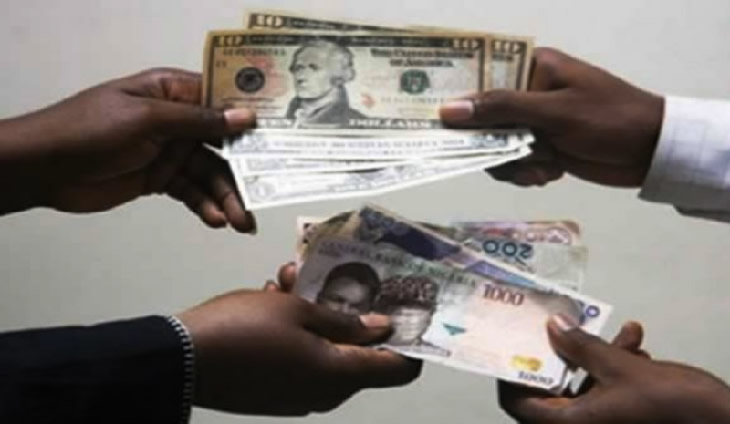
|
| Politics › Opposition Parties Instigating Mass Protests To Undermine Tinubu’s Govt – APC by ogododo(op): 10:24am On Feb 06, 2024 |
POLITICSOpposition parties instigating mass protests to undermine Tinubu’s government – APCPublished on February 6, 2024By Yemi Balogun The All Progressives Congress, APC, has alleged that opposition parties have resorted to instigating unsuspecting youths to protests following the protest that rocked Minna, the capital of Niger State, and Kano State on Monday over the hardship in the country. The National Publicity Secretary of the party, Felix Morka, in a statement issued on Tuesday, maintained that the protests in Minna and Kano on Monday were the manifestation of the plot. He said it was part of desperation to portray the ruling party as underperforming. “In its arrant desperation to portray the All Progressives Congress (APC)-led administration as under-performing, opposition parties have resorted to instigating unsuspecting young people to protests in the streets of some major cities. “The protests in Minna and Kano on Monday were the manifestation of this devious and unpatriotic plot. That the protests happened simultaneously in both cities is not coincidental. “It bears a bold stamp of an orchestrated and coordinated effort to instigate unrest and undermine the government. This mercenary opposition tactic is a clear and present threat to public peace and national security,” he said. Morka, while saying the ruling party recognises the right of citizens to engage in peaceful protest, urged the people to be vigilant and not lend themselves to the opposition to promote social strife by its incendiary rhetoric and manipulative plots. He noted that the President Bola Tinubu-led administration was solidly committed to doing everything in its power to mitigate the transient pains of important reforms crucial to economic recovery and sustainable prosperity for all Nigerians. The spokesperson said it behoves on all as good citizens to stand fast with the government in this noble stride. He stressed that in due time, these policy reforms will yield enduring beneficial transformation of the material conditions of life in the country. He implored Nigerians to shun attempts by opposition elements to destabilise the country for their political gains. https://dailypost.ng/2024/02/06/opposition-parties-instigating-mass-protests-to-undermine-tinubus-government-apc/ |
| Politics › Re: Nigerian Mdas Paid Over N159bn Into Private Accounts In Six Years by ogododo(op): 9:14am On Feb 06, 2024 |
Nlfpmod, nawa oo. Free money for politicians. |


