PhysicsQED's Posts
Nairaland Forum › PhysicsQED's Profile › PhysicsQED's Posts
1 2 3 4 5 6 7 8 ... 127 128 129 130 131 132 133 134 135 (of 154 pages)
 Fashion › Re: Black Women Rocking Their Natural Hair by PhysicsQED(m): 10:05am On Sep 30, 2011 Fashion › Re: Black Women Rocking Their Natural Hair by PhysicsQED(m): 10:05am On Sep 30, 2011 |
From what I remember, in most of the photographs and drawings I have seen of pre-colonial African women they are not wearing large afros at all. So it's surprising that not just among African Americans, but also among native Africans, that is now the popular style of wearing natural hair. |
| Culture › Re: Black Celebrities, What African peoples could they be from? by PhysicsQED(m): 9:43am On Sep 30, 2011 |
k.o.n.y., the article that the specific chart is from was not concerned specifically with Egypt but contains general information about limb proportions among groups originating from different climates that they used to compare with the limb proportions of a few groups of native North Americans. They included African Americans probably out of convenience or diversity for the sub-saharan African group, since they are in North America and since it's known that African Americans have a sub-saharan African origin. On page 2 of their article, they show all the groups they sampled. http://www.ncbi.nlm.nih.gov/pubmed/19927367 http://onlinelibrary.wiley.com/doi/10.1002/ajpa.21226/pdf ^^^ (I don't know if you're at a university or library that can access the article, though. But there's the link if you want to read the whole article) Here's what the article is about (from the abstract): "Body proportions of circumpolar peoples as evidenced from skeletal data: Ipiutak and Tigara (Point Hope) versus Kodiak Island Inuit. Holliday TW, Hilton CE. Department of Anthropology, Tulane University, New Orleans, LA 70118, USA. Abstract Given the well-documented fact that human body proportions covary with climate (presumably due to the action of selection), one would expect that the Ipiutak and Tigara Inuit samples from Point Hope, Alaska, would be characterized by an extremely cold-adapted body shape. Comparison of the Point Hope Inuit samples to a large (n > 900) sample of European and European-derived, African and African-derived, and Native American skeletons (including Koniag Inuit from Kodiak Island, Alaska) confirms that the Point Hope Inuit evince a cold-adapted body form, but analyses also reveal some unexpected results. For example, one might suspect that the Point Hope samples would show a more cold-adapted body form than the Koniag, given their more extreme environment, but this is not the case. Additionally, univariate analyses seldom show the Inuit samples to be more cold-adapted in body shape than Europeans, and multivariate cluster analyses that include a myriad of body shape variables such as femoral head diameter, bi-iliac breadth, and limb segment lengths fail to effectively separate the Inuit samples from Europeans. In fact, in terms of body shape, the European and the Inuit samples tend to be cold-adapted and tend to be separated in multivariate space from the more tropically adapted Africans, especially those groups from south of the Sahara." Here's another quote about their sample: "To test the hypotheses outlined in the Introduction, the Point Hope samples were compared to a broad sample of modern humans from Europe, Africa, and North America (Table 1). These samples range in date from over 3,500 years ago to the late Medieval period to the second half of the twentieth century [for discussion of samples, see Holliday (1995, 1997b), Holliday and Falsetti (1999), and Holliday and Ruff (2001)]. In absolute numbers, the majority of the sample is of European origin, but there is a sizable number of African skeletons present as well (African-Americans are also included). Native North Americans are not well-represented; they are represented in this study only by the Koniag and a prehistoric Puebloan sample from New Mexico that are included in many (but not all) of the comparisons. Unless indicated otherwise in Table 1, all measurements for the comparative samples were taken by TWH. Sex of all samples was determined by the authors via analyses of the ossa coxarum. However, a number of the specimens lacked pelves, and for some individuals the sex remains indeterminate (Table 1). The measurements taken on the samples (Table 2) were chosen to best reflect those aspects of body size and proportions that vary with climate, specifically limb bones from the four major limb segments, femoral head diameter, skeletal trunk height (the summed dorsal body heights of T1-L5 plus sacral ventral length), and bi-iliac breadth. These measurements, as well as indices and log shape variables created from them, have all been shown to vary significantly between climatic groups (Holliday, 1995, 1997a,b; Holliday and Ruff, 2001); summary statistics for these measurements are presented by sex and sample in Table 3." Another quote, which explains the chart: "These same log shape variables were subjected to two forms of cluster analysis: neighbor-joining (NJ) and unweighted pair-group method using averages (UPGMA) tree analysis. Figure 8 is the NJ tree. It has two main branches—a long and linear body build branch that includes the Egyptians, Sub-Saharan Africans (except for the Pygmies), and African-Americans and a second, less linear body form branch that includes the Inuit, Europeans, Euro-Americans, Puebloans, Nubians, and Pygmies. Note that the Nubians used in this study are thought by some to represent an immigrant population from Europe or Western Asia [see Holliday (1995)]. Note, too, that all of the Inuit groups fall in amongst the Europeans, and that while the Koniag and Ipiutak cluster together, the later Tigara sample clusters apart from them and is distantly clustered with Medieval Bosnians." [the part in bold explains the Nubians grouping on the chart; they used skeletons from 3,500 years ago to the 20th century, so they may have used skeletons from a group of Nubians mixed heavily with Arabs] As for why African Americans don't cluster "exactly" in limb proportions with West Africans on their chart, it might have to do with the limited sample size used of West Africans (21) or African Americans (60) or it might suggest that "Central" Africans (African Americans also have CA ancestry) have slightly different limb proportions. He didn't include Central Africans. Anyway, the main point is that virtually all the groups that have an indigenous black African origin have very similar limb proportions which are distinct from those of other groups originating elsewhere and the ancient Egyptian skeletons consistently fall into this group across multiple studies. |
| Culture › Re: Black Celebrities, What African peoples could they be from? by PhysicsQED(m): 4:46am On Sep 30, 2011 |
Science is finally catching up with what Garvey, Dubois, and Diop confidently stated decades ago. People should really read this site: http://www.africanamericanculturalcenterpalmcoast.org/historyafrican/imagegallery.htm From that site, here are some interesting things that anybody interested at looking at the situation objectively should note: https://www.africanamericanculturalcenterpalmcoast.org/historyafrican/limbproportionsGeneticComponent2.jpg https://www.africanamericanculturalcenterpalmcoast.org/historyafrican/tropiclimbs2010.jpg https://www.africanamericanculturalcenterpalmcoast.org/historyafrican/afropharaoniclinks.jpg Also, people should be wary of some of the "research" into the ancient Egyptians' appearance which is not rigorous in its methodology. The way the facial reconstruction of Tutankhamen was made to look like a "white" North African on a National Geographic cover a few years ago was simply based on some ignorant assumption about his nose indicating a caucasoid appearance by the lead researcher (http://en.wikipedia.org/wiki/Ancient_Egyptian_race_controversy#Tutankhamun), when, as has already been stated, that kind of nose can easily come from an East African population with a nose adapted for the desert. After making the claim about his nose, they assigned a skin color to him based on the Arab appearance of modern Egyptians.   How that was passed off as credible research is beyond comprehension. It's basically nonsense. How that was passed off as credible research is beyond comprehension. It's basically nonsense.https://www.africanamericanculturalcenterpalmcoast.org/historyafrican/amerodebunk.jpg https://www.africanamericanculturalcenterpalmcoast.org/historyafrican/harichsamplingbias.jpg https://www.africanamericanculturalcenterpalmcoast.org/historyafrican/northafricadefinition.jpg https://www.africanamericanculturalcenterpalmcoast.org/historyafrican/nasal_nose_shape_tropical_climate.jpg https://www.africanamericanculturalcenterpalmcoast.org/historyafrican/tish2009eastafricanethiopdebunk.jpg Also from that website, here are just some of the images that make it clear that they were not of a "caucasoid" or Western Asian group: http://www.africanamericanculturalcenterpalmcoast.org/historyafrican/darkegyptians/index.htm |
| Culture › Re: The Art And Architecture Of Yorubaland! by PhysicsQED(m): 11:07am On Sep 29, 2011 |
[img]http://www.mcah.columbia.edu/dbcourses/africa/medium/africa1_057.jpg[/img] Bust of Lajuwa, Terracotta, Nigeria, Ife Kingdom, 11th-16th century AD |
| Culture › Re: The Art And Architecture Of Yorubaland! by PhysicsQED(m): 11:05am On Sep 29, 2011 |
| Culture › Re: The Art And Architecture Of Yorubaland! by PhysicsQED(m): 10:58am On Sep 29, 2011 |
| Culture › Re: The Art And Architecture Of Yorubaland! by PhysicsQED(m): 10:54am On Sep 29, 2011 |
https://www.artres.com/LowRes2/TR6/S/R/5/K/ART414877.jpg https://www.artres.com/LowRes2/TR6/S/K/C/M/ART414876.jpg African, Southwestern Nigeria, Ife Culture. Head, Possibly a King, 12th-14th century. Terracotta with residue of red pigment and traces of mica, 10 1/2 x 5 3/4 x 7 3/8 in. (26.7 x 14.5 x 18.7 cm). AP 1994.04. Kimbell Art Museum, Fort Worth, TX, U.S.A. |
| Culture › Re: The Art And Architecture Of Yorubaland! by PhysicsQED(m): 10:53am On Sep 29, 2011 |
https://www.artres.com/LowRes2/TR6/S/3/8/D/ART421416.jpg Ife terracotta head. It may have been a portrait of a member of the Oni of Ife's court or of the Oni himself. Nigeria Culture, Ife Period: 12th-15th CE. Place of Origin: Olokun Walode Grove, Ife. Terracotta, H=5". Museum of Ife Anitquities, Nigeria. National Museum of Ife, Ife, Nigeria 1 Like 1 Share |
| Culture › Re: The Art And Architecture Of Yorubaland! by PhysicsQED(m): 10:52am On Sep 29, 2011 |
| Culture › Re: The Art And Architecture Of Yorubaland! by PhysicsQED(m): 10:50am On Sep 29, 2011 |
| Culture › Re: The Art And Architecture Of Yorubaland! by PhysicsQED(m): 10:49am On Sep 29, 2011 |
| Culture › Re: The Art And Architecture Of Yorubaland! by PhysicsQED(m): 5:47am On Sep 29, 2011 |
http://www.artres.com/c/htm/PrintableThumb.aspx?Base=SEA&Box=&E=22SIJM5RP2QOK&Pass=&TTitle=Search%20result&Page=1&DocPerPage=200 ^^^^ Some art images are on this site; I couldn't get them any larger though. |
| Celebrities › Re: New Pictures Of MGBN Sylvia Nduka (Take 2) by PhysicsQED(m): 3:35am On Sep 29, 2011 |
https://a6.sphotos.ak.fbcdn.net/hphotos-ak-ash4/297657_152783911481952_134391599987850_280901_966094949_n.jpg https://a4.sphotos.ak.fbcdn.net/hphotos-ak-snc7/297657_152783908148619_134391599987850_280900_30676632_n.jpg ^^^^ And people really think she could win Miss World for Nigeria? Seriously?Look at her face again. She wasn't even the most beautiful girl in that competition (MBGN). There are definitely prettier Nigerian girls. |
| Culture › Re: Question For The Descendants Of The Benin Empire by PhysicsQED(m): 3:13am On Sep 29, 2011 |
Yeah, I see your perspective as far as variation across a large group, and I can't claim to be knowledgeable about Owo art, so I definitely wouldn't just assert that their style for their ivories is not their own. I was just very skeptical of the claim that Benin ivory carving was often dependent on Owo artists. Incidentally, you should probably make a thread on ancient Yoruba art, buildings, etc. and also post any pictures of the Owo palace that you can find online or that you can put online. |
| Culture › Re: Question For The Descendants Of The Benin Empire by PhysicsQED(m): 2:29am On Sep 29, 2011 |
I also read somewhere that there was ivory carving in Lagos, but I can't find the link anymore. |
| Culture › Re: Question For The Descendants Of The Benin Empire by PhysicsQED(m): 2:26am On Sep 29, 2011 |
^^^^ I stand corrected again, lol. However, Benin still seems like the "epicenter" of ivory carving in southern Nigeria from what I've read, just as Ife is still the clear "epicenter" of terracotta. There are too many Benin ivory works in a distinct Benin style for me to believe that they got it from Owo, especially since the style of many of Owo's ivory works seem to lean more towards the Benin style than toward the style of the other Yoruba ivories. |
| Culture › Re: Question For The Descendants Of The Benin Empire by PhysicsQED(m): 1:58am On Sep 29, 2011 |
Interesting. I stand corrected. Yorubas did carve ivory tusks. However, I still wonder why it was only Owo and Benin that had elaborate ivory carving? There were other Yoruba art centers, after all. |
| Culture › Re: Question For The Descendants Of The Benin Empire by PhysicsQED(m): 1:30am On Sep 29, 2011 |
I've read the same art books and websites that you've read and they don't mention the tusks. Yes there are a few carved ivory works that were originally ascribed to Benin artists that some Western art historians very reasonably decided to ascribe an Owo origin to based on their style which they correctly see as showing a mixture of Benin and Yoruba artistic styles. That's fine, and in fact their claims about Owo only reinforce my point about the styles not being the same. However, this makes no mention of the tusks. In fact, it's nearly impossible that the tusks were made by anyone other than Benin artists, considering the exclusivity of the guilds and the subject matter involved, and the artistic consistency in style between the ivory tusks and the other ivory works actually made by Benin artists. Also, the carved ivory spoons were also consistently identified as Benin work. In fact, the number of Benin carved ivory works which were ascribed to Owo artists was very small and had nothing to do with the tusks, which re-told important historical events in Benin history, so I don't know how accurate it would be to say that they "often" used Owo artists. As you said, Owo was influenced by both polities. Since Owo's greatest artistic achievement lay in terracotta which are ascribed to dates that go back earlier than any of the few Benin ivory works which are ascribed to Owo artists and earlier than the dates ascribed to their own kingdom's ivories, and these terracotta show no "Yoruba + Benin" mix of style, it would make more sense to assume a Benin ----> Owo influence in ivory carving following Benin's increased influence at Owo at a certain point. That said, my point is that Benin was not getting carved ivory tusks from Owo artists. |
| Culture › Re: Question For The Descendants Of The Benin Empire by PhysicsQED(m): 7:42pm On Sep 28, 2011 |
^^^ Yeah. I reread what I wrote and I see your point about being overly defensive. My tone was too confrontational. However, I still have to say that his statement about "learnt everything" cannot really be correct when looking at the actual art. The artistic styles are different and it turns out that the actual technical approaches to making the art are different. Also I don't accept that somebody named "Iguegha" was really Yoruba. It looks like a combination of "Igue" and "gha", which are both Edo words (igue can have another meaning, which is not in reference to the festival, by the way). Think about that. |
| Culture › Re: Question For The Descendants Of The Benin Empire by PhysicsQED(m): 5:24pm On Sep 28, 2011 |
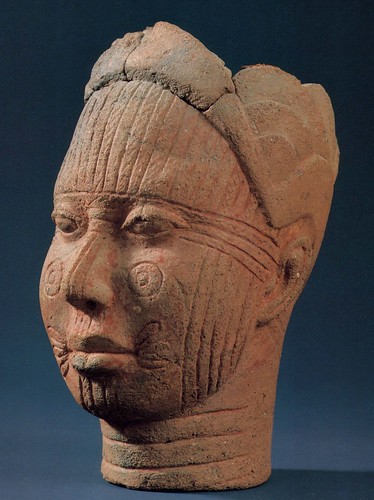
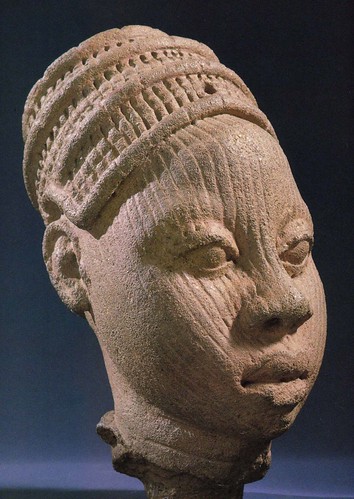
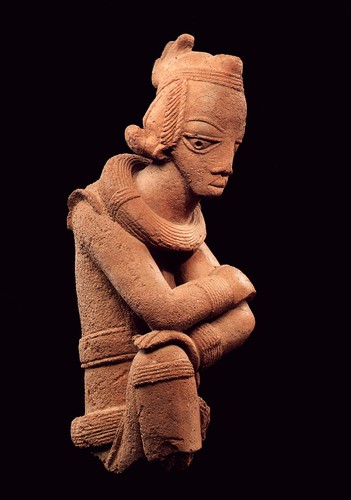
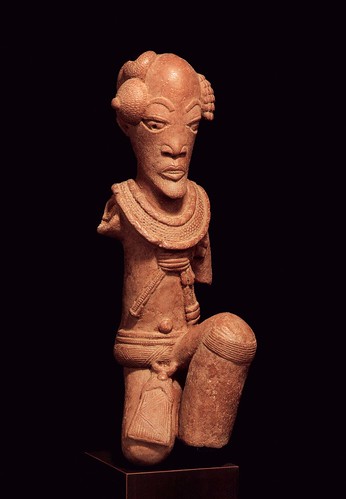
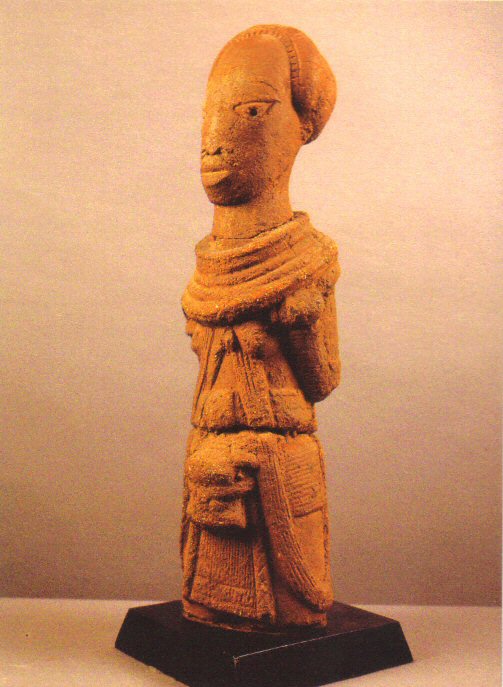
oduasolja:1. Like the brass plaques that Yorubas didn't make? Like the intricate carved ivory tusks that Yorubas didn't make? Like opting for general, idealized figures in elaborate and detailed scenes instead of the less ornate and very highly refined Yoruba realism? I would refer you to this post for some information on their ancient sculpting: https://www.nairaland.com/nigeria/topic-686264.0.html#msg8495561 2. Maybe you meant to claim that Yorubas learnt everything they knew about terracottas, and art in general from Nok? Just wondering if you believe this.Maybe people should say that Nok was Nigeria's classical civilization. It certainly existed around the time of other "classical" civilizations in the world. https://farm1.static.flickr.com/195/516391094_b9a12abf86.jpg https://farm1.static.flickr.com/240/516391048_319fb7c647.jpg https://www.randafricanart.com/images/Artists_and_Patrons_in_Traditional_African_Cultures_Nok_01.jpg https://images.imagestate.com/Watermark/2362137.jpg https://i18.stockmediaserver.com/smsimg34/TH170/imagestate/2362138.jpg Nobody could say people this refined looking and artistically sophisticated were uncivilized., yet for some reason Nok isn't often mentioned when discussing Nigeria's civilizations. 3. Benin really does seem to be the standout among Nigeria's medieval civilizations in terms of the number of groups it influenced in southern Nigeria, though. 1 Like |
| Politics › Re: Ijaws Attack Binis Over Ownership Of Gelegele Land In Edo State by PhysicsQED(m): 12:43pm On Sep 28, 2011*. Modified: 10:30pm On Sep 01, 2012 |
Abagworo: I think ancient Bini was an empire which encompassed many of our different tribes.Igbos and Ijaws were obviously in the Benin army.I also believe Ijaws were nomadic in water but did not actually settle or occupy any lands.I believe that the settled Ijaws were mixed Igbos,Efiks,Yorubas or Edos.Most of the Eastern Ijaw settlements were founded by Igbos/Efiks/Ibibios during slavery period as ports for slave shipment and were arranged as city States for trading purposes.They brought that sense of land ownership and settlement to Eastern Ijaw.Why try to pass off your completely unsupported conjectures as reasonable? There was NOTHING like evidence of there being Ijaws in the Benin army in any significant amount if at all and these fables about Ijaw army contingents of Benin invading Lagos don't make sense. Why conjecture about ancient Benin when you admitted in another thread that your knowledge didn't extend beyond a certain limited area of Nigeria? You once even tried to claim that there was only one traditional cloth making community (in Abia state) in the whole of Nigeria!!! There was never anything like a significant amount of Ijaw soldiers under the Benin empire and there's nothing to suggest that there were ever full army contingents. What evidence is there anywhere for it? They should be proud of Nembe and proud that nobody ruled over them and stop trying to make such claims. In fact, there was a letter written circa 1692 by the then Olu of Warri (Don Domingos II) to Father Francesco de Monteleone complaining about the (pirate) activities of the Ijaws. If they were ever under Benin they wouldn't have dared to cause trouble to those that were allied with Benin. killayut: An empire is not a Nation, the ruler of a Nation rules over other nation to be form the empire. The citizens of the nation ruled over could be part of the empire to strengthen the army for further expansion, The Beniin empire was like that, Citizens of the conquered surrounding nations like ISHAN, ANIOMA AND IJAW were drafted in to the army for further expansion, That is how an Empire becomes strong. LAGOS, Ishan, Anioma including Ogba Egbema in Todays Rivers state were part of the Benin empire. And so Towns or settlements like Uromi, Agbor, Asaba, GeleGele, Eko, Omoku, Aboh , OgwachiUku were all non Edo settlements under the Benin empire, So when they say ancient Benin empire sea port they are not saying ancient Edo sea port, Stop being an illiterate, Alexandria in Egypt was an ancient Roman empire sea port. Nigeria was part of the British empire. GeleGele is an Ijaw town under the ancient Benin empire, LEARN ENGLISH,This is becoming exasperating. You have basic comprehension problems. Where did I say or even suggest that there were no Esan or Anioma in the Benin Empire?! I specifically excluded the Ijaws for a reason: there is written evidence showing that Ijaws occupied a different position relative to the Benin empire. "These Robbers, or Pyrates, live just at the Mouth of the River, and are called the Pyrates of Usa: they are very poor, and live only upon Robbery; they sail hence to all Parts of this River, and seize all that lights in their way, whether Men, Beasts, or Goods; all which they sell to the first that come hither, for Victuals, with which they are not at all provided. . . The Inhabitants of this River and the neighbouring Country have several Princes; and indeed, each small Nation is govern'd by his own King, though all of them are Vassals of the King of Benin, except those of Awerri, where the Portugueze live, and the Pyrates of Usa, both whom would never submit to his Yoke." - from the letter from David van Nyendael to William Bosman, written 'From on Board the Yacht Johanna Maria' [note "Usa" is Nyendael's spelling of Uzon (the Edo term for the Ijaws), and "Awerri" is his spelling of Warri] Last time I checked, Gelegele, although beside a river, was not at the mouth of any river. The rest of your post shows that you're completely deluded. There is an enormous difference between people of Edo descent that mixed with other groups and whose descendants later became another ethnicity being part of the Benin military at one time and what you were claiming about Ijaws being involved directly. And stop with all the bogus claiming. There was a Benin port east of Benin city, linked to Benin earthworks made by Edo people, not an Ijaw port tied to the Benin empire. There is no evidence of Ijaw military involvement in the Benin empire on any significant scale and to mention Ijaw and Benin empire like one would mention Esan and Benin empire is bizarre and not supported by any facts. Esan involvement is known and acknowledged in Benin tradition. Anioma involvement in the empire is known and acknowledged in Benin tradition. Nowhere anywhere in tradition, or written documents are the Ijaws involved with the Benin empire's military in any significant amount. It is a fact that non-Bini places that were under the Benin empire had appointed overseers of those territories at some point or rulers who paid tribute to Benin, yet you are simultaneously pretending that this unheard of amaokusuwei is the traditional ruler and claiming that Gelegele was an Ijaw town under Benin, which makes no sense because amaokusuwei has no connection to Benin. Gelegele was NOT an "exterior" territory of the Benin empire inhabited by non-Bini people. Gelegele was not an Ijaw village. It was a Bini village and was explicitly noted as such by British in 1897 who were very aware of the difference between Bini and Ijaw. This is the last time I'll try to get this through your thick skull. You just keep getting more and more annoying with your lies: Gelegele was an Ijaw settlement, Ijaws conquered Lagos in a Benin empire coastal invasion of Lagos, Ijaws had a port near Benin, etc. It's nonsense. By the time you're finished, we'll be hearing about how the Ijaws ruled Benin and are the indigenes of Benin. But in fact, that ridiculous claim has actually been made by some Ijaw, so it would be no surprise to hear it again. The truth is a) Ijaws weren't significantly involved with the Benin empire's military even if there might have been a few here and there b) nearby Ijaws were friendly to the British invasion of Benin in 1897 |
| Politics › Re: Ijaws Attack Binis Over Ownership Of Gelegele Land In Edo State by PhysicsQED(m): 9:58pm On Sep 27, 2011 |
jason123:This is not true. This discussion is about one specific place, anyway. Not the entire geographical southwest. |
| Politics › Re: Ijaws Attack Binis Over Ownership Of Gelegele Land In Edo State by PhysicsQED(m): 9:27pm On Sep 27, 2011*. Modified: 10:34pm On Sep 01, 2012 |
Killayut, I said I wouldn't engage you again but you're just so out of line that I can't let this stand. killayut: My friend I keep saying read wide so you could understand the history of others, An Oba was established in Ogba land in present day Rivers state before even Eko was conquered by the Benin empire, Yes Benin empire was rising but still very primitive and does not reach the standard I d call civilized and ofcourse most of the warriors then at least at the coast of the empire were of Ijaw army not as mercenaries but as part of the Benin empire just as Nigerian army fought for the British empire, Now the Obaship that was established wwas the OBA OF OGBA LAND in todays Rivers state of OGBA EGBEMA, This happened before Eko was seized . The seizure of Eko brought the Ijaws in to the area. But the Ijaws never got there enmass, The Benin were the ruling class but the warriors were Ijaws and this was why Ijaws settled at the Ajegunle ( AJEGUNLE was never the name but a nick name to the place ) Kiri kiri, Olodi are example of Ijaw name settlements, Others fizzled out and the Ijaws simply continued with their fishing business, Eko as corrected by ARIBISALA is not an AWORI town and today the majority race there are the IGBOMINA from KWARA. The AWORIS were mainly at the Northern end of LAGOS AND NOT EVEN COASTAL, Hence The Irus of apese ( Victoria island ) may not be AWORIS. I was closed to the Oniru family and I never heard TJ claimed to be AWORI, The Benin conquered the Ogba Egbemas .1. You know nothing about what level of "civilization" Benin had reached because your knowledge of ancient Benin is extremely shallow. But what anybody knows is that it was more advanced than that of your Niger Delta trading states that you tried to compare to Benin earlier. Also I know that the "civilized" people who visited Benin during its best period, before its civil wars, ALL praised it, with one person comparing the Oba's annual appearance and celebration on horseback to a papal procession in its splendor. In contrast, several of the descriptions of Ijaws are very very negative. I restrained myself earlier (and I am doing it again) from posting these descriptions when you went out of your way to insult Edo people because I don't have anything against the larger Ijaw group, just YOU. 2. Get this into your ignorant, thick skull. There was never at any time in any place, ever anything like an Ijaw army under Benin empire. The Ijaws were not ever any constituent of the Benin empire's military. The Ijaws did not conquer Lagos under the Benin empire and all these stories you've been telling over the last 2 pages are unfounded. The people that the Binis called the Uzon were the Western Ijaws and these same Western Ijaws were noted as pirates and robbers at the time who did not acknowledge the authority of anyone over them. By the way, this "Edo people do not paddle canoes" stuff is unfounded and a myth. The Edo were not averse to canoes, lagoons, rivers, etc. http://books.google.com/books?id=yYGmzjnR3vsC&pg=PA183 http://books.google.com/books?id=yYGmzjnR3vsC&pg=PA185 Find this article: Darling, P.J., 1981a, The Ancient Canoe Port of Benin, Nigerian Field 46, pt.1-2. For the details. What the Edo were averse to was the great ocean, which they associated with the spirit world, so it's funny to hear talk about a coastal assault of Lagos. killayut: You have been misinformed . Ijaws do not claim land, It is land were Ijaws have been living from time that are being claimed by others, and Ijaws are only resisting, GELEGELE has been an Ijaw settlement not that Ijaws are claiming it, It is the Binis that are claiming it saying the IJAWS were brought by the OBA or enslaved people or servants, So pls dont let your hatred miss lead you, Ijaws never claimed any land, Ijaws never claimed land in Lagos, Ondo, Edo but others claim the land were Ijaws have been living, the question you people should ask is, WHY DID YOUR FOREFATHERS not CLAIM the land the IJAWS STAY and why are modern day people trying to claim the land where Ijaws stay ? It is cos of OIL AND GAS WEALTH, people never claimed the land before this time when Ijaws living there suffered the hardship, made use of the other natural wealth and suffered the snake bites and all that, But now that oil and gas have been found MODERN day Binis and Itshekiris and Ilajes BACKED by their Tribal politicians who are waiting to gain more, Is this not pathetic ? How many times did AWORIS have a fight with Ijaws in history that you know, If not why are you so happy and proud that your AWORIS fought Ijaws and killed them in Lagos over nothing but HATE, why didnt you AWORIS fight Igbos in FESTAC AND OKOMAIKO AND AGBOJI AND AMUWO ODOFIN AND EVEN SURULERE ? ASK YOUR SELF THAT QUESTION and understand why you went to kill innocent poor people and now beating your chest about it, The same innocent people of GELE GELE they are planning to kill to your delight, INSTEAD of coming to stand against injustice you are HAPPY that Ijaws every where are being killed and you expect the IJAWS to remain still while you laugh and make jest of them, It is not going to HAPPEN AGAIN,1. I have seen what other Binis have written on this issue and I have seen nothing about the Ijaws being "brought by the Oba" to Gelegele or being slaves there. I don't know where you're getting this stuff about them being "servants" or "enslaved" in Gelegele, but I pointed out that they had no basis to claim ownership since it would just make them shameless opportunists who were trying to benefit from 1897. 2. The Ijaws never made any independent claim to ownership of Gelegele before the discovery of oil. 3. What are you talking about with "why did your forefathers not claim the land"?! You think they didn't?! 4. It is murderous Ijaws near and in Gelegele who are attacking people. |
| Culture › Re: Black Celebrities, What African peoples could they be from? by PhysicsQED(m): 7:08pm On Sep 27, 2011 |
k.o.n.y., it's not that Diop's fundamental thesis that the Egyptians were of indigenous African stock cannot withstand scrutiny. That's actually totally solid. The ancient Egyptians were more akin to the African groups around them (East Africans, northern Sudanese, etc.) than to any European or Levantine or "Mediterranean" population. I don't have Diop's most famous book (The African Origin of Civilization) with me anymore (I checked it out from a library a long time ago, but I might buy it later as a reference material), and I can't recall everything that I disagreed with, but I know that I found several of the claims to be excessive or "reaching" and immediately looked them up, only to find my skepticism justified. For example, I definitely disagree with some of Diop's claims about the accomplishments of Greece's scholars being "stolen" from Egypt. Yes, the Greeks probably got their start in science from Egypt, but what they built from that should not just be called "plagiarism." One example was his claim about the Greek mathematician and physicist Archimedes. Archimedes was one of the greatest geniuses in history, and credit should be given where credit is due. The man was so brilliant that he developed a technique that was basically a rudimentary form of integral calculus, over a thousand years before calculus was truly developed. He was entirely capable of rediscovering or independently discovering anything that it is claimed the Egyptians had already discovered. That the Greeks learned some things from the Egyptians is very probable, and I have read a few articles suggesting this, but this specific accusation against Archimedes (calling him a plagiarist) was flimsy and badly thought out and I was disappointed at the reasoning he used there. His weak criticism of Archimedes is one of the things that stood out to me, although there were other things still, which I can't recall exactly at this time. However the fundamental thesis of that book - that the Egyptians were an African people, is something I agree with, and there is some evidence to back it up, though I won't get into that in any really great detail so as not to divert this thread. The most important thing that Diop pointed out was that Western researchers had a stereotypical image of what constituted a "black" person. They had a "stereotypical Negro" image based on West African and Central African features that they were familiar with which ignored how East Africans looked. Modern research has shown that the different features of most East African groups (not all) that people thought were due to Caucasian admixture are actually not due to admixture at all but are the natural features of those groups due to their high genetic diversity. For example, Paul Kagame of Rwanda has features that would have been ascribed to racial mixing with non-"negroid" groups in Diop's time, but we know now that these kind of features are not due to any admixture with Arabs or some Semitic group. Of course when one compares how the ancient Egyptians depicted themselves to how a Congolese or a Ghanian looks, there won't be similarities in the overwhelming majority of cases, and people seem correct in their dismissal of the claim that they were "black." However, when one compares them with some East Africans some of whom naturally have, without admixture, some so-called "caucasoid" features, it becomes obvious that the Egyptians can easily be of black African stock. For example, thin, straight, long noses, are a widespread feature among certain groups of East Africans, so the argument that the pharaohs and other nobles were not of African stock because they didn't depict themselves with "negroid" or so-called "flat" noses is silly. One interesting piece of evidence is that the ancient Egyptians' limb proportions have been found to be closer to that of Africans than Caucasoids or other groups. I came across an interesting argument about it here: http://www.egyptsearch.com/forums/ultimatebb.cgi?ubb=get_topic;f=8;t=006724 which basically confirmed that the ancient Egyptians had limb proportions that suggest an African origin. That forum (egyptsearch and the related egyptsearchreloaded forum) is in general a gold mine of interesting and obscure information on ancient Africans in general, not just Egyptians, although the emphasis is very much on Egypt. However, I don't frequent those two forums that much because (thank God) I'm not obsessed with Egypt like some black people. Regardless, they do have some interesting arguments on that forum (like this one which is 20 pages long: http://www.egyptsearch.com/forums/ultimatebb.cgi?ubb=get_topic;f=15;t=000028;p=20). There is also some interesting info here on Egypt: http://www.africanamericanculturalcenterpalmcoast.org/historyafrican/imagegallery.htm Overall, I agree with Diop's main point. What I disagree with are some of his unsupported claims and linguistic arguments. If I had the book still, I would go over a few of them in detail, but I don't really have time right now to go over that book again or post any detailed analysis of its flaws. |
| Politics › Re: Disadvantages Of Nigeria's Huge Population by PhysicsQED(m): 8:37am On Sep 27, 2011 |
Yeah, I see your point now. Don't know why I didn't see it earlier. It's true the sanctions and pariah status weakened their economy. |
| Politics › Re: Wikileaks: Gov. Jang Lagely Responsible For Jos Crisis by PhysicsQED(m): 8:19am On Sep 27, 2011 |
When LGAs are created for settlers, what do you expect? Let this happen in the core north as well, if it has to happen in Plateau state, Nigeria. |
| Politics › Re: Disadvantages Of Nigeria's Huge Population by PhysicsQED(m): 8:06am On Sep 27, 2011 |
My mistake. Overlooked the war. That definitely slowed them down. As for the rest, I don't see the coup or revolution would have really made a difference with regard to this particular area. The Shah was pro-Western so that would have affected development positively as far as technology/science initiatives although their international politics would have been lackey-ish (biased in favor of the West), and indeed it was the previous Shah that revved up Iran's education efforts and attempted to modernize his country. The current regime is not anti-science, except for possibly evolution, and I haven't seen evidence that they aren't basically continuing what the two Shahs achieved, as far as development of their country. |
| Politics › Re: Disadvantages Of Nigeria's Huge Population by PhysicsQED(m): 7:51am On Sep 27, 2011 |
ekt_bear:I'm not sure that any of those things affected their ability to produce outstanding academics in a negative way though. The Islamic Revolution probably increased the number of names on that list on wiki, actually (brain drain to the developed world). Perhaps it isn't a fair comparison. They've been wealthier than Nigeria per capita for the past 40+ years, according to Google public data. India and Pakistan might be fairer comparisons.Well India had higher education several decades before Nigeria. I think this education also extended to Pakistanis when they all one country. But yeah, both of these countries outdo Nigeria by an enormous margin in academics. Nigeria needs to get its act together. I have general impressions based upon the #s I've seen at the different institutions I've seen and visited (both universities and companies.)I see. Well I can't argue against what you're seeing in real life. You may be entirely correct about this. |
| Politics › Re: Disadvantages Of Nigeria's Huge Population by PhysicsQED(m): 7:40am On Sep 27, 2011 |
Apparently Iran's brain drain is even worse than Nigeria's: http://en.wikipedia.org/wiki/Brain_drain_in_Iran Yet they're doing better than Nigeria in almost every conceivable way. |
| Politics › Re: Disadvantages Of Nigeria's Huge Population by PhysicsQED(m): 7:32am On Sep 27, 2011 |
ekt_bear:Yeah. Those Iranians are pretty brilliant. http://en.wikipedia.org/wiki/List_of_contemporary_Iranian_scientists,_scholars,_and_engineers And that's definitely not a comprehensive list. They even left out this guy: http://www.tissueeng.net/lab/people.php?cat=1 and probably several others. Granted, we can say X, Y and Z happened, this is why Nigeria is underperforming. But Iran has had several pretty bad events in its recent history too.What bad events? Anyway, I think they had a little bit of a head start compared to us if what's written here is to be believed: http://en.wikipedia.org/wiki/Higher_education_in_Iran Regardless, I agree with your general conclusion. Sociology, black studies, things of that sort.Yeah, I see how that can be annoying. I definitely don't see what the point of studying sociology is. But the statement is about # studying useful things across groups, not comparing # studying useless things.I don't think either of us has the numbers. |
| Politics › Re: Disadvantages Of Nigeria's Huge Population by PhysicsQED(m): 7:05am On Sep 27, 2011 |
@ ekt bear, what useless things are Nigerians studying that you've come across where you're at? The only person I came across was one girl who was studying philosophy. I came across another girl studying psychology who later switched to pre-med. Almost all the Nigerians I came across were studying a pre-med course or engineering or in rare cases they were studying mathematics or physics. Other than that, I don't see that many Nigerians studying "useless" things. |
| Politics › Re: Disadvantages Of Nigeria's Huge Population by PhysicsQED(m): 7:00am On Sep 27, 2011 |
His last name might be one of those "unique" last names that certain "Igboid" groups like Ikwerre or a few Delta Igbos use to claim that they aren't Igbo. |


 [/size]






1 2 3 4 5 6 7 8 ... 127 128 129 130 131 132 133 134 135 (of 154 pages)