PhysicsQED's Posts
Nairaland Forum › PhysicsQED's Profile › PhysicsQED's Posts
1 2 3 4 5 6 7 8 ... 149 150 151 152 153 154 (of 154 pages)
 Celebrities › Re: Chei! Our Ibo Brother Costars Angelina Jolie In "salt" by PhysicsQED(m): 8:39am On Sep 06, 2010 Celebrities › Re: Chei! Our Ibo Brother Costars Angelina Jolie In "salt" by PhysicsQED(m): 8:39am On Sep 06, 2010 |
Chiwetel Ejiofor is a great actor and has been terrific in everything he's done and it's unfortunate that people want to make this a tribal thing. We should all be proud of a great up-and-coming African actor and people from the specific ethnicity he comes from are well within their rights to be particularly proud of him as one of their own (and I'm saying this as a non-Igbo). |
| Politics › Re: The Flag of Nigeria by PhysicsQED(m): 8:32am On Sep 06, 2010 |
Nigeria doesn't have a shared cultural history like Japan, to be able to put a cultural symbol on the flag. Sokoto and Benin did have flags though. Sokoto's was a plain green flag (even more boring than Nigeria's) Benin's depicted a man cutting off another man's head (ghastly). Anyways, I think the flag is kind of nice, actually. |
| Literature › Re: Has Anyone Read Eghosa Imasuen's novel "To Saint Patrick"? Is It Any Good? by PhysicsQED(op): 12:14pm On Aug 18, 2010 |
Thanks. I'll definitely check it out. Has Imasuen published anything else? |
| Politics › Re: Milton Friedman On Slavery And Colonialism. A Must Watch For Africans by PhysicsQED(m): 5:40am On Aug 18, 2010 |
gadogado:Arabs didn't "create" algebra, though they did make other important contributions to mathematics. However like many, if not most, of the great scientists of the Islamic Golden Age, al-Khwarizmi was a Persian (Iranian). Or are the Persians suddenly Arabs? (rhetorical question) But you are right about Europeans owing Muslims/Arabs/Persians for connecting them to the number system and arithmetic of India, and the philosophy, geometry, biology, and (flawed) astronomy, geology, and physics of the Greeks. When one considers the fact that most sub-Saharan African societies were not as advanced technologically as the Indians, Chinese, etc., who were also separated from the knowledge developed and acquired by dead men over several centuries in the Near East, one is also inclined to ask why if the Arabs were so great, it was necessary for them to acquire the modern number system from trade with and study of Indians, to acquire abstract science and mathematics of Greeks from conquest of former Roman territories and deliberate acquisition and filing of all things scholarly and Greek, and why they had to acquire paper making technology from the Chinese at the Battle of Talas instead of simply inventing all of these foundations, as certain people demand of Africans, when Arabs had always been much closer to every newly spread technology and component of civilization of Eurasia than sub-Saharan Africans, and always had a head start at these things but were still at the level of "enlightenment" of Sumerians/Akkadians (actually, at a much "lower" level of "culture" or "civilization"  of thousands of years ago when their neighbors were moving on into the future? of thousands of years ago when their neighbors were moving on into the future?One would have to be honest and ask one's self how much enlightened, "world-class" achievement there was amongst most Arabs prior to 632 AD, and why when their future religious brethren the Persians had a (decaying) empire, the Byzantines had an empire, the Chinese had an empire, and yes, even the Nubians had an empire (and would later stop the invading Islamic hordes with an army of archers as the kingdom of Makuria/Dongola), Arabs were roaming around deserts only putting up separate oasis towns and a few trade centers and worshiping moon gods and fertility goddesses and stone idols? Was it because of lack of "brain power early on"? Was it because of the Arab's "religious voodoo worship" and "his natural inclination to superstition"? I don't think so. I don't think any of these factors do very much to explain the low level of "enlightenment" of the Celt, the German, the Viking, the Native American, the early (pre-Caliphate) Arabs, the Slav, or certain sub-Saharan Africans, especially considering how these very different cultures seemed to all be in the same predicament without the diffusion of outside knowledge into their societies. But then again, I don't have an agenda to push. People in glass houses shouldn't throw stones. |
| Politics › Re: Milton Friedman On Slavery And Colonialism. A Must Watch For Africans by PhysicsQED(m): 1:02am On Aug 18, 2010 |
Arabs did have important achievements and inventions, but only after drawing from the groundwork laid by Greek, Indian, and contemporaneous Persian achievements. This thread isn't about Arab competence though. There are only a few singular achievements of Arabs that are divorced from the foundation laid by more sedentary groups of people (and as an immediate and undeniable consequence, more "civilized" groups of people (if you buy into that whole "civilized/primitive" people dichotomy, as not being nomadic is one of the key elements of "civilization")), which most of the brightest Arab scholars exploited to result in their achievements during the Islamic Golden Age. |
| Politics › Re: Milton Friedman On Slavery And Colonialism. A Must Watch For Africans by PhysicsQED(m): 12:50am On Aug 18, 2010 |
gadogado:Nice try buddy, I read "Guns, Germs, and Steel" years ago and was put off by Diamond's Eurocentrism, his condescending, patronizing excuses for various groups, and his bizarre attempt to ignore the fact that technologically advanced Chinese and Indian imperialists didn't go to genocidal extremes in meting out evil that European imperialists did (i.e. his book subliminally justifies these acts as inevitable and unavoidable). He could have just have admitted that certain groups (not ALL Europeans, and certainly not ONLY Europeans) were particularly averse to peaceful interaction with other groups of people who were very different from them. I also read Will Durant's The Story of Civilization many years before that and unlike certain people read Henri Frankfort (author of The Birth of Civlization in the Near East, among other things, and not at all somebody with a "liberal" agenda) and many other authors and already knew that most of Diamond's "liberal excuses" are not even of his creation, but that earlier writers, in trying to determine how it is that "civilization" comes about, anticipated most of the real requirements for the development of "civilization" without giving a second thought to Africans, Native Americans, or aborigines or any agenda "excusing" them, but rather said much of what Diamond said (minus some of the science and his attempts to insinuate that brutal European imperialism was nearly unavoidable or merely a natural social process), in the context of the development of Sumer, Egypt, Maya, etc. With regard to certain people's differing ideas on the development of civilization, the difference between me and certain people is that I've actually bothered to read about African societies before reading stuff like Guns, Germs, and Steel, because I have an interest in knowledge for its inherent worth, rather than agendas (whether "liberal" or "traditional" that use knowledge only to make claims. I had read enough real history books, by objective scholars, European (some of them "racists" by current standards), American, and African to know that African societies from Axum, to Sokoto, to the Congo, had experienced famines for reasons relating to their over-dependence on a few useful foods they had and could grow without outside trade without needing to read a bestseller to know this. If certain people are the realists that they claim they are perhaps they might familiarize themselves with the work of people like Gregory Maddox and realize that the African environment was not incapable of being tamed (the "primitive" Africa idea- that the very nature of the environment would always have resulted in insurmountable challenges to the possibility of Africans developing on the same level as some Asians and some Europeans without outside "help" but that Africa was not "merrie Africa" (i.e. no famine, hunger, disease, etc.) as people often assume and the environmental challenges to higher development in SOME (not all) places in sub-Saharan Africa were very real. The truth is in the midway between these extremes but certain people assume that I could actually believe the former, merely because I acknowledge some of the truth in the fact that there were some unusual challenges faced by sub-Saharan Africans and some unusual deprivations and isolation.So go ahead and dispel Guns, Germs, and Steel, as I don't accept many of Diamond's premises, conclusions, and assertions, especially with regards to Africa. I only commented on this thread because certain people and not most of the other posters in this thread, have a view of black Africans' "condition" that is at odds with reality. Certain people haven't been reading much of anything but have large opinions on topics they possess only small amounts of objective, non-polemical information on. |
| Politics › Re: Milton Friedman On Slavery And Colonialism. A Must Watch For Africans by PhysicsQED(m): 10:49am On Aug 17, 2010*. Modified: 1:03pm On May 21, 2012 |
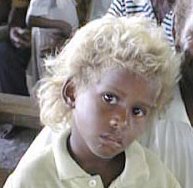
Hmmm. A lot of unsupported claims (especially from this gadogado fellow). I'll be back to address these arguments completely some days from now, as I'm currently too busy to devote much time to nairaland. But for now, I'll dole out a few statements that should get a few people thinking. 1. At one point all other Europeans were illiterate and considered "barbarians" in comparison with the Greeks and Romans. But the Romans, who considered the Celts (English, Irish, "Spanish," "Portuguese," etc) and especially the "Germans" (Visigoths, Ostrogoths, French, Dutch, most of Western Europe) as barbarians, got their entire culture from Greece. Which means nothing- except that the things that made Greece great were mostly her writings. They did have Alexander the Great, and a formidable and advanced military, but many groups, some of them not at all so advanced in terms of "civilization," such as the Huns (Attila) or Mongols (Genghis Khan) or 7th century Arabs (Khalid ibn al-Walid), also had great conquerors, as did some African kingdoms, so there is nothing unique about military competence. In fact, Africans had military competence also (see Warfare in Atlantic Africa 1500-1800 by John Thornton). But Greece derived their first number system from their alphabet. They derived their alphabet from the Phoenicians! Prior to that, they were ancient illiterates. And the Phoenician writing system developed in Egypt! (from the Proto-Sinaitic alphabet) Obviously the enormous leap in mathematical philosophy that Greeks took in making geometry abstract is to be respected, but the truth is that even Greek historians admit themselves that the idea OF geometry (literally meaning "land measurement" was derived from Egyptian land surveyors (though they were possibly preceded in this by Sumerians).Without the idea of geometry (which is what most of Greek mathematics, with a few notable exceptions, was concerned with) and without a number system developed from an alphabet that was brought to them, and therefore without writing, what would the intellectual achievements of the Greeks, and later their cultural inheritors, previously "barbaric" Western Europeans, have been? My point here is that you're giving people credit they don't deserve. There are only a few independent origins of writing. They are: 1. Sumer 2. Egypt 3. Mesoamerica 4. China 5. Easter Island (possibly) 6. Indus Valley 7. Crete (possibly independent, hasn't actually been confirmed) As you can see, only one of these groups (Crete) were European. So stating that the Europeans had more "brain power early on" from writing is not that plausible. Sub-saharan Africa was greatly isolated from the fertile crescent (Mesopotamia, the birthplace of most of all world civilization) by water and desert, so Africans didn't have the benefit of just adapting other peoples' writing easily and then developing literature and mathematics early on. When writing did finally reach sub-Saharan Africa (Arabic) it came with a very conservative, religion based culture. The idea that Africans couldn't conceive of writing is silly, since the Adinkra, Akan, and Nsbidi symbols essentially did communicate ideas with pictures, indicating logographic writing styles. However, in the absence of huge trade between cities and city-states speaking the same language, the development of these into full logographic writing systems would be unnecessary and unlikely. 2. There were no horses in sub-Saharan Africa until horses were introduced from the North. Zebras cannot be domesticated. Nor can giraffes. Elephants can only be tamed, not domesticated (bred and modified by humans). So the idea that sub-Saharan Africans would even need to use a wheel is silly, there are only a few things for which a wheel might be advantageous. Possibly a lot of servants pulling a large object would have benefited from wheels, as in that picture of that Angolan society. Horses, which were rare, would very smartly have been reserved for cavalry soldiers (Sokoto, Oyo, Borno, etc.) and occasionally hoarded by royalty if extremely rare (Benin). The cow/ox, camel, donkey and all other domesticated animals relevant to wheels all were found in North Africa, and found their way into sub-Saharan Africa sparingly (trade with North Africans, then trickle down trade from black Muslim states to non-Muslim states). The wheel is not the mother of invention, pal. Give that a rest, its only one the simplest and yet most useful inventions in certain environments. I don't see what use it would be in a horseless/oxen-less savanna or a bumpy and uneven forest/jungle devoid of animals to pull objects mounted on wheels. 3. Sub-Saharan Africa was massively underpopulated compared with the rest of the centers of civilization (Sumeria/Mesopotamia, China, India, Mexico and South America). The main reason for this is that only some parts of West Africa and Ethiopia had a few useful crops (as opposed to the many in Europe and Asia) that were actually native to Africa, and not introduced from elsewhere, that would have allowed for food surpluses, and consequently large, sedentary communities, and gradually higher technology. Most other crops from North Africa that would have helped in sustaining large populations could not survive the shift in climate and rainfall that occurs as one goes from North Africa to sub-Saharan Africa. In fact the statement that "people that live in Africa from the tropic of capricorn all the way to the sahara share the same climate," is the exact opposite of the reality, as climate zones vary vertically in Africa and there are at least three major different climes from the Tropic of Capricorn to the Sahara, but the useful crops and wildlife were in North Africa. As for a "race" concept, it's not much more illogical than the ethnicity concept so I won't bother to argue against it but New Guineans, pure Australian aborigines, Malaysian Negritos, Phillipine Negritos, Solomon Islands, and various other groups with "wide nostrils" are clearly significantly different in appearance from both a pure dark skinned Yoruba and an extremely light skinned Igbo, and indeed from most other Niger-Congo ("Bantu" or non-"Bantu" language speakers. Unless you really think that these people are of the same race as the "typical" pure black African:http://backintyme.com/forum/store/Kids3.jpg http://backintyme.com/forum/store/Kids2.jpg http://backintyme.com/forum/store/Kids1.jpg http://www.isteve.com/images/Solomon_Island_Blonde.JPG http://upload.wikimedia.org/wikipedia/commons/thumb/d/da/Vanuatu_blonde.jpg/180px-Vanuatu_blonde.jpg http://www.gnxp.com/blog/uploaded_images/blondeblack-725114.jpg http://adamspicturelibrary.com/images/SBN/0-0-CHI-HDST-SBN-013d_c.JPG http://gal.darkervision.com/wp-content/uploads/2008/10/aborigines_5.jpg http://www.businessfacilities.com/blog/uploaded_images/aborigines_5-700849.jpg Clearly you need to increase your understanding of the continuous (rather than discrete) nature of the human phenotype spectrum. 4. As for stable prosperous societies/enlightened kingdoms, the idea of "enlightened" is relative, as the Islamic hordes that swept across Asia and parts of Europe were very certain of their "enlightenment" compared to the "infidels" they fought, as were the jihadists in Northern Nigeria, but I can assure you that no Celtic, Slavic, or Germanic (the majority of Europeans) kingdom was really "enlightened" prior to contact with Greece or Rome or its descendants (and by consequence inheritance of all the foundations laid by Sumeria and Egypt), so what does that make these people prior to their "enlightenment"? The dregs of the white "race"? Of course not. In Africa, the Axumite Empire was very prosperous and "enlightened", but declined through trade isolation, and climate change affecting crop yield. The kingdom of Makuria was very prosperous and "enlightened", but declined through Islamic Egyptian aggression. The Benin Empire was very prosperous, but declined through trade isolation (from the slave trade) and later through outside aggression (British). The Mali Empire was very prosperous and "enlightened", but fell apart through dynastic struggles, like many empires outside of Africa. The Ghana Empire was very prosperous but was weakened by increase in nearby Almoravid power and declined. The Songhai Empire was very prosperous but was defeated by Moroccan invaders with guns. I don't see what a lack of "intellectual ability" had to do with the decline and conquest of these states, but maybe that's because unlike some people I don't have an agenda to push. 5. As for the statement that "bronze casting is party scientific but it was done not for practical self help reasons but for religious voodoo worship to pillow his natural inclination to superstition." that only indicates one's idiocy and ignorance. There are few bronze works, whether Ife, Igbo-Ukwu, or Benin that depict ANY kind of "voodoo" theme. The artwork depicts religious themes, actually, not unlike Celtic and other European pagan religions. However, for an example of European "voodoo" consider the Wicker man ritual of Celtic druids that involved human sacrifice to please the gods (see The Gallic War by Julius Caesar, or any of the commentaries of Cicero, Pliny the Elder, or Tacitus on the Celts)). Almost all of the art is about military activity, court life, royalty, the deification of royalty, religious beliefs, or pedestrian things like carvings of animals. The things represented in the bronzes are the same things represented in statues and sculptures in many past cultures, kingdoms around the world. 6. As for "practical self help" The Haya people of Tanzania were manufacturing steel in high temperature furnaces before anybody else (http://www.time.com/time/magazine/article/0,9171,912179,00.html). Then there's the fortifications of walls, ramparts, and moats near Ijebu and Benin in Nigeria (http://www.newscientist.com/article/mg16322035.100-the-african-queen.html?page=2) (http://cohesion.rice.edu/CentersAndInst/SAFA/emplibrary/49_ch09.pdf) and Wesler,Kit W.(1998). Historical archaeology in Nigeria. Africa World Press pp.143,144 Then there's an example of Benin classification of plants: BOTANY- A European Forest Botanist who worked in Benin in the 1930s admitted in his studies that the Benin were better botanist than the Europeans in the classification of rain forest trees. He stated that The more one has to do the correlation of vernacular [Edo] names with their scientific equivalents, the more one come to realize that they are not merely a haphazard jumble. There seems to be a considerable amount of almost scientific system and a wealth of description in many of the names. While dealing with the Guarea species-Obobo’s, it is perhaps worth noting that systematic botanists were a long time making up their minds as to the correct classification of Guarea Cedrata and for at time it was transferred to the genus Trichilia. The Bini was never in doubt about the matter and made it clear that he considered it to be a Guarea Thus the classification of the Guarea which have for long baffled the Europeans was rightly resolved using the Benin indigenous classification. See R. H. Hide “The Bini as a Botanist” Nigerian Field, Vol. XI, 1943 p.32. Then the use of plants: PLANT SCIENCE- The Edo domesticated many species of plants in their environment for their own use and mankind. There is specie of cotton domesticated by the Edo people known as lshan cotton and one of the best for weaving Khaki or jeans. The colonial government went about encouraging the cultivation of this specie in Nigeria before the cotton trade in Southern Nigeria collapsed. A colonial official who visited Esan area in 1902 reported the quality of the cloth made from this cotton specie to be “of strong durable texture” National Archives, Ibadan File CSO 1/13 Vol 20, Windham Fosberry Report on visit to Ishan Country, 1902 TEXTILE TECHNOLOGY – Earlier in the 18th Century French trader Landolphe reported of Benin that “a few houses are to be seen without a cotton spinning machine or a frame for making admirable cotton or straw rugs” Ling H. Roth, Great Benin: Its Custom, Art, and Horrors, 1968, P 141 while in the 1860s the British Consul Burton complained that Benin people were not disturbed by English trade embargo because they are “…independent of Manchester” textile mills. Ibid 142 Then crafting armor and weapons with metal: METAL TECHNOLOGY- Their mastery of the Brass is very well known. Archaeologist and historians are still baffled and yet to establish the source of copper which were used for their brass work. The cire perdue technique of casting is also known to have been indigenously developed. Similar achievements also exist in Iron technology. Scientific investigations show that the techniques of iron smelting employed the same principles with modern or western iron smelting techniques. The Edo mastery of the iron is best exemplified by the Ineme (a small group in Etsako and Akoko Edo areas whose expertise is legendary. For the Benin call them Uleme ne gbe egue and there is a Benin proverb that describe the best Iron smelter and smith in Benin would be an apprentice among the Ineme. Their expertise was sought not only by Benin but also by the Igala, Igbira and Northern Yoruba for production of weapons. See Aigbokhaoede. Asimilafele, Inemhe- Our heritage, 1991 Then soil conservation: AGRICULTURAL SCIENCE- They knew their environment and soil and the best techniques that were suitable for maximum yield. They selected their soil and the best soil was known as Eken ne Uloka – loose soil that allowed percolation of water and easy decay of vegetable matter to fertilize the soil. They checked the topography too and ensured that it did not destroy the environment- proverbs abound about this e.g. "No gua Iya I mien eken no yawo ehe" – one who plants the side of the valley is unable to cover it with soil” In this way gulley erosion was avoided. Frederick Lugard, Governor General of Nigeria 1912-1918 commended the agricultural techniques of Benin people for helping to preserve the forest .Frederick Lugard Political Memoranda: Revision of Instructions to Political Officers on subjects Political and Administrative, 1913-1918, P.432 The farming technique’s conservationist value was further commended by the Forest officer P. A. Allison in his article “Historical inferences to be drawn from the effect of human settlement on the vegetation of Africa” Journal of African history, Vol. III, No 2, 1962, p.243 . And possibly some writing: WRITING- The Benin kingdom might have also developed some logographic symbols, although not a full writing system. There were speculations with some Olokun symbols in the past. Hau, Kathleen (1973). Pre-Islamic writing in West, Africa. Bulletin del'IFAN, 35(Series b, 1): 1-45. Hau, Kathleen (1967). The ancient writing of Southern Nigeria. Bulletin del'IFAN, 29(Series b, 1-2): 150-190. Hau, Kathleen(1964). A royal title on a palace tusk from Benin (Southern Nigeria). Bulletin del'IFAN, 26(Series b, 1-2): 21-39. Hau, Kathleen (1961). Oberi Okaime script, texts, and counting system. Bulletin del'IFAN, 23(1-2): 291-308. Hau, Kathleen (1959). Evidence of the use of pre-Portuguese written characters by the Bini? Bulletin del'IFAN, 21: 109-154. |
| Literature › Has Anyone Read Eghosa Imasuen's novel "To Saint Patrick"? Is It Any Good? by PhysicsQED(op): 1:01am On Aug 17, 2010 |
For anybody who might have heard of this novel and read it or is currently reading it, I was wondering if I could get some indication of the quality of the novel. Is it good, above average, mediocre, or terrible? Details please. |
| Politics › Re: Can Lagoon State Really Come Out Of The Ugly Yoke Of Lagos State by PhysicsQED(m): 5:35am On Aug 12, 2010 |
Correction: I did call the Igbos who were in Benin and influenced the founding of Onitsha, "runaway Benin people" in an earlier post (later I specified that they were "people who were in Benin" so actually Andre Uweh, I owe you an apology, that was my mistake in phrasing it that way in the first instance that I mentioned Onitsha. Your interpretation was reasonable given the way I stated it. However, as I alluded to in a previous post, the truth that some Onitsha Igbos, and most, if not all delta Igbos, have always been Igbos, albeit with some possible outside influence, had long been obvious to me after reading Adiele Afigbo's writing on this subject. While the possibility exists that some were originally Binis, nothing definite can be stated. They could have mostly or partially all have been originally Bini, just as they could originally have been Igbo. Nothing really definite can be stated in this regards.As for the claim that Onitsha Igbos are Aro descended/related or that their monarchy is, I've actually just never heard it and would be interested in the full story. |
| Politics › Re: Can Lagoon State Really Come Out Of The Ugly Yoke Of Lagos State by PhysicsQED(m): 4:54am On Aug 12, 2010 |
Hmmm, I'm not familiar with that specific story but even considering the amount of internal strife among the elite and all the dynastic succession intrigues in Benin, the story about the beating up of the Oba's wife (queen) is still implausible. |
| Politics › Re: Can Lagoon State Really Come Out Of The Ugly Yoke Of Lagos State by PhysicsQED(m): 3:36am On Aug 12, 2010 |
Andre Uweh:I actually never claimed they were Benin people. I claimed they were in Benin. Read the sections where I mentioned Onitsha again and you'll see that unlike the claim I made for Warri, and for Lagos, I never claimed they were actual Edo people. Unlike yourself I've read enough of Adiele Afigbo and Isidore Okpewho for that to be obvious. It was actually Igbos, such as Nnamdi Azikiwe, in a famous Journal of Negro History article, who started claiming that they were descendants of Benin people. No Edo man who has even the slightest grasp of his own language, and who has even the least familiarity with Igbo names, could ever think that anybody named "Chima" was a Benin man. That's unmistakeably Igbo. The whole story of "Chima" being some sort of Benin rebel who fled east is implausible because of the name for one and because there actually were groups of people, such as the Esan and some people who mixed in with the Urhobo, who got the hell out of Benin when the dramas and Edo mini civil wars (Benin City vs. Udo, etc.) occurred, and these people never felt the need to cross the Niger or change their language to such an extreme that there was not any similarity to Benin languages in them at all. It's extremely likely that some Igbo scholar made up that story. Also, if you knew more about Benin, you would know that it had reached the level of development where "foreigners" (not the Portuguese, that's obvious), such as Itsekiri, Urhobo, and Igbo traders and residents had moved to the capital city (ironically enough, in the same way that people are moving to Lagos now, and in the same way that many non-Edo people live in Benin city today and have lived there for decades/centuries) so its entirely plausible for some migrant Igbos to have lived there and then left back to their heartland. |
| Politics › Re: Who Was Herbert Macaulay? by PhysicsQED(m): 3:11am On Aug 12, 2010 |
<> |
| Politics › Re: Who Was Herbert Macaulay? by PhysicsQED(m): 10:32am On Aug 11, 2010 |
Chxta:I get the point you're making. This probably says it best: "History is a people's memory, and without memory man is demoted to the lower animals. "- Malcolm X But aren't you being a bit simplistic? 1. Who's history? Would a minority from an obscure middle belt tribe necessarily want to spend their valuable time, energy, and money studying, memorizing, and analyzing the ethnically driven political wrangling between the Yoruba, Igbo, and Hausa in the nations first years of independence? 2. How could it be truly objective? And before you state that no historical account can be objective, take into account that publications by modern historians about ancient countries, kingdoms, societies, etc, are frequently objective, taking into account the views of the times of those societies and modern views into account without taking sides for any of the actors involved at the time. You or I might not see people like Murtala Mohammed and Theophilus Danjuma as heroes (I don't know what your stance is), but some people certainly do. Some might see Awolowo as a tribalistic opportunist and some as a visionary leader, but if he was both, could you actually publish that in official history textbooks required for reading in the Southwest without an uproar? Some people might see Ironsi and Fajuyi as heroes and some might not, especially in the North. Lots of people think Nzeogwu, Ademoyega, and company are heroes today because the national decay and corruption that they felt they were out to correct with their arrests/assasinations has come to pass, and that some sort of revolutionary change is needed, so even these people, who clearly violated all sorts of laws in the actions they took, can't be dismissed with a wave of the hand as clear cut villains or as misguided imbeciles. In fact, I don't think Nzeogwu was a hero at all, but I don't blindly villainize him, because I realize that the coup would probably have happened with or without him and even if none of the five majors had existed, some other officers would eventually have resorted to exactly the same tactics to achieve their goal if they had the same youth and lack of wisdom. But would every textbook writer take nuances such as this into account? Probably not. Some people still cling to the idea that they (the coupists) intended to install Awolowo as prime minister, without providing evidence for this claim. Our history is still a point of contention and still being worked out, so how could we talk about Ojukwu, Murtala Mohammed, etc, when we can't even agree on a common story of the preceding events that resulted in Ojukwu, Mohammed, and others even being relevant? Even with a figure like Ken Saro-Wiwa and Abacha, where the victim and the villain are clearly defined and obvious, it is not really clear whether Ken Saro-Wiwa was really innocent and did not actually incite his followers to violence against moderate Ogoni elders, but it might be written all over newspapers and the internet that he was completely innocent, and eventually become the official story endorsed by history professors and found in textbooks. What's the evaluation of Akintola (a controversial figure) going to be? That one would be even harder. How would one explain to current and future Nigerians that the reason that Nigeria wasn't the first black African country to gain their independence soon after Enahoro called for it, was because Northern rulers did not feel they were "ready," without making Northerners seem like fools and burdens? Or would one just gloss over that? What other unpleasant facts will have to be hidden? Will Nnamdi Azikiwe still be referred to as "Dr" if historians find out that he didn't actually have that title? I think the writing and teaching of history is harder than it seems. It might be best to wait for Nigeria to at least have a good period in her history before attempting to force official stories on innocent and vulnerable children. 3. Then of course, there is ancient/medieval history, which is even harder. How would a young child feel if they were to learn that the official position of the Nigerian government's education administrators (or whoever would authorize the teaching of the textbooks) about their people was that they were only infamous slave traders, and not much more, or only a subservient group to some other kingdom consisting of some other ethnicity? How would one write ancient Igbo history? Was there a Nri kingdom from the date of Igbo-Ukwu until the early 1900s or was it the case that, as a figure as esteemed as Chinua Achebe says, the Igbo had no loyalty to any sort of authority beyond their own town? How would one write Benin history? Were they violent imperialists, no better than the British they later fought? Were they publicly executing criminals right before the Punitive Expedition or practicing massive amounts of juju? What was the degree of their influence on their immediate neighbors and what was the degree of outside influence (African and European) on Benin? Did they attack innocent British visitors first or did they preemptively attack a British invading force? Were over half the population in some Northern kingdoms slaves? Did the Sokoto Caliphate capture Illorin or were they invited? Was the Nsibidi script developed by Ibibio, Efik, Annang, or Igbo people? Or by two or all four? Was there any intrinsic worth to any of the native religions/beliefs or any of the "juju" being practiced by some of our ancestors and should any detailed account of any of these practices be made in history books? What if some specific ethnic groups' practices are found to be cruel, foolish, or comical? 4. To reconcile all the disagreements and write a "proper" history, would take a lot of resources and funding for many scholars from across Nigeria and I don't know if it would be feasible. But even if it was, aren't there so many more pressing, day-to-day concerns, like electricity, roads, flood control, etc., that deserve attention so that history could never be a focus until the country is actually "comfortable"? Perhaps at that time it will be possible to right an unpolitical, ethnically-neutral account, because tempers will have cooled down. 5. History might have lots of value, especially in inspiring people, and in making people feel that their family/ethnic group/city/state/nation/race has some greater worth beyond merely existing, but when so many of our previous leaders made so many mistakes (even some of the names you mentioned) and the fools and crooks are as numerous or outnumber the upright men and women, could anybody really be blamed for not being enthusiastic enough about their history to find out who Mazi Ikoku, Ernest Ikoli, Macaulay, or other pioneers or nationalists were? I look forward to a reply. 3 Likes |
| Crime › Re: I Got My Fake Ife, Ui, Nysc Certificates For N350,000 by PhysicsQED(m): 6:31am On Aug 11, 2010 |
Could somebody please explain to me what the purpose of that ridiculous blonde wig is and why he's wearing it? Do lawyers in Nigeria still wear that crap? |
| Family › Re: Enugu Doctor Takes 48th Wife by PhysicsQED(m): 6:14am On Aug 11, 2010 |
LMAO. Priceless. "I was baptized and confirmed in the Catholic Church and I even served the mass. Because I was poisoned by my enemies I had to leave. I was born in 1947, the year locusts appeared in the sky." "Yes, I am strong 24 hours. Even in the next 30 years, I am on; in the next 30 good years I have the strength to meet my wives. " On a serious note does he really have the wealth to support so many wives? He made it seem like his children/sons played a part in supporting their families, so are they the ones that take care of the wives (their mothers) in this situation? And why would those women marry some old lecher instead of trying to have some kind of career or becoming educated? |
| Politics › Re: ‘Don’t Call Me Dimeji’ ! by PhysicsQED(m): 9:34am On Aug 09, 2010 |
This was dumb. |
| Politics › Re: Can Lagoon State Really Come Out Of The Ugly Yoke Of Lagos State by PhysicsQED(m): 9:11am On Aug 09, 2010 |
9jaganja:Firstly, I'm not ascribing dates to Oduduwa. He is simply claimed to the main founder (and not a stranger to an already developed place) in many accounts of Yoruba history by Yorubas. But actual physical evidence shows Ife was developed much earlier than would be possible for Oduduwa's direct grandson to be the first Oba of Benin (and I'm well aware there were rulers in Benin before Oba Eweka I who were not Obas) if he were in fact the founder of Ife. Sango/Shango as I understand it is a Yoruba deity as well as possibly being an early Oyo empire monarch. However Ife predates Oyo both from oral accounts and actual archaeological evidence, so if he were a deified Oyo monarch I don't see how he could be before a founder of Ife. If he was an even earlier king not from Oyo who was deified and made a god or not even a king but just an individual deity, then we can't be sure when he existed exactly, without reference to some specific city, state, or place. As far as the Egun not being Yoruba, I never claimed that but I see that some other people did; but I've never read from any legitimate source that they weren't so I'm not going to address that as that is someone else's claim to defend. And I don't know where it is you think I insinuated that Ife wasn't important throughout its history, but if that's the impression you got then I'm sorry that I wrote whatever could lead to that interpretation, but I wasn't stating any such thing. If anything I stated that Lagos is only important for lesser (non-historical, non-cultural), commercial reasons and only by geographical and historical fortune. 9jaganja:I didn't say Oba is not necessarily king in Edo. Oba is king in Edo. I explained that the probable etymology of the word, from the Oba's shining red regalia is what started the use of that word as meaning king for Edos, then implied that the Oba of Lagos would probably have used the same word for king simply from Benin influence, but that as Edo and Yoruba likely originate from the same language, it would be possible for Yoruba's to have the same word without it indicating that either Benin people or the Yorubas gave the other group the word (and without them necessarily having to have the same etymology). I'm fine with letting it go and have never claimed that Yorubas came from Edos. Peace for now. |
| Politics › Re: Can Lagoon State Really Come Out Of The Ugly Yoke Of Lagos State by PhysicsQED(m): 7:41am On Aug 09, 2010 |
9jaganja:Actually, I've been interested in Ife and its origin long before this discussion, which is why I would never go looking for an article stating that Benin or Edo princes could somehow predate Ife. I was born in Benin but I moved away as a kid, way before I knew that there was even an ancient Benin empire! And I came across Ife sculptures before I even knew about Benin sculptures for the simple fact that in almost any African archaeology or sculpture book not specifically about Benin, but about Africa in general (which are the first kinds I started reading) Ife is always mentioned before Benin by the authors, just as Kush (Nubia) is mentioned before either. I wouldn't be surprised if I've read more about Ife than you, but then again, there are probably some caucasian or non-Nigerian African history professors that have read more and studied more about both our cultures than either of us. Don't make assumptions, I'm also interested in the purpose and nature of the Igbo-ukwu artifacts, and the Meroitic writing system, the kingdom of Makuria, and just about anything else African, but I'm not silly enough to claim a Benin origin for them. |
| Politics › Re: Can Lagoon State Really Come Out Of The Ugly Yoke Of Lagos State by PhysicsQED(m): 6:57am On Aug 09, 2010 |
Something interesting I stumbled upon, for anybody (like me), interested in Ife: http://www.britishmuseum.org/whats_on/all_current_exhibitions/kingdom_of_ife/kingdom_of_ife_videos/a_night_at_the_museum.aspx |
| Politics › Re: Can Lagoon State Really Come Out Of The Ugly Yoke Of Lagos State by PhysicsQED(m): 6:38am On Aug 09, 2010 |
9jaganja:Who said Yorubas should pay homage to Edo people? Where was this said? Don't make stuff up. I never claimed Itsekiri people should pay homage to Benin because a Benin prince founded the Kingdom of Warri or that Western Igbos in Igboland should pay homage to Edo people because people who were once in Benin turned Onitsha into an important city. I'm well aware that Ife predates Benin. But the problem with claiming that Oranmiyan was the son of Oduduwa and that Oduduwa was a Yoruba is essentially this: Ife became important around 700 AD (although there was already urban settlement even before then) Eweka (the son of Oranmiyan) became the first Oba of Benin circa 1180 AD So if the founder of Ife (Oduduwa, who must have lived around the time Ife started becoming a real city of any importance) had a son that was Oranmiyan, one or both of them would have had to have lived for hundreds of years in order to bridge the time gap, necessitating that one actually believe that Oduduwa was a god or extraterrestrial. This is beyond improbable. So if Eweka did descend from Oranmiyan, who did descend from Oduduwa, then sheer logic dictates that this Oduduwa person must have lived only a few generations before Eweka, not 500 years earlier whenever the real founder of the Yorubas founded Ife. Basically the Yoruba story's hole is the idea of the grandson of the founder of a 700 AD and earlier city starting up the Benin Empire circa 1180 AD. It is much more likely that the actually physically possible Benin story is true rather than the Yoruba story which still makes Oduduwa out to be some sort of mystical superhuman/demi-god when he was more than likely just a great African king. And your statement that "Odudwa doesn't have any oracle or incantations in Yoruba land so he must have been just a stranger to an already established land and not a founder" if it were actually true, which I'm not sure about, only supports the Edo version of the story and makes the Yoruba version of the story more implausible. Even if we take the use of "son" in these oral histories to simply mean "one descended from," and not the direct biological son of Oduduwa, the supporters of the "Yoruba version" of the story made the grave mistake of making their claim detailed enough to suggest that a prince directly born of this Oduduwa is Oranmiyan and that the prince directly born of this Oranmiyan is Eweka, making one think they didn't think about the actual date that Ife might have been founded. Meanwhile Egharevba, relying only on Benin oral history was actually able to almost perfectly account for the fact that a specific Oba of the 1700s ruled at the time he did based only on Benin oral stories of that king's specific exploits he gathered from elders. This was later confirmed by written reports of European visitors to Benin describing the king of Benin's (whose name was not even known to the European visitor) exploits at that time at a date in the 1700s and their matching perfectly with Egharevba's claim that was what that king (whose name he gave) was doing at that time. I wish I had the specific quote, name of the king and everything, but I don't have the book with me anymore (the book is Benin Studies by R.E. Bradbury (http://www.amazon.com/Benin-Studies-International-African-Institute/dp/0197241980) for anybody interested in confirming this and learning more about Benin). I have no interest in "homage" from Yorubas or claiming any of their heritage. I don't like people taking an implausible assertion by a respectable and commendable but nevertheless amateur historian like Egharevba and running with it when they don't know any real Benin history. And Oba in the Edo language refers (from the etymology) to the red color that is worn by the Oba of Benin, not necessarily whatever it refers to in the Yoruba Language. The crossover and similarity of sounds in some Yoruba and some Edo words suggests the common origin of these languages and not necessarily the influence of either one upon the other.[s] And nobody claimed that an Edo man established all of Yorubaland, but the ruler of Ife (which predates Benin), was not known as an Oba in the Yoruba language, but as an Oni or Ooni. Other Yorubas are also known by specific Yoruba names, which somebody fluent in Yoruba could explain the meaning of for me. That they have all come to be referred to as Obas is possibly indication of non-Yoruba influence. The Oba of Lagos monarchy had Benin influence and the Yoruba Ijebu kingdom was influenced by Benin courtly traditions and art. The other Yoruba monarchs really should all be referred to by whatever specific Yoruba monarchical titles they have (such as Alaafin or Olubadan) and not just by Oba just because the most prominent Yoruba monarch to uninformed Europeans writers and traders was the Oba of Lagos.[/s] [edited,. errors] |
| Politics › Re: Can Lagoon State Really Come Out Of The Ugly Yoke Of Lagos State by PhysicsQED(m): 5:18am On Aug 09, 2010 |
tpiah:Keep fooling yourself with wikipedia quotes and nonsensical reasoning. It's entire reason for prominence are a combination of geographical and historical factors (Benin monarchs founding it, and later its prominence in the slave trade), nothing to do with Aworis making it into some great city. Some Benin people turned it from a fishing village to a significant cit and, some Yorubas made it into a slave trading hub, but it doesn't compare culturally to several other places in Nigeria. Some runaway Benin people influenced the founding of Onitsha, and lo and behold, there is a monarchy in Onitsha (Obi of Onitsha) (Obviously there are other monarchies in Igboland, but this one was a little more prominent than most of the others) Some Benin prince went to Warri and lo and behold, there is a monarchy in Warri (Olu of Itsekiri/Olu of Warri). Some Benin monarch went to Lagos, but simpletons would have us believe that they simply went there to fish and mate with the natives, who were the true builders of the city into an important commercial center. Pure nonsense. You obviously know nothing about just how imperialistic Benin was and why they were so successful. For a rudimentary introduction, mull over this: http://deposit.ddb.de/cgi-bin/dokserv?idn=964084686&dok_var=d1&dok_ext=pdf&filename=964084686.pdf There are many many other books, if you're interested. Or you can remain ignorant, and dream that a tiny fishing village became Lagos simply because the fishermen spontaneously decided to build a real city. [edited, parts of my original post were wrong and offensive] |
| Politics › Re: Can Lagoon State Really Come Out Of The Ugly Yoke Of Lagos State by PhysicsQED(m): 4:30am On Aug 09, 2010 |
Obviously the Edo monarchy was founded by Oduduwa's descendant, but no Yoruba can furnish a Yoruba source that makes a really convincing claim as to the origin of this Oduduwa; the best they can say is that he came from heaven or from the East. With regards to KnowAll's various spam posts, simple logic dictates that Lagosians owe whatever prominence their city now has to the ancient Benin Empire, although Edo people need not claim the city Without Benin monarchs deciding to make Lagos, a war camp and outpost of the Benin Empire, it would have remained a fishing village little different from those that were in the South South in Itsekiri and Ijaw areas (before a Benin Prince founded the Itsekiri Kingdom of Warri) rather than a kingdom controlling trade. Accounts of descriptions of Lagos by European explorers in the 1500s-1600s have already been posted and we know to whom the development of the city as a significant trading city for European explorers/merchants- the Benin rulers who established the monarchy, military, administrative structure, etc. |
| Politics › Re: Let's Have Your Complaints Here by PhysicsQED(m): 4:10am On Aug 09, 2010 |
Ban Tudór. I made the mistake of clicking on her "profile pic" and it was the most disgusting thing I've ever seen in my life. Don't even bother to check. You'll regret it. The internet is foul, and she's a disgusting gremlin of a human being. That's all I have to say. Has nothing to do with politics but some mod needs to ban her. She's clearly violated this rule: "Disturbing, disgusting, or irritating pictures are not allowed. Violation attracts a very harsh ban." as stated here: https://www.nairaland.com/nigeria/topic-1026.0.html Not that I even want to snitch, but that picture traumatized me. |
| Politics › Re: Dame Patience Jonathan And Her Poor Communication Skills by PhysicsQED(m): 2:48am On Aug 09, 2010 |
A "Nigerian English" is just not possible. The amount of change Nigerians inject into the language is way greater than what Americans, Australians, Canadians, etc, put into English. Anyway, Nigeria HAS had well spoken leaders, contrary to what someone stated on the first page of this thread, in the persons of Ahmadu Bello, Zik, and Awolowo. Don't know about Balewa. Possibly Murtala Mohammed. More than likely Macaulay was very articulate. The only clip of one of these leaders speaking that I could find a link to was Ahmadu Bello, with his semi-British English, and the clip, incidentally enough is actually criticizing him by exposing his biases. https://www.youtube.com/watch?v=D504h_1x4ws&feature=related |
| Politics › Re: Nigerian Scientists Find Cure For Banana Disease by PhysicsQED(m): 1:50am On Aug 09, 2010 |
philip0906:What is origin of your confusion? He said something about a "nightmare" and I asked him to clarify. Oh and I told you to hush because your carefree, jovial attitude incensed me a bit. I've nothing against you, but it really isn't funny that these are still only dreams and that we can't cure a banana disease but think we could have a space program (and I'm not talking about that communications satellite). We need change. |
| Politics › Re: Why I Won't Support Wyclef -pras Michel by PhysicsQED(m): 1:45am On Aug 09, 2010 |
There's no indication that Wyclef knows how to build wealth or develop anything. He's a talented musician/producer and I like his music but he's also only proved to be good at buying ridiculously expensive cars and clothes and starting charities than actually providing large scale employment. |
| Romance › Re: Leave Me, I Am Not In The Mood ! by PhysicsQED(m): 1:13am On Aug 09, 2010 |
Nwaka77:What's wrong with this woman? Geez, some Nigerians marry white people and they start talking trash about their own, not even realizing they're dissing their ancestors and all their relatives. I've seen men do it, women do it, it's pathetic. This same woman who can't even spell ("chuvinist", "compatability", "aile", "marraige", "hypocrates" is here talking down to people from some other country that she didn't even get to by virtue of her own effort but through the efforts of her Nigerian father and mother. You've got some serious issues lady, I mean "black, lazy, sweaty" "monkey behind"? You're indirectly dissing your black self as well. All because the man asked a simple question concerning a loss of intimacy in his marriage. Calm down and grow up. 1 Like |
| Politics › Re: Nigerian Scientists Find Cure For Banana Disease by PhysicsQED(m): 11:28pm On Aug 08, 2010 |
Moderators, please correct the title of this thread. Or lock it. People are coming in here and being deceived. |
| Politics › Re: The Glue That Holds Nigeria Together by PhysicsQED(m): 9:37pm On Aug 08, 2010 |
Northern domination holds Nigeria together. Collusion between corrupt political elite of other areas of Nigeria with Northerners is also a big factor. Nothing else is of any relevance. And all you idiots (CILondon) yapping about Biafra but then talking about "Igbo made" goods are the very reason Biafra failed. The very resource that would have empowered Biafra to be able to develop on a national (not local) level would have been Niger Delta oil (from areas that are largely non-Igbo), and not a diversified economy. Even when the the Eastern region premier was developing their agricultural sector in the 60s it wasn't mechanized farming or even enough to contribute massively to Nigeria's exports/economy. All that would have happened is that you would have held minority peoples in the land from which the oil is obtained subservient to your own interests, hypocritically claiming that you fought to liberate the Eastern region but then with the other corner of your mouth talking as if it were an Igbo country, and talking about Igbo this and Igbo that to the detriment of the existence of the non-Igbos in Biafra. As the Igbo parts of Biafra would have industrialized and received more government attention, another Isaac Boro would rise up, but even angrier and with a greater feeling of marginalization, wondering why they even have to contribute to the development of a government controlled by another group of people who talk as if their ethnic group owns the country and as if no other group exists. And I'm a non-Niger Delta minority, just giving a heads up on how the minorities in Nigeria really feel about all this Yoruba, Igbo, Hausa babble. 1 Like 1 Share |
| Politics › Re: Rubbish! Neither Awo Nor Adesanya Was Yoruba Leader –akinjide by PhysicsQED(m): 8:30am On Aug 08, 2010*. Modified: 6:50am On Sep 21, 2012 |
KnowAll:Awolowo was opposed to the creation of Midwest region (unless other new regions were created in the North and East), which the overwhelming majority of Edo and Delta people supported, and he threatened Oba Akenzua to stay out of politics. from "Benin & the Midwest Referendum" by Nowa Omoigui (http://www.dawodu.com/omoigui22.htm): "Under these circumstances, on March 8th, 1955, Obafemi Awolowo invited Oba Akenzua II for a meeting in Ibadan. According to the minutes of the meeting, Chief Awolowo told Oba Akenzua II to disengage himself from politics before it becomes a disadvantage. Awolowo told him that he had planned to preserve the position of traditional rulers as an "important part of the social and spiritual life of the people" outside the political arena. In response, Oba Akenzua II politely but firmly drew a distinction between politics and his activities with the Midwest State movement. He went further to query why the Ooni of Ife and the Alake of Abeokuta were open supporters and contributors to the Action Group but were not being similarly advised. Awolowo reacted by promising to give other Obas similar advice, but also told Oba Akenzua II to go back to Benin and seriously reflect over his comments. [National Archives, Ibadan; File B.P.215 Correspondence with the Oba of Benin.]" also from the same article: "When the Western House of Assembly opened in January 1952, 21 out of 24 Midwesterners were allied with the NCNC while three – S.O. Ighodaro, Arthur Prest, and Anthony Enahoro - were allied with the Action Group. One immediate source of irritation was the government’s official pamphlet, which insensitively described the Parliamentary Mace with four ceremonial swords as representing the authority of Yoruba Chiefs. To aggravate matters, when the unicameral Western House of Assembly was formally declared open by then Lt. Governor Sir Hugo Marshall, the Alake of Abeokuta, rose to speak immediately after Sir Marshall and said: “On my right sits the Oni of Ife; On my left, the Leader of our Government, Obafemi Awolowo. The Voice of the West is complete.” [Hansard of Western House of Assembly: January 7, 1952] In other words, as the delegates from Benin and Delta saw it, the “voice of the West” did not include those of the people of Benin and Delta provinces. To compound matters, Benin and Delta delegates later complained too about derogatory epithets that had allegedly been hurled at them, such as “KoboKobo”, used to refer to persons (or barbarians) whose diction cannot be understood. [File BP/2328/1 National Archives, Ibadan] From this point on, the Oba of Benin, Akenzua II, supported by the Benin and Warri (Delta) legislative delegation, began openly touring Benin and other Divisions of Benin province as well as the Delta province to campaign for the Midwest (Central) region. According to Professor Michael Crowder: “In the Western region, as a reaction against the allegedly Yoruba-dominated Action group, the Mid-West State movement was started, supported largely by non-Yoruba-speaking peoples and in particular the people of the old Benin Empire.” [M Crowder: The Story of Nigeria. 3rd Edition, 1972. Faber] Indeed, at the very next Benin Provincial Conference at Ogwashi-Uku in June 1952, attended by pro-Midwesterners like JO Odigie of Ishan, Chike Ekwuyasi of Benin and Dennis Osadebay of Asaba, separatist sentiments were strongly expressed, resulting in the creation of the “Central State Congress”. [File BP/2328/1 National Archives, Ibadan] One of the criticisms of the Western region government was the alleged decision to spend 225,000 pounds in Awolowo’s home province of Ijebu with a population of 383,000, as compared with 169,000 pounds in the Benin province with a population of 624,000. Subsequently, a subgroup known as the Committee of the Midwest Organization emerged under R.O. Odita." Also your statement about Ogbemudia is pure idiocy. He's the best governor Edo people have had. from edoworld.net (http://www.edoworld.net/Ogbemudiabiography.html): "He embarked on a process of reconciliation, reconstruction, and rehabilitation aimed at ameliorating the ill-feeling and mistrust that had been sown amongst the non-Igbo of the state by the secessionist invasion. This policy of reconstruction, reconciliation, and rehabilitation help greatly to restore confidence and trust between the Igbos and non-Igbos of the region. With three months of his administration, much was already, being achieved in the restoration of mutual confidence and understanding between the various ethnic groups. Houses and other landed property left behind by fleeing persons, during or after the occupation of the state, were enumerated and accorded necessary protection in the interest of their rightful owners. Not only did the rightful owner repossess this property, but they were also paid the rents, which had accrued on them. Igbo-speaking civil servants who had fled their posts on the approach of the federal troops were reinstated on their return Ogdemudia Administration also emphasized the problem of reconstruction in the rehabilitation process. According to him: ''It is much easier to win a war than to undertake reconstruction after the war.The roads, bridges and buildings destroyed must be reconstructed if life is to return to normal and if people are to go about their social, business activities in an atmosphere of calm and mutual confidence.'' He also believed that the economic and social life of the state needed to be revitalized. The period immediately after the civil war in January 1970 saw the massive expansion of the road network in the state and the provision of all necessary infrastructure for its industrial take-off as well. The Agbede Mechanized Farm, the Warrake farms, the Rural Electrification Board, The Bendel Steel Structures, the Bendel Brewery, Bendel Pharmaceuticals, Bendel Boatyard, Bendel Library, Ethiope Publishing Corporation, the University of Benin,The Institute of Continuing Education, NTA Benin, the Bendel Line, etc came into existence at the time. He also built the Ogbemudia sports stadium and commissioned the Benin city museum. |