Tidytim's Posts
Nairaland Forum › Tidytim's Profile › Tidytim's Posts
1 2 3 4 5 6 7 8 9 10 (of 10 pages)
 Christianity Etc › Re: Are You Cursed If You Don't Tithe? by tidytim: 4:29pm On Sep 15, 2012 Christianity Etc › Re: Are You Cursed If You Don't Tithe? by tidytim: 4:29pm On Sep 15, 2012 |
 |
| Christianity Etc › Re: One Hundred Scriptural Arguments for the Unitarian Faith by tidytim: 12:37pm On Sep 15, 2012 |
Trinity Test Here is a simple but effective test. Replace the word 'God' in the bible with 'Trinity' (or Father, Son, Holy Spirit) and then read a random collection of verses that have the word God in them. E.g., John 14:1 "Do not let your hearts be troubled. Trust in God; trust also in me. OK, so trust in the (Father, Son, Holy Spirit) and also in me. That makes 4. Who is 'me', if the son is already mentioned? John 3:16 "For God so loved the world that he gave his one and only Son, that whoever believes in him shall not perish but have eternal life. So the Trinity so loved the world that the Trinity gave his son. That makes 4. Given this reasoning there must be 2 sons. Colossians 1:3 We always thank God, the Father of our Lord Jesus Christ, when we pray for you, So the Trinity is the Father of Jesus. But wait isn't Jesus part of the Trinity? All verses that mention God and his son are rendered meaningless with a Trinitarian understanding. But Trinitarians do actually interpret God in these verses as the Father out of necessity, but not in the verses that do not mention the son. E.g., 1 John 2:17 The world and its desires pass away, but the man who does the will of God lives forever. A Trinitarian would most likely say that this was the Father, Son, & Spirit. But they would also probably say that the following verse is only the Father. Revelation 1 The revelation of Jesus Christ, which God gave him to show his servants what must soon take place. He made it known by sending his angel to his servant John, Isn't that the weirdest thing. God is the Trinity except when the son is also mentioned. Coincidence or simply picking and choosing the meaning depending on what their itching ears want to hear? I leave you with the following verse: 1 John 5 [size=14pt]Everyone who believes that Jesus is the Christ is born of God, and everyone who loves the father loves his child as well.[/size] |
| Christianity Etc › Re: Questions? Comments? Complaints? Talk To The Moderators Here by tidytim: 10:53am On Sep 15, 2012 |
Mods kindly remove this offensive article where Christ is called a bastard. I am sure if this was about Muhammad, it would have been removed eons ago. !!! https://www.nairaland.com/1048756/jesus-b-d |
| Christianity Etc › Re: ANTI - TRINITARIANS, How Do You Explain This Scripture ? by tidytim: 10:30am On Sep 15, 2012 |
haibe: And without controversy greatStop preaching this Trinity doctrine, it is alien to scripture. God was manifest in the Flesh in the form of Christ who was the express image of his person. We have to be careful how we use and understand grammar here. Jesus Christ was and still is the express representation of GOD in character and purpose. Image definition : a : exact likeness : semblance <God created man in his own image — Genesis 1:27(Revised Standard Version)> b : a person strikingly like another person <she is the image of her mother> Jesus manifested all the attributes of the Father for the whole world to see but he is not and stll is not Almighty GOD. Since when did the image of a person become that same person  So why bother say that he is in the image of his DAD if he is in fact that same DAD. So why bother say that he is in the image of his DAD if he is in fact that same DAD.Besides , of all the bibles , only the KJV which had undue catholic influence has this verse described as such. Let us see what other versions have to say : New International Version (©1984) Beyond all question, the mystery of godliness is great: He appeared in a body, was vindicated by the Spirit, was seen by angels, was preached among the nations, was believed on in the world, was taken up in glory. New Living Translation (©2007) Without question, this is the great mystery of our faith: Christ was revealed in a human body and vindicated by the Spirit. He was seen by angels and announced to the nations. He was believed in throughout the world and taken to heaven in glory. English Standard Version (©2001) Great indeed, we confess, is the mystery of godliness: He was manifested in the flesh, vindicated by the Spirit, seen by angels, proclaimed among the nations, believed on in the world, taken up in glory. New American Standard Bible (©1995) By common confession, great is the mystery of godliness: He who was revealed in the flesh, Was vindicated in the Spirit, Seen by angels, Proclaimed among the nations, Believed on in the world, Taken up in glory. International Standard Version (©2008) By common confession, the secret of our godly worship is great: In flesh was he revealed to sight, kept righteous by the Spirit's might, adored by angels singing. To nations was he manifest, believing souls found peace and rest, our Lord in heaven reigning! Aramaic Bible in Plain English (©2010) And this Mystery of Righteousness is truly great, which was revealed in the flesh and was justified in The Spirit; He appeared to Angels and was preached among the Gentiles; He was trusted in the world and he ascended into glory. Honestly Trinitarians, you guys have to come up with some definitive evidence in the scripture where : 1. Trinity is mentioned in the bible 2. Where it is explicitly mentioned in the Bible that God is Three. When our Lord Jesus made the statement that God is ONE, why did he not say God is ONE but THREE . Common guys , you can do better. |
| Christianity Etc › Re: Thirteen Facts About KJV Onlyism by tidytim: 5:15pm On Sep 13, 2012 |
frosbel: Tell me Mr.KJV , my children don't understand the KJV English which is relatively archaic , what shall they do ? When I read the NIV or NLT versions they quickly grasp the concepts of the kingdom because the English used is more at their level of understanding. |
| Christianity Etc › Are You Like A Pharasee? by tidytim(op): 5:05pm On Sep 13, 2012 |
[img]http://2.bp..com/-SkMYIky8v3Y/T526AK6v0qI/AAAAAAAABeo/1v1_rZ3YeBI/s1600/Pharisees.jpg[/img] |
| Christianity Etc › Re: Major False Prophets In Nigeria - Must Watch Video added to last page of article by tidytim: 3:14pm On Sep 11, 2012 |
Bump  |
| Christianity Etc › Re: TD Jakes’ Daughter Ends Her 4-year Marriage by tidytim: 3:13pm On Sep 11, 2012 |
musKeeto: Slowly, the hypocrisy on which Christianity is built is beginning to fall apart....sssh ! 3 Likes |
| Christianity Etc › Re: King James Bible Is NOT The Best Translation & Catholic Influence ( Edited ) by tidytim(op): 3:11pm On Sep 11, 2012 |
I have the Kings James , NIV , NLT and Good News. Online I use over 10 versions. KJV is not bad, but the problem is people who call you out as a rebel because you decide to use the NIV or NLT or NASB. Actually these other ones used more accurate manuscripts. So use your KJV bible , I will use my NIV , but let us not condemn each other for our choice. Also using the NIV along side your KJV for reference is good. Blessings. |
| Christianity Etc › Re: List Of Nairaland Pharisees by tidytim: 2:52pm On Sep 11, 2012 |
obadiah777: REALLY ? OK LETS EXAMINE A VERSE FROM ONE OF YOUR NIV AND THEN A KJV BIBLE.Racist !!!  1 Like |
| Christianity Etc › Re: King James Bible Is NOT The Best Translation & Catholic Influence ( Edited ) by tidytim(op): 2:28pm On Sep 11, 2012 |
Third, the King James Bible has undergone three revisions since its inception in 1611, incorporating more than 100,000 changes. Which King James Bible is inspired, therefore? Fourth, 300 words found in the KJV no longer bear the same meaning—e.g., “Suffer little children…to come unto me” (Matt 19:14). “Study to shew thyself approved unto God” (2 Tim 2:15). Should we really embrace a Bible as the best translation when it uses language that not only is not clearly understood any more, but in fact has been at times perverted and twisted? Sixth, when the KJV was first published, it was heavily resisted for being too easy to understand! Some people revere it today because it is difficult to understand. I fear that part of their response is due to pride: they feel as though they are able to discern something that other, less spiritual folks cannot. Often 1 Corinthians 2:13-16 is quoted with reference to the KJV (to the effect that ‘you would understand it if you were spiritual’). Such a use of that text, however, is a gross distortion of the Scriptures. The words in the New Testament, the grammar, the style, etc.—in short, the language—comprised the common language of the first century. We do God a great disservice when we make the gospel more difficult to understand than he intended it. The reason unspiritual people do not understand the scriptures is because they have a volitional problem, not an intellectual problem (cf. 1 Cor. 2:14 where ‘receive,’ ‘welcome’ shows clearly that the thing which blocks understanding is the sinful will of man). Seventh, those who advocate that the KJV has exclusive rights to being called the Holy Bible are always, curiously, English-speaking people (normally isolated Americans). Yet, Martin Luther’s fine translation of the Bible into German predated the KJV by almost 100 years. Are we so arrogant to say that God has spoken only in English? And where there are substantial discrepancies between Luther’s Bible and the KJV (such as in 1 John 5:7-8 ), are we going to say that God has inspired both? Is he the author of lies? Our faith does not rest in a singular tradition, nor is it provincial. Vibrant, biblical Christianity must never unite itself with provincialism. Otherwise, missionary endeavor, among other things, would die. Source |
| Christianity Etc › King James Bible Is NOT The Best Translation & Catholic Influence ( Edited ) by tidytim(op): 2:27pm On Sep 11, 2012 |
First, I want to affirm with all evangelical Christians that the Bible is the Word of God, inerrant, inspired, and our final authority for faith and life. However, nowhere in the Bible am I told that only one translation of it is the correct one. Nowhere am I told that the King James Bible is the best or only ‘holy’ Bible. There is no verse that tells me how God will preserve his word, so I can have no scriptural warrant for arguing that the King James has exclusive rights to the throne. The arguments must proceed on other bases. Second, the Greek text which stands behind the King James Bible is demonstrably inferior in certain places. The man who edited the text was a Roman Catholic priest and humanist named Erasmus. He was under pressure to get it to the press as soon as possible since (a) no edition of the Greek New Testament had yet been published, and (b) he had heard that Cardinal Ximenes and his associates were just about to publish an edition of the Greek New Testament and he was in a race to beat them. Consequently, his edition has been called the most poorly edited volume in all of literature! It is filled with hundreds of typographical errors which even Erasmus would acknowledge. Two places deserve special mention. In the last six verses of Revelation, Erasmus had no Greek manuscript (he only used half a dozen, very late MSS for the whole New Testament any way). He was therefore forced to ‘back-translate’ the Latin into Greek and by so doing he created seventeen variants which have never been found in any other Greek MS of Revelation!He merely guessed at what the Greek might have been Secondly, for 1 John 5:7-8, Erasmus followed the majority of MSS in reading “there are three witnesses in heaven, the Spirit and the water and the blood.” However, there was an uproar in some Roman Catholic circles because his text did not read “there are three witnesses in heaven, the Father, the Word, and the Holy Spirit.”Erasmus said that he did not put that in the text because he found no Greek MSS which had that reading. This implicit challenge—viz., that if he found such a reading in any Greek MS, he would put it in his text—did not go unnoticed. That is a very important point. It illustrates something quite significant with regard to the textual tradition which stands behind the King James. Probably most textual critics today fully embrace the doctrine of the Trinity (and, of course, all evangelical textual critics do). And most would like to see the Trinity explicitly taught in 1 John 5:7-8. But most reject this reading as an invention of some overly zealous scribe. |
| Christianity Etc › Re: Book Review : The Doctrine Of Trinity: Christianity's Self-inflicted Wound by tidytim(op): 5:31pm On Sep 10, 2012 |
[size=13pt]Most Helpful Customer Reviews[/size] By KW "This book will probably never be read or debated in circles that would re-open a widespread doctrinal dispute. But that does not diminish its possible effect upon people. This book should come with a warning: WARNING: CAREFUL THOUGHT AND CONSIDERATION OF THIS MATERIAL CAN LEAD TO REJECTION. If individual Christians ever freed themselves from the Councils and Creeds ... (as well as the fear of being labeled a "heretic" by friends and relatives) they would find that this book gives them the chance to confirm what they ALWAYS suspected:. That God and His Only Begotten Son, Jesus... are who the Bible clearly says they are...and that They are not the conglomeration of hundreds of years of speculation about a few difficult verses of scripture. This book gives average folks a chance to replace nonsense with sense. This book does clearly show that plain logic and scholarly work still produce the best reading. If you want to assure that YOUR faith does not stand in man's cunning ability to conjure up imaginative explanations, you should read this book." By Ralf Loserth "This book is one of the best books on the trinity I have ever read. Finally, a book that does not seek to bash the other side, but rather show them the truth. The authors are very careful in their analysis of scripture and put to rest the controversial doctrine of the trinity. If you are a trinitarian, this book will not offend you, it will merely show you where others have mislead you, and if you do not believe in the trinity, it will affirm what you already know. Many other works are cited, and most of all the Holy Word of Yahweh! Buy this book, you won't regret it." |
| Christianity Etc › Book Review : The Doctrine Of Trinity: Christianity's Self-inflicted Wound by tidytim(op): 5:23pm On Sep 10, 2012 |
About the Author Sir Anthony Buzzard teaches at Atlanta Bible College. Charles F. Hunting is a retired pastor and college business manager. --This text refers to an out of print or unavailable edition of this title. From the Foreword: I could not read Christianity's Self-Inflicted Wound without becoming excited again about the primitive Christian (and Jewish) doctrine that "God is One." If there are any Nicene encrustations in one's mind and life, this book should sweep them all away. It is a pleasing experience to read Anthony Buzzard's and Charles Hunting's clear explanations of key passages of Scripture usually seen before through a Trinitarian prism. At the same time it is a delight to read concise statements which are certain to etch themselves upon the reader's mind. An example is the explanation of Thomas's great confession in John 20:28. Thomas recognized in the risen Jesus the one appointed to be "God" of the coming age, replacing Satan, the "God" of the present age. However, Thomas' words "Lord" and "God" are simply Messianic titles in the Old Testament and medieval Jewish sense. The previously doubting Apostle did not suddenly adopt the Nicene or the Athanasian Creed and see his Lord as "very God of very God." The Gospel of John must not be forced to conform to much later speculation by Greek theologians. No apparent Trinitarian or preexistence passage is left unchallenged. (This includes the enigmatic saying of Jesus in John 8:58 which must be balanced by the many other Christological statements in John and by the rest of Scripture.) It is a major point and basis of the book that the assertion of Christ's preexistence as God the Son placed a strain on the truth of his humanity, in theological thinking, which it was unable to bear. In this connection Buzzard and Hunting advance a most interesting thesis: John's epistles are his answer to those Gnostic heretics who misused his Gospel. John labels their treatment of his Gospel as very "antichrist." But the authors of Christianity's Self-Inflicted Wound are not content to settle for explanations of the critical texts of Scripture. They are usually followed by the confirmatory words of prominent theologians in Europe and North America. Their familiarity with the entire field of theological opinion, especially on the subject of the Trinity, is obvious and impressive. There is a pleasing element of humor in this book which elevates it above the genre of textbook and tome. Professor Buzzard and Charles Hunting point out that one of the great marvels of Christian history has been the ability of post-biblical theologians to convince Christian people that three Persons are really One God. Paul preached the whole counsel of God (Acts 20:28). Why did he not explain the Trinity? In discussing Jesus' use of the word "only" in John 17:3 ("the only true God" ) the authors write that we would be suspicious of anyone who claimed he had "only one wife" if his household consisted of three separate women, all of whom he claimed were his one wife! Paul explained to the Corinthians "that there is no God but One," defining that One God as the Father only. He went on to say that "not all have this knowledge." The authors add: "We are tempted to think that not much has changed since the first century." Finally, in this regard, the doctrine of the Trinity is an adult theological myth. Christianity condemns the world for imposing the unproved theory of evolution on mankind. But orthodoxy imposes something equally problematic: a multiple-person God. It is a familiar criticism of the Protestant Reformation that it only went back to the Council of Nicea. There it encountered a roadblock, in this instance a barricade built of politics, philosophy, bigotry, envy, and intrigue. The authors of this book are not deterred by any such roadblock - Nicea, Chalcedon or otherwise. Christianity's Self-Inflicted Wound does not attempt to hurdle the early church councils, nor does it detour around them. It meets them head on, drives through them, and arrives at the more authoritative "decrees" of Jesus and the Apostles. If Jesus evidently was not a Trinitarian, why should his followers be? Readers will be intrigued by the title of this book. It is most appropriate for the authors' thesis. As far as the pristine Jewish Christianity of Jesus and the Apostles is concerned, the wound has been nearly fatal. The patient's life has been spared by the scriptural principle that God always has His remnant. To express it another way (the illustration is mine, not the authors'), the dogma of the Trinity is that potion of hemlock which Gnostically-inclined theologians deliberately chose to drink, mixing the pure stream of Hebrew doctrine with the poison of Greek philosophy. Then they forced the mixture on their disciples. The penalty for refusal would be eternal damnation. If there is a key text to the book, it is John 17:3, "And this is life eternal, that they might know You, the only true God, and Jesus Christ whom You have sent." In this connection the authors make much of the fact that Jesus was the Son of God from conception, not from eternity (Luke 1:35). He came into the world en sarki, a human being, not into a human body (cp. 1 John 4:2; 2 John 7). Trinitarianism has long had a field day in charging that non-Trinitarian believers are not really Christians. The Athanasian Creed is renowned for its damnatory clauses. The authors counter this charge by pointing out that "eternal life" (the life of the coming Kingdom) is linked with knowledge of the truth about God and Jesus (John 17:3; 1 Tim. 2:4, 5). It is the Trinitarians who should be on the defensive, not the biblical unitarians. The latter group has had its heroic exponents and the authors give us much of their little-known history. This book is a telling indictment of the central dogma of historic or mainstream Christianity - that version of the faith which, unknown to many, stems from the councils and the creeds. Christianity still prostrates itself before the low wrought-gold throne of Constantine. Its dogma has produced tragic and bloody episodes in history. Something is askew. - Sidney Hatch, B.A., M.Div., Th.M. --This text refers to an out of print or unavailable edition of this title. |
| Christianity Etc › Re: A Young Boy In Iran Got Caught Stealing Bread In A Market, See The Punishment!!! by tidytim: 12:07pm On Sep 10, 2012 |
. |
| Christianity Etc › Re: On The Canon Of The Bible And The Roman Catholic Church by tidytim: 3:55pm On Sep 07, 2012 |
catholic church or roman catholic church |
| Christianity Etc › What Is Heresy? by tidytim(op): 3:51pm On Sep 07, 2012 |
Because of our unitarian beliefs, we have for many years been considered “heretics” by the “orthodox” Christian community. Although we have tried very hard to get along with and to work within traditional ministries and churches, we have often been excluded from Christian groups and even been considered unsaved. Having thus endured the pain of rejection by other Christians, one would think that we would be quick to get rid of the idea of “heresy” altogether. But we cannot do away with an idea that is intrinsically biblical, even if it would take the pressure off us. The godly thing to do is to be clear on what truly constitutes “orthodoxy” (right belief), so that “heresy” (wrong belief) can be meaningfully defined. As we have seen in the historical section of this book (One God and One Lord), when “orthodoxy” is not real orthodoxy, then “heresy” is not real heresy. What is a true “heretic”? According to God’s Word, it is one who teaches and/or practices error and thereby introduces division into the Body of Christ. Titus 3:10 Warn a divisive person once, and then warn him a second time. After that, have nothing to do with him. The words “a divisive person,” come from the Greek work hairesis, which is transliterated into English as the word “heresy.” It literally means “one who chooses,” but the implication is “one who asserts his own choice above God’s Word and draws disciples after him” (cp. Acts 20:30). In other words, it refers to those who choose to be factious and to elevate their teaching above that which can be established biblically, and who promote this teaching to the point of making disciples. We think that many people who accept the doctrine of the Trinity do so because they have been taught that if they are true Christians they must believe it, and yet they do not aggressively teach it to others because they cannot even understand it themselves. They are not “heretics” just because they accept it. However, those who aggressively teach Trinitarian orthodoxy cause divisions in the Body of Christ by their insistence that a person cannot be a true Christian without believing it. Such people are within the purview of the following key verses on this subject: Romans 16:17-18 (17) I urge you, brothers, to watch out for those who cause divisions and put obstacles in your way that are contrary to the teaching you have learned. Keep away from them. (18) For such people are not serving our Lord Christ, but their own appetites. By smooth talk and flattery they deceive the minds of naïve people. Clearly, the standard for determining a heretic is one who causes divisions by teaching things that are contrary to the “apostles’ teaching” (see Acts 2:42). Therefore, the crucial issue is what constitutes apostolic teaching. We think it is obvious that the apostles never believed or taught the Trinity. It is an ironic general fact of Christian history that when Trinitarians have been the ruling party in countries without separation between church and state, they have held their position by intimidation, violence and force. When unitarian Christians have had the upper hand, they have used force less and shown themselves to be more tolerant of other beliefs (a fact that worked toward the demise of the unitarian movement in America during the 1800’s). Rubenstein notes that the Arians (the “heretics”) were better able to “tolerate a variety of theological perspectives without declaring their opponents agents of the Devil.” Romans 16:17 addresses the issue of the proper Christian treatment of heretics. Because people who teach wrongly are still, biblically, our “neighbors,” we are commanded to love them regardless of the fact that they are teaching error. Simply because a person goes to Church or acts in a pious manner does not necessarily mean that he is a Christian or a Christ-like person. The Pharisees may have seemed religious to many, but when the light of Jesus Christ was shined into the secret places of their hearts, the evil inside them was clearly revealed. We assert that when Christians persecute, torture and execute those whose only “crime” is having a different belief about the Lord Jesus Christ, their acts reveal the evil and hate inside them beneath their false piety. We do not have to fellowship with those we believe are teaching error or who persecute us, but we are commanded to love them, which would certainly forbid us persecuting them in response. But how we are to love them is different from how we would if they were teaching and practicing the truth. God’s Word has clearly spoken: we are to avoid having fellowship (full sharing) with them until they change. We are not to “unify” with them just because they are professing Christians. What it means to “avoid” a fellow Christian is not entirely clear, and must be determined according to the dictates of one’s own conscience in accordance with his sometimes complex and obligatory social relationships. We can have many kinds of relationships, even relatively close friendships, with others of even non-Christian faiths, yet we are exhorted in Galatians 6:10 (KJV) to be especially good to the household of faith (i.e., fellow Christians). To be obedient to God’s Word, then, there must be some sense in which we reserve our most intimate relationships for those whom we can trust to give us sound biblical counsel and manifest the genuine love of God and Christ toward us. The testimony of both Scripture and history is that “evil companionships corrupt good character” (1 Cor. 15:33 – AMP). This means that when people who hold the truth come into an intimate relationship with those who do not, the convictions of those who hold the truth are more likely to be diminished than the deceived ones are to be converted. We are fundamentally responsible for the choices we make concerning those we allow to influence us. Therefore, we ought not to be influenced by those whose “opinions” and “judgments” are going to lead us in the wrong direction, even if standing for what we believe means we are criticized for being “narrow-minded,” “judgmental” or “arrogant.” To be obedient, we must wait until God reveals to us, or we are convinced by our own experience, that we can safely commit ourselves in an intimate relationship to another person whose faith and Christian commitment are known. Such a person is then in a position to deeply influence our beliefs, our attitudes and our behaviors in a godly direction. The Bible contains a variety of verses that recommend avoiding intimate fellowship with those who habitually teach and/or practice error. There is no verse that tells believers to unify in spite of false doctrine, nor to just “agree to disagree,” which is a modern way of saying “quit trying to persuade someone as if there were such a thing as truth.” In fact, Scripture says just the opposite: 1 Corinthians 1:10 I appeal to you, brothers, in the name of our Lord Jesus Christ, that all of you agree with one another so that there may be no divisions among you and that you may be perfectly united in mind and thought. In a clear example of Jesus rejecting the idea of universal acceptance, he tells his disciples to “leave” the Pharisees, who were “blind guides.” Note these other clear verses on the subject. Matthew 15:14 Leave them; they are blind guides. If a blind man leads a blind man, both will fall into a pit.” 2 Thessalonians 3:14-15 (14) If anyone does not obey our instruction in this letter, take special note of him. Do not associate with him, in order that he may feel ashamed. (15) Yet do not regard him as an enemy, but warn him as a brother. (See also Matt. 16:6,11 and 12; 1 Cor. 5:9-11; 2 Cor. 6:11-18; 1 Tim. 1:3 and 4; 2 Tim. 4:14; Titus 1:9; 2 John 7-11). Notice that the commandment in 2 Thessalonians 3:14 is for the sake of helping the other more than just keeping ourselves pure. The goal of not associating with someone is to exert godly “peer pressure” on him so that he would realize the seriousness of his choice to the point of being “ashamed” and repentant. Today, the prevailing attitude of unlimited toleration runs counter to this biblical directive. There is little or no social pressure applied in a godly direction. In fact, it seems like the only ones who are “avoided” these days are those who are unenlightened enough to insist that there is a standard of belief and practice necessary for an intimate relationship with another Christian. [For further study read “The Death of Truth”.] Although it seems easier to get along with everyone and pretend that doctrine does not matter, fidelity to the text of Scripture demands that we do our best to uphold the truth. The fact that God gives people the freedom to have their own opinions does not mean that we ought not to try to influence them in the direction of God’s Word. In fact, God says that is exactly what we should do. Clearly, men like Jesus, Paul, et al, were committed to “persuading” everyone they could to embrace the truth. The biblical model for Christian unity is given in Ephesians 4:4-6, which clearly links doctrine and unity. True Christian unity is not achieved by surrendering all one’s convictions, but by engaging in loving and rational dialogue in the hope of arriving at like-mindedness on God’s Word. Source |
| Christianity Etc › Re: Frosbel; What Do You Think About Chukwudi44 And Unbenedictus? by tidytim: 9:58am On Sep 03, 2012 |
italo: Frosbel only agrees with himself. He knows more than any other Christian. He even knows more than St. Peter, I'm sure.wrong |
| Foreign Affairs › Muslim Cleric Arrested On Suspicion Of Framing Down's syndrome Christian Girl by tidytim(op): 11:30pm On Sep 02, 2012 |
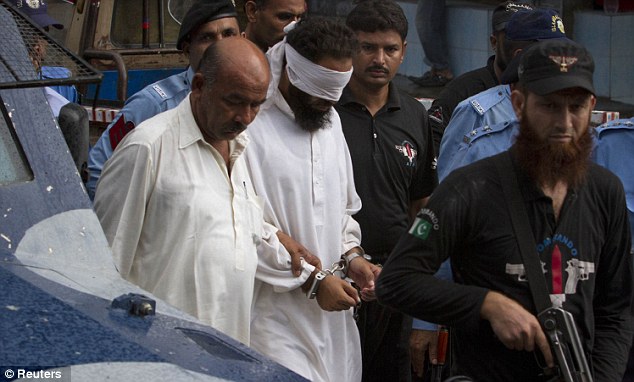
https://i.dailymail.co.uk/i/pix/2012/09/02/article-0-14CD029E000005DC-683_634x382.jpg Police escort blindfolded Muslim cleric Khalid Jadoon as he is brought before a judge at a court in Islamabad today accused of framing the young girl https://i.dailymail.co.uk/i/pix/2012/09/02/article-2197148-14CC5E85000005DC-765_634x457.jpg A Pakistani policeman reprimands Islamic cleric Hafiz Mohammed Khalid Chishti after he attempted to shout slogans upon his arrival at a court in Islamabad today Pakistani authorities have arrested a Muslim cleric for the suspected set up of a young girl, reported to have Down's Syndrome, accused of burning pages of a Koran. Religious and secular groups worldwide have protested over the detention of the young Rimsha Masih, thought to be 11-years-old, arrested after furious Muslim neighbours said she charred pages of the Islamic religious text. She may have moved a step closer to freedom after police arrested Khalid Jadoon on suspicion of planting evidence to frame the Christian girl, who was taken into custody earlier this month under the country's controversial anti-blasphemy law. Police official Munir Hussain Jafri said he was arrested after witnesses from Masih's village on the edge of the capital Islamabad claimed he had torn pages from a Koran and planted them in Masih's bag beside burned papers. ‘Witnesses complained that he had torn pages from a Koran and placed them in her bag which had burned papers,’ Jafri told Reuters. Jadoon, appeared briefly in court today before he was sent to jail for a 14-day judicial remand. A bail hearing will be held on Monday for Masih, whose case has re-focused a spotlight on Pakistan's anti-blasphemy law. Last week Pakistan's president Asif Ali Zardari said he had 'taken notice' of the reports of the arrest and asked Pakistan's interior ministry to present a report to him. There were varying reports on the girl’s age and whether she suffered from Down's Syndrome. Ullah said she was 16 while other officials have said she was either 12 or 11. Niazi said that when the girl was brought to the police station she was scared and unable to speak normally, but he did not know whether she suffered from mental health issues. Under the law, anyone who is found guilty of speaking ill of Islam and the Prophet Mohammad faces the death penalty. https://i.dailymail.co.uk/i/pix/2012/09/02/article-0-14CD4709000005DC-895_306x503.jpg Today's arrest has sparked protests from Pakistani Christians in support of Rimsha Masih Activists and human rights groups say vague terminology has led to its misuse, and that the law dangerously discriminates against the Muslim country's tiny minority groups. Critics of Pakistan's leaders say they are too worried about an extremist backlash to speak out against the law in a nation where religious conservatism is increasingly prevalent. Convictions are common, although the death sentence has never been carried out. While most convictions are thrown out on appeal, mobs have killed many people accused of blasphemy. Masih's arrest triggered an exodus of several hundred Christians from her poor village after mosques reported over their loudspeakers what the girl was alleged to have done. Christians, who make up four percent of Pakistan's population of 180 million, have been especially concerned about the blasphemy law, saying it offers them no protection. Convictions hinge on witness testimony and are often linked to vendettas, they complain. In 2009, 40 houses and a church were set ablaze by a mob of 1,000 Muslims in the town of Gojra, in Punjab province following reports of the desecration of the Koran At least seven Christians were burned to death during the attacks. Two Christian brothers accused of writing a blasphemous letter against the Prophet Mohammad were gunned down outside a court in the eastern city of Faisalabad in July of 2010. Read more: http://www.dailymail.co.uk/news/article-2197148/Muslim-cleric-arrested-suspicion-framing-Christian-girl-Down-s-Syndrome-burning-pages-Koran.html#ixzz25M1TQ1YP |
| Christianity Etc › Catholicism And Islam: Brothers-in-arms! by tidytim(op): 2:24pm On Sep 02, 2012 |
In light of the radical differences to be found between the Biblical and Koranic Gods, one wonders how the pope can work toward a new partnership with Muslims by praising their faith as being the same faith of Abraham? Could it be that the pope feels drawn to Islam more than to any other non-Christian religion, because there are significant similarities between Islam and Catholicism? To test the validity of this assumption, let us take a brief look at some significant similarities between the two religions. Autocratic Form of church Government In the first place both Islam and Catholicism have a similar autocratic form of church government where the seat of authority resides in one person: the pope in Catholicism and Muhammad in Islam. What the pope is for Catholics, Muhammad is for the Muslims. Both of them are accepted as God's representatives on earth. The pope claims to be Yeshua the Messiah (1922), and Muhammad proclaimed himself to be God's greatest prophet, superseding the Messiah himself. What this means is that both the Catholics and Muslims share the same admiration and veneration for a human leader who dictates their beliefs and practices. Importance of Good Works to Earn Salvation A second striking similarity between Islam and Catholicism is their respective understanding of the importance of good works to earn salvation. Both in Catholicism and Islam salvation is the result of a combination of grace and works. In Catholicism, God's grace is infused into believers to enable them to do the necessary good works to merit salvation on the day of judgment. On a similar vein in Islam salvation is a combination of Allah's grace and Muslims' works. On the Day of Judgment, if a Muslims good works outweigh their bad ones, and if Allah accepts their good works, then they may be forgiven of all their sins and enter into Paradise. Therefore, Islam is a religion of salvation by works because it combines man's works with Allah's grace. A few verses from the Koran suffice to exemplify the importance of works: "To those who believe and do deeds of righteousness hath Allah promised forgiveness and a great reward" (Surah 5:9). "Then those whose balance (of good deeds ) is heavy, they will be successful. But those whose balance is light, will be those who have lost their souls; in hell will they abide" (Surah 23:102-103). The Muslims' understanding of good works is largely determined by the performance of the Five Pillars of Islam. These are (1) the recitation of the creed that there is only one true God Allah and Muhammad his prophet; (2) Praying five times a day; (3) Fasting and abstaining from sexual relations during the daylight hours of the month of Ramadan; (4) Alms-giving to the poor; (5) Pilgrimage to Mecca, if possible, at least one in the life time. Similar Definition of Good Works The Roman Catholic understanding of good works is strikingly similar. Like the Muslims, the Catholics recite the Apostles' Creed in their church service. The recitation of prayers is also an important part of Catholic piety. I vividly recall my Catholic relatives reciting their prayers in the evening. They held a rosary in their hands to count the number of Ave Marias and Pater Nosters (Lord's Prayer) they had recited. Fasting also is recommended to Catholics, especially as a form of penance to expiate sins confessed to a priest. Alms-giving is also an important aspect of Catholic piety. Alms are usually given to in the forms of charitable contributions to various religious (monastic) organizations that minister to the orphans and the poor. Like the Muslims, Catholic are also encouraged to make a pilgrimage to Rome, especially during the Anno Santo, that is the Holy Year, which is now celebrated every 25 years. During the last Jubilee (Holy) Year of the year 2000, it is estimated that over 40 million Catholics made their pilgrimage to Rome, seeking remission of their sins, and indulgences for their loved ones in Purgatory. An indulgence is the remission of the temporal punishment for sins on behalf of loved ones, that can be obtained through prayers, pilgrimages, and special masses. These can shorten the duration of the punishment experienced by loved ones in purgatory. It is evident that the methods of salvation in Islam and Roman Catholicism are striking similar. Unfortunately, both religious systems ignore that salvation is a divine gift of grace (Ephesians 2:8 ) and not a human achievement. Works of obedience are not the basis of our salvation, but a loving response to the gracious provision of salvation. It is because "the love of Christ compels us" (2 Corinthians 5:14), that we observe YEHOVAH God's commandments (John 14:15). Human Intercessors A third striking doctrinal similarity between Catholicism and Islam is the intercessory role of human agents. In Catholicism, believers pray to Mary and the Saints to intercede with God on their behalf or on behalf of their loved ones. We noted earlier that the new official Catechism of the Catholic Church, acknowledges that the Muslims "venerate Jesus as a prophet, his virgin Mother they also honor, and even at times devotedly invoke." For Muslims the supreme intercessory role is reserved for Muhammad. On the final day of judgment, the Prophet will prostrate himself before Allah who, according to tradition, will say to him: "O Muhammad! raise up your head, and speak, it will be heard; and ask, it will be given; and intercede, and it will be approved," (A. N. Matthews, Translator, Mishcat-ul-Masabih, The Tibrizi Collection, 1810, vol 1, p. 607). The text continues indicating that Allah will pull out of the Hell fire those for whom Muhammad will intercede. The notion of human mediators interceding with YEHOVAH God on behalf of others, is foreign to Scripture. The Bible teaches that "There is one God, and there is one mediator between God and men, the MAN Christ Jesus" (1 Timothy 2:5). It is only Yeshua the Messiah, "who died, yes, who was raised from the dead, who is at the right hand of God, who indeed intercedes for us" (Romans 8:34). Immortality of the Soul A fourth outstanding doctrinal similarity between Catholicism and Islam, is the belief in the survival of the soul apart from the body at the moment of death. A host of heresies derive or are largely dependant upon the belief that the soul is immortal by nature and survives the body at death. For example, the belief in the intercessory role of Muhammad, Mary and the saints mentioned above, stem from the belief that at death the souls of the faithful ascend to the beatitude of Paradise, known as "The Garden" in the Koran. Similarly the beliefs that at death the souls of those whose sins are pardonable transit to purgatory while the souls of impenitent sinners are cast into eternal hell fire, are based on the belief in the immortality of the soul. Both Catholicism and Islam hold to the belief in purgatory and hell. It is downright humorous to read some of the Islamic manuals describing the process of the extraction of the soul from the body. For example, Al-Ghazali, in al-Durra al-fakhira offers this colorful description: "And when one's destiny approaches, that is, his earthly death, then four angels descend to him; the angel who pulls the soul from his right foot, the angel who pulls it from the left foot, the angel who pulls it from his right hand, and the angel who pulls it from his left hand....Then he is silent so that the his tongue is tied, while they pull the soul from the tips of his fingers. The good soul slips out like the jetting of water from a waterskin, but the profligate's spirit squeaks out like a skewer from wet wool" (cited by Jane Idleman Smith & Yvonne Yazbeck Haddad, The Islamic Understanding of Death and Resurrection, 1981, p. 37). Once the soul is extracted from the body, the angels take it to one of three places: Paradise (the Gardens), Purgatory, or Hell, depending upon Allah's judgment on the individual. Let's limit our comments to Purgatory and Hell. Purgatory and Hell The two doctrines of purgatory and hell are remarkably similar in both Catholicism and Islam. Both religions believe that the souls of penitent sinners need to go through a purgation or purification process before they can be admitted to Paradise. In Catholic teachings the suffering of purgatory is needed to pay for the temporal punishment of sins committed on this earth. In Islam the suffering is inflicted as punishment for sins of omission. Jane Smith and Yvonne Haddad, explain that in Islamic teaching the suffering of purgatory is needed, because "despite all that the pious believer may have done according to the commandments of God while on earth, he still may have committed some transgressions, however slight, or failed to do certain things that he should have done. Many of the traditions suggest punishment for single sins of omission. 'Why are you punishing me when I carry out prayer and pay alms and fast in Ramadan thus and thus?' The angel replied, 'I am punishing you because you one day passed by an oppressed person who was calling for your help, but you did not help him. One day you prayed, but you had not cleansed yourself before urinating,'" (ibid., p. 48). The last sin refers to the requirement of the Koran to rinse the sexual organs before praying -- a common practice in the Moslem world even today. The notion of believers suffering in purgatory to pay for the punishment of their sins before they are admitted into Paradise, negates the all sufficiency of the Messiah's substitutionary sacrifice to pay the penalty of our sins. Scripture clearly teaches that the Messiah "has appeared once for all at the end of the age to put away sin by the sacrifice of himself" (Hebrews 9:26; cf. 1 Corinthians 15:3). A part of the Good News of the Kingdom of YEHOVAH God is that "God showed his love for us in that while we were yet sinners Christ died for us" (Romans 5: . There is no need for penitent sinners to suffer the punishment of their sins in this present life or the next, because the Messiah's atoning sacrifice has paid the penalty of our sins.The Islamic vision of Hell is remarkably similar to the Catholic one. In fact, some writers suggest that the seven stories Inferno of Dante Alighieri, was inspired by the Islamic Hell with seven stories, each of which for a distinct class of wicked. In his thesis on the Eschatological Teachings of Islam, Wadie Farag writes: "Hardly a cruder or more barbarous picture of hell could be conceived than that depicted in the Koran and Hadith. The fires of hell are seventy times the intensity of terrestrial fire. The wicked who will suffer in it throughout eternity, will forget that they ever enjoyed any pleasure on this earth. Their tongues will drag out and men will stamp upon them. They will suffer hunger and when given food it will stick in their throats. They will be given 'hot water served to them, with iron hooks; and when it comes near their faces it will scorch them, and when it goes into their bellies will tear every thing there into pieces'" (Wadie Farag, Eschatological Teachings of Islam, 1949, pp. 74-75).18 "Scorpions as big as mules and snakes like camels torment them; stinking rivers full of vile creatures entrap them; the damned have black charred skins, huge long tongues, mouths vomiting pus and blood, entrails filled with fire; their bodies will be greatly enlarged so that they can more adequately experience the torture. All suffer by fire, although the degree of punishment differs according to one's sins. The damned attempt to escape, but each time the guardians of the Fire seize them and throw them down again" (The Islamic Understanding of Death and Resurrection, p. 87). The gruesome and barbarous description of hell, that is common to both Islam and Catholicism, may serve the cause of promoting the worship of their awful god -- a god to be feared rather than loved, but it defames the biblical YEHOVAH God who in His mercy will annihilate the evildoers at His Coming (Zechariah 14:3-4; 14:12). Conclusion The preceding comparison of some of the beliefs shared in common by Catholicism and Islam, helps us to understand why the pope is working toward a new partnership with Muslims by acknowledging the commonality between their respective faiths. We have seen that the basis for such partnership is not merely a generic view of God, but a similar autocratic form of church government, as well as similar beliefs in such areas as the role of good works in salvation, the intercessory role of human agents, the immortality of the soul, the coercive methods of evangelism, and the vision of purgatory and hell. The commonality of certain beliefs and practices between Catholicism and Islam, encourages us now to explore the past and future prophetic role these two powers. Some may feel that this lengthy discussion has detracted from the study of Islam and the Papacy in prophecy. I would disagree. A basic understanding of the two religious systems is essential to understand what we are about to study, namely, their prophetic roles as two manifestations of the Antichrist -- with the future appearance of Al-Mahdi fulfilling the role of the prophesied False Prophet of Revelation (Revelation 16:13; 19:20 and 20:10). -- Edited By John D. Keyser. |
| Christianity Etc › Murdered By The Church Of Rome by tidytim(op): 7:55pm On Sep 01, 2012 |
One of the most difficult pieces of information to find are the names of all the martyrs who were murdered by the Roman Catholic Church down through the ages. These true Christians were murdered because they loved the Scriptures, had portions of a true Bible, and/or an entire Bible. The believers were hunted down and murdered by the blood thirsty men of the Inquisition. Probably no Christian group in history was persecuted more for their beliefs than the Waldensians or the Vaudoix. This article is a tribute and memorial to those who gave their lives in the service of God in the dissemination of the true Scriptures and teaching the truth to many in spite of the Roman Catholic Inquisition and even prior to the official start of the Inquisition that many were murdered. This article is also for those who treasure and defend the modern versions which were based upon the Latin Vulgate of Jerome was the official Roman Catholic Bible. It was these who chose to distribute the true Bible based on the manuscripts which were untouched by the Gnostics and Roman Catholics. Many died trying to bring the true Scriptures to others. The King James Bible and its history are bathed in the blood of the martyr and the modern versions are bathed in those who murdered them. May the Lord open your eyes to the reality of the Bible you treat with contempt based upon what some well-paid seminary professor or pastor states. So the next time you use your modern version, look for the blood stains on its pages. |
| Christianity Etc › "Is The Pope The Vicar Of Christ?" by tidytim(op): 4:40pm On Aug 29, 2012 |
The term "vicar" comes from the Latin word vicarius, which means "instead of." In the Catholic Church, the vicar is the representative of a higher-ranking official, with all of the same authority and power that that official has. Calling the pope the "Vicar of Christ" implies that he has the same power and authority that Christ had over the church. The title is derived from Jesus' words in John 21:16-17 to Peter, "Feed my lambs . . . Take care of my sheep." This, according to Catholic reasoning, defines Peter as the Prince of the Apostles, the first pope, and fulfills the words of Jesus in Matthew 16:18-19 (calling Peter the rock upon which Jesus will build His church). For a better understanding of whether or not it is biblical to consider that a mere man is the representative of Christ, we turn to the pages of Scripture to find out what it says about Jesus' role in our lives, when He walked the earth and what He continues to do right now. The letter to the Hebrews draws the comparison between Jesus and the high priest Melchizedek (Genesis chapter 14) and contrasts this with the old Levitical priesthood. The question posed is, if perfection could be obtained by following the law, why was another priest to come (Hebrews 7:11)? The writer says, “For it is clear that our Lord descended from Judah, and in regard to that tribe Moses said nothing about priests. And what we have said is even more clear if another priest like Melchizedek appears, one who has become a priest not on the basis of a regulation as to his ancestry but on the basis of power of an indestructible life. For it is declared ‘You are a high priest forever in the order of Melchizedek.’ The former regulation is set aside because it was weak and useless (for the law made nothing perfect), and a better hope is introduced, by which we draw near to God” (Hebrews 7:14-19). This makes Jesus superior to the priests, and more importantly, the high priests. This is the key text: “Now there have been many of those priests, since death prevented them from continuing in office; but because Jesus lives forever, He has a permanent priesthood. Therefore, He is able to save completely those who come to God through Him, because He always lives to intercede for them” (Hebrews 7:23-25). This means that Jesus is our high priest forever. Since He is "holy, blameless, pure, set apart from sinners, [and] exalted above the heavens" (Hebrews 7:26), He is unlike other priests in that He "does not need to offer sacrifices day after day, first for His own sins, and then for the sins of the people. He sacrificed for their sins once and for all when He offered Himself" (Hebrews 7:27). Men are appointed by the Law, and men are weak. But the Son was appointed by the New Covenant, and He has been made perfect forever (Hebrews 7:28). The ministry of Jesus is superior to the old, and it is founded on better promises (Hebrews 8:6). The Bible says of Jesus that there is no other name by which men can be saved (Acts 4:12). There is only one mediator between God and men, and that is Jesus Christ (1 Timothy 2:5). We can now see that there is no biblical foundation for claiming to be a representative of Christ on earth. No man could do what Christ has done, or what Christ is now doing on behalf of humankind. But the title of vicar also carries with it another implication: the bearer has the same jurisdictional power of the official he represents. In Matthew 16:18, Jesus Christ is the one who says He will build His church; He never delegates this power. By claiming the title of Vicar of Christ, the reigning pope is, in fact, promising to do what Christ promised. Jesus does indeed predict a “vicar” in the sense of a “replacement” for His physical presence here on earth. However, this “vicar of Christ” is not a priest, high priest, bishop, or pope. The only biblical “Vicar of Christ” is the Holy Spirit. John 14:26 declares, “But the Counselor, the Holy Spirit, whom the Father will send in my name, will teach you all things and will remind you of everything I have said to you.” John 14:16-18 proclaims, “And I will ask the Father, and He will give you another Counselor to be with you forever — the Spirit of truth. The world cannot accept Him, because it neither sees Him nor knows Him. But you know Him, for He lives with you and will be in you. I will not leave you as orphans; I will come to you.” The Holy Spirit is Christ’s “replacement” on the earth. The Holy Spirit is our Counselor, Teacher (John 14:26), and guide into all truth (John 16:13). In claiming that the pope is the “Vicar of Christ,” the Catholic Church rejects the sufficiency and supremacy of Christ’s priesthood, and grants to the pope roles that Christ Himself declared would belong to the Holy Spirit. It is therefore blasphemy to ascribe to the pope the title of “Vicar of Christ.” http://www.gotquestions.org/vicar-of-Christ.html |
| Christianity Etc › Re: If Eternal Torment Is True, Then Where Is This Plain Teaching In The Tenach by tidytim: 3:29pm On Aug 28, 2012 |
Ihedinobi: ............chaos will reign. People won't change in their moral character because they're in hell or heaven. Wherever they are in eternity, there they'll suffer no more from restraint. Their appetites will either rule them or they will have their appetites under perfect government, the perfect government of Love.You arguments are all falling apart , because they are mostly not based on the inerrant scripture. |
| Christianity Etc › Re: If Eternal Torment Is True, Then Where Is This Plain Teaching In The Tenach by tidytim: 3:28pm On Aug 28, 2012 |
Ihedinobi: .........In them, as he obeys the Lord with however little understanding he has, he learns even more concretely what the Lord means by what He says. This means that as the child of God carries on his life in the understanding that hellfire is a terrible eternal condition, for instance, one day perhaps as he converses with an unbeliever, he will find it necessary to ask his Father why such a beautiful (at least, in potential) person should suffer for eternity in raging, unquenchable flames. In his quest, he will search the Scriptures and probably find that there appears to be conflict in their teachings. He will discuss these conflicts with other brothers and the Lord. He will come finally to knowing the Lord's meaning as He reflects it to him in some point of obedience. Mental exercise is involved as are emotional and physical (by which I mean exercise of will) exercises. The Christian learns by doing.Twisted theology not backed in any form or shape by scripture. |
| Christianity Etc › Re: The Roots Of Christian Zionism: How Scofield Sowed Seeds Of Apostasy - 1 Hour by tidytim(op): 7:00pm On Aug 27, 2012 |
This is a very very sad video. This is what Christian Zionists are supporting, WAR and OPPRESSION. Please take time to watch this over a coffee and you will never again be a Christian Zionist. |
| Christianity Etc › The Roots Of Christian Zionism: How Scofield Sowed Seeds Of Apostasy - 1 Hour by tidytim(op): 6:58pm On Aug 27, 2012 |
| Christianity Etc › Re: Should Christians Support Anti-christ 'israel' by tidytim: 5:45pm On Aug 26, 2012 |
. |
| Christianity Etc › Re: Should Christians Support Anti-christ 'israel' by tidytim: 5:45pm On Aug 26, 2012 |
. |
| Christianity Etc › Dispensational Delusions by tidytim(op): 5:05pm On Aug 26, 2012*. Modified: 6:09pm On Aug 26, 2012 |
You may be unaware of this, but the vast majority of Christian authors, radio hosts and television producers who talk about "the end times" have accepted a unique system of prophetic interpretation called "Dispensationalism." Whether these teachers themselves even recognize this not-so-small detail or not, one thing is obvious: they usually place the Jewish people at the epicenter of events predicted to strike planet Earth before the end of the world. Unfortunately, the system of Dispensationalism itself has major flaws. Not only that, but it also includes some surprisingly anti-Jewish elements, as you are about to see. Generally speaking, Dispensationalism teaches that God has worked throughout fallen human history in distinct phases, epochs, or "dispensations." In Old Testament times, He worked through "Israel" and required Jews to keep "the law," whereas in these New Testament times He operates through "the Church" and proclaims "salvation by grace"—that is, until an event called "the Rapture" whisks "the Church" up to heaven. Then all hell will break loose on earth. Then "the seven years of tribulation" will begin. Then an infamous Antichrist will gain control of the world. Then Antichrist will marshal his forces against the Jews. This scenario is now being taught around the world, on TV, radio, in books and articles, and on the Internet; yet that one not-so-small detail mentioned above should be made plain: these teachings are all part of the system of Dispensationalism. It's true that Dispensationalists themselves are mostly pro-Israel, and that yes, one of their cardinal teachings is that God will defend Jews at Armageddon. But when we delve deeper, we discover that only a small portion will be protected. Shockingly, two thirds of Israelis will be slaughtered first in a Holocaust II. Obviously, this isn't Good News for Jewish people at all. The Internet encyclopedia, Wikipedia, defines Dispensationalism this way: Dispensationalism is a Protestant evangelical tradition and theology based on a biblical hermeneutic that sees a series of chronologically successive "dispensations" or periods in history in which God relates to human beings in different ways under different Biblical covenants. As a system dispensationalism is rooted in the writings of John Nelson Darby and the Brethren Movement.The theology of dispensationalism consists of a distinctive eschatological "end times" perspective, as all dispensationalists hold to premillennialism and most hold to a pretribulation rapture. Dispensationalists believe that the nation of Israel is distinct from the Church…" (1) Wikipedia is 100% correct in reporting that "Dispensationalism" views "the nation of Israel" as "distinct from the Church" and that its prophetic system includes "a distinctive eschatological 'end times' perspective" usually accompanied by belief in "a pretribulation rapture." Yet one sticky problem rarely mentioned is that (as noted above), most dispensationalists also believe that after the "rapture" occurs, sinister forces will target millions of non-raptured Jews during the Tribulation, that most Jews will suffer horribly, and that millions will be annihilated in a nightmarish Jewish bloodbath before the Second Coming of Christ. Prominent Dispensationalist John Walvoord frankly confessed that during the Tribulation, "two thirds of the children of Israel in the land will perish" (2). Indeed, this is a Dispensationalist doctrine.Though rarely stressed publicly, such a horrendous Jewish forecast might appropriately be called, "Dispensationism's dirty secret."Personally, I don't buy it, and it is the purpose of this article to dismantle some of Dispensationalism's deceptive errors. First of all, the notion that God saved Old Testament Jews by law, but now saves New Testament Christians by grace, is not only subtly anti-Jewish itself, but it's entirely unbiblical. Grace began with the fall of Adam and the first entrance of sin (see Romans 5:20b), or humanity would have been wiped out immediately. Before the flood, "Noah found grace in the eyes of the Lord" (Genesis 6:8, emphasis added). Throughout Israel's checkered history, her people found grace too. Even before God wrote the Ten Commandments on Mount Sinai, the Israelites left Egypt safely because of the blood of slain lambs sprinkled on their doors (see Exodus 12) typifying their Messiah's grace. The warm blood of slain animals sprinkled by Jewish High Priests above the Ten Commandments inside the Sanctuary on the Day of Atonement also proclaimed salvation through faith in Jesus Christ alone, rather than through the law. Indeed, even before Israel existed as a nation, God Almighty "preached before the gospel unto Abraham" (Galatians 3:8, emphasis added) centered in Calvary. On the other hand, there are plenty of statements about obeying the law in the New Testament (read Romans 2:25,26; 3:31; 7:12; 8:4; Ephesians 6:1-3; James 2:10-12). The truth is that throughout fallen human history God has used "the law" to show sinners their sins (both Jews and Gentiles) to create a need for faith and grace (see Romans 5:19-20; Galatians 3:24). Thus it is not "Old Testament Law Replaced by New Testament Grace," but rather "Law Creating the Need for Grace" throughout. In Galatians 3:11, Paul clarified plainly that[b] "no man is justified by the law in the sight of God," and he quotes the Old Testament to prove it.[/b] Ultimately, all grace is centered in Jesus Christ, and whether people lived in Old Testament times when His sacrifice was foreshadowed by slain lambs, or in New Testament times after His sacrifice was realized at Calvary, as the Master Himself stated, "No man comes to the Father but by Me" (John 14:6, emphasis added)."No man" means none, either Jew or Greek. In other words, everyone who reaches heaven will arrive there solely because of Jesus Christ and His sacrifice-that is, by His grace. Thus when Dispensationalists teach that Old Testament Jews achieved salvation in any way through the law, or that they were denied the gospel, whether they realize it or not, they are teaching a subtly anti-Jewish false doctrine. The truth is that God loved Old Testament Jews just as much as He loves New Testament Christians, and both groups have always been offered one hope through one Saviour. And this one Savior still loves both groups today. Second, Dispensationalism's distinctive separation between Israel and the Church is fictitious. On the Jewish Day of Pentecost, 3,000 Jews were baptized through the preaching of Peter and "added to the church" (Acts 2:41,47). If you asked Peter and the disciples if they were part of "Israel" or "the Church," what would they say? The answer is obvious. They were both! The earliest Christian "church" itself was almost entirely a Jewish Church. Then Gentiles joined the ranks. Third: the Rapture. Dispensationalism's end-time scenario begins with Christians being "caught up" (1 Thessalonians 4:17) to meet Jesus in the air, which Dispensationalists interpret as a silent, secretive event occurring seven years before the end. Wrong again. A careful reading of 1 Thessalonians 4:16 and 17 together reveals that true believers will be "caught up" (verse 17) when Jesus Christ literally descends from heaven with a mighty "shout," a loud "voice," and with "the trumpet of God"—in other words, at His cataclysmic second coming. There's nothing silent or secret about it! As the Wikipedia article correctly stated, the pre-tribulation Rapture doctrine is actually "rooted" in the teachings of 19th-century theologian "John Nelson Darby"; yet prior to Darby, it was virtually unknown for 1800 years. Fourth: the seven-year tribulation myth. Amazingly, there is no verse in the entire Bible that specifically teaches a "seven year tribulation" at all. Check any concordance. It's just not there. Daniel 9:27 is most often quoted to support the "Seven-Year Trib Theory," yet the verse itself says nothing of the sort. In fact, the vast majority of older Christian commentaries—such as[b] Matthew Henry, Adam Clarke, and Jamieson, Faucett & Brown—placed Daniel 9:27 during the time of Jesus Himself who "confirm[ed] the [New] covenant" and "caused the [Jewish] sacrifice[s] to cease" by His death on the cross.[/b] Fifth: a bloody end-time slaughter of two thirds of the Jewish people living in Israel. Such a horrendous teaching is based almost entirely on one verse—Zechariah 13:8—yet the New Testament places the previous verse (verse 7) squarely in the time of Christ (compare with Matthew 26:31). There is no prediction in the book of Revelation about the annihilation of two thirds of all Jews living in Israel by Antichrist before our Lord's visible return, nor does it specifically target Israelis for slaughter in the least. In conclusion, we must pay greater attention to the Master's warning, "take heed that no man deceive you" (Matthew 24:4)— especially when it comes to our Jewish friends, and to interpretations of prophecy. In these turbulent days of Dispensationalist Delusions—assigning "the law" to Old Testament Jews alone and not to Christians, the distinction between Israel and the Church, the Rapture, 7-year Tribulation, and a supposed end-time slaughter of two thirds of all Israelis—let's do all we can to share "the everlasting gospel" (Revelation 14:6) with everyone, both Jew and Gentile, before the Second Coming. Don't be fooled by false prophecies. Let's stick to solid Bible truth. |
| Christianity Etc › Re: Judaizers Preach A Gospel Of Racism And Many Are Strongly Deceived By It by tidytim(op): 3:21pm On Aug 26, 2012 |
| Christianity Etc › Re: Judaizers Preach A Gospel Of Racism And Many Are Strongly Deceived By It by tidytim(op): 12:22pm On Aug 26, 2012 |
What a Shock the Truth Is to Many! Now, some of you, at this moment, considering these scriptures, may be in a state of shock. This isn't at all what you have been taught by the false teachers and by the biggest names in the Christian establishment, is it? This probably isn't what your pastor teaches from the pulpit, either. But remember, most of today's pastors learned these lies, these Jewish fables, from the "theologians" at their cemeteries; oops, I mean "seminaries." Regrettably, many sincere Christians have been lied to for so long, they have ingested the spiritual poison of Zionist deception for so very long, that they actually prefer these lies over the plain, unvarnished truth of Scripture. Beware of Jewish Fables Still just can't believe that God does not favor one physical race over another? Remember, the Apostle Paul duly warned us to not give "heed to Jewish fables, and commandments of men, that turn the truth." (Titus 1:14) So, regarding the subject of "Who are God's Chosen?," let us once again leave the realm of Jewish fables and move straight to the reality of God's inerrant Word. Peter, in his first epistle, wrote to the Christians "scattered throughout Pontus, Galatia, Cappadaocia, Asia, and Bithynia" (I Peter 1:1). He reminded Christians that we are "born again" of incorruptible seed (yes—through faith we are Abraham's seed, as the apostle Paul also explained in Galatians 3:26-29). Peter declared that because of our trust in Christ Jesus, Christian believers are God's chosen and are a holy nation. "But ye are a chosen generation, a royal priesthood, an holy nation, a peculiar people...the people of God..." (I Peter 2:9-10) Christians A Holy Nation Wow! Christians, said Peter, born again in Christ Jesus, are His "chosen." We are God's chosen! Peter says, too, that as Christians, we are a "holy nation." Elsewhere in scripture, Christians are identified as the "Israel of God." By authority of the Word of God, Peter says we are "a peculiar people...the people of God." Now, the Judaizers and their Zionist cohorts claim that it is the physical nation of Israel, a Jewish theocracy inhabited by a Christ-rejecting people, that is a holy nation. They also insist that Abraham is the father only of the physical nation-state of Israel and has no relationship to any other nation. How deceptively wrong they are! Again, God's Word puts the lie to their racist imaginings. In[b] Genesis 17:1-4[/b], God tells Abraham: I am the Almighty God...behold, my covenant is with thee, And thou shalt be a father of many nations. So Abraham is father of many nations, not just one! But that's not all. To those racist teachers who continue to stubbornly resist God by claiming that only a physical nation of Israel and the Jews have a corner on God, I suggest they listen to what Jesus said in Matthew 21 about the prophetic fate of the Jews and the of the physical nation of Israel. After first warning that "He will miserably destroy those wicked men" who reject Him as Lord (Matthew 21:33-43), Jesus flatly stated: Therefore say I unto you, The kingdom of God shall be taken from you, and given to a nation bringing forth the fruits thereof. Read that again: Jesus declared to the Jews, who arrogantly teach even today that the people of Israel will rule over an earthly kingdom forever, that, in fact, "The kingdom of God shall be taken from you..." Now ask yourself, have the Judaizers, the Falwells, LaHayes, and so forth ever told you of this amazing pronouncement by our Lord Jesus? Ok, I ask you, then, who is telling the truth? Whom will you believe? Will you believe Jesus, who told the Jews He was taking the Kingdom away from them and giving it to a nation bringing forth fruits? Will you believe Peter, who says that Christians, not Jews, are God's Chosen and that Christians, not Jews, are the "people of God?" Or, will you stubbornly reject the scriptures and throw your destiny in with that of the Judaizers, who resist God's Word and who side with God's enemies? Wall of Partition Broken Down What is wonderful is that God, in His incomparable love, has given men and women of every race on earth an opportunity to be His children. Regrettably, the Judaizers within the Christian fold, prodded along in their misdeeds by Jewish supremacists, seek to erect a wall of partition between the races. They put the Jews on one side of this wall of partition and the Gentiles on the other. They teach segregation of the two races and claim racial and spiritual superiority for the Jews. But this is an affront to God, for He has broken down the wall of partition. God is no respecter of persons. A Gentile who becomes a Christian is no longer a Gentile, a Jew no longer a Jew. Whosoever believeth in Him is added to God's heavenly family and is made a citizen of the commonwealth of Israel: Wherefore remember, that ye being in time past Gentiles in the flesh...being aliens from the commonwealth of Israel, and strangers from the covenants of promise, having no hope without God... But now in Christ Jesus ye who sometimes were far off are made nigh by the blood of Christ. (Ephesians 2:11-13) What a lover of all mankind is our Saviour, Jesus! Once, before they were born again, Christians were of two separate types in the flesh, "Gentiles and Jews," But no longer. The blood of Jesus has changed us through faith in Him, so that all who believe in Christ Jesus, all who are born again, are now one. We are all of the commonwealth of Israel. We are together the Israel of God, the People of God. The wall between Jews and Gentiles is broken down. Good News for Jews and Gentiles Yes, the wall between Jews and Gentiles is broken down. Jews and Gentiles alike who have put on Christ Jesus are among the ranks of God's Chosen, Abraham's seed, heirs to the promise: For he is our peace, who hath made both one, and hath broken down the middle wall of partition between us... for to make in himself of twain one new man... And that he might reconcile both unto God in one body by the Cross... (Ephesians 2:14-16) This is good news for both Gentiles and Jews. God is a God who honors people who have faith in Christ Jesus. He is not a respecter of racial distinctions. Christians who once were Jews or Gentiles in times past are now assured of the unity, the oneness, of God's holy and united spiritual nation, Israel: Now therefore ye are no more strangers and foreigners, but fellowcitizens with the saints, and of the household of God...(Ephesians 2:19) Praise His Holy Name! God is not a racist, nor can Christians any longer tolerate segregation of the two races, Jew and Gentile. |