Trutharena's Posts
Nairaland Forum › Trutharena's Profile › Trutharena's Posts
1 2 3 4 5 6 7 8 ... 180 181 182 183 184 185 186 187 188 (of 189 pages)
 Politics › Re: Vanguardnews: Why North Lost Its Industries, Wealth - Sanusi by trutharena(op): 3:17pm On Sep 11, 2020 |
Racoon:Everything started going South for Nigeria since the first coup which the greedy Ibos carried out by killing the leaders of each region. The aftermath affected all the regions negatively including the Northern, Western, Mid-West, and the Eastern Region too. The pace at which the regions are moving then would have seen Nigeria better than it currently is! 3 Likes |
| Politics › Re: Vanguardnews: Why North Lost Its Industries, Wealth - Sanusi by trutharena(op): 2:49pm On Sep 11, 2020 |
azmanaty02:Not only groundnuts, industries too. Read the post, he mentioned the industries. 3 Likes |
| Politics › Vanguardnews: Why North Lost Its Industries, Wealth - Sanusi by trutharena(op): 2:46pm On Sep 11, 2020 |
THE industrial edge of the North is long gone! It’s like an earthquake struck and wiped away all the blossoming industries that used to dot the length and breadth of the region and produced enormous wealth for the natives.Read more at: https://www.vanguardngr.com/2020/09/why-north-lost-its-industries-wealth-%E2%80%95-sanusi-others/ CC: Mynd44 Lalasticala OAM4J |
| Business › Re: First Bank MD, Adeduntan Bags Forbes Award: Buhari Celebrates by trutharena: 4:56am On Sep 11, 2020 |
Forbes Best of Africa! Congratulations Omoluabi! |
| Literature › Re: Faridah Abike-Iyimide Secures MacMillan Million-Dollar Book Deal In USA by trutharena: 3:59am On Sep 11, 2020*. Modified: 5:14am On Sep 11, 2020 |
This is huge. Congratulations Abike! |
| Politics › Thisday: WBAF Appoints Freeman Osonuga CEO Of Adloyaltybn As Senator by trutharena(op): 2:29pm On Sep 09, 2020 |
The World Business Angels Investment Forum (WBAF), an affiliated partner of the G20 Global Partnership for Financial Inclusion (GPFI), has appointed Dr. Freeman Osonuga, Chief Executive Officer of Adloyalty Business Network (AdloyaltyBN) as Senator representing Nigeria.Source: https://www.thisdaylive.com/index.php/2020/09/08/wbaf-appoints-freeman-osonuga-ceo-of-adloyaltybn-as-senator/ CC: Mynd44 OAM4J |
| Politics › Re: Garus Gololo: South-West’s Stand On Amotekun Could Cost Them 2023 Presidency by trutharena: 10:48pm On Sep 08, 2020 |
LaboPolitics:All this super story dosen't stop the fact that Zik was not elected through any ballot and no Nigeria voted for him. He is just a beneficiary of circumstance which explained why he was just a CEREMONIAL president. Now Ojuku, tell me ONE Igbo man that have been elected through the ballot in Nigeria history! 11 Likes |
| Politics › Re: Buhari: Trump Accused Me Of Killing Christians by trutharena: 10:44pm On Sep 08, 2020 |
When will Trump stop killing blacks too in America? Buhari should have asked him that too! 13 Likes 2 Shares |
| Politics › Re: Garus Gololo: South-West’s Stand On Amotekun Could Cost Them 2023 Presidency by trutharena: 10:12pm On Sep 08, 2020 |
LaboPolitics:Stop saying nonsense. You yourself said they both came together to form a coalition and not neccessary elected through the ballot like presidential candidates. If Awo had form the government with Balewa NPC, he would have been a ceremonial president too and that is not like the electorate voted him to take the mantle of leadership. Zik is just a ceremonial president that wasn't elected through the ballot. Mention one Ibo man that have been elected through the ballot by voters or shutup and stop saying nonsense. 19 Likes |
| Politics › Re: Garus Gololo: South-West’s Stand On Amotekun Could Cost Them 2023 Presidency by trutharena: 9:58pm On Sep 08, 2020 |
LaboPolitics:You are olodo rabata. Was Zik appointed through the ballot? He was only given the ceremonial title of Executive president because Nigeria became a Republic in 1963 after we severed ties with the Birtish queen. The true controller of the government is Tafawa Balewa. 4 Likes |
| Politics › Re: Garus Gololo: South-West’s Stand On Amotekun Could Cost Them 2023 Presidency by trutharena: 9:56pm On Sep 08, 2020 |
LaboPolitics:Mention ONE IGBO that was successfully ELECTED to preside over the affair of Nigerians in the history of Nigeria since 1900. Keywords here- elected, presided. 8 Likes |
| Politics › Re: Garus Gololo: South-West’s Stand On Amotekun Could Cost Them 2023 Presidency by trutharena: 9:45pm On Sep 08, 2020 |
LaboPolitics:Stop saying nonsense. Abiola was also elected president with vote cutting across both North and South except the Sad East. Even if his election was annuled, it dosen't stop the fact that he was elected president in a free and fair election. That tested the Yoruba acceptance in the nation. I dare you Igbos to contest against a Yoruba man in PDP and let's see your acceptance compared to the Yorubas. Obasanjo was voted by Yoruba with bloc vote in 2003 too. You better go back to study history more omo Igbo. 35 Likes 3 Shares |
| Business › Shoprite Announces Plan To Leave Kenya by trutharena(op): 9:43pm On Sep 08, 2020 |
South Africa’s supermarket group, Shoprite Holdings, has announced plans to sell or close its remaining two stores in Kenya by the end of December.https://www.premiumtimesng.com/business/413278-shoprite-announces-plan-to-leave-kenya.html 5 Likes 1 Share
|
| Politics › Re: Garus Gololo: South-West’s Stand On Amotekun Could Cost Them 2023 Presidency by trutharena: 9:32pm On Sep 08, 2020 |
TheVultureGrill:Potopoto Republic! 22 Likes |
| Politics › Re: Garus Gololo: South-West’s Stand On Amotekun Could Cost Them 2023 Presidency by trutharena: 9:22pm On Sep 08, 2020 |
LaboPolitics:Lol, you don't know history and that is sad. Yoruba have been elected thrice through the ballot, a feat the Igbos have NEVER achieved. Also, check every election since 1979, the Yorubas have ALWAYS given BLOC vote if the Presidential candidate is a Yoruba man. Check 1979, 1983, 1993, 1999, and 2003 election results to validate my claim. However the Igbos are confused entity that have consistently given the Fulanis more chance against their own because of blind loyalty to a party. You did that for Zik, Ojukwu, and etc. The Yorubas only have divided vote when the presidential candidate is from another tribe. Check the election results! 60 Likes 3 Shares |
| Politics › Nigerian Startup Launches Field Tracking Application For Consumer Goods by trutharena(op): 9:03pm On Sep 08, 2020 |
Nigerian startup Seta Field Services has launched a shelf-execution tracking application that helps consumer goods companies measure share-of-shelf, distribution and presence across multiple outlets in multiple locations. Founded in January 2019, Seta Field Services measures distribution of products, people and objects on behalf of consumer goods companies. Its initial product is FETA, which stands for “field execution tracking application”, which measures share-of-shelf of products in unstructured markets such as Nigeria’s. FETA counts the number of times a product appears in a photo or video, and compares it with the number of times other selected products appear, hence providing share-of-shelf, presence, and distribution figures when a sales representative, store owner or independent data collector takes an image of a shelf within a store. “The platform employs artificial intelligence in measuring and tracking share-of-shelf of a product versus full category. It can aggregate this data across several locations or products,” said Aito Osemegbe, who co-founded Seta Field Services alongside Christianah Ajayi. Companies need to know certain market metrics, such as market share and share-of-shelf, to make informed business discussions, Osemegbe said, and though some international companies provide this data they are not suited to the unstructured nature of Nigeria’s markets. “Also, they haven’t been able to drill down to store-by-store data, providing raw actionable insights on what happens on the customer’s shelves. The unique offering FETA brings is reliability and detail of data,” Osemegbe said. So far, Seta has run a six-month pilot of FETA with the merchandising team of Flour Mills of Nigeria, which came to an end in March as a result of COVID-19. “The results from that pilot helped us to increase FETA’s recognition capacity from 76 per cent to 92 per cent,” said Osemegbe. “We currently provide services to TSQ Alayo, a consumer goods distribution company in Ogun State. The revenues have helped close out 20 per cent of our app development expenses. Operations have been stunted because of COVID, but the plan is to gain a minimum of five paying customers before mid-2021.” The self-funded startup is also looking for funding to improve FETA and help it scale. “FETA has what it takes to concurrently serve thousands of companies, and is crafted in such a way that each company enjoys finer insights and data the more companies are on board,” said Osemegbe. “We also need funding to explore other capabilities of the FETA app, around facial recognition in selected public places and object recognition. The applications include monitoring and tracking, and auto billing, people in selected locations, vehicles along selected roads, while staying within allowance of local and international laws.” Source: https://disrupt-africa.com/2020/09/nigerian-startup-launches-field-tracking-application-for-consumer-goods/ |
| Politics › Over 8,000 Anambra Citizens Receive N5,000 Monthly From FG Cash Transfer Program by trutharena(op): 6:31pm On Sep 08, 2020*. Modified: 6:54pm On Sep 08, 2020 |
The Anambra State Commissioner for Economic Planning, Budget and Development Partners, Mr Mark Okoye, said a total of 8,313 persons in Anambra State receive the sum of 5,000 naira monthly from the Federal Government Conditional Cash Transfer (CCT) programme in the state. The commissioner, who disclosed this on Tuesday during a one-day stakeholders forum to share State Social Register (SSR) data with relevant ministries, agencies and parastatals (MDAs), said the beneficiaries were the poor and vulnerable households in the society. Okoye, while noting that 25,070 poor and vulnerable households have equally been enrolled to benefit from the CCT programme in the ‘near future,’ added that Anambra State has a total of 99,463 poor and vulnerable households and 433,188 individuals in its State Social Register (SSR). He explained that the state was first to commence implementation of the Federal Government assisted Social Investment Programme (SIP) in the South-east geopolitical zone which began operation in 2017 across six pilot local government areas selected from the three senatorial zones and upon completion, Phase 2 took off in 15 council areas. In his speech, the Coordinator, Anambra State Operations Coordinating Unit (SOCU), Bede Okoli, explained that the agency was established in 2016 as part of the requirements for the state to key into the Federal Government’s National Social-Net programme (NASSP), adding that the data generated by SSR through community based targeting process were useful and accessible by interested persons and institutions upon application. In their separate contribution, the member representing Anaocha 1 constituency at Anambra State House of Assembly, Honorable Ebelechukwu Ejiofor, and the state acting Statistician-General, Mr Paul Emeka, commended the state government on data generation via SSR, which they said would help in effective planning and execution of projects by both the state government, development partners and others. Source: https://tribuneonlineng.com/over-8000-anambra-citizens-receive-n5000-monthly-from-fg-cash-transfer-programme-%e2%80%95commissioner/ |
| Autos › Re: Participants Of The Army War College Of Nigeria Tour INNOSON Group(photos) by trutharena: 10:09pm On Aug 30, 2020 |
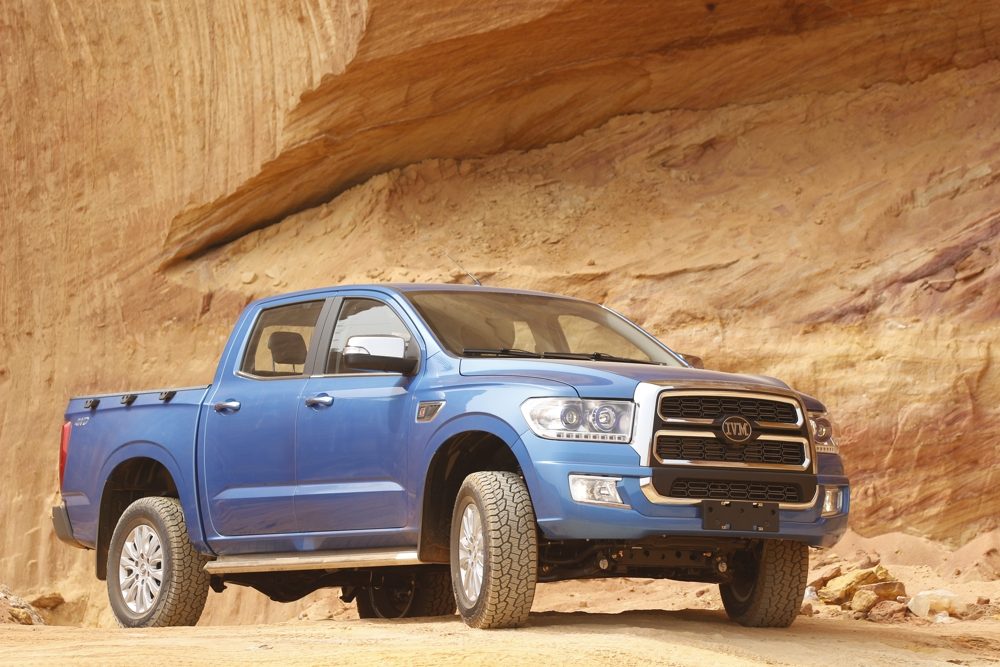
proeast:Stop saying nonesense. At least we now know Innoson is assembling 100% Chinese cars by rebranding the logo. 2 Likes |
| Autos › Re: Participants Of The Army War College Of Nigeria Tour INNOSON Group(photos) by trutharena: 10:00pm On Aug 30, 2020 |
proeast:Stop hating on them. Everyone is not local like you lots and class matters a lot in business. You see the report from Businessday and other news medium but you chose to be confined to your ignorance of pictures pictures everything like local brain. 2 Likes
|
| Autos › Re: Participants Of The Army War College Of Nigeria Tour INNOSON Group(photos) by trutharena: 9:53pm On Aug 30, 2020 |
proeast:Are you blind to see the below? Oluwatobi is among the most influential people in the Nigerian Auto Industry, winning so many local and international awards and recognitions for his contributions to the automotive industry in Nigeria and Africa. He was listed by Forbes as one of the most promising young entrepreneurs in Africa for 2018. |
| Autos › Re: Participants Of The Army War College Of Nigeria Tour INNOSON Group(photos) by trutharena: 9:45pm On Aug 30, 2020 |
proeast:Stop saying nonsense. The main problem of you guys is that you only believe what you see. If I tell you Glo is the second richest man in Nigeria, you will still tell me to go and snap his factory to validate. Most frontline media carried the businessday news, so I should ignore them and instead believe a ignorant Ibo like you? 1 Like |
| Autos › Re: Participants Of The Army War College Of Nigeria Tour INNOSON Group(photos) by trutharena: 9:43pm On Aug 30, 2020 |
[quote author=proeast post=93404136][/quote]Another member of Nord team. These guys profile showed they are not here to play. —Shola Adeniyi Director Shola is a first-class graduate of Mechanical Engineering, University College London. He is an expert in financial analysis, specializing in the fixed income securities market. He has worked in several financial institutions, most notably are Barclays Capital London, in the credit trading department as an European High Yield credit trader and at BGC Partners London as Sub Saharan Africa Fixed Income and Currency market dealer. He is currently the CEO of Krosk Parners Limited, an inter-dealer fixed income broker in Nigeria. —Samson Esemuede, CFA Director Samson is a first-class graduate of Biochemistry, University College London. He is an experienced investment banker with speciality in Equities Sales and Trading. He has risen through the ranks in his career – as a Vice President covering Emerging Markets Equity desk at Deutsche Bank, London, and was responsible for Eastern European, Middle East and Africa, Emerging Markets Equity at Citi Bank, London. He is now currently the CEO of Zrosk Investment Managers, Nigeria. —Shola Bola-Audu Director Shola Bola-Audu has over a decade experience in the financial service sector, she has successfully managed and grown portfolio of reputable High Net-worth Individuals with turnover in tens of billons of Naira. Shola is an expert in Portfolio Management/ diversification and Fixed Income trading. She is currently the Head, Institutional Sales at Cordros Securities. Shola is an alumni (MBA) of prestigious Lagos Business School (Pan Atlantic University) where she bagged her MBA, she has a certificate from the IESE Business School Spain after concluding her Pan African EMBA Module. She is an Alumni of the New York Institute of Finance. She holds a BSc. in Computer Science with Mathematics option, Kogi State University, and is an Associate of the Nigerian Institute of Management (AMIN). |
| Autos › Re: Participants Of The Army War College Of Nigeria Tour INNOSON Group(photos) by trutharena: 9:41pm On Aug 30, 2020 |
proeast:Do you know the Nord guy worked with Mercedes and founded Jetvan ? These guys are bringing innovation to the game, just watch them in the coming year. —Ajayi Joshua Oluwatobi MBA FICA Chairman/CEO Oluwatobi is a widely creative and astute entrepreneur, he is the founder of Nord Automobiles Limited, one of the first Nigerian automobile brands and Africa’s premier automobile corporation. He started his career at Mercedes-Benz Nigeria, growing very fast to become the head of division (vans) and later co-founded Jetvan, an authorised dealer of Mercedes-Benz. Oluwatobi is among the most influential people in the Nigerian Auto Industry, winning so many local and international awards and recognitions for his contributions to the automotive industry in Nigeria and Africa. He was listed by Forbes as one of the most promising young entrepreneurs in Africa for 2018. He is an alumni of prestigious Lagos Business School (Pan Atlantic University) where he bagged his MBA, he has a certificate from the IESE Business School Spain after concluding his Pan African EMBA Module. He holds a B.Agric in Soil Science and Farm Mechanization, Olabisi Onabanjo University, Ogun state. He is a Fellow of the Institute of Credit Administrators. |
| Autos › Re: Participants Of The Army War College Of Nigeria Tour INNOSON Group(photos) by trutharena: 9:37pm On Aug 30, 2020 |
proeast:Stop saying nonsense. Enough proof is already on this thread to show Innoson is just rebadging Chinese cars. ALL his car brand are copied even down to the rims. |
| Autos › Re: Participants Of The Army War College Of Nigeria Tour INNOSON Group(photos) by trutharena: 9:32pm On Aug 30, 2020 |
proeast:The guy is right. This is what Theguardian said about Nord plant in Epe few days ago. With a mission to roll out a wholy Nigerian model of cars, for Nigerians and assembled by Nigerians, the current Nord assembly plant is located on a 2,100 square meters of land space in Sangotedo in Lagos, while and another one recently acquired and occupying 3,400 square meters of land at Epe is currently undergoing construction for the assembly complex in readiness to meet the growing automotive market and increasing customer demand. https://businessday.ng/transport/article/nord-assembly-plant-opens-to-meet-nigerias-automotive-demand/amp/ |
| Autos › Re: Participants Of The Army War College Of Nigeria Tour INNOSON Group(photos) by trutharena: 5:18pm On Aug 30, 2020 |
Okay! |
| Autos › Re: Participants Of The Army War College Of Nigeria Tour INNOSON Group(photos) by trutharena: 5:04pm On Aug 30, 2020 |
ProfAmaben:Ogade stop wailing here. Why should I go to Nnewi to see Innoson assembling plant when I can see the actual Chinese brand on the internet? What is the sense in that? 3 Likes |
| Autos › Re: Participants Of The Army War College Of Nigeria Tour INNOSON Group(photos) by trutharena: 3:27pm On Aug 30, 2020 |
Iegendhero:Innoson copied the Chinese cars down to the rims. This is 100% rebagging 24 Likes 2 Shares |
| Autos › Re: Participants Of The Army War College Of Nigeria Tour INNOSON Group(photos) by trutharena: 3:26pm On Aug 30, 2020 |
Iegendhero:Mehn! 18 Likes 1 Share |
| Travel › Re: What Bourdillon, Ikoyi Looks Like In 2020 (pics, Video) by trutharena: 8:44pm On Aug 28, 2020 |
ludoliu:You are welcome. 1 Like |
| Politics › Re: Idia Ize-Iyamu Takes APC Campaign To The Streets Of Benin (Photos) by trutharena: 8:40pm On Aug 28, 2020 |
Nice one. Ize Iyamu for the win. Edo no be Abia! 62 Likes 4 Shares |
| Travel › Re: What Bourdillon, Ikoyi Looks Like In 2020 (pics, Video) by trutharena: 3:49pm On Aug 27, 2020 |
crackhaus:Forget all that. How exactly is the video below different from the developed countries? What do you imply by development if the video below does not fit into your development criteria. It is not your own to say about Eko atlantic being a white elephant project. Let the investors complete it and then we can know if it is actually white or black elephant. https://www.youtube.com/watch?v=IPGp8se48mw 20 Likes |




1 2 3 4 5 6 7 8 ... 180 181 182 183 184 185 186 187 188 (of 189 pages)