1LRNZH's Posts
Nairaland Forum › 1LRNZH's Profile › 1LRNZH's Posts
 Politics › WATCH: Amaechi Dance Shoki With Davido As He Declares Jonathan A Goner by 1LRNZH(op): 7:13am On Feb 01, 2015 Politics › WATCH: Amaechi Dance Shoki With Davido As He Declares Jonathan A Goner by 1LRNZH(op): 7:13am On Feb 01, 2015 |
| Politics › Segun Adewale Allegedly Fires Shots Into APC Campaign Office by 1LRNZH(op): 6:58am On Feb 01, 2015 |
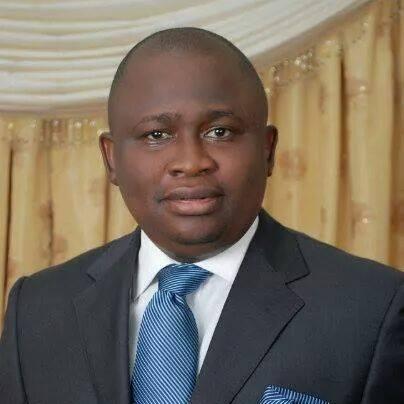
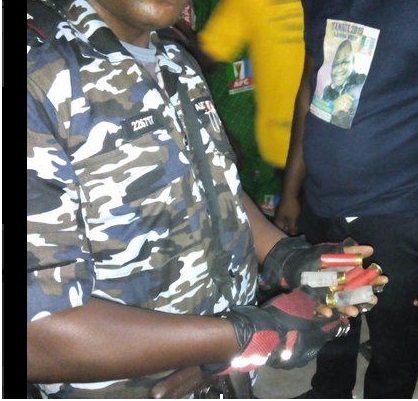
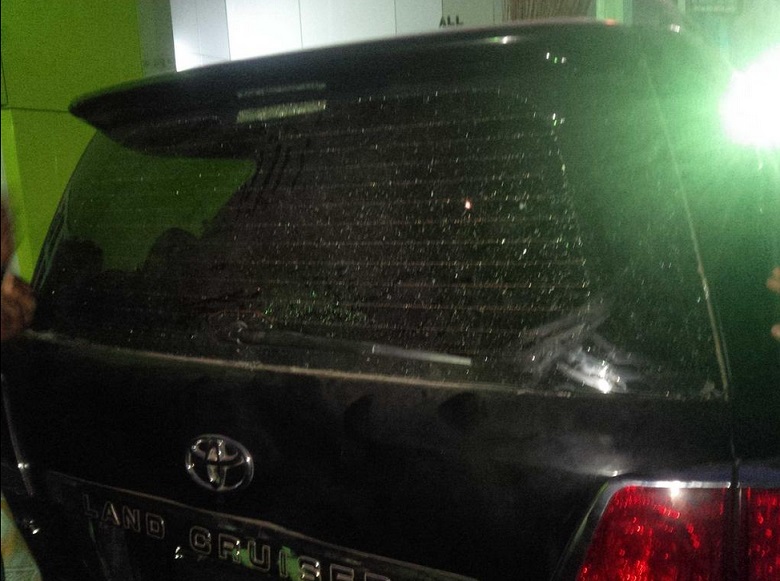
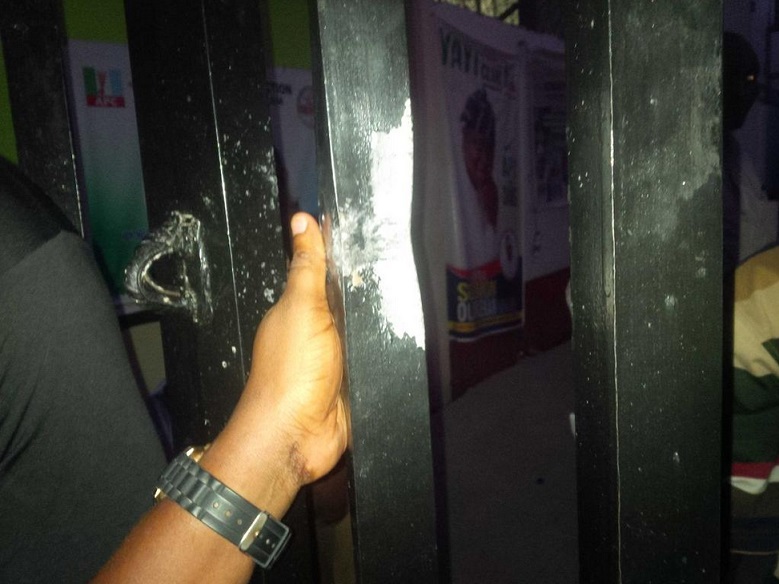
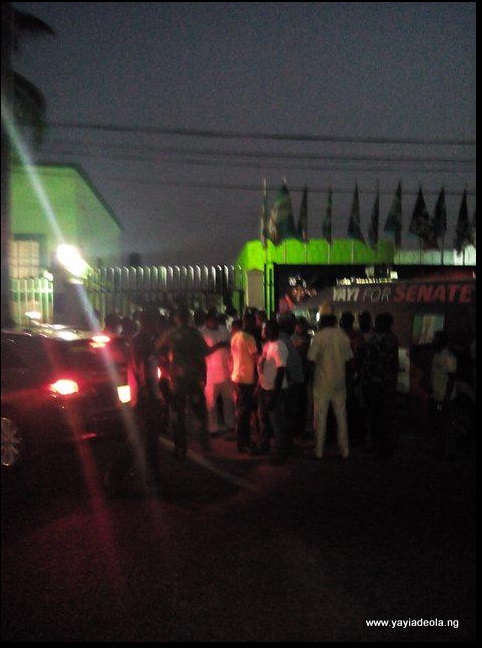
Segun Adewale, the Lagos West PDP senatorial candidate sighted in person amidst his group of touts, drove past House of Reps member and APC Senatorial candidate Solomon Adeola’s (YAYI) official campaign office on Adeniyi Jones road, Ikeja and fired shots randomly into the office. This happened Saturday evening. PDP Senatorial candidate Adewale was personally sighted wearing bulletproof jacket with a belt of bullet cartridges. We have not received reports of any deaths or injuries from the attack but the building was riddled with bullets and Honorable Adeola’s car parked in the compound was riddled with bullets. Segun Adewale openly threatened to the public gathered in front of Solomon Adeola’s office that he will shoot and kill anyone seen posting Adeola’s posters. After a minute of firing shots he drove off. Two people said they were shot at but the bullets did not pierce them. https://newsrescue.com/wp-content/uploads/2015/01/segun-adewale.jpg Segun Adewale https://newsrescue.com/wp-content/uploads/2015/01/yayi.jpeg Hon. Solomon Adeola My Car was damaged. A Mopol was slapped by the candidate himself when he moved to challenged him The PDP Sen. Candidate for Lagos West just attacked my campaign office shooting sporadically. @rosanwo @Ayourb pic.twitter.com/00XgSJZnM4 — Solomon O. Adeola (@YAYIAdeola) January 31, 2015 https://newsrescue.com/wp-content/uploads/2015/01/yayi-attack-lagos41.jpg https://newsrescue.com/wp-content/uploads/2015/01/yayi-attack-lagos.jpg https://newsrescue.com/wp-content/uploads/2015/01/yayi-attack-lagos2.jpg https://newsrescue.com/wp-content/uploads/2015/01/yayi-attack-lagos4.jpg http://newsrescue.com/breaking-pdp-senator-segun-adewale-fires-shots-apc-senators-office-lagos/#axzz3QTAuhxW8 1 Like 1 Share
|
| Politics › THE ECONOMIST: The Fight Against Boko Haram- Africa’s Islamic State by 1LRNZH(op): 2:16pm On Jan 31, 2015 |
A jihadist insurgency in Nigeria is turning into a regional conflict. https://cdn.static-economist.com/sites/default/files/imagecache/econmobile_optimize/images/print-edition/20150124_MAP003_0.jpg DEFLECTING blame is a skill prized by politicians the world over. Many could, however, still learn a thing or two from Goodluck Jonathan, the president of Nigeria, who has found no end of scapegoats for Boko Haram, a vicious insurgent group in the north-east of Africa’s most populous country. Mr Jonathan’s most common evasion is that Boko Haram is a regional problem that cannot be solved by Nigeria alone. His excuses seem, unfortunately, to be metamorphosing into fact. Boko Haram is now spreading its poison into neighbouring states. The kidnapping of about 80 Cameroonians from villages near the border with Nigeria has shone a light on its growing clout throughout the countries around Lake Chad. Further north in Niger, in the once-sleepy fishing village of Kirikiri, makeshift huts are crammed with refugees who have fled Boko Haram, which loosely translates as “western education is forbidden”. Every day dozens more wade off boats, their few possessions held high over their heads. Security is deteriorating fast. Shortly after your correspondent’s arrival on a visit last year, armed guards became nervous, urging the party to move on in case it became a target. In the nearby hospital in Diffa, Nigerian soldiers lay three to a bed, bleeding through their bandages, after retreating across the border. https://cdn.static-economist.com/sites/default/files/imagecache/econmobile_optimize/images/print-edition/20150124_MAM978.png Boko Haram, which has killed thousands in its fight to establish a “caliphate”, has seldom shown much regard for national boundaries. It readily retreats across them when threatened, or crosses into neighbouring states to recruit and train disaffected young men, as it has recently been doing in Diffa. Yet it had not previously nursed the same apocalyptic ambitions in neighbouring countries as it does in Nigeria. That may be changing. Many experts now think it hopes to replicate the ancient Kanem-Bornu Empire that once spanned bits of Niger, Chad and Cameroon. So far, Cameroon has been the worst afflicted of Nigeria’s neighbours. Kidnappings on its soil have become ever more audacious over the past year. The government has responded by deploying troops to the northern borders, prompting reprisals from the militants. In December, Boko Haram briefly overran a military base in Cameroon and attacked five villages. With the situation spiralling, pressure is mounting on regional governments to respond, but their efforts have been ineffectual. Last year the Lake Chad countries agreed to deploy a multinational task force to fight the insurgency; several countries pledged to send 700 soldiers each. But plans have stalled as they bicker over details, including the right of hot pursuit. A meeting beginning in Niger on January 20th was supposed to set wheels in motion, though at the time The Economist went to press little appeared to have been agreed on. Other initiatives also appear to have floundered. A French plan to set up an intelligence fusion centre was left with little intelligence to fuse when most of those taking part neglected to send liaison officers. The regional economic grouping, ECOWAS, says it may also request an African Union force to tackle the problem. Whether that is likely to materialise is another question. AU troops are already stretched across the continent—in Somalia, Central African Republic and Mali, among other places—and may not have the resources to respond, says Ryan Cummings of red24, a crisis management group. Nigeria’s prickly government would, moreover, probably reject the notion of foreign forces fighting on its soil. Yet there is little left to justify its pride. Nigeria’s army suffers from weak morale—at least 66 soldiers are on death row over their refusal to fight last year—and its units have often fled (the army calls it tactical manoeuvring) before the militants. Western countries appear to be losing patience. Relations with America have cooled noticeably since revelations of the Nigerian army’s abuses of human rights. In response, Nigeria cancelled a programme under which American soldiers trained Nigerian ones. American is now offering help to Cameroon instead. Chad, which has so far escaped the escalating crisis, recently began the deployment of 2,000 soldiers to assist Cameroon on the Nigerian border. Its army has a good track record against insurgents, most recently in Mali in 2013. Yet Abubakar Shekau, Boko Haram’s leader, seems unconcerned. He declared in a recent video: “The kings of Africa, you are late. I challenge you to attack me even now.” But for all the spillover, the problem is largely a Nigerian one. With elections approaching on February 14th, many politicians are focused more on their campaigns than on fighting the insurgency. Until Nigeria’s leaders show that they can take the war as seriously as they do politicking, it will be impossible to curb Boko Haram—even with regional forces to help. [url]http://www.economist.com/news/middle-east-and-africa/21640440-jihadist-insurgency-nigeria-turning-regional-conflict-africas?fsrc=rss%7Cmea[/url] |
| Politics › GEJ'S Gov't Issues New Power Supply Target; Angers Nigerians by 1LRNZH(op): 11:57am On Jan 31, 2015 |
https://punch.cdn.ng/wp-content/uploads/2015/01/Electricity-pole-tucked-in-a-building-at-Anthony-Village-Lagos...-on-Thursday-360x227.jpg Nigerians have knocked the Federal Government for its fresh promises which include generating 10,000 megawatts of electricity by 2016. The public criticisms followed a statement made by the Minister of Power, Prof. Chinedu Nebo, that the Federal Government had shifted its earlier target of generating 6,000MW of electricity before the end of 2014 to this year. Nebo also said the Federal Government expects to get up to 10,000MW by 2016 and 12,500MW by 2017. In reaction to the statement, a cross section of Nigerians who spoke to Power Talkback, expressed disappointment with government’s failure to ensure stable power supply in the country or keep to its promise of 6,000MW by the end of 2014, at the very least. Some of the respondents also accused the Federal Government of continually shifting its targets in the power sector. Meanwhile, a report published earlier this week said the country was currently losing 2,042.2 megawatts of electricity due to gas supply shortage and poor water management. According to the report, the 411 G2 and G4 units of the Shiroro hydro power plant were currently losing 300MW, while the loss of 1,742.2MW was attributed to gas supply shortage at various legacy gas-fired power plants, including the National Integrated Power Project plants. The information on the loss was contained in the daily broadcast of the Transmission Company of Nigeria obtained by one of our correspondents on earlier in the week. A respondent, Mr. Matthew Oyedeji, said it was unfortunate that the Federal Government has so far failed to provide stable power supply in the country in spite of its recent privatisation of the sector. Oyedeji, therefore, accused Nebo of deceiving Nigerians, adding that the Federal Government has had nothing to show for its previous promises. He said, “You can see how the Federal Government has been shifting the goalpost; it’s not a sign of good leadership. There have been promises after promises but a few months before the target date, government will shift the date again. “How can a country like South Africa be generating about 45,000MW and Nigeria will be struggling to generate 4,000MW. To start with, Nigeria is the most populous country in Africa which means we should looking at generating 80,000MW. But rather, we are here talking about 6,000MW which government could not even achieve by the end of 2014.” A resident of Sokoto, Mr. Ibrahim Olanrewaju, also blamed the Federal Government for the poor power supply in the country, saying it would still fail to meet up with the new targets. He said, “I was in Ilorin, Kwara State and Ibadan, Oyo State recently and now I’m back in Sokoto State; I can tell you that in all these places, power supply is terrible. I get such unfortunate reports from other parts of the country, which shows that there is no part of the country that is left out when talking about poor power supply. “I can assure that you that by the end of 2015, the 6,000MW target would be shifted to 2018, the target for 2017 would be moved to 2020 and the target for 2017 would be shifted to 2022. It’s not a curse; it’s what our government knows how to do very well. It’s like we lack the capacity to get these things right like other countries of the world.” On the online platform of the The Punch, there have been similar comments knocking the government for its incessant promises and assurances which it has failed to meet up with. Some of the commentators also condemned the epileptic power supply in the country in spite of the electricity bills being paid by customers. An online commentator identified as Gbenga, wrote, “I’m very angry, what kind of unseriousness is all this?” Another commentator, Mide Midey, said, “Like I’ll always say, fix the electricity generation problem and Nigerians would fix the rest . We’re that resourceful and resilient. We just need that ‘stepping stone’ – stable electricity.” Emmanuel Kalu, one of the online commentators, said, “It is absolutely crazy that we continue to get forecast that are never met. We continue to hear about vandalism and disruptions. Has it occurred to our Energy minister to demand that electricity generating companies have reserves of gas to operate for at least two months in case of gas shortage or vandalism? “Most well operated companies have backup upon backup, you can’t continue to depend on constant supply of gas each day. It is time the government mandated these GENCOs to develop capability to store their gas for (up to) two months.” According to Ben, “With near unlimited reserves of gas, any loss of power generation can only be attributed to incompetence and corruption.” He described Nebo’s attempt to explain the situation as “simply futile.” Nebo, had said, “We have an outlook for 2015 to 2017. People are saying you people said you will do 6,000MW, yes! We have the capacity standing, we now have the gas standing and we are going to do that shortly within this year. But beyond that; by 2016, we expect to get up to 10,000MW; and by 2017, to get 12,500MW.” The mid-January statistics obtained from the ministry showed that peak generation on Wednesday was 4,405.6MW; energy generation, 4,000.63MW; and the energy sent out was 3,914.60MW. Peak demand was, however, put at 12,800MW. On gas pipelines vandalism, Nebo also said the country lost an average of 1,000MW in 2014 as a result of the activities of vandals. The AES barges 202-205 and 207-211 in Lagos are currently losing 288MW due to gas-related problems, while the Geregu NIPP GT 21 and 23 units have lost 290MW. According to the TCN, the Rivers IPP GT1 is losing 160MW, while the Ihovbor GT2 has a deficit of 112.5MW. The Omotosho NIPP GT1 and 4, and Sapele ST2 units are said to be losing 240MW and 70MW, respectively. The Egbin ST1 and 3 units have capacity to generate 660MW, but are currently doing 467MW; meaning a loss of 193MW. The Omotosho Gas GTI, 3, 5-8 units have a combined capacity of 228MW, but are doing 146.2MW; thus recording a loss of 81.8MW. Also, the Olorunsogo Gas GT1-4, 7 and 8 units, with capacity for 228MW, are generating just 161.1MW and losing 66.9MW due to gas shortage. Peak generation for the country as of Tuesday was put at 3,865.4MW, while 3,331.5MW was the figure for off-peak generation. http://www.punchng.com/feature/power-talkback/consumers-knock-fg-for-setting-fresh-power-supply-targets/ |
| Politics › FEUDS That May Mar GEJ's 2015 Ambition by 1LRNZH(op): 10:59am On Jan 31, 2015 |
BY OLALEKAN ADETAYO https://newswirengr.com/wp-content/uploads/2014/03/GEJ.jpg Last week, I dwelt on some people who proclaim to be working for the re-election of President Goodluck Jonathan in February but whose actions or utterances are pointing to another direction. My unsolicited advice to the President in that piece was: caution your men if you are indeed desirous of victory. This week, I will be looking at some unnecessary feuds being witnessed in some states across the country that, if not checked, may mar Jonathan’s electoral fate in the affected states. 1. Yuguda vs. Mohammed I will start with the rift between Governor Isa Yuguda of Bauchi State and the Minister of the Federal Capital Territory, Senator Bala Mohammed. The minister who is one of the members of the President’s kitchen cabinet, initially nursed the ambition to succeed Yuguda as the state governor. He withdrew from the race for the Peoples Democratic Party’s ticket at the last minute. The rift between the two men blew open with the recent attack on the President’s convoy when he took his re-election campaign to their state. Surprisingly, while fingers were being pointed at supporters of the All Progressives Congress, the governor dropped a bombshell when he accused the minister of being the brain behind the attack. His claim was that Mohammed organised the attack in order to give an impression that he (the governor) is not on ground in the state. Expectedly, the minister denied the allegation. He described Yuguda as an APC’s mole in the PDP. He further described Yuguda’s allegation against him as irrational and embarrassing. The minister wondered why the governor exonerated the APC of culpability in the attack on the PDP presidential campaign team in Bauchi, noting that Yuguda had not been campaigning for Jonathan in his state. It is worthy of mentioning that the national chairman of the PDP, Alhaji Adamu Muazu, is also from that state. Before now, there had been rumours that there was no love lost among the governor, minister and Muazu. If this row is allowed to fester, things may further fall apart for the PDP in the state and the centre may definitely not hold. Once the PDP structure collapses completely, the development will surely tell on Jonathan’s re-election bid. 2. Mrs. Jonathan Vs. Dickson. There are reports that wife of the President, Patience, is currently at loggerheads with the governor of her husband’s home state, Governor Seriake Dickson of Bayelsa State. She was said to be working towards ensuring that Dickson does not get second term in 2016. Her agenda, according to the reports, is to give the governor the same treatment meted out to Chief Timipre Sylva and install the Special Assistant to the President on Domestic Matters, Dr. Wariponmowei Dudafa, as the next governor. Mrs. Jonathan, through her media aides, had denied the reports many times. She has insisted that there is no rift between her and the governor. She has said she is not an official of the PDP, hence she cannot be endorsing candidates. Despite the denials however , there are pointers to the fact that there is no smoke without fire. As a correspondent covering the Villa, I had reported two times recently when Mrs. Jonathan tactically avoided delegations led by Dickson to the President. The first time was when the governor led a delegation to felicitate with the President on his birthday while the second one was when he led another delegation to celebrate Christmas with Jonathan. The irony is that Sylvia is already fighting back from the fold of the APC. It will therefore not be wise to add the Dickson camp to those who will work against the President. Already, some groups and individuals have started taking sides with the governor. Recently, two youth groups – Bayelsa Youth Vanguard and the Mangrove Boys of Bayelsa – had, in different statements, issued in Abuja and Yenagoa, barred the President’s wife from accompanying her husband to the presidential rally in Yenagoa. The youths who accused Mrs. Jonathan of instigating political crisis in the state and working against Dickson had vowed to embarrass and disgrace her at the rally. An ex-Minister of Petroleum Resources, Chief Dan Etete, has also cautioned the wife of the President to stop interfering in the internal politics of the state. He accused Mrs. Jonathan of being jealous of the exceptional performance of the governor and promised to lead the fight to stop her from further frustrating Dickson. Mrs. Jonathan’s spokesman, Ayo Adewuyi, has however described the allegation against his principal as unfounded. He wondered why an elder statesman like Etete could not investigate the veracity of the reports thoroughly before making public pronouncement on the matter. Bayelsa is obviously one of the states the President and his tacticians must pay special attention to, ahead of the elections because charity, they say, begins at home. 3. Mimiko Vs others. It is no news that things have also fallen apart in Ondo PDP since Governor Olusegun Mimiko returned to the fold from the Labour Party. The ruling party is now divided between what is called old LP and old PDP. Jonathan is not unaware of this. That was why he made it clear on Wednesday while campaigning in Akure that Mimiko, Olusola Oke and business mogul, Jimoh Ibrahim, must meet and resolve the crisis rocking the party in the state. While admitting that a cold relationship exists in the party, Jonathan put it aptly when he said, “If we don’t work together here, you will be surprised that another party will exploit it and none of us will be happy.” The earlier issues arising from states are resolved, the better for the President’s ambition. 4. An Ex-Minister as a Migrant If you look at all the people that have left PDP, some of them are the people that have caused all the headaches in the party. They have been the ones attacking their party, they are very quarrelsome, and they have oversized egos… If you take a look at the history of our party and look at their antecedent, you will see that they are migrants, they keep migrating from one place to another.” This was how former Minister of Information, Labaran Maku, in February 2014 described those who dumped the PDP for the APC. Today, the same Maku has joined the league of migrants. He has pitched his tent with the All Progressives Grand Alliance in his bid to become the next governor of Nassarawa State. For this singular act, Jonathan; President of the Senate, David Mark; and a former chairman of the PDP, Ahmadu Ali, on Tuesday took the battle to Maku’s doorstep when they took the President’s re-election campaign to Lafia. They did not spare words in describing his actions. They described him as an ingrate and a liar among others. Maku did not take that lightly. While he spared the President in his response, he however went for Mark, saying he found it curious that the President of the Senate had remained mute over the defection in his own native Benue State of former Minister of State for Trade and Investment, Dr. Sam Ortom; and former PDP National Chairman, Senator Barnabas Gemade, who have joined the APC to contest for the governorship and senatorial positions respectively. How time and circumstances change our leaders! http://www.punchng.com/columnists/aso-rock-lens-columnists/feuds-that-may-make-or-mar-mr-presidents-ambition/ |
| Politics › Re: CASSAVA BREAD: Another Failed GEJ's Policy (PHOTO) by 1LRNZH(op): 8:23am On Jan 31, 2015 |
agabaI23:A by force directive is what you call a success? Only a few select bakers were trained. We are yet to see the bread from this 5%-10% cassava composite flour. Show us link to prove the 20% Cassava in Honeywell composite flour as you claim...... I dey wait 1 Like |
| Politics › Re: LOL: A Worth Sharing Political Joke! by 1LRNZH: 8:18am On Jan 31, 2015 |
This joke is so apt. It typifies a Selfless GMB and a Clueless GEJ. Well done OP   |
| Politics › Re: PHOTOS: Nigeria Police Assigned To Protect PDP Posters by 1LRNZH(op): 8:15am On Jan 31, 2015 |
Wonders shall never cease sha....  |
| Politics › Re: CASSAVA BREAD: Another Failed GEJ's Policy (PHOTO) by 1LRNZH(op): 7:57am On Jan 31, 2015*. Modified: 8:14am On Jan 31, 2015 |
agabaI23:Why do you GEJites lie continuously without rest? Show us your evidence of 20% Cassava in the composite flour Honeywell composite flour is 5% and 10% Cassava. Honeywell is trying to train a few select bakers on how to use this composite flour due to FG directive. http://www.tribune.com.ng/news/news-headlines/item/21661-honeywell-trains-bakers-on-composite-flour-bread/21661-honeywell-trains-bakers-on-composite-flour-bread 5% to 10% Cassava in flour. Is that the Cassava Bread? I still dey laff this children 2 Likes |
| Politics › Re: PHOTOS: Nigeria Police Assigned To Protect PDP Posters by 1LRNZH(op): 7:43am On Jan 31, 2015 |
ibietela2:Be here deceiving yourself that you're a blogger. Others have seen the same thing happening in Lagos. ilugunboy: I saw them too yesterday....right from Adekunle intersection down to Adeniji Adele....one or two attached to a poster standing guard.It started since Mbu was deployed to Lagos and environs. In fact it was in the news this month that Police and LASSA officials clashed over removal of posters in Lagos. This should be on FP cc: Obinoscopy, Lalasticlala, Maclatunji, Seun |
| Politics › CASSAVA BREAD: Another Failed GEJ's Policy (PHOTO) by 1LRNZH(op): 4:57am On Jan 31, 2015*. Modified: 7:16am On Jan 31, 2015 |
I was in Lagos to witness the greatest rally ever organised in Sub-Saharan Africa yesterday. GMB and APC witnessed a massively mind-boggling turnout. I noticed an expat (oyinbo - maybe na Nigerian sef) buying the famous agege bread by the road side. See evidence: [img]http://photos-3.dropbox.com/t/2/AABOAJV8J2zz-c9lwaO9M0rchzORIMtA1Ny6F0NeToVokg/12/142072197/jpeg/1024x768/3/1422691200/0/2/2013-12-08%2011.15.45.jpg/CIWz30MgASACIAMoASgC/jZlWqyUY4pZ0bqiAAf0mKPu-kT-4YeqoiH-mcAjURx0[/img] It got me thinking.........What happened to the much touted GEJ's Cassava Bread. It never made it outside of Aso Rock or what? A cursory research (http://www.punchng.com/feature/healthy-eating/why-i-will-not-eat-cassava-bread/)[b] quickly showed that GEJ was marketting a useless product cluelessly as shown below: 1. Unless it bothers on health and safety matters for the citizenry, there is no country where consumption of any food is governed by legislation or promoted by campaign. 2. Cassava is rated as one of the 10 most dangerous foods. Cassava contains toxins including cyanide, linamarin and lotaustralin, which can damage the liver, kidneys and the brain. Some of the effects of cyanide poisoning are headache, dizziness, agitation, confusion, coma and convulsions. Do the promoters of cassava bread also know that the Japanese Ministry of Health prohibits the use of cassava as human food? One of the reasons why Japan banned consumption of cassava is based on the fact that toxic components of the crop may cause brain damage related to pituitary gland that causes other damage to various organs. 3. Cassava can be a serious health hazard if it is not processed properly. The question is: who determines and monitors the proper processing of cassava flour to bake bread for mass consumption in a country like Nigeria where anything goes? 4. Once cassava is harvested, deterioration of its nutritional value begins immediately. Yet, we all know that harvested cassava tubers are often stacked in the sun for days due to lack of roads and transport to evacuate farm products to the processing centres. 5. Another challenge to making cassava bread acceptable is the diversity of cassava plant species with some species having higher level of cyanide and other toxic elements than the others. Who will regulate the appropriate species for bakeries in Nigeria? 6. Cassava is low in protein and other essential micronutrients to the extent that malnutrition can occur if it is made a major part of one’s diet. Otherwise, why did the Federal Ministry of Agriculture and International Institute of Tropical Agriculture IITA embark on a futile fortification of cassava with vitamin A? 7. As an acid-forming food, regular consumption of cassava can cause pH imbalance and make the body prone to degenerative diseases like diabetes, cancer, heart disease, hypertension, glaucoma and arthritis. 8. Over 100 years ago, a group of Japanese immigrants went to Brazil for coffee planting in search of greener pasture when Japan was down the ladder economically. However, the Japanese immigrants did not get the initial support of foods and farmlands promised by the Brazilian government. Consequently, the Japanese immigrants planted cassava just to survive and many of them died due to cassava poisoning. In fact, in the records of Japanese immigrants to Brazil, only three Japanese survived up to the end of Second World War. Given these facts, I will not eat cassava bread. But this is not to discount cassava as a crop with huge potential to create jobs and wealth especially if our energy and resources are committed to its mass cultivation and processing for animal feed and industrial uses outside the scope of human nutrition. Why can't GEJ get it right for once?[/b] 10 Likes 4 Shares |
| Politics › PHOTOS: Nigeria Police Assigned To Protect PDP Posters by 1LRNZH(op): 4:14am On Jan 31, 2015 |
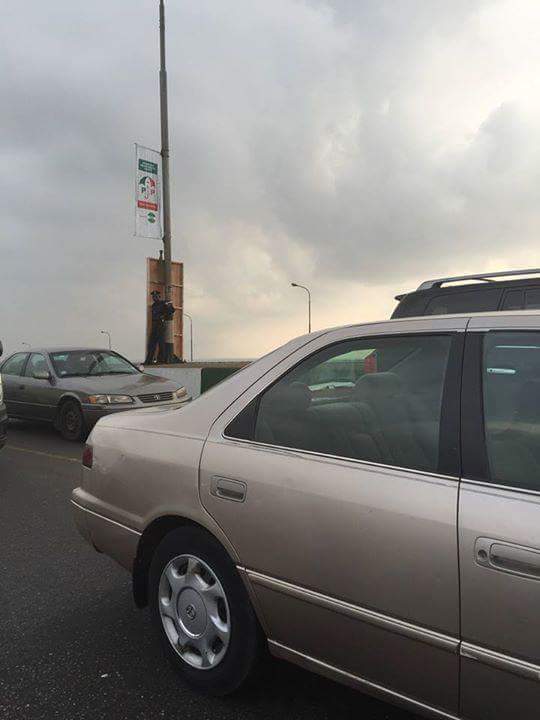
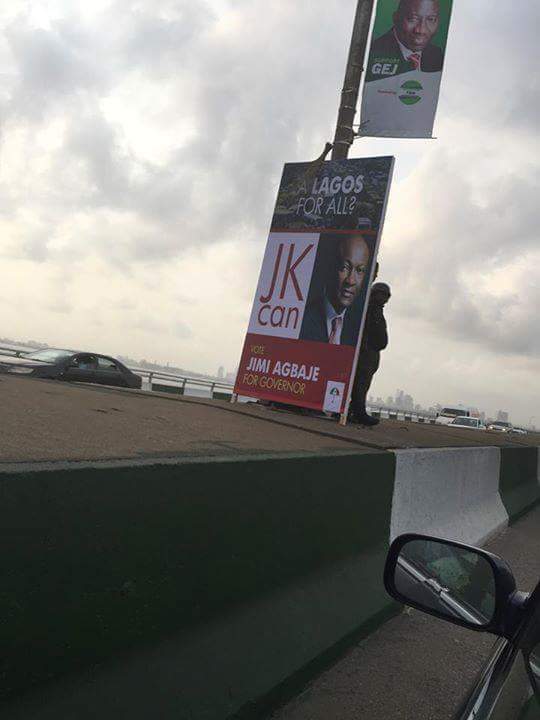
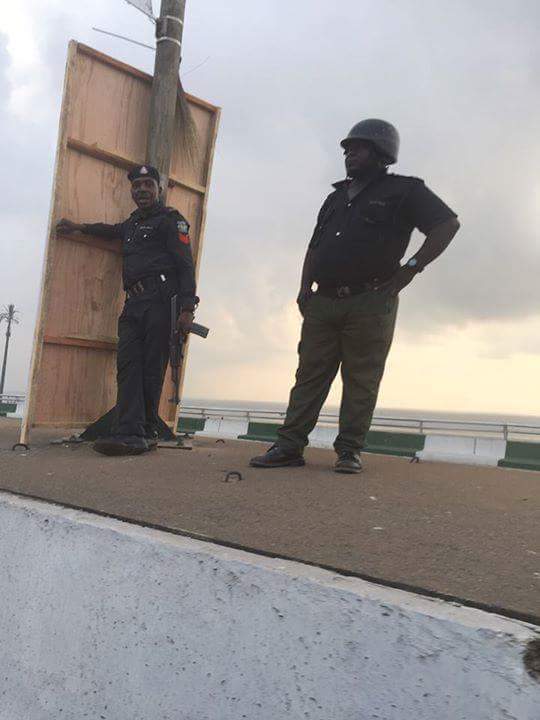
While the northeast of the nation reports hundreds of deaths daily in the hands of Boko Haram terrorists who have unleashed terror on the people for the past almost 5 years, Nigeria’s police under IGP Suleiman Abba have been assigned to stand guard at PDP ruling party political posters and banners. https://newsrescue.com/wp-content/uploads/2015/01/police-poster-3.jpg https://newsrescue.com/wp-content/uploads/2015/01/police-poster2.jpg https://newsrescue.com/wp-content/uploads/2015/01/police-poster.jpg http://newsrescue.com/pictures-nigerians-police-assigned-protect-pdp-posters-northeast-bleeds-underpoliced/#ixzz3QMgwc2e7 2 Likes 3 Shares |
| Politics › Re: Chaiii My Father Don Kill Me Oo. Pastor Firefire I Need Your Help by 1LRNZH: 11:37pm On Jan 28, 2015 |
You inherited ⅛ of your dad's chromosomes. You're incomplete. 11 Likes |
| Politics › SPECIAL: Bitter Truths About The Economy Under Jonathan's Govt. by 1LRNZH(op): 11:30pm On Jan 28, 2015 |
[img]http://media.premiumtimesng.com/wp-content/files/2014/05/800x514xJonathan-WEF.jpg.pagespeed.ic.dH0AxGcT1S.webp[/img] President Goodluck Jonathan making inaccurate claims at the World Economic Forum 2014 As is well known, available figures, statistics and ratings show that the Nigerian economy has consistently maintained an unprecedented growth rate of 6-7 per cent under the Jonathan administration. They also show that the Nigerian economy is now the leading economy in Africa and the 26th largest in the world, with a gross domestic product of over $500 billion per annum. Statistical indicators are like a woman’s bikini, they hide or mask the most important details, while revealing what, to a casual observer, seem like a whole lot. Take for example real economic growth rate: a measure of how much the economy grew, in real terms. Real growth rate is essentially a quantitative measure. While it measures the total goods and services produced in a given year, it does not say anything about how the quality of life has changed, and whether or not available resources were used transparently and beneficially. As a result, economists have come to the conclusion that the growth rate of an economy at any point in time is meaningless unless there is a context to the discussion. Some ways of introducing context is to compare performance to another recent period or to the performance of peer countries with similar economic fundamentals. These two exercises should show whether or not in a particular epoch, a country’s performance is “unprecedented” or spectacular. [img]http://media.premiumtimesng.com/wp-content/files/2014/01/412x250xOkonjo-Iwealaq.jpg.pagespeed.ic.6eJ7CcWqUD.webp[/img] Minister of Finance, Ngozi Okonjo-Iweala, has, until recently, claimed the Nigerian economy is in perfect shape In addition, several countries have introduced alternative measures of economic wellbeing that captures more holistically, all aspects of economic performance. Bhutan, for example introduced the concept of Gross National Happiness (GNH) in the 1970s. GNH measures economic performance in relation to four pillars: good governance, sustainable socio-economic development, cultural preservation, and environmental conservation. In the reckoning of Bhutanese authorities, if all the four pillars were performing, the sum total would be higher gross national happiness. Several factors affect real economic performance. The quantity and quality of a country’s labour force and its natural resource endowment all affect investment, production and consumption decisions of economic agents. In order to steer the economy in a direction that is over and above what is warranted by labour force and endowment, governments would normally introduce fiscal, financial and monetary policies that support the achievement of both a higher level of growth and qualitative improvements in livelihood. More importantly, because in today’s global environment, countries do not operate as islands unto themselves, developments in the global economy, especially those of major trading partners, international prices of imported and exported commodities, and the general flow of financial resources, all shape a country’s economic outcomes. While the latter are not within the control of a country, sound domestic socio-economic policies on health, education, environment security and infrastructure will improve the overall quality of life and the business environment so as to make the private sector flourish. Nigeria’s recent economic performance Nigeria’s recent growth performance has mostly been shaped by improvement in global trends rather than sound economic policy management, which has actually taken a turn for the worse when compared to the first few years of civilian rule. Recent global developments, such as increase in oil prices (until the recent dip in prices); the shift in foreign investor’s interest to developing economies as growth in advanced economies reached saturation points, have helped Nigeria to attract foreign investments, especially in the non-oil sector. As a result, and notwithstanding poor policy choices, unprecedented corruption and theft of public resources, infrastructure deficiency and security challenge, economic growth during the first six years of this administration has been relatively good. However, the performance, as impressive as it may look, is poor when compared to growth during the first six years of civilian rule. In addition, real economic growth does not match the achievement of other oil producing countries with similar endowments as Nigeria. The facts speak for themselves During 2009-2013, the first five years of President Jonathan’s administration, real GDP growth averaged 6-7 per cent, a fact often touted by the government. But this record is much lower than that of the first five years of civilian rule (1999 – 2005), when growth averaged 11.1 percent. (Figure 1) This is despite the fact that oil prices were much lower at that time than now, and foreign investors’ appetite for Nigeria was not as strong as now. The difference, it seems, is in the leadership and policy choices of the different periods. Therefore, President Jonathan’s achievement can hardly be said to be “unprecedented”. It’s actually poorer than his predecessor’s achievements in less benign circumstances. https://media.premiumtimesng.com/wp-content/files/2014/12/700x473xReal_GDP_Growth_Rate_2000-2013.png.pagespeed.ic.uYbdCFpT6G.png FIGURE 1: Real GDP Growth Rate 2000-2013 Lying with data? Some glaring inconsistencies Many Nigerians have wondered how the high growth rates being reported are possible given the “facts on the ground” – to use a well-worn Nigerian phrase. As explained above, decent rates of growth is possible in a chaotic domestic environment so long as external conditions are largely favourable. Notwithstanding, from a strictly conceptual point of view, there are serious reasons to question recent growth data and the integrity of data more generally, as would be clear in the following exposition. Inconsistencies in regional contributions to growth To accept current measures of economic performance and the high growth rates, one would have to agree that the disturbances in the North East region, which has brought the regional economy to a halt in the past two years with spillovers to neighboring regions, has not made a dent on growth. Furthermore, one would have to accept that the oil theft in the Niger Delta, which the London think tank, Chatham House, described as “industrial scale” and estimated at $3bn-$8bn a year, did not impact on GDP growth. By any calculation, oil theft at the upper end of this range is enough to lower the growth rate directly by 1-2 percentage points, and much more indirectly through the impact on other sectors of the economy. Inconsistencies in key macroeconomic indicators Nigeria’s main macroeconomic indicators have weakened considerably recently, raising questions about why the weakness has not impacted on growth. A few examples will suffice: 1. Fiscal balances: Nigeria’s fiscal balances are much weaker than at any time since the beginning of civilian regime. In the first five years of President Jonathan, the fiscal account was in deficit, on average by 4 per cent of GDP. During the first five years of civilian rule in contrast, the fiscal balance was in surplus, on average, by close to 2 percent of GDP. (Figure 2) Again, this is despite much lower oil revenue earnings during the earlier period. Even though the Jonathan fiscal deficit remains small by international standards, it is still higher than that of many oil exporting countries which are all accumulating surpluses rather than deficit and using the opportunity of high oil prices to invest in long term infrastructure. What is becoming clear to critical observers is that the budget deficit is more or less contrived through an unrealistic oil benchmark price. With lower revenue and higher expenditure projections, the result is a deficit balance. DMO is then required to “borrow” at excessive cost “to finance the deficit”. But with the usual less than 70 percent implementation rate of the budget, nobody has bothered to find out why there is still a deficit if the budgeted amount was not spent and why the need to accumulate new debt! 2. Public debt: Public debt stock is much higher than at any time since the Paris Club debt exit of 2006. In 2007, total public debt fell to N2.678 trillion ($3.56billion external debt from $36b, and N2.2trillion domestic debt). But as of end 2013, public debt has increased by more than 300 percent to N8.423trillion ($8.2b external, and N7.1 trillion domestic). (Figure 3). If AMCON debt and other agencies are included, the total debt burden is now over N10 trillion. By end of 2014, Nigeria’s total debt should easily approach over $100b, most of which were accumulated in the past 6 years. Given the well-established negative correlation of debt and economic growth, how has growth been so strong? 3. Debt service: According to 2013 federal budget data, close to 20 percent of recurrent expenditure is devoted to servicing debt alone, a contrast to 2007, when only around 10 percent of recurrent expenditure was spent on debt service. The major conundrum is the lack of clarity on why debt accumulation should be so high in the presence of historically high oil prices, and what exactly the debt is financing. Furthermore, government’s policy of accumulating debt at average interest rates of 13-15 percent when the same government is receiving less than 3 per cent on its savings (foreign reserves) beats economic logic. Why not use some of the savings to finance the needs and save 10 percent? It will also be interesting to find out why debt accumulation is bad in 1999-2007, but is now a good thing. 4. Foreign reserves: Nigeria’s foreign reserves have followed a pattern similar to the other indicators since the beginning of civilian rule. In the Obasanjo and Yar’Adua periods, reserves high enough to finance, on average over 7 and 10 months of imports respectively. However, in the six years of President Jonathan, it has declined to about 6.3 months of imports. (Figure 4). When compared with other oil exporting African countries, in the first two periods, Nigeria’s foreign reserve accumulation was stronger than those of other countries. However, in the recent period, Nigeria is just about catching up with others. Although stabilization funds exist, the federal government has struggled to replenish them, despite high oil prices. https://media.premiumtimesng.com/wp-content/files/2014/12/700x508xFiscal_Balances_2000-2013.png.pagespeed.ic.PcQyb--TDB.png FIGURE 2: Fiscal Balances 2000-2013 The quality of growth Apart from the growth rates that do not match economic realities, there are serious questions about the quality of Nigeria’s growth. Sustained growth over the years has not made a dent on poverty, or led to broad-based improvements in living standards. While some indicators improved in the early post military era, many have now nose-dived, as no conscious effort has been made to skew policies in favour of socio economic wellbeing. Some examples: a. Life expectancy is just 54 years, eight years lower than in Ghana and 20 years lower than in Brazil. b. The rate of childhood malnutrition is 24 percent, more than eight times the rate in Mexico. c. Basic literacy among 15- to 24-year-olds is just 66 per cent, compared with 99 per cent in South Africa. d. Official estimates of poverty rate vary from 41 per cent to 56 per cent, depending on whether the poverty line is drawn at 2,500 calories per day or at US$1.25 per day. However, according to a recent study, 74 per cent of the population lives below the economic empowerment line. This is a more stringent definition than “poverty line”. As a result, there are still 32 per cent of the population that are above the official calorie-based poverty line but are not “economically empowered”. e. Infrastructure continues to be a major challenge: electric power, transportation infrastructure, telecommunications infrastructure and Internet and broadband access is limited. Water and wastewater systems are nonexistent outside a few cities. f. Reputation for widespread corruption remains high, ranking at 139th out of the 176 countries on Transparency International’s 2014 Corruption Perception Index. g. World Bank governance and business environment indicators are much weaker than for oil exporting or African peers. Nigeria ranks 158th out of 189 economies for trading across borders. Global Competitiveness Report of the World Economic Forum for 2013-2014, ranked Nigeria 120th out of 148 countries in the Global Competitiveness Index h. Nigeria’s budgetary process is now adjudged one of the weakest in the world. In the annual “Open Budget” Survey, Nigeria’s ranking has declined progressively since 2006, and in the latest ranking for 2012, Nigeria scored 16 per cent. This does not compare favorably with the performance of South Africa (90%), Uganda (65%), Ghana (50%) and Angola (28%). https://media.premiumtimesng.com/wp-content/files/2014/12/700x447xGovt_Debt_2000-2013.png.pagespeed.ic.0pTjoovYqC.png FIGURE 3: Government Debt 2000-2013 The size of the economy Many Nigerians are somewhat puzzled about the new size of the Nigerian economy relative to their quality of life. Yes indeed, the Nigerian economy is now the largest in Africa, but size does not correlate with quality of life. Apart from a higher per capita income due to the larger size of the economy, many of the other indicators merely confirm that the economy has been underperforming all along, as several indexes now put Nigeria at a much lower ranking than other African countries. Sadly, the government is focusing on trumpeting the good ratios, rather than focusing policies on how to improve some of the poor ratios below: Though Nigeria’s per capita income rises in line with nominal GDP but it remains well below peer group medians as well as those of oil-producing Angola and Gabon. FDI now falls to less than 1% of GDP, which shows that Nigeria has one of the lowest levels of FDI inflow in the Africa region. With non-oil fiscal revenue now falling to around 4% of GDP, the overdependence of the economy on oil is even more stark than in the past, and compared to other countries, Nigeria now has one of the weakest revenue mobilization ratios of Sub-Saharan Africa peers. Financial market development which is usually measured by money supply in percent of GDP is now just around 19% of GDP. Compared to Mauritius (99 %), South Africa (74 %), Kenya (42 %), and Angola (37 %). These show that Nigeria has one of the least developed financial markets in Africa. https://media.premiumtimesng.com/wp-content/files/2014/12/700x477xForeign_Reserve_Accumulation.png.pagespeed.ic.AAXaWU56t5.png FIGURE 4: Foreign Reserve Accumulation in Months of Imports – Nigeria and Other African Oil Exporters All things considered, the 6-7% of GDP growth rate is neither unprecedented, nor a superior achievement, relative to past governments. The performance is not the result of policy choices, but favourable external environment. While the revision to GDP is a credible exercise that confirms the size of Nigeria’s economy, it also shows how poor performance has been all along. It’s time to focus on better economic outcomes. Note: PREMIUM TIMES relied on Federal Government of Nigeria publications, International Monetary Funds and World Bank web sites for this report. http://www.premiumtimesng.com/news/173629-premium-times-special-bitter-truths-about-economy-the-jonathan-govt-does-not-want-nigerians-to-know.html 1 Like 1 Share |
| Politics › GEJ: Why I’ve Not Done Much In The South-South by 1LRNZH(op): 10:07pm On Jan 28, 2015 |
https://cdn.akamai.thisdaylive.com/0bef99d6-acf5-4e2c-9779-8fa02ba3fcd4/assets/Goodluck-Jonathan-011115.jpg?maxwidth=400&maxheight=540 President Goodluck Jonathan has said he did not concentrate development in his native South-south region because of his quest for equitable distribution of resources in the country. The president spoke on Wednesday at the presidential rally of the Peoples Democratic Party (PDP) held at the Adokiye Amiesimaka Stadium, Igwuruta-Ali, Greater Port Harcourt City, Rivers State. He noted that he had been criticised by people in the region that his presidency had not favoured the area and promised to redress the situation when re-elected. His words: “What I want to tell you and the rest of the country is that the director-general of APC (All Progressives Congress) presidential campaign organisation, when he was in Yenagoa and when he was in Port Harcourt mentioned clearly that the President has done nothing for the two states. “Don't worry, it is a good news because people are saying that I concentrated development in the South South. Bayelsa State was part of Rivers State. I am part of this state. Since I finished by secondary school, I have been in Port Harcourt. I started my first job as a young officer in the Customs. Of course, I attended the University of Port Harcourt and started lecturing in the Rivers State College of Education. So, I have been part and parcel of this state. “Then, if I don't concentrate development in this state, that means there has not been development in Rivers and Bayelsa States. The DG is telling Nigerians that I have not done this. That means that I am a transparent person. I did not allocate positions to my people. http://www.thisdaylive.com/articles/jonathan-why-i-ve-not-done-much-for-the-south-south/200358/ 1 Like 1 Share |
| Politics › BREAKING: Armed Drone Crash Lands In Dumge, Borno State, Nigeria [PICTURES] by 1LRNZH(op): 8:54pm On Jan 27, 2015 |
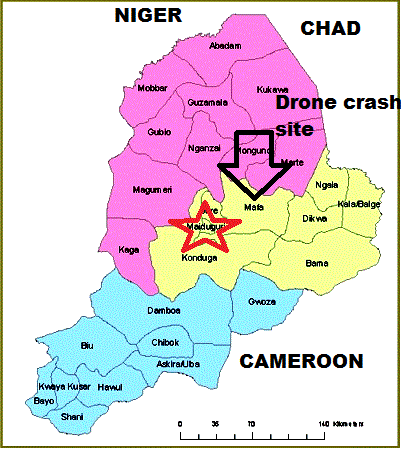
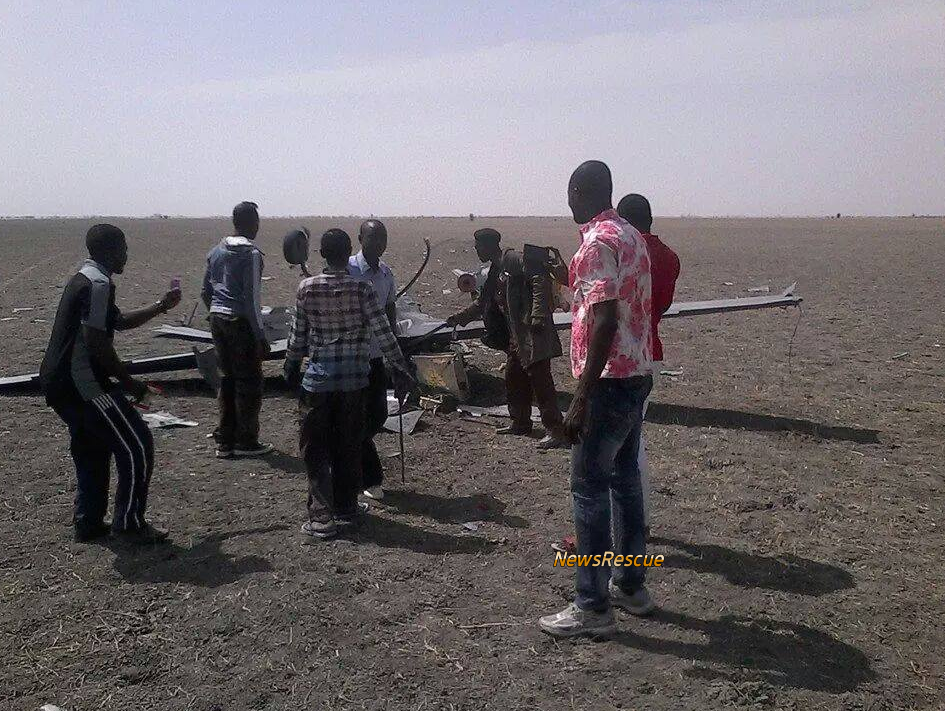
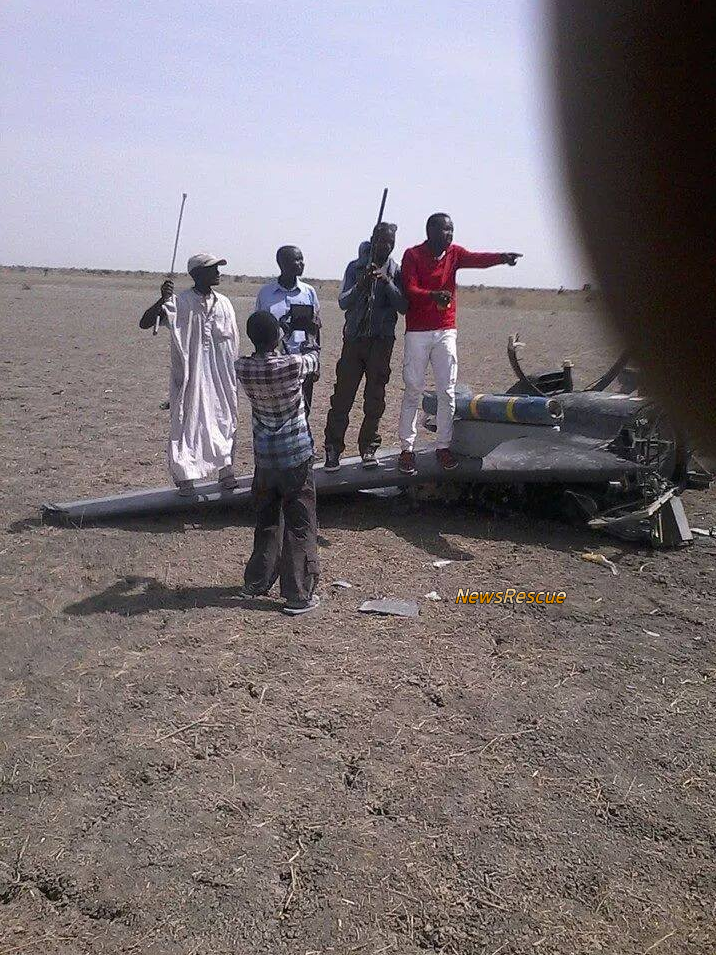
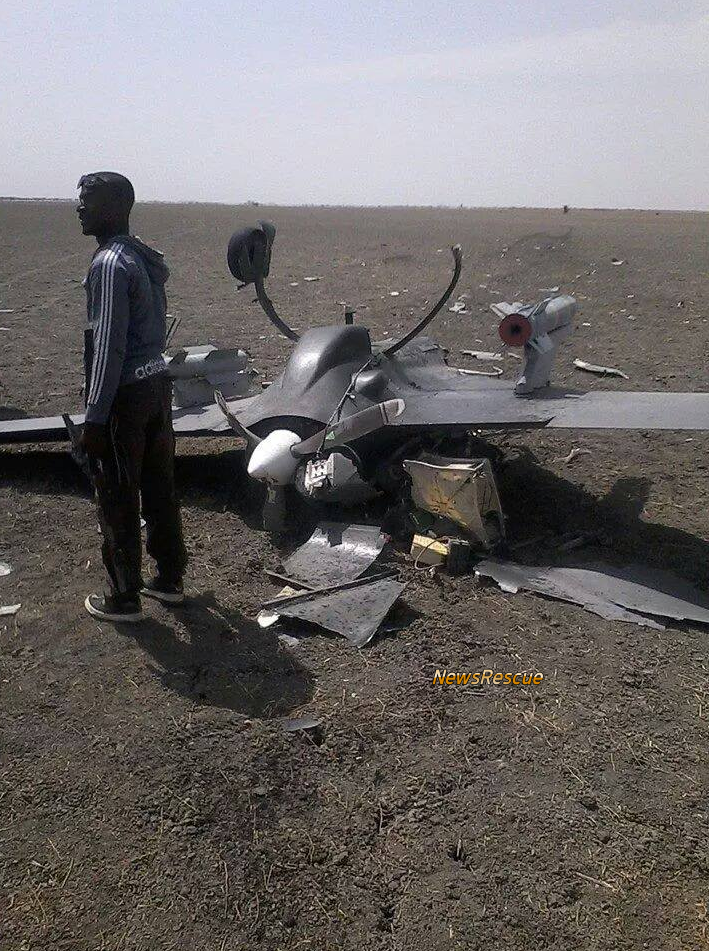
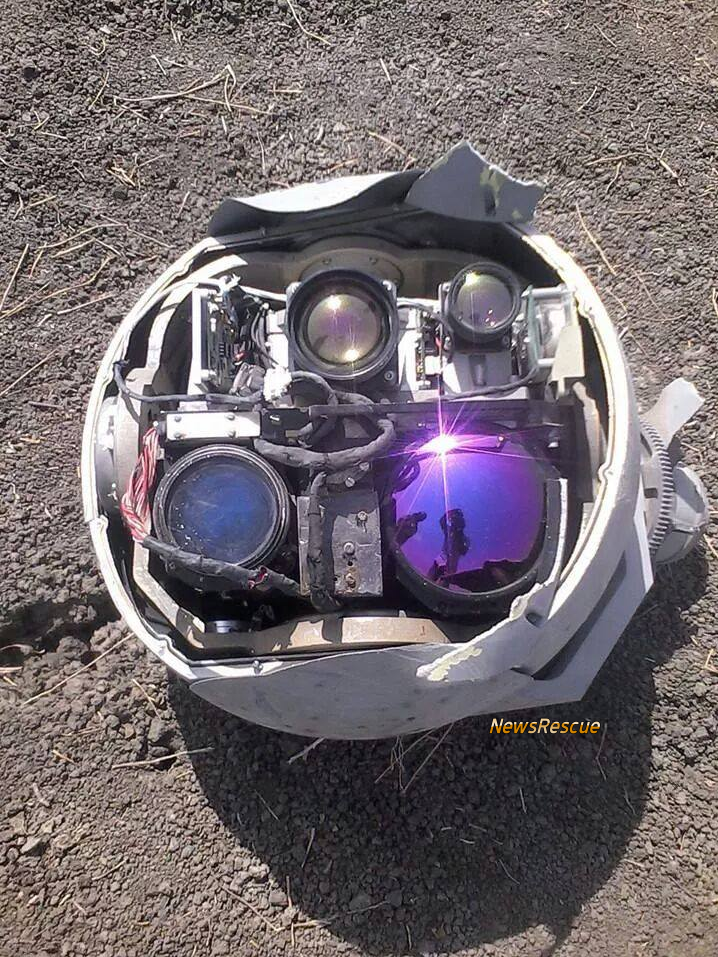
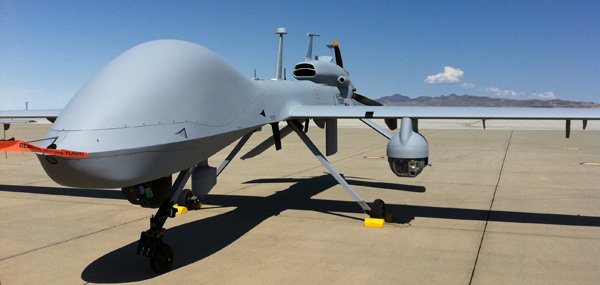
A drone crashed in Dumge village in Mafa Local Government Area of Borno State this afternoon. Dumge is about 30kms North-East of Maiduguri. https://newsrescue.com/wp-content/uploads/2015/01/map-of-borno-state.gif https://newsrescue.com/wp-content/uploads/2015/01/drone-dumge22.png https://newsrescue.com/wp-content/uploads/2015/01/drone-dumge3.png https://newsrescue.com/wp-content/uploads/2015/01/drone-dumge.png https://newsrescue.com/wp-content/uploads/2015/01/drone-dumge41.png This happened “coincidentally” the same day that a drone evaded security and crash landed in the White House. The drone that landed in Borno today was armed with rockets and a full military drone. NewsRescue has been unable to verify more on this suspicious drone as we received the reports from our secret sources who got the images and reports but lack significant capacity to pry deep. Nigeria is not known to be utilizing drones in the war against Boko Haram. The United States is only flying surveillance drones over Nigeria. This full size, 20 feet wing span military drone must be operated from a military base, possibly in a neighboring nation. The drone from preliminary NewsRescue investigation looks like a weapons fitted MALE US Army MQ-1C Gray Eagle shown below. https://newsrescue.com/wp-content/uploads/2015/01/mq-1c-1_s-US-army.jpg Nigeria’s National Security Adviser, Sambo Dasuki has said in UK last week that Chad has links with Boko Haram leadership. Armed drones of this nature cost upwards of $400,000. Maiduguri, capital of Borno state was just attacked Sunday by Boko Haram terrorists in an attacks analysts describe as as a diversion, while the terrorists captured Monguno (population 100,000), 85 kilometers northward of Maiduguri, seizing a military barracks and the ammunition held. Mafa is between Boko Haram captured Monguno and Maiduguri. Drones and jets and choppers have been reported used by Boko Haram against the Nigerian army and Civilian-JTF in recent attacks including the attack that saw over 2500 killed in Muslim predominant Baga and Doro towns at the border with Chad. Armed drones of this nature are sophisticated war equipment, piloted and operated by skilled operators in control centers. This find brings new extremely troubling dimensions to the Boko Haram terror and insurgency war against Nigeria. It further confirms the invasion being a foreign campaign. We have yet been unable to get a reaction from the Nigerian military. This news is highly sensitive and being further investigated. Please stay tuned… http://newsrescue.com/breaking-unmanned-armed-drone-crash-lands-dumge-borno-state-nigeria/#ixzz3Q3MkVSsv 4 Likes 3 Shares |
| Politics › See GMB's WASSCE Results by 1LRNZH(op): 5:46pm On Jan 21, 2015*. Modified: 6:05pm On Jan 21, 2015 |
See GMB's WASSCE Results as released by Government College Katsina (former Katsina Provincial College). English Language - Credit 5 Hausa Language - Credit 5 Literature in English - Pass 7 History - Good 3 Geography - Credit 6 Health Science - Credit 6 Mathematics - Fail 9 Woodwork- Fail 9 [url]http://www.premiumtimesng.com/news/headlines/175384-breaking-katsina-college-releases-buharis-%E2%80%8Bwasc-results.html[/url]
|
| Politics › Re: MUHAMMADU BUHARI, Nigeria’s Strictest Leader... Photos And Video by 1LRNZH: 9:21pm On Jan 12, 2015*. Modified: 11:42pm On Jan 12, 2015 |
[b]11. HONOURS, AWARDS AND LEGACIES In 2003, after the presidential elections were conducted, which Buhari has lost to General Obasanjo, Buhari was awarded the highest national honour, the Grand Commander of the the Federal Republic (GCFR) but he did not show up at the award ceremony and he stated that the Obasanjo government was an illegitimate one and it would be improper for him to accept an award from such a regime. CFR Commander of the Federal Republic DSM Defence Service Medal NSM National Service Medal GSM General Service Medal LSGCM Loyal Service and Good Conduct Medal FSS Force Service Staff CD The Congo Medal -Doctor of Laws, (Honoris causa), University of Calabar, Cross River State. -Doctor of Laws, (Honoris causa) Benue State University -Doctor of Laws, (Honoris causa) Enugu State University -Doctor of Letters (Honoris causa) (D.Litt), University of Ilorin -Doctor of Science (Honoris causa), Abubakar Tafawa Balewa University, Bauchi[/b] https://static.pulse.ng/img/incoming/crop3354224/8552781728-chorizontal-w644/Jonathan-Buhari.jpg 9 Likes 1 Share |
| Politics › Re: MUHAMMADU BUHARI, Nigeria’s Strictest Leader... Photos And Video by 1LRNZH: 9:20pm On Jan 12, 2015*. Modified: 11:39pm On Jan 12, 2015 |
[b]10. JOINING POLITICS A former military dictator, General Buhari has molded himself into a democrat and remains one of the most dominant figures in Nigerian politics. He has contested for the nation's highest office three times -1999, 2003 and 2011 but lost even though the facts be stated, these elections were marred by all sorts of irregularities, and sure, that includes all the political parties involved in the race. So maybe, it is a matter of one outrigging the other. But, worefa...lolz! General Buhari is now of the Congress for Progressive Change (CPC) and from all indications, he will be pitching his tent against the incumbent President Goodluck Jonathan come 2015. As for me, I really don't care who wins (okay, don't let me lie, I actually do care and I will say let the best and most progressive team win even if I am yet to see one), all I want is for the politicians not to set the entire nation ablaze because one party has decided to fakekori and reject the results. This one that we are hearing all sorts of threats from the north to the south (is it Professor Ango Abdullahi's own venomous vituperations now or Mujahid Asari-Dokubo's obese statements?). We don't want another civil war and it will be in everybody's interest that these politicians give themselves brain. Ki won fun ra won lopolo gidi. Nigeria is greater than the aspiration of any single man, and that applies to all of them, including the incumbent and all those who will be doing the Presidential Olympic Games with him.[/b] https://www.dailytrust.com.ng/daily/images/stories/president/M-Buhari.jpg 7 Likes |
| Politics › Re: MUHAMMADU BUHARI, Nigeria’s Strictest Leader... Photos And Video by 1LRNZH: 9:20pm On Jan 12, 2015*. Modified: 11:36pm On Jan 12, 2015 |
9. HIS WORDS -No nation can survive without a decent judiciary and effective law enforcement agencies. (2nd September, 2011). -On why he did not promote himself General, retiring with the rank of a Major-General: “It was the conviction of our regime that, being the Head of State and Commander-in-chief of the Armed Forces, does not mean that you are the overall General. My ultimate goal as at then was to ensure integrity, justice, equity, accountability and transparency in the system. That was why I did away with unnecessarily promoting myself to General.” At the launching of two books: “Nigerian Military in Politics: 1966-2011 and Politics of Transition to Civil Rule in Nigeria” in Zaria, Kaduna State, 5th July 2013. WHAT OTHERS SAY ABOUT HIM https://www.naijarchives.com/wp-content/uploads/2014/07/The-Life-Biography-Family-Photos-General-Muhammadu-Buhari-Nigeria-Strictest-Leader-15.jpg [b]-Truth, like cork, cannot sink. It cannot be sunk. It always floats. Time will vindicate him. -Professor Tam David-West, Buhari's minister of petroleum and energy. After Buhari came out of detention, he told Babangida to tell the world about his corruption. The records are there. The same thing happened with the PTF. He told Obasanjo to publish the report of the panel, but Obasanjo could not publish it because it was a certificate of honour for Buhari. If that Haroun’s report had any page in it that indicted Buhari, Obasanjo would have used that to disqualify Buhari from contesting against him. Buhari is clean. He is not corrupt. To show how Buhari loves Nigeria, he doesn’t like spending Nigerian money frivolously. When he overthrew Shehu Shagari, Buhari never changed any chair or curtain in Dodan Barracks. Buhari used what Shagari was using until he left. As minister, our total pocket money under Buhari was N200 per month. You could spend less than N200 without accounting for it, but anything above N200, you must account for it.When he increased the money to N250, we clapped for him at the executive council. Now, as a former governor of the defunct north- eastern state, former minister of petroleum, former head of state, former executive chairman of PTF, Buhari has no house in Abuja. If he goes to Abuja, he stays in a private hotel. He has no house either uphill or downhill, apart from his house in Kaduna."- -Professor Tam David-West, Buhari's minister of petroleum and energy. -Buhari is a very likeable and honest person. You can always know where you stand with him on any issues, he is very straightforward. He is a man who adheres to principle. -General DOMKAT BALI.[/b] 13 Likes 2 Shares |
| Politics › Re: MUHAMMADU BUHARI, Nigeria’s Strictest Leader... Photos And Video by 1LRNZH: 9:20pm On Jan 12, 2015*. Modified: 11:33pm On Jan 12, 2015 |
[b]8. CRITICISM AND CONTROVERSY ON ISLAMISING NIGERIA: In an interview with Kayode Ogundamisi of Sahara Reporters, he replied to claims that he was bent on Islamizing Nigeria should he become the President: That is ridiculous. There is nobody that will aspire for the leadership of Nigeria and base his manifesto, let me put it that way (chuckles), campaign on religious or even tribal basis. Somebody wants to be a councillor in a local government, then he can afford to do that as a form of a little persuasion. But not when you aspire to represent other constituencies like the House of Representatives, the Senate, Governorship (coughs) or especially the Presidency, you cannot base that on tribalism or religion because once you do that, you have already lost from the beginning. AGE Some Nigerians feel that General Buhari is too advanced in age to lead the nation. When asked about nations like Britain and USA where their leaders are in their 40s, General Buhari said: As far as I am concerned, the Constitution of the Federal Republic of Nigeria states that citizens from the age of 18 and above, no upper limit, can vote and be voted for. To me, that is the most important thing. The Constitution has defined who should run for office and why should anybody start restricting people outside the context of what the Constitution has provided...then if we take a look, many of those who ruled Nigeria were not up to 50, that includes me, IBB, even Gowon, Murtala and even Shagari, Maitama Sule and so on were not up to 30 when they became ministers. Why should the nation be denied people with experience? Let Nigerians decide. By the way, how old is Dimeji Bankole? Just asking ni o #coughs! -ON ABACHA'S INNOCENCE AND WORKING WITH ABACHA One thing that has pitched him against many Nigerians is his stating that the late General Sani Abacha remains innocent. On the 22nd of March, 2012, he uttered the following words: Abacha is innocent because ten years after Abacha, those allegations remain unproven because of lack of facts. He also said that accusations of Abacha's looting are 'baseless'. In 1996, the late General Sani Abacha appointed Buhari to head the Petroleum (Special) Trust Fund (PTF) and he was the head until 1999. Although no one can accuse him of stealing petrodollars, there are still those who criticize him for working with a brutal dictator like Abacha and not condemning his government. -COLLABO WITH ASIWAJU BOLA TINUBU[/b] https://www.naijarchives.com/wp-content/uploads/2014/07/MUHAMMADU-BUHARI-BOLA-TINUBU.jpg [b]As far as many Nigerians are concerned, that Buhari is associating himself with the former Governor of Lagos State and the chief opposition figure in Nigeria, Asiwaju Bola Ahmed Tinubu negates all that he stands for. Why? Because they believe that the Jagaban(k) of Lagos has gotten his hands soiled in numerous deals and allegations of certificate forgery and corruption. -WOLE SOYINKA Nigeria's first Nobel Laureate is one of the most outspoken critics of Buhari, especially over his attempts to rule Nigeria again. In 2007, the erudite scholar wrote a piece entitled 'The Crimes of Buhari' and in it he spelt out many of his grievances with the Katsina general: The grounds on which General Buhari is being promoted as the alternative choice are not only shaky, but pitifully naive. History matters. Records are not kept simply to assist the weakness of memory, but to operate as guides to the future. Of course, we know that human beings change. What the claims of personality change or transformation impose on us is a rigorous inspection of the evidence, not wishful speculation or behind-the-scenes assurances. Public offence, crimes against a polity, must be answered in the public space, not in caucuses of bargaining. In Buhari, we have been offered no evidence of the sheerest prospect of change. On the contrary, all evident suggests that this is one individual who remains convinced that this is one ex-ruler that the nation cannot call to order. Buhari – need one remind anyone - was one of the generals who treated a Commission of Enquiry, the Oputa Panel, with unconcealed disdain. Like Babangida and Abdusalami, he refused to put in appearance even though complaints that were tabled against him involved a career of gross abuses of power and blatant assault on the fundamental human rights of the Nigerian citizenry. Prominent against these charges was an act that amounted to nothing less than judicial murder, the execution of a citizen under a retroactive decree. Does Decree 20 ring a bell? If not, then, perhaps the names of three youths – Lawal Ojuolape(30), Bernard Ogedengbe (29) and Bartholomew Owoh (26) do. To put it quite plainly, one of those three – Ogedengbe - was executed for a crime that did not carry a capital forfeit at the time it was committed. This was an unconscionable crime, carried out in defiance of the pleas and protests of nearly every sector of the Nigerian and international community – religious, civil rights, political, trade unions etc. Buhari and his sidekick and his partner-in-crime, Tunde Idiagbon persisted in this inhuman act for one reason and one reason only: to place Nigerians on notice that they were now under an iron, inflexible rule, under governance by fear. The execution of that youthful innocent – for so he was, since the punishment did not exist at the time of commission - was nothing short of premeditated murder, for which the perpetrators should normally stand trial upon their loss of immunity. Are we truly expected to forget this violation of our entitlement to security as provided under existing laws? And even if our sensibilities have become blunted by succeeding seasons of cruelty and brutality, if power itself had so coarsened the sensibilities also of rulers and corrupted their judgment, what should one rightly expect after they have been rescued from the snare of power” At the very least, a revaluation, leading hopefully to remorse, and its expression to a wronged society. At the very least, such a revaluation should engender reticence, silence. In the case of Buhari, it was the opposite. Since leaving office he has declared in the most categorical terms that he had no regrets over this murder and would do so again. -THE 53 SUITCASES There is also the story of the 53 suitcases owned by the Emir of Gwandu coming from Saudi Arabia, and the father of Buhari's ADC, and that custom officers at the airport, then headed by a custom officer named Atiku Abubakar, the Customs Area Administrator (later the Vice President) were passed through without inspection despite the stringent policies of the new government. This set tongues wagging that if you are close to power or those in power, the laws do not apply to you. However, Buhari has denied this saying that Jokolo did not even want to go to the airport at first. He said in the first interview he granted after he was released from jail: “I said, Mustapha,” Buhari told The News, (July 5, 1993) “your father is coming back today, would you not go and meet him, he said no sir. I said you have to go and meet your father, he is your father, and he went. Unfortunately there was a misunderstanding between the customs officers and the soldiers there. These people never refused their bags to be checked.” Some other investigators dismiss the case as a figment of imagination, citing that there were no 53 suitcases stating emphatically that the suitcases that were not actually searched were those that belonged to Ambassador Dahiru Waziri, and that is normal as a diplomat. Former Vice President Atiku Abubakar has been challenged to confirm the veracity of this claim while records are also said to be at the National Archives for anyone willing to confirm. In short, the Emir of Gwandu did not have any 53 cases and his luggage was checked. Jokolo himself later stated in an interview: Rather, I will like to remind youof what recently happened. I have thrown enough light that the sun itself will be extinguished by the light that has been thrown on this issue. If you believe it, you believe it. If you don’t, you don’t. No matter what I say it will not change anything. But I will like to say just one thing. That thing happened when Buhari was the Head of State and the people who were involved in it were the people close to him. I was his aide-de-camp. The next persons were his Chief of Protocol, Ambassador Dahiru Waziri who is late; the Director General NSO Rafin Dadi who is also late and Alhaji Abubakar Atiku, the former Vice President. Atiku was the one who fired the salvo. After they said it was 35, he said 53. The man who brought these 53 suitcases was Dahiru Waziri. He was from Adamawa State.[/b] 2 Likes 1 Share |
| Politics › Re: MUHAMMADU BUHARI, Nigeria’s Strictest Leader... Photos And Video by 1LRNZH: 9:19pm On Jan 12, 2015*. Modified: 11:27pm On Jan 12, 2015 |
[b]7. OVERTHROW Buhari's overthrow is one of the most dramatic in the history of Nigeria. He was eased out by the same set of officers who propped him into power (a historical parallel with Gowon). The ring leaders of the coup that toppled Buhari included the dudes you know like your Facebook account password: General Ibrahim Babangida (also known as the Phoenix, Maradona and of course, the Evil Genius) and his brother-in-mischief, the late General Sani Abacha (also known as the Khalifa or the Successor). The two had paranoid fear of Buhari and Idiagbon and the rumour mill has it (I hope one day the government will declassify certain documents so we get to know more) that both generals had been implicated in some scandals. IBB on his own, was linked to some drug trafficking and IMF-related loan plundering, and as a general in Buhari/Idiagbon's regime, if you are found guilty of these charges, your own don set be that -summary dismissal from the army plus maybe 700 years imprisonment...lol! If you are lucky enough not to have faced the firing squad. According to the analysis done by Naiwu Osahon, IBB and his clique had to get Buhari and his rigid boys out of the way. They had to shift back their planned day of the coup to August 1985 when news started filtering out that they IBB and co were already pencilled for retirement. They would wait for an inauspicious moment and grab Buhari by the jugular. On the 27th of August 1985, millions of Muslim faithfuls in Nigeria were celebrating the Odun Ileya (Eid el Kabir) and the stern Idiagbon was safely away in Saudi Arabia on Lesser Pilgrimage (Umrah). There was a public holiday and the national mood was festive. No one expected IBB and his boys, or anyone for that matter to stage an ouster at such a period. They were wrong. Instead of IBB to be enjoying fried agbo (mutton) with his beautiful wife and kids at home, he summoned his boys at their various formations all over the country -it was time to make history. David Bonaventure Mark, now the third most powerful man in the nation by virtue of his office as the Senate President of the Federal Republic was the military governor of IBB's Niger State at that time and he provided enough cover for IBB during the coup plotting. As the army chief, IBB would visit Niger State on 'routine inspection tours', and later, he and other generals would meet clandestinely to hatch their plot on how to remove Buhari. Osahon would also state that IBB and co planned the coup that brought IBB in so as to destroy the evidence of the NNPC's $2.8 billion that suddenly developed wings and transformed into a peregrine falcon (and punish the whistleblowers). At a point, when Buhari hinted at stepping down and Idiagbon insisted he would take over, IBB disagreed saying the throne was his, citing experience in plotting coups amongst other things. The SMC was divided. To worsen matters, when IBB proposed that Haliru Akilu, just returning from a course from India be made the new head of the Secret Service, Idiagbon spurned his proposal and even went ahead to select a new head for the agency without consulting IBB, who was the Chief of Army Staff. The stage was set for a showdown. Then the Gloria Okon issue came up, she was arrested at the Murtala Muhammed International Airport with cocaine, and upon being interrogated, she pointed at two top-ranking members of the SMC. Trouble was brewing. While that was on, the late Chief MKO Abiola imported a massive consignment of newsprint (a contraband) into the nation, and Idiagbon had no option but to impound the newsprint worth millions. Again, the Buhari/Idiagbon regime had just made another very powerful enemy (some reports indicate that MKO dropped millions of dollars to fund the Buhari overthrow). As if the turn of events was not bad enough, one Ikuomola was caught while attempting to fly out with a huge batch of cocaine. He was interrogated and in the process, implicated one of the Dantatas, one of Nigeria's most influential families. Both of them were sentenced to death. Immense pressure was then put upon the SMC by the Dantatas that the sentence be commuted to at least a life sentence.[/b] https://www.naijarchives.com/wp-content/uploads/2014/07/MUHAMMADU-BUHARI-MKO-ABIOLA_.jpg [b]The late Chief Moshood Kashimawo Olawale (MKO) Abiola. As you might have expected, the two high-ranking officials of the SMC implicated in the Gloria Okon saga sympathized with the Dantatas. But Buhari and Idiagbon would hear none of that. Idiagbon queried that if the poor could be sentenced to death for drug trafficking, why should the wealthy and affluent be spared? The enemy camp of Buhari/Idiagbon swelled by the day and it got so bad that the SMC was a point completely divided into two camps and Idiagbon had to impose a compulsory leave on IBB, who was also placed under close surveillance. But never underestimate a man with the ways of the wily fox. IBB would later remove the rug under their feet, despite all the close surveillance and wiretapping. Later on, the King of Saudi Arabia, Fahd ibn Abdulaziz ibn Al Saud would invite Idiagbon as a Special Guest (MKO, Shehu Yar'adua and the Dantatas were said to have arranged the whole thing using their immense influence to convince King Saud to invite Idiagbon, hope you get the whole plan? IBB baited MKO with the promise of his contesting for the presidency in a little while) to the Kingdom. Idiagbon, a man of integrity, was deeply honoured by the invitation, and he would leave for the KSA with a team of his supporters in the SMC, and that included the late soldier-poet, Major General Mamman Jiya Vatsa. With Idiagbon out of the country on Umrah, with his supporters, the coast was clear for the gap-toothed General IBB. It was time to strike. And they struck. It was the evening of the 26th of August, 1985, a Monday, and the Head of State Buhari had some four interesting visitors. These were Majors Abubakar Dangiwa Umar (Harvard graduate and former ADC to General Hassan Usman Katsina, former governor of the Northern Region and Chief of Army Staff), Lawan Gwadabe, Sambo Dasuki (son of the deposed Sultan of Sokoto, Ibrahim Dasuki and now the National Security Adviser to President Jonathan) and Abdulmumuni Aminu. The five of them watched the nightly news together and after that, they brought out their guns and placed General Buhari under arrest. The next day, 6am, Brigadier Joshua Dogonyaro went on air to list all the evils of the Buhari regime but he did not state that he had been overthrown. It was Abacha who would later do that -in a cold voice. Later, the putschists would celebrate their success and later met at Bonny Camp on how they would go about selecting a new leader. The meeting was a very colourful one as all the guests arrived in their full combat attire, kitted from head to toe. You can guess those present: - General Ibrahim Badamasi Babangida Major-General Sani Abacha Brigadier-General Joshua Dogonyaro Brigadier-General Aliyu Mohammed (Head of the Military Intelligence) Navy Commodore Murtala Hamman-Yero Nyako (now Governor of Adamawa State, former Chief of Naval Staff (CNS) and owner of one of the largest dairy and mango farms in Nigeria) Lt. Col. Tanko Ayuba (Commander, Nigerian Army Signal Corps) - Lt. Col. Ahmed Abdullahi (Communications Minister) Lt. Col John Nanzip Shagaya (Commander, 9th Mechanized Brigade, Ikeja, Lagos, later Senator representing Plateau North Senatorial District) Major Abubakar Umar (Administrator, Federal Housing Authority) Lt. Col. Anthony Ukpo NB: Other IBB 'boys' included Mohammed Buba Marwa, Chris Garuba, Lawan Gwadabe, Joshua Madaki, John Mark Inienger, Tunde Ogbeha and Ndong Essiet Nkanga. IBB had taught them as an instructor back in the Nigerian Defence Academy or was their superior when he was in charge of the armoured tanks. Idiagbon, far away in the desert kingdom of Arabia was livid with rage. Against all advice (not even an offer of a lifetime retirement in a posh mansion in the oil-rich nation could convince the Kwara General to stay back), he thanked his hosts and headed back to Nigeria where he was hailed as a hero and courageous soldier. But trust the IBB clique, Idiagbon was immediately arrested at the airport and put under house arrest. Vatsa, who was part of the Idiagbon team to Saudi Arabia came back to meet his friend and old classmate as the new Head of State. Vatsa pledged his loyalty to the new government then tendered his resignation. IBB rejected his resignation and appointed Vatsa the Minister of the Federal Capital Territory. You know the rest of the story. JAIL Immediately after IBB overthrew his chief, he knew the danger of letting him loose or walk around freely. So, without wasting time, IBB's boys surrounded Dodan Barracks, arrested Buhari and flung him into jail (his personal property was looted), promptly locking him up the very same day he deposed him. His ADC, Jokolo, whom he had sent to the Ikeja Cantonment to act as a sentry got the beating of his life. From the 27th of August, 1985 till the 14th of December, 1988, Buhari would languish in jail in Benin City, Edo State. His marriage would not survive his 40 months of incarceration.[/b] 7 Likes 3 Shares |
| Politics › Re: MUHAMMADU BUHARI, Nigeria’s Strictest Leader... Photos And Video by 1LRNZH: 9:19pm On Jan 12, 2015*. Modified: 11:22pm On Jan 12, 2015 |
[b]6. PERSONAL STYLE AND FUN THINGS ABOUT HIM -He is said to be the only Nigerian leader who did not touch the prices of petroleum products from Gowon's regime. -Buhari can be strong-headed atimes. At a time, he actually went against the orders of the Commander-in-Chief of the Armed Forces of the Federal Republic of Nigeria, Alhaji Aliyu Usman Shehu Shagari. It was in the year 1983 and some Chadian forces invaded Nigeria via Borno State. Without wasting time, Buhari deployed the troops under his command to the border to repel the Chadians. As he was chasing them, he actually got into the Chadian territory. President Shagari had to order that the Nigerian troops be withdrawn but Buhari flatly refused the Presidential Order. His argument was that doing so would compromise Nigeria's security and territorial integrity. It was not until the Chief of Army Staff, General Inuwa Wushishi intervened that Buhari decided to calm down and back off from the Chadians. But note that he was not the only one who felt that Shagari was unnecessarily interfering with the duties of the military and when Shagari was finally overthrown and replaced with Buhari, it did not come as a surprise to keen observers. -Buhari was also seen as just too iron-fisted, the Nigerian version of a Saparmurat Niyazov. For example, there was the Miscellaneous Offences Decree, under this decree, cheating in examinations, stealing or vandalizing public property such as those of the National Electric Power Authority (NEPA) or the Nigerian Telecommunications Limited (NITEL) means you will be promptly arrested, made to face military tribunals and people were jailed for up to 20 years for these offences. Some felt this was too harsh a punitive measure. Fela Anikulapo-Kuti was sentenced to ten years in prison in what the Amnesty International called trumped up charges. -IBB and Abacha were very terrified of the Buhari/Idiagbon regime and had to orchestrate a coup of survival. According to the former Minister of Defence during Buhari's era, General Domkat Bali: “Babangida and Abacha were really very frightened under Buhari. Nobody knew the reason but they were really hysterically jittery and desperate.” Buhari and Idiagbon were hinted about the plot to overthrow them but the underestimated the capacity of IBB and his gang. The coup to overthrow Buhari has been described as a coup of survival by IBB and his clique. IBB was implicated in a scandal and Buhari and Idiagbon had him slated for retirement and possible prosecution. IBB knew that the game was up for him unless he did something desperate to save his neck. And you know, desperate men do desperate things. IBB's survival instinct kicked in. According to Femi Segun, who worked as a Protocol Officer and Interpreter at the State House: "...IBB was asked to step out of the meeting which was going on because they wanted to discuss about him. For about three hours, IBB, as the then chief of army staff was just walking up and down outside without shoes and cap thinking seriously. We didn’t know what was going on but it was clear that he was asked to step out of the meeting. A few days later, he staged a palace coup."[/b] https://www.naijarchives.com/wp-content/uploads/2014/07/The-Life-Biography-Family-Photos-General-Muhammadu-Buhari-Nigeria-Strictest-Leader-14-Femi-Segun.jpg Femi Segun worked as an Official Interpreter under President Shagari and as a Protocol Officer under Buhari. IBB later had him arrested and interrogated. -However, it must be said that Buhari was not blindly punitive. When 250 politicians from all over the country were declared by investigators not have any case to answer, he ordered all of them released. These included Adamu Ciroma, the late Ikemba of Nnewi, Dim Odumegwu Ojukwu, Audu Innocent Ogbeh, Alhaji Aliyu Maitama Yusuf, Dr. Bode Olowoporoku, Mrs. Mobolaji Osomo, Chief Michael Koleoso and many others. 10 Likes 3 Shares |
| Politics › Re: BUHARINOMICS: As Head Of State, I Refused To Devalue Naira by 1LRNZH: 4:27pm On Jan 09, 2015 |
jdilight:I just replied you in the above post but it triggered a ban. You can see the post is hidden. I have reported to the mods and hoping it will be released soon. I no want type the same response again. Edit: My handle has been unbanned and post release above. Thanks Mods. |
| Politics › UPDATE: Govs Insist Election Must Hold In Adamawa, Borno, Yobe by 1LRNZH(op): 3:29pm On Jan 06, 2015 |
https://punch.cdn.ng/wp-content/uploads/2014/05/Chief-of-Defence-Staff-Air-Marshal-Alex-Badeh-360x225.jpg UPDATED 14:40 Governors of the North-East states of Adamawa, Borno and Yobe rose from an emergency expanded security meeting with President Goodluck Jonathan on Tuesday, insisting that elections must hold in their states next month. There have been fears in many quarters that general elections may not hold next month in the three states that are considered to be the hotbeds of the Boko Haram sect. Jonathan had on May 14, 2013 declared a six-month state of emergency in the three states and renewed it twice at the peak of the sect’s activities. His attempt to further renew the emergency rule in November 2014 was rejected by the National Assembly. At the end of the Tuesday meeting also attended by security chiefs and relevant ministers, the governor’s were of the view that if elections could be held recently in Syria, Iraq, Afghanistan and other war-torn places, that of the North East part of the country could not be an exception. Yobe State Governor, Alhaji Ibrahim Geidam, told State House correspondents that the governor’s told the President to deploy more troops ahead of the general elections. Geidam said the troops on ground in the affected states were not enough to handle the security situation. The governor said, “We have come to brief the President on the security features of our various states, we have come to greet him and we told him of the challenges we have been facing. “We are appealing to the Federal Government to deploy more troops in addition to what we have on ground to arrest the situation in our various states. “We need more troops, the troops that we have on ground in our various states are not enough to contain the situation, so we have appealed to the Federal Government to deploy additional troops with full equipment to tame the situation. “Elections will hold in the states. Election will hold, that is the position of the electoral commission and definitely in all those areas where insurgency exists, elections will hold.” Borno State Governor, Alhaji Kashim Shettima, on his part said elections must hold in the affected states to send a strong signal to the insurgents. He said by not holding elections in the states, the government would be seen to have given in to the antics of the sect. The governor argued that elections could be conducted in Internally Displaced Person’s camps. ————————————————————————————- 12:11pm President Goodluck Jonathan on Tuesday met behind closed doors with governors of the North-East states of Adamawa, Borno and Yobe. The meeting which was aimed at finding a lasting solution to the insurgency in that part of the country was also attended by security chiefs and relevant ministers. All those who spoke with State House correspondents at the end of the meeting expressed the hope that elections would hold in the troubled parts of the country next month despite the violence there. They however said the need for the deployment of more troops to the troubled areas ahead of the elections formed part of discussion at the meeting. Those who spoke with journalists included the Chief of Defence Staff, Alex Badeh; and the governors of Borno and Yobe States. Details later. http://www.punchng.com/news/insecurity-jonathan-meets-north-east-govs-service-chiefs/ |
| Politics › GEJ's Views on GMB: The Buhari We Know by 1LRNZH(op): 9:15am On Jan 06, 2015*. Modified: 9:51am On Jan 06, 2015 |
https://abusidiqu.com/wp-content/uploads/2014/07/Jonathan-Buhari-BN-News-July-2014-BellaNaija.com-011-599x357.jpg President Jonathan in his speech at the World Igbo Congress in Houston, Texas on August 11th, 2014 in paragraph 8 paid glowing tribute to Chief Emmanuel Onyechere Osigwe Anyiam-Osigwe, the first Nigerian to engage in crude oil export trade and own an ocean going crude oil conveying tanker among other distinguished Igbos. “When I checked, it was Gen. Buhari as Petroleum Minister who put his feet down and insisted that the crude lifting contract should be given to Chief Anyiam-osigwe against the pressure by top civil servants in the ministry and NNPC working in cahoot with Shell-BP, Total and Mobil.” “The price Chief Osigwe offered was much more than what the oil majors were paying the Federal govt per barrel of crude. The corrupt civil servants on the payroll of the IOCs knew the IOCs were lifting Nigerian crude for peanuts. They put all stumbling blocks to stop Chief Osigwe with petitions to Gen Buhari not to sign the contract. Gen Buhari saw through the shenanigans of the civil servants and awarded the contract to Chief Osigwe and told him not to disappoint him and Nigeria so that other Nigerians can benefit if Chief Osigwe did well.” LESSON: When next they say Buhari is a tribalist and Islamic bigot, tell them that Chief Emmanuel Onyechere Osigwe Anyiam-Osigwe was not an Hausa/Fulani man and that he was not a Muslim. He was a Christian and Igbo from Nkwerre, Imo State.” http://abusidiqu.com/the-buhari-we-know-a-testimonial-from-goodluck-jonathan/ 1 Like |
| Politics › Re: Southerners In The North - Will You Travel Out During Election? by 1LRNZH: 10:10am On Jan 05, 2015 |
Even to go shopping now in the north is a scary proposition before one bomb blast or Boko Haram attack will happen. Since GEJ cannot guaranty our safety, by providing adequate security we have no choice but to leave and hence be disenfranchised. We hope GMB wins based on those that can vote. Fr. Mbaka is a shining beacon in a vast wilderness of darkness for requesting and preaching CHANGE. 1 Like |
| Politics › FASHOLA Tells GEJ: Stop Losing 400,000 Barrels Of Crude Oil Daily by 1LRNZH(op): 10:03am On Jan 05, 2015 |
https://cdn.akamai.thisdaylive.com/0bef99d6-acf5-4e2c-9779-8fa02ba3fcd4/assets/141014F-Babatunde-Fashola.jpg?maxwidth=400&maxheight=540 Lagos State Governor, Mr. Babatunde Fashola, at the weekend, asked the federal government to stop losing 400,000 barrels of crude oil per day, which he said, could earn the country nearly $7.8 billion per annum at $50 per barrel. The governor also faulted the austerity measures the federal government put in place to stem the impact of the unprecedented decline of oil prices on the international markets, describing the measures as deceptive. He stated this on Sunday at an interactive session with the union leaders of tertiary institutions organised with the vice-presidential candidate of All Progressives Congress (APC), Prof. Yemi Osinbajo and the APC governorship candidate in Lagos State, Mr. Akinwunmi Ambode, at the Tafawa Balewa Square Hall. At the session, the governor said the austerity measures proposed by the federal government “is a deceptive policy. The official excuse it gave that because it was losing 400,000 barrels of crude oil per day, the people have to tighten their belts is not tenable. “Largely because of their inefficiency, they have now come to say tighten your belt as austerity has come. Stop losing 400,000 barrels first because 400,000 barrels even at $50 would give you about $20 million per day. When you multiply that by the number of days in a year you will know how much we are losing.” Fashola, also, faulted the recourse “to an increase in Value Added Tax (VAT) as part of the belt-tightening regime. So before you come back to the citizen to say tighten your belt, you must do your job first. “They are now saying one of the ways they are going to raise money in austerity is that they are going to increase VAT which means that all of the consumables like water and coca-cola would cost more. “That is why we quarrel with that austerity formula. We think that this is a time when you need creative and effective people in the economy. The government that cannot deliver electricity to you and cannot deliver security and could not buy guns for armed forces when oil was selling at over 100 dollars per barrel cannot do it when oil price is 50 dollars per barrel. They cannot do more with less because they cannot do anything with more.” He said the example of Lagos was basically “to demonstrate that government can indeed work. Seven years ago in Lagos, banks used to be robbed and there was no capacity to respond which was a challenge for the present government to confront. “Today there have been no successful bank robberies in Lagos since 2008 except those who go and break ATM. That is a demonstration that government can work. In 2007 there was no street light in Lagos and there was no street that you could point to and say there would be street lights here at night. What that meant is that after 7pm you could not buy fuel. “Street by street, pole by pole we are lighting up Lagos at night. That is a demonstration again that government can work. Have we finished the work? No. In 2007, how many parks and green areas were there in Lagos? There used to be pigs on the Marina, we cleaned it up and demonstrated that these things can be done.” He stated that the next general election presented the most unique opportunity for Nigerians to effect a change in the country’s leadership, noting that this “is the first time Nigerians as ordinary people and citizens have resolved to change a government that they all agree is not doing well.” http://www.thisdaylive.com/articles/stop-losing-400-000-barrels-of-oil-per-day-fashola-tells-fg/198446/ 3 Likes |
| Politics › Arrest Asari Dokubo Now - Middle Belt Forum Patron Tells Security Operatives by 1LRNZH(op): 7:11am On Jan 05, 2015 |
https://punch.cdn.ng/wp-content/uploads/2014/10/Alhaji-Mujaheed-Dokubo-Asari-360x225.jpg 30 Likes 3 Shares |
| Politics › UN Moves To Stop Execution Of 54 Soldiers For Mutiny by 1LRNZH(op): 8:18pm On Jan 04, 2015 |
https://newsrescue.com/wp-content/uploads/2014/07/Ban-Ki-moon.jpghttp://newsrescue.com/un-block-jonathan-government-murder-54-protesting-soldiers-mutiny/#ixzz3NsijiPF0 7 Likes 1 Share |
| Politics › Bomb Explosion Claims One, Injures Several Others In Adamawa by 1LRNZH(op): 7:39pm On Jan 04, 2015 |
A bomb exploded at Lugda village of Mahia local government area of Adamawa state on Sunday morning, killing one person and many other were reported to have sustained various degrees of injuries. An eyewitness accounts revealed that the improvised explosive device, IEDS was suspected to be abandoned by the Boko Haram insurgents during their reigned in the area before they were chased out of the area by the combined efforts of the military and the local Hunter. s Mahia local government area had been one of the areas captured by the Boko Haram insurgents and hoisted their flag before it was recaptured from their control by the military and the hunters. The eyewitness said the unfortunate incident happened on Sunday at about 6:30am while the victims were warming their bodies with the local firewood due to harmattan when one of them sighted a nylon bag with a content hence picked it unknowingly dropped it in the fire. Our source said as soon as one of the victims of the bomb blast dropped it into the fire a loud explosion occurred and resulted in killing one and injuring others who were later rushed to the federal medical center yola for treatment. Confirming the incident Adamawa state police public relations officer (PPRO), DSP Othman Abubakar explained that the situation happened as a result of the ignorance of the victims who acted foolishly without finding out what was the content of the nylon bag before throw it into fire. Abubakar therefore charged the public to be watchful and vigilant and to avoid touching anything strange. He also stressed the need for the public to assist security agent with useful information so as prevent the repeat such ugly occurrence. http://www.thisdaylive.com/articles/bomb-claims-one-injures-several-others-in-adamawa/198380/ |
| Politics › Re: Igbos To Vote For Buhari by 1LRNZH: 7:33pm On Jan 04, 2015 |
You're causing pains o Ndi Igbo
|