ARROBA's Posts
Nairaland Forum › ARROBA's Profile › ARROBA's Posts
 Politics › Re: Enugu, The Pride Of The East. by ARROBA(m): 8:41am On Jul 22, 2013 Politics › Re: Enugu, The Pride Of The East. by ARROBA(m): 8:41am On Jul 22, 2013 |
fly direct to Enugu using Ethiopian Airline. 1 Like
|
| Travel › Re: Ethiopian Airlines Begins Flight To Enugu In August by ARROBA(op): 3:37am On Jul 22, 2013 |
One can actually book a flight from the 28th of August. see Ethiopian Airline website
|
| Travel › Ethiopian Airlines Begins Flight To Enugu In August by ARROBA(op): 7:25am On Jul 18, 2013 |
The management of Ethiopian Airlines has concluded arrangement to commence international flight operations to the Akanu Ibiam International Airport Enugu following the upgrade of the airport to an international airport. There are indications that the inaugural flight maybe on the 27th of August 2013 as plans are in high gear to make that flight happen as promised. It was gathered that other foreign airlines are also weighing the options of flying to Enugu including traffic on the new route. The decision by Ethiopian airline to be the first airline to fly into Enugu Airport may not be unconnected with the high level of patronage the airline is receiving from traders from South East on the far- East routes and as such would like to consolidate against growing competition from other airline on the route This development is laying credence to the promise by President Goodluck Jonathan of the Ethiopian Airlines flight to Enugu which some political gladiators said was another political gimmick to capture votes from the South East. The service would herald the beginning of international operations at the Akanu Ibiam International Airport Enugu. This is coming just as the airline is planning to expand its operations in Nigeria by adding flights to Port Harcourt and Kano. Tewolde Gebremariam chief executive officer of Ethiopian Airlines disclosed recently that the airline is planning to fly to Port Harcourt as well as Northern Nigeria’s largest city Kano, while increasing the number of flight trips to Abuja. http://www.nigerianpilot.com/ethiopian-airlines-begins-flight-to-enugu-in-august/ |
| Politics › Re: FG Keeps Emirates, Turkish Out Of Kano - ...despite Minister’s Pledge - Nobody S by ARROBA(op): 11:38pm On Apr 02, 2013 |
Don't blame the minister...with the level of insecurity in Kano, which airline will like to fly their. |
| Politics › FG Keeps Emirates, Turkish Out Of Kano - ...despite Minister’s Pledge - Nobody S by ARROBA(op): 11:36pm On Apr 02, 2013 |
The Ministry of Aviation has continued stalling over the request by some foreign airlines to expand their operations to Kano, in spite of assurances given by the minister two weeks ago that this would be achieved by the end of March. Emirates and Turkish airlines were among those that applied for approval to fly the Kano and Abuja routes a year ago, but the ministry initially blocked them and asked them to go to Enugu instead. Under pressure from the National Assembly after a report by Daily Trust in August last year, the ministry agreed to approve the airlines’ requests. On March 15, Aviation Minister Stella Oduah said in Kano that the two airlines would begin their Kano operations by the end of last month. But investigations by Daily Trust show that despite those assurances, the ministry is still stalling over approving additional landing slots which the airlines would use to expand their operations. When she appeared before a House of Representatives committee in November last year, the minister told lawmakers the necessary agreements would be signed on December 3 to give the airlines additional slots. “The minister has continued to foot-drag on signing the Bilateral Air Services Agreement (BASA) on increasing the number of landing slots for the airlines,” a source who is privy to the matter told Daily Trust. Our correspondent’s checks in Kano revealed that none of the airlines have established offices at the Kano airport as yesterday. Mrs Oduah’s pledge on March 15 was made at the commissioning of the remodeled Malam Aminu Kano International Airport, when she said also that the coming of the foreign airlines to Kano was part of her ministry’s attempt to revive the lost glory of the historic airport. Airport officials told Daily Trust that they consider the minister’s statement as merely “political” because there was nothing ground to indicate Turkish and Emirates airlines will come to Kano any time soon. Our correspondent gathered that the remodelled international wing itself had not been put to any use, two weeks after its commissioning. The place was locked immediately after dignitaries left from the commissioning event, an airport official said. When contacted, the airport’s information officer Musa Hassan Shawai said he had no idea when the foreign airlines will start operating in Kano. On the unused renovated terminal, he said the airport’s management was trying to “make it operational” and will put it to use this week. ‘We can’t force them’ When asked why Turkish and Emirates have not commenced flight operations in Kano as earlier indicated by the minister, her spokesman Mr. Joe Obi said the airlines should be the ones to answer the question and not the ministry. Obi said the ministry has approved that the airlines should fly into Kano but when they would start flying would not be determined by the ministry. “We can’t force the airlines to start operations in Kano,” he said. But Turkish, Emirates and Etihad airlines, which the ministry said were given clearance to expand to Kano, have consistently declined to comment on the matter. When contacted at the weekend, Mr. Ariyo Akinfenwa, media consultant to Turkish airlines, said the airline’s management would not want to comment on the matter for now. He said the process is not entirely complete and so the company would not make any comment until all issues around the Kano route expansion were cleared. Emirates airlines could not be reached for comments. Media consultant to Etihad, Sessema PR, promised to get information from the management and revert back to our correspondent. But they were yet to provide any response by last night. In the beginning… The controversy over some foreign airlines wanting to expand to Abuja and Kano came up in August last year when it emerged that the minister had asked the airlines to go to Enugu instead. When Daily Trust was doing the story in August, at first the minister’s media assistant Mr. Toyin Okpaise confirmed the airlines were asked to re-route to Enugu, but the ministry days later changed its tune and denied this. Later on, the House of Representatives Committee on Aviation opened an investigation of the matter, and at a hearing in November, the minister said she would sign agreements on December 3 last year to allow the airlines’ requests. But on December 2, the aviation ministry run a newspaper advertorial where it insisted that under the existing BASA with the United Arab Emirates, the Emirates and Etihad airlines had enough landing slots to expand to Kano, and so they “do not need any extra approvals from the minister.” Speaking to Daily Trust on the issue, a member of the House Aviation committee Rep. Mukhtari Mohammed Ciromawa (PDP, Kano), said the committee had submitted its report to the House but he did not disclose the contents. Reacting to the inability of the aviation ministry to fulfill its promise, Kano-based industrialist and international businessman, Alhaji Sa’idu Adahama, said they will continue to appeal to the minister to keep to her word. He said allowing the foreign airlines to come to Kano “is not a favour, but a right for the development of the economy of northern Nigeria.” He said the minister’s announcement had been received by the business community as a “booster” because going to Lagos to connect flights was a great burden to them. “The abandonment of Kano airport is really harmful to the economy of Kano and northern Nigeria which has already deteriorated,” he said. “If we have to import things by air, we can’t import them to Kano airport, we have to import them to Lagos or in some cases to Abuja before they come to Kano at an extra cost.” http://www.dailytrust.com.ng/index.php/top-stories/53772-fg-keeps-emirates-turkish-out-of-kano-despite-minister-s-pledge-nobody-stops-them-ministry |
| Politics › Secret American Diplomatic Dispatches: Biafran Civil War by ARROBA(op): 11:16pm On Feb 24, 2013 |
http://www.nigeriavillagesquare.com/forum/main-square/75334-secret-american-diplomatic-dispatches.html Secret American diplomatic dispatches, spread over 21,000 pages, provide previously unknown information about the Nigerian Civil War. Early in the morning of 1 July 1967, Nigeria’s young head of state, Colonel Yakubu Gowon, was feeling uneasy in his office at the Supreme Headquarters, Dodan Barracks in Lagos. The unease was a result of his being ceaselessly pressured to authorize a military invasion of the breakaway Republic of Biafra. Thirty officers had been recalled from courses abroad. Trains and truck convoys, bearing fuel, supplies and men, were still leaving Kano and Kaduna for the south of River Benue. Colonel Mohammed Shuwa of the First Area Command had moved his command headquarters southwards and set it up in Makurdi. The 2nd Battalion was already headquartered in Adikpo. Schools and private homes had been commandeered for the use of Major Sule Apollo and his 4th Battalion in Oturkpo. They were itching for action. The same day, Major B.M. Usman “a member of the intimate northern group around Gowon” told the American defense attaché: “I do not know what in hell he is waiting for; the boys are all ready to go. They are only waiting on his word.” Members of the Supreme Military Council, who had been meeting twice daily, were waiting for his word. The whole nation was waiting. Biafra, which was on high alert, was also waiting. On 27 June 1967, Cyprian Ekwensi, famous writer and Biafra’s Director of Information Service, through the Voice of Biafra (formerly Enugu Radio), urged Biafrans to be prepared for an invasion on June 29 since “Northerners have often struck on 29th day of the month.” He was alluding to the day northern officers, led by Major T.Y. Danjuma, seized Gowon’s predecessor, Major- General Aguiyi-Ironsi, and killed him in a forest outside Ibadan. Gowon, then 31, had been running the affairs of 57million Nigerians for 10 months. It had not been easy. Chief Obafemi Awolowo, his 58-year old trusted deputy and adviser, was with Okoi Arikpo and Philip Asiodu, permanent secretaries of the ministries of External Affairs and Trade and Industries respectively. They were preparing to put the noose on the neck of the Anglo-Dutch oil giant, Shell-BP, which had frozen royalty payments due to the Federation Account on 1 June 1967 and had offered to pay the Biafran government £250,000. Lieutenant Colonel Odumegwu Ojukwu, Biafran leader, had ordered all oil companies to start paying all royalties to Enugu because they were operating in a new country or risk heavy penalties. Specifically, he demanded a minimum of £2million from Shell-BP. The Federal Government had imposed an economic blockade on Biafra. It entailed barring all merchant vessels and sea tankers from sailing to and from Koko, Warri, Sapele, Escravos, Bonny, Port Harcourt, Calabar ports, which Ojukwu had declared part and parcel of Biafra. Biafra controlled the land on which the oil installations sat; the Nigerian government controlled the coastal entrance and exit to those lands. Shell-BP was confused as to whose order should be obeyed. Sir David Hunt, the British High Commissioner to Nigeria, told his American counterpart after the meeting with the Nigerian delegation: “Awolowo is very firmly in control of Ministry of Finance and he is giving Stanley Gray, Shell’s General Manager and other experts from London a very difficult time for the past three days.” They persuaded Awolowo to accept a deal that would favour the Nigerian government and, at the same time, would predispose oil workers and the £150million investment to danger in the hands of Biafran military forces. Awolowo refused, arguing that anything short of the status quo was recognition of Biafra and concession to the rebels. As for security of investments and personnel, he argued that once royalties were paid, the Nigerian government would have the capacity to fund whatever action it would take on the rebels and Shell-BP’s investments would be safe. Gowon paced to the large outdated map of the country by the door to his office. When he asked Awolowo to come and join his government, Awolowo said he would accept only if Gowon did something about the dominance of North over the rest of the nation. A month before, Gowon had broken up the North into six states, but the map by the door still showed the old Nigeria, with an imposing North at the top. He ran his finger around the boundaries of Biafra and asked himself: “How can I authorize an invasion of my own people?” He knew what it meant to be resented. He was not the most senior officer in the army. He was not a Muslim Hausa or Fulani from Kano, Kaduna or Sokoto. He was a Christian from one of the small minorities that dot the North and yet, events had promoted him to the position of the Head of State and Commander-in-Chief–to the chagrin of many northern officers, politicians, and emirs. He knew the Igbo were resented in the North for succeeding where indigenes had failed. His Igbo lover, Edith Ike, told him her life was threatened twice in Lagos since she returned from the North in March. According to the secret US document of 1 July 1967, Edith’s parents, having lived in the North for 30 years, where she too was born, had fled back to the East in October 1966 because of that year’s massacre of the Igbo. Not 30,000 but around 7,000 were killed, according to the American documents. Donald Patterson of the Political Section and Tom Smith of the Economic Section travelled from the US Embassy in Lagos to the North after the pogrom. “The Sabon-Garis were ghost towns, deserted, with the detritus of people, who had fled rapidly, left behind. Most Northerners we talked to had no apologies for what had happened to the Ibos, for the pogrom that had killed so many. There were exceptions, but in general, there was no remorse and the feeling was one of good riddance. “One day, our Hausa gardener attacked and tried to beat up our Ibo cook. We fired the gardener, but not long afterwards, the cook left for the East,” said Patterson. Earlier that week, Gowon called the West German Ambassador in Lagos. The Germans were eager to be in the good graces of the Gowon administration. A war loomed. And in wars, buildings, roads, bridges, and other infrastructure are destroyed. These would need rebuilding. The contract for the 2nd Mainland Bridge (later called Eko Bridge) was signed two years earlier by the Ambassador, CEO of Julius Berger Tiefbau AG and Shehu Shagari, Federal Commissioner for Works and Survey. That was Julius Berger’s first contract in Nigeria. It was due for completion in less than two years and they wanted more bilateral cooperation. The ambassador assured Gowon over the phone that he had taken care of all the details and guaranteed the safety of Edith, the nation’s “First Girlfriend”. On the evening of 30 June, just before her departure on a commercial airline, Edith told the American Defense Attaché Standish Brooks, and his wife, Gail, that she actually wanted to go to the UK or USA, but Jack, as she affectionately called Gowon, insisted that she could be exposed to danger in either of the two countries. Germany, he reasoned, would be safer. To Major B.M. Usman and other northern officers around Gowon, who had attributed his slow response to the secession to the fact that his girlfriend was Igbo and that her parents were resettled in the East, it was such a huge relief that at the Supreme Military Council meeting of 3 July 1967, Gowon authorized the long awaited military campaign. Edith had safely landed in West Germany. Gowon told the gathering: “Gentlemen, we are going to crush the rebellion, but note that we are going after the rebels, not the Ibos.” The military action, which was to become the Nigerian Civil War or the Biafran War or Operation Unicord, as it was coded in military circles, officially started on 6 July 1967 at 5 a.m. The North was minded to use the war as a tool to reassert its dominance of national affairs. Mallam Kagu, Damboa, Regional Editor of the Morning Post, told the American consul in Kaduna: “No one should kid himself that this is a fight between the East and the rest of Nigeria. It is a fight between the North and the Ibo.” He added that the rebels would be flushed out of Enugu within six weeks. Lt. Colonel Hassan Katsina went further to say with the level of enthusiasm among the soldiers; it would be a matter of “only hours before Ojukwu and his men were rounded up”. The northern section of the Nigerian military was the best equipped in the country. To ensure the region’s continued dominance, the British assigned most of the army and air force resources to the North. It was only the Navy’s they could not transfer. All the elite military schools were there. The headquarters of the infantry and artillery corps were there. Kaduna alone was home to the headquarters of the 1st Division of the Nigerian Army, Defense Industries Corporation of Nigeria (Army Depot), Air Force Training School and, Nigerian Defence Academy. Maitama Sule, Minister of Mines and Power in 1966, once told the story of how Muhammadu Ribadu, his counterpart in Defence Ministry, went to the Nigerian Military School, Zaria, and the British Commandant of the school told him many of the students could not continue because they failed woefully. When Ribadu thumbed through the list, Sule said, it was a Mohammed, an Ibrahim, a Yusuf or an Abdullahi. “You don’t know what you are doing and because of this you cannot continue to head the school,” an irate Ribadu was said to have told the commandant. Shehu Musa Yar’Adua was one of the students for whom the commandant was sacked. “You can see what Yar’Adua later became in life. He became the vice president. This is the power of forward planning,” Sule declared. Unknown to the forward planners, according to the US documents, Ojukwu had been meticulously preparing for war as early as October 1966, after the second round of massacre in the North. He had stopped the Eastern share of revenues that were supposed to accrue to the Federation Account. By 30 April 1967, he had recalled all Igbos serving in Nigeria embassies and foreign missions and those that heeded his call were placed on the payroll of the government of Eastern Region. The 77,000 square kilometres of the Republic of Biafra–a mere 8 per cent of the size of Nigeria–was already divided into 20 provinces, with leaders selected for each. They had their own judiciary, legislative councils, ministries and ambassadors. Alouette helicopters and a B26 bomber were procured from the French Air Force through a Luxemburg trading company. Hank Warton, the German-American arms dealer, had been flying in Czech and Israeli arms via Spain and Portugal since October 1966. The military hardware, they could not get, they seized. A DC3 and a Fokker F27 were seized from the Nigerian Air Force in April. NNS Ibadan, a Nigerian Navy Seaward Defence Boat (SDB) that docked in Calabar Port, was quickly made Biafran. Major Chukwuma Nzeogwu, who was supposed to be in Enugu in prison for his role in 1966 coup, joined in training recruits in Abakaliki. Foreign mercenaries were training indoctrinated old people, young men and teenagers recruited as NCOs [Non-commissioned Officers] in jungle warfare, bomb making, mortar and other artillery firing. Ojukwu, through speeches, town hall meetings, market square performances and radio broadcasts, succeeded in convincing his people that their destiny was death or a separate state. All his performances in Ghana that culminated in the Aburi Accord of January 1967, or discussions with the Awolowo-led National Conciliation Committee five months later, turned out to be ruse. The underground war preparations, the secret arms stockpiles openly manifested themselves as Ojukwu’s stubborn refusal to accept offers or concessions during these peace meetings. But the Biafrans knew that their vulnerable line was along Ogoja, Ikom, Calabar, Port Harcourt, and Yenogoa. Support from the six million people making up the Eastern minorities was very much unsure. The minorities viewed their leaders in Biafra high command as traitors. And without the minorities, Biafra would be landlocked and most likely, unviable as a state. More so, their vast oil and gas resources were the reason they contemplated secession in the first place. The Biafra high command believed that if there was going to be any troop incursion from there, they are going to be transported through ship. They already had a B26 bomber to deal fire to Nigeria’s only transport ship, NNS Lokoja, anytime it approached the Biafran coastline. The Biafrans also knew that Gowon wanted to respect the neutrality of Midwest and not invade through Niger Bridge, which would have driven the people of the Midwest into waiting Biafran hands. But if Gowon changed his mind and there was a general mobilization of the two battalions of the federal troops there, they had trustworthy men there that would alert Enugu. And if that failed, according to the US documents, the Niger Bridge had been mined using “explosives with metal covering across the roadbed at second pier out from the eastern side”. The Biafrans also knew that the Yoruba, who were sworn enemies of the Northern hegemony, would never join the North militarily or politically against the Biafrans. When Gowon vouched to “crush the rebellion,”progressive Yoruba intellectuals deplored the language. Professor Hezekiah Oluwasanmi, Vice Chancellor of University of Ife, described the use of the word as unfortunate. Justice Kayode Eso of the Western Court of Appeal said: “Crushing the East was not the way to make Nigeria one.” Mr. Strong, the American consul in Ibadan, whom they had been speaking to, confidentially wrote: “As intellectuals and modernizers, they see the conflict in terms of continuing determination of conservative North to dominate the more advanced South and they expressed fear that once North subdues East, it will seek to assert outright dominance over the West. The centre of trouble might then swing back to the West, where it all started.” The Biafrans understood, therefore, that their strongest defence perimeter would be along Nsukka, Obudu, Gakem and Nyonya in Ogoja province, where they share border with the North. That was where they concentrated. On 8 July after three days of fighting, only four Biafran troops were dead and nine wounded in Obudu, while up to 100 Nigerian troops were dead, according to the Irish Embassy official, Eamon O’tuathail, who visited the Catholic Mission Hospital in Obudu. He said: “Forty five (45) of the dead had already been buried and the villagers were seen carrying the heads of the remaining around town.” In June before fighting started, Ojukwu charged on Biafra Radio: “Each Biafran soldier should bring back ten or twenty Hausa heads.” At Nyanya, Nigerian troops attempted to seize the bridge linking Obudu and Ogoja, but were beaten back by the Biafran troops on 7 July at 1400hrs. According to the New York Times’ Lloyd Garrison’s dispatch of 8 July: “The Biafran Air Force–a lone B-26 fighter bomber–flew sorties from Enugu today, bombing and strafing enemy columns. Asked what damage it had inflicted, its European pilot replied: “Frankly, I don’t know. But we made a lot of smoke. Hundreds of Enugu pedestrians waved and cheered each time the plane returned from a mission and swooped low over the city buzzing Ogui Avenue.” Tunde Akingbade of the Daily Times, who was returning from the frontlines, said the first Nigerian battalion in Ogoja area was “almost completely wiped out by a combination of mines and electrical devices (Ogbunigwe)”. In the first few weeks of the war, the Biafrans were clearly on top. “Enugu is very calm,” the confidential cable of 13 July 1967 noted. “Ojukwu is dining with Field Commanders in State House tonight.” On the federal side, confusion reigned. They had grossly underestimated Biafran capabilities. “Gowon and his immediate military advisers believe they can carry out a successful operation putting their trust in the superiority of the Hausa soldier,” the British High Commissioner, Sir David Hunt, told his American counterpart on 31 May 1967. He said further: “A northern incursion would be hastily mounted, ill-conceived and more in the nature of a foray.” Even the Nigerian infantry, which advanced as far as Obolo on Oturkpo-Nsukka Road, was easily repelled. It ran out of ammunition. At the Supreme Headquarters in Lagos, they were accusing Shuwa, the commander, of not sending enough information about what was going on. Shuwa counter-accused that he was not getting enough and timely orders. Requests for ammunition and hardware procurement were chaotically coming to the Federal Armament Board from different units, not collectively from the central command. Major S.A. Alao, acting commander of Nigerian Air Force (after George Kurubo defected to Biafran High Command) together with the German adviser, Lieutenant Colonel Karl Shipp, had travelled to many European cities to buy jets. They were unsuccessful. Gowon had written to the American president for arms. The State Department declined military assistance to either side. Gowon replied that he was not requesting for assistance, but a right to buy arms from the American market. That too was rejected. The CIA had predicted a victory for Ojukwu, but American diplomatic and consular corps in Nigeria predicted victory for the Federal side and concluded that a united Nigeria served American interests better than the one without the Eastern Region. Two conflicting conclusions from an important department and a useful agency. The American government chose to be neutral. Dean Rusk, America’s Secretary of State said: “America is not in a position to take action as Nigeria is an area under British influence.” The British on the other hand were foot-dragging. At the insistence of Awolowo, “the acting prime minister” as he was called in diplomatic circles, Gowon approached the Soviet Union. According to a secret cable (dated 24/08/67) sent by Dr. Martin Hillenbrand, American Ambassador in East Germany, to his counterpart in Lagos, MCK Ajuluchukwu, Ojukwu’s special envoy, met Soviet Ambassador to Nigeria, Alexandr Romanov, in Moscow in June 1967. Romanov said that for USSR to recognize Biafra and supply it arms, the latter had to nationalize the oil industry. Ojukwu refused, saying that he had no money to reimburse the oil companies and that Biafrans did not have the expertise to run the oil installations. A month later, Anthony Enahoro, the Federal Commissioner for Information and Labour, went to Moscow, signed a cultural agreement with Moscow and promised to nationalize the oil industry, including its allied industries once they got arms to recapture them from the Biafrans. Within days, 15 MiGs arrived in sections in Ikeja and Kano airports, awaiting assemblage. There was no nationalization. Meanwhile, buoyed by the confidence from early success, the Biafrans went on the offensive. Their B26 (one of the six originally intended for use against the Nigerian Navy) was fitted with multiple canon and 50mm calibre machine gun mounts. It conducted bombing raids on Makurdi airfield, Kano and Kaduna. Luckily for Nigeria, the two transport DC3s had gone to Lagos to get more reserve mortar and 106-artillery ammo. In Kano, there were no fatalities, only a slight damage to the wing of a commercial plane. Kaduna, however, was not that lucky. On 10 August 1967, the B26 dropped bombs on Kaduna airbase, damaging many buildings and the main hangar. The German consulate in Kaduna confirmed that a German citizen, a Dornier technician tasked with maintaining Nigerian military planes, was killed and two others injured. A week later, the senior traffic control officer, A.O. Amaku, was arrested for sabotage. He was accused of failing to shut off the airport’s homing device, thus giving the Biafran plane navigational assistance. His British assistant, Mr. Palfrey, was similarly suspected. He resigned and immediately returned to the UK. However, Major Obada, the airbase commanding officer and an Urhobo from the Midwest, strongly defended the accused. The daring bomb raid provoked many more Northern civilians to run to the nearest army base and enlist to fight. According to a report by US Ambassador Elbert Matthews, cabled to Washington on 3 July 1967, unidentified men tried to bomb the police headquarters in Lagos on the night of 2 July. They attempted to drive an automobile into the compound, but the guards did not open the gate. They packed the car across the street near a small house opposite a petrol station. Leaving the car, the men fled and within seconds, an explosion took place. The house was demolished and all its occupants killed, but the petrol station was unaffected. Eleven people, including some of the guards at the police headquarters, were injured. Two hours later, a second explosion, from explosives in a car parked by a petrol station, rocked Yaba. This time, the station caught fire. The ambassador remarked: “It is possible this is a start of campaign of terrorism…public reactions could further jeopardize safety of Ibos in Lagos.” And sure it did. A Lagos resident, who visited the police headquarters after the attack, told the Australian ambassador “Ibos must be killed.” There was panic all over Lagos. Anti-Igbo riots broke out. Northern soldiers at the 2nd Battalion Barracks in Ikeja used the opportunity to launch a mini-version of the previous year’s torture and massacre of the Igbo in the North. On 7 July 1967, Lagos State governor, Lieutenant Colonel Mobolaji Johnson, condemned the bombing in a radio broadcast. “A good number of Igbos in Lagos is innocent and loyal to the federal government. It is only fair that they be allowed to go about their business unmolested so long as they abide by the law and are not agents and evildoers,” Johnson said. He called for Lagosians to join civil defence units and for Easterners to come and register with the police. Meanwhile, the corpses of troops and soldiers wounded in Yahe, Wakande, Obudu and Gakem that arrived Kaduna by train on 11 July 1967 sparked enormous interest in enlistment and volunteering. Recruitment centres were established in Ibadan, Enugu, Lagos and Kano. But it was at the Kano centre, headquarters of the 4th Battalion of the Nigerian Regiment that generated the biggest number of recruits. According to the US confidential cable of 17 July 1967, 20,000 of these were veterans, who had been recruited to fight on the British side in Burma. The Burma veterans marched angrily to the recruitment offices to replace those that had been killed or injured. Around 7,000 were accepted. Of these, 5,000 were immediately sent to the frontline. They said they needed no training; only guns. As they advanced, towards the outskirts of Ikem, 4km southeast of Nsukka, when mortal fires from the Biafran artillery landed close by, inexperienced recruits ducked for cover behind their transport columns out of fear and incompetence in bush warfare. Not these Burma veterans. Damboa, the Regional Editor of the Morning Post, was embedded with some of these veterans under the command of Major Shande, formerly of the 5th Battalion, Kano, which Ojukwu commanded in 1963. One day, at about 2a.m, Biafran forces began firing from the jungle in the hope of drawing a return fire if the enemy was ahead. “But the veterans were too smart and began to creep towards the source of firing. After some time, the Biafran troops began to advance thinking that there were no federal troops ahead since there was no return of fire. They walked straight into the pointing guns of these veterans, their fingers squeezed the triggers,” said Damboa to a US Consulate officer named Arp. These veterans were shooting at innocent Igbo civilians, too. Damboa further told Arp, when he came back from the frontlines on 17 September 1967, that “federal troops were shooting most Ibo civilians on sight, including women and children except for women with babies in their arms. Initially they observed the rules laid down by Gowon on the treatment of civilians. Then, after the takeover of the Midwest, they heard stories that Ibo soldiers had killed all the northerners they found residing in the Midwest. Since that time, Federal troops have been shooting Ibo civilians on sight,” added Damboa. The Midwest Invasion Something was happening to Biafran soldiers, which the Federal troops observed but could not explain. Indeed, the fortunes of the Federal troops were improving. Colonel Benjamin Adekunle’s 3rd Marine Commando had landed on 25 July 1967 at Bonny Island, establishing a heavy presence of federal forces in the creeks. Two L29 Delfins fighter jets from Czechoslovakia (NAF 401 and NAF 402) were at the Ikeja Airport and battle ready. Five more, on board Polish vessel Krakow, were a week away from the Apapa Ports. Major Lal, an ammunition ordnance officer seconded from the Indian Army to Nigeria, had arrived from Eastern Europe, where he had gone to acquire information necessary to utilize Czech aerial ordnance. Sections of 15 Soviet MiG bombers hidden in NAF hangars were being assembled by 40 Russian technicians lodging in Central Hotel, Kano. Bruce Brent of Mobil Oil was flying jet oil to Kano to fuel these bombers. Captain N.O.Sandburg of Nigerian Airlines had flown in seven pilots, who had previously done mercenary work in South Africa and Congo, to fly the MiGs. Names, birthdates and passport numbers of 26 Russians, who were to serve as military advisors had been passed to Edwin Ogbu, Permanent Secretary, External Affairs Ministry. They were in Western Europe awaiting a direct flight to Lagos. But George Kurubo, the Federal Air Force Chief of Staff, who had earlier joined the Biafran high command, had defected back to the fold and had been sent to Moscow as ambassador to facilitate the flow of more arms from the Soviets. Lt. Colonel Oluwole Rotimi, Quartermaster-General of the Nigerian Army, went to western Europe with a fat chequebook. What followed was the arrival of Norwegian ship, Hoegh Bell, bearing 2,000 cases of ammunition; and British ship, Perang, which discharged its own 2000 cases of ammunition. A German ship Suderholm also arrived. Those in charge of it claimed she was in Apapa to offload gypsum. But the US defense attaché reported that it was carrying “300 tonnes of 60mm and 90mm ammo.” The Ghanaian vessel, Sakumo Lagoon, was already in Lome, heading to Apapa to discharge its own ammo. A cache of 1,000 automatic fabriquenationale rifles had arrived Lagos by air on 8 August 1967 from the UK. Speaking secretly to UK Defence Attaché, Lt. Colonel Ikwue said he too had gone to the German Defence Firm, Merex, to buy ammunition: 106mm US recoilless rifles at $86 per round; 84mm ammo for the Carl Gustav recoilless rifles at $72 per round; 105mm HEAT- High Explosive Anti-Tank warheads at $47 per round. Ikwue also bought three English Electra Canberra, eight Mark II Bombers at $105,000 each, 15 Sabre MK VI-T33 Jets at $100,000 each. With all of these, Awolowo, rejected Hassan Katsina’s request for funding of 55, 000 more rifles for new recruits. However, he agreed once Gowon intervened and assured him it was not a request inspired by fraudulent intentions. Federal troops had captured Nsukka, 56km from Enugu. Over 200 non-Igbo Biafran policemen had fled across the Mamfe border into Cameroun. In Ogoja, the Ishibori, Mbube and other non-Igbo Biafrans welcomed the federal troops after driving out the Biafran troops in a fierce battle. The Biafrans blew up the bridge over the Ayim River at Mfume as they retreated. The momentum was with the Federal side, but they knew their victories were not only because of their military superiority. At critical stages of battle, even when the Biafrans were clearly winning, they suddenly withdrew. An instance was on 15 July 1967, to the west of Nsukka on the route to Obolo. According to a conversation Colonel J.R. Akahan, Nigeria’s Chief of Army Staff, had with British Defence Advisor, the Nigerian infantry companies of the 4th Battalion, totally unaware of the presence of the 8th Battalion of the Biafran army, were buried under a hail of bullets and mortar. Yet, the Biafran forces began to retreat. This enabled the remnants of the federal infantry company to regroup and successfully counter-attack. Even more senior Biafran commanders that should have been aware that the area had come under federal control were driving into the arms of the federal side. Nzeogwu and Tome Bigger (Ojukwu’s half-brother) were victims of the mysterious happening. Ojukwu initially put this down to breakdown of communication in the chain of command. During a special announcement over Biafran radio on 15 July 1967, Ojukwu said: “Yesterday, a special attack, which would have completely sealed the doom of enemy troops in the Nsukka sector of the northern front, was ruthlessly sabotaged by a mysterious order from the army high command…Our valiant troops were treacherously exposed to enemy flanks.” At 9.30p.m on 8 August 1967, Biafran forces invaded the Midwest. In the recollection of Major (Dr.) Albert Nwazu Okonkwo, military administrator of Midwest, made available in confidence through an American teacher living in Asaba to Clinton Olson, Deputy Chief of Mission in Lagos on 1 November 1967, it was known by 4 August 1967 in Asaba that the Midwest, West and Lagos would soon be invaded. On 5 August, Ojukwu had warned the Midwest government, headed by Colonel David Ejoor, that if northern troops were allowed to stay in the Midwest, the region would become a battleground. Many Midwestern officers knew of the plans; some of them had gone to Biafra earlier to help in the preparations. Lt Col. Nwawo, Commander of the Fourth Area Command at Benin, was probably aware. Lt Col. Okwechime, according to the document, certainly knew of it. Lt Col. Nwajei did not know and was never trusted by the anti-Lagos elements in the Midwest. “After the Biafran takeover, Nwajei was sent back to his village of Ibusa, where he was said to be engaged in repainting his home until just the arrival of Nigerian troops in the area,” disclosed the document. Major Albert Okonkwo, later appointed military administrator, did not know in advance. Lieutenant (later Major) Joseph Isichei and Lieutenant Colonel Chukwurah were not informed in advance. “Major Samuel Ogbemudia participated in the invasion, properly by prior agreement,” the document stated. That night of 8 August, Biafran army units blazed across the Onitsha Bridge and disarmed the Asaba garrison that was then stationed at St Peter’s Teachers’ Training College. Then they went on to the Catering Rest House, where Midwest officers were living, and disarmed the officers. The only exception was Major Asama, the local commander, who escaped and drove to Agbor at about 22.30hrs. There were no casualties except for one officer with a gunshot wound in the leg. The invading force drove to Agbor, where it split into three columns. One column drove northwards towards Auchi and Aghenebode. A second column went to Warri and Sapele. “The main force led by Victor Banjo was supposed to drive on to Benin and capture Ijebu-Ode, reach Ibadan on 9 August, reach Ikeja near Lagos by 10 August, setting up a blockade there to seal off the capital city,” the document quoted Okonkwo as saying. However, this main column stopped in Agbor for six hours, reaching Benin at dawn. There was no real resistance in Benin, where no civilian was killed. The main column left Benin for Ijebu-Ode early in the afternoon. It stopped at Ore, just at the Western Region’s border. According to US Defense Attaché report, three weeks before, Ejoor informed the Supreme Headquarters that he had information that Ojukwu was planning to send soldiers in mufti to conquer the Midwest. So, the 3rd Battalion, which was heading towards the Okene – Idah route to join the 1st Division on the Nsukka frontline, was ordered to stop at Owo. The first Recce Squadron from Ibadan, which had already reached Okene, was reassigned to take care of any surprise in the Midwest. By the time Lagos heard of the invasion, this squadron was quickly upgraded from company strength to a battalion, with troops of Shuwa’s 1st Division across the river, and another battalion was stationed at Idah to hold a defensive alignment against any Biafran surprise from Auchi. Upon receiving the telephone call from Major Asama about the Biafran invasion at Asaba, Ejoor hurriedly left his wife and children at the State House, went to his friend, Dr Albert Okonkwo at Benin Hospital to borrow his car. He then sought asylum in the home of Catholic Bishop of Benin, Patrick Kelly. In his first radio address to the people of Midwest on 9 August 1967, Banjo said Ejoor was safe and “efforts were being made to enlist his continued service in Midwest and in Nigeria.” Ejoor stayed in the seminary next door to the bishop’s house for almost two weeks, receiving visitors including Banjo, Colonels Nwawo and Nwajei, Major (Dr.) Okonkwo, who were trying to persuade him to make a speech supporting the new administration. Ejoor refused. He was told that he was free to go wherever he wished without molestation. Not trusting what they might do, he went back to Isoko his native area, where he remained till federal forces captured it on 22 September 1967. Before Banjo knew the full score, he met with Mr. Bell, UK Deputy High Commissioner, the evening of Benin invasion. Bell summarized his and Banjo’s words as: a. There were no fatal casualties though some were wounded. b. Ejoor and two senior officers were not in Benin when Eastern troops arrived. Bell had firm impression that they had been warned about the day’s event. c. All the Midwest is now under the control of combined East/Midwest forces. d. East was asked to cooperate by certain Midwest officers because an invasion of the Midwest by the North was imminent. e. That he does not agree with Ojukwu on the separate existence of Biafra. He is convinced that a united Nigeria is essential. f. Bell said he saw only three officers at the army headquarters: one was a Midwestern medical officer (Major Okoko). All others were Easterners. Meanwhile when Banjo made the first radio address, he announced the impending appointment of a military administrator, but there was considerable difficulty among the Biafran and Midwestern leaders in selecting a suitable man. First choice was to be someone from the Ishan or Afemai areas. Someone from the Delta was next, preferably an Ika-Igbo. However, the stalemate continued until Ojukwu intervened and selected Albert Okonkwo. Ojukwu knew Okonkwo only by reputation. Okonkwo had certain things that recommended him. First, he had an American wife, which cut the family/tribe relationship problem of those times in half. Second, he was considered to be politically “sterile,” having been in the US for 13 years and was not associated with any political party or faction. Third, he was commissioned a captain in the medical corps on 2 October 1965 and just made a Major on 22 June 1967. The implication was that he was not tainted by army politics. He was also very pro-Biafra. As soon as Okonkwo became military administrator, Banjo was recalled to Enugu to explain the failure of the military campaign. During his absence, the Midwest Administration was established (an Advisory Council and an Administrative Council). Banjo succeeded in convincing Biafran leaders in Enugu that his halt at Ore had been dictated by military expediency. He then returned to the Midwest front. Banjo informed Okonkwo of the military situation through Major Isichei, Chief of Staff of the Midwest. Isichei later commented that he had noticed that Banjo’s headquarters staff never discussed plans or operations in his presence. Through Isichei, Banjo told Okonkwo that Auchi had been lost after a fierce battle when, in fact, it was not defended at all. Suspicions began to thicken around Banjo. Okonkwo, in a confidential statement made available to the Americans, said he also noticed that Banjo obtained money by requisition from him for materials, food and officers salaries’, thus drawing on the Midwest treasury. On 19 September, when Okonkwo telephoned Enugu, he discovered from the Biafran Army HQ that Banjo was simultaneously drawing funds from Biafra for all these supplies. Okonkwo sent Major Isichei to arrest Banjo for embezzlement, but they found that he had already left Benin and had left orders for all Midwest and Biafran soldiers to fall back to Agbor. Okonkwo ordered his Midwest government to move from Benin to Asaba, which it did that day. The seat of the government was behind the textile factory, in homes once inhabited by expatriates. In August, Okonkwo tape-recorded five broadcasts to be used when possible. Those included the Declaration of Independence and the Proclamation of the Republic of Benin, as well as a decree setting up a Benin Central Bank, a Benin University, etc. The Republic of Benin Proclamation was delayed while the consent of the Oba of Benin was sought. Finally, just when the Oba had been convinced that the Republic was “best for his people,” the actions of Banjo were discovered and the Midwest seemed about to be lost, or at least Benin was undefended. Okonkwo went ahead with the broadcast early on 20 September 1967 in order to record for history that the Midwest was separate from Biafra. It was the last act of his government in Benin. Early afternoon on 9 August, Banjo’s main force left Benin for Ijebu-Ode. It was composed of both Biafran and Midwest units. Midwest troops, who were mostly Igbo, had joined the “liberation army”. Commanding the Midwest forces with Banjo was Major Samuel Ogbemudia, who had been nursing the idea of defection. When the troops reached Ore and halted, Ogbemudia disappeared to later rejoin the Nigerian Army. Lt. Col Bisalla, acting Chief of Army Staff, confirmed that Ogbemudia, in the morning of 9 August, telephoned him precisely at 7:20am to inform him of the “trouble in Benin.” According to Standish Brooks, the US Defense Attaché, Ogbemudia was the first Nigerian officer to attend American Military School’s counterinsurgency course in Fort Bragg, 1961. Brooks said after his arrival in Lagos on 9 September 1967, Ogbemudia said: “He escaped with a small group of non-Ibo troops from the Benin garrison and have been waging a guerrilla warfare against Eastern units. Having run out of ammo, he made his way back to Lagos.” Army Headquarters believed him and Brooks’ report further stated: “Ogbemudia would be sent to the headquarters of Second Division in Auchi to assist in operational planning because of his intimate knowledge of the Midwest area and his recent experience in the Midwest under Eastern control.” From 20 September onwards, the Midwest and Biafran Army began to fall apart. The 17th Battalion in Ikom mutinied and fled. So did the 12th and 16th Battalion in the Midwest. In the evening of 22 September, the Midwest paymaster, Col. Morah, from Eze near Onicha Olona, offered an American expatriate in Asaba £3, 000 if the American would arrange for Morah to get $5,000 upon his arrival in the United States. This would have been a profit of about $3, 400 to the American. The offer was refused. Later on September 25, Morah disappeared with £33, 000, the document said. This was the time six NAF planes went on reconnaissance and reported back to the Defence Headquarters that they had noticed “heavy movements of civilians over the bridge from Asaba to Onitsha,” but did not have the details. On 27 September, Okonkwo called a meeting of all Midwest civil servants, where he said if the Nigerian Army reached Agbor, he would close the Onitsha Bridge. He would not let the civil servants abandon the population of Asaba to the inevitable massacre when the Federal Army reached the town. The people of Asaba knew by this time of the killings of Igbos in Benin when the federal forces reached it on 20 September. Everyone assumed that it would happen in Asaba. From 20 September, there were no Biafran soldiers stationed west of Umunede, east of Agbor. On 1 October, Midwest commanders in Umunede and Igueben, south of Ubiaja on the Auchi-Agbor Road, fled from their positions. Their Biafran subordinates promptly retreated. Constant streams of retreating Biafran and Midwest troops filed through Asaba on 2 and 3 October. The Biafrans were usually mounted in vehicles, while the Midwesterners had to walk. The attitude of the Biafran soldiers and officers was that they would not fight for the Midwest if the Midwest Army did not want to fight. In Asaba on 2 October, the elders and chiefs met to consider sending a delegation to the approaching Nigerian Army to surrender the town and ask for protection in return for help in finding and capturing Biafran soldiers in the town. Cadet Uchei, who brought soldiers to stop the delegation with death threats, thwarted this effort. At this time, some 35 non-Igbos were rounded up and given shelter at St. Patrick’s College, Asaba. Twice, Cadet Uchei brought soldiers to kill the refugees and arrest the Americans in charge of the school. On the first occasion, Lt. Christian Ogbulo, ADC to Okonkwo, stopped the attempt. Cadet Williams from Ogwashi-Uku brought soldiers to rescue only the Americans from Uchei’s second attempt. Also on 2 October, Col. Chukwurah, who had been the commanding officer at Agbor, came to Asaba and told the Midwest Army HQ staff that he had overthrown Okonkwo and he was now military governor of the Midwest. Chukwurah fled across the bridge to Biafra before nightfall. Only two of the officers of the Midwest Army were known not to have fled from battle during the campaign: Major Joe Isichei (who was a Lieutenant on August 9) and Lt-Col. Joe Achuzia. Gathering a few soldiers, they attempted to shoot their way out. Okwechime was seen in Onitsha at this time; he had been wounded. By the evening of 2 October, the Midwest Army was completely dissolved. From 6 a.m on 4 October, machine gun-and mortar fire was heard near Asaba, but the direction was uncertain. It was later discovered that the firing came from Asaba-Isele-Uku Road. At about 1p.m, as the staff members of St.Patrick’s College were leaving the dining room, the first mortar shell landed on the school football field. Mortar shelling continued until dusk. Federal troops reached the northern edge of the campus, along the Asaba-Agbor Road, at about 5p.m. By noon of 5 October, there were six battalions lining up on the road in front of the college, according to Captain Johnson, who was third in command of the 71st Battalion. By the evening of 6 October, Federal forces held the road all the way into the Catholic Mission, two miles inside Asaba. Biafran resistance west of the Niger was over. Major Alani Akinrinade commanded the 71st Battalion. (Akinrinade in a clarification, said his command was the 6th Brigade and truly he was in Asaba at this time. His second in command was a Tiv officer, older than Alani. The men of this battalion were mostly Yoruba and Tiv, with some Delta (Ijaw) men. “Most spoke English. They were disciplined, courageous and polite,” the American report stated. Captain Johnson ordered the Americans to leave Asaba by the morning of 6 October. The reason was understood to be that the 71st Battalion was unable to guarantee their safety from the “second wave” of federal soldiers, known as “the Sweepers” coming behind. “The Sweepers” were only briefly observed, but they wore long hair, had “cross-hatching tribal marks on both cheeks” and apparently willing to live up to their reputation as “exterminators.” According to secret cables sent from American embassies in Niger and Chad to the Embassy and consulates in Nigeria, thousands of Nigeriens and Chadians crossed the border to enlist for the war. Ten trucks of Nigerien soldiers were seen being transported for service in the Nigerian Army from Gusau to Kaduna and over 2,000 more waiting on Niger-Nigeria border for transportation to Kaduna. The secret document went on: “1,000 Chadian soldiers passed through Maiduguri en route Kaduna. These mercenary soldiers constituted the “Sweepers.” The captured American teachers aptly observed that there were soldiers regarded as fighting soldiers and there were other units that came behind to conduct mass exterminations. Major Alani, it was understood, was trying to get as many civilians as possible into the bush before the sweepers could arrive. On the 5 October, when they came, a lieutenant attempted to arrest the American teachers at St. Patrick’s College and their non-Igbo refugees, who had hidden from retreating but still vicious Biafran troops. Captain Johnson quickly summoned Major Alani. The lieutenant claimed to be acting for a “Major Jordane,” but a check proved this as false. Alani sent the lieutenant and his men away and posted a guard to the school until the staff and refugees left Asaba. There were too many civilians to be executed that Captain Paul Ogbebor and his men were asked to get rid of a group of several hundred Asaba citizens rounded up on 7 October. Not wanting to risk insubordination, he marched the contingent into the bush, told the people to run and had his men fire harmlessly into the ground. Eyewitness accounts confirmed that he performed the same life-saving deception in Ogwashi-Uku. However, other civilian contingents the sweepers rounded up were shot behind the Catholic Mission and their bodies thrown into the Niger River. This incident and many others were reported to Colonel Arthur Halligan, the US military attaché in Nigeria at that time, the document concluded. At night on 19 September, Banjo was arrested in Agbor. He was court martialed in Enugu three days later. Okonkwo participated in the court-martial and Ojukwu was present too. Banjo was found guilty, together with Emmanuel Ifeajuna (“the man from Ilaah who shot Abubakar” –the Prime Minister), Phillip Alale and Sam Agbam. Bob Barnard, American consul in Enugu, said Ojukwu told him that he ordered the killing of Banjo, Ifeajuna, Alale and Agbam because they had planned to oust him from office, oust Gowon as well and install Awolowo as Prime Minister. The American military attaché, Arthur Halligan and Brooks, the Defense Attaché who had some prior intimation of the coup cabled the Defense Intelligence Agency in Washington 3 August 1967 that “in the long run, Njoku will unseat Ojukwu.” Ojukwu told Barnard: “The plotters intended to take Brigadier Hillary Njoku, the head of Biafran Army into custody and bring him to the State House under heavy armed guard ostensibly to demand of him that Njoku be relieved of command on the grounds of incompetence.” They had been behind the withdrawal of troops and reverses of prior Biafran victories. He continued: “Once inside the State House, Njoku’s guards would be used against him. Ifeajuna would then declare himself acting Governor and offer ceasefire on Gowon’s terms. Banjo would go to the West and replace Brigadier Yinka Adebayo, the military governor of Western Region. Next, Gowon would be removed and Awolowo declared Prime Minister of Reunited Federation…Victor Banjo, Ifeajuna and others kept in touch with co-conspirators in Lagos via British Deputy High Commission’s facilities in Benin.” When the American consul asked Ojukwu for evidence, Ojukwu replied: “Banjo is a very meticulous man who kept records and notes of everything he did. The mistake of the plotters was they talked too much, their moves too conspicuous and they made notes. As a result, the conspirators came under surveillance from the early stages of the plot’s existence. Their plans then became known and confirmed by subsequent events.” In a separate document, Clint Olson, American Deputy Chief of Mission wrote: “Much of the information recounted came from Major (Dr.) Okonkwo. Banjo freely admitted in his testimony that a group of Yorubas on both sides of the battle were plotting together to take over Lagos and Enugu governments and unite Nigeria under Chief Awolowo. Gowon, Ojukwu, and Okonkwo were to be eliminated; Gowon was to have been killed by Yoruba officers in the Federal Army.” The document stated further: “When arrested on the night of 19 – 20th September, Banjo offered no resistance because he said then it was too late to stop the affair and the plot was already in motion. His role, Banjo said, was already accomplished. As far as is known, Banjo died without revealing the names of his collaborators in Lagos.” Before Banjo got to Enugu after his arrest, Okonkwo had telephoned Gowon to warn him of a threat to his life. Okonkwo said he was afraid that the assassination of Gowon would prevent the Heads of State Mission of the Organization of African Unity from coming to Nigeria. The OAU mission held the best hope of resolving the war, Okonkwo believed. Whether Ojukwu knew of or agreed with Okonkwo’s warning to Gowon was not known. However according to the American Olson, roadblocks appeared in many places in Lagos and were severely enforced. They were removed after about 48 hours as mysteriously as they had appeared. Gowon, in an exclusive interview with New Nigeria after Banjo revealed himself as the head of an invading army, said he once met Banjo and Ojukwu in 1965 during the crisis that followed the 1964 parliamentary elections. They were discussing the merits of the army taking over governance. |
| Politics › #nggtour Team At The Innoson Vehicle Manufacturing Company by ARROBA(op): 6:32am On Jan 29, 2013 |
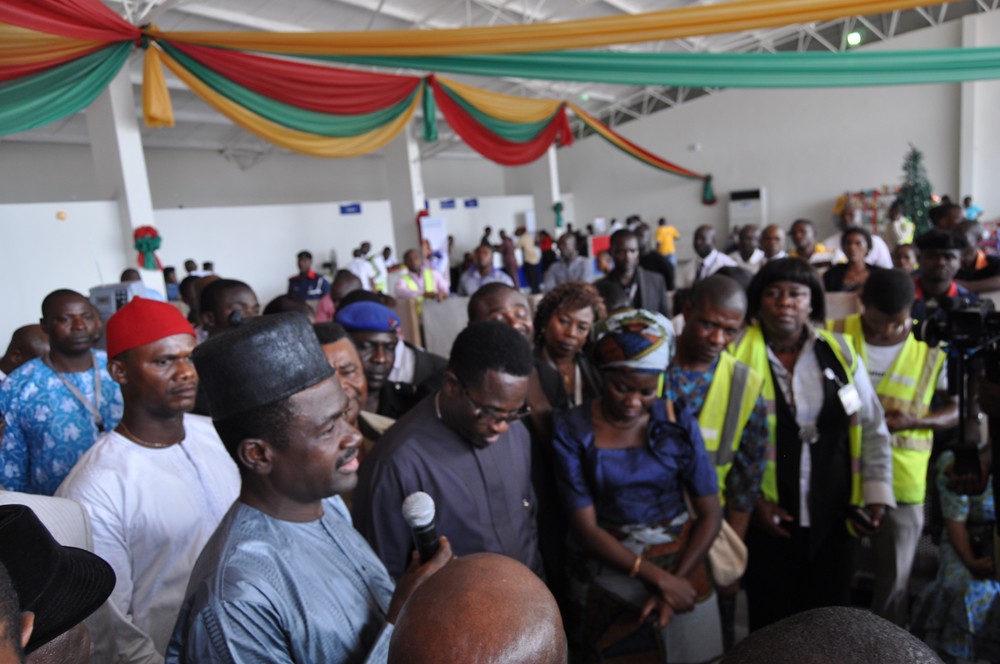
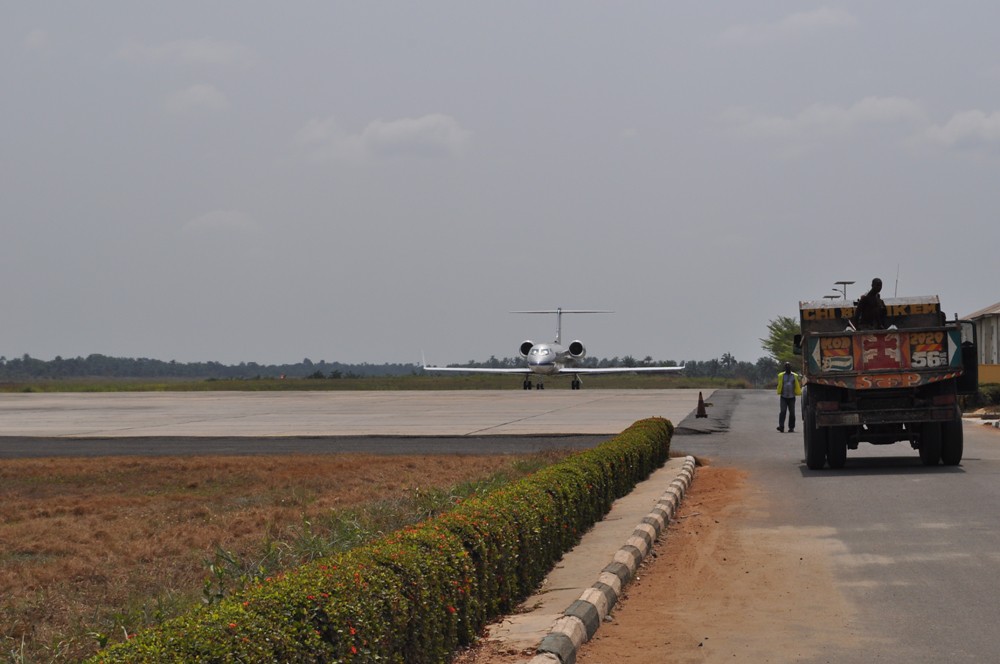
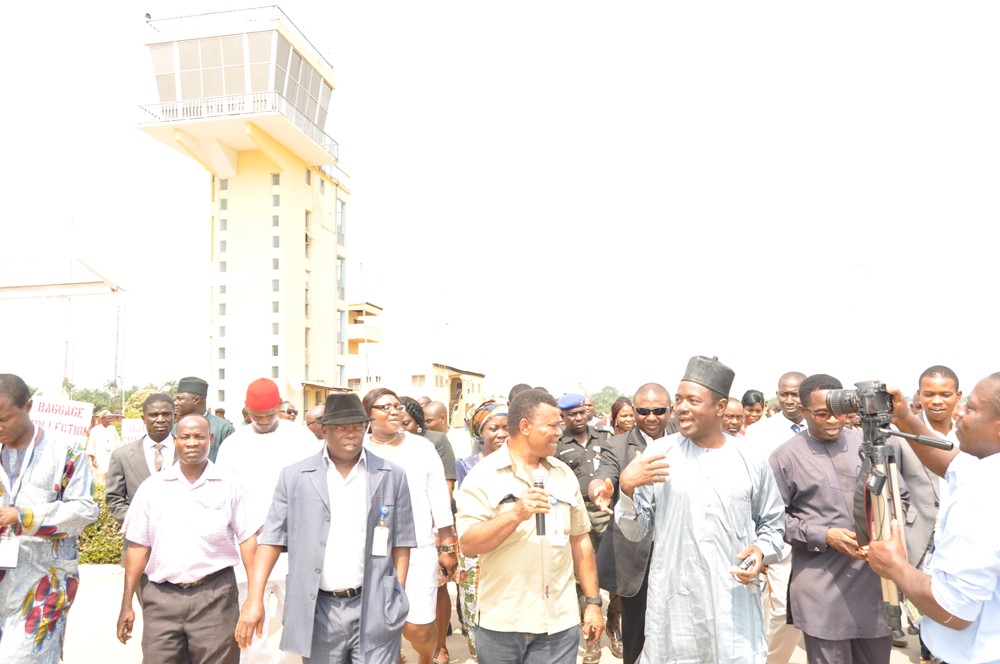
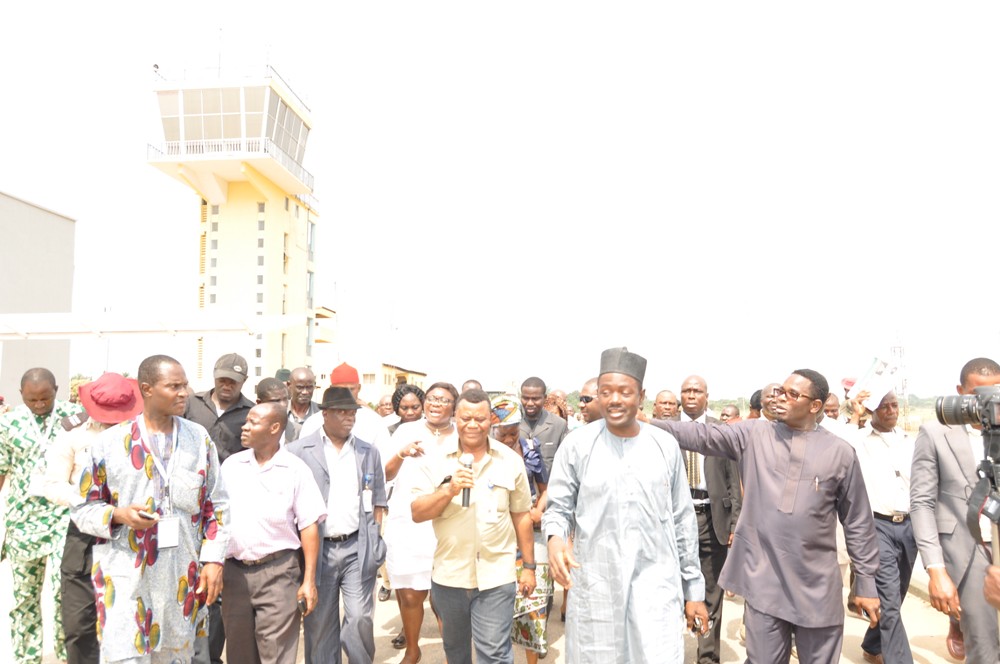
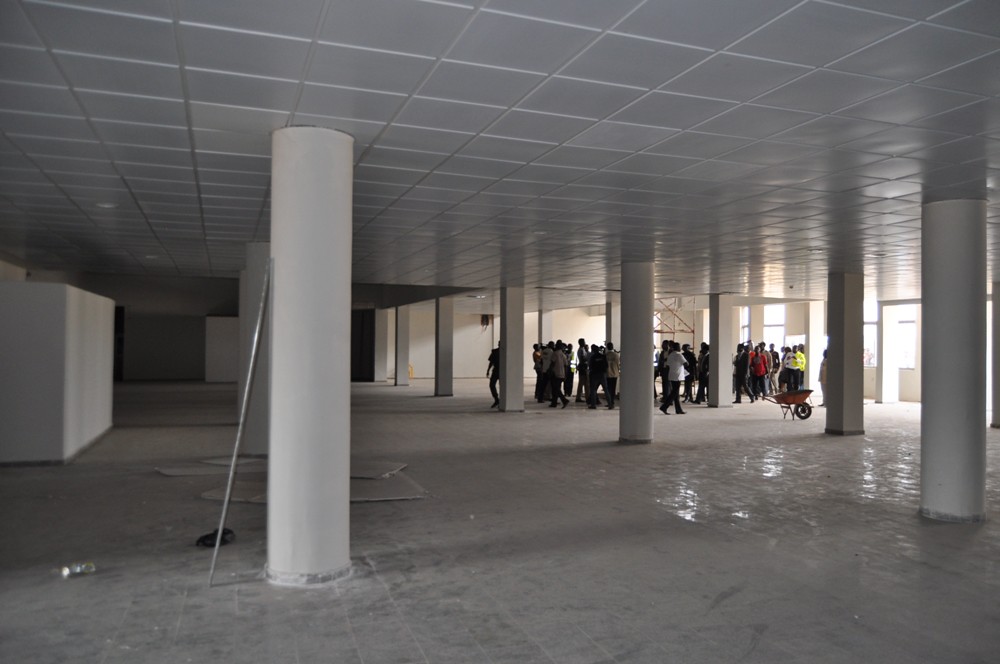
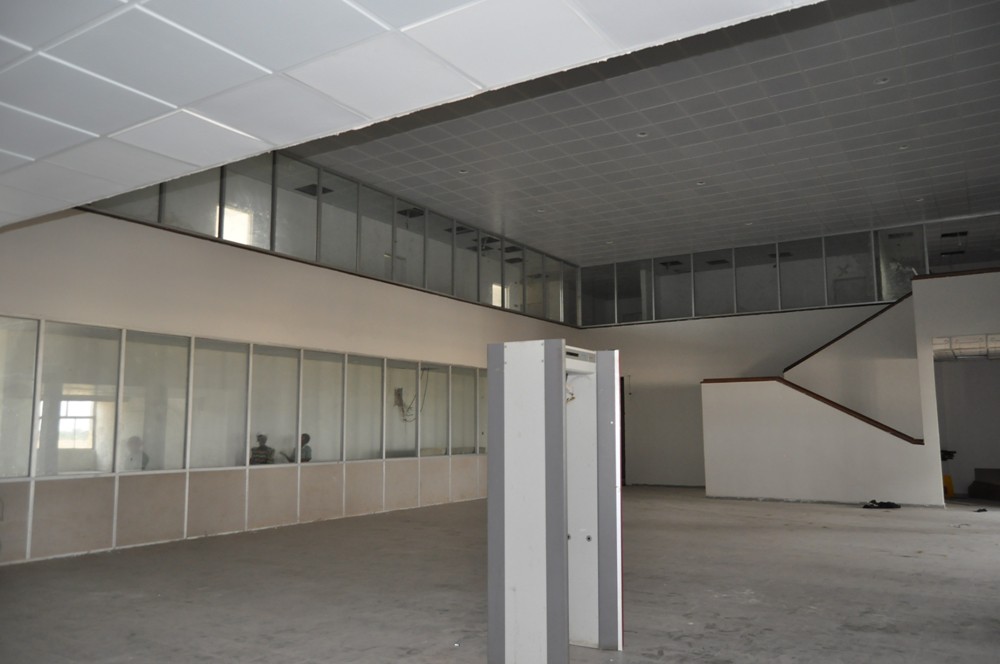
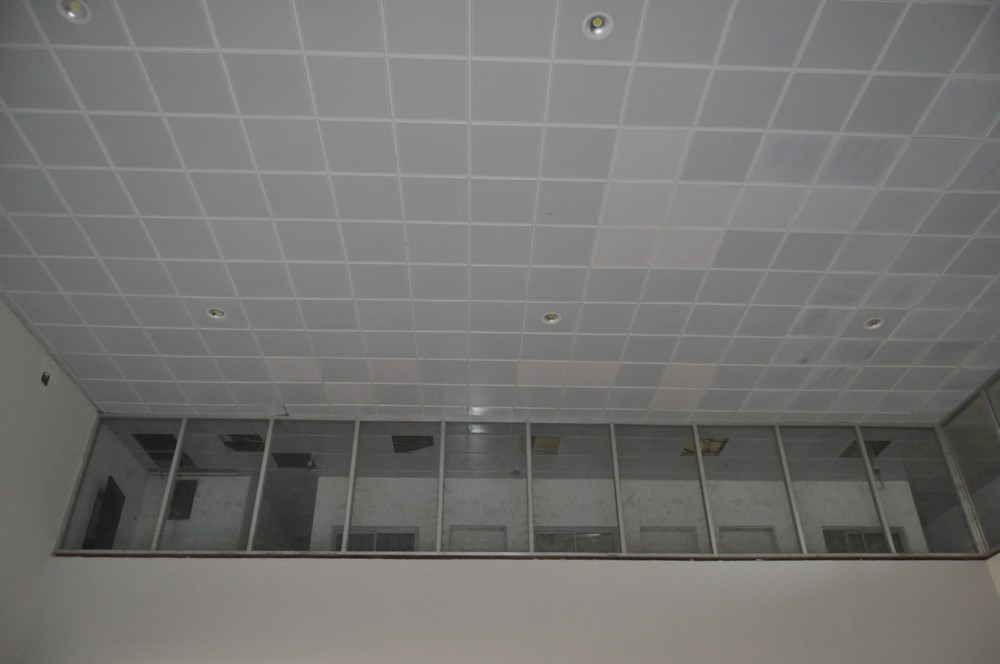
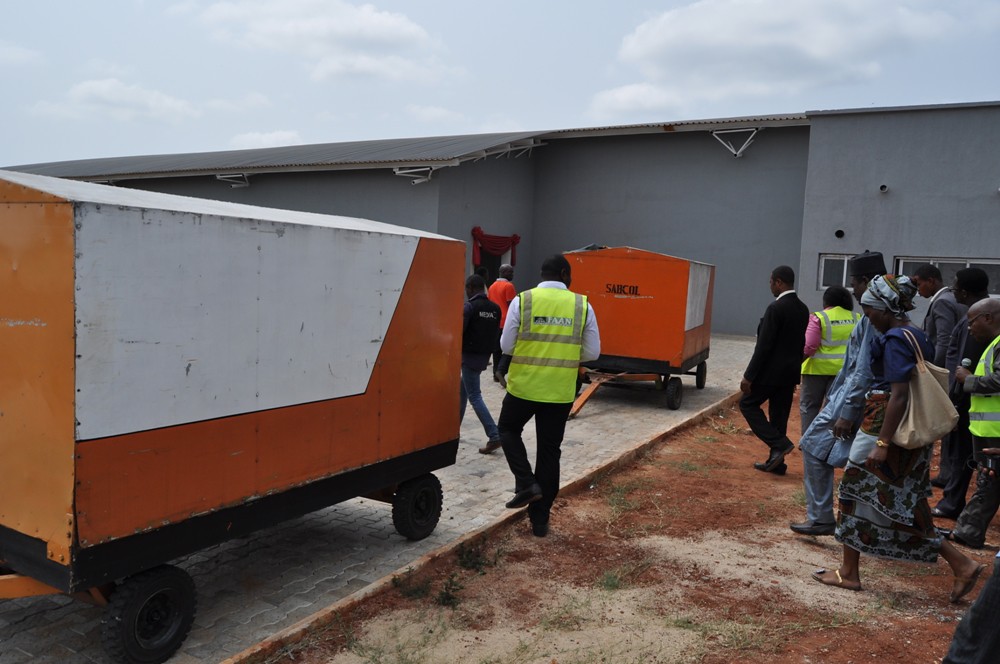
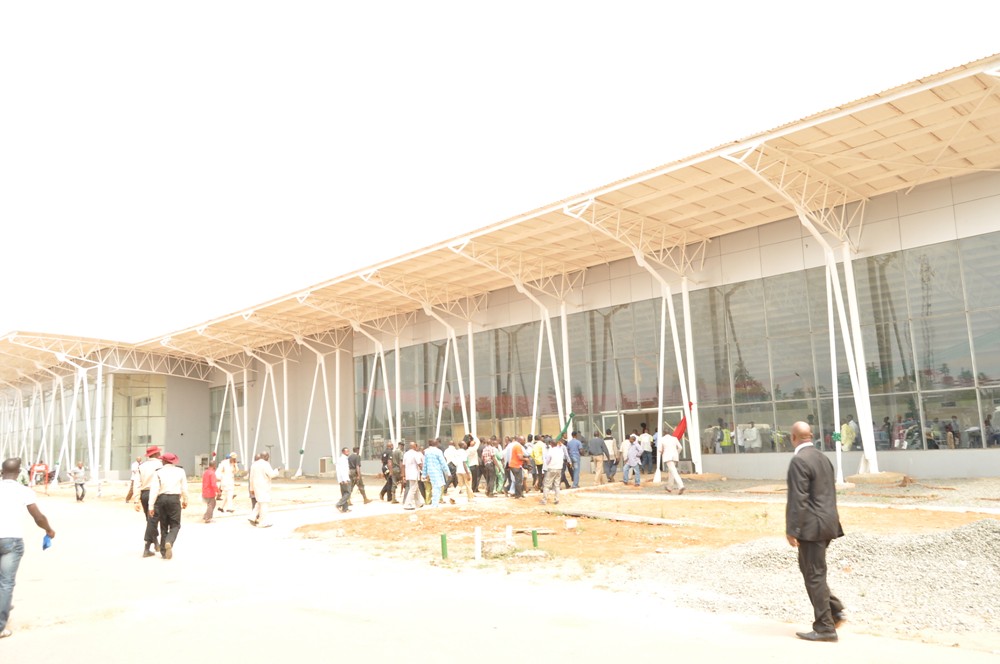
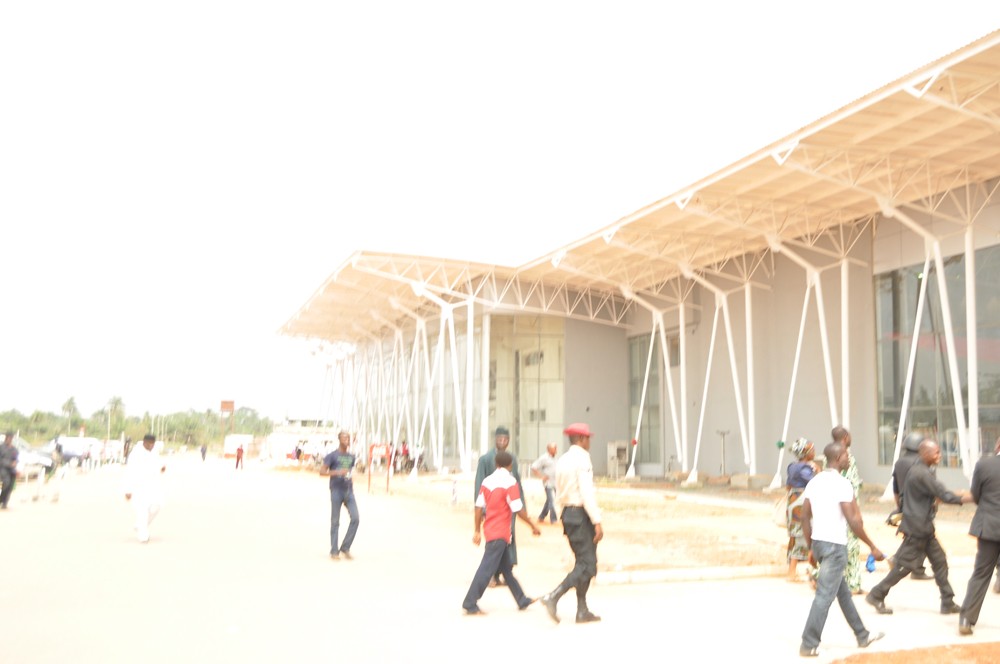
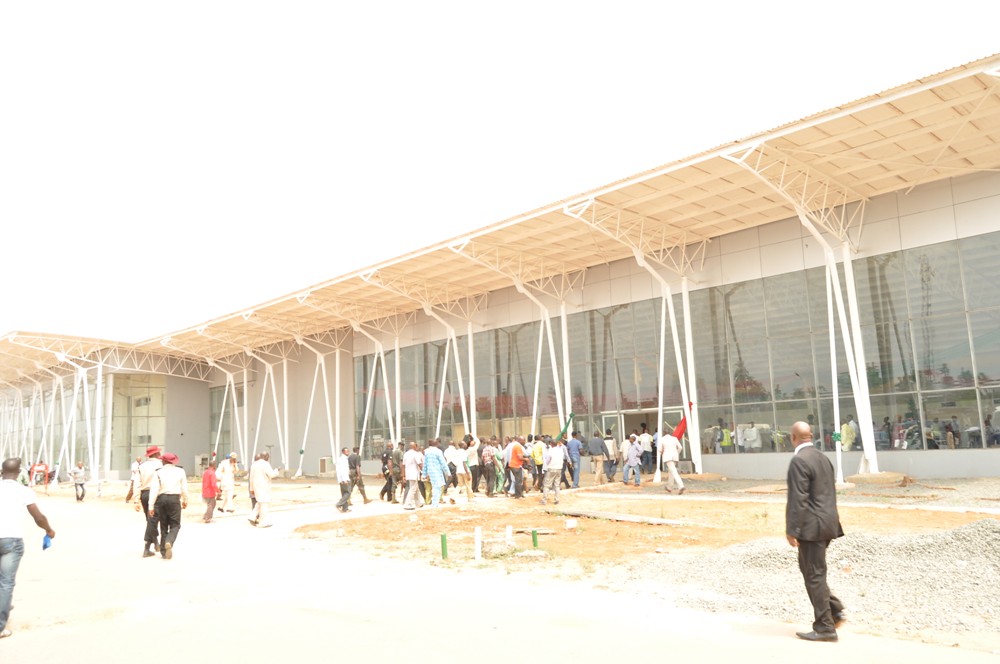
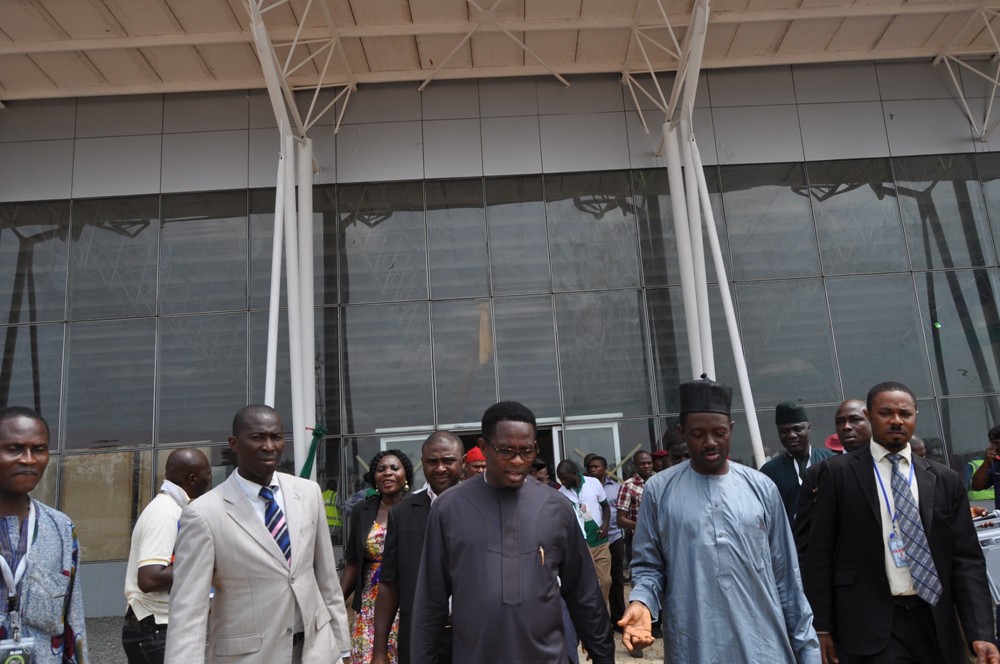
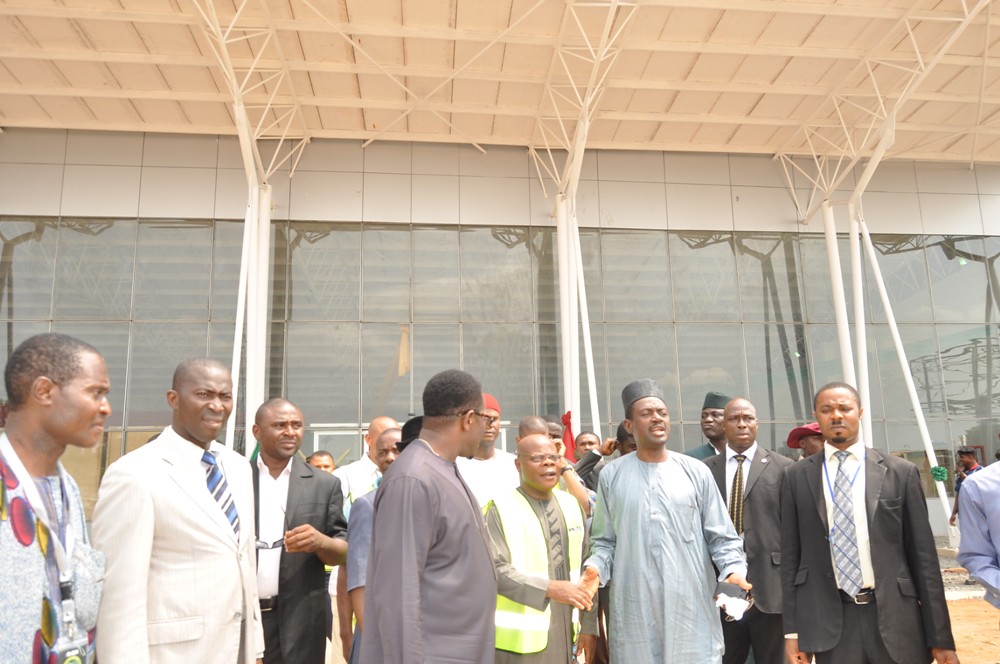
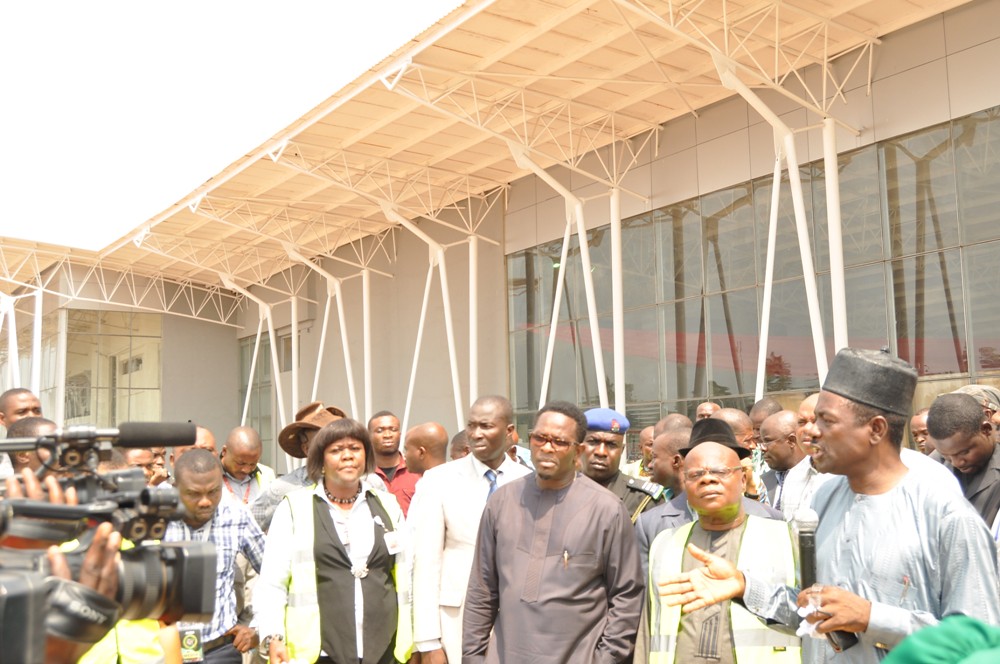
| Politics › Inspection Of The Akanu Ibiam International Airport In Enugu St by ARROBA(op): 6:16am On Jan 29, 2013 |
| Politics › Re: Geometric Power Plant Aba - Interesting Video by ARROBA(op): 4:35am On Jan 25, 2013 |
[quote author=PROUD-IGBO]Who's the female presenter?; well spoken and intelligent Lady.[/quote]That is Agatha Nnaji...wife of Barth Nnaji former minister of power. |
| Politics › Geometric Power Plant Aba - Interesting Video by ARROBA(op): 2:14am On Jan 25, 2013 |
http://www.youtube.com/watch?v=2YTJIeOVd3g The interesting thing is that a lot of Nigerian engineers were involved in the construction of this power plant 2 Likes |
| Politics › Re: Remodelled Sam Mbakwe Airport , Owerri by ARROBA(op): 11:11pm On Jan 24, 2013 |
https://farm9.staticflickr.com/8494/8409289045_6388683b0b_b.jpg https://farm9.staticflickr.com/8509/8410384730_3c2fc3fd75_b.jpg https://farm9.staticflickr.com/8223/8410384758_7193fc7acd_b.jpg https://farm9.staticflickr.com/8506/8409288857_3dce0e442b_b.jpg https://farm9.staticflickr.com/8083/8410384884_24f4268c70_b.jpg |
| Politics › Re: Remodelled Sam Mbakwe Airport , Owerri by ARROBA(op): 6:53am On Jan 24, 2013 |
https://farm9.staticflickr.com/8185/8410385120_6121994455_b.jpg https://farm9.staticflickr.com/8235/8409289287_5fa9ec0a42_b.jpg https://farm9.staticflickr.com/8514/8410385162_b4ceca9636_b.jpg https://farm9.staticflickr.com/8055/8410385046_a5a31f7df9_b.jpg https://farm9.staticflickr.com/8518/8410385042_6da9761559_b.jpg https://farm9.staticflickr.com/8474/8410384926_e16b3d258c_b.jpg https://farm9.staticflickr.com/8224/8409289165_79f090b7f8_b.jpg https://farm9.staticflickr.com/8510/8409289127_295ef012fa_b.jpg 1 Like |
| Politics › Remodelled Sam Mbakwe Airport , Owerri by ARROBA(op): 6:51am On Jan 24, 2013 |
https://farm9.staticflickr.com/8214/8410360180_798f7a6947_b.jpg https://farm9.staticflickr.com/8516/8410385168_a16ee26aa8_b.jpg https://farm9.staticflickr.com/8514/8410385164_512ebfc7fe_b.jpg https://farm9.staticflickr.com/8192/8410384584_0eccbdd6aa_b.jpg https://farm9.staticflickr.com/8189/8410384610_79274180d4_b.jpg https://farm9.staticflickr.com/8500/8409289463_91298d88eb_b.jpg 4 Likes |
| Politics › Rehabilitation And Expansion Of Sam Mbakwe International Airport Owerri by ARROBA(op): 3:06am On Jan 24, 2013 |
Remodelling of Sam Mbakwe airport owerri. |
| Politics › Re: Progress On Port Harcourt City Monorail by ARROBA(m): 1:17am On Nov 07, 2012 |
installation of First Guide-way Track Beam
|
| Travel › Re: Ethiopian Airlines To Start Flights To Enugu Airport by ARROBA(op): 7:38am On Sep 27, 2012 |
Updated enugu airport upgrade http://nigerianaviation./2012/09/26/upgraded-airport-terminals-at-enugu-and-port-harcourt/#comments
|
| Travel › Re: Latest On Enugu International Airport Update Needed by ARROBA(m): 7:37am On Sep 27, 2012 |
Update Enugu airport upgrade
|
| Travel › Ethiopian Airlines To Start Flights To Enugu Airport by ARROBA(op): 3:22am On Sep 13, 2012 |
Ethiopian Airlines says it plans to start flights to the city of Enugu, in south eastern Nigeria soon as part of its attempt to extend its flight destinations in Africa’s most populous country and West African Power house Nigeria. Tewolde Gebremariam CEO of the air carrier said Ethiopian also has plans to fly to the southern central port city and oil hub of Port Harcourt as well as Northern Nigeria’s largest city Kano, while increasing the number of flight trips to Nigeria’s capital city Abuja, Nigeria. “We want more flights to Abuja because now Abuja-Addis-Asia and Abuja-Addis-Dubai-Bangkok-China is the best flight option for Nigeria bound passengers,” said Tewolde adding that Ethiopian would be pleased to add flights to the country where it has been flying for more than 40 years. It currently has nearly 70 international destinations out of which 43 are in the African continent, while there are 17 domestic flights it operates. The national flag carrier has recently started flights to the Indian ocean island archipelago of Seychelles, Toronto in Canada, and Port Novo in Benin. It is also planning to start flights before the end of 2012 to Kuala Lampur, capital city of Malaysia, expected to start on October 31 and Brazil’s commercial hub Sao Paulo, its first Latin America route expected to be in December. As part of Vision 2025 Ethiopian plans to operate more than 120 airplanes flying to 90 plus destinations internationally carrying over 18 million passengers and 710,000 tons of cargo per annum while employing more than 17,000 people. Its 2025 vision’s overarching objective is to continue the scaling up of profitable and sustainable growth to enhance its profitability and technology to make its staff, customers and financiers secure. Ethiopian got its first Boeing 787 Dreamliner named “Africa first” delivered at Bole International Airport on August 17, 2012, making it the first African air carrier to receive the aircraft. The airline is expected to receive a total of five 787 Dreamliner aircraft before the end of 2012 and five more airplanes in 2014 http://www.capitalethiopia.com/index.php?option=com_content&view=article&id=1617:ethiopian-to-start-flights-to-enugu-nigeria&catid=54:news&Itemid=27 |
| Politics › Re: Enugu, The Pride Of The East. by ARROBA(m): 3:07am On Sep 13, 2012 |
http://www.capitalethiopia.com/index.php?option=com_content&view=article&id=1617:ethiopian-to-start-flights-to-enugu-nigeria&catid=54:news&Itemid=27 Ethiopian Airlines says it plans to start flights to the city of Enugu, in south eastern Nigeria soon as part of its attempt to extend its flight destinations in Africa’s most populous country and West African Power house Nigeria. Tewolde Gebremariam CEO of the air carrier said Ethiopian also has plans to fly to the southern central port city and oil hub of Port Harcourt as well as Northern Nigeria’s largest city Kano, while increasing the number of flight trips to Nigeria’s capital city Abuja, Nigeria. “We want more flights to Abuja because now Abuja-Addis-Asia and Abuja-Addis-Dubai-Bangkok-China is the best flight option for Nigeria bound passengers,” said Tewolde adding that Ethiopian would be pleased to add flights to the country where it has been flying for more than 40 years. It currently has nearly 70 international destinations out of which 43 are in the African continent, while there are 17 domestic flights it operates. The national flag carrier has recently started flights to the Indian ocean island archipelago of Seychelles, Toronto in Canada, and Port Novo in Benin. It is also planning to start flights before the end of 2012 to Kuala Lampur, capital city of Malaysia, expected to start on October 31 and Brazil’s commercial hub Sao Paulo, its first Latin America route expected to be in December. As part of Vision 2025 Ethiopian plans to operate more than 120 airplanes flying to 90 plus destinations internationally carrying over 18 million passengers and 710,000 tons of cargo per annum while employing more than 17,000 people. Its 2025 vision’s overarching objective is to continue the scaling up of profitable and sustainable growth to enhance its profitability and technology to make its staff, customers and financiers secure. Ethiopian got its first Boeing 787 Dreamliner named “Africa first” delivered at Bole International Airport on August 17, 2012, making it the first African air carrier to receive the aircraft. The airline is expected to receive a total of five 787 Dreamliner aircraft before the end of 2012 and five more airplanes in 201 |
| Politics › Re: Thoughts On Delayed Enugu Int'l Airport "take Off" by ARROBA(m): 3:05am On Sep 13, 2012 |
http://www.capitalethiopia.com/index.php?option=com_content&view=article&id=1617:ethiopian-to-start-flights-to-enugu-nigeria&catid=54:news&Itemid=27 Ethiopian Airlines says it plans to start flights to the city of Enugu, in south eastern Nigeria soon as part of its attempt to extend its flight destinations in Africa’s most populous country and West African Power house Nigeria. Tewolde Gebremariam CEO of the air carrier said Ethiopian also has plans to fly to the southern central port city and oil hub of Port Harcourt as well as Northern Nigeria’s largest city Kano, while increasing the number of flight trips to Nigeria’s capital city Abuja, Nigeria. “We want more flights to Abuja because now Abuja-Addis-Asia and Abuja-Addis-Dubai-Bangkok-China is the best flight option for Nigeria bound passengers,” said Tewolde adding that Ethiopian would be pleased to add flights to the country where it has been flying for more than 40 years. It currently has nearly 70 international destinations out of which 43 are in the African continent, while there are 17 domestic flights it operates. The national flag carrier has recently started flights to the Indian ocean island archipelago of Seychelles, Toronto in Canada, and Port Novo in Benin. It is also planning to start flights before the end of 2012 to Kuala Lampur, capital city of Malaysia, expected to start on October 31 and Brazil’s commercial hub Sao Paulo, its first Latin America route expected to be in December. As part of Vision 2025 Ethiopian plans to operate more than 120 airplanes flying to 90 plus destinations internationally carrying over 18 million passengers and 710,000 tons of cargo per annum while employing more than 17,000 people. Its 2025 vision’s overarching objective is to continue the scaling up of profitable and sustainable growth to enhance its profitability and technology to make its staff, customers and financiers secure. Ethiopian got its first Boeing 787 Dreamliner named “Africa first” delivered at Bole International Airport on August 17, 2012, making it the first African air carrier to receive the aircraft. The airline is expected to receive a total of five 787 Dreamliner aircraft before the end of 2012 and five more airplanes in 2014 |
| Travel › Re: Latest On Enugu International Airport Update Needed by ARROBA(m): 3:01am On Sep 13, 2012 |
http://www.capitalethiopia.com/index.php?option=com_content&view=article&id=1617:ethiopian-to-start-flights-to-enugu-nigeria&catid=54:news&Itemid=27 Ethiopian Airlines says it plans to start flights to the city of Enugu, in south eastern Nigeria soon as part of its attempt to extend its flight destinations in Africa’s most populous country and West African Power house Nigeria. Tewolde Gebremariam CEO of the air carrier said Ethiopian also has plans to fly to the southern central port city and oil hub of Port Harcourt as well as Northern Nigeria’s largest city Kano, while increasing the number of flight trips to Nigeria’s capital city Abuja, Nigeria. “We want more flights to Abuja because now Abuja-Addis-Asia and Abuja-Addis-Dubai-Bangkok-China is the best flight option for Nigeria bound passengers,” said Tewolde adding that Ethiopian would be pleased to add flights to the country where it has been flying for more than 40 years. It currently has nearly 70 international destinations out of which 43 are in the African continent, while there are 17 domestic flights it operates. The national flag carrier has recently started flights to the Indian ocean island archipelago of Seychelles, Toronto in Canada, and Port Novo in Benin. It is also planning to start flights before the end of 2012 to Kuala Lampur, capital city of Malaysia, expected to start on October 31 and Brazil’s commercial hub Sao Paulo, its first Latin America route expected to be in December. As part of Vision 2025 Ethiopian plans to operate more than 120 airplanes flying to 90 plus destinations internationally carrying over 18 million passengers and 710,000 tons of cargo per annum while employing more than 17,000 people. Its 2025 vision’s overarching objective is to continue the scaling up of profitable and sustainable growth to enhance its profitability and technology to make its staff, customers and financiers secure. Ethiopian got its first Boeing 787 Dreamliner named “Africa first” delivered at Bole International Airport on August 17, 2012, making it the first African air carrier to receive the aircraft. The airline is expected to receive a total of five 787 Dreamliner aircraft before the end of 2012 and five more airplanes in 2014 |
| Travel › Re: Pictures Of Enugu Int. Airport New Runway Construction by ARROBA(m): 7:04am On Jan 16, 2012 |
@marocguy Any updates on the airport as promised. |
| Music/Radio › Re: Hot New Music : Bosalin - Shine + Okilikili by ARROBA(m): 2:54am On Jan 10, 2012 |
Feeling Bosalin igbo rap. He is the best igbo rapper so far. check this new single (otokwa gi imulia) wikth Slow dogg and Sparta E http://www.gbedunation.com/profiles/blogs/new-single-otokwa-gi-imulia-bosalin-slowdog-sparta-e-download-lin |
| Politics › Re: Enugu Railway Tracks Construction Pictures by ARROBA(m): 12:17am On Nov 24, 2011 |
@Marocguy @koko,wetha na NRC or state govt,i no wan knw. I need an escape route to enugu morning traffics,me sef go patronise.@Marocguy, Are you able to confirm if there are actual work going on at the Enugu International airport, Have they started constructing\remodelling the new international Terminal? |
| Politics › Woolies To Open 16 Stores Outside Sa, 1 In Enugu, 2 In Lagos by ARROBA(op): 2:03am On Oct 26, 2011 |
http://www.property24.com/articles/woolies-to-open-16-stores-outside-sa/14243 25 Oct 2011 Many would-be property buyers wonder if they could find , Want money? Invest in pro , s Woolies to open 16 stores outside SA 21 Oct 2011 Johannesburg Stock Exchange listed company, Woolworths Holdings Limited retail group aims to open 16 stores in other African countries this year. The Palmyra store is the greenest store in the group. Woolworths was recently recognised as a global leader in sustainability by the World Economic Forum (WEF) and the Dow Jones. This will take the total number of its stores outside of South Africa to 60 and the new stores will be larger than the current ones. Woolworths says retail space will increase by 42 percent in the current financial year and by an estimated 145 percent over the next three years. According to Glenn Gilzean, Woolworths Group director for retail operations, the retail sector in many African countries is beginning to formalise with the development of shopping malls. He says that increased investor confidence across a number of key industries including retail is helping to fuel greater interest in Africa. “We regard trading beyond South African borders as an opportunity for growth and we believe it will deliver a meaningful profit contribution.” Property investors believe Africa’s real estate industry offers unprecedented investment opportunities and is poised for growth going forward. At the inaugural Africa Property Investment Summit held last month, Brett Abrahamse, business development manager at Liberty Properties said Africa’s real estate industry is booming with the retail sector set to drive demand and growth in many parts of Africa’s real estate markets. Abrahamse pointed out that investors are eyeing countries such as Ghana, Nigeria, Angola, Zambia, Botswana, South Africa, Namibia and South Sudan. Last week, Woolworths announced that it had signed a joint venture with a listed Nigerian company Chellarams Plc and will open three stores in December with plans to open seven more stores over the next two years. [color=Black]The two stores will be located in the most sought-after Nigerian city of Lagos, at The Palms and Ikega and the third store will open at Polo Park in Enugu State.[/color] In a media statement, John Fraser, divisional executive for Woolworths International says the group is confident about its investment in Nigeria and pleased with the growth prospects of the Nigerian market. Fraser says Nigeria has a large population with significant and growing middle and upper income groups and Woolworths has found the right partner in Chellerams Plc to grow its brand in Nigeria. Asked about the biggest concerns retailers experience in the current property market, Gilzean says there is a notable competition for limited prime retail space in many African countries. Last month, Woolworths formed a joint venture in Tanzania and Uganda with businessman and former franchise partner Ali Mufuruki of Tanzania. Gilzean explains that Woolworths has had a presence in other African countries for over 10 years and currently has stores in Botswana, Namibia, Lesotho, Swaziland, Ghana, Kenya, Tanzania, Uganda, Zambia and Mozambique. Woolworths plans to open 16 stores outside of South Africa taking the total number of its stores outside of South Africa to 60 and the new stores will be larger than the current ones. Following the announcement to open stores in Nigeria, he says Woolworths intends to open stores in Mauritius and Angola. Woolworths is also monitoring a number of markets closely and at this moment, has no immediate plans to enter Zimbabwe. Johannesburg Stock Exchange listed retailer of food, general merchandise and clothing Pick n Pay opened its first store in Bagatelle Mall in Mauritius last month. He says Woolworths regards trading beyond South African borders as an opportunity for Woolworths growth and are confident about the prospects of the group’s investment in Uganda and Tanzania and indeed across Africa. “Consumer spending accounts for more than 60 percent of the African GDP and this will increase with the growth of the upper and middle income groups,” he says. Woolworths business model On property ownership and rentals, Gilzean says the Woolworths’ local joint venture partners entails that they will either lease or purchase the preferred retail space.Woolworths preference is to rent retail space in South Africa. The joint venture is part of Woolworths plans to accelerate its expansion into Africa. Woolworths has moved away from the franchise model it had in the past in some African countries. “We believe this model isbetter for our customers, our partners and will offer a better profit model for our business.” He says joint ventures will enable Woolworths to deliver to customers the best retail offering possible tailored to meet the local needs. Our partners bring knowledge of local trading conditions and Woolworths brings quality, value, innovation and fashion that our South African customers know and appreciate. Woolworths, the brand Woolworths was founded in 1931 by Max Sonnenberg whose belief was that success lies in providing customers with superior quality merchandise at reasonable prices. Consumer spending accounts for more than 60 percent of the African GDP and this will increase with the growth of the upper and middle income groups,says Glenn Gilzean, Woolworths Group director for retail operations. Gilzean explains that Woolworths has earned its unique position in the South African retail landscape by remaining true to its core values of quality, integrity, value, service, style, innovation and sustainability. “Customers have come to appreciate good quality at an affordable price and Woolworths strives hard to make ‘the difference’ for its customers every day.” Woolworths retail chain extends throughout Africa and into the Middle East, trading through more than 400 stores and holds a majority share in the Australian retail chain, Country Road. “We’re excited to be able to offer more customers Woolworths “difference” – superior quality, exciting innovation and excellent value.” He adds that the Woolworths brand will appeal to aspirant African customers, with an increasing amount of disposable income. “Shareholders and investors will benefit from an increase in our trade.” Woolworths was recently recognised as a global leader in sustainability by the World Economic Forum (WEF) and the Dow Jones. The WEF report highlights sustainable and innovative business practises from companies in emerging markets. Woolworths was one of only three in Africa and the only retailer to make the list. Other businesses in Africa include Equity Bank (financial services) in Kenya and Sekem (agriculture) in Egypt. Woolworths was included in the Dow Jones Sustainability Index (DJSI) which tracks the financial performance of the leading sustainability-driven companies worldwide. Woolworths is the only retailer in South Africa and one of five South African companies to be listed in the DJSI. – Denise Mhlanga |
| Politics › Re: Onitsha River Port - October 2011 (Pictures) by ARROBA(m): 5:27am On Oct 12, 2011 |
Nna ezeagu, get as many pictures as you can. I am looking forward to the commissioning of this port including the enugu international airport. |
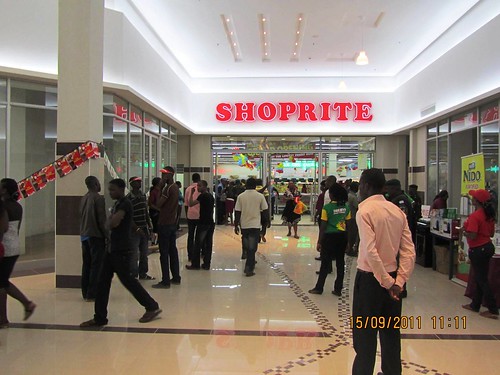
| Romance › Re: Shoprite Wahala With Enugu Girls by ARROBA(m): 3:41am On Sep 18, 2011 |
Courtesy of thepoloparkmall.com https://farm7.static.flickr.com/6191/6157090973_244d1986b1.jpg
|
| Properties › Re: Building Of A 5 Bedroom Executive Duplex In Enugu by ARROBA(m): 7:26am On Aug 19, 2011 |
I was hoping it would be completed by December aacording to the report I am getting. I am looking forward to settling in enugu in the near future when i move back to Naija, however, that will depend on status of enugu airport at that time. |
| Computers › Re: Oracle DBA Corner by ARROBA(m): 3:34am On Aug 19, 2011 |
How come no forum for SQL Server DBA's like us. |
| Properties › Re: Building Of A 5 Bedroom Executive Duplex In Enugu by ARROBA(m): 3:18am On Aug 19, 2011 |
Oga @Spyder880, do you anticipate land prices becoming expensive once enugu international airport is functional.(the international wing of the airport) Is it through that they have started building the international terminal and the airport taxiway. |
| Sports › Re: Forgotten Players In Nigerian Soccer by ARROBA(m): 8:26am On Jun 02, 2011 |
Benji Nzeakor Iwuanyanwu Nationale Totti O Totti Ali Nayara I think (ranchers Bees) |