Bigrovar's Posts
Nairaland Forum › Bigrovar's Profile › Bigrovar's Posts
1 2 3 4 5 6 7 8 ... 11 12 13 14 15 16 17 18 19 (of 61 pages)
 Satellite TV Technology › Re: Solar Energy, A Complement To FTA by bigrovar(m): 4:47am On Jun 10, 2018 Satellite TV Technology › Re: Solar Energy, A Complement To FTA by bigrovar(m): 4:47am On Jun 10, 2018 |
Reprobate:With all due respect, 6 hrs is not enough to charge that your battery bank given the discharge level and number of batteries involved the biggest issue with batteries are absorption they must have proper absorption charge which can take a very long time up to 3 hours depending on the level of discharge and na naija we dey unless you live in a gated estate with standby gen. The grid can never be relied on even where grid power is generally good.. You can't count on them knock on wood. This means you do not have a good to reliable source of charge that you can always count on and that would ensure you battery gets its proper daily circle of charge bulk absorption float. The battery am using is the first battery I started offgrid solar with going 3 years now. Its not even a premium brand rather a tubular battery, 2 of them and I don't even have grid connection.. Yet it powers the house 24 7 and yet has never been used up to 50% dod. Average amp discharge is 88ah for a 220ah battery (which I have derated to 200) even after derating the battery average discharge is still well south of 50% dod. Again you are playing with fire. Maybe you don't mind spending over 400k once every year sha. If that is the case then touché. |
| Satellite TV Technology › Re: Solar Energy, A Complement To FTA by bigrovar(m): 7:44pm On Jun 09, 2018 |
ayinba1:The 2 set is arrays are connected to different solar charge controllers. Hence why their output differs. Also because each array are made up of similarly sized solar panels. But the array sizes are different hence different output. Although for the most part both charge controllers (whose output are connected in parallel to the same battery bank) work in sync. Sometimes an array produces enough power to keep the battery in absorption at which point the second array goes to sleep until when needed. This also account for different array output. 2. Is DoD a function of battery or how you set up your system?Tbh I personally don't use or believe in Dod systems like low voltage disconnect.. Rather I prefer to deign my system load and generation around a cycle use that leave my battery at 35-40% depth of discharge. That is what work for me. Although I can understand why some need it especially where you have a large house hold such a feature might come handy when u are not around. For this I would recommend a system that works in sync with the Victron battery monitor. Using the state of charge and relay function. |
| Satellite TV Technology › Re: Solar Energy, A Complement To FTA by bigrovar(m): 7:04pm On Jun 09, 2018 |
Reprobate:Egbon you are playing with FIRE. You do not have the battery capacity nor the pv power to be even considering running AC.. Not even for 30 minutes. Limit your battery discharge not just by the 50% did rule, but most importantly by your capacity to replace what as been discharged within the 5 hours sun window (not as easy as you think with Lead acid batteries) that's bulk, and 2 to 3 hours of current limiting absorption and get your battery to float. If you are not careful you will end up in a cycle of energy deficit which would leave your battery in prolonged under charge state (a battery should get full and proper charge on a daily) the beginning of its demise. Save yourself the hassle and get 3k fuel to power our AC for the event. If you have a 3kw solar array then you care dare to dream the AC life. Just my opinion sha. 2 Likes |
| Satellite TV Technology › Re: Solar Energy, A Complement To FTA by bigrovar(m): 1:31pm On Jun 09, 2018 |
godspeed:There in lies the culprits. Roy solar.. Its you again  ... Bro your inverter and solar charge controller have conspired to murder your battery. Even if you don't use those batteries they would still die. The inverter will never be able to charge those batteries properly. They won't be able to give it proper absorption charge (14.4v at the very least) and 15.3v for 2 hours of equalisation at least once a month. You won't get that from your inverter. The charge controller is even worse. Fortunately you have a tubular battery so the situation can still be saveged. Get a different inverter one of the powerstar series from Must or felicity if possible, get a tracer series charge controller and connect your panels in series. All this would set u back over a 100k. It is the price for bad installation. Solar is not cheap. You can't afford to make a mistake because it gets even more expensive. ... Bro your inverter and solar charge controller have conspired to murder your battery. Even if you don't use those batteries they would still die. The inverter will never be able to charge those batteries properly. They won't be able to give it proper absorption charge (14.4v at the very least) and 15.3v for 2 hours of equalisation at least once a month. You won't get that from your inverter. The charge controller is even worse. Fortunately you have a tubular battery so the situation can still be saveged. Get a different inverter one of the powerstar series from Must or felicity if possible, get a tracer series charge controller and connect your panels in series. All this would set u back over a 100k. It is the price for bad installation. Solar is not cheap. You can't afford to make a mistake because it gets even more expensive. 9 Likes |
| Satellite TV Technology › Re: Solar Energy, A Complement To FTA by bigrovar(m): 10:46am On Jun 08, 2018 |
EnigmaticEnigma:Oh I see where the misconception is coming from. PV amps before cc is different from pv amps after cc. Usually the pv might produce something like 5amps at 30v.. once it gets to the cc, an mppt controller would then pull down the voltage and up the amps to like 10amp 14v (for a 12v system). What my log is displaying is the amp after cc and the pv voltage. Some controllers have ability to display pv amp before cc and after cc. in essence the right calculation for my watt is to multiply battery volt with amps after cc. This would give u the closest to the pv power. remember that pv watt before cc and pv watt after cc should be the about the same, only the volts and amps gets rearranged. 3 Likes |
| Satellite TV Technology › Re: Solar Energy, A Complement To FTA by bigrovar(m): 1:23am On Jun 08, 2018 |
ayinba1:Depending on what you intend to go with. Something like a charge controller might be better to buy from the US. They are cheaper there and relatively easier on logistics. You might also consider safety equipments like circuit breakers and surge protectors. Other items should be bought in Nigeria. Regarding your earlier question on the viability of a 1.8kw solar setup. Oga niyi has said it all. The focus should be as much on your load as it is on your generation. In fact for my setup I spent more time on my load design than I did on generation trying to ensure that my load stays within the limit of what I can easily put back in the system the next day. So efficiency plays a big role. Lighting to the type of climate control equipment, type of TV etc. I also spend considerable among of time on reducing loses. Using the right type of cabling, getting the right direction and inclination for my panel.. All this has conspired to ensure I get adequate and optimal balance in my setup. At least now my system is online you can monitor it and see for yourself the truth of the matter. Despite having just 2 batteries (non of which are premium) and 8 solar panels (2 of which I got brand new) I still maintain an average of discharge of 40% dod for my battery.. For a house hold that does not even have a nepa pole. I just feel less attention is being paid to optimisation.. We just throw panels at the problem. Hope I was able to bring some clarity. 9 Likes |
| Satellite TV Technology › Re: Solar Energy, A Complement To FTA by bigrovar(m): 10:08pm On Jun 07, 2018 |
EnigmaticEnigma:Oh.. In that case it's depends on the state of charge of the battery. The amount of PV power available for charging depends on load and battery state of charge. If my battery is in bulk on a good day my PV would be on over drive to fill it up.. On such an occasion you would see PV voltage drop to about 48v that is when mppt Is doing its thing. However once the battery gets filed to absorption then the current starts to be reduced and voltage increased at this stage the cc will move to the higher end of the PV IV curve this is when you would see the PV volt at 50 and above.. What is means is that the pv is not being driven to their full potentials. 1 Like |
| Satellite TV Technology › Re: Solar Energy, A Complement To FTA by bigrovar(m): 7:09pm On Jun 07, 2018 |
EnigmaticEnigma:I don't know when last you checked. But it does. It shows individual array's watt, amp and volts and also shows combine watts, and watts among other things. |
| Satellite TV Technology › Re: Solar Energy, A Complement To FTA by bigrovar(m): 12:47pm On Jun 06, 2018 |
Output today has been very dull in abuja, no thanks to largely over cast sky. |
| Satellite TV Technology › Re: Solar Energy, A Complement To FTA by bigrovar(m): 12:45pm On Jun 06, 2018 |
bigrovar:I have completed the remote logging and monitoring protect for my solar offgrid setup. I finally took delivery of serial to usb cable which allowed me DIY the victron VE Direct to USB and subsequently add the 2 solar charge controller and victron battery monitor to the logging system on the Rpi. The final dashboard is finished and quite comprehensive. I designed it to display in real time the power generation from the 2 seperate solar array, their energy yield and the combined output. It also shows battery state of charge (in percentage, and depth of discharge in amp..) There is a visual indicator which shows the battery level and a figure that shows how much amps hours is in the battery at a particular time. The battery monitor also displays charge and discharge rate. Lastly there are graphs that show solar generation over a time period (by the minute, hour, day, weeks and months) another graph shows the voltage and charge curve of the battery. I tried to make the dashboard visually pleasing and easy on the eye. I might have failed at that though because my day UI has never been my strong point. http://energy.bobby.com.ng/dashboard/view?id=1 4 Likes
|
| Satellite TV Technology › Re: Solar Energy, A Complement To FTA by bigrovar(m): 6:17pm On Jun 04, 2018 |
mank1234:Bro e no reach like that o. I hope to find time to do proper guide and like to the hardware. although the system is based on emonpi.. I took lots of liberties from offcially supported standard install. The unit runs Linux (debian for that matter) an operating system that has been my daily driver for over 10 years so it was easy hacking it to fit my needs. For example, getting it to work with the USB dongle and by an extension glo.. this are things like might sound trivia for most users.. you connect install drivers and you are good to go, On linux especially an headless system where you only get to work via commandline.. things gets more.... interesting. I had to roll back the years and dig deep into IPtables, wvdial and working round the Linux init (systemd now adays)... If you are comfortable with Linux and Apache servers than it shouldn't be too hard. 1 Like |
| Satellite TV Technology › Re: Solar Energy, A Complement To FTA by bigrovar(m): 10:53am On Jun 04, 2018 |
bigrovar:for now the system monitors only one of my PV array, I am yet to receive items I require to DIY a victron VE direct to USB cable. I need 3 I have just 1. hence the second PV array and battery monitors are not yet being monitored. 3 Likes |
| Satellite TV Technology › Re: Solar Energy, A Complement To FTA by bigrovar(m): 10:48am On Jun 04, 2018 |
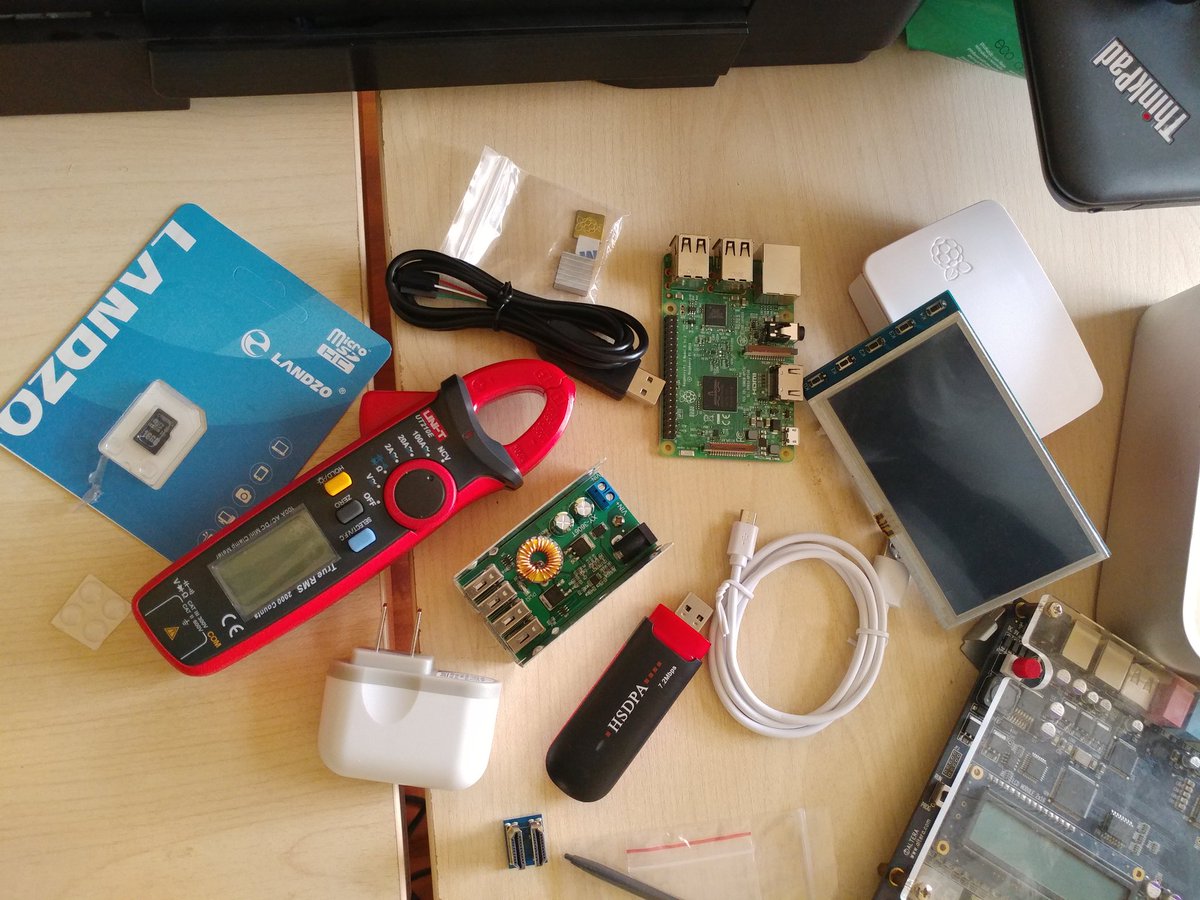
Hi guys, I just finished adding internet and live monitoring to my offgrid solar setup using the Raspberry Pi, a USB 3G modem, and the open energy monitoring system software called Emonpi. The output of the system can be viewed here. http://energy.bobby.com.ng/dashboard/view?id=1 For those interested in how I did this. I live tweet the whole process on twitter and you can follow the thread here https://twitter.com/bigbrovar/status/1001819352008658945 https://pbs.twimg.com/media/DectXchX0AEtHnS.jpg https://pbs.twimg.com/media/Dewpp41X0AEhwRZ.jpg 4 Likes |
| Satellite TV Technology › Re: Solar Energy, A Complement To FTA by bigrovar(m): 12:10pm On Jun 03, 2018 |
Dkev:The unit I got is the 225L single door. It uses about 50w peek power but that varies it settles to around 40w. The down side is it defrosts very fast... but the up side is that it can conveniently be left to run longer period without damaging your battery. |
| Computers › Re: Ubuntu Linux by bigrovar(m): 9:45am On Jun 02, 2018 |
Hi guys. Its been a while that I have grazed this parts. Quick question.. Is there anyone who by any chance still uses glo modem with say wvdial. I am doing some IoT work with RaspberryPi and I will be using a glo USB 3g dongle for Internet connection. The dongle works with Mtn but the coverage in the area I am deploying is very patchy. Feedbacks would be appreciated. |
| Satellite TV Technology › Re: Solar Energy, A Complement To FTA by bigrovar(m): 3:38am On May 30, 2018 |
pranil:daily tonic 1 Like |
| Satellite TV Technology › Re: Solar Energy, A Complement To FTA by bigrovar(m): 3:16am On May 30, 2018 |
pranil:It's one more to admire the design of Victron mppt blue solar chargers. Last weekend while carrying out some scheduled maintenance on my battery bank (repositioning them, cleaning the terminal connections etc) as usual I turned off the battery fuse to the inverter and controllers (this was around 11-12am about the pick time of solar irradiance in Abuja) it was a complete rocky mistake but little did I know as I took my time in making sure bolts where retight, cleaned terminal washers and changed battery positions. When I was done in about an hour and half later. I noticed the charge controllers were both on float.. At least I wondered why.. Then I remembered that I had disconnected the battery while the PV was still connected. Rather than see blue smoke the mppt solar from victron which are designed to have their circuit powered from solar as well as battery simply interpreted the lack of a battery load to mean a full battery state of charge moved to the part of the PV IV curve where zero power is generated essentially safely shutting down the controller while the pv remains in open circuit voltage with zero current passing through. Had I been using another controller.. I would have been here receiving sorry for my rocky error. Instead I connected the battery back and got the system working like before. Like Pranil noted a while back. How a cc is designed matters a lot. 5 Likes |
| Satellite TV Technology › Re: Solar Energy, A Complement To FTA by bigrovar(m): 10:07am On May 27, 2018 |
Namzy:Only if you take good care of them extremely well, regularly equalise them, ensure you keep up with water toping, and most importantly of all, you do not discharge them below 25% of their capacity, then and only them will those batteries stand a chance to still be kicking after 5 - 6 years of use. an inverter here are what I would lookout for. * Good reviews: Try and get something that is well known proven and has good reviews from users * Support: This is very important, even the highly priced premium inverters do breakdown. It is important you get something that has good local support, investigate on the company and how close their support (not sales office) centre is to you, inverters are very bulky and heavy and it is often best to convey the system directly to the support centre, explain the issue yourself to the technician and properly test that it has been fixed before you take it back. A company with good support is more likely to honour their warranty compared to a marketing company masquerading as an engineering company. Remember you are dealing directly with the company not the person who sold the inverter to you (this is the best route to avoid unnecessary delays and frustration. * Get an inverter that works with your battery. You want to get a Tubular battery (which is a Flooded Acid Battery -FLA) those batteries require regular equalisation at least once a month. Not all inverters are capable of equalising so keep that in mind * If you intend to power computer (not laptop) or network switches, make sure the inverter has what is known as ups mode. This allows the inverter to switch between mains and backup in less than 10 milliseconds, anything higher would not lead to a smooth transition when power fails. * of cause charge capacity is important as you have already figured out. Some inverters have the ability to charge your batteries when they are off this can come in handy say when you are out of the house and would prefer to turn off your inverter to save battery discharge. * Another important factor to consider is the efficiency of the inverter, some inverters are notoriously inefficient in converting DC to AC. some use as much as 100w just sitting idle (Thats about 4A at 24v) which means if you have a 200AH battery bank. Turning on the inverter for 10 hours would use 40ah from your battery bank (about 20% of your bank just to power the inverter) 1 Like |
| Satellite TV Technology › Re: Solar Energy, A Complement To FTA by bigrovar(m): 4:34pm On May 25, 2018 |
NiyiOmoIyunade:I most have missed something. I did not see the 600w consumption. Indeed 600w consumption is insane! for regular house use (from my perspective sha) and would require quite a lot generation to avoid falling into energy deficit. My response was based on this... load is about 4 fans, 3 energy bulbs, 2 lcd TVs and 2 laptops 4 Likes |
| Satellite TV Technology › Re: Solar Energy, A Complement To FTA by bigrovar(m): 12:36pm On May 25, 2018 |
NiyiOmoIyunade:Bros a 2400w for the stated load of OP don't you think it is quite over the top? especially considering the 700k he just spent? Myself I use 1.84kw panel with grid disconnected and that powers the whole house on a 24/7 basis (Including Fridge, freezer, washing machine, TV, lightning and fan at different set time point).. I think it is important to understand what went wrong with this installation before hitting the buy button. I started my solar journey with 2 240w panels and 2 batteries and even that was able to ensure 4 hours of 175l chest freezer time, and over night light use before I upgraded to 3, then 4, then 6 and now 8 panels with a combined power of 1.84kw. The loads specified by the OP are do not contain any inductive or every equipment like fridge or freezer. I think it is important to determine what went wrong with this install, find a way to make his load more efficient. An efficient and optimised load go a long way in paying off solar investment much more than pilling on the panels. changing my inverter from felicity to ipowerplus for example improved my early morning battery state of charge to 71% from about 55% because the ipowerplus uses about 30w during dc to ac conversion while the felicity uses north of 58w. The 20w difference made a big difference. I intend to further reduce things by getting a rechargeable ceiling fan to replace the electric motor ceiling fan in the living room. The energy sayings from this 22k investment would be used in increasing the run time of the new smart inverter LG refrigerator to about 18 hours daily while maintaining current battery daily depth of discharge to 29-35% .. remember we are talking about 2 12v, 220AH indian tubular battery that are going into their 3rd year of service. OP should post picture of his install let all see any obvious fault and make recommendation. If op is in abuja, I might even want to come and see things for myself (pro bono) 9 Likes |
| Satellite TV Technology › Re: Solar Energy, A Complement To FTA by bigrovar(m): 12:06pm On May 25, 2018 |
DUNKA:Bros, I am yet to fully deploy lightning protection for the new house. |
| Satellite TV Technology › Re: Solar Energy, A Complement To FTA by bigrovar(m): 11:55am On May 25, 2018 |
solibayo:I feel your pain. It is to avoid situation like this that I decided to go the DIY route when I started my solar Journey. After meeting numerous installers and though I knew very little about electricity or solar.. I just knew some things were missing from talking to most of the installers. In the end I decided to bury my head in books and read my way into solar.. buying the components little by little. I don't even know where to start. From all you have stated, the issue could be multiple but for the most part many things can be made good. First supply a picture of the installation to give us a better view of things. It would allow us see obvious issues like bad cablings or faulty connections. Next ask the installer how he connected the solar. Roysolar is favourite of most quark installers. It is a PWM charge controller - which is not all bad in itself if it is well connected to the solar panel. My guess is he connected the 3 panels in parallel which might explain why you are struggling to charge your batteries. 4 Likes |
| Satellite TV Technology › Re: Solar Energy, A Complement To FTA by bigrovar(m): 12:52am On May 25, 2018 |
GeorgeD1:On the issues of warranty I think it's apt to put another experience out on here, this time from a company a bit local. The long part of the story is documented in my blog here http://bobby.com.ng/2018/05/20/lightning-fan-and-warranty-issues/ The top long didn't read tldr version of the above is.. My inverter started misbehaving after a lightning strike. Took up the issue with felicity inverters because it was under warranty. Was directed to an Abuja service center where the issue was fixed in fact a new control board was installed in less than 2 hours and inverter was working back as new. Not a kobo was asked for or paid. I was impressed not just because of the honored warranty but because of the spread of their service center for a relatively new entrant to the market to not only have service centers in outside of lagos but to also ensure those centers are well stocked with parts. It was a pleasant experience and I would definitely recommend their product based on above. 3 Likes |
| Satellite TV Technology › Re: Solar Energy, A Complement To FTA by bigrovar(m): 5:23pm On May 23, 2018 |
NiyiOmoIyunade:I actually had similar experience with but Epsolar and Fangpusun. On both occasions I informed them of a defective units and was sent a replacement FOC without much hassle. The Epsolar was great because I actually procured the device from Jumia and the issue I had related to the external display.. But lo and behold I Wass set a brand new charge controller via DHL once I contacted them. Same thing happened with Fangpusun.. At least with the latter I purchased the product from aliexpress. The later case related to me upgraded a poisoned firmware update from victron designed to slowly kill off Fangpusun clones. I informed Fangpusun and rather than blame me agreed to send a replacement immediately without asking me to send the defective unit back or even asking me to take a picture. I did not state the story here because I fear our people. Last thing I wanted was for someone to abuse the system and shut that door for Nigerians. This is why I often ask people who have issues with their product to first try contacting the manufacturer directly rather than wasting time pinging he marketer who sold to them. 2 Likes |
| Satellite TV Technology › Re: Solar Energy, A Complement To FTA by bigrovar(m): 8:48am On May 23, 2018 |
duwdu:Congrats na small small o. Especially in this economy. Gradually acquiring your solar components not only bend time value of money in your favour. It also allow you time to learn as your assemble components which reduces the chances of mistakes. BTW where did you get the mpp solar inverter? 1 Like |
| Satellite TV Technology › Re: Solar Energy, A Complement To FTA by bigrovar(m): 8:51am On May 22, 2018 |
sinistrian:have you tried taking it to the company? |
| Satellite TV Technology › Re: Solar Energy, A Complement To FTA by bigrovar(m): 1:47pm On May 20, 2018 |
NiyiOmoIyunade:I doubt that is the reason why Pv input drop down to 15v. Although the tracer is relatively alcheapo yet they do make quality cc with solid components. My fast cc sets of cc were tracers I went from the RN to A to the BN series. The only issue I had with them was slow tracking they excelled best with high vmp from the panel. My first config was using the tracer on a 12v system with Pv vmp at close to 65v and voc at North of 70. Total wattage stood at 500w and the system performed fine without any issue at all. I upgraded to a 24v system for better efficiency and performance. Something is definitely wrong with op tracer. If it is under warranty then he might want to take it up with the company they do respect their warranty. 4 Likes |
| Satellite TV Technology › Re: Solar Energy, A Complement To FTA by bigrovar(m): 8:27pm On May 19, 2018 |
mank1234:The Axpert series of inverters white labelled as ipowerplus in Nigeria are quite good. We have 2 at work 4kw models with 2.2kw solar panel attached.. They track quite well and are very fast at sensing battery load and respond very fast.. The Axpert series is very popular and quite reliable. I can't speak for other brands that ship with built in controller sha. 3 Likes |
| Satellite TV Technology › Re: Solar Energy, A Complement To FTA by bigrovar(m): 1:16pm On May 19, 2018 |
sensisosu:First red flag is the 2x2 for a 48 volt system is a no no especially when you are using an mppt charge controller. Once you remove heat and cable length related losses you are left with very little to actually charge your battery.. When you include the extra load of an mppt controller then it would be a challenge to get the required 57.6v required to adequately charge your battery. Switch your configuration to 3*4 ie 3 in series.. This would give your mppt cc enough headroom to pull down voltage for u to be able to enjoy the advantage of a true mppt 4 Likes |
| Satellite TV Technology › Re: Solar Energy, A Complement To FTA by bigrovar(m): 12:42pm On May 19, 2018*. Modified: 2:52pm On May 19, 2018 |
NoMoreTrolling:tbh I didn't really follow your OP however the quoted caught my attention and I feel it should be corrected before someone else subscribe to similar line of thinking. Most MPPT charge controllers are powered by the battery not the solar panel. We should remember that a charge controller is an electrical not a mechanical device. It requires electricity to carry out its functions of regulating and down converting solar from high voltage to lower voltage of the battery . Connecting a CC to PV without battery is basically short circuiting the controller.. The huge amount of energy unregulated coming from the PV can blow through the cc circuitry since they have no where to flow to. On the question of a full battery.. What happens is the cc (remembered using power from the battery) stays in the higher voltage curve of the PV.. The higher voltage curve has lower current and that is how the system works.. If your battery is low.. The cc would detect the the battery state and move to the optimal curve that allows the battery to be charged using the maximum voltage obtainable at the best current.. There have to be a balance and the cc is always adjusting based on solar Ray. I am sure someone with a more in depth knowledge can explain this better. 3 Likes |
| Satellite TV Technology › Re: Solar Energy, A Complement To FTA by bigrovar(m): 7:48am On May 17, 2018 |
pranil:You took the world right out of my mouth. The above is why am a fan of Victron, when it comes to software integration they are miles ahead of the competition. The cherry on top is the openness of the company to allow community and 3rd party participation. The communication protocol for the VE-direct devices (MPPT charger, Battery monitor and inverters) are open and in plain text for monitoring and Hex for sending commands, The specification for the cable itself is opensource and there is a white paper on how you can DIY the VE connect USB cable should you want to... As started Venus the software at the heart of the amazing CCGX is completely open source and has been ported to the raspberry pi with support for RBp touch screen LCDs!!! My next project is to have a monitoring system using the open api of Victron. I intend the DIY the V.E Direct cable at least two (I have one O.G V.E Direct cable already) and also install the Venus OS image on a raspberry pi with a 4.3 resistive touch screen from waveshare (Same touch screen drive that comes builtin with Venus).. In the end the goal is to have a functioning CCGX device which is also capable of logging to a custom instance of emoncms as well as connect to the Victron Remote Monitoring service. I have already ordered for the parts and tools needed to accomplish this goal. I will be updating this page. 2 Likes |
| Satellite TV Technology › Re: Solar Energy, A Complement To FTA by bigrovar(m): 4:08pm On Apr 17, 2018 |
pranil:All this points to is that long term Lithium will eventually cost lesser than lead acid batteries.. However what this analysis misses out is the fact that Money Time Value overwhelmingly favours Lead acid. Lithium is only cheaper over a longer stretch of time. The initial cost is the biggest turnoff and why it is yet to be mainstream. The added fact that lithium is still a bleeding edge technology which is not yet as matured as LA is one more reason why time value does not favour it.. In the many years while Lithium is still paying for itself.. newer, better and cheaper iteration of lithium or energy storage device would have been released. 2 Likes |


 )_ might find the attached the link interesting. A ton of information there on software, customized firmware, repairing, optimizing
  isn't that open circuit similar to no current on a full battery

1 2 3 4 5 6 7 8 ... 11 12 13 14 15 16 17 18 19 (of 61 pages)