Erad's Posts
Nairaland Forum › Erad's Profile › Erad's Posts
1 2 3 4 5 6 7 8 ... 104 105 106 107 108 109 110 111 112 (of 126 pages)
 Art, Graphics & Video › Re: Notice To All Nairaland Graphics Section Members(must READ) by erad(mod): 9:27pm On Nov 14, 2014 |
Emart:I'm trying to get if you just chose to be intentionally...(don't wanna insult you). What has your epistle got to do with what I wrote and where does the bold apply in my initial post. When you read something, take time to assimilate before attempting to reply. Thank you. 1 Like |
| Art, Graphics & Video › Re: A Thread For Coreldraw Users by erad(mod): 3:42am On Nov 10, 2014 |
sekzy99:Kai! Stop that. Which yankee forum? No designer will give you details of what you didn't ask for. If you need details of anything, ask. 1 Like |
| Art, Graphics & Video › Re: A Thread For Coreldraw Users by erad(mod): 8:02pm On Nov 09, 2014 |
killjoy:Combining softwares is really easy so long as you know what format to import and export in. I stay in Lagos and Osun states. |
| Art, Graphics & Video › Re: A Thread For Coreldraw Users by erad(mod): 7:47pm On Nov 09, 2014 |
I'm yet to see the professional coreldraw users I know on this thread. @spywareczar... a little inspiration please. For those arguing over the superiority of photoshop to coreldraw or otherwise, there's really no ground for comparison. If you are a Nigerian graphics designer living in Nigeria with the hope of getting your works printed at a printing press, then you need at least the basic knowledge of coreldraw. I used to be a photoshop faithful until I got a glimpse at professionalism, you just have to incorporate coreldraw into your scheme of affairs. I use illustrator too but it still can't serve the purpose of coreldraw. While photoshop is a strictly bitmap based software, illustrator is a strictly vector based software. Coreldraw is the midpoint, the one that combines the functionalities of both with standard quality of output. Most times, combining two or more of these softwares can give the best results. Attachments: 1. Designed with adobe illustrator and photoshop 2. Designed with photoshop and coreldraw 3. Designed with illlustrator and photoshop 4. Designed with illustrator and coreldraw
|
| Art, Graphics & Video › Re: Who Dies In This Picture? by erad(mod): 8:47am On Nov 03, 2014 |
GozieDiora:I think its by chance  1 Like |
| Business › Re: Differences Between An Entrepreneur And A Hustler by erad(op): 3:48am On Nov 03, 2014 |
uphena:Granted with due credit given. |
| Business › Re: Differences Between An Entrepreneur And A Hustler by erad(op): 3:26am On Nov 03, 2014 |
legalwealth:It wasn't copied from anywhere, I came up with it myself. |
| Art, Graphics & Video › Re: Nairaland Portfolio For Logo Designers by erad(mod): 10:02pm On Nov 02, 2014 |
bossmini84:That's better discussed in private. You can send me a mail, I'll reply swiftly |
| Business › Differences Between An Entrepreneur And A Hustler by erad(op): 6:02pm On Nov 02, 2014 |
Note: Everything below is my personal opinion and I don't see myself as an authority on this write-up. Other opinions will be duely appreciated. https://www.stacksmag.net/wp-content/uploads/2012/05/hustler1.jpg I don’t know how general this is or how every other person sees it but I feel it needs to be addressed. I see people referring to entrepreneurs as hustlers and the other way round. I’m an entrepreneur and will surely feel disrespected being called a hustler. According to Oxford online dictionary, an entrepreneur is defined as a person who sets up a business or businesses, taking on financial risks in the hope of making profit. A hustler on the other hand is defined as a person adept at aggressive selling or illicit dealings. For years now, the two words (entrepreneur and hustler) have been used interchangeably, most times wrongly. Their definitions clearly does justice to the differences between both words but this article aims at expatiating on their differences. [size=14pt]1. Mission statement:[/size] This is a statement of the purpose of a company, organization or person, its reason for its existence. For an entrepreneur, the purpose of his actions and activities is to give solutions to economics problems. Legitimately providing goods and services efficiently with the aim of making and maximizing profit. A hustler on the other hand is not consciously trying to provide solutions to economic problems. He’s just after making money, not necessarily through the provision of goods and services and not always legitimately. [size=14pt]2. Source of Motivation:[/size] What is the major driving force behind and entrepreneur and a hustler? What’s their major source of motivation? The major source of motivation for most entrepreneurs is passion and for some others, freedom. The need to be self sufficient and control the odds. The major driving force for a hustler is money and for others, more money. How they get it isn’t so important. [size=14pt]3. Legitimacy:[/size] One major feature of entrepreneurs is their legitimacy. Their activities are always within the confines of the law. An entrepreneur understands the implications of whatever illegal actions he might be considering and the negative impact such actions will have on his business, its goodwill and his reputation. A hustler on the other hand has little or no regards for the law. This was clearly stated in its definition- illicit dealings. He’ll do whatever it takes to get money, legally or illegally. This doesn’t mean all hustlers are not law abiding but none of them will turn down an illegal offer to make some quick cash, that’s the essence of hustling. [size=14pt]4. Ultimate Goal:[/size] The ultimate goal of an entrepreneur is fulfillment and success, which are most times accompanied by wealth. The ultimate goal of a hustler on the other hand is to live the good life, live big and amass wealth even if it’s at the expense of others. Yes there are entrepreneurs who are extravagant spenders, but it’s most times a means to an end, an indirect form of investment. In conclusion, not all entrepreneurs are a 100% decent and not all hustlers are criminals. It’s just a thing of concern when internet fraudsters are referred to as entrepreneurs and a honest highway gala seller is called a hustler. I’m a graphic designer and I’m an entrepreneur, what are you? [size=14pt]Check the portfolio(s) of Nairaland logo designers here; https://www.nairaland.com/1823110/nairaland-portfolio-logo-designers[/size] 57 Likes 4 Shares |
| Art, Graphics & Video › Re: Who Dies In This Picture? by erad(mod): 4:42pm On Nov 01, 2014 |
prof800:I saw the barrier also but I'll have agreed with you if the barrier was facing the other side. But with the way it is and the complete stone remaining unmoved on the other side, the carved out stone will end up climbing over the barrier to the other side. 2 Likes |
| Art, Graphics & Video › Re: Who Dies In This Picture? by erad(mod): 5:56am On Oct 31, 2014 |
Nobody dies... The curved out part on the upper ball makes it lighter than the ball on the other end of the scale. So it'll miss the head of the standing guy and won't have enough weight to lift the other stone. It'll end up rolling to the other side where the complete stone is. My social scientific opinion. 296 Likes 13 Shares |
| Dating And Meet-up Zone › Re: Hurray!!! Today Is My Birthday! by erad(m): 2:44pm On Oct 22, 2014 |
[img]http://1.bp..com/_aPXZDciYxqI/Skh_zTm1kKI/AAAAAAAACmc/jrBih8IXmRc/s320/birthday-love-gif.gif[/img] 2 Likes |
| Celebrities › Re: Photos: I've Taken Out My Breast Silicon"-karen Igho Reveals by erad(m): 11:06am On Oct 22, 2014 |
Take out breast implant? I laugh in spanish. How does that work? And that some people actually believe it is beyond me. Let me paint a picture... Remove a pillow from a pillow case, what will be left of the pillow case? Thats exactly how her breasts will look without the implants. 5 Likes |
| Dating And Meet-up Zone › Re: Meet New Cool People And Just Make Friends by erad(m): 10:17am On Oct 22, 2014 |
Mzflexydeeva:Hehehehehehe... I receive it. How are you jare? Nah woman I find come o, make una no dull me o. |
| Art, Graphics & Video › Branding, Identity & Logo Design Explained by erad(mod): 7:16pm On Oct 20, 2014 |
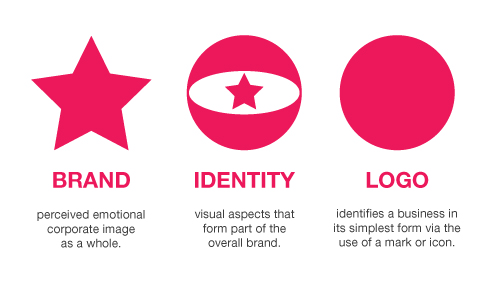
https://justcreative.com/wp-content/uploads/2010/04/brand-identity-logo-explained1.jpg A logo is not your brand, nor is it your identity. Logo design, identity design and branding all have different roles, that together, form a perceived image for a business or product. There has been some recent discussion on the web about this topic, about your logo not being your brand. Although this may be true, I haven’t seen any clarification of the differences between ‘brand’, ‘identity’ and ‘logo’. I wish to rectify this. What is brand? – The perceived emotional corporate image as a whole. What is identity? – The visual aspects that form part of the overall brand. What is a logo? – A logo identifies a business in its simplest form via the use of a mark or icon. To explain this in more detail, let’s start at the top – the brand. [size=14pt]What is branding?[/size] https://justcreative.com/wp-content/uploads/2010/04/apple.jpg Branding is certainly not a light topic – whole publications & hundreds of books have been written on the topic, however to put it in a nutshell you could describe a ‘brand’ as an organisation, service or product with a ‘personality’ that is shaped by the perceptions of the audience. On that note, it should also be stated that a designer cannot “make” a brand – only the audience can do this. A designer forms the foundation of the brand. Many people believe a brand only consists of a few elements – some colours, some fonts, a logo, a slogan and maybe some music added in too. In reality, it is much more complicated than that. You might say that a brand is a ‘corporate image’. The fundamental idea and core concept behind having a ‘corporate image’ is that everything a company does, everything it owns and everything it produces should reflect the values and aims of the business as a whole. It is the consistency of this core idea that makes up the company, driving it, showing what it stands for, what it believes in and why they exist. It is not purely some colours, some typefaces, a logo and a slogan. As an example, let’s look at the well known IT company, Apple. Apple as a company, projects a humanistic corporate culture and a strong corporate ethic, one which is characterised by volunteerism, support of good causes & involvement in the community. These values of the business are evident throughout everything they do, from their innovative products and advertising, right through to their customer service. Apple is an emotionally humanist brand that really connects with people – when people buy or use their products or services; they feel part of the brand, like a tribe even. It is this emotional connection that creates their brand – not purely their products and a bite sized logo. For a more thorough understanding of branding, in simple terms, I recommend Wally Olin’s: The Brand Handbook which I quote is “an essential, easy-reference guide to brilliant branding”. [size=14pt]What is identity design?[/size] https://justcreative.com/wp-content/uploads/2010/04/coca-cola.jpg One major role in the ‘brand’ or ‘corporate image’ of a company is its identity. In most cases, identity design is based around the visual devices used within a company, usually assembled within a set of guidelines. These guidelines that make up an identity usually administer how the identity is applied throughout a variety of mediums, using approved colour palettes, fonts, layouts, measurements and so forth. These guidelines ensure that the identity of the company is kept coherent, which in turn, allows the brand as a whole, to be recognisable. The identity or ‘image’ of a company is made up of many visual devices: *A Logo (The symbol of the entire identity & brand) *Stationery (Letterhead + business card + envelopes, etc.) *Marketing Collateral (Flyers, brochures, books, websites, etc.) *Products & Packaging (Products sold and the packaging in which they come in) *Apparel Design (Tangible clothing items that are worn by employees) *Signage (Interior & exterior design) *Messages & Actions (Messages conveyed via indirect or direct modes of communication) *Other Communication (Audio, smell, touch, etc.) *Anything visual that represents the business. All of these things make up an identity and should support the brand as a whole. The logo however, is the corporate identity and brand all wrapped up into one identifiable mark. This mark is the avatar and symbol of the business as a whole. [size=14pt]What is a logo?[/size] https://justcreative.com/wp-content/uploads/2010/04/IBM.jpg To understand what a logo is, we must first understand what it is for. A logo is for… identification. A logo identifies a company or product via the use of a mark, flag, symbol or signature. A logo does not sell the company directly nor rarely does it describe a business. Logo’s derive their meaning from the quality of the thing it symbolises, not the other way around – logos are there to identity, not to explain. In a nutshell, what a logo means is more important than what it looks like. To illustrate this concept, think of logos like people. We prefer to be called by our names – James, Dorothy, John – rather than by the confusing and forgettable description of ourselves such as “the guy who always wears pink and has blonde hair”. In this same way, a logo should not literally describe what the business does but rather, identify the business in a way that is recognisable and memorable. It is also important to note that only after a logo becomes familiar, does it function the way it is intended to do much alike how we much must learn people’s names to identify them. The logo identifies a business or product in its simplest form. [size=14pt]Summary:[/size] Brand –The perceived emotional corporate image as a whole. Identity – The visual aspects that form part of the overall brand. Logo – Identifies a business in its simplest form via the use of a mark or icon. How would you summarise brand, identity and logo design? Comments and thoughts are welcome, as always. Source: http://justcreative.com/2010/04/06/branding-identity-logo-design-explained/ [size=14pt]Check the portfolio(s) of Nairaland logo designers here; https://www.nairaland.com/1823110/nairaland-portfolio-logo-designers[/size] |
| Dating And Meet-up Zone › Re: Meet New Cool People And Just Make Friends by erad(m): 7:05am On Oct 20, 2014 |
Good morning guys, been spying on this thread for a while though but decided to come out of the closet ... Hopefully I'll get to meet some cool sane peeps over here. Y'all have a wonderful day. |
| Dating And Meet-up Zone › Re: Meet New Cool People And Just Make Friends by erad(m): 12:42am On Oct 20, 2014 |
Mzflexydeeva:Whats up? How are you doing? Long time, hope you are good. This is @darefunflick on twitter. Be safe. |
| Art, Graphics & Video › Re: Who Can Design For Ayayamedia.com by erad(mod): 5:41pm On Oct 07, 2014 |
I'm a graphic designer with nil knowledge web design. |
| Art, Graphics & Video › Re: Who Can Design For Ayayamedia.com by erad(mod): 4:04pm On Oct 07, 2014 |
Do you need the services of a graphic designer or a web designer?? |
| Art, Graphics & Video › Re: Six Tips For Designing A Memorable Brand by erad(mod): 12:46pm On Oct 07, 2014 |
felixchip:LOL... I dare not. Everything is fine on this end. |




1 2 3 4 5 6 7 8 ... 104 105 106 107 108 109 110 111 112 (of 126 pages)