Horus's Posts
Nairaland Forum › Horus's Profile › Horus's Posts
1 2 3 4 5 6 7 8 ... 621 622 623 624 625 626 (of 626 pages)
 Politics › Re: Atiku To Contest In 2007 Presidential Election - Supreme Court by Horus(m): 11:25am On Apr 22, 2007 |
| Christianity Etc › Re: Gombe Muslim Students Have Put Me In Sorrow By Killing My Friend by Horus(m): 7:24pm On Apr 21, 2007 |
https://www.harunyahya.com/images_books/images_defeat/29a.jpg As a result of bomb explosions at the U.S. embassies in Kenya and Tanzania on August 7, 1998, 224 people were killed and hundreds were injured. |
| Politics › Re: Atiku To Contest In 2007 Presidential Election - Supreme Court by Horus(m): 12:48am On Apr 21, 2007 |
| Christianity Etc › Re: Gombe Muslim Students Have Put Me In Sorrow By Killing My Friend by Horus(m): 12:34am On Apr 16, 2007 |
https://www.apfn.org/apfn/22-most-wanted-terrorist.jpg These are photographs of the 22 people on the FBI's "Most Wanted Terrorists" list |
| Christianity Etc › Re: What Did You Learn At Church Today? by Horus(m): 4:37pm On Apr 14, 2007 |
Was there a spiritual resurrection? After the alleged crucifixion, Yashu’a (aka Jesus) appeared several times to different people before he went to Galilee: 1- To Mary Magdalene disguised as a gardener. Why would a spirit have a disguise? . . . 2- To two travelers on the way to a village called Emmaus, with him they held a lengthy conversation. They didn’t know him. Why? Because he had on a disguise. 3- To the eleven disciples and ate and talked with them. Spirits do not eat the food of the Earth. . . If you saw a person that you had heard was dead and buried wouldn’t you think it was a ghost? That's exactly what the disciples thought. (Luke 24:36-37) He wanted them to touch his hands and feet. Why? He wanted them to feel the wounds he got during the fight in the Garden of Gethsemane. He wanted them to feel his flesh’s warmth and vitality. Thus he showed them that he was not a translated (gone from one state to another) body. He hadn’t metamorphosed and he obviously hadn’t resurrected because a resurrected body is a spiritual body, not physical. The New Testament says it over and over (I Corinthians 15:44-45, John 6:63). |
| Webmasters › Re: Making Money From .com by Horus(m): 2:49am On Apr 13, 2007 |
can somebody please advise me on how i can make money from my free website , .com ?Of course you can make money from your free website you can become an Amazon associate for free and sell their product on your free website. Source: http://affiliate-program.amazon.com/gp/associates/join Here below,is an example of free website who is selling Amazon product http://gold-finance..com |
| Business › Re: Why Is Solar Power Not Commonly Used In Nigeria? by Horus(m): 9:28pm On Apr 12, 2007 |
| Business › Re: Why Is Solar Power Not Commonly Used In Nigeria? by Horus(m): 1:41am On Apr 12, 2007 |
One thing Kenya is certainly not short of is good weather. In one of Nairobi's poorest neighbourhoods, people have started working to make the best of the free energy potential of the sun. Orders are already beginning to flood into the Kibera Community Youth Project (KCYP) for solar panels built in a small workshop. https://newsimg.bbc.co.uk/media/images/40512000/jpg/_40512265_radio.jpg The panels can power radios Using skills and equipment passed on to them by a British volunteer, the young people are engaged in the entire line of production, from slicing the silicon sheets, to wiring the connectors, to calculating the correct voltages. "We've been making solar panels of different sizes - 12, nine and six volts," says Mills Shamoli, a regular attendee at the solar energy group. "We've learnt that they can power different sizes of radio, as well as charging mobiles and rechargeable batteries." No batteries John Keane had a hunch the solar panels could be a popular product, after an earlier experience of living in a Tanzanian village with no electricity. "Everyone here seems to have a radio, but many of them don't have the funds to continually buy batteries, as they often don't have a reliable source of income," he says. Many of the young people working on the solar project have never had a job, or seen anyone in their families have a job. The average wage in Kibera is $1 a day but a small solar panel which takes just a matter of minutes to put together can sell for around $5. Investment needed Just a few months after the group completed their first prototype radio solar panel, they are already drawing up a business plan to turn the project into a self-sustaining enterprise. https://newsimg.bbc.co.uk/media/images/40512000/jpg/_40512271_girl.jpg The young are also gaining confidence If they are successful in attracting investment, they would like to expand their sales to rural parts of western Kenya, where the electricity supply is often sporadic. Fred Ouko is the co-ordinator of KCYP and he says the young people are really starting to gain in confidence. "What I want to see is real empowerment, real benefit trickling down to individual persons," he says. "They're actually making something up to a full product and then selling it, and they know now they can do this for themselves." Source: http://news.bbc.co.uk/2/hi/africa/4001061.stm |
| Business › Re: Why Is Solar Power Not Commonly Used In Nigeria? by Horus(m): 1:58pm On Apr 11, 2007 |
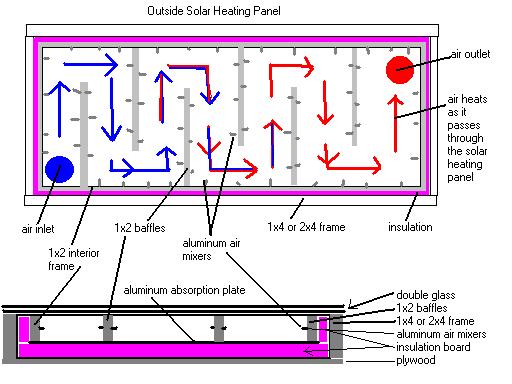
https://www.mobilehomerepair.com/solardraw.jpg Solar Energy: New power source in Jigawa, Nigeria Rural areas in Northern Nigeria lack the modern energy sources needed for improvements in health, education, transportation and commercial development. Outside of major cities and towns, there has been very little electrification in this region and what supply there is, is often unreliable. In contrast, Nigeria has an abundance of petroleum-based energy resources and in fact is the sixth largest supplier of oil to the United States. Unfortunately, very little revenue from the sale of this resource filters down to help the rural population. With the intention of addressing the unavailability of energy in villages, Solar Electric Light Fund (SELF) Executive Director, Robert Freling and Jigawa State governor, Ibrahim Siminu Turaki, began a dialogue in 2001 concerning the possibility of using solar–electricity (photovoltaic or PV) to power essential services in the far-flung villages of Jigawa State. https://www.windsun.com/images/UTRF120.jpg In very few places has PV been used to address virtually all of the things that a community needs energy for. But that’s what we decided to do and we were going to do it in three villages where over 7,500 people would benefit from the results. Having a reliable water supply is the first priority of any village and this is especially true in the semi-desert of Jigawa State where there are few rivers or other sources of water on the surface of the land. Typical methods of getting water range from open wells with rope and bucket, to hand pumps, to government supplied diesel-powered pumps that work only until they break down or until villagers run out of money to buy the expensive diesel fuel. The powerful solar-powered pumps supplied with this project are designed to run maintenance-free for eight to ten years or more https://www.aero.org/publications/crosslink/fall2005/images/04_02.gif The village health clinics now benefit from solar energy. Lights enable health officers to see patients at night for the first time, vaccine refrigerators allow more people to be vaccinated at greater frequency and fans increase the comfort level of staff and patients alike. Village primary schools now have, at least, two illuminated classrooms and teachers report that they are being heavily used in the evenings for adult education and as places for children to come and do their lessons. Each school has also been provided with a computer and computer instruction for the teachers. These are the first computers in the project villages and there are plans to eventually hook them to the internet via the state’s broadband system – a process that can literally open the village to the rest of the world for healthcare, education and commerce. Source: http://peakoil.com/modules.php?name=News&file=article&sid=24097 |
| Travel › Re: Nigeria Has Satelite System In The Orbit! by Horus(m): 11:43pm On Apr 09, 2007 |
[img]http://www.overon.es/fotos/productos.jpg[/img] Nigeria: FG Mobilises for Made-in-Nigeria Satellite March 13, 2007 Posted to the web March 13, 2007 Onyebuchi Ezigbo Abuja The Federal Government yesterday assembled the cream of the country's engineering community and space technology researchers in Abuja to brainstorm on how to develop local capacity in the design, manufacture and launch of a space satellite within the shortest possible time. The event, which was organised by the National Space Research and Development Agency (NASRDA) and the Ministry of Science and Technology, brought together distinguished university scholars, Nigerians in Diaspora and private consultants to work out modalities for the actualisation of the country's dream of a wholly Nigerian-built space satellite by 2018. Minister of Science and Technology, Professor Turner Isoun who was represented by the Director of Agriculture and Natural Resources, Mr. A. Adejumo said government's heavy investments in space satellite technology clearly demonstrates its commitment to the development of space technology and subsequent application to hasten our socio-economic progress. [img]http://www.rxtx.ca/images/pictures/satellite_space.jpg[/img] He said government's interest was emboldened by the success story of the first satellite, NigeriaSat-1 which has since its launch in 2003 contributed immensely to national development. President Olusegun Obasanjo had while unveiling the country's space technology road map directed that NASRDA should work towards grooming Nigerians to become space astronauts in the next 15 years. Nigeria launched its first satellite, NigeriaSat-1, an earth-observation satellite in 2003, and is currently engaged in the execution of two other satellite projects, NigeriaSat-2 and Nigeria communications satellite - NigcomSat. However, all of these efforts are being carried out outside the shores of the country under a foreign technical assistance programme with China. Isoun said acquiring satellite technology is of great strategic importance to any country, adding it is for this reason that the government has taking up the challenge to mobilise our human capital to acquire and sustain the space technology. Speaking at the research workshop, NASRDA Director-General, Professor Robert Boroffice said the objective of the national space technology programme is to make space research and development activities part of the overall strategies for sustainable development. He said the purpose of the workshop was to explore areas of research collaboration with Nigerian universities to develop local expertise for the development of a satellite locally in line with the presidential charge of having a manned mission on the moon by 2025. Source: http://allafrica.com/stories/200703130118.html |
| Politics › Re: The Western Media's Portrayal Of Africa by Horus(m): 4:03pm On Apr 09, 2007 |
https://www.habitatint.com/Assets/Images/tvStudio.jpg Ghana's Minister of Communications suggested the following ten-point 1. African leaders, governments and citizens, must resolve to work harder to produce more positive news in Africa. 2. Africa must have a positive image of itself 3. Africans must mount an "affirmative reporting" for Africa 4. African governments and the private sector must take decisive advantage of news and film exchange programmes. 5. African government must allocate more funds to the communications sector. 6. There should be communication components in funding for projects in sectors like agriculture, education, health etc. 7. More press attaches/cultural or information officers should be posted to diplomatic missions. 8. Professions in Africa allied to journalism, like public relations and advertising have the onerous role of presenting positive images about Africa. 9. African countries should undertake more international public relations campaigns. 10. African countries and their international friends should provide more education and training to journalists. If the Western media were willing to spend more time in Africa and make a real effort to understand the people and their needs, they might be able to contribute to projecting a more balanced and accurate view of the continent. African countries might not need to spend money on advertorials in weeklies such as Time and Newsweek to have a positive portrayal of themselves in international media. Unfortunately, though, as long as bad news sells (and it most certainly will for a long time to come), we shouldn't hold our breath waiting for the Western media to realise that their images are not an accurate portrayal of Africa's reality. As Africans, we need to stop seeing ourselves through the eyes of the Western media and find a way to make them see us as we see ourselves. Source: http://journ.ru.ac.za/amd/int.htm |
| Politics › Re: Nuclear Power Plant For Nigeria by Horus(m): 3:10pm On Apr 09, 2007 |
https://ginacobb.typepad.com/gina_cobb/images/missile_interceptor_4.jpg Pakistan may make Nigeria a nuclear power Pakistan yesterday offered to share military assistance, including "nuclear power" with Nigeria, in defiance of President George Bush's new counter-proliferation initiative. The offer was announced by the Nigerian defence ministry in a statement saying that General Muhammad Aziz Khan, chairman of Pakistan's joint chiefs of staff, had made the offer to the Nigerian defence minister, Rabiu Kwankwaso, during a visit to the west African state's capital, Abuja. "Speaking at the opening of the discussions, the Pakistani chairman of joint chiefs of staff , said that his country is working out the dynamics of how they can assist Nigeria's armed forces to strengthen its military capability and to acquire nuclear power," the Nigerian press release said. Neither the Pakistani nor the Nigerian governments clarified what Gen Khan had in mind. https://www.spacewar.com/images/pakistan-abdali-surface-to-surface-nuclear-missile-bg.jpg The announcement is likely to provoke consternation in Washington, coming just a month after the mastermind behind Pakistan's nuclear weapons programme, Abdul Qadeer Khan, admitted publicly that he had run a black market in nuclear weapons materials. Pakistan's president, Pervez Musharraf, expressed shock at the confession, but pardoned Mr Khan, much to the anger of nuclear inspectors at the International Atomic Energy Agency in Vienna. A detailed report in the New Yorker this week suggested Washington had turned a blind eye to the Pakistani government's connivance in sales of nuclear materials and technology to countries like Iran and Libya, in exchange for permission to send American commandos to hunt down Osama bin Laden in Pakistan's Hindu Kush. A week after Mr Khan's confession, President Bush launched a counter-proliferation initiative based on international cooperation to curb transfers of nuclear technology and materials. Gen Khan's offer to Nigeria appeared to be in blatant defiance of that initiative. The general made clear that the snub was intentional, declaring: "Pakistan had to take its destiny into its own hands to become a nuclear state because of the regular threats posed by hostile neighbours with special reference to the Kashmir conflict," according to the press release. US officials are also baffled at Nigeria's intentions, nearly five years after the country restored civilian rule, and at a time when it is under no threat from its neighbours. Two months ago, the Nigerian vice president's office announced that it had struck an agreement with North Korea to gain access to Pyongyang's missile technology. The offer was subsequently denied by North Korean officials and played down by a spokeswoman to Nigeria's president, Olusegun Obasanjo. The Nigerian government said at the time that "nothing was written in stone" and that any North Korean missile help would be used for "peacekeeping" and to protect its territory. It said it was not seeking nuclear technology or any other weapons of mass destruction. The South Korean unification minister, Jeong Se-hyun, said it was not clear whether Nigeria had accepted the offer, but said he didn't think the issue would cause many problems. "I see it as a tactic by North Korea to arouse anxiousness from the United States ahead of the second round of six-nation talks," Mr Jeong said. Nevertheless, the reports caused alarm in Washington. "If the Nigerians go through with this purchase, they will have earned the unenviable distinction as the first sub-Saharan African state to introduce ballistic-missile technology to the region. They will become the initiator of a supremely wasteful and potentially deadly arms race," said Richard Norton, a national security expert at the US naval war college. "Nigeria's motives would be questioned and its moves viewed with suspicion. And the Nigerian-US relationship would be damaged, perhaps badly. Substantial amounts of US military and law enforcement aid given to Nigeria might be placed in jeopardy." Source: http://www.guardian.co.uk/pakistan/Story/0,2763,1161774,00.html |
| Politics › Re: Should The USA Take Over Nigeria? by Horus(m): 2:08pm On Apr 09, 2007 |
Pakistan may make Nigeria a nuclear power Pakistan yesterday offered to share military assistance, including "nuclear power" with Nigeria, in defiance of President George Bush's new counter-proliferation initiative. The offer was announced by the Nigerian defence ministry in a statement saying that General Muhammad Aziz Khan, chairman of Pakistan's joint chiefs of staff, had made the offer to the Nigerian defence minister, Rabiu Kwankwaso, during a visit to the west African state's capital, Abuja. "Speaking at the opening of the discussions, the Pakistani chairman of joint chiefs of staff , said that his country is working out the dynamics of how they can assist Nigeria's armed forces to strengthen its military capability and to acquire nuclear power," the Nigerian press release said. Neither the Pakistani nor the Nigerian governments clarified what Gen Khan had in mind. The announcement is likely to provoke consternation in Washington, coming just a month after the mastermind behind Pakistan's nuclear weapons programme, Abdul Qadeer Khan, admitted publicly that he had run a black market in nuclear weapons materials. Source: http://www.guardian.co.uk/pakistan/Story/0,2763,1161774,00.html |
| Politics › Re: Nuclear Power Plant For Nigeria by Horus(m): 12:30am On Apr 09, 2007 |
Nigeria Approves Seven Accords On Nuclear Power Project Abuja (AFP) Nov 22, 2006 The Nigerian government said on Wednesday it had approved seven international agreements on nuclear safety and accountability as part of moves to create an electricity-generating atomic power industry. Seven other nuclear treaties have already been approved. "The ratification and domestication of these 14 agreements will demonstrate Nigeria's commitment to international rules and procedures for nuclear safety and security as well as accountability for nuclear materials," Information Minister Frank Nweke said. The new accords must now be ratified by parliament. https://www.energy-daily.com/images/nuclear-civil-general-bg.jpg Nigeria wants to harness nuclear power to boost its electric power output. They are the Convention on Nuclear Safety, the Convention on Physical Protection of Nuclear Materials, the Amendment to the Convention on Physical Protection of Nuclear Materials, the Joint Convention on the Safety of Radioactive Management, the Vienna Convention on Civil Liability for Nuclear Damage, Joint Protocols relating to the Application of the Vienna and Paris Conventions, and the Agreement on the Privileges and Immunities of the International Atomic Energy Agency. Nigeria wants to harness nuclear power to boost its electric power output. Nweke said the country of 130 million hoped to increase its generating capacity more than tenfold, from less than 4,000 megawatts now to 40,000 megawatts by 2015. "We realised that if we are to depend solely on hydro, coal and gas in the Niger Delta area, it will be very difficult for us to achieve that target," he said. "We must indeed explore other sources, particularly nuclear power, as a major component, not just as an option." Nweke said the cabinet had made it clear that Nigeria was only interested in using nuclear energy for civilian purposes. "Nigeria is not interested in deploying nuclear power or harnessing nuclear power for military purposes. Not at all," Nweke said. Source: http://www.energy-daily.com/reports/Nigeria_Approves_Seven_Accords_On_Nuclear_Power_Project_999.html |
| Travel › Re: Johannesburg (south Africa) Picture Gallery by Horus(m): 12:05am On Apr 09, 2007 |
More Picture of Johannesburg https://www.corante.com/mooreslore/archives/images/johannesburg-venues-cityscape.jpg [img]http://www.csvr.org.za/gender/images/johannesburg.jpe[/img] https://www.timeout.com/travel/img/johannesburg.jpg https://www.themuso.co.za/wp-content/uploads/2006/09/dusk-johannesburg-big.jpg https://www.travelpost.com/MainImages/AF/South_Africa/Gauteng/Johannesburg/Johannesburg_19589_1_03212006_0403102905_500.jpg [img]http://imagecache2.allposters.com/images/pic/LPIPOD/BN1531_35~Johannesburg-City-Centre-from-the-Carlton-Centre-Johannesburg-Gauteng-South-Africa-Posters.jpg[/img] https://www.webcarhire.com/images/southAfrica.jpg |
| Politics › Re: The Western Media's Portrayal Of Africa by Horus(m): 3:59am On Apr 08, 2007 |
The Africa You Never See By Carol Pineau In the waiting area of a large office complex in Accra, Ghana, it's standing room only as citizens with bundles of cash line up to buy shares of a mutual fund that has yielded an average 60 percent annually for the past seven years. They're entrusting their hard-earned cash to a local company called Databank, which invests in stock markets in Ghana, Nigeria, Botswana and Kenya that consistently rank among the world's top growth markets. https://www.africadiaspora.com/2004/images/CYNTHIA2.jpg Africa Stock Exchange Association (ASEA) Chances are you haven't read or heard anything about Databank in your daily newspaper or on the evening news, where the little coverage of Africa that's offered focuses almost exclusively on the negative -- the virulent spread of HIV/AIDS, genocide in Darfur and the chaos of Zimbabwe. Yes, Africa is a land of wars, poverty and corruption. The situation in places like Darfur, Sudan, desperately cries out for more media attention and international action. But Africa is also a land of stock markets, high rises, Internet cafes and a growing middle class. This is the part of Africa that functions. And this Africa also needs media attention, if it's to have any chance of fully joining the global economy. Africa's media image comes at a high cost, even, at the extreme, the cost of lives. Stories about hardship and tragedy aim to tug at our heartstrings, getting us to dig into our pockets or urge Congress to send more aid. But no country or region ever developed thanks to aid alone. Investment, and the job and wealth creation it generates, is the only road to lasting development. That's how China, India and the Asian Tigers did it. Yet while Africa, according to the U.S. government's Overseas Private Investment Corp., offers the highest return in the world on direct foreign investment, it attracts the least. Unless investors see the Africa that's worthy of investment, they won't put their money into it. And that lack of investment translates into job stagnation, continued poverty and limited access to education and health care. Consider a few facts: The Ghana Stock Exchange regularly tops the list of the world's highest-performing stock markets. Botswana, with its A+ credit rating, boasts one of the highest per capita government savings rates in the world, topped only by Singapore and a handful of other fiscally prudent nations. Cell phones are making phenomenal profits on the continent. Brand-name companies like Coca-Cola, GM, Caterpillar and Citibank have invested in Africa for years and are quite bullish on the future. https://www.africadiaspora.com/2004/images/nse.gif The failure to show this side of Africa creates a one-dimensional caricature of a complex continent. Imagine if 9/11, the Oklahoma City bombing and school shootings were all that the rest of the world knew about America. I recently produced a documentary on entrepreneurship and private enterprise in Africa. Throughout the year-long process, I came to realize how all of us in the media -- even those with a true love of the continent -- portray it in a way that's truly to its detriment. The first cameraman I called to film the documentary laughed and said, "Business and Africa, aren't those contradictory terms?" The second got excited imagining heart-warming images of women's co-ops and market stalls brimming with rustic crafts. Several friends simply assumed I was doing a documentary on AIDS. After all, what else does one film in Africa? The little-known fact is that businesses are thriving throughout Africa. With good governance and sound fiscal policies, countries like Botswana, Ghana, Uganda, Senegal and many more are bustling, their economies growing at surprisingly robust rates. Private enterprise is not just limited to the well-behaved nations. You can't find a more war-ravaged land than Somalia, which has been without a central government for more than a decade. The big surprise? Private enterprise is flourishing. Mogadishu has the cheapest cell phone rates on the continent, mostly due to no government intervention. In the northern city of Hargeysa, the markets sell the latest satellite phone technology. The electricity works. When the state collapsed in 1991, the national airline went out of business. Today, there are five private carriers and price wars keep the cost of tickets down. This is not the Somalia you see in the media. Obviously life there would be dramatically improved by good governance -- or even just some governance -- but it's also true that, through resilience and resourcefulness, Somalis have been able to create a functioning society. Most African businesses suffer from an extreme lack of infrastructure, but the people I met were too determined to let this stop them. It just costs them more. Without reliable electricity, most businesses have to use generators. They have to dig bore-holes for a dependable water source. Telephone lines are notoriously out of service, but cell phones are filling the gap. Throughout Africa, what I found was a private sector working hard to find African solutions to African problems. One example that will always stick in my mind is the CEO of Vodacom Congo, the largest cell phone company in that country. Alieu Conteh started his business while the civil war was still raging. With rebel troops closing in on the airport in Kinshasa, no foreign manufacturer would send in a cell phone tower, so Conteh got locals to collect scrap metal, which they welded together to build one. That tower still stands today. https://www.rocketboom.net/images/rb_06_apr_05.jpg Nairobi Stock Exchange As I interviewed successful entrepreneurs, I was continually astounded by their ingenuity, creativity and steadfastness. These people are the future of the continent. They are the ones we should be talking to about how to move Africa forward. Instead, the media concentrates on victims or government officials, and as anyone who has worked in Africa knows, government is more often a part of the problem than of the solution. When the foreign media descend on the latest crisis, the person they look to interview is invariably the foreign savior, an aid worker from the United States or Europe. African saviors are everywhere, delivering aid on the ground. But they don't seem to be in our cultural belief system. It's not just the media, either. Look at the literature put out by almost any nongovernmental organization. The better ones show images of smiling African children -- smiling because they have been helped by the NGO. The worst promote the extended-belly, flies-on-the-face cliche of Africa, hoping that the pain of seeing those images will fill their coffers. "We hawk poverty," one NGO worker admitted to me. [img]http://www.buyusa.gov/westafrica/en/125.jpg[/img] Last November, ABC television aired a special on Britain's Prince Harry and his work with AIDS children in Lesotho. The segment, titled "The Forgotten Kingdom: Prince Harry in Lesotho," painted the tiny nation as a desperate, desolate place. The program's message was clear: This helpless nation at last had a knight -- or prince -- in shining armor. By the time the charity addresses came up at the end, you were ready to give, and that's good. Lesotho needs help with its AIDS problem. But would it really have hurt the story to add that this land-locked nation with few natural resources has jump-started its economy by aggressively courting foreign investment? The reality is that it's anything but a "forgotten kingdom," as a dramatic increase in exports has made it the top beneficiary of the African Growth and Opportunity Act (AGOA), a duty-free, quota-free U.S.-Africa trade agreement. More than 50,000 people have gotten jobs through the country's initiatives. Couldn't the program have portrayed an African country that was in need of assistance, but was neither helpless nor a victim? Still the simplistic portrayals come. A recent episode of the popular NBC drama "Medical Investigation" was about an anthrax scare in Philadelphia. The source of the deadly spores? Some illegal immigrants from Africa playing their drums in a local market, unknowingly infecting innocent passersby. Typical: If it's a deadly disease, the scriptwriters make it come from Africa. Most of the time, Africa is simply not on the map. The continent's booming stock markets are almost never mentioned in newspaper financial pages. How often is an African country -- apart, perhaps, from South Africa or Egypt or Morocco -- featured in a newspaper travel section? Even the listing of worldwide weather includes only a few African cities. The result of this portrait is an Africa we can't relate to. It seems so foreign to us, so different and incomprehensible. Since we can't relate to it, we ignore it. There are lots of reasons for the media's neglect of Africa: bean counters in the newsroom and the high cost of international coverage, the belief that American viewers aren't interested in international stories, and the infotainment of news. There's also journalists' reluctance to pursue so-called "positive stories." We all know that such stories don't win awards or get front-page, above-the-fold placement. But what's happening in Africa doesn't need to be cast in any special light. The Ghana Stock Exchange was the fastest-growing exchange in the world in 2003. That's not a "positive" story, that's news, just like reports on the London Stock Exchange. I imagine a lot of consumers would have found it newsworthy to learn where they could have made a 144 percent return on their money. My independent film was made possible by funding from the World Bank, for which I am extremely grateful. But the bank wouldn't have had to step in if the media had been doing their job -- showing all Africans in all facets of their lives. In a business that's supposed to cover man-bites-dog stories, the idea that Africa doesn't work is a dog-bites-man story. If the media are really looking for news, they'd look at the ways that Africa, despite all the odds, does work. Author's e-mail: capineau@aol.com Carol Pineau, a journalist with more than 10 years of experience reporting on Africa, is the producer and director of the film "Africa: Open for Business," which premiered last week at the U.S. Chamber of Commerce. Forward Ever (by any means necessary)! |
| Christianity Etc › Re: Gombe Muslim Students Have Put Me In Sorrow By Killing My Friend by Horus(m): 11:34pm On Apr 06, 2007 |
https://media.salemwebnetwork.com/creative/CartoonNew022007.gif Islam Religion of Peace Continuously throughout the Koran, Allah tells his followers to “kill the disbelievers” (Koran 2:191), “kill in the path of Allah” faaqaatilu fi sabiyl Allah (Koran 4:84).” This explains why there is so much terrorism and bombing amongst the Muslims. , when you turn on the news, the Muslims are always blowing up building in the name of Allah and highjacking planes,in the name of Allah, killing innocents in the name of Allah. Why does Allah mandate suicide  |
| Christianity Etc › Re: Gombe Muslim Students Have Put Me In Sorrow By Killing My Friend by Horus(m): 1:56am On Apr 06, 2007 |
https://www.enquirer.com/editions/1997/06/25/nike_350x492.jpg Nihad Awad, executive director of the Council on American-Islamic Relations, shows a pre-production pair of Nike Airs during a news conference April 9. Nike agreed Tuesday to recall the shoes because the "Air" logo resembles the word Allah in Arabic script and offended Muslims. Nike & Islamic pettifoggery Nike Inc. Tuesday let the other shoe drop in a public affairs snafu festering for three months, agreeing to recall a line of shoes with a logo that a Muslim group found offensive. The logo, meant to look like flames, resembles the word "Allah" in Arabic script. Shoes bearing the flame have been sold this summer under the names Air Bakin', Air Melt, Air Grill and Air B-Que. — Harrington, Jeff. Nike recalls disputed logo. The Cincinnati Enquirer [Internet]. 1997 Jun 25 [cited 2004 Dec 11] If Islam worked, you wouldn’t be upset that Nike, the billion dollar sneaker company, made a logo that was written in stylized English letter “Air,” that resembles the word of your god, Allah in the Arabic script (photo). The problem is that Arabs don’t know the English script, so when they see something that looks like Arabic calligraphy they go crazy. . . . If you allow the name Allah to be printed on t-shirts, why not on sneakers? You can’t literally walk on Allah, it’s just a name. If your excuse is dirt can get on it, and it’s too close to the feet, dirt can definitely get on t-shirts too. They have Allah on jewelry and on their prayer rugs that you put your feet on. So what’s the big difference between wearing the script of the name Allah on your and stepping on a prayer rug five times a day, that has Allah and or his other names written on it? |
| Politics › Re: Nuclear Power Plant For Nigeria by Horus(m): 8:46pm On Apr 05, 2007 |
[img]http://www.blackamericaweb.com/resource.aspx?id=23195[/img] Nigeria's President Vows Nuclear Plant Within 12 Years By: Bashir Adigun, Associated Press ABUJA, Nigeria (AP) - Nigeria's president has pledged his oil-rich but infrastructure-poor West African nation will build a nuclear power plant within 12 years. Despite being Africa's leading oil producer and the fifth biggest supplier of crude to the United States, most of Nigeria's 130 million people remain deeply impoverished. Blackouts are common in major cities and few rural areas have steady access to electricity. "Today , marks day one in the timeline of our national nuclear electricity program," President Olusegun Obasanjo said Monday in the capital Abuja at the inauguration of the Board of the Nigeria Atomic Energy Commission, a state nuclear advisory body. https://www.eskom.co.za/nuclear_energy/overview/11air.gif Cape Town in South Africa : Nuclear power station Obasanjo said any nuclear capacity Nigeria develops would be used for peaceful purposes. He asked the Justice Ministry to draft legislation governing the use of nuclear technologies. "We are unequivocally committed to the Nuclear Nonproliferation Treaty," Obasanjo said. But analysts said existing systems may have to be upgraded before Nigeria could benefit from a nuclear plant. "There's not a lot of point generating power you can't distribute," said Simon James, a spokesman for the London-based Nuclear Industry Association. According to the U.S.-government funded Energy Information Administration, Nigeria's power plants are operating well below capacity due to a combination of poor maintenance and low water levels at hydropower stations. Even in the exclusive enclave of Victoria Island in wealthy Lagos city, slashed power lines dangle from rooftops and telephone poles have collapsed in the main street. Nigeria's energy consumption has more than doubled since 1980, but only an estimated 40 percent of the population has access to electricity. Source: http://www.blackamericaweb.com/site.aspx/bawnews/diaspora/obasanjo802 |
| Christianity Etc › Re: Paying Tithes Or Giving To The Needy? by Horus(m): 10:33pm On Apr 03, 2007 |
Hell is about Money! The concept of hell and a devil with a pitchfork standing in front of an open furnace, the electric chair, are all things put in your minds by religious leaders and the media for their own personal gain. The more you believe in their concept of hell, the more frightened you become and the more you will pay for the religious leaders to forgive your sins and redeem your souls. Everybody gains—not just religious institutions. With the concept of horror which you know is entirely based on the devil and hell, everybody gains. |
| Christianity Etc › Re: What Did You Learn At Church Today? by Horus(m): 9:56pm On Apr 03, 2007 |
Easter: the hand-me-down myth The truth is that those so-called wise and prudent theologians know absolutely nothing about the so-called resurrection simply because it never happened. Easter, or the celebration of the resurrection, is merely a tradition, a tradition that you have been taught from childhood, and coming into maturity you have accepted it because that is what you were taught. That is what you read bout. That is what your parents made you observed every Easter Sunday. Thus, you continued to go along with it and before you knew it, you had carelessly assumed what you now believe without question or proof. Easter is the feast of feasts celebrated in honor of the risen Christ. You have even reached the point where you will defend vigorously and emotionally your belief, a belief that can lead you straight to hell. It has become human nature to flow with the stream, and to go along with the crowd, to believe and perform like those around you. And, even when you stumble on the truth, you will not believe because like the majority of the people, you stubbornly refuse to believe what you are unwilling to believe. There is an old saying that says: He who is convinced against his will is of the same opinion still. |
| Christianity Etc › Re: Heaven:a Place To Be! by Horus(m): 11:12pm On Apr 01, 2007 |
Is God in Heaven? If you say he is in heaven (Ecclesiastes 5:2, Koran 6:3), that is still containing him in some place or something, making him lest that himself, because he is “The All.” When you say the Creator is The All, you’re saying that nothing can be added, and nothing can be taken away. |
| TV/Movies › Re: Nigeria has a Satellite in Orbit! (NigeriaSat-1) by Horus(m): 5:04am On Apr 01, 2007 |
Nigeria plans 2009 satellite launch Nigeria is gearing up for the launch of NIGERIASAT-2, an Earth-observation satellite that will form part of the Disaster Monitoring Constellation (DMC). The DMC is a series of small, low-cost satellites, owned independently and run cooperatively by Algeria, China, Nigeria, Turkey and the UK. The satellites are arranged so they can photograph any place on Earth on any given day. They are used to watch over disasters, such as the Asian Tsunami in 2004, and help coordinate relief efforts. Hoping to expand their National Space Plan, Nigeria has announced that they will be working in conjunction with United Kingdom's Surrey Satellite Technology Limited (SSTL) to put their second satellite into space. NIGERIASAT-2 will orbit the earth and send down 32-meter high resolution imaging data that will be used in such applications as agriculture, mapping, water resource management, and disaster mitigation and management. The satellite will be the second satellite Nigeria will have sent up after their 2003 micro-satellite supplied by SSTL. On top of the plans to build the new satellite, Nigerian engineers will apparently undergo training on the new design so that in the future, Nigeria can manufacture it's own. Source: http://www.zimobserver.com/index.php?mod=article&cat=Technology&article=322 https://static.howstuffworks.com/gif/satellite-radio.jpg |
| Christianity Etc › Re: Gombe Muslim Students Have Put Me In Sorrow By Killing My Friend by Horus(m): 2:17pm On Mar 31, 2007 |
Muhammadan stone-casting: rock heads Let’s analyze this (casting of pebbles at the devil) situation. Here you have thousands of hot Muslims gathered around three stone pillars, desperately trying to get there twenty-one stones inside of the pits. If you really took the time to analyze this you would see that this ritual had to have been man-made, unless you think that your God, “Allah” would set you up to get hurt. Think about it, thousands of pilgrims are all gathered around these pits, throwing rocks. That means thousands of rocks, some large, are being thrown towards the front and all of the people in the front are getting knocked in the head. Is any body shouting a prayer for these people? |
| Christianity Etc › Re: 101 Contradictions In The Bible by Horus(m): 11:04am On Mar 31, 2007 |
@backslider THERE ARE DIFFERENTS TYPES OF BOATEverybody know that,;!!nothing new!! I LOVED TO KNOW ABOUT WEAPONSYes,we can see you love weapons !!,you are on your way to "Haeven" Satanic (Peter and Catholicism) Matthew 10:5, KJV These twelve Jesus sent forth, and commanded them, saying, Go not into the way of the Gentiles, and into any city of the Samaritans enter ye not: However, Peter did the exact opposite of what Jesus taught and went farther north on the Mediterranean Coast to Caesarea (Acts 10:1-11, 18) where he converted Cornelius, a Centurion, which is also known as the Italian cohort (Acts 10:1). Thus, Peter “extended the church” by introducing Gentiles in, and also led the twelve Apostles into the ways of the Gentiles. . . . When Jesus said in Matthew 16:18, and I quote, “and I say unto thee, that thou art Peter, and upon this rock I will build my church; and the gates of hell shall not prevail against it.” Was Jesus saying that upon Peter he would build his church as Roman Catholics believe? . . . The name Peter is Petrus in Greek and is translated as “rock.” From this it cannot be concluded that Peter was the rock that Jesus was speaking of because after he addressed Peter he says, and I quote, “And I say unto you, thou art Peter . . .” He didn’t say “upon you I’ll build my church.” Clearly he wasn’t addressing Peter or any of his disciples. However, Roman Catholics have managed to twist Jesus’ word to justify their claim that Peter was the first Pope. However, if you read on a little further, you will see where Jesus calls Peter “Satan.” Matthew 16:23, KJV But he turned, and said unto Peter, Get thee behind me, Satan: thou art an offence unto me: for thou savourest not the things that be of God, but those that be of men. . . . The fact is, the more you learn about the Roman Catholic Church, the more you can see how Satanic it is. |
| Computers › Re: Is Philip Emeagwali A Media Hype? by Horus(m): 12:58am On Mar 31, 2007 |
Awards He has received numerous other awards, ranging from one from the World Bank-IMF Africa Club to being voted the "35th-greatest African of all time" in a survey by New African magazine. His achievements were quoted in a speech by Bill Clinton as an example of what Nigerians could achieve when given the opportunity Source: http://en.wikipedia.org/wiki/Philip_Emeagwali#Awards Watch an other video: http://black-inventors.com/ |
| Christianity Etc › Re: 101 Contradictions In The Bible by Horus(m): 12:20am On Mar 31, 2007 |
@backslider What is the meaning of your post??, Your post is a total deviation from what we are discussing:Contradictions In The Bible At the moment you are just out of topic. Noah's Craft Genesis 7:21 "And all flesh died . . ." . . . According to that, Noah couldn't have been on the earth during the flood or else he would have been counted amongst the dead. Where was this "ark?" It couldn't have been on the earth. Either this is another contradiction in the bible, or the "ark" was actually hovering above the water and not resting upon the earth or the water that was on the earth. This is difficult for you to see because you were taught and programmed that this "ark" was some type of boat; and it's written in every version of the Bible, in movies, in novels, etc., that Noah built a big boat. However, if you go to the Hebrew language and look at the word they translated as "ark," you will see it is the word "tebah" meaning vessel or craft. Thus, you will see that the "ark" being a boat, was only implied. Therefore, someone threw in the English word "ship," which if questioned, could be a boat or craft, and is one of the reasons why the English language is a language of confusion. |
| Computers › Re: Is Philip Emeagwali A Media Hype? by Horus(m): 10:11pm On Mar 30, 2007 |
Awesome video! Thanks for watching this video. Did you know that the BELL award that he won is giving to teams of computer scientists, never have they given the award to an individual. One of Emeagwali, famous quotes is that genius is 99% perspiration and 1% inspiration. If you can find the interview on the Jamician talk show, he talks about doing things with the internet in the future that will either baffle your mind or scare you to death. Brillant man,a Genius !! Video: https://www.youtube.com/watch?v=fOB9oiSCtuc https://blackland.whgbetc.com/philip_emeagwali_logo.gif https://emeagwali.org/travel/caribbean/jamaica/photos/thumbnails/tnphilip-emeagwali_oliver-jones_howard-cooke_jamaican-medical-foundation-banquet_kingston-hilton-hotel_march-24-2001.JPG Philip Emeagwali, Oliver Jones, Sir Howard Cooke (the governor-general of Jamaica) at the gala fundraising banquet. |
| Christianity Etc › Re: What Is Religion. by Horus(m): 9:24pm On Mar 29, 2007 |
Partitioned places of prayers The churches, temples, synagogues, and mosques are all competing against one another. There are churches who are of the same denomination, in the same town, the same diocese, which mean they have the same beliefs and worship the same God. Yet, they never come together. What is so ironic is that these churchgoers all feel that church is the place for unification and love. |
| Christianity Etc › Re: 101 Contradictions In The Bible by Horus(m): 9:15pm On Mar 29, 2007 |
@backslider The son of God called Jesus died so that you can be saved (John 3:16-17), people were confused about what else they should be doing after he died to go to a prepared place that Jesus spoke about in John 14:2. It becomes even more confusing nowadays because in the books of Matthew, Luke, and Mark, they all record something different about how to receive this salvation. If you believe according to the Bible, no one knows what must you do in order to be saved. Many Christians claim that faith in Jesus Christ is both necessary and sufficient for salvation. So, in other words, faith alone is required which John 3:15-18 supports. However, other verses tell a different story. This is obviously a big problem amongst Christians because whole denominations have split over these bible contradictions. Mark 16:16 says that baptism is necessary for salvation: He that believeth and is baptized shall be saved; but he that believeth not shall be damned. That verse implies that faith is a requirement or else you will be “damned.” Thus, this raises the question: Is faith alone required, or is it faith plus baptism? Churches are divided on this question, especially when considering infants and children who die before being baptized. The concept of “limbo” was invented while they were trying to resolve this contradiction. They weren’t sure whether children were to go to heaven or hell. Some bible verses such as James 2:14-15 says that works are required for salvation: What doth it profit, my brethren, though a man say he hath faith, and have not works? can (sic) faith save him? If a brother or sister be naked, and destitute of daily food, And according to your definition and opinion, the term “works” can mean anything from good deeds towards others, following the laws of the bible and/or the fear of God. Some so-called scholars interpret this passage to mean that faith and works are both required, or that faith automatically produces works. Others interpret it to mean that works alone are required. Who’s right, who’s wrong? Because there are other verses such as Galatians 2:16, Galatians 3:5, Hebrews 6:1 and James 2:17 that state works and faith are both necessary and enough for salvation and they don’t mention faith. All of these verses are from the red lettered writing of your bible, which you claim were the actual words of Jesus, the Christ. Can faith alone save you? Can faith plus baptism save you? Can faith plus works save you? Can works alone save you? According to the Bible and not your opinions, which one, two, or three of these qualify you to get to paradise? Now according to Ephesians 1:4-6 and Revelation 17:8, each of us was predestined for either heaven or hell “before the foundation of the world.” This means that no on can be saved unless their salvation was established from the beginning. If belief is required for salvation, then only those predestined for salvation are able to believe (Acts 13:48, 2 Thessalonians 2:13-14). If obedience is required for salvation, then only those predestined for salvation is able to obey (1 Peter 1:2, 1 Peter 2:7-  . These quotes all state, or clearly imply, that God premeditated or predestined your salvation and damnation long before any of you were even born. So according to the very scriptures that you believe in, you can’t be or do anything other than what you are predestined to be or do. This is telling the criminal who is so-called “born again” that no matter how many times he is baptized, he can not be reformed. According to John 6:44, John 6:65, Romans 9:14-16 and Psalm 65:4, salvation depends on God's decision, and (God) can save someone anytime he likes. And you wonder why Christianity is divided into so many sects, and no one know their destiny. |
| Christianity Etc › Re: Is Allah Not The Arabic Word For Jehovah God? by Horus(m): 11:21am On Mar 29, 2007 |
Ready-made Gods If you’re standing next to some person and he says, “I worship the Almighty God, Allah God, God Allah,” fine. Then he says he’s a satanic worshipper. What do you mean? Well, God is Satan to them. They call him Baphomet the “satanic Goat of Mendez who is the God of lust;” Albert Pike, the Grand Commander, sovereign pontiff of universal freemasonry teaches that Satan is the God of Masonry: “. . . Yes, Lucifer is God . . .” If you don’t believe that God is Satan then this would not apply to you. The Pope teaches that Lucifer is God. The word Lucifer comes from the Latin word Lutfare which means “light-bringer, light-bearer.” The Catholics practice these light bearers, which means that they worship Lucifer in their churches. So stop thinking that because people use God, Allah, et cetera, that it’s the same one you are referring to. Anyone can grab the name God and use it. Source: http://factology.com/archive/20040619.htm |