Kilode1's Posts
Nairaland Forum › Kilode1's Profile › Kilode1's Posts
1 2 3 4 5 6 7 8 ... 45 46 47 48 49 50 51 52 53 (of 118 pages)
 Politics › Re: How Does The Thieving Of Corrupt Nigerians Affect Their Kids? by Kilode1: 10:55pm On May 27, 2011 Politics › Re: How Does The Thieving Of Corrupt Nigerians Affect Their Kids? by Kilode1: 10:55pm On May 27, 2011 |
| Politics › Re: Great Leaders In Nigeria's History Before Total Colonisation by Kilode1: 9:53pm On May 27, 2011 |
@Ileke-idi, I'm yet to see the Kelani-Mainframe version. I will find and watch it. I saw an older version. Great story anytime. |
| Politics › Re: Great Leaders In Nigeria's History Before Total Colonisation by Kilode1: 9:35pm On May 27, 2011 |
@Alh Harem great job so far, please try and edit your posts into shorter paragraphs so people can read them easily, you know all these "small small" children of today have very little patience  How is the dye business going?  |
| Politics › Re: Great Leaders In Nigeria's History Before Total Colonisation by Kilode1: 8:41pm On May 27, 2011 |
^^ Yes the book was probably too kind, but considering that most of her profilers are males and they've made many movies, wrote books and other stuff. I decided to post this perceptive instead. I hope the females on here will reciprocate BTW, I typed quite a bit then found and copied the rest, I couldn't find an e-version of Bolanle Awe's work on her Assignment for Ileke-Idi; oya go ask your folks to tell you the oral history of that woman in bold, then post the transcript here, I'm interested  A large number of wealthy personages had existed in Yorubaland. Johnson (1969:126) mentioned a few: Amoloku of Oro, Gedegbe of Ofa, Lapemo of Ijomu near Oro, Omobiyo of Guguru, Minimi of Eruku, an unnamed personage in Gbudu, another unnamed man in Ijebu. Johnson was not specific as such, he even mentioned an unnamed wealthy woman at Ijana, who died intestate and whose wealth was the cause of intensive bickering about 1858 between Alaafin Adelu and Aare Kurunmi (Johnson, 1969:331). Johnson also mentioned Madam Efunsetan Aniwura, Iyalode Ibadan and Madam Tinubu, first Iyalode Egba. |
| Politics › Re: Great Leaders In Nigeria's History Before Total Colonisation by Kilode1: 8:21pm On May 27, 2011 |
The Efunsetan story I got most of the story below from Foluke Ogunleye's work. I like her historical perspective on Efunsetan Aniwura's history, she also cited Samuel Johnson and Professor Bolanle Awe. I particularly like the excerpt below; "In traditional Yoruba society, the administrative structure encompasses the system of chiefdom, among others. At the head is the Paramount ruler, supported by various chiefs who are in touch with people at the grassroots. In Ibadan, the largest city in West Africa, the interest of women is protected by the existence and activities of the office of the Iyalode, This office, according to Johnson, is a title bestowed upon the most distinguished lady in the town. She has also her lieutenants Otun, Osi, Ekerin, etc., as any of the other principal chiefs of the town. Some of these lyalodes command a force of powerful warriors, and have a voice in the council of the chiefs. Through the lyalode, the women of the town can make their voices heard in municipal and other affairs. This is a rarity in patriarchal Yoruba society, but this phenomenon shows that womenfolk are not entirely muzzled, as one might believe" [size=15pt]Efunsetan Aniwura (The Onwer of Gold) 2nd Iyalode Of Ibadan[/size] circa 1800? -1874 [size=14pt]Merchant, Warrior, Defence Contractor, Kingmaker and Financier[/size] Women in Yorubaland from time immemorial have always had an important role to play and possess a strong voice in the affairs of Yoruba society. The date on which Efunsetan Aniwura became the Iyalode of Ibadan is not certain, but it has been situated around the 1860s. What is certain, however, is that she was the second lyalode of Ibadan. Efunsetan Aniwura was of Egba origin, she was very rich, she had hundreds of slaves on her farms, with many others at home. She was involved in trading with Europeans, taking goods from the hinterland to the coast and bringing imported goods, especially arms and ammunition, back to the hinterland. Efunsetan was a big-time farmer and producer of food crops in Ibadan. At a stage in her rise to wealth and fame, she was said to have had as many as 2,000 slaves on her farms (Johnson). She was conferred with the title of Iyalode of Ibadan and in the early 1870s ranked among the social, economic and political elite in the city. The Clash with Aare Latosa When Latosa became the Aare Ona Kakanfo, the Supreme Military commander of Ibadan, on 3 October 1871, deposing Ojo Aburumaku by force, He reversed some of the positive policies of the previous paramount ruler of Ibadan such as that of not installing "inexperienced young men over elderly men of ripe judgment"simply because of riches. These young men turned out to be rabble-rousers. Latosa started his reign as a benevolent monarch .However, after a few successful war expeditions, he became proud and high-handed. According to Johnson, he began to show himself a kakanfo (Yoruba Generallissimo) with all the characteristics of a tyrannical Kakanfo- obstinacy, recklessness, blood thirstiness. He sought to obscure the influence of preceding great men of Ibadan such as Ogunmola and Ibikunle. He also wanted to eliminate all his great chiefs so that his son Sanusi could succeed him. The chiefs were well aware of this and started scheming against him. Latosa died, a victim of his own numerous intrigues, at the Ekiti Parapo battle on 11 August 1885, probably through suicide. Efunsetan Aniwura's political woes arose from her participation in the war effort. Latosa and his chiefs were becoming tardy in the payment of debts owed Efunsetan. She who was a financier of the war efforts and also a supplier of ammunitions, She therefore stopped extending credit facilities to them. When Latosa set out for another war in 1874, she refused to give her usual support. After returning from the battlefield, Latosa brought three trumped-up charges against Efunsetan: 1. That she did not accompany him to war. 2. That she never sent him supplies during the campaign. 3. That she did not come in person to meet him outside the town wall to congratulate him on his safe return.27 Based on these flimsy charges, Latosa deposed Efunsetan on 1 May 1874, replacing her with her Otun (first lieutenant), who was blackmailed into taking the title with the threat that refusal to do so would earn her expulsion from the town and that she would be allowed to take just one suit of apparel. Being a woman of very great means, Efunsetan had to oblige. Despite the fact that Efunsetan paid all the fines imposed on her, and through costly gifts sought the goodwill of prominent chiefs,seeking to use them as emissaries to request forgiveness from Latosa, these were all in vain. Johnson stated that it must be remarked that many of the chiefs were against this treatment of the lyalode, but the Aare at this time was haughty and unapproachable. Efunsetan was summoned to the meeting of the Town Council on the 22nd of June and was publicly disgraced, after which she was told that she was pardoned; but when a few days after, the voice of the Agan was heard in the night (i.e. the egungun that executes women) it was known that her death was resolved upon(Samuel Johnson, 28). The Ijebu people tried to arbitrate, but they were shunned. This turned them against Latosa and when he needed their help later, they refused to oblige him. However, because of standing rules and regulations, Efunsetan could not be publicly executed, so Latosa and his collaborators bribed Kumuyilo, Efunsetan's adopted son, and some other relatives to get rid of her. Efunsetan was also aware of the fact that her family or domestic staff could be used against her, and she spent miserable nights and days running from her own shadow. She cooked her own food herself and changed her sleeping place nightly. However, on the night of June 30 1874, knowing where she slept, two slaves instructed by Kumuyilo entered the room from the ceiling and killed her by dashing out her brain. Latosa then installed Kumuyilo as head of Efunsetan's family. Efunsetan had an only daughter, who died during childbirth in 1860. This obviously gave her some psychological problems, which led to her behaving in a cruel fashion towards her slaves. However, contrary to assertions that Efunsetan was so wicked that everybody hated her, an Egba delegation from her natal home at Abeokuta was sent to Ibadan to inquire about the cause of her death and to seek for justice against her murderers. The chiefs who were against the murder then called on Latosa to prove his innocence by producing the murderers. Faced by insurrection and possible reprisal attacks from the Egba, Latosa had Kumuyilo summoned for interrogation. Kumuyilo named three chiefs, who happened to be Latosa's close aides and obviously acting on his behalf, as his sponsors in the act. The rest of the chiefs did not want to disgrace Latosa publicly, so they deposed Kumuyilo from headship of Efunsetan's family and had the actual murderers executed on 10 July,1874. An Efunsetan inspired Poem by Prof. Akinwunmi Isola: Efunsetan Aniwura, woman of note, Woman who instils fear in others! The fearsome one who slaughters slaves to celebrate Id El Kabir, Efunsetan is one force, Ibadan is another. The valiant that challenges the Almighty God, If the most High King does not answer her on time, Efunsetan leaves the earth to go and meet Him in heaven. Efunsetan Praise/chant song as by Prof. Bolanle Awe Efunsetan, lyalode One who has horses and rides them not. The child who walks in a graceful fashion. Adekemi Ogunrin! The great hefty woman who adorns her legs with beads Whose possessions surpass those of the Aare. Owner of several puny slaves in the farm. Owner of many giant slaves in the market. One who has bullets and gunpowder, Who has gunpowder as well as guns. And spends money like a conjurer. The lyalode who instills fear into her equals. The rich never give their money to the poor. The lyalode never gives her wrappers to the lazy. Efunsetan Aniwura is credited with the revival of the Alakija festival in Ibadan. She also performed the annual ceremony for the placation and worship of Ori; the divinity that determines a man's destiny and fate. https://jamesbrantley.net/2%2520yoruba%2520woman%25202.jpg Wooden sculpture of a woman with ankle bracelets Sources: Bolanle Awe, "Iyalode Efunsetan Aniwura (Owner of Gold) in Bolanle Awe, ed. Nigerian Women: A Historical Perspective (2nd ed Ibadan, 2001), 63-82. 308 A Male-Centric Modification of History: "Efunsetan Aniwura" Revisited by Foluke Ogunleye |
| Politics › Re: Great Leaders In Nigeria's History Before Total Colonisation by Kilode1: 7:30pm On May 27, 2011 |
naijababe:Actually, I was hoping you will post a picture of that Omu roro  |
| Politics › Re: Great Leaders In Nigeria's History Before Total Colonisation by Kilode1: 5:10pm On May 27, 2011 |
[size=16pt]Madam Omosa ti Ile-Ibadan [/size] Circa 1800s [size=15pt]Merchant, Political Lobbyist, Defence Contractor and Warrior [/size] [the accounts below are from Samuel Johnson's History of The Yorubas and LaRay Denzer's Yoruba Women: A Histography] During the Kiriji War (1878-1893), Madam Omosa organized trade caravans to supply food, arms, and ammunition to the Ibadan army on the battlefield. She was the first trader in Ibadan to purchase Snyder rifles, a superior weapon at the time. When the Ijebu threatened Ibadan while the latter's army was engaged in Ekiti, she mobilized and led a defensive force that drove back the attack and protected the town. Madam Omosa of Ibadan, whose husband Enimowu had been captured since 1887, used her influence in the courts of The Alaafin to secure his release, Her husband tried in vain by spending largely for his release but: Madam Omosa sent again to the Alaafin praying His Majesty to renew his efforts on her behalf at the present favour- able turn of affairs. Success attended their efforts this time, and not only Enimowu but also Malade and the two nephews of the Balogun of Ibadan were released, Winkunle, Tubosun's son, having died in captivity at Ilorin. The released arrived at Oyo on the 2nd of June, 1892, and after paying their respects to the Alaafin rejoined the war chiefs at Ikirun. Next: The Great Efunsetan Aniwura. . . |
| Politics › Re: Great Leaders In Nigeria's History Before Total Colonisation by Kilode1: 4:06pm On May 27, 2011 |
^^ yes! that's her, I'll find and post a bio @Katsumoto, I suspect the spambot is sensitive to weblinks, just a guess, but I tend to get banned when I have too many links in a long post. |
| Politics › Re: Four-year Term Short, Says Jonathan by Kilode1: 3:37pm On May 27, 2011 |
I believe because if you are a new person and you are elected as a governor today, it will take one to one and half years for you to really stabilize.See the Fresh air?  This man has been in office for over a year already but he wants another one and a half years to "stabilize" what does that even mean? "stabilize" LMAO, Na GEJ go first be president for this world? In serious countries, the first 1 year or less is the "honeymoon period" for serious politicians, that's when they aggressively push a lot of their vision and initiatives by riding on the wave of popular support to get them passed and delivered, but GEJ wan use his own to "stabilize" And you also know that some members of your cabinet are not good and that is why in most cases, after one year or two Mr. president reshuffles the cabinet and by the time you want to go for another two and half years It will take more than two years for you to understand the policy, vis-à-vis the national interest, some politicians will come to you with soft tongueI hope my South South people are noticing the fact that GEJ is yet to mention True Federalism or speak about Fiscal federalism, resource control and restructuring. I still dey wait. Edited. |
| Politics › Re: Great Leaders In Nigeria's History Before Total Colonisation by Kilode1: 2:25am On May 27, 2011 |
@Katsumoto, I just have to add that it is always a joy to read about great Women who excelled within our supposedly patriarchal societies. It is instructive to note that Tinubu Efunroye's influence in Eko-Ile was eventually forcefully curtailed by the British, not even her own menfolks. |
| Politics › Re: Townhall Initiative by Kilode1: 2:05am On May 27, 2011 |
Do you want people who live in Nigeria or outside Nigeria? |
| Food › Re: I Eat Dry Gari Everyday. Is This Healthy? by Kilode1: 12:54am On May 27, 2011 |
AmeriNaija:It is ok. Try to add Eja Oku-eko(mackarel, smoked) or Fried Tilapia for a more balanced diet. Or you can sprinkle some sun dried groundnut(peanut) or simply grill your favourite meat (Beef, Chicken, Turkey) eat with the garri as protein. Keep eating that Gaari my sister, it goes to the right places on a woman's body, and when you get tired of chewing dry gaari, add hot water, make some Eba and order some Okro, Edikaikong or correct Egusi soup. You are Ok 1 Like |
| Politics › Re: Great Leaders In Nigeria's History Before Total Colonisation by Kilode1: 12:42am On May 27, 2011 |
Beaf: tell your paddy say Ogolo must always jump nah, My people no dey carry last before before. . .Have no fear bros. My powers are reserved for serious offenders Edo or Delta, not sure, but I think both.  Bros I'm still consulting with the elders and they are still speaking in coded proverbs and parables, but I will not be surprised if I actually have claim to more than I initially thought. Bros I'm still consulting with the elders and they are still speaking in coded proverbs and parables, but I will not be surprised if I actually have claim to more than I initially thought. As per my State, I'm undeclared on NL, simply Odua. 1 Like |
| Politics › Re: Great Leaders In Nigeria's History Before Total Colonisation by Kilode1: 12:08am On May 27, 2011 |
Since this thread allows Oral History, -and why not- I give you a great Queen and the builder of Ife pavements. I also added an article from the MET museum to illustrate the place of Ooni Luwoo in Nigeria/African history because one of the silly stuff I've heard from those who like to label Africans as "backward" includes the excuse that we constructed no paved roads until Europeans arrived in Africa, Anyway, Ooni Luwoo Gbagida, a female Ruler of Ile-Ife -the Source- did construct paved roads: https://www.metmuseum.org/toah/images/ht/ht_pave1.jpg[size=15pt] OONI Luwoo Gbagida (FEMALE) 21st? Ooni of Ife[/size] Circa 1000 C.E A great Leader, Administrator and City Builder. According to one of the sources below; "Professor Ekpo Eyo, a former head of the Nigerian museums system, narrates a curious oral tradition concerning Ooni Oluwo. Apparently she was walking around the capital city of Ife when her regalia got splashed with mud. Oluwo was so upset by this that she ordered the construction of pavements for all the public and religious places in the city. Archaeology confirms that: "Pavements … are widespread in Africa. Potsherd pavements are the most common types of pavements known in West Africa … The most consistent reports about excavated pavements in West Africa have so far come from Ife. The pavements embellished the courtyards and often had altars built at the ends against walls. Peter Garlake adds that: "Many [of the pavements] had regular and geometric patterns, often emphasized by the incorporation of white quartz pebbles in their surface. Such pavements have been found on prehistoric sites from Tchad [sic] in the northeast to Togo in the west." Metropolitan Museum article on Ife Pavements "The categories given to the distinct periods of ancient Ife's artistic production center around the paving of the city's courtyards and passageways with terracotta bricks sometime around 1000 A.D., marking the beginning of Ife's Pavement period. This practice is thought to be associated with the urbanization of Ife. The origin of the pavement is explained in a popular story: according to Yoruba mythology, Queen Oluwo ordered the construction of the pavement when her robes were muddied in the dirt. Artistic production at Ife predates the construction of these pavements. The minimalist stone monoliths and other works of early Ife are generally attributed to the Archaic Era (before 800 A.D.) and Pre-Pavement Era (ca. 800–1000). The emergence of the highly specialized sculptural tradition of Ife is believed to have begun sometime after 800 A.D. and reached its height between the twelfth and fourteenth centuries. These eras, from the pre- to post-Pavement periods (stretching from 800 to 1600), are marked by both an increasingly expressive naturalism in the depiction of human figures and the development of a highly abstract artistic style. Scholars disagree as to whether the portraitlike naturalism is a precursor of the more stylized form, or whether the naturalistic and abstract styles coexisted. A ritual vessel depicting a shrine with a naturalistic head flanked by two tapering cylindrical heads suggests that the two styles were contemporaneous. They may have been deliberately juxtaposed to represent the contrast or unity of an inner spirituality depicted in an abstract form, and an outer physicality shown through realism. A center of political and religious power, Ife has been a formidable city-state through much of the second millennium A.D. The flowering of Ife art coincided with the commercial expansion of the neighboring city-state of Oyo, a strategically placed trading center, that channeled goods coming down the Niger River from the Songhai empire to Ife and other centers. The aesthetic style developed during the Pavement period of Ife art has been an ongoing influence in Yoruba sculptural styles since its inception. The fundamentally naturalistic style continues to be the basic form of representation of the human figure throughout Yorubaland" Source: Ife Pre-Pavement and Pavement Era (800–1000 A.D.) Thematic Essay, Heilbrunn Timeline of Art History, The Metropolitan Museum of Art http://www.whenweruled.com/articles.php?lng=en&pg=24 |
| Politics › Re: Great Leaders In Nigeria's History Before Total Colonisation by Kilode1: 11:27pm On May 26, 2011 |
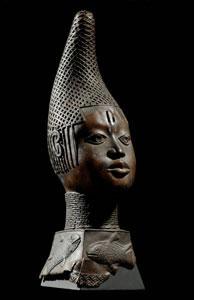
[size=15pt]Oba Esigie of Benin (ruled c.1504-c.1550 AD)[/size] Great ruler of Benin who also commissioned great art [img]http://www.artic.edu/aic/collections/citi/images/standard/Exhib/EX_000001/103668_541468.jpg[/img] Oba Esigie on Horseback with Attendants, 16th/17th century Oba Esigie ascended the throne in c.1504 and had a long and eventful reign of perhaps 46 years. He introduced a special post in the administration for his mother called the Iyoba, the Queen Mother. A Dutch chronicler would report a century later that the Oba "undertakes nothing of importance without having sought her counsel". The art of the time reflects this reality. Oba Esigie commissioned a highly improved metal art that has since achieved worldwide distinction. Of the best-known pieces are the famous Queen Mother Idia busts. Professor Felix von Luschan, a former official of the Berlin Museum für Völkerkunde, stated that: "These works from Benin are equal to the very finest examples of European casting technique. Benvenuto Cellini could not have cast them better, nor could anyone else before or after him … Technically, these bronzes represent the very highest possible achievement." Affonso d'Aveiro and other Portuguese agents returned to Benin. They excited Esigie's interest in the possibility of acquiring firearms from Portugal for future campaigns. There was, however, a catch. Manuel, the Portuguese king wrote Esigie, explaining to him that: "When we see that you have embraced the teachings of Christianity like a good and faithful Christian, there will be nothing within our realms which we shall not be glad to favour you, whether it be arms or cannon and all other weapons of war for use against your enemies; of such things we have a great store, as your ambassador Dom Jorge will inform you." It was not to be. In 1516 and without Portuguese arms, Esigie scored a crushing defeat on Igala to the north. They had attempted an invasion that posed a threat to the very existence of Benin. Esigie compelled the defeated Igala to pay reparations. The Portuguese king did, however, send missionaries to Benin who successfully converted the Oba's son to the Christian faith. Bini Christians also established a few churches in Benin City at Ogbelaka, Idumwerie, and Akpakpava. The last church became the Holy Cross Cathedral. Christianity, however, remained distinctly a minority religion largely restricted to a few members of the court. It seems that the indigenous religion was just too well organised to be undermined by this foreign threat. https://www.edoworld.net/Iyoba_Idia.jpg Iyoba bust Text via:http://www.whenweruled.com/articles.php?lng=en&pg=14 |
| Nairaland General › Re: Buzugee/Nairaland, So I Want To Talk About Living Abroad by Kilode1: 9:10pm On May 26, 2011 |
Katsumoto:So I heard, but it does not bring "luck" in Nigeria. BTW, Congrats on the premiership but I am praying you get thrashed on Saturday; I[b] hope you understand why.[/b] lolDon't worry, the "Miracle of Istanbul" is still "the greatest ever", but we will surely perform wonders on Saturday. Liverpool is about to lose some more records LOL. RED DEVILS are the real deal, any other OFF-RED color na counterfeit. AjanleKoko:Kai! GEJ don suffer, but I feel you bros. There are some Presidents you sure don't want your kids to be like. |
| Politics › Re: Great Leaders In Nigeria's History Before Total Colonisation by Kilode1: 8:38pm On May 26, 2011 |
^^ I think there is a short reference to Dr. Obadiah Johnson in that bio, but I will see if I can get more later, You can also post bios if you find them. @Alj Harem, the Igbo Nri leaders and their stories are quite intriguing, I enjoyed that, please post more if you can. |
| Politics › Re: Great Leaders In Nigeria's History Before Total Colonisation by Kilode1: 7:41pm On May 26, 2011 |
^^Ha! scopusng:It is clear from the OP's statements that the thread is about Nigerian leaders. Also, try as much as you can to limit you snide remarks or jabs at other people's "tribes" else this thread will be quickly derailed, You know how NL is. I join you to hail the great Oba of Bini, but please limit posts to the intent of the thread so others can enjoy it. |
| Politics › Re: Great Leaders In Nigeria's History Before Total Colonisation by Kilode1: 7:34pm On May 26, 2011 |
[size=15pt]Bashorun Sodeke of Egba[/size] Died: 1845? [most of the stuff below are from Toyin Oduntan's article, see link] Bashorun Sodeke, founded Egba, Abeokuta (“Refuge Among Rocks”) circa 1830. Sodeke (Shodeke), was a hunter and leader of the Egba refugees who fled from the disintegrating Oyo empire. The town was also settled by missionaries (in the 1840s) and by Sierra Leone Creoles, who later became prominent as missionaries and as businessmen. Some Scholars(i,e Toyin Oduntan) believe "Sodeke can only claim Moral leadership based on his age and military experience, because until the middle of the 19th century, power was so widely diffused beyond the Ogboni (Sodeke was an Ogboni leader) that one principal actor stated that ―he who owns the power, rules the city, underscoring that there was no absolute hegemonic stability" According to Samule Johnson (via Toyin Oduntan) "Sodeke, who later became Egba leader, was captured in the Gbagura attacks and enslaved by Dekun, a principal of Ijana, in Egbado. Dekun had been an Ilari, a viceroy of the Alaafin, but had excised his Ijana kingdom from Oyo control, appropriating the Isakole (tribute). Sodeke lived as an itinerant warrior and was involved in many of the encounters including the devastation of the Egba towns and in Dahomey‘s forays into coastal Yorubaland. Sodeke served Dekun as his horse-boy for many years and participated in Dekun‘s travels and exploits across the region. His extensive travels and knowledge of the Yoruba country probably made him better placed to lead one of the bands of Ibadan displaced to Abeokuta, a region through which he may have passed in his forays. Johnson considers it providential that he became Egba leader." "Sodeke favorably received Christian missionaries, such as Reverends TB Freeman and Henry Townsend in 1842 and 1843. Though Sodeke had died by 1845 when the CMS missionaries came to settle in Abeokuta" - Toyin Falola http://dalspace.library.dal.ca/bitstream/handle/10222/13121/Oduntan,%20Oluwatoyin,%20Phd,%20History,%20Oct.%202010.pdf?sequence=3 |
| Politics › Re: Great Leaders In Nigeria's History Before Total Colonisation by Kilode1: 6:12pm On May 26, 2011 |
I suspect his name will come up a lot on this thread so here is a short bio of Samuel Johnson, a pioneer Nigerian Literary leader. [size=15pt]Samuel Johnson of Yorubaland[/size] 1846 to 1901 Nigerian churchman and historian, famous for his history of the Yoruba. His father was one of the Saros, the people who came to Nigeria in the 1840s from Sierra Leone having lived there as "recaptives" taken off slave ships by the British Navy or as children born to such people in Freetown. They usually came from areas within modern Nigeria, many of them being Yorubas. He was from the Oyo area and claimed descent from the Alaafin Abiodun of Oyo. He was enslaved, freed at sea and resettled in Freetown. Like other recaptives he was given the European names Henry Johnson when baptized. Henry Johnson and his wife Sarah had several sons who became famous in Nigeria, where they moved in 1857 to join the Church Missionary Society (CMS) mission under Rev. David Hinderer at Ibadan. The eldest, Henry, became a famous archdeacon with the CMS. The second, Nathaniel worked for the CMS as a teacher and catechist. The third, Samuel, was a clergyman and historian, and the fourth Obadiah, was the second Nigerian in the country's history to qualify as a medical doctor. Samuel Johnson was born at Hastings, Freetown, on 24 June 1846. He moved to Yorubaland with his family and spent some time with them at Ibadan,--longer than planned because of the Ibadan-Ijaye war of 1860-62, one of many wars among the Yoruba kingdoms after the 1820s. From 1863 to 1865 he completed his education at the CMS Training Institution in Abeokuta. From 1866 he worked as a schoolmaster under the CMS at Ibadan becoming, in 1867, assistant to Daniel Olubi, the CMS deacon at that time. He became superintendent of the Anglican Mission's schools at the Kudeti and Aremo stations in Ibadan, and in 1873 he visited Oyo, his ancestral homeland. In 1875 he became a catechist, and became involved in the Yoruba conflicts. The greatest of all the wars among Yoruba states, the Ekiti Parapo War, broke out in 1877 which Johnson dubbed the "Sixteen Year War." It involved Ibadan, the dominant military power, and Egbaland as well as the Ekiti states, which joined to form the Ekiti Parapo. Educated Yorubas, Saros in particular, were involved. Johnson played the role of a peacemaker. In 1881 he carried letters to Lagos from the Alaafin of Oyo suggesting British intervention to restore peace. The effort failed but Johnson and others continued their peace efforts. In 1885 he was a British government mediator between Ibadan and the Ijesha and Ekiti states. In 1886 the war ended in some parts, though it was to continue in others until 1893. British interventions to restore peace were to pave the way for British annexation. In 1880 Johnson became a deacon. The following year he was sent to Oyo as a pastor, and in 1888 was ordained a minister. He helped foster the growth of CMS work in Oyo and contributed to the growth of christianity in the area. The Training Institution formerly at Abeokuta was eventually moved to Oyo in 1896 and took on the name St. Andrew's College. That followed the British occupation of Yorubaland, at first due to treaties signed by Obas in 1893, later, in Oyo, due to military action taken in 1895 to ensure full submission. Thus the Alaafin of Oyo, who had been a nominal ruler of the Yorubas from his capital at New Oyo from the 1840s, was subordinated to British rule. By then Samuel Johnson, who had carefully studied the traditions of his countrymen while at Oyo had almost completed a major work, a general history of the Yorubas. Finished in 1897, the manuscript was sent to the CMS headquarters in London, where it was lost without a trace. Rev. Samuel Johnson died on 29 April 1901. He had been married twice, the second marriage with Martha Garba was celebrated at Lagos in 1895. His brother, Dr. Obadiah Johnson, saw to it that his work on Yoruba history was not wasted after the mysterious loss of the manuscript. Over the years he compiled the book again from Samuel Johnson's notes. Obadiah Johnson died in London in 1920, and the book was published in London in 1921 by George Routledge and Sons, as A History of the Yorubas from the Earliest Times to the Beginning of the British Protectorate, written by Samuel Johnson and edited by his brother. It is recognized as a pioneering historical study of high quality which ensured Samuel Johnson's fame. -Elijah Olu Akinwumi http://www.dacb.org/stories/nigeria/johnson_1samuel.html 1 Like |
| Politics › Re: Great Leaders In Nigeria's History Before Total Colonisation by Kilode1: 5:23pm On May 26, 2011 |
Katsumoto, you beat me to it! I was about to post my Generalissimo's profile @Jarus, iba to Moremi and "gbogbo awon Iya mi" |
| Politics › Re: Great Leaders In Nigeria's History Before Total Colonisation by Kilode1: 1:43pm On May 26, 2011 |
JAJA OF OPOBO (1821 - 1891), originally Jubo Jubogha https://images-mediawiki-sites.thefullwiki.org/04/1/6/6/0870036793121669.jpg He was sold into slavery when he was twelve years old. With a natural gift for business, he made enough money to buy his freedom and took the name "Jaja" for business purposes with the British. He quickly joined the Ijaw tribe and rose to the rank of King of Opobo (better known as Jaja of Opobo). Opobo began to dominate the palm oil trade and in time, Jaja of Opobo blocked British access to the inlands and began shipping his goods directly to Liverpool, England, without British intermediaries. This angered the British and at the Berlin Conference in 1884, Britain declared the land of Opobo British territory. When Jaja ignored the British take-over and continued to tax British merchants, he was invited to meet with Henry Hamilton Johnston, the British vice consul, in 1887. On arrival, Jaja was arrested, put on trial and sent to London to be the host of Queen Victoria at Buckingham Palace. After some 'legal issues' were sorted out, he was exiled to the West Indies. In 1891, he was allowed to return to Opobo but died on a British ship from an illness (supposedly caused by poisoned tea). Jubo Jubogha never made it back home. . . http://www.africabyanafrican.jigsy.com/colonial-africa |
| Politics › Re: Great Leaders In Nigeria's History Before Total Colonisation by Kilode1: 1:30pm On May 26, 2011 |
^^HAHA you have no idea Beaf, I'm not Lagos Royalty, I'm Odua Tokan Tokan though, but my "midwest"(SS) credentials/ties are very very substantial. Bros, I might actually have the authority to banish or even excise you from the South South o, I will check back with the elders Thank you though, SS citizenship accepted! @Isale, The thread is on the Homepage already?? I'll post more of my ancestors when I get a minute, Edit. 1 Like |
| Politics › Re: Great Leaders In Nigeria's History Before Total Colonisation by Kilode1: 4:00am On May 26, 2011 |
One of my worthy "Ancestors" [size=14pt]Oba Ovonramwen Nogbaisi (1888-1914) [/size] https://upload.wikimedia.org/wikipedia/commons/thumb/d/da/Oba-ovonramwen_crop_etc.jpg/220px-Oba-ovonramwen_crop_etc.jpg Oba Ovonramwen Nogbaisi was on the throne during the British invasion of Benin City in 1897. To prepare the grounds before the invasion, the British first sneaked military spies into Benin, to infiltrate the nation´s security system during the Igue festival, a period of acute spiritual sensitivity for Edo people, when their monarch goes into seclusion for two weeks for spiritual cleansing and cannot receive visitors. The spies were eliminated for their hostile acts. See more at Osahon's site : http://naiwuosahon/apps/blog/show/4760229-oba-ovonramen-1888-1914-ce- I can't post everything at this time. . . 4 Likes |
| Politics › Re: Aljazeera Airs A Heartbreaking Program About Lagos(25 May 2011 -Video) by Kilode1: 1:31am On May 26, 2011 |
fsb:Hmm, Kano is Governor Ibrahim Shekarau's state right? The guy that was speaking "oyinbo engriiish" and yarning a lot of "opata" on TV during the Election Debates. Thank you for telling your story jare. |
| Nairaland General › Re: Buzugee/Nairaland, So I Want To Talk About Living Abroad by Kilode1: 1:17am On May 26, 2011 |
[quote author=isale_gan2 link=topic=590933.msg8394188#msg8394188 date=1306367623]What in hell's bathroom is going on here?! Moved again? lol. hmmm. I guess I don't much mind. Looks like we roll along like a tumbleweed, or is it a hurricane, and pickup more quirky folk as we roll. [/quote]I don't think NL eggheads know what to make of you or your thread. I won't be surprised if they end up sending you a notice to move off the "interwebs" totally.  |
| Politics › Re: What Is The Big Deal About Fashola? Nonsense! by Kilode1: 12:57am On May 26, 2011 |
^^ Very right, unfortunately it seems like it's too difficult for over-oppressed Nigerians to focus on the real issues, especially those who get all their information from beer parlour chats, So they hide behind ethnic and religious rivalry talk. |
| Politics › Re: What Is The Big Deal About Fashola? Nonsense! by Kilode1: 12:33am On May 26, 2011 |
Katsumoto:Exactly, I believe Cocoa export accounted for 80% of Nigeria's foreign exchange revenue before oil was discovered in 1957, Just like we have oil today, many people outside cocoa producing towns benefitted from that too. @Kanto, The point is that this disorganized Nigerian system is messing everybody up. It's not Yoruba, Igbo, Niger Delta or Hausa "parasite" states, it's a few usurpers across all regions who are acting as overlords feeding fat on our people, their land and their resources. They are the "establishment" protectors, they are the ones benefitting from the oil revenue, they are the ones who don't want Nigeria to change. Those are the folks we need to direct our attention and anger at. |
| Nairaland General › Re: Buzugee/Nairaland, So I Want To Talk About Living Abroad by Kilode1: 11:26pm On May 25, 2011 |
Funny last few videos and posts. There is nothing funnier than an awkward Ivy-leaguer trying to act all tough at a sport. Look at Obama acting so "tough and driven" at a game of ping-pong. SMH BTW, Isale, Nice quip about Reagan lol. As for Bush Jnr, that "left" was probably part of his many acts. Premiership: I'm just gracious like that, it's not cool to celebrate too much when you are an over-achiever. It's lonely at the top LOL@ Ajanlekoko, I don't blame you bros. Abeg force the boy to use his right hand jare. Our Presido is a "rightie" That Missouri Tornado is some scary sad stuff, I saw it on CNN, hope it did not hit Cokeland. |
| Politics › Re: Freedom Of Information Bill Passed, Sent To President For Approval! by Kilode1: 3:59am On May 25, 2011 |
I'll wait to read the final bill before I rejoice. I'll wait to see what they'll allow as public information and what they are retaining as "state secrets" I'll wait. |
| Politics › Re: Bloodbath In Lagos: Soldiers Kill Police Dpo, Dco 8 Others by Kilode1: 9:04pm On May 24, 2011 |
Nigeria is one of those weird and poorly structured countries where Military men carry on in public places like they actually have some authority over Civil law enforcers like the Police. Is it not uncommon to see the Military racing across town blaring sirens and brandishing weapons just because a common colonel wants to attend a wedding. The Military left power 12 years ago but it seems their tyranny and influence has become a permanent scar on our psyche -and they carry it on their shoulders as well. I'll wait to hear what GEJ and his IG will do or say to the Army about these terrorists and murderers. The Nigerian Police is not too different anyway  |
| Politics › Re: Democracy Can Only Work If We Are Paid Jumbo Allowances - Rep Member by Kilode1: 3:46pm On May 24, 2011 |
fuke:Right. I don't like to glorify politicians, but since I already condemned Adeseun on the first page, let me just add that; yes, I believe we will get there as long as we continue to make the right choices. Just like @Koruji said, politicians are your employees, if you don't punish them when they err, you'll essentially turn them into your overlords. All 150 Million Nigerians are not the same, but unfortunately, we have a Government system that forces you to be corrupt. We have a totally lunatic federal structure where so few control so much. I cannot understand why we have LAW MAKERS receiving personal allocations for individual constituency projects for example. SMH Anyway, Read Ekiti Governor, Kayode Fayemi's words on a similar issue; "You talk about money and the limited resources we have in the state. Governance itself cannot be impeded by limited resources. Governance as far as I am aware, can only be limited by your lack of ideas and your lack of will. If you have will and you have ideas, then there’s going to be a way -Kayode Fayemi (ACN, Ekiti State)^^ That is how I want my leaders to reason. If you can't articulate an understanding of issues in that manner and back it up with actions, then I have a responsibility to ensure that you quickly become unemployed by voting you out. |




1 2 3 4 5 6 7 8 ... 45 46 47 48 49 50 51 52 53 (of 118 pages)