NwaNimo1's Posts
Nairaland Forum › NwaNimo1's Profile › NwaNimo1's Posts
1 2 3 4 5 6 7 8 ... 252 253 254 255 256 257 258 259 260 (of 506 pages)
 Politics › Buhari’s Agricultural Revolution Yielding Fruits – Lai Mohammed by NwaNimo1(op): 7:07pm On Jun 21, 2021 Politics › Buhari’s Agricultural Revolution Yielding Fruits – Lai Mohammed by NwaNimo1(op): 7:07pm On Jun 21, 2021 |
The Minister of Information and Culture, Lai Mohammed says the agricultural revolution embarked upon by the President Muhammadu Buhari’s administration is yielding desired fruits. The minister stated this on Monday in Birnin-Kudu near Dutse, Jigawa when he inspected Malam Alu Integrated Agro and Allied farm complex. The complex also housed a 50-metre-high pole, hoisting the Nigerian flag – the tallest flag pole in Nigeria and the second tallest in Africa. Mohammed said the integrated farm project with full automation soilless tomato greenhouse, poultry, fish pond, dairy and fertilizer blending plant was a clear testimony to the success of the Buhari’s agricultural revolution. “At least, two programmes of this administration, the Anchor Borrowers Programme and the Presidential Fertilizer Initiative, have succeeded in revolutionising agriculture in Nigeria.  “For those who may not remember, the Federal Government inaugurated the anchors borrowers programme in Nov. 2015 through the Central Bank of Nigeria (CBN) to help boost the nation’s agricultural sector. “Today, that programme has catalysed the production of such crops as rice, maize, wheat and tomato, just to name a few, boosted local production and reduced heavy importation “Then, there is the Presidential Fertilizer Initiative, which is aimed at stimulating local production of NPK fertilizer by reviving moribund fertilizer plants and the local blending fertilizer industry. “This has helped in making fertilizer available to Nigerian farmers at affordable prices and saving 200 million dollars in Forex and N60 billion in budgetary provision for fertilizer subsidy, and of course creating thousands of jobs in the process,’’ he said. The minister said many farmers across the country had taken advantage of the programmes to create the kind of massive farm as the Malam Alu agro and Allied farm. He said the Federal Government’s initiatives coupled with the ingenious programmes of the state government had made Jigawa a shining example of the success of the agricultural revolution. “I implore other farmers and other states to take advantage of the anchor borrowers programme and the presidential fertiliser initiative to revolutionise agriculture in their areas,’’ he said. Speaking on the tallest flag pole in the complex, the minister said the initiator of the project, Farouk Adamu used one stone to kill two birds by showcasing successes in agriculture and tourism. “He is not only showcasing success in agriculture, he is also helping to make Jigawa a choice destination for tourists by erecting the tallest Nigerian flag pole in the country. “This is good thinking for which I commend him,’’ he said The minister said the fact that the state government had succeeded in making Jigawa one of the most peaceful states in the country, showed monumental achievement spanning agriculture, tourism and security. The Jigawa Governor, Badaru Abubakar said the Buhari’s agricultural revolution programme had impacted positively on the development of the state. He disclosed that Jigawa was the third largest rice producer in the country, the largest producer of sesame and hibiscus and the state would soon take the lead in groundnut production “These all happened because of the massive support we received from President Muhammadu Buhari. “The anchor borrower programme has been very remarkable and the federal fertiliser initiative has supported our farmers to get easy access to fertiliser at cheap and competitive prices. “Because of the massive irrigation project supported by the Federal Government, we now have planting all year round and where we have not seen water in the last 14 years, water is now flowing,’’ he said. Speaking on the flag, the governor said he would be willing to approve the request by the Federal Government to take it over as a national monument. On his part, the chairman of the integrated farm said he was inspired to come home to invest because of the encouragement by the Federal Government for people to invest in agriculture. Mr Aliyu said the complex, spanning 70 hectares contained poultry with 120,000 layers, Dairy with 400 heads of cow, fertilizer blending plant with capacity of 40 tons per hour and a Green House that produced 20 tons of tomato weekly. He said the tallest flag erected in the complex was to attract local and international tourists to the farm complex and the state. NAN reports that the event was attended by the Emir of Dutse, HRH Nuhu Sanusi, political and other traditional leaders in the state. In the company of the minister to the event were, the Directors-General of Nigeria Television Authority, Yakubu Ibn Mohammed, Radio Nigeria, Monsur Liman and National Orientation Agency, Garba Abari. Others were, the DGs of the National Commission for Museum and Monument, Prof. Abba Tijani and Nigeria Tourism Development Corporation, Folorunsho Coker. https://dailynigerian.com/buhari-agricultural/ |
| Politics › Re: Video Of Werewolf Reportedly Killed In Benue Is Fake - Nigerian Army by NwaNimo1(m): 6:53pm On Jun 21, 2021 |
Na so..... [img]https://media1./images/8be103a87c20efb85f1f9cc7d467f088/tenor.gif?itemid=8875666[/img] 17 Likes |
| Foreign Affairs › Re: US Navy Fires Thousands Of Pounds Of Explosives To Test Aircraft Carrier( Pic) by NwaNimo1(m): 5:06pm On Jun 21, 2021 |
63 Likes 7 Shares |
| Politics › Re: We Bombed Some Gun Trucks But We Can’t Identify Victims Yet: Nigerian Air Force by NwaNimo1(m): 9:27pm On Jun 20, 2021 |
| Politics › Re: Fathers Day: Phillip Shaibu Leads Altar Boys During Celebration by NwaNimo1(m): 9:23pm On Jun 20, 2021 |
| Celebrities › Re: Regina Daniels Celebrates Her Husband, Ned Nwoko On Father's Day (video) by NwaNimo1(m): 9:22pm On Jun 20, 2021 |
1 Like |
| Foreign Affairs › Re: Slaps, Eggs And Punches: 5 Altercations Between Politicians And The People by NwaNimo1(m): 8:44pm On Jun 20, 2021*. Modified: 11:58pm On Jun 20, 2021 |
Mr Presidency / Buhari..... [img]https://media1./images/6113034e3d9ae8b6386946ab637bfe12/tenor.gif?itemid=18593005[/img] [bChop that....... from Nigerians![/b] 15 Likes 1 Share |
| Foreign Affairs › Re: Slaps, Eggs And Punches: 5 Altercations Between Politicians And The People by NwaNimo1(m): 8:43pm On Jun 20, 2021 |
.kl |
| Politics › Re: World Sickle Cell Day: Peter Obi, Maduka Commiserate With Victims (Pictures) by NwaNimo1(m): 8:42pm On Jun 20, 2021*. Modified: 11:26pm On Jun 20, 2021 |
Me right now [img]https://media1./images/5b929e1dd0e3784a44522b3cf3424fde/tenor.gif?itemid=21264476[/img] 11 Likes |
| Politics › Re: I Was Arrested For Having Twitter And VPN On My Phone In Ibadan - Tomiwa Oni by NwaNimo1(m): 8:25pm On Jun 20, 2021 |
7 Likes 1 Share |
| Politics › Re: Police Neutralize 14 Bandits In Benue, Arrest 2 by NwaNimo1(m): 6:18pm On Jun 20, 2021 |
Nice.... [img]https://media1./images/c22124e484e2b4bfb1970a5f571c4492/tenor.gif?itemid=13729869[/img] 1 Like |
| Politics › Re: Insurgency: Yahaya Visits Wounded Soldiers In Hospital by NwaNimo1(m): 12:10pm On Jun 20, 2021 |
Pathetic |
| Politics › Re: 61% Of The 2.6 Million People Internally Displaced Are In Borno - UNHCR by NwaNimo1(m): 11:43pm On Jun 19, 2021 |
1 Like |
| Politics › Nigeria Will Remain United Under My Watch — President Buhari by NwaNimo1(op): 11:43pm On Jun 19, 2021 |
President Muhammadu Buhari has reiterated that Nigeria would remain a united and indivisible nation under his stewardship. The president disclosed this at the inauguration of Kudirat Abiola’s Sabon Gari Peace Foundation in Zaria, Kaduna State on Saturday. Mr Buhari was represented by the Executive Secretary, Revenue Mobilisation, Allocation and Fiscal Commission, Mohammed Bello. While addressing those agitating for secession and separation of the country, the president said they were either ignorant of history or of the war. “People above the age of 60 will not contemplate going through what happened during the civil war. I urge those who feel aggrieved to channel their grievances to the National Assembly,” he said. He also emphasised on full implementation of Judiciary and Local Government autonomy, stressing that state governors must adhere to the laws and desist from tampering with local government allocations. Earlier, Gov. Nasir El-Rufai, represented by the Commissioner for Education, Shehu Mohammed, said many of those clamouring for restructuring does not even understand what they clamoured for. “When we are in democratic setting and have a National Assembly in place that represents every region, every state and every constituency, the need for restructuring becomes inconsequential.” Earlier, Jami’u Abiola, the chairman of the foundation and son to late Kudirat Abiola, said the event was to bring Nigerians together and propel the gospel of unity, peace and continuous existence as an indivisible entity. Mr Abiola said though his mother is Yoruba by tribe, she was born and bred in the northern part in the midst of Hausas, before finally returning to Lagos, her state of origin. “This indicates that wherever you come from, you can still live elsewhere and make a living within the shores of Nigeria. “I want to assure you that this project will not end here, it will step down to grassroot levels for massive awareness,” he said. https://dailynigerian.com/nigeria-remain-united-watch/ 1 Like 1 Share |
| Crime › Re: Micheal Usifo Ataga's Murder: Lekki Airbnb Owner In Custody, Suspect At Large by NwaNimo1(m): 9:48pm On Jun 19, 2021*. Modified: 10:27pm On Jun 19, 2021 |
Pathetic ending..... [img]https://media1./images/8449c89b2a5a67af4d98b99a8e403eee/tenor.gif?itemid=21379361[/img] 78 Likes 12 Shares |
| Politics › Re: El-Rufai: My Successor Will Demolish More Houses Than Me by NwaNimo1(m): 9:18pm On Jun 19, 2021*. Modified: 9:46pm On Jun 19, 2021 |
Stupid statement.... [img]https://media1./images/dfa4b04e6d5f2ed9706d36b10f43953a/tenor.gif?itemid=21071984[/img] 64 Likes |
| Family › Re: Anytime My Husband Is Angry, This Is My Way Of Apologising To Him by NwaNimo1(m): 9:15pm On Jun 19, 2021 |
4 Likes |
| Politics › Re: Buhari Arrives In Ghana For ECOWAS Summit by NwaNimo1(op): 7:30pm On Jun 19, 2021*. Modified: 10:28pm On Jun 19, 2021 |
Hope Presido Nana teaches Buhari some sense..... [img]https://media1./images/d0e62c717655e4b69b95ffa64d0b6a69/tenor.gif?itemid=19490145[/img] 50 Likes 2 Shares |
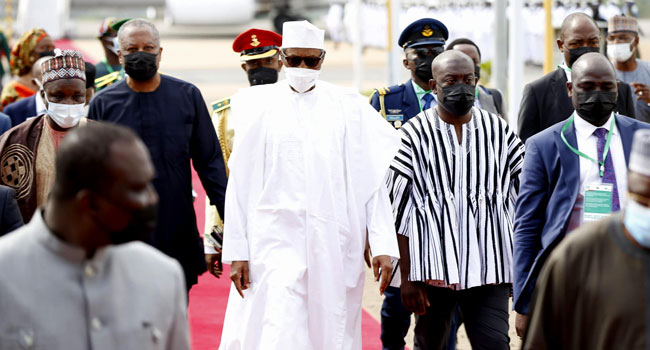
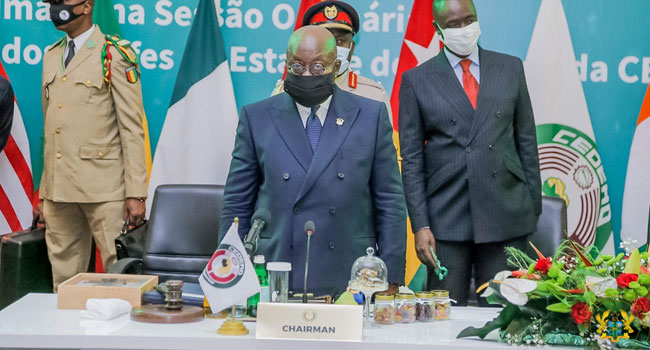
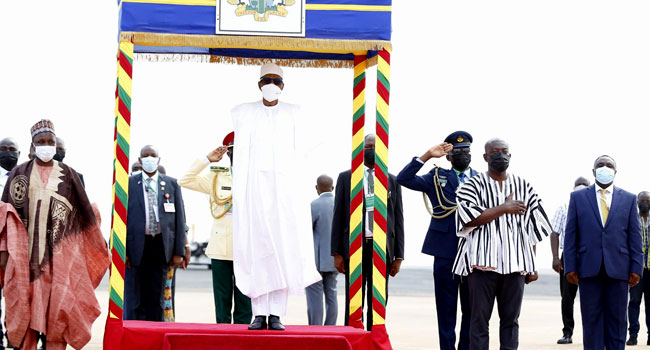
| Politics › Buhari Arrives In Ghana For ECOWAS Summit by NwaNimo1(op): 7:26pm On Jun 19, 2021 |
President Muhammadu Buhari is currently in Accra, Ghana participating in the 59th Ordinary Session of the ECOWAS Authority of Heads of State and Government.https://www.channelstv.com/2021/06/19/buhari-arrives-in-ghana-for-ecowas-summit/ https://www.channelstv.com/wp-content/uploads/2021/06/Buhari-at-Ghana-airport-2.jpg https://www.channelstv.com/wp-content/uploads/2021/06/Ghanaina-President.jpg https://www.channelstv.com/wp-content/uploads/2021/06/Buhari-at-Ghana-airport-3.jpg https://www.channelstv.com/wp-content/uploads/2021/06/Buhari-at-Ghana-airport-2.jpg https://www.channelstv.com/wp-content/uploads/2021/06/Buhari-at-Ghana-airport-4.jpg 5 Likes 4 Shares
|
| Politics › Re: Sincerely Speaking Who Are These People... by NwaNimo1(m): 5:59pm On Jun 19, 2021 |
Body doubles.... 4 Likes |
| Politics › Re: This Is Nigeria Today, Argue With Fact.. by NwaNimo1(m): 5:46pm On Jun 19, 2021 |
| Politics › Re: Terrible!! Man Dies Moments After Drinking A Bottle Of Alcohol by NwaNimo1(m): 5:43pm On Jun 19, 2021 |
Suicide |
| Politics › Re: NNPC Boss Says Rising Oil Prices Will Create Problems For Nigeria by NwaNimo1(op): 5:42pm On Jun 19, 2021 |
| Politics › NNPC Boss Says Rising Oil Prices Will Create Problems For Nigeria by NwaNimo1(op): 5:33pm On Jun 19, 2021 |
Group Managing Director of the Nigerian National Petroleum Corporation (NNPC), Mallam Mele Kyari, has warned that rather than being a positive development, the rising prices of crude oil in the international market could cause major challenges for resource-dependent nations like Nigeria. He spoke just as the International Monetary Fund (IMF) expressed concern over the re-emergence of fuel subsidy in Nigeria in the face of the country’s low revenue mobilisation. The Washington-based institution, however, welcomed recent moves by the Central Bank of Nigeria (CBN) to unify exchange rates, certifying Nigerian banks as being liquid and well-capitalised. Kyari, at the virtual Citizens Energy Congress, tagged: “Securing a Sustainable Future Energy System through Strategy, Collaboration and Innovation,” yesterday described the rising price of crude oil as a “chicken and egg” situation. He added that oil prices had started exiting the comfort zone set by the NNPC, and becoming a burden. The forum was organised by DMG Events, a London-based Public Relations company, which said the occasion was to provide an opportunity for players to reset the energy agenda post- COVID-19 and connect the divergent and polarising perspectives. Kyari put the comfort zone globally at $58-$60, saying that for the NNPC, anything above $70-$80 will create major distortions in the projections of the corporation and add more problems to the company. Brent crude, Nigeria’s oil benchmark, is currently selling for over $74 and is likely to increase further in the coming days as the NNPC continues to battle the dilemma of shouldering the payment of petrol subsidy, which has made it unable to contribute to the Federal Account Allocation Committee (FAAC) on two occasions. Kyari expressed the concern that as the commodity prices rise, buyers of Nigeria’s crude may be compelled to accelerate their investment in renewable sources of energy, thereby leaving the industry in a quagmire. He said: “In a resource-dependent nation like Nigeria when it gets too high, it creates a big problem because your consumers shut down their demand. Demand will go down and obviously even as the prices go up, you will have less volume to sell. “So, it’s a chicken and egg story and that’s why in the industry when people make estimates for the future, they always make it about $50 to $60. Nobody puts it beyond $60. “But for us as a country, as prices go up, the burden of providing cheap fuel also increases and that’s a challenge for us but on a net basis, you know, the high prices, as long as it doesn’t exceed $70 to $80, it’s okay for us.” According to him, Nigeria will have no problems supporting the restoration of about 5.8 million barrels a day that the Organisation of Petroleum Exporting Countries (OPEC) still has offline since the pandemic, due to the curbs in production quota imposed by the oil cartel. He said adding that number to demand will stabilise and probably bring oil prices down to about $60 level or a little below $60, stressing that that’s a comfort zone for every producing company or country. “I don’t see them (Nigeria) having any difficulty agreeing to add additional volume to cushion the effect of these high prices for this period,” he said. He stated that Nigeria is already producing well below its capacity, because in early 2020, the country actually produced up to 2.4 million barrels of oil per day for both oil and condensates. With declining investments in the oil sector, Kyari stated that in a short time, most likely the next five years, the world may experience an energy crisis if the current situation is not properly managed. “But we know that a number of things are going on in the transition journey at renewables. Many oil companies are transiting to renewables in the future. And that means that emphasis will be on gas and I see a very turbulent next five years and potentially some stability in the next 10 years,” he said. He described the transition to renewables as a reality, adding that for Nigeria, what is clear is that the country is deficient in infrastructure and, therefore, needs resources from oil to exit poverty. He stated that for Nigeria, to transit means to go for a low-carbon option and move towards more gas development than the liquids, adding that in the long term, the country needs to find a way out of dependence on oil. “Renewables are real and we are making efforts to go in that direction, but obviously, our first step is to develop our gas resources. “In this industry, you can’t do anything except you have the financing and financing is now clearly constrained both in terms of available resources and the decision of some of the shareholders of some of the lending institutions,” he said. He added that although everyone seems to be talking about peak oil, there is no reference to gas, which contains lower carbon. Kyari said: “Everybody is saying that in the next 10 years, we will get to peak oil. But nobody has said peak gas. And it’s very difficult to distinguish the two because as you get peak oil, in many cases, you know, oil is produced alongside gas.  “Yes, it’s possible, it can be in 10 years time but you also know that what we are doing today in the industry is also curtailing investment and meeting the transition target in 2050. “What that means is that in five years’ time, you could be in a situation of shock and this shock will mean that people will have to put more money into producing the liquids and that means that it will defer the date for liquid oil and potentially pushing it by 20 to 30 years.” Re-emergence of Fuel Subsidy Worrisome, Says IMF Meanwhile, the IMF has expressed concern over the re-emergence of fuel subsidy in Nigeria in the face of the country’s low revenue mobilisation. The IMF in a statement at the end of its staff virtual meeting with top Nigerian officials, said the views expressed in the statement were those of the IMF staff and did not represent those of the IMF’s Executive Board. The IMF team was led by IMF’s Mission Chief for Nigeria, Ms. Jesmin Rahman, in the virtual meetings with the Nigerian authorities, held from June 1st to June 8th, 2021, to discuss recent economic, financial developments and outlook. At the end of the visit, Rahman, in the statement, said the Nigerian economy had started to gradually recover from the negative effects of the COVID-19 global pandemic. He said: “The mission expressed its concern with the resurgence of fuel subsidies. It reiterated the importance of introducing market-based fuel pricing mechanism and the need to deploy well-targeted social support to cushion any impact on the poor. “The mission recommended stepping up efforts to strengthen tax administration to mobilise additional revenues and help address priority spending pressures.” It stated that tax revenue collections in Nigeria were gradually recovering but with fuel subsidies resurfacing, additional spending for COVID-19 vaccines, added to address security challenges, the fiscal deficit of the consolidated government was expected to remain elevated at 5.5 per cent of Gross Domestic Product (GDP). It added that following sharp output contractions in the second and third quarters, GDP growth turned positive in the fourth quarter (Q4 2020) and growth reached 0.5 per cent (year-on-year) in Q1 2021, supported by agriculture and services sectors. However, it said employment level in the country continued to fall dramatically and, together with other socio-economic indicators, remained below pre-pandemic levels. “Inflation slightly decelerated in May but remained elevated at 17.93 per cent, owing to high food price inflation. With the recovery in oil prices and remittance flows, the strong pressures on the balance of payments have somewhat abated, although imports are rebounding faster than exports and foreign investor appetite remains subdued resulting in continued forex shortage. “The incipient recovery in economic activity is projected to take root and broaden among sectors, with GDP growth expected to reach 2.5 per cent in 2021,” it added. It anticipated that inflation in Nigeria would remain elevated in 2021, but likely to decelerate in the second half of the year to reach about 15.5 per cent, following the removal of border controls and the elimination of base effects from elevated food price levels. Downside risks to the near-term arise from further deterioration of security conditions, and the still uncertain course of the pandemic both globally and in Nigeria, it added. “The mission commended the authorities’ measures to contain the transmission of COVID-19 in Nigeria, including the ongoing vaccination programme under the COVAX initiative, and strongly supported the authorities’ efforts to acquire additional doses from countries with surplus stocks. “The mission urged the authorities to keep reliance on CBN overdrafts for deficit financing within legal limits, while the government continues to make efforts to strengthen budget planning and public finance management practices to allow for flexible financing from domestic markets and better integration of cash and debt management. “The recent removal of the official exchange rate from the CBN website and measures to enhance transparency in the setting of the NAFEX exchange rate are encouraging,” it stated. The mission recommended maintaining the momentum toward fully unifying all exchange rate windows and establishing a market-clearing exchange rate. On the monetary policy to strengthen the monetary targeting regime, the mission recommended integrating the interbank and debt markets and using the central bank or government bills of short-maturity as the main liquidity management tool, instead of the cash reserve requirements. “The banking sector remains liquid and well-capitalised while non-performing loans (NPLs) are contained. The extension of the moratorium on principal payments of qualifying credit facilities on a case-by-case basis through March 2022 should be limited to viable debtors with strong pre-crisis fundamentals. “CBN stress tests purport that the banking system would remain adequately capitalised except in case of a severe deterioration of credit quality. “Nevertheless, it remains to be seen what share of forborne loans may turn non-performing as the impact of the pandemic abates. Since NPLs often rise at the later part of economic crisis, CBN’s strong oversight remains critical to safeguarding financial sector stability,” it said. https://www.energymixreport.com/nnpc-boss-says-rising-oil-prices-will-create-problems-for-nigeria/ |
| Politics › Re: FG To Begin Rehabilitation On Part Of Enugu-Onitsha Expressway by NwaNimo1(m): 2:31pm On Jun 19, 2021 |
Begins? |
| Politics › Re: Yahaya Bello Celebrates His 46th Birthday (Photos) by NwaNimo1(m): 9:59pm On Jun 18, 2021 |
HBD [img]https://media1./images/d7c08ae768734bab5d8bbcb14db0b79e/tenor.gif?itemid=15115573[/img] [img]https://media1./images/80d18b518084d4dade8878f9d3fc61d1/tenor.gif?itemid=12223111[/img] 5 Likes 2 Shares |
| Celebrities › Re: Yetunde Barnabas And Olayinka Peter Court Wedding (Photos) by NwaNimo1(m): 9:51pm On Jun 18, 2021 |
9 Likes |
| Politics › Re: LIRS: Workers To Pay More Income Tax In Lagos by NwaNimo1(m): 7:47pm On Jun 18, 2021 |
tax collectors to pay more tax... |
| Sports › Re: PSG Superstar, Neymar Left Out Of Brazil’s Tokyo Olympic Squad by NwaNimo1(m): 3:58pm On Jun 18, 2021 |
3 Likes |
| Politics › Re: Buhari Asks MTN To Reduce Data Prices For Nigerians by NwaNimo1(m): 3:56pm On Jun 18, 2021*. Modified: 9:38pm On Jun 18, 2021 |
MTN be like....... or 'What'? [img]https://media1./images/840931c33905f0c814d0318b54fa1eb7/tenor.gif?itemid=21050368[/img] the price is the price - pay or fck off? 169 Likes 13 Shares |
| Jobs/Vacancies › Re: Is Being An Introvert A Turnoff To Nigerian Employers? by NwaNimo1(m): 2:26pm On Jun 18, 2021 |
Introverts no get character......(2 succeed) [img]https://media1./images/4ba92b943c6ea2af19e648437dc75fa7/tenor.gif?itemid=15143580[/img] |
| Politics › Re: APGA Is Anambra And Anambra Is APGA by NwaNimo1(m): 2:23pm On Jun 18, 2021 |
[img]https://media./images/51e38355f9a3774aab62c583d44d3daf/tenor.gif[/img] A.nambra P.eople G.et A.ptitude |




1 2 3 4 5 6 7 8 ... 252 253 254 255 256 257 258 259 260 (of 506 pages)