PhysicsMHD's Posts
Nairaland Forum › PhysicsMHD's Profile › PhysicsMHD's Posts
1 2 3 4 5 6 7 8 ... 26 27 28 29 30 31 32 33 34 (of 67 pages)
 Culture › Re: Benin Art And Architecture by PhysicsMHD(m): 6:53am On Mar 28, 2011 Culture › Re: Benin Art And Architecture by PhysicsMHD(m): 6:53am On Mar 28, 2011 |
"At IGO a town on the Gilly Gilly road there is a mound on which is an altar to OLUKUN with chalk cones and cowries on it all covered by a shed. They say that EHAIZAÃI, King of Benin, because it was unhappy in Benin City, sent it to IGO. They say they knew it was unhappy because of the sickness it caused in the City. At UGWATON there is also a temple to this great spirit, or power, mentioned by Burton.[1] OLUKUN is said to have been one of the sons of God who married OHA. OHA is the river running from the town of OKHA past SILUKU into the Benin river, and forms the western and northern boundary of the Benin Kingdom dividing it from the intermediate province of ELAWWEY which is a kind of neutral province between the Benin and Yoruba Kingdoms. https://www.sacred-texts.com/afr/mind/img/21-006.jpg An altar to OLUKUN, under a little shed, with native pots on it. Chalk marks, as above, being made on the ground in front of it." - At the Back of the Black Man's Mind, by Richard Edward Dennett, [1906] (My own observation: in Dennett's sketch, I can see the "x" and "o" symbols amazonia mentioned earlier (page 5) in this thread). |
| Culture › Re: Benin Art And Architecture by PhysicsMHD(m): 6:48am On Mar 28, 2011 |
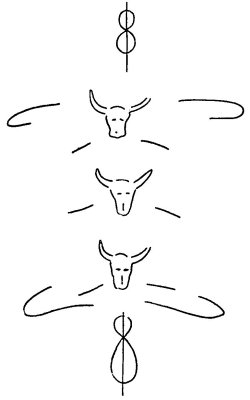
"Next we come to a figure of OLUKUN'S IYASE who is wearing the ODIGBA and frontlet UDEHSI, collar, armlets and bracelets. Then opposite to the door at the end of the building we see a great figure of OLUKUN the teacher dressed as a king and figures of his two Nabori (arm upholders) and four naked boys or AMADA. An old priest sits at the feet of this figure near to an altar, half hidden by the long strings of cowries hanging in front of him from the roof. While I was there a man and two women came into this temple and going up to OLUKUN, knelt down and bowed their heads until they touched the step on which rested the feet of OLUKUN. The priest crushed some chalk and handed some of it to each petitioner, then they marked themselves and went out. On either side of these great central figures are two sons of OBIANIMI very old wooden figures (like those into which nails are driven in the Congo) covered with cowries, bits of cloth, knives, etc., and near to one of these is the figure of a leopard and to the other the skull of a cow and the shell of a tortoise. On the right in a cloister are the figures of the OLUKUN'S great war chief Ezomo (or OJUMO) wearing his ODIGBA and four necklaces, and his bugler. And near to the door again are the figures of EKIOLUKUN the grandson of OLUKUN wearing four necklaces, and his wife and AMADA. https://www.sacred-texts.com/afr/mind/img/21-005.jpg In the centre of the open space in this temple were three cow's heads surrounded by chalk marks." - At the Back of the Black Man's Mind, by Richard Edward Dennett, [1906] |
| Culture › Re: Where Are Our Own Traditional Gurus? See Indian Example: by PhysicsMHD(m): 5:34am On Mar 28, 2011 |
You're asking for youtube babalawos?  |
| Culture › Re: Ramses, Cleopatra, Nefertiti: Original Egyptians Were Black? by PhysicsMHD(m): 4:32am On Mar 28, 2011 |
[quote author=X-factoria link=topic=82638.msg7838594#msg7838594 date=1299162800]I have been asking these questions like forever and nobody seem to be able to explain. How come after the Arab incursions forced out the black natives of ancient Egypt into what is present day sub-saharan Africa, some of the cultures we read/heard of ancient Egypt never followed them?? How come they were not able to replicate or even do much more in terms technological advancement associated with, for example, the construction of the great and astounding pyramids, the tomb culture where dead folks are kept?? How come we lost touch with the organizational skills and the sophistication of ancient egyptian towns so much that we now behaved as though those things were alien to our fore-fathers?? Please somebody should try and explain the disconnection.[/quote]I'm not even an Afrocentrist or someone claiming that all of the original Egyptians were necessarily black (obviously some were, but there's no definitive proof that all of them were), but I think you should read up, in more detail, about the level of organization and sophistication of Ife and Benin, specifically. Also, you should read up on Oyo's impressive organizational sophistication. See Robin Law's book on Oyo for a good account. For the degree of Benin's organization or sophistication, you can read Bradbury for a sympathetic account, but here's a mostly objective (positive and negative) and reasonable account of their practices: http://books.google.com/books?id=RfVoxgkd5NYC&pg=PA70&dq=benin+red+earth&hl=en&ei=nvaPTe6jLJKFtge8wKiICQ&sa=X&oi=book_result&ct=result&resnum=2&ved=0CDQQ6AEwAQ#v=onepage&q=benin%20red%20earth&f=false They were not disorganized in my opinion. 1. Ife had beautiful, decorated potsherd pavements that have been found at the central area of Ife and at great distances beyond the central shrines and the palace of Ife. In other words, Ife was a paved city. This was by the 12th century. Ife later exported this potsherd pavement architecture to Oyo and Benin. http://arthistory.wisc.edu/ah241/2009/fall/08.html ^^^ There's an artist's rendition of a shrine there, and a small picture of some potsherd pavement but there's actually a great picture of some beautifully patterned potsherd pavement excavated at Ife in Frank Willett's book Ife in the History of West African Sculpture (1967). I might scan and upload the picture later, but I definitely recommend that book. In my opinion Ife showed multiple signs of sophistication. Here's another: "Ife sculptures count among some of the earliest naturalistic expressions of humans in the world, significantly predating the European renaissance, and even today ranking among humanity’s greatest artistic achievements. The current piece is a case in fact. Depicting a young woman, the casting is incredibly fine (Ife metalwork is the finest in the ancient world; their refinement – castings being only about 1/16th of an inch thick – was not equaled in the west until the 19th century) and the surface details picked out perfectly." http://barakatgallery.com/store/index.cfm/FuseAction/subcatItemsDetails/UserID/0/CFID/10113720/CFTOKEN/7d3b15431d861a21-C8B2AB54-3048-33BC-FC4BD338AD660589/jsessionid/8430a608688a98afcce180742d4445b327f3/CategoryID/30/SubCategoryID/503.htm 2. With regard to tombs, there were certainly tombs in Ife and Benin. In Ife for example, there is the tomb (or temple) of Lafogido, which archaeologists have not been given permission to explore further, because it's believed to contain the remains of Lafogido himself. Many of the exquisite archaeological artifacts of Igbo-ukwu (at Igbo Isaiah and Igbo Richard sites) were believed to have been from the tomb of an Eze. http://books.google.com/books?id=8HKDtlPuM2oC&pg=PA296&lpg=PA296&dq=lafogido&source=bl&ots=LI2UTlmQGK&sig=312kL6uCaKZC824Tg9uhgAkWlGU&hl=en&ei=1fCPTYCqH86jtge37KSICQ&sa=X&oi=book_result&ct=result&resnum=9&ved=0CEcQ6AEwCA#v=onepage&q=lafogido&f=false 3. As for pyramids, you have to understand that in certain areas, stone was rare in large quantities. For example, in Benin, one European explorer (Legroing) noted that there was "not a single stone" through their whole journey in Benin (a possible exaggeration, but you get the idea) and asserts that the earthen wall of Benin could "hardly have been built with any other material". However, this did not stop Africans from erecting some earthen structures. For example, Sungbo's Eredo: http://apollo5.bournemouth.ac.uk/africanlegacy/sungbo_images.htm#anchor9915 http://apollo5.bournemouth.ac.uk/africanlegacy/sungbo_eredo.htm Oyo town walls: http://apollo5.bournemouth.ac.uk/africanlegacy/old_oyo.htm So I don't think that in Southern Nigeria there was much of a possibility of erecting great stone structures. Stone could be used in small quantities, but not to where huge stone monuments and castles or palaces could be erected. They didn't use earth/mud because they were uncreative but because they had to use what they had. That said, there's no definitive evidence of an Egyptian-Nigerian connection, even if there are some apparent similarities. But the point is that there were sophisticated, advanced cultures in Nigeria as well. |
| Culture › Re: Benin Art And Architecture by PhysicsMHD(m): 2:37am On Mar 28, 2011 |
Rossikk:Ezeagu is right in that there is a significant difference. Logograms are drawings or symbols referring to a specific word. Ideograms are drawings or symbols which represent/refer to ideas. The confusion that could occur seems to be because, theoretically, the representation of some idea could be identical to a drawing indicating, in the context of a phrase or sentence, a specific word that is the same as that idea, so from these cases we might assume that logograms are extremely close to ideograms, when they are actually very distinct. I think that was the difference ezeagu was pointing out to us. There is a significant difference, as far as qualifications for written language, between having a set of logograms to convey a phrase or sentence and having a set of ideograms to convey a combination of ideas. The end result could, on occasion, be the same (if the words involved for the logograms and the ideas involved for the ideograms are extremely closely related), but the logogram system would clearly be a more highly developed and powerful form of expression than the ideogram system and would qualify as real writing, whether pictographic, or using abstract symbols. |
| Culture › Re: Benin Art And Architecture by PhysicsMHD(m): 2:22am On Mar 28, 2011 |
ezeagu:Egyptian hieroglyphs do seem to have represented things through drawings, though (in addition to representing sounds). Perhaps what you mean to point out is that some of the Egyptian hieroglyphs (that are not phonetic) that represent things, refer to specific words, rather than ideas. I guess I didn't understand that initially. I missed that subtlety because many words = ideas, so the depiction of four junctions in an Olokun symbol that is called "four junctions" seemed to me to be no different to me than there being a non-phonetic hieroglyph meaning a certain thing like water or a duck and then having the visual appearance of water or a duck. You are right though, that there is a significant difference between referring to specific things and only representing ideas. The statement about whether they had an "alphabet" seems to be semantics, however, because the Egytians had phonograms, so it seems there's not really a significant difference there. Unless there's something I'm missing. |
| Culture › Re: Benin Art And Architecture by PhysicsMHD(m): 1:53am On Mar 28, 2011 |
ezeagu:I did not say they matched. I was saying that picture based ("pictographic"  writing systems are still considered writing systems despite not being non-pictorial (pure abstraction). writing systems are still considered writing systems despite not being non-pictorial (pure abstraction). Hieroglyphs are mostly pictures. The phonetic/syllable aspect is not really relevant to what I was saying. The phonetic system in Egyptian hieroglyphs is not what "elevates" Egyptian hieroglyphs to the status of a formal, organized system of symbolic communication and it's not what makes them hieroglyphs. If they had never had phonetics in their language it would still be a formal system of writing using hieroglyphs if they had had extensive or sufficiently detailed use of it for writing and had a full understanding of every image. The reason I said we were getting into semantics was your apparent insistence on taking "pictograph" to indicate a specific definition of pictogram, which excludes phonetics, when I really just took it to mean what the word's very structure indicates that it means: "pic·to·graph (pkt-grf) n. In all senses also called pictogram. 1. A picture representing a word or idea; a hieroglyph. 2. A record in hieroglyphic symbols. 3. A pictorial representation of numerical data or relationships, especially a graph, but having each value represented by a proportional number of pictures." http://www.thefreedictionary.com/pictographic Hieroglyphs are pictures representing words or ideas AND (as you pointed out) they were later developed for phonetic use. I guess you could say that I was ignoring the alphabetic component but that component, in my view, and that of many scholars was almost certainly a later development than the original pictures (hieroglyphs) themselves, and the Egyptian hieroglyphs were not somehow not a written language before the advent of the phonetic aspects. Similarly, cuneiform seems to have originally been a bunch of pictographs before the development of an alphabet. It's not the development of a phonetic alphabet which makes it a writing system and, to the best of my knowledge, it's not the (later) existence of an alphabet that makes scholars consider the Egyptian hieroglyphs as one of the earliest writing systems. The phonetic aspect was not really the point of comparison in my original comment, as phonetics can be found across a variety of non-pictorial scripts, but rather I was referring to the communication of ideas with pictures still being considered a writing system. I see your point, however, and my vagueness about what I meant was probably the real problem there. I was never under the impression that there was an alphabet/phonetic system from Olokun symbols, so I should have pointed out that I was not talking about the phonetic aspect of Egyptian hieroglyphs. |
| Culture › Re: Benin Art And Architecture by PhysicsMHD(m): 4:56am On Mar 27, 2011 |
| Culture › Re: Benin Art And Architecture by PhysicsMHD(m): 4:54am On Mar 27, 2011 |
| Culture › Re: Benin Art And Architecture by PhysicsMHD(m): 4:51am On Mar 27, 2011 |
| Culture › Re: Benin Art And Architecture by PhysicsMHD(m): 4:49am On Mar 27, 2011 |
| Culture › Re: Benin Art And Architecture by PhysicsMHD(m): 4:47am On Mar 27, 2011 |
| Nairaland General › Re: Buzugee/Nairaland, So I Want To Talk About Living Abroad by PhysicsMHD(m): 4:42am On Mar 27, 2011 |
fstranger3:I have yet to read The Seven Storey Mountain, but it's on my reading list. Merton was a thoughtful guy. He seems to have advocated extreme humility and selflessness, as opposed to self-love and selfishness - which is expected, as he was a Christian. As I was reading through those quotes, I noticed that he was repeating the same stuff across multiple books - kind of like those motivational/self-help authors and their books. |
| Culture › Re: Benin Art And Architecture by PhysicsMHD(m): 4:35am On Mar 27, 2011 |
| Culture › Re: Benin Art And Architecture by PhysicsMHD(m): 4:33am On Mar 27, 2011 |
| Culture › Re: Benin Art And Architecture by PhysicsMHD(m): 4:28am On Mar 27, 2011 |
ezeagu:I think we may be getting into semantics, as I was really just distinguishing between picture based writing and (apparently) purely abstract writing, such as Sanskrit. "A pictograph[1] (also called pictogram or pictogramme) is an ideogram that conveys its meaning through its pictorial resemblance to a physical object. Earliest examples of pictographs include ancient or prehistoric drawings or paintings found on rock walls. Pictographs are also used in writing and graphic systems in which the characters are to considerable extent pictorial in appearance. Pictography is a form of writing which uses representational, pictorial drawings. It is a basis of cuneiform and, to some extent, hieroglyphic writing, which uses drawings also as phonetic letters or determinative rhymes." http://en.wikipedia.org/wiki/Pictogram Finally, Jean-François Champollion made the complete decipherment by the 1820s: “ It is a complex system, writing figurative, symbolic, and phonetic all at once, in the same text, the same phrase, I would almost say in the same word.[15]” This was a major triumph for the young discipline of Egyptology. "Visually hieroglyphs are all more or less figurative: they represent real or illusional elements, sometimes stylized and simplified, but all generally perfectly recognizable in form. However, the same sign can, according to context, be interpreted in diverse ways: as a phonogram (phonetic reading), as a logogram, or as an ideogram (semagram; "determinative" (semantic reading). The determinative was not read as a phonetic constituent, but facilitated understanding by differentiating the word from its homophones."http://en.wikipedia.org/wiki/Egyptian_hieroglyphs ^^^^ Granted anyone can write anything in wikipedia, but the above makes perfect sense to me. |
| Culture › Re: Benin Art And Architecture by PhysicsMHD(m): 4:18am On Mar 27, 2011 |
| Culture › Re: Benin Art And Architecture by PhysicsMHD(m): 4:13am On Mar 27, 2011 |
https://img846.imageshack.us/img846/6981/edobeninpossiblepictogr.jpg A drawing of the art on a Benin memorial ivory tusk. |
| Celebrities › Re: Miss Ireland Under Fire For Dating A Nigerian Brother by PhysicsMHD(m): 4:06am On Mar 27, 2011 |
[quote author=omo_to_dun link=topic=629702.msg7993863#msg7993863 date=1301184110]^ I am way better looking than he is, and so are most men! Only a few men have the ill-luck of looking uglier than our Nigerian brother. However, I am very happy for him because I believe[b] no two ugly people should produce a child; they may be in a relationship together but they should spare their children a lifetime of embarrassment[/b]. I have no problem with interracial or inter-looks(LOL) marriages, nevertheless, ugly people should have the decency not to reproduce with one another. [/quote] lmao |
| Culture › Re: Benin Art And Architecture by PhysicsMHD(m): 3:58am On Mar 27, 2011 |
| Culture › Re: Benin Art And Architecture by PhysicsMHD(m): 3:44am On Mar 27, 2011 |
Then again, if Egyptian hieroglyphs, most of which are just pictures (pictographs) are writing, perhaps it's not out of place to consider the Bini religious symbols as writing. If there were evidence of more extensive/extended use of the symbols, I think they would have been more widely accepted as writing. |
| Culture › Re: Benin Art And Architecture by PhysicsMHD(m): 3:38am On Mar 27, 2011*. Modified: 6:31am On Apr 03, 2015 |
The issue is not whether Benin had symbols, such as the olokun symbols on that man's wrapper, but whether they had a functional and organized, formal system of writing. Benin was sufficiently organized that if they had had writing, certain palace officials, such as those in charge of astrology or knowing the king's list, would certainly have written down such information. A possibility is that there may have been some information written down, but it was later burnt during the burning of the city. However that is merely speculation at this point. As for inscriptions, could you describe more clearly what you see? I see an olokun symbol, a ram's head, a face, and then geometric decorations and designs on his wrapper. I don't see inscriptions. More Olokun symbols: "On the fifth day EKINYA is again the market place, and the other three markets follow in the above order to the end of the eight days. But the juju doctor (OBO) renews the chalk marks in front of the ARO, or sacred grove, on the first day, EDEKEN, and on the fifth, which is again EDEKEN. https://img827.imageshack.us/img827/1571/biniolokunsymbols.png Chalk marks found on the ground in front of AKE." - At the Back of the Black Man's Mind, by Richard Edward Dennett, [1906] http://www.sacred-texts.com/afr/mind/mind21.htm ^^^^^^^^ I should point out that lots of information in the book (At the Back of the Black Man's Mind) is not correct or inaccurate. However, the author did visit Benin City at or before 1906, and then came up with his theories regarding African religion from firsthand experience, so the symbols he published in 1906 are quite authentic. The question is what was the extent of their use and the level of their development with regard to organized writing? We might not really ever know, given the burning of the overwhelming majority of Benin. |
| Nairaland General › Re: Buzugee/Nairaland, So I Want To Talk About Living Abroad by PhysicsMHD(m): 3:00am On Mar 27, 2011 |
Spot on, Sally. “I celebrate myself, and sing myself.” “To love oneself is the beginning of a life-long romance” "Life consists in learning to live on one’s own, spontaneous, freewheeling: to do this one must recognize what is one’s own—be familiar and at home with oneself. This means basically learning who one is, and learning what one has to offer to the contemporary world, and then learning how to make that offering valid." Nothing wrong with that. |
| Politics › Re: Nigeria Sets Sights On Natural Gas by PhysicsMHD(m): 7:31pm On Mar 25, 2011 |
afam4eva: lmao |
| Nairaland General › Re: Buzugee/Nairaland, So I Want To Talk About Living Abroad by PhysicsMHD(m): 7:25pm On Mar 25, 2011 |
[quote author=Yoruba-man]racist thread[/quote] |
| Politics › Re: The Dismantlement Of The Monolithic And Homogeneous Northern Nigeria by PhysicsMHD(m): 6:29pm On Mar 25, 2011 |
This was pretty much propaganda.  There isn't one homogeneous north, but this guy's claims are a stretch. He also seems kind of envious. |
| Politics › Re: Nigeria Sets Sights On Natural Gas by PhysicsMHD(m): 6:19pm On Mar 25, 2011 |
jason123:Nonsense. |
| Politics › Re: Nigeria's Most Important Asset Is. . . by PhysicsMHD(m): 6:09pm On Mar 25, 2011 |
Who's the woman in the yellow and red? |
| Foreign Affairs › Re: Israel Ex-president Moshe Katsav Jailed For violation by PhysicsMHD(m): 4:56pm On Mar 25, 2011 |
johnie: Can't even hate. |


 Something is lost in translation here. More like a statement I'd expect PhysicsDUD to make.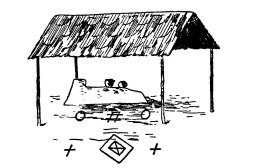


1 2 3 4 5 6 7 8 ... 26 27 28 29 30 31 32 33 34 (of 67 pages)