PhysicsQED's Posts
Nairaland Forum › PhysicsQED's Profile › PhysicsQED's Posts
1 2 3 4 5 6 7 8 ... 104 105 106 107 108 109 110 111 112 (of 154 pages)
 Politics › Re: Nigeria Tested By Rapid Rise In Population - NYT by PhysicsQED(m): 8:56am On Apr 15, 2012 Politics › Re: Nigeria Tested By Rapid Rise In Population - NYT by PhysicsQED(m): 8:56am On Apr 15, 2012 |
Divide the country. Then this problem will go away. 3 Likes |
| Culture › Re: Abstract Or Stylized African Art In Pictures by PhysicsQED(op): 5:11pm On Apr 14, 2012 |
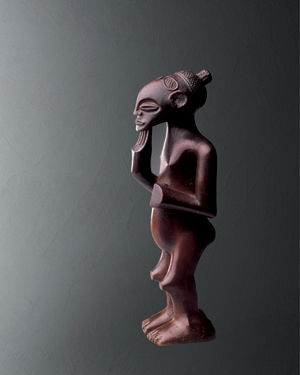
https://storage.canalblog.com/80/78/119589/40376163.jpg Female Figure. Northern Angola; Shinji peoples, 19th century? Wood; H. 7 3/4 in. (19.7 cm) |
| Culture › Re: Abstract Or Stylized African Art In Pictures by PhysicsQED(op): 5:09pm On Apr 14, 2012 |
https://storage.canalblog.com/45/36/119589/40376768.jpg Ornament: Male Figure with Raised Arms. Mali; Inland Niger Delta, 13th–15th century. Copper alloy; H. 4 1/2 in. (11.4 cm) Provenance: [Merton Simpson, New York, before 1983]; Barbier-Mueller collection, since 1983 |
| Culture › Re: Abstract Or Stylized African Art In Pictures by PhysicsQED(op): 5:02pm On Apr 14, 2012 |
https://storage.canalblog.com/00/87/119589/40375888.jpg Mblo Twin Mask. Côte d'Ivoire; Baule peoples, 19th century. Wood, pigment; H. 11 3/8 in. (29 cm) Provenance: Roger Bédiat, Côte d'Ivoire, before 1955; [Henri Kamer, 1955]; Barbier-Mueller collection, since 1978 |
| Culture › Re: Abstract Or Stylized African Art In Pictures by PhysicsQED(op): 5:01pm On Apr 14, 2012 |
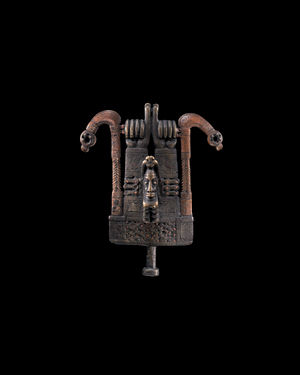
https://storage.canalblog.com/09/44/119589/40376073.jpg Heddle Pulley. Côte d'Ivoire; Guro peoples, 19th century. Wood, pigment; H. 8 1/4 in. (21 cm) Provenance: Félix Fénéon, Paris, before 1929; Dr. Charles Stéphen-Chauvet, Paris; Morris Pinto, Paris, before 1985; Barbier-Mueller collection, since 1985 |
| Culture › Re: Abstract Or Stylized African Art In Pictures by PhysicsQED(op): 4:54pm On Apr 14, 2012 |
https://upload.wikimedia.org/wikipedia/commons/8/87/Kota_reliquary_figure.JPG [img]http://2.bp..com/-HdpkhBPQJU4/TcW86l0C6QI/AAAAAAAACFg/iDdqpgrLroE/s1600/Photo+Kota3+face.jpg[/img] https://i.pbase.com/o6/93/329493/1/126240726.Oj0vNtuC.LondonMar10367.jpg [img]http://3.bp..com/-CwWcKSsfPeA/TcW83NtgrWI/AAAAAAAACFc/euFtOYPjKNU/s640/Photo+Kota2+a.jpg[/img] Kota reliquary figures |
| Culture › Re: Abstract Or Stylized African Art In Pictures by PhysicsQED(op): 4:37pm On Apr 14, 2012 |
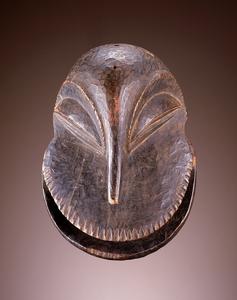
https://farm4.staticflickr.com/3434/3737180024_98d39da673_o.jpg Democratic Republic of Congo - Hemba So'o Mask Monkey mask (So'o) Hemba peoples, Dem. Rep. of Congo Early-mid 20th century Wood H x W x D: 9 1/16 x 6 5/16 x 4 3/4 in. "This mask is called so'o, meaning "human chimpanzee." It has a human face and a chimpanzee's mouth. To the Hemba, so'o is a frightening, unnatural creature that represents death. The mask appears at the end of a long series of funeral rites to conclude the mourning period. Through a performance that moves from threatening to amusing, the mask helps people make the transition from grief back to their daily routine." |
| Culture › Re: Abstract Or Stylized African Art In Pictures by PhysicsQED(op): 4:30pm On Apr 14, 2012 |
https://farm3.staticflickr.com/2517/3762926981_000695c755_o.jpg Ivory Coast - Baule Gold Pendant (Toledo Museum of Art) Baule Peoples Ivory Coast Baule peoples early 20th century Gold cast and tooled While one might think of gold ornaments as a symbol of wealth in the material sense, Baule people ascribe a far more sacred value to this precious metal. For them, gold is “like a god” and is treated as an heirloom that evokes the presence of the ancestors. Baule families keep gold in ancestral treasuries called aja, which contain assorted prestige articles, including solid cast gold ornaments. This finely cast gold pendant in the form of a man’s face would have once belonged to such a treasury. The raised designs between the eyes and in front of the ears are cosmetic marks of Baule identity. It is a work of remarkable precision and delicacy and the entire piece conveys a love for gold that transcends its materiality. |
| Culture › Re: Abstract Or Stylized African Art In Pictures by PhysicsQED(op): 4:28pm On Apr 14, 2012 |
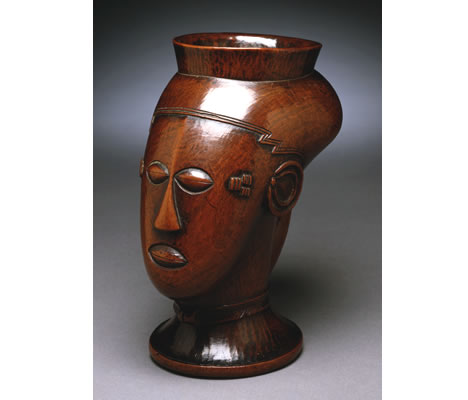
https://farm3.staticflickr.com/2472/3763113843_48a96329ce_o.jpg Democratic Republic of Congo - Kuba Palm Wine Cup (Toledo Museum of Art) Democratic Republic of Congo Kuba peoples Wood Early 20th century "In the precolonial period, Kuba titleholders and other high-ranking officials drank palm wine from sculpted wooden cups in the form of human heads or full human bodies. The cups also served as display pieces. The faces are not intended as portraits of specific individuals, although they convey important information about identity. The hairline shown on this head is quintessentially Kuba. It is a style that was worn by men and women in the 19th and early 20th centuries by shaving a straight hairline with a curved or chiseled angle at the temples. The marks in front of each ear are scarification patterns, serving both as protective devices and as marks of Kuba social identity. The simplicity of the cup’s lines and the elegance of its form are accentuated by the richness of its deep red tone—the result of applications of tool, a red powder made from ground camwood and palm oil that Kuba people also apply to their own skin." |
| Culture › Re: Abstract Or Stylized African Art In Pictures by PhysicsQED(op): 4:24pm On Apr 14, 2012 |
https://farm4.staticflickr.com/3446/3757806935_e39d5d7a79_z.jpg?zz=1 Nigeria - Igbo Cap Mask (Indianapolis Museum of Art) Nigeria Igbo peoples Cap mask for Ogbodo Enyi masquerade Creation date: 1940-1960 Materials: wood, pigment, iron Dimensions 22 1/8 x 8 1/2 x 11 1/4 in. A mask type of the northeastern Igbo is a cap mask with tusks and a trunk-like snout of an elephant. It is worn horizontally on top of the head and the masker is completely covered by a knitted garment. The mask appears at the annual yam harvest celebration and at the funerals of important leaders. |
| Culture › Re: Abstract Or Stylized African Art In Pictures by PhysicsQED(op): 4:06pm On Apr 14, 2012 |
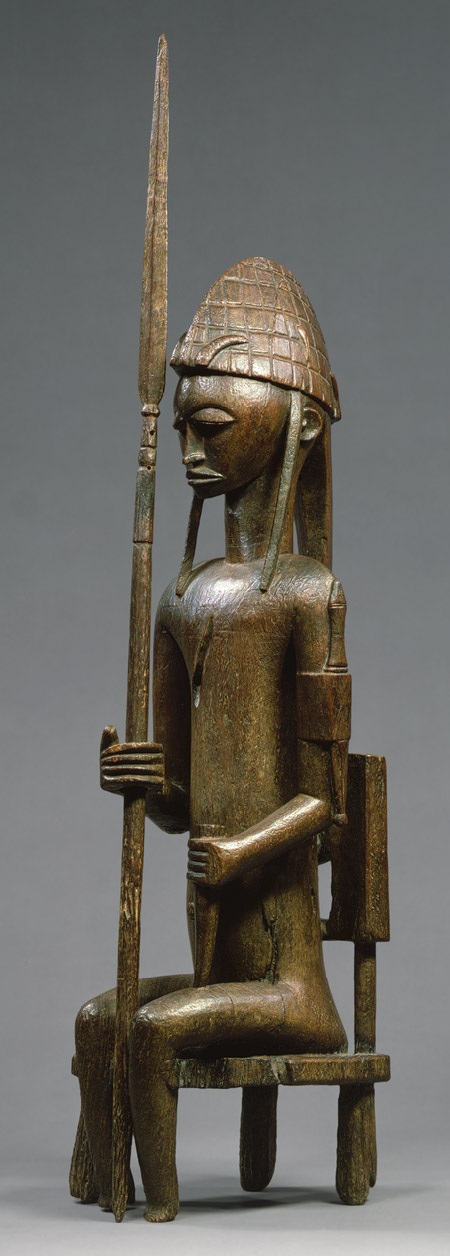
https://farm3.staticflickr.com/2663/3752096437_83af85623f_o.jpg Seated Male Figure with Lance, 15th–20th century Mali; Bamana peoples Wood H. (figure) 35 3/8 in. (89.9 cm) Gift of the Kronos Collections, in honor of Martin Lerner, 1983 (1983.600a,b) On view: Gallery 350 Last Updated April 6, 2012 Bamana figures such as this were the focal point of celebrations of the Jo and Gwan initiation societies (associations of men and women) in several villages in southern Mali. Female elders among the Jo and Gwan leadership commissioned and cared for an entire series of allegorical figures belonging to their community. This work depicts an idealized male leader that would have been the companion to a similarly attired mother and child representation. Depending on a community's resources, such ensembles also generally included additional male and female attendant figures engaged in a variety of activities. For annual Jo and Gwan rituals, the sculptures were removed from their shrines, cleaned and oiled, decorated with cloth and beads, and set up in the village square as a group. The mother and child and her male counterpart were seated in central positions of honor, distinguished by attributes of their extraordinary physical and supernatural powers. The specific gestures performed by the Jo and Gwan sculptures, which are not seen elsewhere in Bamana art, are descriptive of the supernatural protections and powers of elite Bamana leaders. The hat, adorned with depictions of animal horns and amulets, is a very important physical attribute of this particular sculpture. Amulets, which affect such things as fertility, health, hunting, agriculture, and warfare, derive their efficacy from the knowledge and skills of the person who makes and wears them. Additionally, the specific form of this hat identifies the figure as a hunter who possesses heightened powers of perception. The lance held in the hand of this figure appears to have an iron blade and a wooden shaft and is therefore a depiction of a "weapon of distinction." Such an object was handed down from father to son at the time of his initiation as a relic of heroic ancestors and to protect the youth in his time of greatest vulnerability. The knife worn on the hunter's upper arm has additional associations with hunting and is of the type frequently seen on older examples of Bamana sculpture, including terracottas dating as far back as the twelfth century. The heavily lidded eyes, closed mouth, and arms held close to the body suggest a sense of calm and self-possession, accentuating the stature and respect commanded by the figure. With its arched shoulders, curving facial features, rounded volumes, and underlying naturalism, this sculpture is a particularly graceful example of the Jo or Gwan style. The work's unusually good state of preservation, given its age, is the result of the extremely dry climate of southern Mali. |
| Culture › Re: Abstract Or Stylized African Art In Pictures by PhysicsQED(op): 4:06pm On Apr 14, 2012 |
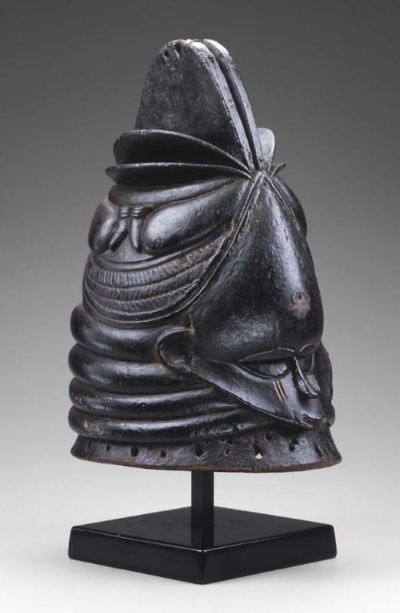
https://farm3.staticflickr.com/2489/3759485295_79e7b589dd_o.jpg Sierra Leone - Vai Helmet Mask (Museum of Fine Arts, Boston) Sierra Leone Vai peoples late 19th to early 20th century 14 1/4 x 8 3/16 x 10 3/4 in. Wood with black pigment and metal This mask was associated with the education and socialization of young girls by the women's Sande society, into which all girls are initiated at puberty, among the Vai peoples and their neighbors in northern Liberia and Sierra Leone. Senior women wore these masks at the termination of initiation ceremonies in order to embody Sowei, patron spirit of fecundity and grace. The mask's elegant coiffure, high forehead, compressed triangular face, and voluminous neck rolls (signifying wealth) embody goodness and female beauty. This masking tradition is unusual in that women commission masks from male carvers and are the ones who perform in the masquerade. |
| Culture › Re: Abstract Or Stylized African Art In Pictures by PhysicsQED(op): 3:53pm On Apr 14, 2012 |
| Culture › Re: Abstract Or Stylized African Art In Pictures by PhysicsQED(op): 3:46pm On Apr 14, 2012 |
[img]http://4.bp..com/_6Z-STtWCsQo/Rm0Ib3CNhOI/AAAAAAAAB9Q/VivsifyvAJw/s1600/212.jpg[/img] Punu mask Gabon |
| Culture › Re: Abstract Or Stylized African Art In Pictures by PhysicsQED(op): 3:44pm On Apr 14, 2012 |
[img]http://2.bp..com/_6Z-STtWCsQo/RnPVa3CNkbI/AAAAAAAACac/RyzGK0YoNU0/s1600/159282907_PF6014-198-1.jpg[/img] 'White-faced okuyi masks (or mukuyi - cf. the university theses by Monique Koumba-Manfoumbi, 1987 and Alisa LaGamma, 1995) were used during important ceremonies of village life, most notably during mourning. In certain instances, the masks were danced on stilts and used to present important mock arguments in order to resolve conflict. Each dancer, aided by his companions, would defend a point of view against an opposing one.' |
| Culture › Re: Abstract Or Stylized African Art In Pictures by PhysicsQED(op): 3:30pm On Apr 14, 2012 |
[img]http://2.bp..com/_KZOfzeQTrBY/S1iLru9tMPI/AAAAAAAAAWg/PeOju1Zywrg/s1600/female%2Bmask.jpg[/img] Female Spirit Mask African Punu peoples Gabon & Democratic Republic of the Congo 19th century. Wood and pigment 10 x 6 ½ x 6 ½ inches. |
| Culture › Re: Abstract Or Stylized African Art In Pictures by PhysicsQED(op): 3:27pm On Apr 14, 2012 |
[img]http://3.bp..com/_6Z-STtWCsQo/RnPXMHCNkqI/AAAAAAAACcU/P--Me57u16Y/s1600/159298182_PF6014-227-1.jpg[/img] Tsonga neckrest |
| Culture › Re: Abstract Or Stylized African Art In Pictures by PhysicsQED(op): 2:30pm On Apr 14, 2012 |
https://www.culturalartworks.com/A%20118%201_small1.jpg https://www.culturalartworks.com/A%20118%202.jpg https://www.culturalartworks.com/A%20118%203.jpg https://www.culturalartworks.com/A%20118%204.jpg "An authentic, old royal helmet mask called Agba from the Igala people of Nigeria. This Agba helmet mask would appear every year as the Igala people would participate in important ceremonies celebrating the power of their king." |
| Culture › Re: Abstract Or Stylized African Art In Pictures by PhysicsQED(op): 2:13pm On Apr 14, 2012 |
https://farm3.staticflickr.com/2676/3738722915_86af08c601_o.jpg Gabon - Kwele Mask (Metropolitan Museum of Art, NYC) |
| Culture › Re: Abstract Or Stylized African Art In Pictures by PhysicsQED(op): 2:11pm On Apr 14, 2012 |
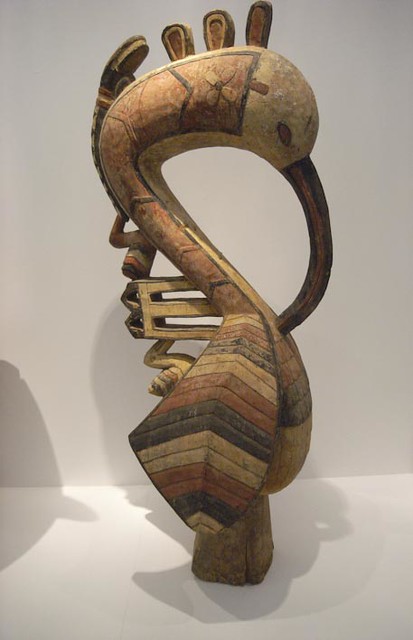
https://farm4.staticflickr.com/3466/3953255084_b6fe7bc930_z.jpg?zz=1 A sculpture from the Baga people of Guinea-Bissau |
| Culture › Re: Abstract Or Stylized African Art In Pictures by PhysicsQED(op): 2:45am On Apr 14, 2012 |
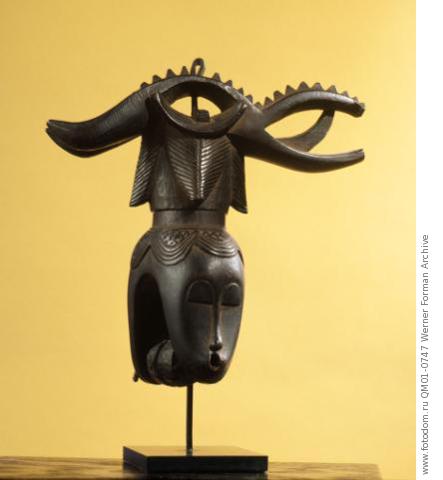
[img]http://img.fotodom.ru/QM01-0747.jpg?size=l[/img] https://images2.image-data.com/images/67/lowres/55408/55408034.jpg Heddle pulley used to support the cord to the foot pedals which alternate the heddles on the narrow strip loom typical of West African men's weaving. This example depicts a composite of Baule mask styles. Country of Origin: Ivory Coast. Culture: Baule. Place of Origin: Central Ivory Coast. Material: Wood |
| Culture › Re: Abstract Or Stylized African Art In Pictures by PhysicsQED(op): 2:40am On Apr 14, 2012 |
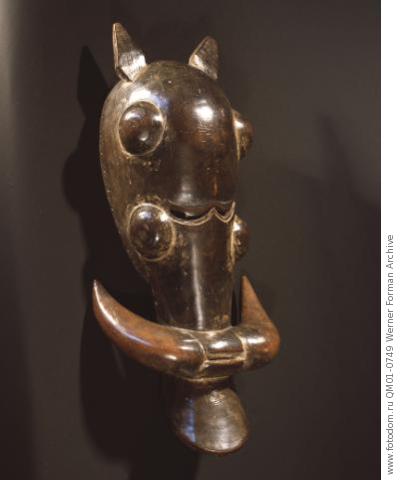
[img]http://img.fotodom.ru/QM01-0749.jpg?size=l[/img] https://images2.image-data.com/images/67/lowres/55408/55408040.jpg A mask called 'leu', representing a warthog in the Do masquerades of the Ligbe. Unusually this masquerade is wholly Islamic, being performed by Muslims in front of the mosque during Islamic festivals, especially in the week after Ramadan. Country of Origin: Ivory Coast. Culture: Ligbe. Place of Origin: Bondoukou region, N. East Ivory Coast. Material: Wood |
| Culture › Re: Abstract Or Stylized African Art In Pictures by PhysicsQED(op): 2:36am On Apr 14, 2012 |
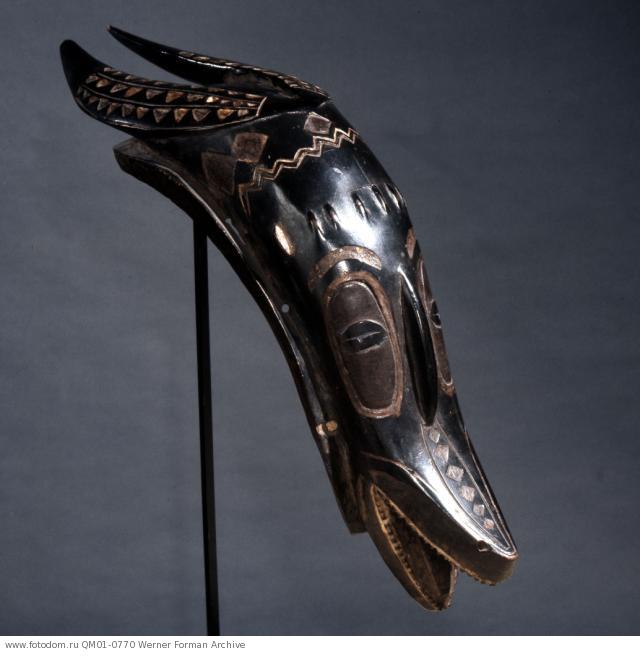
[img]http://img.fotodom.ru/QM01-0770.jpg?size=l[/img] https://images2.image-data.com/images/67/lowres/55408/55408036.jpg Guro mask. Formerly used by men's societies for social control functions today Guro masquerades are largely restricted to entertainment performances. Country of Origin: Ivory Coast. Culture: Guro. Place of Origin: Northern Ivory Coast. Material: Wood |
| Culture › Re: Abstract Or Stylized African Art In Pictures by PhysicsQED(op): 2:33am On Apr 14, 2012 |
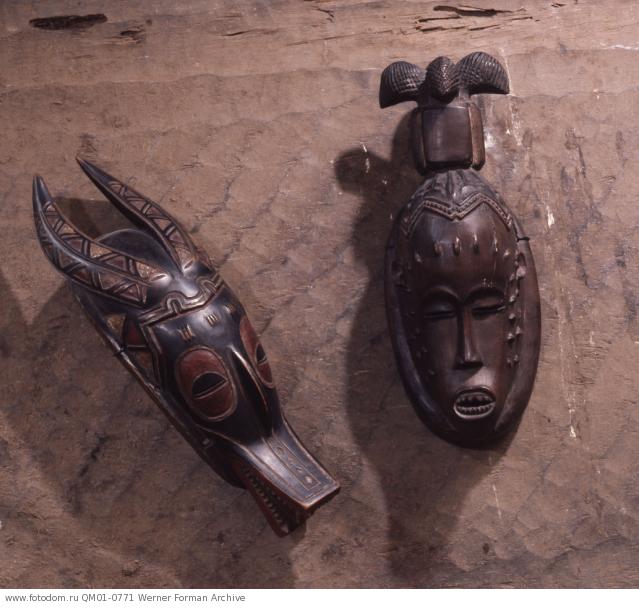
[img]http://img.fotodom.ru/QM01-0771.jpg?size=l[/img] https://images2.image-data.com/images/67/lowres/55408/55408037.jpg Guro masks. Formerly used by men's societies for social control functions today Guro masquerades are largely restricted to entertainment performances. Country of Origin: Ivory Coast. Culture: Guro. Place of Origin: Northern Ivory Coast. Material: Wood. |
| Culture › Re: Abstract Or Stylized African Art In Pictures by PhysicsQED(op): 2:30am On Apr 14, 2012 |
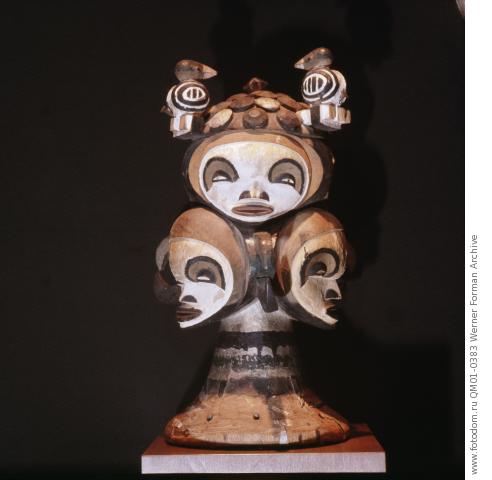
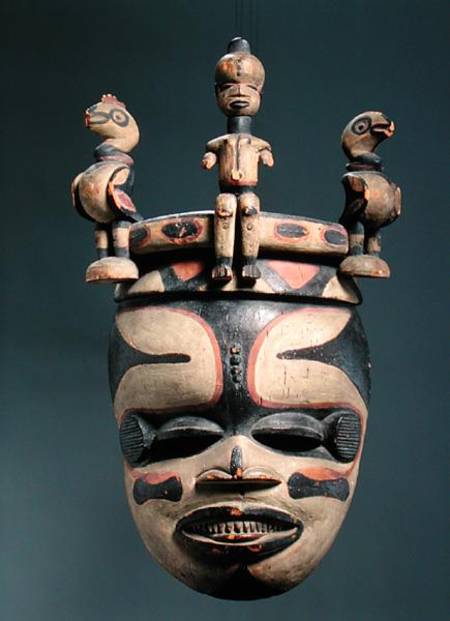
[img]http://img.fotodom.ru/QM01-0383.jpg?size=l[/img] https://images2.image-data.com/images/67/lowres/55402/55402578.jpg Multiple faced "ungulali" headdress, surmounted by a cluster of birds, an ambivalent symbol of life and fertility but also of death and sacrifice. Carved by the great sculptor Ochai of Otobi, who died in 1949. Country of Origin: Nigeria. Culture: Idoma. Date/Period: 20th C. Place of Origin: Niger / Benue confluence. Material: Wood. |
| Culture › Re: Abstract Or Stylized African Art In Pictures by PhysicsQED(op): 2:26am On Apr 14, 2012 |
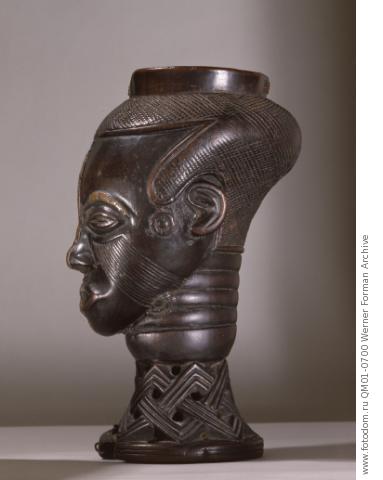
[img]http://img.fotodom.ru/QM01-0700.jpg?size=l[/img] https://images2.image-data.com/images/67/lowres/55402/55402686.jpg https://images2.image-data.com/images/67/lowres/55409/55409831.jpg https://images2.image-data.com/images/67/lowres/55402/55402685.jpg Prestige drinking vessel in the form of a head. Country of Origin: Democratic Republic of Congo, Equatorial Africa. Culture: Kuba. Date/Period: 19th-20th C. Place of Origin: Central Congo. Material Size: Wood, brass strip, h=7.5 ' |
| Culture › Re: Abstract Or Stylized African Art In Pictures by PhysicsQED(op): 2:23am On Apr 14, 2012 |
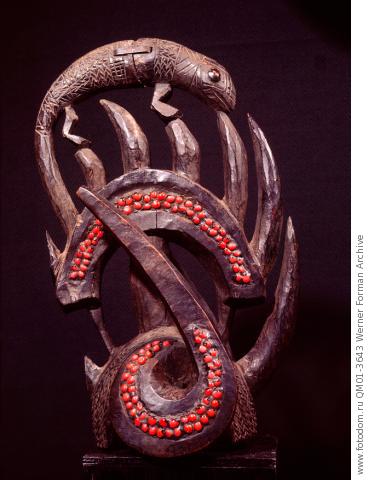
[img]http://img.fotodom.ru/QM01-3643.jpg?size=l[/img] https://images2.image-data.com/images/67/lowres/55422/55422838.jpg Wooden dance mask with chameleon oncrest. Country of Origin: Nigeria. Culture: Afo. Date/Period: 19th-20th C. Place of Origin: Central Nigeria. Material Size: Wood, abrus seeds |
| Culture › Re: Abstract Or Stylized African Art In Pictures by PhysicsQED(op): 2:20am On Apr 14, 2012 |
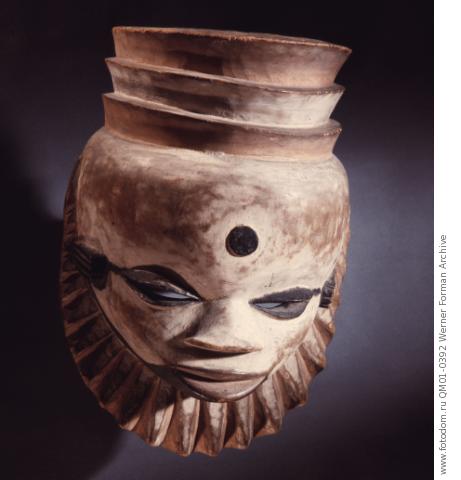
[img]http://img.fotodom.ru/QM01-0392.jpg?size=l[/img] https://images2.image-data.com/images/67/lowres/55402/55402572.jpg The Ekpo society, widespread throughout eastern Nigeria, used masquerades in dances to honour ancestors and as a means of social control. Country of Origin: Nigeria. Culture: Ibibio. Date/Period: 20th C. Place of Origin: Nigeria. Material Size: wood. |
| Culture › Re: Abstract Or Stylized African Art In Pictures by PhysicsQED(op): 1:21am On Apr 14, 2012 |
[img]http://1.bp..com/-GnGJhYkBM0E/TbxgdnySxGI/AAAAAAAABDk/WLtxkc7Flsk/s640/Buffalo+Head%252C+19-20th+C%252C+Ewe+peoples%252C+Togo%252C+terracotta%252C+9x9x5+%2528Met+1979.206.1%2529+-+7.jpg[/img] Buffalo Head, 19-20th C, Ewe peoples, Togo |
| Culture › Re: Abstract Or Stylized African Art In Pictures by PhysicsQED(op): 1:17am On Apr 14, 2012 |
Nigerian - Mfon Mask, Ibibio Culture https://www.art-prints-on-demand.com/kunst/nigerian/mfon_mask_ibibio_culture_hi.jpg |
| Culture › Re: Abstract Or Stylized African Art In Pictures by PhysicsQED(op): 1:14am On Apr 14, 2012 |
https://cdn2.brooklynmuseum.org/images/opencollection/objects/size3/87.215_profile_edited_version_SL1.jpg Maiden Spirit Helmet Mask (Agbogho Mmwo) Agbogho mmwo, or "maiden spirit," masks are worn by men at festivals that honor important deities. They represent the Igbo ideal of female beauty: small, balanced features, elaborate hairstyles, and delicate tattoos. The men who dance agbogho mmwo masks wear colorful, tight-fitting fiber costumes, entertaining the crowd with exaggerated versions of women's dances. * Culture: Igbo * Medium: Wood, pigment, string * Place Made: Nigeria * Dates: early 20th century * Dimensions: 19 3/4 x 5 3/4 x 12 in. (50.2 x 14.6 x 30.5 cm) |
| Culture › Re: Abstract Or Stylized African Art In Pictures by PhysicsQED(op): 12:59am On Apr 14, 2012 |
[img]http://www.arts-primitifs.com/shop-africain/product_thumb.php?img=images/00-2009/0910/P1140978.jpg&w=666&h=160[/img] Mblo facial mask Baoule/Baule, Ivory Coast |


















1 2 3 4 5 6 7 8 ... 104 105 106 107 108 109 110 111 112 (of 154 pages)