Anonymous6's Posts
Nairaland Forum › Anonymous6's Profile › Anonymous6's Posts
1 2 3 4 5 6 7 8 ... 24 25 26 27 28 29 30 31 32 (of 156 pages)
 Culture › Re: Ladies!!!Can You Dress Like This In Public For Cultural Reasons? by anonymous6(f): 8:30pm On Jul 28, 2014 |
Frankenstein: It's actually legal to walk bare-chested in New York.well does that mean it's socially accepted, we all know now, all legal laws doesn't always fit in with social norms or laws 1 Like |
| Culture › Re: Were There Any Nigerian American Citizens Prior To The 1970s? by anonymous6(f): 8:20pm On Jul 28, 2014 |
I never heard of or know of nigerians American citizens that existed around that time but it's possible. However it's unlikely cause Nigerians were more interested in England then going to America then. |
| Culture › Re: Black Americans In Nigeria by anonymous6(f): 8:14pm On Jul 28, 2014 |
iamord: one word. “UNITY” is present among black people..am even Worried about ghana cos if we were where we r supposed to b by Now there will be a huge black exodus world wide coming back home..where the land will be Green For ThemThat's a issue Ghana would have to think about in the long run which would be in Ghana's disadvantage when it comes to resources and Land. |
| Culture › Re: Black Americans In Nigeria by anonymous6(f): 8:10pm On Jul 28, 2014 |
iamord: some people refer to ghana as Africa for starters.. This is because we have been able to preserve our unique. Culture, and are accommodating all covered up by the spirit of pan. Africansim. But there still a lot to do. .I didn't know Ghana was called that but I am not surprised, Pan Africanism is strong with Ghanians more then Nigeria. Nothing wrong with either though |
| Culture › Re: Ladies!!!Can You Dress Like This In Public For Cultural Reasons? by anonymous6(f): 8:05pm On Jul 28, 2014 |
if it's in that ladies cultural society and it's considered the norm then I guess she can get away with showing her boobs but in any other society where this is considered strange, not appropriate and etc then she shouldn't do it. For example she can do it in her village where it's accepted but not walking down the street of Lagos or New York City 2 Likes |
| Culture › Re: Hollywood Is At It Again: What Was The Race Of The Ancient Egyptians? by anonymous6(f): 8:00pm On Jul 28, 2014*. Modified: 8:25pm On Jul 28, 2014 |
I saw the trailer to and its hilarious. Before the trailer came out I was so excited to see the movie cause it was announced since last year that a new exodus movie from hollywood was coming out. When I heard Hollywood actor Christain bale would play Moses I felt like maybe they were going to give him that bearded Moses look, like how you see some Arabs look like today; especially when Hebrew are close to white in skin color but when I saw how the Egyptians were portrayed in the trailer it was a disappointment. However I am not surprised cause North Africans have been trying for awhile to cut off the connection with Africa and connect and align with the middle east more. North Africa's, particularly Egypt's african connection which is non-white, non-middle eastern thousands of years ago has been wiped out long ago with the help of the Romans, and is now another middle east or majority arab, and since many call themselves white when they are not its easy for Hollywood to do this and keep getting away with it. |
| Foreign Affairs › Total Strangers Marry At First Sight - New York Post by anonymous6(op): 10:15pm On Jul 27, 2014 |
[b]Jason Carrion and his groomsmen were getting changed into their suits in a hotel room at the Westin New York Grand Central when Carrion’s best man ribbed him, “You’re getting married, man. You’re getting married.” “Stop — stop saying that,” the 27-year-old EMT from Brooklyn warned before his wedding, which took place in March. Walking downstairs to the ballroom where he was to say his vows, Carrion was all nerves. Standing at the altar, he watched the bridesmaids walk down the aisle one by one. “Oh, man, this is gonna happen,” he thought. Finally, the door opened and his bride appeared. It marked the first time he’d ever seen her — much less talked to her. Carrion is one of six singles who agreed to legally marry a stranger for the new show “Married at First Sight,” premiering Tuesday at 9 p.m. on FYI (formerly Bio) The extreme social experiment uses four experts — a sexologist, spiritualist, psychologist and sociologist — to create three perfect couples based on scientific matchmaking. Potential cast members filled out lengthy personality profiles, and the four experts went on field visits to conduct psychological assessments, sexology sessions and spiritual counseling to narrow 625 possible matches down to three ideal couples. The spouses know nothing about each other — even their names — until they walk down the aisle in the premiere. The next nine episodes follow the newlyweds as they live together for four weeks — after which they have to decide whether to remain married or get a divorce. The six singles on “Married at First Sight” (based on a Danish series of the same name) are all from the tri-state area and were struggling to meet the right As any single New Yorker can attest, the city’s nearly 1.5 million available guys and gals between the ages of 20 and 34 mean a potential hookup is always just a Tinder swipe away. With daters often paralyzed by options, “Married at First Sight” dares its contestants to give up choice in a mate. Jamie Otis, 27, a labor and delivery nurse from Harlem, really wants to have kids of her own and was having a hard time finding Mr. Right among New York’s party-hardy male population. “In New York City, I feel like the guys are primarily just players until they’re hitting their late 30s,” she told The Post. “It’s tough to find guys who are serious.” Still, even Otis — who previously (and unsuccessfully) competed on “The Bachelor” and “Bachelor Pad” — was taken aback by the show’s extreme premise. “At first I was like, ‘No way. What are they, nuts?’ ” she said. But she began to change her tune after the show’s producers played her the Danish version, in which two of the three couples ended up in successful marriages. “The feeling I had when I watched these other couples — to feel like I could potentially meet someone . . . it’s wildly crazy, but it could work,” she said. Even though many of her friends thought the idea of marrying a stranger was silly and ill-advised, she took the plung “My siblings were like, ‘Jamie, you’re never going to get married if you don’t do something like this, so go ahead,’ ” Otis recalled The experts based the matches on potential spouses’ personality, background, values, beliefs and goals with the aim of creating a more fulfilling, secure relationship than the person is capable of finding on his or her own. “We have the opportunity to match people with a person who complements them, as well as is similar in important ways,” said Dr. Pepper Schwartz, professor of sociology at the University of Washington and an expert on the show. “And, perhaps, end the kind of mistakes they might make themselves based heavily on attraction or a misperceived need for a certain kind of person that is really not good for them.” Bensonhurst-based EMT Carrion also thought professionals could help him find what he wanted in a mate. “I believe you can be extremely attracted to somebody at first sight, but once you get to know them, that’s where the real love comes,” he told The Post. “I’ve been with beautiful girls before, but they didn’t have something — I can’t even explain it. With [my wife], she has it.” Carrion can’t say which of the three women on the show he married — the couples will be revealed in the premiere. Like Otis, he initially said no to doing the show — then had a change of heart. “You know the expression, ‘Go with your gut’? I can’t even explain it — it was just something I needed to do,” he said. “I never want to be on my deathbed and think, ‘What if?’ ” Want to know which participants were coupled up? Find out with our latest update on “Married at First Sight.”[/b] http://nypost.com/2014/07/08/total-strangers-meet-at-the-altar-and-marry-at-first-sight/ https://www.youtube.com/watch?v=pEpl1-yDQOQ |
| Culture › Re: Black Americans In Nigeria by anonymous6(f): 9:24pm On Jul 27, 2014 |
igbo2011: I believe there are more in GhanaIts true, Besides South Africa, Ghana has the largest Black american population https://www.youtube.com/watch?v=4jFviE37E2Y https://www.youtube.com/watch?v=ZVlvt8OwgB0 |
| Culture › Re: Black Americans In Nigeria by anonymous6(f): 9:19pm On Jul 27, 2014 |
zboyd: But because Ghana had a more progressive and independent-minded leadership, it was to it that many African Americans migrated in the 1960s. Successive Ghanaian governments consciously court and cultivate the friendship of our kith across the Atlantic. Not so in Nigeria.There are black americans in Nigeria but their population is very very small or are not many at all. Most Black americans that go to Africa they are mostly in Ghana, Liberia, South Africa, Gambia, Senegal for the most part because those governments have done programs meant to bring African americans to their countries and I am not surprised especially with countries like South Africa, Liberia and Ghana is doing it due to their history and philosophy but to the Nigerian government I don't think they have issues with african american coming but it is not important for them or a priority for them at the sametime, so I am not surprised about this. At the sametime I don't think we should put down the nigerian government down for this cause even though there are not that many african americans in Nigeria their are many Brazilians that emigrated to Nigeria, after slavery was stopped in Brazil, and Nigerians welcomed them and they made their mark in Nigeria and assimilated with Nigerians. http://en.wikipedia.org/wiki/Brazilians_in_Nigeria |
| Culture › Re: Your View about Nigerians Who Travel To USA To Give Birth For USA Citizenship? by anonymous6(f): 3:01pm On Jul 26, 2014 |
I see nothing wrong with it, as long as they respect American laws and don't use the system then its fine. I know some people who have done it and raised their kids in Nigeria but eventually came back to America, they have good moral character and don't create debt and leave it to the American government to handle. |
| Foreign Affairs › River In China Mysteriously Turns Bloody Red Overnight by anonymous6(op): 11:17pm On Jul 25, 2014 |
[b] A waterway in eastern China has mysteriously turned a blood red color. Residents in Zhejiang province said the river looked normal at 5 a.m. Beijing time on Thursday morning. Within an hour, the entire river turned crimson. Residents also said a strange smell wafted through the air. “The really weird thing is that we have been able to catch fish because the water is normally so clear,” one local villager commented on China’s microblogging site Weibo. Inspectors from the Wenzhou Environmental Protection Bureau said they have not found the cause of the incident, although water samples seem to indicate the suspicious color was a result of illegal dumping in the river. “We suspect that somebody dumped artificial coloring in the water because he thought the typhoon yesterday would cause heavy rain, and nobody would notice [the color],” Jianfeng Xiao, Chief of the bureau told China News. “It turned out there wasn’t heavy rainfall yesterday, so the evidence is left behind,” Xiao said. Xiao said there is a paper manufacturer, a food coloring company and clothing-maker a long the river. The bureau is still investigating the incident. [/b] https://gma.yahoo.com/river-china-mysteriously-turns-bloody-red-overnight-182207097--abc-news-topstories.html https://static5.businessinsider.com/image/5049f40feab8eaef36000000/yangtze-red.jpg |
| Travel › The 10 Worst People To Sit Next To On A Plane by anonymous6(op): 7:41pm On Jul 24, 2014 |
[b]1. The Crying Baby The poor child? Poor you. Nothing you can do with this one but grimace and smile and hope that you’re only on a commuter flight. Otherwise it will be a long one. Learn from past times and bring earplugs. Parents can be proactive: Offer an apology and maybe buy a round for those in closest proximity, it’ll make everyone nicer. Cash works too. If you’re feeling extra nice, offer to help the parent with hoisting their bags into the overhead bin, or keeping their drink on your tray–a less-harried parent can mean a much calmer baby. 2. The Smelly Person Hygiene is a personal issue. However when we’re sharing four feet of space it is no longer just your decision. It affects all of us and yes, we do know if you forgot to pack deodorant. Recycled air pumping down on us doesn’t help the situation. Pretend a plane is a date, and please bathe. You can also bring a travel bottle of Febreeze to discreetly spray at them at the first opportunity. 3. The Talker Did you know that your seatmate’s grandchild just won the spelling bee in their hometown in Iowa? No? Don’t care? Too bad because that is what you will be hearing about on that 5-hour cross-country flight. With your luck you’re in the middle seat between two talkers who eventually get sick of your halfhearted replies and start talking to each other over you. Pretend you’re a celebrity with this one and throw on a cap, sunglasses, and big headphones. Or pretend you don’t speak English 4. The Sick Person We’ve all been this person while traveling. You had a trip coming up and didn’t get enough rest (or maybe had one too many at happy hour) and now you’ve got a cold. Or the person behind you is apparently allergic to airplanes because they are sneezing into the back of your head every three minutes, and their parents didn’t teach them the golden rule of hand over mouth. Then there is the cougher, the sniffler, and the list goes on and on. People, if you’re sick on a plane, do us all a favor and pack throat lozenges and Kleenex within easy reach, and drug yourself with Nyquil prior to getting on board. A sleeping sick person is always better than an awake one. Take some zinc and multi-vitamins when traveling as plane rides are an easy place to get exposed to germs. Or practice holding your breat 5. The Head Rolling Around/Can’t Keep Still Deep Sleeper You want to sleep on a plane? Cool, so do I. Unfortunately, it’s pretty difficult to do when you are snoring incredibly loud next to me, drooling, and mumbling about the zombie apocalypse as you plane dream. If your head even starts to lean towards my shoulder the flight attendant button will be pushed. My only advice for this one is to maybe Benadryl yourself so you guys can sleep together. Take turns using each other as a pillow 6. The Drunk Person Leaning too close, talking loudly, and sweating out booze is some of the perks that come with sitting next to this one. That’s great that you wanted to use up every last second in the airport bar getting yourself hammered and then rolled onto the plane with the intention of seeing how many mini bottles of vodka you could put in your body, but please, please keep to your side of the armrest, or do us all a favor and pass out. Or maybe join this person on the road to sloppiness and tell whoever is picking you up from the airport to be ready to party! 7. People who Dress Inappropriately Remember the days of yesteryear when a plane ride meant people wore their best clothes and dressed to impress? Neither do most of us. But according to Mad Men, this did at one time happen. These days cross your fingers that the man next to you isn’t wearing super short shorts, or the woman’s cleavage isn’t hanging out at every splash of turbulence (not everyone will agree with that last one though). 8. Biting Your Nails Person Biting your nails, or smacking your gum, licking your lips, or some other weird personal tick you might have. This is not enjoyable for anyone but you. Please do it at home. Dirty looks are the best way to combat this annoyance. 9. The Pastrami Sandwich Carry-on We all have the right to eat whatever we please. If you desire a smelly, onion-meat sandwich in your body please indulge, but do so in the terminal and not on the plane. When you’re sitting next to me and space out eating smelly food for the duration of the flight shoving the half eaten carcass in the seat pocket in between bites it is not enjoyable. For your digestion or me. For the sake of us all grab a granola bar. Bring some aromatherapy oils to sniff. They mix beautifully with stale cabin air and provide a slight relief from the pungent scent. 10. The Small Bladder Window Seater You know who you are. If you need to use the restroom every 20 minutes maybe request an aisle seat and don’t buy the big gulp. Nobody wants to do the awkward plane seat shuffle more than once a flight. Someone will always trade you for that window seat. Promise.[/b] http://petergreenberg.com/2013/04/03/the-10-worst-people-to-sit-next-to-on-a-plane/ [img]http://1.bp..com/-HwNynqF4ZVI/Uo53i52sVOI/AAAAAAAAKmY/eV5-4VFpywM/s1600/airplane_phone.jpg[/img] https://www.thefrisky.com/wp-content/uploads/2012/10/03/airplane-behavior.jpg https://www.youtube.com/watch?v=rjHupKWbE7k |
| Culture › Re: Performance Gap Between Francophones And Anglophones: Who’s To Blame? by anonymous6(op): 3:33pm On Jul 24, 2014 |
| Culture › Re: Francophones Speak Good French But Nigerians Barely Speak English by anonymous6(f): 3:31pm On Jul 24, 2014 |
it goes both ways to me when it comes to anglophone and francophone |
| Culture › Performance Gap Between Francophones And Anglophones: Who’s To Blame? by anonymous6(op): 1:34am On Jul 24, 2014 |
[b]The question of the rift between Anglophone Africa and the Francophone Africa is a delicate one. But if the shape of the New Africa is to be understood, the discussion must be had nonetheless. The discussion falls into two main camps. One group of commentators, including Niall Ferguson argue that the British as colonialists spread free markets, rule of law and in due course, democracy. Alain Faujas posits” lack of infrastructure, a poor corporate culture and bad governance are among the reasons French-speaking countries in Sub-Saharan Africa (SSA) are, in recent years, lagging behind their English-speaking neighbours.” This theory gets firepower from a research project by Lee and Schulz at Stanford University. They exploit the rare case of Cameroon which is a single African country part of which was under British influence with another being Francophone. This would seem to provide a control since both parts of the country have similar endowments including natural resources and population. The team found that rural areas on the British side had higher levels of household wealth and better public infrastructure in the case of piped water. However, there was no such difference in urban areas and centrally-provided public goods. Joshua Keating in this Foreign Policy comment “The Post-Colonial Hangover?” leans on this work in his Foreign Policy magazine where he concludes some empires are indeed worse than others. On the other side of the ring is Shanta Devarajan, Chief Economist – Africa at the Wolrd Bank who argues that the gap in performance between the two types of countries is not as stark as many suggest. He blames the mineral curse, as well as low infrastructure investment which hampers landlocked countries. Dr Fred van der Kraaij agrees, bringing a more nuanced analysis to this emotive question. Under his criteria, eight English-speaking African countries are doing well whereas ‘only’ three or four French-speaking countries qualify. That hardly qualifies as a huge gap in his view. He explores alternative factors that may explain the gap. Other than colonial legacy, he says, other factors influence the success of countries. Overall, he argues, while there are always exceptions, countries that are coastal, large, stable, and those that have natural resources and sound macro-economic policies Countries that are doing well are: • Coastal countries • Well endowed with natural resources • With a relatively big population • Politically stable and with no violent conflict (civil war) • Sound macroeconomic policies • Investing in agriculture & infrastructure[/b] http://thisnewafrica.com/2013/03/performance-gap-between-francophones-and-anglophones-whos-to-blame/ 1 Like |
| Foreign Affairs › Africa: Why Francophones Are Lagging Behind Anglophones by anonymous6(op): 1:04am On Jul 24, 2014 |
[b]Lack of infrastructure, a poor corporate culture and bad governance. French-speaking countries in Sub-Saharan Africa (SSA) are, in recent years, lagging behind their English-speaking neighbours. French-speaking SSA is lagging behind English-speaking Africa, even without the weight of South Africa. Whilst languor has spread its tentacles from Dakar through Yaoundé to Kinshasa, inciting people to dream of emigration, life is beaming with vigour from Accra through Lagos to Nairobi, with flourishing projects and business deals only a computer mouse click or phone call away. To measure this economic divide calls for the need to eliminate the two prevalent ills that bridge the continental divide: corruption and ethnic conflicts. With the exception of Zimbabwe, where the economic follies of Mugabe's government unleashed an inflation rate of more 200,000,000 percent some two years ago, a look at the overall figures brings some surprising results to the fore. French-speaking countries account for only 19 percent of SSA's average GDP whilst English-speaking countries boast of 47 percent (excluding South Africa). Countries belonging to the mainly French-speaking Economic and Monetary Union of West Africa (UEMOA) have been growing at an average rate of 3.4 percent per annum in the last ten years, whilst those of the mainly English-speaking East Africa Community (EAC) have registered a 5.4 percent growth rate. English-speaking countries are also ranked in more favorable positions by the World Bank's "Doing Business" report, which measures the quality of the business environment. In those countries it is much easier to start a business, clear imports and obtain payment from debtors. Telephone calls in Benin, for example, cost four hundred times more than in Ghana. With regard to human development, seven of the ten worst ranked (out of 187) by the United Nations Development Programme (UNDP) are French-speaking African states, and three of them- Burundi, Niger and DRC - occupy the last three positions. Irremediable disability? Both development and non-development depend on many factors. Five experts from Africa have agreed to separate wheat from the chaff in order to determine cultural influences that have proved themselves as big barriers to some essential institutions and analyse bottlenecks in the area of monetary and geopolitical issues. The nagging question is: Where does this handicap come from? And is it salvageable? According to Jean-Michel Severino, manager at Investisseur et Partenaire pour le Développement (I&P), dedicated to Small and Medium Enterprises (SMEs) in Africa, and former director general of the French Development Agency (AFD), conflict is the bane of French-speaking Africa. "Over the last decade, two of the principal countries, DRC [Democratic Republic of Congo] and Côte d'Ivoire, have undergone turmoils that have affected development in the whole [Francophone] zone. These countries had experienced growth comparable to that of their English-speaking neighbours after independence." The common currency among French-speaking countries in both West and Central Africa, the CFA franc has also, seemingly, been a burden, despite the fact that it is more protected from inflation than currencies that are not aligned to the euro. "The CFA franc has been strong over the past decade" says the former executive director of the AFD, "and one can imagine that countries with floating currencies have adjusted better than those using the common currency. Whilst it is not favorable to exports, it is not the strength of the CFA that is under the spotlight, but rather the disconnect of the development of a monetary system outside its African conjuncture. It will require African leaders to reflect on what mechanisms to put in place rather than completely halting the regional monetary union or cutting links between the euro and the CFA franc." In his final argument, Jean-Michel Severino points out infrastructure as being deficient in most French-speaking countries. "I am struck to see that policies are quite conservative in terms of rates in the area of energy, water and transport. This has generated an infrastructure deficit - phenomenal in the case of Cameroon and Senegal - and impacted development in a big way." Thierry Tanoh, vice president of the International Finance Corporation (IFC)- a member of the World Bank group, and soon managing director of Ecobank Transnational Incorporated (ETI), also revisits the infrastructure issue as well as the size of the market, which he deems are the two major weaknesses of the CFA bloc. Tanoh begins his description of these deficiencies with anecdotal illustrations. "The boss of a food company in Niger is desperate because her company has reached its full potential in the limited home market and yet it is impossible to export her products due to regulatory barriers and transportation costs." He cites another example about a desperate truck owner who transports cocoa and lives in a francophone country. "Under normal circumstances, a truck's shock absorbers are overhauled over a three year period. But because of the very poor state of roads in his country, his truck requires repairs after only one year. This discourages investors, who seek minimum risk." "Working Together" French-speaking countries are too small and sparsely populated. Tanoh goes on to add. "With the exception of DRC, we must acknowledge that the big countries in Africa are English and Portuguese-speaking. This means that market integration is the only solution to compensate for this handicap. But whilst there are more regional economic organisations in the French zone, in reality it is the English-speaking countries, with SADC [Southern Africa Development Community] and EAC, that have become a force to reckon with, all in the absence of a common currency!" Bouthelier Anthony, deputy chairman of the French Council of Investors in Africa (CIAN), argues that if French multi-national companies, such as Lafarge and L'Oreal, are steering towards English-speaking countries it is because "regionalisation of the market works better [East Africa] than in West Africa." "Kenya, Uganda, Rwanda, Mozambique give the impression of wanting to work together," he adds. He believes that collective philosophy accounts for a lot. "Countries with the Anglo-Saxon culture are more oriented towards business and entrepreneurship, and people in those countries are less inclined to yearn to become civil servants than their counterparts with the French culture." Serge Michailof, professor at the Institut d'Etudes Politiques de Paris argues along the same lines. "The training of elites in English-speaking countries, especially administrative elites, accounts for this trend, as it instills the belief that private business is essential for the development process." He says. "The left-wing oriented training provided by French teachers is a polar opposite." Adding that "the overvalued CFA franc has been very negative, and its particularly disempowering characteristic has been harmful, because it is controlled by its former colonial power." Shanta Devarajan, chief economist for Africa at the World Bank, has a more nuanced stance. He suggests that the gap between the two language blocs is "not as strong as we think" and that English-speaking countries have also gone through some tough times. In reference to some of the causes of lethargy in French-speaking countries, he points to the fact that first and foremost West African countries "have significant natural resources, a wealth that go hand in glove with their predisposed fragility by virtue of their multiple conflicts, more than in East Africa". But these conflicts are not only limited to French-speaking countries as Sierra Leone and Liberia were particularly ravaged by civil war. An opaque system Devarajan especially blames the system of funding by states. "In [francophone] West African countries where revenue generated from natural resources is omnipresent, money does not go through the citizenry, but rather directly channelled to the government by mining and oil companies. This process provides manifold opportunities to re-route revenue in a very opaque system. It does not seek to involve people who do not pay taxes, for lack of income, and are therefore not much concerned about the proper use of public funds." Corrupt money is therefore not as easy to come by in some English-speaking countries, which could explain not only the lower levels of conflict but also an effective government control, both a macroeconomic necessity. Lastly, Devarajan points out that there are more landlocked French-speaking countries in Africa than English-speaking, and trade comes at a higher expense due to glaring infrastructural inadequacies. "The Port of Lomé is not functioning as it should and landlocked partner countries bear the brunt. The most dynamic countries in Africa lie in the coastal areas." Summing up these analysis, it comes as no surprise that the causes of the Francophone bloc's slowdown have been known for quite sometime, and their remedies have been drummed by the multilateral agencies in order to accelerate the development of the continent. Obviously, the CFA franc is problematic. While it serves to cement a French-speaking culture, it is obvious - as in the case of the euro - that a currency without a common vision or governance can be a handicap, especially when that currency controlled from Paris. The example of the vast and populous East African English-speaking region shows that investment and wealth are moving towards areas with more consumers. For West Africa, this means going beyond the mere removal of borders and rather into an integration of budgetary policies. But that will be a heroic task as even Europe is struggling to deal with that kind of integration. Nonetheless, in a an address made on 15 December in Geneva, European Commissioner Michel Barnier sought to give Africa his specialist view point and called on the continent to organise and pool its markets into common markets. It is not surprising that the quest for good governance as well as the fight against corruption remain top priorities. If French-speaking Africa wants to prevent its raw materials from being transformed into a politico-economic curse ownership of revenue must be public and controlled by citizens. An easy ride It should be noted that the inadequacies in the transport and energy sectors strangle growth in French-speaking Africa more than anywhere else. According to a study by the World Bank, the additional US$31 billion needed by SSA countries each year, in order to attune its infrastructure to its needs, should be directed to French-speaking countries as a matter of priority. The remaining efforts should be in the area of formal education to promote a much needed entrepreneurial spirit and deal away with the jobs-for-life gravy train. This will give the emerging middle class in Dakar, Lomé, or Brazzaville the real desire to create wealth. The battle is not yet lost for French-speaking Africans, as long as their governments, banks, teachers and elites understand the dynamics of openness and modernity.[/b] http://www.theafricareport.com/News-Analysis/africa-why-francophones-are-lagging-behind-anglophones.html |
| Culture › Re: Francophones Speak Good French But Nigerians Barely Speak English by anonymous6(f): 12:01am On Jul 24, 2014 |
BlackLibya: Whether or not they speak french perfectly is beyond the point. The point is they all speak French, and use it as a source of pride amongst each other. Whereas British colonies like Nigeria, Uganda, and Kenya use the local languages to a large extent, and most from these countries do not even speak english beyond what anyone else in the world would speak.I have heard this and believe this to be true because I have heard this from black africans from francophone countries admit this to. That's why you see a big difference between black africans that are from anglophone countries vs. one from Francophone countries |
| Culture › Re: Igbo And Yoruba Women Who Has Best Way Of Dressing by anonymous6(f): 8:33pm On Jul 21, 2014 |
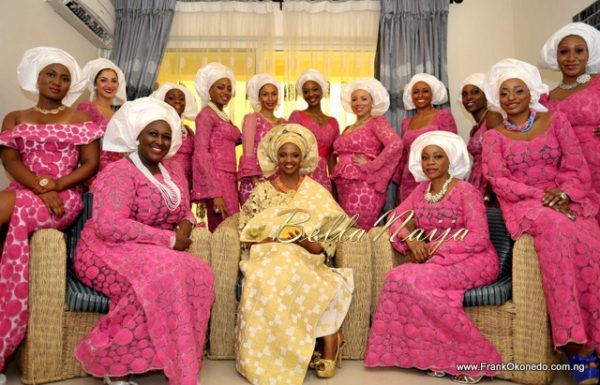
To me it depends which traditional style you lean to more or like more; I think both are pretty but I lean towards the yoruba style. In the end of the day though both are beautiful and bring out the beauty of Nigeria. Yoruba https://rachelevents.com/wp-content/uploads/2012/11/trad3.jpg https://www.bellanaija.com/wp-content/uploads/2013/10/yemisi_fajimolu_ladi_taiwo-wedding-yoruba-nigerian_wedding_traditional_11-600x385.jpg Igbo https://www.weddingfeferity.com/wp-content/uploads/2013/10/igbo-wedding-traditional-nigerian_0050.jpg [img]http://4.bp..com/-z8MYwA2PqQo/TrYOF1dq9MI/AAAAAAAACjU/lewEH-UvNCI/s1600/Ayo-Sofunde-Omoh-Igebu-Engagement-BellaNaija-April-2011-072-300x600.jpg[/img] 3 Likes 1 Share |
| Culture › Re: Photo: See What A White Man Is Doing In Public In Lagos by anonymous6(f): 4:24pm On Jul 17, 2014 |
interesting lol |
| Culture › Re: Who Owns The Child Born Out Of Wedlock (unmarried Relationship) by anonymous6(f): 9:49pm On Jul 15, 2014 |
In Nigeria, If the father in general accepts that he is the father then both the parents in a way owns the child even if the mother will take more of the burden of the child or children. However if the father doesn't accept he is the father, then that kid will be labeled as a bastard child and the mothers family will take the brunt of the responsibility. In America majority of the time the mother feels the brunt of it unless she tracks down the father, gets a paternity test and involves the law so he pays child support 2 Likes |
| Foreign Affairs › Re: More Ghanaians Renounce Their Nationality - Interior Ministry by anonymous6(f): 9:40pm On Jul 15, 2014 |
I'm surprised to hear this, since many ghanians have Ghanian pride about their country 2 Likes |
| Culture › Re: African Queens by anonymous6(f): 9:21pm On Jul 15, 2014 |
Nice thread |
| Culture › Re: The Tom And Jerry Relationship Between The Igbos And Yorubas. by anonymous6(f): 2:44am On Jul 15, 2014 |
GodMode: Read about the civil war so that u'll have better understanding and stop listening to what people tell u.Amen |
| Culture › Re: The Tom And Jerry Relationship Between The Igbos And Yorubas. by anonymous6(f): 2:39am On Jul 15, 2014 |
PedroJP: No, we need no apology from the Hausas. They were and are a known enemy but a friend who betrayed needs to tender that apology showing his acknowledgement of his mistakeThere was no previous agreement before the war between yoruba's and igbo's, so theres is no apology needed. If some igbo's feel strongly about it, they need to demand a apology from the Hausa's; regardless if they are your enemy or not. Yoruba's never started or wanted the war in first place as far as I am concerned |
| Culture › Re: Are African Women Jealous Of African American Women's "Natural" Lighter Skin? by anonymous6(f): 7:55pm On Jul 14, 2014 |
dasparrow: So, the African woman is jealous of the black American woman you say?Beautiful pictures Nigerians have enough issues to deal with then these nonsensical threads being brought to the culture section. When I heard this light skinned-bleaching stuff I was like what the hell, Bleaching is going on all over the world, in Asia, south america, Caribbean, Africa and even in America, so whats the point. The truth is many black americans like these topics 24/7 and maybe the OP felt we have that mentality to. 4 Likes |
| Culture › Re: The Tom And Jerry Relationship Between The Igbos And Yorubas. by anonymous6(f): 7:39pm On Jul 14, 2014 |
yemaldo: 1)there is no agreement between Yoruba and igbo before the war,they can only claimed Yoruba betrayed them if there was an agreement before the war(2)what is biafran soldiers doing in ore,isn't ore Yoruba land,do u expect Yoruba people to sit n look while biafra soldiers invade their land? So stop calling us traitors,u over stepped ur boundary by bringing the war into our territory(ore) and u got servedExactly 8 Likes |
| Culture › Re: The Tom And Jerry Relationship Between The Igbos And Yorubas. by anonymous6(f): 7:19pm On Jul 14, 2014 |
TYlicious: I am a yoruba girl and d bulk of my friends esp guys are Igbo.I'm a yoruba female to and Sorry to say this but this igbo vs. yoruba fiasco is getting pathetic but I need to say something from what you mentioned, the yoruba's don't need to say sorry to anybody. When the war was going on each tribe had their agenda. Ojukwu was representing his tribe and knew the benefits and disadvantages with his decision and Awolowo was defending his tribe and knew the benefits and disadvantages for his agenda. If some igbo's want a apology they need to get it from the Hausa's cause the way I see it, it was a Hausa vs. Igbo War and others tribes got dragged into it, and got forced to defend themselves. To me this yoruba vs. igbo debate will take awhile to resolve but people need to stop saying that Yoruba's need to apologize to igbo's. They need to face that issue with the hausa's for that or ask all tribes of Nigeria to apologize to igbo's. 2 Likes |
| Culture › Re: Why Are Nigerians So Uncultured? by anonymous6(f): 2:37am On Jul 12, 2014 |
Is This a joke thread |
| Culture › Re: How True Is The Existence Of The Mermaid by anonymous6(f): 2:35am On Jul 12, 2014 |
It seems like fairy tales but you never know from the ancient times if they existed then |




1 2 3 4 5 6 7 8 ... 24 25 26 27 28 29 30 31 32 (of 156 pages)