Isalegan2's Posts
Nairaland Forum › Isalegan2's Profile › Isalegan2's Posts
1 2 3 4 5 6 7 8 ... 80 81 82 83 84 85 86 87 88 (of 185 pages)
 Politics › Re: Bola Tinubu Caught Red Handed By His Wife (picture) by isalegan2: 5:18pm On Apr 27, 2013 Politics › Re: Bola Tinubu Caught Red Handed By His Wife (picture) by isalegan2: 5:18pm On Apr 27, 2013 |
He was not looking at her. The picture does not look genuine. |
| Foreign Affairs › Re: Great African Women In History by isalegan2(op): 4:27pm On Apr 27, 2013 |
polokor60: The prestigious socio-cultural heritage of the african race.Much respect to the Great pan african women,the first among women in the entire universe.You cultivated cash and food crops,brought the knowledge of about precious vegetables for minerals and medicines,had variaties of meals ,had and still have the greatest bond when it comes to child and mother relationship.Thanks, bro.  Can we get more contributions, please.  This is the downside of a thread put on the front page (not complaining o), lots of views, but not so much postings. Contributors can: - Copy and paste a story, and add a source or link. - Write about a heroine or notable woman in your own words; - Or simply write the name(s) of an African woman you admire. You never know - another poster might decide to do a short biography.  If you can't do any of the above, that's fine too. Just Enjoy. And LEARN about our people. I also will add more soon. |
| Politics › Re: No More Tribal Attack In Politics Section by isalegan2: 3:58pm On Apr 27, 2013 |
Obiagu1: What's so difficult for people to use the right spellings? Yoruba or Igbo is not difficult to type except you have leprosy of the finger.I hear ya. I support the effort to bring sense to Politics section so we can all partake and enjoy like times of yore. I'm just not bothered by Yooba, which is what he used in the targeted post. The other variations?  *Shrug* *Shrug*Done with this. BTW, Hi! Obiagu!  I remember discussions we had on older threads, I think 2 years ago now: (1) the deceased gay activist, and the American lady who found her Eze(?) dad. Those were fun times in Politics section o jare. I remember discussions we had on older threads, I think 2 years ago now: (1) the deceased gay activist, and the American lady who found her Eze(?) dad. Those were fun times in Politics section o jare. |
| Politics › Re: No More Tribal Attack In Politics Section by isalegan2: 3:32pm On Apr 27, 2013*. Modified: 4:33am On Apr 28, 2013 |
[quote author=ndu_chucks]Dede1, according to the senior moderator, OAM4J, you have done nothing wrong. I reproduce OAM4J's post after a long discussion in a thread which included contributions from all of us, Seun, OAM4J, and others.[/quote]Agreed. Free Dede1 joo. The man is old enough to have served in the Naijiriya civil war. Show him some respect, unless he insults you. WTH is bothered by Yooba? That's what my grandmother called us. |
| Politics › Re: Bola Tinubu Caught Red Handed By His Wife (picture) by isalegan2: 2:38pm On Apr 27, 2013 |
[quote author=Sunny_bobo]A leopard can never shed its spots.[/quote]Why are they seated at a table with a prostitute?  No decent African woman would go out in public like that. Is the picture doctored? 3 Likes |
| Foreign Affairs › Re: Great African Women In History by isalegan2(op): 2:06pm On Apr 27, 2013 |
sholay2011: Where is our Efunsetan Aniwura, Iyalode Ibadan solomon111: who the hell is she?I believe she was quite controversial, and opinions about her are quite strong. But Ileke saw a movie, and loves her like wow! So, we all have to let Ileke be o. No be me go tell her NO. [quote author=PAGAN 9JA]yes bring on Queen AMina![/quote] Akshow: Where is my queen Amina of xaxxau? dasparrow: Seconded! bring on queen Amina of Zaria. A beautiful woman who had much courage to protect her people.Queen Amina was going to be my next post, but I had to get offline for a bit. basilo101: I actually expected her to be the number one on the listAmina and Madame Tinubu were my first choices, but I did not choose Tinubu because of her connection with the slave trade, and decided against Amina only because I wanted this in the Foreign Affairs section - a non-Nigerian emphasises the continental appeal of the topic. Dis Guy: who?Ita Faji is an area in Eko. If you grew up on the island you'd know. Dis Guy, I'm surprised at you. I thought you "used to komole" to Ayinde Barrister back in the day. |
| Politics › Re: Re-branding The Igbo Nation by isalegan2: 3:26am On Apr 27, 2013 |
Good thread, by a mature man. |
| Family › Re: My Nigerian Husband Will Not Divorce Me by isalegan2: 1:37am On Apr 27, 2013 |
jennykadry: Did it ever occur to you that an illegal immigrant is a criminal and isnt someone you should trust your life and future with? 1 Like |
| Celebrities › Re: ' by isalegan2: 12:25am On Apr 27, 2013 |
sheedy407: Omg,dis pics no wan upload ohI take your word for it, bro. I mean, who are we, if we can't trust each other. |
| Foreign Affairs › Re: Great African Women In History by isalegan2(op): 7:28pm On Apr 26, 2013 |
slimyem: Interesting thread btw..Ita Faji, on Lagos Island, is also named after a woman. |
| Foreign Affairs › Re: Great African Women In History by isalegan2(op): 6:57pm On Apr 26, 2013 |
[quote author=Texas.Cowgirl]Isale gan, do you remember the name of that female Oba. . ..efesiwa or sth like that. She was a great queen, until her daughter died in childbirth. She's from Ibadan or Osun[/quote]Beaded-Waist, Kilode wrote about her for you here. Did you thank him? You can re-post if you wish.https://www.nairaland.com/675773/great-leaders-nigerias-history-before/5#8406114 |
| Foreign Affairs › Re: Great African Women In History by isalegan2(op): 6:38pm On Apr 26, 2013 |
[size=14pt]Margaret Ekpo (1914-2006)[/size] Political Activist from Calabar (Nigeria) [img]http://t2.gstatic.com/images?q=tbn:ANd9GcTIXB5ljX3VWSO8FBGvCSw1wpWRajo2y9sTLDVRJYFHzX4yk60OTQ[/img] Margaret Ekpo – The Fashionable Feminist Margaret Ekpo was famous for being a fashionable woman who combined western and Nigerian fashion influences. Perhaps her background as a seamstress enabled her to even better express her ‘Afropolitan’ lifestyle via her clothing. She loved ballroom dancing and was a devout Christian, but when it came to her political activism, which really is what she was about, she made sure to uphold an image of Africaness, wearing traditional clothes and plaiting hair during political campaigns. A few women can lay claim to as many legacies for their countrymen as Maragaret Ekpo. At the time of her death she left behind a legacy of ‘One Nigeria’, ‘Women in Politics’, ‘Women in Business and Leadership’ and ‘Emancipation for Women’. http://www.msafropolitan.com/2010/12/7-african-female-icons-that-shaped-history.html From Wikipedia: Margaret Ekpo (1914-2006) was a Nigerian women's rights activist and social mobilizer who was a pioneering female politician in the country's First Republic and a leading member of a class of traditional Nigerian women activists, many of whom rallied women beyond notions of ethnic solidarity.[1] She played major roles as a grassroot and nationalist politician in the Eastern Nigerian city of Aba, in the era of an hierarchical and male-dominated movement towards independence, with her rise not the least helped by the socialization of women's role into that of helpmates or appendages to the careers of males.[2] Early life and education Margaret Ekpo was born in Creek Town, Cross River State, to the family of Okoroafor Obiasulor and Inyang Eyo Aniemewue. She reached standard six of the school leaving certificate in 1934. However, tragedy struck at home with the death of her father in 1934, her goals of further education in teachers training was as a result put on hold. She then started working as a pupil teacher in elementary schools. She married a doctor, John Udo Ekpo, in 1938. He was from the Ibibio ethnic group who are predominant in Akwa Ibom State, while she was of Igbo and Efik heritage. She later moved with her husband to Aba. In 1946, she had the opportunity to study abroad at Rathmines School of Domestic Economics (now DIT Aungier Street), Dublin. She earned a diploma in domestic science and on her return to Nigeria she established a Domestic Science and Sewing Institute in Aba. Political career Early politics Margaret Ekpo's first direct participation in political ideas and association was in 1945. Her husband was indignant with the colonial administrators treatment of indigenous Nigerian doctors but as a civil servant, he could not attend meetings to discuss the matter. Margaret Ekpo then attended meetings in place of her husband, the meetings were organized to discuss the discriminatory practices of the colonial administration in the city and to fight cultural and racial imbalance in administrative promotions. She later attended a political rally and was the only woman at the rally, which saw fiery speeches from Mbonu Ojike, Nnamdi Azikiwe and Herbert Macaulay. By the end of the decade she had organized a Market Women Association in Aba to unionize market women in the city.[3] She used the association to promote women solidarity as a platform to fight for the economic rights of women, economic protections and expansionary political rights of women. Activism Margaret Ekpo's awareness of growing movements for civil rights for women around the world prodded her into demanding the same for the women in her country and to fight the discriminatory and oppressive political and civil role colonialism played in the subjugation of women. She felt that women abroad including those in Britain, were already fighting for civil rights and had more voice in political and civil matters than their counterparts in Nigeria. She later joined the decolonization-leading National Council of Nigeria and the Cameroons (NGNC), as a platform to represent a marginalized group. In the 1950s, she also teamed up with Funmilayo Ransome-Kuti to protest killings at an Enugu coal mine; the victims were leaders protesting colonial colonial practices at the mine. In 1953, Ekpo was nominated by the NCNC to the regional House of Chiefs, and in 1954 she established the Aba Township Women's Association. As leader of the new market group, she was able to garner the trust of a large amount of women in the township and turn it into a political pressure group. By 1955, women in Aba had outnumbered men voters in a city wide election.[4] She won a seat to the Eastern Regional House of Assembly in 1961, a position that allowed her to fight for issues affecting women at the time. In particular, there were issues on the progress of women in economic and political matters, especially in the areas of transportation around major roads leading to markets and rural transportation in general.[5] After a military coup ended the First Republic, she took a less prominent approach to politics. In 2001, Calabar Airport was named after her. http://en.wikipedia.org/wiki/Margaret_Ekpo 1 Like |
| Foreign Affairs › Re: Great African Women In History by isalegan2(op): 6:25pm On Apr 26, 2013*. Modified: 1:42pm On Nov 16, 2017 |
[quote author=ShyM-X]Interesting... Queen Nzinga of Ndongo and Matamba, Moremi, Dahomey female warriors, and Efunroye Tinubu gatts be on this list...[/quote]Actually, I thought about Madam Tinubu her when I started the thread, being that I grew up on Lagos Island hearing her name, and then learning as an adult that she was bold enough to threaten the stranglehold Oyinbos aspired to have on us into perpetuity. Here she is. Culled from https://www.nairaland.com/675773/great-leaders-nigerias-history-before/2#8400976 [size=14pt]Madam Efunroye Tinubu[/size] https://30.media.tumblr.com/tumblr_l418u0KGsB1qbqzzbo1_400.jpg Nigerian businesswoman and patriot, after whom a prominent Lagos landmark, "Tinubu Square," is named. She lived in the 19th century and was born in Abeokuta, Ogun State, Western Nigeria, to a trading family. After a period of trading apprenticeship under her mother, Tinubu went to Badagry, an important trading post on the outskirts of Lagos, where, despite her lack of formal education, she soon established a flourishing trade in tobacco and salt. The entreprising Tinubu was later to expand her trade, which brought her into contact with the European slave traders, with whom she dealt as a middleperson. In 1846 Tinubu, now a successful businesswoman, played hostess to the exiled King Akintoye of Lagos who sought refuge in Badagry; she used her influential position to inaugurate a pro-Akintoye movement dedicated to the eventual return of the king to the throne in Lagos. Thus commenced her involvement in the politics of Lagos, which was dominated by men of wealth and education. In 1851 Akintoye regained his throne and Tinubu was invited to Lagos where she soon transfer her business activity. She strengthened her position as an intermediary in the trade between the expatriate community and the indigenous population of Lagos on the one hand and the interior which include her birthplace, Abeokuta, on the other. Her influence in the court of Akintoye grew to such an extent that she was often accused of beign the power behind the throne, a belief which in 1853 led to the rebellion of two prominent chiefs. By 1853, when Akintoye was succeeded by Prince Dosunmu, Tinubu's influence grew even more. In 1855 she led a campaign against the Brazilian and Sierra Leonean immigrants in Lagos for using their wealth and power against the King and for subverting the ancient customs of the island, thus displaying a degree of nationalism which worried the British. The latter retaliated with mass arrests of the organisers, followed by explusion from Lagos. Tinubu and her followers were deported to Abeokuta in May 1856. In Abeokuta Tinubu expanded her business activities to include a wide range of wares such as gunpowder and bullets. In time her influence began to be felt also in Egba politics in which she played two important roles; her contribution to the successful defence of Egbaland during the Dahomean invasion of 1863 following which she was awarded the title of Iyalode (First Lady) in 1864. In the Alake succession crisis of 1877 her chosen candidate was installed. The conferment of the title of Iyalode placed her in a position of power, which she was denied in Lagos, for, by virtue of it, she not only acquire d a constitutional right to participate in Egba affairs but was also accorded honour and esteem in the community. She died in 1887 when she was at the height of her popularity. Today in Abeokuta, a monument stands in the town square named after her, Ita Iyalode (Iyalode Square). http://culturaltips..com/2009/07/meet-madam-efunroye-tinubu.html From Oxford Encyclopedia of Women in World History: Madame Tinubu (c.1810–1887), a West African woman who acquired wealth and power through participation in the Atlantic slave trade and later the European palm produce trade, as well as from domestic exchange. Efunroye Tinubu gained notoriety in the 1850s and 1860s because of her fierce opposition to British imperial policies in the town of Lagos on the Bight of Benin. Born in the Egba forests at the beginning of the nineteenth century, Tinubu learned commerce from her grandmother, a successful trader. As a young woman Tinubu married a local man and bore him two sons, but she was widowed following the family's migration to the town of Abeokuta in 1830. Shortly afterward she met Adele, a deposed king of Lagos, married him, and moved with her new husband and sons to the coastal town of Badagry, where Adele was temporarily recognized as ruler. Tinubu arrived in Badagry at a time when the then illegal Atlantic slave trade was peaking on the eastern Slave Coast. Although her sons soon died, she used two slaves, allegedly a gift from her father, to trade between Abeokuta and the coast in slaves and other commodities. Never again blessed with children, she invested her growing income from trade in slaves and other retainers, beginning the process of amassing personal followers and expanding her commercial operations. In 1835, Adele was invited back to Lagos to become king once again, and Tinubu accompanied him as a royal wife. Following her husband's death two years later, she married Yesefu Bada (also known as Obadina), a successful Muslim warrior and favored retainer of the new king, Oluwole , ensuring Tinubu continued access to the commercial and other advantages associated with royal patronage. In the bitter succession dispute between Akitoye and Kosoko that followed Oluwole's death in 1841, Tinubu and Obadina actively supported Akitoye, who was initially crowned king but was defeated in 1845 and forced with his followers into exile at Badagry. Throughout these years of political turmoil, Tinubu seized opportunities to expand her trade and build a large and powerful household of slaves and other retainers. She also took a keen interest in Islam, which was spreading in Lagos. When in 1851 the British, encouraged by Akitoye , bombarded Lagos, deposed Kosoko, and reinstated Akitoye as king in the name of ending the Atlantic slave trade and developing new kinds of commerce, Tinubu returned to the town. A fierce defender of African interests and autonomy, she soon ran afoul of the British, however, and was eventually driven by them out of Lagos and into exile at Abeokuta. There Tinubu reestablished a large household and used her slaves and retainers to produce and trade palm produce, a new export, and other commodities. She also began exercising considerable influence in politics in Abeokuta and was eventually recognized as the iyalode, or leading female chief, in the town. Although the British represented Tinubu as an inveterate slave trader and fierce opponent of abolition, she was committed more to the success of her own political factions and to African autonomy than she was to a particular kind of foreign trade. Tinubu is significant historically both for her own activities and achievements and as an unusually well-documented example of a type of powerful precolonial West African woman, too often obscured from the historical record. Read more: http://www.answers.com/topic/madame-tinubu#ixzz2RaoMu9K7 1 Like
|
| Foreign Affairs › Re: Great African Women In History by isalegan2(op): 6:05pm On Apr 26, 2013 |
[quote author=ShyM-X]Interesting... Queen Nzinga of Ndongo and Matamba, Moremi, Dahomey female warriors, and Efunroye Tinubu gatts be on this list... Err... If African American women are also allowed on the list - adding the great Mama Harriet Tubman and Mama Queen Mother Moore won't be a bad idea... They both lived and died as Africans... [/quote]Yes, African/Black women wherever they may have settled/resettled or FORCEFULLY settled are included.This is actually one in a series I started a couple of years ago. Included are: Nigeria's Pre-Colonial Greats: https://www.nairaland.com/675773/great-leaders-nigerias-history-before African/Black Speakers that made a difference: https://www.nairaland.com/672198/great-speeches-african-black-history Africa/Black Peoples' political struggles: https://www.nairaland.com/1259767/political-movements-black-african-peoples African/Black Women leading their people: https://www.nairaland.com/1270134/herstory-great-african-women-history |
| Foreign Affairs › Great African Women In History by isalegan2(op): 2:46am On Apr 26, 2013*. Modified: 2:14pm On Apr 27, 2013 |
This will be a compendium of Great African/Black Women Leaders in various stages of our history. I have not decided if we should include women who are still alive. I can see that devolving into controversy if not handled maturely. If we must include living persons, please ensure they are people who have been around a long time and have a legacy that demonstrates their accomplishment, and noticeable influence they have had in the affairs of Black people. Yaa Asantewaa Queen Mother of Edewo Tribe of the Asante People (Ghana) (c.1850-c.1920) [img]http://t2.gstatic.com/images?q=tbn:ANd9GcTGTFI_mCX0dT6er_noxCaJlqxtIJTEexHHEbAfWz-wqDC3ekHtDA[/img] Yaa Asantewaa was the queen mother of the Edweso tribe of the Asante (Ashanti) in what is modern Ghana. At the time, the Gold Coast (west-central Africa) was under the British protectorate. The British supported their campaigns against the Asante with taxes levied upon the local population. In addition, they took over the state-owned gold mines thus removing considerable income from the Asante government. Missionary schools were also established and the missionaries began interfering in local affairs. When the Asante began rebelling against the British rule, the British attempted to put down the unrests. Furthermore, the British governor, Lord Hodgson, demanded that the Asante turn over to them the Golden Stool, i.e. the throne and a symbol of Asante independence. Capt. C. H. Armitage was sent out to force the people to tell him where the Golden Stool was hidden and to bring it back. After going from village to village with no success, Armitage found at the village of Bare only the children who said their parents had gone hunting. In response, Armitage ordered the children to be beaten. When their parents came out of hiding to defend the children, he had them bound and beaten, too. This brutality was the instigation for the Yaa Asantewaa War for Independence which began on March 28, 1900. Yaa Asantewaa mobilized the Asante troops and for three months laid siege to the British mission at the fort of Kumasi. The British had to bring in several thousand troops and artillery to break the siege. Also, in retaliation, the British troops plundered the villages, killed much of the population, confiscated their lands and left the remaining population dependent upon the British for survival. They also captured Queen Yaa Asantewaa whom they exiled along with her close companions to the Seychelle Islands off Africa's east coast, while most of the captured chiefs became prisoners-of-war. Yaa Asantewaa remained in exile until her death twenty years later. http://www.distinguishedwomen.com/biographies/yaa-asantewaa.html From Wikipedia: Yaa Asantewaa (c. 1840–17 October 1921) (pronounced YAY A-san-TE-waa) was appointed queen mother of Ejisu of the Ashanti Empire—now part of modern-day Ghana—by her brother Nana Akwasi Afrane Okpese, the Ejisuhene "ruler of Ejisu". In 1900 she led the Ashanti rebellion known as the War of the Golden Stool against British colonialism. Prelude to rebellion During her brother's reign, Yaa Asantewaa saw the Asante Confederacy go through a series of events that threatened its future, including civil war from 1883 to 1888. When her brother died in 1894, Yaa Asantewaa used her right as Queen Mother to nominate her own grandson as Ejisuhene. When the British exiled him in the Seychelles in 1896, along with the King of Asante Prempeh I and other members of the Asante government, Yaa Asantewaa became regent of the Ejisu-Juaben District. After the deportation of Prempeh I, the British governor-general of the Gold Coast, Frederick Hodgson, demanded the Golden Stool, the symbol of the Asante nation. This request led to a secret meeting of the remaining members of the Asante government at Kumasi, to discuss how to secure the return of their king. There was a disagreement among those present on how to go about this. Yaa Asantewaa, who was present at this meeting, stood and addressed the members of the council with these now-famous words: “ Now I see that some of you fear to go forward to fight for our king. If it [was] in the brave days of Osei Tutu, Okomfo Anokye, and Opoku Ware, chiefs would not sit down to see their king to be taken away without firing a shot. No European could have dared speak to chiefs of Asante in the way the governor spoke to you this morning. Is it true that the bravery of Asante is no more? I cannot believe it. It cannot be! I must say this: if you, the men of Asante, will not go forward, then we will. We, the women, will. I shall call upon my fellow women. We will fight! We will fight till the last of us falls in the battlefields.[1] ” With this, she took on leadership of the Asante Uprising of 1900, gaining the support of some of the other Asante nobility. The rebellion and its aftermath Beginning in March 1900, the rebellion laid siege to the fort at Kumasi where the British had sought refuge. The fort still stands today as the Kumasi Fort and Military Museum. After several months, the Gold Coast governor eventually sent a force of 1,400 to quell the rebellion. During the course of this, Queen Yaa Asantewaa and 15 of her closest advisers were captured, and they too were sent into exile to the Seychelles.[2] The rebellion represented the final war in the Anglo-Asante series of wars that lasted throughout the 19th century. On 1 January 1902, the British were finally able to accomplish what the Asante army had denied them for almost a century, and the Asante empire was made a protectorate of the British crown. Yaa Asantewaa died in exile in the Seychelles on October 17, 1921. Three years after her death, on 27 December 1924, Prempeh I and the other remaining members of the exiled Asante court were allowed to return to Asante. Prempeh I made sure that the remains of Yaa Asantewaa and the other exiled Asantes were returned for a proper royal burial. Yaa Asantewaa's dream for an Asante free of British rule was realized on 6 March 1957, when the Asante protectorate gained independence as part of Ghana, the first African nation in Subsaharan Africa to achieve this feat. Social roles of Asante women The confrontation of a woman, serving as political and military head of an empire, was foreign to British colonial troops in 19th century Africa. Yaa Asantewaa's call upon the women of the Asante Empire is based upon the political obligations of the Akan women and their respective roles in legislative and judicial processes. The hierarchy of male stools among the Akan people were complimented by female counterparts. Within the village, elders known as (mpanyimfo) heads of the matrilineages, constituted with the village council known as the ôdekuro. These women known as the mpanyinfo referred to aberewa or ôbaa panyin, to look after women's affairs. For every ôdekuro, an ôbaa panyin acted as the responsible party for the affairs of the women of the village and served as a member of the village council. The head of a division, the ôhene and the head of the autonomous political community, the ômanhene, had their female counterparts known as the ôhemma: a female ruler who sat on their councils. The ôhemma and ôhene were all of the same mogya, blood or localized matrilineage. The occupant of the female stool in the Kumasi state, the Asantehemma, and therefore, the united Asante, since her male counterpart was ex officio of the Asanthene, was a member of the Ktôtôkô Council, the Executive Committee or Cabinet of the Asanteman Nhyiamu, General Assembly of Asante rulers. Female stool occupants participated in not only the judicial and legislative processes, but also in the making and unmaking of war, and the distribution of land.[3] Place in history and cultural legacy Yaa Asantewaa remains a much-loved figure in Asante history and the history of Ghana as a whole for the courage she showed in confronting injustice during the colonialism of the British. She is immortalized in song as follows: Koo koo hin koo Yaa Asantewaa ee! Obaa basia Ogyina apremo ano ee! Waye be egyae Na Wabo mmode ("Yaa Asantewaa The woman who fights before cannons You have accomplished great things You have done well" )[4] To highlight the importance of encouraging more female leaders in Ghanaian society, the Yaa Asantewaa Girls' Secondary School was established at Kumasi in 1960 with funds from the Ghana Educational Trust. In 2000, week-long centenary celebrations were held in Ghana to acknowledge Yaa Asantewaa's accomplishments. As part of these celebrations, a museum was dedicated to her at Kwaso in the Ejisu-Juaben District on 3 August 2000. Unfortunately, a fire there on 23 July 2004, destroyed several historical items, including her sandals and battle dress (batakarikese) seen in the photograph above.[5] The current Queen-mother of Ejisu is Yaa Asantewaa II. A second Yaa Asantewaa festival was held 1–5 August 2006, in Ejisu.[6] The Yaa Asantewaa Centre in Maida Vale, west London, is an African-Caribbean arts and community centre.[7] It took its name in 1986.[8] A television documentary by Ivor Agyeman-Duah entitled Yaa Asantewaa - The Exile of King Prempeh and the Heroism of An African Queen was premiered in Ghana in 2001.[9] A stage show written by Margaret Busby, Yaa Asantewaa: Warrior Queen, featuring master drummer Kofi Ghanaba and with a pan-African cast, toured the UK and Ghana in 2001–2001.[10][11] A radio drama by the same author was also serialized 13–17 October 2003[12] on BBC Radio Four's Woman's Hour.[13][14] Further reading Ivor Agyeman-Duah, Yaa Asantewaa: The Heroism of an African Queen, Accra, Ghana: Centre for Intellectual Renewal, 1999. Nana Arhin Brempong (Kwame Arhin), "The Role of Nana Yaa Asantewaa in the 1900 Asante War of Resistance", Ghana Studies 3, 2000, pp. 97–110. http://en.wikipedia.org/wiki/Yaa_Asantewaa 3 Likes |
| Foreign Affairs › Re: U.K. Inquest Reports Identity Of African Stowaway That Fell Out Of Airplane by isalegan2(op): 1:55am On Apr 26, 2013 |
You're right. This article is new, reporting the final report of the INQUEST. I'll change the title to reflect that. |
| Foreign Affairs › U.K. Inquest Reports Identity Of African Stowaway That Fell Out Of Airplane by isalegan2(op): 1:08am On Apr 26, 2013*. Modified: 2:06am On Apr 26, 2013 |
Tragic  [size=14pt]Man found dead on London street 'was probably stowaway who fell from plane'[/size] Peter Walker guardian.co.uk Thursday 25 April 2013 A young man whose body was found on a pavement in west London almost certainly died after stowing away inside the landing gear of a British Airways flight from Angola in a desperate attempt to make a new life in the UK, an inquest has heard. José Matada was either dead or at the point of death due to hypothermia and lack of oxygen when he fell from the plane as its undercarriage opened for its descent into Heathrow airport, west London coroners court was told. He died on his 26th birthday, with a single pound coin in his pocket, as well as currency from Botswana. He is believed to have originally come from Mozambique, but authorities have been unable to trace any family or official confirmation of his identity. His body was found on the pavement of Portman Avenue, in East Sheen, an affluent west London suburb, shortly before 7.45am on 9 September last year, just after flight BA76 from Luanda, the Angolan capital, passed overhead. Matada, usually known as Youssoup, was only identified after analysis from an Angolan mobile phone sim card found in a pocket. This showed he had been exchanging text messages with an Anglo-Swiss woman for whom he had formerly worked. The woman, now based in Switzerland and identified only as Hunt, said Matada had worked for her family as a housekeeper and gardener when they lived in South Africa in 2010. She correctly described a distinctive tattoo on his left arm, matching that on the body found in west London. Giving evidence, Robert Chapman, a Home Office-registered consultant forensic pathologist who examined Matada's body, said that while the stowaway was only wearing light clothes he seemed to have survived the bulk of the 12-hour trip from the south Atlantic coast of Africa through being young and very fit, though low oxygen levels and temperatures of down to -60C in the unpressurised wheel recess of the Boeing 777 would have left him unconscious. "In my view he was either very close to the point of death or, indeed, dead when he struck the ground," Chapman said. He described Matada's long list of injuries, which appeared consistent with a fall from a great height. Detective Sergeant Jeremy Allsup, who led the Metropolitan police investigation, said the text messages Matada exchanged with his former employer involved a discussion of him "travelling to Europe for a better life", although there was no reason to think she knew his plans. Homicide detectives had ruled out foul play, Allsup said, and the timings strongly indicated Matada had been on the Luanda flight. This landed at Heathrow at 7.45am, three minutes after a resident in Portman Avenue heard a thud outside. The coroner, Sean Cummings, recorded a verdict of accidental death. He said: "This sort of travel is not very common but I'm surprised by the numbers." Such cases are not unknown. Just two weeks before Matada's case the body of another man was found inside a plane after it landed from Cape Town, raising worries about security. BA says this is the responsibility of the airports concerned, not the carrier. In 2001, a stowaway from Pakistan fell into the car park of a Homebase store, not far from East Sheen. While that man's family was traced, the only information about Matada appears to come from his former employer. Aside from the media the brief inquest was attended by just four people. A spokesman for the Mozambican high commission in London said authorities in the country made a radio and newspaper appeal for family and friends but received no replies. The only information about Matada's origins came from the former employer, he said: "Of course, the police think the lady is honest and telling the truth, but this story has come from Mr Matada, and he has told something that can't be verified – it was Mr Matada that told her he was originally from Mozambique." BA operates two flights a week from Luanda, mainly carrying oil workers and Angolan students. The aircraft lands in Luanda at 5am and sits on the tarmac until the return at midnight, giving potential stowaways time and the cover of darkness. Records collated by the US Federal Aviation Administration suggest that at best one in four stowaways survives, but many others die or fall in transit. Survivors rarely escape unscathed – frostbite claims limbs. Among the few who did live was a Romanian on a Vienna to Heathrow flight in 2010, but he was in the air for only an hour at an unusually low altitude. http://www.guardian.co.uk/uk/2013/apr/25/man-street-stowaway-fell-plane |
| Islam › Re: Forex Trade: Haram Or Halal? by isalegan2: 8:26pm On Apr 25, 2013 |
naijababe: @ Isale, I frankly do not know if my father has had more trials than I have, I suspect he prolly has. He is in his seventies now, little me?! What have i experienced in life?!.I'm not minimising your experience at all. You know I have no criticism. P.S. Do you want me to tell my story now? Everyone will fall asleep. |
| Islam › Re: Forex Trade: Haram Or Halal? by isalegan2: 8:11pm On Apr 25, 2013*. Modified: 8:28pm On Apr 25, 2013 |
[quote author=Find Out!]Hmmm... I have a hunch that the answer to that is this: her hubby is a very wonderful person who may not also be into religion that much. So naijababe looks at her husband and sees a quiet reserved gentleman who is of very good character and an excellent husband and father (a bit in the mould of or better than her own father and grandfather) and yet he doesnt 'carry religion on his head' or may not even 'send' religion at all. Then she sees some other 'so-called' devout muslims and xtians with horrible characters and she's like why are people deceiving themselves!......etc etc The above is just my hypothesis o!  Naijababe, your mum's accident was a trial, and that shouldn't be unexpected as a muslim. Your faith was (still is) being tested, as the faiths of those who were very dear to Allah were tested...to see if they would stand firm! To see if they would reflect on Allah's grace and favours in the past and remain steadfast. To see if you will rely on Allah to make things better. To see if you will truly acknowledge that Allah is the greatest and he does what He wants, to whoever He wants and whenever He wants. Alhumdulilah that you acknowledge the existence of God. But you also must remember that the reason for the Qur'an and the Prophet Mohammed is to serve as a GUIDANCE to mankind who I believe you must still acknowedge Allah created. You have kids. You gave birth to them even though quite frankly, you more or less served as just a passage, a route for them to come into the world. I say a passage because you were not the one sustaining them in the womb, infact you didnt put them there. Allah simply blessed the effort you and Oga made in private and also allowed the passage 9 months later to go through successfully (note that several people all around the world -from time immemorial till the world ends, no matter how well science n tech n healthcare develops- have not been and will not be that lucky). Why did i enter reproduction matter? it is simply to point out that despite the fact that you didnt in the real sense (or any sense for that matter) create your kids, you are raising them (again Allah is the one who watches over us all), you still expect some certain standards from them. You expect them to do certain things and stay away from certain things, right or wrong. If you had the time, you would have written your own Book of Guidance for them on how to live their lives which you'll strongly advise/expect (or almost force.lol) them to follow and if they ask why, you'll probably mention 2 things among others: a) That you carried them in your womb for 9 months, took care of them, catered for their needs, changed their dirty nappies, protected them e.t.c. and b) That they should follow the commandments in the book because it is best for them even when the commandments/advice may seem weird or difficult. And that's just you, a human being. Allah has done, and is still doing soooooo much more for us, soooo much more. We cannot just keep living our lives (which we owe to Him) the way we like. There must be order for sanity to prevail. We must follow a code...especially when that code is to our benefit. the cod is the Qur'an. His prescribed and accepted way of life for us is ISLAM, the 5 pillars of which i'm sure you are familiar with. Each day we wake up, leave our homes, return and go to bed is indeed a serious gift. here on nairaland, everyday we read stories, good and bad, that should make us appreciate Allah more. Bad things also happen to good people just as good things happen to bad people. The being who arranges all of that asked us to always pray to Him for bad things npt to happen to us. He also said we should have faith in Him and he also said he will test this faith. He has also said that among those who disobey Him (many of them in fact), He will bless them abundantly on earth, give them all the things they want without asking, generally make them live the good life MAYBE they will reflect upon all that and turn toewards him in repentance and obey His commandments. But he also promised them that if they fail to do these simple things (summarised in d 5 pillars), that a terrible and grevious punishment awaits them. But that those who obey His commandments will have everlasting enjoyment in the hereafter. I hope you don't doubt the hereafter. its not possible that we'll just come to this ready made life and leave just like that without reporting back to the Creator afterwards na. Naijababe, you are still undergoing a trial and Allah is hoping you'll appreciate His favours over you and pass. Please come back to the fold of Islam. Its NOT ENOUGH to just believe in God's existence & power and be a good person. Allah deserves more. He demands more. We cannot obey 100percent and its absolutely pointless to try to be perfect(in my opinion) but we should keep striving to do more.However, some BASIC FUNDAMENTAL things must be in place and those are enshrined in d 5 pillars of islam. IMAN, SALAT, ZAKAT, SAUM and HAJJ. A lot of muslims today do not personify islam but Islam remains what it is. Its not so complex. Do YOUR OWN according to what Allah has mentioned in the PERFECT Book, the Qur'an and wht you've read in AUTHENTIC hadeeth. Islam is peace, islam is beautiful, Islam is the way. Come back. Tbaba, Mac, Jarus, Betatathings, everybody else, abeg make una drop una own lines o make me sef and all of us learn more. Allah guides whom He wills. he had guided Naijababe before and i believe he will do it again whether we say anything or not. May Allah continue to make us steadfast on the path and continuosly guide us towards becoming better muslims. & to some people I wouldnt like to mention, please let us dwell less on criticism and more on bringing Sister Ganiyah OMOGENAIJA  back to Islam. back to Islam.Another long epistle , apologies (if required) .Apologies also for the typos...tho proofreading will try to correct all or most.[/quote]This is a great post. Do not apologise for the length of your thoughts. You have passion and you want to communicate it. |
| Nairaland General › Re: O Ye My People! by isalegan2: 7:37pm On Apr 25, 2013*. Modified: 10:21pm On Apr 25, 2013 |
Man found dead on London street 'was probably stowaway who fell from plane' José Matada was 'probably dead or at point of death' due to hypothermia and lack of oxygen when he fell, inquest told Peter Walker guardian.co.uk Thursday 25 April 2013 A young man whose body was found on a pavement in west London almost certainly died after stowing away inside the landing gear of a British Airways flight from Angola in a desperate attempt to make a new life in the UK, an inquest has heard. José Matada was either dead or at the point of death due to hypothermia and lack of oxygen when he fell from the plane as its undercarriage opened for its descent into Heathrow airport, west London coroners court was told. He died on his 26th birthday, with a single pound coin in his pocket, as well as currency from Botswana. He is believed to have originally come from Mozambique, but authorities have been unable to trace any family or official confirmation of his identity. His body was found on the pavement of Portman Avenue, in East Sheen, an affluent west London suburb, shortly before 7.45am on 9 September last year, just after flight BA76 from Luanda, the Angolan capital, passed overhead. Matada, usually known as Youssoup, was only identified after analysis from an Angolan mobile phone sim card found in a pocket. This showed he had been exchanging text messages with an Anglo-Swiss woman for whom he had formerly worked. The woman, now based in Switzerland and identified only as Hunt, said Matada had worked for her family as a housekeeper and gardener when they lived in South Africa in 2010. She correctly described a distinctive tattoo on his left arm, matching that on the body found in west London. Giving evidence, Robert Chapman, a Home Office-registered consultant forensic pathologist who examined Matada's body, said that while the stowaway was only wearing light clothes he seemed to have survived the bulk of the 12-hour trip from the south Atlantic coast of Africa through being young and very fit, though low oxygen levels and temperatures of down to -60C in the unpressurised wheel recess of the Boeing 777 would have left him unconscious. "In my view he was either very close to the point of death or, indeed, dead when he struck the ground," Chapman said. He described Matada's long list of injuries, which appeared consistent with a fall from a great height. Detective Sergeant Jeremy Allsup, who led the Metropolitan police investigation, said the text messages Matada exchanged with his former employer involved a discussion of him "travelling to Europe for a better life", although there was no reason to think she knew his plans. Homicide detectives had ruled out foul play, Allsup said, and the timings strongly indicated Matada had been on the Luanda flight. This landed at Heathrow at 7.45am, three minutes after a resident in Portman Avenue heard a thud outside. The coroner, Sean Cummings, recorded a verdict of accidental death. He said: "This sort of travel is not very common but I'm surprised by the numbers." Such cases are not unknown. Just two weeks before Matada's case the body of another man was found inside a plane after it landed from Cape Town, raising worries about security. BA says this is the responsibility of the airports concerned, not the carrier. In 2001, a stowaway from Pakistan fell into the car park of a Homebase store, not far from East Sheen. While that man's family was traced, the only information about Matada appears to come from his former employer. Aside from the media the brief inquest was attended by just four people. A spokesman for the Mozambican high commission in London said authorities in the country made a radio and newspaper appeal for family and friends but received no replies. The only information about Matada's origins came from the former employer, he said: "Of course, the police think the lady is honest and telling the truth, but this story has come from Mr Matada, and he has told something that can't be verified – it was Mr Matada that told her he was originally from Mozambique." BA operates two flights a week from Luanda, mainly carrying oil workers and Angolan students. The aircraft lands in Luanda at 5am and sits on the tarmac until the return at midnight, giving potential stowaways time and the cover of darkness. Records collated by the US Federal Aviation Administration suggest that at best one in four stowaways survives, but many others die or fall in transit. Survivors rarely escape unscathed – frostbite claims limbs. Among the few who did live was a Romanian on a Vienna to Heathrow flight in 2010, but he was in the air for only an hour at an unusually low altitude. http://www.guardian.co.uk/uk/2013/apr/25/man-street-stowaway-fell-plane |
| Nairaland General › Re: O Ye My People! by isalegan2: 6:58pm On Apr 25, 2013 |
I laughed. Then. . . . . . I went back to being https://l.yimg.com/us.yimg.com/i/mesg/emoticons7/14.gif Not simultaneous. BTW, you're gonna make some poor kids have a stroke in that other thread. That poor sweet boy.  |
| Islam › Re: Forex Trade: Haram Or Halal? by isalegan2: 6:51pm On Apr 25, 2013 |
tbaba1234: Don't blame me, the reason seemed too weak. Maybe the grief had the better of her though. I do not think, there is much more to the story like you suggested.I like this kid! If you're younger than Naijababe, I can call you kid. Don't worry. P.S. No offense. |
| Islam › Re: Forex Trade: Haram Or Halal? by isalegan2: 6:44pm On Apr 25, 2013 |
When last did you go church?https://l.yimg.com/us.yimg.com/i/mesg/emoticons7/24.gif https://l.yimg.com/us.yimg.com/i/mesg/emoticons7/24.gif https://l.yimg.com/us.yimg.com/i/mesg/emoticons7/24.gif https://l.yimg.com/us.yimg.com/i/mesg/emoticons7/24.gif https://l.yimg.com/us.yimg.com/i/mesg/emoticons7/24.gif |
| Nairaland General › Re: O Ye My People! by isalegan2: 6:42pm On Apr 25, 2013 |
naijababe: what? is there an ant in your pant?https://l.yimg.com/us.yimg.com/i/mesg/emoticons7/24.gif https://l.yimg.com/us.yimg.com/i/mesg/emoticons7/24.gif https://l.yimg.com/us.yimg.com/i/mesg/emoticons7/24.gif https://l.yimg.com/us.yimg.com/i/mesg/emoticons7/24.gif https://l.yimg.com/us.yimg.com/i/mesg/emoticons7/24.gif https://l.yimg.com/us.yimg.com/i/mesg/emoticons7/24.gif https://l.yimg.com/us.yimg.com/i/mesg/emoticons7/24.gif https://l.yimg.com/us.yimg.com/i/mesg/emoticons7/24.gif |
| Nairaland General › Re: O Ye My People! by isalegan2: 6:25pm On Apr 25, 2013 |
naijababe: Yusuf Olatunji, now that is proper Awori music   |
| Nairaland General › Re: O Ye My People! by isalegan2: 6:19pm On Apr 25, 2013*. Modified: 6:46pm On Apr 25, 2013 |
The voice is also an instrument. Having never seriously considered singing as a hobby, I have no idea how my voice sounds . . . Drifting into stream of consciousness here. Deal with it. True story. So, I met this lady at the commuter train station in Atlanta. She used to be a singer with one of those famous singing groups in the 80s. Think of the style of Chic, that group with Nile Rodgers. But I am not sure if that was her group; I can't remember. She was in her early to mid-50s, I'd say. But she was no longer with a singing group, of course. So, we got to talking, cos that's what I do in public situations. . . start talking to strangers. My sis hates that! All the more reason to do it then. So, she opened my eyes to the fact that just about anyone can sing - the problem is, we were never taught how to use how our voice as an instrument. Oh, yeah, I forgot to mention that she is a music teacher and voice coach. I will look for her info. Neat lady. More on music: http://en.wikipedia.org/wiki/Vocalists http://en.wikipedia.org/wiki/Melisma http://en.wikipedia.org/wiki/African_American_Music http://en.wikipedia.org/wiki/Syncopation http://en.wikipedia.org/wiki/Yoruba_music http://en.wikipedia.org/wiki/Music_of_Africa http://en.wikipedia.org/wiki/Arabic_maqam |
| Nairaland General › Re: O Ye My People! by isalegan2: 5:37pm On Apr 25, 2013*. Modified: 7:44pm On Apr 25, 2013 |
Okay, I found some more about this. I'm sure I've seen it being played; I just forgot what it's called. https://www.youtube.com/watch?v=YMiVQvxr1Wo "Olaiwola Sakara band playing Goje Yoruba traditional violin to Sakara drums" It's funny. I actually had a tab open cos I've been listening to this, and going through the entire video collection of my favourite YouTube poster EgbaAlake, for about a week now. Sakara music. https://www.youtube.com/watch?v=NJNhYfofVqE |
| Nairaland General › Re: O Ye My People! by isalegan2: 5:36pm On Apr 25, 2013 |
[img]http://2.bp..com/_A3F2820uOII/S1TY39mkDNI/AAAAAAAAByA/42EHzNfUXCU/s400/goje_nigeria.jpg[/img] That? Looks like banjo. |
| Nairaland General › Re: O Ye My People! by isalegan2: 5:30pm On Apr 25, 2013 |
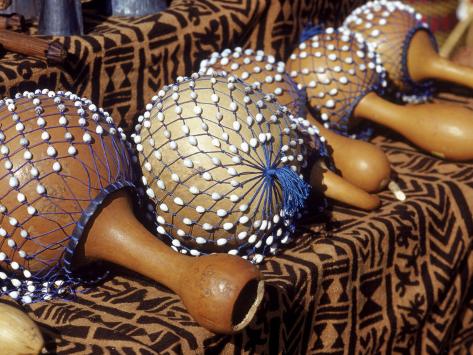
Does anyone play any musical instruments? https://thebirdfeednyc.com/wp-content/uploads/2012/08/Musical-Instruments-The-Bird-Feed-1024x790.png I've always liked the idea of guitar or piano, and especially the sound of the bass guitar - I doubt that will be easy to learn though. So I'll stick to my acoustic guitar idea. https://www.kwetu.net/images/Bougarabou%20Drums.jpg Of course I love the Talking Drum*! Ah! Shame I'm not coordinated enough, and my hand-eye coordination and reflexes aren't 'manly' enough, to be able to play that. Hmm, I've only ever known one girl who could drum like the dickens! E., a girl in my secondary school. I used to be fascinated when she'd play on the desks with her hands and keep tune and everything. https://imgc.allpostersimages.com/images/P-473-488-90/26/2678/PSAUD00Z/posters/gary-conner-african-musical-instruments.jpg *Shoot, I still want to load this video my sis made for me of drummers at our house, but I gotta figure out how to edit my happy dancing iya out of it. |




1 2 3 4 5 6 7 8 ... 80 81 82 83 84 85 86 87 88 (of 185 pages)