Isalegan2's Posts
Nairaland Forum › Isalegan2's Profile › Isalegan2's Posts
1 2 3 4 5 6 7 8 ... 79 80 81 82 83 84 85 86 87 (of 185 pages)
 Politics › Re: Massacre In Nigeria Spurs Outcry Over Military Tactics - Baga Village Killings by isalegan2(op): 2:29pm On Apr 30, 2013*. Modified: 6:21pm On Apr 30, 2013 Politics › Re: Massacre In Nigeria Spurs Outcry Over Military Tactics - Baga Village Killings by isalegan2(op): 2:29pm On Apr 30, 2013*. Modified: 6:21pm On Apr 30, 2013 |
I want a united Naijiriya, but not one where citizens are massacred down like rabid dogs. 1 Like |
| Politics › Re: Massacre In Nigeria Spurs Outcry Over Military Tactics - Baga Village Killings by isalegan2(op): 2:24pm On Apr 30, 2013 |
stjudas: Mmmm.....what do i to say ?.Judas, huh? Appropo. |
| Sports › Re: Jason Collins: The First Openly Gay Active Sports Man In America by isalegan2(op): 2:13pm On Apr 30, 2013 |
masonkz: Nice one. You'll be surprised to know how many more are so. I really love his courage....and he's so fine too!Masonkz (m), You can be the first Nairalander to come out. We're all here for you.   obadiah777: ABSOLUTE BOLLOCKS. THE FIRST OPENLY GAY NBA PLAYER WAS JOHN AMEACHI. ISALE WASSAPENINNNNNNNHiya Buzugee, my bro, my friend, me old pal.  |
| Sports › Re: Jason Collins: The First Openly Gay Active Sports Man In America by isalegan2(op): 1:57pm On Apr 30, 2013 |
ItsModella: ain't nobody reading all that sh*t up there.S'okay, bud. I didn't read it neither.  Blah Blah Blah Some gay sh*t Blah Blah bootie aches Blah Blah molested Blah Blah. Bleechh!  |
| Sports › Re: Jason Collins: The First Openly Gay Active Sports Man In America by isalegan2(op): 1:54pm On Apr 30, 2013 |
[quote author=Texas.Cowgirl]Awwwwww mehn. So ladies have to compete with gay men too?[/quote]Why the hell would we have to compete with gay men? The men that want him don't want me. And I certainly don't want them! Ewo! Taboo of the highest order!  Whatsawrong with you, Ileke?  |
| Foreign Affairs › Re: Great African Women In History by isalegan2(op): 3:40am On Apr 30, 2013 |
[size=15pt]The first Osemawe of Ondo Princess Olu Pupupu (Nigeria)[/size] Reigned circa 1516-1530 The Royal Ascendancy and Osemawe Institution of Ondo Ekimogun Kingdom started from the period of 1510 AD when the then Princess Olu Pupupu daughter of the late Alaafin of Oyo Oba Oluaso, a descendant of Oduduwa ended her journey with Royal entourage at a foot of a hill known in Ondo town up till today as Oke Agunla. The fact established through various historians about Ondo Kingdom especially our eminent fore-fathers and educationist’s researchers that upon arrival of Princess Olu Pupupu at the hill, they spotted a smoke rising from far below and followed its direction down the the hill where they met a man whose simply pronounced his name as Ekiri, he was neither a hunter or a farmer. He (Ekiri) welcomes Princess Pupupu and her Royal entourage with open arms embraced them warmly and later led them to a place known till today as Oriden near Ifore where every attempt to stick the yam stake to the ground prove abortive. It is said that they were happy and exclaimed Edo du do, edo do, idi edo which later transformed to Ondo. It is not certain that Princess Pupupu became Osemawe of Ondo immediately but with her Royal Status, she might have ascended the throne soon afterwards and it was presumed to be the year 1516 AD. 1. Oba Olu Pupupu, daughter of Alaafin of Oyo Oba Oluaso reigned from 1516-1530 AD 2. Oba Airo, first son of Oba Pupupu ascended the throne after her mother and regarded the seniority set up of Chiefs especially that of High Chief Lisa, who was made senior to High Chief OJomu and for this reason, the Oba was named Airo. He reigned from 1530-1560 AD. http://ekimogundescendant.org/index.php?option=com_content&view=article&id=82:the-royal-ascendancy-and-osemawe-institution-in-ondo-kingdom&catid=34:articles&Itemid=53 https://www.nairaland.com/675773/great-leaders-nigerias-history-before/3#8401249 *********************************************************************************************************** [size=16pt]Madam Omosa ti Ile-Ibadan (Nigeria)[/size] Circa 1800s [size=15pt]Merchant, Political Lobbyist, Defence Contractor and Warrior [/size] [the accounts below are from Samuel Johnson's History of The Yorubas and LaRay Denzer's Yoruba Women: A Histography] During the Kiriji War (1878-1893), Madam Omosa organized trade caravans to supply food, arms, and ammunition to the Ibadan army on the battlefield. She was the first trader in Ibadan to purchase Snyder rifles, a superior weapon at the time. When the Ijebu threatened Ibadan while the latter's army was engaged in Ekiti, she mobilized and led a defensive force that drove back the attack and protected the town. Madam Omosa of Ibadan, whose husband Enimowu had been captured since 1887, used her influence in the courts of The Alaafin to secure his release, Her husband tried in vain by spending largely for his release but: Madam Omosa sent again to the Alaafin praying His Majesty to renew his efforts on her behalf at the present favour- able turn of affairs. Success attended their efforts this time, and not only Enimowu but also Malade and the two nephews of the Balogun of Ibadan were released, Winkunle, Tubosun's son, having died in captivity at Ilorin. The released arrived at Oyo on the 2nd of June, 1892, and after paying their respects to the Alaafin rejoined the war chiefs at Ikirun. https://www.nairaland.com/675773/great-leaders-nigerias-history-before/5#8405119 |
| Nairaland General › Re: Thread For Reporting Pages With Bad Words And Pictures by isalegan2: 2:53am On Apr 30, 2013 |
Seun: Dear Nairalanders,Hmm. How'd I miss this thread? I saw a couple nasty stuff today. I shall return. |
| Foreign Affairs › Re: Great African Women In History by isalegan2(op): 2:34am On Apr 30, 2013*. Modified: 3:42am On Apr 30, 2013 |
More: [size=13pt] PRINCESS INIKPI OF IGALALAND (Nigeria)[/size] Princess Inikpi was a very beautiful woman. She was from a royal family. She was a heroin with great attributes. There was war between the Bini kingdom and the Igala people. No house was safe. No markets were safe. Even the streams were women and children would fetch water from or have a bath were not safe. The Igala people’s streams were poisoned so that anyone that used the water on the day would die. Fear griped the Igala people for a long time. When the oracle was consulted, it said that their victory could not come unless the princess was buried alive to prevent the inevitable destruction that was hanging on the Igala kingdom during the war with the Binis. Princess Inikpi was the beloved and only daughter of Attah of Igala then Ayegbu Oma Idoko, who willingly gave herself to be buried alive. Her father, the Attah of Igala loved his daughter so much. When he was informed of the only solution to the problem by the oracle and some of the eunuchs in his palace, he wished there was an alternative. For days he could not eat or drink. The Princess noticed how downcast her father was and decided to ask him the reason behind his sadness. He wouldn’t tell her. Rather, he would sit her down and tell her folktales under the moonlight. On the seventh day of her asking her father why he was downcast, he decided to tell her as a matter of urgency as the war was making him powerless as a leader and as a human being from the land that was been under attack. Princess Inikpi did not object. She did not fight. She went voluntarily on the day to the bank of River Niger , the place where she was to be buried alive. It was a sad resolution but the Igala people hailed her for indeed she was their heroine and a brave one at that. After the sacrifice as the Binis were advancing they saw the whole town in flames of fire and went back feeling that there was no need taking a war to a place already on fire. But it was the blood of Inikpi that deceived them. The Princess Inikpi statue located at Ega in the heart of the Idah market in Kogi state still represents an important historic event in the life of the Igala people. Today, so many people in Idah bear the name Inikpi in honour of the princess. This sacrifice was an expensive one. It made peace reign on the Igala land. The Igala people were able to live life once again but for how long? Years later until recent, there have been ethnic cleansing on the Igala land. Some of the reasons are political, religious and other reasons best known to the people behind these intertribal massacres. https://www.nairaland.com/675773/great-leaders-nigerias-history-before#8398329 ******************************************************************************************************** Since this thread allows Oral History, -and why not- I give you a great Queen and the builder of Ife pavements. I also added an article from the MET museum to illustrate the place of Ooni Luwoo in Nigeria/African history because one of the silly stuff I've heard from those who like to label Africans as "backward" includes the excuse that we constructed no paved roads until Europeans arrived in Africa, Anyway, Ooni Luwoo Gbagida, a female Ruler of Ile-Ife -the Source- did construct paved roads: https://www.metmuseum.org/toah/images/ht/ht_pave1.jpg [size=15pt] OONI Luwoo Gbagida (FEMALE) 21st? Ooni of Ife(Nigeria)[/size] Circa 1000 C.E A great Leader, Administrator and City Builder. According to one of the sources below; "Professor Ekpo Eyo, a former head of the Nigerian museums system, narrates a curious oral tradition concerning Ooni Oluwo. Apparently she was walking around the capital city of Ife when her regalia got splashed with mud. Oluwo was so upset by this that she ordered the construction of pavements for all the public and religious places in the city. Archaeology confirms that: "Pavements … are widespread in Africa. Potsherd pavements are the most common types of pavements known in West Africa … The most consistent reports about excavated pavements in West Africa have so far come from Ife. The pavements embellished the courtyards and often had altars built at the ends against walls. Peter Garlake adds that: "Many [of the pavements] had regular and geometric patterns, often emphasized by the incorporation of white quartz pebbles in their surface. Such pavements have been found on prehistoric sites from Tchad [sic] in the northeast to Togo in the west." Metropolitan Museum article on Ife Pavements "The categories given to the distinct periods of ancient Ife's artistic production center around the paving of the city's courtyards and passageways with terracotta bricks sometime around 1000 A.D., marking the beginning of Ife's Pavement period. This practice is thought to be associated with the urbanization of Ife. The origin of the pavement is explained in a popular story: according to Yoruba mythology, Queen Oluwo ordered the construction of the pavement when her robes were muddied in the dirt. Artistic production at Ife predates the construction of these pavements. The minimalist stone monoliths and other works of early Ife are generally attributed to the Archaic Era (before 800 A.D.) and Pre-Pavement Era (ca. 800–1000). The emergence of the highly specialized sculptural tradition of Ife is believed to have begun sometime after 800 A.D. and reached its height between the twelfth and fourteenth centuries. These eras, from the pre- to post-Pavement periods (stretching from 800 to 1600), are marked by both an increasingly expressive naturalism in the depiction of human figures and the development of a highly abstract artistic style. Scholars disagree as to whether the portraitlike naturalism is a precursor of the more stylized form, or whether the naturalistic and abstract styles coexisted. A ritual vessel depicting a shrine with a naturalistic head flanked by two tapering cylindrical heads suggests that the two styles were contemporaneous. They may have been deliberately juxtaposed to represent the contrast or unity of an inner spirituality depicted in an abstract form, and an outer physicality shown through realism. A center of political and religious power, Ife has been a formidable city-state through much of the second millennium A.D. The flowering of Ife art coincided with the commercial expansion of the neighboring city-state of Oyo, a strategically placed trading center, that channeled goods coming down the Niger River from the Songhai empire to Ife and other centers. The aesthetic style developed during the Pavement period of Ife art has been an ongoing influence in Yoruba sculptural styles since its inception. The fundamentally naturalistic style continues to be the basic form of representation of the human figure throughout Yorubaland" Source: Ife Pre-Pavement and Pavement Era (800–1000 A.D.) Thematic Essay, Heilbrunn Timeline of Art History, The Metropolitan Museum of Art http://www.whenweruled.com/articles.php?lng=en&pg=24 https://www.nairaland.com/675773/great-leaders-nigerias-history-before/2#8400645 **************************************************************************************************** [size=15pt]Nana Asma’u (1793–1864)[/size] (Nigeria) Nana Asma’u (full name: Nana Asma’u bint Shehu Usman dan Fodiyo, Arabic: نانا أسماء بنت عثمان فودي; 1793–1864) was a princess, poet, teacher, and daughter of the founder of the Sokoto Caliphate, Usman dan Fodio. She remains a revered figure in northern Nigeria. Nana Asma’u is held up by some as an example of education and independence of women possible under Islam, and by others as a precursor to modern feminism in Africa. Biography Nana Asma’u was born some eleven years before the Fulani War, and was named after Asma bint Abi Bakr, a companion of the Muslim Prophet. The daughter of the Sufi-inspired and Fulɓe-led Sokoto Caliphate's founder and half sister of its second leader, she outlived most of the founding generation of the Caliphate, making her an important source of guidance to its later rulers. From 1805, members of the Caliph's family came to great prominence, including the Caliph’s female relatives. While Nana Asma’u became the most prominent, her sisters Myram and Fatima, and the Caliph's wives Aisha and Hawwa played major literary and political roles in the new state. Like her father, she was educated in Qur'anic studies, and placed a high value upon universal education. As exemplars of the Qadiriyyah Sufi school, the dan Fodio and his followers stressed the sharing of knowledge, especially that of the Sunnah, the example of the prophet Muhammad. To learn without teaching, they thought, was sterile and empty. Thus Nana Asma’u was devoted, in particular, to the education of the Muslim women. Like most of the rest of her family, she became a prolific author. Writer and counselor Well educated in the classics of the Arab and Classical world, and well versed in four languages (Arabic, the Fula language, Hausa and Tamacheq Tuareg), Nana Asma’u had a public reputation as a leading scholar in the most influential Muslim state in West Africa, which gave her the opportunity to correspond broadly.[1] She witnessed many of the wars of the Fulani War and wrote about her experiences in a prose narrative Wakar Gewaye "The Journey". As the Sokoto Caliphate began as a cultural and religious revolutionary movement, the writings of its leaders held a special place by which later generations, both rulers and ruled, could measure their society. She became a counselor to her brother when he took the Caliphate, and is recorded writing instructions to governors and debating with the scholars of foreign princes. [edit]Poet Amongst her over 60 surviving works written over 40 years, Nana Asma’u left behind a large body of poetry in Arabic, the Fula language and Hausa, all written in the Arabic script. Many of these are historical narratives, but they also include elegies, laments, and admonitions. Her poems of guidance became tools for teaching the founding principles of the Caliphate. Asma'u also collaborated closely with Muhammad Bello, the second Caliph. Her works include and expand upon the dan Fodio's strong emphasis on women leaders and women's rights within the community ideals of the Sunnah and Islamic law.[2] [edit]Women's education Others of her surviving written works are related to Islamic education: for much of her adult life she was responsible for women's religious education. Starting around 1830, she created a cadre of women teachers (jajis) who traveled throughout the Caliphate educating women in the students' homes. In turn, each of these jajis in turn used Nana Asma’u's and other Sufi scholars writings, usually through recited mnemonics and poetry, to train corps of learned women, called the ’yan-taru, or “those who congregate together, the sisterhood.” To each jaji she bestowed a malfa (a hat and traditional ceremonial symbol of office of the pagan Bori priestesses in Gobir) tied with a red turban. The jajis became, thus, symbols of the new state, the new order, and of Islamic learning even outside women's community.[3] In part this educational project began as a way to integrate newly conquered pagan captives into a Muslim ruling class. It expanded, though, to include the poor and rural, training teachers who traveled across the sprawling Caliphate. Contemporary legacy Nana Asma’u continued legacy rests not just on her literary work and role in defining the values of the Sokoto state. Today in Northern Nigeria, Islamic women's organisation, schools, and meeting halls are commonly named for her. She re-entered the debate on the role of women in Islam in the 20th century, as her legacy has been carried by Islamic scholars and immigrants to Europe and its academic debates.[4] The republishing and translation of her works has brought added attention to the purely literary value of her prose and poems. https://www.nairaland.com/675773/great-leaders-nigerias-history-before/2#8401067 |
| Politics › What do you love about Nigerians? by isalegan2(op): 2:32am On Apr 30, 2013 |
What do you love about Nigerians? Me? As a Nigerian, I love our indomitable spirit, our survivor skills, our sublime self-confidence, our love for family, and our biting sense of humour. Most important, I value our inherited will to excel.  21 Likes |
| Sports › Re: Jason Collins: The First Openly Gay Active Sports Man In America by isalegan2(op): 2:01am On Apr 30, 2013 |
shymexx: Say "bye bye" to your career... I doubt anyone wants to play basketball with an openly gay guy with all the touching and semi-nudity in basketball...There are many gay athletes, at least here in American. They just won't admit it. I can never understand why people live a life that they're ashamed of. What a way to live! On the other hand, if you do your job and don't discuss your personal life, I can respect that - better than the ones that are so paranoid and fake, like  , they have to parade a different woman out on the beach every summer to prove to the world how studly they are. *rolleyes* , they have to parade a different woman out on the beach every summer to prove to the world how studly they are. *rolleyes* 1 Like |
| Sports › Re: Jason Collins: The First Openly Gay Active Sports Man In America by isalegan2(op): 9:22pm On Apr 29, 2013 |
N.B.A. Center Jason Collins Comes Out as Gay, Breaks Barrier By HOWARD BECK Published: April 29, 2013; 179 Comments New York Times Jason Collins, a 12-year N.B.A. veteran, has come out as the first openly gay male athlete still active in a major American team sport. “I’m a 34-year-old N.B.A. center. I’m black and I’m gay,” Collins writes in the May 6 edition of Sports Illustrated. The magazine published the article online Monday morning. The announcement makes Collins a pioneer of sorts: the first player in the N.B.A., N.F.L., N.H.L. or Major League Baseball to come out while still pursuing his career. Other gay athletes, including the former N.B.A. center John Amaechi, have waited until retirement to divulge their sexuality publicly. The announcement followed recent decisions by two other prominent athletes — the American soccer player Robbie Rogers and the women’s basketball player Brittney Griner — to acknowledge that they are gay. When Rogers, 25, revealed last month that he is gay he also said he was retiring from soccer, but he has since indicated he may resume playing at some point. Griner, the No. 1 pick in the W.N.B.A. draft, will soon embark on her professional career. Collins, who split this season between the Boston Celtics and the Washington Wizards, will become a free agent on July 1. He intends to pursue another contract in the summer, which may serve as a test for how N.B.A. teams respond to the announcement. In his essay, Collins alludes to the situation, writing: “I’ve reached that enviable state in life in which I can do pretty much what I want. And what I want is to continue to play basketball. I still love the game, and I still have something to offer. My coaches and teammates recognize that. At the same time, I want to be genuine and authentic and truthful.” Collins’s decision drew praise and admiration across the athletic and political realm on Twitter. “I am so proud of my bro @jasoncollins34 for being real,” Baron Davis, a former N.B.A. star point guard, wrote on his account. Kobe Bryant was the biggest star to proclaim his support for Collins, tweeting: “Proud of @jasoncollins34. Don’t suffocate who u r because of the ignorance of others.” Bryant added two hashtags: “courage” and “support.” Chelsea Clinton, who attended Stanford with Collins, also tweeted her support, as did Amaechi, who wrote, “Congratulations to Jason – society couldn’t hope for a more eloquent and positive role model.” N.B.A. Commissioner David Stern released a statement welcoming the announcement. “Jason has been a widely respected player and teammate throughout his career,” Stern said, “and we are proud he has assumed the leadership mantle on this very important issue.” All of the major sports leagues have been preparing, to various degrees, for the moment when an active player comes out. The N.F.L., amid speculation that a handful of players were preparing to make the move en masse, has been working with gay advocacy groups to smooth the way for acceptance. The N.H.L. also recently announced a comprehensive program for training and counseling on gay issues for its teams and players. The N.B.A. has long included education in this area in both its rookie and veteran development programs. League officials have typically played down the need to prepare for an active player coming out, believing that the moment would be greeted with a collective shrug, or should be. As Stern said in a recent New York Times article, “It’s our fervent hope that this draws less attention, not more, when a player eventually comes out http://www.nytimes.com/2013/04/30/sports/basketball/nba-center-jason-collins-comes-out-as-gay.html?hp&_r=0 1 Like |
| Sports › Re: Jason Collins: The First Openly Gay Active Sports Man In America by isalegan2(op): 8:47pm On Apr 29, 2013*. Modified: 9:04pm On Apr 29, 2013 |
"I go against the gay stereotype, which is why I think a lot of players will be shocked: That guy is gay?" https://i2.cdn.turner.com/si/dam/assets/130429144053-jason-collins-cover-single-image-cut.jpg What "gay stereotype"? I bet they all already knew he is gay. Sounds like they were going to out him anyway. |
| Sports › Jason Collins: The First Openly Gay Active Sports Man In America by isalegan2(op): 8:43pm On Apr 29, 2013 |
[size=14pt]Why NBA center Jason Collins is coming out now[/size] sports Illustrated I didn't set out to be the first openly gay athlete playing in a major American team sport. But since I am, I'm happy to start the conversation. I wish I wasn't the kid in the classroom raising his hand and saying, "I'm different." If I had my way, someone else would have already done this. Nobody has, which is why I'm raising my hand. My journey of self-discovery and self-acknowledgement began in my hometown of Los Angeles and has taken me through two state high school championships, the NCAA Final Four and the Elite Eight, and nine playoffs in 12 NBA seasons. I've played for six pro teams and have appeared in two NBA Finals. Ever heard of a parlor game called Three Degrees of Jason Collins? If you're in the league, and I haven't been your teammate, I surely have been one of your teammates' teammates. Or one of your teammates' teammates' teammates. Now I'm a free agent, literally and figuratively. I've reached that enviable state in life in which I can do pretty much what I want. And what I want is to continue to play basketball. I still love the game, and I still have something to offer. My coaches and teammates recognize that. At the same time, I want to be genuine and authentic and truthful. Why am I coming out now? Well, I started thinking about this in 2011 during the NBA player lockout. I'm a creature of routine. When the regular season ends I immediately dedicate myself to getting game ready for the opener of the next campaign in the fall. But the lockout wreaked havoc on my habits and forced me to confront who I really am and what I really want. With the season delayed, I trained and worked out. But I lacked the distraction that basketball had always provided. The first relative I came out to was my aunt Teri, a superior court judge in San Francisco. Her reaction surprised me. "I've known you were gay for years," she said. From that moment on I was comfortable in my own skin. In her presence I ignored my censor button for the first time. She gave me support. The relief I felt was a sweet release. Imagine you're in the oven, baking. Some of us know and accept our sexuality right away and some need more time to cook. I should know -- I baked for 33 years. When I was younger I dated women. I even got engaged. I thought I had to live a certain way. I thought I needed to marry a woman and raise kids with her. I kept telling myself the sky was red, but I always knew it was blue. I realized I needed to go public when Joe Kennedy, my old roommate at Stanford and now a Massachusetts congressman, told me he had just marched in Boston's 2012 Gay Pride Parade. I'm seldom jealous of others, but hearing what Joe had done filled me with envy. I was proud of him for participating but angry that as a closeted gay man I couldn't even cheer my straight friend on as a spectator. If I'd been questioned, I would have concocted half truths. What a shame to have to lie at a celebration of pride. I want to do the right thing and not hide anymore. I want to march for tolerance, acceptance and understanding. I want to take a stand and say, "Me, too." *** Imagine you're in the oven, baking. Some of us know and accept our sexuality right away and some need more time to cook. I should know - I baked for 33 years. The recent Boston Marathon bombing reinforced the notion that I shouldn't wait for the circumstances of my coming out to be perfect. Things can change in an instant, so why not live truthfully? When I told Joe a few weeks ago that I was gay, he was grateful that I trusted him. He asked me to join him in 2013. We'll be marching on June 8. No one wants to live in fear. I've always been scared of saying the wrong thing. I don't sleep well. I never have. But each time I tell another person, I feel stronger and sleep a little more soundly. It takes an enormous amount of energy to guard such a big secret. I've endured years of misery and gone to enormous lengths to live a lie. I was certain that my world would fall apart if anyone knew. And yet when I acknowledged my sexuality I felt whole for the first time. I still had the same sense of humor, I still had the same mannerisms and my friends still had my back. Believe it or not, my family has had bigger shocks. Strange as it seems today, my parents expected only one child in 1978. Me. When I came out (for the first time) the doctors congratulated my mother on her healthy, seven-pound, one-ounce baby boy. "Wait!" said a nurse. "Here comes another one!" The other one, who arrived eight minutes later and three ounces heavier, was Jarron. He's followed me ever since, to Stanford and to the NBA, and as the ever-so-slightly older brother I've looked out for him. I had a happy childhood in the suburbs of L.A. My parents instilled in us an appreciation of history, art and, most important, Motown. Jarron and I weren't allowed to listen to rap until we were 12. After our birthday I dashed to Target and bought DJ Quik's album Quik Is the Name. I memorized every line. It was around this time that I began noticing subtle differences between Jarron and me. Our twinness was no longer synchronized. I couldn't identify with his attraction to girls. I feel blessed that I recognized my own attractions. Though I resisted my impulses through high school, I knew that when I was ready I had someone to turn to: my uncle Mark in New York. I knew we could talk without judgment, and we did last summer. Uncle Mark is gay. He and his partner have been in a stable relationship forever. For a confused young boy, I can think of no better role model of love and compassion. https://i2.cdn.turner.com/si/dam/assets/130429102746-jason-collins-celtics-single-image-cut.jpg Jason Collins played with the Celtics and Wizards this season, his 12th in the NBA. I didn't come out to my brother until last summer. His reaction to my breakfast revelation was radically different from Aunt Teri's. He was downright astounded. He never suspected. So much for twin telepathy. But by dinner that night, he was full of brotherly love. For the first time in our lives, he wanted to step in and protect me. My maternal grandmother was apprehensive about my plans to come out. She grew up in rural Louisiana and witnessed the horrors of segregation. During the civil rights movement she saw great bravery play out amid the ugliest aspects of humanity. She worries that I am opening myself up to prejudice and hatred. I explained to her that in a way, my coming out is preemptive. I shouldn't have to live under the threat of being outed. The announcement should be mine to make, not TMZ's. The hardest part of this is the realization that my entire family will be affected. But my relatives have told me repeatedly that as long as I'm happy, they're there for me. I watch as my brother and friends from college start their own families. Changing diapers is a lot of work, but children bring so much joy. I'm crazy about my nieces and nephew, and I can't wait to start a family of my own. I'm from a close-knit family. My parents instilled Christian values in me. They taught Sunday school, and I enjoyed lending a hand. I take the teachings of Jesus seriously, particularly the ones that touch on tolerance and understanding. On family trips, my parents made a point to expose us to new things, religious and cultural. In Utah, we visited the Mormon Salt Lake Temple. In Atlanta, the house of Martin Luther King Jr. That early exposure to otherness made me the guy who accepts everyone unconditionally. I'm learning to embrace the puzzle that is me. After I was traded by the Celtics to Washington in February, I took a detour to the Dr. King memorial. I was inspired and humbled. I celebrate being an African-American and the hardships of the past that still resonate today. But I don't let my race define me any more than I want my sexual orientation to. I don't want to be labeled, and I can't let someone else's label define me. On the court I graciously accept one label sometimes bestowed on me: "the pro's pro." I got that handle because of my fearlessness and my commitment to my teammates. I take charges and I foul -- that's been my forte. In fact, during the 2004-05 season my 322 personals led the NBA. I enter the court knowing I have six hard fouls to give. I set picks with my 7-foot, 255-pound body to get guys like Jason Kidd, John Wall and Paul Pierce open. I sacrifice myself for other players. I look out for teammates as I would my kid brother. I go against the gay stereotype, which is why I think a lot of players will be shocked: That guy is gay? I'm not afraid to take on any opponent. I love playing against the best. Though Shaquille O'Neal is a Hall of Famer, I never shirked from the challenge of trying to frustrate the heck out of him. (Note to Shaq: My flopping has nothing to do with being gay.) My mouthpiece is in, and my wrists are taped. Go ahead, take a swing -- I'll get up. I hate to say it, and I'm not proud of it, but I once fouled a player so hard that he had to leave the arena on a stretcher. I go against the gay stereotype, which is why I think a lot of players will be shocked: That guy is gay? But I've always been an aggressive player, even in high school. Am I so physical to prove that being gay doesn't make you soft? Who knows? That's something for a psychologist to unravel. My motivations, like my contributions, don't show up in box scores, and frankly I don't care about stats. Winning is what counts. I want to be evaluated as a team player. Loyalty to my team is the real reason I didn't come out sooner. When I signed a free-agent contract with Boston last July, I decided to commit myself to the Celtics and not let my personal life become a distraction. When I was traded to the Wizards, the political significance of coming out sunk in. I was ready to open up to the press, but I had to wait until the season was over. A college classmate tried to persuade me to come out then and there. But I couldn't yet. My one small gesture of solidarity was to wear jersey number 98 with the Celtics and then the Wizards. The number has great significance to the gay community. One of the most notorious antigay hate crimes occurred in 1998. Matthew Shepard, a University of Wyoming student, was kidnapped, tortured and lashed to a prairie fence. He died five days after he was finally found. That same year the Trevor Project was founded. This amazing organization provides crisis intervention and suicide prevention to kids struggling with their sexual identity. Trust me, I know that struggle. I've struggled with some insane logic. When I put on my jersey I was making a statement to myself, my family and my friends. The strain of hiding my sexuality became almost unbearable in March, when the U.S. Supreme Court heard arguments for and against same-sex marriage. Less then three miles from my apartment, nine jurists argued about my happiness and my future. Here was my chance to be heard, and I couldn't say a thing. I didn't want to answer questions and draw attention to myself. Not while I was still playing. I'm glad I'm coming out in 2013 rather than 2003. The climate has shifted; public opinion has shifted. And yet we still have so much farther to go. Everyone is terrified of the unknown, but most of us don't want to return to a time when minorities were openly discriminated against. I'm impressed with the straight pro athletes who have spoken up so far -- Chris Kluwe, Brendon Ayanbadejo. The more people who speak out, the better, gay or straight. It starts with President Obama's mentioning the 1969 Stonewall riots, which launched the gay rights movement, during his second inaugural address. And it extends to the grade-school teacher who encourages her students to accept the things that make us different. *** By its nature, my double life has kept me from getting close to any of my teammates. Early in my career I worked hard at acting straight, but as I got more comfortable in my straight mask it required less effort. In recent days, though, little has separated "mask on, mask off." Personally, I don't like to dwell in someone else's private life, and I hope players and coaches show me the same respect. When I'm with my team I'm all about working hard and winning games. A good teammate supports you no matter what. I've been asked how other players will respond to my announcement. The simple answer is, I have no idea. I'm a pragmatist. I hope for the best, but plan for the worst. The biggest concern seems to be that gay players will behave unprofessionally in the locker room. Believe me, I've taken plenty of showers in 12 seasons. My behavior wasn't an issue before, and it won't be one now. My conduct won't change. I still abide by the adage, "What happens in the locker room stays in the locker room." I'm still a model of discretion. As I write this, I haven't come out to anyone in the NBA. I'm not privy to what other players say about me. Maybe Mike Miller, my old teammate in Memphis, will recall the time I dropped by his house in Florida and say, "I enjoyed being his teammate, and I sold him a dog." I hope players swap stories like that. Maybe they'll talk about my character and what kind of person I am. As far as the reaction of fans, I don't mind if they heckle me. I've been booed before. There have been times when I've wanted to boo myself. But a lot of ill feelings can be cured by winning. I'm a veteran, and I've earned the right to be heard. I'll lead by example and show that gay players are no different from straight ones. I'm not the loudest person in the room, but I'll speak up when something isn't right. And try to make everyone laugh. I've never sought the spotlight. Though I'm coming out to the world, I intend to guard my privacy. I'm making this blanket statement in part to keep rumors and misunderstandings at bay. I hope fans will respect me for raising my hand. And I hope teammates will remember that I've never been an in-your-face kind of guy. All you need to know is that I'm single. I see no need to delve into specifics. I've been asked how other players will respond to my announcement. The simple answer is, I have no idea. I'm a pragmatist. I hope for the best, but plan for the worst. Look at what happened in the military when the Don't Ask, Don't Tell policy was repealed. Critics of the repeal were sure that out military members would devastate morale and destroy civilization. But a new study conducted by scholars from every branch of the armed forces except the Coast Guard concluded that "cohesion did not decline after the new policy of open service was put into place. In fact, greater openness and honesty resulting from repeal seem to have promoted increased understanding, respect and acceptance." The same goes for sports. Doc Rivers, my coach on the Celtics, says, "If you want to go quickly, go by yourself -- if you want to go farther, go in a group." I want people to pull together and push ahead. Openness may not completely disarm prejudice, but it's a good place to start. It all comes down to education. I'll sit down with any player who's uneasy about my coming out. Being gay is not a choice. This is the tough road and at times the lonely road. Former players like Tim Hardaway, who said "I hate gay people" (and then became a supporter of gay rights), fuel homophobia. Tim is an adult. He's entitled to his opinion. God bless America. Still, if I'm up against an intolerant player, I'll set a pretty hard pick on him. And then move on. The most you can do is stand up for what you believe in. I'm much happier since coming out to my friends and family. Being genuine and honest makes me happy. I'm glad I can stop hiding and refocus on my 13th NBA season. I've been running through the Santa Monica Mountains in a 30-pound vest with Shadow, the German shepherd I got from Mike Miller. In the pros, the older you get, the better shape you must be in. Next season a few more eyeballs are likely to be on me. That only motivates me to work harder. Some people insist they've never met a gay person. But Three Degrees of Jason Collins dictates that no NBA player can claim that anymore. Pro basketball is a family. And pretty much every family I know has a brother, sister or cousin who's gay. In the brotherhood of the NBA, I just happen to be the one who's out. http://sportsillustrated.cnn.com/magazine/news/20130429/jason-collins-gay-nba-player/ 1 Like |
| Politics › Massacre In Nigeria Spurs Outcry Over Military Tactics - Baga Village Killings by isalegan2(op): 8:25pm On Apr 29, 2013 |
[size=14pt]Massacre in Nigeria Spurs Outcry Over Military Tactics[/size] By ADAM NOSSITER Published: April 29, 2013 New York Times A gruesome assault that left scores of Nigerian villagers dead has been blamed by survivors on revenge-seeking soldiers and has brought withering criticism at home and abroad. https://graphics8.nytimes.com/images/2013/04/30/world/africa/30nigeria1_cnd/30nigeria1_cnd-articleInline.jpg Houses were burned in what Nigerian authorities said was heavy fighting between security forces and Islamist militants in Baga, a fishing town on the shores of Lake Chad, last week. MAIDUGURI, Nigeria — Days later, the survivors’ faces tensed at the memory of the grim evening: soldiers dousing thatched-roof homes with gasoline, setting them on fire and shooting residents when they tried to flee. As the village rose up in smoke, one said, a soldier threw a child back into the flames. Even by the scorched-earth standards of the Nigerian military’s campaign against Islamist insurgents stalking the nation’s north, what happened on the muddy shores of Lake Chad this month appears exceptional. The village, Baga, found itself in the cross hairs of Nigerian soldiers enraged by the killing of one of their own, said survivors who fled here to the state capital, 100 miles south. Their home had paid a heavy price: as many as 200 civilians, maybe more, were killed during the military’s rampage, according to refugees, senior relief workers, civilian officials and human rights organizations. The apparent size of the civilian death toll — staunchly denied by Nigerian military officials, some of whom blame the insurgent group, Boko Haram, for the carnage — has prompted an unusual uproar. Though heavy civilian casualties are routine in the military’s confrontation with Boko Haram, with dozens dying in poor neighborhoods since 2010 as the army searches for “suspects,” Nigeria’s politicians usually have little to say about it. Past massacres of civilians in retaliation for soldier deaths have passed largely with impunity. This time, there have been calls in Nigeria’s national assembly for an investigation and the government has come under withering criticism at home and abroad. The military has said it has begun its own inquiry, and some longstanding observers of the country’s heavy-handed fight against Islamist militants say a tipping point may have been reached. “This is coming at a time when we have had similar situations” elsewhere, said Kole Shettima, chairman of the Center for Democracy and Development in the capital, Abuja. “People are tired of the excuses the military is giving and that’s why they are demanding an investigation. This time it’s different. There is a crisis of legitimacy in the military.” But in a country where corruption abounds and accountability is rare, others wondered whether it would truly become a watershed moment — or get brushed aside as an unfortunate side effect of fighting a dangerous insurgency. “This Baga is just on a bigger scale, but they have been doing this for ages,” the governor of the state, Kashim Shettima, one of the first officials to reach Baga afterward, said of the military. “They’ve not adhered to the rules of engagement,” said Mr. Shettima, who is not related to the democracy advocate. “When you burn down shops and massacre civilians, you are pushing them to join the camp of Boko Haram.” Yet, he continued, “We are in a Catch-22 situation.” Boko Haram is a deadly insurgent force that needs to be confronted, the governor said, but not by a military that terrorizes its own people. “We need them to carry out their duties in a civilized manner.” Some Baga residents who did not perish in the flames drowned while attempting to escape into Lake Chad, refugees here in the state capital said. Others were attacked by hippopotamuses in the shallow waters, officials said. Soldiers shot people as they ran from the burning houses, refugees said. “Many dead, many dead,” said Mohammed Muhammed, 40, a taxi driver from Baga. “People running into the flames, I saw that. If they didn’t run into the flames, the army will shoot them.” As flames enveloped the houses — “they used petroleum,” he said of the soldiers — he fled into the surrounding desert scrub. “If you come out” from the flaming houses “they will shoot you,” he said. “Please sir, charge them in the international court!” he shouted. Isa Kukulala, 26, a lanky bus driver who had left Baga that morning, gave a similar account: “They poured petrol on the properties. At the same time, they are shooting sporadically, inside the fire. They took a small child from his mother and threw him inside the fire. This is what I have witnessed.” Hundreds of residents fled into the bush, where they lived for days in harsh conditions, and are only now trickling back into the town. “The aged people, the people that couldn’t run, most of those people were burned,” said Antony Emmanuel, a fish buyer. “Small children, their parents left them, they were burned.” Borno State officials have said hundreds of houses were destroyed in the blaze. https://graphics8.nytimes.com/images/2013/04/30/world/africa/30nigeria2_cnd/30nigeria2_cnd-articleInline.jpg Burned houses and ashes were left in the wake of heavy fighting between security forces and Islamist militants in Baga. The army has effectively blocked journalists from getting to Baga — it is in a zone where Boko Haram exercises partial control — and it kept out relief agencies until the middle of last week. Cellphone service has been cut off. In a brief statement a week after the episode, Brig. Gen. Austin Edokpaye, the commander of the multinational joint task force — Nigeria shares intelligence with neighboring countries, though its soldiers generally do the shooting — said one soldier was killed “while 30 Boko Haram terrorists lost their lives” and “unfortunately six civilians” were killed. Ten “other civilians were injured in the cross-fire,” he said. Nigeria’s director of defense information, Brig. Gen. Chris Olukolade, angrily rejected the accounts of residents and others. He said that “the burning, the killing is done by Boko Haram, not by the soldiers. Anybody blaming the soldiers must be a sympathizer with Boko Haram.” He said that “Boko Haram was using the houses to shoot out at soldiers.” But the picture given by civilian officials in relief agencies and state government, along with the one presented by refugees, was very different, with the vast majority of deaths attributed to the military. “More than 200 dead, this is what people in the town confirmed,” said a senior relief official who asked not to be identified out of fear of retribution by the military. “Actually, my boys told me the number is far higher than the 200 reported,” the relief official said. A senior official under the governor, Mr. Shettima, who is not affiliated with the governing party, said: “The soldiers went on a rampage. Because, you know, that’s what soldiers do in Nigeria. It’s really crazy here.” General Olukolade responded angrily to such assertions, saying, “The politicians intend to create a haven for Boko Haram around our state.” In the accounts of refugees and officials, the killings started after a few gunmen, likely to be Boko Haram members, engaged a detachment from Baga’s military post in a firefight on the evening of April 16. “Two people came, they said they were Jama’atu,” said Mohammed Bella Sani, a fisherman from Baga, using Boko Haram’s name for itself. Boko Haram has a heavy presence in that area of fluid national borders, officials say, and has even chased away all government presence, including officials and police officers, from many rural districts. In Baga, the soldiers went for reinforcements after one among them was killed, residents said. “A team of soldiers came back shouting, and they started firing indiscriminately,” Mr. Sani said. “They set my neighbor’s house on fire, and people started running back to save the neighbor,” said Mallam Ali, a bus driver. And the soldiers began shooting into the crowd, he said. “They were firing from the armored vehicles,” said Alhadji Adamua, a clothing seller at Baga’s market. “I saw them putting fire on people’s houses. They are the security of the state. They have no right to kill anybody. They are supposed to protect the people.” http://www.nytimes.com/2013/04/30/world/africa/outcry-over-military-tactics-after-massacre-in-nigeria.html?hp&_r=0 1 Like |
| Foreign Affairs › Re: Great African Women In History by isalegan2(op): 2:09am On Apr 29, 2013*. Modified: 11:35am On Apr 29, 2013 |
[size=14pt]The Moni (a/k/a Amazon) Women Warriors of Dahomey (Benin Republic)[/size] Early 1600s to End of 1800s https://www.badassoftheweek.com/dahomey2.jpg Smithsonian: Dahomey’s Women Warriors It is noon on a humid Saturday in the fall of 1861, and a missionary by the name of Francesco Borghero has been summoned to a parade ground in Abomey, the capital of the small West African state of Dahomey. He is seated on one side of a huge, open square right in the center of the town–Dahomey is renowned as a “Black Sparta,” a fiercely militaristic society bent on conquest, whose soldiers strike fear into their enemies all along what is still known as the Slave Coast. The maneuvers begin in the face of a looming downpour, but King Glele is eager to show off the finest unit in his army to his European guest. As Father Borghero fans himself, 3,000 heavily armed soldiers march into the square and begin a mock assault on a series of defenses designed to represent an enemy capital. The Dahomean troops are a fearsome sight, barefoot and bristling with clubs and knives. A few, known as Reapers, are armed with gleaming three-foot-long straight razors, each wielded two-handed and capable, the priest is told, of slicing a man clean in two. The soldiers advance in silence, reconnoitering. Their first obstacle is a wall—huge piles of acacia branches bristling with needle-sharp thorns, forming a barricade that stretches nearly 440 yards. The troops rush it furiously, ignoring the wounds that the two-inch-long thorns inflict. After scrambling to the top, they mime hand-to-hand combat with imaginary defenders, fall back, scale the thorn wall a second time, then storm a group of huts and drag a group of cringing “prisoners” to where Glele stands, assessing their performance. The bravest are presented with belts made from acacia thorns. Proud to show themselves impervious to pain, the warriors strap their trophies around their waists. The general who led the assault appears and gives a lengthy speech, comparing the valor of Dahomey’s warrior elite to that of European troops and suggesting that such equally brave peoples should never be enemies. Borghero listens, but his mind is wandering. He finds the general captivating: “slender but shapely, proud of bearing, but without affectation.” Not too tall, perhaps, nor excessively muscular. But then, of course, the general is a woman, as are all 3,000 of her troops. Father Borghero has been watching the King of Dahomey’s famed corps of “amazons,” as contemporary writers termed them—the only female soldiers in the world who then routinely served as combat troops. When, or indeed why, Dahomey recruited its first female soldiers is not certain. Stanley Alpern, author of the only full-length Engish-language study of them, suggests it may have been in the 17th century, not long after the kingdom was founded by Dako, a leader of the Fon tribe, around 1625. One theory traces their origins to teams of female hunters known as gbeto, and certainly Dahomey was noted for its women hunters; a French naval surgeon named Repin reported in the 1850s that a group of 20 gbeto had attacked a herd of 40 elephants, killing three at the cost of several hunters gored and trampled. A Dahomean tradition relates that when King Gezo (1818-58) praised their courage, the gbeto cockily replied that “a nice manhunt would suit them even better,” so he drafted them drafted into his army. But Alpern cautions that there is no proof that such an incident occurred, and he prefers an alternate theory that suggests the women warriors came into existence as a palace guard in the 1720s. Women had the advantage of being permitted in the palace precincts after dark (Dahomean men were not), and a bodyguard may have been formed, Alpern says, from among the king’s “third class” wives–those considered insufficiently beautiful to share his bed and who had not borne children. Contrary to 19th century gossip that portrayed the female soldiers as sexually voracious, Dahomey’s female soldiers were formally married to the king—and since he never actually had relations with any of them, marriage rendered them celibate. At least one bit of evidence hints that Alpern is right to date the formation of the female corps to the early 18th century: a French slaver named Jean-Pierre Thibault, who called at the Dahomean port of Ouidah in 1725, described seeing groups of third-rank wives armed with long poles and acting as police. And when, four years later, Dahomey’s women warriors made their first appearance in written history, they were helping to recapture the same port after it fell to a surprise attack by the Yoruba–a much more numerous tribe from the east who would henceforth be the Dahomeans’ chief enemies. Dahomey’s female troops were not the only martial women of their time. There were at least a few contemporary examples of successful warrior queens, the best-known of whom was probably Nzinga of Matamba, one of the most important figures in 17th-century Angola—a ruler who fought the Portuguese, quaffed the blood of sacrificial victims, and kept a harem of 60 male concubines, whom she dressed in women’s clothes. Nor were female guards unknown; in the mid-19th century, King Mongkut of Siam (the same monarch memorably portrayed in quite a different light by Yul Brynner in The King and I) employed a bodyguard of 400 women. But Mongkut’s guards performed a ceremonial function, and the king could never bear to send them off to war. What made Dahomey’s women warriors unique was that they fought, and frequently died, for king and country. Even the most conservative estimates suggest that, in the course of just four major campaigns in the latter half of the 19th century, they lost at least 6,000 dead, and perhaps as many as 15,000. In their very last battles, against French troops equipped with vastly superior weaponry, about 1,500 women took the field, and only about 50 remained fit for active duty by the end. None of this, of course, explains why this female corps arose only in Dahomey. Historian Robin Law, of the University of Stirling, who has made a study of the subject, dismisses the idea that the Fon viewed men and women as equals in any meaningful sense; women fully trained as warriors, he points out, were thought to “become” men, usually at the moment they disemboweled their first enemy. Perhaps the most persuasive possibility is that the Fon were so badly outnumbered by the enemies who encircled them that Dahomey’s kings were forced to conscript women. The Yoruba alone were about ten times as numerous as the Fon. Backing for this hypothesis can be found in the writings of Commodore Arthur Eardley Wilmot, a British naval officer who called at Dahomey in 1862 and observed that women heavily outnumbered men in its towns—a phenomenon that he attributed to a combination of military losses and the effects of the slave trade. Around the same time Western visitors to Abomey noticed a sharp jump in the number of female soldiers. Records suggest that there were about 600 women in the Dahomean army from the 1760s until the 1840s—at which point King Gezo expanded the corps to as many as 6,000. No Dahomean records survive to explain Gezo’s expansion, but it was probably connected to a defeat he suffered at the hands of the Yoruba in 1844. Oral traditions suggest that, angered by Dahomean raids on their villages, an army from a tribal grouping known as the Egba mounted a surprise attack that that came close to capturing Gezo and did seize much of his royal regalia, including the king’s valuable umbrella and his sacred stool. “It has been said that only two amazon ‘companies’ existed before Gezo and that he created six new ones,” Alpern notes. “If so, it probably happened at this time.” Recruiting women into the Dahomean army was not especially difficult, despite the requirement to climb thorn hedges and risk life and limb in battle. Most West African women lived lives of forced drudgery. Gezo’s female troops lived in his compound and were kept well supplied with tobacco, alcohol and slaves–as many as 50 to each warrior, according to the noted traveler Sir Richard Burton, who visited Dahomey in the 1860s. And “when amazons walked out of the palace,” notes Alpern, “they were preceded by a slave girl carrying a bell. The sound told every male to get out of their path, retire a certain distance, and look the other way.” To even touch these women meant death. While Gezo plotted his revenge against the Egba, his new female recruits were put through extensive training. The scaling of vicious thorn hedges was intended to foster the stoical acceptance of pain, and the women also wrestled one another and undertook survival training, being sent into the forest for up to nine days with minimal rations. The aspect of Dahomean military custom that attracted most attention from European visitors, however, was “insensitivity training”—exposing unblooded troops to death. At one annual ceremony, new recruits of both sexes were required to mount a platform 16 feet high, pick up baskets containing bound and gagged prisoners of war, and hurl them over the parapet to a baying mob below. There are also accounts of female soldiers being ordered to carry out executions. Jean Bayol, a French naval officer who visited Abomey in December 1889, watched as a teenage recruit, a girl named Nanisca “who had not yet killed anyone,” was tested. Brought before a young prisoner who sat bound in a basket, she: "walked jauntily up to [him], swung her sword three times with both hands, then calmly cut the last flesh that attached the head to the trunk… She then squeezed the blood off her weapon and swallowed it." It was this fierceness that most unnerved Western observers, and indeed Dahomey’s African enemies. Not everyone agreed on the quality of the Dahomeans’ military preparedness—European observers were disdainful of the way in which the women handled their ancient flintlock muskets, most firing from the hip rather than aiming from the shoulder, but even the French agreed that they “excelled at hand-to-hand combat” and “handled [knives] admirably.” For the most part, too, the enlarged female corps enjoyed considerable success in Gezo’s endless wars, specializing in pre-dawn attacks on unsuspecting enemy villages. It was only when they were thrown against the Egba capital, Abeokuta, that they tasted defeat. Two furious assaults on the town, in 1851 and 1864, failed dismally, partially because of Dahomean overconfidence, but mostly because Abeokuta was a formidable target—a huge town ringed with mud-brick walls and harboring a population of 50,000. https://blogs.smithsonianmag.com/history/files/2011/09/parade-500x335.jpg By the late 1870s Dahomey had begun to temper its military ambitions. Most foreign observers suggest that the women’s corps was reduced to 1,500 soldiers at about this time, but attacks on the Yoruba continued. And the corps still existed 20 years later, when the kingdom at last found itself caught up in the “scramble for Africa,” which saw various European powers competing to absorb slices of the continent into their empires. Dahomey fell within the French sphere of influence, and there was already a small French colony at Porto-Novo when, in about 1889, female troops were involved in an incident that resulted in a full-scale war. According to local oral histories, the spark came when the Dahomeans attacked a village under French suzerainty whose chief tried to avert panic by assuring the inhabitants that the tricolor would protect them. “So you like this flag?” the Dahomean general asked when the settlement had been overrun. “Eh bien, it will serve you.” At the general’s signal, one of the women warriors beheaded the chief with one blow of her cutlass and carried his head back to her new king, Béhanzin, wrapped in the French standard. The First Franco-Dahomean War, which ensued in 1890, resulted in two major battles, one of which took place in heavy rain at dawn outside Cotonou, on the Bight of Benin. Béhanzin’s army, which included female units, assaulted a French stockade but was driven back in hand-to-hand fighting. No quarter was given on either side, and Jean Bayol saw his chief gunner decapitated by a fighter he recognized as Nanisca, the young woman he had met three months earlier in Abomey as she executed a prisoner. Only the sheer firepower of their modern rifles won the day for the French, and in the battle’s aftermath Bayol found Nanisca lying dead. “The cleaver, with its curved blade, engraved with fetish symbols, was attached to her left wrist by a small cord,” he wrote, “and her right hand was clenched around the barrel of her carbine covered with cowries.” In the uneasy peace that followed, Béhanzin did his best to equip his army with more modern weapons, but the Dahomeans were still no match for the large French force that was assembled to complete the conquest two years later. That seven-week war was fought even more fiercely than the first. There were 23 separate battles, and once again female troops were in the vanguard of Béhanzin’s forces. The women were the last to surrender, and even then—at least according to a rumor common in the French army of occupation—the survivors took their revenge on the French by covertly substituting themselves for Dahomean women who were taken into the enemy stockade. Each allowed herself to be seduced by French officer, waited for him to fall asleep, and then cut his throat with his own bayonet. Their last enemies were full of praise for their courage. A French Foreign Legionnaire named Bern lauded them as “warrioresses… [who] fight with extreme valor, always ahead of the other troops. They are outstandingly brave … well trained for combat and very disciplined.” A French Marine, Henri Morienval, thought them “remarkable for their courage and their ferocity… [they] flung themselves on our bayonets with prodigious bravery.” Most sources suggest that the last of Dahomey’s women warriors died in the 1940s, but Stanley Alpern disputes this. Pointing out that “a woman who had fought the French in her teens would have been no older than 69 in 1943,” he suggests, more pleasingly, that it is likely one or more survived long enough to see her country regain its independence in 1960. As late as 1978, a Beninese historian encountered an extremely old woman in the village of Kinta who convincingly claimed to have fought against the French in 1892. Her name was Nawi, and she died, aged well over 100, in November 1979. Probably she was the last. What were they like, these scattered survivors of a storied regiment? Some proud but impoverished, it seems; others married; a few tough and argumentative, well capable, Alpern says, of “beating up men who dared to affront them.” And at least one of them still traumatized by her service, a reminder that some military experiences are universal. A Dahomean who grew up in Cotonou in the 1930s recalled that he regularly tormented an elderly woman he and his friends saw shuffling along the road, bent double by tiredness and age. He confided to the French writer Hélène Almeida-Topor that one day, one of us throws a stone that hits another stone. The noise resounds, a spark flies. We suddenly see the old woman straighten up. Her face is transfigured. She begins to march proudly… Reaching a wall, she lies down on her belly and crawls on her elbows to get round it. She thinks she is holding a rifle because abruptly she shoulders and fires, then reloads her imaginary arm and fires again, imitating the sound of a salvo. Then she leaps, pounces on an imaginary enemy, rolls on the ground in furious hand-t0-hand combat, flattens the foe. With one hand she seems to pin him to the ground, and with the other stabs him repeatedly. Her cries betray her effort. She makes the gesture of cutting to the quick and stands up brandishing her trophy…. She intones a song of victory and dances: The blood flows, You are dead. The blood flows, We have won. The blood flows, it flows, it flows. The blood flows, The enemy is no more. But suddenly she stops, dazed. Her body bends, hunches, How old she seems, older than before! She walks away with a hesitant step. She is a former warrior, an adult explains…. The battles ended years ago, but she continues the war in her head. http://blogs.smithsonianmag.com/history/2011/09/dahomeys-women-warriors/#ixzz2RoCfAn97 https://www.twcenter.net/w/images/1/1f/Amazon.jpg |
| Foreign Affairs › Re: Great African Women In History by isalegan2(op): 2:07am On Apr 29, 2013*. Modified: 2:48pm On Feb 18, 2018 |
[size=14pt]The Moni (a/k/a Amazon) Women Warriors of Dahomey (Benin Republic)[/size] Early 1600s to End of 1800s https://www.badassoftheweek.com/dahomey4.jpg "Whatever the town to be attacked, we will conquer or bury ourselves in its ruins." https://www.badassoftheweek.com/dahomey1.jpg The Amazon army corps, made up of female warriors, is said to have been established by King Agadja (1708-1740). His father, King Houégbadja, had already created a detachment of "elephant huntresses" who were also bodyguards. But Agadja made them into real warriors. E. Chaudoin in "Three months in captivity in Dahomey" describes them as follows in 1891: "There they are, 4,000 warriors, the 4,000 black virgins of Dahomey, the monarch's bodyguard, motionless in their war garments, with gun and knife in hand, ready to leap forward at the master's signal. Old or young, ugly or beautiful, they are wonderful to look at. They are as well built as the male warriors and their attitude is just as disciplined and correct, lined up as though against a rope". According to A. Djivo, in "Guézo, the renovation of Dahomey", some of the women enrolled voluntarily whilst others who had difficult marriages and whose husbands had complained to the king were enrolled forcibly. Military service disciplined them and the strength of character they had shown in marriage could be expressed through military action. They protected the king on the battlefield and took an active part in the fighting, giving up their life if necessary. Guézo said to them: "When you go to war and if you are taken prisoner you will be sacrificed and your bodies will become food for vultures and hyenas". They, could neither marry nor have children as long as they were in the army. They were trained for war and, in principle, were dedicated to it for life. "We are men not women. Those coming back from war without having conquered must die. If we beat a retreat our life is at the king's mercy. Whatever town is to be attacked we must overcome it or we bury ourselves in its ruins. Guézo is the king of kings. As long as he lives we have nothing to fear". "Guézo has given birth to us again. We are his wives, his daughters, his soldiers. War is our pastime, it clothes and feeds us". Amazon attacking an enemy, Abomey Museum coll.This seasoned army, often drunk with gin, accustomed to suffering and ready to kill without fear for their own lives always fought bravely at the battle-front and urged the troops forward. In 1894, at the beginning of the war between the troops of General Dodds and the kingdom of Abomey, the army contained about 4,000 amazons divided into three brigades. "They are armed with double-bladed knives and Winchester rifles. These amazons perform wonders of bravery; they come to within 50 feet of our positions to be killed..." (Captain Jouvelet, 1894). The amazon corps was disbanded by Agoli Agbo, Gbêhanzin's successor, after the defeat of the Abomey kingdom. Lots more here: http://www.epa-prema.net/abomeyGB/resources/amazons.htm http://www.badassoftheweek.com/dahomey.html https://www.badassoftheweek.com/dahomey5.jpg |
| Foreign Affairs › Re: Great African Women In History by isalegan2(op): 1:12am On Apr 29, 2013 |
[size=14pt]Phillis Wheatley (1755-1784)[/size] Gambian enslaved in America, Writer [img]http://www.vcu.edu/engweb/webtexts/Wheatley/wheatley.jpg[/img] NAME: Phillis Wheatley DATE OF BIRTH: c. 1753-5 PLACE OF BIRTH: Gambia, Africa DATE OF DEATH: December, 1784 PLACE OF DEATH: Boston, Massachusetts as a result of childbirth FAMILY BACKGROUND: Phillis Wheatley was a slave child of seven or eight and sold to John and Susanna Wheatley in Boston on July 11, 1761. Her first name was apparently derived from the ship that carried her to America, The Phillis. ACCOMPLISHMENTS: During her life, while it was not common for American women to be published, it was especially uncommon for children of slaves to be educated at all. Her gift of writing poetry was encouraged by her owners and their daughter, Mary; they taught Phillis to read and write, with her first poem being published at the age of twelve, "On Messrs. Hussey and Coffin." The countess of Huntingdon, Selina Hastings, was a friend of the Wheatley's who greatly encouraged and financed the publication of her book of poetry, Poems. Obour Tanner, a former slave who made the journey through the middle passage with Phillis also was one of the chief influences and supporters of Phillis' craft. She was especially fond of writing in the elegiac poetry style, perhaps mirroring the genre of oration taught to her through the women in her African American tribal group. Her elegy on a popular evangelical Methodist minister, George Whitefield, brought her instant success upon his death. She also was well versed in Latin which allowed her to write in the epyllion (short epic) style with the publication of "Niobe in Distress." Phillis' popularity as a poet both in the United States and England ultimately brought her freedom from slavery on October 18, 1773. She even appeared before General Washington in March, 1776 for her poetry and was a strong supporter of independence during the Revolutionary War. She felt slavery to be the issue which separated whites from true heroism: whites can not "hope to find/Deivine acceptance with th' Almighty mind" when "they disgrace/And hold in bondage Afric's blameless race." Phyllis is remembered for many first time accomplishments from a woman of her day: First African American to publish a book An accomplished African American woman of letters First African American woman to earn a living from her writing First woman writer encouraged and financed by a group of women (Mrs. Wheatley, Mary Wheatly, and Selina Hastings.) http://www.lkwdpl.org/wihohio/whea-phi.htm https://pwacleveland.org/yahoo_site_admin/assets/images/Phillis_Wheatley_statue.13180617_std.jpg Although she was an African slave, Phillis Wheatley was one of the best-known poets in prenineteenth-century America. Pampered in the household of prominent Boston commercialist John Wheatley, lionized in New England and England, with presses in both places publishing her poems, and paraded before the new republic's political leadership and the old empire's aristocracy, Phillis was the abolitionists' illustrative testimony that blacks could be both artistic and intellectual. Her name was a household word among literate colonists and her achievements a catalyst for the fledgling antislavery movement. Phillis was seized from Senegal/Gambia, West Africa, when she was about seven years old. She was transported to the Boston docks with a shipment of "refugee" slaves, who because of age or physical frailty were unsuited for rigorous labor in the West Indian and Southern colonies, the first ports of call after the Atlantic crossing. In the month of August 1761, "in want of a domestic," Susanna Wheatley, wife of prominent Boston tailor John Wheatley, purchased "a slender, frail female child ... for a trifle" because the captain of the slave ship believed that the waif was terminally ill, and he wanted to gain at least a small profit before she died. A Wheatley relative later reported that the family surmised the girl—who was "of slender frame and evidently suffering from a change of climate," nearly naked, with "no other covering than a quantity of dirty carpet about her"—to be "about seven years old ... from the circumstances of shedding her front teeth." After discovering the girl's precociousness, the Wheatleys, including their son Nathaniel and their daughter Mary, did not entirely excuse Phillis from her domestic duties but taught her to read and write. Soon she was immersed in the Bible, astronomy, geography, history, British literature (particularly John Milton and Alexander Pope), and the Greek and Latin classics of Vergil, Ovid, Terence, and Homer. In "To the University of Cambridge in New England" (probably the first poem she wrote but not published until 1773) Phillis indicated that despite this exposure, rich and unusual for an American slave, her spirit yearned for the intellectual challenge of a more academic atmosphere. Although scholars had generally believed that An Elegiac Poem, on the Death of that Celebrated Divine, and Eminent Servant of Jesus Christ, the Reverend and Learned George Whitefield ... (1770) was Wheatley's first published poem, Carl Bridenbaugh revealed in 1969 that thirteen-year-old Phillis—after hearing a miraculous saga of survival at sea—wrote "On Messrs. Hussey and Coffin," a poem which was published on 21 December 1767 in the Newport, Rhode Island, Mercury. But it was the Whitefield elegy that brought Wheatley national renown. Published as a broadside and a pamphlet in Boston, Newport, and Philadelphia, the poem was published with Ebenezer Pemberton's funeral sermon for Whitefield in London in 1771, bringing her international acclaim. By the time she was eighteen, Phillis had gathered a collection of twenty-eight poems for which she, with the help of Mrs. Wheatley, ran advertisements for subscribers in Boston newspapers in February 1772. When the colonists were apparently unwilling to support literature by an African, she and the Wheatleys turned in frustration to London for a publisher. Phillis had forwarded the Whitefield poem to Selina Hastings, Countess of Huntingdon, to whom Whitefield had been chaplain. A wealthy supporter of evangelical and abolitionist causes, the countess instructed bookseller Archibald Bell to begin correspondence with Phillis in preparation for the book. Phillis, suffering from a chronic asthma condition and accompanied by Nathaniel, left for London on 8 May 1771. The now-celebrated poetess was welcomed by several dignitaries: abolitionists' patron the Earl of Dartmouth, poet and activist Baron George Lyttleton, Sir Brook Watson (soon to be the Lord Mayor of London), philanthropist John Thorton, and Benjamin Franklin. While Phillis was recrossing the Atlantic to reach Mrs. Wheatley, who, at the summer's end, had become seriously ill, Bell was circulating the first edition of Poems on Various Subjects, Religious and Moral (1773), the first volume of poetry by an American Negro published in modern times. Poems on Various Subjects revealed that Phillis's favorite poetic form was the couplet, both iambic pentameter and heroic. More than one-third of her canon is composed of elegies, poems on the deaths of noted persons, friends, or even strangers whose loved ones employed the poet. The poems that best demonstrate her abilities and are most often questioned by detractors are those that employ classical themes as well as techniques. In her epyllion "Niobe in Distress for Her Children Slain by Apollo, from Ovid's Metamorphoses , Book VI, and from a "View of the Painting of Mr. Richard Wilson," she not only translates Ovid but adds her own beautiful lines to extend the dramatic imagery. In "To Maecenas" she transforms Horace's ode into a celebration of Christ." In addition to classical and neoclassical techniques, Wheatley applied biblical symbolism to evangelize and to comment on slavery. For instance, "On Being Brought from Africa to America," the best-known Wheatley poem, chides the Great Awakening audience to remember that Africans must be included in the Christian stream: "Remember, Christians, Negroes, black as Cain, /May be refin'd and join th' angelic train." The remainder of Wheatley's themes can be classified as celebrations of America. She was the first to applaud this nation as glorious "Columbia" and that in a letter to no less than the first president of the United States, George Washington, with whom she had corresponded and whom she was later privileged to meet. Her love of virgin America as well as her religious fervor is further suggested by the names of those colonial leaders who signed the attestation that appeared in some copies of Poems on Various Subjects to authenticate and support her work: Thomas Hutchinson, governor of Massachusetts; John Hancock; Andrew Oliver, lieutenant governor; James Bowdoin; and Reverend Mather Byles. Another fervent Wheatley supporter was Dr. Benjamin Rush, one of the signers of the Declaration of Independence. Phillis was manumitted some three months before Mrs. Wheatley died on 3 March 1774. Although many British editorials castigated the Wheatleys for keeping Phillis in slavery while presenting her to London as the African genius, the family had provided an ambiguous haven for the poet. Phillis was kept in a servant's place--a respectable arm's length from the Wheatleys' genteel circles--but she had experienced neither slavery's treacherous demands nor the harsh economic exclusions pervasive in a free-black existence. With the death of her benefactor, Phillis slipped toward this tenuous life. Mary Wheatley and her father died in 1778; Nathaniel, who had married and moved to England, died in 1783. Throughout the lean years of the war and the following depression, the assault of these racial realities was more than her sickly body or aesthetic soul could withstand. On 1 April 1778, despite the skepticism and disapproval of some of her closest friends, Phillis married John Peters, whom she had known for some five years. A free black, Peters evidently aspired to entrepreneurial and professional greatness. He is purported in various historical records to have called himself Dr. Peters, to have practiced law (perhaps as a free-lance advocate for hapless blacks), kept a grocery in Court Street, exchanged trade as a baker and a barber, and applied for a liquor license for a bar. Described by Merle A. Richmond as "a man of very handsome person and manners," who "wore a wig, carried a cane, and quite acted out 'the gentleman,'" Peters was also called "a remarkable specimen of his race, being a fluent writer, a ready speaker." Peters's ambitions cast him as "shiftless," arrogant, and proud in the eyes of some reporters, but as a black man in an era that valued only his brawn, Peters's business acumen was simply not salable. Like many others who scattered throughout the Northeast to avoid the fighting during the Revolutionary War, the Peterses moved temporarily from Boston to Wilmington, Massachusetts, shortly after their marriage. Merle A. Richmond points out that economic conditions in the colonies during and after the war were harsh, particularly for free blacks, who were unprepared to compete with whites in a stringent job market. These societal factors, rather than any refusal to work on Peters's part, were perhaps most responsible for the newfound poverty that Phillis suffered in Wilmington and Boston, after they later returned there. Between 1779 and 1783, the couple had three children (all of whom died as toddlers), and Peters drifted further into penury, often leaving Phillis to fend for herself and the children by working as a charwoman while he dodged creditors and tried to find employment. During the first six weeks after their return to Boston, Phillis and the children stayed with one of Mrs. Wheatley's nieces in a bombed-out mansion that was converted to a day school after the war. Peters then moved them into an apartment in a rundown section of Boston, where other Wheatley relatives soon found Phillis sick and destitute. As Margaretta Matilda Odell recalls, "Two of her children were dead, and the third was sick unto death. She was herself suffering for want of attention, for many comforts, and that greatest of all comforts in sickness--cleanliness. She was reduced to a condition too loathsome to describe.... In a filthy apartment, in an obscure part of the metropolis, lay dying the mother, and the wasting child. The woman who had stood honored and respected in the presence of the wise and good ... was numbering the last hours of life in a state of the most abject misery, surrounded by all the emblems of a squalid poverty!" Yet throughout these lean years, Phillis continued to write and publish her poems and to maintain, though on a much more limited scale, her international correspondence. She also felt that despite the poor economy, her American audience and certainly her evangelical friends would support a second volume of poetry. Between 30 October and 18 December 1779, with at least the partial motive of raising funds for her family, she ran six advertisements soliciting subscribers for "300 pages in Octavo," a volume "Dedicated to the Right Hon. Benjamin Franklin, Esq.: One of the Ambassadors of the United States at the Court of France," that would include thirty-three poems and thirteen letters. As with Poems on Various Subjects, however, the American populace would not support one of its most noted poets. (The first American edition of this book was not published until two years after her death.) During the year of her death (1784), she was able to publish, under the name Phillis Peters, a masterful sixty-four-line poem in a pamphlet entitled Liberty and Peace , which hailed America as "Columbia" victorious over "Britannia Law." Proud of her nation's intense struggle for freedom that, to her, bespoke an eternal spiritual greatness, Phillis ended the poem with a triumphant ring: Britannia owns her Independent Reign, Hibernia, Scotia, and the Realms of Spain; And Great Germania's ample Coast admires The generous Spirit that Columbia fires. Auspicious Heaven shall fill with fav'ring Gales, Where e'er Columbia spreads her swelling Sails: To every Realm shall Peace her Charms display, And Heavenly Freedom spread her gold Ray. On 2 January of that same year, she published An Elegy, Sacred to the Memory of that Great Divine, The Reverend and Learned Dr. Samuel Cooper, just a few days after the death of the Brattle Street church's pastor. And, sadly, in September the "Poetical Essays" section of The Boston Magazine carried "To Mr. and Mrs.________, on the Death of their Infant Son," which probably was a lamentation for the death of one of her own children and which certainly foreshadowed her death three months later." Phillis Wheatley died, uncared for and alone. As Richmond concludes, with ample evidence, when Phillis expired on 5 December 1784, John Peters was incarcerated, "forced to relieve himself of debt by an imprisonment in the county jail." Their last surviving child died in time to be buried with his mother, and, as Odell recalled, "A grandniece of Phillis' benefactress, passing up Court Street, met the funeral of an adult and a child: a bystander informed her that they were bearing Phillis Wheatley to that silent mansion...." Recent scholarship shows that Phillis Wheatley wrote perhaps 145 poems (most of which would have been published if the encouragers she begged for had come forth to support the second volume), but this artistic heritage is now lost, probably abandoned during Peters's quest for subsistence after her death. Of the numerous letters she wrote to national and international political and religious leaders, some two dozen notes and letters are extant. As an exhibition of African intelligence, exploitable by members of the enlightenment movement, by evangelical Christians, and by other abolitionists, she was perhaps recognized even more in England and Europe than in America. Early twentieth-century critics of Black American literature were not very kind to Wheatley because of her supposed lack of concern about slavery. Wheatley, however, did have a statement to make about the institution of slavery, and she made it to the most influential segment of eighteenth-century society--the institutional church. Two of the greatest influences on Phillis Wheatley's thought and poetry were the Bible and eighteenth-century evangelical Christianity; but until fairly recently Wheatley's critics did not consider her use of biblical allusion nor its symbolic application as a statement against slavery. She often spoke in explicit biblical language designed to move church members to decisive action. For instance, these bold lines in her poetic eulogy to General David Wooster castigate patriots who confess Christianity yet oppress her people: But how presumptuous shall we hope to find Divine acceptance with the Almighty mind While yet o deed ungenerous they disgrace And hold in bondage Afric: blameless race Let virtue reign and then accord our prayers Be victory ours and generous freedom theirs. And in an outspoken letter to the Reverend Samson Occom, written after Wheatley was free and published repeatedly in Boston newspapers in 1774, she equates American slaveholding to that of pagan Egypt in ancient times: "Otherwise, perhaps, the Israelites had been less solicitous for their Freedom from Egyptian Slavery: I don't say they would have been contented without it, by no Means, for in every human Breast, God has implanted a Principle, which we call Love of freedom; it is impatient of Oppression, and pants for Deliverance; and by the Leave of our modern Egyptians I will assert that the same Principle lives in us." In the past ten years, Wheatley scholars have uncovered poems, letters, and more facts about her life and her association with eighteenth-century black abolitionists. They have also charted her notable use of classicism and have explicated the sociological intent of her biblical allusions. All this research and interpretation has proven Wheatley's disdain for the institution of slavery and her use of art to undermine its practice. Before the end of this century the full aesthetic, political, and religious implications of Wheatley's art and even more salient facts about her life and works will surely be known and celebrated by all who study the eighteenth century and by all who revere this woman, a most important poet in the American literary canon. — Sondra A. O'Neale, Emory University http://www.poetryfoundation.org/bio/phillis-wheatley https://media.web.britannica.com/eb-media/18/93818-004-D163F987.jpg |
| Foreign Affairs › Re: Great African Women In History by isalegan2(op): 12:46am On Apr 29, 2013 |
[size=14pt]Sojourner Truth (1797-1883)[/size] African-American Escaped Slave and Political Activist https://catholiclane.com/wp-content/uploads/Sojourner-Truth.jpg Sojourner Truth (c. 1797 – November 26, 1883) was the self-given name, from 1843 onward, of Isabella Baumfree, an African-American abolitionist and women's rights activist. Truth was born into slavery in Swartekill, Ulster County, New York, but escaped with her infant daughter to freedom in 1826. After going to court to recover her son, she became the first black woman to win such a case against a white man. Her best-known extemporaneous speech on gender inequalities, "Ain't I a Woman?", was delivered in 1851 at the Ohio Women's Rights Convention in Akron, Ohio. During the Civil War, Truth helped recruit black troops for the Union Army; after the war, she tried unsuccessfully to secure land grants from the federal government for former slaves. Cultural references and Commemorations 1862-William Wetmore Story's statue, "The Libyan Sibyl", inspired by Sojourner Truth, won an award at the London World Exhibition.[6] 1892-Albion artist Frank Courter is commissioned to paint the meeting between Truth and President Abraham Lincoln.[5] 1969-The leftist group the Sojourner Truth Organization is named after her. In folded in 1985. 1971 - Sojourner Truth Library (STL), New Paltz State University of New York is named in honor of Sojourner Truth.[19] 1976-Interstate 194 was named for her in Michigan. 1981-Truth is inducted into the National Women's Hall of Fame in Seneca Falls, New York.[5] 1981-Feminist theorist and author bell hooks titles her first major work after Truth's "Ain't I a Woman?" speech. 1983-Truth is in the first group of women inducted into the Michigan Women's Hall of Fame in Lansing.[5] 1986-U.S. Postal Service issued a commemorative postage stamp honoring Sojourner Truth.[5][20] 1987-She is commemorated in a monument of "Michigan Legal Milestones" erected by the State Bar of Michigan.[21] 1997-The NASA Mars Pathfinder mission's robotic rover was named "Sojourner" after her.[22] 1998-S.T. Writes Home appears on the web offering "Letters to Mom from Sojourner Truth," in which the Mars Pathfinder Rover at times echoes its namesake. 1999-A 12 ft high monument was built to honor her in Battle Creek, Michigan.[23] 1999-The Broadway musical The Civil War includes Sojourner Truth: Ain't I a Woman. On the 1999 cast recording, it was performed by Maya Angelou. 2002-scholar Molefi Kete Asante lists Sojourner Truth on his list of 100 Greatest African Americans.[24] 2004-The King's College, located inside the Empire State Building in New York City, named one of their houses 'The House of Sojourner Truth'. 2009-The first black woman honored with a bust in the US Capitol.[25] The bust was sculpted by noted artist Artis Lane. She is also commemorated together with Elizabeth Cady Stanton, Amelia Bloomer and Harriet Ross Tubman in the calendar of saints of the Episcopal Church on July 20. Please read more here:http://en.wikipedia.org/wiki/Sojourner_Truth [img]http://www.loc.gov/rr/program/bib/truth/images/index.jpg[/img] From PBS' People of Faith series: Sojourner Truth was born in 1797 as Isabella, a Dutch-speaking slave in rural New York. Separated from her family at age nine, she was sold several times before ending up on the farm of John and Sally Dumont. As was the case for most slaves in the rural North, Isabella lived isolated from other African Americans, and she suffered from physical and sexual abuse at the hands of her masters. Inspired by her conversations with God, which she held alone in the woods, Isabella walked to freedom in 1826. Although tempted to return to Dumont's farm, she was struck by a vision of Jesus, during which she felt "baptized in the Holy Spirit," and she gained the strength and confidence to resist her former master. In this experience, Isabella was like countless African Americans who called on the supernatural for the power to survive injustice and oppression. In 1828, Isabella moved to New York City and soon thereafter became a preacher in the "perfectionist," or pentecostal tradition. Her faith and preaching brought her into contact with abolitionists and women's rights crusaders, and Truth became a powerful speaker on both subjects. She traveled extensively as a lecturer, particularly after the publication of The Narrative of Sojourner Truth, which detailed her suffering as a slave. Her speeches were not political, but were based on her unique interpretation-as a woman and a former slave-of the Bible. With the start of the Civil War, Truth became increasingly political in her work. She agitated for the inclusion of blacks in the Union Army, and, once they were permitted to join, volunteered by bringing them food and clothes. She became increasingly involved in the issue of women's suffrage, but broke with leaders Susan B. Anthony and Elizabeth Cady Stanton when Stanton stated that she would not support the black vote if women were not also granted the right. Truth also fought for land to resettle freed slaves, and she saw the 1879 Exodus to Kansas as part of God's divine plan. Truth's famous "Ar'n't I a Woman?" speech, delivered in 1851 at the Ohio Women's Rights Convention, is a perfect example of how, as Nell Painter puts it, "at a time when most Americans thought of slaves as male and women as white, Truth embodied a fact that still bears repeating: Among blacks are women; among the women, there are blacks." "...the force that brought her from the soul murder of slavery into the authority of public advocacy was the power of the Holy Spirit. Her ability to call upon a supernatural power gave her a resource claimed by millions of black women and by disempowered people the world over. Without doubt, it was Truth's religious faith that transformed her from Isabella, domestic servant, into Sojourner Truth, a hero for three centuries at least." --Nell Painter, Sojourner Truth: A Life, A Symbol KEY MOMENTS OF FAITH ISOLATION IN NEW YORK Sojourner Truth was born Isabella, the youngest of 12 children, in Ulster County, NY, in 1797. When she was nine, Isabella was sold from her family to an English speaking-family called Neely. Like many black New Yorkers, Isabella spoke only Dutch. Her new owners beat her for not understanding their commands. She was sold twice more before arriving at the Dumont farm, at 14. There she toiled for 17 years. John Dumont beat her, and there is evidence that his wife, Sally, sexually abused her. Of this time in her life, Isabella wrote: "Now the war begun." It was a war both with her masters, and herself. CALLED BY GOD TO FREEDOM Alone on John Dumont's farm with little contact with other black New Yorkers, Isabella found her own ways to worship God. She built a temple of brush in the woods, an African tradition she may have learned from her mother, and bargained with God as if he were a familiar presence. Even though she had worked hard to please her master for 16 years, Isabella listened to God when He told her to walk away from slavery. With her baby, Sophia, Isabella left Dumont's farm in 1826 and walked to freedom. BAPTIZED IN THE HOLY SPIRIT Like thousands of slaves, free blacks, and poor whites in the early nineteenth century, Isabella was swept up by the tide the Second Great Awakening, a Protestant evangelical movement that emphasized living simply and following the Holy Spirit. In 1827, newly-free Isabella considered returning to the Dumont farm to attend Pinkster, a celebration of New York slaves. She was saved from joining her ex-master by a frightening vision of God, followed by the calming presence of an intercessor, whom Isabella recognized as Jesus. With Jesus as her "soul-protecting fortress," Isabella gained the power to rise "above the battlements of fear." WITH THE POWER OF A NATION In 1826, Isabella was living with the Van Wagenens, white Methodists, when she learned that her son, Peter, had been illegally sold into slavery in Alabama. An outraged Isabella had no money to regain her son, but with God on her side she said she felt "so tall within, as if the power of a nation was within [her]." She acquired money for legal fees, and filed a complaint with the Ulster County grand jury. Peter was returned to her in the spring of 1828, marking the first step in a life of activism inspired by religious faith. TWO YEARS IN THE WILDERNESS In the late 1820s, Isabella moved to New York City and lived among a community of Methodist Perfectionists, men and women who met outside of the church for ecstatic worship and emphasized living simply through the power of the Holy Spirit. Through the perfectionists, Isabella fell under the spell of the "Prophet Matthias," and lived with his cult from 1833 to 1834. This experience suggests that Isabella, although on her way to self-confidence and independence, still yearned for structure and family, but chose an abusive situation - Matthias often beat her - that felt familiar to her experience as John Dumont's slave. THE BIRTH OF SOJOURNER TRUTH While living in New York, Isabella attended the many camp meetings held around the city, and she quickly established herself as a powerful speaker, capable of converting many. In 1843, she was "called in spirit" on the day of Pentecost. The spirit instructed her to leave New York, a "second Sodom," and travel east to lecture under the name Sojourner Truth. This new name signified her role as an itinerant preacher, her preoccupation with truth and justice, and her mission to teach people "to embrace Jesus, and refrain from sin." Sojourner Truth set off on her journey during a period of millennial fervor, with many poised to hear her call to Jesus before the Day of Judgement. IS GOD GONE? Sojourner Truth first met the abolitionist Frederick Douglass while she was living at the Northampton Association. Although he admired her speaking ability, Douglass was patronizing of Truth, whom he saw as "uncultured." Years later, however, Truth would use her plain talk to challenge Douglass. At an 1852 meeting in Ohio, Douglass spoke of the need for blacks to seize freedom by force. As he sat down, Truth asked "Is God gone?" Although much exaggerated by Harriet Beecher Stowe and other writers, this exchange made Truth a symbol for faith in nonviolence and God's power to right the wrongs of slavery. EXODUSTERS AS GOD'S DIVINE PLAN The 1879 spontaneous exodus of tens of thousands of freedpeople from southern states to Kansas was the culmination of one of Sojourner Truth's most fervent prayers. After the Civil War, Truth had traveled to Washington to work among destitute freedpeople. Inspired by divine command, Truth began agitating for their resettlement to western lands. She drew up a petition (which probably never reached Congress, as intended) and traveled extensively, promoting her plan and collecting signatures. Truth saw the Exodusters, fleeing violence and abuse in the Reconstruction South, as evidence that God had a plan for African-Americans. EMBRACING WOMEN'S SUFFRAGE During the Civil War, Sojourner Truth took up the issue of women's suffrage. She was befriended by Susan B. Anthony and Elizabeth Cady Stanton, but disagreed with them on many issues, most notably Stanton's threat that she would not support the black vote if women were denied it. Although she remained supportive of women's suffrage throughout her life, Truth distanced herself from the increasingly racist language of the women's groups. Truth died on November 26, 1883. In her old age, she had let go of Pentecostal judgement and embraced spiritualism. Her last words were "be a follower of the Lord Jesus." http://www.pbs.org/thisfarbyfaith/people/sojourner_truth.html [img]http://www.let.rug.nl/usa/images/struth.jpg[/img] Sojourner Truth (1797-1883): Ain't I A Woman? Delivered 1851 Women's Convention, Akron, Ohio Well, children, where there is so much racket there must be something out of kilter. I think that 'twixt the negroes of the South and the women at the North, all talking about rights, the white men will be in a fix pretty soon. But what's all this here talking about? That man over there says that women need to be helped into carriages, and lifted over ditches, and to have the best place everywhere. Nobody ever helps me into carriages, or over mud-puddles, or gives me any best place! And ain't I a woman? Look at me! Look at my arm! I have ploughed and planted, and gathered into barns, and no man could head me! And ain't I a woman? I could work as much and eat as much as a man - when I could get it - and bear the lash as well! And ain't I a woman? I have borne thirteen children, and seen most all sold off to slavery, and when I cried out with my mother's grief, none but Jesus heard me! And ain't I a woman? Then they talk about this thing in the head; what's this they call it? [member of audience whispers, "intellect"] That's it, honey. What's that got to do with women's rights or negroes' rights? If my cup won't hold but a pint, and yours holds a quart, wouldn't you be mean not to let me have my little half measure full? Then that little man in black there, he says women can't have as much rights as men, 'cause Christ wasn't a woman! Where did your Christ come from? Where did your Christ come from? From God and a woman! Man had nothing to do with Him. If the first woman God ever made was strong enough to turn the world upside down all alone, these women together ought to be able to turn it back , and get it right side up again! And now they is asking to do it, the men better let them. Obliged to you for hearing me, and now old Sojourner ain't got nothing more to say. http://www.fordham.edu/halsall/mod/sojtruth-woman.asp [img]http://sojournertruthmemorial.org/wp-content/themes/echelon/lib/scripts/timthumb/thumb.php?src=http://sojournertruthmemorial.org/wp-content/uploads/2013/02/SlideShow-Truth.jpg&w=980&h=360&zc=1&q=100[/img] 1 Like |
| Foreign Affairs › Re: Great African Women In History by isalegan2(op): 12:14am On Apr 29, 2013*. Modified: 2:11pm On Feb 18, 2018 |
drnoel: .\ I have a long-standing policy of always reading through the posting history of NLers before responding to them. In your case, I neglected to do that; otherwise I would have realised you came in peace. I am sure my wariness of trolls led to my lumping you in with the hooligans. Please enjoy the thread and feel free to post about any African woman you admire.  |
| Foreign Affairs › Re: "If You Get Tattoos, So Will We" Obama Tells Daughters by isalegan2: 3:19pm On Apr 28, 2013 |
Feed me more: That's exactly my point.This is not an African problem. Please read about what Chinese do to ensure male children. Before the time of Prophet Muhammed (SAW) some Arab tribes used to bury alive unwanted female children. [quote author=ShyM-X]Err... You need to get with kats or coogar to replicate that.. Personally, I think the Obama family exemplifies why being best friends with your kids is the best way to prevent them from being delinquent...[/quote]"Best friends" koo, conjoined twins nii. You better know I am the lord and master in this house! Best friends with my kids. Bwahahahaha. https://l.yimg.com/us.yimg.com/i/mesg/emoticons7/24.gif https://l.yimg.com/us.yimg.com/i/mesg/emoticons7/24.gif https://l.yimg.com/us.yimg.com/i/mesg/emoticons7/24.gif Hmm. Okay, I don't have kids yet. |
| Health › Re: Pregnancy Are You Pregnant Or Going Through A High Risk Pregnancy,,lets Talk by isalegan2: 1:53pm On Apr 28, 2013 |
Ivynwa: Biggups to Moderator Agiboma and the preggie ladies in the house, seems like I just stormed "Agiboma's Sweet Babymakers' show".Good lady! |
| Islam › Re: Prayers For Couples Trying To Conceive A Child (TTC) by isalegan2: 1:25pm On Apr 28, 2013*. Modified: 1:56pm On Apr 28, 2013 |
Salaam Aleikum waramatullahi wabarakatu. Sisters, I will be joining you soon. I read the first 2 pages and will read the rest today. Please be sure to let us know of any good news for those who have been trying. My previous posts on this in another thread: https://www.nairaland.com/889053/pregnancy-pregnant-going-through-high/49#14747360 https://www.nairaland.com/889053/pregnancy-pregnant-going-through-high/28#11174285 |
| Foreign Affairs › Re: Great African Women In History by isalegan2(op): 1:56am On Apr 28, 2013*. Modified: 5:19pm On Nov 06, 2013 |
Dis Guy: I know ita faji very well, just didnt know the history; my grandma drags me along when visiting her ara oke crew when i was primary school, for some reason i use to think it was a 'chill out zone' ita faaji - outside enjoymenthahahaha. This is what I was talking about - ko mo le. https://www.nairaland.com/569456/sikiru-ayinde-barister-dead/6#7393362 At that time all I knew of you was you were one of the many mods that moved my thread a total of 4 times. And this tough no-nonsense guy is writing about "ko mo le"? O funny pupo si mi n gba yen. Barrister is one artist I love dearly. . . I had read that it was named after a businesswoman - Fajinola.(?) |
| Foreign Affairs › Re: Great African Women In History by isalegan2(op): 12:51am On Apr 28, 2013 |
But she fell afoul of the music industry in the United States because of her marriage to Mr. Carmichael. Scheduled concerts were suddenly being canceled, she said. Even after becoming a star, Ms. Makeba was often short of money and could not afford to buy a coffin when her only child, her daughter, Bongi, died at 36 in 1985, Agence France-Presse reported. Bongi Makeba was a singer and songwriter who had released an album and had performed with her mother. Ms. Makeba buried her daughter alone.  Mehn. . . I can never forget seeing this woman on TV, at a time many here weren't even born. If I start talking about it, all my old pals (I'm talking about people that remember the day Murtala Muhammed was assassinated) will come out of the woodwork. Funny world. |
| Foreign Affairs › Re: Great African Women In History by isalegan2(op): 12:19am On Apr 28, 2013*. Modified: 12:39am On Apr 28, 2013 |
Gotcha, Shymmex. No worries. Discussions about our topic (women issues) is fine. What annoyed me are people who have nothing substantive to contribute except put-downs of the topic itself. I've had this on another thread, so maybe I'm wary of trolls.I'm still unsure if DrNoel was doing that to be honest. I'm not a taskmaster. Do your thang. More posts to come. GenBuhari: @isale gan2,GenBuhari, I'm happy to see you, bro. P.S. It's all good, Egbagirl. |
| Foreign Affairs › Re: Great African Women In History by isalegan2(op): 11:08pm On Apr 27, 2013 |
Shymmex, no problem with discussions here. I will continue to post more personalities - gradually. |
| Foreign Affairs › Re: Great African Women In History by isalegan2(op): 8:59pm On Apr 27, 2013 |
By popular demand! [size=14pt]Queen Amina of Zaria[/size] (Nigeria)(16th century) https://25.media.tumblr.com/tumblr_lt80giHipN1r4uaujo1_400.jpg The seven original states of Hausaland: Katsina, Daura, Kano, Zazzau, Gobir, Rano, and Garun Gabas cover an area of approximately 500 square miles and comprise the heart of Hausaland. In the sixteenth century, Queen Bakwa Turunku built the capital of Zazzau at Zaria, named after her younger daughter. Eventually, the entire state of Zazzau was renamed Zaria, which is now a province in present-day Nigeria. However it was her elder daughter, the legendary Amina (or Aminatu), who inherited her mother's warlike nature. Amina was 16 years old when her mother became queen and she was given the traditional title of magajiya. She honed her military skills and became famous for her bravery and military exploits, as she is celebrated in song as "Amina daughter of Nikatau, a woman as capable as a man." Amina is credited as the architect who created the strong earthen walls around the city, which was the prototype for the fortifications used in all Hausa states. She built many of these fortifications, which became known as ganuwar Amina or Amina's walls, around various conquered cities. The objectives of her conquests were twofold: extension of Zazzau beyond its primary borders and reducing the conquered cities to vassal status. Sultan Muhammad Bello of Sokoto stated that, "She made war upon these countries and overcame them entirely so that the people of Katsina paid tribute to her and the men of Kano [and]... also made war on cities of Bauchi till her kingdom reached to the sea in the south and the west." Likewise, she led her armies as far as Nupe and, according to the Kano Chronicle, "The Sarkin Nupe sent her [the princess] 40 eunuchs and 10,000 kola nuts. She was the first in Hausaland to own eunuchs and kola nuts." Amina was a preeminent gimbiya (princess) but various theories exist as to the time of her reign or if she ever was a queen. One explanation states that she reigned from approximately 1536 to 1573, while another posits that she became queen after her brother Karama's death, in 1576. Yet another claims that although she was a leading princess, she was never a queen. Despite the discrepancies, over a 34-year period, her many conquests and subsequent annexation of the territories extended the borders of Zaria, which also grew in importance and became the center of the North-South Saharan trade and the East-West Sudan trade. https://24.media.tumblr.com/0923db24c6d702e0e7d48e88da401c70/tumblr_mgfc8r1gcc1qgfbgio1_1280.png http://blackhistorypages.net/pages/amina.php More here: https://www.nairaland.com/675773/great-leaders-nigerias-history-before#8398244 1 Like |
| Foreign Affairs › Re: Great African Women In History by isalegan2(op): 8:31pm On Apr 27, 2013*. Modified: 5:18pm On Apr 28, 2013 |
[size=14pt]Winnie Madikizela-Mandela (b. 1936)[/size] Anti-Apartheid Activist from the Xhosa tribe (Southern Africa) [img]http://3.bp..com/_rUyDhdZLna8/S_KXXLx6lqI/AAAAAAAAW30/uPaafnN7HJw/s1600/Winnie-Mandela1.jpg[/img] Born Nomzamo Winifred Madikizela on September 26, 1936, in Bizana, a rural village in the Transkei district of South Africa, Winnie Mandela eventually moved to Johannesburg in 1953 to study at the Jan Hofmeyr School of Social Work. South Africa was under the system known as apartheid, where citizens of indigenous African descent were subjected to a harsh caste system in which European descendants enjoyed much higher levels of wealth, health and social freedom. Winnie completed her studies and, though receiving a scholarship to study in America, decided instead to work as the first black medical social worker at Baragwanath Hospital in Johannesburg. A dedicated professional, she came to learn via her field work of the deplorable state that many of her patients lived in. In the mid-1950s, Winnie met attorney Nelson Mandela, who, at the time, was leader of the African National Congress, an organization with the goal of ending South Africa's apartheid system of racial segregation. The two married in June 1958, despite concerns from Winnie's father over the couple's age difference and Mandela's steadfast political involvements. After the wedding, Winnie moved into Mandela's home in Soweto. She became legally known thereafter as Winnie Madikizela-Mandela. Confinement and Leadership Nelson Mandela was routinely arrested for his activities and targeted by the government during his early days of marriage. He was eventually sentenced in 1964 to life imprisonment, leaving Winnie Mandela to raise their two small daughters, Zenani and Zindzi, single-handedly. Nonetheless, Winnie vowed to continue working to end apartheid; she was involved surreptitiously with the ANC and sent her children to boarding school in Swaziland to offer them a more peaceful upbringing. Monitored by the government, Winnie Mandela was arrested under the Suppression of Terrorism Act and spent more than a year in solitary confinement, where she was tortured. Upon her release, she continued her activism and was jailed several more times. Then after the Soweto 1976 uprisings where hundreds of students were killed, she was forced by the government to relocate to the border town of Brandfort in 1977 and placed under house arrest. She described the experience as alienating and heart-wrenching, yet she continued to speak out, as in a 1981 statement to the BBC on black South African economic might and its ability to overturn the system. https://usafricaonline.com/wp-content/uploads/2010/03/mandela-winnie-in-2004-pix.jpg In 1985, after her home was firebombed, Winnie returned to Soweto and continued to agitate against the regime even during government media bans. Her actions continued to cement the title bestowed upon her, "Mother of the Nation." But Winnie also became known for endorsing deadly retaliation against black citizens who collaborated with the apartheid regime. More on Biography.com, Wikipedia, etc. [size=14pt]Miriam Makeba, "Mama Africa" (1932-2008)[/size] Swazi-Xhosa Anti-Apartheid Activist and Musician [img]http://cache.pakistantoday.com.pk/2013/03/Miriam-Makeba-480x238.jpg[/img] https://singyoursongthemovie.com/wp-content/uploads/1961/10/mama_africa-miriam-makeba-nelson-mandela.jpg Miriam Makeba, the South African singer whose voice stirred hopes of freedom among millions in her country with music that was banned by the apartheid authorities she struggled against, died overnight after performing at a concert in Italy on Sunday. She was 76. The cause was cardiac arrest, according to Vincenza Di Saia, a doctor at the private Pineta Grande clinic in Castel Volturno, near Naples, where Ms. Makeba was taken by ambulance. The time of death was listed in hospital records as midnight, the doctor said. Ms. Makeba collapsed as she was leaving the stage, the South African authorities said. She had been singing at a concert in support of Roberto Saviano, an author who has received death threats after writing about organized crime. Widely known as “Mama Africa,” Ms. Makeba was a prominent exiled opponent of apartheid since the South African authorities revoked her passport in 1960 and refused to allow her to return after she traveled abroad. She was prevented from attending her mother’s funeral after touring in the United States. Although Ms. Makeba had been weakened by osteoarthritis, her death stunned many in South Africa, where she was an enduring emblem of the travails of black people under the apartheid system of racial segregation. It ended with the release of Nelson Mandela from prison in 1990 and the country’s first fully democratic elections in 1994. In a statement on Monday, Mr. Mandela said the death “of our beloved Miriam has saddened us and our nation.” “Her haunting melodies gave voice to the pain of exile and dislocation which she felt for 31 long years,” he said. “At the same time, her music inspired a powerful sense of hope in all of us. “She was South Africa’s first lady of song and so richly deserved the title of Mama Afrika. She was a mother to our struggle and to the young nation of ours.” Mr. Mandela’s was one of many tributes from South African leaders. As a singer, Ms. Makeba merged the ancient and the modern, tradition and individualism. Her 1960s hits “Qongqothwane,” known in English as “The Click Song,” and the dance song “Pata Pata,” which would be remade by many other performers in the next decades, used the tongue-clicking sound that is part of the Xhosa language her family spoke. Traditional African ululation was also one of her many vocal techniques. But Ms. Makeba was also familiar with jazz and international pop and folk songs, and while South African songs would always be the core of her repertory, she built an ever-expanding repertory in many languages. Her voice was supremely flexible, and she could sound like a young girl or a craggy grandmother within the same song. Ms. Makeba’s musical career spanned five decades, from 1950s recordings with South African vocal groups — the Manhattan Brothers and then her own female group, the Skylarks — through her last studio recording, “Reflections” (2004), and her continuing concert performances. With tenderness, righteousness and playfulness, Ms. Makeba sang love songs, advice songs, spiritual songs, anti-apartheid songs and calls for unity. In bringing African music to other continents, she was a pioneer of what would be called world music, reworking her own heritage for listeners who might never hear it otherwise while creating fusions of her own. Yet for all her internationalist hybrids, and through three decades as an exile, her music always made it clear that South Africa was her home. As an exile Ms. Makeba lived variously in the United States, France, Guinea and Belgium. South Africa’s state broadcasters banned her music after she spoke out against apartheid at the United Nations. “I never understood why I couldn’t come home,” Ms. Makeba said, as quoted by The Associated Press, during an emotional homecoming in Johannesburg in 1990 as the apartheid system began to crumble. “I never committed any crime.” Music was a central part of the struggle against apartheid. The South African government censored many forms of expression, while many foreign entertainers refused to perform in South Africa and discouraged others from doing so in an attempt to isolate the white authorities and show their opposition to the regime. From abroad, Ms. Makeba acted as a constant reminder of the events in her homeland as the white power structure struggled to contain or pre-empt unrest among the black majority. Ms. Makeba wrote in 1987: “I kept my culture. I kept the music of my roots. Through my music I became this voice and image of Africa, and the people, without even realizing.” She was married several times. Her husbands included the American black power activist Stokely Carmichael, with whom she lived in Guinea, and the South African-born jazz trumpeter Hugh Masekela, who also spent many years in exile. In the United States she became a star, touring with Harry Belafonte in the 1960s and winning a Grammy award with him in 1965 for “An Evening With Belafonte/Makeba.” Such was her following and fame that she sang in 1962 at the birthday party of President John F. Kennedy. She also performed with Paul Simon in his “Graceland” concert in Zimbabwe in 1987. But she fell afoul of the music industry in the United States because of her marriage to Mr. Carmichael. Scheduled concerts were suddenly being canceled, she said. “It was not a ban from the government; it was a cancellation by people who felt I should not be with Stokely because he was a rebel to them,” Ms. Makeba said in May in an interview with the British music critic Robin Denselow in The Guardian of London. “I didn’t care about that. He was somebody I loved, who loved me, and it was my life.” Miriam Zenzi Makeba was born in Johannesburg on March 4, 1932, the daughter of a Swazi mother and a father from the Xhosa people, who live mainly in the eastern Cape region of South Africa. She became known to South Africans in the Sophiatown district of Johannesburg in the 1950s before singing professionally with the Manhattan Brothers and then the Skylarks. Even after becoming a star, Ms. Makeba was often short of money and could not afford to buy a coffin when her only child, her daughter, Bongi, died at 36 in 1985, Agence France-Presse reported. Bongi Makeba was a singer and songwriter who had released an album and had performed with her mother. Ms. Makeba buried her daughter alone, barring a handful of journalists from covering the funeral. No other information on survivors was available. In 1992, Ms. Makeba starred in “Sarafina!,” a film with Whoopi Goldberg about the 1976 Soweto youth uprisings; Ms. Makeba played the title character’s mother. She also took part in the acclaimed 2002 documentary “Amandla! A Revolution in Four-Part Harmony,” in which she and others recalled apartheid. Yet to Ms. Makeba, her music was never intended to further a political agenda; it was far more personal than that. “I am not a political singer,” she told The Guardian. “I don’t know what the word means. People think I consciously decided to tell the world what was happening in South Africa. No! I was singing about my life, and in South Africa we always sang about what was happening to us — especially the things that hurt us.” http://www.nytimes.com/2008/11/11/world/africa/11makeba.html?pagewanted=all&_r=0 [img]http://foreverblackeffusion.files./2012/12/68916_10151220094023558_14765225_n.jpg?w=560[/img] Miriam Makeba and husband, Stokely Carmichael See also:http://en.wikipedia.org/wiki/Miriam_Makeba Early years Zenzile Miriam Makeba was born in Johannesburg on 4 March 1932. Her mother was a Swazi sangoma (traditional healer-herbalist). Her father, who died when she was six years old, was a Xhosa. When she was eighteen days old, her mother was arrested for selling umqombothi, an African homemade beer brewed from malt and cornmeal. Her mother was sentenced to a six-month prison term, so Miriam spent her first six months of life in jail.[2][3] As a child, she sang in the choir of the Kilmerton Training Institute in Pretoria, a primary school that she attended for eight years.[4][5] In 1950 at the age of eighteen, Makeba gave birth to her only child, Bongi Makeba, whose father was Makeba's first husband James Kubay.[6] Makeba was then diagnosed with breast cancer, and her husband left her shortly afterwards.[7] Her professional career began in the 1950s when she was featured in the South African jazz group the Manhattan Brothers, and appeared for the first time on a poster. She left the Manhattan Brothers to record with her all-woman group, The Skylarks,[8] singing a blend of jazz and traditional melodies of South Africa.[2] As early as 1956, she released the single "Pata Pata",[5] which was played on all the radio stations and made her name known throughout South Africa.[9] She had a short-lived marriage in 1959 to Sonny Pillay, a South African singer of Indian descent.[10][7] Her break came in that year when she had a short guest appearance in Come Back, Africa, an anti-apartheid documentary produced and directed by American independent filmmaker Lionel Rogosin. The short cameo made an enormous impression on the viewers and Rogosin managed to organise a visa for her to attend the première of the film at the twenty-fourth Venice Film Festival in Italy, where the film won the prestigious Critics' Award.[11][12][13] That year, Makeba sang the lead female role in the Broadway-inspired South African musical King Kong;[4] among those in the cast was musician Hugh Masekela. She made her U.S. debut on 1 November 1959 on The Steve Allen Show.[5][14] |
| Foreign Affairs › Re: Great African Women In History by isalegan2(op): 8:00pm On Apr 27, 2013 |
[size=14pt]Queen Idia, Iyoba of Benin Kingdom (Nigeria)[/size] Late 1400s to mid-1500s https://upload.wikimedia.org/wikipedia/commons/thumb/1/1f/Edo_ivory_mask_18472.jpg/220px-Edo_ivory_mask_18472.jpg The kingdom of Benin (in present-day Nigeria) was plunged into a state of turmoil at the end of the fifteenth century when oba Ozolua died and left two powerful sons to dispute succession. His son Esigie controlled Benin City while another son, Arhuaran, was based in the equally important city of Udo about twenty miles away. The ensuing civil war severely compromised Benin's status as a regional power and undermined Benin City's place at the political and cultural center of the kingdom. Exploiting this weakness, the neighboring Igala peoples sent warriors across the Benue River to wrest control of Benin's northern territories. Esigie ultimately defeated his brother and conquered the Igala, reestablishing the unity and military strength of the kingdom. His mother Idia received much of the credit for these victories as her political counsel, together with her mystical powers and medicinal knowledge, were viewed as critical elements of Esigie's success on the battlefield. To reward and honor her, Esigie created a new position within the court called the iyoba, or "Queen Mother," which gave her significant political privileges, including a separate residence with its own staff. As mother of the king, Idia and later iyobas wielded considerable power. Until recent times, the iyoba, who bore the oba's first son, had no other children and devoted her life to raising the future ruler of the kingdom, a role she was destined to play even before her own birth. Queen Mothers were therefore viewed as instrumental to the protection and well-being of the oba and, by extension, the kingdom. Indeed, obas wore carved ivory pendant masks representing the iyoba during ceremonies designed to rid the kingdom of malevolent spiritual forces. An especially fine example of such masks in the Metropolitan Museum's collection dates from the sixteenth century and is believed to depict Idia herself. Two vertical bars of inlaid iron between the eyes allude to medicine-filled incisions that were one source of Idia's metaphysical power. Within the court, the iyoba's political status was equal to that of a senior chief, and she enjoyed the right to commission precious works of art for personal and devotional use. Images of the iyoba found on the cast brass objects with which she was associated, such as ikegobo (altars to the hand) and urhoto (rectangular altarpieces), portray her in a shirt of coral beads flanked by attendants bearing symbols of political and spiritual power. These attendants, also depicted in carved ivory, were women under the tutelage of the iyoba destined for marriage to her son, the future oba. As with ancestral obas, deceased iyobas were venerated with cast brass memorial heads fitted with carved ivory tusks and displayed on royal altars. https://www.nairaland.com/675773/great-leaders-nigerias-history-before/2#8400931 Also: http://www.britishmuseum.org/explore/young_explorers/childrens_online_tours/a_queens_tour/queen_idia.aspx 2 Likes |
| Foreign Affairs › Re: Great African Women In History by isalegan2(op): 7:47pm On Apr 27, 2013*. Modified: 11:00pm On Apr 27, 2013 |
- |
| Nairaland General › Re: O Ye My People! by isalegan2: 6:10pm On Apr 27, 2013*. Modified: 2:05am On May 09, 2020 |
Love him. The late Donny Hathaway. https://www.youtube.com/watch?v=o9_nxjgeabM When live sounds even better than the studio version https://www.youtube.com/watch?v=mnkl-YQ-XWU https://www.youtube.com/watch?v=rcVEsNno40w "When I wasn't making too much money, You know where my paycheck went." So simple yet so meaningful. https://www.youtube.com/watch?v=MkP7fuOzUhc short bio https://www.youtube.com/watch?v=gRhbSLZ6HPo SOMEDAY WE'LL ALL BE FREE Written by Edward Howard Hang onto the world as it spins around Just don't let the spin get you down Things are moving fast Hold on tight and you will last Keep your self-respect, your manly pride Get yourself in gear, keep your stride Never mind your fears Brighter days will soon be here Take it from me, someday we'll all be free, yeah Keep on walking tall, hold your head up high And lay your dreams right up to the sky Sing your greatest song And you'll keep, going, going on Take it from me, someday we'll all be free, yeah Hey, just wait and see someday we'll all be free, yeah Take it from me, someday we'll all be free It won't be long, take it from me someday we'll all be free Take it from me, take it from me, take it from me https://en.wikipedia.org/wiki/Someday_We%27ll_All_Be_Free 1 Like |


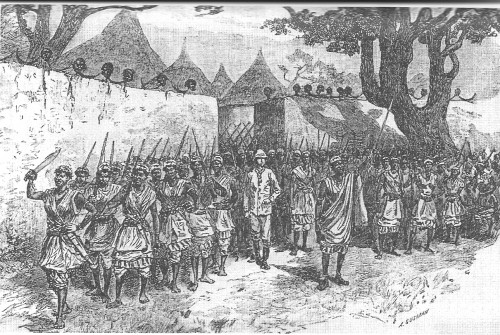


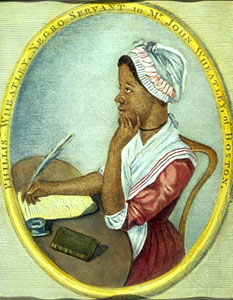


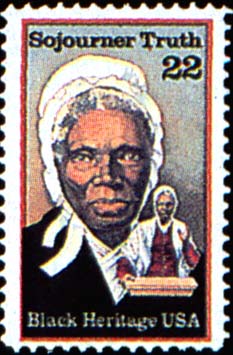


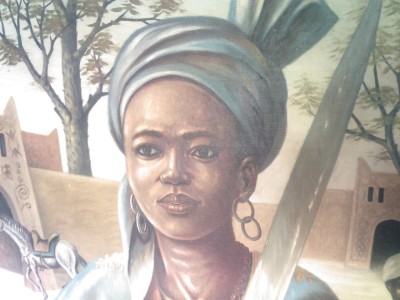
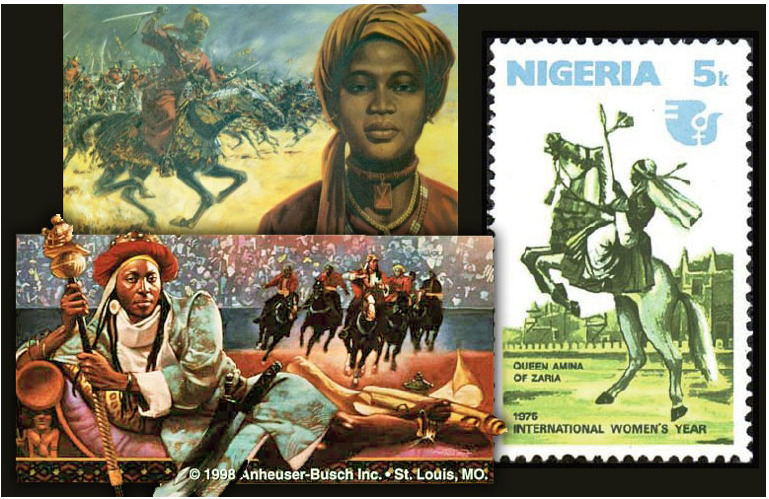


1 2 3 4 5 6 7 8 ... 79 80 81 82 83 84 85 86 87 (of 185 pages)