Lakal's Posts
Nairaland Forum › Lakal's Profile › Lakal's Posts
1 2 3 4 5 6 7 8 9 10 11 12 (of 12 pages)
 Culture › Re: The Art And Architecture Of Yorubaland! by lakal(op): 10:13pm On Oct 01, 2011 Culture › Re: The Art And Architecture Of Yorubaland! by lakal(op): 10:13pm On Oct 01, 2011 |
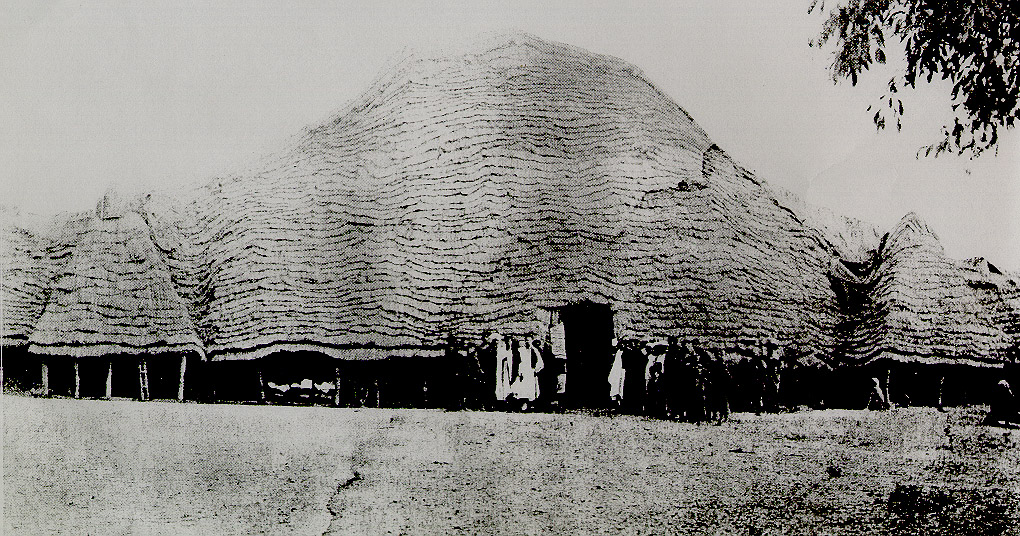
Thatch was a much more exciting roofing material than corrugated iron, in my opinion. But I guess that iron probably had several advantages in terms of weatherproofing. Here is another view of a royal Yoruba palace -- at Abeokuta, 1946. This is the Olowu of Owu's palace, I believe. Notice how this royal style involved ridging thatch patterns, but differed from the Oyo imperial style on the first page. https://csweb.bournemouth.ac.uk/africanlegacy/images/old_owu.jpg 1 Like |
| Culture › Re: The Art And Architecture Of Yorubaland! by lakal(op): 10:00pm On Oct 01, 2011 |
Alj_Harem, I'm warning you o: sho ara e jare. Don't disrupt this thread with inaccurate pictures. Anyhow, twins were important to Yoruba cosmogony -- both the living: [img]http://2.bp..com/_zPRPilcOBxY/SwEeL7j3kPI/AAAAAAAAUIQ/xmnrDQEw9fo/s1600/0+Yoruba+mother+holding+her+twins.+Town+of+Share,+North+Oyo.+Deborah+Stokes+1980.jpg [/img] and the dead twins, memorialized here with carved "Ibeji" scupltures. [img]http://1.bp..com/_zPRPilcOBxY/SwEeLn4jkOI/AAAAAAAAUII/-16kc3M3Xmk/s1600/0a+Yoruba+mother+with+memorial+figures+of+her+deceased+twins+Selia+Alaka,+town+of+Ikoyi,+Ogbomoso.++1980+Deborah+Stokes.jpg[/img] |
| Culture › Re: Ijebu Language Or Dialect by lakal(m): 9:41pm On Oct 01, 2011 |
There are very few Ijebus who deny being Yoruba. Don't try to play that spin. The controversy stems from Ijebus saying that they predate Oduduwa, which is another argument entirely. |
| Culture › Re: The Art And Architecture Of Yorubaland! by lakal(op): 9:27pm On Oct 01, 2011 |
Additional stone carvings from Esie. [img]http://3.bp..com/-dxSTfGFFndc/Tb4b1gKrMJI/AAAAAAAAAGQ/8Nxjw7QLQ6s/s1600/Esie+soapstone+sculpture.jpg[/img] https://www.nigeriahouse.org/images/esie.jpg |
| Culture › Re: The Art And Architecture Of Yorubaland! by lakal(op): 9:25pm On Oct 01, 2011 |
The stone figures found at Esie (Kwara State) have been posited as a link between Nok and Ile-Ife. Around 800 figures made of soapstone have been found near Esie. However, their dating is uncertain. [img]http://archives.icom.museum/redlist/afrique/pict/img02b_pg03.jpg[/img] https://www.all-art.org/images_hist98/248.jpg [img]http://2.bp..com/-QpP1ie4LH54/Tb4bvhKTdcI/AAAAAAAAAGM/PiGgZ1rH2x4/s1600/Esie+statutte.jpg[/img] |
| Culture › Re: The Art And Architecture Of Yorubaland! by lakal(op): 9:19pm On Oct 01, 2011 |
Thank you PhysicsQED for the additional pictures of the Akaba Idena! |
| Culture › Re: Best Dancers! (friendly Rivalry) by lakal(m): 1:57am On Sep 30, 2011 |
Ad hominem attacks? How classy. |
| Culture › Re: Best Dancers! (friendly Rivalry) by lakal(m): 1:50am On Sep 30, 2011 |
I said "he pointed out" referring to kony. lol and about the Trinis, didn't you say: OMG! They wine just like the Trinidadian girls OMG!!! |
| Culture › Re: Best Dancers! (friendly Rivalry) by lakal(m): 1:39am On Sep 30, 2011 |
Black people are amazing! Belize [flash=500,400] https://www.youtube.com/watch?v=XJ55Qgek1Rk [/flash] Nigeria [flash=500,400] https://www.youtube.com/watch?v=QA2CXrRMd7I[/flash] U.S.A. [flash=500,400] https://www.youtube.com/watch?v=iG66XlAI6VA[/flash] |
| Culture › Re: Best Dancers! (friendly Rivalry) by lakal(m): 1:30am On Sep 30, 2011 |
MsDarkSkin:And just because you are AA doesn't mean that you know that history either.  That video wasn't meant to be all that. Those were just some random hoodrats on camera, not competitors at a dancehall competition. BTW, Michael Jackson, who he pointed out, was not hiphop (or from the east coast). Neither was James Brown. Both important to kony's argument. And wining most definitely come from Trinidad. Jamaicans can dance sha, but who are known for being the top winers? please. |
| Culture › Re: Best Dancers! (friendly Rivalry) by lakal(m): 1:19am On Sep 30, 2011 |
Winin does not come from Jamaica. It comes from Trinidad. and don't you think that your aarguments about African influence play the same way for Jamaicans. You're making it sound as if every American dance is a direct copy of a dancehall dance. I think you probably don't know much about how most black Americans dance real talk, if you are from the East Coast, you just won't get it. Over there, many African Americans do copy West Indians, but it's not really like that anywhere else. (And I'm not even African American haha. I be Naija) |
| Culture › Re: The Art And Architecture Of Yorubaland! by lakal(op): 11:52pm On Sep 29, 2011 |
Oranmiyan was the legendary founder of the Oyo Empire. An architectural artifact associated with him is located in Ile-Ife. This is called Opa Oranmiyan, or "Oranmiyan's Staff." [img]http://2.bp..com/_RoWOOM0kwmc/TEXr6VlVjrI/AAAAAAAAAa0/tR0L545JU8k/s1600/assentamento+de+Oranian.bmp[/img] 1 Like 1 Share |
| Culture › Re: The Art And Architecture Of Yorubaland! by lakal(op): 11:49pm On Sep 29, 2011 |
Brass armlets from Ijebu. Once again, these have Osugbo society themes. 15th-19th Century. https://www.christies.com/lotfinderimages/d19594/d1959400r.jpg https://www.metmuseum.org/toah/images/hb/hb_1979.206.302.jpg 1 Like 1 Share |
| Culture › Re: The Art And Architecture Of Yorubaland! by lakal(op): 11:47pm On Sep 29, 2011 |
Ivory armlets from Owo Kingdom. These armlets may date back to the 16th Century. [img]http://2.bp..com/_OsRGkdTHEOk/R691jJPwxXI/AAAAAAAAAAM/mBTYrQyxe2o/s320/Armlet-Disney-Tishman.jpg[/img] https://0.tqn.com/d/africanhistory/1/0/M/B/Armlets-Disney-Tishman.jpg |
| Culture › Re: The Art And Architecture Of Yorubaland! by lakal(op): 11:44pm On Sep 29, 2011 |
| Culture › Re: The Art And Architecture Of Yorubaland! by lakal(op): 11:42pm On Sep 29, 2011 |
Yoruba artists were talented in a variety of mediums: Ivory These are all ivory "iroke ifa" or divination tappers. [img]http://images.ha.com/lf?source=url[file%3Aimages%2Finetpub%2Fnewnames%2F300%2F1%2F3%2F3%2F133529.jpg]%2Ccontinueonerror[true]&scale=size[220x350]%2Coptions[limit]&source=url[file%3Aimages%2Finetpub%2Fwebuse%2Fno_image_available.gif]%2Cif[%28%27global.source.error%27%29]&sink=preservemd[true][/img] https://www.christies.com/lotfinderimages/d39393/d3939392r.jpg https://cdn.brooklynmuseum.org/opencollection/images/objects/size3/L1998.1_transpc004.jpg |
| Culture › Re: The Art And Architecture Of Yorubaland! by lakal(op): 3:57pm On Sep 29, 2011 |
Yorubaland stretches further than Nigeria!  Yoruba military architecture. The "magic door" of the sentry gatehouse, or "Akaba Idena" at Ketu, Benin. [img]http://3.bp..com/_HVFzZzqQnu4/TGeaFFiZ-7I/AAAAAAAAAEE/ceD4zwVZKAI/s1600/ketu2.JPG[/img] Another view: [img]http://alaketou.blogs-de-voyage.fr/media/00/00/1229891096.jpg[/img] 1 Like 1 Share |
| Culture › Re: The Art And Architecture Of Yorubaland! by lakal(op): 3:49pm On Sep 29, 2011 |
Forged iron staff for Orisa Oko, deity of farming. [img]http://www.roccoangeloni.it/wiki/images/d/d1/Yb2.gif[/img] |
| Culture › Re: The Art And Architecture Of Yorubaland! by lakal(op): 3:48pm On Sep 29, 2011 |
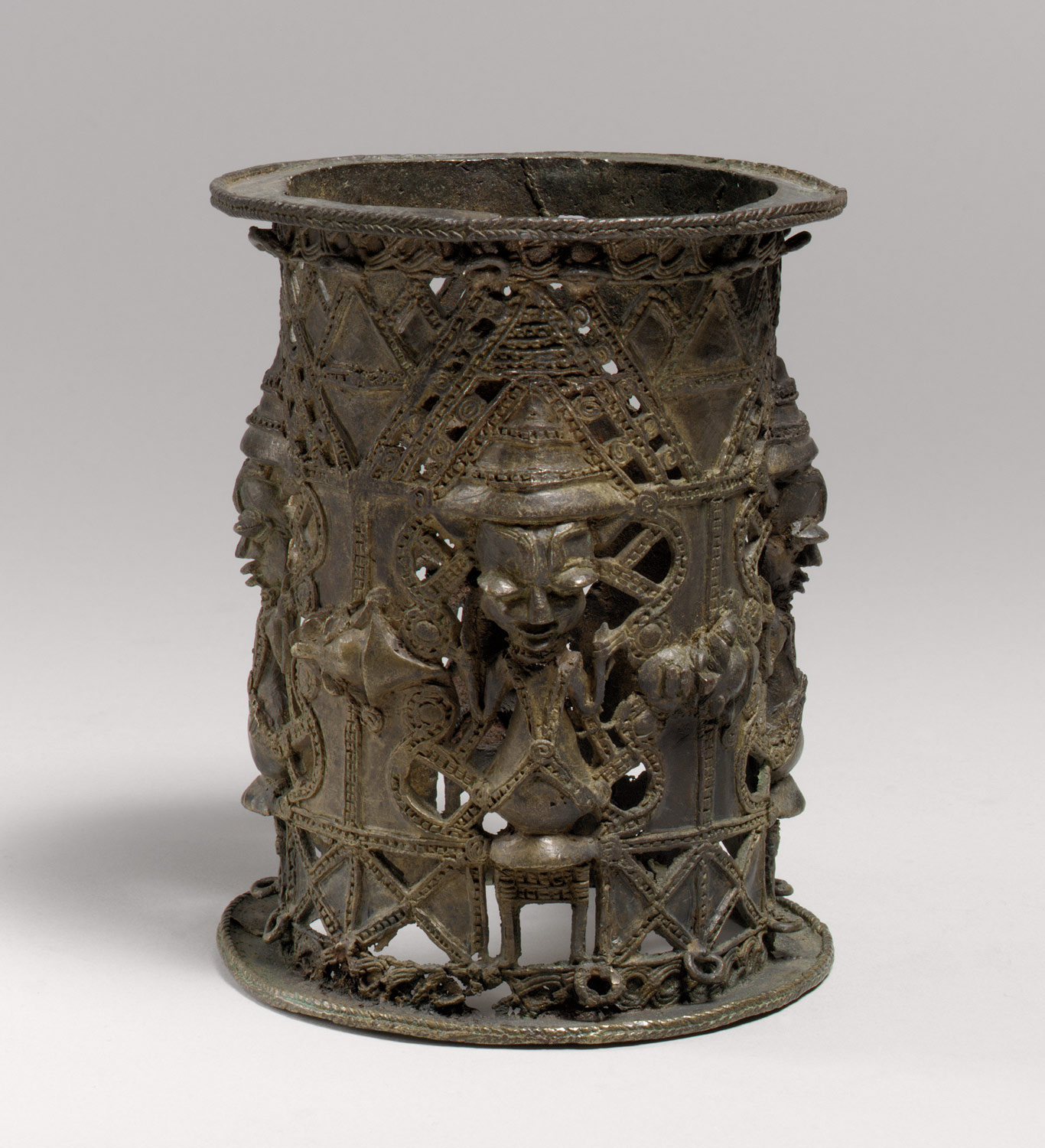
Bronze casting did not only occur in Ile-Ife. The Ijebu Osugbo (Ogboni) society created brass works for centuries. Osugbo staffs of authority. https://wwwdelivery.superstock.com/WI/223/1895/PreviewComp/SuperStock_1895-12264.jpg https://www.cultural-expressions.com/ifa/art/asestaff2.jpg Osugbo rattle. https://www.imamuseum.org/sites/default/files/mercurycache/large/ima-collections/images/48/41/4841FF56-0757-4EAF-A438-65C7E29EE03B/4841FF56-0757-4EAF-A438-65C7E29EE03B_o.jpg |
| Culture › Re: The Art And Architecture Of Yorubaland! by lakal(op): 1:08pm On Sep 29, 2011 |
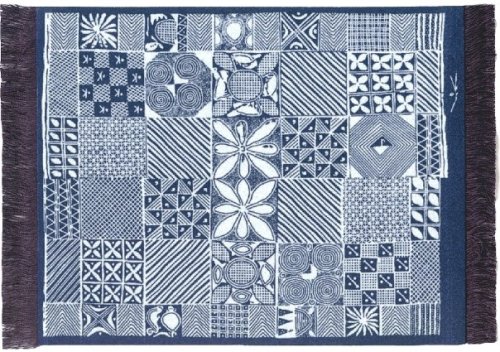
The Yorubas are famous for their rich attire and clothing styles. Traditional Yoruba garments are found well beyond Yorubaland, influencing other African peoples. It's argued that Africans, especially the Hausa and Yoruba, were the inspiration for tie-dye, which became popular in the western world. Adire cloth was resist-dyed in indigo to create various blue patterns. https://oduduwa-ned.com/pics/adire%20dyeing%20in%20yoruba%20land.jpg Nike Davies-Ekundayo famous adire dyer. [img]http://3.bp..com/_t4wZU11MZtE/S_VuwlSdZmI/AAAAAAAAAXE/YD5-i8Z5W28/S230/090201.jpg[/img] https://29.media.tumblr.com/tumblr_lfp130dusJ1qzirjxo1_500.jpg 2 Likes 1 Share |
| Culture › Re: The Art And Architecture Of Yorubaland! by lakal(op): 1:02pm On Sep 29, 2011 |
Old Owu Moat https://apollo5.bournemouth.ac.uk/africanlegacy/images/orileowu.jpg Old Owu was the earliest forest kingdom to be founded from Ife over a thousand years ago. It grew to be a powerful forest kingdom able even to humble Old Oyo. Old Owu's 15km long inner ditch was dug two to four metres deep, here cutting for 500 metres through hard laterite to create a deep rainy season moat. |
| Culture › Re: The Art And Architecture Of Yorubaland! by lakal(op): 1:00pm On Sep 29, 2011 |
Sungbo's Eredo (Ijebu-Ode) https://apollo5.bournemouth.ac.uk/africanlegacy/images/sungboeredo1.jpg This kingdom boundary rampart ditch extends for 160 km and is over 1000 years old. Its association with the Islamic Queen of Sheba legends may date to the same period. This is the first definite proof that state formation occurred in the rainforest zone at the same time as in Africa's savannah zone. https://apollo5.bournemouth.ac.uk/africanlegacy/images/moat.jpg The moat here becomes 5-7 metres across - probably the widest stretch of open water along it's 100 mile course. Taken together with the enormous trees, the similarity with natural fressh-water swamps is at once apparent; and it was in the dark swamps that evil spirits were believed to dwell. The Eredo moat was only just over 1 metre deep and it's banks were low:it was not a physical but a spiritual line of defence - percieved to be peopled by swampland demons, who surrounded and protected the kingdom over one thousand years ago. |
| Culture › Re: The Art And Architecture Of Yorubaland! by lakal(op): 12:56pm On Sep 29, 2011 |
https://apollo5.bournemouth.ac.uk/africanlegacy/images/oldoyo.jpg These 6m high free-standing walls are built of thick mud courses, each allowed to dry before the next course was laid. These walls belonged to Kosso, the town where traditions claim that Sango - king of Old Oyo a few km further south - did not hang himself but became transformed into the God of Thunder. Old Oyo became the capital of a very powerful and extensive cavalry based empire. Another view of the kobi, this time at the new Oyo, which replaced the Old Oyo (Oyo-Ile or Katunga). https://apollo5.bournemouth.ac.uk/africanlegacy/images/oyo_palace.jpg |
| Culture › Re: The Art And Architecture Of Yorubaland! by lakal(op): 12:55pm On Sep 29, 2011 |
Palace plan of Old Oyo [img]http://apollo5.bournemouth.ac.uk/africanlegacy/images/oyoIle_plan_bw.gif [/img] The survey of the palace compound of Old Oyo by Brian Hallam shows the many courtyards of the old palace, each surrounded by numerous rooms. Surrounding compounds belonged to the main chiefs. To the south was a very large water reservoir and to the east lay the 500 m square Akesan market, where once traders set up their booths under shady trees and the people thronged from the main town area further east. https://apollo5.bournemouth.ac.uk/africanlegacy/images/old_oya_map.jpg Map of Old Oyo walls, showing inner palace wall (A), main outer wall (B) and a large northern loop. B is full of ruined compunds over several square kilometres. . Gateways had guard houses of varying complexity. |
| Culture › Re: The Art And Architecture Of Yorubaland! by lakal(op): 5:44am On Sep 29, 2011 |
[img]http://artinvestment.ru/content/download/news_2010/20100508_olokun_head.jpg.jpg[/img] On its discovery, exactly a century ago, the life-size Olokun Head was considered too great a masterpiece to have been created by African hands, a reflection of attitudes at the time. Some European scholars even believed it to be evidence of the lost civilisation of Atlantis. It was not subjected to detailed study until 1948, when it left Nigeria for the first time, for an exhibition at the British Museum. Following scientific research, it was concluded that the head was not the original, but a replica which had been made to surreptitiously replace it, with the original sold to a foreign collector. Until now specialists have accepted that the Olokun Head from the Ife Museum is a replica, but a new theory is about to be tested: could the object be the original, dating from around 1400? If so, it might overturn our knowledge about early bronze casting in Africa. 1 Like 1 Share |
| Culture › Re: The Art And Architecture Of Yorubaland! by lakal(op): 5:34am On Sep 29, 2011 |
https://www.britishmuseum.org/images/ife_head_grey_304x400.jpg Copper head. Found at Wunmonije Compound, Ife, Nigeria. Late 14th-early 16th century |
| Culture › Re: The Art And Architecture Of Yorubaland! by lakal(op): 5:20am On Sep 29, 2011 |
Terracotta from Owo [img]http://t2.gstatic.com/images?q=tbn:ANd9GcRXFQQvBuOo7Hat1yXVF7mlwXPRrjFaAJ_BsvFPLcsCN-uO68nPBg[/img] Gelede masquerade head [img]http://t1.gstatic.com/images?q=tbn:ANd9GcQVPI2vAaP-x3bUWOHj2xdxIfEsD8rF1pA75VVp6-ySoCVBrU3M[/img] Veranda Post (Opo Ile) [img]http://www.nmafa.si.edu/exhibits/resonance/images/33yoruba-70.20.jpg [/img] Oba with beaded crown and staff [img]http://www.clarku.edu/~jborgatt/js_yorubaking1.jpg[/img] |
| Culture › Re: The Art And Architecture Of Yorubaland! by lakal(op): 5:11am On Sep 29, 2011 |
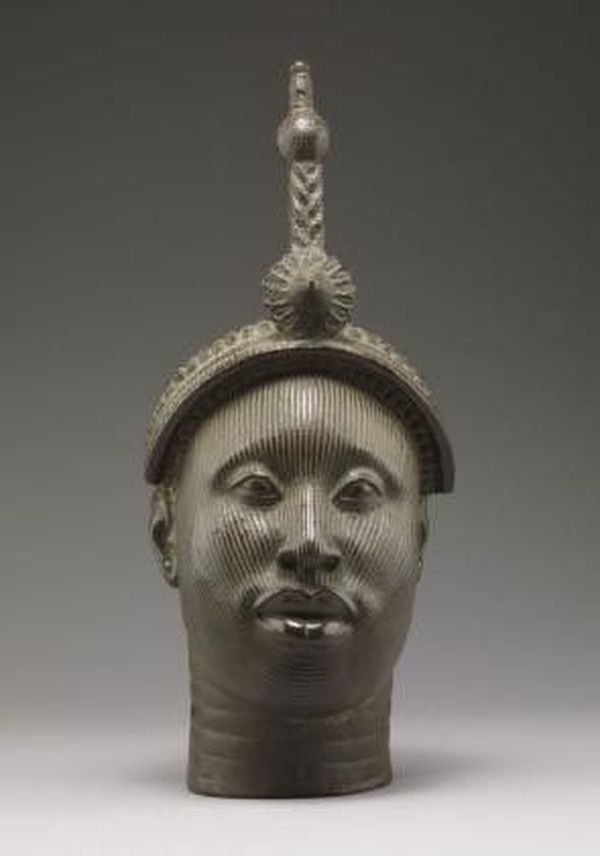
Some of the world-famous Ife heads/busts [img]http://t1.gstatic.com/images?q=tbn:ANd9GcS7nuJMFRmrFyUZSVzLSeHy8uLLAg_CEE7op7UXPFQLUGtFeqsa [/img] [img]http://t0.gstatic.com/images?q=tbn:ANd9GcRk4R1DKD-CSAqCjX0980yhvMY4LUDch4DgxSKUQIGl60ei7DNCsg[/img] [img]http://t1.gstatic.com/images?q=tbn:ANd9GcRhJuIpt2k6mtMYRBsA7LxtmOHfIQWOPOrAu5s_dH2QfraN4cly[/img] https://www.artlurker.com/wp-content/uploads/2009/02/2.jpg |
| Culture › The Art And Architecture Of Yorubaland! by lakal(op): 5:05am On Sep 29, 2011 |
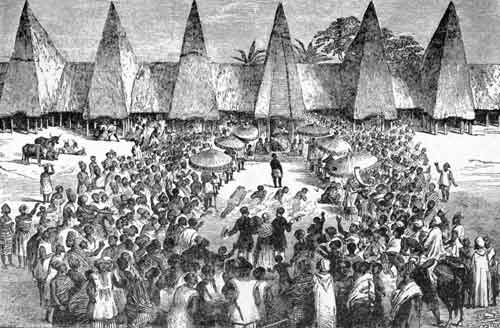
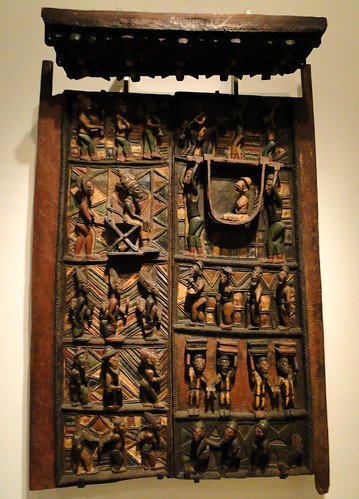
Thanks PhysicsQED for the thread idea. Old palace of Oyo with Royal Gables (Kobi) Only the palace of the Alafin in Old Oyo was allowed to have the high thatched gables and porches underneath them called kobi. Alaafin Aganju was responsible for errecting over 120 of these kobi. Their purpose served as a place for the Alaafin to view people who greeted him in his courtyards without being fully exposed. https://anglicanhistory.org/africa/crowther/page1892/yoruba.jpg Palace door carved by the master, Olowe of Ise-Ekiti. Olowe was an Ekiti artist of the late 18th and early 19th century whose works (palace doors, veranda posts, other wood carvings) can still be found in palaces and other institutions today. https://farm5.static.flickr.com/4043/4391268903_80f0955330.jpg Bowl carved by Olowe of Ise [img]http://t3.gstatic.com/images?q=tbn:ANd9GcTryeKqG0pGoJ3q5ywmvV981gXU0Mx-F4lHo48yhM3HjeTNj9VIEg[/img] 1 Like 1 Share |
| Culture › Re: Question For The Descendants Of The Benin Empire by lakal(m): 3:50am On Sep 29, 2011 |
Good idea! Didn't mean to disrupt this thread.  |
| Culture › Re: Best Dancers! (friendly Rivalry) by lakal(m): 3:03am On Sep 29, 2011 |
All African-descended groups can dance. And MZDarkSkin, maybe on the East Coast African-Americans copy West Indians, but that hip rolling vid comes from a place where there are not many West Indians lol. West Indians sabi claim sha. In that case, winin and all of your other dance traits have their roots in Africa. |
| Culture › Re: Question For The Descendants Of The Benin Empire by lakal(m): 3:00am On Sep 29, 2011 |
PhysicsQED:That very much seems to be the case. Many fine ivory works came from Benin, and it has the largest and best documented selection. But you have to understand, Owo is one of the largest Yoruba kingdoms. It stretched all the way to Kogi state, and their palace is till the biggest one in Nigeria. Owo itself never came under direct Benin dominion (though accounts of this vary), although many parts of its territory must have certainly felt the pressure and went under more tributary relationships. What I am getting at is that it has an art style and tradition that is all its own. The Yorubas are too large and diverse of a group for only one style of anything; plus royal objects like carved ivory tusks differ from Ifa divination tools. It could be Benin influence, or it could just be Owo style. I lean toward the latter. |


 ) Where else did HIP HOP or the 'black American urban culture' start but the east coast? exactly. So you can take your place on the side lines and leave it to me and Kony. Thanks anyway.