Litmus's Posts
Nairaland Forum › Litmus's Profile › Litmus's Posts
1 2 3 4 5 6 7 8 ... 149 150 151 152 153 154 155 156 157 (of 361 pages)
 Politics › Re: South West Leaders Call On Buhari To Open Nigeria’s Land Borders by Litmus: 9:21pm On Mar 11, 2021 Politics › Re: South West Leaders Call On Buhari To Open Nigeria’s Land Borders by Litmus: 9:21pm On Mar 11, 2021 |
chrisagyei:Eh,  to help Ghana and the rest grow even more Nigeria need to keep the borders closed. We need to tighten it even more so that you in Ghana can become like Singapore. to help Ghana and the rest grow even more Nigeria need to keep the borders closed. We need to tighten it even more so that you in Ghana can become like Singapore. Gods why wasn’t I made president of Nigeria. |
| Politics › Re: Sheikh Gumi: Bandits Feel Everyone Is Against Them by Litmus: 9:13pm On Mar 10, 2021 |
He stressed that bandits feel, “everybody is against them,” hence they are vicious and aggressively fighting for survival.Sheikh Gumi is definitely Nigerian'. I’ve always thought that Nigerians are natural comedians. And while this joke wouldn’t be in my top ten funniest jokes in the world list, I can see it making someone else’s top twenty funniest jokes list. |
| Science/Technology › There's An EV War Against Oil Coming by Litmus(op): 3:24pm On Mar 10, 2021 |
| Politics › Re: Cameroon Hands Over 5,000 Nigerian Refugees To Borno Governor by Litmus: 3:15pm On Mar 10, 2021 |
Send them back, they’re Cameroonians. |
| Politics › Re: PDP Urges Buhari To Hire Mercenaries To Fight Insurgency by Litmus: 2:10pm On Mar 10, 2021 |
If Goodluck Jonathan didn’t plan for tomorrow, Nigeria would not now be on the verge of enjoying nationwide train lines and stations |
| Politics › Re: PDP Urges Buhari To Hire Mercenaries To Fight Insurgency by Litmus: 2:02pm On Mar 10, 2021*. Modified: 6:35pm On Mar 10, 2021 |
Mercenaries are a very bad idea but what do you expect from Short-term thinking, the bane of the black man and his thick scull! Instead of putting into place mechanisms that will result finally in enduring security from Tomorrow - when the government that instituted these changes may not be in power - governments want to plaster over insecurity Today while still in power in order to impress upon the people that it, the government, is Working. The ruling government always seem to fear working on long-term projects for fear that the next government will be credited with any successful outcomes. This same short-term thinking for instant gratification is what drives some to talk of braking up a fantastic nation like Nigeria ! 1 Like |
| Investment › Re: Nigerian Stock Exchange Completes Conversion To Public Company (PLC) by Litmus: 12:42pm On Mar 10, 2021 |
America, Dow Jones; Japan, Nicki dow; I go soon create my own Nigeria list called the Kampe... |
| Politics › Re: Governor Umahi Inspects Iyere Flyover; Promises To Complete Project Soon by Litmus: 12:10pm On Mar 10, 2021 |
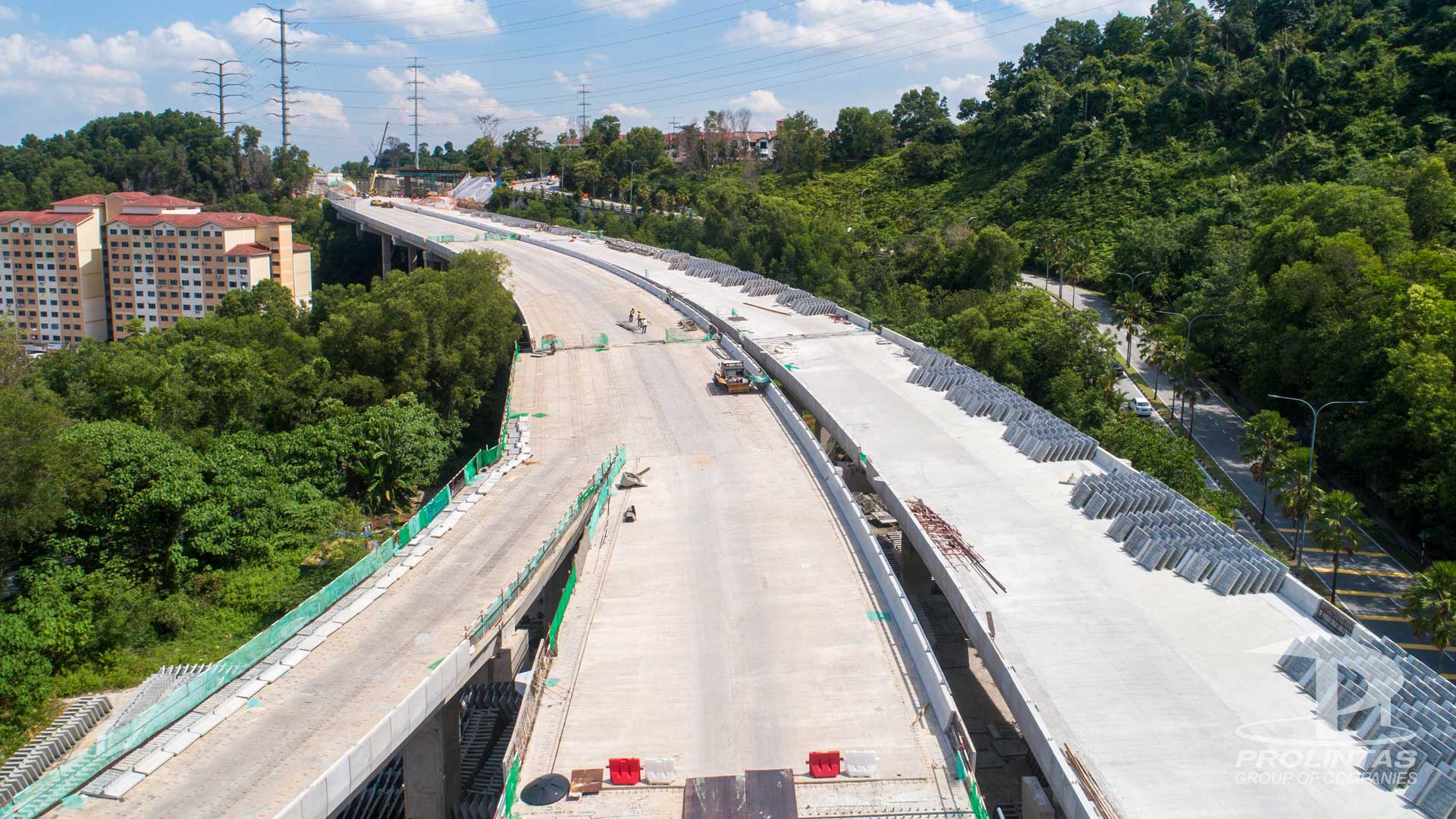
www.nairaland.com/attachments/13239437_img20210309wa0011_jpeg1a5fa454cd38724b8670991d96abcac8 Hope the greenery I see in the background are integrated with the flyover, not cut down and cemented over. [img]http://www.mysuke.com.my/wp-content/uploads/2020/06/Pro-Progress-MAY-2020-Tmn-Bukit-Segar-01.jpg[/img] https://www.youtube.com/watch?v=VQVEcBcN1KM |
| Politics › What Nigeria Should Expect From Biden Administration - Mary Beth Leonard by Litmus(op): 11:20am On Mar 10, 2021 |
https://www.youtube.com/watch?v=sfarzCr_KYE Mary Beth Leonard is the current U.S. ambassador to Nigeria assuming office on December 24th, 2019. She has been 33 years in the U.S. State Department. She served as economic and consular officer in Yaounde, Cameroon, when Namibia and Togo. She's also served as deputy chief mission in Bamako, Mali, and ambassador to the Republic of Mali. She served as a director for West African Affairs at the U.S. Department of State, was appointed representative of the United States of America to the African Union by former Presidents Barack Obama and was appointed U.S. ambassador to Nigeria on August 1st, 2013, presented her credentials to President Muhammadu Buhari on December 24th, 2019. And in my interview with her, she talks about her perception of the country and her work in the country during the covid-19 pandemic Nigeria, US relations and immigration under the new U.S. administration of President Joe Biden. Ambassador, thank you for joining us. My pleasure. It's a pleasure having you here. And I know you I understand you've been in the country for more than six months now, even though many Nigerians haven't seen you really out there. But you have been around you have gone around the country as much as you can now, despite the restrictions and so on. How are you finding your stay so far? I love Nigeria. I think it's a fabulous place. If you're Marybeth Leonard and you've done your entire diplomatic career in Africa, the idea that by the third time you get to be an ambassador, you get to come to Nigeria, the the really the really big giant on the continent, it's just so exciting. You just can't overstate how important Nigeria is in terms of the size of its economy and its population and its dynamism and its regional role. I wish by now I had seen more of Nigeria instead of the walls inside my house, however charming those walls might be. So I think in the in the coming months, we'll be able to do I'm looking forward to being able to travel more across the country. So far, I've been to Lagos a few times and before the pandemic really broke out, I was in Kaduna. I think if it had not been pandemic times, I probably would have been to 10 states in Nigeria by now. So I'm really looking forward to getting out and and meeting people, seeing seeing different places. But interestingly enough, your appointment, as you said, came during the time of the pandemic. So how would you then describe, you know, the information sharing between Nigeria and the US knowing how rapidly this coronavirus is changing and you have different mutations of the virus now in various variants of the virus? How how do you see Niger and the US working side by side trying to help people understand what's going on? Well, you use the right words. The Nigerian the United States have been working side by side on covid-19 from the very early part, very early days of this pandemic. And that was actually based on an incredibly long and robust cooperation in health between the United States and Nigeria. We are the leading provider of medical care for HIV AIDS patients. Under the program, we were really stuck into the polio vaccinations. We had long been a force for health in Nigeria and many of those same investments we were able to help Nigeria build on in terms of the logistics of moving samples from place to place, building on the backbone of the laboratories that we had helped establish with with the president's program for AIDS Relief. PETTYFER In fact, there were probably sixty two or sixty three people from my embassy, people who work for USAID, for the Centers for Disease Control and for the Walter Reed Army Institute for Research, who are working alongside their colleagues in the Ministry of Health with the presidential task force and in in in various laboratories to think about how to address the testing aspect of the pandemic as we were in that phase. And now that we're moving towards the vaccination phase with the happy arrival of vaccines into Nigeria for the first time, we'll be looking at the logistics and constraints and opportunities and how it is that you make the vaccine available. So we've spent so far some seventy two million dollars on that effort. I would say that the biggest news on US efforts against covid-19 is the new Biden administration's emphasis on reentering the multilateral arena to be really a leader and a catalyst in global and global health. Certainly we were very active through all the activities that I described to you over the first 14 months. The difference now, as I think the the renewed commitment to multilateralism, you saw that on the first or the second day of his administration, President Biden had the United States rejoin the World Health Organization. And we have committed not only to the logistics of the response to that, to contributing quite a large sum of money, to making sure that vaccines can make it to every corner of the world. And speaking of vaccines, we put some of the world leaders talk about developed countries contributing to vaccines in poorer countries, and they're saying that many developed countries acquired more vaccines that they needed and the rest of it should be given to poorer countries. Does the US think so? Yeah. So I think the question the question is, while there may be individual countries that have gotten more vaccine than they currently need, the larger story is of the need for the vaccine outstripping the supply that is coming online. Certainly there are new vaccines being discovered and that is increasing the availability. The question is, as I said before, for the Biden administration is how do you get that vaccine to every corner of the earth that needs it? One of the answers to that is the United States is four billion dollar contribution to Kovács, the global the Global Alliance for Vaccine Initiatives, mechanism for distributing vaccine around the world. So what we've done with that four billion dollars that was appropriate or what we are doing with that. Four billion dollars that was appropriated by the US Congress in December is to decide to give two billion dollars of that immediately and then hold off additional tranches of it until we see other partners step up with more financial resources to support the amount of money that it's going to take to get vaccine everywhere. What can you expect under the Bush administration? So I hope that you notice that one of the first speeches that President Biden made it early in his administration was to the African Union summit in February, where he talked about a renewed spirit of partnership and engagement. And I think the idea is looking towards the strengths and the opportunities and the optimism in order to engage in really robust partnerships. You've seen a very early recommitment to multilateralism, not only through rejoining the show, but through US support for the Nigerian candidate for the for the World Trade Organization. And I think that this is an administration that doesn't necessarily think that multilateral institutions are perfect, but believe and indeed some of them are not, but believes that it's important to be a part of that conversation and a part of those institutions in order to bring about those reforms to the goals that we all have, which is for a safe, secure, prosperous, healthy world. So I think that's a lot of what you can expect to see in the in the in the in the coming weeks and months. And I think that makes for a really good moment for Nigeria, too. When you look at you think about how many prominent Nigerians are in important positions in international organizations. Right. The deputy secretary general of the United Nations, the head of the the World Trade Organization, the EU's permanent representative in New York, who sort of works to Marshal Africa voices. There is also a Nigerian, as is the president of the African Development Bank. And who am I missing? I am missing. There have also been some people of Nigerian descent in the Biden administration and in the deputy secretary for the Treasury there everywhere. So I think at a moment where the United States is really looking towards a renewed multilateralism, the fact that there are so many prominent Nigerians in these roles is is really important. I know. I cannot believe that the one I forgot. Oh, my goodness. I was the ambassador to the African Union. This man was my neighbor in Addis Ababa is the new political and peace and security affairs commissioner at the African Union. So you've got a really formidable array of talent in key security and economic international institutions to help be a partner with the United States as it goes towards that new spirit of multilateralism. What about from the coronaviruses? So we have seen the president, Joe Biden, talk a lot about immigration. He signed a few executive orders on the first day of his administration. And immigration is really important to Nigeria, considering the Trump administration also focused on immigration. We know how important that is to America. Where is Nigeria then in America's foreign policy? On immigration? On immigration, what? You're correct that the new president made a couple of decisions on immigration in the very first days, notably to reverse bans on certain kinds of immigration, among which Nigeria had had had fallen on the immigrant visa fund. So that has been reversed. And Nigerians are again eligible for all categories of immigrant visas that it's very important for Nigeria. The most significant Nigerian diaspora population in the world is in the United States. They are also among the best educated immigrants in the United States. It's a really powerful and significant community. So we're very glad to see that that reversal, as I suppose I really hope that Nigeria is to the premise of the visa bans or that that whole exercise in the beginning was about asking Nigeria to make certain reforms and information sharing and identity and.  https://www.happyscribe.com |
| Career › Re: A 100k Monthly Salary In Nigeria Is Better Than A 400k Monthly Salary In USA by Litmus: 10:49am On Mar 10, 2021 |
RisenPhoenix1:Taking into consideration all that you've stated, I believe that quality of life in Nigeria is better. |
| Career › Re: A 100k Monthly Salary In Nigeria Is Better Than A 400k Monthly Salary In USA by Litmus: 10:30am On Mar 10, 2021 |
daddymummy:This sort of thing needs showing regularly on Nigerian TV in order to better inform Nigerians on world realities. And, actually, the West needs to highlight more of these negative aspects of life in the West to help deter migration. It’s interesting that in spite of the fact that the West would greatly stem the tide of immigration to their shores, by highlighting the negative aspect of life in the West, they never want such portrayals. Narcissism defines white people. |
| Health › Re: What Is Causing The Too Much Heat In Nigeria? by Litmus: 10:12pm On Mar 09, 2021 |
What Is Causing The Too Much Heat In Nigeria?Ask people like these below www.nairaland.com/attachments/13219808_img20210222wa0014_jpeg6cca5a19721db56014168bab52d5ca8b https://www.nairaland.com/6444002/ondo-loggers-block-benin-lagos-highway Ondo Loggers Block Benin-Lagos Highway Stop cutting down trees unless trees planted specifically for felling in Sustainable Trees projects 4 Likes 1 Share |
| Politics › Re: Nigeria Should Have 12 Regions No States by Litmus: 8:51pm On Mar 09, 2021 |
States are better than regions; however the problem is that Liberal Democratic model adopted by much of the third world from the West is unsuitable for third worlds’ relatively unsophisticated masses preoccupied by Tribe. We need to tinker with the democratic precepts in order to arrive at a workable hybrid. Nigeria needs a central government run by a board of presidents not president. A board of presidents would enable wider tribal representation at the centre of government. I propose a new philosophy called Liberal Democratic Co operations or Democrat LTD - in any case - a sort of democracy along the lines of a business company. We keep the current states but we’ll no longer have an overriding National presidential election. We vote for our president locally i.e. the presidential candidate will be a local man or woman. We still keep the political parties. These political parties will compete for votes at the state level. Each party will field two candidates, Central and State presidential candidates. The candidate who runs on Central presidential ticket will – if he wins – represent the state at the federal level as one of the presidents on the Board of Presidents. The candidate that runs on the state ticket if he wins represents the party as a state governor. In such a dispensation, majority of tribes will be satisfied that they have a president and we can all rest. There’ll be no more of these primitive wailing and gnashing of teeth about what tribe did this and what tribe didn’t do that. At least, the chances of such would be greatly diminished. Problem with democracy in Africa or any current form of government has always been to do with tribalism. Tribal outlook. We all need to accept this shameful fact and stop deceiving ourselves. 1 Like |
| Science/Technology › Starship SN11 Rolls Out To The Launch Site by Litmus(op): 12:16pm On Mar 09, 2021 |
| Education › Re: Protest At Nigerian Maritime University, Delta As Student Dies Due To Negligence by Litmus: 5:19pm On Mar 08, 2021 |
Nigerians in position of power overseeing institutions and organisations need to do just that, Organise. A major problem in Nigeria is inability to organise. A part of organisation is maintenance and continuity. I like using the term industry in reference to parts of the Super structure such as church, religion, education; civil works such as roads, water etc because using the term Industry helps to establish in the minds of people that every institution in society cannot survive or stand alone, they require other sustaining, facilitating or supporting sub-institutions. |
| Webmasters › Re: Doris Kamuche 'Adalgbo' Buried Amidst Tears (Photos) by Litmus: 5:00pm On Mar 08, 2021 |
RIP |
| Politics › Re: Sultan Of Sokoto: War Is Not Something Nigerians Should Wish For by Litmus: 4:33pm On Mar 08, 2021 |
The problem is not Nigerians wishing for war, the problem is outsiders wishing for Nigeria to go to war with self. Nigerians have nothing to gain from war; at least not as much as none Nigerians gain from Nigeria going to war. 1 Like |
| Science/Technology › No Nigerian Women Is Shaping The Future Of African Space Exploration by Litmus(op): 12:38pm On Mar 08, 2021 |
(CNN)In the heart of Cape Town, a control room buzzes with activity. Technicians monitor a grid of screens, scanning data that will soon make its way to astronomers working to deepen our understanding of the universe. Operated by the South African Radio Astronomy Observatory (SARAO), the data is coming from the MeerKAT array -- one of the most advanced radio telescopes in the world. Comprised of 64 connected satellite dishes in a remote part of the Northern Cape, the $330 million telescope has put South Africa on the astronomy map. It's also a key component of the Square Kilometer Array (SKA), an international effort that will see thousands of dishes built in remote regions of South Africa and Australia. South Africa's MeerKAT array is one of the most advanced radio telescopes in the world. South Africa's MeerKAT array is one of the most advanced radio telescopes in the world. "This is probably the biggest science project on the whole continent," says Pontsho Maruping, SARAO deputy managing director. "We've already started training astronomers in other African countries." "What excites me is the fact that it allows people on the African continent to really contribute to one of the most technologically advanced industries in the world," she adds. While an African-born astronaut has yet to launch to space, programs across the continent are on the rise, especially in the fields of satellites and telescopes. Consulting group Space in Africa values space programs on the continent in excess of $7 billion, while countries including Egypt, Nigeria, South Africa, Angola, Kenya, Ethiopia and Rwanda have established or expanded their space agencies in the last 20 years. Several of those programs include women in leadership roles. In celebration of International Women's Day, meet three inspiring female pioneers shaping the future of space exploration across Africa and beyond. Jessie Ndaba, space engineer Jessie Ndaba is the co-founder of Astrofica, a satellite tech company in South Africa. Jessie Ndaba is the co-founder of Astrofica, a satellite tech company in South Africa. When South African space engineer Jessie Ndaba and company co-founder Khalid Manjoo named their satellite startup, the choice was easy: Astrofica -- a hybrid of "astronomy" and "Africa" -- seemed like the perfect fit. The fully Black-owned satellite tech company, based in Cape Town, specializes in assembling, manufacturing and testing satellite systems -- a lucrative focus of the African space industry. According to Space in Africa, 41 satellites had been launched from the continent by August 2020, and that number is likely to triple by 2024. More than $4 billion has been invested in satellite development across Africa so far. Space "was and is a calling," Ndaba says, noting that her fascination began with a photo of a rocket engine in a textbook gifted by her grandmother, who raised her in Johannesburg. The pyramids at Giza can be seen in the center of this image taken from the International Space Station in 2012, with the modern Cairo metropolitan area to the left and the Sahara desert on the right. Scroll through the gallery for more photos of the continent taken from space Having experienced the industry's evolution over the last 15 years, she says the key to success in the sector is collaboration -- and helping people on Earth. "We are all for partnering with other countries in Africa or outside Africa," Ndaba says, "as long as we are working toward improving people's lives." But she says sometimes that message gets lost, pointing to the common criticism that space endeavors are expensive and that governments like South Africa's should be investing in improving the lives of its citizens. "There's a number of benefits that we get from what we do, but we fail to communicate it to people," Ndaba says, adding that satellite imagery can be used to assess land quality for farming or housing construction. "We're always looking at the challenges that people are facing, and we look for the solution." Adriana Marais, physicist and explorer South African physicist Adriana Marais is the founder of Proudly Human. South African physicist Adriana Marais is the founder of Proudly Human. Adriana Marais has set her sights on Mars -- and it's a mission she's been planning for as long as she can remember. "If I had to choose a particular outcome for my life, spending my last days on Mars would be it," Marais says. In 2015, the South African physicist came a step closer to realizing her dream when she was shortlisted as one of 100 astronaut candidates for the Mars One Project, a private venture to build a permanent settlement on the red planet. Read more: Perseverance will search for ancient life on Mars. These places are next But there's still much to learn about Mars before humans can survive on its surface -- or even successfully make the trip. After a nine-month journey just to get there, astronauts will encounter extreme conditions on arrival. On Earth, Marais is preparing to simulate that harsh environment. In 2019, she founded research organization Proudly Human, which plans to run a series of settlement experiments in extreme environments as part of its Off-World project. Nuclear-powered rocket could get astronauts to Mars faster Nuclear-powered rocket could get astronauts to Mars faster "We will have teams arriving, setting up infrastructure from scratch, and living and doing research in those extreme locations for duration of the experiment," says Marais. In December 2019, she traveled to Antarctica to begin setting up a community where selected participants will spend nine months in complete isolation. The project is now on hold because of the pandemic but Marais says Antarctica will be an ideal testing ground. "Temperatures in the winter in Antarctica range between -60 and -70 degrees Fahrenheit in the interior, and this is the average temperature on Mars in terms of testing infrastructure like water systems," she says. According to Proudly Human, the research and technology developed to support life in environmental extremes can also help inform solutions on Earth, where billions of people worldwide lack access to clean water and air, reliable power sources, and a secure food supply. "I feel we have a duty living in this challenging era," says Marais, "creating a future that we can be proud of, whatever planet we're on." Ruvimbo Samanga, space law adviser Zimbabwean Ruvimbo Samanga is a space law adviser for her home country, which began its own space program in 2018. Zimbabwean Ruvimbo Samanga is a space law adviser for her home country, which began its own space program in 2018. Growing up in Bulawayo, Zimbabwe, Ruvimbo Samanga first became interested in space as a young girl. But she never thought her love of "all things extra-terrestrial and extra-planetary" could become a viable career, and pursued law instead. In 2018, she coached a team of law students that made history by becoming the first African entrants to win the prestigious, international Manfred Lachs Space Law Moot Court competition. That's when Samanga realized she could combine her two passions into one career -- and became a space law and policy adviser. From there, "the opportunities were boundless," she says. "I think (space law and policy) just give me the most effective way of bringing about change in the industry. It's so exciting to see the field developing right before your eyes." Nigeria's 'techpreneurs' are using technology to provide life-changing solutions to everyday problems Nigeria's 'techpreneurs' are using technology to provide life-changing solutions to everyday problems Space law governs space-related activities, including the use of space technology, damage created by space objects, and the preservation of space and Earth environments -- and it has to constantly evolve to keep up with developments in technology. Samanga represents Zimbabwe on the Space Generation Advisory Council, supporting the UN Programme on Space Applications -- which facilitates the sharing of space technology benefits with developing countries that don't yet have the resources to do it themselves. "There are a lot of challenges in Zimbabwe and an urgent need for socioeconomic development all around," she says, pointing to the recent food security crisis brought on by severe droughts. In 2019, Samanga started AgriSpace, which uses satellite technology to help farmers maximize crop yield. In 2019, Samanga started AgriSpace, which uses satellite technology to help farmers maximize crop yield. Samanga built on her expertise to launch AgriSpace in 2019, a company which helps Zimbabwean farmers optimize crop yields. "I realized there was a technological gap -- farmers are using archaic and traditional methods," she says. "To bridge that gap, we use satellite imagery and data to give farmers the necessary information they need to know when to plant, how to plant, what to plant, and where to plant." For Samanga, all her work -- from law and policy to satellite tech -- stems back to her childhood fascination with space. She's now sharing that dream with students in Zimbabwe, inspiring the next generation of space explorers from the African continent. "I dream for a world where girls do not have to question themselves and are not questioned," she says. "My dream is to see more African youth, especially young girls, in the African space industry." CNN's John Lewis and Ian Hooper contributed to this report. https://www.cnn.com/2021/03/07/africa/south-africa-zimbabwe-women-space-science-spc-intl/index.html |
| Nairaland General › Re: Why Is The Average Nigerian Always Angry? by Litmus: 11:25pm On Mar 07, 2021 |
Nigerians are very loving, forgiving and straight talking people. Don’t judge Nigerians by what you read on niaralend. Many of those talking up killing and trying to pit Nigerians against each other are not even Nigerians. Some are Nigerians practicing a primitive form of politics. |
| Nairaland General › Re: Why Is The Average Nigerian Always Angry? by Litmus: 11:07pm On Mar 07, 2021 |
Why Is The Average Nigerian Always Angry?Not my experience. Majority of Nigerians that I know are full of life, smart, intelligent, sophisticated, always keen on self improvement, always keen to advice even when not needed and always extremely humorous. |
| Foreign Affairs › Huge Explosions Rock Equatorial Guinea's Main City by Litmus(op): 6:55pm On Mar 07, 2021 |
A series of explosions have been heard in Equatorial Guinea's commercial hub, Bata, leaving a huge plume of smoke hanging over the city, images on social media show. State TV is reporting that there have been fatalities and significant damage, and health workers have been asked to report to the city's hospitals, the Spanish news agency EFE says. The cause of the explosions is unclear. But there are reports that they came from an area near a military base. Video posted on social media of the aftermath show a chaotic scene of distressed people feeling from the site of the explosions. In a tweet, France's ambassador Brochenin Olivier sent his condolences to the victims, describing the event as a "catastrophe". https://www.bbc.co.uk/news/world-africa-56311677 |
| Politics › Re: Apapa Port's New Look | After The Traffic Nightmare by Litmus(op): 6:12pm On Mar 07, 2021 |
https://www.youtube.com/watch?v=GlelucxdcpQ Video speech below. I used Audio to Text Speech: https://www.happyscribe.com/convert-mp3-to-text Hi, when Apapa to see how the recent traffic, the congestion by the government is walking, we are currently driving along off road. This road leads straight to a paper port thanks to the government for waking up to their responsibilities. As you can see here, is devoid of traffic. Yes, free flow of traffic is unimaginable. A few days ago, here was completely gridlocked. You know, the Nigerian Ports Authority recently launched the electronic tropical system and in collaboration with the Lagos State Government, the congestion seems to be working. |
| Politics › Apapa Port's New Look | After The Traffic Nightmare by Litmus(op): 5:39pm On Mar 07, 2021 |
| Science/Technology › The First Hotel On Space Could Be Open Soon by Litmus(op): 11:40am On Mar 07, 2021 |
Euronews Logo Just In Live The first hotel in space could be open for business sooner than you think By Shannon McDonagh • 03/03/2021 The first hotel in space could be open for business sooner than you think The station will provide up to 400 hotel rooms - Copyright via The Gateway Foundation/Orbital Assembly An American tech company hope to deliver a cruise-like space experience well before the end of this decade. The Gateway Foundation’s ‘Voyager’ station is currently in development, with the goal being to provide rooms for up to 400 people. Its circular spinning frame should allow the structure to emulate an artificial gravity level similar to Mars - 40 per cent of the Earth’s own. The project is expected to be the first to create a more liveable, long term environment for humans in this way. Voyager station will provide an assortment of cruise ship-like opportunities to eat, relax and work, including a health spa, cinemas, and bars. The hotel will have the capacity to surround the planet in just 90 minutes. via Orbital Assembly/The Gateway Foundation. The station will host a variety of restaurants and bars via Orbital Assembly/The Gateway Foundation Its frame will also be large enough to fit twenty 65x40 foot pods which will act as marketable ‘villas’, as well as rented space for companies like NASA to work and live. This logistics will be made possible by Orbital Assembly, a space construction company. They have developed the Structure Trust Assembly Robot (STAR), which will build the hotel in-orbit upon completion of successful gravity testing. A date is set to begin construction in 2025, with the expectation that the hotel will be fully operational by 2027. The works are modelled from ideas first created by groundbreaking rocket scientist Wernher von Braun, who was a key figure in NASA’s Apollo space programme. Concept art for the project depicts everyday images of the final design, featuring rounded bevelled windows, as well as a plethora of minimalist architecture. “This will be the next industrial revolution" says Gateway Foundation founder John Blincow. A rendering of what the Voyager's luxury suites could look like via Orbital Assembly/The Gateway Foundation A rendering of what the Voyager's luxury suites could look like How are they able to complete the project so quickly? The Voyager Station could serve as a lengthier competitor to Richard Branson’s Virgin Galactic experience, but it’s Tesla’s SpaceX that has paved the way in lowering costs and reducing barriers to space. Elon Musk has professed his ultimate goal is to "make life multi-planetary". For decades the cost of operating a space shuttle per kilogram was steady but eye-wateringly expensive, says space policy analyst Wendy Whitman Cobb. “When the space shuttle was in operation, it could launch a payload of 27,500 kilograms for $1.5 billion, or $54,500 per kilogram. For a SpaceX Falcon 9, the rocket used to access the ISS, the cost is just $2,720 per kilogram.” There is the expectation that this could decrease to just a few hundred dollars this decade. Just because we can, does it mean we should? Cambridge University cosmologist Martin Rees argues we should not lean on the growing viability of living in space to solve the earth’s problems. He also says the reality is a lot further away than these companies are aspiring to. “By 2100 thrill seekers [...] may have established ‘bases’ independent from the Earth on Mars, or maybe on asteroids. Elon Musk of SpaceX says he wants to die on Mars but not on impact. But don’t ever expect mass emigration from Earth. And here I disagree strongly with Musk and with my late Cambridge colleague Stephen Hawking, who enthuse about rapid build-up of large-scale Martian communities. “It’s a dangerous delusion to think that space offers an escape from Earth’s problems. We’ve got to solve these problems here. There’s no ‘Planet B’ for ordinary risk-averse people”. |
| Politics › Re: Kaduna: Armed Bandits Attack Aviation Quarters, Abduct Family Of 6, 3 Others by Litmus: 1:54am On Mar 07, 2021 |
www.nairaland.com/attachments/13227261_img20210306110627_jpeg1aff28eecd40fe553889294b667033d5 Na Madnit not Bandit go attack place like this in order to cart off people that live in such condition hoping for riches in the form of ransom. Aviation quarters knii, Aviation three-fourths ko |
| Politics › Re: Kaduna: Armed Bandits Attack Aviation Quarters, Abduct Family Of 6, 3 Others by Litmus: 6:16pm On Mar 06, 2021 |
Nations like Nigeria, Kenya, South Africa, etc are the future of Africa, they need to be allowed to grow and prosper because their prosperity will drive African development. Nigeria is not ready for open borders especially now that migration has become militarised by extreme poverty, sponsors of Islamic terrorism, and all sorts of exploitative foreign and regional interests. |
| Politics › Re: Kaduna: Armed Bandits Attack Aviation Quarters, Abduct Family Of 6, 3 Others by Litmus: 6:00pm On Mar 06, 2021 |
AsomughaChuks02:This is why borders need to be taken seriously and why borderless Africa is not a good idea at least for now. If poverty and desertification drive people from Sahelian nations into relatively wealthier nations like Nigeria and since religion (the Muslim ones) and lack of jobs in Nigeria drive them into becoming like scourges, like locusts they will keep moving on to new pastures. They will create chronic poverty wherever they settle and this will swell their ranks with new chronically impoverished people. No relatively better off Nation, be it Oduduwa, Biafra or Cameroon, will be safe as long as their borders are open. Nothing would stop the hordes until the sea at the other side of South Africa. |
| Politics › Re: Insecurity: You Have Few Weeks To Deliver, Buhari Tells Service Chiefs by Litmus: 2:31pm On Mar 06, 2021 |
It's gonna be difficult if we are unable to control the influx of people coming into and out of Nigeria along the borders. If Nigeria army were able to regularly inflict heavy casualty on the terrorists at least this may act as deterrent to the wrong types coming in. Even if overall military strategy is confused the military need to adopt the determination that terrorists encore more losses than they bargained for whenever they attack military. |
| Politics › Re: Why Is Democracy Not Really Good For Africans? by Litmus: 4:30pm On Mar 05, 2021 |
babatope0000:What if I said to you that the reason African nations struggle with democracy is that they are - in an extraordinary and ironic sense – trying to implement Democracy. In other words, African nations are trying to implement the principles of liberal democratic philosophy established in Literature. Democracy without conflict is almost impossible given the nature of humans and human level of progress. For instance UK does not practice liberal Democracy as you and the world may assume. What if I told you that the general British public are not the ones that directly chose who govern them through the ballot box? 1 Like |
| Politics › Re: Shehu Sani: Why Repentant Terrorists And Bandits Become Spies by Litmus: 11:44am On Mar 05, 2021 |
Repentant Terrorists And Bandits Become Spies because they are alive. |
| Travel › Re: "The Day I Left Vs Now" Transformation Of A Medical Doctor After Leaving Nigeria by Litmus: 10:08pm On Mar 04, 2021 |
He looked like a responsible gentleman in Nigeria and abroad like an irresponsible wanabe akarta gangster. |
| Politics › Re: Women Kidnapped As Bandits Hit Dingyadi, Hometown Of Police Affairs Minister by Litmus: 9:54pm On Mar 04, 2021 |
Since I joined Niaraland many years ago I’ve continually cried Border, Border Border! Also that Nigeria needs to take nationhood seriously. A good deal of taking nationhood seriously is taking borders seriously and doing something about it. Instead Nigerians will be telling you how they want to get to Cotonu, Ghana and whatnot. Nigerians seem reluctant to define Nigeria and are forever thinking of the rest of Africa or how they are related to neighbouring nations. Nigerians need to think of Nigeria, define your Nigerian borders and shut others out! You need to know who Nigerians are, register citizens, keep records, be serious about immigration, etc. Instead Nigeria is an undefined landscape stretching into Benin republic, Niger, Chad and Cameroon. It’s not as if Nigeria has a functioning police force and prisons able to at least capture and luck away criminals and deviants. All Muslim in West and Central Africa seem to believe that Nigeria belongs to them, people troop into Nigeria from as far a Burkina Faso and Sudan. People from all over West Africa also are employed to work on farms in the North. |


1 2 3 4 5 6 7 8 ... 149 150 151 152 153 154 155 156 157 (of 361 pages)