Rosskiki's Posts
Nairaland Forum › Rosskiki's Profile › Rosskiki's Posts
1 2 3 4 5 6 7 8 9 10 (of 14 pages)
 Literature › Re: The Simple Reason Why Wole Soyinka Won The Nobel Literature Prize Of 1986 by Rosskiki: 11:19pm On Nov 16, 2019 Literature › Re: The Simple Reason Why Wole Soyinka Won The Nobel Literature Prize Of 1986 by Rosskiki: 11:19pm On Nov 16, 2019 |
The main reason Soyinka won the Nobel was his plays, especially, Death and the King's Horseman, The Lion and the Jewel, A Dance of the Forests, and Kongi's Harvest, plus his supreme mastery of English displayed in novels/books such as The Interpreters, The Man Died, and Ake, The Years of Childhood. Based on the above masterpieces of literature, he was a most deserved recipient of the Nobel in 1986. |
| Politics › Re: Border Closure: Ghana Businesses May Fold Up By The End Of The Year - GCCI by Rosskiki: 9:14pm On Nov 16, 2019 |
24kmagic:Oh go to hell. Leave the country. You're not needed. Asswipe. 37 Likes |
| Politics › Re: What An Israeli Who Lived In Plateau State For 5 Years Said About Nigeria by Rosskiki: 9:01pm On Nov 16, 2019 |
His own country, Israel, was established in 1948 by war - killing, robbing and displacing millions of Palestinians of their land. Till today they oppress the Palestinians, deny them basic rights, build thousands of houses on their land, and suppress all dissent, while colluding with the US govt to maintain this oppression, and ignoring countless UN resolutions aimed at protecting the Palestinians and/or granting them their own state. His own country is founded on, and sustained by, the oppression of the weak. He needs to pull the speck from his own eye before pointing out the speck in another's. |
| Travel › Re: Evolution Of The Beautiful City Of Dubai In Pictures by Rosskiki: 3:56am On Nov 11, 2019 |
nlPoster:There were NOT ''plenty of Nigerian professionals'' under British rule. Who educated them? Where? Unless you're referring to professional tailors, hunters, barbers, and shoemakers. There was not one full fledged university in Nigeria at independence. Compare that to nearly 200 today post-independence. In South Africa by contrast, the colonialists built at least 10 universities before the turn of the 19th century. Their oldest university, the University of Cape Town, was built in 1829. And we are wondering why Nigeria, which had its first university in 1962, is not as developed as South Africa. Truth is we are playing catch up in black Africa largely due to colonial exploitation of our lands in the last 150 years. But we are moving forward. The current African regional integration could be the game changer for the continent. 1 Like 1 Share |
| Culture › Re: Gigantic Ice Wall Surrounds All 7 Continents:thus Proving The Sky Is 360 Degrees by Rosskiki: 1:11am On Nov 11, 2019 |
Godhatesodomy:Not really. A lot of the African empires were simply minding their own business and engaging in trade before they were invaded by whites or arabs. From Egypt to Nubia, to the Ghana Empire to Benin etc. |
| Travel › Re: Evolution Of The Beautiful City Of Dubai In Pictures by Rosskiki: 1:00am On Nov 11, 2019*. Modified: 1:22am On Nov 11, 2019 |
franchasng:Wow. Actually ''black skin'' is caused by the chemical known as melanin, which serves to protect humans from the rays of the sun in tropical regions. Your ''black'' skin is a blessing from the Almighty, without which you would wither and die in the sun. If you doubt me, check all the black dominated countries and cities, no matter how rich in natural resources they are, they never advance economically, technologically or scientifically.....from Nigeria to Gabon to Equotorial Guinea, to Ghana, to, to Ivory Coast to Mali, to Kenya to Ethiopia, to Liberia, to Cameroon, to just name itBut NIgeria has ''advanced economically, technologically or scientifically'', since independence in 1960. Our GDP is now the highest in Africa. At independence we weren't even on the radar. Technologically, we have advanced since independence. We manufacture a lot of things in this country, including vehicles (Innoson, Proforce, Anammco etc) and computers (Zinox etc). Sure we need to expand, but we have progressed. Infrastructure has improved significantly since independence. In 1960 we had no expressways or flyovers or even a national power grid. No power stations existed in Nigeria until 1964 when Kainji Dam was commissioned by the Balewa govt. ....the only thing that saved South Africa is the white people from Netherlands that helped to build reliable infrastructure and put in place working leadership and government, if not, South Africa would have been as useless as SomaliThis is an illiterate way of viewing South Africa's development. Here is the educated way of viewing it: Starting from the 1800s, the colonialists re-invested South Africa's export proceeds into the economy because of the presence of a large white settler community there who saw it as 'their country'. In the rest of their African colonies there was no such huge white settler community, and so all the colonialists did was loot those territories. Resources were extracted and profits deposited in Europe. That is why Nigeria's literacy rate was 5% at independence despite white rule for 70 years prior. That is why Nigeria was an undeveloped bush at independence with malnutrition, nake.d children running around, and zero industries. We have come a long way since 1960. We have nearly 200 universities today compared to 0 at independence. Today, erstwhile villages like Abakaliki, Uyo and others now spot fancy expressways and shopping malls. Former empty space, Abuja, is now one of Africa's most beautiful cities, with a new world class airport from where you can catch a modern light rail train into the city centre. We may not be where we want to be (yet), but we have certainly not stood still. 6 Likes 1 Share |
| Travel › Re: Evolution Of The Beautiful City Of Dubai In Pictures by Rosskiki: 11:22pm On Nov 10, 2019*. Modified: 11:56pm On Nov 10, 2019 |
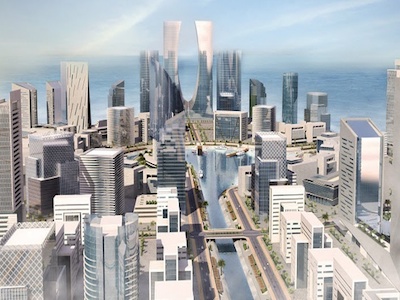
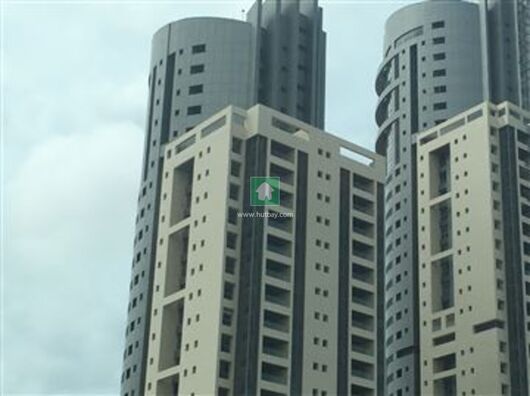
GOFRONT:Actually, you uninformed man, we have our very own 'Dubai' UNDER CONSTRUCTION AS WE SPEAK, WITH SEVERAL BILLION DOLLARS ALREADY SUNK INTO ITS DEVELOPMENT. IT IS CALLED EKO ATLANTIC. YOU KNOW THE REALLY SAD THING? THROUGHOUT THIS ENTIRE WRETCHED THREAD, NOT ONE PERSON HAS MENTIONED EKO ATLANTIC CITY, UNIVERSALLY ACKNOWLEDGED AS AFRICA'S ANSWER TO DUBAI, CURRENTLY UNDER CONSTRUCTION IN OUR OWN LAGOS, NIGERIA. MANY HAVE USED DUBAI AS ''PROOF'' THAT THE ''BLACK MAN'' IS 'INFERIOR', FORGETTING THAT THE ''BLACK MAN'' AS WE SPEAK, IS BUILDING HIS OWN 'DUBAI' RIGHT HERE IN NIGERIA. SHAME ON YOU ALL... shame shame shame! Eko Atlantic City, Lagos (Und Const) https://guardian.ng/wp-content/uploads/2015/04/Eko-atlantic.jpeg https://images.nigeriapropertycentre.com/properties/images/316022/1916961_316022-new--2-bedroom-luxury-apartment--fully-serviced-block-of-flats-for-sale--victoria-island-lagos-nigeria.jpg https://hutbay.blob.core.windows.net/listings/a7de6c66897246378830d1d08ddadbbb.jpg https://images.nigeriapropertycentre.com/properties/images/357855/2274571_357855-eko-atlantic-mega-city--for-sale-victoria-island-extension-victoria-island-lagos-nigeria.jpeg www.nairaland.com/attachments/6880262_5kkanpk_jpeg536d9c62b5b4a0fa56afa304eeb439de www.nairaland.com/attachments/6252713_catskzd_jpegd1f7241387caa368ac991625c3fe4052 https://pbs.twimg.com/media/DMrVadwX0AABd9L.jpg 1 Like |
| Travel › Re: Evolution Of The Beautiful City Of Dubai In Pictures by Rosskiki: 11:04pm On Nov 10, 2019 |
tillaman:Actually, NO, you cannot ''forget population''. The population of UAE is 9.4 million, and her oil reserves are 92.2 billion barrels. Nigeria with 200 million people has oil reserves of 37 billion barrels. (Saudi Arabia's is 262 billion barrels) These two gulf states each export not less than 4 times the number of barrels per day as Nigeria. Saudi I think is about 6 times more. That so many of you expect Nigeria, in the light of these facts, to be as wildly prosperous as UAE and Saudi Arabia based on oil income alone is really a testament to your refusal to research the world around you. Shameful really. 1 Like |
| Travel › Re: Evolution Of The Beautiful City Of Dubai In Pictures by Rosskiki: 10:54pm On Nov 10, 2019 |
Beautyaddy:I'm wondering why YOU haven't jumped off a bridge like yesterday. It must be such a burden walking around & thinking yourself to be an inferior being. |
| Travel › Re: Evolution Of The Beautiful City Of Dubai In Pictures by Rosskiki: 10:53pm On Nov 10, 2019 |
ContractKiller:Where is Saudi Arabia ''introducing democracy''? Do you realise that there are thousands of political prisoners in Saudi Arabia? That there is no freedom of religion, or freedom of association, or freedom of speech? Do you realise they are ruled by a brutal monarchy that uses the nation's treasury as its family bank account? The only reason Saudi Arabia is prosperous today is that their population is 32 million and their oil reserves are EIGHT times the size of Nigeria's. I mean, you Nigerian youths really need to educate yourselves and get rid of this blind glorification of all things 'white' and 'arab'. 1 Like |
| Travel › Re: Evolution Of The Beautiful City Of Dubai In Pictures by Rosskiki: 10:43pm On Nov 10, 2019 |
Beautyaddy:In denial of what? That I am an inferior being by virtue of my skin colour? You're such a disgrace. I feel pity for the children you will be passing your mental sickness on to. |
| Travel › Re: Evolution Of The Beautiful City Of Dubai In Pictures by Rosskiki: 10:34pm On Nov 10, 2019 |
Beautyaddy:Look at this mumu who thinks he is racially inferior to others calling someone else a loser. You're the loser. You're the one that's suffering from self-imposed racial inferiority. Dunce. |
| Travel › Re: Evolution Of The Beautiful City Of Dubai In Pictures by Rosskiki: 10:32pm On Nov 10, 2019 |
planetx:Even in the so called 'rich' European countries, most people have a hard time because they pay so much tax and bills on everything. Millions are in debt. These kids on nairaland are just misguided and bamboozled. 1 Like |
| Travel › Re: Evolution Of The Beautiful City Of Dubai In Pictures by Rosskiki: 10:24pm On Nov 10, 2019 |
Beautyaddy:Stupid ignoramus, have you visited all the black countries you've been insulting here to know what they are like? But I must visit Kosovo to ascertain they are poor because in your dumb little ill-informed head, 'white' people are not supposed to be poor or underdeveloped. Mumu. Don't go and research the world you live in. 1 Like |
| Travel › Re: Evolution Of The Beautiful City Of Dubai In Pictures by Rosskiki: 10:18pm On Nov 10, 2019 |
Beautyaddy:Albania, Kosovo, Moldova, Ukraine, Bosnia..they are many. https://i.pinimg.com/originals/fb/46/1a/fb461acf25fb513d93b3dc168b2e39d4.jpg Ukraine 1 Like |
| Politics › Re: We Should Create A New 'Nigerian' Language Combining Top 3 Plus Others by Rosskiki(op): 11:44pm On Nov 07, 2019 |
Akamariner:It may be hard, but it's not impossible. Everything worthwhile is 'hard' to accomplish. |
| Politics › We Should Create A New 'Nigerian' Language Combining Top 3 Plus Others by Rosskiki(op): 11:24pm On Nov 07, 2019 |
Nothing unites a nation like a shared indigenous language. The recent Oscar embarrassment in which major Nigerian film, Lionheart, was disqualified on language grounds - for containing too much English against the rules of the category, has led many to question the wisdom behind our continued use of this colonial language as our national tongue. The Oscar academy was giving us a kick up the butt, that we must become original, and start to shed our colonial impositions. To be fair, we are making progress in that regard. Nollywood has replaced foreign films in our country, just as Afrobeats have seriously challenged US R&B and Hip Hop. The next level should be a new national language that combines Igbo, Yoruba, Hausa-Fulani, and elements from EVERY other language in the country. We can establish a panel of Nigerian linguists and related experts to conduct this task. We've heard the term 'Wazobia' for many years. It is now time to actualise the concept. 1 Like |
| Politics › Re: Border Closure: Ghana President Says ''Nigeria Please, Talk To Us'' by Rosskiki(op): 12:08am On Nov 04, 2019*. Modified: 12:27am On Nov 04, 2019 |
Ghanaians finally admit Nigeria is the Powerhouse. ''Traders in markets along Nigeria’s western borders are weighing their options amid a four-month border closure by the West African powerhouse. They say the prolonged closure has taken a toll on commercial activity as stocks deplete. Since they cannot bring goods across the border from Nigeria, the traders say they may fall on the Gulf trading hub, Dubai to restock....'' https://www.ghanaweb.com/GhanaHomePage/business/Nigeria-a-big-market-but-traders-mull-options-amid-prolonged-border-closure-795849 So after Nigeria shutdown their nearest available source na Dubai? Kai. And we dey here dey insult our country.  |
| Politics › Re: Ajaokuta Steel Company To Become Operational In 2021 — FG by Rosskiki: 8:38pm On Nov 02, 2019 |
NonFarmPayrol:Sure seems that way. I suspect the whites never wanted to make that place work. If Nigeria becomes an industrial giant, who would buy their stuff? |
| Politics › Re: Amaechi Says Made-In-Nigeria Trains To Be Launched Soon by Rosskiki: 8:00pm On Nov 02, 2019 |
jaxxy:Have you any idea how many thousands of jobs are being created by these infrastructural developments? Many guys who had no work before are now working. You were moaning about lack of facilities, power etc, and then went on to condemn infrastructural developments designed to address them. As we speak, there is major work being done on our power distribution network to improve service delivery. That's infrastructural development, not just roads, rail etc. https://esi-africa.com/industry-sectors/transmission-and-distribution/nigerian-disco-phed-reveals-five-year-performance-plan/ |
| Politics › Re: Interesting Pictures Of ANAMMCO Enugu State by Rosskiki: 7:53pm On Nov 02, 2019 |
CNN will not show this one. Only Boko Haram. 1 Like |
| Politics › Re: Amaechi Says Made-In-Nigeria Trains To Be Launched Soon by Rosskiki: 7:43pm On Nov 02, 2019 |
Emyogalanya:What stops you from producing pencils if you see a market for it? |
| Politics › Re: Amaechi Says Made-In-Nigeria Trains To Be Launched Soon by Rosskiki: 7:39pm On Nov 02, 2019 |
jaxxy:You're clearly confused. Is the latter not meant to address the former? |
| Politics › Re: Border Closure: Ghana President Says ''Nigeria Please, Talk To Us'' by Rosskiki(op): 11:08pm On Nov 01, 2019 |
Latest Development: Ghanaian delegation meets Nigerian Authorities over borders closure https://ghananewsagency.org/social/ghanaian-delegation-meets-nigerian-authorities-over-borders-closure-159032 Accra, Nov 01, GNA - A Ghanaian delegation led by Mr Charles Owiredu, a Deputy Minister of Foreign Affairs and Regional Integration has presented copies of the documents containing particulars of Ghanaian drivers and traders stranded at the Seme-Krake border to the Nigerian Authorities on Thursday October 31. A statement issued by the Ministry of Foreign Affairs and Regional Integration, which was copied to the Ghana News Agency on Friday said the presentation of the documents was at the request of the Nigerian officials at the first Abuja meeting on the borders closure. It said the delegation which included; Mr Carlos Ahenkorah, a Deputy Minister of Trade and Industry, Mr Seidu Yakubu, a Deputy Commmissioner of Customs, and senior officers from Ghana's Ministry of Foreign Affairs and Regional Integration held meetings with Colonel Hameed Abdulai Ali, the Comptroller General of Customs Services, Nigeria, on the need to re-open the Nigerian borders. It noted that the delegation also held discussions with Hajia Yalwaji Katagum, the Nigerian Minister of State for Trade, Industry and Investment, and Mr Zubairu Dada, the Nigerian Minister of State for Foreign Affairs. The statement said the first meeting which took place at the office of the Comptroller General Col, Hameed Ibrahim Ali in Abuja ended on a positive note. It said the Abuja discussions centred on the need for Nigerian authorities to implement its part of the agreement reached a couple of weeks ago saying if Ghana submitted information about companies and drivers stuck at the Seme-Krake border, they would create a safe passage for them to enter Nigeria with their goods. It said the agreement was reached when Madam Shirley Ayorkor Botchwey, Ghana's Foreign Affairs and Regional Integration and Mr Alan Kyeremanten, Ghana's Minister of Trade and Industry, met their Nigerian counterparts on October 16. It recounted that at the said meeting, which also took place in Abuja, the Nigerian authorities explained that the aim of the border closure was to prevent the entry of contraband goods from Benin including; rice and Ghana was not the target. It said during the latest meeting,Colonel Ibrahim Ali explained that the situation that gave rise to the closure of the borders mainly arose out of the fragrant disregard of the Protocol on ECOWAS Trade Liberalisation Scheme (ETLS) and acts that undermined the security of Nigeria by the Republic of Benin. The statement said after extensive discussions on expeditious action to lessen the continued negative impact of the border closure on Ghana, the two customs entities agreed to sign a Memorandum of Understanding (MoU). It said the MoU would include; the exchange of Manifest of goods emanating from both countries and pre-shipment arrangements. The statement said it was agreed that the Ministry of Foreign Affairs and Regional Integration would kick-start the process by requesting the Customs Division of the Ghana Revenue Authority to submit the draft MoU on the said customs cooperation for the consideration of the Nigerian authorities. It said during the separate meetings with the State Ministers, it was agreed that the list of 51 trucks still at the Seme border should also be submitted to the Nigerian authorities by the Acting Head of Mission of the Ghana High Commission. It recalled that the delegation had a day earlier met Ghanaian stranded drivers at the Seme-Krake Border of Nigeria and Benin. It said the borders were closed on August 21. GNA https://ghananewsagency.org/social/ghanaian-delegation-meets-nigerian-authorities-over-borders-closure-159032 |
| Politics › Border Closure: Ghana President Says ''Nigeria Please, Talk To Us'' by Rosskiki(op): 11:01pm On Nov 01, 2019 |
Border closure: There’s room for talks, says Ghanaian president Ghanaian president, Nana Akufo-Addo on Tuesday said he was still hopeful that talks between his country and Nigeria over the closure of the Nigerian land borders would yield a positive result. Akufo-Addo said this while addressing the delegation of a commercial bank from Nigeria. He said, “There’s a lot of room for continuing talks between Nigeria and Ghana in order for a breakthrough to be reached,” reports MyJoyonline. In a separate report, Akufo-Addo was said to have lamented how the border closure would affect regional integration. Daily Trust reports him as saying, “We are about to enter a delicate period in the ECOWAS journey looking ahead of the possibility of a single currency and trying to forge greater integration among our economies and at the same time have important security and other issues which confront us. “We have this business of the closure of the Benin border, which seems to some people to be a big blow to the ECOWAS project.” Nigeria had closed her land borders in August and it had affected the activities of businessmen in Nigeria and Ghana. Ghanaian traders had asked their government to retaliate, however, Ghanaian government officials have been interfacing with their Nigerian counterparts to resolve the issue. Meanwhile, Godwin Emefiele, governor of the Central Bank of Nigeria on Tuesday said that Nigeria would only open its borders if her neighbours would agree to stop the smuggling of banned goods. https://punchng.com/border-closure-theres-room-for-talks-says-ghanaian-president/ |
| Sports › Re: Eto'o: I'm The Best African Player In History by Rosskiki: 10:42pm On Nov 01, 2019 |
Dagrace01:Excellent comment. Eto wasn't better than Jay Jay Okocha. Okocha BY RIGHT should have been playing in that Barcelona team Eto was in, and had he been there, he would have been NUMERO UNO like he was in every club and team he played in. I think the top European sides were genuinely scared of signing Okocha, as the Nigerian would have overshadowed all the overrated, corporate backed media favourites of his time like Raul, Xavi, Ronaldinho and co. That Ronaldinho was Jay Jay's underling at PSG and went on to become Barca's best says it all. Jay Jay was just unlucky not to be signed by the very best clubs. 1 Like 1 Share |
| Music/Radio › Re: Runtown - International Bad Man Killa (official Video) by Rosskiki: 10:27pm On Nov 01, 2019 |
BlackIP:Ok tune. It's the sort of jam that will make more sense after a while of listening...Runtown seems to be targeting international audiences with this one. |
| Politics › Re: The Black Man Cannot Live Well Without The White Man by Rosskiki: 9:37pm On Nov 01, 2019 |
OP, as you can see from your own history, your people have never needed the white man to excel on this earth. Please encourage your kids to study African history so they do not end up as colonised, thoughtless, lost sheep like you. |
| Politics › Re: The Black Man Cannot Live Well Without The White Man by Rosskiki: 9:22pm On Nov 01, 2019 |
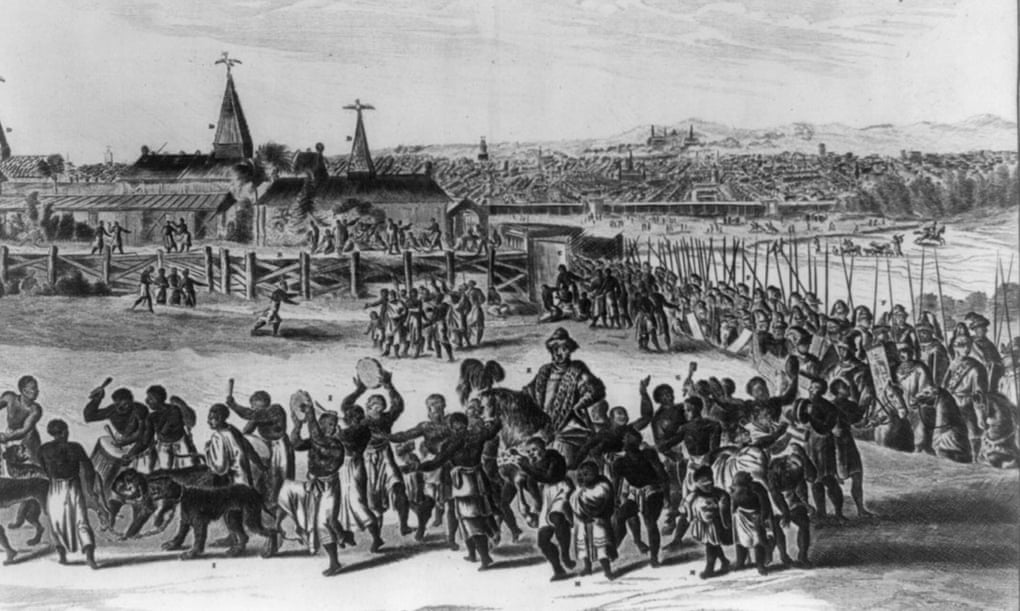
At the centre of the city stood the king’s court, from which extended 30 very straight, broad streets, each about 120-ft wide. These main streets, which ran at right angles to each other, had underground drainage made of a sunken impluvium with an outlet to carry away storm water. Many narrower side and intersecting streets extended off them. In the middle of the streets were turf on which animals fed. “Houses are built alongside the streets in good order, the one close to the other,” writes the 17th-century Dutch visitor Olfert Dapper. “Adorned with gables and steps … they are usually broad with long galleries inside, especially so in the case of the houses of the nobility, and divided into many rooms which are separated by walls made of red clay, very well erected.” Dapper adds that wealthy residents kept these walls “as shiny and smooth by washing and rubbing as any wall in Holland can be made with chalk, and they are like mirrors. The upper storeys are made of the same sort of clay. Moreover, every house is provided with a well for the supply of fresh water”. Family houses were divided into three sections: the central part was the husband’s quarters, looking towards the road; to the left the wives’ quarters (oderie), and to the right the young men’s quarters (yekogbe). Daily street life in Benin City might have consisted of large crowds going though even larger streets, with people colourfully dressed – some in white, others in yellow, blue or green – and the city captains acting as judges to resolve lawsuits, moderating debates in the numerous galleries, and arbitrating petty conflicts in the markets. The early foreign explorers’ descriptions of Benin City portrayed it as a place free of crime and hunger, with large streets and houses kept clean; a city filled with courteous, honest people, and run by a centralised and highly sophisticated bureaucracy. The city was split into 11 divisions, each a smaller replication of the king’s court, comprising a sprawling series of compounds containing accommodation, workshops and public buildings – interconnected by innumerable doors and passageways, all richly decorated with the art that made Benin famous. The city was literally covered in it. The exterior walls of the courts and compounds were decorated with horizontal ridge designs (agben) and clay carvings portraying animals, warriors and other symbols of power – the carvings would create contrasting patterns in the strong sunlight. Natural objects (pebbles or pieces of mica) were also pressed into the wet clay, while in the palaces, pillars were covered with bronze plaques illustrating the victories and deeds of former kings and nobles. At the height of its greatness in the 12th century – well before the start of the European Renaissance – the kings and nobles of Benin City patronised craftsmen and lavished them with gifts and wealth, in return for their depiction of the kings’ and dignitaries’ great exploits in intricate bronze sculptures. “These works from Benin are equal to the very finest examples of European casting technique,” wrote Professor Felix von Luschan, formerly of the Berlin Ethnological Museum. “Benvenuto Celini could not have cast them better, nor could anyone else before or after him. Technically, these bronzes represent the very highest possible achievement.” https://www.theguardian.com/cities/2016/mar/18/story-of-cities-5-benin-city-edo-nigeria-mighty-medieval-capital-lost-without-trace |
| Politics › Re: Benin City, The Mighty Medieval Capital Now Lost Without Trace by Rosskiki: 9:22pm On Nov 01, 2019 |
xx |
| Politics › Re: The Black Man Cannot Live Well Without The White Man by Rosskiki: 9:20pm On Nov 01, 2019*. Modified: 9:39pm On Nov 01, 2019 |
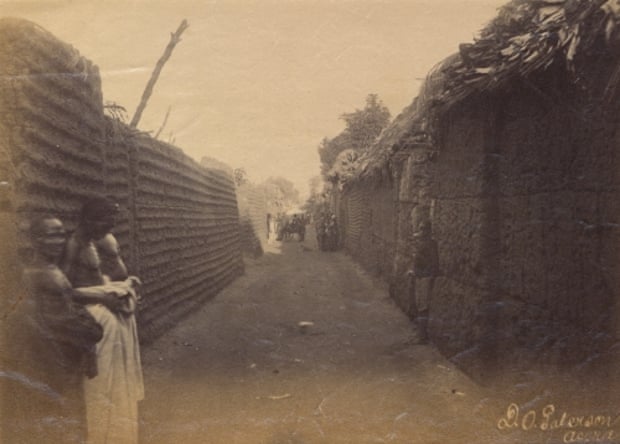
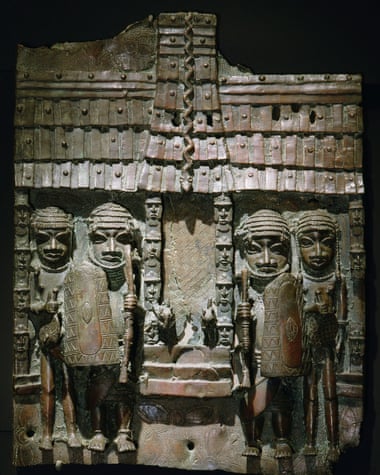
Benin City, the Mighty Medieval Capital now lost without trace https://www.theguardian.com/cities/2016/mar/18/story-of-cities-5-benin-city-edo-nigeria-mighty-medieval-capital-lost-without-trace https://i.guim.co.uk/img/media/e0fd6147a67600c3bfa00ad8b0761b8b5c9a57d1/43_198_1101_660/master/1101.jpg?width=1020&quality=85&auto=format&fit=max&s=8b57e78ea071e6c059b7c9a3b1e0a4d1 With its mathematical layout and earthworks longer than the Great Wall of China, Benin City was one of the best planned cities in the world when London was a place of ‘thievery and murder’. So why is nothing left? This is the story of a lost medieval city you’ve probably never heard about. Benin City, originally known as Edo, was once the capital of a pre-colonial African empire located in what is now southern Nigeria. The Benin empire was one of the oldest and most highly developed states in west Africa, dating back to the 11th century. The Guinness Book of Records (1974 edition) described the walls of Benin City and its surrounding kingdom as the world’s largest earthworks carried out prior to the mechanical era. According to estimates by the New Scientist’s Fred Pearce, Benin City’s walls were at one point “four times longer than the Great Wall of China, and consumed a hundred times more material than the Great Pyramid of Cheops”. Situated on a plain, Benin City was enclosed by massive walls in the south and deep ditches in the north. Beyond the city walls, numerous further walls were erected that separated the surroundings of the capital into around 500 distinct villages. Pearce writes that these walls “extended for some 16,000 km in all, in a mosaic of more than 500 interconnected settlement boundaries. They covered 6,500 sq km and were all dug by the Edo people … They took an estimated 150 million hours of digging to construct, and are perhaps the largest single archaeological phenomenon on the planet”. Barely any trace of these walls exist today. https://i.guim.co.uk/img/media/a27154b771f9ca2f3cfd8942c8f92c2169350f9a/0_0_500_358/master/500.jpg?w=620&q=55&auto=format&usm=12&fit=max&s=1efadf85bdf2fe14f06696b304794a07 View along a street in the royal quarter of Benin City, 1897. Benin City was also one of the first cities to have a semblance of street lighting. Huge metal lamps, many feet high, were built and placed around the city, especially near the king’s palace. Fuelled by palm oil, their burning wicks were lit at night to provide illumination for traffic to and from the palace. When the Portuguese first “discovered” the city in 1485, they were stunned to find this vast kingdom made of hundreds of interlocked cities and villages in the middle of the African jungle. They called it the “Great City of Benin”, at a time when there were hardly any other places in Africa the Europeans acknowledged as a city. Indeed, they classified Benin City as one of the most beautiful and best planned cities in the world. In 1691, the Portuguese ship captain Lourenco Pinto observed: “Great Benin, where the king resides, is larger than Lisbon; all the streets run straight and as far as the eye can see. The houses are large, especially that of the king, which is richly decorated and has fine columns. The city is wealthy and industrious. It is so well governed that theft is unknown and the people live in such security that they have no doors to their houses.” In contrast, London at the same time is described by Bruce Holsinger, professor of English at the University of Virginia, as being a city of “thievery, prostitution, murder, bribery and a thriving black market made the medieval city ripe for exploitation by those with a skill for the quick blade or picking a pocket”. African fractals Benin City’s planning and design was done according to careful rules of symmetry, proportionality and repetition now known as fractal design. The mathematician Ron Eglash, author of African Fractals – which examines the patterns underpinning architecture, art and design in many parts of Africa – notes that the city and its surrounding villages were purposely laid out to form perfect fractals, with similar shapes repeated in the rooms of each house, and the house itself, and the clusters of houses in the village in mathematically predictable patterns. As he puts it: “When Europeans first came to Africa, they considered the architecture very disorganised and thus primitive. It never occurred to them that the Africans might have been using a form of mathematics that they hadn’t even discovered yet.” https://i.guim.co.uk/img/media/fe883b1d3370e6e896208254c99d11a2004e0d09/91_146_2905_3629/master/2905.jpg?w=380&q=55&auto=format&usm=12&fit=max&s=69557a5bc28ceeef27ad7a4ec422a43a A plaque showing an entrance to the palace of the Oba of Benin. |