Sanchez01's Posts
Nairaland Forum › Sanchez01's Profile › Sanchez01's Posts
1 2 3 4 5 6 7 8 ... 281 282 283 284 285 286 287 288 289 (of 400 pages)
 Sports › Re: Japhet Omojuwa Clowns On Twitter, Becomes Arsenal's Latest Signing by Sanchez01(op): 9:03am On Jul 14, 2016 |
orobs93:Hahahaha! That's an angle to it. Good thing Omojuwa didn't mention Real Madrid  1 Like |
| Sports › Japhet Omojuwa Clowns On Twitter, Becomes Arsenal's Latest Signing by Sanchez01(op): 8:57am On Jul 14, 2016 |
Renowned Nigerian tweep, Japhet Omojuwa has taken clowning to a whole new level. He claims he is the new face of Gunners and his presence at the club is to win trophies. Seems Arsenal fans will love this addition. Gunners don suffer Lalasticlala Mynd44, help Arsenal fans 1 Like
|
| Phones › Re: Meaning Of "G, E, 3g, H, H+ And 4g" On Your Mobile Phone by Sanchez01(m): 6:53am On Jul 12, 2016 |
I can't seem to find WCDMA on the list. |
| Science/Technology › Re: Bat Shot Dead In An Office In Onitsha, Anambara State by Sanchez01(m): 5:37pm On Jul 11, 2016 |
Nigerians and superstition. It's a hammerheaded bat. Below are pictures culled from Google Images. 2 Likes
|
| Jobs/Vacancies › Re: Should I Accept or reject this Job offer With A Telecom? by Sanchez01(m): 2:30pm On Jul 11, 2016 |
I think you should. Although the sum might look small, considering what Nigeria is saying now but I think you should. If you have a better offer hanging elsewhere, then you should chase that. If not, stick with this for now and work something out. 34 Likes 1 Share |
| European Football (EPL, UEFA, La Liga) › Re: Portugal Vs France : Euro 2016 Final - (1 - 0) On 10th July 2016 by Sanchez01(m): 10:41pm On Jul 10, 2016 |
taiwo05: 6 Likes
|
| European Football (EPL, UEFA, La Liga) › Re: Portugal Vs France : Euro 2016 Final - (1 - 0) On 10th July 2016 by Sanchez01(m): 9:14pm On Jul 10, 2016 |
zuma4k:You successfully copied some parts of that stupïd, failed football writer called Ben Hayward... Well done. You have been seen. |
| European Football (EPL, UEFA, La Liga) › Re: Portugal Vs France : Euro 2016 Final - (1 - 0) On 10th July 2016 by Sanchez01(m): 7:43pm On Jul 10, 2016 |
uncle005:The truth is, the so-called French players that have held the world by storm for several decades now we're never 'pure' or true French players. The likes of Zidane, Viera, Makalele, Thuram and so on, most of the guys are Africans and found themselves playing for France by providence. Till tomorrow, it's still difficult to believe Zidane is Algerian. |
| European Football (EPL, UEFA, La Liga) › Re: Portugal Vs France : Euro 2016 Final - (1 - 0) On 10th July 2016 by Sanchez01(m): 7:35pm On Jul 10, 2016 |
mamagee3:Even without it, he's in pole position to win it. No other person comes close, not at this time. |
| European Football (EPL, UEFA, La Liga) › Re: Portugal Vs France : Euro 2016 Final - (1 - 0) On 10th July 2016 by Sanchez01(m): 7:30pm On Jul 10, 2016 |
ipledge10:Antoine Griezman is a good player, but one thing I know is that he can't and won't make it to the Fifpro first eleven. He could make it into the second or third of the Fifpro team, but the main, one and only, global XI? Nah... He can't make the cut, not with the presence of Ronaldo, Messi, Neymar and Suarez. It is impossible for him to beat the other '7'. So impossible. Check out the screenshots attached below.. https://www.fifpro.org/en/news/2015-world-xi-the-reserve-teams-2
|
| European Football (EPL, UEFA, La Liga) › Re: Portugal Vs France : Euro 2016 Final - (1 - 0) On 10th July 2016 by Sanchez01(m): 7:01pm On Jul 10, 2016 |
femiphillips007:Truth is, Messi is out of the picture, as far as the search for the world's best is concerned. He has not only had a rough time off the pitch, his entire footballing career has been called to question by announcing his retirement from the international scene after hitting rock for the umpteenth time. Suarez would have been in pole position to wrestle Ronaldo but the man of the hour has a Club World Cup and an European Super Cup ahead of him, at the start of next season. Protocols are protocols, they won't sway this time because it is visible that Ronaldo has had a better season than Messi. Suarez would get the European Golden Shoe though. And I doubt if he'd make Fifpro. UEFA, for certain reasons seem to dislike him. 1 Like |
| European Football (EPL, UEFA, La Liga) › Re: Portugal Vs France : Euro 2016 Final - (1 - 0) On 10th July 2016 by Sanchez01(m): 6:26pm On Jul 10, 2016 |
taiwo05:Biko, keep this excessive confident comment till the end of the match. France has had extra motivation than any other team in the tournament because it's on their turf. Less than two hours to go... |
| European Football (EPL, UEFA, La Liga) › Re: Portugal Vs France : Euro 2016 Final - (1 - 0) On 10th July 2016 by Sanchez01(m): 6:21pm On Jul 10, 2016 |
It's all about Ronaldo tonight. If he pulls this, then it means he's forever a step ahead of Messi. 4 Likes |
| Education › Re: July 10 OAU Massacre; What Actually Happened by Sanchez01(m): 11:08am On Jul 10, 2016 |
gbemmy2k10:Unfortunately, it's not the same again, even if I'm not in the system anymore. Shortly before I left, there were several reports of rape cases, particularly around Ajose and that bush path leading to maintenance, that is, the one at the left hand side just after road one. It was so bad that they had to close the road back then. Don't know about now. This was years back. |
| Education › Re: July 10 OAU Massacre; What Actually Happened by Sanchez01(m): 10:31am On Jul 10, 2016 |
oliidell:The article is based on too many third parties. Iwilade George was not only a thorn in the flesh of cultists but also on the management. His cause was just but it was a thorn to the two aforementioned. The then Omole is not clean, even till date. As a matter of fact, some of the cultists 'disappeared' without a trace, even after being sentenced. I used to have the video of the apprehended cultists, their 'tools' and how they mentioned and implicated Omole. Afrika is the reason cultism died in OAU. RIP to his soul and that of other comrades who fell in the struggle. 7 Likes 1 Share |
| Romance › Re: Adaksbullet For Mr Nl 2016 Ofisial Campane Tread by Sanchez01(m): 7:52pm On Jul 02, 2016 |
My favourite troll is at it . You half mai phot please  |
| Celebrities › Re: Adeniyi Johnson Threatened Over Secret Love Child [PICS] by Sanchez01(m): 6:59pm On Jun 30, 2016 |
engrkaz:Lol... That moment when an Urhobo man transliterates Yoruba words to Yorubas, you know there's it trouble... |
| Celebrities › Re: Adeniyi Johnson Threatened Over Secret Love Child [PICS] by Sanchez01(m): 5:01pm On Jun 30, 2016 |
engrkaz:Google Translate can't pick incantations. Just basic words. |
| Celebrities › Re: Adeniyi Johnson Threatened Over Secret Love Child [PICS] by Sanchez01(m): 4:43pm On Jun 30, 2016 |
j3r3myk3n:It's pretty heavy. She started with an incantation, a destructive one, then started 'whatever I say today shall come to pass. It shall not be well with you. Sorrow shall trail you, morning afternoon and night. Your glory/star/fame/fortune shall be submerged. The heads of all kings (probably calling on spiritual forces) shall destroy you.' My Yoruba is need good! 9 Likes |
| Health › Re: My Phobia Story by Sanchez01(m): 3:52pm On Jun 30, 2016 |
Pretty interesting. I don't really get to share my phobia. Luckily for me, I didn't take me long to realize I'm acrophobic. My first attack came on an elevator. I threw up the moment I got out of it and my hands became sweaty and cold all of a sudden. I had to use the stairs down. My second encounter, it almost happened... I was supposed to travel by air to Abuja for an important meeting. I clearly told the team I wouldn't go by air because I might just die before the plane touches the ground. I insisted we went by bus. Till tomorrow, anything four feet off the ground is a no-no. |
| Culture › Re: What You Need To Know About The Urhobos by Sanchez01(op): 11:05am On Jun 30, 2016 |
Stereotypes For every people, tribe and creed, they're known for some things, call them stereotypes. To an extent, these things are quite true but it does not necessarily address them as a people. These are some of the stereotypes, overtime, labeled on Urhobos. 1. Urhobos are con artistes: Not necessarily true. The whole bulk of this stereotype stems from the greetings among Urhobo people, which for some reasons became 'Urhobo wayo', when in actual truth it is 'Urhobo wado'. 2. Urhobo men are promiscuous: Unfortunately, this is true to an extent. Some, though, not all see nothing wrong in having concubines outside of their homes, and in some cases, the wife and concubine get along just fine. 3. Urhobo men delight in spirit or dry gin: Unfortunately, quite true. Most Urhobo men down bottles like it's nothing, irrespective of religious belief. It's just who we are. 4. Urhobo women beat their husbands: This is not true. Urhobos are highly cultured people and are quick to tow the path of culture and tradition over little things. A woman who attempts such might be subjected to tradition and would be made to pay severely. Urhobo men are proud and tend to wallow in their pride. So it bests explain why a woman can try such. 5. Urhobo men are lazy: So i have heard people tell me this to my face severally. Unfortunately, it isn't true. Urhobo women are more hardworking than their men folk. They don't really know what it means to sit and do nothing. This explains why people tend to say that their men are lazy. Lalasticlala Mynd44 |
| Culture › Re: What You Need To Know About The Urhobos by Sanchez01(op): 10:40am On Jun 30, 2016 |
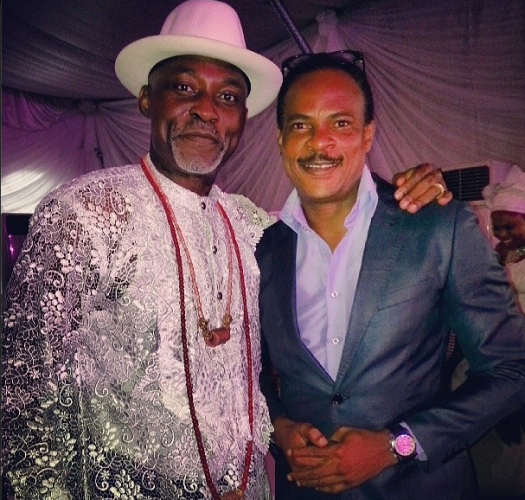
Notable People https://informationng.com/wp-content/uploads/2013/12/RMD.png Blessing Okagbare, IAAC Silver medalist and Olympic bronze medalist Michael Ibru, Nigerian businessman David Ejoor, retired Nigerian army and governor of the now-defunct Mid-Western Region Felix Ibru, Nigerian architect, senator and former first democratic Governor of Delta State Mudiaga Odje, Senior Advocate of Nigeria and Officer of the Federal Republic of Nigeria Stephen Oru, Minister of the Federal Republic of Nigeria Fred Aghogho Brume, senator and industrialist Justus Esiri, Veteran award winning actor,Officer of the Order of the Niger and Patriotic Urhobo Richard Mofe Damijo, actor and politician Odunwa Kome, first female Nigerian mechanic to work at Nasa Isidore Okpewho, scholar and novelist https://www.that1960chick.com/wp-content/uploads/DSC_9573.jpg Ben Okri, poet and novelist Gamaliel Onosode, Nigerian administrator and politician Igho Sanomi, Businessman and Group Managing Director/CEO, Taleveras Group Tanure Ojaide, poet and writer Harris Eghagha, career soldier and diplomat M. G. Ejaife, Urhobo nationalist, first republic Senator and the first principal of Urhobo College Bruce Onobrakpeya, visual artist, sculptor and painter Kefee, gospel singer and composer |
| Culture › Re: What You Need To Know About The Urhobos by Sanchez01(op): 9:59am On Jun 30, 2016 |
Religion The main focus of Urhobo traditional religion are the adoration of "Ọghẹnẹ" (Almighty God) the supreme deity and recognition of Edjo and Erhan (divinities). Some of these divinities could be regarded as personified attributes of "Ọghẹnẹ". The Urhobo also worship god with Orhen (white chalk). If an Urhobo feels oppressed by someone, he appeals to Ọghẹnẹ, who he believes to be an impartial judge, to adjudicate between him and his opponent. Urhobo divinities can be classified into four main categories, which probably coincide with the historical development of the people. These are Guardian divinities, War divinities, Prosperity divinities and Fertility and Ethical divinities. It should be noted that the fundamental factor and manifestation of all divinities in Urhobo religion is "Ọghẹnẹ". Erivwin which is the cult of ancestors and predecessors (Esemo and Iniemo) is another important element in the Urhobo belief system. The dead is believed to be living and are looked upon as active members of the family who watch over the affair of the living members of their family. Urhobos believe in the duality of man, i.e. that man consists of two beings: Physical body - Ugboma Spiritual body - Erhi It is the Erhi (spirit man) that declares man's destiny and controls the self-realization of man's destiny before he incarnate into this world. Erhi also controls the total well being (Ufuoma) of the man. Ọghẹnẹ (God) is like a constitutional Monarch who set his seal on the path of destiny set by a man's spirit (Erhi). In the spirit world (Erivwin) man's destiny is ratified and sealed. In the final journey of the spirit man (Erhi) after transition, the Urhobo believe the physical body (Ugboma) decays while the spirit man (Erhi) is indestructible and goes back to join the ancestors in the spirit realm. The elaborate and symbolic burial rites are meant to prepare the departed Erhi for happy re-union with the ancestors in the spirit world. However, the influence of western civilization and Christianity is fast becoming an acceptable religion in most Urhobo communities. Epha divination, similar to the Yoruba Ifá and practiced by many West African ethnic groups, is practised with strings of cowries. Urhobos also practice Christianity, with many belonging to Catholic and new evangelical denominations. There are 1,261 ejo (deities), including the one-handed, one-legged mirror-holding whirlwind-god Aziza. |
| Culture › Re: What You Need To Know About The Urhobos by Sanchez01(op): 9:49am On Jun 30, 2016 |
Marriage Before marriage in Urhobo culture is said to be properly contracted, prayers must be offered to the ancestors(Erivwin), also known as spirits, and God(Oghene). The marriage ritual known as Udi Arhovwaje takes place in the ancestral home of the bride or a patrilineal relation of the bride as agreed by the family. On an agreed day, the fiance goes with his relatives and friends to the fiancee's father's home bringing gifts of drinks, salt, kola nut and sometimes food as requested of him by the bride's family for the marriage ceremony. Formal approval for marriage is given by the bride's parents or who ever is representing the bride's family and traditional rites of pouring the gin brought by the fiance as a libation to the father's ancestors to bless them with health, children and wealth. It is only after this marriage rite that the husband can claim a refund of money (bride price) if the marriage breaks down. It is believed that the ancestors were a witness to the marriage. It is only the physical body that is sent to her husband in the marriage, her Erhi (spirit double) remains in the family home. This explains why in Urhobo culture, a woman is brought back to be buried in her family home when she dies. https://gazmadu.com/wp-content/uploads/2015/03/21-6290-post/115035-1024x682.jpg In the ancestral home of the man, the wife is welcomed into the family by the eldest member of the family. Where she is expected to confess all her love affairs during and after her betrothal to her husband (if any) and she can now be absolved from all her wrongdoings. She becomes a full member of her husband's family after this rites and is assumed to be protected by the supernatural (Erivwin). This rite symbolizes an agreement between the wife and the Erivwin. If the wife later becomes unfaithful, it is believed that she will be punished by the Erivwin – this is believed to be the reason why married Urhobo women are very faithful to their husbands. Marriges are very cheap in Urhoboland, as opposed to some other parts of the region. Urhobos take pride in marrying off their daughters, not as a product they must make excess profits on, but as someone that could be retrieved if she isn't properly treated. It's one of the reasons why Urhobo parents try as much as possible to cheapen their demands. 1 Like 1 Share |
| Culture › Re: What You Need To Know About The Urhobos by Sanchez01(op): 9:29am On Jun 30, 2016*. Modified: 5:33pm On Jul 14, 2016 |
Food For the Urhobos there are three foods considered as the powerhouses, strength and pride of the Urhobos. They are: 1. [img]http://1.bp..com/-JKUaq76669w/Vqbt43fwrQI/AAAAAAAAK0k/72a_WVxQRro/w1200-h630-p-nu/urhobo%2Bukodo.jpg[/img] Ukhodo: A yam and unripe plantain dish prepared with either Beef, Poultry or fish and spiced with lemon grass and potash. To a non-Urhobo, it's safe to brand it 'plantain or yam pepper soup' 2. https://www.matsecooks.com/wp-content/uploads/2015/03/owoh-dp.jpg Oghwevwri (emulsified palm oil soup)" (oghwo) and Starch (usi)(the actual name of this staple is not often used). The preparation of the soup itself would be termed a wonder to non Urhobos, as all that is needed to realize the magic is just cassava flakes (dry garri), smoked fresh water fishes and bush meats. The starch is made from cassava plant. It is heated and stirred into a thick mound with palm oil added to give the starch its unique orange-yellow colour. Oghwevwri is composed of smoked or dried fish, bush meat, unique spices, potash and oil palm juice. 3. [img]http://3.bp..com/-0huMZbsLdFc/TnouMU_ZzUI/AAAAAAAAA9k/FLz30FAY4EY/s1600/Banga+sauce.JPG[/img] Banga soup/Amiedi (water derived from palm fruits): This soup is the true representation of the Urhobos. The process could be quite tasking but its preparation is very easy to achieve. Amiedi is considered sacred among all foods in Urhobo. Just like the Oghwevwri, Amiedi is composed of smoked or dried fishes, bush meats and unique spices. Oil from the palm fruits stands as its oil till, and as such, does not require extra palm oil. 4. https://newtelegraphonline.com/wp-content/uploads/2016/02/Tasty-banga-ovwo-soup-with-starch.png Banga soup & Starch Other delicacies of the Uhrobos are Iriboto (soup prepared on the ground, without being cooked), Iriberhare (soup prepared by fire), and Okpariku (in pidgin, 'just pour everything) NB: Almost all Urhobo delicacies are quite cheap to prepare. An average Urhobo person is a heavy meat/fish eater. Hence, the need why our foods are heavily garnished. Mynd44 Lalasticlala 2 Likes |
| Culture › Re: What You Need To Know About The Urhobos by Sanchez01(op): 9:01am On Jun 30, 2016 |
Culture The Urhobos live very close to and sometimes on the surface of the Niger river. Thus most of their histories, mythologies, and philosophies are water-related. Annual fishing festivals that includes masquerades, fishing, swimming contests, and dancing, are part of the Urhobo heritage. There is an annual, two-day, Ohworu festival in Evwreni, the southern part of the Urhobo area when the Ohworhu water spirit and the Eravwe Oganga are displayed. https://the-urhobo-people.weebly.com/uploads/4/3/8/3/43834285/2190080.jpg?529 The king in an Urhobo clan or kingdom is called the Ovie. His wife of the queen is called Ovieya and his children Ọmọ Ovie (child of the king also known as prince and princes). Presently, these names are also given to children without royal heritage. A number of Urhobo cultural divisions, have other titles other than Ovie: the Okpe call their traditional ruler "Orodje" and the Unrobos in Olomu Kingdom, call their King "Ohworode" while the urhobos in Okere-Urhobo call theirs "Orosuen" (the one who rules, leads). |
| Culture › Re: What You Need To Know About The Urhobos by Sanchez01(op): 8:50am On Jun 30, 2016 |
Language Variations/Dialects Urhobo has never been an homogenous linguistic entity. Since time immemorial, Urhobo has been colored by variation that occur on various levels. These variations manifest in the various Urhobo clans and kingdoms. A specific dialect of Urhobo has even broken off and become an individual ethnic nationality (Isoko). Another dialect is prospecting at this option (Okpe). The main reason for this break-off is that these dialects see themselves as individual groups as much as Ikwerre see themselves as being different from Igbo. Some of the "major dialects" of Urhobo are: 1. Isoko(Also has sub-dialects such as Erhowa, Enwhe and Iyede) 2. Central Urhobo (Agbarho-Ughelli Dialect) 3. Okpe 4. Ughievwien 5. Uvwie 6. Agbon 7. Avwraka (Abraka) 8. Udu 9. Ofoni 10. Orogun 11. Agbarha These Dialects accounts for the main branches of Urhobo(Clans). Although there are other Urhobo clans such as Ogor, Olomu, Agbarha-Ame, etc but the linguistic features of these clans are either similar to one of the those mentioned above or not too obvious to become a dialect of its own. Most of these clans use central urhobo. The dialects listed are sometimes not mutually intelligible except for Central Urhobo which is the lingua franca of Urhobo People. These various dialectal groups also have peculiar cultural traits. We will not briefly examine these groups one by one. 1. Isoko The Isoko Dialect of Urhobo is so broad and large that it is effectively a language of its own. Isoko is a proto-Edoid language and hence it is closer to how Urhobo once was when the people said goodbye to their Benin progenitors. Isoko has its own sub-dialects such as Iyede, Erhowa, Enwhe, Olomoro, Oleh, etc. The main dialectal difference between Urhobo and Isoko include; Use of Degwo instead of Migwo for greeting, repetition of utterances and words.i.e. "Yanzobone Yanzobone (Come here, Come here)", different names for various objects, etc. My Isoko people here can help out with more. smiley 2. Central Urhobo (Agbarho-Dialect) The Agbarho/Ughelli dialect of Urhobo is deemed to be the purest, fluent and undiluted form of Urhobo language. It is understandable by all Urhobo people and has widespread acceptance. It is spoken mainly in Ughelli and Agbarho, a suburb of Warri and Ughelli, both in Ughelli North LGA. This is the version of Urhobo taught at Secondary Schools, College of Education and Delta State University. 3. Okpe The Okpe Dialect has the largest number of speakers in Urhobo land. They stay in Okpe and Sapele Local Government Areas. They are all ruled over by the Orodje of Okpe, a historical and semi-hereditary traditional kingship and a first class King in Nigeria. The Okpe dialect is considered deep and hard by other Urhobo speakers. In fact, the Okpe dialect is believed by many to be closer to Edo than it is to Urhobo. The average Urhobo man will have a field day understanding Okpe. The differences between Okpe and Central Urhobo is so large that one wonders why it is classed together as Urhobo when it obviously has more connection to Isoko than Urhobo. However, they are culturally the same with Urhobo. Dialectal differences cut across greeting.i.e. Deewho instead of Megwo, names of objects and animals, meaning of common words, etc. My Okpe people, please help me out here with some differences. cheesy 4. Ughievwien When I was growing up, we had two neighbours that were Ughievwien (Ujevwen) people. I remember that my mother always had a field day analysing how funny they spoke. The Ughievwien people occupy Ughelli South LGA. Their major town is Otu-Jeremi with other towns and villages such as Egbo, Effurun-otor, Olomu, etc. These people are simple minded and live in mainly riverine areas. Their language is seen as "impure" and unintelligible by most Urhobo speakers. Their version of Urhobo involves a lot of tongue twisting and tongue rolling. They speak as if they sing. Their words are pronounced differently most times and the stress/tonation is slightly different from Central Urhobo. Ujevwen People, please help me out here with more examples. cheesy 5. Uvwie Uvwie Dialect is spoken by the people that occupy Uvwie LGA in such towns as Effurun, Enerhen, Ugbomro, etc. Their Urhobo is mildly understandable by the average Urhobo speaker. Theirs is an amalgam of Okpe, Agbon and Udu. In their cultural system, the Otota (Spokesman and Prime Minister) found in other Urhobo clans, is replaced with the Unuevworho with similar but slightly different functions. Uvwie people greet differently, some words and their stress placement are also different from central Urhobo. Uvwie people, you know the drill.smiley Its your turn. 6. Agbon Agbon is spoken by the people of Ethiope East LGA. It is the second largest Urhobo kingdom. The main Agbon divisions include; Okpara, Kokori, Eku, Igun and Ovu-Oviorie. Of these divisions, Okpara is the largest while Kokori speaks a more proto-Agbon, or harder, version. Agbon Urhobo is extremely close to Central Urhobo. Differences are barely noticed. The main differences constitute the physical nuances of Agbon speakers. Other differences include pronunciation of certain words and their usage. Agbon speakers are understood across board. Their main difference is that the dialect is deep. It is the main dialect used in Urhobo proverbs, idioms and metaphysical expositions. If you want to learn Urhobo, dont start with Agbon. Agbon speakers can say more on this wink 7. Avwraka (Abraka) The Avwraka dialect of Urhobo is spoken by people who occupy the northern parts of Ethiope East LGA. Their main divisions are; Oruarivie-Abraka and Umiagwa-Abraka, each with its own king. Divisions include; Ekrejeta, Ojeta, Oria, Erho, Ajanomi, Urhuagbesa, Otorho, Urhuoka, Umeghe, etc. Avwraka Dialect is seen as slightly "impure" by most speakers. Their dialect is a simplified version of Urhobo, perhaps too simplistic. The dialect lacks depth and its not as linguistically rich as most dialects. There are also cases of borrowings and adaptations in Avwraka dialect. Maybe the people from Abraka can do more justice to this smiley 8. Udu This dialect is largely elusive. It is mostly similar to that spoken in Ughievwien and also resembles Uvwie. I'd call it a secondary/mixed dialect of both Ujevwen and Uvwie. However, it is different in its own rights. I haven't met most of its native speakers so my personal knowledge of this dialect is somewhat limited to what others have said. However, it is also "impure" and has a lot of phonological differences with central Urhobo. Udu people occupy Udu LGA, a suburb of Warri. Major towns are Otor-Udu, Aladja, etc. Udu people please help me out. 9. Ofoni The Ofoni dialect of Urhobo is an offshoot of the Ughelli dialect and it is spoken by Ijoid Tarakiri people in Odurubu and Oduophiri in Patani LGA of Delta State and Ofoni in Sagbama LGA of Bayelsa State. These people have lived alongside the Ijaws for so long that it leaves much to marvel that they have not been acculturated by now. They live far off land and one must fly a speed boat to reach these places on time. As expected, their version of Urhobo has been colorated by Ijaw with so much borrowings, transliterations, adaptations, jugglery, etc etc. I call on the Ofoni people to bail me out here. kiss 10. Orogun The Orogun Dialect of Urhobo is one of the most unique ones. It is spoken by the Orogun people who occupy Ughelli North LGA. They are close neighbours to the Ndokwa People of Abbi and Amai as well as the Isoko people of Iyede and Owhelogbo. They are mainly bilinguals. Most of the Orogun people can speak/understand Ndokwa(Igboid) and Urhobo. Most also add Isoko to their arsenal. Orogun itself is a kingdom with a King and it has several quarters. Orogun-Urhobo sounds like Ughelli/Agbarho Urhobo, just like the close Agbarha neighbours, but the influence of Ndokwa has penetrated the language. Words are different, syntax becomes juggled, pronunciations take a funny turn, most speakers code-mix and code-switch between Urhobo and Ndokwa and some cant even separate which from which. Only Orogun people can fully explain how unique their dialect is. cool 11. Agbarha The Agbarha dialect of Urhobo is spoken, in its various forms, by people in Agbarha and Okere in Warri South LGA, Idjerhe, Mosogar and Oghara in Ethiope West LGA and the aboriginal and eponymous people of Agbarha in Ughelli North LGA. The earlier mentioned groups (Agbarha/Okere Warri, Idjerhe, Mosogar, Oghara) were all migrants from Agbarha-Otor. The Agbarha dialect is similar to central Urhobo spoken in Ughelli/Agbarho. It is not impure per se but it is slightly different and not perceivably shallow. Only experienced speakers of Urhobo can pick out its dialectal differences. Agbarha People, you know the drill 1 Like |
| Culture › Re: What You Need To Know About The Urhobos by Sanchez01(op): 8:40am On Jun 30, 2016 |
Location A bulk of the Urhobo people reside in the South Western states of Delta and Bayelsa State in Nigeria also referred to as the Niger Delta. Many live in small and major cities in regions or local government areas in Ughelli, Warri, Ethiope, Okpe and Sapele. Some Urhobo major cities and towns include: Okparabe, Arhavwarien, Warri, Sapele, Abraka, Ughelli, Effurun, Aladja, Ovwian, Orerokpe, Amuekpe, Eku, Oghara, Evwreni, Agbarha-Otor, Agbarho, Okpara Inland, Egini, Kokori, Olomu, Kiagbodo, Isiokoro, Mosogar, Akpobome, Orhokpokpor, Jesse, Ogharaefe, Effurun-Otor, Ewu, Jeremi, Emadadja, Okwagbe, Ovu, Orogun, Owahwa, Otogor, Edjekota-Ogor, Ofone, Otor-Udu, Ekpan, Jeddo, Uwheru, Urhowhorun, etc. The following are local government areas where Urhobo traditional homes are located in Delta State Ethiope East Ethiope West Okpe Sapele Udu Ughelli North Ughelli South Uwvie Warri South Patani Sagbama (in Bayelsa State.) |
| Culture › What You Need To Know About The Urhobos by Sanchez01(op): 8:32am On Jun 30, 2016*. Modified: 8:57am On Jun 30, 2016 |
The purpose of this thread is to enlighten those who know little or nothing about the Urhobos, bothering on her history, culture, religious belief, food, dialects, stereotypes and her political system. Therefore i'll break this into several posts so as not to make the thread boring. A Brief History of Urhobo The Urhobos belong to the group of people whose written history was largely undocumented. There is almost an absence of European records on the Urhobo as early European arrivals were preoccupied with economic interests on the coastal communities. However, in 1505, Pereira observed that in the hinterland beyond the Forcados River lived the Subou or Sobo a name that was corrected to Urhobo in 1938. The traditions of origin of the various Urhobo groups do not contain any specific reference to their ancestor other than that 'we are or we know are Urhobo'. https://i1.wp.com/urhobotoday.com/wp-content/uploads/2014/03/urhoboland.jpg?resize=399%2C380 The history of the Urhobo generally began from an Edo territory supposedly around where the ancient town of Udo and Benin City are currently located. At the end of the Ogiso dynasty, many Urhobo and Edo-groups left Udo in different directions, each at its own pace, in search of more peaceful territories. It was natural that in those compelling circumstances, peace-loving and less powerful Edo-groups had to leave the territory to seek fortunes in less populated but more economically resourceful territories. The Urhobo left under separate leaders in different directions to found separate governmental organization. When some of these emigrants left Benin, they found in their destinations of Urhobo territory, some Edo-speaking settlers. Each of the 22 socio-political units was called a "clan" by earlier writers, especially by British Colonial Officers in their various intelligence/assessment reports. The word "Urhobo" is used to describe the Urhobo group. Traditions among the Urhobos are replete with assertions of original dwellers and owners of their territory. These autonomous people were believed to be Urhobo, with no known history of migration from anywhere else. These traditions are without documentary or archaeological evidence. R.E. Bradbury refers to Hubbard's 1948 suggestion that 'the distinctive characteristics of the various Urhobo and Isoko tribes are a result of the super imposition of Ijaw, Ibo and later Edo immigration upon on aboriginal strata already speaking Edo-type dialects'. https://logbaby.com/files/logo/13057.jpg While allowing for the absorption of immigrants and their language, as well as for the impact of routes and group sojourns on the history of the Urhobo, linguistic evidence provides a strong principle for integrating and validating other traditions of the Urhobo origin (Thomas, 1910), (Thalbot,1926 vol IV:80). The absence of archaeological prehistoric evidence give credibility to the above traditions of Urhobo origin. The structure of Urhobo ideas and language as well as their culture and other institutional forms imply historical links between them and their neighbours, particularly the Edo-speaking peoples, and other socio-linguistic groups in some yet undefined areas in the Sudan/Egypt. 1 Like 2 Shares |
| Politics › Re: FG Orders Discos To Meter High Consumers Before Nov 30 by Sanchez01(m): 2:57pm On Jun 28, 2016 |
simplemach:Why not take time to understand the post before commenting? This isn't meter sharing but a way of curbing the excesses of High Consumers, mostly factories, and other industries who prefer to adopt the fixed technique, rather than prepaid. They use electricity the most and are often times, the major sources of corruption in the power sector. |
| Fashion › Re: Miss Nairaland 2016 Grand Finale by Sanchez01(m): 6:54pm On Jun 26, 2016 |
refiner:This is the true sportsmanship spirit I've been preaching. Trust me, this single post would see many vote you when next you decide to. 1 Like |
| Fashion › Re: Miss Nairaland 2016 Grand Finale by Sanchez01(m): 6:45pm On Jun 26, 2016 |
mysticgal:I beg you in God's name, please contest again next year. Heaven knows I'll apply for a month leave and campaign aggressively for you. Just do this for me and other sane people here. 1 Like |




1 2 3 4 5 6 7 8 ... 281 282 283 284 285 286 287 288 289 (of 400 pages)