TerraCotta's Posts
Nairaland Forum › TerraCotta's Profile › TerraCotta's Posts
1 2 3 4 5 6 7 8 9 10 (of 16 pages)
 Culture › Re: BBC's Documentary On The 'Bronze Cast Head Of The Ife King' by TerraCotta(m): 2:27pm On Nov 17, 2011 Culture › Re: BBC's Documentary On The 'Bronze Cast Head Of The Ife King' by TerraCotta(m): 2:27pm On Nov 17, 2011 |
Owo girl or woman bearing a jar, which appears to have broken off. This is one of the most naturalistic sculptures I've come across and shows a developed style independent of their Ife and Benin peers:
|
| Culture › Re: BBC's Documentary On The 'Bronze Cast Head Of The Ife King' by TerraCotta(m): 2:25pm On Nov 17, 2011 |
^^^ Thanks for bringing this back on track, Anonymous6. I'm attaching a few cellphone photos of rare Ife-style terracottas I took from some books I have, mainly "Ife in the History of West African Sculpture" by Frank Willett and "Treasures of Ancient Nigeria" by Willett and Ekpo Eyo. Sorry about the poor quality but it would have taken too much time to scan. I'll try to scan and post more if people are interested though. There are many more terracottas than bronzes, and they show the wide range of influence of Ife culture. Owo terracottas show an obvious Ife inspiration and has been said, also show cultural affinities with Benin. This is a finely-detailed fragment of arms presenting a sacrificial ram: 1 Like
|
| Culture › Re: BBC's Documentary On The 'Bronze Cast Head Of The Ife King' by TerraCotta(m): 5:04pm On Nov 16, 2011 |
Tpia--I mentioned the belief that Oranmiyan is a title. The claim comes from Reverend Johnson's "History". He writes: "Oranmiyan was a nickname of the prince, his proper name being Odede." Like many aspects of the earliest records we have of Yoruba (and Benin) myths of origin, this detail has been ignored. As an aside, this little-known claim is not reflected in current court traditions at Ife, Oyo, Benin etc because the version of history you may hear from monarchs has political uses and a mythological foundation. It does not necessarily coincide with the true order of events or other independently-known facts. That's why the arguments over whose dynasty is senior to the other or who 'founded' whom are not historical issues but political ones (much like the modern arguments you see all over Nairaland). The popular 'court' versions of history you may read or hear are as accurate as the Biblical, Hindi or Aborigine versions of the creation of the world. They are important as mythological charters and they may even contain some remembered truth but it's not a substitute for more detailed historical or archaeological research. Needless to say, I don't agree that Egyptians were the offspring of Yoruba people either. I don't want to derail the thread by adding more speculation though. There's a great deal of well-researched information on Egypt's origins and its links to the rest of Africa, its myths of origin, it's links to Punt (modern East Africa) and so on. 1 Like |
| Culture › Re: BBC's Documentary On The 'Bronze Cast Head Of The Ife King' by TerraCotta(m): 1:58pm On Nov 16, 2011 |
I don't see the link to chakras or the various Semitic language roots you posted. Your references to Christian and Muslim scriptures take us back to the issues that Sultan Bello and Reverend Johnson had with locating the origin of Yoruba and others in Biblical/Quranic Holy Lands. These are simply not relevant because the people of classical Ifa were almost certainly not Christians, Jews or Muslims. It would be like interpreting Ife culture through Hindu scriptures or Native American religions. I've said enough though. |
| Culture › Re: The Art And Architecture Of Yorubaland! by TerraCotta(m): 2:14am On Nov 16, 2011 |
Great photos, Lakal. On Yoruba weapons--there's a short book by JFA Ajayi and Robert Smith called "Yoruba Warfare in the 19th Century" that has a lot of useful information on warriors and their equipment at that time. |
| Culture › Re: BBC's Documentary On The 'Bronze Cast Head Of The Ife King' by TerraCotta(m): 2:10am On Nov 16, 2011 |
Thanks for the response. I think your examples--the DNA tests and autopsies--are a good example of where we differ on our approach and I'll leave it at that. Despite what you might believe, I agree that we have to interpret art and culture through a spiritual lens. There's no way to be knowledgeable about Yoruba culture without being conversant in the indigenous religious beliefs of its makers. It's actually another point of emphasis for the uniqueness of Yoruba art. For example, in many of the most naturalistic Ife bronzes and terracottas, the size of the head is exaggerated to reflect the concept of 'ori inu' to about one-quarter of the size of the body. This is a deliberate portrayal of the importance of 'ori inu' for a people who were skillful enough to make sculptures of any lifelike proportion. As Ifa verses record to and the various ibori and iponri shrines verify, the head has been considered the spiritual seat in Yoruba culture for a long time and each individual is believed to have their own ori to worship along with whatever deities they choose (or that chooses them). This is not a feature we find in Greek, Egyptian, Mesopotamian or (as far as I know) Atlantean cultures. If the concept is found in those other cultures, it doesn't seem to be as revered and emphasized as it for Ife and other cognate cultures. This, for me, is far more potent proof of an indigenous Yoruba concept than the possible resemblance of Bes and the deformed person depicted in the terracotta. By the way, Physics, Obatala doesn't seem to have been depicted often in sculptures. Most Yoruba deities were represented by their symbols and not humanized sculptures--Ogun and his machete or anvil; Osoosi and the bow and arrow; Shango and his ose axe etc. Esu is one of the rare exceptions and it seems to be related to his role as a guardian. I can't say definitively that the sculpture isn't Obatala, but as Lakal pointed out, the deformed and handicapped are considered his special charges since he's thought to have made them that way. That probably accounts for the identification. Here's my all-time favorite essay on Obatala with some very relevant information on Oduduwa which I alluded to in earlier posts but which I won't comment on at present due to Physics' request. (Suffice to say I think both the Oni of Ife and the Oba of Benin may revise their mythological beliefs if they looked into this issue more closely and read Ajayi Crowther and the early accounts of Ife origins). The essay's written by the brilliant art historian Babatunde Lawal: http://findarticles.com/p/articles/mi_m0438/is_1_41/ai_n24327210/ . It's long but absolutely worth the read. Here's a relevant excerpt for those who won't want to read the whole thing: As mentioned earlier, Oduduwa reportedly created the earth out of the primeval waters. But one version of the creation narrative claims that Olodumare first asked Obatala to do it, giving him a hen and a bag of sacred sand. Unfortunately, Obatala got drunk after receiving the sacred instruments of his commission and fell asleep by the roadside. It was an opportune moment for Oduduwa: He picked up the sacred instruments, descended from the sky and created the first land at Ile-Ife, the cultural capital of the Yoruba. When Obatala woke up and discovered what had happened, he challenged Oduduwa and a fierce fight ensued. Olodumare later settled the rift and gave Obatala another task-to mold the image of the first human. Strangely enough, some legends identify the same Oduduwa as a powerful warrior and the leader of an immigrant group that invaded Ile-Ife in the first millennium of the Christian era. After conquering the aboriginal population headed by Obatala, Oduduwa established himself as a divine king in Ile-Ife, from where his descendants spread to other parts of Yorubaland, founding new kingdoms, sometimes peacefully and sometimes by force of arms. The resolution of the Oduduwa-Obatala conflict in Ile-Ife led to the formation of a government based on the rotation of the kingship between the two warring parties. Initially, the descendants of Obatala took charge of spiritual affairs, while those of Oduduwa controlled the political realm (Johnson 1913-14, Beier n.d.:25-32, Stevens 1966:184-99, Adedeji 1972:321-29, Law 1973:207-22, Eluyemi 1985:20, Smith 1988:3-12, 14-27, Adediran 1992:77-95, Adediran and Arifalo 1992:305-17).As for the seated Tada figure, I'm interested in hearing your interpretation of the pose. There are many postures and poses in Yoruba (and generally West African) culture with specific meanings and art historians have written some interesting work on this (see Suzanne Preston Blier for more). You might throw light on some new directions for them here. Keep in mind that the Tada figure was actually found in a Nupe village and has several unique properties, even though it's clearly related to the Ife style. |
| Culture › Re: BBC's Documentary On The 'Bronze Cast Head Of The Ife King' by TerraCotta(m): 3:01pm On Nov 15, 2011 |
Negro_Ntns:I can assure you that the only reason I would ever come on Nairaland is to contribute to a discussion that I think is worth my time. You can easily see the date I joined this site and the topics I contributed to. I've got no interest in the petty ethnic bickering and other silly topics that people are obsessed about here. I don't ask anyone to take me as an authority on this issue but I studied anthropology with a specific focus on the Yoruba and related groups in West Africa and the African diaspora. That's why I'm interested in correcting some of the many mistakes I've seen repeated endlessly here and on other websites. There's a fair consensus among professional scholars on this issue, but non-specialists still rely on myths and legends rather than verifiable facts. As I said, you're free to believe whatever you want but your beliefs cannot be taken as fact. Please feel free to contact any of the historians or anthropologists I've listed (with the exception of the extraordinary Dr. Obayemi, who died some time ago) for verification of what I've said. I'm confident they will tell you the same thing. I first want to state as a matter of record that what we are sharing on this forum is public information and in a cultural landscape in which Yoruba children - and adults for that matter - are increasingly distanced and insulated from an intimate knowledge and consciousness of our history and journey through the timeline of humanity, we must be alert and mindful of how far we are taking the liberty of published materials to push what does not speak to truth. Authors striving to make a living are not unguilty of pushing dogmas and conspiracies, Locked between Samuel Johnson, Sultan Bello and Burton, I will believe Johnson before Bello but I will not even look at Burton. Unfortunately, I am seeing that the truths of Johnson and Bello are being repressed here - as was done before to shield our eyes from their truths - and the motives commissioned through Burton are being heralded as a reliable platform to stand upon.I hope you won't take it as a slight or an insult, but that is why you're not a historian or an anthropologist. Scholars don't have the luxury of ignoring primary sources just because of their biases. They have to analyze them and separate facts from information influenced by other factors. You're also a little confused about the sources of the information you're citing--Reverend Samuel Johnson quotes Hugh Clapperton for all his information on the early history of the Yoruba and their purported link to Canaan. It's on pages 5 and 6 of "History of the Yoruba", which sits on my shelf at home. Hugh Clapperton, in turn, quotes Sultan Bello, who believed Yoruba people were an offshoot of an Arabian monarchic line. There's nothing unusual in that, since Muslim monarchs of the time and up to the present invariably trace their ancestry from their Holy Land. We see the same thing today with many Africans (Nigerians and others) who claim descent from Hebrews, Phoenicians, Egyptians and any other prestigious culture of the ancient world. I can assure you that these debates also go on in the Congo, Ghana, Uganda, Zimbabwe etc. Look up the term "Hamitic Hypothesis" to understand why this was so common during the colonial era--it's too long and complicated for me to summarize here. For Yorubaland, we are fortunate to have several other sources that are either contemporary to or closely follow Hugh Clapperton and Sultan Bello, who gave the first written accounts that were preserved. Reverend Johnson himself had no qualms about citing other sources written by Europeans, by the way--he freely quotes Clapperton, the Landers and even earlier explorers to fill the gaps in our knowledge of the period. That is what scholars do. I also want to correct one of those long-standing myths I mentioned here. Bello never claimed that the name Yoruba (which was translated from the Hausa "Yarba"  was a Hausa word. The Yoruba were not named by the Hausa as many people have claimed, and Sultan Bello made no such claim about the meaning of the word. In fact, Bello makes it clear that the area had many related groups using a variation of this word to describe themselves, including the Yagba, the Okun-Yoruba group near the Niger-Benue confluence who still use that term to describe themselves, and other possibly related groups like the Yauri (Bello spells this "Ya-ory". The relationship to the term "Oyo" should also be clear. In "Abeokuta and the Camaroon Mountains", Richard Burton recorded the local Egba belief that the term "Yoruba" was a corruption of the words "Ori Obba". Several other sources at the time make other claims about the ultimate origins of the term, but none of them claim it was actually a Hausa word. The earliest record of it comes from the Hausa scholars, but they do not claim to be the origin of the word. In the same way, Yoruba is known as the "Anago" language in Benin Republic simply because the Anago were a well-known Yoruba subgroup in the area (related to the Egbado, Ohori and Awori). In Togo, these people are called Ana. was a Hausa word. The Yoruba were not named by the Hausa as many people have claimed, and Sultan Bello made no such claim about the meaning of the word. In fact, Bello makes it clear that the area had many related groups using a variation of this word to describe themselves, including the Yagba, the Okun-Yoruba group near the Niger-Benue confluence who still use that term to describe themselves, and other possibly related groups like the Yauri (Bello spells this "Ya-ory". The relationship to the term "Oyo" should also be clear. In "Abeokuta and the Camaroon Mountains", Richard Burton recorded the local Egba belief that the term "Yoruba" was a corruption of the words "Ori Obba". Several other sources at the time make other claims about the ultimate origins of the term, but none of them claim it was actually a Hausa word. The earliest record of it comes from the Hausa scholars, but they do not claim to be the origin of the word. In the same way, Yoruba is known as the "Anago" language in Benin Republic simply because the Anago were a well-known Yoruba subgroup in the area (related to the Egbado, Ohori and Awori). In Togo, these people are called Ana.Burton, by the way, was a scholar of language, a diplomat and a soldier who spoke dozens of languages and had traveled all over the known world during the 19th century, from South America through India. Ignoring him would be insane since he is a major primary source for many of the events of the era, outside of Nigeria and even outside Africa. It is logical to rule out cultural links between two civilizations in which the articles of their commonnality is random, inconsistent, non-exclusive and cannot withstand tests of elimination. If however, the articles, whether in physical form or sacred arts, posess dynamics of self-truth from one to the other and from the other to the one, then the protocol under which their scrutiny is conducted is itself illogical if it fails in its conclusion to harmonize with that self-evident truth.What does all this mean? An "evident self-truth" sounds a lot like having faith without proof. Reverend Johnson refused to believe Sultan Bello's account that the Yoruba were from Saudi Arabia because it was illogical and coloured by Bello's faith. Instead, Johnson insisted on some Biblical link through Canaan and Nimrod, coupled with the Egyptological craze current in the 19th century (again, see the Hamitic Hypothesis for more). This belief was coloured by Johnson's faith too and has no basis in fact. That is why both hypotheses are rejected by working historians and anthropologists today. It is meaningless for me to clarify the physicality of Opa Oramiyan without sharing with you all an outcome that happened here in NL many months ago. We were discussing Oduduwa or Lamarudu, I can't quite recall which one and I was trying to convince someone but someone came in and dropped a bombshell. He said Oramiyan is actually Orion. I thought to myself Orion is Greek, how could Oramiyan whose fathers originated from AfroAsia be same person as Orion a Greek? I sent email to three people to join me, if their time permitted, for discussion on Oramiyan vs Orion. Upto that point I had never known that the semitic letters Ra, Yod were etched into the side of the staff, this was revealed to me during discussion. Then another bombshell, I learnt that the Greek's Orion and the Yoruba's Oramiyan both came from the same root letters Resh and Yod!All fascinating claims, but none with any basis in fact. There are no Semitic letters on the side of Opa Oranmiyan. Also, Oranmiyan was not a proper name but a title. Since I'm certain you won't believe me, I'll tell you where to find this information--it's on page 12 of Johnson's "History of the Yoruba". So this was the backdrop from which I said Opa Oramiyan has origin in Egyotian consciousness. As far as monoliths and obelisks being common everywhere, there is no contention of that - it is widely distributed, but this Obelisk in Ife is unlike any other in all those places referrenced in the link. I have continously asked to people who say Yoruba descended from Nok to identify Nok by any other name in its antiquity and none has done that.We have no idea what the Nok called themselves--the name is from the local village where the first finds were made. I've mentioned this earlier. It's interesting that you think Opa Oranmiyan is related to Egyptian obelisks but not to other traditions in West Africa. Have you compared Opa to obelisks and stelae. You'll find a dramatic difference at first glance--Egyptian obelisks are pyramid-shaped, angular and covered with hieroglyphics. Does that describe the Opa at Ife? In a summary of Ife/Egypt link, here are the proofs - physical and documented . I am not including mystical evidences:This is not true. You've cited Reverend Johnson, who cites Sultan Bello. They were not independent citations and they both refer to religious beliefs, not indpendently-verified histories. 2. The staff of Oramiyan bearing semitic letters Ra, Yod etched or engraved into it.This is also not true. The claim is false and I've seen the supposed diagram. 3. Unearthed arts of Ife in symmetry , both in form factor and consciousness - with Egyptian arts and relics.I've provided my reasons for disagreeing with these claims. I'm sorry to say that the rest of your claims about the Greek relationship to Yoruba art shows me that we have basic disagreements about this topic that won't be productive. Your interest in our shared Yoruba heritage is admirable but I'd suggest you consult some other works, many of them written by Yoruba scholars. Don't take my word for anything I've written here, since this is an anonymous forum. I'll probably withdraw from this thread now since it's taken up quite a bit of time posting this stuff and I'm not sure if its worth the effort. Thanks for the discussion and I hope you and everyone else interested in the topic take a look at some of the resources I mentioned. Yoruba art and culture represents a civilization sophisticated and accomplished enough to compare to any in the world. It should be a point of pride for all Africans that there's renewed global interest in its origins and production. I don't say this to isolate Yoruba culture from its many relatives, including the Edo, Nupe, Igbo etc. who have equally brilliant and unique cultures to share with the world. This thread was about Ife however, and it's a little perplexing to see that the achievements of Ife are still not celebrated as the products of a specifically Yoruba cultural tradition. Looking for origins in Egypt, Phoenicia, Greece, Altantis etc. was exactly what Froebinius and his peers did 100 years ago, when racism was in vogue. There is a simple answer to the question of who produced this culture--it was the West African Yoruba-speaking people of Ife, not mythical migrants who seem to have left no traces of their prestigious cultures beyond coincidental resemblances and claims based on religious beliefs. [quote][/quote] |
| Culture › Re: BBC's Documentary On The 'Bronze Cast Head Of The Ife King' by TerraCotta(m): 5:52pm On Nov 14, 2011 |
Had a moment so I wanted to add two quick things which I hope we can talk about in further details later. The first is the origins, meaning and identity of Oduduwa/Odua. I'll save this for Phsyics' response since I'll refer to some of my earlier points for this. The other issue is that of the decorative tile work (often called 'potsherd pavement' by archaeologists) which is a distinctive feature of Ife and other Yoruba-Edo sites of the classical era. There are examples of this pavement style, which indicate a sophisticated urban culture, from the area around Lake Chad and modern northeast Nigeria left by a little-known culture called Sao (again, we're unsure what they called themselves because unlike Egyptians but like the 'Nok', Yoruba, Edo etc, they had no known written language). I hesitate to bring them up because there were many claims of an Egyptian origin for these folks also (as there are for Great Zimbabwe, Asante in Ghana etc.) I won't touch on the claims of Egyptian provenance here since I want to stay on topic with Ife. What is interesting is that ethnic markings most similar to Ife (and other modem Yoruba groups) are found among the Kanuri in this area in a southward moving line through to Ife. Kanuri have a well-documented oral and written tradition in Arabic, but much of their traditional culture has been lost to Islam and the modern records (as in the case of Sultan Bello, the Hausa myths of origins etc) all reflect their conversion to Islam. I'll post photos and links on this stuff (decorative pavements, ethnic markings etc.) and its relationship to Ife when I get home tonight. |
| Culture › Re: BBC's Documentary On The 'Bronze Cast Head Of The Ife King' by TerraCotta(m): 2:40pm On Nov 14, 2011 |
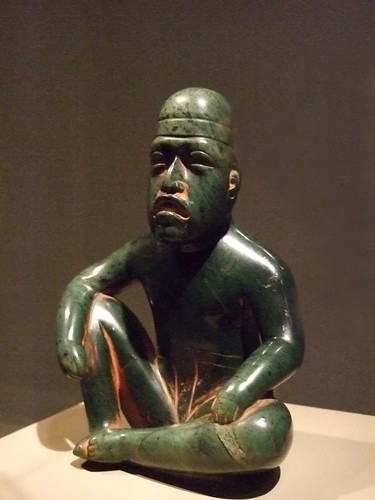
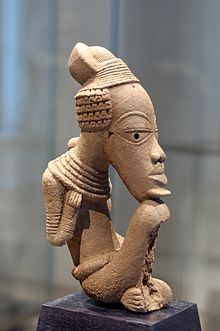
Negro_Ntns:Absolutely: http://www.ancient-wisdom.co.uk/menhirs.htm I don't like to rely on Wikipedia as a source, but this page shouldn't be too controversial. In any case, it's the images that are important: http://en.wikipedia.org/wiki/Menhir#History You'll see that Opa Oranmiyan in many ways is more similar to smooth-sided European monoliths than the angular, pyramidal shapes covered with hieroglyphs found in Egypt. Happy to provide more if you're interested although I think we're starting to get away from Ife and directly related cultures, which are at the center of the discussion. PhysicsQED:Art historical evidence is powerful and can provide evidence. I don't think anyone could deny the resemblance between the images you posted. However, as in physics, correlation in art and cultural production does not imply causation. Take a look at these images: https://www.sustainedaction.org/Images_Photos/StatueOlmecTensegrity.JPG https://farm1.static.flickr.com/165/384712257_f4be0e3cd7.jpg Compare them to the seated Tada figure, or particularly the many seated Nok figurines: https://upload.wikimedia.org/wikipedia/commons/thumb/e/e2/Nok_sculpture_Louvre_70-1998-11-1.jpg/220px-Nok_sculpture_Louvre_70-1998-11-1.jpg [img]http://mathildasanthropologyblog.files./2008/04/nokboy.jpg[/img] You start to see that superficial resemblances are fairly common in human cultural production. With more time, I could show the same similiarities with Roman art, Chinese terracottas and so on. I'm not against the idea and you and Negro_Ntns have pointed out some interesting correlations. My point is that none of the mainstream specialists in the field with professional qualifications agree that there's a direct link. |
| Culture › Re: BBC's Documentary On The 'Bronze Cast Head Of The Ife King' by TerraCotta(m): 5:15pm On Nov 13, 2011 |
Negro_Ntns/Physics: I can't copy and paste from my version of this book since its copyright-protected but see if you're able to read the following pages: http://books.google.com/books?id=6F4E6rKw928C&pg=PA85&dq=Ancient+Egypt+in+Africa+Yoruba&hl=en&ei=5Oi_Tua9AuX40gHrk4mrBA&sa=X&oi=book_result&ct=result&resnum=1&ved=0CDAQ6AEwAA#v=onepage&q=Ancient%20Egypt%20in%20Africa%20Yoruba&f=false If not, just do a search in books.google.com for "Ancient Egypt in Africa Yoruba" and it will bring you to the relevant section. Lakal--your translation of Osangangan is the one I know of as well (unless we're talking about stale oranges!). There are some references to the deity in Bishop Ajayi Crowther's writings as well but not much in the way of detail. I want to say that I remember AB Ellis mentioning Osangangan too but I'll have to search for the reference. The proverb you added is a great one too. You would really like Richard Burton's "Wit and Wisdom of West Africa", if you haven't already read it. It's available for free through Google Books since its out of copyright like many 19th century sources. Negro--Obelisks (and pyramids and hieroglyphs) don't seem to be limited to ancient Egypt and related cultures at all--they're all found in South America for instance. Opa Oranmiyan even resembles some of the stone monoliths found in England related to the Stonehenge builders. The superficial resemblance isn't enough justification for an actual cultural link. The example I'd suggest to you is the similarity between the Edo empire of Nigeria and that of Japan. They share a name but there's no evidence--cultural, linguistic or written--to suggest any links. We'd need more evidence to affirm this link. Physics--you'd asked about similarities between an Obatala image and an Egyptian sculpture. Could you post the two? You'll see the cover of "Ancient Egypt in Africa" compares an Ife terracotta with an Egyptian official. The book doesn't support the theory of a link though. |
| Culture › Re: BBC's Documentary On The 'Bronze Cast Head Of The Ife King' by TerraCotta(m): 6:19pm On Nov 12, 2011 |
Negro_Ntns: sorry o. I wrote a reply to that link to Crowther's dictionary. I'm very familiar with that book and other editions by Ajayi Crowther and other missionaries (there are about four or five I can think of). None of them have any information pertaining to Old HebRew. I'm looking forward to your responses, Physics. I have a digital copy of the book do I'll cut and paste the relevant pages today. |
| Culture › Re: BBC's Documentary On The 'Bronze Cast Head Of The Ife King' by TerraCotta(m): 4:21pm On Nov 12, 2011 |
I had a long response typed for Negro_Ntns but I lost it (I'm on an iPad). Please see chapter six of this book (much of it is available online): http://books.google.com/books?id=pbIjzvhhY6gC&printsec=frontcover&dq=ancient+egypt+in+africa&hl=en&ei=J42-Trn4LoLN0AGeyLGuBA&sa=X&oi=book_result&ct=result&resnum=1&ved=0CDIQ6AEwAA#v=onepage&q&f=false If you haven't read Ade Obayemi, Akin Ogunidran, Aribidesi Usman etc, it's hard to understand why this topic shouldn't be a matter of too much dispute. There are many professional archaeologists (many of whom are Yoruba) who have worked on the origins of Ife and the question of an Egyptian link. None of them agree with the theory because there is simply no proof. I can't use imagination as a reasonable standard of proof re: the Dutch and African-American examples. In those cases, we have documented proofs of a link. If you're asking people to imagine the possibility of Egyptian origin, we might also imagine the possibility of Greek, Etruscan, Mayan, Olmec, Arabic or Russian origins. This is why proof and rigorous evidence have to be the only acceptable standards. I'll be back later with more. |
| Culture › Re: BBC's Documentary On The 'Bronze Cast Head Of The Ife King' by TerraCotta(m): 10:13pm On Nov 11, 2011 |
Had to log in on a desktop, which I don't like to do but I thought it would be helpful. Here's the link to the Nupe speculation: http://drndagiabdullahi.tripod.com/id61.html Again, it's easy to guess and make all sorts of claims which is why wild guesswork that's not supported by written records or archeological work should be avoided. Also: Physics--a slight correction to my citation earlier of Hugh Clapperton as the first written source of the Oyo myth of origin. It was actually Richard Lander, who was Clapperton's assistant and who (with his brother) wrote a second journal on traveling through the area after Clapperton died. One last thing--I'm going to make a special post on the Oduduwa myths that will talk about Sultan Bello, the pros and cons of Rev. Johnson's excellent 'History of the Yorubas' (which is the foundation for most histories produced by native-born Yorubas) and the many other 'Iwe Itans' or native Yoruba oral histories written and published in the early 20th century. I'll also talk about the neglected and little-read 19th century sources like Richard Burton, TJ Bowen, the CMS missionaries, Campbell etc and why they're indispensable in understanding our shared history. |
| Culture › Re: BBC's Documentary On The 'Bronze Cast Head Of The Ife King' by TerraCotta(m): 10:06pm On Nov 11, 2011 |
I'm posting on a cellphone so forgive any odd breaks and the lack of more supporting links. I'm more than happy to discuss this topic (West African historical ethnography, specifically what's called the Niger River Basin including modern Nigeria) in much more detail but Nairaland isn't really the best venue for a serious discussion. Hope that doesn't come across as condescending--it's just an observation based on the tone people use here. Since we're all busy people, I want to be clear that I can only e part of civil discussions, not insults and ignorance. That being said--Negro_Ntns: you've made a spirited defense of your position on Yorubas as Old Hebrew/AfroAsian (as in the Afrasian language family? I'm not clear on what you mean). My earlier point was that there is no direct evidence to link ancient Egyptian and classical Yoruba or Edo cultures. The cultures are separated by a gulf of time (the current site of Ile-Ife was a collection of hamlets when Egypt was overrun by Assyrians and much of its native impressive culture abandoned). What followed were centuries of Greek and later Roman rule. This is an important point because if we link the rise of Ife around 500 AD to Egyptian influence, we will basically be agreeing with the racist historians and anthropologists who thought Greeks, Romans and sundry mythic Atlanteans were responsible for the refined works of art produced by that culture. I don't believe that and neither should you. Physics: In my last point, I said there's no direct evidence pointing to a link between Egypt and Ife/Benin etc. There is indirect evidence, which would be the Nok linkage mentioned in Physics' posts. What's interesting is that alongside the artistic similarities between the two, the dates of Nubian ascension and restoration of classical Egyptian forms matches up to the rise of 'Nok' (we don't know what they actually called themselves)--that is, around 800-700 BC, there were major events in Egypt that could have led to migrations southward. My problems with these possibilities, interesting as they are, are simple. A) While Nok artworks show some affinities with Egyptian ones, there's also a lot of variance. The stylized eyes and postures of Nok pieces are different from Egyptian conventions, so superficial similarities can't tell the while story. B) There's no evidence of Egypt's most distinctive artwork and cultural achievements--the pyramid tombs, mummification of the dead and the keeping of hieroglyph records. If these people were Egyptians or Egyptian-influenced, they weren't very faithful to the core of their culture. There's also the common sense issue I mentioned. Egyptians were desert-dwelling people. Why did they leave Libya, Morocco, Chad, Niger etc untouched to plant themselves solely in southern and western Nigeria? This seems more like speculation and less like anything supported by the historical and anthropological record. I don't discount the possibility and it's an appealing thought, since I believe Egypt was an African civilization. There's simply very little current evidence, other than the circumstantial. Negro-Ntns: Again, I believe you should be free to believe anything you wish. As Physics points out, linguists don't believe Yoruba and the languages spoken around the Nile Valley are linked. Interestingly enough, Hausa belongs to what was called the Nilo-Saharan group. I'm not sure how you know the language spoken at Old Oyo was Old Hebrew; every single reference I've ever read to it pointed to the language being very similar to current Yoruba, which is not similar to either old or current Hebrew. Again, I fully accept that I'm not all-knowing so please free to correct this with any info you have. I'd also add that I don't think it's good form to tell someone the meaning of words in their native language if you don't speak it. "Aken" is not a Yoruba word, so I don't think it's helpful to interprete it in Yoruba. It's through similar tortured 'interpretations' that we have people claiming that 'Oduduwa/Odua' have particular meanings in their language which have little or nothing to do with the Yoruba understanding. A few more points-- A) How many people know that the word 'birnin' means 'walled city' in Hausa? That's a far more likely etymology for Benin than the various ones you may have read on the Internet or in outdated books. Just a thought. B) Nupe is thought to have been mentioned as an extremely powerful city in the area of the Niger by the Arab traveler Ibn-Battuta in the mid-1300s. However, the actual reference he wrote is to a place called 'Yufi'. This could well be interpreted as Nupe (which is sometimes pronounced 'Nufe' or spelled 'Nyffe'). It could also just as easily be a reference to Ife, which as any native of Osun state will tell you, is properly called 'Ufe' in Ife or Ijesa dialect of Yoruba. Interestingly enough again, one of the finest pieces of Ife bronze art was found in the Nupe village of Tada. There's also a Nupe man on the Internet who claims that Nupe is the origin of all southern Nigerian ethnic groups (he seems to have a special interest in Yoruba though). Again, he doesn't seem to have any training or interest in established scholarship (he claims he's a medical doctor), which shows the danger of Internet speculations, I hope. I'll add the link later but more food for thought. In either case, the Nupe are still great brass casters and bead makers (the two great industries of Ile-Ife which made it a source of the prestigious materials needed for court rituals and kingship initiation). More food for thought. I'll add more when I get a chance later. 1 Like |
| Culture › Re: The Art And Architecture Of Yorubaland! by TerraCotta(m): 2:44am On Nov 09, 2011 |
Great thread. I wanted to make the quick point that much of this material has been explored in detail by art historians and archaeologists like Ade Obayemi, Frank Willett (whose book "Ife in West African Sculpture" would be great for everyone interested in this topic), Ekpo Eyo etc. They don't have all the answers by any means, but it's not helpful to speculate about the origins and meanings of this art and architecture without being more familiar with the existing scholarship. Lakal has been doing a great job and Tpia seems genuinely interested in this topic, which is why I suggest the approach. It's been established that terracotta and bronze works were contemporaneous, for instance. Dr. Akin Ogundiran's publications are an excellent place to start for recent archaeological information: http://africana.uncc.edu/people/dr-akin-ogundiran-phd |
| Culture › Re: BBC's Documentary On The 'Bronze Cast Head Of The Ife King' by TerraCotta(m): 2:12am On Nov 09, 2011 |
PhysicsMHD:Hi, Physics. I haven't posted on Nairaland in years because it's degenerated into the worst sort of ignorance and ethnic bigotry but your posts in the culture section are always measured, thoughtful and interesting to read (like Lakal, Anonymous6 and a few others here). I'd like to contribute some of the material I know on this topic--not random Wikipedia links, but peer-reviewed information from published books and journals--and correct some of the wrong information floating about. You're right to point out that claims that the Obas of Benin had their heads buried in Ife haven't been substantiated by archaeological finds. The archaeological record places "Orun Oba Ado" (literally, "the Burial Site of the Monarch of Ado" in the Early Formative Period of Ife development, which is ca. 500-800 AD. That's too early for the Eweka dynasty. However, Orun Oba Ado's continuous use as a royal cemetery and storehouse for prestigious art (including some of these brass/bronze and terracotta masterpieces) should suggest to you that Ife has a long history as a political center and that oral traditions calling it a resting place for the heads of deceased monarchs should be examined closely. We should also remember that contemporary Benin tradition's silence on the idea of the decapitation of deceased monarchs does not make it false. After all, there is no evidence for the idea that Oduduwa was an escaped prince of Benin named Ekaladerhan in Ile-Ife traditions, but you accept that as true. Furthermore, there's not one reference in the historical record to the idea that Oduduwa fled from Benin until the mid-1970s (that I'm aware of), despite many written records on the various myths of origin of the southern Nigerian dynasties. That hasn't stopped people from claiming its true. As you know, the earliest reference to the origin of the Oba of Benin dynasty recorded by Portuguese visitors in the early 1500s identifies the Oghene N'Uhe as the source of the dynasty. This is the earliest court myth we have from Benin and the tradition points to the interior as the origin of the monarchy. Whether you agree or disagree that this person was not Ooni of Ife (Ryder and Thornton have raised good points about this), it is indisputable that Uhe today is Ife, and the Oghene title is identified with the Ooni's dynasty. You may also want to read this interesting piece on the political manipulation of myths of origin, if you haven't seen it before: http://books.google.com/books?id=ikc8eMtaoT0C&pg=PA312&lpg=PA312&dq=oghene+uhe+Benin&source=bl&ots=hp1fFFoNwf&sig=RadJ24YAwFAuG4JnOmc5PGk6iyQ&hl=en&ei=z8u5TsDcNILy2QW-q52-Bw&sa=X&oi=book_result&ct=result&resnum=1&ved=0CBoQ6AEwAA#v=onepage&q=oghene%20uhe%20Benin&f=false Consider these points also: A) The term 'Oba' for a Benin monarch originates with the Eweka dynasty, which is acknowledged to have an Ife lineage through Oranmiyan/Omonoyan. It does not exist prior to that in the neighboring Edo languages (where the monarch of Benin was referred to as Ogie/Ogiso or Ovie), whereas it is the common and generic term for political leader in Yoruba, even amongst distant groups like the Yagba and other Okun Yoruba who don't have politically-centralized societies. Why would the descendants of Ekaladerhan not continue the usage of his title if he were truly the descendant of the Ogiso dynasty? B) Political centralization at Ife precedes any other dates we have for surrounding polities, even close ones like Ilesa/Ilare and fairly old ones like Ijebu. The earliest dates for Ife's formation as a village group date back to 500 BC, and its emergence as a center for jewelry manufacture and complex archeological finds like potsherd pavements and monoliths begin a thousand years later, by 500 AD. These dates are well before any similar ones we have for Benin (not discounting the future possibility of new archeological digs and discoveries, of course). C) I've read your citation of Burton and his reference to Benin as the source of Yoruba culture. I'm a big fan of Richard Burton, despite his racism, so please let me have your citation. I'll also add that Hugh Clapperton, who wrote the first detailed records of travels through western Nigeria in the 1820s (about 40 years before Burton) recorded the court tradition of Oyo that the monarchs at Oyo and Benin were descendants of the Ife dynasty. Despite this, the current Alaafin of Oyo disputes the primacy of Ife too. 4. My question about Iguegha was this: If you accept that this "Iguegha" from Benin tradition was indeed an Ife court artist who came to Benin, then what does that say about the Ife court? I don't accept the modification that makes his origin Ife, but for those that do, I can't see how they reconcile his name - and the fact that Edo speakers don't mutilate and massively bungle Yoruba names - with the claim about what his ethnicity was.I'm not sure why the name has to resonate with contemporary "Yoruba-sounding" names to make this a possibility. In any case, "Ige" is a very common Yoruba name (as in 'Bola Ige', meaning a "breech-born baby" according to Rev. Johnson's "History of the Yoruba). The same name is spelled "Igue" in Benin Republic, owing to French orthography. Hope you can see where this is leading--the transcription of one name over several hundred years (or longer?) is unlikely to be exact. That doesn't mean I believe the myth--I think it's unlikely that one artist found any of the bronze-casting industries, as I think it's unlikely that Oduduwa is just one historical personage--but you can't discount the possibility based the name not sounding like a familiar Yoruba name. There are 19th century Ife, Ijesa and Ijebu names that are now rare or obsolete that if you were to hear, would likely be as unfamiliar. As for Akenzua it is "a kon ze uwa" (one has to appear modest (play the fool) before attaining prosperity) according to a Benin tradition recorded in the book Art, innovation, and politics in eighteenth-century Benin. I don't see the Akhenaten angle.On this point, we agree. I don't understand the obsession with finding the "origins" of Yoruba, Edo etc. cultures in Egypt. Common sense dictates that Egyptians could not have flown over modern Libya, Chad and Niger to plant their culture only in southern Nigeria, ignoring modern Ghana, Togo, Cameroon, Congo etc. It's highly unlikely and doesn't hold up to scholarly scrutiny. The impressive cultural achievements of Ile-Ife and Benin were likely homegrown. They were possibly inspired by the earlier examples of Nok and yet-to-be discovered groups in the Niger-Benue confluence area but there's no direct evidence to suggest a link to Egypt and Nubia, which had gone into decline thousands of years earlier. Sorry I won't be replying much to this thread as I expect it to be swamped by children/bigots/ignorant people etc. soon. I hope you and Lakal keep posting your informative material though. The silent readers appreciate it. 4 Likes |
| Phones › Re: Is The New $600 iPhone Really Worth Investing In? by TerraCotta(m): 9:17pm On Sep 09, 2007 |
Patience has its virtues. I was thisclose to getting this phone a couple of weeks ago, and something/someone kept telling me not to rush it. Still on the expensive side, but at least it's a little more competitive with other high-end phones now. |
| Music/Radio › Re: What Are You Listening To Right Now? by TerraCotta(m): 2:50pm On Sep 08, 2007 |
Unison - Bjork |
| Music/Radio › Re: What Are You Listening To Right Now? by TerraCotta(m): 8:57pm On Sep 07, 2007 |
Remind Me - Royksopp |
| Investment › Re: When Will The Sky Shelter Fund Be Listed On The NSE? by TerraCotta(m): 3:04pm On Sep 05, 2007 |
Does anyone know of any other REIT offers like Skye Bank coming up? Also--if you're familiar with a real estate development firm called CityScape, please leave any information you have about their projects. They're working on some part of Tinapa but I believe they also have some projects (and their main office) in Lagos. Any info is a appreciated. |
| Investment › Re: Japaul Ipo by TerraCotta(m): 4:31pm On Aug 13, 2007 |
An interview with the MD in today's Punch--http://odili.net/news/source/2007/aug/12/417.html It would have been nice to get a little more info about the company. |
| Culture › Re: What Is The Significance Of The Yoruba Tribal Marks by TerraCotta(m): 3:50am On Jul 11, 2007 |
Donzman:LOL --Why am I not surprised that Donzman knows that I'm a plagiarist even though he doesn't read my posts  Anyway, I'm calling your bluff. You can either prove that "95% of TerraCotta's posts were plagiarized directly from some website" or you can add another apology to your long list. Every word was written by me, unless I specifically quoted someone. Please feel free to prove differently. Anyway, I'm calling your bluff. You can either prove that "95% of TerraCotta's posts were plagiarized directly from some website" or you can add another apology to your long list. Every word was written by me, unless I specifically quoted someone. Please feel free to prove differently.By the way, are you paying your debts in naira, dollars, pound sterling, or Euros? Hell, I'll even take cowrie shells  |
| Culture › Re: What Is The Significance Of The Yoruba Tribal Marks by TerraCotta(m): 6:09pm On Jul 05, 2007 |
Irish people don't seem to be as myopic as Naijas sha. Rotimi Adebari, the newly-elected mayor of Portaloise, Ireland and the first black mayor in Irish history, is living a successful life with his Ondo marks
|
| Webmasters › Re: Your Favorite Nigerian Website(s)? by TerraCotta(m): 4:54pm On Jul 05, 2007 |
Good luck to those promoting their sites, but some of the ones I've seen listed here wouldn't pass an average web design class  Nigeriaworld.com is the best for news on every Nigerian sector. News is broken down by state/region/industry/sports/politics/world etc.--it's a great resource. Their only problem is that they need to take a little more time to check cross-browser/CSS compatibility. I like abeokuta.org for the range of audio-visual content. I think the design still has a way to go (I would center the content window instead of having all that open space to the right of the screen), but their content offerings are among the best for any Naija cultural sites out there. Nigeriavillagesquare.com is where the intellectual heavyweights hang out, although it can degenerate into ethnic ranting every once in a while too. Some Nigerian newspapers lift essays off of NVS to publish as articles, which I think is a great compliment to the quality of the essays posted there. |
| Investment › Re: Dangote Flour To Float Shares At N15 Per Share by TerraCotta(m): 4:38pm On Jul 05, 2007 |
Panadol:Still doesn't sound final but it's good news overall--some people had said it would be as high as N22. |
| Culture › Re: What Is The Significance Of The Yoruba Tribal Marks by TerraCotta(m): 6:58am On Jul 04, 2007 |
ThiefOfHearts:Perfectly said. In any case, the ceremony's not just relegated to Asaba--that just happened to be the focus of this thesis, so I'm not clear on why the fact that Asaba has an obi or cultural ties to western Nigeria would be offered as an explanation for naming ceremonies there. Mbaise is not in Delta state and can hardly be said to be a peripheral Igbo area, yet there are naming ceremonies recorded there (despite the fact that people who live there may not know about them!). It's clear that many Igbos don't observe a naming ceremony. No one is arguing that. Pages and pages ago, I said that it was a dying tradition even n places where it was practiced and that not many people would know about it, just as with ichie scarification marks--I notice we're not disputing those any more, thank God. Those were once widely-practiced for Ozo titleholders too, but you'd be hard-pressed to find a man with those marks these days. Just because you have not heard of something or seen it with your own eyes does not mean it does not and did not ever exist. Many "Okun" Yorubas in Kwara and Kogi areas traditionally did not have obas or centralized governments. Ife people traditionally did not make facial marks. We cannot then say that Yorubas do not have obas or make facial marks. I sincerely don't see why this is even an argument. If you don't believe that there's such a thing as a naming ceremony in Igbo-speaking areas, fine. If you do, great. It was an answer to a question posed. Why it would become a cause of insults etc. is sincerely beyond me. Still happy to talk about "Yoruba marks and their significance." |
| Programming › Re: Is Java The Right Programming Language For Me? by TerraCotta(m): 6:20pm On Jul 03, 2007 |
This might be helpful--http://www.dmh2000.com/cjpr/ |
| Webmasters › Re: What Do I Need To Build A Research Website? by TerraCotta(m): 6:13pm On Jul 03, 2007 |
Interesting question. Do you have an example of what you have in mind? Something like this? I'm in the middle of a similar project. I can't really help with cost comparisons because I'm not in Naija. |
| Culture › Re: What Is The Significance Of The Yoruba Tribal Marks by TerraCotta(m): 3:54am On Jul 03, 2007 |
Donzman:Your question has been answered several times in other posts in the thread. I really don't know how you would have missed that if you read what has been posted. Laudate added a link several pages back describing a traditional Igbo naming ceremony in fairly great detail. It was written by someone you would ethnically approve of, but it seems you didn't bother to read it. I'll post it again (along with another detailed reference that tells you 'how it unfolds and the key players involved') if you can move this discussion over to the correct thread. Freewilly:I don't know why the naming ceremony thing is a topic of discussion either, although if your parents had gone as far as to block off a street or two in a major Nigerian city, some people here would have forced you to change ethnicities. Please back to tribal marks.I'd like to, but almost everyone else seems to be into this naming ceremony thing. TOH--Good night |
| Culture › Re: What Is The Significance Of The Yoruba Tribal Marks by TerraCotta(m): 9:45pm On Jul 02, 2007 |
It's interesting to note that "Isomoloruko' in Yoruba also literally translates as 'naming a child', not 'ceremony', 'feast', or 'wealthy Lagosians' street party'. Thanks to all our contributors on the naming topic. We will have to agree to disagree. This thread is probably a better place to continue talking about that issue, for those who want to: https://www.nairaland.com/nigeria/topic-11383.0.html It would be great if we could stick to the topic at hand in here, which is facial marks. Donzman--please indicate whether you're paying by paper or plastic. Thanks. |
| Culture › Re: What Is The Significance Of The Yoruba Tribal Marks by TerraCotta(m): 5:57pm On Jul 02, 2007 |
babyosisi:Big girls shouldn't cry, mama osisi. I was referring to the relatives you mentioned in that quote, and I mentioned your fellow chatters who didn't know about igu afa in another part of my post (quoted above). It's really not that complicated, is it It's spelled 'biloba', by the way. |
| Travel › Re: The Official Ibadan Urban, Rural Thread by TerraCotta(m): 5:25pm On Jul 02, 2007 |
Cool photos. Some of your shots remind me of this guy's project of photos taken in and around Ibadan: http://www.picturingnigeria.com/ It's been a looong while since I've been in Ibadan, but hopefully I'll touch ground there sometime this year. |