Ezeagu's Posts
Nairaland Forum › Ezeagu's Profile › Ezeagu's Posts
1 2 3 4 5 6 7 8 ... 102 103 104 105 106 107 108 109 110 (of 349 pages)
 Culture › Re: Igbo learning thread + Translator by ezeagu(m): 9:50pm On May 24, 2013 Culture › Re: Igbo learning thread + Translator by ezeagu(m): 9:50pm On May 24, 2013 |
odumchi: I never knew that. Thanks. What do they call 'thieves' in your part of Delta? Is it 'ndi oshi' or 'ndi ori'?Well for Agbor they call it ńdí óhii with the long i pronounced like in 'hi' 'sleep'. |
| Politics › Re: Faces of the SSS fallen Heroes by ezeagu(m): 9:22pm On May 24, 2013 |
No one has physically fought more for this country than the 'middle belter'. |
| Car Talk › Re: Flooded Obiwali Road, Rumuigbo, Port-Harcourt (Video) by ezeagu(m): 9:19pm On May 24, 2013 |
Liveair: The post is correct in its spelling. It is an Ikwerre word and not an Igbo word.Ikwere is still classified as an Igboid language. Let's avoid politics turning us into the ignorants and the cherrypickers. 3 Likes |
| Car Talk › Re: Flooded Obiwali Road, Rumuigbo, Port-Harcourt (Video) by ezeagu(m): 9:25pm On May 23, 2013 |
Mekky2010: Its Umuigbo and NOT Rumuigbo, time to stop/correct all these unnecessary misspellings in PH..'Rumuigbo' is Ikwere dialect. |
| Culture › Re: Is There Any Tribe/ethnicity That Has Exactly The Same Culture And Language? by ezeagu(m): 7:29pm On May 23, 2013 |
[quote author=PAGAN 9JA]THat does not prove they are mixed. It only means that since they live on the same territory they got similar lingusitic influences. As for the features, they got that for the same reson the Khoisan adapted it.[/quote]And why didn't the others 'adapt' to the environment in sich a short time? 2 Likes |
| Politics › Re: Enugu, The Pride Of The East. by ezeagu(m): 7:27pm On May 22, 2013 |
CFCfan: The new international terminal will have a total floor area of 25,000 sq meters, and will also serve as the airport's cargo terminal.So the pictures we're seeing aren't of the international airport? If not, do you have the info for the international terminal and where it is being built? |
| Culture › Re: Is There Any Tribe/ethnicity That Has Exactly The Same Culture And Language? by ezeagu(m): 8:02pm On May 21, 2013 |
Anyway, there are no ethnic group on earth that are not a mixture of at least a few ancient peoples. |
| Culture › Re: Is There Any Tribe/ethnicity That Has Exactly The Same Culture And Language? by ezeagu(m): 7:25pm On May 21, 2013 |
[quote author=PAGAN 9JA]The Zulu are not mixed with San. where are you getting this info from  The ZULU are a large ethnic group. if there was (m not saying it happened), but if there was slight intermixing , its all diluted.[/quote]What does diluted mean? You believe Bantu peoples who live right in former San land and who have San folds on their eyes are not a product of Bantu-San relations? How will you explain Bantu diversity in features over such a short time? Anyway, the Xhosa are Bantu-San mixed. [quote author=PAGAN 9JA]dont use Pygmies. that is offensive term. call them Baka and they are not mixed. one of the most ancient groups alive in fact.[/quote]I did not say the pygmies are mixed, I said that the expanding Bantu people mixed with them (and hunted them). There are other pygmy groups but the Baka. [quote author=PAGAN 9JA]The line is drawn from the time of the formation of current tribal groups from their respective Greater Ethnic Origin groups just after evolution and the largescale migrations, 100000s of years back. These are fixed groups now that have adapted and formed their cultures, religions etc.[/quote]Efik people existed 50,000 years ago? |
| Culture › Re: Is There Any Tribe/ethnicity That Has Exactly The Same Culture And Language? by ezeagu(m): 11:22pm On May 20, 2013 |
Many South African groups, including the Zulu, have mixed with the San. Your ideology would mean that the enitre Bantu peoples are not indigenous to anywhere since they migrated and mixed with other groups (through remigrations) such as the pygmies and San, and also east African non-Bantu, only a few thousand years ago. Modern humans have been on earth for at least 200,000 years ago meaning that it's practically impossible that African groups come from non-mixed origins. Where do you draw the line? 20,000 years ago, 2000 years ago? 299 years ago? It's not logical. |
| Culture › Re: Is There Any Tribe/ethnicity That Has Exactly The Same Culture And Language? by ezeagu(m): 9:54pm On May 20, 2013 |
[quote author=PAGAN 9JA]^well atleast this proves something. Diversity is a part and parcel of human ways. a part and aparcel of this world. diversity is here to stay. therefore we must protect and preserve our tribes and prevent them from interrbreeding and forming one uniform, weak, human half-bred population.[/quote]But many of the tribes were formed by different migrations of people. Ethnic groups like the Xhosa are a mix of the San people and the Bantu as evident from their features, such as the fold in their eyes. Other more obviously mixed groups are the Somali and Afro-Arabs. |
| Politics › Re: Wole Soyinka's Interview About Chinua Achebe by ezeagu(m): 9:23pm On May 20, 2013 |
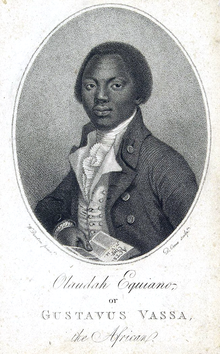
Afam4eva: You've still not answered my question. Tell me which African writer before Achebe gained global or even National prominence. This is not about European colonialism.https://upload.wikimedia.org/wikipedia/commons/thumb/7/78/Olaudah_Equiano_-_Project_Gutenberg_eText_15399.png/220px-Olaudah_Equiano_-_Project_Gutenberg_eText_15399.png teehee 1 Like |
| Culture › Re: Is There Any Tribe/ethnicity That Has Exactly The Same Culture And Language? by ezeagu(m): 8:50pm On May 20, 2013 |
TerryCarr: japan, Korea, Swaziland, Lesotho, ZuluJapanese is split into dialects, so is Korean, the better known dialect based on the capitals Tokyo and Seoul are the standard dialects. There are no groups with uniform culture. It's not possible. |
| Culture › Re: Is There Any Tribe/ethnicity That Has Exactly The Same Culture And Language? by ezeagu(m): 2:20pm On May 19, 2013 |
Mandarin (or national language) is just a standard form of Chinese based on the old Beijing civil-service dialect. In reality there are still many Chinese dialects like Wú (spoken by 80 million) and Xiāng (38 million). Some even argue that the Chinese is a language group instead of a single language, but the Chinese disagree. However Chinese writing is done mainly in Mandarin. All Chinese dialects like Cantonese and Mandarin, are not mutually intelligible. The Han don't have a uniform culture without change (unless Hong Kong culture is the same as Shanghai culture), they were once separated into different Kingdoms before the Han dynasty. 1 Like |
| Culture › Re: Is There Any Tribe/ethnicity That Has Exactly The Same Culture And Language? by ezeagu(m): 8:20am On May 19, 2013 |
somalia9: what an idiooot, somalis are ethnically somali. We have clans not tribe. clans are families that make up the somali family. Their was always somali states, ajuraan, sultans, somalia the nation just became a country in 1960.Well the topic has gone right over your head. And you have mouth to call somebody an idiot, then you went on to repeat exactly what I said about multiple Somali states. Many of the so called clans don't even like each other and their squabbles have been a major hinderance to any Pan-Somali-ism. The topic is about whether there is an ethnic group that has no slight changes in culture and language. The Somali do not qualify. They don't even all have the same political history. Now who else. 1 Like |
| Culture › Re: Is There Any Tribe/ethnicity That Has Exactly The Same Culture And Language? by ezeagu(m): 10:39pm On May 18, 2013 |
somalia9: somali people have culture and speak somali language and are homogenousSomali are split into different clans which all have variations of Somali culture. There was never a Pan-Somali state until the arrival of Europeans. 1 Like |
| Culture › Re: Is There Any Tribe/ethnicity That Has Exactly The Same Culture And Language? by ezeagu(m): 8:10pm On May 18, 2013 |
Antivirus92: why and how do those changes occur?Whenever people encounter difference in environment they adapt to it. People, given time, will always put a slant to something. There are many reasons which include political, environmental, and other historical factors. For example, a part of a particular group may come under influence of another group and then there's a variation. Just think in a nuclear family there may already be slangs or traditions that are particular to that family, as the family grows so also do these traditions grow and become part of the wider culture. 1 Like |
| Culture › Re: How Do You Identify Articulate Nigerian Language Speakers? by ezeagu(m): 5:38pm On May 18, 2013 |
[quote author=nnenna.1]Would you say that being a native speaker is the same as being a masterful speaker? The difference is clear-cut for many of the Romance languages. I really mean speaking in a way that differentiates one intellectually from the rest. Does this exist in a native Nigerian language?[/quote]Yes it does. Throughout history there have been prestigious dialects which were usually from a more successful region or an administrative centre of the language region (like a capital). The reason why it seems like European or Romance languages have it clear-cut is because the prestigious dialects (usually of the capital) have become the standard dialect and intellectual standard of those language speakers, so that anything that deviates from it may be perceived as uneducated. 'Proper English' in Britain and for former non-white colonies (meaning those that did not officiate their own kind of standard English) is based on the central London dialect. 'Proper' or Standard French is based on the Parisienne dialect, Italian on Rome, Spanish on Madrid, Chinese on Beijing, and so on. Among Nigerian languages there are dialects that are considered backward or spoken by the least educated. Among Igbo for example, (although this may be controversial) the northern dialects (specifically Onicha-Nri-Oka) are seen as more prestigious and is usually spoken as the true standard Igbo (even though the manufactured one is woven from southern dialects) and is the dialect which most non-Igbo speakers are familiar with. There are Igbo dialects that are considered backward or archaic by many, but I won't say which one. A big clue would be to look at the Igbo states with the worst poverty rates. The film I posted earlier was done in 'Anambra' Igbo (even though there is a 'Standard Igbo'). Mind you, in the past, the dialect spoken in Arochukwu may have been seen as prestigious among southern Igbo groups since they controlled the oracle and yielded much power of Igboland after the 1600s and till 1900. My guess is that Ibibio, which was the second language of Arochukwu and which the Aro spread around southern Igboland, may have been the language of 'education' since till this day it is the language of the Ekpe society found in southern Igbo land. Ekpe was once the ultimate judicial organisation and they also spread the knowledge of nsibidi, symbols that could have developed into full writing. Nri-Oka dialects have become prestigious for many reasons including economic success, European interaction (some of the first missionary In many parts of Igboland people are complaining about the disappearance of their dialects (and culture) in favour of Onitsha-Nri-Oka dialects, especially among people who work in those communities. This is similar to the way American English is starting to influence the English-speaking word because of their economic power, but for historical reasons (the British Empire) London British English (Received Pronunciation) is still seen as the dialect of the educated ones. You may also notice that the Yoruba known to non-Yoruba speakers is usually based on the Ibadan/Oyo dialects (no surprise since the former Oyo empire dominated most of the Yoruba), Ibibio on Uyo, and Efik on Calabar. Efik and Ibibio are both thought to be dialects of one language, although the Efik have historically seen themselves as more educated and 'civilised'. I don't know much about Hausa-Fulani politics, but I can guess that the prestigious dialect of Hausa is based on the type spoken by the Sultans and probably has a whole load of Arabic and Fula influence. Just like in any language, being a native speaker doesn't necessarily mean you have a very large vocabulary. In the olden days the people who had a high vocabulary in Igboland were Dibia or priests and probably ndi mgbere (traders) because their professions required it and they were the most 'exposed'. The person I mentioned in another post that could speak Igbo well has a higher vocabulary than an average Igbo-speaking person who has lived in the countryside all their lives (and I'm suspecting he's at least connected to traditionalism or the dibia arts in some way). 2 Likes |
| Science/Technology › Re: Why Do Mosquitoes Buzz In Our Ears? by ezeagu(m): 4:50pm On May 18, 2013 |
If I remember correctly, the noisy one is male, and the one that draws blood is female. |
| Culture › Re: Is There Any Tribe/ethnicity That Has Exactly The Same Culture And Language? by ezeagu(m): 3:26pm On May 18, 2013 |
It's not possible, even villages have changes. |
| Culture › Re: Igbo learning thread + Translator by ezeagu(m): 7:50pm On May 14, 2013 |
odumchi: Thanks for the thorough explanation of Nsofor, Odenigbo. Now, again with my questions.In Ogawshi axis they had Umu ifuru, ifuru = flower. |


1 2 3 4 5 6 7 8 ... 102 103 104 105 106 107 108 109 110 (of 349 pages)