Ezeagu's Posts
Nairaland Forum › Ezeagu's Profile › Ezeagu's Posts
1 2 3 4 5 6 7 8 ... 99 100 101 102 103 104 105 106 107 (of 349 pages)
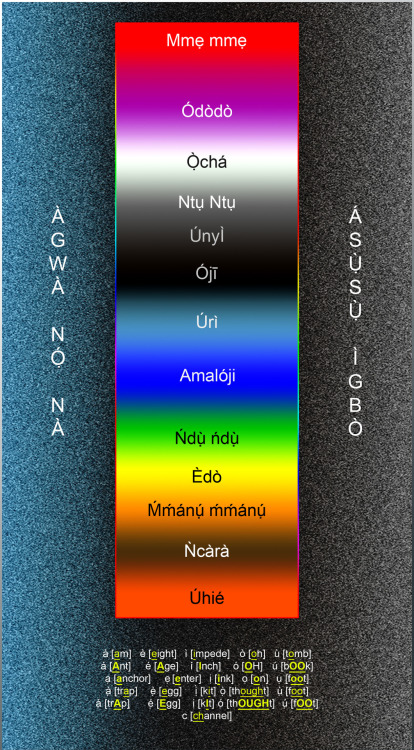
 Culture › Re: Do You Know The Names Of Basic Colours In Your Local Language? by ezeagu(m): 9:06pm On Sep 27, 2013 Culture › Re: Do You Know The Names Of Basic Colours In Your Local Language? by ezeagu(m): 9:06pm On Sep 27, 2013 |
4 Likes |
| Politics › Re: GDP in Relation to Poverty in Nigeria: Why are Igbo States Low by ezeagu(op): 7:59pm On Sep 20, 2013 |
I don't know. |
| Celebrities › Re: Agbani Darego Flaunts Her AD Denim Line by ezeagu(m): 8:58pm On Sep 19, 2013 |
onila: No black country can produce another beauty queen like this in the next 50 yearsThat's a pretty lame thing to say. |
| Politics › Re: GDP in Relation to Poverty in Nigeria: Why are Igbo States Low by ezeagu(op): 7:15pm On Sep 19, 2013 |
Thread in relation: https://www.nairaland.com/1439666/enugu-one-poorest-states-nigeria |
| Politics › Re: Enugu Is One Of The Poorest States In Nigeria. by ezeagu(m): 7:13pm On Sep 19, 2013 |
| Politics › GDP in Relation to Poverty in Nigeria: Why are Igbo States Low by ezeagu(op): 7:43am On Sep 18, 2013*. Modified: 9:49pm On Sep 20, 2013 |
It seems that a lot of Nigerians (if you use nairaland to judge Nigerians) do not know the very basic way the Nigeria economy works or do not want to. There have been a lot of debates about GDP and the poverty of Nigerian states/cities and Nigeria itself on nairaland. Not only is it obvious that it is possible that a country can have a high GDP but can be populated with thousands or millions of poor/working class people (United Arab Emirates or "Dubai" ), but this ignores the strict way of judging a places GDP. GDP refers to the value of the official goods and products and services a place makes. There is a reason why they specify official, because in every country on this earth you also have what is called an informal economy or sector. The majority of citizens in countries like Nigeria live off of the informal sector. Countries like Nigeria have not yet incorporated a large amount of the business in the country to the formal sector, and many people do not feel like paying tax even if they could. If you go by the GDP of Nigeria, it means that Nigerian's roughly make $1,400 a head, if you add in the rough estimate of the informal sector (because no one can give the correct number of it's size) then this figure per head jumps to $3,900. In fact Nigeria's $451 billion GDP jumps to over $600 billion when the conservative estimate of the informal sector is added. [Link] What does this mean? In Nigeria the majority of businesses run by people is informal. GDP is merely counting official things like civil service, agriculture, large scale businesses and so on. To put it simply, businesses that are taxed and registered are part of the GDP. GDP does not include Mama Nekchi's boutique shop, Mallam Ibrahim's suya joint, or Mr Oyetunde's mechanic shop because none of these businesses are taxed. This is why Western media outlets usually say Nigerian's live on one dollar a day or less because the $30,000 cars Emeka is importing doesn't count towards the economy, appart for maybe shipping handling. GDP of a state in Nigeria does not reflect the level of business in a state. For example, if Jigawa State were to produce groundnuts and a few other agricultural products, and Delta, for example, produced none, it would read that Jigawa has a better economy than Delta, which is a sense true because you can't rely completely on informal sectors, but it also does not show that the average groundnut farmer is making $2000 a year, while an Delta State citizen, because of the informal sector, is make $6000. Let's start to read into things more. 2 Likes |
| Culture › Re: Igbo Architecture | Ụlọ omé n'Ìgbò by ezeagu(op): 10:33pm On Sep 12, 2013 |
Some Igbo architectural terms: énété - verandah mgbáchí - ceiling mkpọ́chí - roof ídé - post |
| Culture › Re: A Description Of 18th Century Nigeria - By A Nigerian Eyewitness by ezeagu(m): 1:25am On Sep 08, 2013 |
It's 'Essaka' not 'Effaka' (old styled S looked similar to f) |
| Jobs/Vacancies › Re: When You're Asked To Log In Into Your Facebook Account During A Job Interview by ezeagu(m): 8:17pm On Sep 07, 2013 |
Why don't they just install CCTV all over your house, or better yet, a mini-cam to wear at all times! There's a difference between a background check and outright invasion of privacy. |
| Politics › Re: Enugu, The Pride Of The East. by ezeagu(m): 10:24pm On Sep 04, 2013 |
Afam4eva: Does Enugu have a city center? I think a part of Enugu should be designated as the city center and a very big roundabout with a fountain and a statue with infrastructure to go with it.The city centre is in the independence layout around the stadium and the other monuments. The place is dead quiet usually and the idea of putting large roundabouts/fountains at the centre of the city may be little old fashioned. It's all about Rail terminuses and Central Business Districts which every city but Lagos is lacking. 1 Like |
| Politics › Re: FG Vows To Protect Nigeria’s Languages by ezeagu(m): 10:19pm On Sep 01, 2013 |
juman: Yes and yes.Like French are enforcing the study and learning of German or Japanese are learning Chinese, okwa ya? |
| Christianity Etc › Re: Ifa Heritage University, Oyo & Prof. Wande Abimbola by ezeagu(m): 5:55pm On Aug 31, 2013 |
Infoay: Jesus Christ remains the only way, the truth and the life. Repect and give your life to Christ if not you will ífà in hell. Be warned!If you know that to be the truth then keep that to yourself, you are not a qualified preacher and you've never met God before. |
| Culture › Re: Is Igbo A Relevant Language? by ezeagu(op): 10:16pm On Aug 29, 2013 |
Abagworo: Igbo language is losing its relevance daily because of the refusal of Igbos to agree on who is Igbo and what dialect to adopt for all Igbos. Any time such discussions come up, it is usually turned into a supremacy battle and people end up giving reasons why they are either the purest Igbos or only started speaking Igbo as a result of inter marriage or other forms of interaction. Today nobody teaches with Igbo, there are no Igbo newspapers, no Igbo signs for businesses, Igbo parents communicate with their children at home using English. Its such a shame.I don't think the problem is dialects, if that were simply it then the attitude towards Igbo speaking might be the opposite from what it is now, people would be competing for their dialects to have the most relevance, plus the majority of Igbo dialects are mutually intelligible so it wouldn't be that. There are hardly any languages without dialects, even some with a wider spread than Igbo like German have world renowned and legendary literary icons. Icelandic is spoken by about 350,000 people, roughly 1% of the Igbo population yet they go as far as inventing a word for television in their language (see: Linguistic purism in Icelandic). You can't tell me that the amount of people who speak the Nnewi dialect, for example, are less than the population of Finland. Of course I understand social circumstances as well, Nigeria isn't exactly competing with Iceland in terms of human development, security, education, etc, but it's a good thought. |
| Culture › Re: Is Igbo A Relevant Language? by ezeagu(op): 10:05pm On Aug 29, 2013 |
ChinenyeN: Language is first and foremost about communication, and Igbo speakers use Igbo as a natural mode of communication. By definition, they speak it as a first language. So, it is relevant. At the same time, there is no denying that Igbo speakers seem to want to treat Igbo language as more of a relic [with missing pieces - i.e. lexicon lost to apparent oblivion] than as something organic, with the potential for growth and specialization.That's what I was saying, Igbo is kind of like Latin in that it is used for special occasions (in a formal way) but is considered dead. I should have expanded by saying that I mean relevant in terms of impact on speakers everyday life, like in education and so on. |
| Culture › Re: Is Igbo A Relevant Language? by ezeagu(op): 11:53pm On Aug 27, 2013 |
[quote author=nnenna.1]Depends on how you look at it. It is still the major means of communication among the majority of indigenous people living in the SS and SE. It is the mother language that people living the East feel comfortable using on instinct. That is as relevant as a language gets. Most Easterners and Nigerians at large are not 100% fluent in English. Perhaps for SEners Igbo Language is viewed as more of an informal, non-standard one - as opposed to English, which is our official language and taught in schools. The implication there that it is also used among the elite class in politics, journals, and scientific discourse. An offshoot of colonial powers. From this perspective I would have to agree with you. However, this isn't particular to Igbo language if we compare notes with all of Sub-saharan Africa. Let me say that it is also relevant for Igbo-Conscious speakers who are making efforts to keep the language going anyway until mechanisms are in place to standardize it across ala Igbo. Which brings me to question I was meaning to ask you...do you subscribe to the other points I discussed in my initial post, and hence view Igbo as being worthy enough to sustain to the level or relevance you describe? In other words, what does the Igbo Language mean to YOU?[/quote]Your point about the instinctual use of Igbo is one I was fishing for, but what Igbo means to me today is that the majority of it's speakers don't know what the word for sea is, 'fluent', or not. My focus is mainly on the younger generation under 35 who are worse than their parents at speaking the language, if they speak it at all (there are people born and living in Igbo speaking areas that don't speak Igbo, sometimes by choice). But I haven't yet been convinced as to why Igbo should still be pushed when most people strive to attain perfect English. I'm questioning why there should be a struggle to maintain a broken watered down Igbo when you can just learn good English? Most people with an education speak good English, which means that people who don't speak good English don't do so because they are underprivileged. You can use the same argument to place pidgin English on the same level as Igbo which I believe many people including myself do not agree with. Andre Uweh: The scientific names does not apply to the Igbo farmer growing this shrubs and vegetables.The shrub and vegetable Igbo names can easily be erased, just like how other terms in Igbo have been erased, for example Igbo people call the Oji tree Iroko now. If an Igbo speaker were to write a report on those vegetable, the Igbo names would be in the margins while the Greek-Latin names would be used. Right now, the majority of the people on this thread are Igbo speakers but are writing in English and that is not because of politeness or dialect, but because the majority of Igbo speakers have not learnt a consistent way of writing Igbo and cannot express intellectual thoughts in Igbo. |
| Culture › Re: Is Igbo A Relevant Language? by ezeagu(op): 10:45pm On Aug 27, 2013 |
Andre Uweh: The importance of the Igbo language is so many. As you know, the English language does not cover every aspect of the Igbo ways of life. For example, in our diet, we have lots of food which the English does't know about it and its not grown in England but in Igboland. Ụna, imeguru, ikpuru, akashị, wokoroko etc, IS STILL PRESERVED IN OUR iGBO LANGUAGE.I could be wrong but I'm going to guess that those vegetables have scientific names, plus most Igbo people believe ancestral shrines are of Satan. |
| Culture › Re: Is Igbo A Relevant Language? by ezeagu(op): 10:43pm On Aug 27, 2013 |
[quote author=nnenna.1]The question you should be asking is: do enough Igbo people believe that Igbo language SHOULD be relevant?[/quote]That's my point, if the majority of the people who speak the Igbo language do not see it as a language of learning and education, politics (meaning it's not growing plus there's no literature), then what makes it relevant? |
| Culture › Re: Is Igbo A Relevant Language? by ezeagu(op): 10:40pm On Aug 27, 2013 |
Antivirus92: Go and read the history of this ur so much praised english language. There was a time when the english language was a language of peasants(poor) farmers,illiterate traders and other locals. But with perseverance from the speakers. It attained its present position. Why cant we do the same for igbo. We igbos are the major hinderance to our own progress.English only came back because the Normans intermarried with English women, plus they evacuated England after several hundred years. Latin was the language of education anyway and English was written before the invasion and continued to be. |
| Culture › Re: Is Igbo A Relevant Language? by ezeagu(op): 9:11pm On Aug 27, 2013 |
The problem isn't so much a question of borrowing words, but of replacing pre-existing words or just being lazy with vocabulary. Most Igbo people don't know what the word for comet or even river is. But the issue is more to do with the fact that it's kind of pointless to borrow every word for sciences and new discoveries from English when you can just speak English, and people do just speak English in Science classes anyway. English may have borrowed much for French and Latin, but at least it's still being used as a language of science. Right now is a good example, everyone on the internet uses English, so if English is the active language in almost everything that is important my question is what is the point of the Igbo language? |
| Culture › Is Igbo A Relevant Language? by ezeagu(op): 8:26pm On Aug 27, 2013 |
Yes, there have been hundreds of online discussions considering the 'extinction' of the Igbo language, but this is not what this thread is about, it's roughly the opposite actually. Note: 'Igbo speakers' here refers to people living in the Nigerian states of Abia, Anambra, Delta, Imo, Enugu, Ebonyi, and Rivers who speak a variant of Igbo. Look at these stats that I have observed first (I'd be happy for you to challenge any or all of them): Igbo is spoken primarily by a people who on average speak English well-enough to pass a Nigerian primary school English exam, which is obviously done in English. The Igbo speakers primary language of education is English; all the scientific terms, political terms, medical terms they know, and so on, are primarily (over 90%) English, including terms for new human discoveries. When Igbo speakers communicate in Igbo at least 25% of the conversation will contain some kind of English or even another non-Igbo language that isn't European. Almost no significant writing outside of Igbo Waec is done in Igbo and Igbo literature is non-existent; all signage in actual Igbo enclaves are done in English (River Niger Street, Nnamdi Azikwe Way, National War Museum); when an Igbo speaker reads a book, especially about something that isn't related to actually learning Igbo, there's a 99% chance that the book is in English, the 1% may be for French speakers. And the stats go on, including the fact that a lot of Igbo speakers actively suppress speaking Igbo or try to stop their children learning it so that the majority of the children in the diaspora either cannot speak Igbo, or cannot speak or understand the language at all (this fact isn't so much of a problem because how many people born out of Estonia with Estonian parentage can speak Estonian? Then again the number of Igbo speakers is more than 30 times that of Estonian, but this is too much of a derailment). The addition to my question is: Is Igbo a language we're just forcing ourselves to speak for the sake of speaking it and for posterity? Is it a living language or simply a dead language that many people happen to speak (I hope you know what I mean)? To put it more harshly, is Igbo a waste of time to be speaking when we can just be speaking and perfecting out English, a language that is actually used for the majority of important things, as opposed to a 'museum language' used for addressing elders at village meetings and MC'ing at cultural parties? Why do we have to raise the amount of people speaking Igbo when English can be just fine and has the resources that the Igbo language will require some serious work to catch up to? I hate to compare, but I can roughly and quickly explain why certain languages spoken by a smaller percentage than that of Igbo speakers are relevant like Icelandic or Finnish. I feel like the answer that 'it's the ancestors language' and that 'it's ours' isn't satisfactory anymore. I, and probably some others (like those who bar their children from speaking Igbo), want to know if there's any future in Igbo and what the actual point is of speaking Igbo when everybody with an education can communicate their ideas best in English (even with people like Chinua Achebe)? This post doesn't necessarily reflect my opinion on this matter. |
| Politics › Re: Pictures of first international flight from Enugu. by ezeagu(m): 10:33pm On Aug 26, 2013 |
Symphony007: this is'nt rocket science. Arik came about and still exist because it charges outrageous amounts for flight ticket so as to cover the disgusting cost of doing buisness in nigerian airports. Same with other internationals. Nigerian flight tickers are high because our airports are a mess and the cost of doing buisness is high. Where do you think they make their profits from?And how does this counter the point that multinational airlines make millions from Nigerian airports, parking charges or none? With air traffic in those two airports going upwards of 14 million people every year, and Nigerians spending millions every year on baggage allowance alone, it's not a surprise that these airlines are willing to put up with the infrastructure, and they will be willing to expand to Enugu. |
| Politics › Re: Pictures of first international flight from Enugu. by ezeagu(m): 9:42pm On Aug 26, 2013 |
Symphony007: they already make millions from abuja and lagos airport. What millions? Why do you think air ticket is so costly in nigeria? Because of the cost of doing buisness compounded with poor infastructure. Why was BA taking off with nigerian passangers from ghana? Why is no foreign investor coming to invest in the nigerian domestic flight industry to the extent the government is considering buying planes for airlines?So what you're trying to tell me is that British Airways and the rest, multi-billion dollar companies, are making less than millions in Nigeria's airports or are losing money in these airports that are part of the busiest airports in the world? So can you explain how Arik Air came about? |
| Politics › Re: Pictures of first international flight from Enugu. by ezeagu(m): 10:38pm On Aug 25, 2013 |
Symphony007: Well, you all can keep fooling yourselves. Let's wait and see which foreign carrier will land their airbus 360 or boeing dream liner in that trashy bus station of an airport.When the international wing is finished and if the Federal Government raises the fence everybody from Virgin to Delta to British Airways will be clamouring for this airport. These people already make millions from the rubbish airports in Abuja and Lagos, so what would the difference be with a soon-to-be expanded international airport in Enugu when their market research already tells them that a significant amount of people headed to Abuja and Lagos are ultimately destined for the areas around Akanu Ibiam airport. |
| Politics › Re: Pictures of first international flight from Enugu. by ezeagu(m): 10:33pm On Aug 25, 2013 |
Symphony007: May God!! My fellow nigerians are celebrating this as an airport? Look at the overcrowded chocked up spaces, no barriers to control crowd, look at the ticketing section, is that not a concret slab? No glass between the passanger and staff, see outdated luggage carrier.That's Japan. |
| Science/Technology › Re: Satellites Glimpse Ultra-powerful “black Hole” Whirlpools In Atlantic by ezeagu(m): 8:22pm On Aug 25, 2013 |
Provie: This is d channel thru which water is drained away from the earth, otherwise d earth wuld hav bn drowned long ago; if every water merges into a bigger one, where does d bigest ocean flown into? This might just be d answer.Are you being serious? |
| Culture › Re: Igbo Homophone Game by ezeagu(op): 10:37pm On Aug 19, 2013 |
Ézè ézé è zé è zé ézé Trans: The king avoids gears 2 Likes |
| Culture › Re: Igbo Homophone Game by ezeagu(op): 10:34pm On Aug 19, 2013 |
Mmá mma mma má mma Trans: Greetings to the great beauty 2 Likes |
| Culture › Re: The 'sh' Sound In The Igbo Language by ezeagu(m): 9:20pm On Aug 19, 2013 |
odumchi: My question is: what is the cause(s) of these varieties?That can be properly be revealed through good research, so not a nairaland thing. |
| Culture › Re: The 'sh' Sound In The Igbo Language by ezeagu(m): 11:33pm On Aug 18, 2013 |
Same for /n/ and /l/ or /r/ and /h/ or /h/ and /f/. |
| Culture › Re: Igbo Homophone Game by ezeagu(op): 11:26pm On Aug 18, 2013 |
[quote author=nnenna.1]Could you do one with akwa?[/quote]Àkwá à kwá ákwà ákwá à kwá Trans: The egg wove this cloth for crying as well. 4 Likes |
| Culture › Re: Igbo Homophone Game by ezeagu(op): 9:14pm On Aug 17, 2013 |
ChinenyeN: Fun. What of aspirants and nasals? As part of the game, would we count them as homophones alongside normal stressed sounds, or are they to be counted separately?The aspirants are fine, so should nasals. |


1 2 3 4 5 6 7 8 ... 99 100 101 102 103 104 105 106 107 (of 349 pages)