Ezeagu's Posts
Nairaland Forum › Ezeagu's Profile › Ezeagu's Posts
1 2 3 4 5 6 7 8 ... 103 104 105 106 107 108 109 110 111 (of 349 pages)
 Culture › Re: Maps Of Kingdoms, Peoples, States, And Cities In Africa Through Time by ezeagu(m): 10:11am On May 12, 2013 Culture › Re: Maps Of Kingdoms, Peoples, States, And Cities In Africa Through Time by ezeagu(m): 10:11am On May 12, 2013 |
TerraCotta: That's where we disagree. Two sentences from 1935 is proof that Jeffreys recorded a claim to Igala ancestry (I will leave out his dissertation references since we don't have easy online access to it). The argument isn't whether or not Nri truly was derived from Igala. That's beyond the point of this discussion. You seem to be saying that Jeffreys made this claim up arbitrarily (why not Jukun? Ife? Benin?) and didn't actually ask Nri residents of the 1930s where they thought their culture came from. Considering the useful and specific information he provided on Nri coronations, scarifications and religions, I tend to believe that he did ask and recorded a claim that he heard. That doesn't make it true that Nri was somehow an outpost of Igala, since claims aren't proof of reality as Physics and I have established in the other discussion on the thread. All we establish--if we believe Jeffreys and I have no reason not to--is that people in Nri claimed Igala ancestry when he spoke to them.Why not Ife, Benin or Jukun? Right after the claim that Nri traditions claim they came from the ruling stock of the Igala, Jeffreys implies that kingship among the Igala, Yoruba, and Igbo come from the Jukun. After that he claims these cultures are "uniform". We've already seen that Jeffreys is biased towards diffusionism. I've been saying that the claim may be a misinterpretation, not that it was made up. The claim fits well with the history according to Nri people that one of Eri's children helped found Idah, which the Nri say they are connected to and through ritual journeys by Nri people to Idah. I haven't read any modern source that implies that this claim indicates that the Nri claimed descent from Idah. TerraCotta: Two sentences from 1935 is proof that Jeffreys recorded a claim to Igala ancestry (I will leave out his dissertation references since we don't have easy online access to it).This isn't proof that the Nri claimed descent from the Igala. You can reference the dissertation if you have it. TerraCotta: I don't think current differences in language, religion, rituals and tradition invalidate the possibility of a link. You raise good reasons to be skeptical about the claim, but you don't recognize any of the possibilities that explain the claim--ie, the Nri found Igala to be the most prestigious nearby culture they had knowledge of (perhaps through the Onoja Oboni interactions) and wanted to show some affinity to them when the colonial officials came asking about their culture. That type of exaggerated affiliation is the core of my discussion with Phsyics.All this is referring to a claim we cannot verify because we don't have anything from the Nri themselves that would be enough to analyse the politics of that era. We need to have a basis to reach a conclusion. Jeffreys claims would not be published by objective sources as absolute proof that the Nri once claimed descent from the Igala. TerraCotta: There's a subtle difference in the two ideas. Jeffreys interpretes Chukwu as a sun-god (or a sky-being later on; the difference seems semantic to me) and also guesses that Nri culture, like Jukun, Bini, Yoruba etc are ultimately derived from Egypt. Those are his (probably wrong) interpretations and he does not seem to credit the Nri for giving him those conclusions. When he says "Umundri traditions is that they come from the ruling stock of the Igala", he clearly attributes that to first-hand data he was told--like the meanings of the ichi, for instance--and not his own speculation or theory.No there isn't a subtle difference between Chukwu, the ultimate being, and Anyanwu the actual sun deity that Nri people venerate. Semantic difference only goes to show that things can be easily misinterpreted. Semantic or not, You can't misrepresent the actual sun deity of a culture that places much emphasis on the sun by completely confusing it with another concept. That's why Jeffrey's notes the "imperfect state of our knowledge of West Africa". TerraCotta: Those are his (probably wrong) interpretations and he does not seem to credit the Nri for giving him those conclusions.So how did he work out what Chukwu was if it wasn't from Nri information? TerraCotta: When he says "Umundri traditions is that they come from the ruling stock of the Igala", he clearly attributes that to first-hand data he was told--like the meanings of the ichi, for instance--and not his own speculation or theory.Here's the full 'sun-god' quote: "The descendants of the royal families live in Aguku and claim ancestry from a sky-being called Eri, sent down by Chiuku, a sun-god." So he does apparently get his sun-god claim from "The descendants of the royal families". Misinterpretation again. Even if this quote wasn't available, it can't be a theory. TerraCotta: Onwuejeogwu is pretty much the only source, but why are you ignoring his claim that there were regular 80-100 year reigns in Nri in order to match the Igbo-Ukwu radiocarbon dates? It makes his other claims a little less credible, I think. It's funny that you bring up Douglas Chambers though; he is a decent scholar (some problems with his work have been discussed by David Northrup in 'Igbo and Myth Igbo' which is worth reading) but he certainly wouldn't claim any expertise in Nri history or anthropology since his interest in Igbo participation in the slave trade and African diaspora. Chambers wrote an essay in the book I've already mentioned ("Identity In the Shadow of Slavery" containing the Sandra Greene essay on Anlo-Ewe and Yoruba connections) and has this to say about Nri:If I were ignoring the lengtth of the reigns, I wouldn't have brougt chambers in. He has gone into more detail on Nri in Murder at Montpelier: Igbo Africans in Virginia (written 5 years after Identity In the Shadow of Slavery and with much more research on Nri) where he places the start at 1225. This date makes no difference to the point that the Nri kingdom existed before the Igala. The fact that Nri apparently came after Igbo Ukwu doesn't negate any link between the founders of Nri and Igbo Ukwu, in fact it provides evidence that the development of Nri started in the Igbo Ukwu site at least 1100 years ago. |
| Culture › Re: Maps Of Kingdoms, Peoples, States, And Cities In Africa Through Time by ezeagu(m): 8:05pm On May 11, 2013 |
TerraCotta: Alright--this is a pretty detailed response that I didn't have time to complete during the week. However, it's the weekend and I pulled together some sources so we'd be having a discussion about stuff we can reference instead of pure speculation. I may be off on one or two of these since some citations were things I read years ago. I'm also not a professional scholar by any means--I make a living in a less intellectually stimulating/more typically "Naija" field (in some ways) sadly--so I'd caution again that much of this stuff is from my conclusions having reading a good deal of material and developing a strong basis for comparative analyses. This is obviously a major interest of mine outside my 9-to-5.This is misleading, there's no proof that the Nri ever claimed Igala descent. Two sentences from 1930 and a reference to a 'common ancestry' isn't proof. Jeffrey's claims that Chukwu is a sun-god is not proof that Chukwu is a sun god (they are not). There's also a silence on the Igala claim on Nri. Where are their stories? Where is Nri's stories about Igala descent? I don't know why these scanty claims are being taken as proof of anything. Such a link would form a strong bond between the two kingdoms. Igala raids on the Nri sphere of influence and lack of historical allegiances between the states also makes no sense with their theory. Their governmental systems are completely different, religion is different, language is different, rituals and traditions different. The Nri hardly even have a kingdom than a massive cult. All reference to an Igala source of Nri is in reference to Jefferys and Lawtons Nile-valley diffusionist claims, even by Umudiana nationalists. Again, you're using points from people who admittedly had "imperfect" knowledge of the subject. Onwuejeogwu isn't the only source that has presented dating for a kings list, others (like Douglas Chambers) have moved Nri founding to the early 13th century, which still does not match the Igala source claim. The only chance this theory has is moving Eri's existence to after the 15th/16th century, again that means revising the date of settlement of every Nri settlement in the Niger Delta (including most of the major towns of northern Delta state) the average age of settlement being 1500 CE, and the entire history of the southern Benue trough itself. By the way, there's no denial of the Igala influence on Nri. |
| Culture › Re: Maps Of Kingdoms, Peoples, States, And Cities In Africa Through Time by ezeagu(m): 7:27pm On May 04, 2013 |
TerraCotta: I want to answer your questions but I also want to move on from this discussion because I think I've covered the topic in as much detail as I know.There were no interviews (shown here) from the 30s or later/earlier that had Nri people quoted as saying they or Eri came from anywhere but Chukwu, Jeffreys in his 'Divine' article doesn't mention Eri anymore after this: "The descendants of the royal families live in Aguku and claim ancestry from a sky-being called Eri, sent down by Chiuku, No reference to any place or people on earth. Jeffreys was biased towards a common origin of the Igbo, Igala, Yoruba, Jukun, so it's understandable that he would use the "ruling stock" line without any reference (like Onoja Oboni). There are also no references to an Eri-Igala link at that time, so if there was a claim by the Nri that they were from Idah (which there wasn't) then it would have been so by reference to Eri. None of these claims (made by outsiders) ever mention Eri, if Eri was an Igala warrior as Nwaezeigwe claimed, how is this important information completely missing from any interview or any of the earlier claims? "Secondly, the claims by the Umueri clan to a right to crown the Atah of Igala, and the latter's claims of the right to confer titles on the neighbouring Igbo towns contributed to Jeffrey's conclusions. It is clear, however, that Jeffrey's conclusions were influenced by the diffusionist theories that were fashionable at the time." Edward Harland Duckworth (1984). [Link] There are also no claims that Nri regalia is of Igala origin. That's in reference to comparison made between the bronze masks worn on both the Attah and Eze Nri's chests, and also from Jeffreys observation that Nri coronation involved "Igala clothes" (which really doesn't support anything). "bronze pectroal mask presently worn by Eze Nri of Oreri and Ata of Igala) suggest interactions between the Igbo and the Igala in the past." [link] There were no informants about Nri origin (other than the 'myth') otherwise it would have been quoted on this thread. The Igala claim (by Dr. M.D.W. Jeffreys and Mr. G. J. Lawton), like Ehrets, was vague, only difference is that Ehret went on to elaborate a bit more about Igala-Nri coronations. I am not claiming that Ehret was right, I am giving an example of how things can be interpreted wrongly by people who have spent months/years studying a people, especially when they have an agenda (proving diffusion). It doesn't help when none of these claims are backed by an actual interview on either side or any recent admittance of it. It's also awkward that Jeffreys and Lawton completely ignore Eri when they made their claims. Today the Umuezechima ruling clan of Onitsha still claim descent from Benin, so also do Igbo communities of Igala origin claim their Igala ancestry. TerraCotta: I think you missed this point in my post. The myth that credits the planting of heads/first yams to Eri--not Nri--is an alternative version recorded by Onwuejeogwu. The link to the citation is underneath the quote in my previous post. I'm not confused and I doubt Onwuejeogwu is either; it's yet another example of how inconsistent myths are and why they shouldn't be relied on as an exact history. They tell us more about general ideals (the coming of agriculture and establishment of rituals) than specific people and personalities (Eri, Nri etc. who may or may not have existed)."Nri people believe that all forms of production were introduced and authorized by Eze Nri. The validation for production was derived from the body of religious 'mythology' that Nri people disseminated in one form or another in most Igbo settlements in the past. In this way they were able to control the religious aspect of production. There was famine. Eze Nri called on Chukwu for food. Chukwu said: "Offer your first son and first daughter." They were made Ichi marks. They were offered to Chukwu. After twelve days, On the grave of the son, Grew yam and palm oil. On the grave of the daughter, Grew cocoyam and maize and vegetable. Chukwu said: "Distribute all these to all Igbo And receive tribute from them".' Onwuejeogwu (1981) TerraCotta: Also--you misrepresented Nwaezeigwe on the Igala issue. He obviously believes that the current Nri lineage is from the Igala area (whether from the attah's line etc is another issue) and says that several times during the paper. He does identify an indigenous Umudiana group as the earliest settlers. I've discussed earlier on in this thread how helpful that information is. Igala origins at Nri are, once again, not my theory or anyone else's--they are the records we have from colonial interviews with residents of Nri.Nwaezeigwe was clear that the Eze-ship of Nri is an institution of the Umudiana and that the 'Igala-Nri' somehow appropriated it. The whole discussion on this thread concerns the origin of Nri kingship and especially how that relates to Igbo-Ukwu. Nwaezeigwe, in my opinion, is trying to delegitimise the current Nri communities by claiming that they do not have an ancestral stake in Nri. Nwaezeigwe is partial towards the Umudiana (not the first comments he's made about the issue) and he makes a lot of uncertain claims and uses a lot of words like "definitely" too much. Again, too much credit has been given to records made by people who admittedly had an "imperfect understanding" of these societies. Ehret himself made a record. There are a lot of claims that were made during those times that could be used to claim a lot of things. These writers were helpful in recording some things that may have been lost forever, but they are in no way the official scribes of West African history. I don't take colonial/missionary writing too seriously until they can be validated, maybe that's the problem. The point is, there is no solid evidence that the Nri kingdom is of Igala ancestry and there are no recorded claims by the Nri that their kingship is of Igala descent, the same is with the opposite. All this does not consider the dating of the Nri kings list relevant to Eri's age of origin vs. the Igala kingdoms age, the age of Nri settlements all over the Niger River Delta like Ogwanshi-Ukwu, Igbuzor, Owa on the Western side of the river, and people of Nri descent and Nri influence like that of the Aro confederacy which rose in the 1600s. |
| Culture › Re: How Do You Identify Articulate Nigerian Language Speakers? by ezeagu(m): 10:16pm On May 03, 2013 |
This 'traditional movie' done in Igbo does not contain one English word. https://www.youtube.com/watch?v=RZIMatM6wU4 |
| Culture › Re: Maps Of Kingdoms, Peoples, States, And Cities In Africa Through Time by ezeagu(m): 10:13pm On May 03, 2013*. Modified: 9:25am On May 04, 2013 |
TerraCotta: "Just when I thought I was out, they.keep.pulling.me.back.in!"Since this relates directly, what then is your reasoning for disbelieving Christopher Ehrets claim that "the kings of the Igala claimed descent from the Nri of Igbo-Ukwu, and they continued to be enthroned by Nri ritual experts right down to the early twentieth century."? This is not the only person that claims Nri-Igala coronations by the way. TerraCotta: The Nri "royal" familiesIf the "Umundri tradition is that they come from the ruling stock of the Igala and are thus connected with the Atah of Idah" (In the way that it is being read) will place Eri after the 14th/15th century, which completely rubbishes any estimate of Nri's age and kings list, and we then have to re-calculate the age of Nri-related settlements like those in Delta State (Ogwashi, Igbuzo, Owa, etc). My explanation for this interpretation of Nri history (because these things were interpreted and there's a difference between seeing and interpreting) is that Jeffreys was referring to the Onoja Oboni story of Nri which states Eri was the father of the Igala prince who went to live in his mothers native Igala land. Onwuejeogwu quotes John Boston (The Igala kingdom 1968) on the origin of one of the royal Igala families: "The third group, holding the priestly title of Obajadaka, claims descent from Onoja Oboni, one of the protodynastic royal ancestors whose relationship to Ayagba is obscure. In the view of other members of the royal clan the first two groups are unquestionably of royal descent, but outside the mainstream of the ruling house. The third group's claims to royal ancestry are regarded as somewhat doubtful, in part because Onoja Oboni's own status is obscure, and there is one school of thought in the royal clan that regards him as an omonobule or uterine kinsman rather than a full member by agnatic descent." TerraCotta: This is, sadly, too weak a response for me to pass up. You may need to reread Dr. Nwaezeigwe's paper. It's clearly-written, not overly academic and presents very convincing evidence that the current Nri system (dynasty?) is of Igala ancestry. Here's a link to the full thing and, again, some useful quotes for those who care:Yes, very convcing indeed, like when it says Eri is "definitely" of Igala descent or "if Eri is connected with the founding of Igbezunu village and the same village is characterized as Igala in Aguleri tradition, then it becomes obvious that Eri was never of an aboriginal Igbo identity, but Igala." Then he's quoted on the Umudiana Adama website, what a surprise. By the way: "In fact, it was in recognition of the primacy of settlement of the Umudiana people that the Umunri gave them the Igala title-name of Adama, which in Igala language and tradition means first-born or what the Igbo call Okpala. Even the institution of Eze-Nri, came into existence through the institutional inspiration of the aboriginal Igbo settlers, the Umudiana, who originally used the kingship as a means of servicing their rituo-economic needs. In this respect, the Eze-Nri was initially appointed by the Umudiana to over-see the activities ofthe Nri ritual agents, who in turn made returns to the Umudiana (Adama)." Nwaezeigwe doesn't agree with your theory that Nri kingship is of Igala origin. TerraCotta: I'm glad to see you're doing your own research and quoting Jeffreys' views now. I'm assuming you still think he confuses Igala and Nri though?Yes I'm quoting because it isn't one obscure sentence that can be read in many ways. TerraCotta: In any case, I cited the dispute between the interpretation of ichi as an example of how easily one version of mythical history can suppress other traditions. Many people believe that the marks represent the rays of the sun. Jeffreys agrees with this, but as diligent scholars, he and Yeatman do us the great favor of recording alternative traditions. Let's quote again:The Nri men Yeatman interviewed denied the patterns being farm furrows for whatever reason, Jeffreys says is out of resentment. In any case, the Nri men claim that the Ichi marks (or at least the symbolism) comes before the yam/cocoyam myth. Anyway, the names for the patterns vary from community to community, like the Agbaja eagle wings. The accepted are the sun rays. TerraCotta: That depends who you believe. Myths evolve and have multiple versions--the reasons for that is most of the fun of cultural research. Jeffreys says it was Nri who planted his children's heads to grow the first yams. Fine. Onwuejeogwu on the other hand--who you seem to trust more--quite clearly identifies Eri as the founder, as I wrote in that post.You're confusing the myth. The myth is that Eri came down to the Anambra river and had children, his second son Nri (or Menri) moved away to establish an ideal community. It was on his journey that Chukwu taught the starving Nri the ritual. That's another funny thing about this discussion, the kingship itself is claimed to have began with Nri (or Nri Ifikuanim), not his father Eri. Nri was allegedly the (half) brother of Onoja who supposedly founded a dynasty in Igala land. Source? Onwuejeogwu, from the Keith ray source you provided. TerraCotta: One more note: every single one of the myths about Eri/Nri etc I've cited refer to the active participation of the Awka/Oka smithing tradition we talked about earlier in "making the earth", and some even assume that the Oka smiths were here first. Jeffreys himself says the Oka artists were responsible for making the ichi marks in the past, which I'd forgotten that he mentioned. These signs point to the Oka area as a major site of early Igbo cultural development. I'll restate my speculation that they would be a very useful guide in where to look for the production of Igbo-Ukwu metalworking when future archaeologists and historians have the funds for all that. We see this same connection between metalworking, art production and ritual/political structures all over the related Nigerian cultures and in much of Africa.I agree. |
| Culture › Re: How Do You Identify Articulate Nigerian Language Speakers? by ezeagu(m): 7:14pm On May 02, 2013 |
pleep: It does it Hausa... but for most of the other languages, i don't think so.I'm sure there are enough people who can speak Efik without using any unnecessary English words. Most of the times people do it because they are lazy and because English has a lot of influence in their lives. For Igbo I know I have heard and seen many, including on TV, who can speak Igbo like it was 1915, and I would say they sounded eloquent. The man speaking on TV was actually abroad and he was in his 40s so it isn't always old and/or stark illiterate that can speak Nigerian languages best. For example Igbo movies have come back [See here] and they're doing a good job of filtering out as much English as they can, 70% of the casts of these films are under 40. You don't need writing to master a language especially when language in general was developed well before writing. |
| Culture › Re: Misunderstanding Anambra Igbo Dialect by ezeagu(m): 8:23pm On May 01, 2013 |
Doesn't ze also mean being allergic or disgusted or even angered by something, or is that a different word/words? |
| Culture › Re: Maps Of Kingdoms, Peoples, States, And Cities In Africa Through Time by ezeagu(m): 8:07pm On May 01, 2013 |
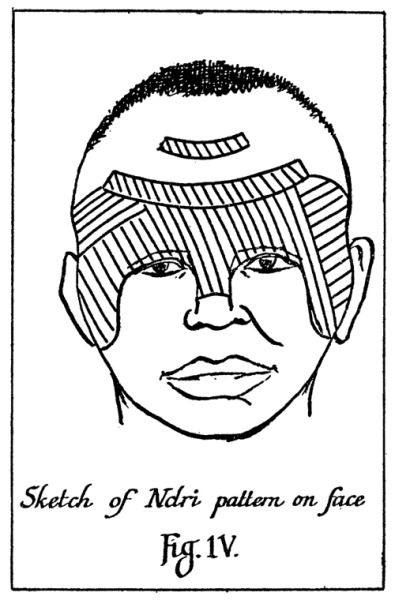
TerraCotta: He quotes a missionary's interview with a native-born Nri woman who says the marks are also called "ogba ubi" (farming furrows) and then elaborates on the story about Eri planting the heads of his first-born children to grow the first yams, as mentioned above. Just an example of how a common belief or interpretation can have alternative explanations.Okay, so, there are no four ruling families of Nri, that would mean that the various exogamous lineages in the Umunri communities are non-existant. Perhaps MDW Jeffreys was mistaking Igala for Igbo. The Nri are not dead, it was 1930 so these families couldn't have just disappeared. You can get the lineages from Onwuejeogwu, or you can just search online. There's still an Eze Nri. With a quick search of 'Igala ruling families' I've already found "Aj'Akwu, Aj'Ocholi, Ame'cho, and Aj'Akogu ruling houses". Despite all that, the role of Attah and Nri cannot even be compared even if there were equal amount of ruling families in both. So that's that. The UNN write up is politics. MDW Jeffreys already touched on the supposed farming furrows pattern in 1951 (The Winged Solar Disk or Ibo Itchi Facial Scarification, the same one referenced by Keith Ray), and he quoted an interview between a missionary named Miss Yeatman and an "Ndri" who denied that their facial marks were yam furrows and recounted the yam tale of how they had the patterns before the yam sprouted on earth. Miss Yeatman also got information about the sun and the moon pattern on mburuichi heads and they claimed "they were engraved on the face so that they might shine in the house and make it light", they also admitted forgetting what the marks on their cheeks represented. The differing patterns were insisted by Nri that they remain different from community to community, many of the styles have names from the wings of birds like the eagle (although MDW Jeffrey interpreted ugo as 'sacred vulture'), but the two marks on the forehead were named onwa and anwu (moon and sun). MDW Jeffreys opinion is that 'yam furrows' is a taunt by non-mburuichi (or "ichi" as it was called) which was not accepted by the mburuichi. Eri was not the one that planted his son and daughters heads, it was his son Nri. |
| Culture › Re: Maps Of Kingdoms, Peoples, States, And Cities In Africa Through Time by ezeagu(m): 9:49pm On Apr 30, 2013 |
TerraCotta: 2) You're wrong in claiming that Nri is not a hereditary kingship and demonstrates differences from the Idah system. In fact, Nri rotated its kingship around four noble families, just like the Idah kingship. We are fortunate enough to know this because it was detailed by MDW Jeffreys in his article "The Divine Umundri King" in 1935. Jeffreys is an important writer on Igbo anthropology--he was a forerunner in spelling the ethnonym as 'Igbo', rather than 'Ibo' for example. It's a notable quality that shows his interest in details. You should read this article if you haven't already.Jeffreys goes on to link Igbo culture with Nile-valley civilisations through similarity in sun-veneration and sun-cults. Relying on an article from the 1930s isn't advisable. There are major errors throughout the writing, Jeffreys claims Chukwu to be a sun-god, Jeffreys claims that the Nri people are responsible for the majority of the Igbo culture, and then there's the claim that the Igala, Edo, Igbo, etc have a uniform culture based on cultural/ritual similarities. Jeffreys is an interesting source and useful for names, but it isn't something to rely on. The actual "royal families" being referenced in that 1935 article are either the four quarters of Agukwu-Nri, or the communities of Umunri. Since he did not explain or give a name for these "four (or three) royal families" then no one can say for sure what this actually meant. There is also a lack of other sources for these supposed royal families (if this isn't in reference to the Umunri communities), and there are further question like from what Umunri community do these families hail? What is their origin? What is their relation to the rest of the Umunri lineage? On the other hand you could say the Umunri are the royal lineage and that the various communities are the sources for kingship, but to say "Nri rotated its kingship around four noble families, just like the Idah kingship" is not true, because there's no evidence of this ever happening. Nri kings were solely chosen through the consultation of ancestral spirits, as I'm sure is somewhat the case of Igala kingship, to a lesser extent, but in no way the same. What I meant by 'no hereditary kingship' was that there is no evidence that kingship was passed from father to son in Nri communities, or even close relatives, while that is often the case in Igala society. TerraCotta: All conjecture. Since you don't provide any sources or references for this speculation (is this oral history? Website copy? Distilled from Onwuejeogwu's works?), there's no way for me to critically assess them and no real benefit I can see in speculating on how it relates to Igala 'historical sociological development' (I think you mean 'religion' here). "Sun veneration" is general enough to be applicable to many non-Judeo-Christian religions, for obvious reasons. If you're referring to ichi scarification as depicting rays of the sun/anyawu, there's also a historical understanding that the scarification represent the hoeing of the earth a farmer does to plant yams. This may well be linked to Eri's role as someone who planted the heads of his children from which the first yams grew, according to the myth I remember. I don't have time to pull out the sources right now but I'll dig them out if there's enough interest in this ater.'Historical sociological development' is referring to the fact that there is no major sun-cult among the Igala. Most of the information in that paragraph is introductory information on Nri. Jeffreys himself wrote an article in 1951 on Ichi (in which Chukwu turned from a sun-god in his 1935 article to a sky-being) and noted the names for the sections of the scarifications which included the Igbo names onwa and anwu, 'moon' and 'sun'. According to him, the scarification represented the bearing of the moon and the sun on initiated Umunri mburuichi's heads, and then what followed was more Nile-valley propaganda. bla bla. TerraCotta: I didn't say the classification of Igbo-Ukwu as part of the Nri culture area was lazy. I don't want to imply it either. You'll see in my post that I say several times that the Igbo-Ukwu bronzes may very well be Nri productions. I'm not a specialist in this field and I'd defer to them (after I've examined the evidence with customary skepticism and my own sources of reference). The fact that some Nri figures bear scarifications that are currently associated with ichi is interesting but inconclusive. You can't rely solely on contemporary evidence to explain past patterns and behavior. What if the contemporary ichi were adopted to imitate whatever culture/people that created Igbo-Ukwu? What if the ichi cicatrizations have evolved over time to mean something completely different by the time they enter the verifiable historical record? We can't divine answers easily just by looking at the depiction of something today and extrapolating vast histories from a glance. Otherwise, we'd all know that Jesus was a blonde, Louisiana was settled by English-speaking immigrants and Nigerians have always eaten Jollof rice as their national dish.This can be applied to any history. It's just speculation. What we have now is evidence, and the evidence points to Nri or a pre-Nri people. |
| Culture › Re: Who Are The Ancient Igbo People? by ezeagu(m): 10:10pm On Apr 29, 2013 |
Just to be clear, Ika, as a fringe 'Igbo' community, does not claim descent from Benin. We've given too much time to random internet claims and objections. It's time we start to find out the truth. abagoro: Another thing I've noticed about Igbos is that the oral history of majority of communities dates back to around 16th to 18th century and nothing more is remembered beyond those dates. Something must have happened that caused the sudden emergence of several Igbo communities around that period.The slave trade, starting from the 16th century, hit the Igbo people hardest in the 18th century, which led to the break down of societies. This was also around the time guns were introduced. I know, for example, that there was a lot of infighting in Igbo groups of the south after the introduction of guns. |
| Culture › Re: [VIDEO]: "Masquerade Comes Out Of The Ground In Nigeria" by ezeagu(m): 8:28pm On Apr 29, 2013 |
[quote author=PAGAN 9JA]no your explanantion is still undatisfactory. I replayed the video. The wrappers are not that thick and they are touching ground level. ok so if the wrapper is even and the dides are touching the ground, wouldnt it be the same case with the centre? about the snake one, where was the man situated? inside the snake? how did he twirl in such impossible ways? how did the entire masquerade was able to shut. anyways sha these are are masquerades/spirit dances for entertainment and cultural purposes. but plz explain the above.[/quote]You actually believe a man can rise out of the solid earth and he is still poor and in Nigeria? They didn't show the ground underneath the mask. |
| Culture › Re: Maps Of Kingdoms, Peoples, States, And Cities In Africa Through Time by ezeagu(m): 8:23pm On Apr 29, 2013 |
PhysicsQED: By the way it is untrue that "the kings of the Igala claimed descent from the Nri of Igbo-Ukwu" as Ehret suggests. There is not a single precolonial or early colonial document or even post colonial document which supports this idea that they actually claimed descent from Nri, even if there might be some post colonial documents or articles from non-Igalas that attempt to make it seem like they actually did claim that descent or which state that they have that descent. In fact, anyone who has read the earliest documents about the Nri and Igala connection will come across numerous publications suggesting or stating outright that the founders of Nri were originally Igala settlers. This does not mean that that is necessarily true (that they were Igala settlers), but it is something which Ehret should have at least mentioned if he was going to talk about the connection. That's another error on his part.These claims may have confused the Igala prime ministers, Asadu/Achadu, who are supposedly of Igbo descent, although I do not know where from. TerraCotta: Yes--my sense is that Thornton gave the Portuguese too much credit for transcribing what they were told accurately. North, south, east, west, notions of time and travel ("four moons inland" = four months' travel etc) are likely to have been much less uniform back then than they are now and probably explain discrepancies a little more accurately than his ideas in that paper do. I think the man does amazing work on the Kongo/Angola region though. TerraCotta: I see what you mean. The one constant we know of is that Igbo-Ukwu finds are dated to circa 900 AD-1100 AD. Since we have no corresponding early evidence for cultures in Nri or Igala, I find it less likely that these places can claim parentage. It's true that Eri etc. could have sprung from an early/unknown Igala source and then also made the Igbo-Ukwu bronzes but we've got no evidence to suggest that beyond fanciful kinglists for Nri. We do know that there's been more recent Igala incursion into the Nri area by the Oloja Oboni/Ogboni group, and that type of interaction is more likely to be the origin of the current dynasty.The Nri kingdom is not a dynasty. It is not a hereditary kingship, in fact it's hardly a kingship at all, at least, in the Igala sense. Nri kings are chosen through a ritual process from supposedly random Nri families, the member of such a family would have had to be an Ozo title holder (priest-like member of a council for the Eze Nri, another feature of Nri organisation that is markedly Igbo). This whole process is already completely different from the more centralised Idah kingship which is rotated around four branches of a royal clan. The king of Nri held no military power, it was almost a completely religious role. Completely opposite to Igala kingship. For lack of a better example, the role of Eze Nri is similar to that of the Dalai Llama. The transliteration of 'Eze' along with generalisation of Igbo cultures has led to some misunderstandings. The state religion of Nri was sun veneration, which I do not believe follows Igala historical sociological development. Linguistic terms for religious and political structure also bear faint similarity with the Igala, if we are talking about something similar to the scale of Benin-Ife relationship, then it's a very loose connection because Eri, Nri, Ozo, etc are all easily translatable into modern Igbo, there are no significant Igala words for political/religious things, such as how we know Ikenga/Okega among the Igala. On to Igbo-Ukwu. It's classification as an Nri cultural site is not as lazily placed as is thought. The artefacts origins hint to Nri culture with much stronger links than just similarity in animal symbolism. Among Igbo-Ukwu animal figures were human figures fashioned with Nri Ichi scarifications on their foreheads, temples, and cheeks; many of these scarifications were used by different Nri clans until the start of the last century as allegiance to the sun cult of Nri and followed precise styles depending on the community. The image below is a sketch of some of the faces found on the metal works, I do not know the origin of this image, but the faces match the faces of the artefacts from Igbo-Ukwu. You can clearly see sun-imagery in the scarification. They are all similar to scarifications borne by different Umunri communities, particularly the middle figure (e) is most similar to that on photographed Nri people from the early 20th century, below this image is an example. [img]http://igbocybershrine.files./2011/08/ichi.jpg[/img] https://25.media.tumblr.com/tumblr_m7djqmxmbx1qjh37to1_400.jpg Above image is from here with the source of the drawing: http://ukpuru..com/2012/07/ichi-scarification-is-not-tribal-mark.html The most telling sign of Nri influence is that the area of the rediscovered burial chamber is on a piece of Igbo Ukwu claimed to have been part of Oraeri at one point, an Umunri clan. I'm also confused as what modern Nri bronze items are of Igala design. |
| Politics › Re: Are Igbo Jews, The Lost Tribe Of Israel? - CNN by ezeagu(m): 11:16pm On Apr 28, 2013 |
bigfrancis21: @Bolded:Nri, the founder of the kingdom, was the son of Eri and Nri lived around 1100 years ago if we follow the Nri list of kings. bigfrancis21: However, I do believe that not all parts of Igboland originated from Nri. The present Igbo stock came to their present location from quite many outside areas. Suffice to say, not all areas have the Nri blood. If the Jewish connection is true, it then implies that not all areas of Igbo land may have the gene running them, though this may be watered down given the ubiquitous rates of inter-marriages in Igbo land. This is why I asked what pockets of Igboland should be tested for the Jewish blood.What do you mean by "black natives"? Are you implying that Eri was not a darkskinned Sudanid? bigfrancis21: The pre-historic Igbo-hebrew traditions are mnemonic of the pure traditions the wandering Jews who were living rudimentary lives were practicing before they reached the promised land (Israel of today).There are no oral Igbo histories of migration to a promised land. The Hebrew descended communities have these tales among them. The theory is reaching and far-fetched. |
| Culture › Re: Igbo Architecture | Ụlọ omé n'Ìgbò by ezeagu(op): 11:07pm On Apr 28, 2013 |
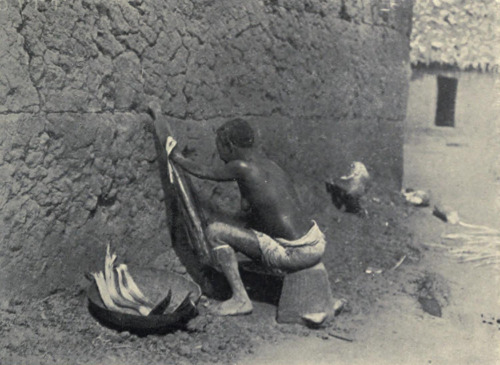
https://24.media.tumblr.com/fb8df678fc0e2c09c22fff6293f836e0/tumblr_ml8qfq8xPa1qjh37to1_500.jpg "PREPARING “IDE” FOR MAKING STRING (OBULUKU) Northcote Thomas, Early 20th century." |
| Culture › Re: Igbo Architecture | Ụlọ omé n'Ìgbò by ezeagu(op): 11:03pm On Apr 28, 2013 |
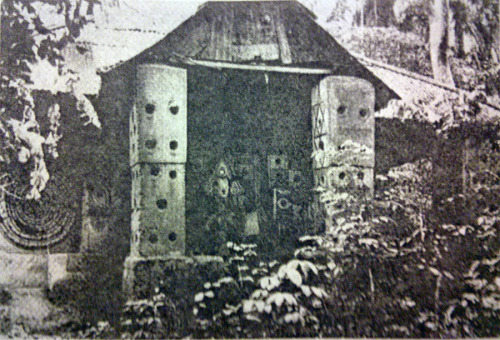
https://25.media.tumblr.com/bc6ec9824f15db3c6c7aa018d3bd81b4/tumblr_mfn8g4xZU61qjh37to1_500.jpg "An Igbo mbari religious building built for the earth goddess Ala. Nnnorie, near Owere, Nigeria. Herbert M. Cole, 1969." |
| Culture › Re: Igbo Architecture | Ụlọ omé n'Ìgbò by ezeagu(op): 11:02pm On Apr 28, 2013 |
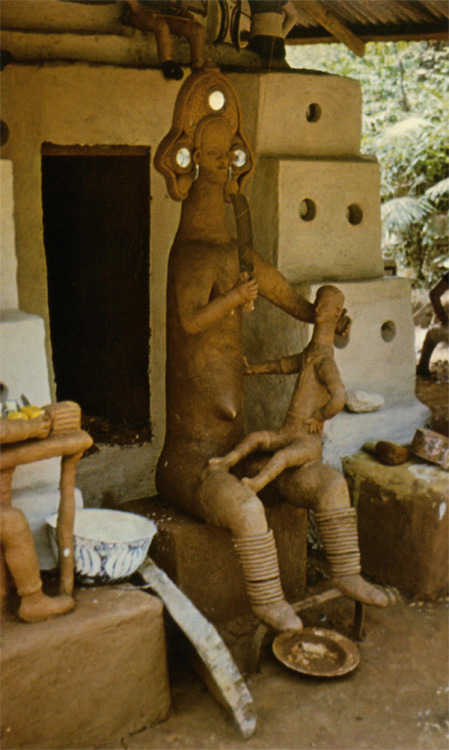
https://25.media.tumblr.com/d611dddb513e36c0fee1a855dee1fbc4/tumblr_mfn01iyh0p1qjh37to1_500.jpg "The largest single mbari structure still standing in 1966-67, and perhaps one of the largest ever built. Note the size of the priest who is standing beside the seated deity. [Nigeria, unknown date; maybe early 20th century]. Herbert M. Cole, 1982." |
| Politics › Re: Are Igbo Jews, The Lost Tribe Of Israel? - CNN by ezeagu(m): 9:57pm On Apr 28, 2013 |
Eri only lived around 1200 years ago which is not enough time to germinate 30 million people over hundreds of square miles. The oral tradition is not what I was contesting, but the claim that Eri is the 'father of all Igbo people' which isn't possible if everyone wanted it to be. Even if Igbo people have Near-Eastern heritage it would be wrong to describe it as Jewish since modern Jewish identity did not exist then, especially Ashkenazim culture, and there would probably be other influences from such as long migration from the near-east which would have happened thousands of years ago to give enough time for such a migration to end in 'Igboland'. I have a problem with all these 'Igbo Jews' who take on Ashkenazim tradition. I mean, if you're ancestors were the original "Hebrews" or whatever, then doesn't that mean whatever religion you had before Europeanisation was the true religion of the Hebrews which you should be following and that Igbo is the true language? Especially when the Israelites and Hebrews had a multitude of deities. Why would you follow another entirely separate form of 'israelite' worship that developed entirely in Europe? |
| Politics › Re: Are Igbo Jews, The Lost Tribe Of Israel? - CNN by ezeagu(m): 9:04pm On Apr 28, 2013 |
bigfrancis21: @Bolded: I wonder too.This is not true. And Eri is a a two syllable word that can be found almost anywhere on earth |
| Culture › Re: Who Are The Ancient Igbo People? by ezeagu(m): 6:06pm On Apr 28, 2013 |
I believe there were aborigines of 'Igboland', such as 'Pygmies', who were displaced and absorbed by agricultural peoples. It makes sense that the Nri mythology states that their ancestors civilised a group of people, and the same for other mythologies around Nigeria, although I believe these stories, just like stories of autochthonous communities, were appropriated from much more ancient stories. Pygmies are thought to have inhabited this greater central African forest as a hunter-gatherer society before being displaced by agricultural peoples from the Sudan area. |
| Culture › Re: [VIDEO]: "Masquerade Comes Out Of The Ground In Nigeria" by ezeagu(m): 5:14pm On Apr 28, 2013 |
If it was real "juju" the masquerade will simply jump out of the solid ground. Simple. 1 Like |
| Culture › Re: Was Mansa-musa Really A Great Man? by ezeagu(m): 5:09pm On Apr 28, 2013 |
pleep: Dude. you people always miss the pointWell the structures near the Sahara are usually built with mud bricks by all kinds of peoples and cultures. The availability of stone doesn't necessarily mean it is the best material to use or the most desirable. |
| Culture › Re: Who Are The Ancient Igbo People? by ezeagu(m): 4:51pm On Apr 28, 2013 |
My opinion: Igbo people are branch of a migration of people coming from the east between 3000 and 7000 years ago. They are one of the oldest branches of a tree that went on to birth other groups that are west of them, but they probably absorbed a more ancient group of people which is why you have tales of colonisers and people who never even migrated at all. The word Igbo was used by a few Igbo groups before the industrial age, not by all or most. The Igbo are a ethno-lingustic group, and I do not believe the theory that they were born out of recent (around 1000) years of sporadic migration for the most part. There is a clear, in my opinion, definitive migration pattern starting from where would be around Abia, Imo, Enugu today and branching out in all directions that links most or all Igbo communities together through blood ties. For instance, most of the communities in Abia were founded by people from Imo State. The individualistic nature of Igbo communities has lead to a village identity, so even these so called Igbo groups themselves have had a strengthened identity due to recent outer influence. There have been more bloody wars and skirmishes between blood tied Igbo communities or even inside these communities than there have been with any other group, perfect example is the Nri-Aguleri 500 years of hostility, even though they can point to a common ancestor, which most other groups cannot. 1 Like |
| Culture › Re: The Systematic Destruction Of Black People And Neighbourhoods by ezeagu(m): 8:00pm On Apr 27, 2013 |
[quote author=ShyM-X]Everything comes with the territory and the systematic destruction of the black race... Don't forget the Jews got reparations for the holocaust; Indians never suffered the type of systematic destruction that we have/are suffered/suffering and they have a pale skin to boost their place on the racial ladder; and Arabs have the oil money to their advantage.... However, that doesn't negate the fact that we've been indoctrinated beyond redemption and the new "black race" lacks the wit and know-how to create wealth... We're so focused on being accepted by the status quo due to our innate low self-esteem and inferior complex bore out of this systematic destruction that we can't discern that wealth-creation/black-business is the only way to get the black race back to where it belongs...[/quote]African immigrants and Indian immigrants are on a level playing field. The most abused people in the West are now Muslims, yet Muslims from the Indian subcontinent still own the majority of the neighbourhoods they are a majority in. In the UK the richest list features many Asians and Jews, in the US Muslims are shop owners and Koreans are selling everything back to the black people. You mean that these shops and all this land was dashed to these non-African communities who came to the West, most of them hungry and from struggling backgrounds and troubled countries just like many Africans, some from even more troubled countries, as a calculative move? |
| Culture › Re: Was Mansa-musa Really A Great Man? by ezeagu(m): 7:47pm On Apr 27, 2013 |
pleep: ^1700 London was majority made out of wood.... and so was 1940's japan.And can you explain the structural details of Malian and London/Japan buildings so we know how they cannot compete? Aren't the beams used to hold up upper floors in Mali the same used in London? Aren't the window fittings and roof seals in Mali comparable to Japan? What makes Japan and London so special? Because they took on the architecture of the Romans and Chinese? pleep: Governments build stone buildings... the regular people use mud, wood or w/e. Thats a givenAnd Ancient Egyptian upper classes lived in mud building that weren't as grand or as spacious as that of aristocratic Nigerians 500 years ago. |
| Romance › Re: Top 10 BEST Looking Black Women/Mixed Women Of The NEW WORLD! Winner Takes All! by ezeagu(m): 6:46pm On Apr 27, 2013 |
| Culture › Re: The Systematic Destruction Of Black People And Neighbourhoods by ezeagu(m): 6:33pm On Apr 27, 2013 |
[quote author=ShyM-X]How come all black neighbourhoods in the diaspora(from US, UK, Canada, France, to Australia) have liquor stores and bookies shops on almost every street corner? Honestly, it seems this is a systematic way of destroying black folks... Give them alcohol and sell them a dream through the bookies... This is pretty sad, to be honest...[/quote]Why is it that Jews, Indians, Arabs, and everyone else are always landlords wherever they are found in large numbers, but it's dark skinned Africans that are the ones always complaining on the internet about bad things happening in their own neighbourhoods? |



1 2 3 4 5 6 7 8 ... 103 104 105 106 107 108 109 110 111 (of 349 pages)