Ezeagu's Posts
Nairaland Forum › Ezeagu's Profile › Ezeagu's Posts
1 2 3 4 5 6 7 8 ... 98 99 100 101 102 103 104 105 106 (of 349 pages)
 Culture › Re: Ndigbo And Her 'integrated' Eri/nri Brother by ezeagu(m): 3:41pm On Oct 26, 2013 Culture › Re: Ndigbo And Her 'integrated' Eri/nri Brother by ezeagu(m): 3:41pm On Oct 26, 2013 |
abagoro: That's a lie. Most of the Eri migration stories are centered around 15th to 17th century. The reason why the 9th century issue came up is because of the Igbo Nkwo discovery. Nri writers linked it to Nri instead of the host community who are of course not Nri.I'm not going off of opinion or personal sentiment, I'm going off of research. I've never read any source that links Eri to the 15th or especially the 17th century. If you have this it will be useful. This is the first I've heard of this. The dating is usually based on the list of kings which the Nri claim to be from the 10th century, but others like Douglas Chambers put the date around the 13th century, 1400 is a long way from 1250s. Besides that, your dating does not provide explanation for the claimed genealogy of Igbuzo, Ogwashi, Asaba, or even Agbor and so on. The Obi of Owa (near Agbor) categorically states that his kingdom is an Nri settlement, just for an example, and we know many of these towns have been in existence since well before the 16th century. |
| Culture › Re: Daybreak In Udi: An Exposé Of British Colonization Schemes In Igboland by ezeagu(m): 1:18am On Oct 26, 2013 |
It won an Academy Award in the 50s. 3 Likes |
| Culture › Re: Ndigbo And Her 'integrated' Eri/nri Brother by ezeagu(m): 1:14am On Oct 26, 2013 |
Just for reference sake, Eri's date of existence in 'reputable' academia is between 900-1250. So we're talking about a 500+ year window here which is ridiculous. |
| Culture › Re: Ndigbo And Her 'integrated' Eri/nri Brother by ezeagu(m): 11:52pm On Oct 25, 2013 |
Radoillo: What is laughable and childlish is Nri people saying they founded communities they know very well they didn't.I think this is the reasons Nri people are being attacked, many people may see them as a threat. In all honesty, have any of us heard of any case in world history where a ruling class of people fully assimilate in a society they've impacted so much in less that 500 years without a trace? |
| Culture › Re: Ndigbo And Her 'integrated' Eri/nri Brother by ezeagu(m): 1:51pm On Oct 25, 2013 |
Original post: I didn't read the whole thing because I have already read this theory. My conclusion is that the dates don't match up with events that the kingdom is associated with. If Eri were from the 1500s then it discredits the ancestry of places that are Igbo-speaking west of the Niger since much of those communities were at least populated by some Nri-cultured people well before that date. For example Ogwashi-Ukwu is a direct settlement of Nri or Nri-like people. "Ogwa Nshi Ukwu" literally translates as the 'Great hall of Nri (Nshi)'. The dates don't add up and this debates seems more like a political smear than research. 3 Likes |
| Politics › Re: Enugu, The Pride Of The East. by ezeagu(m): 1:33pm On Oct 25, 2013 |
Christmas traffic will be interesting. 1 Like |
| Culture › Re: The Tribes Of Nigeria Are Fake. by ezeagu(m): 12:11am On Oct 24, 2013 |
So this topic has overreached it's use and now we're moving to irrelevant things that aren't based on any established facts or experience or are even consistent with the contention that Igbo was never used as an ethnographic term. We've established that it was, in whatever forms people may have, so I think the thread can move on before we start hearing about Hebrews, because it looks like that's what's coming next. |
| Politics › Re: Enugu, The Pride Of The East. by ezeagu(m): 6:52pm On Oct 23, 2013 |
I don't know why everything in Nigeria has to be green and white, up to the curb stones on the pavements. Can you imagine if the white house was red and blue or the entire Capitol was covered in red and blue tiles. 3 Likes |
| Culture › Re: The Tribes Of Nigeria Are Fake. by ezeagu(m): 5:53pm On Oct 23, 2013 |
What dialect uses ebo for red? 1 Like |
| Culture › Re: The Tribes Of Nigeria Are Fake. by ezeagu(m): 2:08pm On Oct 23, 2013 |
Abagworo: One thing that needs to be cleared is that "Oye ebo" in that context meant "Red one". Ebo meant "red". Aro people used "Uhie" then to paint themselves and were distinguishable with their red color. Equiano in present day Igbo orthography should be Ekwuiano or Ikwuiano and not "Ikwuano".The problem with your theory is that Eboe/Ebo is pronounced ee-bow and not eh-bow (as attested by places like Ebo landing and the fact that Eboe was used interchangeably with Ibo). Another problem is that Eboe later corrected as Ibo then became Igbo. |
| Culture › Re: The Tribes Of Nigeria Are Fake. by ezeagu(m): 8:00am On Oct 23, 2013 |
Abagworo: Mgburishi is more of an Ozo title holder from Nri with the revered scarifications than Mgbirichi town in Ohaji and Equiano is not Ikwuano. The "oye ibo" used by Equiano is more reasonable if it was in reference to Aro slave dealers and not Igbos per say.But the issue was whether Igbo or Eboe was a place or a people and Equiano clearly refers to some sort of people that were in contact with his people Oye-Eboe. |
| Culture › Re: The Tribes Of Nigeria Are Fake. by ezeagu(m): 3:00pm On Oct 22, 2013 |
Dibiachukwu: For now he statement is valid. We are yet to see a verifiable proof of any slave identifying themselves as Igbo. Equaino said Igbo country, and not people. There is a difference. By then, the place had probably been namedEquiano explicitly says that his people called the people coming from the south 'Oye-Eboe', obviously ónyé Igbo. So people were being called Igbo in the hinterland. This argument is completely illogical and not based on any facts. Why would slaves/slave handlers call somewhere Eboe Country? Because it was the country of the Eboe people. Country usually denotes countrymen in a nationalistic way in these old texts. It follows European logic where places are named after the people that inhabit it, which is why Equiano refers to the other people speaking Igbo in Jamaica (far away from his homeland) as people of his country, otherwise if Eboe were a mere geographical term and not an archaic ethnographic term, he wouldn't constantly refer to other Eboe people as people of his country. The consistency of the word Eboe/Ibo among French, English and Spanish speaking colonies is enough evidence to show at least some slaves identified as Eboe. [img]http://www2.vcdh.virginia.edu/gos/imagesAds/v0101.jpg[/img] |
| Culture › Re: The Tribes Of Nigeria Are Fake. by ezeagu(m): 8:04am On Oct 22, 2013 |
Abagworo: I've never seen where slaves recorded their tribe as Igbo or Yoruba. Igbo was earlier used in those 1600s to refer to a geographic area and not an ethnic group.You're wrong. |
| Culture › Re: The Tribes Of Nigeria Are Fake. by ezeagu(m): 8:03am On Oct 22, 2013 |
ijaw citizen: This statements shows just how naive and uneducated you are. Better read people can see thru' your ignorance and stupidity except those who are just like you.So basically you have nothing useful to say. Big surprise. |
| Culture › Re: The Tribes Of Nigeria Are Fake. by ezeagu(m): 7:22pm On Oct 21, 2013 |
Abagworo: What I mean is that people did not know any tribe as Igbo during slavery. It was rather a term later developed to refer to an area known as the "Ibo country" before it was later transformed to "Ibo tribe" and now Igbo ethnic group. All of Nigeria was like that prior to coming of Europeans except of course where one person had created an empire which usually also included people speaking different languages and hence cannot be identified as ethnic group but a Kingdom, State or empire.Surely if the slave dealers are calling somewhere the Ibo or Eboe country, doesn't that also mean the people there are the Eboe people or tribe? It's also questionable whether this was at first a geographic term because the anthropological description of Igbo slaves then matches Igbo people today, as well as cultural Eboe elements which are specifically from known Igbo-speaking groups. The classification of Ibo territory was rough and it sometimes included areas that are not today considered Igbo, yet those people when leaving their homes didn't adopt Ibo, like closely related Ibibio who were known as 'Moko'. But even if the term came from naming the place first (after what?) it's still recorded that people identified and were identified as Eboe as early as the 18th century, and we can't forget Olaudah Equiano who explicitly called himself Eboe and referred to the term as something people from his home country identified with. https://upload.wikimedia.org/wikipedia/commons/c/c0/Williamsburg_VA_slave_notice_1766.jpg |
| Culture › Re: The Tribes Of Nigeria Are Fake. by ezeagu(m): 5:54pm On Oct 21, 2013 |
Abagworo: There was no Igbo during slavery.What do you mean? |
| Culture › Re: The Tribes Of Nigeria Are Fake. by ezeagu(m): 5:52pm On Oct 21, 2013 |
ijaw citizen: The same Niger Delta Region that the various european groups ( Portuguese, Dutch, French & lastly English) we came in contact with and traded with for more than 300 years when most of your Igboland & indeed most hinterland were still in their primitive default settings.So what you're saying in simpler terms is that the Ijaw are more advanced because they've been used and abused by the superior race known as Europeans for longer and have sold themselves to them for longer? Classic inferiority complex. You're actually proud of your ancestors playing houseboy and òché ngà for Europeans? When everyone else was trying to fight them off? |
| Culture › Re: Is Igbo A Relevant Language? by ezeagu(op): 11:12pm On Oct 20, 2013 |
You will not convince me that not knowing what prose is in Igbo is just down to forgetfulness. You know the sad part? You probably couldn't tell me after asking around. Everyone who has seen a science fiction film or action cartoon knows what an atom is. |
| Culture › Re: The Tribes Of Nigeria Are Fake. by ezeagu(m): 7:41pm On Oct 20, 2013 |
Ikengawo: Look at europe. The entire continent has the same religion, the same race, the same culture (which minor details), a common origin, and the same course of history, but they among themselves call themselves Germans, French, English, Austrian, Dutch, Dannish etcThey don't have the same culture. Race is very arbitrary, you can use DNA (and very loosely use physical features) to tell where a European comes from in Europe. German can be a race. In what country in Eastern Europe/Western Asia do people stop being white? Christianity spread a few hundred years ago, yet these cultures inevitably made very drastic changes to these springing up denominations like Anglicanism, Lutheranism, the Russian Orthodox Church, and so on. These denominations are almost different religions sparring belief in some sort of Jesus Christ. Asia is overwhelmingly Buddhist and Muslim, but that doesn't mean much in terms of identity. Of course they are similar, and we have to bare in mind that some African countries are larger than Western Europe. Ikengawo: They have, culturally, more in common among each other than many tribes in Nigeria but they acknowledge their differences. Had Nigerians colonized europe and declared them to be one single tribe "Oyibo", you will gain more perspective on what I'm saying. They will suddenly say well we all speak latin-germanic derived languages (many of which are more similar than dialects of single languages in Nigeria), we're all white, we all have the same religion, we all have the same culture, we all essentially eat the same food, of course we're one 'ethnicity'.But most Nigerian groups are named by themselves. That's where the fault of this proposition comes, the idea that the ethnic groups are all creations of Europe, rather than a bonding due to wider exposure. Europe was united for a long time under Rome, but the nations that are there are still roughly based on ethnic affiliations that predate Romans. Ikengawo: The truth is most ethnic groups are named by their neighbors and only exist as a result of contrast.The latter is true for almost any sort of grouping, tangible or intangible. I don't know if most ethnic groups are named by their neigbours, but it doesn't really relate to the question of their realness or fakeness, and the idea of an ethnic group being fake is also questionable. Ikengawo: It was the Romans than named Germans Germans, English English, and French French, and based on these roman classification, loosely affiliated warring tribes suddenly built foundations on these identifications, and colonist did in Nigeria.I knew this wasn't true, so I'm going to check, First of all French and German people don't call themselves French or German, I know Germans call themselves Deutschen and French obivously Francais, I think French is post-Roman and is related to the Frankish tribes, and I know English comes from the Germanic Angles, but let's check: German "The German term Deutsche originates from the Old High German word diutisc (from diot "people"  , referring to the Germanic "language of the people". It is not clear how commonly, if at all, the word was used as an ethnonym in Old High German." , referring to the Germanic "language of the people". It is not clear how commonly, if at all, the word was used as an ethnonym in Old High German."http://en.wikipedia.org/wiki/Germans French Yep, it cam from the Germanic Franks. English Yes it came from the Angles. (see, the modern nations of Europe are loosely based on ancient ethnic affiliations). Ikengawo: and based on these roman classification, loosely affiliated warring tribes suddenly built foundations on these identifications, and colonist did in Nigeria.Nope, the English weren't in 'England' when rome existed, they were in Germany, and Germany wasn't under Rome. Much like Nigeria, groups that already had a common ancestry had developed a political bond. Most ethnic groups are a result of outside influence, so it's not special case in Nigeria. |
| Culture › Re: Is Igbo A Relevant Language? by ezeagu(op): 6:39pm On Oct 20, 2013 |
Look, you read Igbo literature in school yet you can't tell me what prose is in Igbo. Everyone with a decent education knows what an atom is, maybe not to a detailed level, but still. Everyone whose read English literature knows what the word prose means, or have at least heard of it. It's not as complicated and as technical as you may think. You're trying to tell me a language which hasn't even sorted out it's basic orthography has a developed literary culture. 1 Like |
| Culture › Re: Igbo Masquerade With Girlfriend - Shocking Photo!! by ezeagu(m): 7:28pm On Oct 19, 2013 |
I don't really understand (Igbo) people. Many demonise ancestral worship, but are tufiakwa-ing and rolling their fists around their head whenever something mildly ancestral-like is 'desecrated'. To be honest, this usually happens whenever a woman has some kind of freedom or when people wanna have fun. It seems like people have no contention with wrecking shrines and pulling down sacred forests, but once a women wears a red cap all of a sudden we're all prophets of Ikenga. Arbitrary traditionalists indeed. Pick one. 1 Like |
| Culture › Re: Is Igbo A Relevant Language? by ezeagu(op): 7:22pm On Oct 19, 2013 |
ketoprofen: As if I haven't forgotten the meaning of some things I learnt in final year.You're against the assumption which states that Igbo literature (as an extension of the condition of Igbo language in general) is underdeveloped, yet, forgetting what 'prose' is in the Igbo language does nothing but to support my point, which I will write again: Igbo literature is underdeveloped because of the lack of an Igbo-language educational institution. If we move away from this 'classic'/popular books argument (which came from an off handed comment), we will start to put the consistency and technicality of existing Igbo literature under scrutiny. What I'm saying is: can you tell me whether the books you have read follow a consistent use of orthography which includes spelling, use of marks for accents, consistent use of loan words, consistency of dialect, proper use of vocabulary (as opposed to 'lazy' use of loan words), pre-European depth of vocabulary. Are these books backed by a body that may be able to scrutinise the grammar, structure, enjoyability of the book, and etc. Are there any literary academic journals written in Igbo and are these peer reviewed and edited to enforce a standard for Igbo (regardless of dialect)? Can you tell me wether these classics have been compared to anything else in the Igbo language and can you tell me if these books are quotable? Are there even any courses in the world (which there really should be at lest in secondary school) for Igbo literature separated from Igbo language (learning), like how there are English language, and English literature courses? Igbo language courses (every single one around the world) are solely based on teaching the languages, as opposed to studying them. I hope you get the difference. This is the entire institution of literature, and compared to this Igbo has no literary tradition/institution, no matter how many books are translated (for use in Igbo language learning, rather than Igbo literature study) or books that are essentially 'labours of love'. It's as ridiculous as saying an indigenous language of the Amazon rainforest has an established literary culture because there are two popular books written in the language and a bible translated by missionaries in the 1920s. 1 Like |
| Culture › Re: Igbo Masquerade With Girlfriend - Shocking Photo!! by ezeagu(m): 1:22pm On Oct 19, 2013 |
Afam4eva: LolAmadioha ukwa! |
| Culture › Re: That Akwa -ocha Must Leave On by ezeagu(m): 8:25pm On Oct 18, 2013 |
I always thought refashioning these materials into wedding dresses or t-shirts is sort of like cutting up a sari or kimono and making a tracksuit out of them. I feel like if you're going to go traditional, and not just ankara, then go the whole way. There's also a cloth known as akwa mmiri which I think is just the general white one. |
| Family › Re: Bullying Make African Kids Stronger But Kills The American Kids: Why by ezeagu(m): 8:09pm On Oct 17, 2013 |
Nigerians internalise it and deal with bullying in a different way. Victims of bullying in Nigeria don't kill themselves, they grow up to be armed robbers or military heads of state. 5 Likes |
| Culture › Re: Is Igbo A Relevant Language? by ezeagu(op): 6:55pm On Oct 17, 2013 |
ketoprofen: FYI, I was well trained in Igbo lit in sec schYeah, and you don't know/forgot what prose is in Igbo, anyway the point is that Igbo literature is nowhere near as developed as in Western and East Asian literatures. |
| Culture › Re: Is Igbo A Relevant Language? by ezeagu(op): 7:22am On Oct 17, 2013 |
ketoprofen: Lolz.That's what I meant by the problem is education. |
| Culture › Re: Is Igbo A Relevant Language? by ezeagu(op): 7:28pm On Oct 15, 2013 |
ketoprofen: U are shifting grounds a lot.Before we continue, how would you say the words 'prose', 'conjunction', and 'etymology' in Igbo? I want words that are used commonly. |
| Culture › Re: Is Igbo A Relevant Language? by ezeagu(op): 6:22pm On Oct 13, 2013 |
ketoprofen: 1) what I listed are classic works .I don't think you understood what I was trying to point out. What good is a classic if no one knows about it? It means its status as a classic is up for debate. Everyone has their own idea of what a classic is. That's the first point. The second point is that the origin of the disinterest lies in education, people cannot read Igbo well as well as they do English. The last point is that the 'classics' have not opened a door for a literary tradition. "Only few ppl actually go to the bookshop to buy Igbo literary works just for leisure." 1 Like |
| Culture › Re: Is Igbo A Relevant Language? by ezeagu(op): 11:00pm On Oct 12, 2013 |
ketoprofen: This shows u are not into Igbo literature at all.I think the point in this conversation is too complicated and intertwined with other issues, there's an argument that comes out of judging what is classic and what is classic because there really isn't anything else. Are the books you wrote a classic or a classic novelty? Is it part of a literary tradition (as in written works) or is it just peoples attempts at writing Igbo? These questions are what I mean by developed. The issue with Igbo literature is partly because of disinterest as you said, but I think the root lies in education and not with peoples preference. The reason why I used Adichie and Achebe was not because of international awards but because 1. they are part of two generations of a particular literary tradition, and 2. because their books are widely read among Igbo speakers. The two biggest authors in Igbo society have not published (translated) their works in Igbo simply because no one will read them, and even if they did, this is the main issue, most people wouldn't be able to read them. |
| Culture › Re: Is Igbo A Relevant Language? by ezeagu(op): 7:54pm On Oct 11, 2013 |
ketoprofen: A part of the OP post has it that Igbo literature is not developed, but I say its not true.For me, I don't know any classic Igbo novels or novelists outside of classic children's books used for Igbo classes. Is there an Igbo-language equivalent of Achebe or Adichie? If so then I'll take back the comment. 1 Like |
| Culture › Re: Do You Know The Names Of Basic Colours In Your Local Language? by ezeagu(m): 9:29pm On Sep 27, 2013 |
Eze Promoe: [color=crimson]Look no further, I come here with the answers to your question.What is the tone for brown ("uri" ) and what do you call indigo (I call it uri)? |


 Culture is gradually being eroded. In the past who dares even go near a masquerade? That lady should be running away from the masquerade and not taking pictures with it. Very soon people will start taking pictures with Amadioha. Twa.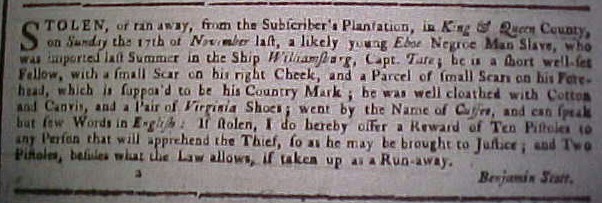

1 2 3 4 5 6 7 8 ... 98 99 100 101 102 103 104 105 106 (of 349 pages)